Breaking News
Spectrum can’t be part of insolvency process: SC | India News


Spectrum can't be part of insolvency process: SC

NEW DELHI: Supreme Court on Friday held that telecom companies cannot claim ownership over spectrum allocated to them by govt and the natural resource cannot be subject to insolvency and liquidation process of a bankrupt telecom company.A bench of Justices P S Narasimha and A S Chandurkar rejected the plea of banks, which submitted that licenced spectrum could also be put on block to recover debt taken by a bankrupt telecom company. It quashed an NCLAT order in insolvency proceedings of Aircel group, which had said that spectrum usage rights could be treated as assets of a corporate debtor and could be transferred during insolvency or liquidation. The court’s order is a setback to banks, which have exposure to telecom firms.“Recognition of spectrum licensing rights as an intangible asset in the balance sheet is not determinative of recognition/transfer of ownership of the spectrum to telecom service providers (TSPs). It only indicates control over the future economic benefits flowing from the grant of the right to use the spectrum. Hence, even if the right to use spectrum exhibits property-like features, such as longer licensing terms, exclusivity, transferability, tradability, etc, they merely represent different sticks in the bundle of rights and falls short of conferring complete ownership of the spectrum on TSPs,” the bench said.Justice Narasimha, who penned the judgment, said merely because spectrum can be treated as an “asset” on the basis of certain attributes – such as possession and usage, lease and assignment, claim and liability or credit and debt – the entirety of the telecom sector cannot be brought under the sweep of the Insolvency and Bankruptcy Code (IBC).He said the grant of a telecom licence, including the right to use spectrum, does not effect a transfer of ownership or proprietary interest. “What is conferred is a limited, conditional and revocable privilege to use spectrum for specified purposes and for a defined duration,” the bench said.“In conclusion, the framework of IBC is clear in excluding assets over which the corporate debtor has no ownership rights. Mere recognition of spectrum licensing rights as an intangible asset by TSPs in financial statements is not conclusive of their ownership, as it only represents control over future economic benefits. Even assuming that licensing of spectrum rights is one among the bundle of rights, in the absence of transfer of title over the spectrum, no ownership rights are created in TSPs either in the spectrum or in its right to use as governed by licensing conditions. Hence, under the IBC framework, spectrum licensing right is not a part of the pool of assets for insolvency or liquidation,” the judgment said.It said licence agreement leaves no doubt that effective and pervasive control over the licence and spectrum vests with the licensor (govt) and licensee’s rights are circumscribed by regulatory oversight, disclosure obligations, restrictions on transfer, and the ever-present power of the licensor to suspend or terminate the licence for breach, liquidation, or winding up of the licensee.


Source link

Heads of 20 nations, delegations from 45 countries: Who is attending India’s mega AI Summit | India News


Heads of 20 nations, delegations from 45 countries: Who is attending India's mega AI Summit
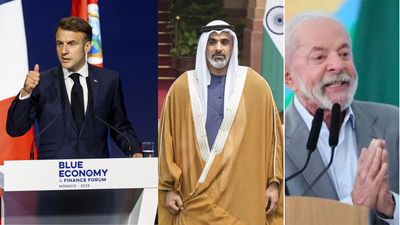
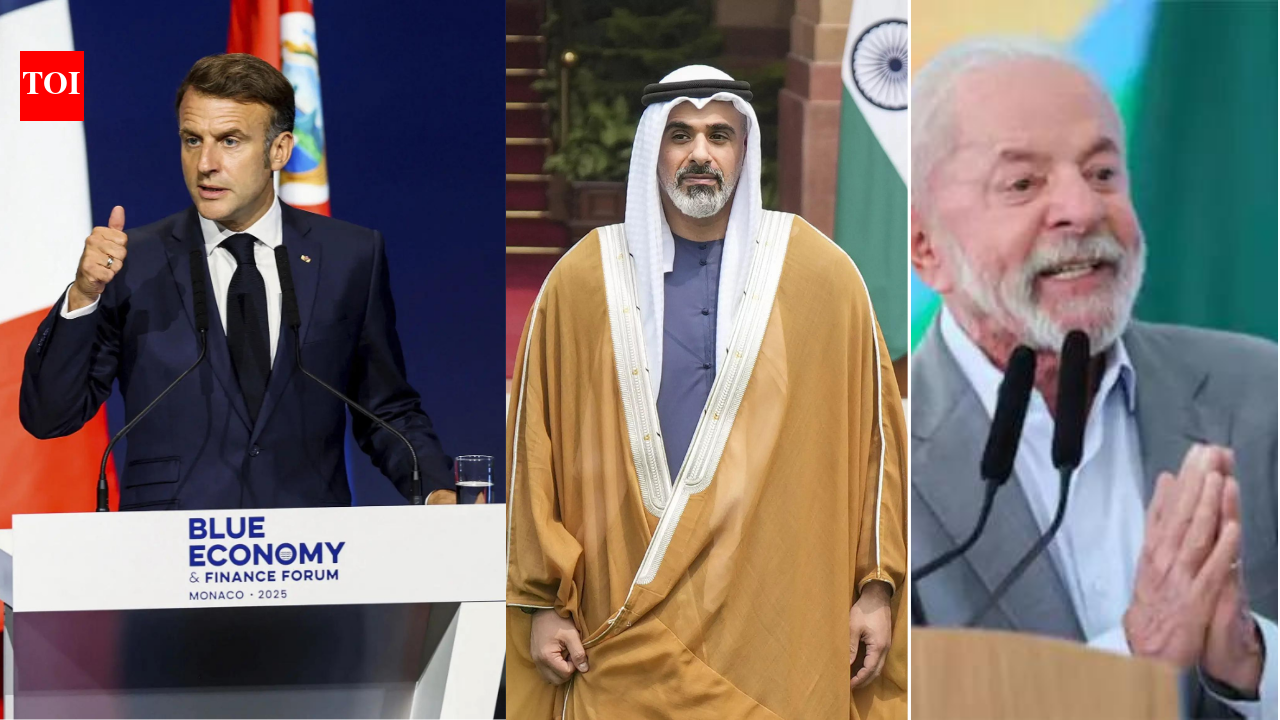
French President Emmanuel Macron, Crown Prince of Abu DhabiSheikh Khaled bin Mohamed bin Zayed Al Nahyan and Brazil President Lula Da Silva (Images/Agencies)

NEW DELHI: The Ministry of External Affairs (MEA) on Friday released the list of countries whose leaders will attend the India–AI Impact Summit 2026, to be held in the national capital next week.The summit, hosted at the invitation of Prime Minister Narendra Modi, is being positioned as the first major global AI gathering in the Global South.

‘Biggest AI Summit’: Ashwini Vaishnaw Says India AI Impact Summit Getting ‘Phenomenal Response’

The India AI Impact Summit 2026 will take place from February 16 to 20 at Bharat Mandapam in New Delhi. Leaders, ministers, global CEOs and representatives of international organisations are expected to deliberate on the future of artificial intelligence, its economic impact and governance frameworks.

Leaders attending the summit

According to the MEA, the following leaders are scheduled to participate:

  • Bhutan – Tshering Tobgay, Prime Minister
  • Bolivia – Edmand Lara Montano, Vice President
  • Brazil – Luiz Inácio Lula da Silva, President
  • Croatia – Andrej Plenković, Prime Minister
  • Estonia – Alar Karis, President
  • Finland – Petteri Orpo, Prime Minister
  • France – Emmanuel Macron, President
  • Greece – Kyriakos Mitsotakis, Prime Minister
  • Guyana – Dr Bharrat Jagdeo, Vice President
  • Kazakhstan – Olzhas Bektenov, Prime Minister
  • Liechtenstein – Hereditary Prince Alois, Hereditary Prince of the Principality of Liechtenstein
  • Mauritius – Dr Navinchandra Ramgoolam, Prime Minister
  • Serbia – Aleksandar Vučić, President
  • Slovakia – Peter Pellegrini, President
  • Spain – Pedro Sánchez Pérez-Castejón, President
  • Sri Lanka – Anura Kumara Disanayaka, President
  • Seychelles – Sebastien Pillay, Vice President
  • Switzerland – Guy Parmelin, President
  • The Netherlands – Dick Schoof, Prime Minister
  • United Arab Emirates (UAE) – Sheikh Khaled bin Mohamed bin Zayed Al Nahyan, Crown Prince of Abu Dhabi

In addition, ministerial delegations from over 45 countries will participate. The United Nations Secretary-General and senior officials from several international organisations are also expected to join the deliberations.The summit comes at a time when global AI ecosystems are undergoing significant shifts. While large language models have shown rapid progress, policymakers and experts have increasingly highlighted the need for stronger data governance, diversified AI architectures and sector-specific deployment.The event is structured around three pillars: People, Planet and Progress which branch into seven thematic working groups covering AI skilling, social inclusion, safety, scientific research, sustainable computing, democratising access and economic growth.Over 700 session proposals have been received. On February 17, the government will release the AI Compendium, documenting case studies of AI applications in sectors such as healthcare, agriculture, education and energy. The summit will conclude with the GPAI Council meeting on February 20.Union minister for electronics and IT Ashwini Vaishnaw has described the response as “phenomenal”, with participation expected from nearly 100 countries. More than 100 global CEOs are likely to attend.Prominent technology leaders, including Google CEO Sundar Pichai, OpenAI CEO Sam Altman, Nvidia CEO Jensen Huang, Anthropic CEO Dario Amodei, DeepMind CEO Demis Hassabis, Microsoft President Brad Smith and Qualcomm CEO Cristiano Amon, are also expected to be present.The summit will also feature competitions such as AI for ALL and AI by HER, with top prizes of Rs 2.50 crore, along with youth-focused initiatives like YUVAi and India AI Tinkerpreneur. An exhibition spread over 70,000 square metres will showcase more than 300 exhibitors from 30 countries.


Source link

Orange is the new gold: How India’s influencer economy turned visibility into value | India News


Orange is the new gold: How India’s influencer economy turned visibility into value
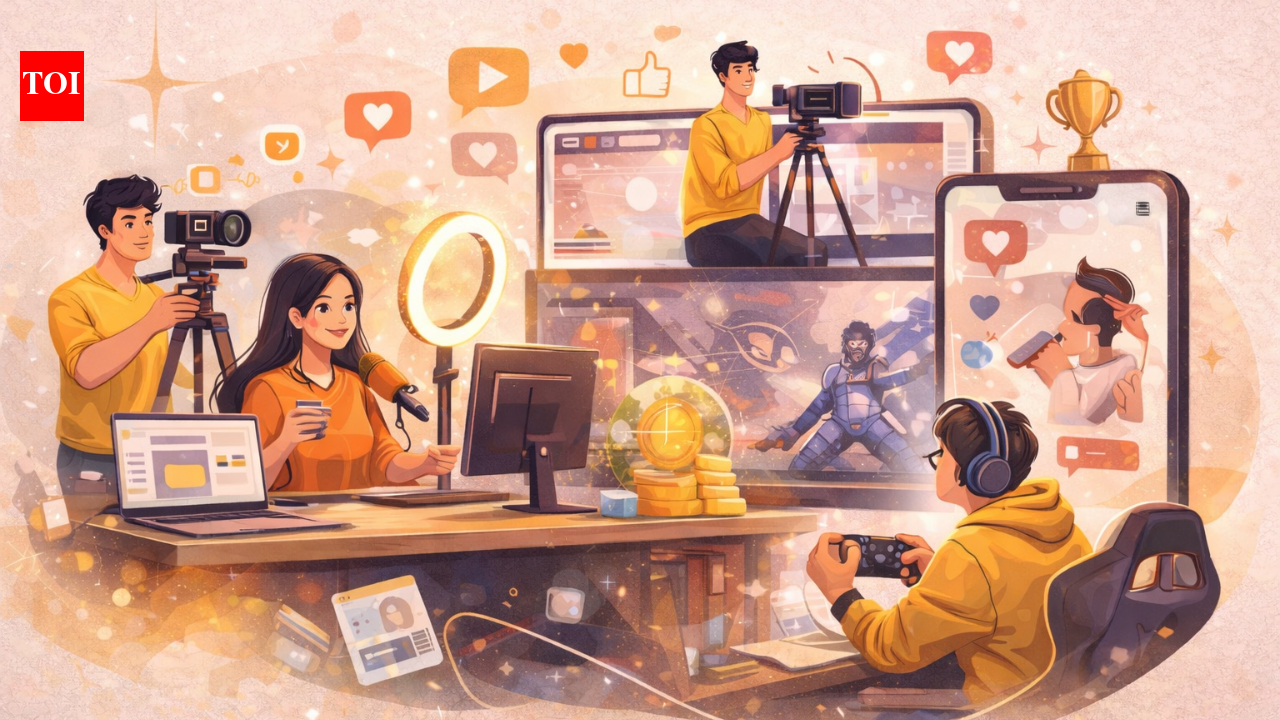
The image is used for representation pupose only (AI-generated)

On a busy afternoon in Old Delhi’s Parathe Wali Gali, Darshit Singh held up his phone and did something unusual.He didn’t hype the food.He critiqued it.The reel — an “honest review” of a legacy eatery and Daulat ki Chaat — crossed 7.3 million views. Messages flooded in. Invitations followed. Cities called.That was 2024.Today, Singh calls himself India’s first “food deinfluencer”.Elsewhere, Santosh was boarding a late-night flight after wrapping up a full corporate workday.An IIT-Delhi alumnus by degree and a traveller by instinct, he refuses to choose between spreadsheets and sunsets.“I’m a traveller with a full-time job,” he says — a line that has now become his digital identity.Every month, a new state. Every trip, a vlog. Every journey, proof that passion doesn’t need permission.What once looked like just another viral reel is now part of something bigger — a creator economy projected to be worth thousands of crores, and increasingly recognised in India’s economic blueprint.This year’s Union Budget did something subtle but significant: it placed creativity inside the growth narrative.Welcome to India’s Orange Economy moment.

The Orange Economy: When creativity became economic policy

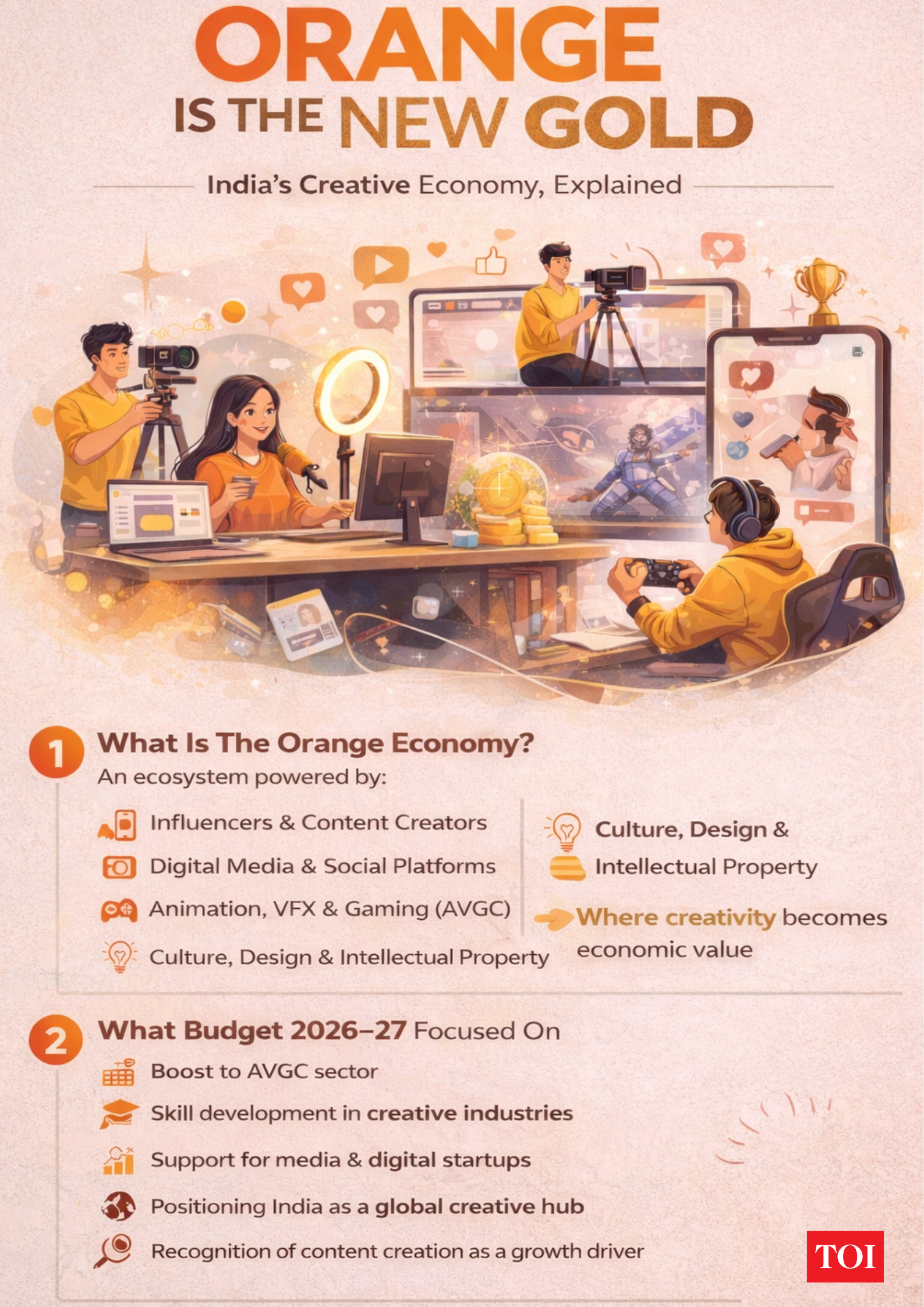
For decades, art, storytelling and digital creation lived in the margins of economic planning — celebrated culturally, rarely counted financially.That is beginning to change.The “Orange Economy” — a term popularised by the Inter-American Development Bank refers to industries that transform ideas into cultural goods and services protected by intellectual property. It includes media, film, music, publishing, animation, gaming, advertising, design, fashion, digital content and now, increasingly, independent creators.In India’s Union Budget 2026–27, finance minister Nirmala Sitharaman announced a major push for India’s creative industries — or what is increasingly being called the “Orange Economy.”
.

.

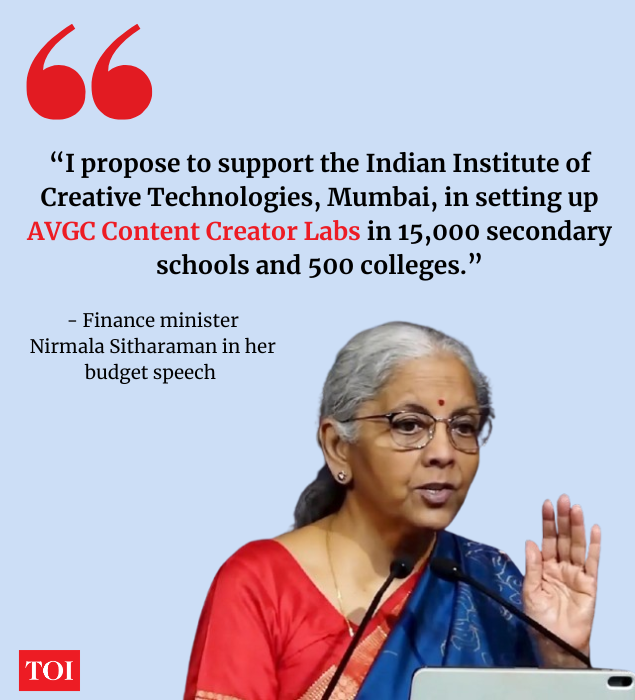
Presenting the Budget, Sitharaman emphasised that India’s creative and AVGC-XR (Animation, Visual Effects, Gaming, Comics and Extended Reality) ecosystem has the potential to generate large-scale employment and position India as a global content hub.She announced:

  • Rs 400 crore allocation for the Indian Institute of Creative Technologies (IICT) in Mumbai
  • 15,000 AVGC labs to be set up in schools
  • Integration of creative and digital skills in 500 colleges across India
  • Policy support aimed at building a workforce pipeline for the AVGC-XR sector

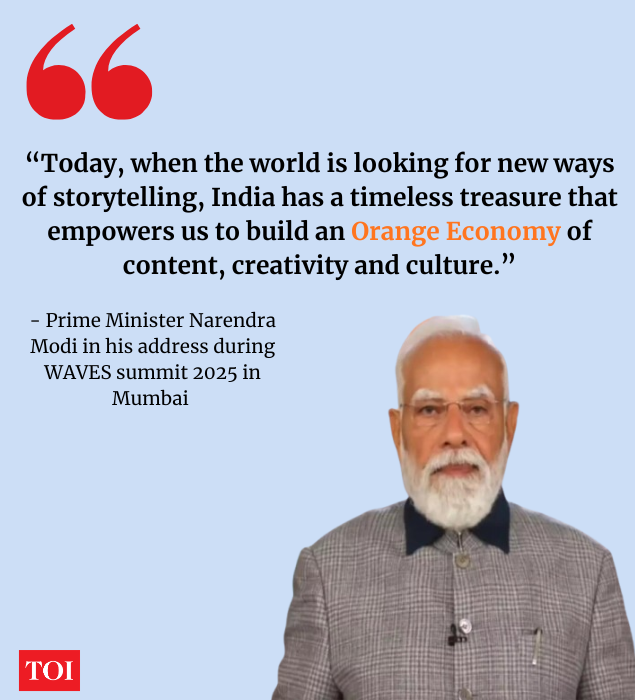
The Economic Survey projected that the AVGC sector alone could require up to 2 million skilled professionals by 2030.Sitharaman highlighted that India’s demographic dividend must be aligned with emerging sectors, particularly those driven by digital platforms and intellectual property.At the WAVES summit earlier this year, Prime Minister Narendra Modi reinforced this direction, describing India as a nation with “a billion-plus stories” and positioning the creative economy as both cultural capital and economic opportunity.
.

.

India’s creator economy is projected to grow at an 18% compound annual growth rate, rising from Rs 19 billion in 2023 to Rs 34 billion by 2026, according to Ernst & Young.

Influencer economy & marketing: From digital voices to structured media power

Influencer marketing is defined as “a collaboration between popular social-media users and brands to promote brands’ products or services.” What began as informal brand shoutouts has now evolved into a regulated, data-driven industry. The scale today is substantial. Globally, the influencer marketing economy was valued at $21.1 billion in 2023, having more than doubled since 2019 on the strength of platforms such as Instagram and YouTube. According to ET, the global influencer marketing platform market grew from $6 billion in 2020 to a projected $24.1 billion by 2025, at a CAGR of 32%.
.

.

Forbes highlighted that the broader creator economy is now a $250 billion global force, projected by Goldman Sachs to reach $480 billion by 2027. Statista reports that over 200 million creators operate globally, while social commerce is expected to touch $2.9 trillion by 2026.India’s influencer marketing sector is projected to reach Rs 3,375 crore by 2026, growing at a CAGR of 18%, according to EY’s ‘State of Influencer Marketing in India’ report. Exchange4Media estimates the core influencer market at around Rs 3,600 crore in 2024, projected to reach Rs 4,500 crore in 2025, though insiders suggest the real size may exceed Rs 10,000 crore due to direct brand-creator deals outside conventional tracking.Creator fees rose between 10–30%, while top-tier creators in India reportedly earned between Rs 10–25 crore annually through endorsements, platform monetisation, live events and equity partnerships.Types of InfluencersInfluencers are categorised by follower size:

  • Nano influencers: Fewer than 10,000 followers
  • Micro influencers: 10,000–50,000 followers
  • Medium influencers: 50,000–100,000 followers
  • Macro influencers: More than 500,000 followers
  • Mega influencers: Over one million followers

EY observes that marketers leverage both large/macro and micro/nano influencers equally. While mega and macro influencers drive awareness and brand loyalty, micro and nano influencers often deliver stronger engagement and relatability.Regional creators are becoming central to brand strategies. According to Influencer.in (Social Beat), regional creators drive 35–40% better engagement in Tier-2 and Tier-3 cities. Budget allocation for regional creators has increased from 3–10% earlier to 8–20%, with expectations of further growth.

Gen Z: The creator generation

The ecosystem is increasingly youth-driven. A 2024 YouTube India–SmithGeiger report found that 83% of Indian Gen Zers consider themselves creators, and 75% see content creation as a genuine career path. More than 55% reported gaining financial independence through digital platforms.As ET highlights, influencer marketing is seen as cost-effective and personalised. Influencers build relatability and directly shape purchase decisions. In fact, 61% of consumers trust recommendations from creators more than traditional brand advertising, according to Sprout Social cited by Forbes.Influencer partnerships typically follow two models:

  • Flat-fee brand deals per post (ranging from Rs 2,000 to Rs 30 lakh per post in India, depending on scale).
  • Affiliate commissions, where influencers earn from sales generated via links or promo codes.

Increasingly, creators are moving beyond endorsements to ownership — launching brands, seeking equity partnerships and building independent revenue streams. Exchange4Media notes a visible shift from “endorser to owner.”From hyper-local memers to pan-India gaming stars, from nano creators in Tier-3 cities to mega influencers earning crores annually, India’s influencer economy is no longer peripheral to marketing. It has become a structured, high-growth pillar of brand strategy — reshaping commerce, culture and consumer trust in the digital age.For creators like Darshit, having a mass following of 51.7K followers, the viral Old Delhi reel was only the beginning. What followed was a clearer understanding of how the influencer economy actually works. “I started making content post-COVID but it was mostly just pictures and a few videos with music. No voiceover,” he says. It was only after that breakout moment in 2024 that he began studying the platform more closely — especially the algorithm.“Instagram is fundamentally different… it thrives on recommendations,” he explains. Unlike platforms that depend heavily on follower count, Instagram pushes reels to users who may never have heard of the creator but are likely to engage. “Someone who has never made a video in their life can come to this platform and make one and get millions of views.”Uploading identical content across YouTube Shorts, Facebook and Threads, Singh says Instagram consistently delivers his highest reach. For him, discovery is not accidental — it is engineered.But growth alone was never the goal. His identity as a “food deinfluencer” is built on resisting what he sees as blind positivity in brand culture.“Our society today has a trust crisis. Be it government, institutions, or media. Everyone is facing that. So for me, my audience’s trust is paramount,” he says. Even in paid collaborations, he critiques dishes he does not like. “I wanna be the reason behind someone’s memorable meal.” His approach reflects a broader shift in marketing strategy. “Earlier brands used to only work with celebrities and movie stars but now they prefer influencers in most cases as the latter gives them higher ROI,” he observes. “Celebrities promoting a product feels like an ad. But some influencers subtly promote the brand in their organic way… audiences are more likely to purchase that product later.”A few kilometres away from Old Delhi’s food lanes, Santosh is planning his next trip — between client calls.Santosh began his creator journey not in airports or mountains but inside hostel rooms. What started as campus vlogs on YouTube, hostel stories, placement anxiety, the reality of being an IIT student slowly built a community of aspirants and peers.Then came Instagram.Reels allowed him to compress entire journeys into seconds — a new state every month, documented between office deadlines. The platform’s real-time engagement — stories, reels, DMs helped him move beyond informational content into something more personal. “You can be discovered without being famous,” he says, pointing to how a few of his travel and IIT reels travelled far beyond his existing follower base.More importantly, he has watched the industry change.“When I started, content creation felt experimental,” Santosh says. “Now brands plan structured budgets. Long-term collaborations. There’s more professionalism.” In his words, the creative economy is no longer informal hustle. It’s recognised work.

Instagram’s revenue model: The business behind the scroll

If the orange economy is the ecosystem and creators are its lifeblood, then Instagram is the marketplace — the digital high street where attention turns into advertising, and creativity converts into commerce.To understand how influencer marketing thrives, it’s important to understand how Instagram itself makes money.Founded in 2010 by Kevin Systrom and Mike Krieger as a simple photo-sharing app, Instagram was built on one idea: visuals connect people. What started as a minimalist platform for filtered photos has evolved into a billion-user ecosystem of Stories, Reels, shopping tabs and creator tools.After Meta (then Facebook) acquired Instagram in 2012 for $1 billion, the platform scaled rapidly. Today, Instagram is estimated to be worth around $400 billion, making it one of the most valuable digital assets globally.The engine driving all of this? Advertising.Instagram’s primary revenue model is advertising. What makes Instagram powerful for marketers is its algorithmic precision. Content appears based on user behavior, engagement patterns and interests.The platform’s shift toward short-form video has supercharged engagement. According to a Meta-commissioned IPSOS study:

  • 97% of Indian consumers watch short-form videos daily
  • 95% daily usage for Reels, compared to 83% for television

Meta India’s Managing Director Arun Srinivas said: “India is leading the world in video adoption, and Reels is at the center of this shift. Five years since its launch, Reels is India’s leading short-form video platform—driving massive engagement, shaping culture, and delivering real business impact.”Instagram’s model is symbiotic with the influencer economy.

  • Shoppable tags allow influencers to link products directly.
  • Affiliate links enable commission-based earnings.
  • Sponsored posts generate flat-fee income.
  • Bonuses and milestone incentives reward engagement growth.

While food reels dominate one corner of the ecosystem, knowledge-driven creators are building influence in quieter but equally powerful ways.For Bikramjeet Dutta, having a massive following of 51.9K followers, Instagram’s inflexion point came during the 2024 Lok Sabha elections. “I was attending several political rallies, press conferences etc. I started uploading that it started gaining views and followers,” he says. His content extends beyond political coverage into books, geopolitics and history. “Instagram helped me to connect with those who are experts in these fields,” he says, adding that credibility assessment feels more immediate on the platform. “In Instagram it’s quite easy to verify whether the person is credible or not.” Discovery, he believes, has fundamentally shifted the opportunity landscape. Posting book reviews led to requests from publishers. Geopolitical commentary brought invitations to panel discussions and book launches. “Yes, Instagram has made it easier for creators to be discovered,” he says.

Instagram and small businesses: Visibility, trust and the new storefront

For many small businesses in India, Instagram is no longer just a marketing add-on. It functions as a storefront, catalogue, customer service desk and storytelling space — often all at once.The shift became especially visible during the pandemic. In 2020, Instagram introduced the ‘Support Small Business’ sticker, which grouped Stories using the sticker into a shared feed so “more people can discover more small businesses.” Around the same time, it rolled out features that made it easier to discover gift cards, online food orders and fundraisers, allowing users to tap directly and purchase through partner websites. For Nidhi who runs a handmade chocolate business, Instagram became more than a display window.“Instagram didn’t just become a platform… it became the space where my creativity found its voice,” she says. She explains that unlike other platforms, Instagram allowed her “to connect, not just sell — to share stories, build trust, and grow a community that appreciates handmade details and thoughtful gifting.”Instead of simply listing prices, she moved toward behind-the-scenes reels — melting chocolate, assembling hampers, last-minute packing. The shift from static posts to process-driven video felt “more genuine for the audience.”Another small business owner Harsh in the fabric trade echoes a similar sentiment.“Instagram has played a major role in building our fabric brand identity. Through reels, product videos, and live customer interactions, we showcase our manufacturing quality, fabric textures, and latest collections in a very visual way.”Increased competition, he highlights, has pushed businesses “to become more creative by high-quality reels and by making it more realistic.”In the architecture of the orange economy, small businesses are not just beneficiaries of digital platforms. They are active participants: adapting content, tone and strategy in response to algorithmic culture and rising competition.

Source link

Cabinet may clear infra projects over 40k crore, including Rs 19k crore tunnel through Brahmaputra in poll-bound Assam | India News


Cabinet may clear infra projects over 40k crore, including Rs 19k crore tunnel through Brahmaputra in poll-bound Assam

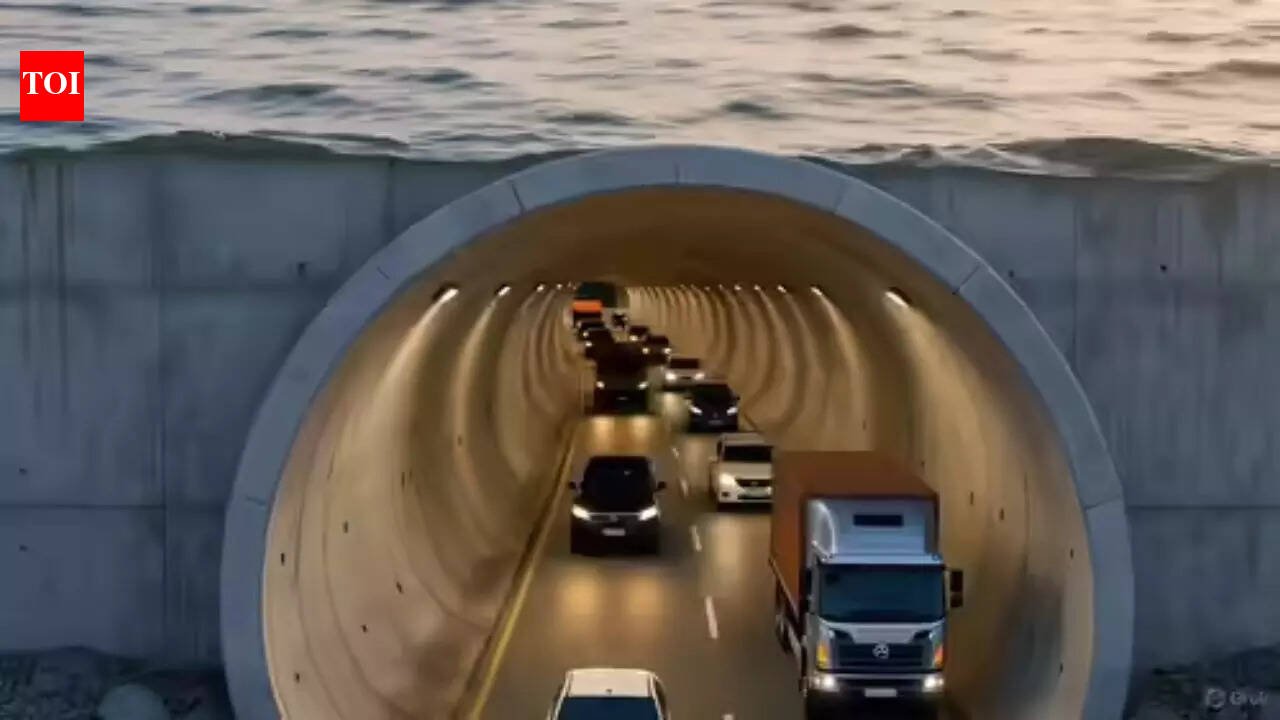
NEW DELHI: Cabinet is likely to approve over half a dozen infrastructure projects on Friday worth over Rs 40,000 crore, including nearly Rs 19,000 crore road-cum-rail tunnel through Brahmaputra river in poll-bound Assam. This will be one of the biggest govt funded projects in the highway sector.South Block will host the last Cabinet meeting on Friday afternoon where more items may be taken up by the highest decision making body for approval, officials said. The infrastructure projects would be largely from the road and railway sectors.It can be recalled that recently an inter-ministerial panel, headed by the expenditure secretary had given green signal for the construction of a 15.8 km twin tube tunnel across Brahmaputra in Assam connecting Gohpur and Numaligarh. One of the tubes will have provision for a single rail track. As per design, there will be no vehicular movement when trains run through this tube.TOI on Oct 6 had first reported that road and railway ministries have identified three links for construction of road-cum-rail tunnels, including underwater tunnels through Brahmaputra and a 22-km tunnel passing through Chicken Neck corridor in the northeast.The Northeast Frontier Railway had shared details of a new line of the Dumdangi-Rangapani-Bagdogra section and the proposed alignment, which includes construction of a 22-km tunnel, with the road transport ministry. The National Highways Authority of India (NHAI) has finalised the alignment for the Gorakhpur-Siliguri Expressway project.Once the Brahmaputra tunnel project is complete, the travel time between Gohpur and Numaligarh will reduce from the current six-and-half hours to just 30 minutes, shortening the distance from 240 km to 34 km, officials said. This will enhance connectivity to Arunachal Pradesh, Manipur, and other northeastern states.


Source link

‘Whatever discussions we had remains between us’: Supriya Sule on merger of NCP factions after Ajit Pawar’s death | India News


'Whatever discussions we had remains between us': Supriya Sule on merger of NCP factions after Ajit Pawar's death

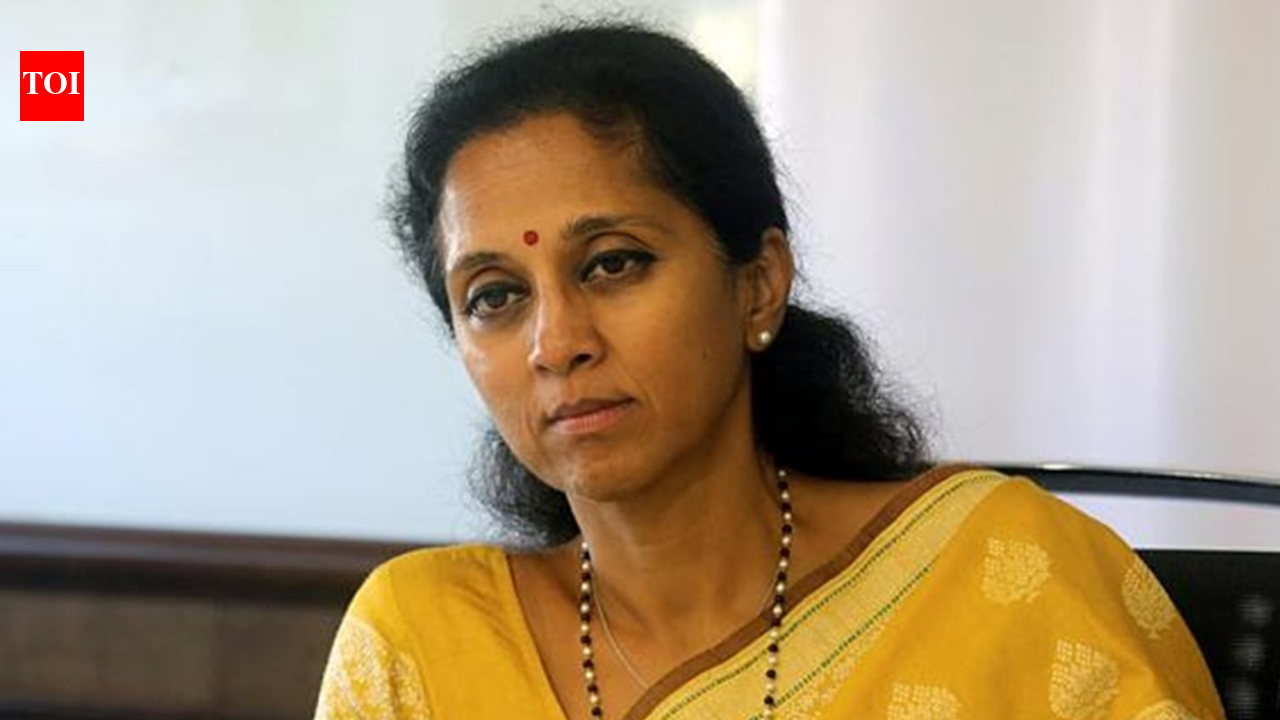
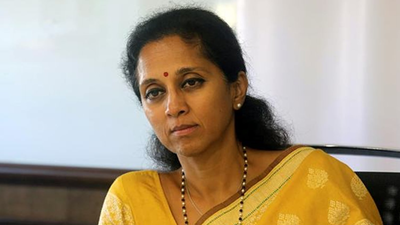
NEW DELHI: NCP (SP) working president Supriya Sule on Thursday said it was the moral responsibility of everyone to fulfil the unfinished dreams of Ajit Pawar, who died in a plane crash on January 28. She also added that the merger discussions they had “remain between us”.“We are supporting each other and moving forward. Dada is no more, so I do not want to revisit old matters. Whatever discussions we had remain between us. It is our moral responsibility to complete his unfinished dreams,” news agency PTI quoted her as saying when asked about speculation over a possible merger of the two NCP factions.On whether talks on a merger would continue, Sule said the family was in mourning and did not wish to comment further at this stage.Referring to concerns raised by MLA Rohit Pawar over the circumstances of the plane crash, she said chief minister Devendra Fadnavis had assured a detailed inquiry. “His uneasiness is natural. There are many questions about what happened, how it happened and whether it could have been prevented. The chief minister has promised a detailed probe. We should wait for its outcome,” the Baramati Lok Sabha MP said.Sule also expressed gratitude to leaders across party lines who enquired about the health of NCP patriarch Sharad Pawar during his recent hospitalisation. She said Prime Minister Narendra Modi, Congress leaders Sonia Gandhi and Rahul Gandhi, Union minister Rajnath Singh, and Jammu and Kashmir chief minister Omar Abdullah were among those who reached out. “I sincerely thank everyone for standing with the Pawar family during this period,” she said.


Source link

Sarla Maheshwari, iconic DD newsreader, passes away at 71 | India News


Sarla Maheshwari, iconic DD newsreader, passes away at 71

NEW DELHI: Sarla Maheshwari, one of the most recognisable faces of Doordarshan’s retro era, passed away on Thursday. She was 71.Her death was confirmed by Doordarshan National through a post on social media, where the broadcaster remembered her as a cherished and distinguished newsreader whose voice and presence left a lasting mark on Indian television journalism.“A heartfelt tribute from the Doordarshan family to Smt. Sarla Maheshwari. She was a respected and esteemed newsreader of Doordarshan, who carved out a special place in the Indian news world with her gentle voice, precise pronunciation, and dignified presentation. Her simplicity, restraint, and personality established deep trust in the hearts of viewers,” Doordarshan National wrote on X.The public broadcaster wrote that her understated style and composed demeanour earned the confidence and affection of audiences across the country.Veteran news anchor Shammi Narang, who worked alongside Maheshwari, also paid tribute.“I feel utmost grief in announcing the sad demise of my ex co-News anchor at Doordarshan, Sarala Maheshwari. She was the embodiment of grace and courtesy. Beautiful not just in appearance but even more so at heart, she had a remarkable command over language and was a reservoir of knowledge. Her presence on the Doordarshan screen had a unique aura. She respected everyone and uplifted every space she was part of. I pray that God grants her soul eternal peace and gives strength to the Maheshwari family. Om Shanti,” Narang wrote in a post on X.Maheshwari became a household name during the 1980s and 1990s, when Doordarshan dominated the television news space in India. For nearly three decades, from 1976 until 2005, she delivered Hindi news bulletins with composure and clarity, earning admiration for her measured tone and flawless diction.Her journey in broadcasting began while she was pursuing a PhD at Delhi University. After successfully auditioning as an announcer, she gradually moved into news reading and remained a steady presence as Indian television transitioned from the black-and-white era to colour broadcasting.With her calm authority and polished presentation, Sarla Maheshwari represented a generation of news anchors who defined credibility on screen.


Source link

‘Be ready for exemplary costs’: SC raps Congress MP Jairam Ramesh for challenging Centre’s office memorandum | India News


‘Be ready for exemplary costs’: SC raps Congress MP Jairam Ramesh for challenging Centre's office memorandum

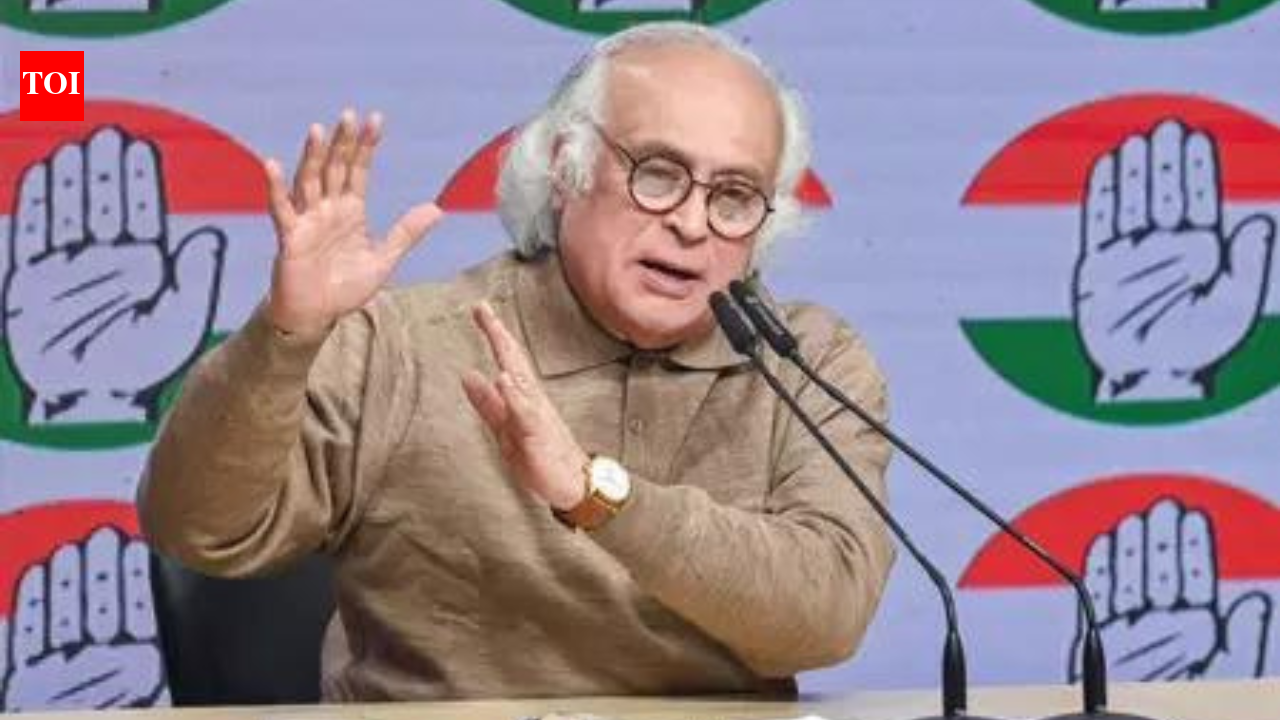
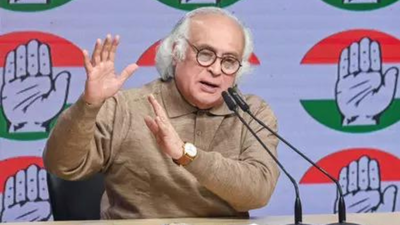
NEW DELHI: Supreme Court on Thursday reprimanded Congress MP Jairam Ramesh for challenging an Office Memorandum issued by the Centre to implement the apex court’s judgment on retrospective environmental clearance.A bench of Chief Justice Surya Kant and Justice Joymalya Bagchi said that since the Office Memorandum was meant to implement an SC judgment, the challenge was effectively against the judgment itself.“Be ready for exemplary costs. We know the design behind this,” a bench led by CJI Surya Kant said.“Can one challenge a judgment by a writ petition? It is just for media consumption,” the bench added.When the bench warned of exemplary costs, Ramesh withdrew his plea.Last year in May, the top court held that the right to live in a pollution-free atmosphere was part of the fundamental right as it struck down the Centre’s Office Memorandum allowing ex post facto or retrospective environmental clearances to projects in violation of norms.“The Union government, as much as individual citizens, has a constitutional obligation to protect the environment,” the court said. It added that it “must come down very heavily” on the Centre’s attempt to do “something which is completely prohibited under the law”.It further observed, “Cleverly, the words ex post facto have not been used, but without using those words, there is a provision to effectively grant ex post facto EC. The 2021 OM has been issued in violation of the decisions of this court….”The Centre, as a result, was restrained from issuing directions for grant of ex post facto clearances in any form or manner or for regularising acts done in contravention of the EIA notification.


Source link

Bharat Bandh: Rahul Gandhi backs workers & farmers; takes ‘grip’ jibe at PM Modi | India News


Bharat Bandh: Rahul Gandhi backs workers & farmers; takes ‘grip’ jibe at PM Modi

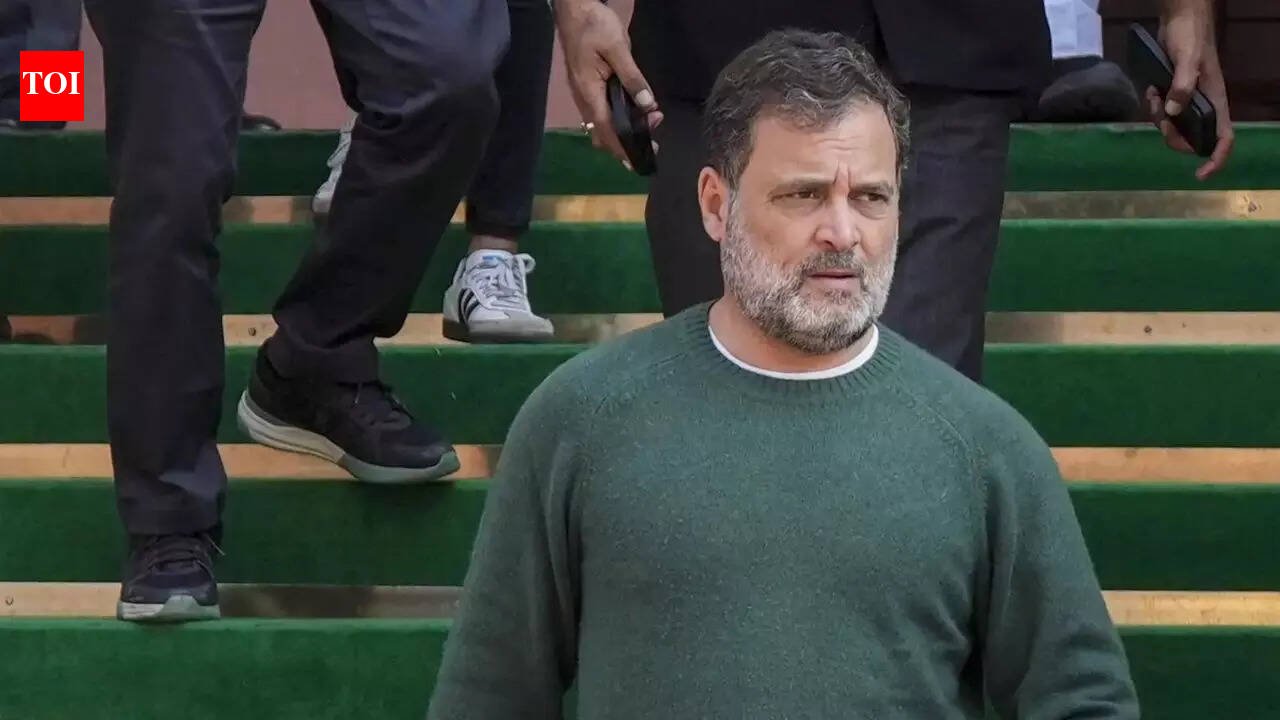
NEW DELHI: Congress leader Rahul Gandhi on Thursday backed nationwide protests by workers and farmers demanding protection of their rights. He flagged concerns over labour reforms, trade policies, and potential changes to the rural jobs programme MGNREGA.“Workers fear that the four labour codes will weaken their rights. Farmers are apprehensive that the trade agreement will harm their livelihoods. And weakening or scrapping MGNREGA could snatch away the last lifeline of villages. When decisions affecting their future were taken, their voices were ignored,” he said through a post on X.“Will Modiji listen now? Or is the “grip” on him too strong? I stand firmly with the workers and farmers on their issues and their struggle,” Rahul added.An all-India general strike called by ten Central Trade Unions (CTUs) and backed by the Samyukta Kisan Morcha (SKM) on Thursday is aimed at opposing a range of government policies, including the four labour codes, privatisation and contractualisation measures, the Electricity Amendment Bill 2025, changes to MGNREGA and the proposed Seed Bill.Large-scale participation from farmers, agricultural workers and industrial unions is expected at protest sites across the country, with power sector employees, PRTC staff and other worker organisations also set to join.In a statement, the SKM said the strike seeks the withdrawal of the four labour codes, the Electricity Bill 2025, the Seed Bill 2025 and the VB-G RAM G Act 2025, among other demands. It also called for the restoration of the old pension scheme and the implementation of minimum wages for all workers, including scheme workers.Communist Party of India (CPI) leader and All India Trade Union Congress (AITUC) working president Binoy Viswam expressed full support for the nationwide farmers’ strike, describing it as a movement to defend people’s basic rights.Apple farmers in Himachal Pradesh have also intensified preparations to join the nationwide farmers’ strike on February 12 and announced a march to Delhi, warning that recent import duty reductions under India-US and other free trade agreements could hurt the state’s apple-based economy.They expressed concern that cheaper imports could impact local growers, despite repeated assurances from union commerce and industry minister Piyush Goyal that the interests of Indian apple farmers will be safeguarded.While several trade unions and farmer organisations have decided to join the strike, the National Front of Indian Trade Unions (NFITU) said it would not participate, describing the protest as “politically motivated.”


Source link

UN report flags JeM role in Delhi Red Fort blast; warns of Masood Azhar’s women-only terror wing | India News


UN report flags JeM role in Delhi Red Fort blast; warns of Masood Azhar’s women-only terror wing

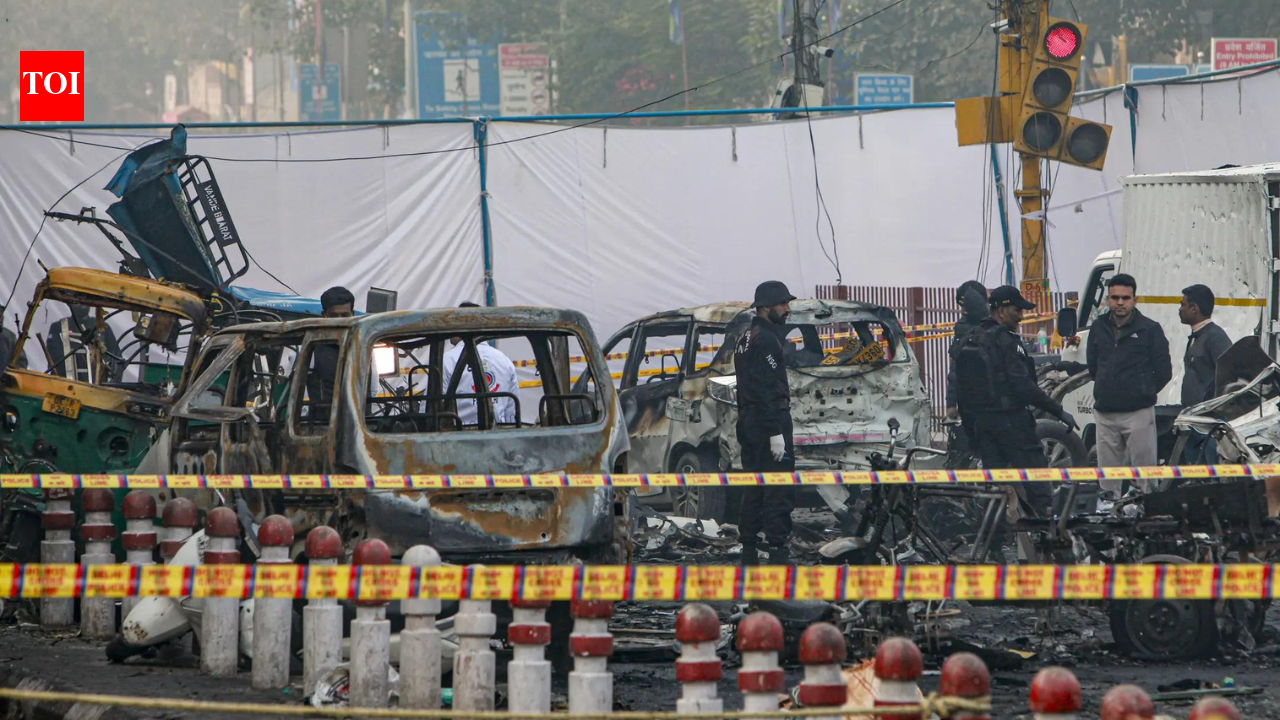
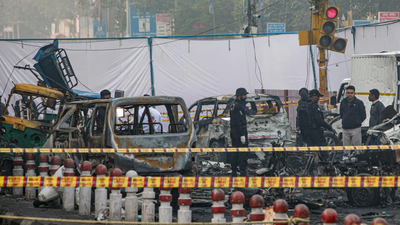
NEW DELHI: A new UN Security Council report has blamed Jaish-e-Mohammed for the carrying out series of attacks, linking it to car bombing near the Red Fort in New Delhi in November last year.In a biannual report from the Security Council’s monitoring team for sanctions on al-Qaeda and Islamic State, the security council said that the outfit was “reported to be linked to an attack on the Red Fort in New Delhi on 9 November that killed 15 people”.“One Member State noted that Jaish-i-Mohammed had claimed responsibility for a series of attacks. It was also reported to be linked to an attack on the Red Fort in New Delhi on 9 November that killed 15 people,” the report which was released this week said.The report also noted that UN designated terrorist Masood Azhar has on October 8 last year announced the establishment of women wing which was aimed at supporting terrorist attacks.

.

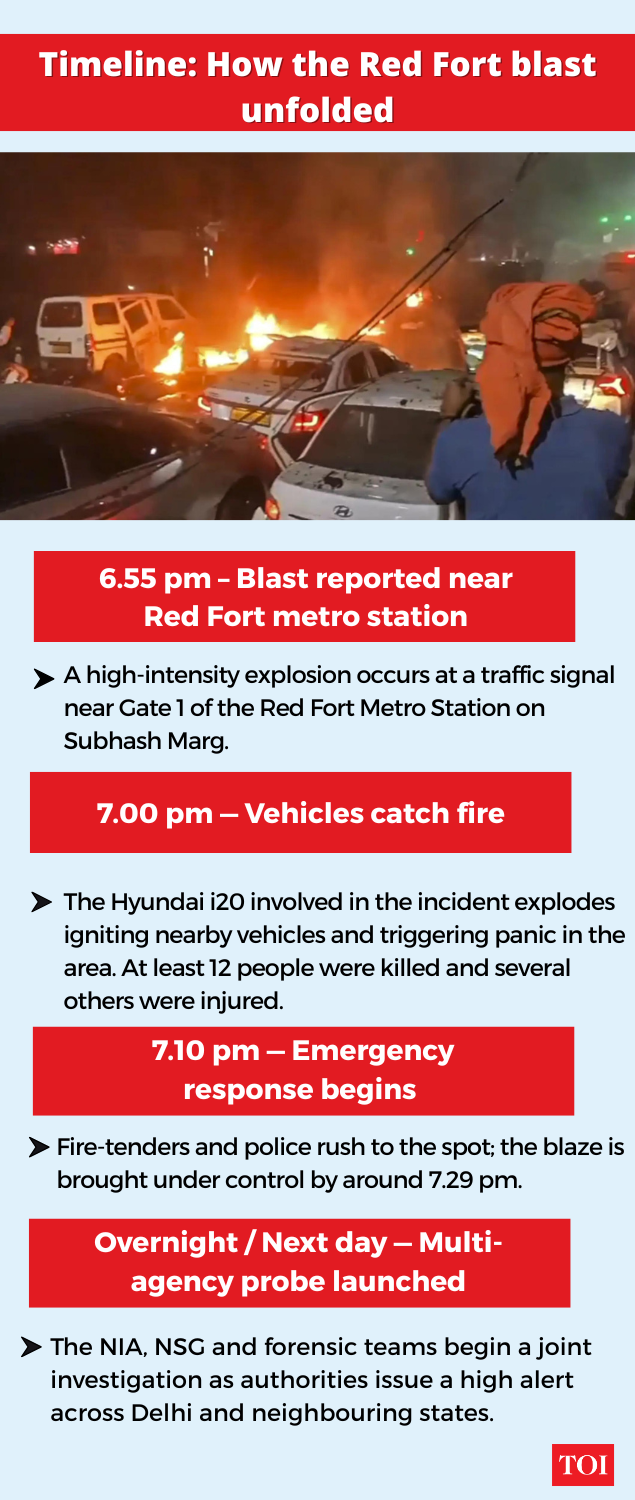
“On 8 October, Jaish-i-Mohammed leader Mohammed Masood Azhar Alvi formally announced the establishment of a women-only wing, Jamaat ul-Muminat (not listed), which was aimed at supporting terrorist attacks,” the report said.“Another Member State reported that Jaish-i-Mohammed was defunct. Separately, it was reported that on 28 July, three individuals allegedly involved in the attack perpetrated in Pahalgam, in Jammu and Kashmir, were killed,” it added.On November 10, a car explosion near Delhi’s Red Fort killed 15 people and injured dozens of others, triggering a high-level investigation that revealed the existence of a sophisticated ‘white-collar’ terror network with ties to Jaish-e-Mohammed.Even before the blast, several arrests had been made across multiple states, and investigators had begun to piece together evidence of an interstate terror module.Following the explosion, the NIA found that the incident was connected to earlier arrests, leading to a series of new revelations as the probe deepened.The 1267 Sanctions Committee monitors sanctions on al-Qaeda, Islamic State and their affiliates. LeT and JeM are included under the purview of the committee because of their links to al-Qaeda dating back to the 1990s.


Source link

US chokehold on PM Modi, he has sold India: Rahul Gandhi | India News


US chokehold on PM Modi, he has sold India: Rahul Gandhi

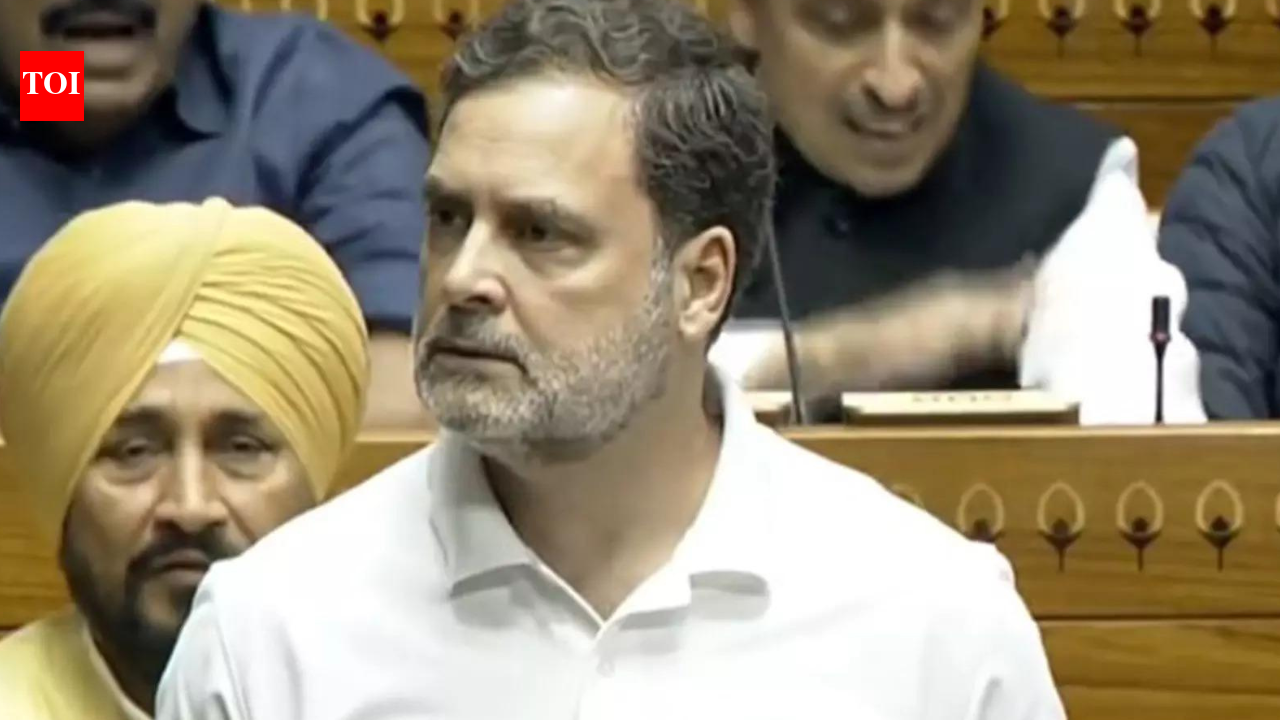
NEW DELHI: Leader of the opposition Rahul Gandhi accused the govt Wednesday of “completely surrendering” India’s core data, food and energy interests in the trade deal, in a sharp attack in Lok Sabha on PM Modi who, he alleged, had caved in to pressure due to the leverage that country has over him.Participating in the discussion on the Budget, Gandhi began his speech with mention of the concept of grip and chokehold players are taught in martial arts to floor rivals and then used the metaphor to target Modi in the US’s handling of him. Gandhi’s condemnation of the interim pact as a sellout of national interest was the theme of his speech.‘Farmers left to mercy of mechanised US farms’Rahul said the data of 140 crore Indians is the country’s most valuable asset, while the nation needs to secure its energy and food interests in these turbulent times.The LoP’s controversial references to a convicted child sex offender in the US, two Indian businessmen and Bharat Mata as he sought to corner govt was met with resistance from treasury benches and were expunged from records.He alleged that minister Hardeep Puri had introduced an Indian businessman to the child sex offender, and the files released by the US govt mention their names. The Chair asked him not to level the allegations.Rahul Gandhi’s condemnation of the interim trade pact as a sellout of national interest was the theme of his speech, hitting the BJP-led NDA govt on a plank which it has practically owned since coming to power in 2014.He alleged, “The most valuable asset (data) of India has been handed over. Our farmers have been left to the mercy of mechanised American farms. Our textiles have been wiped out. Our energy security has been handed over. We cannot buy oil from who we want to buy it from. This is a wholesale surrender.”Unlike Modi’s and NSA Doval’s assertion that it is not an era of war, Rahul said the world is in fact “moving into an era of war and instability” amid intensifying geo-political conflicts. Dollar’s supremacy is being challenged and world is moving away from the era of one superpower, he said.While the budget recognises these challenges, including the weaponisation of energy and finance, it offers no future pathways, he said, before turning to the agreement to hit out at govt.He alleged the deal has compromised security in all three critical things needed to run a modern country: data, food supply and energy.


Source link