‘Tragic death’: Indian-origin student from Haryana fatally stabbed in UK; probe under way


‘Tragic death’: Indian-origin student from Haryana fatally stabbed in UK; probe under way
Image: X@/sunilsangwanckd

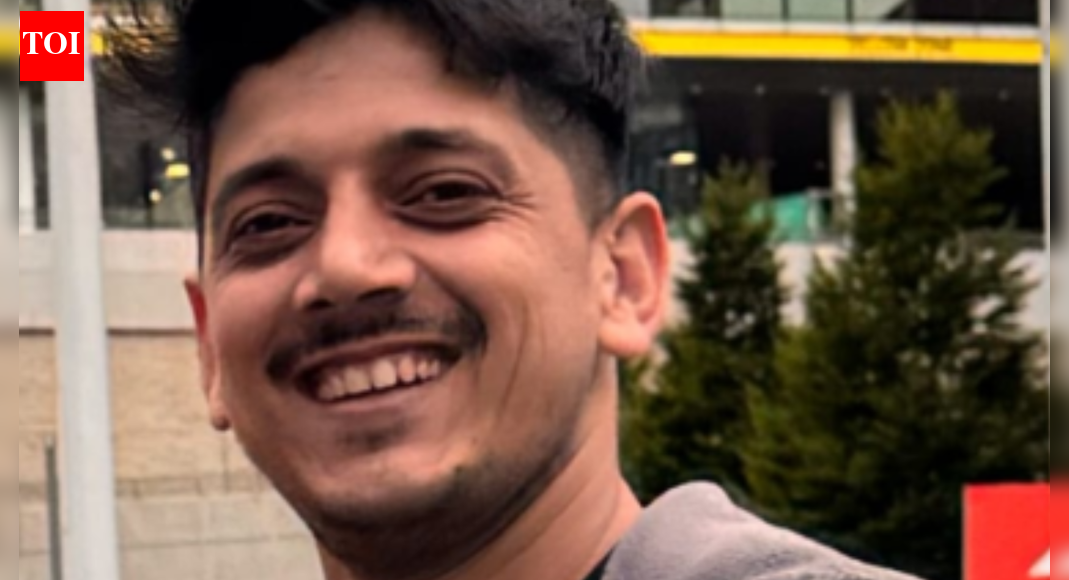
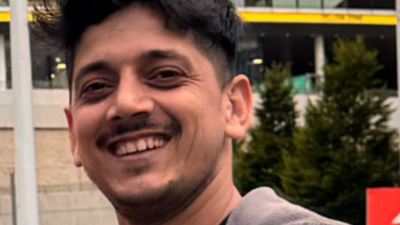
An Indian-origin student on Tuesday was fatally stabbed in a street attack in central England, with the 30-year-old succumbing to his injuries in hospital, police said. “On Tuesday morning (25 November) around 4.15 am (local time) a 30-year-old man was found by officers on Barbourne Road in Worcester with serious injuries,” West Mercia police stated, as cited by PTI.West Mercia Police have launched an appeal for witnesses to the incident in Worcester, while reports from India have identified the victim as Vijay Kumar Sheoran from Haryana’s Charkhi Dadri district, though formal identification in the UK is still pending.Five men arrested on suspicion of murder have been released on bail pending further investigation, while a sixth suspect has been released with no further action.“The five men who were arrested on suspicion of murder are now on bail and will continue to help us with our investigation,” West Mercia’s detective chief inspector Lee Holehouse said, as cited by PTI. Holehouse said that officers have been pursuing multiple lines of enquiry to determine what happened on Tuesday morning and what led to the man’s death. He added that police will remain on Barbourne Road over the weekend to gather evidence and reassured residents that there is no cause for alarm.“I continue to appeal to anyone who has any information that would help with our enquiries to please come forward, however insignificant you feel it may be; it could be a vital piece of information,” Holehouse said. Charkhi Dadri MLA Sunil Satpal Sangwan expressed condolences on social media, saying he was deeply shocked by the “tragic death” of Sheoran and offered support to the family during their moment of grief.“I urged the Indian government to intervene at the earliest and extend every possible support to the grieving family — especially by ensuring the urgent repatriation of his mortal remains to India,” Sangwan said. “We also appeal for a transparent, fair, and time-bound investigation so that justice is served and the perpetrators are held strictly accountable,” Sangwan added.


Source link

Parliament winter session’s economic agenda: 9 bills listed for discussion; insurance, sin-goods taxation and more in focus


Parliament winter session's economic agenda: 9 bills listed for discussion; insurance, sin-goods taxation and more in focus
Parliament’s winter session kicks off Monday

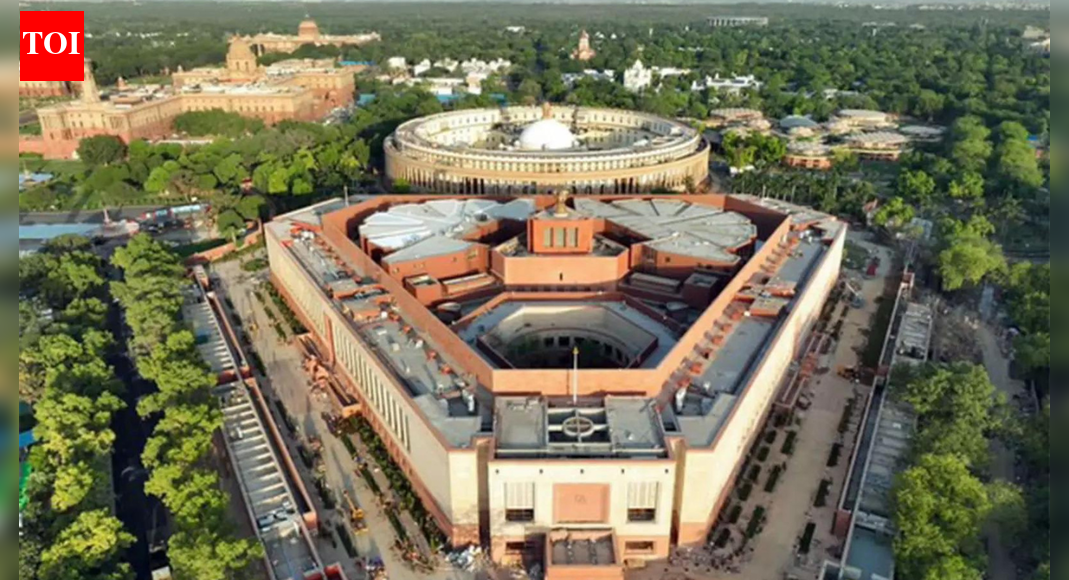
NEW DELHI: As the Winter Session of Parliament begins on Monday, the government is set to push a heavy economic agenda, lining up nine key bills ranging from insurance reforms to new taxation frameworks for sin goods such as tobacco and pan masala. The session will run from December 1 to 19 and will also take up the first batch of Supplementary Demands for Grants for 2025-26.A major item on the list is the Insurance Laws (Amendment) Bill, 2025, which seeks to raise the foreign direct investment cap in insurance from 74 per cent to 100 per cent. The move, positioned as part of a wider effort to modernise financial-sector regulation, comes at a time when the industry has already drawn Rs 82,000 crore in FDI.On Monday, Finance Minister Nirmala Sitharaman will also introduce two significant tax-related proposals in the Lok Sabha — The Central Excise (Amendment) Bill, 2025 and The Health Security se National Security Cess Bill, 2025. Together, the bills aim to reshape how tobacco and pan masala are taxed. The measures would replace the GST compensation cess with an excise duty on tobacco products, while the new Health Security cess would be levied on machines or processes used to manufacture specified goods, with proceeds earmarked for national security and public health expenditure. Currently, tobacco and pan masala attract 28 per cent GST plus varying compensation cess rates.Another major reform on the agenda is the Securities Markets Code Bill, 2025, which proposes consolidating three separate laws governing India’s capital markets into a single unified code to streamline compliance and improve ease of doing business.The session is also expected to see progress on the Jan Vishwas (Amendment of Provisions) Bill, 2025, now with a Select Committee, which aims to decriminalise a wide range of minor offences and reduce regulatory friction for companies.Other economic bills planned for consideration include amendments related to the Insolvency and Bankruptcy Code, Manipur GST, National Highways administration, and corporate law updates — rounding out what is expected to be one of the more reform-heavy sessions in recent years.


Source link

IND vs SA: Sunil Gavaskar slams South Africa coach Shukri Conrad for ‘grovel’ remark – ‘I personally don’t believe in apologies’ | Cricket News


IND vs SA: Sunil Gavaskar slams South Africa coach Shukri Conrad for 'grovel' remark - 'I personally don't believe in apologies'
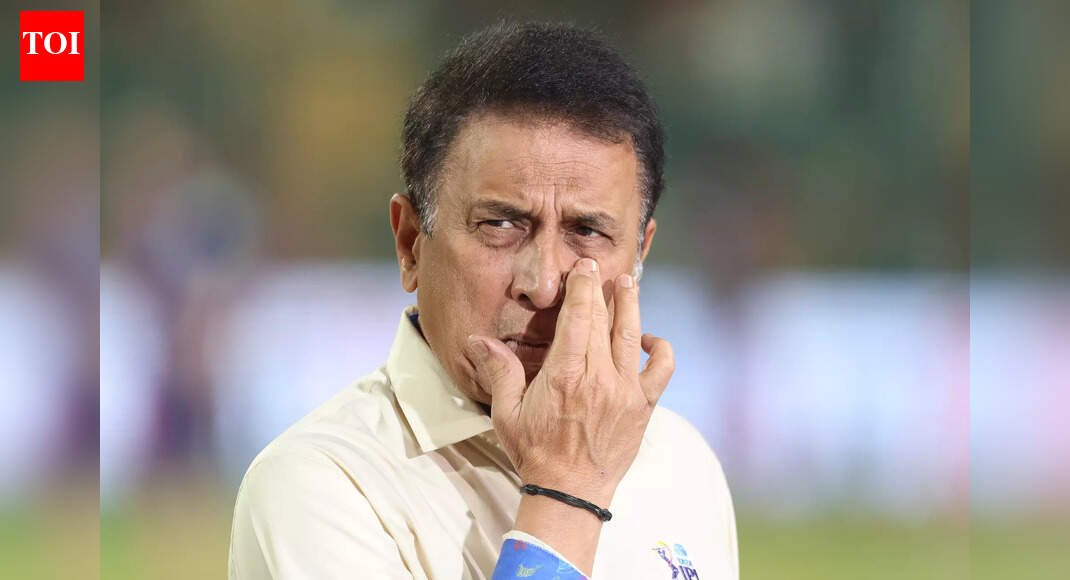
Sunil Gavaskar (Photo by Pankaj Nangia/Getty Images)

Former Indian cricket legend Sunil Gavaskar has criticised South Africa head coach Shukri Conrad’s ‘grovel’ comment during the second Test match between India and South Africa.South Africa won the Test series 2-0 against India. During the second Test in Guwahati, despite having a substantial first-innings lead of 288 runs, South Africa chose to bat again instead of enforcing the follow-on.

Why Indian cricket needs Rohit Sharma, Virat Kohli… more than ever

When questioned about this decision at the press conference, Conrad stated: “We wanted them (India) to really grovel.”On the JioHotstar show ‘Cricket Live’, Gavaskar addressed Conrad’s controversial remark.“You could say it was an ill-advised use of the word. We need to look back at South Africa’s re-entry into international cricket. It was the Indian Cricket Board that proposed South Africa’s readmission after more than 20 years of isolation, and their first international match on return was played in India,” he said.“When you consider the current landscape of South African cricket, especially the SA20, five out of the six franchises are Indian-owned. These owners are significantly supporting South African players–not just the international stars who are well taken care of, but the fringe players as well–giving them opportunities to build strong careers.”Gavaskar emphasised the historically positive relationship between Indian and South African cricket. He suggested that while an apology wasn’t necessary, Conrad should acknowledge his comment. “Indian and South African cricket have shared a positive, collaborative relationship for decades. Across all the years and encounters between the two teams, the cricket has always been competitive and tough, but never hostile. I have witnessed nearly every India-South Africa contest, and it has always been hard, fair cricket. Nothing beyond that. So yes, it may have been an ill-advised remark–wrong time, wrong place,” he added.“I hope that in his next media interaction, he addresses it. I don’t think an apology is necessary; I personally don’t believe in apologies. But acknowledging it and making up for it would be accepted by everyone. These things happen. In the heat of the moment, you can get carried away and say something that goes a bit over the top. Given the strong connection between Indian and South African cricket over the last 30 years, I think he can simply clarify that he got a bit carried away.


Source link

Cyclone Ditwah: Toll climbs to 334 in Sri Lanka; EAM updates on India’s relief response | India News


Cyclone Ditwah: Toll climbs to 334 in Sri Lanka; EAM updates on India's relief response
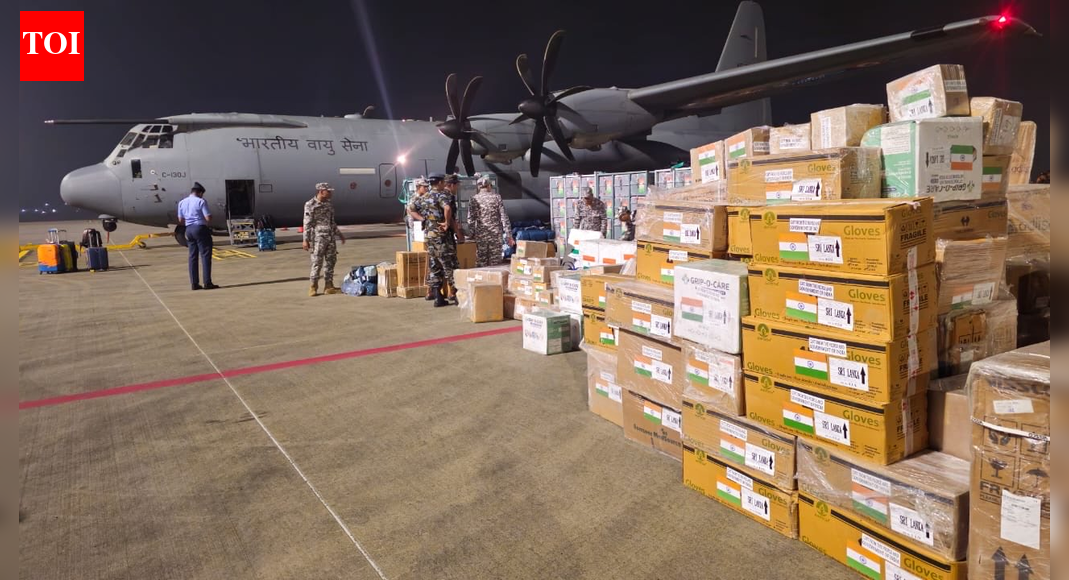
India sends approx 10 tons of disaster response supplies to Sri Lanka (@DrSJaishankar)

NEW DELHI: The Death toll caused by Cyclone Ditwah in Sri Lanka is now confirmed at at least 334, the Disaster Management Centre (DMC) reported on Sunday. Nearly 400 people remain unaccounted for in the aftermath of the disaster.As appeal for assistance from international agencies to help manage the crisis and support affected populations continues, external affairs minister S Jaishankar noted another 10 tons of disaster response aid being supplied to Sri Lanka under Operation Sagar Bandhu.“Another @IAF_MCC C130J carrying approx 10 tons of disaster response supplies, BHISHM Cubes and a medical team for on-site training & support has landed in Colombo,” he wrote.Although rainfall has eased following a week of heavy downpours, many low-lying areas in the capital, Colombo, remain inundated. More than a million people have been affected by the flooding, according to authorities.Rescue and relief operations are ongoing as officials work to reach stranded communities and provide essential aid. The government has warned that the situation remains critical in areas where floodwaters have not yet receded.The cyclone, which brought unprecedented rainfall to the region, has caused widespread damage to homes, infrastructure, and livelihoods, prompting concerns about public health and access to clean water.The disaster has also sparked a medical crisis. Blood supplies have dropped to critically low levels, with blood bank chief Lakshman Edirisinghe reporting only 236 units collected on Saturday, well below the daily requirement of 1,500.“Due to the floods and heavy rainfall, we were unable to carry out our mobile blood donation campaigns,” he said, urging people to donate at hospitals and blood banks, news agency ANI reported, quoting Al JazeeraAuthorities are also cautioning that saturated mountain slopes could lead to additional landslides in the coming days.


Source link

Elon Musk didn’t want Donald Trump to impose tariffs? Tesla CEO’s big statement on podcast with Nikhil Kamath; makes ‘free trade’ justification


Elon Musk didn’t want Donald Trump to impose tariffs? Tesla CEO’s big statement on podcast with Nikhil Kamath; makes 'free trade' justification
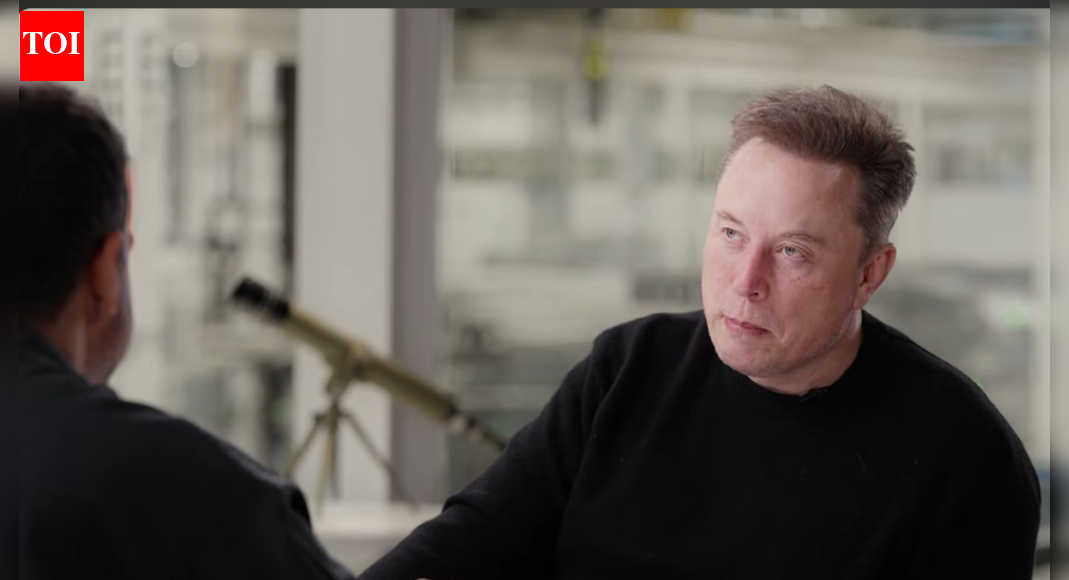
Elon Musk on Nikhil Kamath’s podcast

In a wide-ranging conversation with Zerodha cofounder Nikhil Kamath on the “People by WTF” podcast, Elon Musk shared his perspectives on various topics including US trade policies. The Tesla CEO touched on issues ranging from President Donald Trump’s tariff strategy to the H‑1B visa system, while also offering a bold prediction about the future of employment.Expanding on why he opposes tariffs, Musk argued that free trade is inherently more efficient. “I think generally free trade is better, is more efficient. Tariffs tend to create distortions in markets,” he said, adding that barriers make little sense even at a basic level. “Would you want tariffs between you and everyone else at an individual level? That would make life very difficult. Would you want tariffs between each city? No — that would be very annoying. Would you want tariffs between each state within the United States? That would be disastrous for the economy. So then why do you want tariffs between countries?” When asked how this plays out and what comes next, Musk said the core challenge is Trump’s firm stance on the issue. “I mean, the President has made it clear he loves tariffs. You know, I’ve tried to dissuade him from this point of view, but unsuccessfully,” he said.

The future of work

In addition to tariffs Musk also laid out an expansive vision of how AI and robotics could reshape work and income over the next two decades. “My prediction is, in the future, working will be optional. They don’t have to— I mean, look, obviously, people can play this back in 20 years and say, ‘Look, Elon made this ridiculous prediction and it’s not true.’ But I think it will turn out to be true that, in less than 20 years, but maybe even as little as, I don’t know, ten or 15 years, the advancements in AI and robotics will bring us to the point where working is optional,” said Elon Musk while speaking to Kamath. Expanding on the analogy, Musk compared future work choices to gardening as a hobby rather than a necessity. “In the same way that, like, say, you can grow your own vegetables in your garden or you could go to the store and buy vegetables. You know. It’s much harder to grow your own vegetables. But some people like to grow their vegetables, which is fine. But it’ll be optional, in that way, is my prediction,” said Musk. He added that accelerating technological progress could create a world of near-limitless abundance. “I’m confident that if AI and robotics continue to advance — which they are advancing very rapidly — like I said, working will be optional, and people will have any goods and services that they want. ‘If you can think of it, you can have it’ type of thing,” said Musk.

H‑1B visas and high-skilled immigration

Musk also weighed in on the United States’ H‑1B visa system, saying he supports high-skilled immigration but believes parts of the programme have been distorted. “I think there’s been some misuse of the H‑1B Program. It would be accurate to say that some of the outsourcing companies have kind of gamed the system on the H‑1B front, and we need to stop the gaming of the system” he told Kamath, arguing that the scheme should favour genuinely specialised talent rather than bulk outsourcing models.However, he clarified that he still support s the program and is against shutting it down completely. ” But, I’m not I’m certainly not in the school of thought that we should shut down the H-1B program. That’s which some on the right are. I think they don’t realize that that would actually be very bad.”


Source link

50 yrs after her rape changed law, ‘Mathura’ lives in hunger | Nagpur News


Gadchiroli: More than five decades after her rape inside a Maharashtra police station sparked protests across India and forced the rewriting of the country’s sexual assault laws, the woman known to the world only as ‘Mathura’ now lives alone in a wobbly hut in a forgotten village in eastern Maharashtra. Fifty years before Nirbhaya’s name became a rallying cry for reform, it was Mathura’s horror that forced India to confront its legal and moral blind spots.It took TOI several days — mostly by word-of-mouth tracing — to find her in a remote village 150km from Nagpur, where she lives unknown, undernourished, and mostly unvisited. She is 72 now, paralysed on her left side, her voice often trailing into fragments. There is little food in the house, no fire in the stove, and scant memory of what her name once meant to a country that demanded justice in her name. Her name never appeared in the judgment that freed her rapists — she was referred to only as the place she belonged to.Ten days before stepping down as Chief Justice of India, B R Gavai stood at a podium in New Delhi and invoked that judgment, delivered more than four decades ago, as one of the “darkest moments in the institution’s history”. The 1979 Supreme Court verdict acquitting two policemen — constable Ganpat and head constable Tukaram — who had raped the 14-year-old Mathura inside a police station, he said, was “a moment of institutional embarrassment and lasting shame”.In the history of India’s legal system, few individual cases have changed the law the way Mathura’s did. On March 26, 1972, she had walked into the Desaiganj police station in Gadchiroli district with her brother and employer from Wadsa, where she worked as a domestic help. She was illiterate, not even past puberty, and she never expected to leave the police station as a victim of custodial rape. The trial court convicted the two cops, but Bombay HC acquitted one. When the case reached Supreme Court, the bench overturned the conviction of both, reasoning that the girl had not raised an alarm, shown signs of struggle, or sustained injuries — and so must have given consent.The outrage that followed was not confined to courtrooms. Her trauma ripped open a legal conversation India had long avoided. Women poured into the streets of Delhi, Mumbai, Hyderabad, and Nagpur. For the first time, the country confronted the legal vacuum around custodial sexual violence, and in 1983, Parliament amended the Indian Penal Code. The Criminal Law (Amendment) Act introduced Sections 376(A-D), defined custodial rape, reversed the burden of proof in such cases, mandated in-camera trials, protected survivors’ identities, and imposed stricter punishment.But talk to Mathura about it and she gives a tired smile. Asked about the night that changed Indian legal history, she looked away for a few seconds and said, in Marathi: “Ata kay karnar? Baas, sagla sampla aahe. (What can be done now? Everything is over).” Then she added, almost mechanically, “Ghara madhe anna cha kan naahi, khane ko kuch naahi.” (No grains or vegetables at home. Nothing to eat.)She lives about 100km away from the epicentre of her ordeal, in a nondescript hamlet surrounded by scrub forest. Her house — if it can be called that — is a one-room structure of salvaged tin sheets, old tarpaulin, and uneven bamboo poles. The roof lets in wind. The door barely shuts. She lies on a wobbly charpai all day. The left side of her body hasn’t worked since a paralytic attack a few years ago.When she spoke of the stroke, she had a sinking look, as though that was the moment she lost the final scraps of agency. She can’t cook anymore. She doesn’t remember when she last bought vegetables. She tried to skirt references to her past, and only spoke about her starving days and cold nights.A worn-out passbook, last updated in Feb 2022, shows a balance of Rs 2,050 in her bank account. Her Aadhaar card is missing. She does not know how to get a new one. Her fingerprints, worn and wrinkled with age, fail to register on biometric machines. There have been no govt remittances since Jan. She survives on inconsistent rations from the local depot, if and when they arrive.India runs several social welfare schemes for the elderly and destitute — the National Social Assistance Programme, Atal Pension Yojana, Ayushman Bharat, and Pradhan Mantri Vaya Vandana Yojana among them. But all of them require digital verification — Aadhaar, bank linkage, mobile OTPs, and physical visits to distant offices. She has none of these. She cannot read, walk, or travel. She does not own a phone. Her fingerprints no longer register. Without a working biometric, she has been locked out of India’s digital welfare state.“She doesn’t have a smartphone. She can’t walk. She can’t read or write. She has no one to take her anywhere,” said Yeshwant Ninawe, a local villager. “Her thumbprint doesn’t work anymore. That alone disqualifies her from digital India.”Before 1983, there was no category called “custodial rape”. It was Mathura’s case that gave crimes of such nature this legal articulation. There was no burden on the accused to prove innocence. There were no protections for a survivor’s identity. Today, those safeguards exist — but the woman who triggered their creation has been left behind.“She never begs,” Ninawe added. “But she doesn’t know how she survives. Activists and social workers come, take pictures, promise to return. No one does. She didn’t get compensation. Not a single rupee. Nothing ever stayed in her life except shame. Everything was temporary — except humiliation.”One of Mathura’s sons works in Nagpur as a labourer. The other is jobless. They visit sporadically, but she neither expects nor demands anything from them. She no longer sees the law or the state as something that will intervene. For her, survival is day-to-day. Memory is a burden. Mobility is no longer possible.Chandrapur district collector Vinay Gowda, when informed about her situation, said, “We conduct regular follow-ups for schemes and budgetary sanctions. We have systems like Aaple Sarkar Seva Kendra and volunteers at gram panchayat level. I will ensure that her case is looked into personally.”That assurance, like others before it, may or may not reach her. In the past, similar promises were made — and not kept. Mathura’s story, however, refuses to disappear. When the judgment was delivered in 1979, SC had cited the absence of resistance, the lack of injury, the presumed consent. But what it failed to grasp was what former CJI Gavai finally acknowledged — that fear is not compliance, and silence is not permission.In the 1970s, the firebrand Seema Sakhare — one of India’s earliest women’s rights activists — marched through Nagpur holding up signs that read: “Mathura is every woman.” She called Mathura “a symbol of every oppressed voice that fights without speaking.” It is time, Ninawe said, to remind ourselves of Mathura again.

Source link

IND vs SA [WATCH]: Rohit Sharma’s wholesome reaction steals the spotlight after Virat Kohli’s brilliant Ranchi century in 1st ODI


Rohit Sharma’s emotional reaction to Virat Kohli’s 52nd ODI century in Ranchi turned into one of the most cherished highlights of the night, capturing the warmth and deep trust that defines the duo’s long partnership.

Rohit Sharma’s delightful reaction goes viral after Virat Kohli reaches his Ranchi hundred

As soon as Kohli raised his bat, Rohit was seen in the dressing room breaking into a wide grin, clapping vigorously and leaning forward with childlike excitement, a moment that fans immediately embraced online. Cameras caught Rohit seemingly mouthing a few affectionate words, believed to be a mix of encouragement and admiration, reflecting how naturally he celebrates Kohli’s success as his own. Social media quickly exploded with clips, edits and memes, applauding the sheer purity of the moment and labeling it as one of the best displays of camaraderie between the two modern greats.

The reaction also highlighted how their bond has evolved from competitive young talents to senior pillars who revel in each other’s milestones. Fans noted that Rohit’s expressions echoed a sense of pride, almost as if he knew how important this century was for Kohli at this stage of his career. The moment symbolized how their relationship has matured into something deeper than just batting partnerships. Whether leading as captain or cheering from the sidelines, Rohit continues to amplify Kohli’s achievements with genuine affection. His reaction was not only heartwarming but a subtle reminder that Indian cricket stands strongest when these two giants stand together.

Here’s the video:

Also READ: IND vs SA: Fans go gaga after Virat Kohli silences critics as he lights up Ranchi with his 52nd ODI hundred

India in control as South Africa struggle in steep 350 chase

India’s total of 349/8 has placed them firmly ahead in the first ODI in Ranchi, and the match has tilted further in their favour with South Africa reeling at 136/5 in 22.2 overs. Harshit Rana struck twice in the first over of his spell, removing Ryan Rickelton and Quinton de Kock to leave the visitors stunned at 7/2. Arshdeep Singh added to the early damage with the wicket of Aiden Markram, tightening India’s grip on the contest. Tony de Zorzi and Matthew Breetzke briefly revived the chase with positive strokeplay, but Kuldeep Yadav broke the partnership right when it started to look threatening.

Dewald Brevis counterattacked with three sixes, but he too fell to Harshit, ending South Africa’s last major hope. At 136/5, the required run rate has soared to 7.73, and the pressure is mounting rapidly on the lower order. India’s bowlers have maintained superb discipline, using the pitch’s grip and uneven bounce smartly, while the fielders have backed them up with sharp efforts inside the circle. With only Marco Jansen showing some intent, the chase now hinges on a miracle effort from the tail. India, meanwhile, are hunting for quick wickets to wrap up the innings early.

Also WATCH: Dewald Brevis leaves Virat Kohli shell-shocked with a stunning catch to dismiss Ruturaj Gaikwad – IND vs SA,1st ODI


Source link

‘Death squad’: DC shooter Rahmanullah Lakanwal is linked to Afghanistan’s elite ‘Zero Unit’ – What is it


‘Death squad’: DC shooter Rahmanullah Lakanwal is linked to Afghanistan's elite ‘Zero Unit’ - What is it

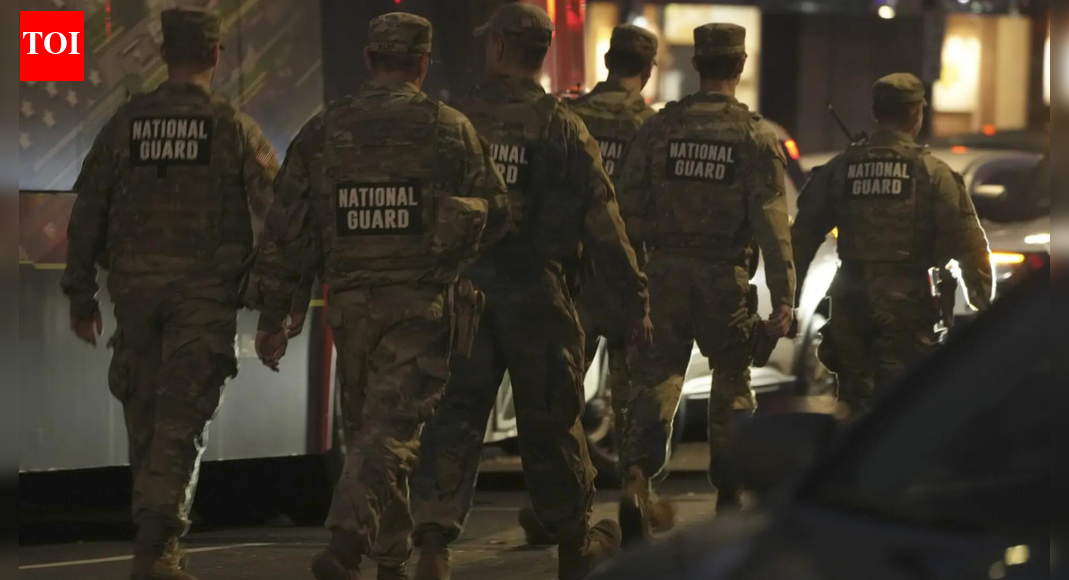
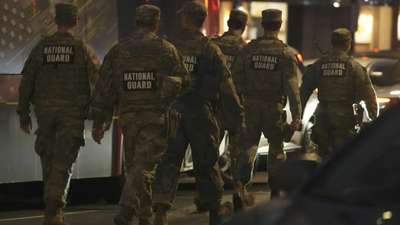
Afghan national Rahmanullah Lakanwal, 29, has been arrested in connection with a brazen daylight shooting in Washington, DC, just blocks away from the White House. In response to the shooting, the Trump administration announced a pause on all asylum decisions and a suspension of visa issuance for Afghan nationals.Lakanwal, who previously served with the US military and the CIA in Afghanistan, has been charged with first-degree murder in the killing of Sarah Beckstrom, 20, and the wounding of Staff Sgt Andrew Wolfe, 24, both West Virginia National Guardsmen deployed to the city as part of US President Donald Trump’s anti-crime initiative.

White House ‘Terror Attack’: Shocking Details Emerge After Afghan ‘AMBUSHES’ National Guard

An image of an identification badge circulating online appears to link the suspect to the “Kandahar Strike Force” or “03” unit, one of several “Zero Units” that operated alongside US and other foreign forces during the war in Afghanistan.However, little is publicly known about the unit or the nature of its operations.

What is the ‘Zero Unit’?

Lakanwal was among the thousands of Afghans who served alongside US forces during the nearly two-decade war against the Taliban. Lakanwal’s “03” unit, as identified on his badge, operated in and around Afghanistan’s southern Kandahar province. Images of the badge circulating on social media after the attack also featured the words “Firebase Gecko”, the former CIA and US Special Forces base in the region, which once served as the compound of Taliban founder and Afghanistan’s first supreme leader, Mullah Mohammad Omar, as cited by The Time.These units operated as Afghan intelligence and paramilitary forces, supporting US troops throughout the long campaign against the Taliban. Trained by American special operations personnel, they conducted high-risk missions, including frequent night raids.Human Rights Watch (HRW) has accused the units of carrying out extrajudicial killings, indiscriminate airstrikes, and multiple violations of international humanitarian law during the 2010s. Known for their covert operations, the units were described by diplomats as “death squads,” according to HRW. Both the CIA and the US government have rejected these allegations.

Eight years on the frontlines

Lt Gen Sami Sadat, former commanding general of the Afghan National Special Operations Corps, said that Lakanwal served in the “03” unit for eight years. A former senior Afghan general under the US-backed government added that the “03” unit, also known as the Kandahar Strike Force (KSF), “was under the special forces directorate of NDS. They were the most active and professional forces, trained and equipped by the CIA. All their operations were conducted under the CIA command.” Sadat said Lakanwal was part of the unit’s operations team.“He was known for being responsible and professional within his team and had strong anti-Taliban views,” Sadat was quoted as saying by CBS News.Lakanwal’s family faced serious threats from the Taliban, prompting him to move them from their native Khost province to Kabul, Sadat said. In the US, Sadat noted, Lakanwal “was generally calm and maintained a clean record, though he suffered from PTSD.”As a member of a Zero Unit, Lakanwal would have been virtually guaranteed asylum in the US, as members of these elite forces were prime targets for Taliban retaliation after the group regained control. Many of these unit members also played crucial roles in the August 2021 evacuation from Kabul, securing guaranteed spots on flights out of Afghanistan for themselves and their families.

Entry through Operation Allies Welcome

A federal program established under former president Joe Biden is under scrutiny after officials confirmed that Lakanwal entered the US through it.Known as Operation Allies Welcome, the initiative was created to assist Afghans fleeing Taliban reprisals after Kabul’s fall in August 2021. Reports suggest the program had significant flaws, potentially allowing individuals to enter the country with minimal oversight, according to the New York Post.Under Operation Allies Welcome, later renamed Enduring Welcome, nearly 200,000 Afghans were admitted to the United States, with about 40 percent granted Special Immigrant Visas.The Department of Homeland Security’s archived page for the program states that all arrivals underwent a “rigorous screening and vetting process,” which was “multi-layered and ongoing,” involving checks by the DHS, Department of Defence, FBI, National Counterterrorism Center, and other agencies.


Source link

Access Denied


Access Denied

You don’t have permission to access “http://www.ndtv.com/world-news/elon-musk-on-nikhil-kamath-podcast-us-benefitted-immensely-from-indians-9726041” on this server.

Reference #18.e64fc817.1764515897.18216a13

https://errors.edgesuite.net/18.e64fc817.1764515897.18216a13


Source link

‘Terrorist launchpads active in PoK’: BSF braces for Pak backed infiltration attempts in winter; claims ‘force alert’ | India News


'Terrorist launchpads active in PoK': BSF braces for Pak backed infiltration attempts in winter; claims 'force alert'

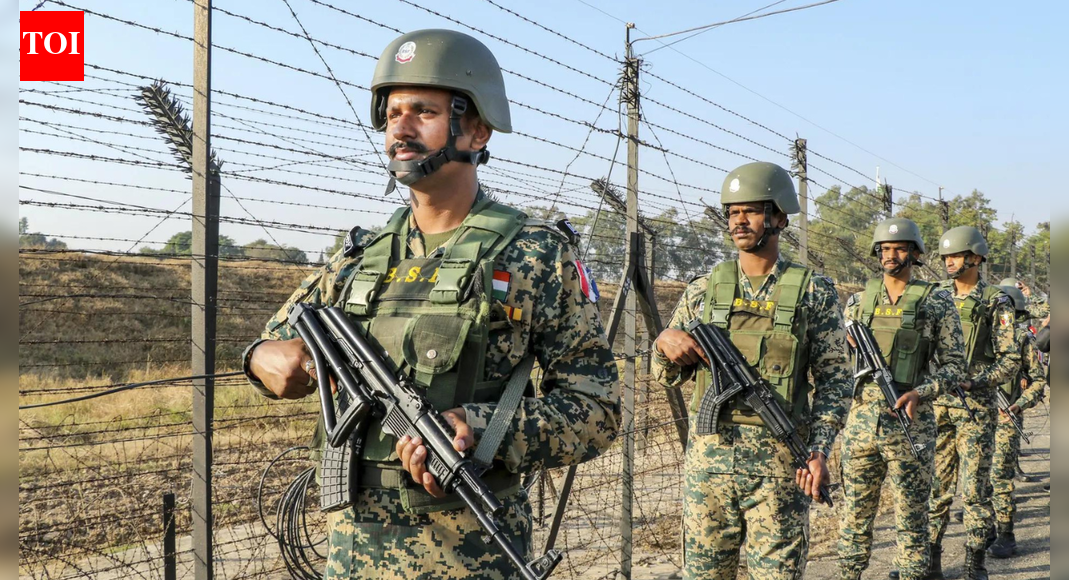
NEW DELHI: Border Security Force on Sunday said that Pak-backed terrorist launching pads are active across the LoC even after the security forces destroyed several of them in PoK during Operation Sindoor.“Several terrorist launching pads across the LoC were destroyed during Operation Sindoor, but some launching pads are still active where there is the presence of terrorists,” Inspector General of BSF Ashok Yadav said.“There is always an attempt by Pakistan to infiltrate terrorists ahead of the winter. As you know, the visibility these days is low, but we have modern surveillance equipment, and we effectively cover the vulnerable patches. Our efforts are to foil any infiltration attempt,” he added.This comes a day after senior BSF officers said that more than six dozen terror launchpads have been shifted to the “depth areas” in Pakistan after Operation Sindoor.“After the BSF destroyed many terror launchpads along the border during Operation Sindoor, the Pakistan government shifted all such facilities to the depth areas… About 12 launchpads are working from the depth areas of Sialkot and Zaffarwal, which are not exactly on the border.“Similarly, 60 launchpads are working in the other depth areas away from the border,” BSF DIG Vikram Kunwar had said.Kunwar, along with BSF IG Jammu Frontier Shashank Anand and DIG Kulwant Rai Sharma, addressed a joint press conference to highlight the achievements of the force in 2025, including its role in Operation Sindoor, India’s military response to the April 22 Pahalgam massacre with cross-border links that claimed 26 lives.The officer said the figures of these launchpads, as well as the terrorists present in them, keep changing.“They do not sit there permanently. These launchpads are generally active when terrorists have to be pushed (into India)… They are not kept in more than two or three groups,” DIG Kunwar said while informing that there are no training camps in the areas close to the International Border presently.“Earlier, they used to have areas marked where those belonging to Jaish-e-Mohammad would be active on the down side, and those from Lashkar-e-Taiba would be active on the upper side. After Operation Sindoor, they have formed a mixed group. Those who want can get training in a mixed group,” DIG Kunwar said.IG Anand said the BSF is ready to follow the orders of the government if it decides to resume Operation Sindoor.“If we talk about 1965, 1971, the 1999 Kargil War, or Operation Sindoor, the BSF has a good experience of all kinds of wars, be it conventional or hybrid warfare. We are ready,” he said.“If we get a chance, we are capable of causing more damage than what we did in May. Whatever policy the government decides, the BSF will play its role in it,” he added.


Source link