In political credit battle in Mumbai, BJP and Shiv Sena rush to ‘open’ Shahad rail overbridge but NHAI says inauguration is today | Mumbai News


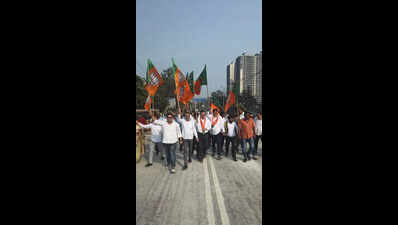
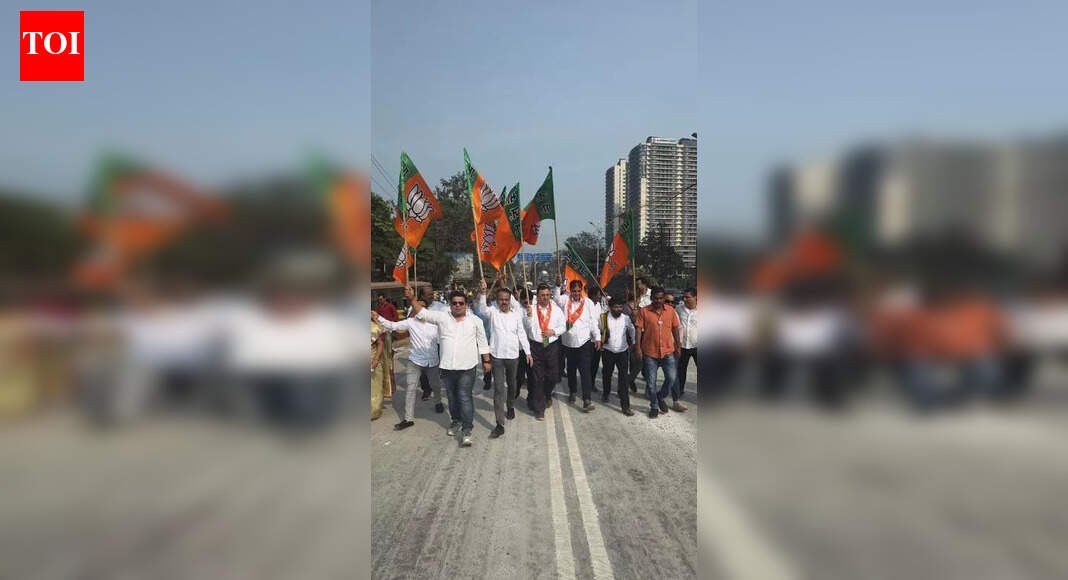
Kalyan: The nearly four-decade-old Shahad rail overbridge (ROB) connecting Kalyan and Ulhasnagar on National Highway 61, which has been under repair by National Highways Authority of India (NHAI) for the past 20 days, has become the center of a political credit battle. NHAI, sources said, has scheduled the ROB opening for Monday at 11am after completing the finishing work, but BJP and Ekanth Shinde’s Shiv Sena separately rushed to conduct their own “inauguration” on Sunday.Despite being allied partners in the state and Centre, BJP and Shiv Sena stand against each other in Ulhasnagar, turning this event into a competitive show of strength.Repairs on Shahad ROB began around Nov 3, and NHAI had assured that the bridge would be reopened on Sunday morning. However, before the final finishing work could be completed, BJP leaders, led by Ulhasnagar district president Rajesh Vadhrya and Pradeep Ramchandani, arrived on Sunday afternoon to declare the bridge “inaugurated” and credited the project to BJP MLA Kumar Ailani.A few hours later, Shiv Sena leaders, accompanied by TOK workers, also reached the spot and announced their inauguration ceremony, giving credit to Kalyan MP Shrikant Shinde. They also demanded that the bridge be named after Shiv Sena founder Balasaheb Thackeray. Shiv Sena also accused BJP of trying to claim credit for a project they had no involvement in, escalating the rivalry between the Mahayuti allies.Despite these dual inaugurations, the bridge remained closed on Sunday and motorists confused. NHAI officials confirmed that the ROB will be officially opened only after remaining work is completed — most likely on Monday at 11am.


Source link

Maharashtra deputy CM Ekanth Shinde denies rift with CM Devendra Fadnavis, blames electronic media for false perception | Mumbai News


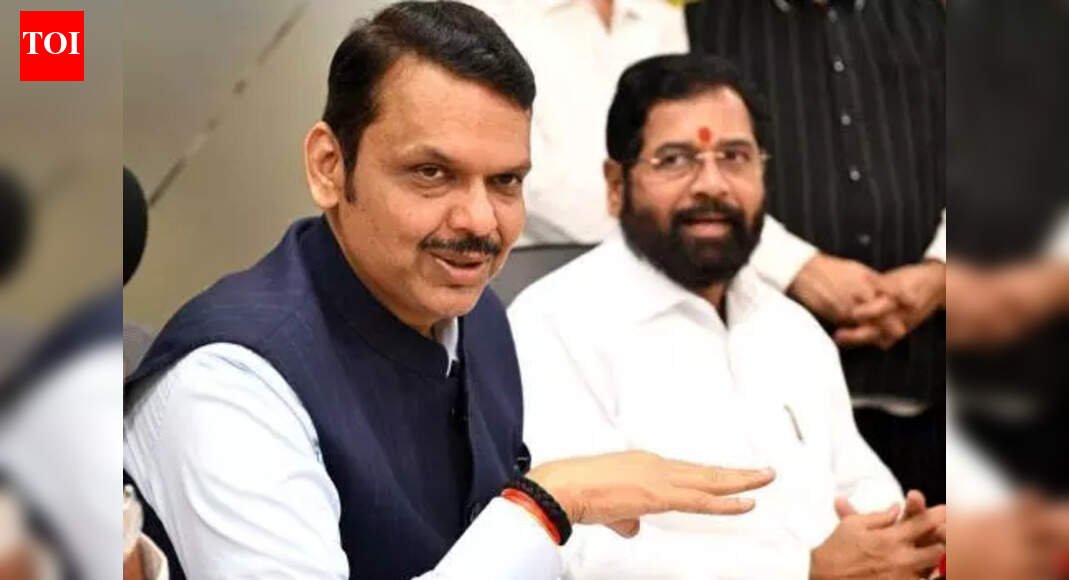
Kolhapur: Deputy chief minister Eknath Shinde on Sunday said he had no differences with chief minister Devendra Fadnavis and blamed the electronic media for creating a false perception for the sake of TRP.Shinde, who was in Solapur to address rallies for Nagar Parishad polls, said contesting elections against BJP did not mean there was animosity between the two parties. “This is a local election. We were together for the Lok Sabha to see Narendra Modi as Prime Minister once again; in the assembly, we wanted Mahayuti to win. In local elections, the party workers are sentimental, and they want to contest,” he said.He categorically said that Shiv Sena‘s enemy was not BJP, but the Maha Vikas Aghadi (MVA), and it would remain so in the future. When asked whether he and CM Fadnavis were ignoring each other in public events, Shinde said, “The media creates such questions and also finds the answers. They make all of it up and find breaking news regarding me and the CM. The media does it for TRP; they fabricate news, and they should stop now.”When asked whether his reference to “Ravan” and “ego” was aimed at BJP, Shinde said it was aimed at Shiv Sena (UBT) president Uddhav Thackeray and his associates. “Everyone knows who is Ravan, and who is ahankari. A farmer’s son from a poor family becomes the chief minister. Who is not able to digest this fact? One cannot understand the sufferings of the people by sitting indoors. Such people cannot resolve the concerns of the common people. Shiv Sena (UBT) politicians started having stomach aches when I became the CM. They are the Ravan; they are ahankari,” he said.


Source link

Access Denied


Access Denied

You don’t have permission to access “http://www.ndtv.com/world-news/doesnt-exist-trumps-doge-shuts-down-with-8-months-left-on-its-charter-9686443” on this server.

Reference #18.77fdd417.1763923389.1c5af45f

https://errors.edgesuite.net/18.77fdd417.1763923389.1c5af45f


Source link

Access Denied


Access Denied

You don’t have permission to access “http://www.ndtv.com/world-news/india-canada-look-to-reset-ties-as-talks-begin-on-key-trade-deal-comprehensive-economic-partnership-agreement-9687757” on this server.

Reference #18.2dfdd417.1763922070.ac90086

https://errors.edgesuite.net/18.2dfdd417.1763922070.ac90086


Source link

Isaac Johnson cause of death: How did the Chicago MMA fighter die at 31 | International Sports News


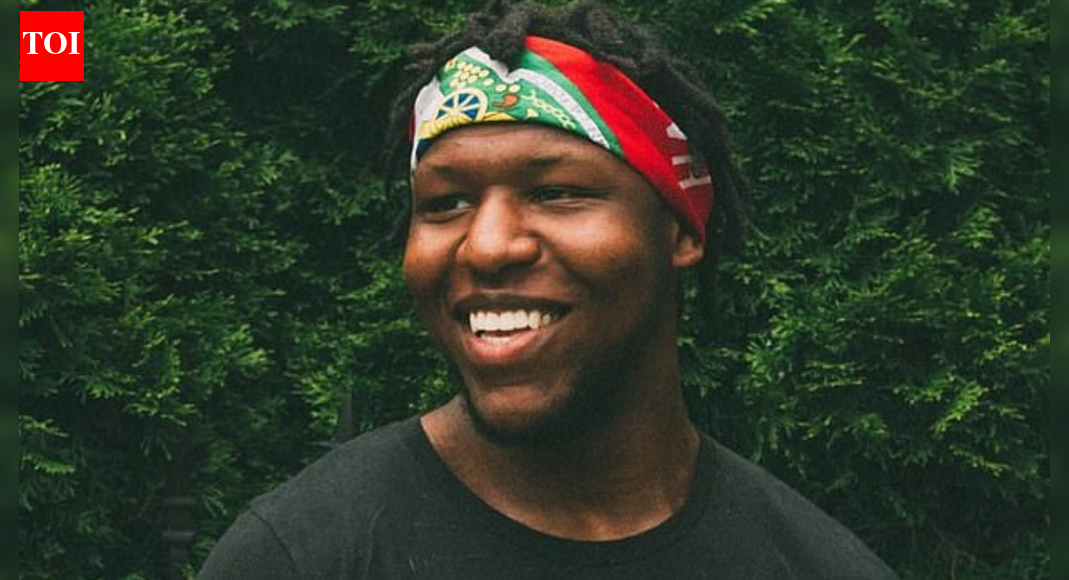
Isaac Johnson cause of death: How did the Chicago MMA fighter die at 31
Isaac Johnson cause of death: How did the Chicago MMA star die at 31 (Image via Getty)

Isaac Johnson was a 31-year-old MMA and Thai‐boxing fighter from Chicago. On Friday night, he competed in a heavyweight Thai boxing match at the Matador Fighter Challenge, held at Cicero Stadium in Cicero, Illinois. Near the end of his fight, he collapsed in the ring. He was rushed to Loyola University Medical Center, where he was pronounced dead just after midnight. Authorities say they have opened a death investigation and are waiting on the autopsy report to determine the cause of death.

Isaac Johnson cause of death: What happened to the MMA fighter in the fight

Johnson faced an opponent in a high-stakes bout advertised as part of the Matador Fighter Challenge. The fight looked like any other competitive match until Isaac Johnson collapsed near the end. Emergency medical staff at the stadium and paramedics responded quickly. He was transported from the ring around 8:38 p.m. and arrived at the hospital, where doctors tried to save him, but he didn’t survive.

Investigation and cause pending for Isaac Johnson

Authorities from the town of Cicero and the Cook County Medical Examiner’s Office have launched an investigation into Johnson’s death. An autopsy has already been scheduled, but officials have not yet released any official cause or manner of death. Promoter Joe Goytia confirmed that Johnson passed all required pre-fight medical tests, yet still the tragic collapse happened.

Tributes for Isaac Johnson, a true warrior

After the news of Isaac Johnson’s death spread, the MMA community, fans and fellow fighters paid tribute to him. Many remembered his energy, his smile, and his willingness to fight hard. He was smiling even moments before he went down. This is the sport we play, and he was a true warrior to the very end. His passing has deeply saddened many people who followed his career.Also Read: Olympics winner Noah Lyles unveils romantic surprise for fiancee Junelle Bromfield in Las Vegas, and it will melt your heart


Source link

SC quota debate: Outgoing CJI Gavai defends collegium; pushes ‘creamy layer’ exclusion | India News


SC quota debate: Outgoing CJI Gavai defends collegium; pushes 'creamy layer' exclusion

NEW DELHI: Defending the collegium, the outgoing Chief Justice of India BR Gavai, emphasised the need to exclude the creamy layer from the Scheduled Caste quota, and expressed regret over not appointing any women judges during his tenure.According to PTI, Gavai said he leaves the institution with a deep sense of satisfaction and contentment. Reiterating his decision not to accept any post-retirement assignments, he said, “I made it clear when I took office that I would not take up any position after retirement. For the next 9-10 days, it’s a cooling-off period. After that, a new chapter begins,” he said.BR Gavai is the 52nd Chief Justice, the first Buddhist and second Dalit to head the Supreme Court after KG Balakrishnan. Addressing the issue of the “creamy layer” within caste-based reservations, CJI Gavai said the Supreme Court has “done its part,” but it is now up to the government and Parliament to implement changes to ensure that benefits reach the truly marginalised sections.Last year, as part of a landmark judgment, the Supreme Court approved subclassification within scheduled castes and scheduled tribes, a move aimed at preventing the creation of a “class within a class” in reservation benefits.Justice Gavai, who was part of the bench for that judgment, emphasised that equality must permeate through all levels and cautioned against the continued misuse of reservations by families that have already progressed socioeconomically.“We have seen many Scheduled Caste families prosper, yet they still avail reservation benefits,” he said, pointing out cases where children of SC/ST IAS officers seek quota-based advantages.In his judgment, he wrote, “The State must formulate a policy to identify the creamy layer among SC/ST categories and exclude them from affirmative action. This is the only way to achieve true equality.”Chief Justice Gavai, who retires tomorrow, remains a significant figure as only the second Dalit to lead India’s highest judicial body. His reflections highlight ongoing challenges in implementing caste-based reservation reforms effectively.


Source link

‘They were a bit too defensive’: Dale Steyn lambasts Team India after poor show on Day 2 of Guwahati Test | Cricket News


'They were a bit too defensive': Dale Steyn lambasts Team India after poor show on Day 2 of Guwahati Test
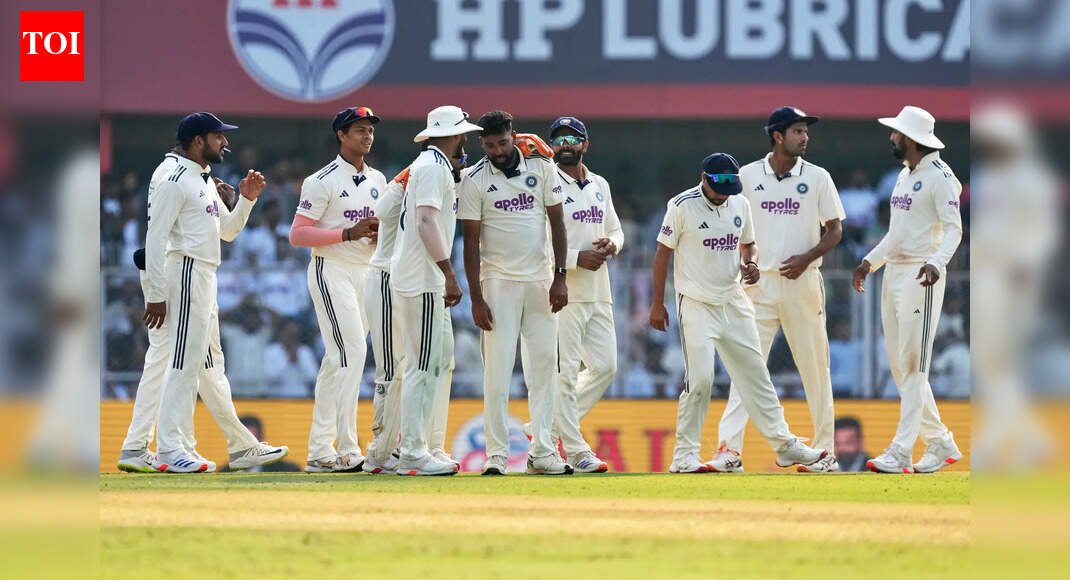
India’s players celebrate the dismissal of South Africa’s Senuran Muthusamy (AP Photo/Anupam Nath)

Dale Steyn, the former South African fast bowler, has commented on India’s bowling strategy during Day 2 of the India vs South Africa second Test at the Barsapara Cricket Stadium in Guwahati.India had South Africa at 247-6 at the end of Day 1, but the visitors managed to score 489 runs as Senuran Muthusamy and Marco Jansen dominated the Indian bowling attack.On JioStar’s ‘Cricket Live’ show, Steyn analysed India’s bowling approach, pointing out their reluctance to adapt their strategy and their overly defensive field placements. “I thought they bowled well up to a point, but at times they didn’t move away from their original plan. They stuck with Plan A for too long and didn’t really switch to a Plan B or C. At moments, they were a bit too defensive–when a batter walked in, there was a long-on, long-off, and deep square, which allowed the batter to settle with easy singles before India brought the field back in,” said the former Proteas bowler.“They could have been more attacking early on and tried to force the batters to hit into one side of the field. They kept bowling straight at the stumps, which opened up both sides–the off and the leg. In Kolkata, that plan worked because the pitch demanded it, but on a flatter wicket like this, they needed something different,” JioStar expert Dale Steyn added.Senuran Muthusamy achieved his first Test century, scoring 109 runs, while Marco Jansen displayed aggressive batting with 93 runs off 91 balls, including six boundaries and seven sixes.Former Indian cricketer and head coach Anil Kumble offered his insights on Jansen’s performance and his partnership with Muthusamy.“It’s never easy when the lower order contributes like that. Marco Jansen completely took the game away from India in that session, especially with the way he looked to hit sixes. He clearly trusts his batting; he’s carrying more than four bats, and he definitely needs a long blade. He was outstanding against the spinners and even took on the short ball. Perhaps towards the end he got a bit lazy, trusting his timing too much while looking for singles to get to his hundred. But it was a fantastic innings, and his partnership with Muthusamy ensured South Africa didn’t just cross 400–they went close to 500,” said Kumble.The partnership between Jansen and Muthusamy proved crucial in helping South Africa reach a commanding total.


Source link

Tech spectrum tussle: US majors push Wi-Fi use for entire 6GHz band as Jio, Vi seek mobile allocation; Airtel, Qualcomm call for deferment


Tech spectrum tussle: US majors push Wi-Fi use for entire 6GHz band as Jio, Vi seek mobile allocation; Airtel, Qualcomm call for deferment

US technology giants Apple, Amazon, Cisco, Meta, HP and Intel have jointly opposed demands from Reliance Jio and Vodafone Idea to allocate spectrum in the 6GHz band for mobile services, instead urging that the entire band be reserved for Wi-Fi use, reported PTI.In a joint response to Trai’s consultation paper for the next round of spectrum auctions, the companies said technical and commercial readiness in the 6GHz band “is not established” for mobile services and asked the government to avoid setting timelines for auction of the 6425-6725 MHz and 7025-7125 MHz ranges.“We do not recommend setting timelines for any future auction of the 6425-6725 MHz and 7025-7125 MHz ranges for IMT… TRAI, together with the Department of Telecommunications, should review the allocation of the upper 6 GHz band following the outcomes of WRC-27,” the joint submission said, adding that any unused upper 6GHz spectrum should be made available for unlicensed use in the interim.The government has said 400 MHz of 6GHz spectrum is immediately available for auction, an additional 300 MHz will be available by 2030, and 500 MHz in the lower band will be delicensed for low-power applications such as Wi-Fi.Jio has demanded inclusion of the entire 1200 MHz available in the 6GHz band in the auction, even though the government has decided to delicense 500 MHz in the lower range. Vodafone Idea has sought the sale of 400 MHz currently available for use. Airtel has asked the government to defer auction of the 6GHz band due to concerns over device availability, equipment readiness and global harmonisation.Qualcomm echoed similar concerns, stating, “The upper 6 GHz band is critical for mobile growth in India… By deferring the auction… until after WRC-27, India safeguards its 6G future, aligns with global standards, and honours its leadership aspirations.”Telecom industry body COAI, whose members include Jio, Airtel and Vodafone Idea, opposed delicensing. “Delicensing is misleading and counterproductive… Licensed IMT spectrum ensures quality-of-service, predictable performance and nationwide scalability,” COAI said, warning that allowing unlicensed Wi-Fi deployments could reduce exchequer revenues and give “disproportionate advantage to foreign OTT players”.The newly identified 6425-6725 MHz and 6725-7125 MHz bands form part of the upper 6GHz range, while the 5925-6425 MHz band has been earmarked for unlicensed low-power applications.


Source link

Compliance reform: Sebi tweaks RPT rules to set turnover-linked thresholds; relaxes disclosures for small deals


Compliance reform: Sebi tweaks RPT rules to set turnover-linked thresholds; relaxes disclosures for small deals

Markets regulator Sebi has introduced a new turnover-linked framework to define what qualifies as a material related party transaction (RPT), shifting from a fixed cap-based approach in a bid to resolve ambiguities and streamline compliance under the Listing Obligations and Disclosure Requirements (LODR) norms.The regulator has also revised audit committee approval thresholds for RPTs executed by subsidiaries and simplified disclosure requirements for smaller transactions. The move aims to balance investor protection with ease of doing business, while addressing concerns from companies that earlier thresholds imposed a “one-size-fits-all” burden on large entities.Under the notification dated November 18, entities with annual consolidated turnover up to Rs 20,000 crore must classify a transaction as material if it exceeds 10 per cent of turnover. For entities with turnover between Rs 20,001 crore and Rs 40,000 crore, the threshold has been set at Rs 2,000 crore plus 5 per cent of turnover above Rs 20,000 crore.For companies crossing Rs 40,000 crore turnover, materiality will be triggered at Rs 3,000 crore plus 2.5 per cent of turnover exceeding Rs 40,000 crore, or Rs 5,000 crore, whichever is lower. To safeguard minority shareholders, Sebi has capped the upper ceiling at Rs 5,000 crore for entities above the Rs 40,000 crore threshold.Previously, listed entities had to treat an RPT as material if its value exceeded Rs 1,000 crore or 10 per cent of annual consolidated turnover, whichever was lower. Stakeholders argued the uniform Rs 1,000 crore limit did not account for differences in operational scale or business models.Beyond materiality thresholds, Sebi has eased minimum information disclosures required for audit committee and shareholder approvals. If total RPTs with a related party (including ratified transactions) do not cross 1 per cent of annual consolidated turnover or Rs 10 crore, whichever is lower, a reduced disclosure format may be provided.The regulator said the simplified disclosure set will be less detailed than existing industry standards, addressing compliance concerns for smaller-value transactions.Sebi has also clarified the validity of omnibus approvals. Approvals granted at an annual general meeting will be valid until the next AGM, while those approved at other general meetings will be valid for up to one year from the date of approval.


Source link

Gold rate outlook: Prices seen range-bound as markets await US data; Fed signals, dollar strength to guide sentiment


Gold rate outlook: Prices seen range-bound as markets await US data; Fed signals, dollar strength to guide sentiment

Gold is likely to trade in a tight range in the near term as investors await key US economic indicators—including GDP and inflation data—and signals from the Federal Reserve’s December policy meeting that could define the direction of interest rates, analysts said, according to news agency PTI. They added that weekly US jobless claims, consumer confidence data and ISM Non-Manufacturing PMI will also shape market expectations on the Fed’s stance. Pranav Mer, Vice President, EBG – Commodity & Currency Research, JM Financial Services Ltd, said gold may “continue to see some consolidation (as focus remains) on the US data ahead of the Fed’s December policy meeting”, adding that housing, consumer confidence, jobless claims, GDP and PCE inflation numbers will be tracked closely.

Volatility, global cues and institutional demand

On MCX, gold futures for the December contract rose Rs 630, or 0.51 per cent, last week. Mer said the metal saw sharp price swings due to hawkish Fed commentary, fading hopes of a rate cut in December and a stronger dollar. He added that expectations of an end to the Russia-Ukraine war reduced risk premiums, while central-bank purchases—“with China adding gold for the 12th straight month and dumping US treasuries along with ETF inflows”—supported prices. In global markets, Comex gold futures gained USD 51.4, or 1.25 per cent, during the week. “Comex gold futures closed marginally higher, but the stronger dollar kept sentiment capped,” said Pankaj Singh, Investment Manager on smallcase and Founder & Principal Researcher SmartWealth.ai. FOMC minutes suggested policymakers may keep rates elevated through 2025, trimming December cut odds to 36 per cent, Singh said, adding that thin holiday-week liquidity could add volatility.

Record highs tempered by rate concerns

Riya Singh, Research Analyst, Commodities and Currency, Emkay Global Financial Services, said gold has pulled back after hitting a record high in October and tends to underperform when rate easing is delayed. She said the metal remains up roughly 55 per cent for the year, supported by earlier rate cuts, central-bank accumulation and ETF inflows, adding that recent gains reflect a “debasement trade” as investors exit sovereign debt. “The medium-term structure for bullion remains constructive, with expectations for policy easing in 2026, persistent geopolitical uncertainty, and strong official-sector demand continuing to anchor the broader uptrend,” she said.

Silver trends and technical outlook

Silver futures on MCX for December delivery fell Rs 1,867, or 1.12 per cent, last week, while Comex silver futures declined 1.52 per cent. Mer said silver turned volatile along with industrial metals, adding that momentum looks “sideways/corrective” with resistance at Rs 1,56,700-1,59,200 per kg and support at Rs 1,49,500. A breakdown below that could trigger further declines to Rs 1.39-1.40 lakh per kg, he said. Analysts said safe-haven demand may support gold, but elevated rates and a firm dollar could cap gains in the near term.(Disclaimer: Recommendations and views on the stock market, other asset classes or personal finance management tips given by experts are their own. These opinions do not represent the views of The Times of India)


Source link