Breaking News
Israel targets Iran factory, alleges fentanyl use in chemical weapons; Tehran denies | World News


Israel targets Iran factory, alleges fentanyl use in chemical weapons; Tehran denies

Israel said on Wednesday it launched a strike on a pharmaceutical facility in Iran, alleging it was supplying fentanyl for use in a chemical weapons programme, a charge denied by Tehran.Iran confirmed that the Tofigh Daru factory was hit but said it produces only “hospital drugs” used in medical procedures. Both sides said the strike took place on Tuesday, AP reported.Iran’s foreign minister Abbas Araghchi shared an image of the site on X, saying, “The war criminals in Israel are now openly and unashamedly bombing pharmaceutical companies.”Fentanyl, a powerful and a highly potent synthetic opioid, is widely used in hospitals to treat severe pain, though even small amounts can be fatal.

Watch

ON CAM: Hezbollah Unleashes ‘DOOMSDAY’ Rockets On Israel, Iron Dome ‘PIERCED’ In Huge Attack

Poll

What should the international community prioritize in such conflicts?

Israel and the United States have in recent years raised concerns about Iran exploring the use of fentanyl in weapons. Washington has also pointed to Iranian academic research examining Russia’s use of a fentanyl-based agent during the 2002 Moscow theatre hostage crisis.Israel said the targeted facility supplied fentanyl to a Tehran-based research body known as SPND, which the US alleges has carried out work relevant to nuclear explosive devices and other weapons.


Source link

PM Modi visits Assam tea garden, plucks leaves, takes selfies with workers, calls it ‘memorable experience’ | India News


PM Modi visits Assam tea garden, plucks leaves, takes selfies with workers, calls it 'memorable experience'
PM Modi at tea garden in Dibrugarh

NEW DELHI: Prime Minister Narendra Modi on Wednesday visited a tea garden in Dibrugarh, Assam, ahead of two public rallies in the poll-bound state.He described tea as the “soul of Assam.” “Tea is the soul of Assam! The tea from here has reached across the world. This morning in Dibrugarh, I visited a tea garden and interacted with the women working here. It was a very memorable experience,” PM Modi wrote on X, sharing photos from the visit. He added, “We are very proud of the efforts of every tea garden family. Their hard work and perseverance have enhanced Assam’s pride. Here are some more glimpses from a tea garden in Dibrugarh.”PM Modi also shared a selfie with women working in the tea garden.According to the Assam State Portal, the state produces around 630–700 million kg of tea annually, accounting for over half of India’s total output. PM Modi’s rallies in Assam As per his itinerary, the prime minister will first address a rally at Gogamukh in Dhemaji at 11 am, followed by a second public meeting in Biswanath district around 1 pm. Senior BJP leaders and state ministers are expected to attend both events.

Poll

What really drives your decision when choosing a leader?

At the first rally, the PM will campaign for BJP candidates Ranoj Pegu and Naba Kumar Doley from the Dhemaji and Dhakuakha assembly constituencies. At the second rally in Behali, he will support party candidate and former minister Pallab Lochan Das. All 126 assembly seats in Assam will go to polls on April 9, with vote counting scheduled for May 4, alongside counting in Tamil Nadu, West Bengal, Kerala, and the Union territory of Puducherry, where elections will be held around the same period. The BJP-led NDA has been in power in Assam since 2016, when the party won its first assembly elections in the state


Source link

‘Doesn’t attract the kind of money that … ‘: Why Adam Zampa chose PSL over IPL | Cricket News


Adam Zampa (Image credit: PSL)

NEW DELHI: Adam Zampa played a key role in Karachi Kings’ four-wicket win over Shaheen Afridi-led Lahore Qalandars in the Pakistan Super League at the Gaddafi Stadium on Sunday. The Australian leg-spinner returned figures of 2 for 11 in four overs, including a maiden, and was named Player of the Match. Zampa will next be in action against Rawalpindi on Thursday.Ahead of that clash, Zampa was asked why he chose the Pakistan Super League over the Indian Premier League.Zampa didn’t feature in the 350-player shortlist for the IPL 2026 auction. He was released by Sunrisers Hyderabad ahead of the IPL 2026 auction and subsequently opted to play in the PSL instead.He has previously represented Rising Pune Supergiant, Royal Challengers Bengaluru, Rajasthan Royals and Sunrisers Hyderabad in the IPL.

Watch

KKR Depart from Mumbai after losing to Mumbai Indians

“Yeah, well, I wasn’t really on the radar. I pulled out of the IPL this year. To be brutally honest, someone with my skill set doesn’t usually attract the kind of money that other skill sets do. Considering the time commitment the IPL requires, it didn’t feel like a reasonable choice for me to continue playing it,” Zampa said.“I was planning to take a break, but then the PSL came into the picture about a month ago. It’s all happened pretty quickly, but I’m enjoying it,” he added.Zampa has played 22 matches in his IPL career and picked up 31 wickets.


Source link

LSG vs DC, IPL 2026: Ekana Stadium Pitch Report and Lucknow Weather Forecast


The stage is set for an intriguing Match 5 of IPL 2026 as the Lucknow Super Giants (LSG) host the Delhi Capitals (DC) at the Ekana Cricket Stadium. This encounter features a major narrative shift, with Rishabh Pant leading LSG against his former franchise, while Axar Patel takes the reins for Delhi.

LSG enters with a significantly bolstered bowling attack. The addition of veteran Mohammed Shami and the return of a fit Anrich Nortje provides a lethal edge. Their batting remains explosive with a core featuring Mitchell Marsh, Nicholas Pooran, and Aiden Markram.

DC faces an early blow with Mitchell Starc not available for the initial phase. The spotlight will be on the new opening duo of KL Rahul (returning to his former home ground) and Pathum Nissanka. Their spin duo of Kuldeep Yadav and Axar Patel remains their biggest strength.

Ekana Stadium Pitch Report

The Bharat Ratna Shri Atal Bihari Vajpayee Ekana Cricket Stadium is known for its balanced yet challenging nature. The pitch typically assists bowlers, particularly spinners and medium pacers who use variations. It boasts the longest straight boundaries in India (81 meters), making it difficult for power hitters to clear the ropes consistently. An average first-innings score is approximately 170–175. Anything above 185 is considered a winning total here. Historically, teams batting first have had a significant advantage at this ground, as the surface can slow down, making chasing under scoreboard pressure difficult.

Also READ: LSG vs DC, IPL 2026 Match Prediction: Who will win today’s game between Lucknow Super Giants and Delhi Capitals?

Lucknow weather forecast for LSG vs DC clash

The weather in Lucknow for today’s clash between Lucknow Super Giants and Delhi Capitals is expected to be ideal for cricket, with partly cloudy skies and a comfortable temperature around 27°C during match time. There is no chance of rain, ensuring an uninterrupted game, while low humidity (37%) and minimal dew reduce any major advantage for chasing teams. A gentle north-northwesterly breeze could assist seamers slightly early on, but overall conditions strongly favor a balanced contest between bat and ball.

Also READ: LSG vs DC, IPL 2026: Probable playing XI for Match 5, Ekana Cricket Stadium IPL Stats and Records


Source link

IPL 2026: Why has BCCI punished Punjab Kings skipper Shreyas Iyer? | Cricket News


IPL 2026: Why has BCCI punished Punjab Kings skipper Shreyas Iyer?
Shreyas Iyer (Pic credit: IPL)

NEW DELHI: Punjab Kings may have opened their Indian Premier League 2026 campaign with a thrilling win, but skipper Shreyas Iyer found himself in trouble with the league for a slow over-rate during the match against Gujarat Titans in New Chandigarh on Tuesday.PBKS edged GT by three wickets in a tense chase, riding on a superb debut performance from Cooper Connolly, who struck an unbeaten 72 off 44 balls. However, the victory was followed by disciplinary action, as the IPL confirmed that Iyer had been fined Rs 12 lakh for maintaining a slow over-rate — the first such offence in IPL 2026.

Why was Shreyas Iyer fined?

According to the IPL’s official statement, the penalty falls under Article 2.22 of the Code of Conduct, which deals with minimum over-rate offences. Since it was Punjab’s first offence of the season, Iyer received a fine of Rs 12 lakh.The statement read: “PBKS captain Shreyas Iyer has been fined after his team maintained a slow over-rate during Match No. 4… As this was his team’s first offence under Article 2.22, he was fined INR 12 lakhs.”Captains are held accountable for ensuring their teams complete overs within the stipulated time, failing which penalties — including fines and potential suspensions for repeat offences — are imposed.

Connolly shines in nervy PBKS win

On the field, Punjab’s campaign began on a high note. Chasing 163, the hosts looked in control before a sudden collapse threatened to derail the chase. Prasidh Krishna triggered panic with a three-wicket burst, reducing Punjab from 110/2 to 118/6.However, Connolly held his nerve, stitching crucial partnerships and guiding the team home with five balls to spare. He was named Player of the Match for his composed knock.Reflecting on the tense finish, Iyer said, “These things happen in the IPL. You have to stay composed. Cooper was there, calm and composed.”He also praised the young Australian, adding, “Cooper has got a great mindset… some of the shots he played were surreal, especially against Rashid.”Next challenge awaitsPunjab will next face Chennai Super Kings at the MA Chidambaram Stadium on April 3. The five-time champions, led by Ruturaj Gaikwad, are coming off an eight-wicket loss to Rajasthan Royals and will be eager to bounce back.


Source link

Access Denied


Access Denied

You don’t have permission to access “http://www.ndtv.com/world-news/nasas-most-powerful-rocket-faces-its-most-demanding-test-yet-11294926” on this server.

Reference #18.adf5d217.1775023931.2883d5d1

https://errors.edgesuite.net/18.adf5d217.1775023931.2883d5d1


Source link

Will UAE enter Iran war? Abu Dhabi pushes US, allies to reopen Strait of Hormuz by force


After Hormuz Ban, Houthis To STRANGLE MBS’ Final Oil Lifeline? 'GATE OF TEARS' In SHOCK DANGER

Strait of Hormuz (AP photo)

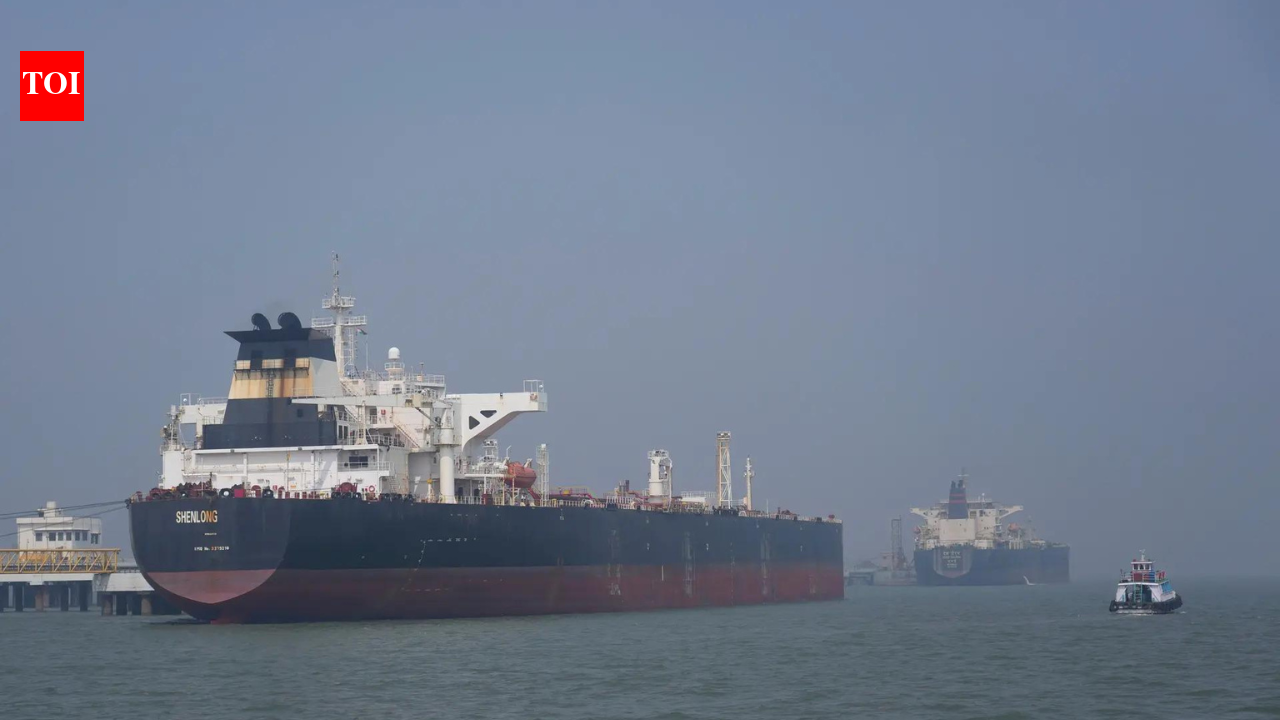
Will the UAE enter the Iran war and side with the US against Tehran? After being struck multiple times over the past month and with Iran tightening its grip on the crucial oil chokepoint – the Strait of Hormuz — Abu Dhabi has enough reasons to make an entry in the battlefield.According to a Wall Street Journal report, the UAE is now actively weighing a military role in the conflict. An Arab official told the publication that the country is preparing to support the United States and its allies in reopening one of the world’s busiest oil routes.

Watch

After Hormuz Ban, Houthis To STRANGLE MBS’ Final Oil Lifeline? ‘GATE OF TEARS’ In SHOCK DANGER

If the UAE takes that step, it would become the first Persian Gulf country to directly enter the war as a combatant, a major shift after weeks of trying to stay on the sidelines despite repeated Iranian attacks.

-

At the heart of this shift is the Strait of Hormuz, a lifeline for global energy flows and central to Abu Dhabi’s oil economy. Iran’s move to choke the passage has hit the UAE hard, pushing it to rethink its long-held strategy of caution.Meanwhile, not just the strangling of crucial Hormuz waterway but repeated Iranian strikes on key UAE cities of Dubai, Sharjah and capital Abu Dhabi makes the reason all the more weighty.

Push for global backing and coalition

Behind the scenes, the UAE is lobbying for international backing. Officials told WSJ that Abu Dhabi is pushing for a UN Security Council resolution that would authorise action against Iran.Emirati diplomats are also urging the US and key powers in Europe and Asia to form a coalition to reopen the strait, even if it requires force. An Emirati official warned that Iran sees the war as existential and may be ready to drag the global economy down by holding the strait hostage.The same official said the UAE is reviewing how it can contribute militarily, including clearing mines and offering support operations.

High-stakes options on the table

There are also more aggressive ideas on the table. According to Arab officials, the UAE has suggested that the US occupy strategic islands such as Abu Musa, which Iran has controlled for decades but is claimed by the UAE.

-

In public, the UAE has framed its position around global norms. Its Foreign Ministry pointed to UN resolutions condemning Iran’s attacks and the disruption in maritime traffic. It said there is “broad global consensus that freedom of navigation in the Strait of Hormuz must be preserved.”

Gulf mood hardens against Iran

Across the Gulf, sentiment appears to be shifting. Saudi Arabia and other states are increasingly hostile toward Iran’s leadership and want the war to continue until the regime is weakened or removed, though they have not yet committed troops.Bahrain, which hosts the US Navy’s Fifth Fleet, is backing a UN resolution expected to come up for a vote soon.

From mediation to military calculations

The UAE’s evolving stance marks a sharp break from its earlier approach. For years, Dubai remained a commercial hub with deep financial links to Iran, and Emirati leaders often tried to mediate tensions.Just before the war, diplomatic efforts were still underway, including a visit to Abu Dhabi by Iranian official Ali Larijani.Now, the calculus has changed. The UAE is aligning more closely with President Donald Trump’s push for allies to shoulder more responsibility — particularly in securing the Strait of Hormuz. Reports suggest Trump is even open to ending the war without reopening the strait, leaving that burden to regional players.

Rising risks and retaliation threats

But entering the conflict carries serious risks. Iran has already intensified its attacks on the UAE, launching waves of missiles and drones. In one recent escalation, nearly 50 projectiles were fired in a single day.Tehran has warned it will target civilian infrastructure in any Gulf country that supports military action against it.“They could step into this war only to face a more aggressive Iran, continue to absorb hits to critical infrastructure and potentially investor confidence, and then struggle to rebuild ties with their neighbor, particularly if Trump elects to declare victory before reopening the strait or crippling Iran’s missile and drone capabilities,” said Elizabeth Dent.

Economic fallout already visible

So far, Iran has launched nearly 2,500 missiles and drones at the UAE, more than at any other country. These attacks have disrupted air travel, hurt tourism, shaken property markets and triggered layoffs, challenging the UAE’s image as a stable business hub.The country has responded with tough measures, including restricting Iranian nationals and shutting down Iranian-linked institutions in Dubai.

Can the Strait be reopened by force?

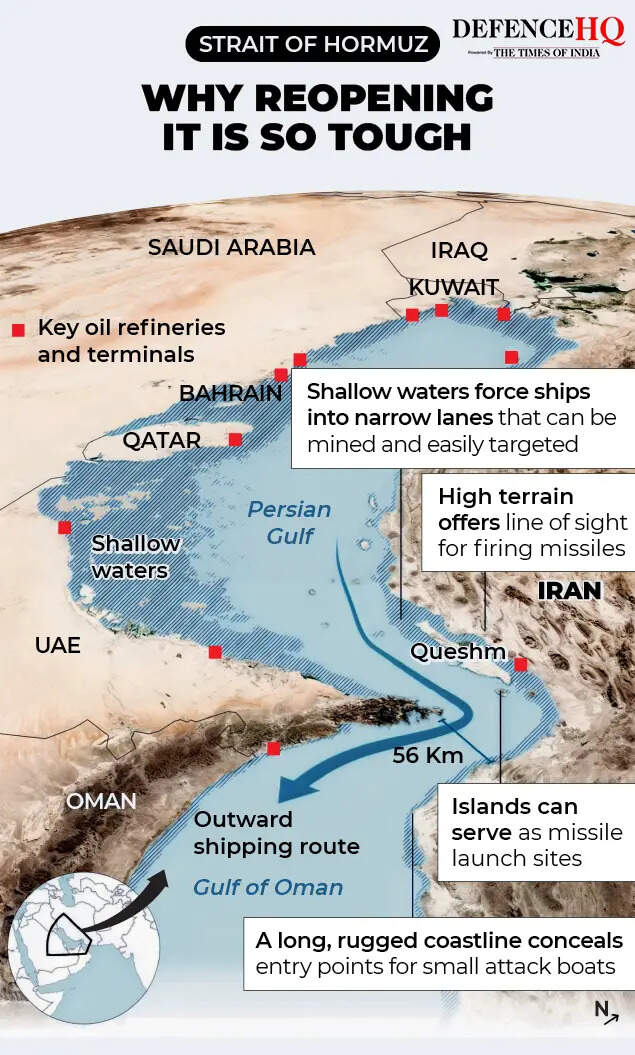
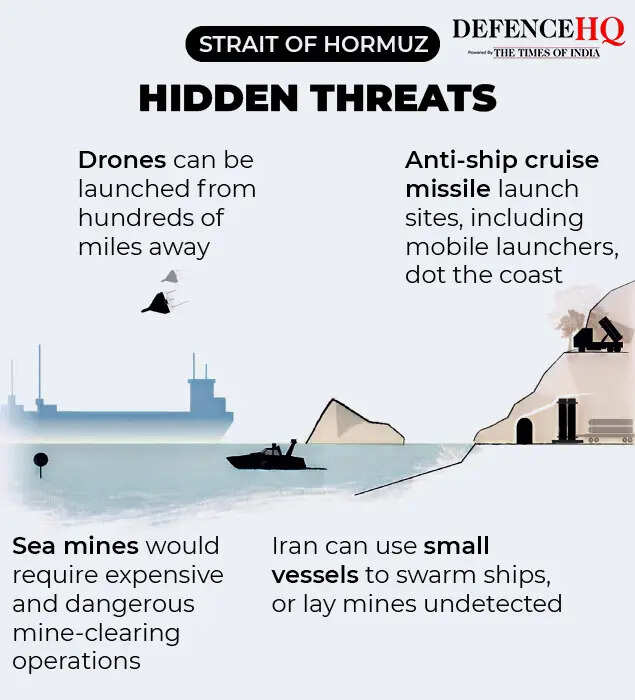
Still, the biggest concern remains the Strait of Hormuz. Gulf officials believe that with UN backing, countries in Europe and Asia might join efforts to reopen it. But even without such approval, the UAE appears ready to act.Whether military action would succeed is another question. Analysts warn that securing the strait would require control not just of the waterway but also nearby land — a complex and risky operation.“I don’t think we can do it,” said Rep. Adam Smith. “All Iran has to do is be able to keep the strait under threat, which means they need one drone, they need one mine, they need one small suicide boat.”

A defining choice for the UAE

Even so, some Gulf states believe the risk is worth taking. Allowing a hostile power to control such a vital route could have long-term consequences for global trade and regional stability.For the UAE, the decision now is stark: stay exposed to ongoing attacks and economic strain, or step into a war that could reshape the region — and its own future — in unpredictable ways.


Source link

No quick reset for oil, gas prices even after war ends? EU issues warning


Iran War Impact Hits India: Commercial LPG Prices Rise, Airfares Set To Surge As Fuel Costs Double

AP photo

European Union energy commissioner Dan Jorgensen warned that amid the ongoing Iran war, oil and gas prices in Europe are unlikely to return to normal levels anytime soon, even if peace were declared tomorrow.Skyrocketing energy costs have pushed gas prices up by about 70% and oil prices by 60% in Europe since the conflict began.

Watch

Iran War Impact Hits India: Commercial LPG Prices Rise, Airfares Set To Surge As Fuel Costs Double

“What I find extremely important is to state as clearly as I can, that even if that peace is here tomorrow, still we will not go back to normal in a foreseeable future,” Jorgensen said during a news conference following a meeting of EU energy ministers.He said that while there are currently no immediate shortages of oil or gas in the 27-member bloc, pressure on diesel and jet fuel supplies in global gas markets is driving up electricity costs, according to news agency Associated Press. The EU’s fossil fuel import bill has surged by 14 billion euros since the start of the war.Jorgensen outlined that the EU’s executive arm is preparing a range of measures to help families and businesses cope with the high energy prices.The upcoming measures will include ways for states to decouple gas prices from electricity prices and a tax cut on electricity, as suggested by Commission President Ursula von der Leyen.Although a repeat of the 2022 natural gas crisis is unlikely, the commissioner did not rule out a one-time “windfall tax” on companies that benefit disproportionately from the high prices. He emphasized coordinated action among all EU members to avoid fragmented national responses that could destabilize markets.Jorgensen also encouraged EU states to consider the International Energy Agency’s 10-point plan, which includes measures such as reducing highway speeds, increasing public transport use, and encouraging car sharing.The commissioner reaffirmed the EU’s commitment to the ban on Russian gas, which has reduced reliance from 45% before the Ukraine war to just 10% now and highlighted efforts to source energy from the US, Azerbaijan, Algeria, Canada and smaller global producers. He stressed that Europe must not repeat past mistakes that allowed energy to be used as a weapon against member states.


Source link

Rupee at 100? Currency may slide further versus US dollar as crude oil prices rise, Middle East conflict persists


Rupee at 100? Currency may slide further versus US dollar as crude oil prices rise, Middle East conflict persists
Since the onset of the geopolitical tensions, the currency has declined by roughly 4%. (AI image)

Will the US-Iran war lead to the rupee hitting the 100 per dollar mark? Experts are of the view that a prolonged Middle East conflict may lead to the rupee depreciating even more with policy measures unlikely to offer any substantial support.The rupee could weaken to an unprecedented level of 100 against the US dollar or even lower if the conflict involving Iran persists, with strategists cautioning that policy measures aimed at containing its roughly 10% depreciation over the past year may offer only limited and temporary support.Expectations are growing that the conflict may be approaching a resolution after US President Donald Trump indicated that he anticipates it could conclude within two to three weeks. However, the certainty of this timeline remains questionable, especially as the United States has recently increased its military presence in the region, leaving scope for further escalation if the stance changes.Even prior to the conflict, the rupee was facing downward pressure due to widening external imbalances and persistent capital outflows. The surge in oil prices has intensified these challenges for the world’s third-largest crude importer, while a possible decline in remittances from Indians working in the Gulf could further weaken inflows and overall sentiment.The Indian rupee slipped past the 95-per-dollar level on Monday, touching an all-time intraday low of 95.22, before recovering slightly to settle at 94.83, its weakest closing level on record. Since the onset of the geopolitical tensions, the currency has declined by roughly 4%.

Rupee at 100 per dollar?

According to analysts at Wells Fargo and Van Eck Associates Corp. quoted in a Bloomberg report, sustained high crude oil prices are likely to accelerate the currency’s decline by pushing up inflation and widening the current account deficit. Signals from the options market reinforce this outlook, with pricing indicating expectations of further depreciation and a possible move toward the 100 mark.The rupee, already among the weakest Asian currencies against the dollar this year, has prompted the Reserve Bank of India to introduce one of its most significant interventions in over a decade. The central bank has capped banks’ end-of-day positions in the domestic currency market at $100 million, effectively forcing lenders to reduce exposure and limiting their ability to take large directional bets against the rupee.However, trading on Monday underscored the limitations of these steps. The rupee initially strengthened by as much as 1.4% following the announcement but later reversed sharply, slipping to a new low of 95.125 during the session. Markets remained closed on Tuesday.“100 per dollar is no longer a tail risk — it is a credible stress scenario if current conditions persist,” said Ahmed Azzam, head of financial market research at broker Equiti Group in Amman. “The latest measures look more like short-term stabilization tools than a structural solution.”Bearish positions on the rupee continue to persist. Nick Twidale of AT Global Markets noted that trading activity on his platform still reflects bets against the currency despite recent regulatory measures, indicating that some investors are looking beyond the central bank’s interventions.“100 and beyond is a virtual certainty as long as the war persists,” the veteran currency trader told Bloomberg. “The RBI will try and stop the weakness, but macro conditions will still take over. The rupee will turn one day, but it won’t be dictated by the RBI — it’ll be determined by markets.”Data from options markets suggests traders are assigning roughly a 13% probability that the dollar-rupee exchange rate could reach 100 by the end of June, and about a 41% likelihood by the end of the year, according to Bloomberg-compiled figures.According to Aroop Chatterjee, a global macro strategist at Wells Fargo, the future path of the rupee will largely depend on the extent and duration of elevated energy prices. He compared the situation to Russia’s invasion of Ukraine in 2022, when the currency depreciated around 10% over six months. In the current scenario, disruptions to oil supply could be more severe, although the rupee has declined by less than 5% since the conflict began.Chatterjee said that if the US-Iran conflict extends through the end of April, the dollar-rupee exchange rate could very likely move past the 100 level.Brent crude prices have surged nearly 44% since tensions escalated in late February, touching a peak of $119.50 per barrel. Some analysts caution that prices could rise further, potentially reaching $150 or even $200, if the near shutdown of the Strait of Hormuz continues for another six to eight weeks.Chatterjee also noted that the Reserve Bank of India’s restrictions may tighten liquidity in the domestic foreign exchange market. This could increase hedging costs for importers and foreign portfolio investors, while also encouraging more speculative trades to shift to offshore markets beyond the central bank’s direct influence.The rupee had already been under strain before the conflict, due to concerns around US-India trade relations, the potential impact of artificial intelligence on key service exports, and weak foreign investment inflows. As a result, some market participants believe that even a resolution to the Middle East tensions may not be sufficient to halt the currency’s decline.“If and when it does end, I’d expect the rupee to resume underperforming,” said Win Thin, chief economist at Bank of Nassau 1982 Ltd., who has close to four decades of experience in financial markets. “That is, it won’t see much relief.”Uncertainty surrounding the duration of the conflict has led global investors to withdraw approximately $12 billion from Indian equities in March, marking the largest monthly outflow on record.Anna Wu, a cross-asset strategist at VanEck, described India’s position as particularly challenging, pointing to its exposure to oil price shocks and sustained foreign capital outflows.“I think it’s possible to reach 100,” she said, highlighting the absence of a clear policy tightening trajectory from the central bank along with rising risks to economic growth, which she described as India’s strongest advantage.(Disclaimer: Recommendations and views on the stock market, other asset classes or personal finance management tips given by experts are their own. These opinions do not represent the views of The Times of India)


Source link

‘Only a partial, staggered increase’: Government issues clarification on jet fuel price hike


'Only a partial, staggered increase': Government issues clarification on jet fuel price hike

NEW DELHI: The central government issued clarification on jet fuel price hike as it capped the increase in aviation turbine fuel (ATF) prices for domestic airlines to 25% on Wednesday. Citing tensions in the Middle East and closure of the Strait of Hormuz triggered by US-Israeli strike on Iran, the Centre called it “only a partial and staggered increase”.“ATF prices in India were deregulated in 2001 and are revised on monthly basis based on a formula of international benchmarks. Due to the closure of Strait of Hormuz and extraordinary situation in global energy markets, price of ATF for domestic markets was expected to increase by more than 100% on 1 April,” Ministry of Petroleum and Natural Gas said in a post on X.“In order to insulate the domestic travel costs from the substantial increase in international prices, PSU Oil Marketing Companies of the Ministry of Petroleum, in consultation with Ministry of Civil Aviation, have passed only a partial and staggered increase of 25% (only Rs.15/litre) to the airlines. Foreign routes will pay for the full increase in ATF prices consistent with what they pay in other parts of the world,” it added.Jet fuel prices for scheduled Indian airlines have risen by around 8.5% in April, helping avoid a sharp increase in airfares for most passengers. In Delhi, aviation turbine fuel (ATF) now costs Rs 1,04,927 per kilolitre, up from Rs 96,638.14 last month. At the country’s second-busiest hub, the price has increased to Rs 98,247 from Rs 90,451.87. The relatively moderate hike comes as a relief for financially strained airlines as well as flyers. However, the situation is very different for non-scheduled, ad hoc, and charter operators, where jet fuel prices have more than doubled. For domestic flights in this segment, ATF prices have surged by about 115%, while international operations have seen an increase of roughly 107%.

Watch

Iran War Impact Hits India: Commercial LPG Prices Rise, Airfares Set To Surge As Fuel Costs Double


Source link