Breaking News
Dhurandhar 2: ‘My scenes were cut, I was sad but.: ‘Dhurandhar- The Revenge’ actor Vikramm Bhambri reveals the moment that changed everything | Hindi Movie News


From IT to the silver screen, Vikramm Bhambri’s foray into cinema with ‘Dhurandhar’ unfolds a tale of self-discovery that began with a moment of doubt, only to be uplifted by an unexpected compliment from a delivery guy. He fondly reminisces about the camaraderie shared with co-stars Ranveer Singh and Akshaye Khanna, noting their genuine kindness and dedication to the craft.

In an industry where visibility often defines success, Vikramm Bhambri’s journey is a quiet yet powerful reminder that recognition can come in the most unexpected ways. An IT professional who balanced boardrooms with film sets, Vikramm Bhambri stepped into the world of cinema with Aditya Dhar‘s ‘Dhurandhar’ starring the energetic Ranveer Singh in the leading role as Hamza Ali Mazari aka Jaskirat Singh Rangi, portraying Shakeel. While his screen time may have been limited, his experience was anything but small, marked by moments of self-doubt, silent victories, and an unexpected encounter that changed everything. In a candid conversation with ETimes, Vikramm shared his experience of handling success, his first day of shoot experience, his rapport with Ranveer Singh, and much more.Dhurandhar 2 Movie ReviewHow is life treating you post the success of ‘Dhurandhar’?Post the success of ‘Dhurandhar,’ it’s amazing and still sinking in. At the time of the audition, they told me that this is Aditya Dhar sir’s project. Obviously, they didn’t tell me the name. They just said it’s a very big cast and that they are shortlisting me for a character. So, I gave the audition. After that, because I have a bit of an IT brain, I started researching. I found out that Aditya Dhar sir is making a massive project with a star cast like Sanjay Dutt, Ranveer Singh, Akshaye Khanna, R. Madhavan, Arjun Rampal… all these names. No one from the casting team gave me any information, but when I figured it out, I was very happy from within. Still, I kept that happiness to myself and thought, “You have given the audition; now let the result come.” Then in September-October, the result came that I had passed with flying colors. That moment was such that I was in the office, and even though people say you shout with happiness, I couldn’t do that. I had to keep it inside. I called my parents and shared my happiness with them. It was a very special feeling.

Watch

Dhurandhar 2 Shocker! Vicky Kaushal Praises Ranveer Singh, Crew, and Director Aditya Dhar

When did you realize that your role as Shakeel, though small, was impactful?When we were shortlisted, they told us that my character’s name is Shakeel Commando. At that time, I felt it sounded like a terrorist-type name. But then I told myself, at least I have a name, and I am not an extra. In theater, we learn that if your character has a name, it means you have an important role. Later, when we started working, we were told we are gang members; we are with Ranveer. That felt really good. But when the film released, I didn’t see as much presence and visibility as we had shot. When I watched Part 1 with my parents, I felt very sad. Every actor wants visibility, so I felt unsettled for a couple of days as many of my scenes, which we shot, were chopped off, maybe due to some unavoidable reasons. But that was very disappointing for me. My parents kept telling me to be thankful, but the heart doesn’t always listen. Then something happened; on the second day, a delivery person came and said, “Sir, I saw you yesterday… you are in ‘Dhurandhar,’ right?”That moment changed everything. I became the happiest person. After that, I didn’t think about my scenes being cut. I was just happy to be associated with such a big project. There are 100 things to be grateful for, and I am enjoying the success.How was your experience working with Ranveer Singh and such a big star cast?Oh, the experience was beautiful, very, very beautiful. On Day 1, I was standing in front of stalwarts like Akshay sir and Ranveer bhai, and I was speechless. I didn’t even know how to say hello. For the initial couple of days, I didn’t interact. I had scenes with Akshaye sir, but I couldn’t say even hi! To him, he was always quiet and in himself on the sets. But then once after finishing the scenes, Akshaye bhai smiled at me; that was when I shook hands with him. After that, we became very friendly. He is Punjabi, and I am Punjabi, so we spoke in Punjabi and spoke about Amritsar and many other topics. He is a very beautiful person. What should I say about Ranveer Singh? His aura is so strong that you feel scared, and it makes you think, Will I be able to match his energy? But one incident changed everything. A photographer was clicking BTS pictures of him, and he called me, “Vikramm, sir, come click pictures with me.” He addressed me as “sir”! That broke all hesitation. After that, I started calling him Ranveer bhai. He has been a gem of a person. On my birthday, he sent a bouquet to my home with a beautiful note. I am deeply grateful for that. He even replied to me on Instagram once, though I am an ordinary person, and he took that time for me. How can I not love him?

Vikramm Bhambri note

Did you receive any advice from your co-stars?I don’t think there was direct advice. Everyone was at such a level that their energy matched. But appreciation was definitely there. I remember one scene in Part 2, where I had to give a dialogue cue in a noisy foundry. I spoke loudly, and after the cut, Ranveer bhai came to me and said, “Your voice is very good.” That meant a lot. He is very appreciative and a true gentleman, very meticulous in his work.The film is quite intense. What was the atmosphere like on set?No one worked under pressure. There were a few intense moments; for example, I heard about a scene involving the 26/11 recordings, which were around 45–46 minutes long. That must have been emotionally very heavy for those involved, I am sure.But otherwise, I didn’t feel an intense atmosphere. Even when I wasn’t shooting, I used to go to the set because that is my happy place.Of course, during takes, everyone was in sync with the tone of the film. It’s not a comedy, so actors performed in a serious, character-driven zone.What about ‘Dhurandhar 3’? Would you like to explore more of Shakeel?Whatever Aditya Sir would want me to explore, it’s his baby; he knows best. But as per the news, he is not keen on making Part 3. Even if there are loose ends, sometimes stories are left open for the audience to decide. I believe he has kept it that way. Rest, who knows?You balanced a corporate job and acting. How was that journey?It has been a very beautiful journey of one and a half years. I am still working in the corporate industry, so managing both is a bit tedious.I used to carry my office laptop to shoot locations and attend calls and meetings whenever I had time. Interestingly, very few people on set knew about my corporate job, and no one in my office knew about my Bollywood project.Now, after the film, my seniors feel proud. They tell people that one of their employees worked in ‘Dhurandhar.‘ For me, that is like an Oscar or any other award moment to get that kind of respect.

Source link

WATCH: Suryakumar Yadav nails Akshaye Khanna’s viral ‘Dhurandhar’ dance steps ahead of MI vs DC clash


As anticipation builds for the upcoming IPL 2026 clash between Mumbai Indians and Delhi Capitals, Suryakumar Yadav has already stolen the spotlight—off the pitch. The dynamic batter surprised fans by recreating a viral Bollywood dance, blending cricketing charisma with cinematic style and sending social media into a frenzy.

Suryakumar Yadav steals spotlight by recreating viral dance steps from Dhurandhar

In a refreshing break from intense match preparations, Suryakumar showcased his lighter side at a recent public event. The Mumbai Indians star recreated the viral dance steps of Akshaye Khanna’s character Rehman Dakait from the film Dhurandhar.

The performance was inspired by the hit track Fa9la, which has captured the imagination of fans ever since the film’s release. Known for its intense beats and striking choreography, the song has sparked a viral trend across social media platforms, with users attempting to replicate its signature moves.

Suryakumar’s rendition stood out for its precision and flair. From the confident stride to the rhythmic footwork, he mirrored the character’s swagger with surprising ease. His expressions, timing, and energy elevated the performance, drawing loud cheers from the audience present at the event. Within hours, clips of the act flooded the internet, quickly gaining traction among cricket and Bollywood fans alike.

Here’s the video:

Also READ: IPL 2026: Why sports presenter Sahiba Bali is facing backlash on social media?

Expectations high from Surya ahead of DC clash

While the dance performance grabbed headlines, the focus now shifts back to cricket. Suryakumar remains a crucial figure for Mumbai Indians as they prepare to face Delhi Capitals on April 4. His role in the team continues to be a subject of discussion. In their season opener against Kolkata Knight Riders, he was deployed as an Impact Player, sparking curiosity about how the team management plans to utilize him moving forward.

Fans are eagerly waiting to see whether he returns to the starting XI or continues in a tactical role. He enters IPL 2026 on the back of a phenomenal 2025 season, where he amassed over 700 runs at an exceptional average of 65.18. His ability to play shots all around the ground has earned him the reputation of a “360-degree batter,” making him one of the most feared players in the T20 format.

Also WATCH: IPL 2026 – Virat Kohli tackle a hilarious quiz about his RCB records


Source link

‘For a very important bill’: Parliament to reconvene on April 16; what’s on cards | India News


'For a very important bill': Parliament to reconvene on April 16; what’s on cards

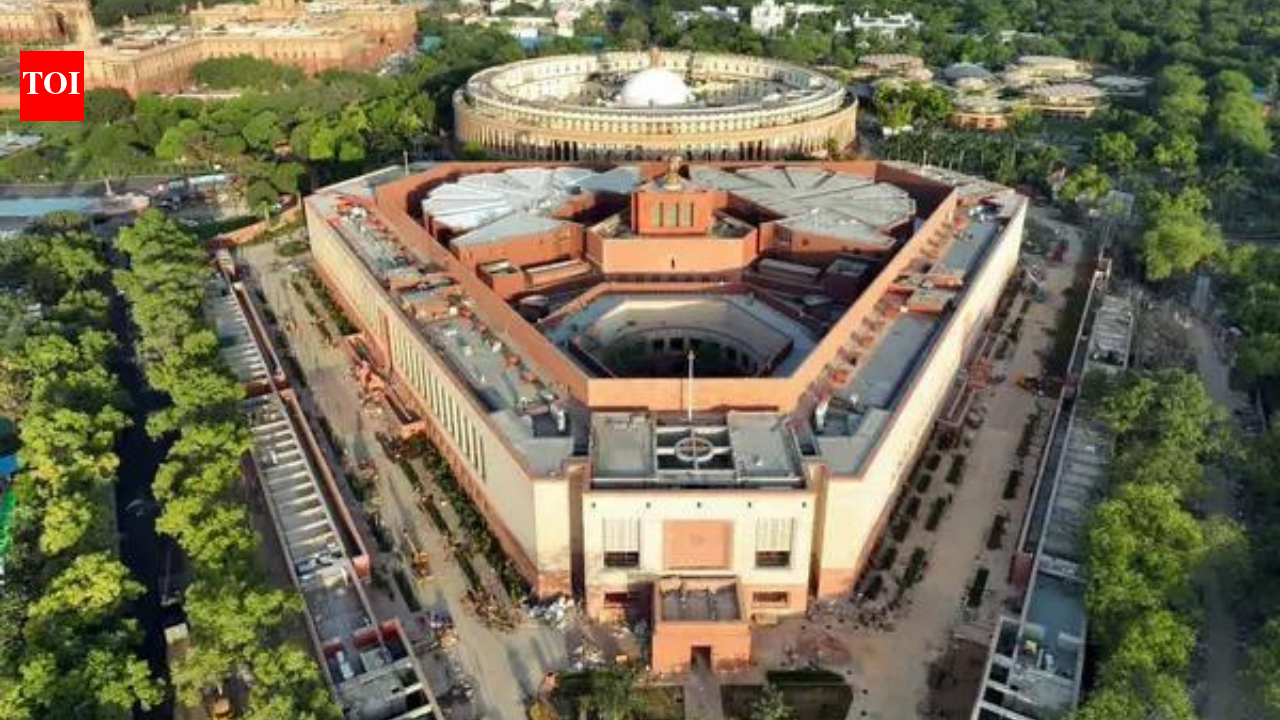
NEW DELHI: The budget session of the Parliament will reconvene from April 16 to likely pass bills to increase the number of Lok Sabha seats from 543 to 816 seats.Government is looking to introduce at least two bills—including constitutional amendments—in the current session of Parliament to roll out reservation for women of one-third seats in the next Lok Sabha poll and assembly elections to be held after it.The move promises to change the country’s political landscape and put an authoritative stamp on PM Modi’s much-touted agenda of women’s empowerment as the campaign for four state assemblies gathers pace. If the government has its way, then the number of seats in Lok Sabha will rise by 50% to 816 from the existing 543, with the 273-seat increase set aside for women, ensuring that the existing political dynamics and incumbent parliamentarians, overwhelmingly male, are not cut loose as a reshaped order takes hold. The majority mark will, accordingly, move to 409.According to news agency PTI, the two houses will reconvene for either two or three days to take up the proposed legislation.While speaking in the Rajya Sabha on Thursday, parliamentary affairs minister Kiren Rijiju said that the House will meet again soon to consider a key legislation.“We have certain bills and important issues, and we have shared this with the opposition also. We are going to have a very important bill in the next two-three weeks,” Rijiju said.The strength of Lok Sabha will increase for the first time in over five decades. The strength of Rajya Sabha and legislative councils in states will not be affected. At least two bills, one on delimitation and another for an amendment in the Constitution, which needs two-thirds support in both Houses, will be brought.Although the governing NDA does not have the strength to secure the passage of the bill on its own, the government seems keen to push for its passage during the budget session concluding on April 4. Failing that, it is open to the idea of convening a short session specifically for women’s quota.Home minister Amit Shah is leading the effort to get support for the two bills and held two meetings on Monday, one with regional parties from the non-NDA bloc, including opposition parties and those unaligned to either formation (NDA or INDIA blocs), and another with BJP’s allies.


Source link

Are you a ‘worker’ under India’s labour codes? How it differs from white‑collar employment


Are you a ‘worker’ under India’s labour codes? How it differs from white‑collar employment
The labour codes aim to simplify and consolidate India’s complex labour law framework.

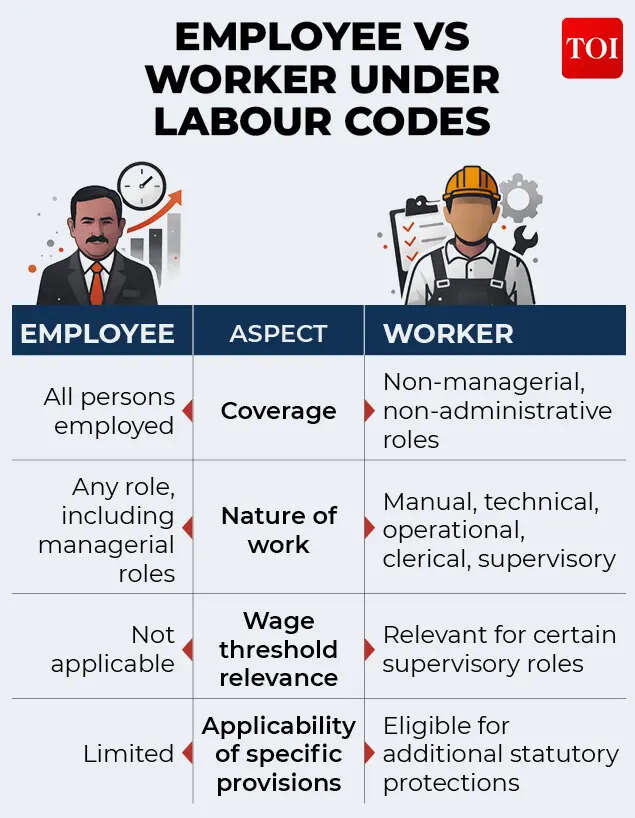
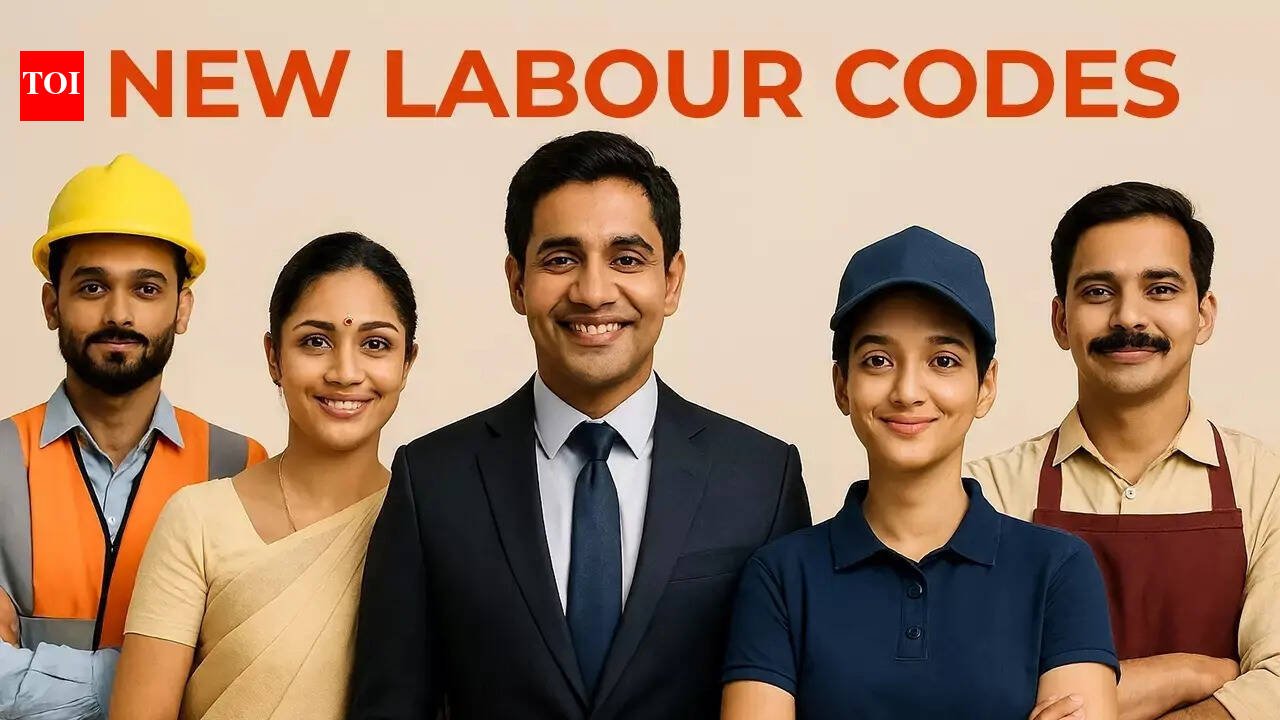
India’s new labour codes have introduced a structured distinction between the terms “employee” and “worker”. While all workers are employees, not all employees are workers. This distinction is more than just terminology – it determines the applicability of several statutory benefits and protections.The labour codes aim to simplify and consolidate India’s complex labour law framework. In doing so, they retain the principle that certain categories of roles – particularly those involving operational, manual or clerical work – may require specific safeguards. As a result, the concept of a “worker” remains central to how the codes are applied.This distinction is not limited to factories or industrial units. In today’s economy, many roles in offices, warehouses, retail outlets, and service centres may fall within the scope of “worker” depending on the nature of duties performed.Understanding the definition of “worker”The labour codes define a “worker” as someone employed to perform manual, skilled, unskilled, technical, operational, clerical or supervisory work. However, individuals in managerial or administrative roles are excluded. Supervisory employees may also be excluded if their wages exceed a specified threshold.The key factor is the nature of work performed—not the job title, salary level or workplace setting. This means that two employees in the same organisation, with similar designations, may be treated differently under the codes depending on their actual responsibilities. In contrast, the term “employee” is broader and includes all individuals engaged for hire or reward, regardless of their role. This allows the codes to apply specific provisions to workers while maintaining flexibility for other categories of employees.

Employee vs worker under labour codes

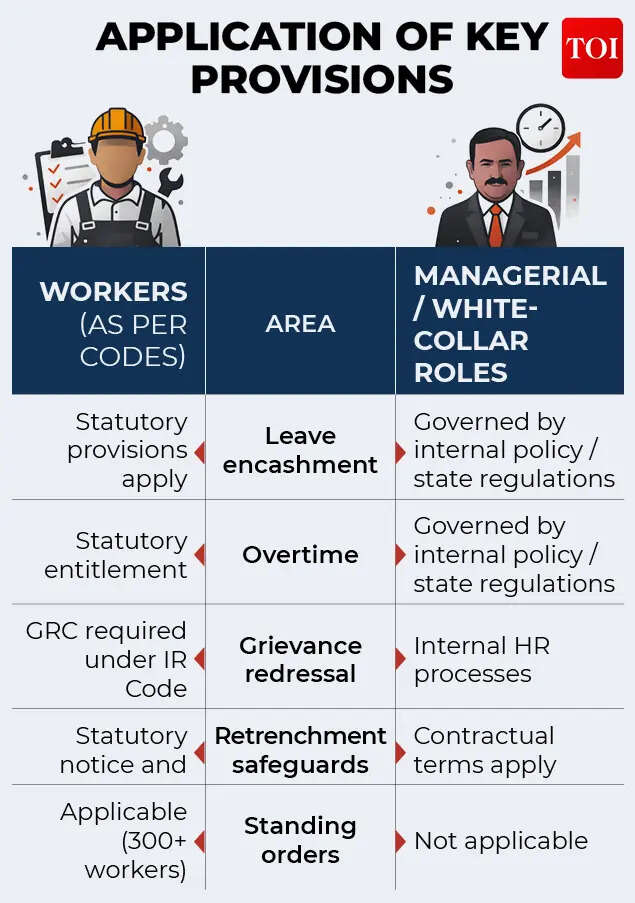
Key provisions applicable to workersThe labour codes provide a range of benefits and protections that apply specifically to workers. These include provisions on leave encashment, overtime, grievance redressal, retrenchment compensation, and standing orders. Below is a closer look at each of these areas.Leave encashment for workersUnder the Occupational Safety, Health and Working Conditions Code, 2020 (OSHWC Code), leave encashment provisions apply only to workers. The Code provides that workers are entitled to one day of earned leave for every 20 days of work in a calendar year, subject to a minimum number of days worked.At the end of the calendar year, workers may carry forward up to 30 days of earned leave. Any leave balance exceeding this limit must be encashed. Additionally, workers may request encashment of up to 30 days of leave at the end of the year, even if the carry-forward limit is not exceeded.All leave encashment is to be calculated based on the definition of “wages” under the labour codes, which includes basic pay, dearness allowance and retaining allowance, but excludes specific components such as house rent allowance, overtime allowance, statutory bonus, etc.Example: Where these provisions apply, a worker with 42 days of earned leave at year-end would have 12 days mandatorily encashed. The worker may also request encashment of the remaining 30 days.Overtime for workersThe OSHWC Code also provides for overtime pay for workers. Overtime is payable at twice the rate of wages and is applicable when a worker works beyond the prescribed limits.As per the draft Central Rules under the OSHWC Code, overtime becomes payable after 48 hours of work in a week. The maximum permissible overtime is 144 hours per quarter. Importantly, a worker’s consent is required before they can be asked to work overtime.Example: If an employee works 54 hours in a week, and the provisions apply, the 6 hours beyond 48 would be considered overtime and paid at twice the wages rate, subject to the worker’s consent and the quarterly cap.The 48-hour weekly threshold and 144-hour quarterly cap are based on draft rules and may be subject to change upon final notification.Grievance Redressal Committee (GRC)The Industrial Relations Code, 2020 mandates that every industrial establishment employing 20 or more workers must set up a Grievance Redressal Committee (GRC) to address individual grievances.The GRC must have equal representation from the employer and workers, with a maximum of 10 members. There must be adequate representation of women workers, proportionate to their share in the workforce. The committee is required to resolve grievances within 30 days of receiving an application.If a worker is dissatisfied with the GRC’s decision or if the grievance is not resolved within the stipulated time, the worker may escalate the matter to a conciliation officer or, subsequently, to an industrial tribunal.Example: Where this framework applies, a worker raising a concern about shift allocation or leave records would submit a grievance to the GRC. The committee would then follow a defined process and timeline to resolve the issue.Retrenchment and Worker Re-skilling FundThe Industrial Relations Code also outlines specific provisions for retrenchment. A worker with at least one year of continuous service is entitled to one month’s notice (or wages in lieu) and retrenchment compensation equivalent to 15 days’ average pay for each completed year of service.In addition, employers are required to contribute an amount equal to 15 days’ wages per retrenched worker to the Worker Re-skilling Fund. This fund is intended to support retrenched workers by crediting the amount to their accounts within 45 days of retrenchment.Example: Where these provisions apply, an organisation planning a workforce reduction would need to ensure that notice, compensation and re-skilling contributions are processed in accordance with the Code’s requirements.Standing OrdersThe standing orders framework under the Industrial Relations Code applies to industrial establishments employing 300 or more workers. Employers in such establishments are required to prepare and certify standing orders that define service conditions such as classification of workers, working hours, leave, misconduct, and disciplinary procedures.Employers may adopt the model standing orders issued by the Central Government or prepare their own, subject to consultation with trade unions or negotiating councils and certification by the appropriate authority.Where standing orders apply, organisations would document service conditions in a standardised format, ensuring consistency in how policies are applied across the workforce.

Application of key provisions

Rulings on worker definition – A summaryIndian courts have consistently emphasised that the classification of a worker depends on the actual duties performed, not merely on job titles or salary levels. Factors such as the degree of supervision, decision-making authority, and the nature of responsibilities are considered when determining whether an individual qualifies as a worker.These principles continue to guide the interpretation of the worker definition under the labour codes, especially in cases where roles may not fall neatly into one category.Finally,The labour codes provide a structured framework for distinguishing between employees and workers, with specific rights and protections linked to worker status. This distinction is relevant across sectors and applies equally to traditional industrial settings and modern workplaces.For organisations, the framework offers clarity on how different provisions apply to different categories of roles, supporting consistent and transparent workforce practices. For individuals, it enhances awareness of how statutory provisions relate to the nature of work performed.Overall, the labour codes aim to balance protection, flexibility and clarity—supporting both employee welfare and organisational efficiency in a unified legal framework.(Puneet Gupta is Partner, People Advisory Services Tax at EY India)


Source link

Trump’s Iran address: Peace is close, war is closer


Trump’s Iran address: Peace is close, war is closer

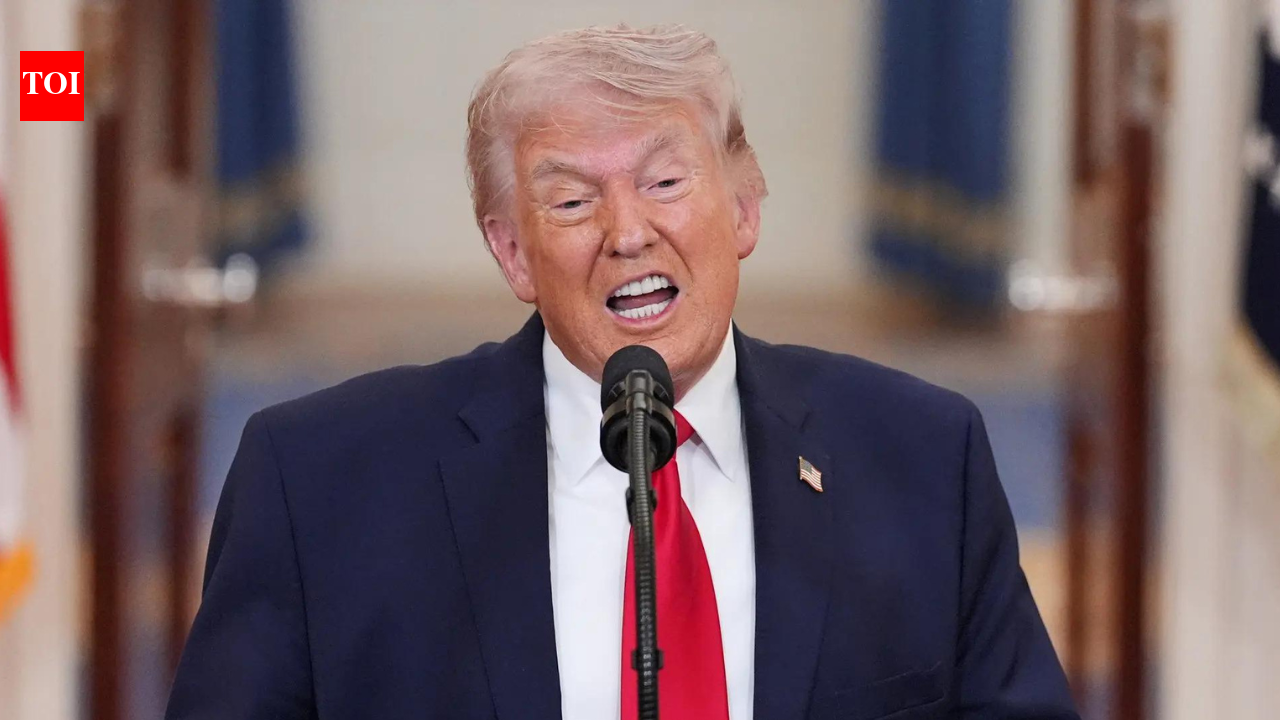
The TOI correspondent from Washington: The prime-time address was intended to reassure an anxious nation and steady jittery markets; instead, U.S President Donald Trump on Wednesday underscored the deep contradictions at the heart of his war in Iran, declaring that American objectives were “nearing completion” even as he threatened an intensification of military action.The speech, delivered from the White House on Wednesday night, marked Trump’s most comprehensive attempt yet to define the trajectory of a conflict that has escalated rapidly over the past month. Yet rather than offering clarity, it raised fresh questions about U.S. strategy, the risk of further escalation, and the durability of Washington’s alliances and partnerships.Trump struck a hubristic and triumphant tone, bragging about the greatness of the U.S military and asserting that American might has crippled Iran’s military capabilities, including its navy, air force, and missile systems. He suggested that the campaign could conclude within “two to three weeks,” framing the operation as a decisive success. In the same breath, he also warned that he was ready to hit Iran “extremely hard” in the coming weeks and expand strikes to critical infrastructure if Tehran failed to comply with U.S demands.The dual message—mission accomplished alongside threats of escalation—captured what analysts described as the central paradox of Trump’s Iran policy. While signaling closure, the president left open multiple pathways to a broader war, including continued aerial bombardment, the possibility of additional targets, and even a ground invasion. Notably absent in the speech was a clear exit strategy. Trump did not specify what political or military conditions would constitute a definitive end to hostilities, nor did he clarify how the U.S would secure long-term objectives such as curbing Iran’s nuclear program, which he acknowledged remains intact in part, and which some experts have suggested is a strawman bogey propped by Israel. Compounding concerns are reports that Washington is exploring plans to secure or seize Iran’s enriched uranium stockpiles, a move fraught with logistical and geopolitical risks. Such an operation would likely require either cooperation from Iranian authorities—currently unlikely—or a sustained military presence deep inside Iranian territory, raising the specter of a prolonged occupation. Experts warn that any attempt to physically control nuclear material in an active war zone could trigger retaliation, environmental hazards, and broader regional destabilization.Trump’s address also veered sharply into criticism of U.S. allies, particularly NATO members, whom he accused of failing to shoulder their share of the burden in confronting Iran. He reiterated calls for other nations, especially those reliant on Middle Eastern oil, to take responsibility for reopening the Strait of Hormuz, a critical global shipping lane that has been disrupted by the conflict. In a leaked remarks at a private Easter lunch earlier in the day, he taunted South Korea, Japan, and China for not helping keep Hormuz open, but conspicuously excluded India from the list of countries he wanted to intercede.The remarks reflect a widening transatlantic rift. European allies have largely refrained from direct military involvement, favoring diplomatic solutions and maritime security roles. Trump’s increasingly hostile rhetoric toward NATO, including suggestions that the alliance is no longer essential, has deepened concerns about U.S. reliability as a security partner.If Trump’s speech was aimed in part at calming financial markets—a longstanding preoccupation of the president—it appeared to have the opposite effect. Within minutes of the address, U.S. stock futures turned sharply negative and oil prices surged amid fears of prolonged disruption in the Strait of Hormuz. Analysts said the speech failed to provide the clarity investors had hoped for. Instead, it reinforced concerns about a drawn-out conflict with unpredictable economic consequences, including inflationary pressures driven by energy prices.The market reaction was particularly striking given Trump’s frequent invocation of stock performance as a barometer of his administration’s success. During the speech, he pointed to earlier market highs, but the immediate downturn underscored the fragility of investor confidence.At home, the address drew a mixed but increasingly critical response. Democratic lawmakers and some Republicans faulted Trump for failing to articulate clear objectives or a coherent strategy. Public opinion has also turned skeptical. Polls show a majority of Americans oppose the war and want it concluded quickly, with many expressing concern that the administration has not adequately explained its goals.

Stay updated with our Live Blog for minute-by-minute coverage of the Israel Iran War including breaking news, missile attacks, and Middle East crisis Latest Updates


Source link

Govt directs refineries to divert feedstock to petrochemical units; move to ease industry shortages


Govt directs refineries to divert feedstock to petrochemical units; move to ease industry shortages

The government has asked oil refineries to divert part of the feedstock used for cooking gas (LPG) towards petrochemical units, as industries grapple with acute raw material shortages triggered by supply disruptions amid the West Asia conflict, according to PTI.The Ministry of Petroleum and Natural Gas on April 1 directed refiners to allocate a portion of propylene to the petrochemical sector, which has been hit after earlier curbs prioritised LPG output.

Watch

‘Petrol, Diesel Crisis Developing Worldwide’: PM Modi Urges Unity Amid West Asia Conflict

At an inter-ministerial briefing, Sujata Sharma, Joint Secretary in the ministry, said the government had initially asked refiners to maximise LPG production following disruption in imports from the Middle East.This was done by diverting hydrocarbon streams—such as propane, butane and propylene—away from petrochemical use.“But then there are certain other sectors which also need some of these molecules and thereby this decision has been taken,” she said.Before the conflict began on February 28, India imported about 60 per cent of its LPG requirement, with nearly 90 per cent of supplies transiting through the Strait of Hormuz, which has since been effectively shut.To boost domestic LPG output, the government had on March 9 directed refineries to channel the entire output of C3 and C4 streams exclusively for LPG production and avoid their use in petrochemicals.This, however, disrupted supply of propylene, impacting plastic manufacturing and downstream sectors such as packaging, food and beverages, FMCG, and even condom production.To ease the shortage, refiners have now been asked to restore partial supply of propylene to petrochemical units.“This move will have an impact on supplies available for domestic LPG, but it will be ensured, and it has been ensured that supplies to domestic consumers are not affected,” Sharma said.She added that the temporary removal of customs duty on certain petrochemical imports would further support affected industries.“I am very very hopeful that it will give us very good results,” she said.While domestic LPG supply has been prioritised, commercial LPG availability was initially impacted. The government later restored supply in phases—first to 20 per cent and then to 50 per cent of normal levels, including a 10 per cent component linked to piped natural gas reforms.This allocation has been prioritised for sectors such as restaurants, hotels, food processing, dairy units, community kitchens and subsidised canteens.Sharma said 4.3 lakh 5 kg LPG cylinders have been sold, and 60,000 tonnes of commercial LPG have been lifted across states and UTs since March 14.Educational institutions and hospitals continue to receive priority, accounting for about 50 per cent of total commercial LPG allocation.The government has now further increased commercial LPG allocation by an additional 20 per cent, taking total supply to 70 per cent of pre-crisis levels.The additional supply is being directed towards labour-intensive and core sectors such as steel, automobiles, textiles, chemicals and plastics, particularly for processes where substitution with natural gas is not feasible.


Source link

India attends UK talks on Strait of Hormuz opening; MEA in ‘touch with Iran’ for safe passage | India News


India attends UK talks on Strait of Hormuz opening; MEA in 'touch with Iran' for safe passage

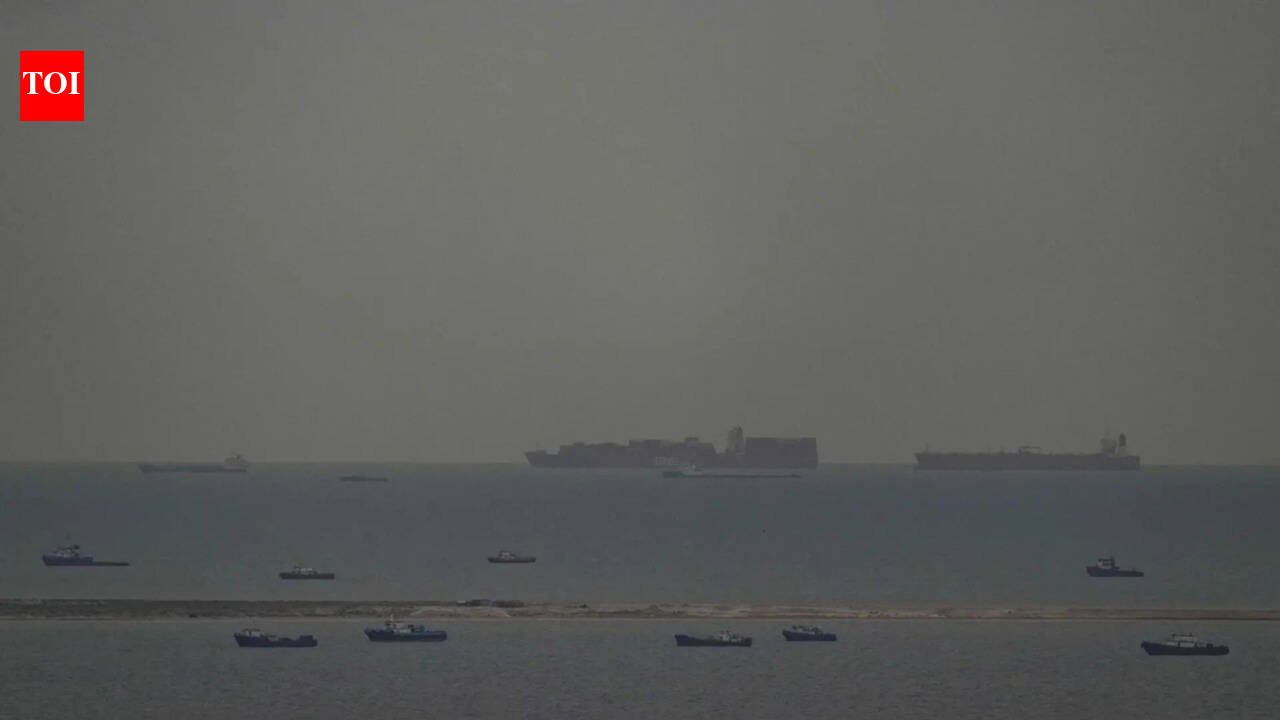
Image used for representative purposes

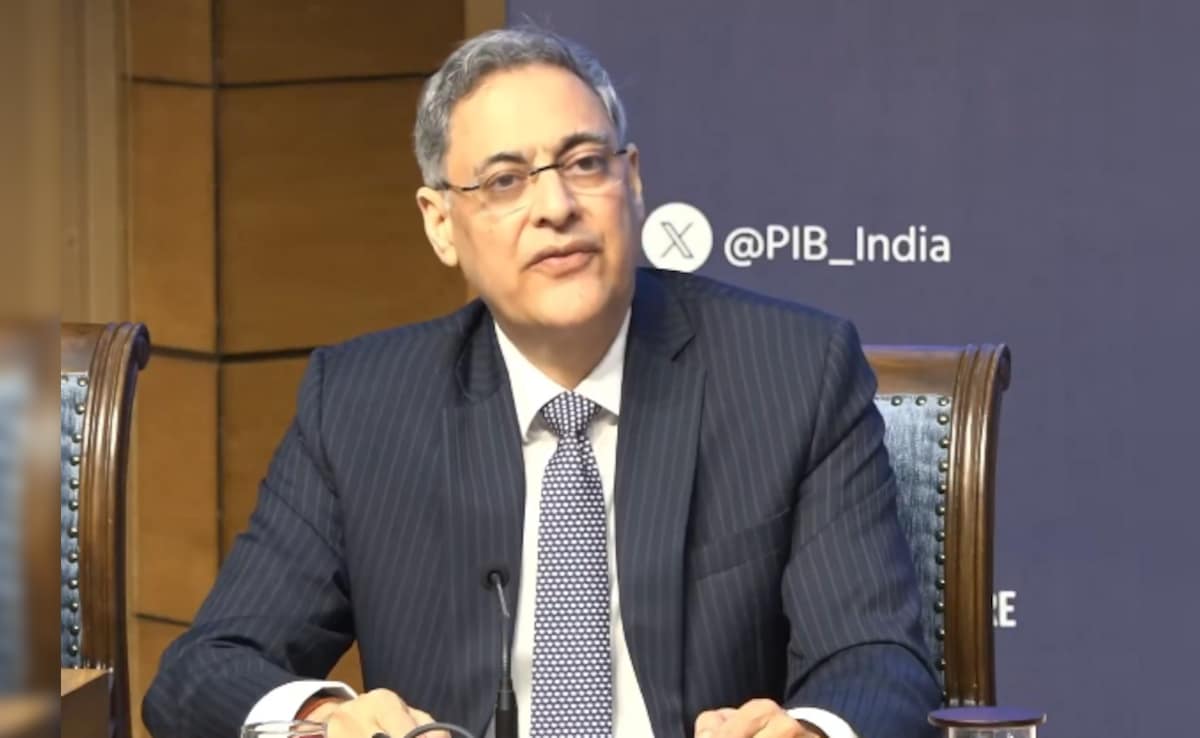
NEW DELHI: The ministry of external affairs on Thursday confirmed that India was involved in talks, on opening the Strait of Hormuz, hosted bu UK.Foreign Secretary Vikram Misri represented India at a meeting convened by the UK Foreign Secretary on the situation in West Asia. More than 60 countries participated in the meeting,” said the MEA in a statement.“In his remarks at the meeting, the Foreign Secretary noted the importance of the principles of freedom of navigation and unimpeded transit through international waterways. He emphasised the impact of the crisis on India’s energy security and the fact that India remains the only country to have lost mariners in attacks on merchant shipping in the Gulf. He also underlined that the way out of the crisis consisted of de-escalation and a return to the path of diplomacy and dialogue among all concerned parties,” it further added.

Watch

‘Energy Instability’: Navy Chief Tripathi Flags ‘Severe Economic Impact’ Of Hormuz Disruption

Meanwhile, insisting on safety during the journey during the weekly MEA briefing, spokesperson Randhir Jaiswal had said, “We are in touch with Iran and other countries there to see how best we can get unimpeded transit and safe transit for our ships, which are carrying products including LPG, LNG and other products. Through this conversation that we have had over the last several days, we have had six Indian ships which have been able to safely cross the Strait of Hormuz, and we continue to be in touch with relevant parties.This comes as UK PM Keir Starmer, earlier this week announced that his country will host a meeting of around 35 countries later this week to discuss reopening the strategic Strait of Hormuz.The meeting will “assess all viable diplomatic and political measures that we can take to restore freedom of navigation, guarantee the safety of trapped ships and seafarers and resume the movement of vital commodities,” he said during a press conference at Downing Street.He added that UK Foreign Secretary Yvette Cooper will host the discussions, which aim to bring countries together to push “as one for maritime security across the Gulf.”


Source link

‘Having Nadal’s number is …’: Iga Swiatek’s new coach has Rafa connection | Tennis News


'Having Nadal's number is ...': Iga Swiatek's new coach has Rafa connection
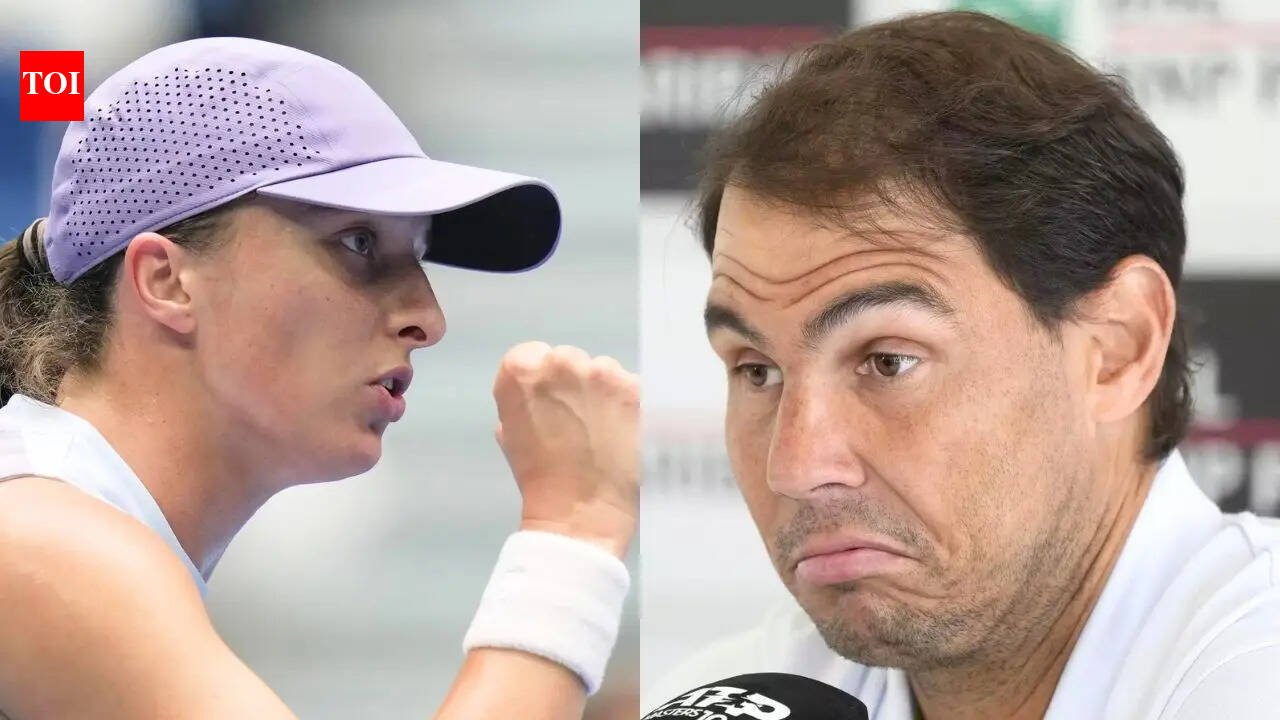
Iga Swiatek and Rafael Nadal (Photos by AP)

NEW DELHI: World No. 4 Iga Swiatek has announced a coaching change, bringing in Francisco Roig, who previously worked with Rafael Nadal. The 24-year-old shared the update on Instagram, writing, “Welcome to the team, Francisco! Very excited for this new chapter.”The former World No. 1 publicly acknowledged the support from legendary Rafael Nadal.“You know, Rafa is my idol and basically the only person I watched play tennis as a child. He was also kind enough to talk to me several times during his career and give me tips. He’s the person I can turn to if I need help or have a problem. Having someone so experienced – the best, the GOAT, in fact – is obviously a fantastic opportunity, and I’ll take advantage of it if I can,” Swiatek told Sport.pl.

Watch

Jay Shah’s 2036 Olympic blueprint for India: ‘8 Medals won’t cut it’

“Rafa is very open. He’s a great guy. Just having his number and being able to contact him is a huge honour. But honestly, whether he helped me or not, I’d like to keep it between us, because he’s part of this story. I wouldn’t want to put him in an awkward position,” Swiatek added.“This is between us. I don’t want to go into details. It’s definitely not something someone like me decides to do after one failure. I wouldn’t make such a decision lightly,” she said.The move comes shortly after Swiatek parted ways with her former coach Wim Fissette following a disappointing second-round exit at the Miami Open. It marked her earliest tournament exit in nearly three years, highlighting a dip in form.Swiatek has had an inconsistent run this season, falling short in key tournaments. She exited in the quarter-finals at the Australian Open, Qatar Open, and Indian Wells, raising concerns about her performance levels.The coaching switch appears to be a response to these struggles, as the former world No. 1 looks to regain momentum and confidence ahead of the upcoming tournaments.Roig, 58, brings significant experience, having spent years working closely with Nadal’s team alongside Toni Nadal and Carlos Moya. He has also coached top players like Emma Raducanu, Matteo Berrettini, and Giovanni Mpetshi Perricard.With Roig joining her team, Swiatek will hope his experience can help her rediscover her best form and compete strongly in the coming months.


Source link

Access Denied


Access Denied

You don’t have permission to access “http://www.ndtv.com/health/animal-protein-vs-plant-protein-which-is-better-for-heart-health-11302389” on this server.

Reference #18.26fdd417.1775137663.df53aa6

https://errors.edgesuite.net/18.26fdd417.1775137663.df53aa6


Source link

Access Denied


Access Denied

You don’t have permission to access “http://www.ndtv.com/world-news/over-6-lakh-passengers-return-to-india-amid-middle-east-conflict-government-11301835” on this server.

Reference #18.c7f5d217.1775138368.33ab7dc7

https://errors.edgesuite.net/18.c7f5d217.1775138368.33ab7dc7


Source link