Breaking News
Ravikant Kisana Talks Privilege & Uncomfortable Truths | India News

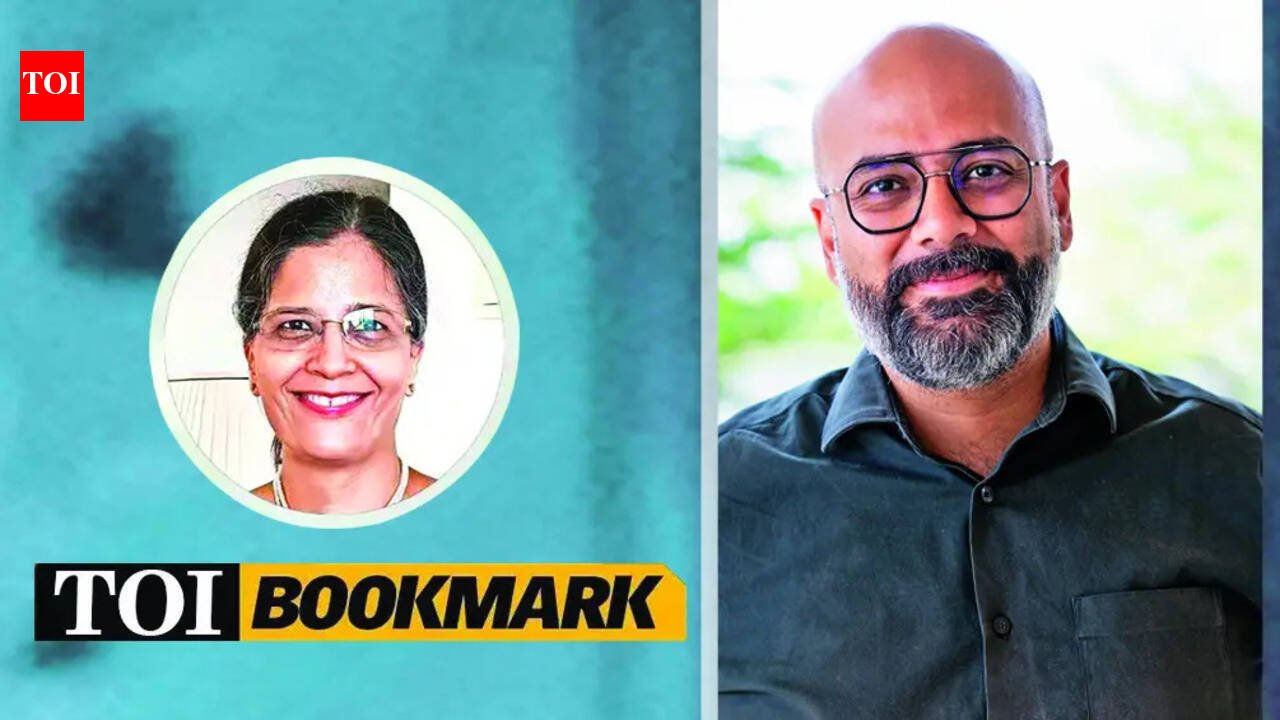
Ravikant Kisana Talks Privilege & Uncomfortable Truths

Q: What made you write Meet the Savarnas? A: It comes out of partly my life’s experiences also because I did not grow up in a Savarna family. I come from an intercaste marriage between a Scheduled Caste mother and an OBC father. And neither of those two sides of the family had a tradition for intergenerational literacy and what you would call high culture. But they were immigrants from Punjab. They were raising their kids in Kolkata. So I got exposed to a world which was not native to mine. And as I grew up, I realised that there was a world which was very much all around me, but I didn’t have access to it. And that world always seemed so much bigger than my own. It seemed full of very interesting people who were talking about books, culture, art, a ‘higher order of things’. When I looked at my own family and the people around me, the concerns were very mundane, were very existential. And as a young person…, I really wanted to escape the orbit of that world. And I, in time, started realising that a lot of that world was coded around the politics and the performance of caste. It was the world of Savarnas. It was a world where they decided what was legitimate, what was to be talked about, what was authentic and what was fake. And no matter how hard I tried, I couldn’t fit into that world… I eventually got into academia and got into cultural studies and did a fair amount of cultural anthropology as a method. I understood that when it comes to caste, the sociology and anthropology departments in India are full of these books and researches which centre Dalit communities, tribal communities, even OBC communities. There are lots of very interesting works which have been done on that. But the world of Savarnas... there’s not a lot of anthropological work which has happened there. And part of it is because it is very inaccessible. Like, it’s easier to go down to a slum in a city and do research, do field work there, interview people. You can’t walk into a gated community in Gurgaon or Bangalore and try to do that…. But more importantly, it was like this academic blind spot where you have all these great writers, thinkers, intellectuals in civil society, in media, academia, and they are all writing about caste, but they’re not writing about their own caste and communities. And it’s almost like their gaze is always facing outwards and never to their own. And I think it is a culmination of a lot of these different strands which put me in this space where I started writing and theorising about Savarnas. And it started out with articles for various digital media platforms where I was trying to do a series very loosely called ‘Like a Savarna’… And one of the articles there, ‘Dating like a Savarna’, I thought I had written a very non-controversial piece. It’s just a little bit about how caste and dating and intimacy overlap. And I got a tremendous backlash. There was a huge campaign on social media. I was called all sorts of names. And it had an impact on my professional life, my university where I was working. I had to pay some consequences because of that. And part of that backlash also made me realise that this is actually a very loaded conversation. It kind of made me a little more determined to write this. Q: You’re now carrying this book around in your domain space. How do you navigate it? A: It’s extremely challenging. The book begins very much grounded in closer to a memoir because I was grounding myself and my gaze into the book. As you go deeper into it, it becomes more of the social. It’s not just a book about caste. It is also a book about this period in time… from the late 90s, early 2000s till about Covid, 2020, 2022 because this was the period where the larger consensus was that India as a story is doing well, that we are on the rise, that this was our ascent towards superstar superpowerdom. And everywhere there was almost like you couldn’t say anything negative or you couldn’t say that the emperor had no clothes. Because then they would shout you down and say you’re being a naysayer. I have tried to theorize about it in the book through the idea of a glass floor. So if I am below the glass floor and what you’re calling the shining India story is happening above the glass floor in the world of Savarnas, well, that world looks very different to us… But it has a cost almost built into it. My career as an academic takes a hit. It’s almost like you’re always walking with a target on your back. Any right-wing reactionary group can just take the title of the book itself and create all sorts of discourse around it. So there is definitely a challenging, loaded responsibility that comes with it… I also want to point out there’s been a lot of understanding and love also from Savarnas. A lot of people have read the book and then come back to me, not through anger or bitterness, but through some kind of an idea that, okay, I am now going to be soul-searching and I’m going to be looking at myself. Q: It’s a great moment in history that you capture from modern India, but you also make visible to a young and modern audience using their lingo. A: When I was in college in the early 2000s, we were told that 21st century is a century of Asia, India and China… There were jobs, the tech sector was booming, real estate was booming. Hollywood was taking note of us. By every conceivable popular narrative. It seemed like we were on the rise. And we were supposed to reach the superpower status by 2020, because that’s what APJ Abdul Kalam had kind of told us. Now that date has been shifted back to 2047... When 2020 comes, forget being a superpower, it’s one of the most challenging years of the republic. It opens with the Shaheen Bagh protests, it goes into Covid. There’s a total breakdown of that positivity. And on the other side of it, it’s like we’ve emerged and we are beginning to ask ourselves this question, where did we go wrong? And I feel where we went wrong is that in this 20-25 year period, the steering wheel of this story was given into the hands of a very specific group of elite Savarnas who don’t even understand very much their own blind spots. So I’m trying to explain through this book why the Indian story didn’t work, why it ended up reproducing these pocket enclaves of hyper privilege while creating this system where our cities are unliveable, our policies are unworkable, there’s a political and existential crisis, the climate change crisis, all of these things have intensified and all the fruits of this great success story that we thought we will get, we haven’t received. And I’ve tried to answer some of those questions without trying to pathologise it into ‘this is how it is in India. The system is broken.’ A lot of times analysis hides behind these sweeping statements — ‘everything is broken, everything is corrupt’. No, what does broken mean? Who is in charge? Who are the people who are benefiting from these sort of systems? What are their politics? What is their social and cultural inner life? And I think in this book I’ve tried to connect both of these things. It’s not just a description of Savarnas, it’s not just a book on caste. It’s about both of those things and also how they intersect with policymaking and the larger trajectory of this moment that we had in India and we seem to have sort of squandered it. So in many which ways it’s also a book about a tragedy of a post-colonial state which had all the pieces in play and promised to itself that it was going to transcend itself and reach a higher level and couldn’t do it. Q: There’s so much being said which should be said in classrooms, in drawing room conversations, in public opinion pieces. A: Wherever there is knowledge production and wherever there is knowledge distribution in these spaces, there is near absence of any sort of caste diversity. As a result, what has happened is the structure becomes unaware of its own self. A lot of well-meaning Savarna intellectuals, thinkers, progressives often end up misdiagnosing and misunderstanding what they themselves are reproducing. So the critique then becomes just right versus left, progressive versus conservative. Whereas if you look at it from a caste formation, in a lot of these cases, the conservative and the progressive are often people within the same family WhatsApp group… The way we think of caste is fundamentally through oppression narratives, through the idea of suffering and exclusion. And don’t get me wrong, those need to be documented and talked about over and over again endlessly. But the system through which it mediates, through which it operates, is a Savarna system. And there is a sort of pathos in that. There is a sort of absurdity in that… One way of dealing with the pathos and the tragedy of caste and the absurdity of it is to also lean on humour a little bit because otherwise it just becomes too heavy and too intense and you can’t deal with it. So it is also an ode to a certain dysfunctionality in society. It is the code gone wrong on which the system operates. And you see all these attempts to try and write it and correct it and do the right thing in xyz, but the code is elsewhere. The system is operating on a different level… And my attempt in writing this book is that hopefully Savarnas see themselves a little bit, meet themselves a little bit, so they understand themselves a little bit and therefore they understand the systems they’ve created a little bit better.
Source link

IPL: Chennai crowd forces Ian Bishop to say ‘sorry’ during CSK vs PBKS toss – Watch | Cricket News


IPL: Chennai crowd forces Ian Bishop to say 'sorry' during CSK vs PBKS toss - Watch
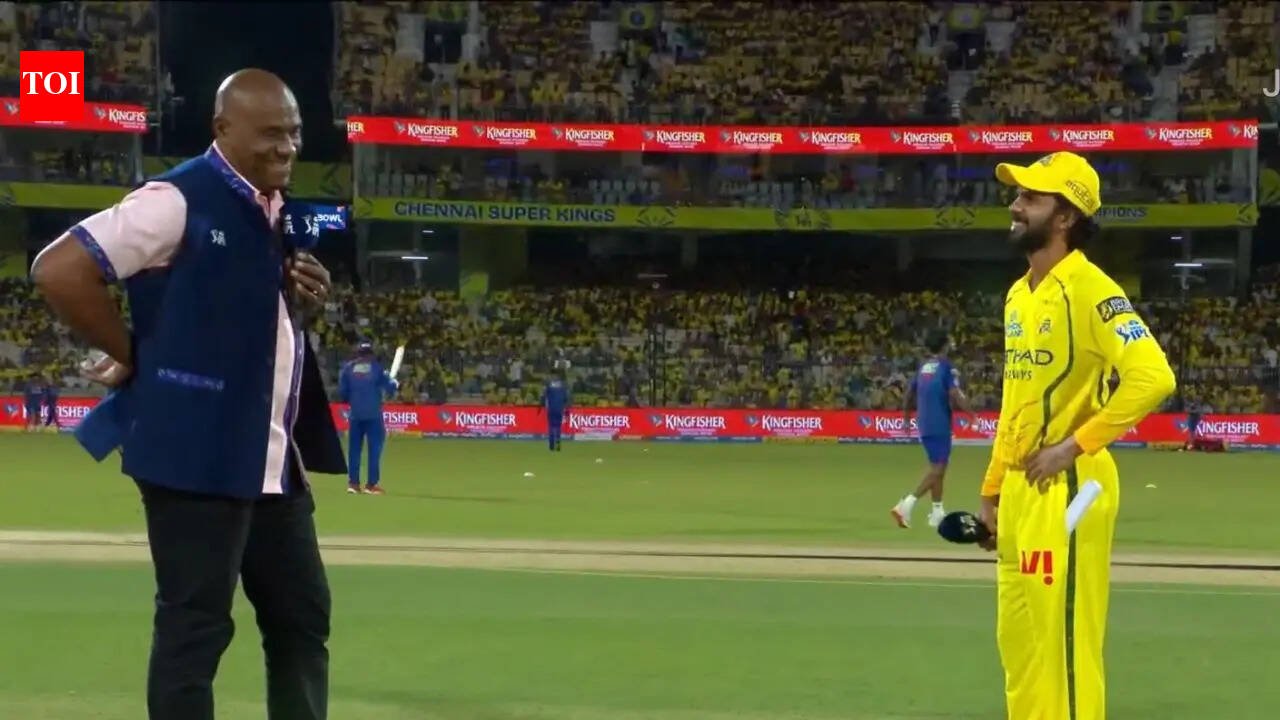
CSK vs PBKS toss (Screengrab)

NEW DELHI: The toss moment in the IPL 2026 match between Chennai Super Kings and Punjab Kings turned unexpectedly chaotic due to the deafening crowd at Chepauk. As captain Ruturaj Gaikwad came forward to speak, the noise made it nearly impossible for anyone to hear, creating a light-hearted but awkward delay.

Watch

Mike Hussey admits CSK were outplayed after batting collapse

Toss presenter Ian Bishop had to step closer to Gaikwad and eventually apologised for the delay. “I don’t know. I don’t know how long. Let me come closer. I apologise to the cameras,” he said. He added, “I’m sorry this is dragging on because of the noise and the cheering. I am sorry for not being able to hear you and for dragging this on.” The moment highlighted just how passionate CSK fans are at their home ground.Watch:Meanwhile, PBKS captain Shreyas Iyer won the toss and chose to bowl first, citing a fresh pitch and confidence from their previous win.Gaikwad explained his team’s approach, especially the decision to open the batting himself. “That has been the key for CSK as a franchise… I felt nothing better than having Sanju and me open the batting. So that was just the thought process behind it,” he said.He also spoke about the pitch conditions: “It looks a bit on the drier side. And I don’t think it will change too much… The dew will be a key factor in the second inning. So I think runs on the board and definitely you can defend on this track.”Coming off a heavy loss in their first match, CSK are aiming to bounce back, while PBKS look to continue their winning momentum.CSK vs PBKS playing XIs:Punjab Kings: Prabhsimran Singh (wk), Cooper Connolly, Shreyas Iyer (captain), Nehal Wadhera, Shashank Singh, Marcus Stoinis, Marco Jansen, Xavier Bartlett, Vijaykumar Vyshak, Arshdeep Singh, Yuzvendra Chahal.Punjab Kings Impact subs: Suryansh Shedge, Priyansh Arya, Vishnu Vinod, Pravin Dubey, Hemant BrarChennai Super Kings: Sanju Samson (wk), Ruturaj Gaikwad (captain), Ayush Mhatre, Sarfaraz Khan, Shivam Dube, Kartik Sharma, Prashant Veer, Noor Ahmed, Matt Henry, Anshul Kamboj, Khaleel Ahmed.Chennai Super Kings Impact subs: Jamie Overton, Rahul Chahar, Matthew Short, Ramakrishna Ghosh, Gurjapneet Singh.


Source link

Tipu’s ghost and Trump’s jibes haunt a transatlantic Franco-American rift


Tipu’s ghost and Trump’s jibes haunt a transatlantic Franco-American rift

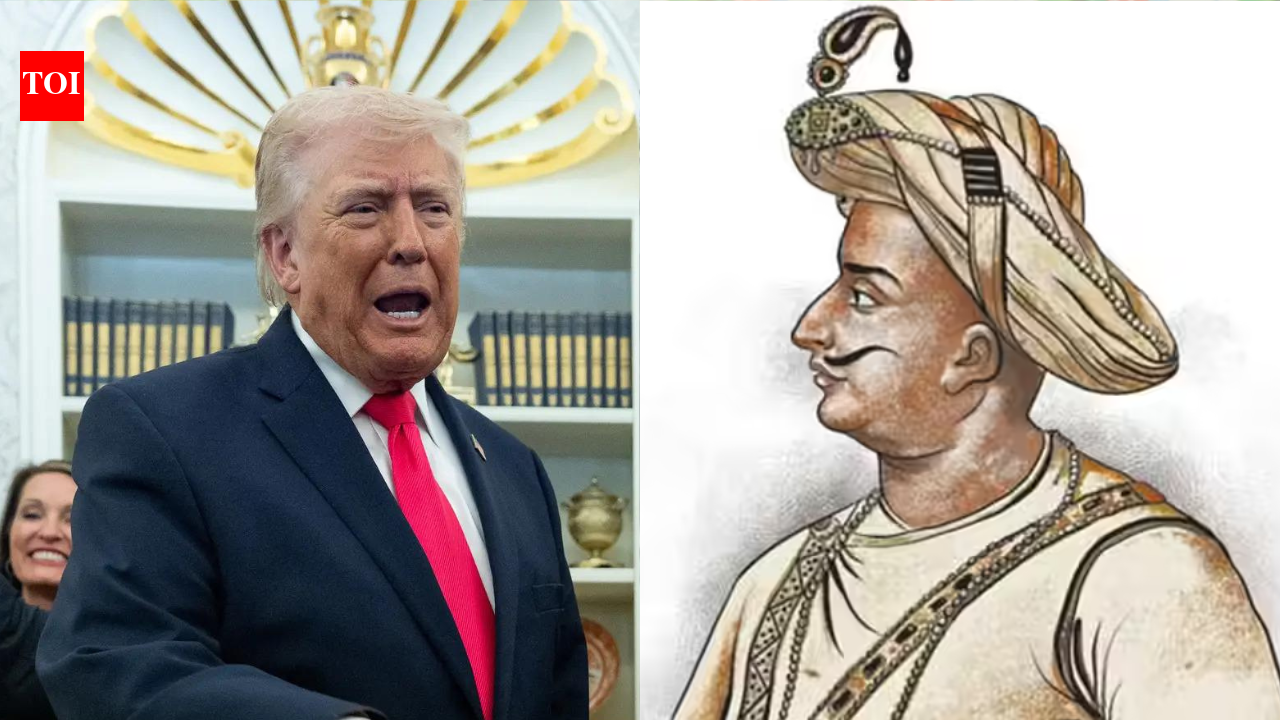
TOI correspondent from Washington: In the hallowed halls of the White House and the Elysee Palace, the United States and France have managed to upgrade a centuries-old alliance into something far more contemporary: a full-blown, transatlantic group chat gone wrong.The latest fracture in this storied alliance—a bond dating back to when the French were helping Americans dodge British tea taxes at the expense of India—didn’t arrive via a wine spat or cheese row. Instead, it was delivered with the flair of a man who treats the global stage like a household argument. During a private lunch on Tuesday, US President Donald Trump suddenly pivoted from the intricacies of Persian Gulf naval blockades to the dynamics of the Macron marriage.Mocking President Emmanuel Macron’s hesitation to fully commit French forces to the offensive mission, Trump unleashed a flurry of personal jabs, claiming that Macron’s wife treats him “extremely badly” and that he was “still recovering from the right to the jaw.” The remarks, delivered with a theatrical French accent he uses to mock Macron, referred to a viral video of a domestic Macron spat that the tabloid media has feasted on. From the Elysee Palace, the response was vintage Macron: chilly, intellectual, and devastatingly snide. “Neither elegant nor up to standard,” Macron sneered, effectively informing the leader of the free world that he was behaving like a man who puts ketchup on a Michelin-starred steak. “We all need stability… calm,” he fluted in French, “This isn’t a TV show!”Beneath the personal sniping lies a growing geopolitical divide. While Washington beats the war drums over Iran, Paris has adopted a posture of strategic autonomy, with Macron insisting that NATO — an organization Trump describes with the affection one usually reserves for a persistent rash — is a “Euro-Atlantic” alliance, not a global delivery service for American incursions.The irony of this ingratitude is not lost on those who remember that the United States might currently be a collection of very polite British colonies if it weren’t for the French. In 1778, King Louis XVI didn’t just send thoughts and prayers; he sent a fleet that effectively broke the British back at Yorktown.However, French generosity came with a price tag paid in Deccani India. While helping Americans, France was simultaneously ghosting Tipu Sultan, who famously pleaded for French assistance. But Louis XVI had spent so much treasure on the Americans that he had little left for his allies in the East. By 1783, the Americans had their freedom, and France had essentially paved the way for British dominance in India by failing to back Tipu. The American Dream, it seems, was partially financed by the abandonment of the Tiger of Mysore. Fast forward to 2026, and the Brotherhood of Franco-American Revolutions looks more like a messy, public divorce. In the halls of the Elysee, there is a growing sense that the Statue of Liberty was a gift that should have come with a 250-year return policy. Still, for all the theatrics, the Franco-American relationship has proven remarkably resilient. This is, after all, a partnership that has survived revolutions, world wars, trade disputes, and prolonged arguments over cheese. What makes the current moment unusual is not just the policy divergence, but the style. Macron speaks the language of norms, institutions, and carefully calibrated diplomacy. Trump operates in the dialect of rallies, headlines, and off-the-cuff remarks about other people’s marriages. It is less a clash of nations than of political cultures.


Source link

Access Denied


Access Denied

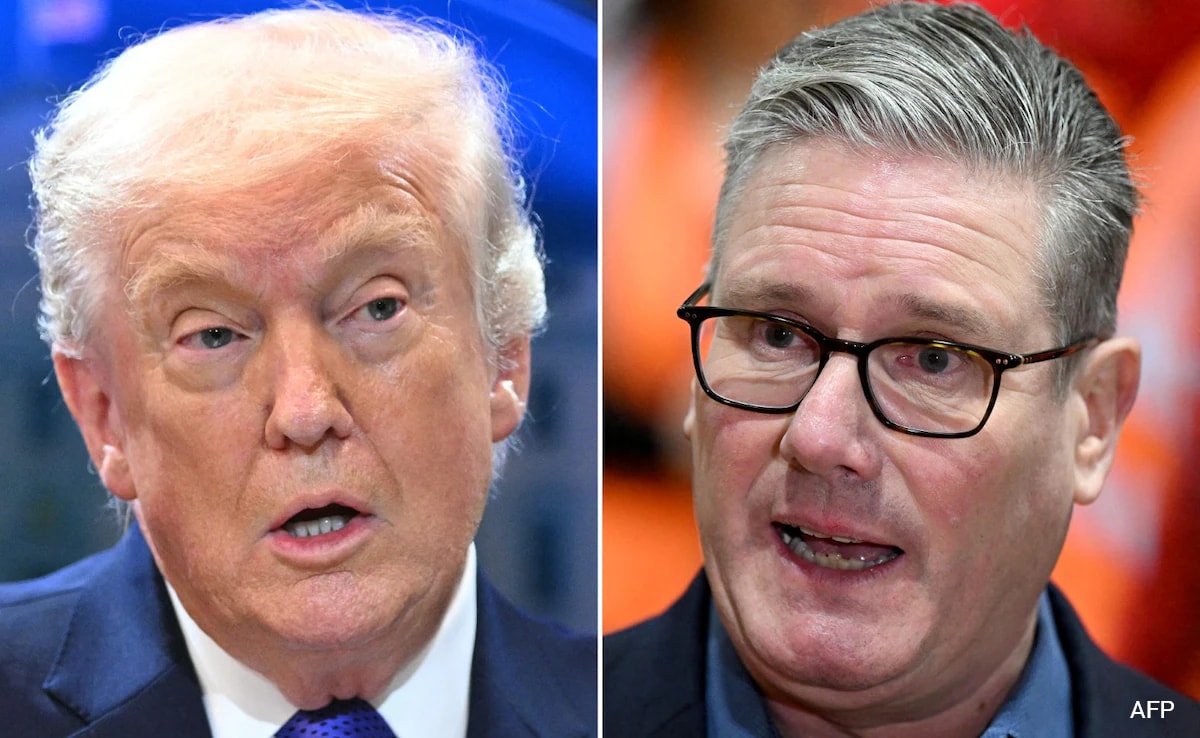
You don’t have permission to access “http://www.ndtv.com/world-news/iran-war-news-donald-trump-mocks-keir-starmer-over-help-in-iran-uks-old-broken-aircraft-carriers-11307972” on this server.

Reference #18.c7f5d217.1775234914.58cc84f7

https://errors.edgesuite.net/18.c7f5d217.1775234914.58cc84f7


Source link

Divya Dutta reveals how Aditya Chopra’s advice made her walk away from 20 signed films: ‘Why don’t you leave a legacy behind?’ |


Divya Dutta, who began acting at 16, struggled for steady work before Veer Zaara brought success and many offers. After signing 20 films, a candid chat with Aditya Chopra made her rethink her choices. She returned several projects, later winning a National Award for Irada and starring in Chiraiya on OTT.

Divya Dutta entered Bollywood as a teenager, just 16, making her debut with ‘Ishq Mein Jeena Ishq Mein Marna’. She earned recognition with the 1999 Punjabi film ‘Shaheed-e-Mohabbat Boota Singh’. However, she admits that finding consistent work wasn’t easy for several years. Things took a turn after ‘Veer Zaara’, which brought her widespread success and a flood of offers. Divya ended up signing around 20 films but eventually returned the money for many of them after a conversation with Aditya Chopra.

Divya Dutta reflects on her early years

In her conversation with Hindustan Times, Divya reflects on her career and why she now focuses on quality rather than quantity. She admits, “I felt out of place. For me, finding my place was a journey in itself. Along the way, you realise what you want. As life happens to you, it is when that clarity of thought comes to you ki mujhe kya chahiye (what do I want). You find your niche, your calling, and you know what your next step should be.

Watch

ACTRESS DIVYA DUTTA AT VIKSIT BHARAT AWARD 2025

Divya Dutta recalls signing 20 films

Reflecting on her career, the actor recalls that around 2007 she took on 20 odd films because there was a time when she didn’t have any. After a long phase without work, she was suddenly offered many projects, so she decided to take them all.

Divya Dutta’s advice from Aditya Chopra

Divya eventually stepped back from all the films she hadn’t yet started after an unplanned conversation with Aditya Chopra, her collaborator on Veer-Zaara and Aaja Nachle. “One day, I went to Aditya Chopra to just meet and have a cup of chai. We had just finished Aaja Nachle. I told him I signed 20 films. He did not respond, so I asked him, ‘Aren’t you excited for me?’ He said, ‘Is there a dearth of work for you or financially?’ I was very taken aback and said no. Then he asked me why I was signing so many films. ‘You are a very good actor, why don’t you leave a legacy behind?’,” recalls Divya.

Divya Dutta changes her perspective

Divya shares that her meeting with Aditya Chopra turned out to be a turning point in how she approached her career and choices. “It hit me hard,” she says, “I had not thought of it this way. It was my choice whether to listen to him or continue making money with those 20 films. There was a lot at stake. But I went back and returned the signing amounts of the films I hadn’t started. From then on, I only did stuff that I enjoyed. That was the stand I took.

Poll

What matters more in an actor’s career?

Divya Dutta’s National Award and recent projects

In 2017, Divya’s performance in Irada earned her the National Award for Best Supporting Actress. Over the years, she has also been part of several successful films, including ‘Bhaag Milkha Bhaag’, ‘Badlapur’, and ‘Chhaava’. Most recently, she appeared in the web series ‘Chiraiya’, which is currently streaming on JioHotstar.


Source link

Special NDPS court in Mumbai acquits duo in 2017 drug case, cites procedural lapses | Mumbai News


Mumbai: A special NDPS court recently acquitted two men, including a 75-year-old Jammu and Kashmir resident, in a 2017 case involving the alleged seizure of over 20 kg of charas. Both accused, Haji Hakim and Irfan Qureshi, had spent five years in jail before being granted bail in 2022. The court ruled that the prosecution failed to prove the charges beyond reasonable doubt, citing significant procedural lapses regarding the search of the accused and the methodology used to collect drug samples for forensic analysis. The duo were arrested in July 2017 by the Anti-Narcotic Cell (ANC) near Foras Road following a tip-off. While the prosecution claimed to have recovered 15.6 kg of charas from Hakim and 5.2 kg from Qureshi, the judge found substance in defence lawyer Anil Lala’s submissions that the mandatory safeguards under the NDPS Act were not strictly followed. The judge noted that while the law requires an accused to be informed of their right to be searched before a magistrate or a gazetted officer, the evidence in this case was “not convincing.The court pointed to discrepancies in how the accused were apprised of these rights. Though the police produced letters signed by the duo, the judge observed that the replies were not in the handwriting of the accused and appeared identical. Further, the investigating officer admitted that the appraisal might have occurred during the preparation of the panchnama rather than before the actual search. Regarding these procedural failures, the judge held, “If this statement... is accepted to be true, then admittedly the appraisal of right under section 50 was not before the search was conducted. The evidence of prosecution on the point of appraisal about right of accused under section 50 of NDPS Act is not convincing.”Another blow to the prosecution’s case was the failure to follow Section 52-A of the NDPS Act, which mandates that samples be drawn in the presence of a magistrate to serve as primary evidence. The court found that the police had instead collected samples by “scratching” the seized charas rolls themselves. “Admittedly, the procedure under section 52-A of NDPS Act is not followed in the present case. It is an admitted fact on record that the sample from the seized substance were not drawn by the police in the presence of the magistrate, therefore, the samples drawn would not be a valid piece of primary evidence in the present trial,” the judge said. The judge further questioned the representative nature of the samples, noting that the investigating team did not weigh each charas roll separately or collect individual samples from every piece. As the prosecution failed to establish that the samples sent for chemical analysis accurately represented the bulk of the seized material, the judge found the evidence insufficient for a conviction. “The prosecution has failed to establish compliance under section 52-A of the NDPS Act. The prosecution has failed to prove charge against accused beyond reasonable doubt,” the judge said.


Source link

‘I am a Muslim’: Spain’s Lamine Yamal condemns ‘racist’ anti-Muslim chants vs Egypt | Football News


'I am a Muslim': Spain's Lamine Yamal condemns 'racist' anti-Muslim chants vs Egypt

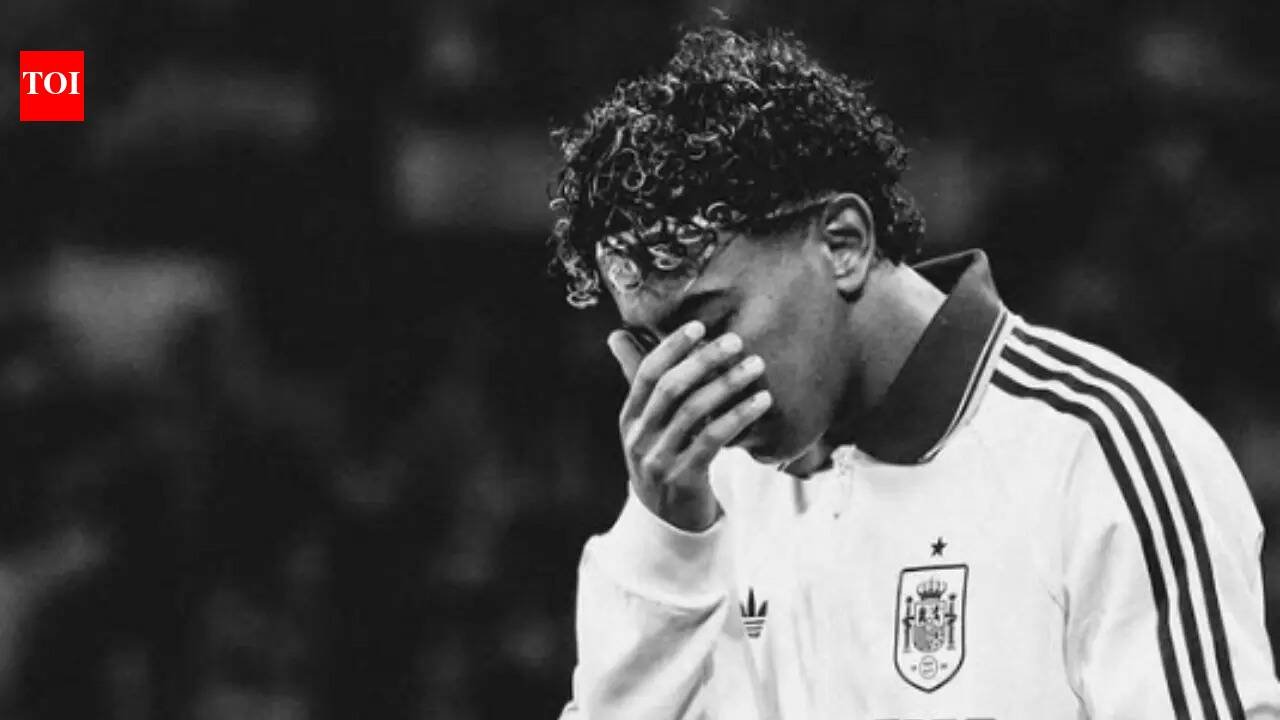
Spain’s Lamine Yamal has criticised sections of Spanish fans for anti-Muslim chants during Spain’s friendly against Egypt, saying such behaviour should not be tolerated in football.The incident took place at RCDE Stadium on Tuesday, where parts of the crowd were heard chanting: “bote, bote, bote musulman el que no bote”, which translates to “jump, jump, jump, whoever doesn’t jump is a Muslim”. The chant was heard again later in the first half and shortly after the break.Following the chants, a stadium announcement asked fans not to use racist, homophobic or xenophobic language, and the same message was displayed on the big screen. The announcement was met with whistles from some sections of the crowd.Egypt is a predominantly Muslim country. Yamal, the 18-year-old Spain player, is also a practising Muslim and has spoken about his faith before.“I am a Muslim, thank God,” he posted on Instagram.“Yesterday in the stadium, we heard the chant ‘whoever does not jump is a Muslim’. I know it was directed to the opposing team and nothing towards myself as a person, but as a Muslim myself this does not stop being a lack of respect and something we can’t tolerate. “I understand not all the fanbase is like that, but to those who sing those chants: using religion as something to mock people in a football stadium leaves you as ignorant and racist people. Football is to enjoy and support, not to offend people by who they are or what they believe in.”“Having said that, thanks to the fans who came to support. See you in the World Cup.”Real Madrid coach Alvaro Arbeloa also reacted to the incident, saying Spain was a tolerant country and not racist, despite what happened during the match.The chant, which is commonly used by Spain supporters in matches, was directed at the opposition in this case, referring to the country rather than a specific individual.The Royal Spanish Football Federation condemned the chants after the match. Yamal’s Barcelona teammates Pedri and Joan Garcia also spoke against the incident. Spain’s minister of education, vocational training and sport issued a similar message of condemnation on Wednesday.


Source link

IPL 2026: Why is MS Dhoni not playing in CSK vs PBKS? | Cricket News


IPL 2026: Why is MS Dhoni not playing in CSK vs PBKS?

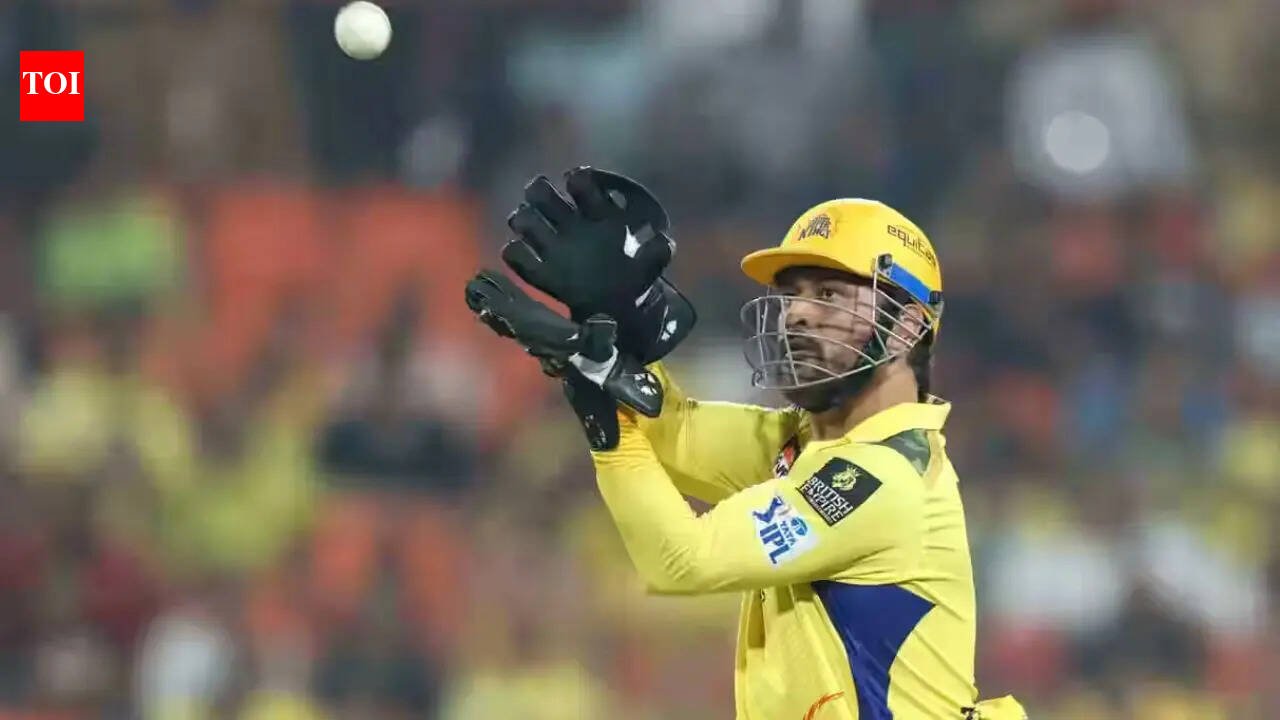
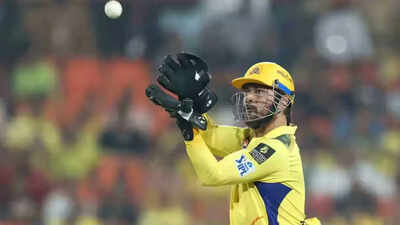
NEW DELHI: Chennai Super Kings are dealing with the absence of MS Dhoni during their IPL 2026 clash against Punjab Kings, as the veteran has been ruled out for the first two weeks due to a calf strain. On Friday, PBKS won the toss and decided to bowl first in Chepauk.The team had a tough start to the season, suffering a heavy loss in their opening match, raising concerns about their performance without him.

Watch

Mike Hussey admits CSK were outplayed after batting collapse

Head coach Stephen Fleming earlier made it clear that while Dhoni is not on the field, his presence is still strongly felt. “It is just a game without him. He is still heavily involved in the side, and his influence remains very strong,” Fleming told reporters ahead of the Punjab game. Despite this, the team’s first outing without Dhoni in the playing XI did not go well.CSK are now trying to regroup under Ruturaj Gaikwad’s leadership, with a mix of young and experienced players. Fleming highlighted the team’s approach, saying, “We have invested in youth and Indian talent, and there is real energy in the group. The first game is always a good barometer, and we are focused on starting well.”

CSK team updates

The team is also missing South African batter Dewald Brevis, who is currently recovering from injury. Fleming provided an update: “Yes, Brevis is out and is currently rehabbing. Hopefully, it won’t be too long before he returns.”While Dhoni’s absence is a big blow, CSK are relying on their squad depth and internal leadership to bounce back. His off-field involvement continues to guide the team, but how quickly they adjust without him on the pitch will be key to their campaign.

CSK vs PBKS Playing XIs:

Punjab Kings (Playing XI): Prabhsimran Singh(w), Cooper Connolly, Shreyas Iyer(c), Shashank Singh, Nehal Wadhera, Marcus Stoinis, Marco Jansen, Xavier Bartlett, Vijaykumar Vyshak, Arshdeep Singh, Yuzvendra ChahalChennai Super Kings (Playing XI): Sanju Samson(w), Ruturaj Gaikwad(c), Ayush Mhatre, Sarfaraz Khan, Shivam Dube, Kartik Sharma, Prashant Veer, Noor Ahmad, Anshul Kamboj, Matt Henry, Khaleel Ahmed


Source link

Massachusetts Robbery: High-tech robbery using jammers in Massachusetts targeting Indians as they keep cash, jewelry at homes


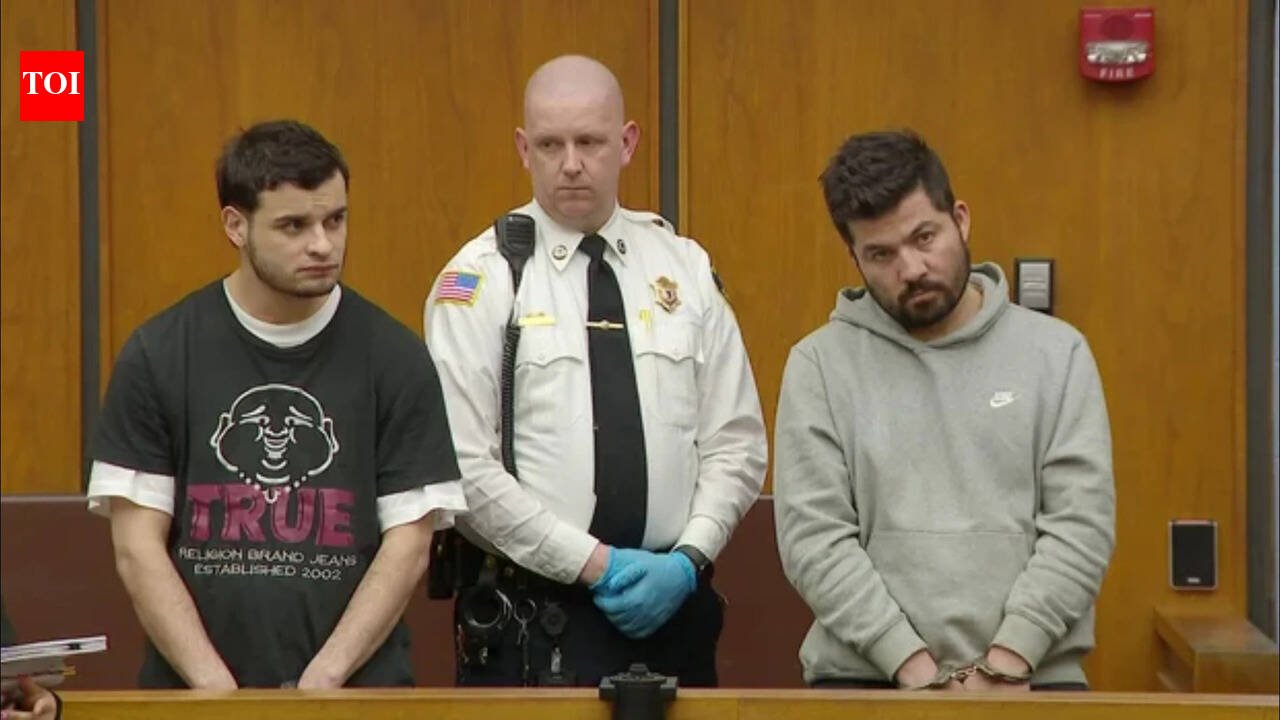
Two men charged for robbery targeting Indians in Massachusetts appeared in court recently. (CBS News)

A high-tech gang has been busted in Massachusetts for orchestrating sophisticated robberies, where they targeted Indians and East Asians specifically, as they are known to keep cash, jewelry, heirloom valuables with them inside their homes as part of their culture. The robberies took place last summer when the thieves stole hundreds of thousands of dollars in cash and jewelry from five homes in Woburn, Wilmington, Burlington and North Reading in June and July of 2025.CBS reported that three men have been accused of using GPS trackers, hidden cameras and WiFi jammers in their sophisticated home break-in scheme. David Rondon-Castro and Yeison Ramirez-Garcia of New York, and Itan Dami Beltran of Pennsylvania have charged with conspiracy to commit residential break-ins. Rondon-Castro and Yeison Ramirez-Garcia appeared in court recently.Middlesex County District Attorney Marian Ryan said all these men were intensively surveilling the individuals who would become their victims.

Camera inside the house, GPS trackers for cars

The thieves attached GPS trackers to the cars of the families and installed hidden video cameras in the yards or inside their targeted properties. Using Wi-Fi jammers, they used to disable the security systems that the victims might have had in their homes. Ryan said the suspects targeted the victims “based on their race and ethnicity and apparent belief that they may be more likely to have valuable heirlooms, jewelry, gold and cash in their homes as part of their heritage and culture.” The suspects are part of a group targeting homes in Massachusetts and the East Coast, Ryan said. She said they were tracked down by investigators who analyzed cell phone data and license plates of “suspicious vehicles” seen in the area of the break-ins.CBS reported that a similar pattern of targeted robbery in Massachusetts was reported in 2023 as well, where the thieves knew when the owners would be gone and stole their jewelry.

Stay updated with our Live Blog for minute-by-minute coverage of the Israel Iran War including breaking news, missile attacks, and Middle East crisis Latest Updates


Source link

Access Denied


Access Denied

You don’t have permission to access “http://www.ndtv.com/world-news/donald-trumps-new-title-for-jd-vance-fraud-czar-what-that-means-11307505” on this server.

Reference #18.adf5d217.1775224148.70bc9b12

https://errors.edgesuite.net/18.adf5d217.1775224148.70bc9b12


Source link