Breaking News
Erling Haaland’s hat-trick eliminates Liverpool, sends Manchester City to FA Cup semis | Football News


Erling Haaland’s hat-trick eliminates Liverpool, sends Manchester City to FA Cup semis
Erling Haaland (AP Photo)

Manchester City delivered a dominant performance to crush Liverpool 4-0 in the FA Cup quarter-final, with Erling Haaland stealing the show with a hat-trick. The heavy defeat piled more pressure on Liverpool manager Arne Slot, whose team looked out of form throughout the match.City took control late in the first half when Haaland scored from the penalty spot after a foul on Nico O’Reilly. Just before halftime, he struck again with a well-timed header. Liverpool struggled to respond, and things got worse after the break when Antoine Semenyo added a third goal.Haaland then completed his hat-trick with a powerful finish, sealing a commanding win. Liverpool’s misery was summed up when Mohamed Salah missed a penalty, with City goalkeeper James Trafford making the save.The defeat adds to Liverpool’s poor run, with just two wins in their last seven matches. Fans voiced their frustration, and Slot now faces growing criticism. Reflecting on the tough phase, he said, “We have had a lot of setbacks and disappointments but that is also part of being a football player and being a human being. You have to stand there when things are not so positive.”He also admitted, “It’s very disappointing to be out, not only in the manner but also the score. Another big disappointment for us,” and added, “The only good thing was that we didn’t concede more.”While City march into the semi-finals in strong form, Liverpool must quickly regroup ahead of a crucial Champions League clash, with their season at risk of slipping further.



Source link

Mystery drone appears near Mamata Banerjee’s helicopter, 3 held | India News


Mystery drone appears near Mamata Banerjee's helicopter, 3 held

KOLKATA/MALDA: A mysterious drone appeared in front of Bengal CM Mamata Banerjee’s helicopter in Malda on Saturday just as she was heading to Gazole after a rally at Malatipur. Police have detained three people in this connection.Though the detainees claimed they had come to attend Banerjee’s rally and wanted to capture her boarding the helicopter, police are taking no chances.The drone was spotted by the CM herself. While boarding, she stopped on the helicopter’s stairs and looked into the sky for a while. “If the drone had hit the helicopter while it was trying to fly, it would have crashed. Police must find out who did this,” she said.When a helicopter is flying, it is the responsibility of air traffic control to keep the surrounding airspace clear. Airports Authority of India sources said no permission had been sought for operating the drone.Pilot Shubhagata Jowardar said it was not possible to predict the danger in such a situation. “It was an unauthorised drone. Though Malda airport does not have regular operations, there are severe restrictions wherever there is a CM’s movement,” an official said.  


Source link

‘All they care about is politics and power’: PM Modi slams Congress for endangering Indians in Gulf | India News


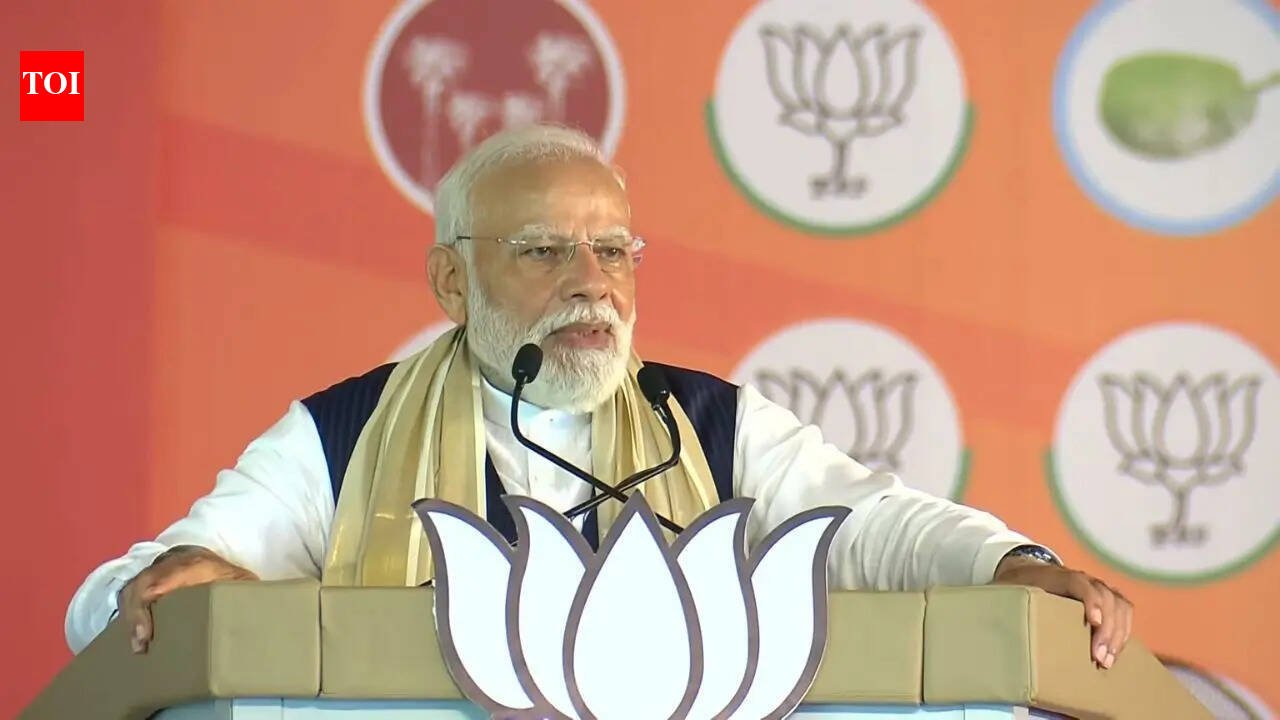
NEW DELHI: Prime Minister Narendra Modi on Saturday accused Congress leaders of putting the lives of Indians in the Middle East at risk by making dangerous remarks.While addressing a rally in poll-bound Kerala’s Thiruvalla, the Prime Minister alleged that Congress wants Gulf countries to consider India as their enemy amid the ongoing conflict between the US and Iran.

Watch

‘Irresponsible’ Remarks By Congress Could Put Keralites In Gulf At Risk, Says PM Modi In Kerala

“The Congress wants the West Asian countries to consider India as their enemy, that we should make some mistake here, give some statement like that, and trouble befalls Indians living in the Gulf countries, so the Congress is giving statements that anger the Gulf countries,” PM Modi said.“The Congress wants panic to spread, and for it to get a chance to hurl abuses at Modi. I want to tell the people of Congress, LDF, UDF that politics has its place, elections will come and go, but for me, the safety of the lakhs of Keralites there is the priority, and I am committed to that,” he added.PM Modi, however, cited India’s good relations with Middle Eastern countries and said that Gulf governments consider Indians as their family.“It’s a good thing our friendship is strong, that all the Gulf governments consider all our Indians as their own family and protect them,” PM Modi said.“But here, such language is being spoken. I’ve grown tired of telling them that this is not the time to speak like this. The safety of our millions of brothers and sisters living there is our sole responsibility. So stop speaking nonsense, so that our young people, our daughters, face no trouble there,” he added.The Centre has been monitoring the situation since the beginning of the conflict. Earlier, PM Modi also chaired a meeting with chief ministers and lieutenant governors of all states and union territories to review the situation.Additionally, the government has also formed an inter-ministerial committee, with defence minister Rajnath Singh as the chair, to monitor the situation.

Poll

Do you believe that political statements can put Indians in the Middle East at risk?

Polling for the 2026 Kerala legislative assembly elections is scheduled to be held on April 9, while the counting of votes will take place on May 4. The tenure of the current assembly is set to end on May 23.


Source link

Mumbai: Congress leader questions CDR leak in Kharat case | Mumbai News


Mumbai: Congress has raised questions over the alleged leak of the Call Detail Records (CDR) of rape accused Ashok Kharat, pointing to his phone communications with deputy chief minister Eknath Shinde and senior BJP leaders Chandrakant Patil and Ashish Shelar, and Shiv Sena UBT’s Milind Narvekar. Congress leader Sachin Sawant asked “whether the leak was selectively carried out by those in power to settle internal scores” and demanded a reply from the govt over the leak of CDR.A CDR contains a person’s call records and can only be obtained by police or investigative agencies from telecom operators during an official probe. Recently, activist Anjali Damania reportedly received these CDR records from an unknown source. She shared the details with the govt and police before making them public Sawant said, “It’s rare that such a crime got exposed.” “How come the CDR reached a private person? Is SIT being misused to settle private scores by politicians?” he asked.


Source link

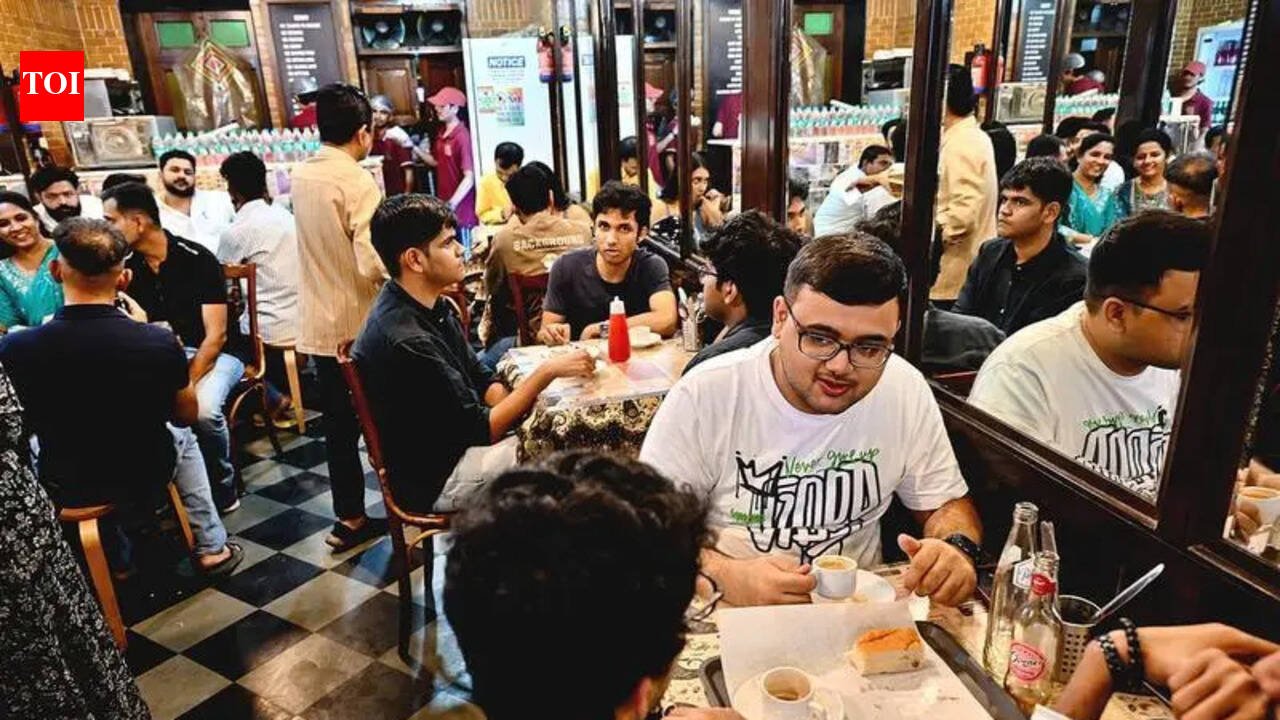
Brun pav to berry pulao: Iran’s mark on Mumbai’s foodscape | Mumbai News


Bentwood chairs, glass-topped tables and wooden counters displaying glass jars with baked goods. This is the typical image of a Parsi/Irani cafe in Mumbai. But there’s more than meets the eye. These eateries and chai-khanas or teashops have blended authentic Irani recipes with local spices, creating a cuisine customised for Indian palates.As bombs rain on Iran, and the latter retaliates with missiles of its own, we momentarily take our gaze off the war to discuss how Iran influenced Mumbai’s food landscape. Though several iconic Irani cafes have shuttered or given way to Udupi restaurants, there are some that have bravely weathered the winds of change. From brun maska (a crusty bread served with butter), at the iconic Kayani & Co at Dhobi Talao, to berry pulao (a rice dish with cranberries and saffron) at Britannia & Co at Fort, to the chicken cheese omlette with reddish-black tea at the Cafe Irani Chai in Mahim West and joojeh kebabs (boneless pieces of barbecued chicken marinated with saffron and spices) at Cafe Mommyjoon in Bandra, these Irani restaurants remind us of Indo-Iranian culinary bonds that stretch centuries. Noshir Dadrawala, a “Parsi foodie” who has visited Iran more than 40 times, says Mumbai’s culinary landscape would have been poorer without Iranian cuisine. “Their kebabs, whether the joojeh kebabs or the kebab-e-mahi ( fish kebab), are juicy, flavourful and filled with herbs,” he gushes. Their naan (bread or roti in Persian) is also a significant contribution to our culinary culture. Few know the history of Mumbai’s bakeries as Asif Farooqui does. His father and uncle, immigrants from Azamgarh in UP, landed in Mumbai in 1943 and worked at a Parsi-owned bakery in Dongri.“In the 1940s, Parsis and Britishers dominated the bakery business and, post-Partition, many Muslims like my father and uncle entered the field and prospered,” says Farooqui, who owns Azmi Bakery in Dongri.Tandoor is another Iranian contribution to Indian food culture. Derived from the Persian word ‘tanur’ meaning clay oven, tandoor and tandoori are now ubiquitous. “Just imagine how bland our food would have been without tandoori roti and tandoori chicken, though the latter is more popular as Mughlai cuisine than Persian,” explains Farooqui.Amid the iconic restaurants and cafes serving Iranian/Parsi dishes are some newcomers. Cafe Mommyjoon is a refined restaurant with charming decor, serving “authentic” Persian dishes, such as shish kebabs (chicken cubes marinated with herbs and chilli) and paya shorba (lamb trotters slow-cooked with aromatic spices and served with roti). “Its decor and dishes transport us to the eating houses of Tehran and Isfahan,” says Ali Akbar Shroff, president of Koja Shia Ishna Asheri Jamaat (Mumbai).No talk of Iranian influence on our food and beverages is complete without Irani chai or tea. Nobody adds milk in tea in Iran.Mohammed Hussain Showghi of Cafe Irani Chai in Mahim is the fourth generation of an Iranian family that originally sold tea. His father Mohammed Showghi Yezdi, also a filmmaker, once narrated to TOI the fascinating story of his grandfather’s immigration to Mumbai.“He walked from Yazd in Iran to Mumbai in the early 19th century, escaping drought-caused starvation. He began selling tea in a coal-fired kettle at street corners. “My father ran a restaurant at Plaza cinema in Dadar ( it is here that Showghi fell in love with cinema),” recalled senior Showghi to us once. “We carry forward the legacy of our ancestors. Our chai is both the original black tea and tea added with milk,” says Hussain. “Besides, we serve many dishes.”Khojeste Mistree who teaches Parsi theology and Zoroastrianism maintains it is not Iran which has influenced our food. “It is the other way round. The restaurants Zoroastrians established in Mumbai were influenced by local flavours and spices. Nevertheless, the blending has been great,” he says.


Source link

Premature baby goes home after 4 months at KEM Hosp’s NICU | Mumbai News


Mumbai: After spending more than four months in civic-run KEM Hospital’s neonatal intensive care unit (NICU), one of the lightest prematurely born babies, a girl child, went home on Saturday afternoon.“From just 600gm to going home strong, she is a true fighter,” said KEM Hospital dean Dr Sangeeta Ravat. While NICU interventions cost lakhs of rupees, the child was treated for free.Her 35-year-old mother got into premature labour in the 25th week of her pregnancy, and the girl child was born late last year in KEM Hospital. “The child had several complications, including respiratory distress that needed her to stay on ventilator support for four months,” said NICU head Dr Anitha Haribalakrishna. The child also suffered spontaneous intestinal perforations that had to be surgically fixed, as well as sepsis.India records the highest number of preterm births in the world, accounting for 20% of such births globally every year. It is estimated that 32 lakh premature babies are born in India every year.“In the NICUs of private hospitals, one hears about 400gm babies going home, but this is a proud moment for a public hospital,” said a doctor associated with the child’s care. Last year, a city hospital had treated a 350gm baby born at 24 weeks of pregnancy.Dr Haribalakrishna said that the girl child has recovered well. “She is now 3.5kg and is on breast feeds. Her scans are all normal too,” she added.Meanwhile, KEM Hospital, which has a 45-bedded ICU, will add another 20-bedded NICU right next to the labour ward. “This will make transfer of premature babies to the new NICU very easy,” said Dr Ravat, adding that the inauguration will take place soon.The hospital’s NICU team handled a 550gm baby, who was born prematurely at 25 weeks of pregnancy, during the Covid pandemic. A premature birth means a baby is born before the 37th week of pregnancy (total 40 weeks).


Source link

Bombay high court holds five-year loan bar unjustified after compromise settlement | Mumbai News


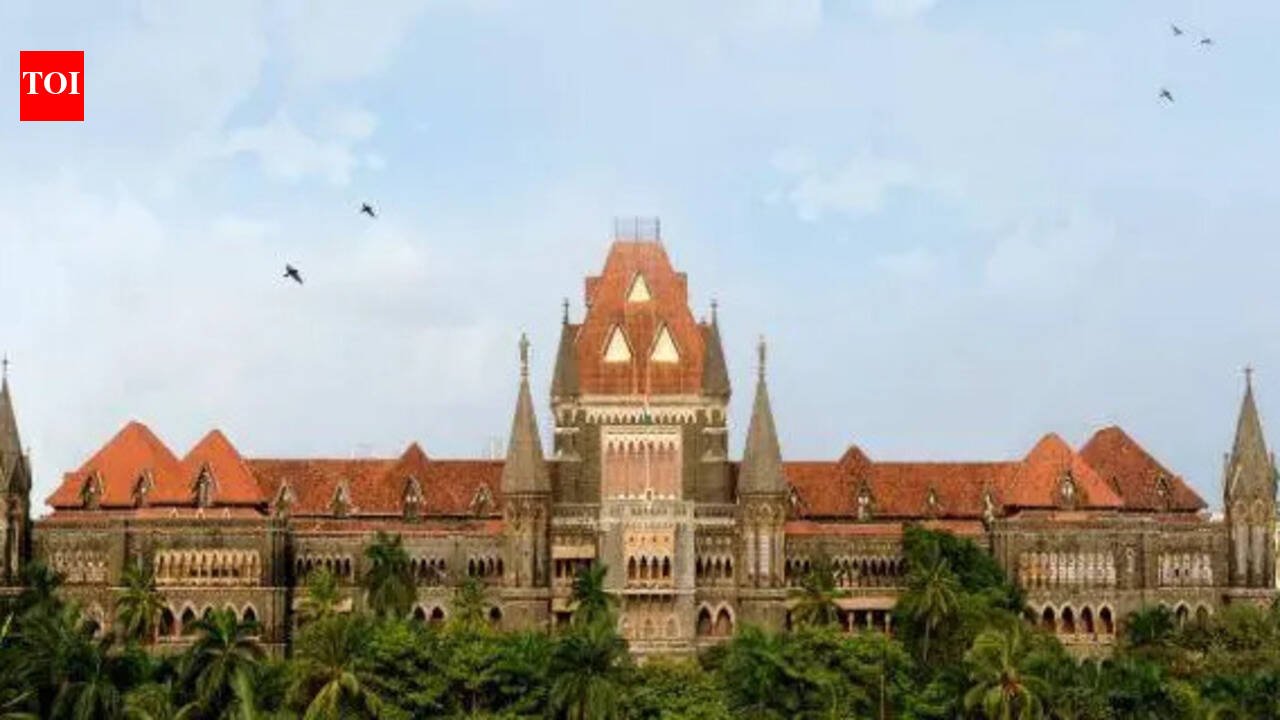
Mumbai: The Bombay high court has held that under the Reserve Bank of India (RBI) circular, when a compromise settlement is entered with the lending bank and a non-performing account is settled, there is “no justification in continuing with the penalty measures further for a period of five years, unless it is established that the defaulter is guilty of fraud or that he has siphoned off funds”. The HC offered relief to two directors of a mineral trading company, lifting restrictions imposed on them for availing new loans from banks and financial institutions, by directing the removal of their names from a list of wilful defaulters.The degree of a default would vary in every case, the HC said, and held that it would be “unreasonable to treat every such default on par, as once the defaulter paid the compromise amount, his name is allowed to be deleted from the list of wilful defaulters,” Justices Bharati Dangre and R N Laddha observed in a judgment made available on Friday. The HC disposed of, on March 25, a petition filed by Ravi and Nakul Arya, directors of International Mineral Trading Pvt Ltd, who had approached the HC and sought a declaration that continued penal measures under the RBI master circular on wilful defaulters of July 2015, which places a bar on defaulters for five years, are not applicable when there is a successful compromise settlement and consequent withdrawal of the wilful defaulter tag by the lender bank. IMTC had taken a loan of Rs 115 crore in 2008 from Bank of Baroda and an additional Rs 90 crore from Union Bank. In July 2017, the company’s place was confirmed by a review committee of Union Bank on the list of wilful defaulters. But the company in its petition before the HC pointed out that it had reached a successful settlement, based on which Bank of Baroda had dropped it from such a list; hence, it can’t be banned from seeking further loans, argued Arya’s senior counsel Vikram Nankani. The HC agreed with Nankani’s plea of carving a distinction between those who close an NPA via a compromise payment and those who continue with the default. The HC, after also hearing advocates Prasad Shenoy with Parag Sharma for RBI, AR Bamne for Bank of Baroda and Priyam Amin for Union Bank of India, noted that the RBI’s master circular on wilful defaulters is intended to “put in place a system to disseminate credit information pertaining to wilful defaulters for cautioning banks and financial institution so as to insure that further bank finance is not made available to them”.The HC also noted a new 2024 circular by RBI pertinently “diluted the bar imposed” on new additional credit facility to one year after a name is scratched off the wilful defaulters list but maintained a five-year bar for those seeking loans to float new ventures. The RBI in 2024 also introduced a ‘compromise settlement’ clause to enable the bank to remove a borrower’s wilful defaulter tag on payment of such compromise amount. “In the recent circulars of 2024 and 2025, we have found distinction being made, as regards the bar on additional credit facility and fresh credit facility for floating new ventures, the former being not allowed for a period of one year and the latter for a period of five years. However, if for unavoidable circumstances, the borrower is unable to repay the loan, in our opinion, the axe should not fall upon him, debarring him for five years,” the HC held. Ruling in favour of the Aryas, the HC said, “We declare that as far as the case of the petitioner is concerned, in the wake of the compromise entered by International Mineral Trading Private Limited with the Bank, the restriction imposed for availing additional facility from any Bank/FI shall not be invoked against the petitioners in the peculiar circumstances.”


Source link

More LNG supply for urea plants to boost production: Government | India News


More LNG supply for urea plants to boost production: Government

NEW DELHI: Govt has announced to increase gas supply to urea plants to approximately 90% of their average consumption from Monday, a move that will push productivity to ensure enough availability of the most-used soil nutrient during the upcoming Kharif, and subsequent, Rabi crop season.Currently, the supply of LNG to urea plants is around 70-75% of their last six-month’s average consumption. Govt on Saturday said supply will be increased “considering the available inventory and scheduled LNG cargo arrivals”. It added that gas supply to other industrial and commercial sectors, including supplies through city gas distribution (CGD) networks, will be enhanced by a further 10%, effective Monday.“All industrial consumers, including fertiliser plants, have been advised to provide their additional requirement on spot basis so that the same may be arranged by the gas marketing companies,” an official statement said.Earlier this week, the fertiliser ministry had said monthly domestic urea production dropped to 18 lakh tonnes in March from earlier average of 24 lakh tonnes. It had said manufacturing is set to increase with more availability of LNG, including procurement through “spot buying” every fortnight.Meanwhile, on Saturday, the Centre also extended the State Trading Enterprise (STE) status of Indian Potash Limited (IPL) for importing urea on govt accounts until March 31, 2027. This move is aimed at ensuring uninterrupted supply of urea to meet domestic demand amid volatile international markets.


Source link

Thane couple’s MTP struggle at 31 weeks highlights procedural hurdles | Mumbai News


Mumbai: A Thane couple’s “distress” after approaching the Bombay high court to terminate a 31-week pregnancy, when a local medical board refused permission, has highlighted continuing gaps in India’s amended Medical Termination of Pregnancy (MTP) law.Abhaya, 37, and her husband Kiran (both names changed) said their experience at J J Hospital was “humane” compared with their first encounter with a medical board on MTP.Though the MTP Act was amended in 2021 to allow termination beyond 24 weeks, Form A, which grants non-govt hospitals permission, has not been updated. Private hospitals can still apply for licences only for MTP up to 12 weeks or up to 24 weeks.“Even the best-equipped non-govt hospital cannot do MTP beyond 24 weeks as a result. If the woman is insistent on a non-governmental hospital, then she has to move the high court for permission,” said gynaecologist Dr Nikhil Datar, who campaigned to raise the MTP limit from 20 to 24 weeks. He performed Abhaya’s MTP on March 30.Abhaya said she and Kiran decided to have a second child after their daughter turned 8. They had earlier lost their first-born immediately after birth due to meconium poisoning, and Abhaya also had an ectopic pregnancy.In the 30th week of her current pregnancy, her gynaecologist noticed abnormal skeletal development on a routine ultrasound and referred her to Wadia Hospital. Doctors diagnosed the foetus with skeletal dysplasia, a rare disorder affecting cartilage and bone growth. In severe forms, it can cause chest deformities leading to death soon after birth.Abhaya said doctors told her that the child would have brittle bones, suffer repeated fractures and severe pain. “I did not want my child to suffer so much pain,” she told TOI while recuperating after a C-section at Cloudnine Hospital, Malad, on March 30.The couple approached the medical board at Thane Civil Hospital on March 17 seeking permission for MTP. They received its opinion the next day: “…considering the advanced gestational age (31+ weeks) and the absence of lethal anomaly, the medical board is of the opinion that termination of pregnancy is not justified at this stage”.They then consulted Dr Datar and moved the Bombay high court, which directed them to J J Hospital’s medical board in Byculla. By then, it was March 26, and Abhaya was admitted for tests and specialist examination before the board submitted its report to the court the next day.According to Dr Datar, the J J Hospital board found that the foetal abnormality met the legal standard for termination beyond 24 weeks. It approved medical termination with foeticide in utero, and the court then allowed the procedure.The couple said the difference between the two boards was stark. Abhaya said doctors at J J Hospital were sympathetic and non-judgmental, unlike their experience in Thane. Her husband said that if the process was so difficult in Thane, which is so close to Mumbai, conditions in smaller cities could be worse.The case draws attention to two larger issues. The first is interpretation of the amended MTP Act. In 2021, India extended the gestation limit for certain abortions to 24 weeks and allowed termination beyond that in cases of substantial foetal abnormalities after review by a medical board. Dr Datar said the Thane board has not read the appropriate provisions of the MTP law to give such an opinion. He said the law also covers serious abnormalities likely to cause severe disability and suffering.The second issue is administrative. Datar said Form A, the registration form used by non-govt hospitals under the MTP framework, has not been updated since the law was amended.Because of that gap, private hospitals cannot formally obtain approval to carry out such procedures, effectively limiting them to govt hospitals. He raised the issue in several petitions; while the Maharashtra govt has said Form A is part of central law and must be amended by the Union govt, the Centre has maintained that no amendment is necessary. Dr Datar also said Mumbai should have multiple medical boards like Delhi does. Delhi has boards in eight govt hospitals and five private hospitals.


Source link

2,000 Mumbai eateries plan to switch to piped gas to dodge LPG crunch for good | Mumbai News


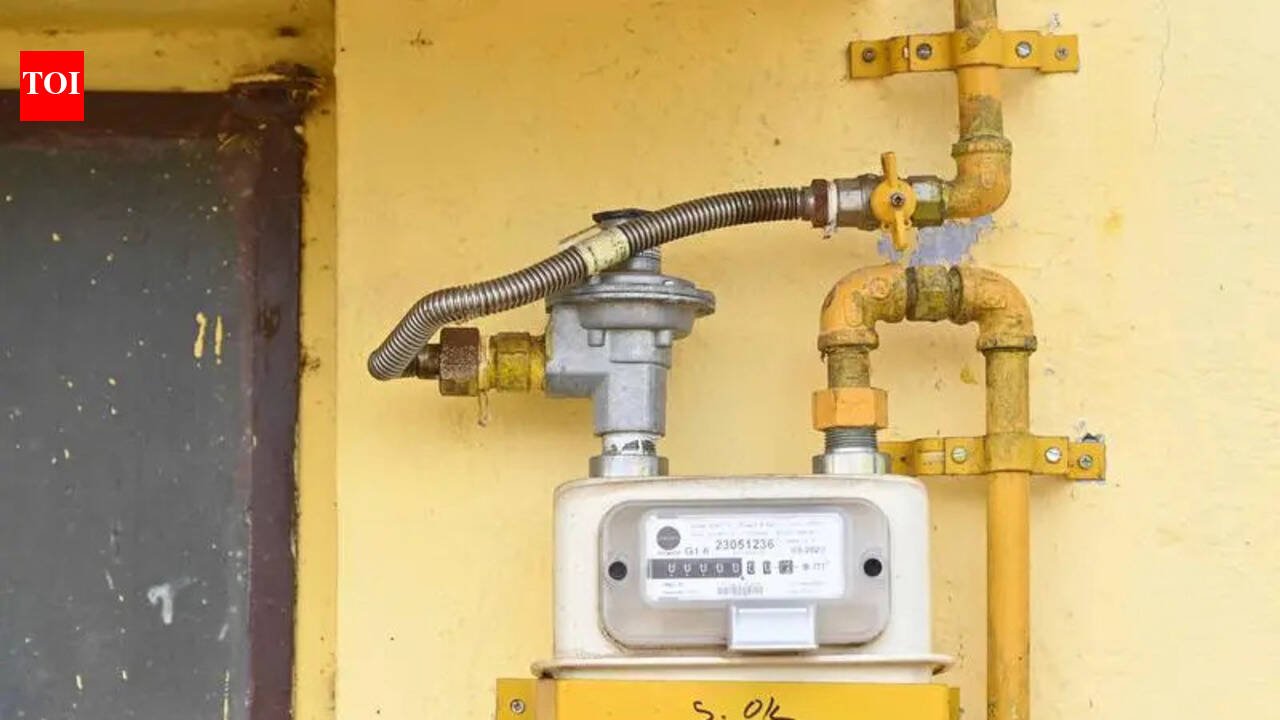
Mumbai: After weeks of disruption sparked by the West Asia conflict, Mumbai’s hospitality sector is moving towards a more permanent fix to its fuel crisis. Nearly 2,000 hotels and restaurants, largely in south Mumbai, are preparing to switch to piped natural gas, or PNG, in a bid to escape the uncertainty, delays and daily struggle of securing commercial LPG cylinders.The strongest response has come from south Mumbai, where demand is high despite infrastructure challenges. Dense development and underground utility congestion have limited pipeline expansion in several pockets, yet nearly 60% of applicants are from the area. According to hotelier body AHAR, close to 100 restaurateurs are lining up daily to apply.

Watch

Iran War, LPG Crisis Row Expose Congress Rift As Leaders Counter Rahul Gandhi’s Stand Openly

Mahanagar Gas Ltd (MGL) officials said applications are being accepted from hotels and restaurants located near existing pipeline networks. Backed by support from the Centre and the Maharashtra govt, including deemed permissions for pending pipeline-laying proposals, the company has accelerated work on commercial connections. Officials said infrastructure has already been laid in several residential complexes near hospitality hubs, allowing faster extension once approvals are in place. An official said hotels and restaurants can apply either online or by visiting the office.The transition follows one of the toughest supply squeezes the city’s food business has faced in recent years.At the peak of the shortage, commercial LPG deliveries became erratic, forcing eateries to trim menus, reduce operating hours and, in some cases, temporarily shut kitchens. Industry estimates suggest nearly 60% of restaurants either curtailed services or shifted largely to online orders, affecting breakfast counters, tiffin services and affordable meal options relied upon by office-goers and commuters.Many establishments tried to cope through temporary measures such as induction cooking, sharing cylinder stocks and limiting operations to select hours. But these alternatives came with higher electricity costs and practical constraints, especially for kitchens built around high-volume cooking.Now, a special enrollment drive by Mahanagar Gas in partnership with AHAR is speeding up the shift. AHAR president Vijay Shetty said around 800 members have already applied for PNG connections within a week, and the number could rise to 2,000 by the end of the campaign.For restaurants that depend on cylinders every day, PNG offers relief from a major logistical burden.The recent crisis has made one thing clear to the industry: dependence on cylinders leaves businesses exposed to global shocks. Even though LPG supplies have improved marginally, confidence remains fragile. For many restaurateurs, PNG now represents not just convenience, but continuity — a safer, smoother and more dependable energy source for a city that runs on its kitchens.


Source link