Breaking News
Women In Credit: Share of women in credit rising boosted by digital platforms


Share of women in credit rising boosted by digital platforms

MUMBAI: Women borrowers now account for Rs 76 lakh crore of credit, or 26% of total system credit in 2025, marking a near five-fold rise since 2017 and signalling a structural shift in India’s credit landscape.A joint report by TransUnion CIBIL, Niti Aayog’s WEP, and MicroSave Consulting said women are moving from being passive beneficiaries to active drivers of credit demand. The number of women availing formal credit grew at a CAGR of 9% between 2017 and 2025. Outstanding credit for women rose 4.8 times in this period compared with 2.9 times growth in overall credit. “The number of women availing formal credit in India has grown at a compounded annual growth rate (CAGR) of 9% between 2017 and 2025, underscoring their increasing engagement with the financial system. Outstanding credit for women borrowers has grown 4.8 times since 2017, compared with 2.9 times for total credit, indicating a significantly faster expansion. In recent years, the growth of digital infrastructure has facilitated easier onboarding, faster loan processing, and improved access to information,” said Bhavesh Jain, MD and CEO, TransUnion Cibil.Women’s share in retail loan originations rose to 27% in 2025 from 24% in 2022, reflecting broad-based growth across segments. Their share in housing loan originations increased to 69% from 63% over the same period, indicating a rise in asset ownership and participation in financial decisions. In consumption credit, women’s share rose to 19% from 16%, while in gold loans it increased to 37% from 36%. The share of new-to-credit women borrowers in retail credit rose by 10 percentage points to 38% in 2025, showing expansion into previously unserved segments.“At Niti Aayog, we recognize that access to finance is a structural enabler of women’s economic participation. Through platforms such as the Women Entrepreneurship Platform and the Financing Women Collaborative, we are working to strengthen ecosystem coordination,” said Nidhi Chhibber, CEO, Niti Aayog.The report said rising access to credit is translating into greater economic participation. The number of women with active business-purpose loans grew at a CAGR of 31% over the past three years, indicating a shift towards enterprise activity. Digitisation has reduced turnaround time, with same-day approvals in consumption loans rising to 45% in 2025 from 34% in 2022. Around 19% of active microfinance borrowers now hold individual retail or commercial loans, suggesting a move towards more complex financial products.The report outlined measures to expand participation further. It said lenders should use digital transaction data such as UPI histories for underwriting, especially for borrowers without collateral. It called for strengthening last-mile digital capability through collectives and peer networks to build trust. It recommended lifecycle-based financial products that combine savings, credit, and literacy, with a focus on women under 35. It also said expansion should be supported by better risk segmentation and use of alternative data to bring unserved women into the system while maintaining portfolio quality.The report said the ecosystem should track progression metrics such as graduation rates and multi-product holding instead of focusing only on disbursement volumes. It also called for vernacular and voice-enabled digital models and integration of non-financial support such as market linkages to help women-led businesses scale.


Source link

Adani seeks dismissal of SEC fraud case in US, denies wrongdoing


Adani seeks dismissal of SEC fraud case in US, denies wrongdoing

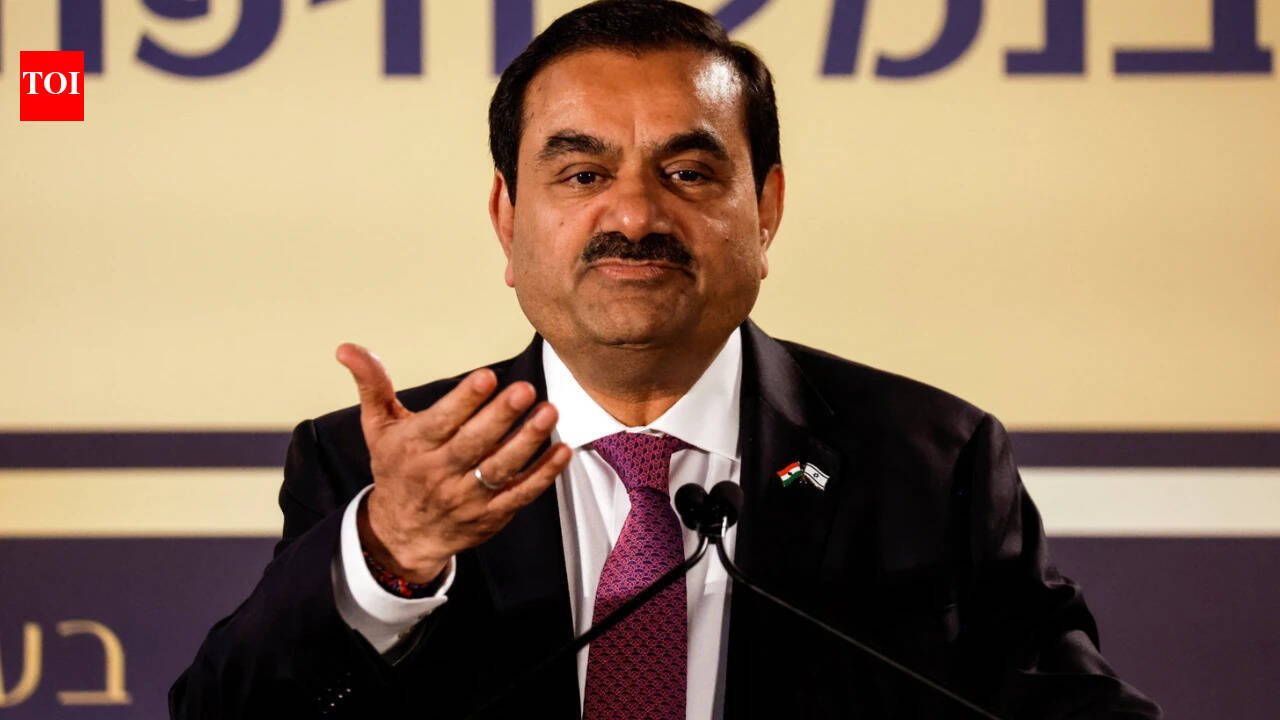
Billionaire Gautam Adani and his nephew Sagar Adani have moved to challenge a US securities fraud case, asking a federal court in New York to dismiss the lawsuit filed by the US Securities and Exchange Commission (SEC) regarding a 2021 bond issue by Adani Green Energy Ltd (AGEL).In a filing before the Brooklyn federal court, Adanis, through its lawyers, denied wrongdoing and stated that investors suffered no losses in the bond issue being challenged, as per news agency PTI.

SEC case linked to 2021 Adani Green bond offering

The SEC had sued Gautam Adani and Sagar Adani in November 2024, alleging they were involved in a scheme to pay or promise hundreds of millions of dollars in bribes to Indian government officials to benefit Adani Green Energy, where both hold executive and board roles, according to Reuters.The regulator’s case centres on allegations that Adani Green failed to disclose the alleged bribery scheme in documents tied to a $750 million bond offering in 2021.The Adanis, in a pre-motion letter filed ahead of a planned April 30 dismissal request, argued that the SEC’s case over the 2021 bond sale is flawed on several legal grounds.

Adanis argue US court has no jurisdiction

A key plank of the defence is that the case falls outside US jurisdiction.According to PTI, Adanis argued that the court lacks personal jurisdiction because neither of them had sufficient contact with the United States or direct involvement in the bond offering.Their lawyers said the $750 million bond issue was conducted outside the US under Rule 144A and Regulation S exemptions, with the securities initially sold to non-US underwriters and only later resold in part to qualified institutional buyers.The defence described the SEC’s claims as “impermissibly extraterritorial”, arguing that both defendants are based in India, the alleged misconduct took place entirely in India, and the bonds were never traded on a US exchange.The filing also says the issuer is Indian and the securities were not listed in the US, strengthening the argument that US securities law should not apply.

Defence says no investor losses, no credible bribery evidence

The Adanis have also argued that the SEC has failed to show investor harm.The filing states the regulator does not allege any investor losses, adding that the bonds matured and were fully repaid with interest in 2024.The defence further disputes the underlying bribery allegations. The Adanis said there is no credible evidence supporting the claims.

Filing says SEC failed to show direct role or intent

The Adanis’ lawyers also argued that the complaint does not specifically tie Gautam Adani to the bond issuance.The filing says the SEC does not allege that he approved the issuance, attended key meetings, or directed activity aimed at US investors.The defence also said the SEC failed to show a “domestic transaction”, which it argued is necessary under US Supreme Court precedent for US securities laws to apply.In addition, the filing says the SEC has not linked either Gautam or Sagar Adani to specific misleading statements or demonstrated any intent to defraud.Statements cited by the SEC about ESG commitments, anti-corruption standards and corporate reputation were described by the defence as non-actionable “puffery”, or broad corporate optimism that investors could not reasonably rely on, according to PTI.Adanis are now seeking dismissal of the SEC case in full and have said they are ready to appear for a pre-motion conference if needed.


Source link

Hardik Pandya, Trent Boult back as MI bowl first vs RR in 11-over match – check full playing XI | Cricket News


Hardik Pandya, Trent Boult back as MI bowl first vs RR in 11-over match - check full playing XI

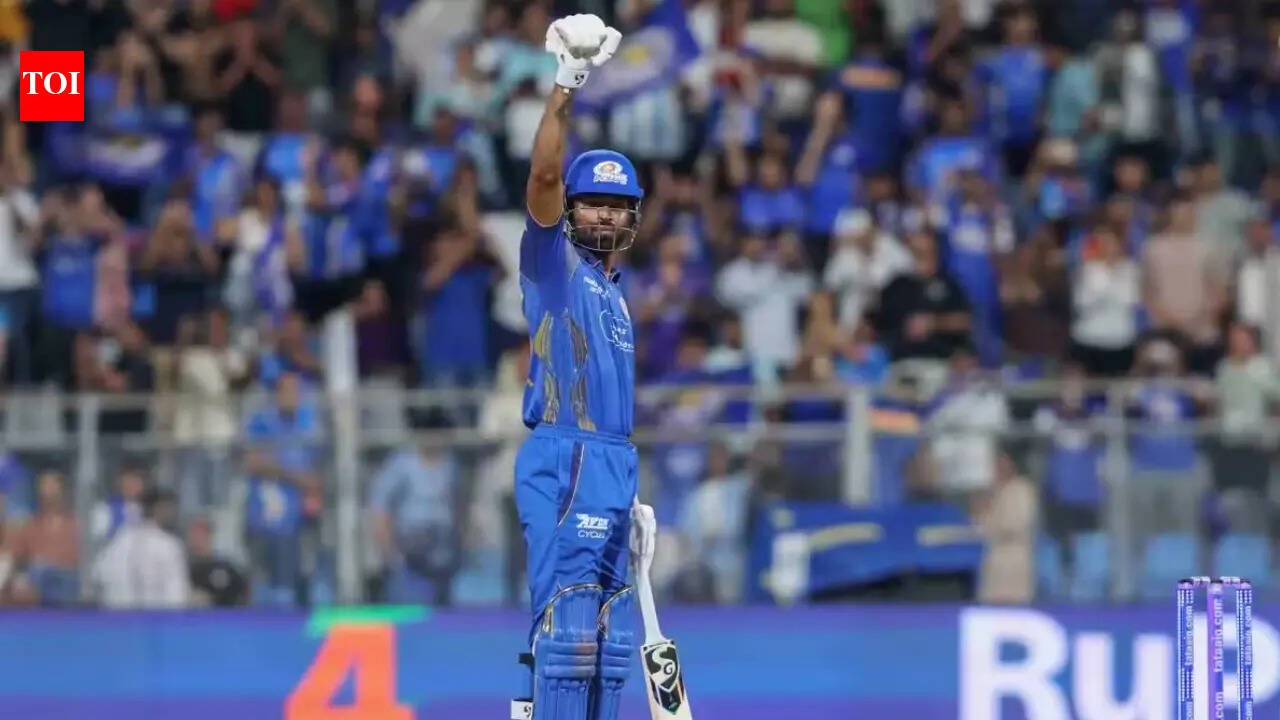
NEW DELHI: Mumbai Indians skipper Hardik Pandya won the toss, and opted to field against Rajasthan Royals in Guwahati on Tuesday. For the Mumbai Indians, captain Hardik Pandya, who missed the last match against Delhi Capitals, and Trent Boult came back into the side. While the Rajasthan Royals went with the same team. It will be a 11-over game. Powerplay will be 3.2 overs.“We are going to bowl first. It has been under covers, in rain-effected games you should bat second. It just gives you a clear idea what total should be. (Is it because there’s been rain and there will be more rain and it’s a truncated game that he opted to bowl?) Yes, that has always been at the back of the mind. It is just the start of the season and we are bound to make mistakes; you don’t win IPL in the first couple of weeks. I come back, Boulty is back,” Hardik Pandya said at the toss.While RR skipper Riyan Parag said, “We would have done the same thing (bowling first), actually. It (pitch) was supposed to be dry, but then it rained a lot. It is what it is. We have had two different types of games, but really happy with how the boys handled the pressure. Same team for us.”TeamsRajasthan Royals (Playing XI): Vaibhav Sooryavanshi, Yashasvi Jaiswal, Dhruv Jurel(w), Riyan Parag(c), Shimron Hetmyer, Donovan Ferreira, Ravindra Jadeja, Jofra Archer, Nandre Burger, Tushar Deshpande, Sandeep SharmaMumbai Indians (Playing XI): Rohit Sharma, Ryan Rickelton(w), Tilak Varma, Suryakumar Yadav, Hardik Pandya(c), Naman Dhir, Shardul Thakur, Deepak Chahar, AM Ghazanfar, Trent Boult, Jasprit Bumrah


Source link

Access Denied


Access Denied

You don’t have permission to access “http://www.ndtv.com/world-news/trump-iran-deadline-kharg-island-us-iran-war-today-7-hours-to-deadline-how-trumps-civilisation-ending-threats-could-play-out-11325038” on this server.

Reference #18.c7f5d217.1775587445.34918bc9

https://errors.edgesuite.net/18.c7f5d217.1775587445.34918bc9


Source link

Middle East turmoil puts India’s trade, energy flows at risk: Report


Middle East turmoil puts India’s trade, energy flows at risk: Report

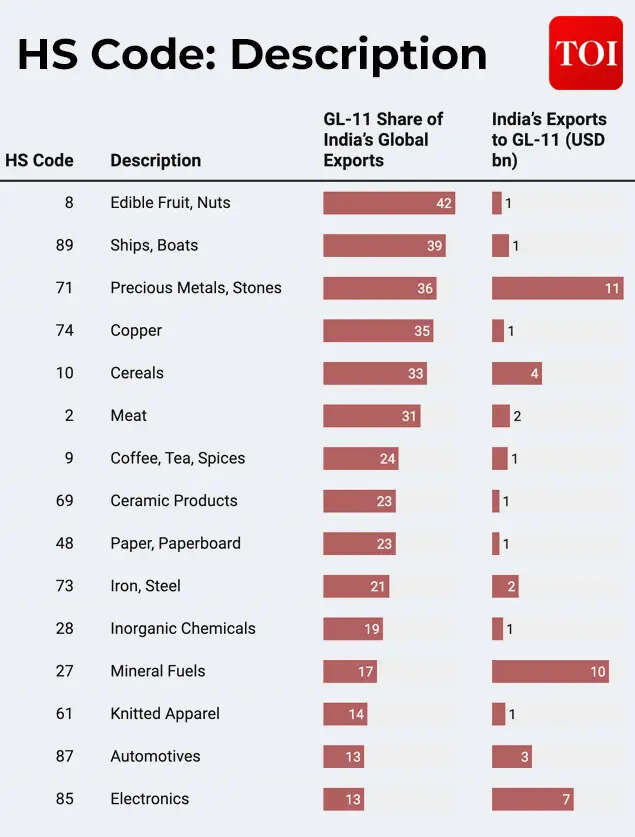
The ongoing Middle East crisis is emerging as a significant external shock for India, with risks spreading across energy markets, trade flows and supply chains, according to a recent white paper by Dun & Bradstreet.The report shows that countries in the Gulf–Levant region account for nearly 15 per cent of India’s merchandise exports and about 21 per cent of imports, making the country particularly vulnerable to disruptions despite the region’s relatively small share in global output.A key concern is the Strait of Hormuz, a critical global shipping route through which roughly a quarter of the world’s seaborne oil trade passes. Any disruption in the corridor is already feeding into higher freight, insurance and energy costs, with Brent crude prices having surged sharply in recent weeks.For Indian exporters, the impact is being felt unevenly across sectors and geographies. Discretionary segments such as gems and jewellery, apparel, automobiles and electronics are facing demand slowdown and order deferrals from Gulf markets. Labour-intensive clusters such as Tiruppur’s garment industry are particularly exposed to employment risks because of thin margins and short order cycles.Agricultural exporters are among the worst hit, especially those dealing in perishable goods such as grapes, bananas and meat, where shipping delays can lead to spoilage, price discounts and income losses for farmers.On the import side, India’s dependence on the region for key inputs such as fertilisers, limestone and gold compounds has raised the risk of supply disruptions. This could have cascading effects on agriculture, construction and manufacturing, particularly during peak demand cycles.

exports

The report added that more than 4,500 Indian exporters and 1,800 importers relied on the Strait of Hormuz trade route in 2025, exposing them to shipment delays, payment uncertainties and working capital stress. Firms are also facing tighter trade credit conditions as banks reassess risk amid rising geopolitical uncertainty.Higher energy prices are adding to the pressure. Sectors such as aviation, chemicals, transport and metals, which are heavily dependent on fuel and power, are seeing input costs rise sharply, squeezing margins and potentially pushing up prices for end consumers.At a broader level, a prolonged crisis could trigger second-round effects on the Indian economy, including sustained inflation, tighter financial conditions and slower growth. A slowdown in Gulf economies may also dampen remittance inflows from Indian workers in the region, affecting household incomes.The report cautions that diversifying away from the region in the short term remains difficult due to limited alternative supply capacity and the global nature of energy and logistics costs.Overall, while a short-term disruption may act as a temporary shock, a prolonged crisis could have deeper structural implications for India’s trade, inflation dynamics and corporate balance sheets.


Source link

Will Shubman Gill play in GT vs DC IPL match? Sai Sudarshan gives big update on injury | Cricket News


Will Shubman Gill play in GT vs DC IPL match? Sai Sudarshan gives big update on injury

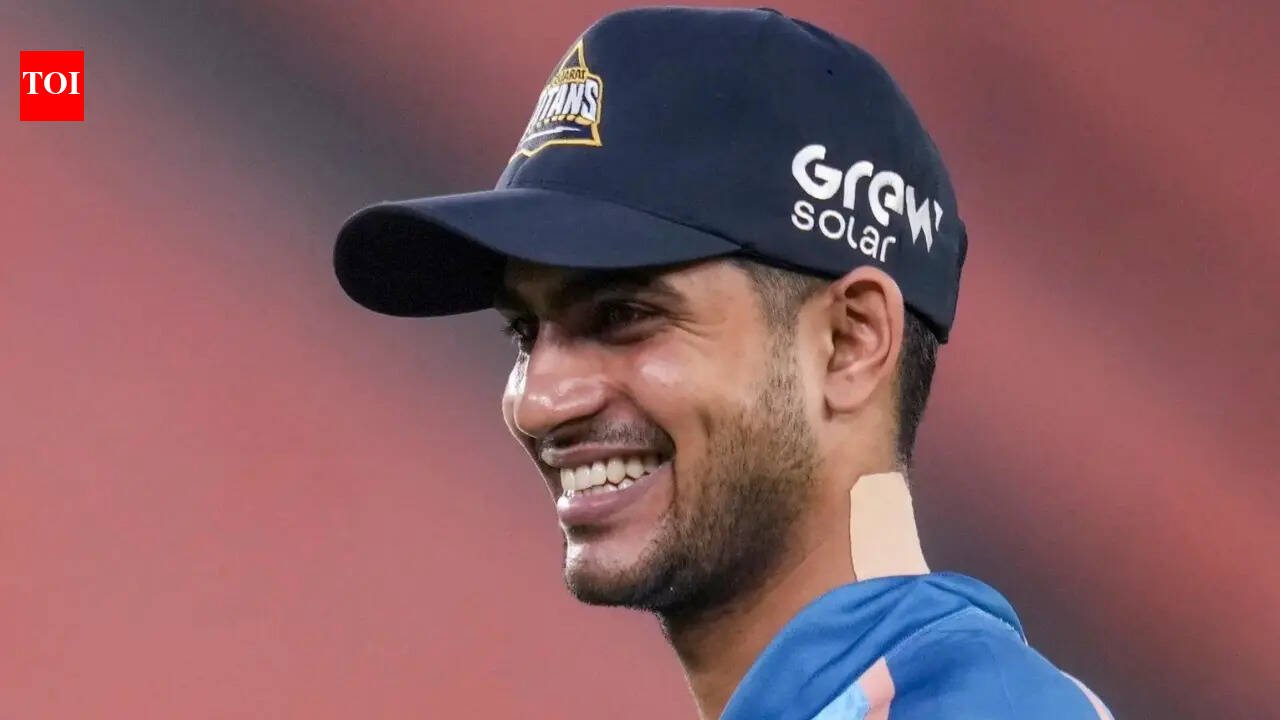
Gujarat Titans batter Sai Sudarshan on Tuesday confirmed that team’s captain and his opening partner Shubman Gill will play the IPL 2026 match against Delhi Capitals on Wednesday.“Shubman is coming along well. He’ll be playing tomorrow,” Sai Sudharsan confirmed Shubman Gill’s participation in tomorrow’s (Wednesday) match against Delhi Capitals, after the GT skipper missed the last game with a muscle spasm.

Watch

Devdutt Padikkal press conference: Chinnaswamy pitch, Tim David’s power & RCB’s batting strategy

Gill did not feature in the previous match and was seen with bandages around his shoulder and neck. The GT captain has been dealing with neck spasms since the 2025-26 home Test season. Sudharsan said Gill has recovered and is fit to return. He will perhaps replace Kumar Kushagra at the top of the order. GT could also consider bringing in Jason Holder to add to the middle order.Delhi Capitals will look for runs from their top order led by KL Rahul as they aim to continue their run of results against Gujarat Titans.Delhi Capitals have done well with the ball in their first two matches, while 22-year-old Sameer Rizvi has scored most of their runs so far.In comparison, Gujarat Titans have faced issues in both batting and bowling. The team has relied on its top order, and the middle order has not made use of starts. GT could not chase 205 against Rajasthan Royals despite a good start from Sudharsan.The middle order of Glenn Phillips, Washington Sundar and Rahul Tewatia will need to do more.In bowling, Mohammed Siraj and Kagiso Rabada have conceded runs, while Prasidh Krishna has not been consistent.On the other hand, Rashid Khan has started well, and 23-year-old pacer Ashok Sharma has also made an impact.The pitch at Arun Jaitley Stadium usually supports batting, but in the afternoon match last week, Mumbai Indians scored 162. It remains to be seen how the pitch behaves in an evening match.


Source link

Delhi high court halts ‘Godfather’ whisky launch in trademark dispute


Delhi high court halts ‘Godfather’ whisky launch in trademark dispute

NEW DELHI: The Delhi high court has restrained Cartel Bros, an entity backed by actor Sanjay Dutt, from proceeding with the launch of its proposed whisky brand ‘Glenwalk Godfather’, following a trademark infringement plea by Devans Modern Breweries.Devans, which markets the widely-known ‘Godfather’ beer and also sells spirits under the same brand, argued that Cartel Bros had “dishonestly adopted” the ‘Godfather’ mark for its new whisky. The company submitted that the trademark enjoys strong reputation and goodwill in India, backed by multiple registrations, and that use of an identical mark for similar products would amount to infringement.After hearing detailed submissions, the court recorded the defendants’ undertaking to defer the commercial launch of the product under the impugned mark until the next date of hearing.The court also directed Cartel Bros to refrain from issuing any fresh promotional or social media communications related to the ‘Godfather’ branded product in the interim.“We have registration of ‘Godfather’ under the Trademark Act. We sell beer and liquor, including whisky, under the same brand,” Prem Diwan, Chairman and Managing Director of Devans Modern Breweries, told Times Internet.The next date of hearing is expected on April 10.


Source link

Vaibhav Sooryavanshi: ‘Akele batting kar lunga’: Vaibhav Sooryavanshi’s fun banter ahead of Mumbai Indians clash – WATCH | Cricket News


'Akele batting kar lunga': Vaibhav Sooryavanshi's fun banter ahead of Mumbai Indians clash - WATCH
Vaibhav Sooryavanshi and Vikram Rathour (Image credit: BCCI/RR/IPL)

NEW DELHI: ‘See the ball and tonk the ball’ – that’s the approach young batting prodigy Vaibhav Sooryavanshi follows against any opponent and any bowler in the world. As Rajasthan Royals gear up to face Mumbai Indians in a mouth-watering clash in Guwahati, the spotlight has once again shifted to the 15-year-old sensation, with much of the discussion centred around how he will tackle world-class pacer Jasprit Bumrah.Ahead of the clash, the Rajasthan Royals team management chalked out a plan on a board, leading to a light-hearted moment.Sooryavanshi, who was looking at the board with Vikram Rathour, Rajasthan Royals’ batting coach, by his side, started with: “Koi to akele batting karega hi na, toh mai kar leta hun akele batting.”After Rathour nodded, Sooryavanshi added: “Aree 5 minute kam kar lunga sir,”.He then began teasing Siddhartha Lahiri, Rajasthan Royals’ performance coach, who was writing the batting plan on the board.“Your game plan is correct,” Sooryavanshi said.Lahiri jokingly replied: “Isko nikalo pehle mere paas se”.Rajasthan Royals will be aiming to register a third consecutive win when they take on five-time champions Mumbai Indians on Tuesday.Mumbai Indians, on the other hand, will be looking to bounce back after their loss to Delhi Capitals.Sooryavanshi has carried his form from last season into the current one.In two innings so far this season, he has scored 83 runs at an average of 41.50 and a strike rate of 237.14, with a 17-ball 52 against Chennai Super Kings as his best score. He has also carried his rich form from the U19 World Cup-winning campaign this year, where he scored 444 runs in seven innings at an average of 62.71 and a strike rate of 169.50, including a century and three fifties.Squads:Rajasthan Royals Squad: Yashasvi Jaiswal, Vaibhav Sooryavanshi, Dhruv Jurel(w), Riyan Parag(c), Shimron Hetmyer, Donovan Ferreira, Ravindra Jadeja, Jofra Archer, Nandre Burger, Tushar Deshpande, Sandeep Sharma, Ravi Bishnoi, Lhuan-dre Pretorius, Brijesh Sharma, Ravi Singh, Shubham Dubey, Adam Milne, Dasun Shanaka, Kuldeep Sen, Sushant Mishra, Yudhvir Singh Charak, Kwena Maphaka, Vignesh Puthur, Aman Rao PeralaMumbai Indians Squad: Ryan Rickelton(w), Rohit Sharma, Tilak Varma, Suryakumar Yadav(c), Sherfane Rutherford, Naman Dhir, Mitchell Santner, Corbin Bosch, Shardul Thakur, Deepak Chahar, Jasprit Bumrah, Mayank Markande, Trent Boult, Robin Minz, Raj Bawa, Ashwani Kumar, Hardik Pandya, Quinton de Kock, Will Jacks, Mayank Rawat, Raghu Sharma, Atharva Ankolekar, AM Ghazanfar, Danish Malewar, Mohammed Salahuddin Izhar.


Source link

Stock market in deep red, gold prices volatile: Where should you put your money amid US-Iran war? 5 experts answer


Stock market in deep red, gold prices volatile: Where should you put your money amid US-Iran war? 5 experts answer
Gold, which is often considered the safe haven asset, has also failed to rise to the occasion for investors. (AI image)

Stock markets are in deep red and in all likelihood so is your investment portfolio since the start of the US-Israel-Iran war. The conflict has been a perfect storm for stock markets globally, and the Indian equity benchmarks, Sensex and Nifty, which had just started recovery after the announcement of the India-US trade deal were hit by the severe shock. Sensex and Nifty are down over 12% from their lifetime highs and investors have lost several lakh crore with the combined market capitalisation of BSE-listed firms down over Rs 30 lakh crore since the start of the Middle East conflict.With global crude oil prices rising and India’s huge import dependence, all positive drivers of the stock market have taken a back seat. A depreciating rupee, flight of foreign capital, and prospects of impact on industry and earnings has investors running for cover. Gold, which is often considered the safe haven asset, has also failed to rise to the occasion for investors, instead seeing high volatility and dropping unceremoniously from its lifetime highs. In such a scenario, what should investors do? It’s the start of a new financial year, and if you are wondering where to put your money – this article has you covered. We asked five experts what they think is the right portfolio strategy for investors at the current juncture, across time frames and risk appetites. The experts also shared lessons from historical shocks for stock markets. Let’s take a look:

What’s The Right Investment Strategy Right Now? What Experts Say

Below is a detailed analysis by five experts on best portfolio allocation strategy, the right investment mix and investment lessons from history:Amitabh Lara, Executive Director, Anand Rathi Wealth LimitedBest Portfolio allocation strategy & mix: In a volatile environment like this, the focus should be on aligning strategy as per goals rather than reacting to short term market movements. For investors with a horizon of 6 months to 1 year, equity exposure may not be appropriate as markets can remain unpredictable in the near term. In such cases, allocating entirely to debt is a suitable approach. Investors can consider options such as gilt funds, and arbitrage funds, for those in higher tax brackets, can offer relatively efficient outcomes.The asset allocation strategy should be guided by the investment horizon, as this determines the level of risk an investor can reasonably take. For short term goals, typically less than one year, a 100% allocation to debt is advisable.For medium term goals, between 1 and 3 years, an allocation of around 70% in equity and 30% in debt will provide a good mix of growth and stability.For long term goals beyond 3 years, equity should form the core of the portfolio. An allocation of around 80% in equity and 20% in debt, with gold playing a substitute of debt portion will be ideal for such a long term portfolio. Within the equity portion, around 50 to 55% should be allocated to large caps, 20 to 25% to mid caps, and the remaining to small caps to ride all market cycles smoothly.Lessons From The Past: Historical data shows that uncertainty due to geopolitical conflicts has generally been for a shorter period of time. On average, geopolitical events have created drawdowns of around 5 to 6% in the Nifty 50, with recoveries often taking place within about a month. Even in situations where conflicts have extended over longer periods, the most significant market reaction has typically occurred in the initial phase of war, followed by gradual stabilisation.Investors should therefore remain aligned with their asset allocation strategy as per their financial goals, continue with SIP investments, and avoid making decisions driven by short term events. Long term market trends are driven by economic fundamentals rather than geopolitical developments. Ajit Mishra, SVP Research, Religare Broking Ltd1.⁠ ⁠Portfolio allocation strategy (next 6–12 months)In the current environment of geopolitical stress, elevated crude prices, and commodity volatility, a balanced and disciplined allocation is advisable. Equities should remain core at 50–60%, with a tilt towards large caps and domestically driven sectors. Fixed income at 25–30% provides stability and predictable accrual, particularly through high-quality instruments. Gold at 10–15% serves as an effective hedge against uncertainty and currency volatility. Maintaining 5–10% in cash or liquid funds allows tactical deployment during corrections. The emphasis should be on diversification, avoiding aggressive bets, and steadily deploying capital rather than attempting to time short-term market movements.2.⁠ ⁠Ideal portfolio mix (short, medium & long term)There is no one-size-fits-all allocation; it varies by individual risk profile, income stability, and financial objectives. For short-term needs, a conservative allocation with higher exposure to debt and liquid assets is appropriate. Medium-term portfolios can adopt a balanced mix of equities and fixed income to manage both growth and stability.Long-term portfolios should have a higher equity allocation to benefit from compounding. That said, investors must periodically reassess and rebalance their portfolios as market conditions and personal circumstances evolve, rather than adhering to rigid allocation frameworks.3.⁠ ⁠Historical context & key lessonsPast geopolitical events such as the Russia-Ukraine War and the Gulf war have typically led to sharp but short-lived market disruptions, alongside spikes in crude and gold prices. Indian equities have historically demonstrated resilience, supported by domestic growth fundamentals. The key lessons are consistent—avoid panic-driven decisions, maintain diversification across asset classes, and use volatility to gradually build positions in quality assets. Markets tend to recover ahead of visible improvement in macros; hence, disciplined investing and patience remain the most reliable drivers of long-term returns.Thomas V Abraham, Research analyst, Mirae Asset ShareKhanIndian equity markets have a resilient track record during geopolitical tensions. Sharp initial dips (at the start of a geopolitical conflict) often give way to robust rebounds, rewarding patient investors who prioritize diversification and measured risk rotation over knee-jerk reactions.Market Patterns: Dips Followed by Strong ReboundsHistory reveals a clear rhythm: conflicts trigger Nifty and Sensex corrections of 4-16% in the opening weeks, but recoveries kick in swiftly—typically within 6-12 months. The current market correction has been steep, with valuations looking attractive for long term investors.Historically, market bounce backs have been above 30+ % post the dips as sentiments improve. This is on account of larger defence spends, higher share of revenue from export oriented sectors such as pharma and IT on account of increased optimism in trade improvements, and a surge in capital expenditure as Foreign Institutional investors return post the high uncertainty phase. From past history, the pre and post war investments trends can be classified as below : Preservation phase:When tensions escalate, focus on shielding capital while spotting selective opportunities. Avoid wholesale portfolio overhauls—instead, refine allocations for stability.Key tilts include:•⁠ ⁠Core equities (~50% total): Stick to large-caps with minimal debt, emphasizing defensives like non discretionary FMCG, pharma, IT (under current valuations), and stable banks. Please note, these are buys with a long term horizon.•⁠ ⁠Opportunistic plays : Allocate ~20% of equities (6-10% overall) to defense and infra firms poised for budget boosts, but watch stretched valuations.•⁠ ⁠Safe havens and Cash buffer (~15%): Gold via sovereign gold bonds (SGBs) or ETFs shines as an equity hedge during volatility spikes and Cash reserves to the tune of 10% of the fresh capital (3-6 months expenses).•⁠ ⁠Fixed income (~15%): Gilt funds or top-tier PSU bonds deliver steady yields with negligible drawdowns.•⁠ ⁠Trim aggressively: Dial back leveraged small/mid-caps, where stress amplifies downside risks.Recovery phase :•⁠ ⁠Reduce share of cash/ gold and increase equities – buy in phased tranches.•⁠ ⁠Boost defensives (IT, pharma, banks) and capex winners (infra, capital goods) that thrive on rebuilding momentum. Ajit Banerjee, President and Chief Investment Officer, Shriram Life InsuranceUnfortunately, there isn’t any size fit for all concepts in the portfolio allocation strategy under any market conditions. Depending upon the customers age profile, existing financial commitments and liabilities, risk appetite, health condition, the asset allocation strategy can be worked upon. However, remaining agnostic to all of the above conditions for deciding the portfolio allocation, the portfolio mix should be balanced between Fixed Income securities, Equity Exposure either directly or through Mutual Funds or ULIPs, some exposure into precious metals like Gold and Silver to diversify risks and take some exposure into real estate sector through investments in REITS. These can be the composition of the portfolio, however, the proportion of these may vary as per the risk profile, risk appetite, and other factors as mentioned.From an investors perspective, the basic principle for investments into equity should be that it is not meant for short-term investments perspective and should be considered for mid- to long-term investments as short-term equity investments return can be volatile with a potential to swing either way. Therefore, Purely for short-term perspective (0-3 years), we would assume that capital protection would be of paramount importance and hence the predominant portfolio allocation should be in high quality fixed income securities with a fixed maturity profile so that the interim MTM fluctuations don’t impact the investor. Some limited allocations can be made in REITS which is a very stable asset class with some capital appreciation as well. The maturities of these investments should be staggered and of high quality so that the probability of default is negligible.From a medium-term perspective (3-5 years) – The basic portfolio construct for medium-term perspective for an investor who has the ability and intent to invest for a medium-term perspective his/her allocation to Fixed Income can be in the range of (40-50)%, Equity investments either direct or passively through MFs or ULIPs can be (20-30)%, REITS/INVITS (5-10)%, Precious Metals (5-10)%.From a long-term perspective (5+ years) – The basic assumption before recommending the portfolio construct is that the investor has surplus funds available for a long-term period and has reasonable risk appetite and his other financial commitments are taken care off. Therefore, the portfolio construct can be Equity (50-60)%, Fixed Income (10-20)%, REITS/INVITS(10-20)% & Precious Metals (5-10)%. Within the equity portfolio allocation, predominantly it is recommended to invest in large- and mid-cap stocks and limited exposure in small caps as that is a very volatile segment within equities. Investment in Fixed Income and REITs and INVITS should also be of highest quality and required due diligence is done prior to investments.Investments into equity should be done with proper due diligence and stock selection should be done on a bottom–up approach as opposed to momentum buying or selection on social media or financial influencers or mere hearsay.

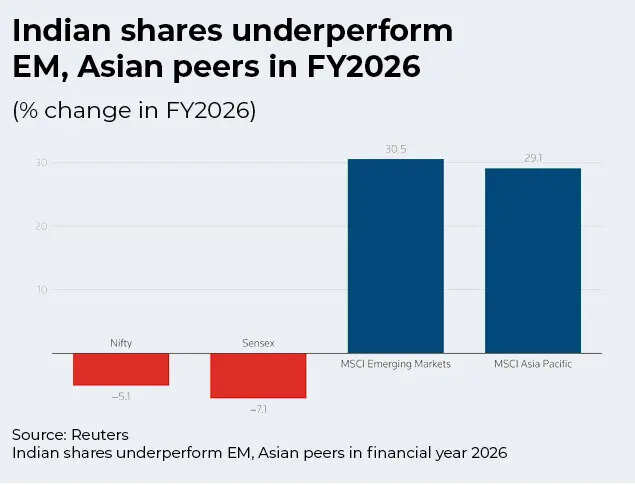
Indian shares underperform EM, Asian peers in FY26

InCred Money Expect higher energy-driven inflation risk, elevated market volatility, and episodic safe-haven flows into gold, so be defensive, liquid, and selective.

  1. Emergency fund first: keep 6–12 months of living costs in truly liquid instruments — separate from your investment cash.
  2. Keep SIPs running. Good time to start looking at small and mid cap funds for SIPs as well as Lumpsum now since the valuations have come down.
  3. Core equity allocation stays (strategic): favour market leaders with pricing power, secular growth, and strong balance sheets. Treat cyclical/commodity names as satellite positions you add to selectively.
  4. Opportunity Fund: Be nimble and keep an opportunity fund of 10-15% of your portfolio as further drawdowns can’t be ruled out due to all the geopolitical tensions and US Mid-term elections later in the road.
  5. Gold & Silver: Both have structural tailwinds so one can have a 10-15% portfolio in Gold and Silver. Since both have run up significantly, better to invest during dips and through SIPs.

Recommended portfolio mixes — short / medium / long (These are starting templates — tweak for age, liabilities, and goals.)

  • Short (0–12m): Equities (/SIPs) 35–45%, Cash/war-chest 10–20%, Bonds 20–25% Gold/real assets 5–8%
  • Medium (1–5y): Equities 50–60% (/SIPs), Bonds 15–25%, Real assets/gold 5–10%, Cash 5–10%.
  • Long (5+y): Equities 60–70%(/SIPs), Bonds 15–20%, Infra/real assets 5–10%, Gold 3–5%, Cash 2–5%.

Lessons from other war-like situations:

  1. Distinguish cost shock vs structural business problem: brands and companies with pricing power usually recover; commodity-exposed, low-margin players do not.
  2. Liquidity is king: keep an opportunity buffer. Those who bought in the early weeks after past spikes often secured the best returns.
  3. Rupee-cost averaging and staggered re-entry beat market timing in most historical episodes. Timing on oil moves rarely produces consistent excess returns for most investors.

(Disclaimer: Recommendations and views on the stock market, other asset classes or personal finance management tips given by experts are their own. These opinions do not represent the views of The Times of India)



Source link

ISSF World Cup: Palak, Mukesh Nelavalli win 10m air pistol mixed team gold with world record | More sports News


ISSF World Cup: Palak, Mukesh Nelavalli win 10m air pistol mixed team gold with world record
Palak and Mukesh Nelavalli (Image credit: X/India_AllSports)

NEW DELHI: India made a strong start to their ISSF World Cup campaign for rifle and pistol in Granada, Spain, with shooters Palak and Mukesh Nelavalli clinching gold in the 10m air pistol mixed team event.The Indian duo secured top honours with a world record score of 487.7, which also stands as a junior world record.They were in impressive form during the qualification round as well.China’s Qianxun Yao and Kai Hu took the silver medal with a score of 484.8, while Hungary’s Veronika Major and Akos Karoly Nagy settled for bronze after finishing with 414.9 in the final.In the gold medal round, Palak shot 243.0, while Mukesh registered 244.7.The Indian pair had finished second in the qualification stage, behind the Chinese duo who topped the standings with 586-23x.Palak, 18, first rose to prominence at the 2023 Asian Games, where she won gold in the 10m air pistol individual event and a team silver medal. She also secured a quota for the 2024 Paris Olympics by setting an Asian Games record score of 242.1.Mukesh, meanwhile, is regarded as a rising name in Indian pistol shooting and is a junior world champion.


Source link