Breaking News
Inside India’s ghost malls: How nostalgic hangout spots lost their magic


Inside India's ghost malls: How nostalgic hangout spots lost their magic

What once felt like stepping into a weekend dream: buzzing food courts, lively movie halls, bags in hand after a shopping spree, now feels strangely hollow. Walk in today, and the lights are still on, the escalators still moving… but where is everyone?Welcome to India’s ghost malls, where you will find shops still open, food counters still serving, but somehow, it’s still not enough to bring the crowds back. And that’s the reality for nearly 20% of malls across India. The once-bustling hangout spots are quietly losing their charm, fading into an eerie silence.But how did places that were always packed suddenly become so quiet?Today, almost one in five malls in India is now underperforming or almost empty, according to a report by Knight Frank India. As the retail world splits into booming and struggling spaces, these “ghost malls” are not just a sign of what went wrong, but also a chance to rethink and reinvent how these spaces are used.

What are ghost malls?

While some malls are still buzzing bright across India’s urban skyline, others are losing relevance, with fewer shoppers and more shuttered stores. Their decline shows how India’s retail market is changing: it is no longer just about space, but about offering the right experience in the right place.

A haunting issue: 74 malls, 15.5 million square feet, and a lot of silence

Today, India is home to dozens of struggling or shuttered malls, especially in metro suburbs and smaller cities that experienced the first wave of mall construction in the 2000s.The numbers almost read like a warning sign. Out of 365 shopping malls surveyed across India, 74, roughly 20% have been classified as “ghost malls.” This together accounts for about 15.5 million square feet of vacant or underused retail space, a lot of square footage built for shoppers who no longer show up. And these are not just struggling malls with a few shuttered stores but retail spaces that have lost their commercial pulse, where high vacancy, weak footfall and a broken tenant mix have pushed them into irrelevance.What makes these malls even more haunting is what they once promised. They were built as symbols of aspiration, in a time when malls stood for modern India, cool interiors, global brands, food courts, multiplexes and weekend family outings. Back then, they were not just shopping centres; they were markers of a rising urban lifestyle. Today, many stand as quiet reminders of what happens when real estate ambition moves faster than retail reality.

Where the ghosts live: West and South dominate the dead-space map

If you want to map India’s ghost malls, the dead-space geography is not evenly spread. West and South India dominate the list. These regions account for the largest concentration of non-performing or near-dead mall assets.That itself offers a strong narrative hook. Why are the “ghosts” clustering there? In many cases, these were among the earliest and most aggressive mall development markets. Cities in the West and South saw rapid mall construction during the big retail real estate push, when developers rushed to monetise urban land and consumer optimism. But scale alone did not guarantee sustainability.

Why do malls die?

The rise of ghost malls in India is less about low consumer spending and more about poor planning and oversupply in certain areas. Many malls, especially in the same locality, lack differentiation, causing fragmented footfall and frequent shop closures. E-commerce accelerated the decline but isn’t the main cause. “India’s ghost malls are less a reflection of weak consumption and more a result of uneven supply expansion and gaps in asset positioning across micro-markets. Nearly 20% of malls across 30+ cities are currently under-occupied, with stress visible not just in smaller cities but also in pockets of larger urban markets,” Naveen Malpani, Partner and Consumer & Retail Industry Leader, Grant Thornton Bharat told TOI.When location misfiresOne of the biggest factors behind a mall’s success is its location and ironically, it’s often the very thing that leads to its downfall. Poor planning at the outset, such as choosing the wrong catchment or misjudging demand, has turned many shopping centres into ghost spaces. Several malls were built in areas without enough consumer base to sustain them. In smaller cities, developers in the 2000s sometimes overestimated future demand, constructing multiple shopping centres where just one would have sufficed, leaving several half-empty from the start. In other cases, too many malls emerged in the same locality, all vying for the same spotlight. When supply exceeds demand, only a few malls remain relevant, while others slowly lose footfall. Take Noida’s Great India Place, Wave Mall, and DLF Mall of India. Located close together and targeting the same shoppers, the arrival of the larger, modern DLF Mall of India shifted consumer preference, leaving older malls struggling to keep pace.

During my time in Noida for graduation from 2016 to 2018, Great India Palace (GIP) was the go-to hangout spot for everyone. We’d meet there to decide on movies, food, shopping. Later, Mall of India gained popularity, but GIP remained accessible and widely visited. People would often visit both malls to compare which was better for movies, shopping, or dining. Over time, some shops at GIP began closing, and footfall gradually shifted elsewhere. The Wave Cinema at GIP still drew a few visitors, but apart from that, activity slowed. GIP was central for many years, especially in the late 2010s, but since around 2022–23, post-pandemic closures and a slowdown have gradually changed its prominence.

Harsh Shivam, a former engineering student told TOI.

Ageing malls that never grew upRemember that old mall you used to visit as a kid? Yes, that very one might also have become a ghost mall today. A number of first-generation malls from the early 2000s failed to keep pace with changing consumer tastes and expectations. As shiny new complexes opened elsewhere, older centres that didn’t renovate, refresh, or reinvent themselves saw patrons slowly drift away. When newer, flashier malls entered the scene, those stuck in the past lost their visitors, unable to compete with modern designs, better lighting, and more engaging experiences. Gurugram’s MG Road malls are a classic example, they were once the city’s go-to retail stretch but gradually lost footfall to newer destinations like CyberHub and the shopping centres along Golf Course Road. Today, shoppers are looking for more than just stores, they want immersive experiences, entertainment, and ambience, which makes it hard for outdated malls to attract repeat visitors.Too many owners spoil the mallEver wondered why some shopping centres just don’t seem to click? A lot of underperforming malls in India suffer from fragmented ownership. Here’s what happens: during construction, developers often sell individual shop units to multiple investors to raise funds. Sounds smart, right? But the catch is, without a single entity managing the mall, keeping quality standards high and curating the right mix of tenants becomes almost impossible. Each shop owner rents out their space to whoever will pay, leading to a random mix of stores, inconsistent storefronts, and no coordinated marketing. The result? Instead of a vibrant, cohesive shopping destination, the mall starts feeling like a collection of unrelated small shops. And as shoppers notice the chaos and lack of experience, footfall drops. So next time you visit a mall that feels disjointed, fragmented ownership might just be the culprit!
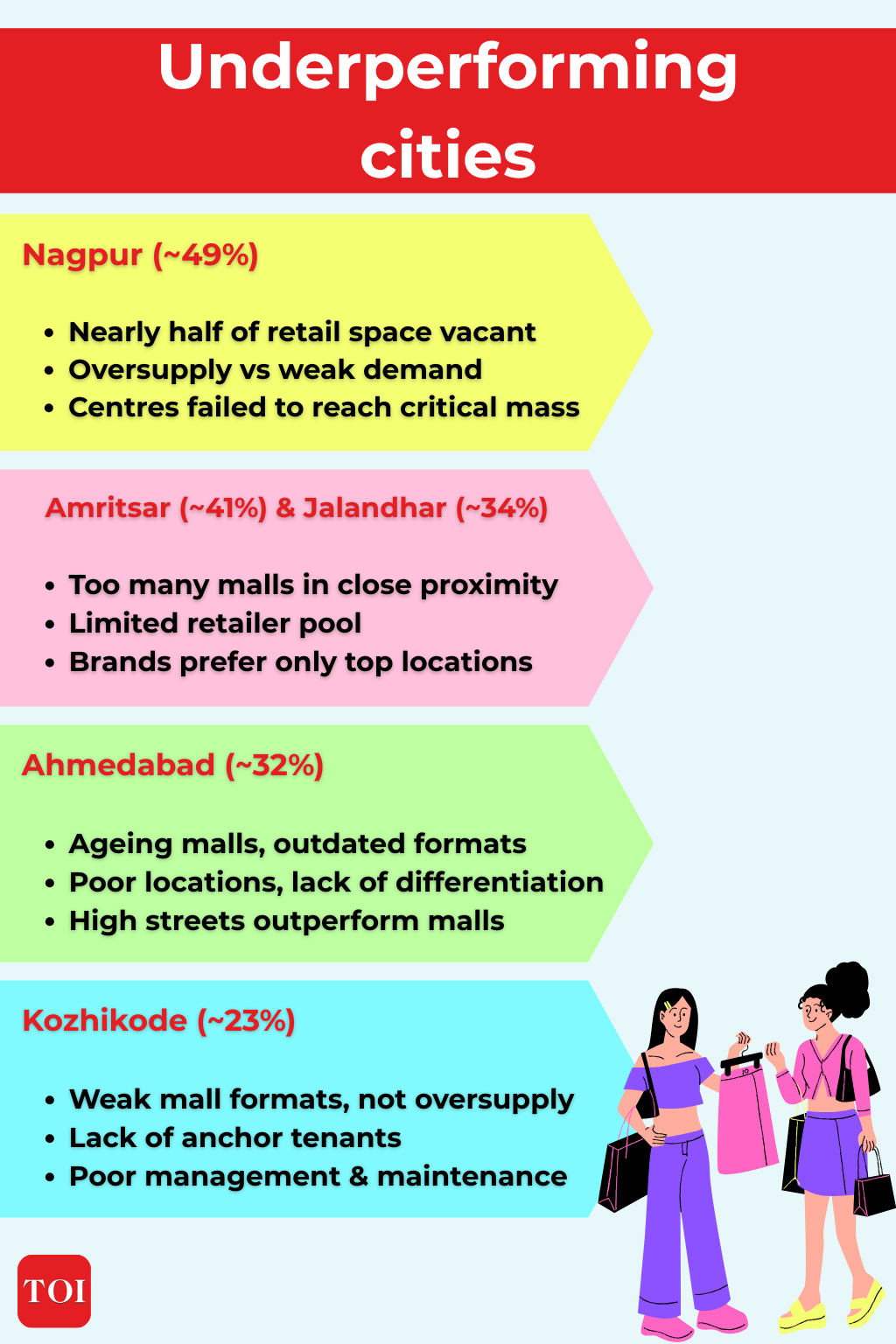
Underperforming cities

When anchor stores walk outAnchor tenants, think multiplexes, supermarkets, or big-name brands, are the lifeblood of a mall. They pull in crowds, and smaller stores thrive on that traffic. But what happens when a major anchor exits? Footfall drops sharply, smaller retailers start struggling, and soon a domino effect sets in. Sales fall, shops close, and the once-busy mall begins to feel empty and abandoned. The impact can be devastating: a single anchor’s departure can threaten the entire centre’s viability. Without a swift replacement, other tenants follow suit, vacating their spaces and leaving the mall with dwindling visitors. In many cases, this chain reaction has proven fatal, turning vibrant shopping destinations into ghostly corridors. Essentially, when the big draw leaves, the whole ecosystem suffers and a mall that once buzzed with life can quickly become a hollow shell.E-commerce changed the gameFootfall in shopping malls is also declining due to the rise of e-commerce over the past decade. These malls often relied on stores selling books, music, and basic electronics, categories that shoppers now prefer buying online. Without unique experiences or exclusive offerings, what reason did people really have to visit? Maybe a food court or cinema, but even those aren’t enough if the mall is poorly located or uninspiring. Then came the Covid-19 pandemic, and things got worse. Malls already struggling financially couldn’t survive months of closure, and many never bounced back.
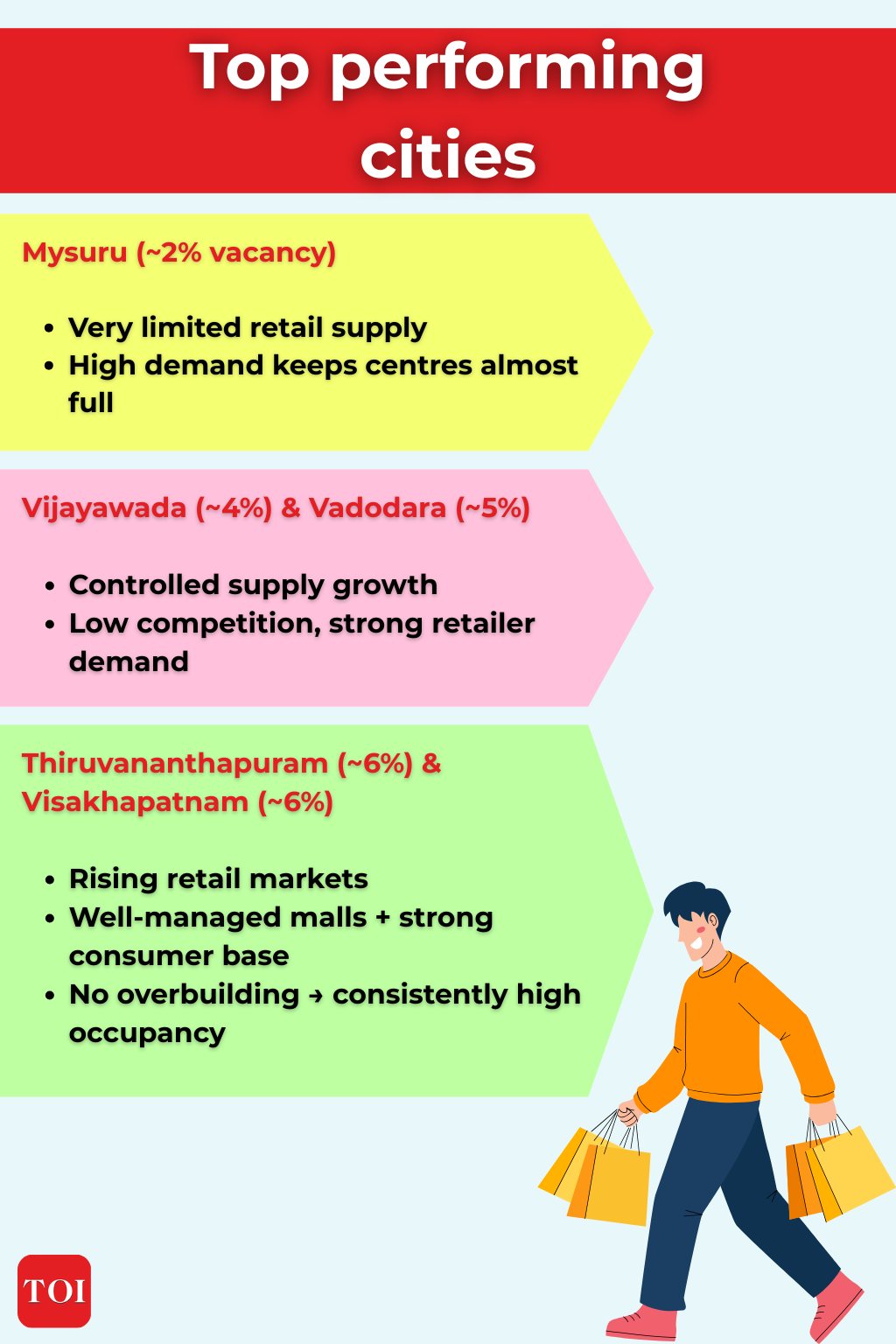
Top performing cities

Legal troublesSometimes, it’s not just design or competition, external administrative issues can doom a shopping centre. Projects caught in prolonged legal disputes, like land title conflicts, zoning problems, or delays in occupancy certificates and approvals, often struggle to lease spaces effectively, leaving buildings empty. Take Bengaluru’s Grand Sigma Mall as an extreme example: legal issues around land use meant it could never fully open, and it was eventually demolished, a total loss of value. Even a well-designed, strategically located mall can falter if regulatory hurdles aren’t resolved quickly. Such compliance failures scare off both retailers and visitors, turning promising projects into dead assets. Shopping centres “die” when their core value collapses, whether due to flawed location, mismanagement, loss of consumer trust, or broader economic pressures.
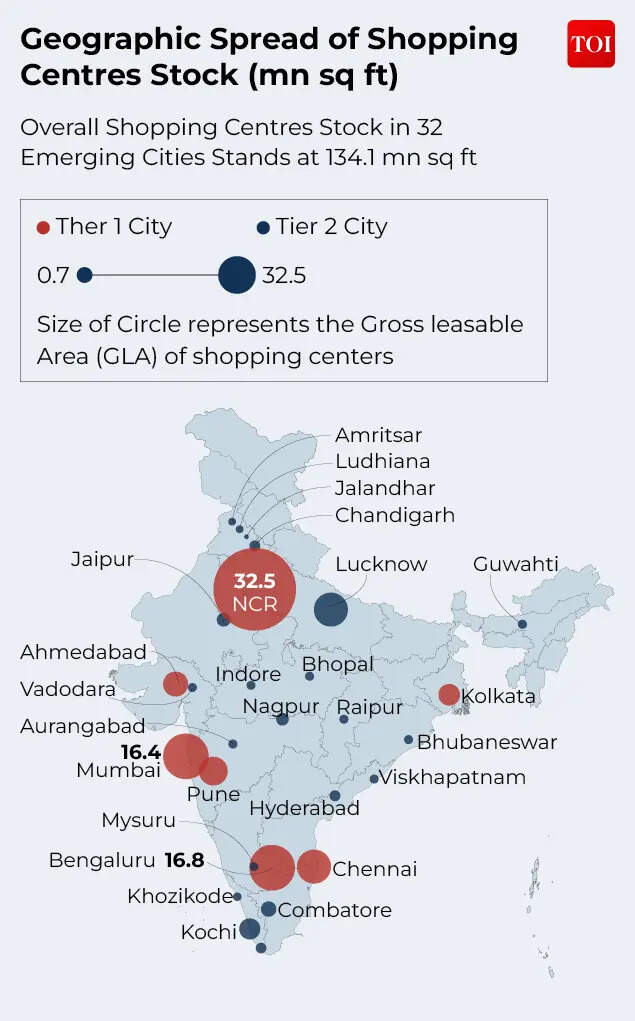
Geographic spreak of shopping centres shock

Quality over quantity: retailers focus on efficiency and experience

Retailers are now prioritising efficiency and performance, revisiting leases, trimming underperforming stores, and turning outlets into experience or fulfilment centres. India isn’t lacking demand; instead, consumers are choosing quality and relevance “For retailers, this has sharpened the focus on store-level productivity and capital efficiency, with many renegotiating lease structures, rationalising store networks, and using physical stores as experience and fulfilment hubs. Ultimately, India does not have a demand deficit, it is witnessing a quality and relevance filter. The market is clearly bifurcating between high-performing, curated retail destinations and commoditised assets that are increasingly becoming obsolete,” Malpani told TOI.

The great contradiction: Empty malls in a market with a retail space shortage

Here is where the story becomes both genuinely fascinating and a little absurd.India has ghost malls, but it suffers from a shortage of quality mall space.At first glance, those two facts should cancel each other out. If there is empty retail space, why do brands keep saying there is not enough space? Why are rentals in top malls strong? Why do new entrants still struggle to find the right location?The answer is simple, and powerful: not all retail space is equal. This is the contradiction that makes the ghost mall story more than a tale of collapse. India does not suffer from a pure oversupply problem. It suffers from a mismatch problem. There is dead space, yes, but often in the wrong place, with the wrong design, the wrong tenant mix, the wrong catchment, or the wrong consumer proposition.

Ghost malls in Tier-1 cities

Millions of newly affluent consumers are driving demand for products from Louis Vuitton, Chanel, Dior, and others. Yet, India has very few true luxury malls: the Emporio and Chanakya in New Delhi, and Jio World Plaza in Mumbai.As Saurabh Bharara of DLF told ET that top global brands are eager to enter India, but high-quality space is scarce. Luxury retail demands more than square footage, it requires the right ambience, co-tenants, consumer profile, parking, and proven footfall. An empty unit in a dead mall is not an opportunity, it’s a risk. The challenge isn’t excess space, but the right space.Why? Because luxury does not just need square footage. It needs context.

The silver lining: Dead malls can be reborn

Not every ghost mall has to remain a ghost. So, what should a city do with 15.5 million square feet of empty retail space? Imagine turning old, quiet malls into bustling hotspots and making strong returns while doing it. That’s exactly the opportunity in India’s retail real estate today. Tier 1 cities hold two-thirds of the potential (INR 236 Cr), while Tier 2 cities add another INR 121 Cr. Instead of spending huge sums on building new malls, investors can revive dormant centres and unlock cash flows with projected rental yields of 5.86%.Regionally, the West and South dominate, generating 77% of projected rental revenue. But the trick is strategy: pick the right property, execute well, and these “sleeping giants” can become high-yield, value-add investments. Lessons from global markets show how revitalisation works and in India, 15 shortlisted centres across 11 cities could together produce Rs 357 Cr annually.Simply adding a few new brands, a fresh coat of paint, or a rebranded logo isn’t enough. Real revival often means rethinking the purpose of the space, resizing, re-tenanting, improving circulation, enhancing access, or even converting the mall into something entirely new.
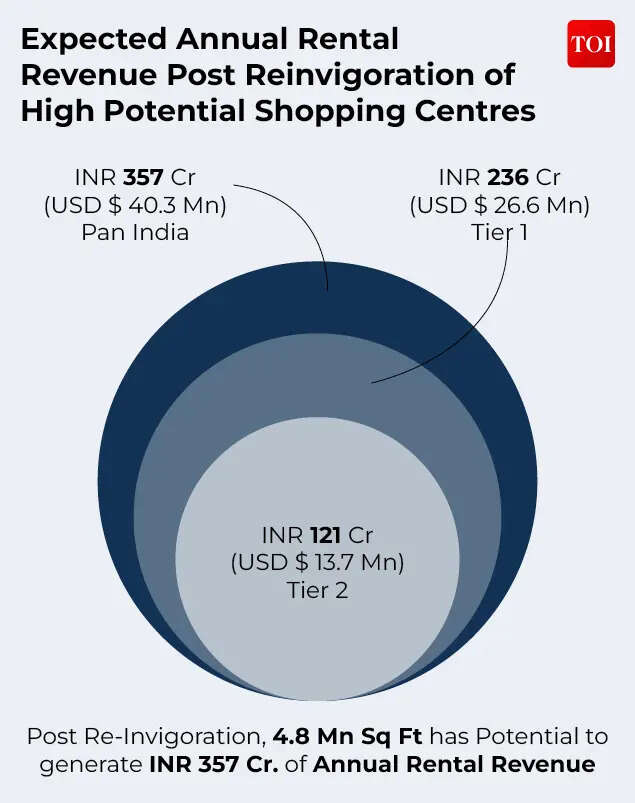
Expected annual rental revenue

Beyond shopping: Entertainment hubsTurn a mall into a playground! Empty units can become amusement parks, gaming arenas, bowling alleys, or sports facilities. Young people and families get a “day-out” experience, while remaining retail shops and cafes benefit from the extra footfall.Retail revival: Upgrade & repositionSome malls just need a makeover. Modern interiors, better layouts, new anchor stores, trendy cafes, and entertainment options can bring shoppers back. Marketing helps reposition the mall as a must-visit destination.Workplace reimagined: Co-working hubsGhost malls with big floor spaces, parking, and central locations can become co-working hubs. Start-ups, small businesses, and corporations are always looking for flexible spaces. According to Knight Frank, even food courts and entertainment areas can turn into lounges, meeting spots, or event zones. Suddenly, an empty mall starts buzzing with professionals instead of shoppers.Learning under one roof: Education facilitiesMalls can be your new classrooms…quiet literally! Large, accessible spaces can host coaching centres, skill-development institutes, or even satellite university campuses. Empty shops can be converted into classrooms, auditoriums, and admin offices. With parking and transport links already in place, these centres can attract students year-round, especially in Tier 2 cities where quality education is limited.Healing spaces: Healthcare centresGhost malls are perfect for clinics, diagnostic labs, pharmacies, or even small hospitals. Their layouts, parking, and multiple entrances make them ideal for patients and visitors. Medical tenants bring stable leases, while communities gain better access to healthcare.Rebuilt for relevance: Mixed-use redevelopmentWhen retail alone won’t work, think mixed-use. Offices, schools, or medical facilities can occupy part of the mall, or in extreme cases, the entire structure can be rebuilt for a new purpose. Empty spaces can finally earn their keep.
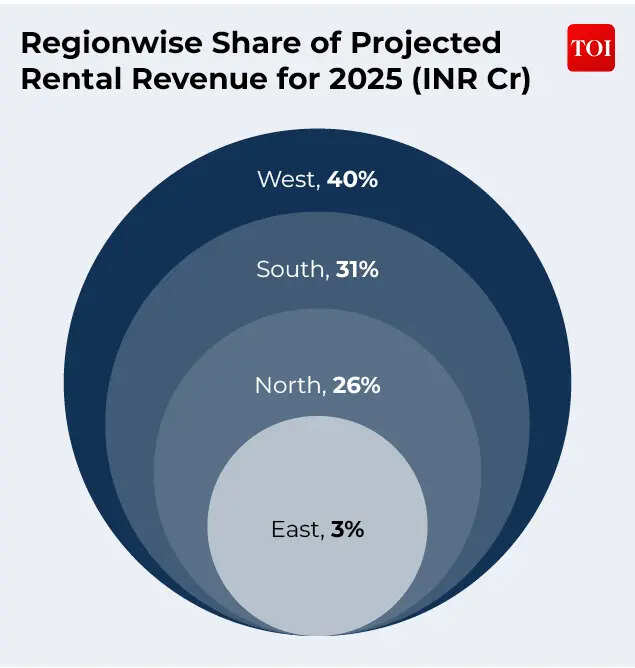
Regionwise share

The bottom line?

The story of India’s ghost malls is not just about empty corridors and silent food courts, it’s a lesson in adaptation. While many first-generation malls failed to evolve with changing tastes, their vast spaces, central locations, and existing infrastructure hold immense potential. From entertainment hubs and co-working spaces to education centres and healthcare facilities, these “sleeping giants” can be reinvented to meet today’s urban demands. For investors and cities alike, the message is clear: with the right strategy, what once felt hollow can be transformed into vibrant, profitable destinations. The malls of yesterday may yet become the thriving landmarks of tomorrow.The takeaway? India’s retail real estate has a “second chapter” ready to be written, and the malls of yesterday could be the cash cows of tomorrow.

Source link

BCB faces turmoil as captains retain roles, board hit by another round of resignations | Cricket News


BCB faces turmoil as captains retain roles, board hit by another round of resignations
Bangladesh Cricket (AP Photo/Mahmud Hossain Opu)

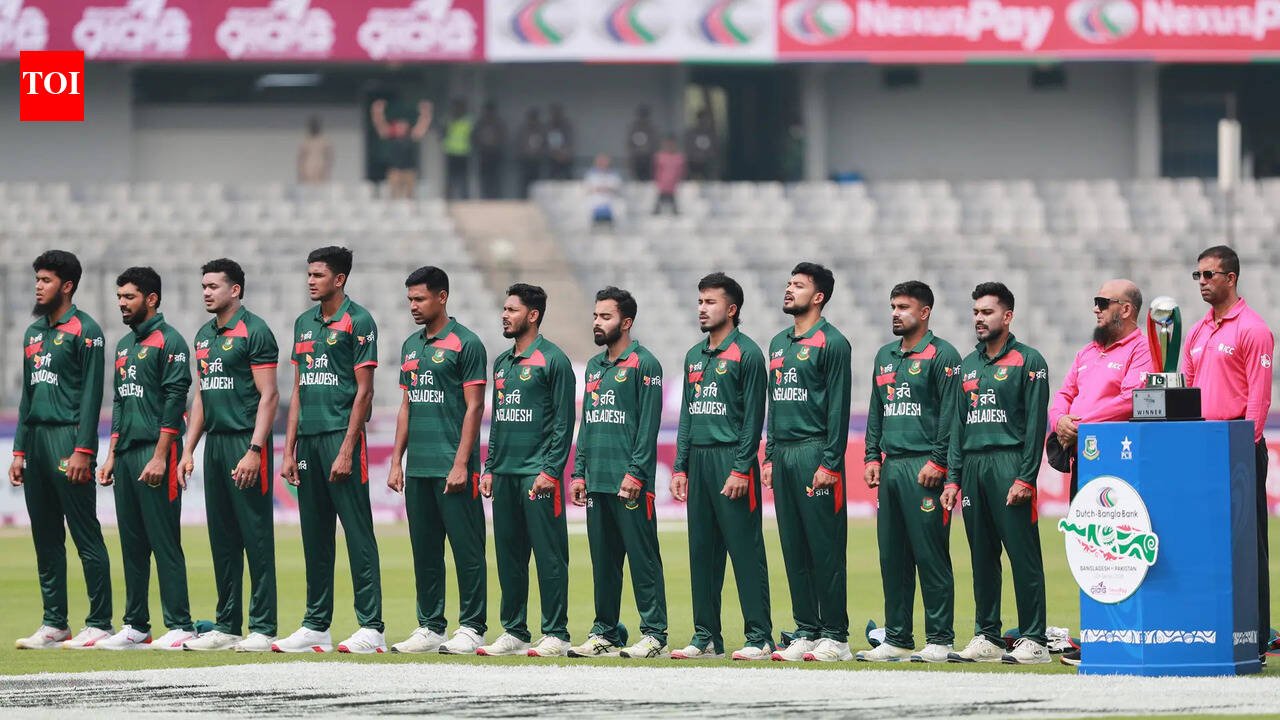
The Bangladesh Cricket Board (BCB) finds itself at a crossroads, projecting stability on the cricketing front while grappling with deepening uncertainty in its administration. Key decisions taken during the fourth Board of Directors meeting in Dhaka on Saturday underline a dual narrative of long-term planning and immediate crisis management.Leadership Continuity and Coaching Boost Signal Cricketing StabilityIn a major move, the BCB reaffirmed its leadership structure across formats. Mehidy Hasan Miraz will continue as Bangladesh’s ODI captain until the ICC Cricket World Cup 2027, while Litton Das will lead the T20I side through to the ICC Men’s T20 World Cup 2028.To strengthen leadership depth, Najmul Hossain Shanto and Saif Hassan have been named vice-captains for ODIs and T20Is, respectively. The decisions reflect the board’s intent to provide continuity and clarity in leadership during a crucial phase for Bangladesh cricket.The board also bolstered its coaching setup by appointing former spinner Mohammad Rafique as a specialist spin-bowling coach and consultant for a one-year term. A pioneer of Bangladesh cricket, Rafique is expected to play a key role in nurturing spin talent across all levels.On-field progress has already been visible under Mehidy’s leadership, with Bangladesh securing notable series wins against West Indies in 2025 and Pakistan earlier this year.Beyond team matters, the BCB approved a new Human Resources policy aimed at improving transparency and efficiency. It also launched two digital platforms, the Player Data App and Cloud Server App, to enhance performance analysis and data-driven decision-making.Administrative Crisis Deepens with Wave of ResignationsHowever, these forward-looking steps come amid mounting instability within the board. Three directors: Saniyan Taneem, Mehrab Alam, and Faiazur Rahman resigned on Saturday, taking the total number of departures from the current board to six.Their exit follows the recent resignation of Yasir Mohammed Faysal Ashique, intensifying concerns over internal discord. Earlier, Amzad Hussain and Ishtiaque Sadeeque had also stepped down, citing personal reasons.An investigation committee formed by the BCB is expected to submit its report by April 9, after which the government will decide on the board’s future. There is growing speculation that the board could be dissolved, with an ad hoc committee, potentially led by a former Bangladesh captain, being prepared as a contingency.BCB Seeks Reset in Relations with BCCIAmid the uncertainty, the BCB is also attempting to rebuild strained ties with the Board of Control for Cricket in India (BCCI). Relations between the two boards had deteriorated following Bangladesh’s withdrawal from the T20 World Cup due to security concerns.The situation worsened after Mustafizur Rahman’s IPL participation became a point of contention, ultimately leading to Bangladesh being replaced by Scotland in the tournament.The fallout extended to bilateral cricket, with Bangladesh’s women’s tour of India cancelled and doubts lingering over India’s scheduled white-ball tour of Bangladesh in September.In an effort to restore normalcy, the BCB has reached out to the BCCI, proposing renewed engagements and exchange programmes. Cricket operations chairman Nazmul Abedin expressed optimism about receiving a response soon, calling it part of routine communication between cricket boards.


Source link

Vaibhav Sooryavanshi tipped for major role in BCCI’s make-or-break red-ball mission | Cricket News


Rajasthan Royals’ Vaibhav Sooryavanshi (AP Photo/Ajit Solanki)

India’s T20 World Cup triumph earlier this year has done little to mask a growing problem in the longest format. The side’s Test performances have dipped noticeably, and despite improved results in limited-overs cricket under head coach Gautam Gambhir, the red-ball setup remains a concern. Losses at home to New Zealand and South Africa have underlined that India are no longer invincible in their own conditions, with their World Test Championship final hopes now looking increasingly unlikely.Recognising the issue, the Board of Control for Cricket in India has moved to reset its long-term Test structure. According to PTI, the Centre of Excellence, headed by VVS Laxman, has rolled out a detailed plan to rebuild India’s red-ball depth by focusing on the next generation.

Watch

‘Bowlers have it hard’ – Glenn Phillips breaks down modern T20 cricket

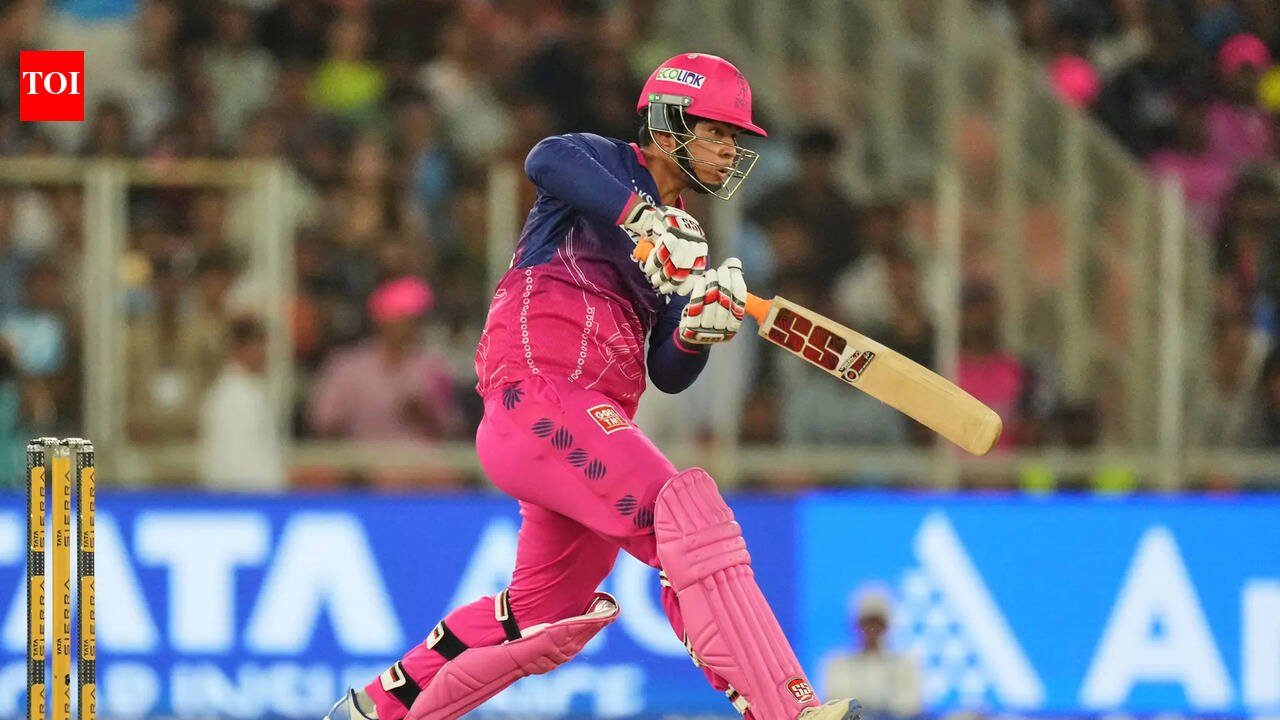
Central to this strategy is a four-day intra-CoE competition scheduled across June and July. Talents such as Ayush Mhatre and Vaibhav Sooryavanshi are set to feature in the tournament, which will include 64 players aged below 25. These players will be split into four teams of 16, with each side playing two multi-day fixtures on varied surfaces to simulate different match scenarios.The idea is to build a consistent pipeline of red-ball players who can serve India over the next decade. As part of this shift, coaches and selectors have been instructed to make red-ball development the priority at High Performance Camps in Bengaluru over the coming year.“The India Emerging side will comprise of only U-25 players and they will also constitute India A teams for shadow tours also. The roadmap will be created keeping senior chairman of selectors Ajit Agarkar, head coach Gautam Gambhir in the loop,” a BCCI source told PTI.“Once the IPL ends, India U-19 and Emerging (U-25) will both tour Sri Lanka for four-day games. The squad will be selected based on Intra-COE tournament performances,” the source added.India’s difficulties in Tests, especially their declining effectiveness against spin even at home, have been a key trigger for this overhaul since Gambhir took charge. The new system is designed to address those gaps through sustained exposure to longer-format cricket.For selection, 25 U-23 players will be chosen by the junior panel led by S Sharath. Another 25 players, spanning U-23 and U-25 categories, will be picked by the senior selection committee based on performances in domestic tournaments like the Ranji Trophy, Vijay Hazare Trophy and Syed Mushtaq Ali Trophy, with the condition that these players must not have been part of the IPL.The remaining 14 spots will go to players who featured in the IPL, including Mhatre, Sooryavanshi and Sameer Rizvi, completing the 64-player pool.

Poll

How important do you think domestic tournaments are for identifying Test cricket talent?

“The idea is to select 25 after the intra-COE tourney, and this core group of cricketers will represent both Emerging and India A in shadow tours. The BCCI brass and Team India management is pretty clear — even for U-19s, the focus for next one year has to be red ball,” the source said.


Source link

FPI sell-off deepens: Rs 23,801 crore withdrawn in a week; March sees record Rs 1.17 lakh crore exit


FPI sell-off deepens: Rs 23,801 crore withdrawn in a week; March sees record Rs 1.17 lakh crore exit

Foreign portfolio investors (FPIs) extended their heavy sell-off in Indian equities this week, pulling out a net Rs 23,801 crore, as global uncertainties and rising crude oil prices continued to dampen investor sentiment.Data from the National Securities Depository Limited showed that March had already seen substantial outflows, with FPIs offloading equities worth Rs 1,17,775 crore, the highest monthly selling recorded so far this year.The persistent exodus has been largely attributed to the ongoing conflict in the Middle East, which shows no clear signs of easing. A sharp rise in crude oil prices, coupled with the weakening of the rupee, has further intensified pressure on domestic markets, prompting foreign investors to scale back their exposure.Market experts pointed out that a combination of geopolitical tensions, elevated energy prices and currency depreciation has created a challenging environment for foreign investments.VK Vijayakumar, Chief Investment Strategist at Geojit Investments, said March witnessed unprecedented selling by FPIs.“March witnessed massive selling by FPIs. This is the biggest ever monthly selling by FPIs. Continuation of the war, crude again spiking to above USD 100 level, the steady decline in the rupee and appreciation of the dollar triggered this record selling by FPIs,” he said.He added that the weakening rupee has been a key factor accelerating the outflows.“Rupee depreciated by about 4% since the war began and fears of further depreciation has added to the weakness of the rupee, which, in turn, is triggering further selling by FPIs,” Vijayakumar noted.Crude oil prices rising above the $100 per barrel mark have also heightened concerns around inflation and India’s import bill, given its reliance on imported energy. This has added to the strain on the rupee and weighed on overall market sentiment.Despite the sustained selling, experts believe that the market correction has brought valuations to more reasonable levels.“Sustained selling by the FPIs have made Indian market valuations fair and in some segments attractive. But FPI inflows can happen only when there is de-escalation on the war front leading to decline in crude,” Vijayakumar added.The ongoing trend suggests that foreign investor activity in Indian markets is currently being shaped by global developments, particularly geopolitical tensions and movements in energy prices, with any reversal in flows likely dependent on easing of these risks.


Source link

‘He should’ve got Rs 10-11 crore’: Ex-India cricketer calls RR star a ‘steal’ after heroics | Cricket News


‘He should’ve got Rs 10-11 crore’: Ex-India cricketer calls RR star a ‘steal’ after heroics
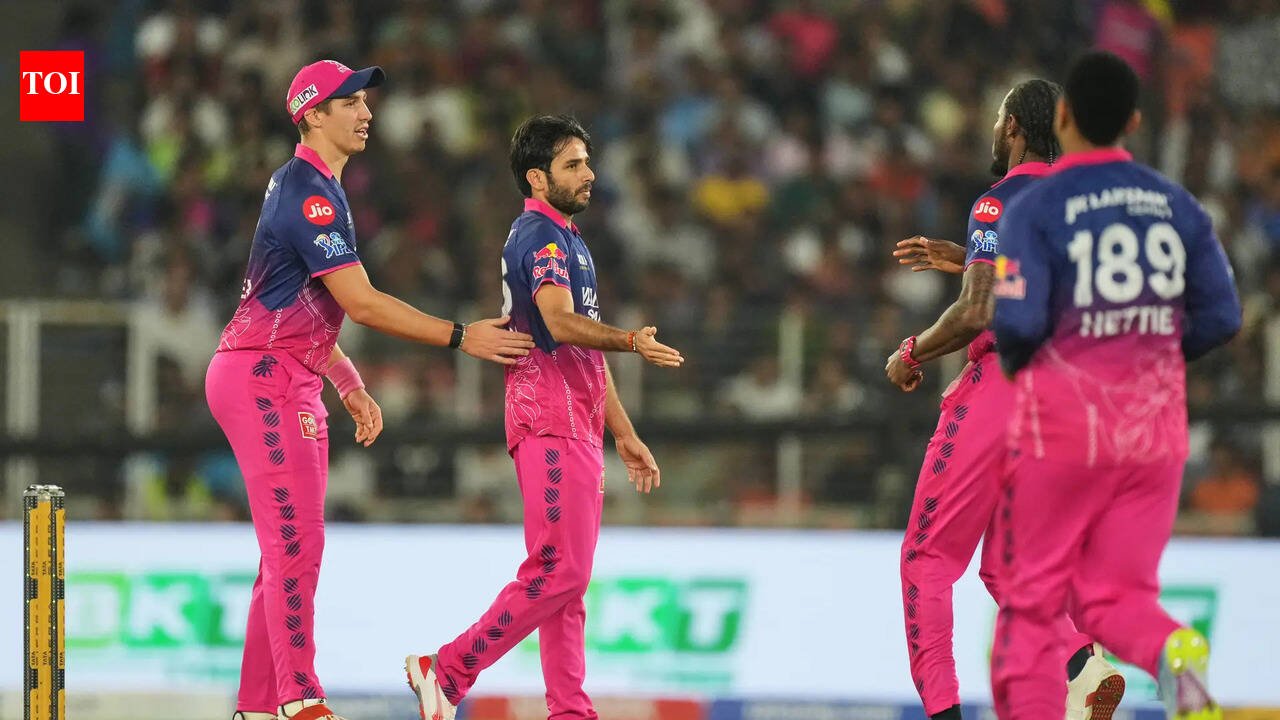
Rajasthan Royals’ Ravi Bishnoi, second left, celebrates with teammates (AP Photo/Ajit Solanki)

Former India cricketer Aakash Chopra heaped praise on Ravi Bishnoi for his decisive spell in Rajasthan Royals’ narrow six-run win over Gujarat Titans in IPL 2026. He also remarked that the leg-spinner was undervalued at the auction and deserved a significantly higher price. Chasing 211 in Ahmedabad on April 4, Gujarat were undone largely by Bishnoi’s impact with the ball. The wrist-spinner returned figures of 4/41 from his four overs, striking at key moments to tilt the game in Rajasthan’s favour. Speaking on his YouTube channel, Chopra reflected on Bishnoi’s value and performance. “Ravi Bishnoi, we were talking at the time of the auction that he was sold very cheaply – seven crores is cheap. He should have got 10-11 crores. He was a brilliant acquisition at seven crores. He picked up four wickets and made the difference in the end because all the important wickets were in his name.” Chopra also reserved special praise for Tushar Deshpande, who delivered under pressure in the final over to seal the game. “Tushar Deshpande came into the team and Brijesh Sharma wasn’t there, and what a change in the end because Tushar Deshpande was standing between a win and a loss. Tushar Deshpande executed those yorkers beautifully. Thumbs up with both hands for executing under pressure,” he observed. Deshpande finished with figures of 1/24 in three overs and held his nerve in the final over, conceding just four runs while dismissing Rashid Khan when Gujarat needed 11 off six balls. Earlier in the innings, Dhruv Jurel played a standout knock, scoring 75 off 42 deliveries to anchor Rajasthan’s innings. Chopra praised his maturity, especially after being promoted up the order this season. “Before that, Dhruv Jurel. They have taken a big call this season to make him bat at No. 3, and he was absolutely stellar. He batted almost till the end. He scored his first Test century at this ground only. Very good guy. I love him to bits. I feel very happy when he does well. Then their two openers. In my opinion, Vaibhav Suryavanshi and Yashasvi Jaiswal are the most explosive openers of this league,” he said. Alongside Jurel, Vaibhav Sooryavanshi (31 off 18) and Yashasvi Jaiswal (55 off 36) provided Rajasthan with a strong start at the top. On the other hand, Chopra pointed out shortcomings in Gujarat’s chase, suggesting that better planning could have changed the result. “GT, this match was yours. There are problems in batting. Shubman Gill’s injury, of course, didn’t help, but wickets fell at regular intervals. I thought it was a slightly haphazard chase. You could have won this game had you constructed it slightly better,” Chopra observed. Despite a solid 73 off 44 from Sai Sudharsan, Gujarat lost momentum after his dismissal. From a strong position of 107/1 in 10.3 overs, the innings unraveled, allowing Rajasthan to complete a dramatic turnaround.


Source link

‘Divine remedies’: Man booked for duping Thane family of Rs 1.66 crore with ‘black magic’ claims | Thane News


THANE: A family from Thane district, Maharashtra, was allegedly defrauded of over Rs 1.66 crore by a man who preyed on their fear of “black magic,” promising divine remedies through elaborate rituals and pilgrimages, police said on Sunday.According to officials, the Kasarvadavali police registered a first information report (FIR) on April 2 against Manjunath Shetty, a resident of Andheri in Mumbai. The family alleged that over a span of two years, Shetty manipulated them into paying large sums of money to “neutralise black magic” supposedly cast by a relative.According to the complaint, the family’s ordeal began in January 2024 when they met Shetty at an event. Learning about their financial difficulties, he convinced them that a relative had cast “black magic” to obstruct their progress.To counter it, Shetty allegedly prescribed a series of elaborate rituals and insisted on a pilgrimage to the 12 Jyotirlingas, sacred temples of Lord Shiva. Exploiting minor misfortunes in the family, he is said to have manipulated them into making multiple payments over time, officials added.Between February and April 2024, he took Rs 10 lakh in cash to purchase ritual materials, and from May 2024 to January 2026, the family transferred approximately Rs 1.56 crore through online transactions to various bank accounts belonging to the accused and his mother, he said.The accused allegedly told the family that he needed money to settle pending court cases, warning that if he were imprisoned, the rituals would remain incomplete and their problems would persist, officials said.Although no arrest has been made so far, the police have registered a case against Shetty under Section 418(4) of the Bharatiya Nyaya Sanhita (cheating) and relevant provisions of the Maharashtra Prevention and Eradication of Human Sacrifice and other Inhuman, Evil, and Aghori Practices and Black Magic Act, 2013, they added.(With agency inputs)


Source link

‘Ba**s of steel’: Ravi Shastri’s explosive verdict on Riyan Parag’s captaincy | Cricket News


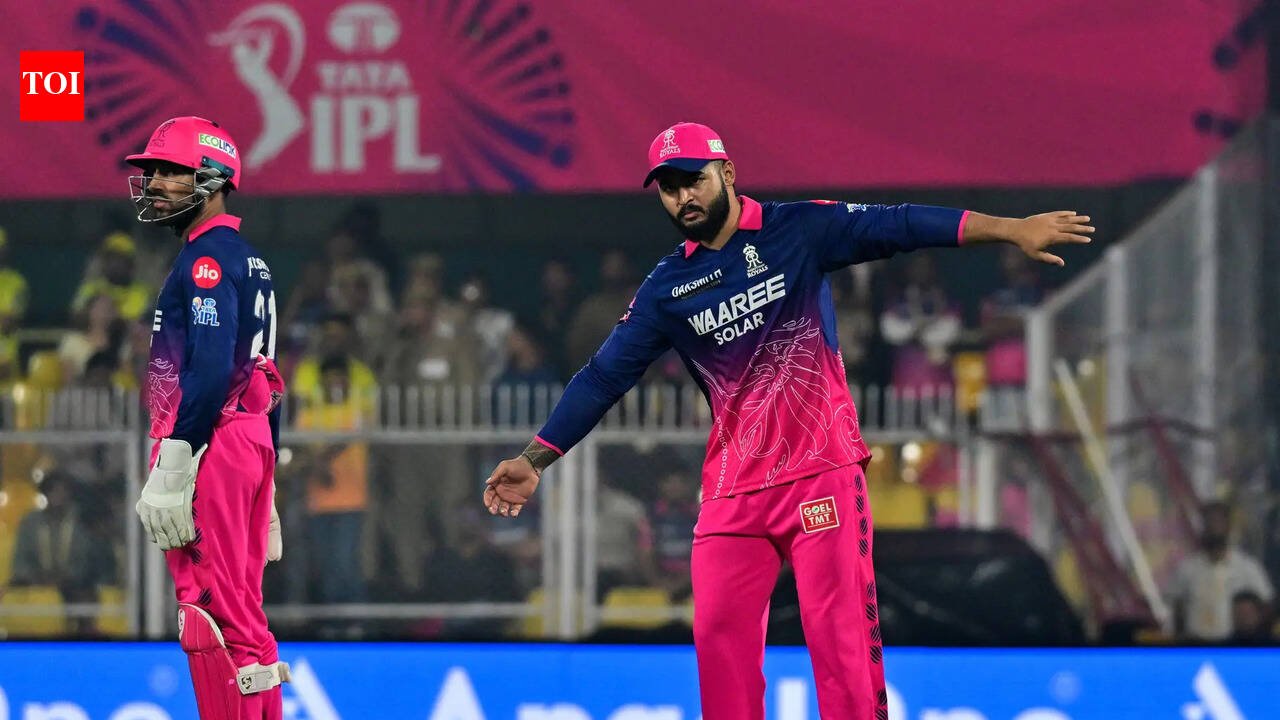
Rajasthan Royals’ skipper Riyan Parag (ANI Photo)

Rajasthan Royals skipper Riyan Parag found himself at the centre of a gripping IPL 2026 contest, as a bold late-game decision helped his side edge past Gujarat Titans by six runs in Ahmedabad. The call not only proved decisive but also earned admiration from former India coach Ravi Shastri.Defending a sizeable 211 at the Narendra Modi Stadium, Rajasthan appeared to be cruising for large parts of the chase. That changed rapidly when Rashid Khan and Kagiso Rabada launched a fierce counterattack, scoring at nearly a 200 strike rate to drag Gujarat back into contention. With momentum shifting, the equation came down to 15 required from the final 12 balls.

Watch

‘Bowlers have it hard’ – Glenn Phillips breaks down modern T20 cricket

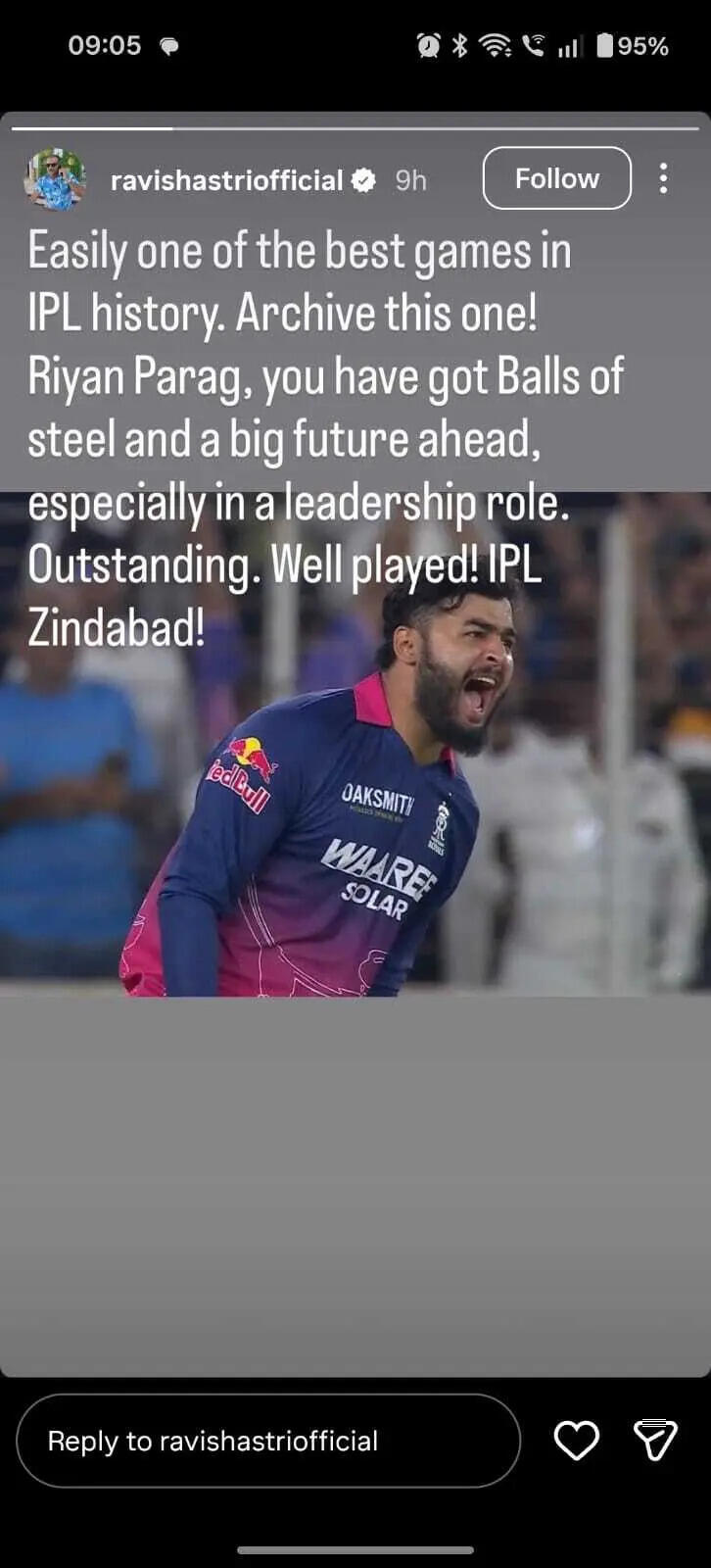
At that critical stage, Parag opted to back Jofra Archer for the penultimate over. The move paid off instantly. Archer stuck to hard lengths and used his pace effectively, giving the batters no room to free their arms. The over yielded just four runs, with Rashid and Rabada limited to singles and no boundary conceded, tightening the equation to 11 off the final over.For the decisive final over, Parag showed further trust in his resources by handing the ball to Tushar Deshpande ahead of more experienced options like Nandre Burger and Sandeep Sharma. Deshpande justified that faith with a composed display under pressure. Consistently nailing his yorkers, he conceded just five runs and dismissed Rashid, sealing a dramatic victory for the Royals in what had briefly looked like a slipping contest.Shastri was quick to highlight both the quality of the game and Parag’s composure, sharing his reaction on Instagram.“Easily one of the best games in IPL history. Archive this one! Riyan Parag you have got ba**s of steel and a big future ahead, especially in a leadership role. Outstanding temperament. Well played!”

Shastri Insta story

Shastri Insta story

Parag later revealed that the call to give Archer the 19th over was influenced by Dhruv Jurel, who had earlier played a crucial hand with the bat.

Poll

Which player do you think had the biggest impact on the game?

“I was actually going to switch the order, but credit to Jurel – he asked me to go with Jofra for the 19th,” he said, underlining how that timely suggestion shaped the outcome of the match.


Source link

US-Iran conflict: Middle East war sends US fuel prices soaring, surcharges kick in


US-Iran conflict: Middle East war sends US fuel prices soaring, surcharges kick in

As tensions in the Middle East continue to escalate, the effects are no longer confined to the conflict zone, they are beginning to show up in daily routine across economies. In the United States, rising fuel costs triggered by the war against Iran are now filtering into everyday life, quietly reshaping how businesses operate and how much consumers pay. What began as a geopolitical flashpoint is steadily turning into an economic pressure point, with transportation costs climbing and companies adjusting their pricing to keep up. Petrol prices have climbed significantly, reaching $4.09 per gallon on Friday, an increase of more than one dollar compared to levels seen before the conflict began, and the highest since August 2022. Diesel has seen an even steeper rise, jumping from $3.64 per gallon a year ago to $5.53 per gallon, according to figures from the American Automobile Association (AAA). The surge is particularly significant given diesel’s widespread use in sectors such as farming, construction and transportation, PTI reported. In response to these mounting costs, companies have begun passing on the burden. Amazon announced it will impose a 3.5% fuel surcharge on third-party sellers from April 17. Airlines, too, have started increasing fees for checked-in baggage to offset fuel-related expenses. The US Postal Service is also seeking to introduce a temporary surcharge. It said on Wednesday that it plans to apply an 8% fuel fee on package and express mail deliveries. The proposal, if approved by the Postal Regulatory Commission, would come into effect on April 26 and remain until January 17, 2027. The broader economic impact could deepen if the conflict persists, with supply chain pressures expected to build over time. “I don’t think the US will avoid it. These are global markets,” Rachel Ziemba, a New York-based analyst who advises corporations on geopolitical risk, was quoted by The Washington Post as saying. “Experts, even a week ago, were worried. Now they are more worried,” she said. Economists have also warned of a wider knock-on effect on prices. “If transportation costs start rising, it’s going to bleed through in other prices,” Austan Goolsbee, president of the Federal Reserve Bank of Chicago, was quoted as saying by CBS. “So I think it’s in the near term, but not immediate, that you would start to see that weighing down of the consumer — they would just get sticker shock. People were already highly concerned about affordability and the cost of living, and this would just be piling onto it,” he said. At the centre of the disruption is the blockage of the Hormuz Strait, which has already removed hundreds of millions of barrels of oil from global supply, according to a JPMorgan client note cited by The Washington Post. The impact is being felt in phases, depending on shipping times from the Persian Gulf. Asian countries have been the first to face the shortfall, with governments introducing rationing and conservation steps. Europe is expected to encounter physical shortages by mid-April as the last shipments dispatched before the war arrive at its ports. The United States is likely to experience the effects later due to longer transit times of 35 to 45 days. While higher prices are expected nationwide, shortages of refined fuel products from late April or May are likely to remain limited to California, which is geographically isolated from the country’s broader fuel distribution network, the JPMorgan report said.


Source link

Why MS Dhoni will not play CSK vs RCB match in IPL 2026 | Cricket News


Why MS Dhoni will not play CSK vs RCB match in IPL 2026
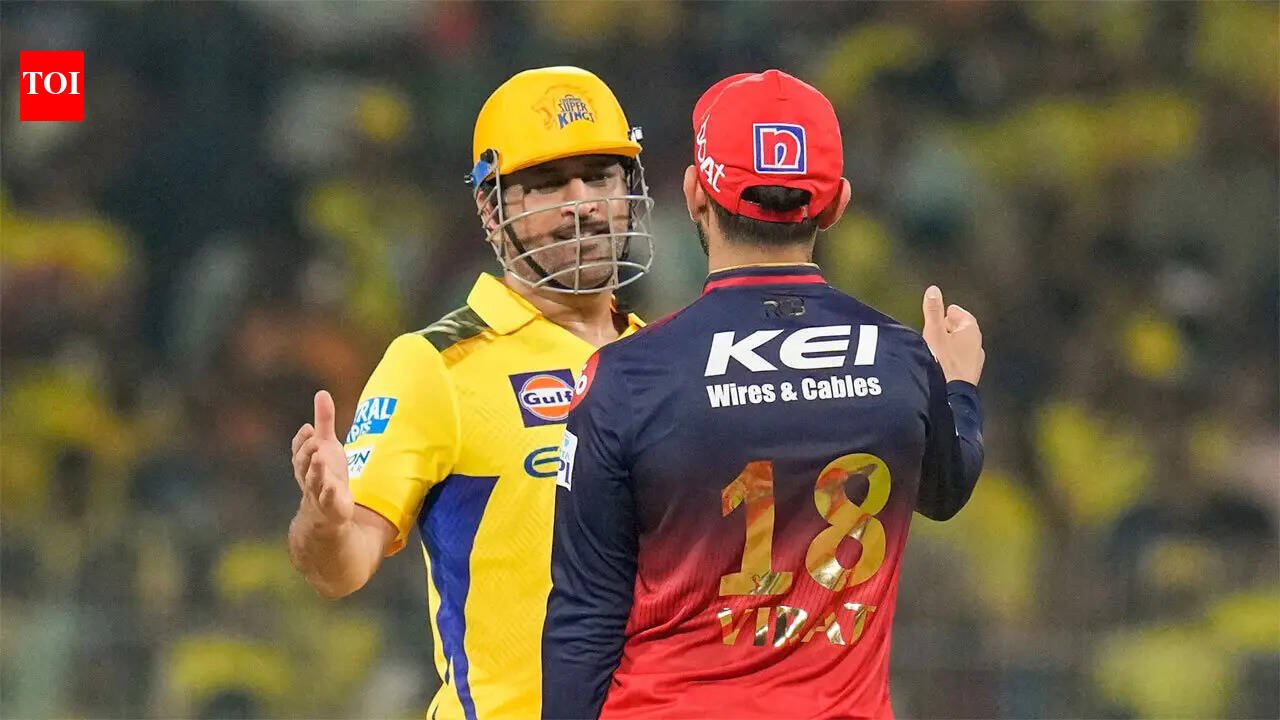
MS Dhoni and Virat Kohli (Image credit: BCCI/IPL Photo)

NEW DELHI: Defending champions Royal Challengers Bengaluru are riding high on confidence after kicking off their IPL 2026 campaign with a win over Sunrisers Hyderabad at the M Chinnaswamy Stadium. Now, an exciting southern derby between RCB and Chennai Super Kings is on the cards – undoubtedly a marquee clash.While RCB head into the contest on the back of a victory, CSK arrive with two consecutive defeats, against Rajasthan Royals and Punjab Kings.Are CSK missing Mahendra Singh Dhoni? Is his absence hurting the side after losses in their first two matches of the tournament?The wait for Dhoni will continue. He will not feature in the playing XI against RCB either.

Watch

Stephen Fleming on CSK’s revamp, bowling pressure & impact player rule

Why MS Dhoni will not play vs RCB?

Dhoni has been ruled out for the first two weeks due to a calf strain.“MS Dhoni is currently undergoing rehabilitation for a calf strain. As a result, he is likely to miss the first two weeks of IPL 2026. Get well soon, Thala,” CSK shared on social media ahead of their opening match against Rajasthan Royals.Head coach Stephen Fleming had earlier made it clear that while Dhoni is not on the field, his presence is still strongly felt. Fleming spoke about Dhoni’s “heavy” influence and involvement within the team.“It is just a game without him. He is still heavily involved in the side, and his influence remains very strong,” Fleming had told reporters ahead of the Punjab Kings clash.Squads:Chennai Super Kings Squad: Sanju Samson(w), Ruturaj Gaikwad(c), Ayush Mhatre, Sarfaraz Khan, Shivam Dube, Kartik Sharma, Prashant Veer, Noor Ahmad, Anshul Kamboj, Matt Henry, Khaleel Ahmed, Jamie Overton, Rahul Chahar, Matthew Short, Ramakrishna Ghosh, Gurjapneet Singh, Akeal Hosein, MS Dhoni, Shreyas Gopal, Spencer Johnson, Mukesh Choudhary, Urvil Patel, Aman Khan, Dewald Brevis, Zakary FoulkesRoyal Challengers Bengaluru Squad: Philip Salt, Virat Kohli, Devdutt Padikkal, Rajat Patidar(c), Jitesh Sharma(w), Tim David, Romario Shepherd, Krunal Pandya, Bhuvneshwar Kumar, Abhinandan Singh, Jacob Duffy, Suyash Sharma, Jacob Bethell, Rasikh Salam Dar, Kanishk Chouhan, Venkatesh Iyer, Josh Hazlewood, Mangesh Yadav, Vihaan Malhotra, Vicky Ostwal, Jordan Cox, Swapnil Singh, Satvik Deswal


Source link

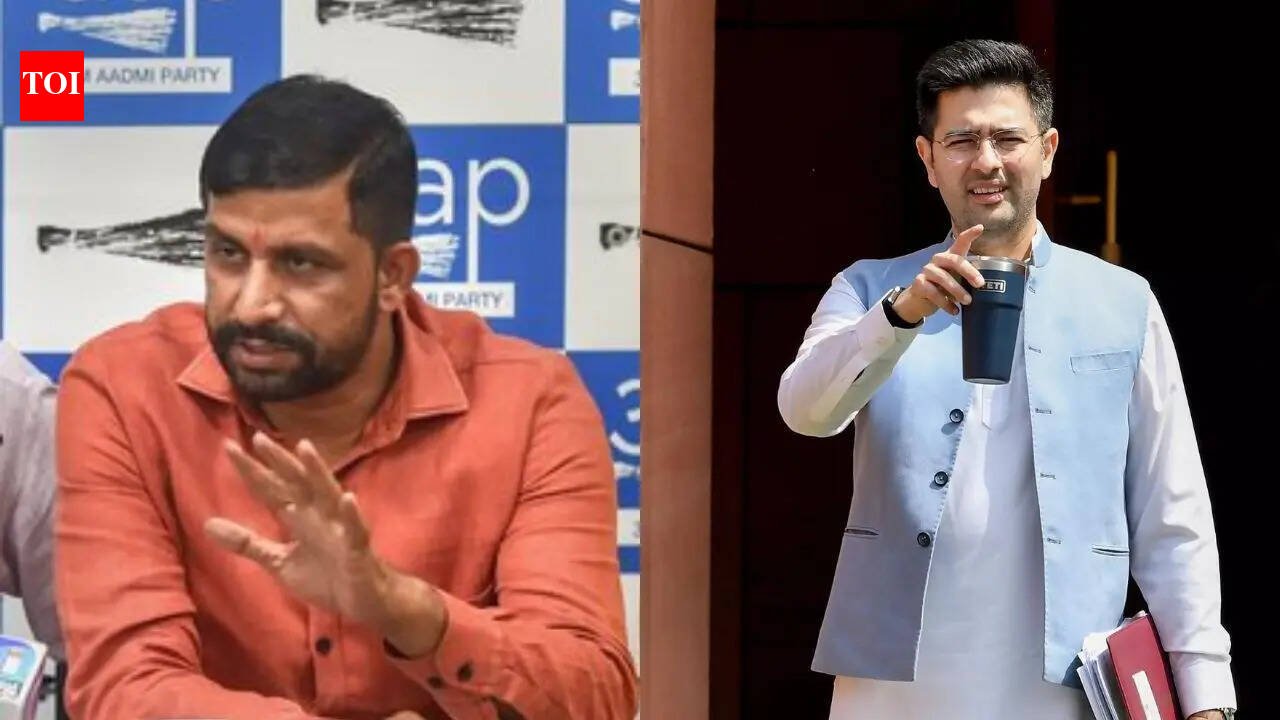
Raghav Chadha: Raghav Chadha made to stand like rooster, beaten in ‘secret mansion’: Ex-AAP leader makes explosive claims | Delhi News


A political row within the Aam Aadmi Party has intensified after former AAP leader Naveen Jaihind made a series of serious allegations against party MP Raghav Chadha, linking the ongoing dispute to alleged financial misconduct.

NEW DELHI: Amidst the ongoing rift within the Aam Aadmi Party surrounding its leaders and party MP Raghav Chadha, former AAP Haryana leader Naveen Jaihind called Chadha Arvind Kejriwal‘s “raazdaar”, stressing that the whole dispute belongs to the money which was “extorted” from Delhi and Punjab.Speaking to ANI on Saturday, Jaihind alleged that Raghav Chadha collected the extortion money from Delhi and Punjab, which was later taken to London by him, which was earlier supposed to be taken to Singapore. The former AAP leader alleged that following all the developments, Chadha was beaten first in New Delhi and later in a “secret mansion” in Chandigarh.

Watch

‘Three Allegations, Zero Truth’: Raghav Chadha Counters AAP After Shock Deputy Leader Snub

“Raghav Chadha is Kejriwal’s maaldaar (wealthy) and raazdaar (confidant), and the real dispute is about the money extorted from Punjab and Delhi. The money that was supposed to be sent to Singapore, he (Raghav Chadha) took it to England. During this time, he was made to stand like a rooster and beaten in Delhi, and then he was beaten at the secret mansion in Chandigarh. This entire matter is about money and corruption, nothing else,” said Jaihind.Also read: Raghav Chadha deleted social media posts critical of PM Modi, BJP: AAP The whole controversy began following Raghav Chadha’s removal from Aam Aadmi Party’s deputy leader post in Rajya Sabha, earlier this week, following which, the AAP MP slammed the party leadership, accusing them of silencing his voice.Following Chadha’s remarks, several leaders of AAP came out heavily against him, saying he was said to be “compromised” and was scared of Prime Minister Narendra Modi.Chadha on Saturday hit back at allegations following his removal as Deputy Leader of the Aam Aadmi Party in the Rajya Sabha, calling them a “coordinated attack” and denying claims that he refused to walk out of Parliament or sign an impeachment motion against the Chief Election Commissioner.In a post on X, Chadha said a scripted campaign was being run against him.”Since yesterday, a scripted campaign has been going on against me. Same language, same words, same allegations. This is no coincidence, but a coordinated attack. At first, I thought I shouldn’t respond. Then I thought that if a lie is repeated 100 times, some people might believe it. So, I decided to respond,” he said


Source link