Breaking News
Crude Oil: Crude above $100: How countries are racing to streamline oil supplies as Strait of Hormuz crisis deepens


Crude above $100: How countries are racing to streamline oil supplies as Strait of Hormuz crisis deepens

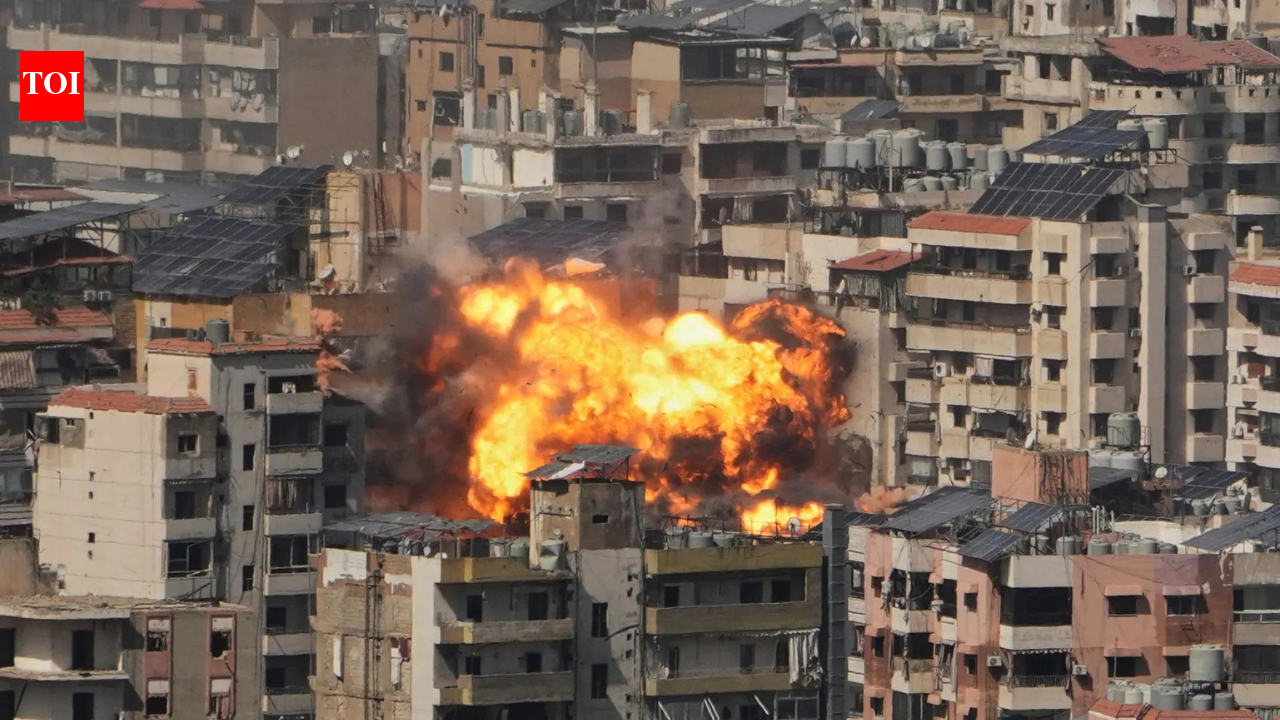
As tensions in the Middle East continue to boil, the ripple effects are being felt across global oil markets. Disruptions around the Strait of Hormuz, one of the world’s most vital oil transit routes, have thrown supply chains into uncertainty, prompting governments and refiners worldwide to rush in search of alternatives. The International Energy Agency (IEA) has warned that the situation could amount to the “largest supply disruption in history”, with millions of barrels of oil unable to move each day due to disruptions in the narrow shipping corridor. According to the agency, the scale of the shock could exceed the disruptions seen after the 1973 Yom Kippur war and the start of the Ukraine conflict in 2022. The situation further worsened after Iran’s new supreme leader, Mojtaba Khamenei, called for the key shipping route to “remain closed”, casting shadow over hopes of a quick resolution to the crisis.

Crude Oil Rally Near 120 Dollars, Raises Big Question If India Can Survive Crisis With Russian Oil

Against this backdrop, global oil prices, once again, climbed above $100 a barrel. Countries dependent on imported crude have since begun taking urgent steps to secure fuel supplies and shield their economies from the escalating crisis.

India

India has turned to Russian crude to offset potential supply disruptions from the Middle East. New Delhi has purchased around 30 million barrels of unsold Russian oil after the United States issued a 30-day waiver allowing buyers to acquire cargoes that were already stranded at sea, according to a Bloomberg report citing sources.Although the Strait of Hormuz is a critical energy route, only about 40% of India’s crude imports travel through it. Even so, refiners have moved swiftly to ensure stable supply. Following the waiver, refiners including Indian Oil Corporation and Reliance Industries bought nearly all available Russian cargoes on the spot market, the report said. Meanwhile, government has also prioritised domestic LPG supplies to ensure uninterrupted access to cooking gas for households. Authorities have ensured that the retail fuel network remains fully operational, with nearly 100,000 outlets running without any dry-outs. Around 25,000 LPG distributors are supplying nearly 50 lakh cylinders each day, while commercial LPG is being prioritised for hospitals and educational institutions.

United States

The United States has opted to tap its emergency reserves as part of a coordinated effort to ease pressure on global oil markets. US Secretary of Energy Chris Wright said that members of the International Energy Agency had agreed to release oil from their reserves. “Earlier today, 32 member nations of the International Energy Agency unanimously agreed to President Trump’s request to lower energy prices with a coordinated release of 400 million barrels of oil and refined products from their respective reserves.”As part of that plan, US President Donald Trump authorised the Department of Energy to release 172 million barrels from the Strategic Petroleum Reserve starting next week.The supply will take around 120 days to reach the market based on expected discharge rates, making it one of the largest emergency releases from the US reserve.

China

China faces significant exposure to the disruption given its dependence on oil flows from the Gulf. The country accounts for roughly one quarter of the world’s oil imports, most of which originate from Gulf producers.China also consumes around 90% of Iran’s crude exports, with much of that supply routed through Malaysia to bypass sanctions. Now, the conflict risks to transit routes such as the Strait of Hormuz have raised concerns about supply security.In the short term, Beijing can rely on its strategic petroleum reserves, which are estimated at between 1.1 billion and 1.4 billion barrels. If the disruption continues, China could deepen its reliance on other suppliers, particularly Russia.At the same time, the government has moved to protect domestic fuel availability. Four sources familiar with the decision said Beijing ordered refiners to halt exports of refined fuel in March with immediate effect.

South Korea

South Korea has imposed a cap on domestic fuel prices to limit the impact of rising energy costs as authorities attempt to cushion the blow of the Middle East crisis on the country’s economy, which depends heavily on imported energy.Officials have fixed the maximum wholesale price of gasoline at 1,724 won ($1.17) per litre, compared with 1,833 won. Prices will be reviewed every two weeks to reflect changes in global oil markets.Finance Minister Koo Yun-cheol said, “The government will implement a maximum price system for petroleum products to ease the burden on consumers and firmly respond to attempts to take advantage of the crisis to increase prices excessively,” as cited by Reuters.South Korea imports almost all of its energy requirements, with about 70% of its oil and 20% of its liquefied natural gas coming from the Middle East.Authorities also plan to restrict stockpiling by refiners, requiring them to release at least 90% of the monthly volumes they supplied in March and April last year.

Australia

Australia has opted to use part of its emergency fuel reserves to manage potential shortages. The country, which depends on imported oil for much of its fuel needs, has witnessed a sharp rise in petrol prices as panic buying intensified following the outbreak of the war.The government will release the equivalent of six days’ worth of petrol and five days of diesel from its stockpiles, the first time the reserves have been tapped since the invasion of Ukraine in 2022, ABC news reported.Current data shows the country holds about 36 days of petrol supply, 29 days of jet fuel and 32 days of diesel. Energy minister Chris Bowen said the fuel would not enter the market immediately because of supply chain constraints but would give retailers greater flexibility to manage supply. He also said discussions were under way with fuel companies to ensure regional communities receive priority access. He furthercautioned fuel retailers against “dangerous” petrol price gouging, even as the government temporarily eased fuel stockholding requirements in an effort to improve supply.

France

French authorities have begun checking petrol stations across the country over concerns that companies could exploit the crisis to raise prices excessively.Prime Minister Sebastien Lecornu, as cited by The Guardian, said that inspectors would visit 500 fuel stations between Monday and Wednesday.“The war in the Middle East must not become a pretext for abusive prices at the pump,” he said.

Italy

Italy has warned that it could introduce additional taxes on companies suspected ofprofiteering from rising wholesale oil prices. Prime Minister Giorgia Meloni said the government was determined to prevent speculation during the crisis.“I am very determined to do what I can to prevent speculators from exploiting the crisis at the expense of families and businesses,” she told Italian television.Taxes already make up around 25% of the final energy costs paid by households and small businesses.

Germany and Austria

Germany has rejected suggestions that sanctions on Russia should be eased to offset the supply shock.Chancellor Friedrich Merz said the country would continue to prioritise solidarity with Ukraine despite pressure from energy markets.If the conflict involving Iran ends quickly, he said, “we will also see a relatively rapid return to normalisation on the oil and energy markets”.“Faced with the choice between sanctions and solidarity, our position is clear: we stand with Ukraine and are prepared to endure such a phase if necessary,” Merz added.Austria’s Chancellor Christian Stocker has meanwhile called for a temporary cut in petrol taxes to counter rising prices.

Hungary and Croatia

Hungary and Croatia have taken direct action to limit fuel costs by introducing price caps. Croatia has set the price at forecourts at €1.55 per litre for petrol and €1.50 for unleaded.Hungary has introduced a similar cap and announced it will release oil from state reserves.Prime Minister Viktor Orban also called on the European Union to suspend sanctions on Russian energy. Hungary and Slovakia already have exemptions from EU restrictions on Russian gas imports and recently secured a one-year exemption from US sanctions after agreeing to purchase liquefied natural gas from the United States.

Other European countries

Elsewhere in Europe, the surge in oil prices is already affecting transport and households. The Sweden-based airline SAS has said it will introduce a temporary fare increase due to higher fuel costs.In Ireland, concerns are rising over the cost of heating oil, particularly in rural areas where many homes rely on paraffin for hot water because natural gas is available in only about a third of households.Despite the pressure, the coalition government has so far resisted calls for immediate intervention, although it has previously acted against price gouging at petrol stations.
Source link

IPL 2026: Chennai Super Kings tells Madras high court it will not use Jailer, Jailer 2, or Coolie songs without Sun Pictures license |


IPL 2026: Chennai Super Kings tells Madras high court it will not use Jailer, Jailer 2, or Coolie songs without Sun Pictures' license
File photo used for representational purpose.

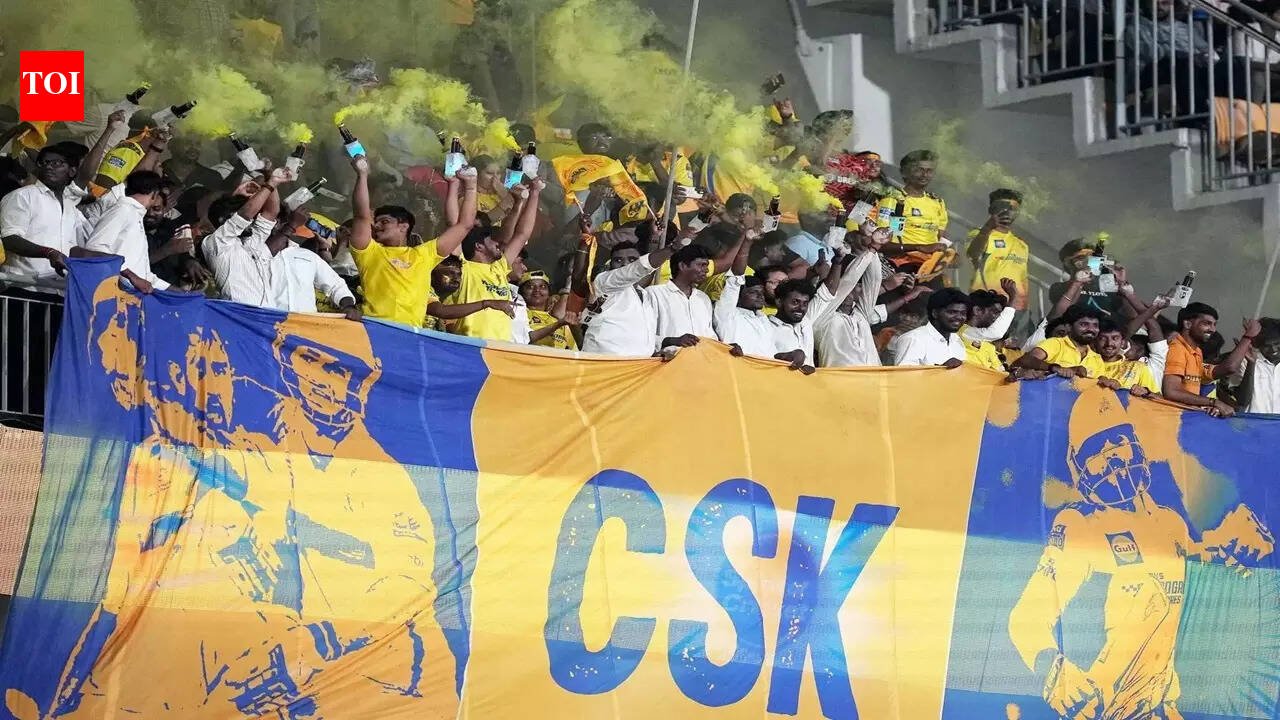
CHENNAI: Indian Premier League franchise Chennai Super Kings (CSK) on Friday informed the Madras high court that it will desist from using the songs and music of movies Jailer, Jailer2, and Coolie starring Rajinikanth, unless a license is obtained from the copyright owner Sun Pictures. Senior advocate P S Raman made the submission on behalf of CSK in response to a plea moved by Sun TV Network seeking to restrain CSK from using the songs and music owned by it in the team’s promotion. Representing Sun TV Network, senior advocate J Ravindran contended that the team has been using the songs and music from the three Tamil movies infringing the copyrights of Sun Pictures. He wanted the court to pass an injunction against CSK from using the songs in its promos. Responding to the plea, Raman submitted that CSK has been using some portions of the songs in its promos for three years and that the petitioner has not opposed it. Since now the petitioner is objecting to it, we will desist from using it. We will file an affidavit to this effect, the senior counsel said and added that CSK will not use the songs without getting consent of the copyright owner or a Phonographic Performance Limited License (PPLL). Recording the submissions, Justice Senthilkumar Ramamoorthy adjourned the hearing to March 16, for CSK to file an affidavit.CSK, five-time Indian Premier League (IPL) champions, are gearing up for the 2026 season. The team will kick off their campaign against Rajasthan Royals in Guwahati on March 30, and will play their home fixture at Chennai on April 3 against Punjab Kings.


Source link

Rupee hits intra-day low: Currency falls 12 paise to 92.37 against US dollar amid rising crude prices


Rupee hits intra-day low: Currency falls 12 paise to 92.37 against US dollar amid rising crude prices

Rupee hit an intra-day low of 92.37 against the US dollar, tumbling 12 paise in early trading on Friday. The currency was dragged down by rising global crude prices and weak domestic market sentiment amid the ongoing conflict in West Asia. At the interbank foreign exchange market, the currency opened at 92.33 per dollar before weakening further to 92.37, marking its lowest intra-day level. Rupee had already faced strong downward pressure in the previous trading session, when it slipped to an intra-day low of 92.36 before settling at 92.25 per US dollar, marking a decline of 24 paise and its weakest closing level on record. The currency had also recorded its lowest level earlier this week, when it slipped to 92.528. Forex traders attributed the continued slide to a combination of factors including firm global crude prices, sustained selling by foreign institutional investors (FIIs), a stronger US dollar, and subdued sentiment in domestic equities. Commenting on the market situation, Anil Kumar Bhansali, head of treasury and executive director at Finrex Treasury Advisors LLP, pointed to developments in the energy market and global currency trends. “Oil prices remained elevated after Iran said the Strait of Hormuz is closed permanently till the resolution of the crisis. The dollar index also rose, European and Asian currencies all fell against the dollar,” he said. Bhansali also noted that the rupee remains under pressure and suggested that the fall could have been steeper without intervention. “The rupee has remained vulnerable and in the absence of the RBI could have reached 93.00 levels,” he told PTI. The dollar index, which tracks the strength of the US dollar against a basket of six major currencies, was trading 0.04 per cent higher at 99.77. In the commodities market, Brent crude, the global oil benchmark, rose 4.99%to $96.57 per barrel in futures trade. Domestic equity markets also traded lower during the session. Nifty50 went below 23,400 while BSE Sensex tumbled 900 points. At 10:20 am, Nifty50 was trading at 23,325.45, down 313.70 points or 1.33%. BSE Sensex was at 75,117.81, down 916 points or 1.21%. Meanwhile, exchange data showed that foreign institutional investors offloaded equities worth Rs 7,049.87 crore on a net basis on Thursday. Separately, official data released on Thursday showed that retail inflation in India increased to 3.21%in February from 2.74%in January, with higher food prices cited as the primary reason for the rise.


Source link

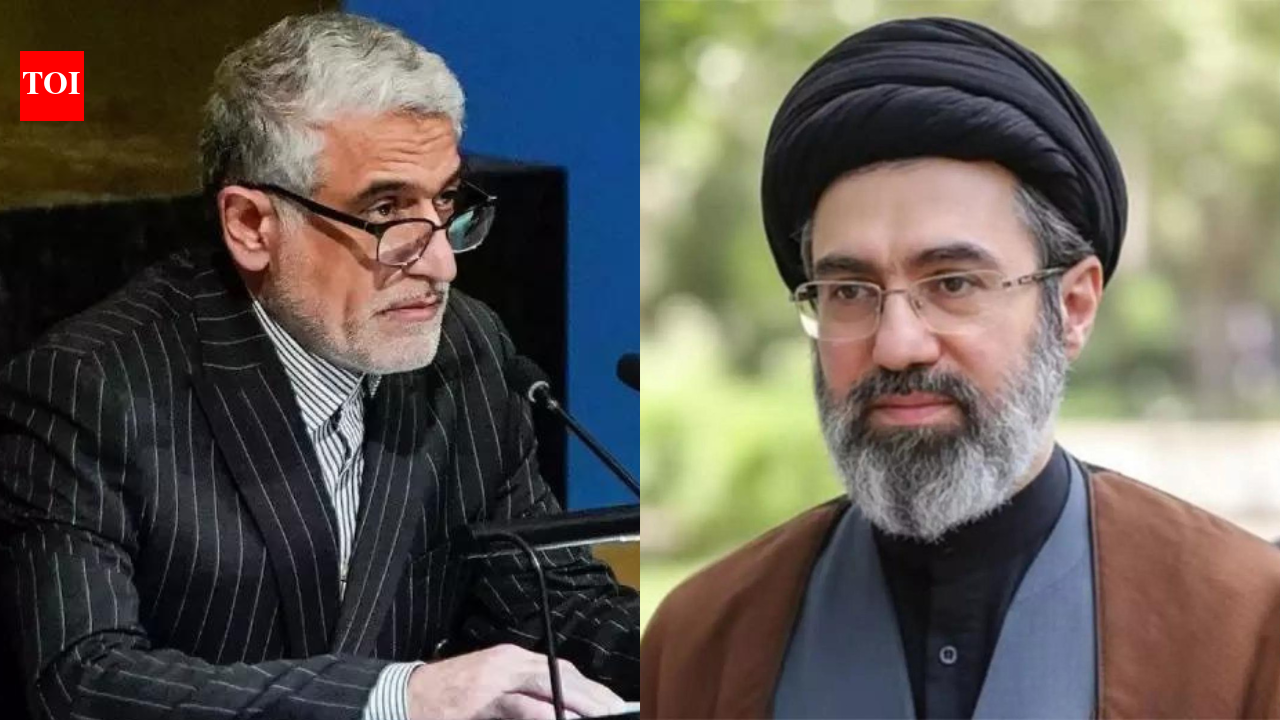
‘Not going to close’: Iran’s UN envoy contradicts Mojtaba Khamenei over Strait of Hormuz remarks


UNSC SHOWDOWN: Iran Envoy Roasts ‘Coward’ U.S. Arab Allies in Fiery Clash Over Mideast Attacks

Iran’s ambassador to the United Nations said Tehran does not plan to close the Strait of Hormuz, appearing to strike a more measured tone after remarks by the country’s newly appointed supreme leader Mojtaba Khamenei suggesting the strategic waterway could be used as leverage.Speaking to reporters at the UN on Thursday, Amir Saeid Iravani said Iran would not block the vital shipping route but stressed that the country had the right to ensure its security, according to Reuters.

UNSC SHOWDOWN: Iran Envoy Roasts ‘Coward’ U.S. Arab Allies in Fiery Clash Over Mideast Attacks

“We are not going to close the Strait of Hormuz,” Iravani said. “But it is our inherent right to preserve the peace and security in this waterway.”His comments came after Iran’s new supreme leader, Mojtaba Khamenei, said earlier on Thursday that the “lever of blocking the Strait of Hormuz must continue to be used.”In a prepared statement read to reporters before taking questions, Iravani said Iran remained committed to international maritime law.“Iran fully respects and remains committed to the principle of freedom of navigation under the law of the sea,” he said.However, he blamed rising tensions in the region on US actions.“However, the current situation in the region, including in the Strait of Hormuz, is not the result of Iran’s lawful exercise of its right of self-defense. Rather, it is the direct consequence of the destabilizing actions of the United States in launching aggression against Iran and undermining regional security,” Iravani said.The comments come amid heightened tensions in the region following ongoing hostilities involving Iran, Israel and the United States.Asked about remarks by US Treasury Secretary Scott Bessent, who told Sky News that the US Navy, possibly alongside an international coalition, could escort vessels through the Strait of Hormuz when militarily feasible, Iravani said he had no response, Reuters reported.Strait of Hormuz is a critical waterway cone


Source link

Top stocks to buy today: Stock recommendations for March 13, 2026 – check list


Top stocks to buy today: Stock recommendations for March 13, 2026 - check list
Top stocks to buy today (AI image)

Stock market recommendations: NCC, and HFCL are the top stocks that Bajaj Broking Research recommends buying on March 13, 2026. Here is a detailed outlook on NCC, and HFCL along with a view on Nifty and Bank Nifty.Index View: NIFTYIndian benchmark indices extended their losses during the current week, largely tracking weak global market cues amid escalating geopolitical tensions surrounding the US–Israel conflict with Iran. The rising uncertainty over the conflict’s potential impact on global inflation and economic growth has kept investors cautious, leading to continued selling pressure in equities. The tensions have also pushed Brent crude oil prices sharply higher, with prices currently hovering around $100 per barrel, raising concerns for oil-importing economies like India. Adding to the negative sentiment, the Indian rupee slipped to a fresh low against the US dollar, further weighing on investor confidence due to fears of higher import costs and rising inflationary pressures.Elevated crude oil prices pose a major macroeconomic challenge for India due to its strong reliance on energy imports. A prolonged rise in oil prices can increase inflationary pressures, expand the current account deficit, and put further pressure on the domestic currency. Moreover, higher input costs can compress corporate profit margins, especially in sectors such as aviation, logistics, paints, and oil marketing companies, which may negatively impact overall equity market sentiment.The Nifty index breached its August 2025 low of 24,337 earlier in the week and slipped further to mark a fresh 10-month low of 23,556 during Thursday’s session, indicating the continuation of the ongoing corrective phase. Market volatility is expected to remain elevated in the near term amid uncertain global cues, rising crude oil prices, and escalating geopolitical tensions. Nifty is currently testing the 61.8% retracement of the previous major rally 21744-26373, index holding above the support area of 23,500-23,400 will lead to consolidation in the range of 23,400-24,300 in the coming session.On the upside, immediate resistance is placed around 24,000 and 24,300, which also coincides with the recent breakdown zone, and only a sustained move above 24,300 could indicate a pause in the prevailing downtrend. However, a decisive break below the 23,400–23,500 support area may lead to additional selling pressure, potentially dragging the index towards the 23,000 level in the coming sessions.Bank NiftyBank Nifty extended its decline for the third consecutive week, slipping lower and testing the 55,000 level during Thursday’s session. The continued weakness reflects sustained selling pressure in the banking space amid cautious investor sentiment and volatile broader market conditions.Technically, the short-term bias remains negative as long as the index trades below the 56,500 mark. Failure to reclaim this level could lead to further downside in the coming sessions, with the index potentially drifting towards the 100-week EMA, which is placed around the 54,000 level.Market volatility is also expected to remain elevated due to uncertain global cues, rising crude oil prices, and escalating geopolitical tensions, which may continue to weigh on the banking sector and the broader equity market.

Stock Recommendations:

NCCBuy in the range of ₹ 147.00-150.00

Target Return STOPLOSS Time Period
₹ 165 11% 139 3 Months

Buying demand is seen emerging from the lower band of the last 3 months range signaling accumulation at lower levels.The weekly 14 periods RSI has moved above its nine periods average and is seen sustaining above its nine periods average thus validates positive bias.We expect stock to head higher towards 165 levels in the coming month, being the previous high of January 2026.HFCLBuy in the range of 72.50-74.50

Target Return STOPLOSS Time Period
₹ 82 11% 69 3 Months

The stock has generated a breakout above the falling trendline joining highs of June and November 2025 signaling resumption of up move and offers fresh entry opportunity.The recent price move is supported by rising volume signaling larger participation at lower levels.We expect stock to head towards 82 levels in the coming months being the confluence of the key retracement of the previous up move and measuring implication of the range breakout. (Disclaimer: Recommendations and views on the stock market, other asset classes or personal finance management tips given by experts are their own. These opinions do not represent the views of The Times of India)


Source link

‘He doesn’t even look at me’: Ex-BCCI selector opens up on Gautam Gambhir fallout after India snub | Cricket News


'He doesn’t even look at me': Ex-BCCI selector opens up on Gautam Gambhir fallout after India snub
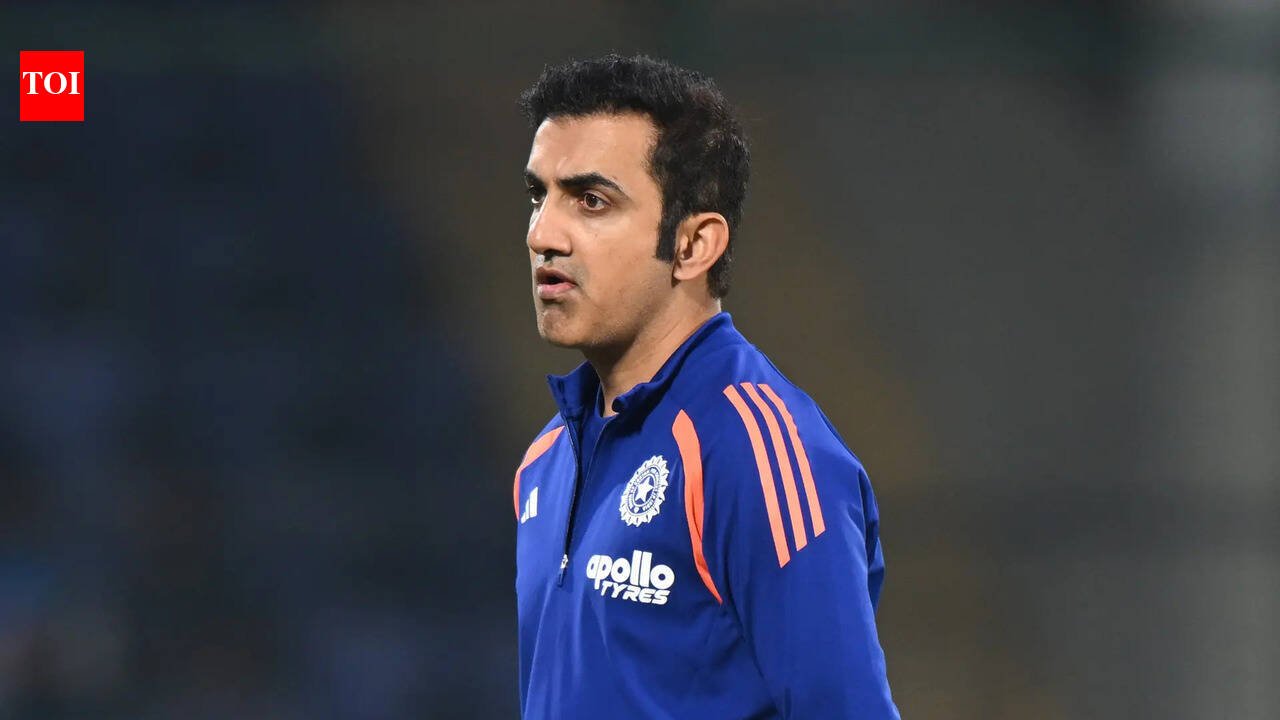
India coach Gautam Gambhir (Getty Images)

Former chief selector Sandeep Patil has revealed that Gautam Gambhir has never spoken to him since the day he was dropped from the Indian team, despite the two appearing together at several events over the years.Gambhir, a key member of India’s World Cup-winning squads in 2007 and 2011, was one of the most influential players in the national side between 2006 and 2012. Although his final international appearance came in November 2016, the first major setback in his career arrived three years earlier when he was left out of the ODI squad after the series against England in 2013.

Gautam Gambhir reflects on India’s World Cup win and backing Sanju Samson in the tournament

Statistically, Gambhir’s performances during that phase were far from poor. In the final 25 ODIs he played for India, the left-hander struck two centuries and six half-centuries. However, the selectors decided to move on, and the decision effectively ended his limited-overs career. He featured only occasionally in Tests afterwards, playing two matches in England in 2014 and two more against New Zealand before his international journey gradually came to an end.Speaking on the Vickey Lalwani show, Patil admitted that the decision was one of several tough calls his selection panel had to take during that period. The former chairman explained that personal relationships could not influence such decisions, even when it involved some of the biggest names in Indian cricket.“When you are sitting in the chair of the selection committee, you are responsible for making some big calls. You’re not looking at your friendships/rapport with players. I’ve shared a good rapport with Sachin since he was 14. He has played under me, with me. Whenever I text him, he replies immediately. I met Yuvraj recently on the flight; very cordial. Even Virender Sehwag. They all talk to me nicely. Except Gambhir. He was very dear to me. Even today, I respect him a lot, but he is upset with me, and rightly so. Even I was upset with the selection committee when I got dropped. I scored a 100 in Pakistan, the highest at Kotla against England in both innings and got dropped. Never played Test cricket again,” Patil said.Gambhir’s exclusion opened the door for Shikhar Dhawan, who grabbed the opportunity in spectacular fashion. Dhawan made a memorable Test debut against Australia in Mohali, smashing a blistering 187. He later formed a highly successful opening partnership with Rohit Sharma in both ODIs and T20Is, while Gambhir gradually drifted away from the national setup.The left-hander continued to remain active in franchise cricket, representing Kolkata Knight Riders before finishing his IPL career with Delhi Capitals. In 2018, he officially announced his retirement from all forms of cricket.Even years after the decision, Patil admitted that Gambhir still maintains his distance whenever their paths cross.“Gambhir is still upset. He has never spoken to me. We have come together on so many different shows. We’ve sat in the same room, but Gautam has never even looked at me. It’s fine. Every time I reached out to him or said a ‘Hi’, he has never responded. Not even a glance. But that’s fair enough,” added Patil.Reflecting on their earlier bond, Patil said Gambhir was once very close to him and regularly stayed in touch, especially during difficult phases of his career.“He was such a great guy. We played tennis together on tours; we’ve had such a great rapport. Gauti used to call me almost once every two weeks when I was removed as a coach. He is like that. Gautam was very serious about his career and remained focused on his batting and approach. No cricketer wants to leave the stage when you’re doing well. Nobody wants to get dropped. Laxman, Dravid quietly went away. Sehwag wanted to have a good celebration but didn’t get it. So I get it.”

Banner Insert


Source link

The birder who refuses to let a hill disappear in Pune: How a quiet community of birdwatchers continue to save Pune’s highest hill |


The birder who refuses to let a hill disappear in Pune: How a quiet community of birdwatchers continue to save Pune's highest hill
Vetal Tekdi in Pune, Maharashtra (PC: Ranjeet Rane)

Cities often lose their natural spaces gradually. A road appears where a trail once existed, a construction site replaces a grove of trees, and over time a landscape that people once knew simply fades away. In rapidly expanding urban centres, such changes are often accepted as inevitable. Yet sometimes a place survives because people begin to see it differently. The story was the same for Vetal Tekdi, Pune’s highest hill.But we are talking about Vetal Tekdi because a change in perception came for the gentle, quiet hill, not through aggressive protests and morchas, but through binoculars, bird calls, and the persistence of a small group of nature lovers. At the centre of this story is Pune-based avid birder Ranjeet Rane, a public policy professional, and a birder and nature lover by choice. His curiosity about the hill gradually evolved into a community-driven effort that highlighted the ecological value of the landscape.

Leading the trail: Ranjeet Rane

Leading the trail: Ranjeet Rane

The backdrop of an unusual ‘public movement’

Ranjeet’s involvement with Vetal Tekdi began after he moved back to Pune from the Delhi–NCR region. Returning to the city meant reconnecting with familiar places, and like many Punekars, he felt a strong connection to the city’s hills. Vetal Tekdi was one of those landscapes that had always been part of the city’s identity. Sometimes ignored, misused, but always present. Then came the day Ranjeet observed something unusual on the way to Vetal Tekdi. The road leading to the tekdi had been blocked with construction barricades. Access to the hill was restricted. Period.Curious and concerned, Ranjeet began asking questions. Through platforms like X he reached out to members of the Vetal Tekdi Bachav Kruti Samiti (VTBKS), a loosely bound group of citizen volunteers engaged in conservation of the tekdi. The explanations he heard were troubling: three infrastructure projects cutting across the tekdi would spell doom for the rich biodiversity of this hill complex.

Nature at its best at Vetal Tekdi

Nature at its best at Vetal Tekdi (PC: Ranjeet Rane)

For Ranjeet, the moment was unsettling. A place that had been freely accessible since his childhood was suddenly off limits. The hill that had always been part of Pune’s open landscape was now under restriction. Instead of accepting the situation and walking away, he decided to understand the hill more deeply. And there was only one way to do that. Walk the landscape.

Looking at the hill through a birder’s eyes

Ranjeet had long been an avid birdwatcher. For him, exploring a landscape meant observing it carefully, listening to bird calls, scanning the skyline for raptors, and paying attention to the subtle movements of wildlife. As he began spending more time on Vetal Tekdi, he started noticing something remarkable. The old hill was full of birds, not at all your run-of-the-mill hill. The hill had character.

Oriental honey buzzard

Oriental honey buzzard (PC: Ranjeet Rane)

His silent walks around the tekdi made one thing clear to him – Vetal Tekdi was not simply open land, it was a functioning ecosystem. Raptors circled above the ridges, smaller birds moved through the scrub forests and grasslands, migratory species appeared during the winter months…Soon he realised that sharing the experience could help others appreciate the hill in a new way.He began inviting a few people along on informal birding walks. In the early days, participation was modest, sometimes just two or three curious individuals who joined him on weekend mornings. Ranjeet started spreading the word about these bird walks through social media, using platforms like @IndiAves on X, and through WhatsApp groups and Facebook communities. He began announcing small birdwatching outings scheduled for weekends and public holidays.

Ranjeet leading a group of birders at Vetal Tekdi

Ranjeet leading a group of birders at Vetal Tekdi

The idea was simple: gather a few people, walk the hill slowly, and observe the birds.At first, the walks remained small and informal. But something interesting happened as word spread. Participants who joined the walks began discovering birds they had never noticed before in their own city. To others, suddenly, the hill began to look different. He won’t admit it now, but it sure started to look like the growth of a quiet movement, and in a good way. More people began joining the bird walks—students, photographers, families, curious residents who wanted to learn more about the wildlife around them, and sometimes, an odd one or two who just wanted to see what the fuss was all about.

Spotted owlet

Spotted owlet (PC: Ranjeet Rane)

Over time, birdwatchers would document more than 160 bird species in the broader hill complex, an impressive number for a landscape located inside a major Indian city. The European honey buzzard sighted at this location is the only record of this species in the state of Maharashtra. The increase in data also helped establish Vetal Tekdi as an important birding site in Pune. Bird walks that earlier had only two or three participants at Vetal Tekdi now have large numbers. Today, there are bird walks that have as many as 50 participants, from diverse age groups. And to manage these increased numbers, there is now a dedicated team of about 10 volunteers who help manage these bird walks and guide participants on the trails.

Birders at Vetal Tekdi, Pune

Birders at Vetal Tekdi, Pune

What had once been a solitary birder exploring a hill had gradually grown into a community of observers.

Vetal Tekdi and the Great Backyard Bird Count

The annual Great Backyard Bird Count is a global citizen science initiative organised by institutions such as the Cornell Lab of Ornithology and the National Audubon Society. Birders from across the world record birds they observe over a four-day period and then upload the data online on platforms like eBird. The results help scientists monitor bird populations and migration trends globally.

Pied kingfisher

Pied kingfisher (PC: Ranjeet Rane)

In Pune, birdwatchers, including Ranjeet and his fellow volunteers, organised observation sessions across the city during the count. Vetal Tekdi quickly emerged as one of the most productive birding hotspots during these events. During the 2026 Great Backyard Bird Count, the city of Pune recorded 248 species of birds. Under this umbrella figure, Vetal Tekdi recorded 132 species of birds. Such as the Eurasian hobby, Indian Thick-knee, white-eyed buzzard, rock-bush quail to name a few.Participants who once visited the hill simply for exercise began noticing wildlife they had previously overlooked. But perhaps the hill’s greatest success lies in how people have come to see it. Thanks to the quiet persistence of birdwatchers, and the efforts of people like Ranjeet, Vetal Tekdi is no longer seen as something that is also there today but more of something that needs to be there tomorrow.


Source link

Middle East tensions: Firms return to WFH, travel curbs as Iran targets UAE


Middle East tensions: Firms return to WFH, travel curbs as Iran targets UAE

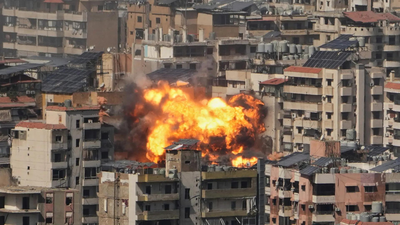
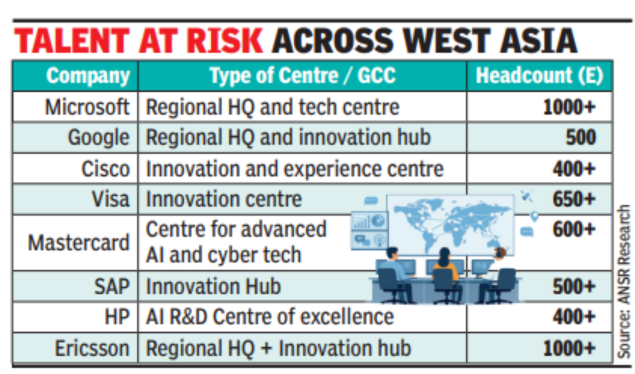
BENGALURU: With the West Asia crisis escalating and recent Iranian strikes targeting the UAE, several IT companies and global capability centres (GCCs) have activated their business continuity plans (BCPs), introducing measures such as work-from-home, travel advisories and temporary office closures.Amid rising geopolitical uncertainty, many tech firms and GCCs are increasingly relying on India as a stable hub for global operations. Many are running mirror command centres from India to ensure operational continuity during disruptions.TCS, which has over 9,000 employees across the Middle East and Africa (MEA) region, has asked its staffers to work remotely. The company has activated a call tree, with associates in impacted and neighbouring regions being contacted on priority. A call tree is a structured chain-based communication method used to quickly relay alerts or critical updates to teams. “We are also coordinating closely with local authorities and the Indian embassies to track developments and will continue to provide timely updates as the situation evolves,” the company told TOI.Infosys has introducing tighter travel restrictions The company said only critical travel will be permitted for now, with group meetings, events, offsites and conferences currently restricted. Wipro, JPMorgan, Goldman Sachs and Standard Chartered have asked their employees to work from home, among others.

-

Vikram Ahuja, co-founder of ANSR, said organisations that were in the middle of setting up or expanding GCCs in the region have paused non-essential travel and executive visits as a precaution. “If the situation persists, we could actually see an acceleration of GCC ramp-ups in India as a stable anchor,” he said. Cognizant advises BYOF After Infosys, Cognizant has encouraged employees to adopt BYOF (Bring Your Own Food) wherever feasible, to reduce reliance on office cafeterias while it monitors the evolving situation linked to the West Asia crisis. Cognizant has pre-identified alternate food vendors that do not rely on commercial LPG. The company said the current situation does not indicate an immediate disruption but could evolve into a prolonged period of operational pressure. Transport services are another area being closely monitored. Email to employees noted a “moderate risk of service strain” in commute operations due to fuel cost escalation impacting cab and shuttle vendors.


Source link

Government sparing no effort to minimise war fallout on citizens, opposition spreading fear, says PM Modi | India News


Government sparing no effort to minimise war fallout on citizens, opposition spreading fear, says PM Modi

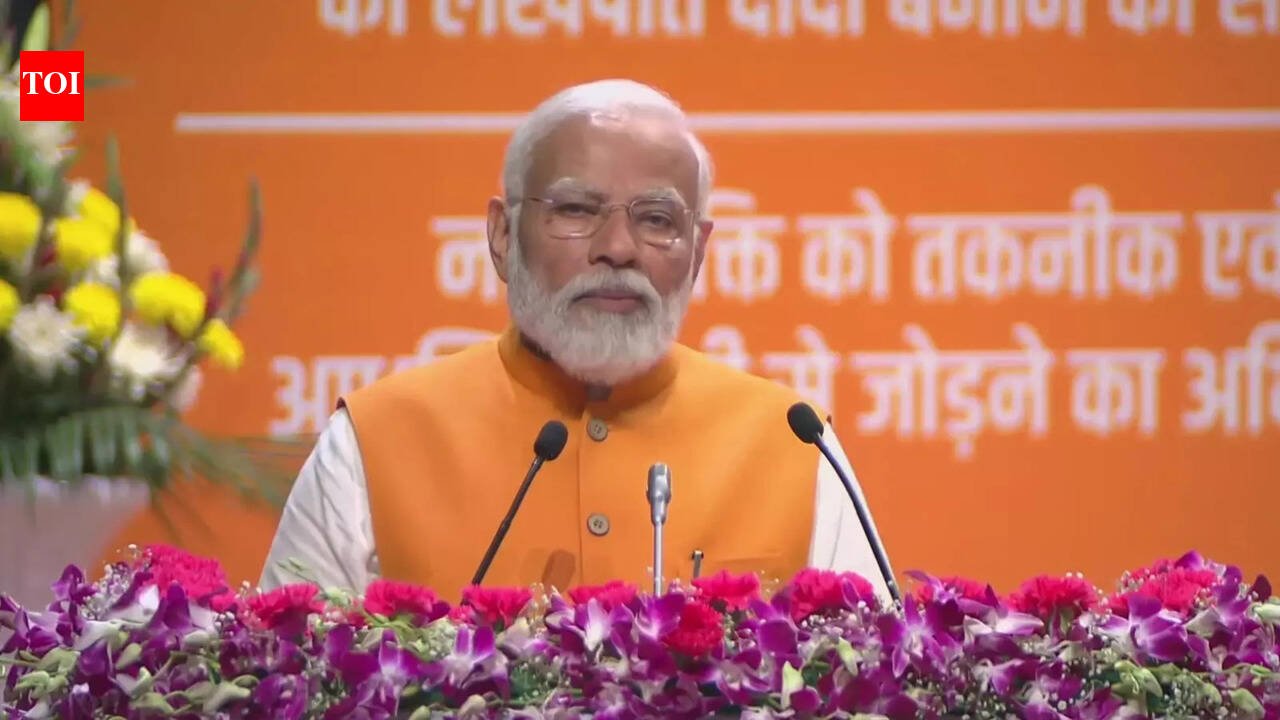
NEW DELHI: Amid concerns over the impact of Iran war on India’s energy supply, PM Narendra Modi said on Thursday his govt is sparing no effort to minimise its fallout on citizens and accused opposition parties of fear-mongering to push their agenda at the of cost national interest.He said no country is untouched by this global crisis and India is trying at different levels to deal with it, including making efforts to get around the supply chain disruption. He has spoken to global leaders, he said at NXT summit.On a day leader of the opposition in Lok Sabha, Rahul Gandhi, targeted govt over the “LPG crisis” in the House, Modi hit back without naming anyone and said everyone, including political parties, have a role in ensuring that the country successfully handles the crisis.“Some people are trying to spread panic. They want to push their agenda. I do not want to give any political reaction now but will say that they are exposing themselves before people and inflicting a great harm on the country,” he said. India will definitely be able to deal with the challenges arising out of the war, he emphasised.He listed out a host of measures his govt has taken since 2014 to build India’s alternative energy sources, reduce its dependence on oil, multiply its petroleum storage capacity, while ensuring more and more people benefit from them.India used to have negligible storage capacity to deal with any crisis but it now stands at 50 lakh tonne, while it has become one of the biggest refining hubs in the world. People’s aspirations have risen and his govt welcomes them, he added before turning to his critics.“Many of my ‘well-wishers’ are nursing the hope that I will be crushed under the burden of expectations… their intentions are dishonest, and their hopes will never be fulfilled,” he said, adding he has people’s blessings. He asked states to take stringent action against rumour-mongers and black-marketers.India will come out of the crisis successfully as it did during Covid, he said, describing the current era as a period like never before.He compared the rise of Indian economy to people’s abiding interest in cricket, saying they are now keen to know all the time about the latest details. “If you want to be part of the future, you have to be in India,” he said. “Despite numerous global challenges, the world looks at India with great hope,” he said.


Source link

Income cannot be sole decider of OBC creamy layer: SC | India News


Income cannot be sole decider of OBC creamy layer: SC

NEW DELHI: The income of parents cannot be the sole criterion for exclusion of a candidate from OBC quota on the ground of being part of ‘creamy layer’, the Supreme Court has said, stressing that status and category of parents’ jobs have to be considered, with income/wealth test as an additional criterion for exclusion. At present, the threshold income to determine ‘creamy layer’ is Rs 8 lakh per annum.The court’s ruling would have huge implications for wards of PSU and private sector employees as income was taken as the sole determining factor to decide on ‘creamy layer’ status for them, unlike in the case of wards of govt employees for whom category of job is the deciding factor. A bench of Justices P S Narasimha and R Mahadevan said children of Group A and B govt employees are barred from availing OBC reservation because of status of their job, but wards of Group C and Group D employees are eligible to get OBC reservation benefits even if their income levels surpass the limit, because of promotion and efflux of time.The court rejected the plea of Centre which had insisted on income/wealth test criterion and accepted the contention of aggrieved children of PSU employees who fought this case through their advocate Shashank Ratnoo for over a decade.The office memorandum issued by Centre in 1993 had said the same principle would be applied to employees of public sector undertakings, banks, insurance organisations, universities, and similar bodies holding equivalent or comparable posts. But the “equivalence of posts” as contemplated in the OM has not been done, and a clarificatory letter was issued by govt in 2004 making income/wealth test the sole criterion for PSU and private sector employees.SC said overemphasis on the 2004 letter without regard to parental status or category of service would defeat the structural framework of exclusion envisaged under the 1993 OM.Can’t have dual criteria for govt staff kids: SCIt is also evident from a comprehensive reading of the 1993 OM along with the clarificatory letter that income from salaries alone cannot be the sole criterion to decide whether a candidate falls within the creamy layer. The status as well as the category of post to which a candidate’s parent or parents belong is essential. The exclusion under Categories I to III of the Schedule is status-based rather than purely income-based, reflecting the policy understanding that advancement within the governmental service hierarchy denotes social progression independent of fluctuating salary levels. The status of a candidate as to whether he/she falls within the creamy layer or the non-creamy layer of the OBCs cannot be decided solely on the basis of income,” Justice Mahadevan, who penned the judgment, said. “Thus, determination of creamy layer status solely on the basis of income brackets, without reference to the categories of posts and status parameters enunciated in the 1993 OM, is clearly unsustainable in law.”Highlighting there cannot be different criteria for children of govt employees and the rest, the court said it would amount to discrimination which can’t be allowed.“Adopting an interpretation that disadvantages one segment of the same backward class without rational justification would amount to treating equals as unequals and would thus become the antithesis of equality… Having regard to the peculiar facts of the present cases, the reasoning adopted by HC that treating similarly placed employees of private entities and PSUs differently from govt employees and their wards, while deciding their entitlement to reservation, would amount to hostile discrimination, is certainly one that inspires the confidence of this court,” it said.


Source link