Breaking News
Indian company lays foundation of world’s 1st autonomous maritime shipbuilding centre in Andhra


Indian company lays foundation of world's 1st autonomous maritime shipbuilding centre in Andhra

NEW DELHI: A Mumbai-headquartered defence company on Thursday laid the stone-breaking ceremony of the world’s first Autonomous Maritime Shipbuilding and Systems Centre at Juvvaladinne fishing harbour in Andhra Pradesh. Sagar Defence Engineering’s project represented a major step forward in strengthening India’s indigenous defence manufacturing and advancing the nation’s maritime technological capabilities.The Andhra govt authorised the allocation of 29.58 acres of land at fishing harbour in Nellore district for the project, enabling direct sea access for vessel construction, launch, testing and deployment for the establishment of the centre. The initiative is aligned with the state govt’s vision to strengthen India’s marine technology ecosystem and build advanced manufacturing capabilities along its coastline.The centre will focus on developing platforms such as unmanned surface vessels (USVs), autonomous underwater vehicles (AUVs), intelligent navigation systems, maritime sensors and communication networks, and command-and-control platforms for autonomous operations. These technologies will enable maritime systems to operate with minimal human intervention, enhancing efficiency, safety and operational capabilities.The shipyard will also deploy digital twin technology, creating virtual replicas of vessels and shipyard infrastructure to simulate performance, test upgrades, and optimise designs before real-world deployment.Capt Nikunj Parashar, founder & CEO, Sagar Defence, said, “Our vision is to redefine how maritime systems are designed, built, and operated. The autonomous maritime shipbuilding and systems centre represents the next chapter in that journey. As global maritime operations increasingly move toward autonomy, this facility will enable India to design, test, and manufacture next-generation unmanned maritime systems within the country. With the support of the govt of Andhra Pradesh, we are building a platform that will accelerate indigenous innovation, strengthen maritime security, and position India as a global hub for autonomous maritime technologies.”Smart manufacturing technologies will further strengthen the shipyard’s operational capabilities through robotic fabrication systems for automated welding, cutting, painting, and assembly, along with autonomous material handling using robots and automated guided vehicles (AGVs) that transport components across the yard. The facility will also utilise additive manufacturing (3D printing) for the rapid production of specialised components and spare parts.The initiative is also expected to support the development of smart fishing fleet networks, where vessels can connect to satellite and cloud-based systems to access real-time fish location maps, weather alerts, fleet coordination tools, and mechanisms for detecting illegal fishing activities.


Source link

Active shooter at US synagogue; smoke billowing from building, police on scene


Active shooter at US synagogue; smoke billowing from building, police on scene

Police responded to reports of an active shooter at a synagogue outside Detroit on Thursday, with smoke seen rising from the roof of the building.According to WDIV-TV, quoted by the Associated Press, a truck crashed into the Temple Israel in West Bloomfield Township. The scene had numerous police vehicles surrounding the synagogue as authorities responded to the incident.FBI director Kash Patel said federal agents were at the scene of what he described as an “apparent vehicle ramming and active shooter situation” at the synagogue.Authorities from the Oakland County Sheriff’s Office said officers were in the process of clearing the building. Meanwhile, several parents rushed to pick up their children from an early childhood learning centre located inside the complex after receiving clearance from police. The nearby West Bloomfield School District was also placed on lockdown as a precaution.Temple Israel describes itself on its website as the largest Reform synagogue in the United States, with around 12,000 members. The facility includes an early childhood education centre and hosts educational programmes for families and adults.According to its website, the synagogue is “passionate about helping Jewish communities across the globe” and its mission is to “create a community building through the lens of Reform Judaism.”


Source link

Late Khamenei’s wife alive, says report; son recalls seeing Iran leader’s body after US-Israel strike


Late Khamenei's wife alive, says report; son recalls seeing Iran leader's body after US-Israel strike

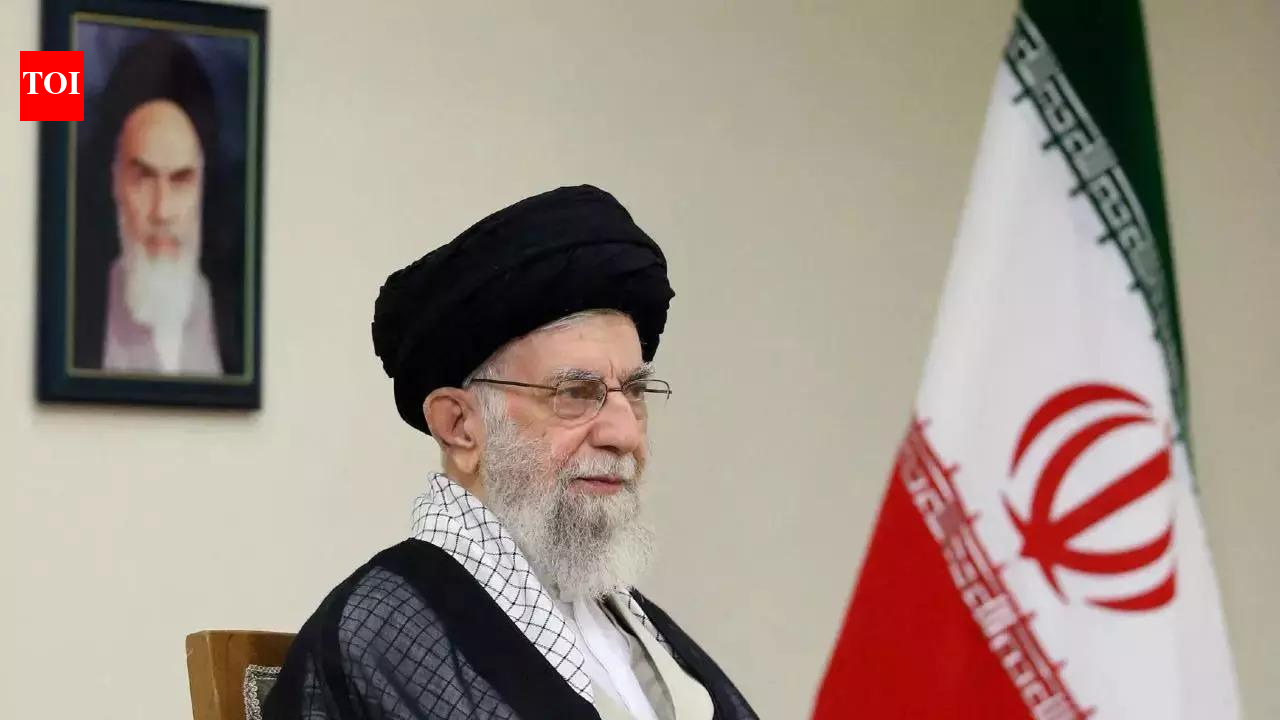
Iranian state media on Thursday said the wife of late Supreme Leader Ali Khamenei is alive, dismissing earlier reports claiming she had died in February 28 attack by the United States and Israel.News agency Reuters reported the clarification quoting Iranian media that came hours after first statement by Iran’s new supreme leader Mojtaba Khamenei.

Trump’s Big Iran Bet Goes Up In Smoke? US Intel Says Islamic Republic Standing – No Imminent Fall

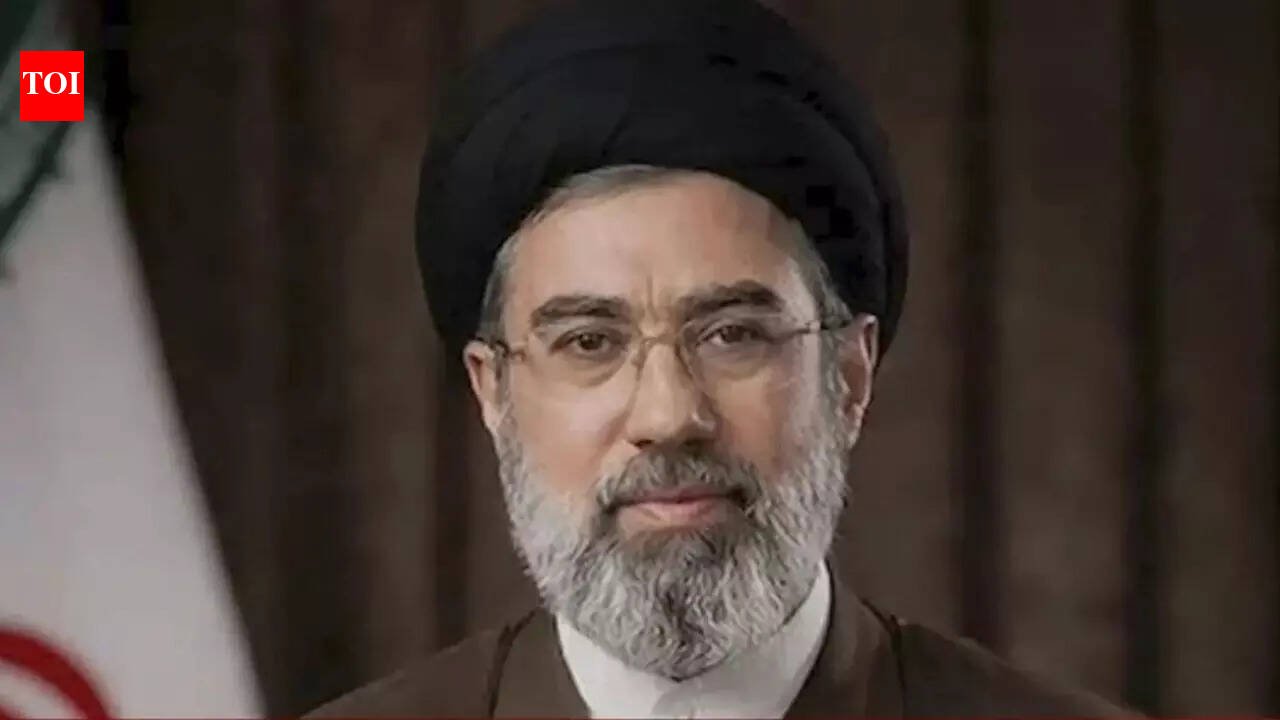
In his first public statement, Mojtaba Khamenei addressed the ongoing war and acknowledged the death of his father.Mojtaba Khamenei said he had personally seen his father’s body after the strike that killed him. “I had the honor of seeing his body after his martyrdom,” he said, describing his father as “a mountain of steadfastness.”The Iranian leader also confirmed that several members of his family were killed in the airstrike, including his wife, one of his sisters, his niece and the husband of another sister.His remarks were among the most direct confirmations from the Iranian leadership regarding the casualties from the attack that killed Ali Khamenei, a central figure in Iran’s political and religious establishment for decades.The developments come as tensions remain high following the ongoing conflict involving Iran, the United States and Israel, with both sides exchanging warnings and military strikes across the region.‘Gone in 60 seconds’Iran’s supreme leader Ali Khamenei was killed on February 28 in a rapid strike in Tehran that was the culmination of months of intelligence tracking and years of covert surveillance, according to multiple media reports.At around 9.40 am local time on Saturday, long-range missiles struck a leadership compound in the Iranian capital. The near-simultaneous strikes, carried out within roughly a minute, reportedly killed Khamenei along with several senior figures in Iran’s political and security establishment.Reports citing US and Israeli officials said the operation relied on extensive intelligence gathering involving the Central Intelligence Agency and Israeli intelligence networks.According to reports, US intelligence had tracked Khamenei’s movements for months, building a detailed “pattern-of-life” profile to understand where he stayed and how he relocated during crises. The breakthrough came when intelligence sources learned of a meeting of senior Iranian officials scheduled at a leadership compound in central Tehran, which Khamenei was expected to attend.Originally planned as a night operation, the strike timing was shifted to the morning once officials confirmed the Iranian leader would be present above ground.Israeli fighter jets reportedly took off around 6 am Israel time, carrying long-range munitions toward Tehran. The missiles then hit multiple locations in the compound almost simultaneously, catching the leadership group off guard.


Source link

‘Difficult situation’: Government briefs on LPG supply, urges citizens to avoid panic booking | India News


'Difficult situation': Government briefs on LPG supply, urges citizens to avoid panic booking

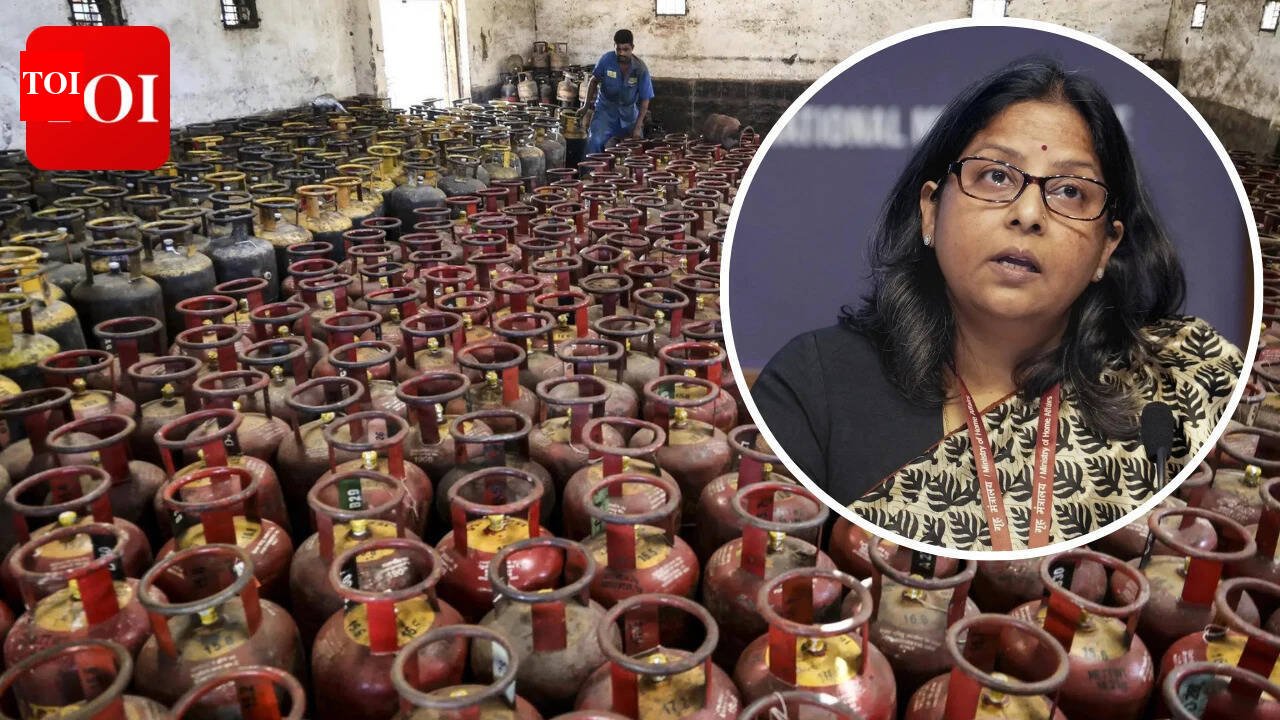
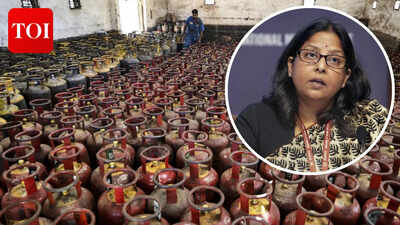
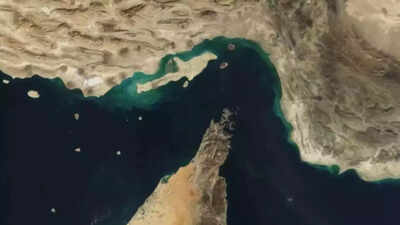
NEW DELHI: Public concern over a possible shortage of LPG and other fuels is mounting, but the Centre assures that there is no reason to panic. The closure of the Strait of Hormuz has led to disruptions in oil supply amid the ongoing US-Israel-Iran war. The government said that the citizens should avoid panic booking and conserve fuel during these uncertain times.Sujata Sharma, joint secretary at the ministry of petroleum and natural gas, during a press briefing said, “There is a manifold increase in the bookings because of the panic. We urge the citizens to avoid panic booking and all efforts have to be made to conserve the fuel wherever possible during this period of global uncertainty.” Sharma also said that the retail network across the country is functioning smoothly, with nearly 100,000 fuel outlets operating without any dry-outs. She added that around 25,000 LPG distributors are supplying roughly 50 lakh cylinders daily, ensuring uninterrupted household access.Commercial LPG supplies are being prioritised for hospitals and educational institutions, with a three-member committee of executive directors from oil marketing companies overseeing allocations to prevent hoarding or black marketing.Sharma also added that India’s refineries are working at maximum capacity to boost LPG output.“Yesterday I told you 25%. Now it is 28% of our domestic production. So that is the increase,” she said, referring to the government’s March 9 order under the Essential Commodities Act directing refineries to maximise LPG production.She noted that India, the world’s fourth-largest refiner, processes nearly 55 million barrels of oil per day, providing a significant buffer against global shocks.Despite the closure of the Strait of Hormuz — a vital shipping lane for global energy transport — Sharma said the government’s intervention has ensured continued imports through alternate routes.“So today is the 13th day of the war, and the Hormuz for the commercial shipping is closed. This is very important in the context that we do take lot of import from the Strait of Hormuz. Although after the intervention of the government, as on today, more than 70% of our import is coming through routes other than the Strait of Hormuz,” she said.To ease pressure on LPG and natural gas channels, the government has also stepped up supplies of alternative fuels.Kerosene allocations to states are being raised, and coal distribution for small and medium consumers is being scaled up. The Environment Ministry has advised state pollution boards to temporarily allow restaurants and hotels to use biomass, RDF pellets, kerosene or coal for a month.Daily coordination between oil marketing companies and state governments continues to ensure a steady supply, monitor demand patterns and enforce regulations. District-level committees have been tasked with preventing diversion, hoarding and misuse of fuel stocks.


Source link

‘Strait of Hormuz will stay closed to pressure enemies’, says Khamenei amid global fuel crisis


'Strait of Hormuz will stay closed to pressure enemies', says Khamenei amid global fuel crisis

In his first public message since taking over as Iran’s supreme leader, Mojtaba Khamenei struck a defiant tone on Thursday, making it apparent that Tehran will continue targeting US interests in the Gulf and could keep the Strait of Hormuz closed as “leverage” in the escalating conflict.The message was delivered by a news anchor on Iranian state television, with Khamenei absent from the broadcast. According to an assessment by Israel, he was wounded during the war’s opening strikes.Khamenei vowed that Iran would continue fighting to avenge those killed in the conflict, including victims of attacks on civilian sites such as schools. Tehran, he said, would “obtain compensation” from its enemy in an apparent reference to the United States. If Washington refuses, Iran will “take from its assets” or destroy them to the same extent, he warned.Key messages from Khamenei’s statement

  • Khamenei said all US military bases in the region must be closed immediately, warning they would otherwise remain targets of Iranian attacks.
  • He insisted Iran wants constructive ties with its Gulf neighbours, saying Tehran’s strikes are aimed only at US bases operating from their territory.
  • The new supreme leader described the Strait of Hormuz as a strategic pressure point, saying its closure should be used to influence Iran’s adversaries.
  • He pledged that Iran would continue fighting to avenge the blood of its martyrs, from the former supreme leader killed earlier in the war to children who died in recent attacks.
  • Khamenei praised Iran’s armed forces for preventing the country from being “dominated or divided,” and announced financial and other support for people affected by the war.
  • He also called for unity among Iranians, urging citizens to set aside differences during the crisis.

The statement came as Iran’s attacks on tanker routes and energy facilities across the Persian Gulf rattled global markets, pushing oil prices back above $100 a barrel on Thursday.The conflict began on February 28 after strikes by the United States and Israel on Iranian targets, and there are few signs that the fighting is easing.Iran’s president has said military operations will continue until Tehran receives guarantees that it will not face another assault. Meanwhile, Donald Trump has promised to “finish the job,” even while claiming that Iran has been “virtually destroyed.”


Source link

‘We are simply not ready’: US says its military cannot escort vessels in Strait of Hormuz right now


'We are simply not ready': US says its military cannot escort vessels in Strait of Hormuz right now

The United States military is not yet ready to escort commercial oil tankers through the strategically vital Strait of Hormuz, as its resources are currently focused on operations against Iran, US energy secretary Chris Wright said on Thursday.Speaking to CNBC, Wright said the US military’s immediate priority is targeting Iran’s offensive capabilities and the industries supporting them.

‘NOT A DROP OF OIL FOR YOU’: Iranian Military Draws Hormuz Red Line For U.S. & Allies

“It’ll happen relatively soon, but it can’t happen now. We’re simply not ready,” Wright said. “All of our military assets right now are focused on destroying Iran’s offensive capabilities and the manufacturing industry that supplies their offensive capabilities,” he said.

Poll

Do you think the US should escort commercial oil tankers through the Strait of Hormuz?

He added that escort operations for commercial vessels could begin “quite likely” by the end of the month.A day earlier, when a reporter asked Trump if he was encouraging the CEOs of oil companies to use the Strait of Hormuz right now, Trump said, “I think they should, I think they should.” When asked if Iran has laid any mines in the Strait of Hormuz, Trump said, “We don’t think so.”Meanwhile, the United States Central Command said earlier this week that US forces had “eliminated” 16 Iranian vessels suspected of laying naval mines near the Strait of Hormuz. The announcement came as Donald Trump warned Tehran that any mines placed in the key maritime corridor must be removed immediately.Trump had warned Iran would face military consequences if mines were deployed in the waterway, a crucial route for global energy shipments. About one-fifth of the world’s oil and liquefied natural gas normally passes through the narrow strait.In a post on Truth Social, Trump on Wednesday also said the US was using technologies previously deployed against drug trafficking networks to “permanently eliminate” any vessel attempting to mine the strait.The Pentagon confirmed that US forces had been striking Iranian mine-laying vessels and storage facilities as part of the broader conflict involving the United States, Israel and Iran.The fighting has already disrupted shipping through the Strait of Hormuz, raising concerns about global energy supplies and pushing oil prices higher.Earlier this week, General Dan Caine said the US military had begun examining options for escorting commercial ships through the strait if ordered to do so.“We’re looking at a range of options there,” Caine had told reporters at the Pentagon.However, sources told Reuters that the US navy has so far declined repeated requests from shipping companies seeking military escorts through the waterway.Confusion briefly emerged on Tuesday after Wright posted on X that the US Navy had escorted an oil tanker through the strait, before later deleting the post.The White House later clarified that the US has not yet escorted any commercial vessels through the Strait of Hormuz. White House Press Secretary Karoline Leavitt confirmed that no such escort operation had taken place so far.


Source link

$256K in, what’s next for Nepal? Competitive cricket, infra boost and a hand from India | Cricket News


$256K in, what’s next for Nepal? Competitive cricket, infra boost and a hand from India
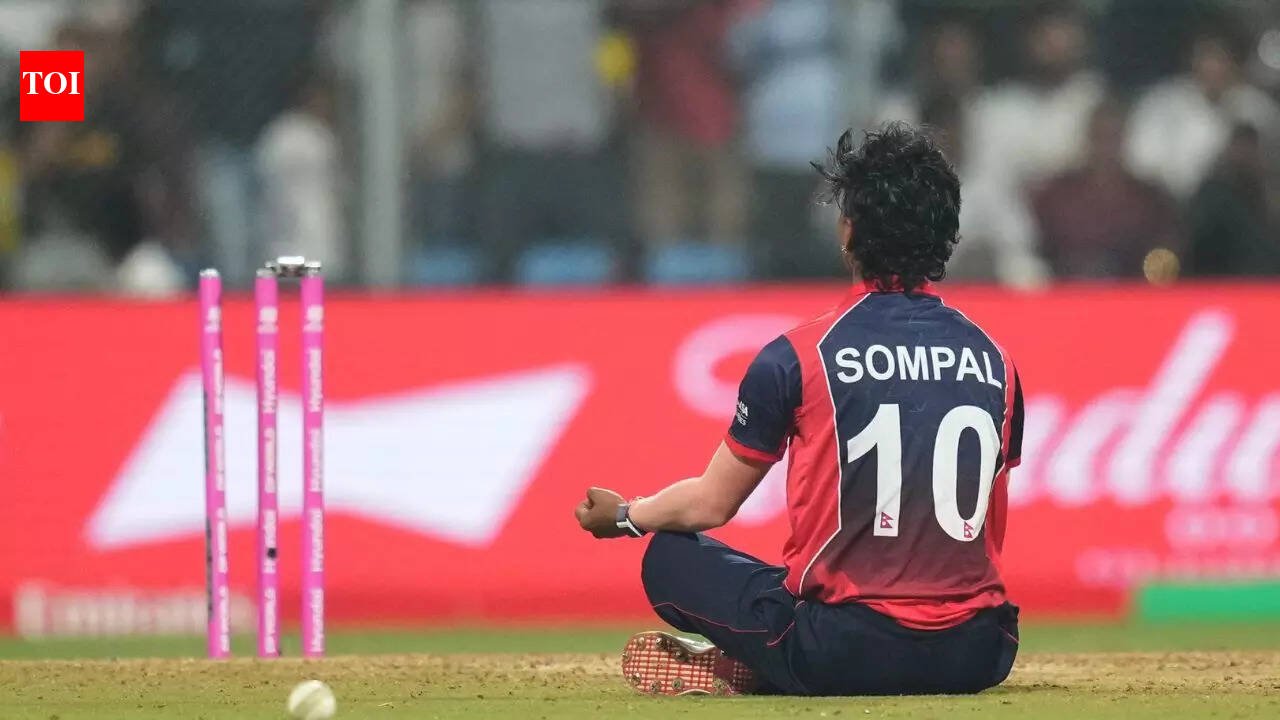
Nepal’s Sompal Kami celebrates the wicket of Scotland’s Tom Bruce during the T20 World Cup cricket match between Nepal and Scotland in Mumbai.

NEW DELHI: Rome wasn’t built in a day. It is a proverb so weathered by time it often feels like a cliché, yet for the burgeoning cricketing nation of Nepal, it remains a North Star. Writing on his blog, the American author James Clear, famous for his work, “Atomic Habits”, takes the adage further: “I think it’s better to remember the other side of this story: Rome wasn’t built in a day, but they were laying bricks every hour.For Nepal, the latest brick arrived in the form of a bank transfer. The International Cricket Council (ICC) on Wednesday announced that $256,154 would be funnelled into the accounts of the Cricket Association of Nepal from the 2026 T20 World Cup prize pool. While the sum may seem meagre to the giants of the sport, it exceeded the earnings of established associates like Namibia, Canada, and Oman.

T20 World Cup final: Fans in Ahmedabad go wild | India create history

“Actually, Rome is just the result; the bricks are the system,” Clear further notes. “The system is greater than the goal.”Nepal’s recent campaign was a study in the “Jekyll and Hyde” nature of a rising power. There was the heartbreak of a four-run loss to England on their opening matchday, two back-to-back humblings against Italy and West Indies, and an eye-catching seven-wicket victory over Scotland.
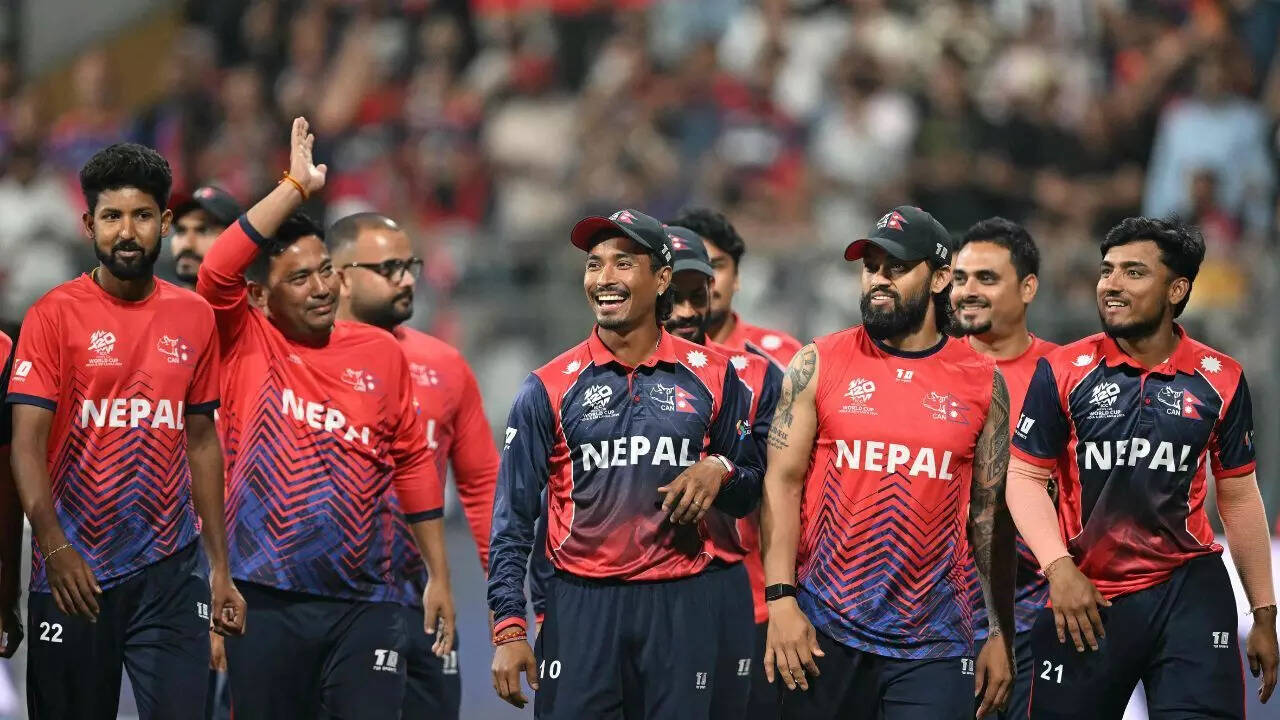
Nepal Cricket

Nepal’s players greet supporters after their victory in the 2026 ICC Men’s T20 Cricket World Cup group stage match against Scotland at the Wankhede Stadium in Mumbai on February 17, 2026. (Photo by Punit PARANJPE / AFP)

But as the dust settles on their third World Cup appearance, a question still lingers in the air. How does a nation fueled by the world’s most passionate fans turn “almost” into “always”?

The Jekyll and Hyde of the global stage

To understand Nepal’s performance, one must look past the scorecard. For Umesh Patwal, the former head coach of Nepal, the tournament was about making a statement that transcends participation.

If we can get people like Kushal Bhurtel, Dipendra Airee, or Rohit Paudel to start finishing games, that gap will close. They do not have enough match-winners at the higher level yet.

Umesh Patwal | Former Nepal coach

“I always feel that to make a statement, you have to win a match,” Patwal tells TimesofIndia.com during an exclusive conversation. “People only follow the champions. They finished very well in the last game on a very high note, which is a great thing.”However, the “hurdle” remains the final inch. Nepal came within the barest of margins of upsetting South Africa in their 2024 campaign and pushed England to the brink this time.According to Patwal, the missing ingredient isn’t talent, but the clarity of roles in high-pressure moments.“Sometimes it’s just about knowing who needs to take that extra effort to finish the game,” Patwal explains. “They are not sure who is supposed to be the match-winner. Once they start believing, like Sandeep [Lamichhane] is supposed to be the main bowler, and then the batting must follow. If we can get people like Kushal Bhurtel, Dipendra Airee, or Rohit Paudel to start finishing games, that gap will close. They don’t have enough match-winners at the higher level yet.

nepal cricket

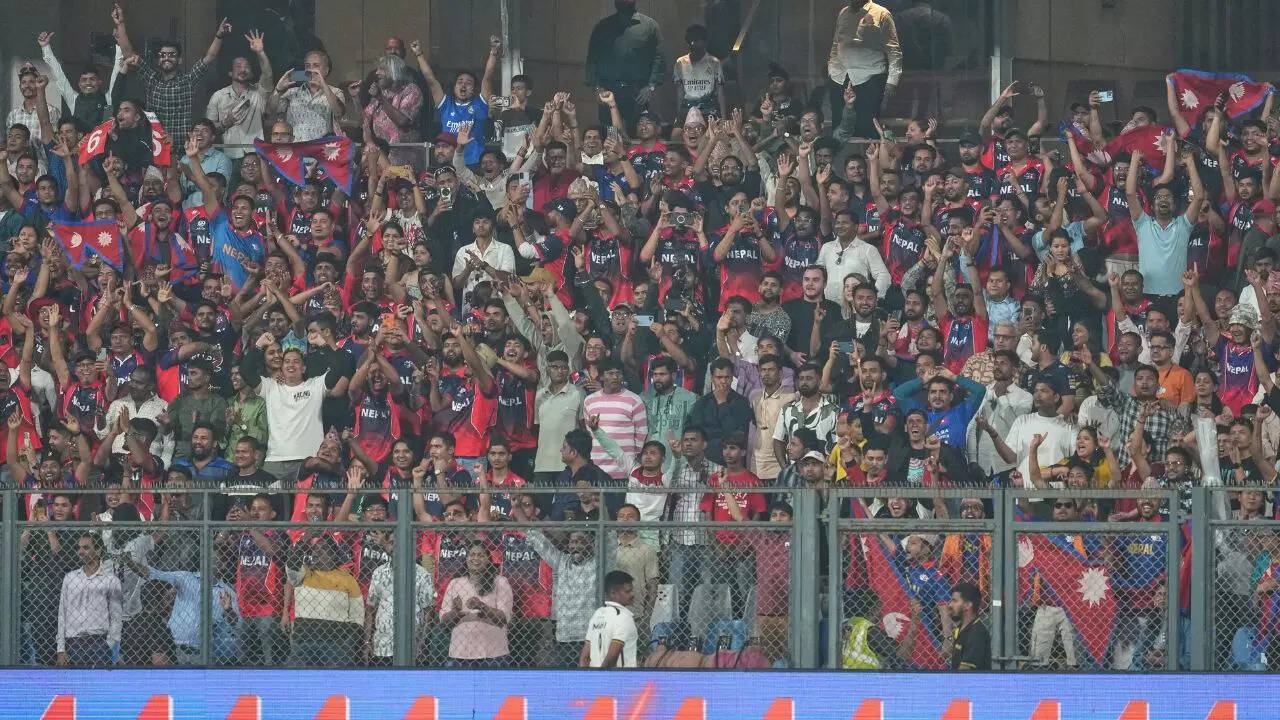
Nepalese cricket fan cheer after their team won against Scotland during the T20 World Cup cricket match in Mumbai, India, Tuesday, Feb. 17, 2026.(AP Photo/Rafiq Maqbool)

Gyanendra Malla, the former captain and a titan of Nepali cricket, shares this bittersweet sentiment.“I was expecting a bit more, actually,” Malla admits. “After the first match, expectations were very high. We couldn’t show our 100% potential in the middle games, but the way we played the first and last match, that is the brand of cricket we want to show the world.”Meanwhile, Nepal’s captain Rohit Paudel was, on the one hand, disappointed but he called it a good exposure for his team. “I think good exposure, good experience playing in this World Cup. We wanted to qualify for the second half, but unfortunately we could not do that. So hopefully next time,” he told reporters after Nepal’s historic win against Scotland. He added: “It took us 12 years to win a World Cup game. I’ll place it higher.”

We need a longer season. The school cricket and domestic base should be a seasoned culture, not just a 15-day tournament. We need to work on multi-day formats. That is how you build game awareness.

Gyanendra Malla | Former Nepal captain

The Nepalese structure: From Districts to Departments

If the “system is greater than the goal”, Nepal’s system is a unique, tiered architecture that relies heavily on institutional support. Nepal’s talent pipeline is filtered through provinces and government “departments”.The journey begins at the sub-district level, where local teams compete in regional tournaments. From this grassroots pool, the promising talents are selected for their district teams. These district teams then face off within their respective Provinces. The standout performers from these intra-province clashes are eventually directed into a selection pool, from which the final provincial teams are formed to compete in the Prime Minister (PM) Cup.The PM Cup is the undisputed crucible of Nepali cricket. It is a ten-team national league featuring seven provincial sides and three “departmental” giants: the Army, the Police, and the Armed Police Force (APF).
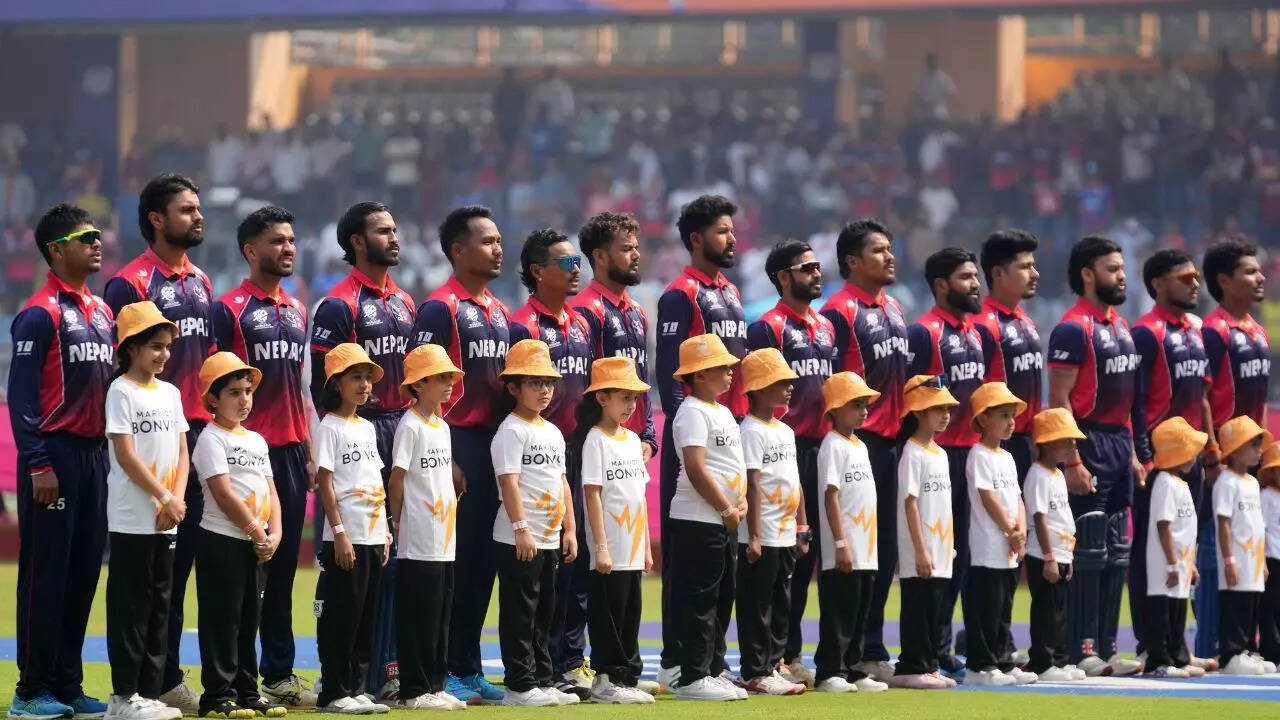
Nepal Cricket Team

Nepal players stand up for the national anthems before the start of the match during the T20 World Cup cricket match between Nepal and West Indies in Mumbai, India, Sunday, Feb. 15, 2026. (AP Photo/Rafiq Maqbool)

These departments act as the unofficial guardians of the sport, providing salaries and stability to players who might otherwise be forced to seek labour abroad.Those who emerge from the PM Cup are summoned to national training camps, where raw talent is honed, and the final squad for the national team is distilled.Nevertheless, the current structure is too short. “We need a longer season,” Malla insists. “The school cricket and domestic base should be a seasoned culture, not just a 15-day tournament. We need to work on multi-day formats. That is how you build game awareness.”

Most of the players are actually working as police or army, but not full-time. For the top tier, they earn enough to look after their families. But for the district players, they are actually putting their own money in. They are investing in themselves.

Gyanendra Malla | Former Nepal captain

The money gap: passion vs profession

In Nepal, cricket is a religion and its priests are often underpaid. While the top 15 to 20 players under central contract earn a “good enough” living by local standards, the story for the rest of the pyramid is one of sacrifice.“Most of the players are actually working as police or army, but not full-time,” Malla says. “For the top tier, they earn enough to look after their families. But for the district players, they are actually putting their own money in. They are investing in themselves.”

Rohit Paudel

Nepal’s captain Rohit Paudel plays a shot during the 2026 ICC Men’s T20 Cricket World Cup group stage match between Nepal and Italy at the Wankhede Stadium in Mumbai on February 12, 2026. (Photo by Punit PARANJPE / AFP)

This financial precarity often forces players to seek revenue elsewhere, leading to friction with management over “distractions” like social media.During the World Cup, head coach Stuart Law directed players to reduce their focus on social media. Patwal, however, views this as a survival mechanism.“Social media is a part of these guys because they don’t make any money,” Patwal says bluntly. “When I was there for two years, we didn’t get a single penny paid as a salary. In a country like Nepal, the only way for these guys to be seen as heroes and get across is through the media. I’m happy for them if they are making some money through it.”

The “champion mindset” Nepal is lacking

What is the next brick? For Patwal, it’s not just about playing more matches; it’s about changing the “environment”. He argues that playing against big teams is useless if you don’t understand how they think.“I don’t think just playing international matches helps. How long have New Zealand or South Africa been playing? Have they won the World Cup?” Patwal asks. “We have this poor mentality where we think playing makes you a cricketer. You have to be in the culture. My advice is that at least six of these players should be exposed to the IPL or the Big Bash.”

If someone like Sanju Samson needs that help, you can understand the struggle for these Nepalese players. They do not have those local heroes to model themselves after, the match-winners who have actually been there and done it.

Umesh Patwal | Former Nepal coach

Patwal believes that even if players like Rohit Paudel or Dipendra Airee don’t make the starting XI in the IPL, “just being with the team, seeing the training part, the eating habits, the sleeping habits, that is a big churn out.”“Even Sanju Samson (Player of the Tournament in T20 World Cup 2026) credited Sachin Tendulkar for his performances,” Patwal adds.“If someone like Samson needs that help, you can understand the struggle for these Nepalese players. They don’t have those local heroes to model themselves after, the match-winners who have actually been there and done it.”Malla echoes the sentiments of Patwal and believes Nepal’s geography is its greatest untapped resource.
Nepal Scotland T20 WCup Cricket

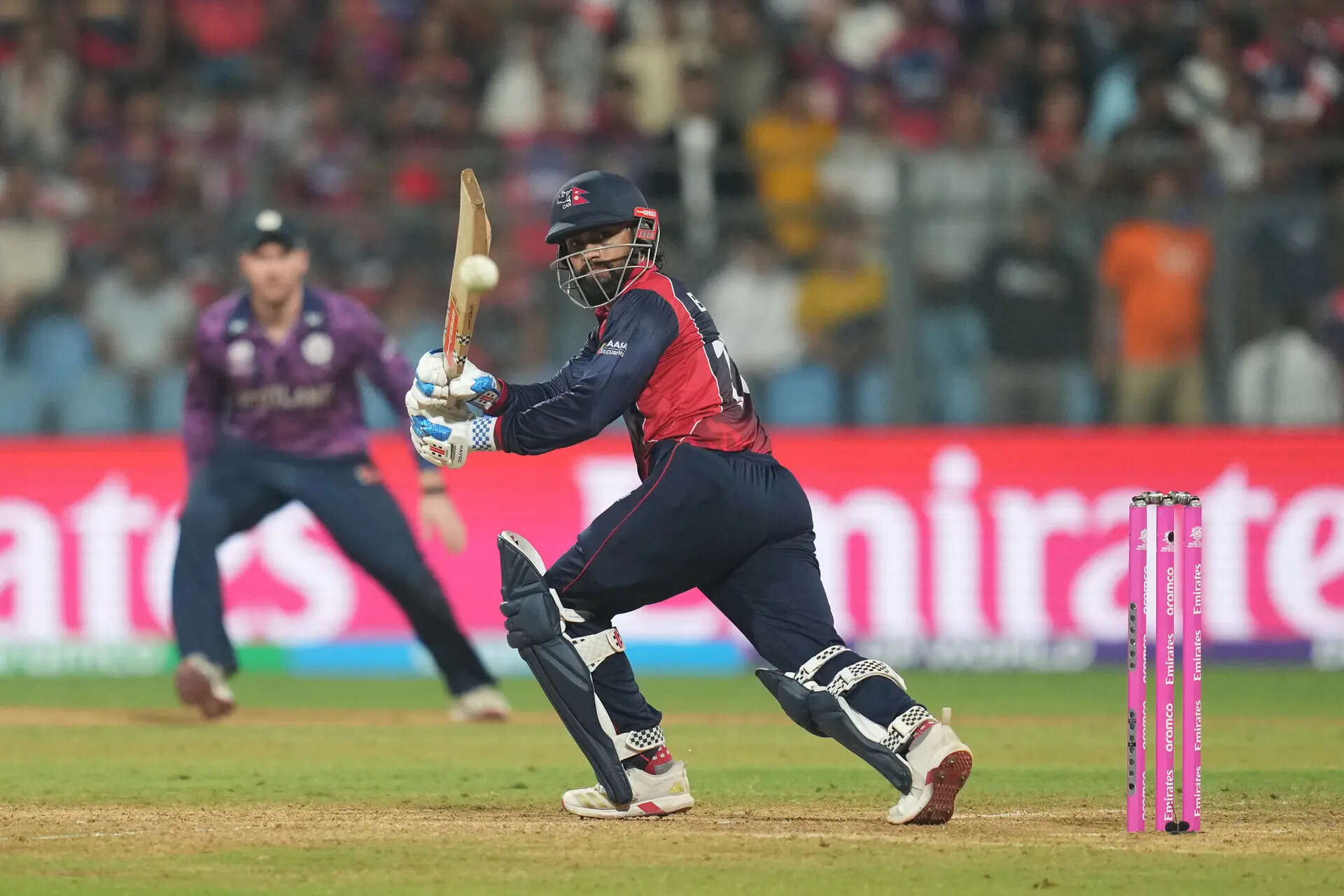
Nepal’s Kushal Bhurtel plays a shot during the T20 World Cup cricket match between Nepal and Scotland in Mumbai, India, Tuesday, Feb. 17, 2026.(AP Photo/Rafiq Maqbool)

“We are blessed to have four Test-nation neighbours, but we are not using that as a strength,” Malla says. “Playing regularly against India’s ‘A’ or ‘B’ sides, or even Ranji Trophy teams, would help our boys learn the thinking pattern of the big guys. We need help from the BCCI to grow as a nation and eventually become a Test nation ourselves.”

A new identity unfolding

For decades, Nepal’s global identity was tied strictly to its geography, the soaring peaks of the Himalayas and the bravery of the Gurkhas. Today, that identity is shifting.

They have the skill. They were the best runners between wickets, the best fielding side. They just need to sit among champions. Once they do, the finishing will come.

Umesh Patwal | Former Nepal coach

“Before this, Nepal was renowned only for mountains,” Malla says with a smile. “Now, the new identity is cricket. It is uniting all the people, even through our sorrows. It’s the next big thing for our country.”

Poll

What do you think is the biggest challenge for Nepal’s cricketing success?

The bricks are being laid, hour by hour.The prize money from the ICC will likely go toward the “bricks” of better nets and local travel, but the “Rome” of Nepal cricket, a Test-playing nation with a world-beating finish, requires something more.“They have the skill,” Patwal concludes. “They were the best runners between wickets, the best fielding side. They just need to sit among champions. Once they do, the finishing will come.”

Source link

‘Jaishankar spoke to Iran FM 3 times’: India flags ships safety, energy security concerns | India News


'Jaishankar spoke to Iran FM 3 times': India flags ships safety, energy security concerns

NEW DELHI: External affairs minister S Jaishankar has held three rounds of talks with his Iranian counterpart in recent days amid rising tensions in Middle East Asia, with discussions focusing on the safety of maritime shipping and India’s energy security.Addressing the weekly media briefing, Ministry of External Affairs (MEA) spokesperson Randhir Jaiswal sai, “External affairs minister Dr S Jaishankar and the foreign minister of Iran have had three conversations in the recent days. The last one discussed issues pertaining to the safety of shipping and India’s energy security. Beyond that, it would be premature for me to say anything,” Jaiswal said.However, the MEA declined to elaborate on the details of the conversations, indicating that the situation remains sensitive and fluid.The remarks come at a time when tensions in the Persian Gulf have heightened and concerns have grown over the safety of commercial shipping routes, particularly around the Strait of Hormuz — a critical passage for global oil trade and a major route for India’s energy imports.Meanwhile, Iran has allowed Indian-flagged vessels to pass safely through the Strait of Hormuz, even as maritime traffic through the strategic waterway has slowed sharply following the US-Israel strikes on Iran, according to a report in The Economic Times.India has been closely monitoring the evolving situation in the region, especially after recent incidents involving commercial vessels and disruptions linked to the ongoing conflict in the Middle East.


Source link

Iran Missile Strikes: Is Iran using China’s BeiDou system to launch ‘accurate’ missile strikes?


Is Iran using China's BeiDou system to launch 'accurate' missile strikes?

The ongoing conflict in West Asia has raised new questions about the technology behind Iran’s missile strikes. Intelligence analysts now believe Tehran may be using China’s satellite navigation network to guide some of its weapons with greater precision.An Al Jazeera suggests that Iran’s targeting accuracy has improved noticeably during the latest round of fighting with Israel and the United States. That has led to speculation that Iran could be relying on the BeiDou Navigation Satellite System, China’s global satellite positioning network designed to rival the US-run Global Positioning System.

China Warns Iran War ‘Flames Spreading’ As Beijing Pushes Ceasefire Before Xi–Trump Summit

China’s rival to GPS

The BeiDou Navigation Satellite System is China’s independently developed satellite navigation network that provides positioning, navigation and timing services worldwide. The system was officially completed in 2020 and launched as a global service during a ceremony overseen by Chinese President Xi Jinping in Beijing.China began developing its own satellite navigation capability in the late 1990s after the Third Taiwan Strait Crisis raised concerns that Washington could restrict access to GPS during geopolitical tensions. Beijing’s goal was to create a system that could operate independently of US-controlled infrastructure.

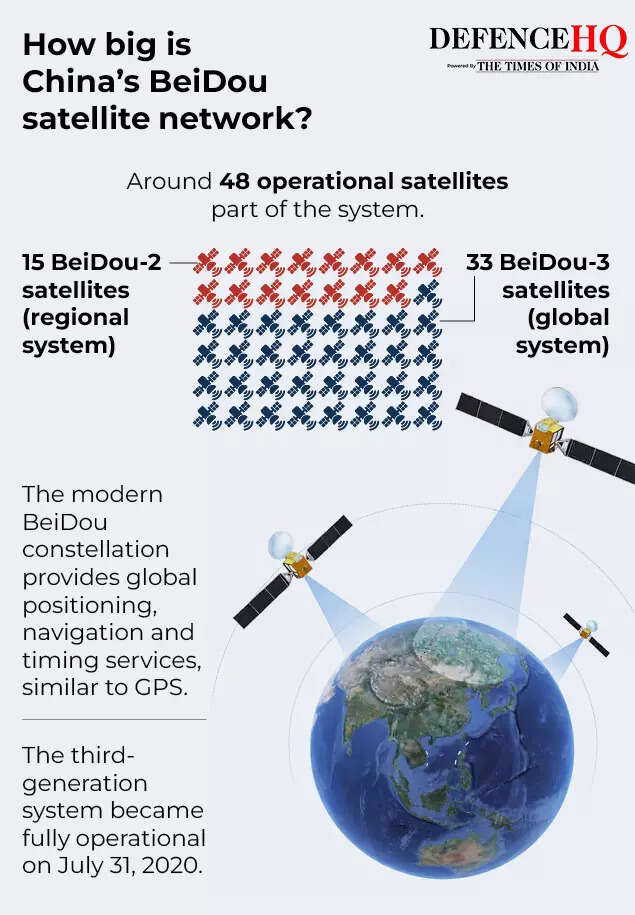
How big is China's BeiDou satellite network

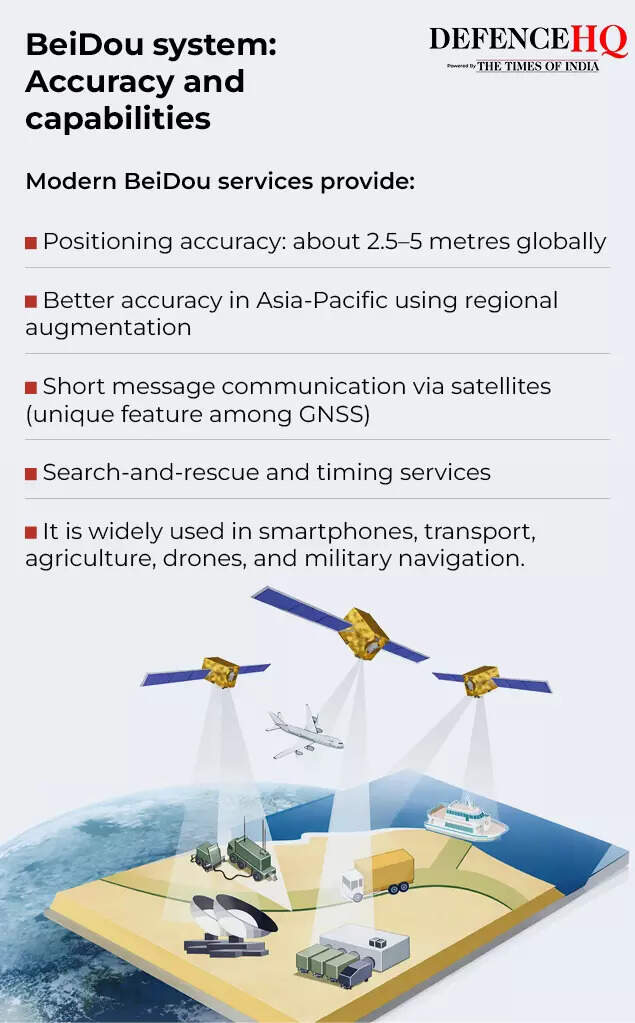
BeiDou was built in three stages. The first generation provided limited services within China by 2000. A second phase expanded coverage across the Asia-Pacific region by 2012. The current third generation—known as BDS-3—now provides global coverage.Like other navigation systems, BeiDou calculates a user’s location by transmitting signals from satellites to receivers on Earth. By measuring the time it takes signals from several satellites to arrive, the receiver can determine its exact geographic position.The system’s architecture includes three components: a space segment made up of satellites in different Earth orbits, a ground segment consisting of control and monitoring stations, and a user segment that includes receivers, chips, antennas and navigation services.China says the network supports a wide range of civilian activities including transportation, agriculture, disaster relief and telecommunications. At the same time, like GPS and other navigation systems, it can also support military applications such as missile guidance.

Why analysts think Iran may be using it

Some analysts believe Iran has been gradually integrating BeiDou into its military systems for years. Researcher Theo Nencini has said Iran reportedly signed an agreement in 2015 to integrate an earlier version of the system into its infrastructure.The process appears to have accelerated after the 2021 strategic partnership agreement between China and Iran. According to experts cited by Al Jazeera, the Iranian military began incorporating BeiDou signals into missile and drone guidance systems as well as secure communications networks.

BeiDou system

Iran’s Ministry of Information and Communications Technology has said the country uses “all existing capacities in the world” rather than relying on a single navigation source. Analysts therefore believe Tehran may combine multiple systems, including GPS, Russia’s GLONASS and Europe’s Galileo (satellite navigation system).However, the latest conflict appears to have accelerated the shift. During the brief but intense war with Israel last year, GPS signals in parts of the region were reportedly disrupted. That experience may have pushed Iran to rely more heavily on alternative systems.

How satellite navigation improves missile accuracy

Missiles typically rely on inertial navigation systems, which track motion using internal sensors such as gyroscopes and accelerometers. While reliable, these systems gradually accumulate errors over long distances.Satellite navigation helps correct those errors.By combining inertial navigation with satellite signals, a missile can constantly update its position and refine its trajectory. This dramatically improves targeting precision.Analysts say BeiDou could also help Iranian weapons overcome electronic warfare measures. Western forces often attempt to jam or spoof GPS signals by broadcasting false coordinates. Advanced signals from BeiDou are designed to resist such interference through encrypted transmissions and authentication systems.

A wider shift in modern warfare

If Iran is indeed using BeiDou for military guidance, experts say it could signal a broader shift in the balance of technological power.For decades, the United States’ GPS network dominated global navigation and precision-strike capabilities. But the expansion of alternative systems—China’s BeiDou, Russia’s GLONASS and Europe’s Galileo—means countries now have multiple navigation sources.Analysts say access to these systems reduces reliance on US technology and makes it harder for adversaries to disable navigation signals during conflicts.The ongoing war in West Asia has already seen Iranian missiles and drones targeting Israeli and US-linked sites across the region. As long-range weapons become more accurate and resistant to electronic interference, satellite navigation systems such as BeiDou are likely to play an increasingly important role in future conflicts.


Source link

Liberia-flagged tanker ‘Shenlong’ carrying Saudi crude enters India via Strait of Hormuz | India News


Liberia-flagged tanker ‘Shenlong’ carrying Saudi crude enters India via Strait of Hormuz

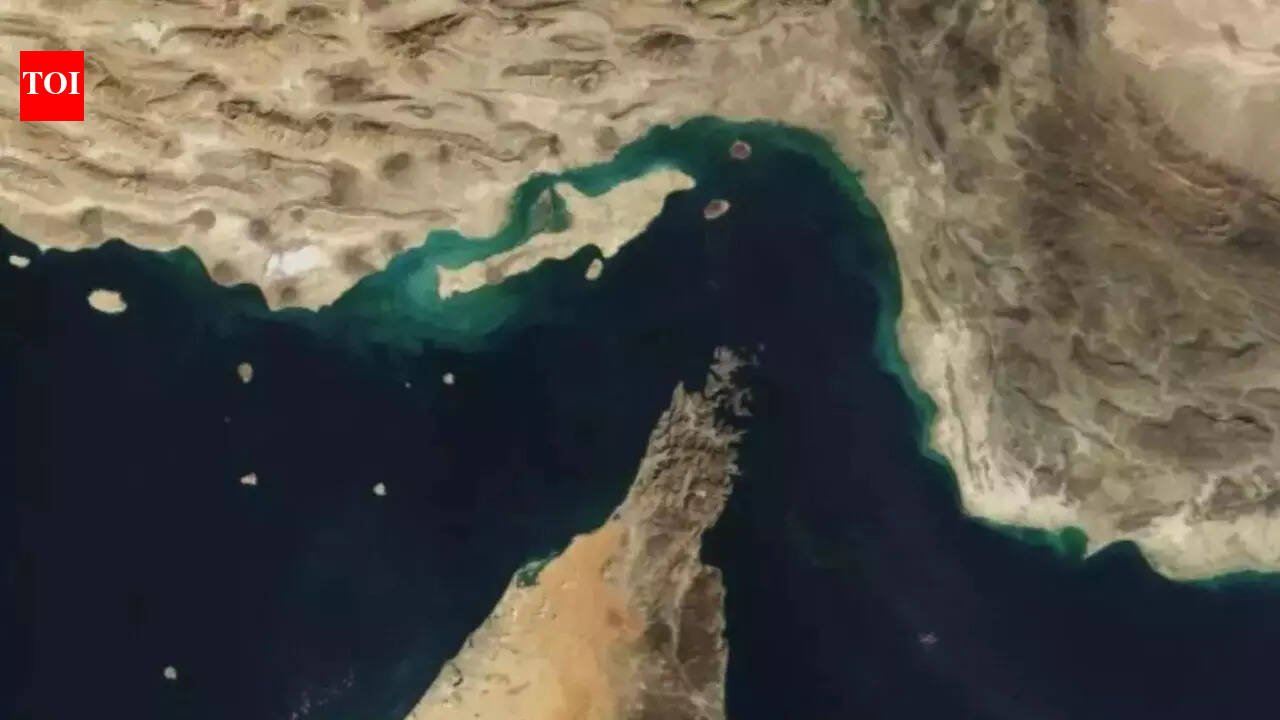
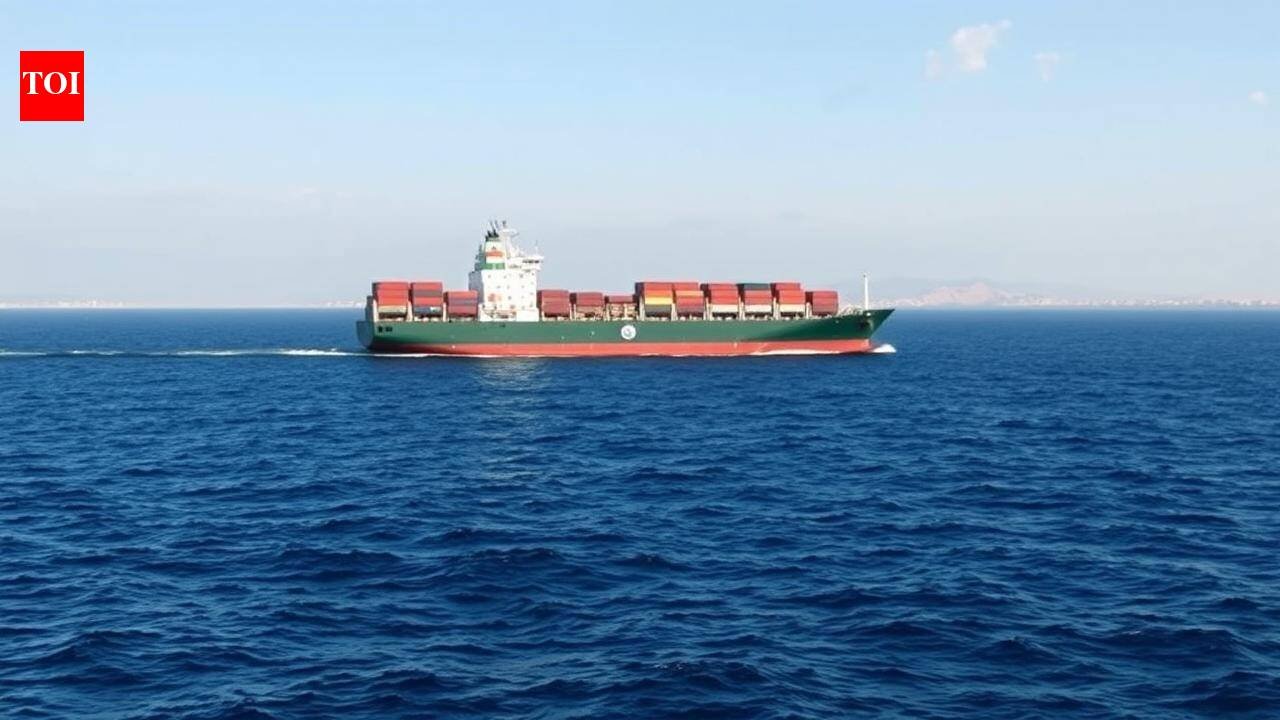
NEW DELHI: A crude oil tanker that passed through the Strait of Hormuz has arrived at Mumbai Port, becoming one of the first vessels to reach India via the critical route amid escalating tensions in the Middle East. According to the Mumbai Port Trust, the Liberia-flagged tanker Shenlong Suezmax, captained by an Indian national and carrying crude oil loaded at Ras Tanura, Saudi Arabia reached Mumbai on Wednesday, reported ANI.Authorities said Iran had cleared the vessel to transit the strategic waterway, where shipping activity has sharply declined following the conflict involving the United States, Israel and Iran. Sources said Iranian authorities have decided to allow Indian-flagged ships to move safely through the strait even as maritime traffic in the region has slowed significantly since the US and Israel carried out strikes on Iran. The Shenlong Suezmax, which departed Ras Tanura on March 1, completed its journey to Mumbai after receiving permission to pass through the narrow shipping corridor.Iran has tightened control over shipping in the strait in recent days. Alireza Tangsiri, commander of the naval arm of the Islamic Revolutionary Guard Corps, said vessels seeking to sail through the waterway must obtain Tehran’s approval. In a post on X, he said two ships that ignored Iran’s warnings were targeted on Wednesday.“Were the ships assured of safe passage through the Strait of Hormuz? This should be asked of the crews of the vessels Express Rome and Mayuree Naree, who today, trusting in empty promises, ignored the warnings and intended to cross the Strait, but were caught. Any vessel intending to pass must obtain permission from Iran,” the Iranian general said.Iranian state media has reported that Tehran has intensified restrictions on shipping through the strait, while stating that vessels not serving the interests of the United States or Israel would be allowed safe passage. The Strait of Hormuz is one of the world’s most critical maritime chokepoints, with more than 20 million barrels of crude oil moving through the narrow channel between Iran and Oman every day, about a fifth of global oil consumption and nearly a quarter of seaborne oil trade.Meanwhile, the ministry of ports, shipping and waterways said that 28 Indian-flagged vessels are currently operating in the Persian Gulf. Of these, 24 vessels carrying 677 Indian seafarers are located west of the Strait of Hormuz, while four vessels with 101 Indian crew members are positioned east of the strait. The ministry said a 24-hour control room has been operating since February 28 at the ministry and the Directorate General of Shipping to monitor the evolving situation and coordinate assistance if required. Authorities are also working with Indian embassies, ship managers and recruitment agencies to ensure the safety of Indian seafarers in the region.


Source link