Breaking News
SGB returns: RBI confirms final payout for 2017 gold bond series; long-term holders gain over 340%


SGB returns: RBI confirms final payout for 2017 gold bond series; long-term holders gain over 340%

A Sovereign Gold Bond (SGB) bought eight years ago has turned a Rs 1 lakh investment into more than Rs 4.4 lakh, after the Reserve Bank of India announced the final redemption price for the 2017-18 Series-X tranche. The RBI said in its statement dated 3 December 2025 that this series will mature on Thursday, marking exactly eight years from its issue date.This particular tranche had remained open for subscription between 27 and 29 November 2017, with settlement taking place on 4 December that year. The central bank reiterated that, under the Government of India’s notification dated 6 October 2017, these bonds are repayable after eight years, making 4 December 2025 the official redemption date.The RBI has fixed the final payout at Rs 12,820 per unit, a figure calculated using the simple average of the closing prices of 999-purity gold for the three business days immediately before redemption. The India Bullion and Jewellers Association (IBJA) recorded gold prices at Rs 12,821 per gram on 1 December, Rs 12,759 on 2 December, and Rs 12,880 on 3 December 2025, producing an average of Rs 12,820.When the bonds were originally issued, the ministry of finance had priced them at Rs 2,961 per gram, with an online discounted rate of Rs 2,911. Based on this, the absolute return—without including interest—comes to Rs 9,909 per unit (Rs 12,820 minus Rs 2,911). In percentage terms, this works out to roughly 340.3%, delivering a substantial gain for long-term investors.Alongside capital appreciation, SGB holders have also earned a 2.5% annual interest, paid by the government. The scheme, managed by the RBI, is designed as a digital or paper-based alternative to holding physical gold, removing concerns around purity and storage while offering the added benefit of interest income. Investors can also redeem their bonds early after five years, but only on interest payment dates. The bonds remain tradable, can be transferred, and may be used as collateral for loans.The RBI has clarified that investors will receive a maturity intimation one month before the payout date. On maturity day, the redemption amount will be credited directly to the bank account registered in the investor’s records. As per ET, anyone who has changed their bank details, email address or other contact information must inform their bank, SHCIL or post office in advance to avoid delays.


Source link

Karnataka plans wider rollout of telescope scheme to govt schools | India News


Karnataka plans wider rollout of telescope scheme to govt schools

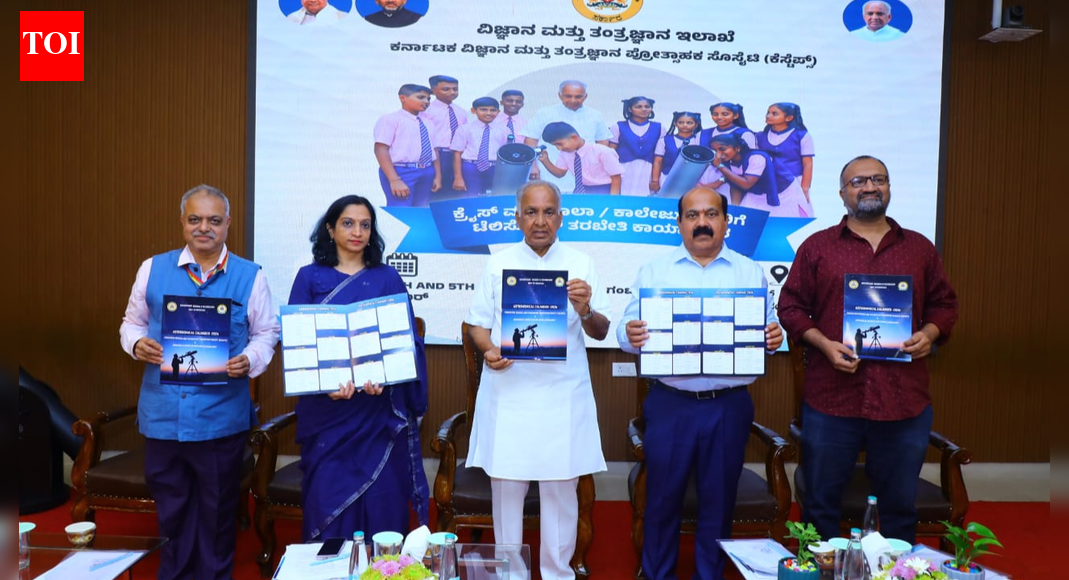
BENGALURU: Karnataka is preparing to expand its Telescope Distribution Scheme beyond Karnataka Residential Educational Institutions Society (KRIES) schools to a larger group of govt institutions, science and technology minister NS Boseraju said Thursday. A proposal seeking more funds will be placed before the chief minister during the next budget meeting.Boseraju was speaking at the Jawaharlal Nehru Planetarium, where he inaugurated a training programme for KRIES teachers on operating and maintaining the telescopes supplied to their schools. The effort is part of a broader push to strengthen astronomy-based learning across the State.Under the scheme, 833 residential schools and PU colleges under KRIES have each received a telescope at a total cost of Rs 3 crore. Boseraju said no other government department in the country had taken up a project of this scale. He added that the department hopes to extend telescope distribution to more schools in the coming year.

Google To Invest $15 Billion On AI Hub In Visakhapatnam, CEO Sundar Pichai Speaks To PM Modi

He stressed the need to foster scientific temper and rational thinking among students. Strengthening science education, he said, is essential in an era driven by knowledge and innovation.Training is a key part of the programme. The minister said the govt’s intention was not to distribute the instruments and step away, but to ensure teachers are equipped to use them in classrooms. The hands-on workshop aims to help teachers integrate regular sky observations into school activities, encouraging students to explore astronomy.The department’s 2026 astronomical calendar was also released at the event. The calendar lists monthly celestial events and is meant to support teachers in using the telescopes more effectively. Senior officials from the department and the planetarium joined around 90 KRIES teachers at the event.


Source link

Putin India Visit: PM Modi welcomes Russian President in Delhi, shares car ride after warm reception – key points | India News


Putin India Visit: PM Modi welcomes Russian President in Delhi, shares car ride after warm reception - key points

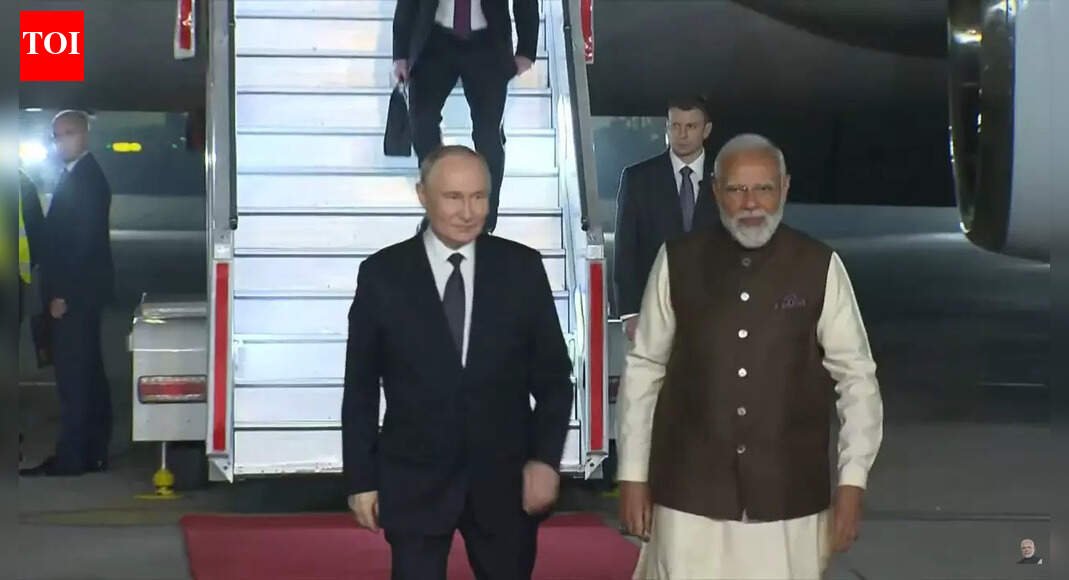
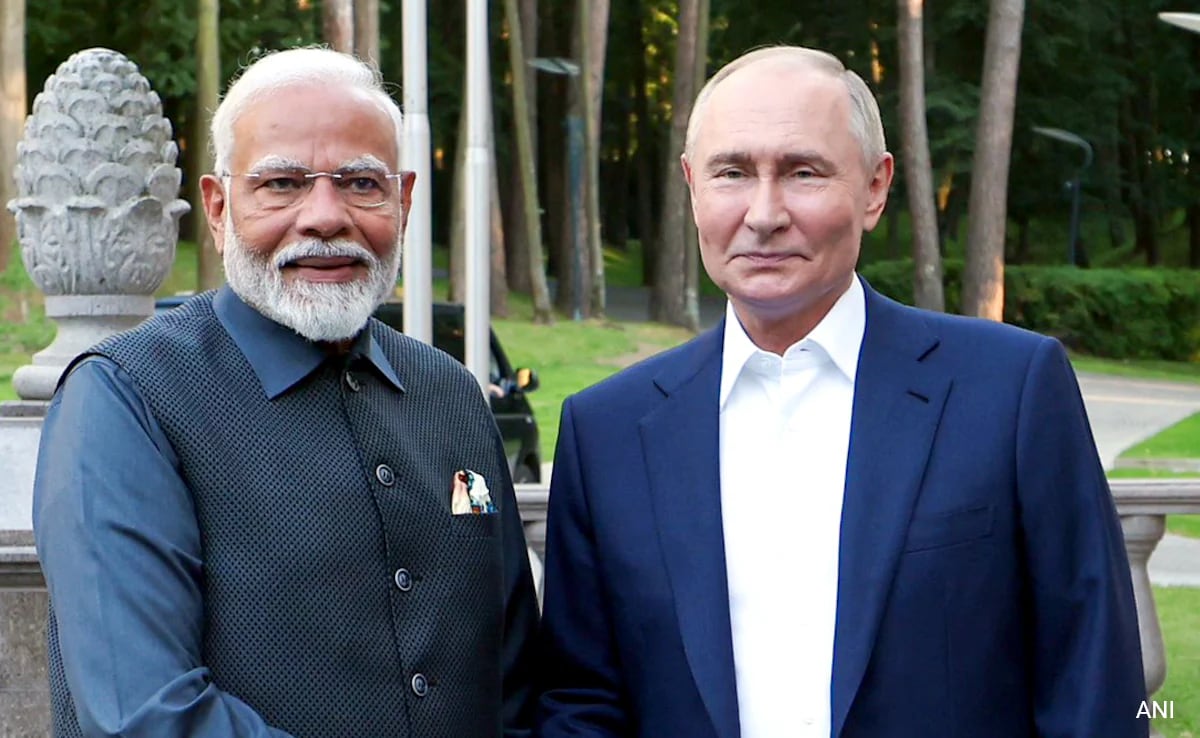
NEW DELHI: Prime Minister Narendra Modi on Thursday personally received Russian President Vladimir Putin at Delhi’s Palam Airport, marking the start of his two-day state visit to India. PMModi greeted Putin with a handshake and warm embrace, before both leaders left the airport together in the same vehicle.

Putin Visit To Boost India-Russia Trade To New Highs, Says WTC Chairman

Putin’s arrival was met with a security grid comprising the Delhi Police, Special Protection Group (SPG), and Russian security officials. Flex boards and Russian flags lined the airport route, and advanced surveillance systems were activated across key areas of the capital.The two leaders will co-chair the 23rd India–Russia Annual Summit, where more than 10 inter-governmental agreements and over 15 commercial MoUs are expected to be signed. Key focus areas discussed by officials include trade expansion, healthcare, fertilisers, shipping, agriculture, connectivity and workforce mobility.

India And Russia Boost Military Ties As Rajnath Singh Highlights Strategic Tech Partnership

Defence and trade ties in focus amid global uncertainty

Ahead of Putin’s arrival, defence minister Rajnath Singh underlined that despite global instability, India–Russia cooperation “is moving at a healthy pace.” He welcomed progress toward a Free Trade Agreement with the Eurasian Economic Union and highlighted consistent military exchanges between the two sides.Russian defence minister Andrei Belousov echoed the sentiment, describing relations with India as a “time-proven friendship” based on mutual respect and cultural affinity.During the visit, Putin will attend a state banquet hosted by President Droupadi Murmu and is also expected to launch the Indian edition of Russian broadcaster RT.

Private dinner diplomacy with PM Modi

Putin’s first engagement in India is a private dinner with PM Modi. The meeting is expected to cover the full spectrum of the “special and privileged strategic partnership,” ranging from defence and energy security to trade and cooperation in emerging sectors. Discussions will also include global geopolitical issues, Eurasian developments and the Indo-Pacific.The dinner sets the stage for Friday’s structured summit talks.

Day Two: Rajghat tribute, ceremonial welcome and business engagements

Putin begins his Friday schedule with a visit to Rajghat to pay homage to Mahatma Gandhi — a tradition for visiting heads of state. He will then receive a ceremonial welcome at Rashtrapati Bhavan, followed by formal summit discussions with PM Modi at Hyderabad House.After a working lunch, Putin will address the India–Russia Business Forum aimed at boosting private sector partnerships and investments. The evening will conclude with a state banquet hosted by President Murmu, after which Putin is expected to depart around 9.30 pm.

Big-ticket agreements and 2030 trade roadmap

A joint statement is expected, along with agreements across multiple sectors. Among the key outcomes is the Programme for the Development of Strategic Areas of Russian-Indian Economic Cooperation until 2030, seen as a roadmap to enhance long-term industrial and trade cooperation.Putin’s aide Yuri Ushakov confirmed that bilateral trade reached $63.6 billion in 2024, a 12% rise driven by energy, fertilisers and machinery. He also listed priority areas for collaboration: industrial partnerships, innovative technologies, peaceful space exploration, transport, mining, healthcare and labour mobility.Putin will also attend the launch of Russian media channel RT’s India operations — a signal of Moscow’s growing soft power outreach.

India–Russia ties continue to adapt

Modi and Putin have spoken by phone five times in 2024 and last met in person at the SCO Summit in Tianjin. Despite shifting global alignments and the ongoing Russia–Ukraine conflict, the India–Russia partnership continues to diversify, balancing legacy defence ties with new cooperation in technology, energy transition, education and workforce mobility.


Source link

‘After China, it’s India’s turn to take concentrated action against pollution’ | Mumbai News


Mumbai is in the headlines for its worsening air. But “publicity for the wrong reasons can be a motivator,” says Douglas Worsnop, noting that bad press over Beijing’s smog before the 2008 Olympics pushed China to clean up its air. Worsnop—a leading atmospheric chemist who helped develop key instruments to study pollution particles—has also worked on China’s clean air efforts. In Mumbai for the 14th Asian Aerosol Conference, the University of Helsinki professor spoke to Vaishnavi Chandrashekhar about lessons for India.Q: Tell us about the air pollution experience in China.A: I’ve been visiting China for 20 years, and I watched things get worse and then things get better. The govt there actually talks to scientists, more directly and more formally than anywhere else I’ve seen. That doesn’t mean the govt does exactly what the scientists say, but over time, they listen. And the govt in China, specifically, has the authority and the discipline to make things happen on a timescale of years. The air is still not fully clean there. There’s still work to do. But for five years or more, they made it a top priority, and things happened. And it’s still a high priority. China also took advantage of what had been learned in the US and Europe. In 1970, the US introduced the Clean Air Act, and it worked but it took us 40 years. The Europeans were roughly a decade behind us and now have caught up. The Chinese made the air dirty five times faster than we did, but they are cleaning it up maybe five times faster. But it took international headlines about pollution in Chinese cities to get concerted action. It’s now India’s turn. And India has the opportunity to do it even more efficiently, more scientifically.Q: What have we learned in recent decades?A: When the air was bad in the US, in the ’50s, ’60s, we didn’t know nearly as much, we didn’t have the instruments. We never studied the air in Los Angeles when it was at its worst. Now we understand the basic photochemistry better and we have better measurements. At the same time, the local sources are unique to each place. For example, in LA, the biggest problem in the ’60s were the cars. When China exploded their car (population), if they hadn’t had modern emission controls, they would have choked. In Delhi, a large fraction of the worst days is due to open and crop burning. China still has a problem with crop burning, but they’re trying to educate the farmers. What you need now is more measurements. That’s what happened around the 2008 Olympics in China. They scaled up measurements. There are 1,500 stations or so now, and you can call up the PM2.5 map of the country on your phone. Q: One thousand five hundred stations for the whole of China doesn’t seem much.A: That’s true, but it still gives you a picture. When you have a haze event like this (points to the Mumbai skyline outside) it’s widespread. But even when the sky looks cleaner, it doesn’t mean it’s clean. These networks give you that information.Q: What do advances in measuring pollution tell us?A: We figure out which emissions are most important. And we also get to understand the photochemistry. The haze we see today is accumulated photochemistry… To go back to the US, when the EPA (Environment Protection Agency) started regulating pollution in 1970, they started with total suspended particulates, and the biggest source of that was cement factories. And they forced the cement factories to clean up. And then they went to PM10 (larger particles), and that included construction dust. And then in 1997, they went to PM2.5 (smaller particulates), which stays in the atmosphere longer and has more health effects. China just did that faster.


Source link

‘Despite geopolitical uncertainty’: Rajnath hails defence ties with Russia; message for Trump? | India News


'Despite geopolitical uncertainty': Rajnath hails defence ties with Russia; message for Trump?
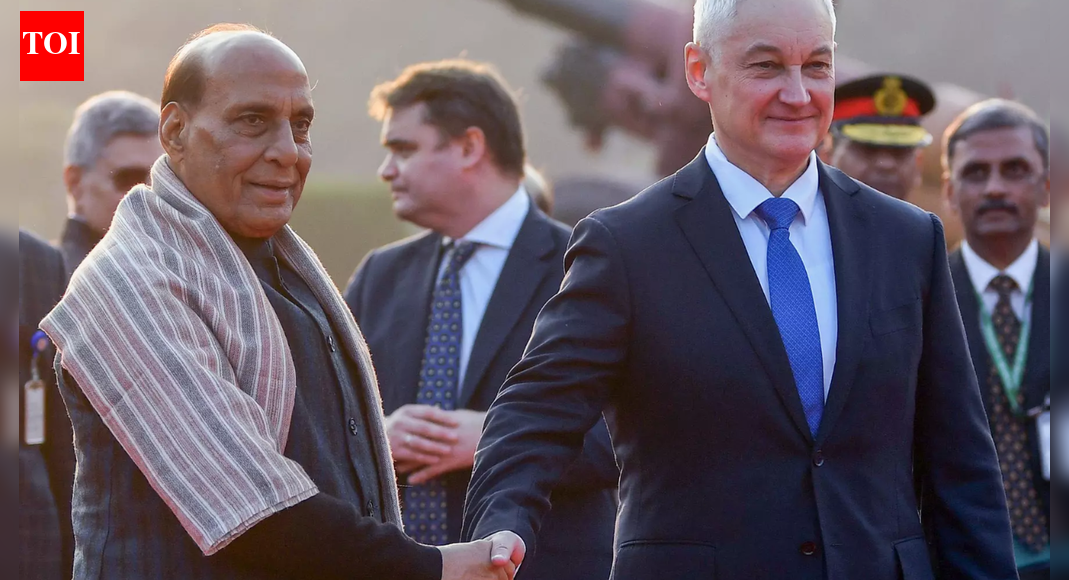
Defence minister Rajnath Singh with Russian defence minister Andrei Belousov (Image credits: ANI)

NEW DELHI: India on Thursday sent out a strong signal about the continuity of its partnership with Russia, with defence minister Rajnath Singh emphasising that bilateral defence cooperation remains steady “despite the geopolitical uncertainty.” His remarks came at the 22nd India-Russia Inter-Governmental Commission on Military & Military Technical Cooperation (IRIGC-M&MTC) meeting in New Delhi, held just hours before Russian President Vladimir Putin arrives for the 23rd Annual Summit.Singh described Russia as a “time-tested, special privileged, and strategic partner” and noted that defence ties have grown consistently since the signing of the 2000 Declaration of the India-Russia Strategic Partnership. “I thank you very much for coming all the way to India to discuss and promote bilateral defence cooperation between our countries… It is good that despite the geopolitical uncertainty, our India-Russia defence cooperation is moving at a healthy pace,” he said, as quoted by ANI.He highlighted “outcome-oriented exchanges” between military personnel and experts and also pointed to wider economic engagement.“We welcome the successful holding of the 26th meeting of the India-Russia Working Group on Trade and Economic Cooperation in Moscow last month, and the commencement of negotiations for a Free Trade Agreement with the Russia-led Eurasian Economic Union,” Singh said. He added, “We were also eagerly awaiting the visit of His Excellency, Vladimir Putin… which has been fulfilled today.”

Russia’s message at the defence commission meeting

Russian defence minister Andrei Belousov, co-chairing the meeting with Singh, echoed the sentiment of long-standing partnership.Belousov also noted the extent of military cooperation. “Russia actively cooperates in full scale with India in formation of the new outlook of the Army, Air Force, and the Navy. And using this opportunity, let me congratulate you, the command, and all Indian sailors with the National Navy Day,” he said.On the work of the joint commission, he added, “Distinguished Minister, the intergovernmental commission on military and military-technical cooperation brings the huge dedication in taking part in taking effective and mutually beneficial decisions in the military domain.”

Setting the stage for PM Modi–Putin summit

Earlier in the day, Singh and Belousov laid a wreath at the National War Memorial, and the Russian minister inspected the Tri-Service Guard of Honour. Belousov was received at Air Force Station Palam by Minister of State for Defence Sanjay Seth, with Chief of Defence Staff General Anil Chauhan also present.Russian President Vladimir Putin is set to arrive in India on Thursday evening for his first visit in four years, beginning the trip with a private dinner hosted by PM Modi. The two leaders have spoken by phone five times in 2024 and last met in person on the sidelines of the SCO Summit in Tianjin.Putin’s arrival marks his first trip to India since 2021 and his first since the Ukraine conflict began in 2022.His return to New Delhi comes as the India–Russia partnership continues to adjust to shifting global dynamics, balancing long-standing defence ties with cooperation in technology, energy transition, education, and workforce mobility.


Source link

Smriti Mandhana and Palaash Muchhal wedding postponed: Event company’s cryptic post goes viral, ‘Will see you soon Champion’ |


The abrupt postponement of singer-composer Palaash Muchhal and cricketer Smriti Mandhana’s November 23 wedding continues to trigger fresh waves of speculation, especially after the event management company handling the high-profile ceremony entered the conversation with a cryptic public post.

Event company’s cryptic message reignites buzz

The agency in charge of the Sangli celebrations, shared an enigmatic Instagram message shortly after the wedding was halted. Their post read, “We don’t cross the finish line in every match of Life that we play, but it’s always the sportsman Spirit that counts..Our team played hard, with Joy & Pride, and they all certainly deserve a Mention! Will see you soon Champion.”

Smriti Mandhana And Palash Muchhal To Get Married On December 7?

The message, posted a week ago, has gone viral in the wake of intensified chatter around the postponed nuptials, leaving fans guessing about the real reason behind the sudden halt.

Screenshot 2025-12-04 014826

Reports claiming Smriti Mandhana and Palaash Muchhal had reset their wedding for December 7 triggered fresh speculation on Tuesday. Smriti’s brother Shravan Mandhana dismissed the rumour, saying the wedding “is still postponed” and calling the new date “misinformation.”

Why the November 23 wedding stopped

The November 23 ceremony was halted after Smriti’s father Shrinivas Mandhana suffered a major medical emergency and was rushed to hospital. Palaash, stressed by the situation, was also briefly hospitalised and put on IV support.With no official statement from either family, cheating rumours erupted online after alleged screenshots circulated. Smriti’s deletion of her engagement posts and proposal video added to the chatter.Choreographers Nandika Dwivedi and Gulnaaz Khan, dragged into the gossip, publicly denied any involvement, calling the claims “fabricated” and “baseless.”

Families urge an end to speculation

Palaash’s mother Amita Muchhal stressed that the postponement was solely due to Smriti’s father’s condition, adding that Palaash had himself suggested delaying the event. She assured the wedding would happen soon. Neither Smriti nor Palaash has addressed the allegations directly. Their only visible response is an evil-eye emoji added to both their Instagram bios.


Source link

Ashes 2025-26: Fans go wild as Joe Root smashes maiden Test ton on Australian soil


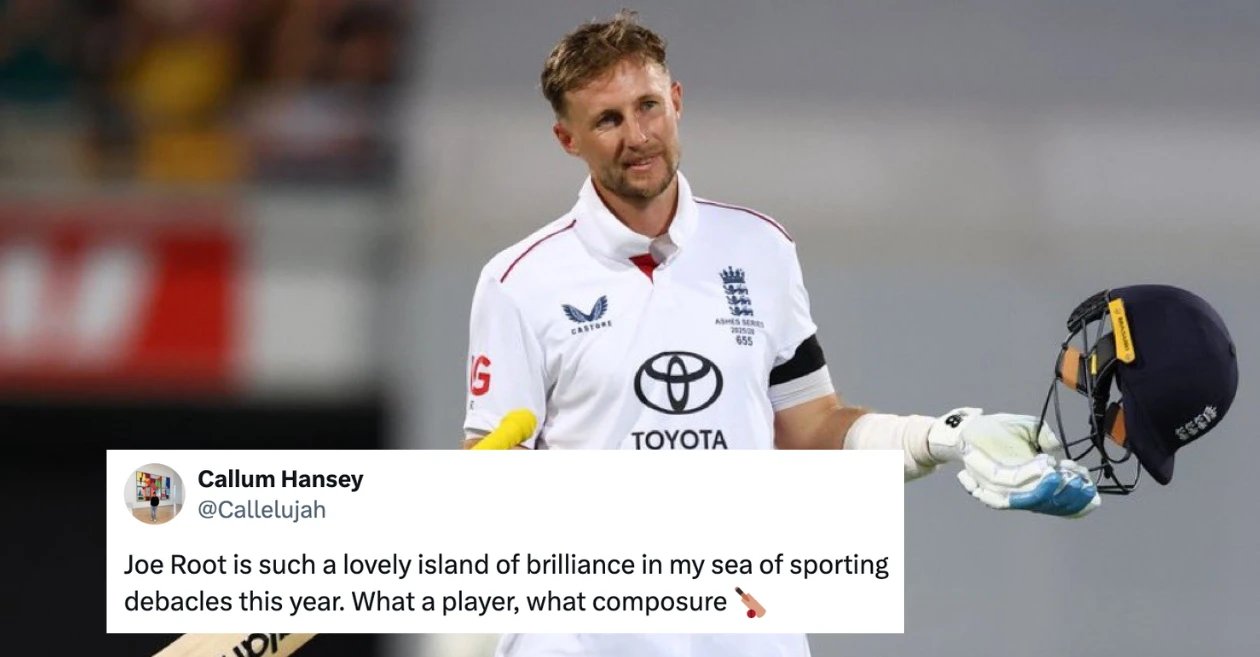
England’s premier batter Joe Root finally ended his long-standing wait for a Test century on Australian soil, producing a classy hundred on day one of the second Ashes 2025-26 Test at the Gabba in Brisbane. Root reached the landmark from 181 balls, bringing up his 40th Test hundred – but incredibly, his first in 30 innings in Australia, despite previously notching up 10 fifties and a best of 89.

The milestone sent a wave of emotion through the ground and across social media, with England fans celebrating the moment they had waited nearly a decade to witness.

Walking in with England at 5/2, Joe Root masterminds a rescue act

Root arrived in a high-pressure situation after Mitchell Starc dismissed Ben Duckett and Ollie Pope in the same over, leaving England rattled early at 5 for 2. What followed was a masterclass in patience, footwork and game awareness.

The 34-year-old steadied the innings alongside Zak Crawley, sharing a vital century partnership that halted Australia’s momentum under the pink ball. As wickets continued to fall at the other end against the pace trio of Starc, Scott Boland and Michael Neser, Root held England together, guiding them towards a competitive total in tricky twilight conditions.

His innings, studded with 11 fours, showcased flawless control against seam, swing and bounce. It was the type of composed, high-quality knock that has defined his career – and one that England desperately needed.

Fans, former players celebrate Root’s “career-completing” moment

Root’s century instantly became one of the crucial moments of the series. Within minutes, social media erupted with celebratory messages, tributes and emotional reactions from supporters thrilled to see him cross the one major hurdle that had eluded an otherwise glittering Test career.

Many fans called it “the moment of the Ashes”, while others labelled Root “England’s greatest modern batter” – a title strengthened by yet another big-occasion performance.

Former Australian opener Matthew Hayden, who had jokingly vowed to run around the MCG naked if Root failed to score a Test ton this tour, even sent a warm congratulatory message. Hayden admitted with humour that “no one had more skin in the game” when it came to Root getting the long-awaited hundred.

Root’s career in Australia has been rich with fluent fifties but barren in centuries – until now. This hundred not only fills the most glaring gap in his Ashes record but also cements his place among the great overseas performers of the modern game.

Here’s are the reactions on Root’s terrific hundred:


Source link

Access Denied


Access Denied

You don’t have permission to access “http://www.ndtv.com/world-news/india-clinches-2-billion-russia-submarine-deal-as-putin-visits-report-9749565” on this server.

Reference #18.f5493417.1764845700.18fa1c6b

https://errors.edgesuite.net/18.f5493417.1764845700.18fa1c6b


Source link

‘Obligated to provide’: Supreme Court tells states to deploy more staff for SIR; TVK plea flags BLO plight | India News


'Obligated to provide': Supreme Court tells states to deploy more staff for SIR; TVK plea flags BLO plight
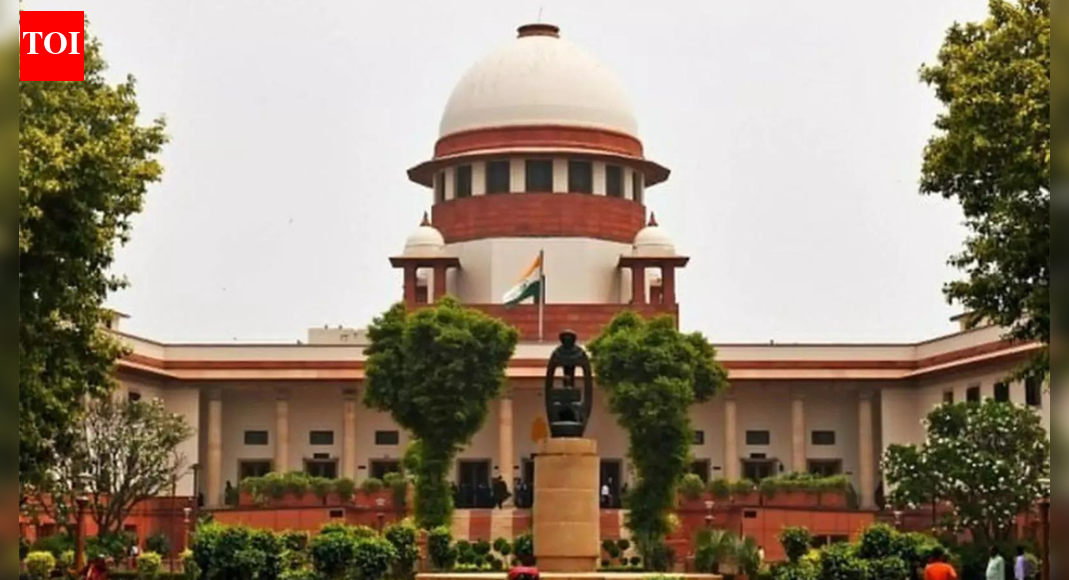
Supreme Court (ANI photo)

NEW DELHI: The Supreme Court on Thursday took note of concerns over the workload of Booth Level Officers (BLOs) engaged in the Election Commission’s Special Intensive Revision (SIR) exercise. Amid reports alleging excessive pressure and even suicides, the top court directed state governments to deploy additional staff to reduce the working hours of those already assigned election duties.A bench headed by CJI Surya Kant said that any individual seeking exemption from statutory election duties for valid reasons must have their request considered on a case-by-case basis by the competent authority and the State government, with a replacement arranged if needed.“The State government is obligated to provide the workforce if there is a need to increase the same,” the CJI observed.The directions were issued in response to a plea filed by Vijay’s Tamilaga Vettri Kazhagam (TVK), which challenged the Election Commission of India’s move to invoke criminal action under Section 32 of the Representation of Peoples’ Act against individuals unable to perform their duties as BLOs due to heavy workloads, target pressures, and personal hardships.Reports of BLO deaths and suicide attempts have surfaced across states, turning it into a widespread concern and prompting strong protests and demands for action from Opposition parties.


Source link

Access Denied


Access Denied

You don’t have permission to access “http://www.ndtv.com/opinion/india-russia-and-a-new-geometry-of-global-trade-9749238” on this server.

Reference #18.47fdd417.1764838570.a493ef44

https://errors.edgesuite.net/18.47fdd417.1764838570.a493ef44


Source link