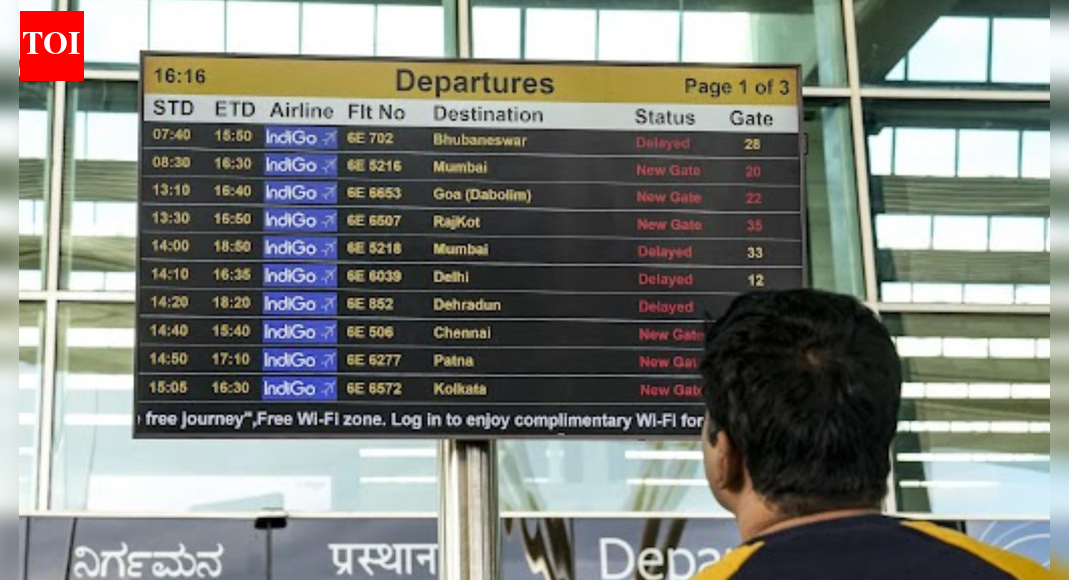
IndiGo cancels 258 city flights; ‘what was our fault,’ asks flyer | Mumbai News
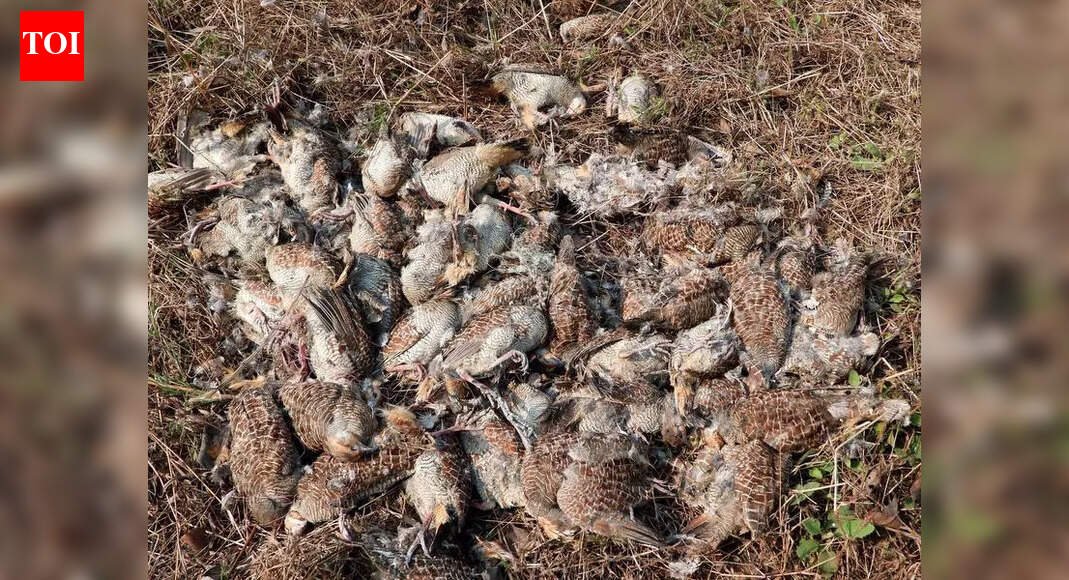
Thane: A birder found bodies of 107 Grey Francolin (titar in Hindi) near the creek in the Saptapul area of Motagaon, Dombivli (West). The sight of such a large number of dead birds created concern among locals, with the forest officials sending samples to National Institute of Virology (NIV), Pune, to check for infections.The incident first came to light when bird expert Dr Raju Kasambe received information that many birds were lying dead in the area. He visited the spot to verify the situation and then alerted the forest department. Considering the possibility of flu or other viral infections, the forest team handled the birds with safety precautions, including gloves and protective gear, and sealed them for further testing.Earlier in the day, officials from the Kalyan forest department reached the spot, prepared a panchnama, and collected the carcasses for detailed examination.The dead birds were initially sent to the Thane Veterinary Centre. However, preliminary checks by veterinary doctors could not confirm the exact cause of death. Due to the suspicion of a contagious disease, the forest department has now sent the samples to NIV where advanced laboratory tests will determine whether the birds died due to any flu, poisoning or infection.Bird expert Kasambe noted that Grey Francolins are not commonly seen in Dombivli, raising questions about their sudden appearance in large numbers. He suggested that the pattern in which the birds were found indicates they might have died elsewhere and were later dumped in this isolated location. He has urged the forest department to conduct a thorough investigation to uncover the truth. Kalyan range forest officer Nilesh Akhade confirmed that samples have been forwarded to NIV Pune and the team is awaiting detailed reports. He also stated that initial observations indicate the possibility of the birds being brought to the area after death, although nothing can be concluded until scientific results are received.The forest department has tightened surveillance in the surrounding region and appealed to citizens to report any unusual death of birds immediately.
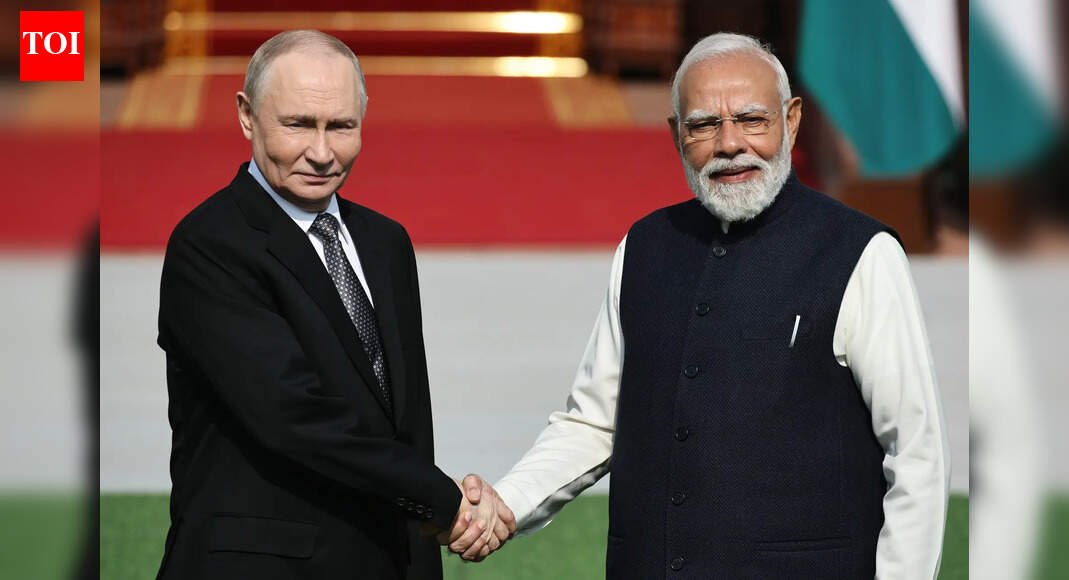
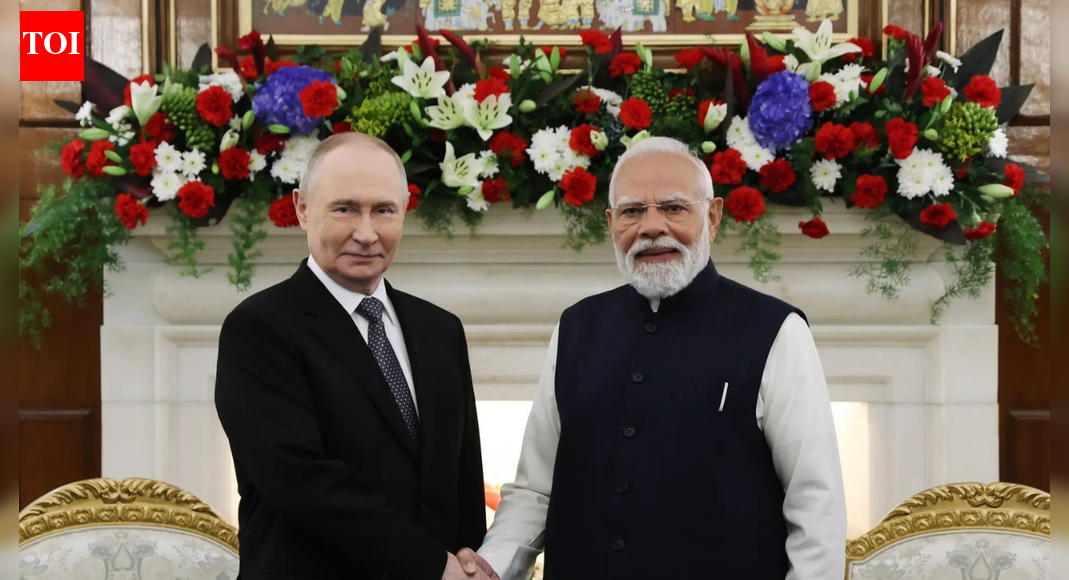
NEW DELHI: India and Russia on Friday agreed to intensify their bilateral efforts for implementing different climate actions under global goals approved on multilateral forums such as the UN Convention on climate change and its Paris Agreement.The statement, issued after the meeting between PM Narendra Modi and Russian President Vladimir Putin, noted the agreement of both countries to continue development of joint approaches to mobilise “increased access to climate finance and technologies” for developing countries and economies in transition.Russia comes under the ‘economies in transition’ (EIT) category, and therefore, does not fall under the group of developed countries who are obligated to provide climate finance to assist developing countries to undertake emissions reduction activities under the UN Convention.Under the convention, developed countries have to take all practicable steps to promote development and transfer of environmentally friendly technologies to EIT and developing countries. The India-Russia joint approach may help in mobilising climate finance by leveraging their combined efforts at multilateral forums.Noting the importance of expanding efforts to combat climate change and achieving the goals of United Nations Framework Convention on Climate Change and Paris Agreement, both India and Russia agreed to “intensify the bilateral dialogue on implementing mechanisms of the Article 6 (carbon trade) of the Paris Agreement, developing low-carbon technologies and using sustainable finance instruments”.The joint statement said both countries also agreed to continue interaction within G20, Brics and SCO on climate change. “Both sides encouraged fruitful cooperation in the area of addressing climate change in Brics during the India chairship in 2026,” it said. The statement also welcomed the first meeting of the joint Russia-India working group on issues of climate change and low-carbon development held on Sept 10 in New Delhi.
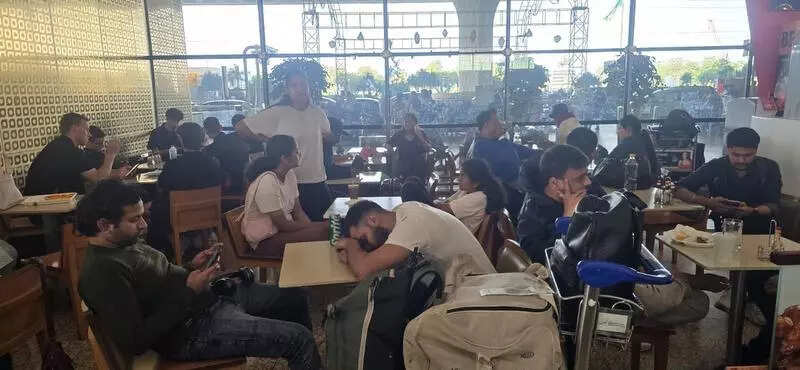
T1, New Delhi: Last evening I was forewarned. “You’re on an IndiGo flight to Bengaluru tomorrow? Their schedule was haywire today. Tomorrow could be chaotic too. Try to change your carrier,” advised a colleague during the evening editorial meeting.I tried. My flight was scheduled to depart at 2.15pm on Thursday. I rushed to see if I could get a ticket on another airline. But a ticket to Bengaluru had become pricier than a seat at a Taylor Swift concert. Clearly, other carriers were indulging in ‘surge pricing.’ I briefly considered cancelling the trip but finally decided to go ahead. “How bad can it get,” I thought. Silly me!
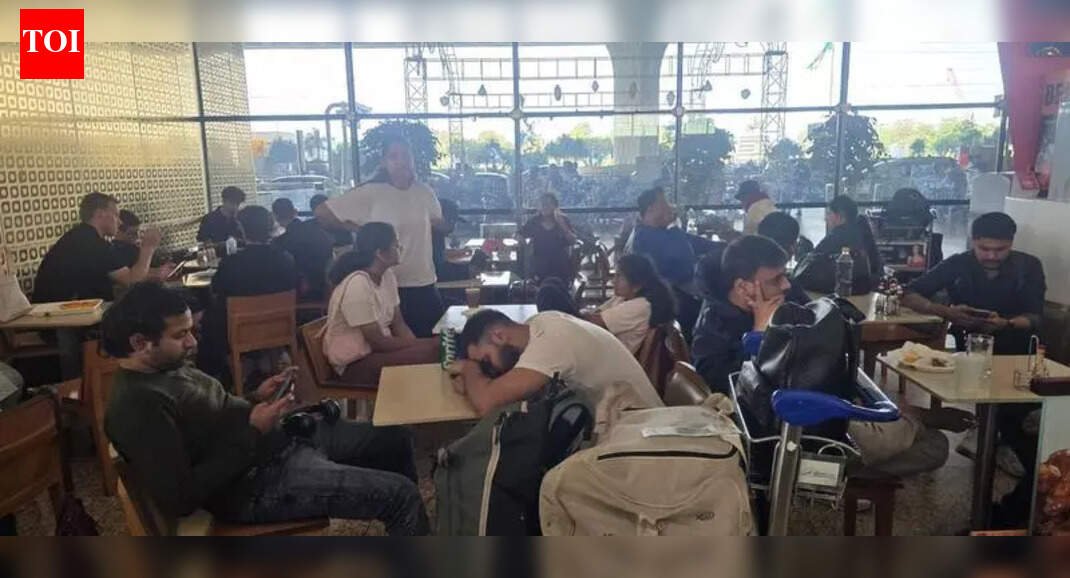
Thursday began well. I received a message in the morning from IndiGo saying they were looking forward to having me on board with the usual advice about what to pack in cabin baggage. There wasn’t the slightest hint of any disruption or inconvenience. “Maybe they’ve sorted out their problems overnight. Or my flight is among the few unaffected,” I thought optimistically.I left for the airport around 11am, reached T1 around 12.30pm. My hopes rose further when the information board said IndiGo’s 2.15pm flight to Bengaluru, 6E 176, would go ahead as scheduled. Even the gate number, 38 in this case, was mentioned. I thanked my lucky stars.The first hint that something was wrong came as I neared Gate 38 and found a crowd gathered around a single person, their voices sharp with anger. But by the time I reached the spot, the crowd had dispersed. “What’s happening?” I asked. One of the passengers enlightened me. “We’re supposed to be on a 10.30am flight to Bengaluru, 6E 173. But the flight time has long since passed and there’s no information. We spotted an IndiGo staffer and tried asking him but he’s completely clueless.”With a sinking feeling, I checked the information board. It still said that my flight was on schedule. I settled down with a history book, still hopeful but a lot less optimistic.

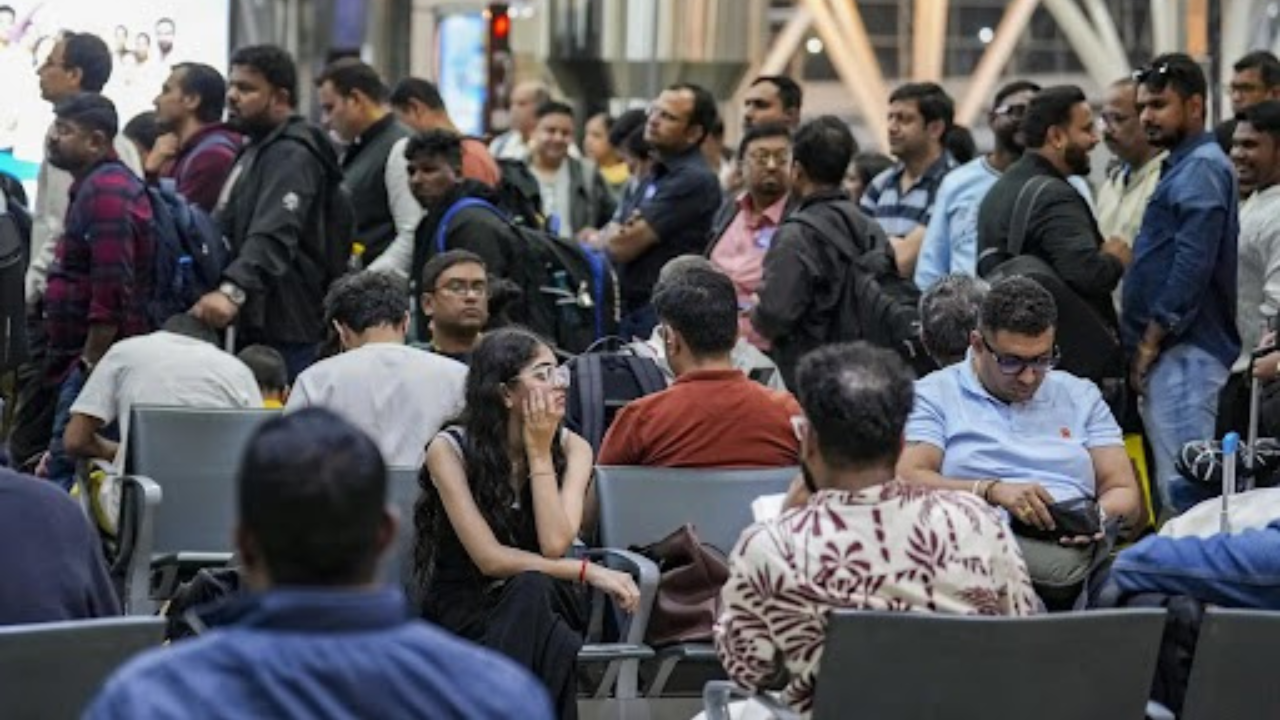
Around 1.30pm, there was a flurry of movement. A gentleman from IndiGo had arrived on the scene, and a crowd formed around him. “Where is the plane?” demanded one person. “The plane is ready, but we don’t have a pilot to fly it,” he responded. “When will you have a pilot? Is the flight delayed or cancelled?” asked the passengers. He had no answers.As he walked away, some angry flyers to another destination, who had been waiting even longer, stood near the gate and began chanting their flight number. “434, 434!” Briefly, a rumour spread that another IndiGo flight was ready for departure. Some ‘434’ flyers began yelling that they wouldn’t allow the flight to take off till their flight left. It turned out that it was another carrier’s flight, not IndiGo’s. The angry passengers watched sullenly as the lucky flyers filed through the gate, some offering sympathetic smiles.By now, it was 1.45pm. If my plane was to take off on time, boarding would have to start now. The information board was still saying the flight would take off at 2.15pm. But there was no boarding announcement. I sighed and headed off for a loo break. When I returned, passengers were filing through Gate 38. I rushed to join the queue, which was quite long. After a few minutes, raised voices were heard again. It turned out that this was a long-delayed flight to Chennai finally taking off.By now my phone was running low on juice, so I plugged in the charger and sat down. A newly-wed couple was sitting next to me and we got talking. “We’ve been here since 10.30am,” said the husband. “They checked in our luggage and never said a word about the delay. Now even if we want to cancel, we can’t. We’re helpless and stuck.” (He requested me not to publish his name, saying he’s in the Army and not allowed to speak to the media without authorisation).Around 3pm, there was another flurry of movement. “Don’t you dare touch me,” yelled a furious IndiGo lady staffer at an irate passenger. Tempers were running high. Fortunately, cooler heads prevailed. The passenger apologised and the lady calmed down. “So when is 6E 173 taking off?” asked a passenger. “It’s now scheduled for 5pm,” she said. “What about 6E 176?” asked others. “That will now leave at 6.30pm,” she said. I sighed and settled back with my book. After half an hour, I again glanced at the information board. It now said my flight would depart at 7.10pm. But after some time, the timing changed again to 8.20pm. And the boarding gate shifted to 42. Rumours began circulating. “The flight will leave at midnight”. “The flight will be cancelled.” I called our aviation correspondent. “Can you ask them for a definite time of departure?” I asked. “I can, but I doubt if even they know for sure,” he replied.I thought of all the hours wasted. I thought of having to do it all over again, on the return flight. And I finally caved in and did what I should have done 24 hours earlier.I cancelled my flight.PS: If I thought my ordeal was over, I was mistaken. As I tried to exit the airport, I found a long queue at the security check point. It was for all flyers whose flights had been cancelled, or had chosen to cancel their tickets.‘Tech-unsavvy people’ who had hard copies of their boarding cards simply got them stamped and breezed through. ‘Digital natives’ who had PDFs or had availed of DigIYatra had to show their cards and ID to an IndiGo staffer, who diligently noted their details.I fumed and fretted for an hour, vowing that next time I’d take a hard copy. Still, I was one of the lucky ones, because I had packed all my stuff in a laptop bag and hadn’t checked in any luggage. Those who had checked in their luggage had no idea how to retrieve it. “We’ll probably have to come back tomorrow,” I heard an elderly gentleman tell his wife. A couple of young women who had missed their connecting flight wondered what had happened to their luggage. Was it still in IGI or had it gone to the next destination? They’d probably have to come back the next day to find out too. Just as I reached the IndiGo staffer, he began walking away. Passengers standing behind me howled in protest. “Where are you going? We’ll have a riot,” a CISF lady standing next to him said sharply.He looked like he was about to burst into tears. “I haven’t eaten or drunk anything since 2pm. Can I please get some water at least?” he pleaded.“Get someone to replace you first,” the lady replied curtly. The man sighed, wiped his face and turned towards me. I felt a pang of sympathy for him. I wished that I had a bottle of water to offer him. But all I could do was quietly proffer my phone, for him to note my details.
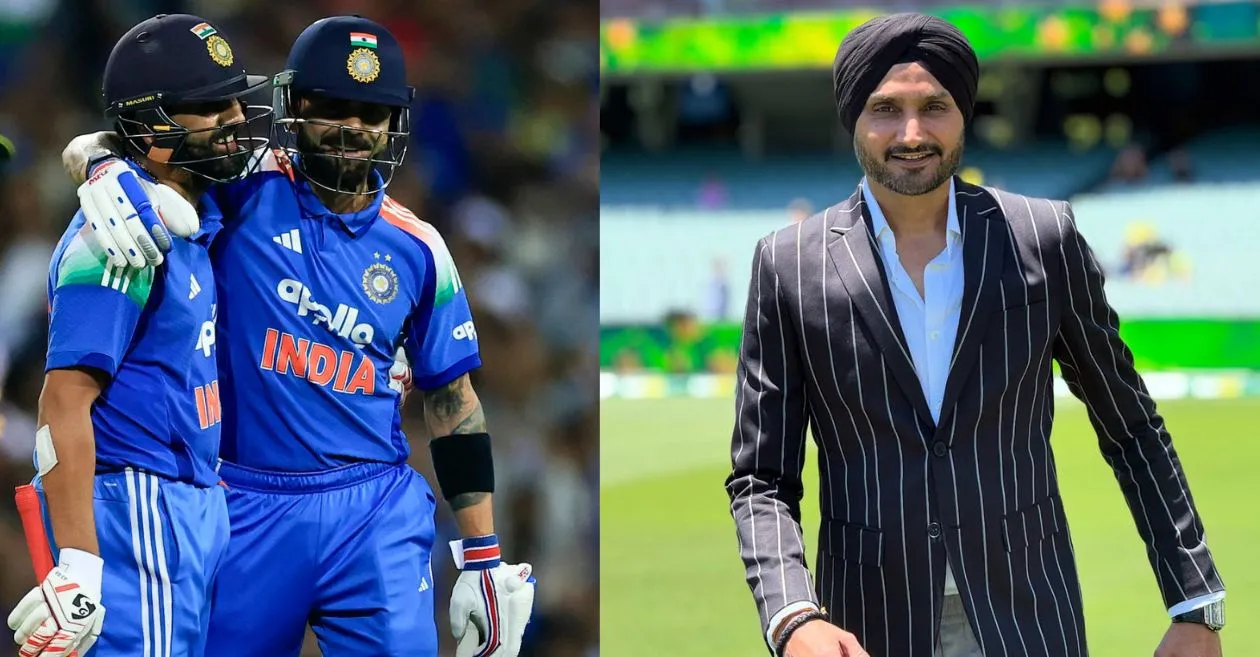
Harbhajan Singh firmly defends Rohit Sharma and Virat Kohli‘s place in the 2027 ODI World Cup, criticizing critics without significant achievements who question the future of the Indian cricket legends. The former India spinner expressed his admiration for the duo’s ongoing performances and leadership, stressing that both players remain vital to India’s ODI plans and are setting an example for the younger generation. Despite their advancing ages, with Rohit at 38 and Kohli at 37, Harbhajan expects them to continue until the World Cup in South Africa, applauding their recent form and contributions to the team.
On the sidelines of ILT20, speaking to media, Harbhajan highlighted the unfortunate situation where the futures of Rohit and Virat are being influenced by individuals who have not reached comparable milestones in cricket. He emphasized his own experience as a player to underline the importance of respecting the achievements and ongoing form of legends like Rohit and Kohli.
“It is beyond our understanding. I may not be able to answer because I have been a player myself, and what I have seen has happened to me as well. It has happened to many of my teammates, but it is very unfortunate. We don’t talk about it or have a discussion about it,” Harbhajan said.
Both players have retired from Test and T20 formats but remain active in ODIs, with Kohli recently scoring back-to-back centuries in the home series against South Africa and a fitter Rohit posting consistent high scores, including a 121 not out. Harbhajan praised them as steadfast leaders and role models who demonstrate the qualities required to be champions, reinforcing that their positions in India’s cricket setup should not be questioned lightly.
“I am so happy when I see a player like Virat Kohli who is still going strong. It is a bit unfortunate that those people are deciding about their future who have not achieved much,” Harbhajan added.
Beyond endorsing the veterans, Harbhajan expressed concern about the quality of cricket pitches in India, which he claims are overly bowler-friendly and disadvantage batters by reducing scoring opportunities. He criticized the trend of preparing rank-turning tracks that favor spinners with the new ball, arguing that such surfaces stunt the development of both batters and bowlers, particularly strike spinners.
Harbhajan urged the cricket board and ground authorities to revert to more balanced pitches that offer a fair challenge to both batting and bowling units, similar to conditions abroad where Indian batters find more opportunities to build innings. He also highlighted the impact of T20 cricket on players’ patience and emphasized the need for longer-format preparedness to sustain India’s competitiveness in international cricket.
Harbhajan concluded by recognizing the success of the ongoing ILT20 league in the UAE, praising its role in expanding cricket’s footprint in the region and providing opportunities for players from neighboring countries to compete alongside international stars.
“They have to start playing on good tracks. We don’t give much chance to our batsmen to make runs. If we tour abroad our batsmen have a chance to make runs because the pitch is good for batting. The bowlers have to work hard. That is why I think it is high time that the pitches that have been made in the last 10-12 years are very bowler-friendly especially spinner-friendly. Spinners bowl with the new ball. I think somewhere we need to change that trend. I feel it is not the right kind of thing to do. Our team is so solid and we have played well in England. We will win even if we play for five days. Why are you looking to play two and half days of Test cricket?” Harbhajan concluded.

You don’t have permission to access “http://www.ndtv.com/world-news/ex-bangladesh-pm-khaleda-zias-travel-to-london-for-treatment-postponed-9759628” on this server.
Reference #18.4fdd417.1764960448.47bdd9e4
https://errors.edgesuite.net/18.4fdd417.1764960448.47bdd9e4

You don’t have permission to access “http://www.ndtv.com/india-news/cop-burnt-alive-after-car-rams-divider-bursts-into-flames-in-karnataka-9759480” on this server.
Reference #18.4cfdd417.1764959651.10f0743d
https://errors.edgesuite.net/18.4cfdd417.1764959651.10f0743d
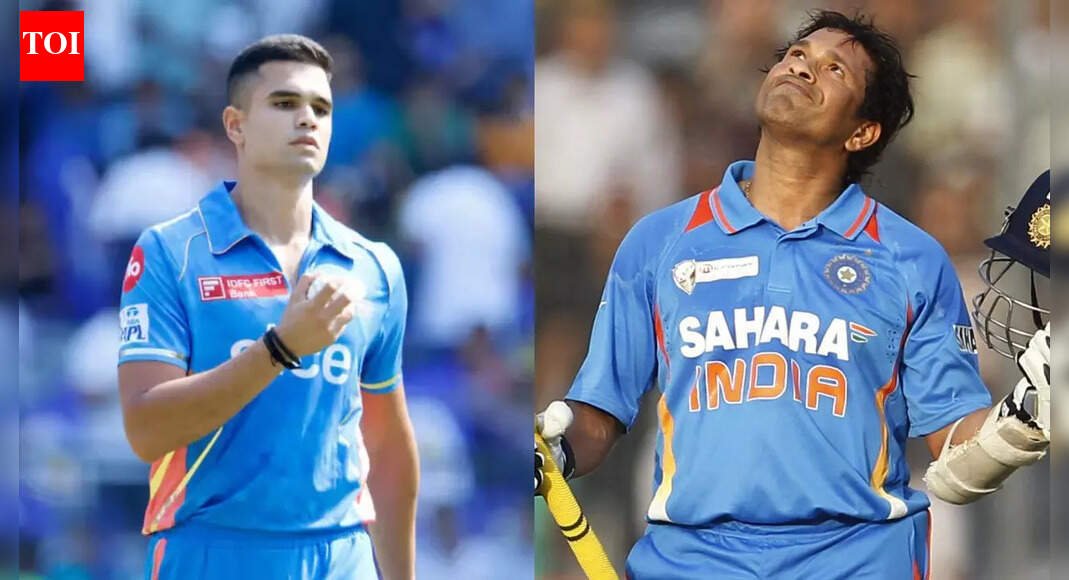
Arjun Tendulkar has done something rare that his father Sachin Tendulkar never accomplished during his career. Arjun, who currently represents Goa in the Indian domestic cricket, was recently traded from Mumbai Indians (MI) to Lucknow Super Giants (LSG) for IPL 2026. At the ongoing Syed Mushtaq Ali Trophy, the 26-year-old all-rounder has taken on a new role as an opener for Goa while continuing to bowl with the new ball.In the match against Madhya Pradesh, Arjun delivered an impressive performance, taking three wickets for 36 runs in his four-over spell and scoring 16 runs off 10 balls. His current tournament statistics show 70 runs and 8 wickets in five matches.This achievement stands in contrast to his father Sachin’s T20 career. While Sachin was a regular opener in T20s, he never opened the bowling. The cricket legend bowled only 93 balls in his 96 T20 matches, claiming two wickets.Arjun shifted his base to Goa before the 2022/23 season after making his T20 debut for Mumbai in 2020/21. He began his Ranji Trophy career impressively with a century and now plays all three formats for Goa.In his first-class career spanning 22 matches, the left-arm pacer has claimed 48 wickets and scored 620 runs, including one century and two half-centuries.His List A record shows 25 wickets in 18 matches and 102 runs in 10 innings, while in T20s, he has taken 35 wickets and scored 189 runs in 29 matches.Sachin’s T20 career included just one T20 International match, which was India’s first-ever T20I in 2006. His most notable T20 achievement came in IPL 2010, when he became the first Indian to win the Orange Cap by scoring 618 runs in that season.
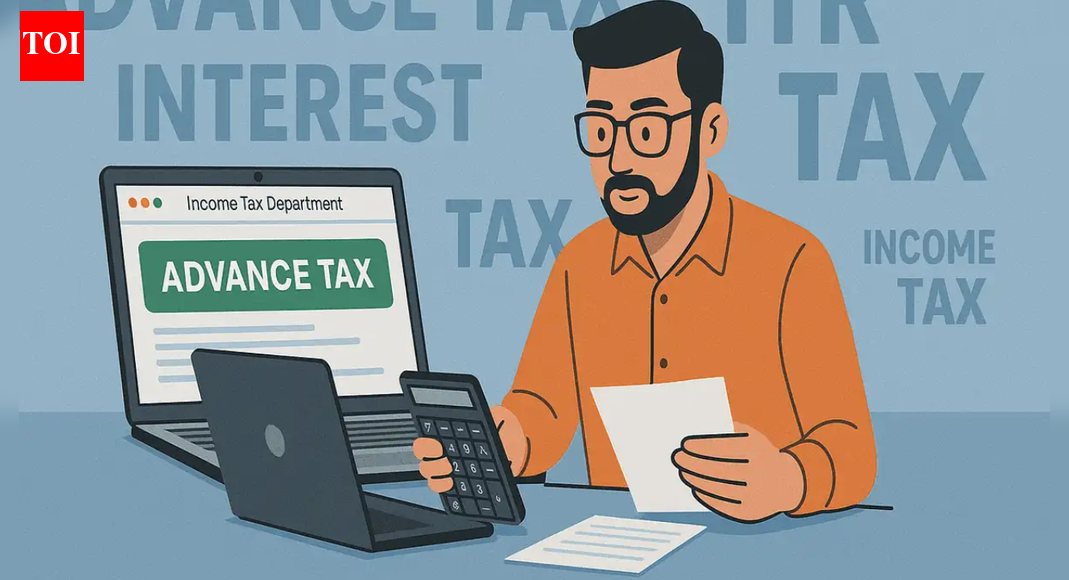
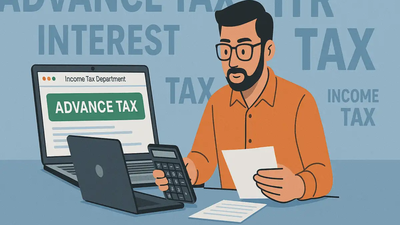
If your net income-tax liability exceeds Rs 10,000 in a financial year, you are required to pay advance tax in four installments as per the Income Tax Act, 1961. Net tax liability refers to the estimated tax due after adjusting for TDS. While this rule applies to most taxpayers, the law also provides key exemptions for specific categories of individuals.Under Section 211 of the Act, advance tax is payable in four quarterly tranches between June 15 and March 15 of the same financial year. Taxpayers under the presumptive taxation scheme, however, are allowed to make a single consolidated payment by March 15, according to an ET report.Chartered Accountant Bharat D Sarawgee of NRI Nivesh said resident senior citizens aged 60 and above are fully exempt from paying advance tax if they do not have income from business or profession. “This holds true even if their total tax liability exceeds Rs 10,000; no advance tax is required for such senior citizens,” he said.Salaried individuals whose tax liability is entirely covered by TDS also do not need to pay advance tax, provided they have no other taxable income apart from salary income.
Some incomes cannot be projected ahead of time, and the Act allows taxpayers to pay advance tax on such income in the next quarter after the income is actually earned. Capital gains on listed equity shares are a common example.“Individuals having certain specific income sources are exempted from payment of advance tax in advance. The advance tax on these incomes can be paid in the next quarter,” said Chartered Accountant Manas Chugh, head – regulatory services at Osgan Consultants, ET quoted him as saying.According to the law, advance tax for the following income categories may be paid in the subsequent quarter:
Chugh added: “The first proviso of sub-section (1) of Section 234C aims to shield taxpayers from the imposition of penal interest in situations where the precise calculation of advance tax liability is not feasible. Therefore, in the above-mentioned incomes, advance tax is required to be paid only when the actual income is earned.”
For FY 2025-26, the four installments fall on June 15, September 15, December 15, and March 15.A crucial point is that advance tax is payable only if the net tax liability after TDS exceeds Rs 10,000. If the net liability is below this threshold, advance tax is not mandatory. If it is Rs 10,000 or more, advance tax must be paid.
NEW DELHI: Prime Minister Narendra Modi on Friday presented an array of culturally significant gifts to Russian President Vladimir Putin, underscoring the enduring friendship between New Delhi and Moscow.The gifts, ranging from Assam Black Tea to a Russian translation of the Srimad Bhagavad Gita, highlighted India’s rich heritage, artisanal craftsmanship and shared cultural values, reflecting the warmth of India–Russia diplomatic ties.Putin’s ongoing two-day state visit to India focuses on deepening bilateral relations, advancing strategic partnerships, and promoting cultural and economic cooperation between the nations.

Prime Minister Modi gifted Putin Assam Black Tea, grown in the fertile Brahmaputra plains. Prized for its robust malty flavour and bright liquor, the tea is a symbol of India’s cultural legacy and offers potential health benefits. Recognised with a GI tag in 2007, it represents the craftsmanship and tradition of Assam’s tea growers.

The Murshidabad silver tea set, crafted with intricate engravings, reflects West Bengal’s rich artistry. Celebrating the ritual of tea, a shared symbol of warmth in both India and Russia, the gift underscores friendship and connection between the two countries.

A handcrafted silver horse from Maharashtra, adorned with fine detailing, symbolises dignity, valour and the enduring India–Russia partnership. Its poised, forward-moving stance reflects the mutual respect and advancing collaboration between the nations.

Putin was also presented with a marble chess set from Agra, featuring inlaid motifs, contrasting stone chessmen and floral designs, highlighting North India’s stone inlay heritage under the ODOP initiative. The set combines craftsmanship with functionality, offering both aesthetic and cultural value.

Kashmir’s prized saffron, locally known as Kong or Zaffran, was gifted to Putin, representing the region’s heritage, traditional hand-harvesting and economic importance for local farmers. Celebrated for its rich aroma, colour and health benefits, the saffron reflects India’s natural and cultural wealth.

The spiritual text, part of the Mahabharata, offers Krishna’s guidance on duty, the soul and spiritual liberation. The Russian translation allows global readers, including Putin, to appreciate its timeless wisdom on ethical living and inner peace.During the two-day visit, Putin held talks with Prime Minister Modi and other officials, with discussions covering strategic, economic and cultural cooperation.The exchange of gifts complements the diplomatic agenda, highlighting shared history, mutual respect and long-term collaboration across multiple sectors.