Breaking News
IND vs SA: Time to take fresh guard as Indian batters endure intense drills ahead of 3rd T20I | Cricket News


IND vs SA: Time to take fresh guard as Indian batters endure intense drills ahead of 3rd T20I
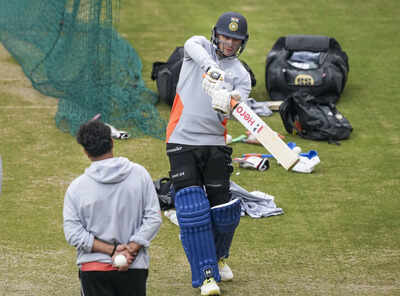
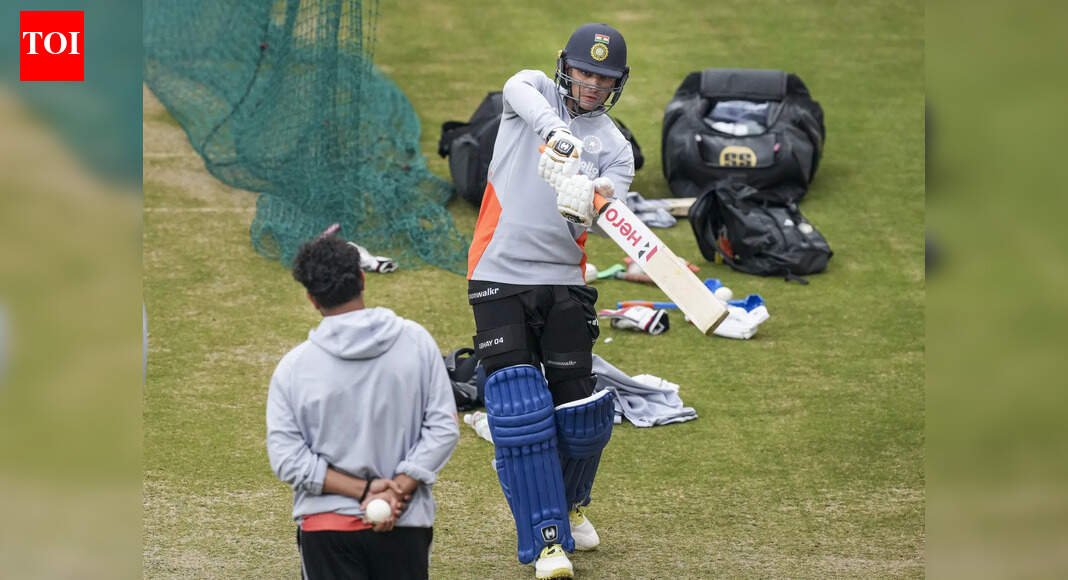
Abhishek Sharma and Kuldeep Yadav during a training session ahead of the third T20 International cricket match. (Image: PTI Photo)

DHARAMSHALA: By the time the Indian team reached the HPCA stadium on Saturday evening, the temperature here in the hills had started to drop. As the three-and-a half-hour long practice session progressed in chilly weather, the jitters in the Indian camp became apparent. South Africa have managed to reveal India’s deficiencies in more ways than one would have expected on this tour. Seldom does the Indian team go through a practice session as extensive and in tense on a match eve as it did on the eve of Sunday’s third T20I.As is the norm with this team, it was officially an optional session. But only Tilak Varma and Arshdeep Singh skipped the session. The South African team, on the other hand, took the day off and went hiking in the hills. They feel they are in a better space with the series locked at 1-1.

Shivam Mavi opens up on IPL snubs, lonely domestic grind, confidence before auction

The T20 team under coach Gautam Gambhir seemed to be on auto-pilot mode for over a year. However, two months away from the T20 World Cup, problems have surfaced. It starts with the struggles of captain Suryakumar Yadav and vice-captain Shubman Gill and spills over to some incomprehensible strategies and selections.Saturday was more about going back to basics. When Washington Sundar was padding up at the top of the nets session, Hardik Pandya approached him and cautioned him, “This is a pitch where you have to be gutsy.” The pitch here has historically yielded big scores. But one can never discount the amount of movement and bounce the venue offers to the bowlers. The focus of the nets sessions was on polishing every batter’s technique. Once Sanju Samson and Washington Sundar were done with their batting in the nets, Surya and Gill hogged the attention for the rest of the evening. They hopped all four nets. Surya, in fact, batted for well over 90 minutes — that’s how long an entire team’s T20 innings lasts. They went through drills that are seen more at the academy level, where one works on the nuances of batting technique. Gill and Jitesh only joined Pandya for a range-hitting session under lights at the centre square after a thorough session of old-school batting in the nets.Surya, for one, eschewed his trademark pick-up ramps and swipes behind square on the on side against the pacers. The vertical bat and a compact defence were the order of the day. He did get into a phase where he dealt in sweeps and lap shots against the spinners. As he started to get beaten frequently, he switched to playing down the ground and practicing the inside-out shots over cover.Surya is the designated No. 3 in this batting lineup. But Axar Patel coming out to bat at No. 3 in the second over in the previous match must have hurt the egos of the frontline batters. Tilak Varma expectedly put it down to the team’s much-hyped flexibility.

Stats

“I’ve told the team that I can bat in any situation. But we want to be flexible. Axar has done a good job for the team in the T20 World Cup. So, one has to be ready for whatever the team needs. But I don’t mind doing that job,” Varma said on Saturday.Playing the moving new ball has been a major problem. Gill just stuck to punching the ball off the back foot. His frailties against the new ball pitching on a good length are well documented. The deliveries outside off have begun to catch the outside edge more often. Thus, one saw him working overtime on backfoot punches square of the wicket and uppercuts to make use of the field in the powerplay. As Surya retired to the dressing room, Gill hung back for a long and intense chat with Gambhir and assistant coach Ryan ten Doeschate. For one who is obsessed about his batting, Gill must be aware there isn’t much time for him to iron out the chinks in his batting. As India try to find their best T20 game, South Africa seem to be more in control. “It might look as if we are slightly unsure given the amount of changes, but we have a pretty good idea of what our World Cup squad will be like,” South Africa coach Shukri Conrad said.


Source link

WWE Saturday Night’s Main Event Results: Gunther defeats John Cena via submission | WWE News


WWE Saturday Night’s Main Event Results: Gunther defeats John Cena via submission
Gunther defeats John Cena (Image credits WWE)

Finally, the most awaited match began, the final match of the GOAT, the 17-time World Champion, the Real Champ John Cena. He made a ground-shaking entrance as the crowd sat on the edge of their seats, cheering the legend one last time. Lilian Garcia introduced the challenger Gunther and John Cena in a spectacular fashion. Before the match started, John Cena acknowledged the WWE Superstars and Legends seated at ringside who had gathered to witness the GOAT’s final match. The referee then rang the bell, and the main event officially began.

WWE Saturday Night’s Main Event: Gunther beats John Cena with the Sleeper Hold

The match got underway with John Cena unloading heavy strikes and quickly gaining the upper hand. Gunther looked to land another chop on Cena, but Cena caught it and flattened him with a pair of shoulder tackles. He sent Gunther crashing to the mat spine first, followed by a Five Knuckle Shuffle, and then set up for an Attitude Adjustment. Gunther anticipated it, countering with a German suplex before leveling Cena with a clothesline.Gunther followed up by striking Cena with back-to-back clotheslines. The momentum shifted again as Cena connected with more shoulder tackles and finally hit the first Attitude Adjustment of the match. Cena went for the pin, but Gunther kicked out.Gunther then locked in a sleeper hold on Cena, but Cena reversed it into a sleeper of his own. Gunther managed to reach the bottom rope to break free, then sent Cena crashing spine first into the ring apron on the outside, followed by a shoulder-first impact into the ring steps.Gunther dragged the ring steps over to the announce desk, stood tall on top of them, then seated Cena on the steps and cleared the announce desk. Cena fought back by getting Gunther onto his shoulders and driving him through the announce desk with an Attitude Adjustment. He rolled Gunther back into the ring and went for the pin, but Gunther kicked out.Cena climbed to the top rope and delivered a leg drop to Gunther, then attempted another pin. Gunther kicked out again, and Cena asked the live crowd if they had one more in them. Before Cena could hit the Five Knuckle Shuffle, Gunther caught him with a powerbomb. Cena responded with an Attitude Adjustment off the middle rope and went for the pin, but Gunther once again kicked out.Gunther and Cena trade forearm strikes, but Cena looks to set up an Attitude Adjustment on Gunther. Gunther escapes, plants Cena with a powerbomb, follows it up with a Frog Splash, and goes for the pin. Cena kicks out, but Gunther quickly locks in a sleeper hold. Cena tries to power out, but Gunther keeps the hold firmly applied.Gunther then targets Cena’s shoulder and tightens his grip. Moments later, the unthinkable happens as John Cena taps out, giving Gunther the victory.


Source link

‘Vote chor, gaddi chhod’: Congress to hold major rally at Delhi’s Ramlila Maidan — all you need to know | India News


'Vote chor, gaddi chhod': Congress to hold major rally at Delhi’s Ramlila Maidan — all you need to know

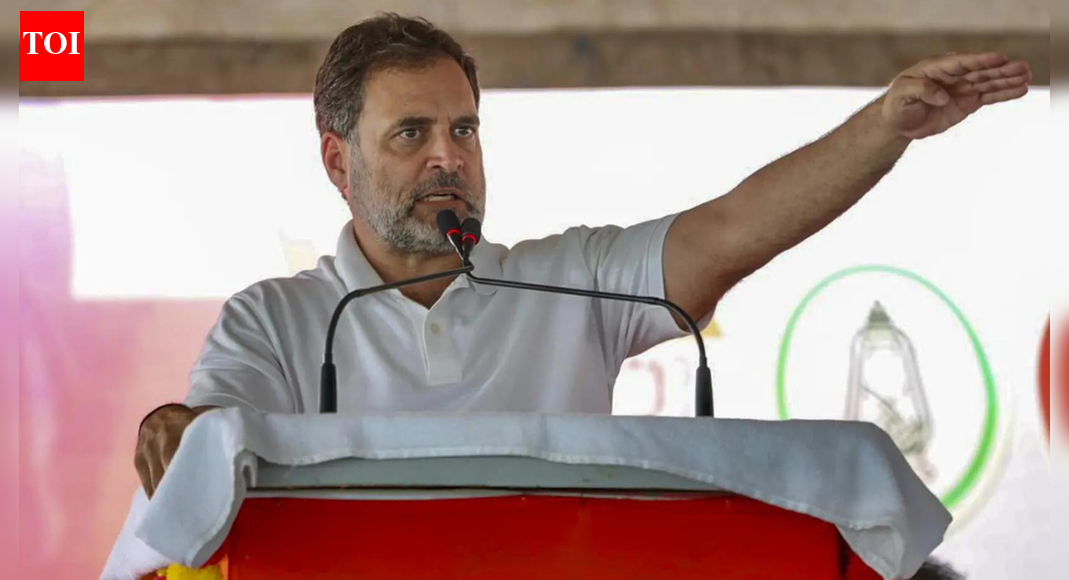
NEW DELHI: The Congress will hold a major rally at Ramlila Maidan in the national capital on Sunday, stepping up its campaign over alleged “vote chori” and the SIR issue, party leaders said. Congress president Mallikarjun Kharge and former party chief Rahul Gandhi are expected to address the rally. Ahead of the rally, senior leaders will assemble at the party’s Indira Bhawan headquarters and proceed together to Ramlila Maidan in a bus.

‘Vote Chori Is The Biggest Anti-National Act’: Rahul Gandhi Slams BJP In Lok Sabha

The rally comes days after a fiery debate in the Lok Sabha, during which the government and the Opposition clashed over the special intensive revision of electoral rolls and “vote chori” allegations.

Senior party leaders to attend the rally

Senior leaders, including Priyanka Gandhi Vadra, K C Venugopal, Jairam Ramesh and Sachin Pilot, are also set to participate, while former Congress president Sonia Gandhi is also likely to be present.“Our party has organised the ‘Vote Chor, Gaddi Chhod’ rally at Ramlila Maidan. The Congress party has taken a step towards a decisive battle, and a large number of people will attend this rally,” Congress leader Bhupesh Baghel was quoted as saying by ANI.Telangana chief minister A Revanth Reddy is also expected to attend the rally.According to a party spokesperson, 1,027 Congress leaders and activists set out from Jammu on Saturday to attend the rally. The group raised slogans of “vote chore, gaddi chhore” and “Delhi chalo” while en route, as cited by PTI. Jharkhand Congress president Keshav Mahto Kamlesh said the Jharkhand Pradesh Congress Committee has undertaken extensive preparations for the rally. Describing the programme as historic, Kamlesh added that party leaders, workers and representatives from across Jharkhand have already arrived in Delhi in large numbers.

‘Lacking a neutral umpire,’ says K C Venugopal

Congress MP K C Venugopal on Saturday criticised the Election Commission of India, saying the country was “lacking a neutral umpire” to conduct elections. He also referred to earlier press conferences addressed by the Leader of the Opposition in the Lok Sabha, Rahul Gandhi, which highlighted alleged electoral malpractices.“We are lacking a neutral umpire in this country for conducting elections. This is actually very dangerous to democracy. That is why we are going completely for a campaign and movement. The five-crore signature has to be submitted to the President of India. We are seeking an appointment… In Parliament, we also discussed this vote chori issue. Our LoP has given straightforward suggestions. Not only criticising, but we are also providing clear suggestions...There are a lot of complaints about the machines, the EVMs. Lakhs of people will participate in that… This is an internal party program,” Venugopal was quoted as saying by ANI. Venugopal said the Congress has gathered over five crore signatures nationwide to highlight alleged vote theft, calling it a core democratic issue. He alleged the presence of “bogus” and duplicate votes, claimed that Rahul Gandhi’s press conferences exposed irregularities favouring the BJP, and said the Election Commission ignored the party’s complaint while instead targeting the Congress.

Amit Shah vs Rahul Gandhi

Tensions flared in the Lok Sabha on Wednesday as Union home minister Amit Shah and Congress leader Rahul Gandhi sparred over allegations of “vote chori.” Gandhi repeatedly challenged Shah to debate the issues raised during recent press conferences, including claims of irregularities in electoral rolls.Moreover, Rahul launched a sharp attack on the government and the Election Commission, raising three questions that he said demonstrated how the BJP was “directing and using” the EC to undermine India’s democracy.Rahul also put forward a series of proposals, including providing machine-readable voter lists to all political parties a month before elections, scrapping the provision that allows CCTV footage to be destroyed after 45 days, granting access to EVMs, and amending laws that, he alleged, allow election commissioners to “get away with whatever they want to do.”Responding sharply, Shah said Parliament would not function according to Rahull’s wishes and asserted that he would address the questions in his own sequence. He defended the Special Intensive Revision (SIR) of voter lists, describing it as a necessary exercise to “sanitise” the electoral rolls.Accusing the Opposition of double standards, Shah said the Election Commission was praised after electoral victories but criticised after defeats. The exchange ended with Opposition MPs staging a walkout during Shah’s reply, forcing an adjournment of the House.


Source link

Access Denied


Access Denied

You don’t have permission to access “http://www.ndtv.com/world-news/trump-vows-serious-retaliation-after-3-americans-killed-in-syria-by-isis-9805745” on this server.

Reference #18.6fdd417.1765685716.1111cf81

https://errors.edgesuite.net/18.6fdd417.1765685716.1111cf81


Source link

Chaos, screams and collapse: 8 stampedes, 127 dead — The anatomy of India’s crowd tragedies in 2025 | Delhi News


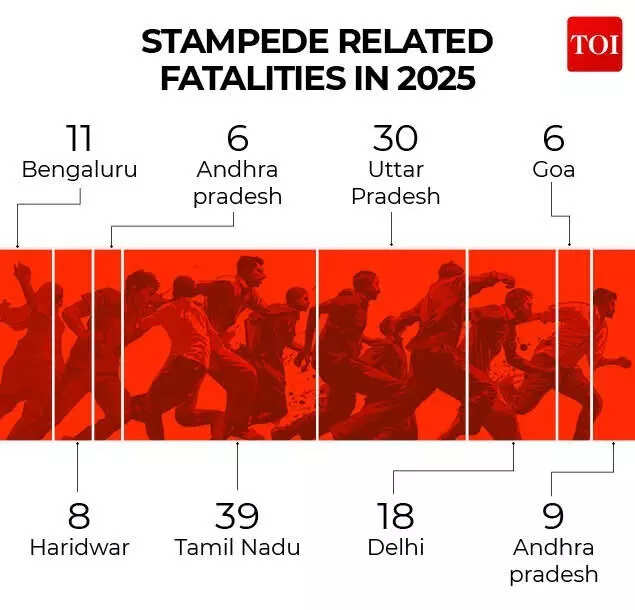
India witnessed a tragic year in 2025 with eight stampedes across various public gatherings, claiming 127 lives

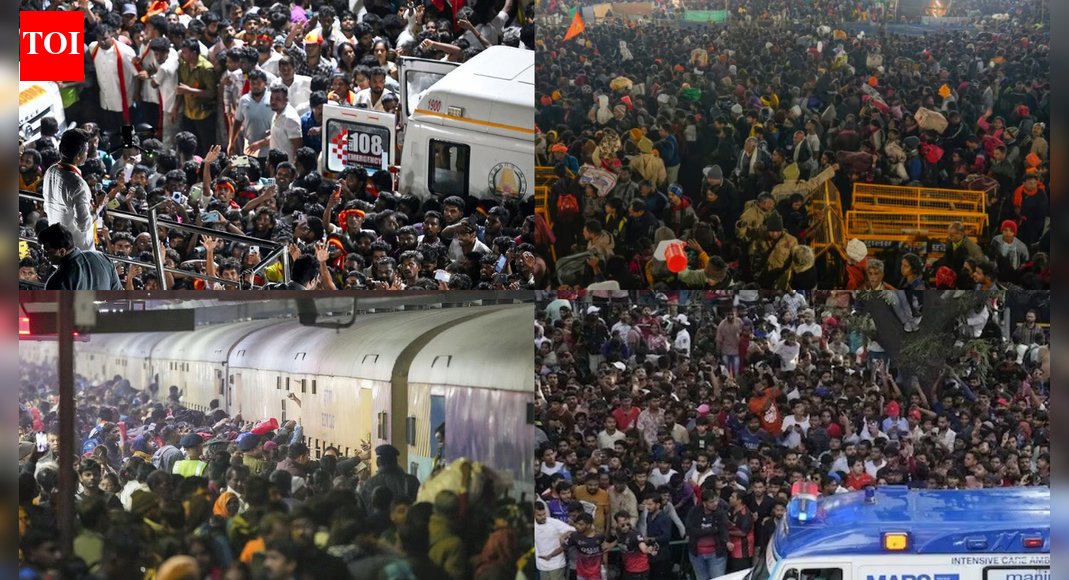
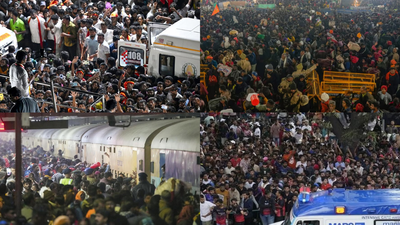
NEW DELHI: Chaos, screams and desperate struggles for space have marked India’s major public gatherings in 2025. From temples and festivals to railway stations, political rallies, and sporting celebrations, narrow pathways, overcrowding, and insufficient planning turned moments of joy and devotion into scenes of horror. Across the year, eight stampedes in different states claimed 127 lives, revealing a recurring pattern of preventable tragedies and raising urgent questions about crowd safety in the country’s growing urban and religious gatherings.

Deadly Stampede at Andhra Pradesh After Chaos, Panic Strikes Venkateswara Temple, At Least 10 Dead

2025 Stampedes: 127 fatalities across 8 locations

Temple in Tirumala Hills: Morning rush turns fatal

Six killed in Tirumala temple rush amid overcrowding

Six killed in Tirumala temple rush amid overcrowding

Chaos erupted at the Sri Venkateswara Swamy Temple in Tirumala Hills, Andhra Pradesh, on 9 January. Six devotees died during a morning rush inside the temple complex. Narrow corridors and high-density crowds quickly turned the sacred space into a trap. Despite later improvements, stronger railings and adjusted crowd routes, a repeat incident in November suggested that safety measures were either insufficient or poorly maintained.Mahakumbh stampede: Pilgrims trapped in Prayagraj

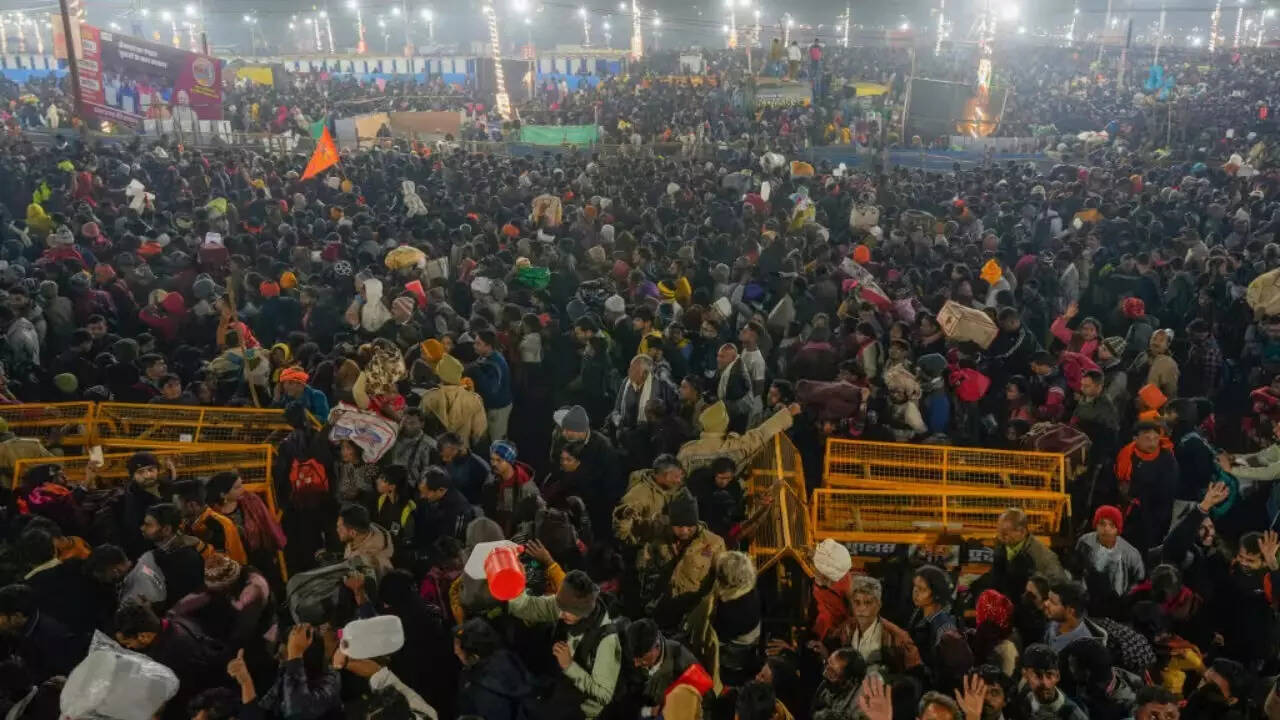
Thirty pilgrims die in Mahakumbh stampede on narrow Prayagraj pathway

Thirty pilgrims die in Mahakumbh stampede on narrow Prayagraj pathway

Just weeks later, on 29 January, tragedy struck the Mahakumbh in Prayagraj. Pilgrims moving through a narrow pathway became stuck when the flow slowed. A barricade tilted, causing people to stumble and panic to spread rapidly. By the time authorities restored order, thirty people had lost their lives. The incident highlighted the dangers of old pathways struggling to handle surging crowds, even during heavily planned events.New Delhi Railway Station: Footbridge surge

Eighteen killed in New Delhi station footbridge crush

Eighteen killed in New Delhi station footbridge crush

On 15 February, an overcrowded footbridge at New Delhi Railway Station became a scene of panic. A delayed train caused passengers to surge in multiple directions, creating a dangerous bottleneck. With no immediate announcements or guidance, eighteen people died and many were injured. Witnesses said the confusion in the first critical minutes allowed the situation to spiral out of control.Goa’s Lairai Jatra: Weak barricades, deadly pressure

Six killed during the Shree Lairai Zatra festival in Shirgao village of Bicholim in Goa

Six killed during the Shree Lairai Zatra festival in Shirgao village of Bicholim in Goa

During the Lairai Jatra on 3 May in Shirgao village, Goa, six devotees were killed. A surge near a fire ritual overwhelmed temporary barricades that were too weak to withstand the crowd. Residents said previous warnings about crowd movement in the area had not led to meaningful safety improvements.Bengaluru IPL celebration: Victory marred by tragedy

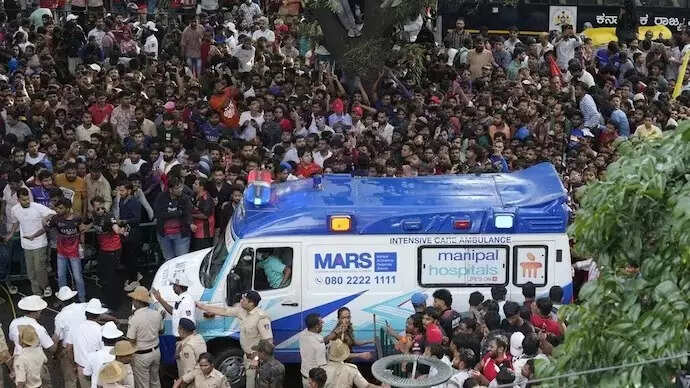
11 people died in the stampede on June 4 after RCB’s first IPL title win in Bengaluru

11 people died in the stampede on June 4 after RCB’s first IPL title win in Bengaluru

The celebrations outside M Chinnaswamy Stadium on 4 June, after RCB’s first IPL title win, turned deadly. Tens of thousands of fans filled the streets, and a narrow opening between barricaded sections became a critical choke point. Pressure built rapidly, leaving people unable to breathe or move. Police struggled to reach the center of the crowd, and by the time a path was opened, eleven people had died. The incident sparked national debate about urban crowd management.Haridwar pilgrimage: Narrow path, fatal surge

8 killed in stampede at Haridwar’s Mansa Devi temple

8 killed in stampede at Haridwar’s Mansa Devi temple

On 27 July, eight pilgrims died along the steep and narrow route to the Mansa Devi temple in Haridwar. Sharp turns and limited walking space caused the crowd to compress dangerously when movement stalled. Several victims were elderly and unable to withstand the force from behind, highlighting the ongoing risks of traditional pilgrimage routes.Karur political rally: When enthusiasm turns lethal

Thirty-nine die in Karur rally stampede during Vijay event

Thirty-nine die in Karur rally stampede during Vijay event

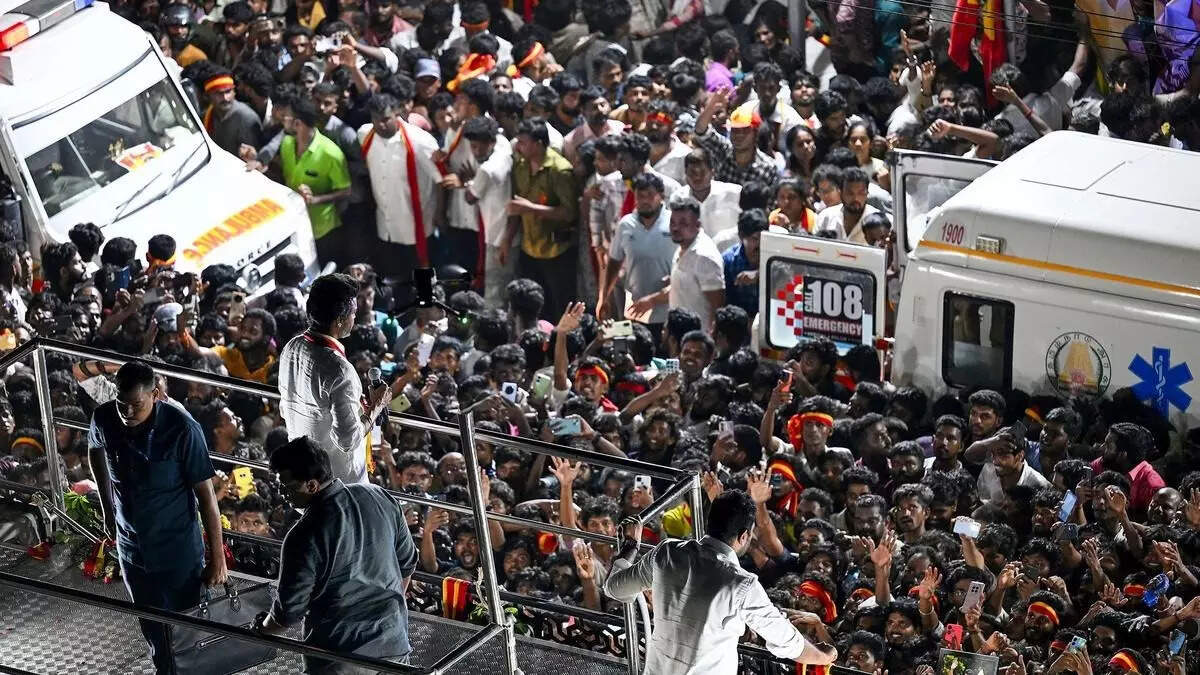
On 27 September in Karur, Tamil Nadu, a political rally addressed by actor-turned-politician Vijay drew crowds far exceeding expectations. A sudden surge pushed people into metal barricades, while those behind continued moving, unaware of the danger ahead. Thirty-nine people died, making it the deadliest stampede of 2025. Observers criticised the lack of planning, especially for a state with a history of crowd-control challenges during large rallies.Kasibugga temple: Year closes with tragedy

Nine killed in Kasibugga temple stampede, puja items amid broken railings

Nine killed in Kasibugga temple stampede, puja items amid broken railings

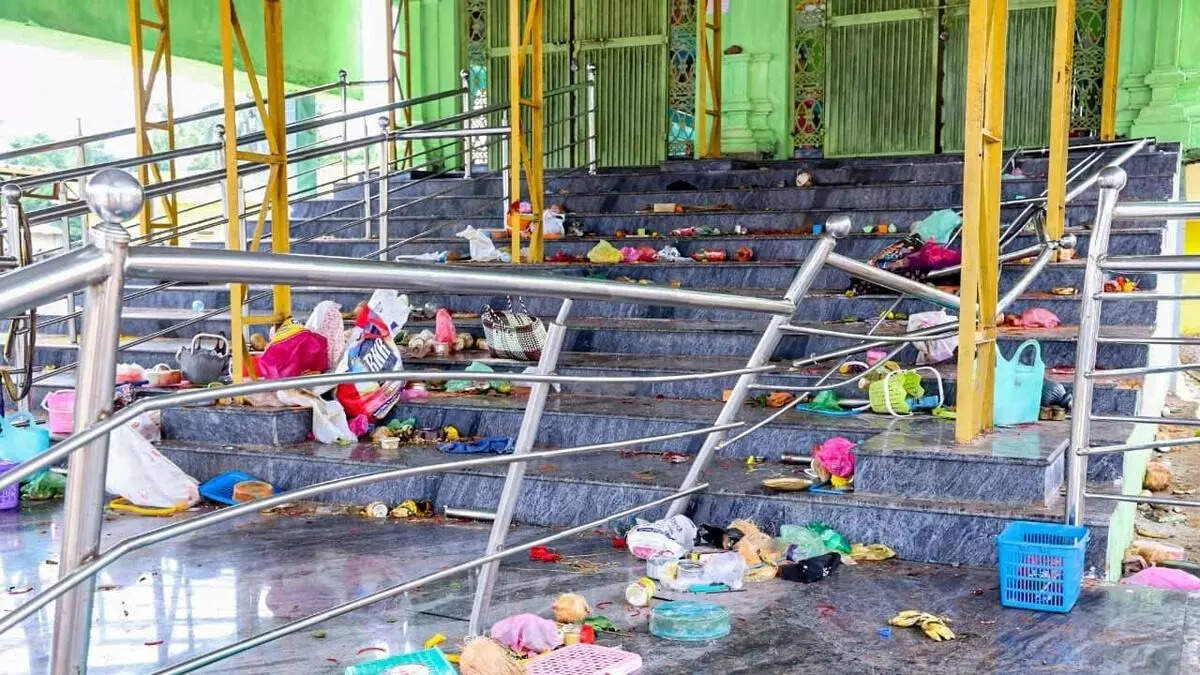
On 1 November, nine devotees died at the Sri Venkateswara Swamy Temple in Kasibugga, Andhra Pradesh. A narrow entry point became overcrowded, creating a bottleneck. Survivors said they could not move, and officials struggled to reach the victims in time. This incident brought the year’s death toll to 127, highlighting how recurring patterns of overcrowding and poor infrastructure continue to claim lives.Expert insight: Why stampedes happenExperts say these tragedies follow predictable dynamics. Once crowd density exceeds five people per square metre, individuals lose control over movements. Most deaths occur from compressive asphyxia, not panic. Narrow, uneven, and poorly lit pathways, combined with weak barricades and slow emergency responses, make even routine events dangerous. Survivor accounts from across the country describe fear, helplessness, and the inability to move once pressure builds.Global lessons and the road aheadCountries like Saudi Arabia, South Korea, Nigeria, and Indonesia have reduced crowd fatalities through technology, training, and strict protocols. Experts urge India to adopt a national crowd-safety framework, enforce density limits, train marshals, redesign high-risk pathways, conduct drills, and educate the public on safe behavior.The human tollBeyond fatalities, these incidents leave lasting trauma. Families grieve, survivors experience long-term anxiety, local communities are shaken, businesses face disruption, and first responders bear psychological burdens. Repeated tragedies show that effective crowd management is possible—but only when planning, infrastructure, monitoring, and enforcement work together consistently.


Source link

Delhi schools shift to hybrid mode for Classes 1–9 and 11 as pollution worsens under GRAP-IV


Delhi schools shift to hybrid mode for Classes 1–9 and 11 as pollution worsens under GRAP-IV
GRAP-IV triggers hybrid learning in Delhi schools as AQI crosses severe levels

Delhi schools hybrid classes 2025: Schools across Delhi shifted to hybrid classes for students from Classes 1 to 9 and Class 11 with immediate effect as air quality deteriorated to severe levels and authorities enforced stricter measures under the Graded Response Action Plan, stage IV.The Directorate of Education issued directions to all government, government-aided and unaided recognised private schools, as well as institutions run by NDMC, MCD and the Delhi Cantonment Board, to allow both physical and online attendance wherever feasible.Hybrid learning for most classesThe order stated that schools must conduct classes in a hybrid mode, combining in-person teaching with online lessons, for children up to Class IX and Class XI, while Classes X and XII were excluded from the arrangement.In the circular, the Directorate clarified that the option to attend online classes, where available, would rest with students and their guardians, and schools were instructed to immediately inform parents of the change.Monitoring and compliance measuresDistrict and zonal education officers were directed to visit schools under their jurisdiction to ensure proper compliance with the instructions, according to officials quoted by the TNN in the report.Air quality triggers GRAP-IVDelhi recorded its worst air quality of the year, with the 24-hour average AQI standing at 431, while readings later crossed 450, pushing pollution into the severe plus category, officials said in statements cited by the TNN.The Commission for Air Quality Management imposed stage III measures earlier in the day before escalating to stage IV as conditions worsened, citing unfavourable meteorological factors, calm winds and pollutant accumulation, according to details shared with the TNN.

  • Read the official statement here

Work-from-home and transport restrictionsAlongside school measures, the Delhi government ordered all public and private offices to operate with no more than 50 per cent staff physically present, while the remaining employees were required to work from home.The restrictions also included a ban on construction and demolition activities, limits on non-essential truck entry, and prohibitions on BS-III petrol and BS-IV diesel vehicles, while essential services such as hospitals, public transport and utilities were exempted, officials told the TNN.Officials said the measures were aimed at preventing further deterioration in air quality, advising children, the elderly and people with chronic illnesses to avoid outdoor activities until pollution levels show sustained improvement, according to advisories referenced by the TNN.Authorities stated that all stages of GRAP remain in force across Delhi-NCR, and enforcement agencies have been instructed to ensure strict implementation of the curbs until further orders, a senior official said in conversation with the TNN. No timeline for easing restrictions was indicated in the communication issued to concerned departments.


Source link

BBL 2025-26: Broadcast, Live Streaming details – When and where to watch the Big Bash League in Australia, India, USA, UK & other countries


The fifteenth season of Australia’s premier men’s T20 competition, the Big Bash League (BBL|15), is set to light up the summer from December 14, 2025, to January 25, 2026. Cricket fans around the world can prepare for a feast of high-octane action with comprehensive broadcast and live streaming coverage secured… Read full article at CricketTimes.com


Source link

Delhi chokes on ‘Severe plus’ AQI: Smog engulfs city, low visibility; key points | Delhi News


Delhi chokes on ‘Severe plus’ AQI: Smog engulfs city, low visibility; key points

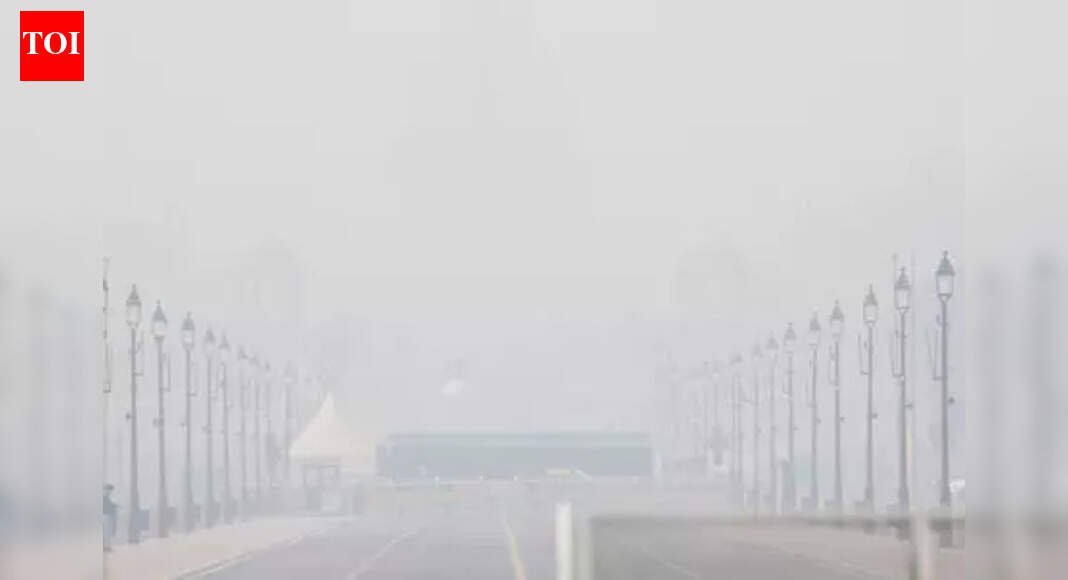
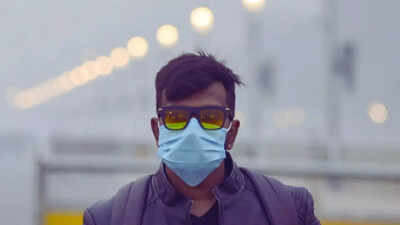
NEW DELHI: Delhi and its neighbouring areas were blanketed in dense smog on Sunday, as the city’s Air Quality Index (AQI) soared to hazardous levels. Early morning readings from the Central Pollution Control Board (CPCB) showed the AQI at 491 at 7 am, categorising the air as “severe plus”.A thick layer of smog severely reduced visibility across the capital, causing discomfort for commuters.

Rahul Gandhi Demands Unified National Response As Parliament Debates India’s Air Pollution Crisis

All 40 monitoring stations in the city recorded “severe” pollution levels, with Rohini in northwest Delhi topping the chart at 499. Jahangirpuri and Vivek Vihar followed closely with AQI readings of 495.The Commission for Air Quality Management (CAQM) invoked Stage IV of the Graded Response Action Plan (GRAP) — the strictest pollution control measure under the winter plan — following the record-high readings.Under Stage IV measures

  • All construction and demolition activities, including major public projects, have been suspended.
  • Entry of BS-IV and lower diesel trucks is restricted, except for vehicles carrying essential commodities; CNG, LNG, electric, and BS-VI diesel trucks are allowed.
  • Schools up to classes IX and XI are to operate in hybrid mode, allowing students to attend online.
  • Government and private offices must run at 50% capacity.
  • Residents, particularly children, the elderly, and those with chronic illnesses, are advised to remain indoors and wear masks when outside.

Experts attributed the spike to high emissions combined with low wind speeds, winter inversion conditions, and poor pollutant dispersion. Anumita Roychowdhury, Executive Director at the Centre for Science and Environment, said: “This is a stark reminder of the urgent need to reduce emissions from vehicles, industries, waste burning, construction, and household fuels.”The India Meteorological Department (IMD) also issued a yellow alert for dense fog in isolated parts of Delhi, with visibility dropping below 200 metres in some areas. Moderate fog is expected throughout the day.Delhi last experienced a “severe plus” AQI day on 19 December last year, when the index hit 451. Authorities have warned that meteorological conditions are likely to remain unfavourable in the coming days.CM Rekha Gupta stated that no stubble-burning incidents had been recorded in Delhi this year, crediting coordinated efforts by agriculture and environment departments. However, data from the Indian Agricultural Research Institute reported five cases in the north district.Residents have been urged to minimise outdoor activity and follow all safety measures issued by CAQM and government authorities.


Source link

China’s smaller manufacturers look to catch the automation wave


China's smaller manufacturers look to catch the automation wave

In a light-filled workshop in eastern China, a robotic arm moved a partially assembled autonomous vehicle as workers calibrated its cameras, typical of the incremental automation being adopted even across smaller factories in the world’s manufacturing powerhouse.China is already the world’s largest market for industrial robots, and the government is pouring billions of dollars into robotics and artificial intelligence to boost its presence in the sector.

‘No Free Lift For India’: PM Modi’s Chief Economic Adviser Says China Won’t Repeat West’s Mistake

The first essentially humanlessfactoriesare already in operation, even as widespread automation raises questions about job losses as well as the cost and difficulty of transition for smaller and medium-sized companies. The answer for many is a hybrid approach, experts and factory owners told AFP. At the autonomous vehicle workshop, manager Liu Jingyao told AFP that humans are still a crucial part of even technologically advanced manufacturing. “Many decisions require human judgement,” said Liu, whose company Neolix produces small van-like vehicles that transport parcels across Chinese cities. “These decisions involve certain skill-based elements that still need to be handled by people.”At the Neolix factory, 300 kilometres (186 miles) north of Shanghai, newly built driverless vehicles zoomed around a testing track simulating obstacles including puddles and bridges.In a closed-off room, workers assembled vehicles’ “brains”, testing their cameras and computer chips.“Automation… primarily serve(s) to assist humans, reducing labour intensity rather than replacing them,” Liu said.But Ni Jun, a mechanical engineering expert at Shanghai’s Jiaotong University, said China’s strategy of focusing on industrial applications for AI means full automation is already feasible in many sectors.Among others, tech giant Xiaomi operates a “dark factory” — where the absence of people means no need for lights — with robotic arms and sensors able to make smartphones without humans.– Digital divide –Ni described a “digital divide” between larger companies with the funds to invest heavily in modernisation, and smaller businesses struggling to keep up.For Zhu Yefeng’s Far East Precision Printing Company, part of China’s vast network of small independent factories employing up to a few dozen people each, full automation is a distant dream.At the company just outside Shanghai, workers in small rooms fed sheets of instruction manuals into folding machines and operated equipment that printed labels for electronic devices.The company used pen and paper to track its workflow until two years ago, with managers having to run around the factory to communicate order information.“Things were, to put it bluntly, a complete mess,” Zhu told AFP.The company has since adopted software that allows employees to scan QR codes that send updates to a factory-wide tracker.On a screen in his office, Zhu can see detailed charts breaking down each order’s completion level and individual employees’ productivity statistics.“This is a start,” Zhu told AFP. “We will move toward more advanced technology like automation, in order to receive even bigger orders from clients.”Financial constraints are a major barrier though. “As a small company, we can’t afford certain expenses,” said Zhu. His team is trying to develop its own robotic quality testing machine, but for now humans continue to check final products.– Employment pressures –The potential unemployment caused by widespread automation will be a challenge, said Jacob Gunter from the Berlin-based Mercator Institute for China Studies. “Companies will be quite happy to decrease their headcount… but the government will not like that and will be under a lot of pressure to navigate this,” Gunter told AFP.Beijing’s push to develop industrial robots will “intersect with the need for maintaining high employment at a time when employment pressure is considerable”, he added. Going forward, manufacturers must strike a balance “between the technical feasibility, social responsibility, and business necessity”, Jiaotong University’s Ni told AFP.Zhou Yuxiang, the CEO of Black Lake Technologies — the start-up that provided the software for Zhu’s factory — told AFP he thought factories would “always be hybrid”. “If you ask every owner of a factory, is a dark factory the goal? No, that’s just a superficial description,” Zhou said. “The goal for factories is to optimise production, deliver things that their end customers want, and also make money.”


Source link

Access Denied


Access Denied

You don’t have permission to access “http://www.ndtv.com/world-news/brown-university-shooting-brown-university-news-us-shooting-going-to-run-love-you-us-students-chilling-text-to-mother-amid-gunfire-9805814” on this server.

Reference #18.77fdd417.1765680415.2b7c696d

https://errors.edgesuite.net/18.77fdd417.1765680415.2b7c696d


Source link