Breaking News
Akshaye Khanna was reportedly about to marry Karisma Kapoor, her father Randhir Kapoor sent a proposal to Vinod Khanna; here’s what happened then | Hindi Movie News


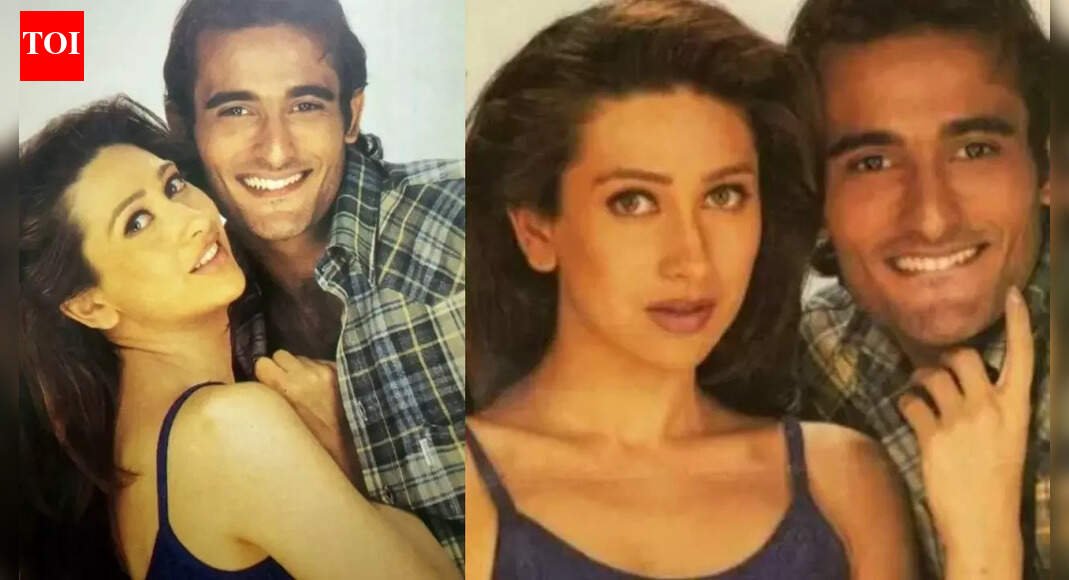
Akshaye Khanna is undoubtedly the man of the moment as the internet cannot stop gushing over him, ever since the release of ‘Dhurandhar’. The actor was seen in a starkly different role in ‘Chhaava’ earlier this year. As netizens continue to talk about him, there’s curiosity surrounding his personal life. The actor isn’t married and a video of him talking about being really happy alone and single is viral online. However, Akshaye was one rumoured to almost marry Karisma Kapoor. Karisma and Akshaye grew close after doing a photoshoot together in the 1990s, which soon led to a relationship. At the time, reports suggested that Karisma had recently ended her relationship with Ajay Devgn and found comfort in Akshaye. Her father, Randhir Kapoor, was happy with the match and even sent a marriage proposal to Akshaye’s father, Vinod Khanna. The wedding talks had progressed well, but Karisma’s mother, Babita Kapoor, stepped in and stopped it as per reports. Karisma was at the peak of her career and stardom then, and Babita wanted her to focus on work. She was also reportedly unsure about Akshaye’s career at that point. As a result, the marriage did not happen.

Bollywood’s Biggest ‘What If’: How Babita Kapoor Stopped the Akshaye–Karisma Wedding

Later, Karisma got engaged to Abhishek Bachchan and the announcement was made publicly by Jaya Bachchan, but that relationship also ended. Eventually, Karisma married businessman Sanjay Kapur in 2003. The couple had two children before they separated, and their divorce was finalised in 2016. Sunjay Kapur passed away this year in June due to reportedly swallowing a bee which led to a heart-attack. Karisma also has been in the news as after her ex-husband’s demise, there’s a feud going on regarding his Rs 30,000 crore estate. Karisma’s children have filed a plea in court and alleged that Sunjay’s widowed wife Priya has forged his will.


Source link

Rahul Chahar reveals his all-time IPL XI, no place for Andre Russell and Sunil Narine


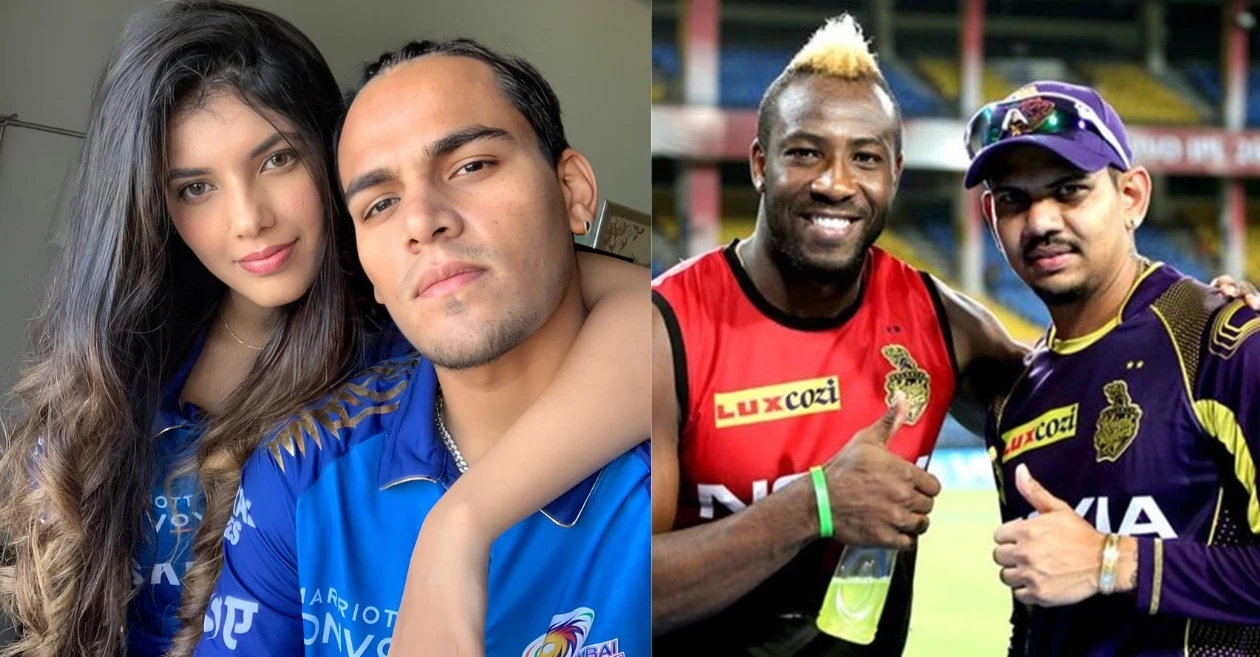
Rahul Chahar has named his all-time IPL XI and sprung a huge surprise by omitting Kolkata Knight Riders’ (KKR) iconic match-winners Andre Russell and Sunil Narine. The Indian leg-spinner instead stacked his side with proven top-order stars and specialist T20 bowlers in an Instagram chat with Crictracker.

Rahul Chahar picks his all-time IPL XI ahead of the 2026 season 

At the top, Rohit Sharma and Brendon McCullum form an explosive right-hand opening pair, with Chris Gayle slotting in as another devastating presence at the top or at No.3. Virat Kohli and Suryakumar Yadav offer stability plus high-tempo scoring in the middle overs, while Hardik Pandya adds the dual value of big-hitting and seam-bowling. MS Dhoni’s presence at No.6 or No.7 provides finishing power as well as unmatched leadership and game awareness.

Rashid Khan leads the spin department alongside Yuzvendra Chahal, giving captain Dhoni two elite wicket-taking options in the middle overs. Among the pacers, Jasprit Bumrah and Bhuvneshwar Kumar handle the new ball and death overs, offering both control and penetration.

The 2026 IPL season is scheduled from March 15 – May 31, after the ICC Men’s T20 World Cup.

No place for Andre Russell or Sunil Narine in Rahul Chahar’s all-time IPL XI

The biggest talking point from Chahar’s XI is the absence of KKR legends Andre Russell and Sunil Narine, both widely regarded as among the greatest impact players in IPL history. Their exclusion suggests Chahar was willing to move away from sentiment and focus instead on recent form, consistency, and his own comfort as a bowler facing particular opponents. It also underlines how franchises and players increasingly value reliability across seasons rather than isolated explosive campaigns.

Also READ: Breakdown of Andre Russell’s IPL salary since his debut – From 2012 to 2025

By leaving out Russell, Chahar has effectively chosen stability over a boom-or-bust finisher who can win games single-handedly but has also struggled with injuries and consistency in recent years. Narine’s omission, meanwhile, highlights the depth of spin options available in IPL history, where names like Rashid and Chahal can edge ahead on economy, adaptability and current effectiveness.

Rahul Chahar’s all-time IPL XI

Rohit Sharma, Brendon McCullum, Chris Gayle, Virat Kohli, Suryakumar Yadav, Hardik Pandya, MS Dhoni, Rashid Khan, Bhuvneshwar Kumar, Yuzvendra Chahal, Jasprit Bumrah.

Also READ: No David Warner! Mandeep Singh reveals his all-time IPL XI


Source link

Watch: FBI shares surveillance video of far-left terror group plotting New Year’s Eve attack in Los Angeles


Watch: FBI shares surveillance video of far-left terror group plotting New Year’s Eve attack in Los Angeles

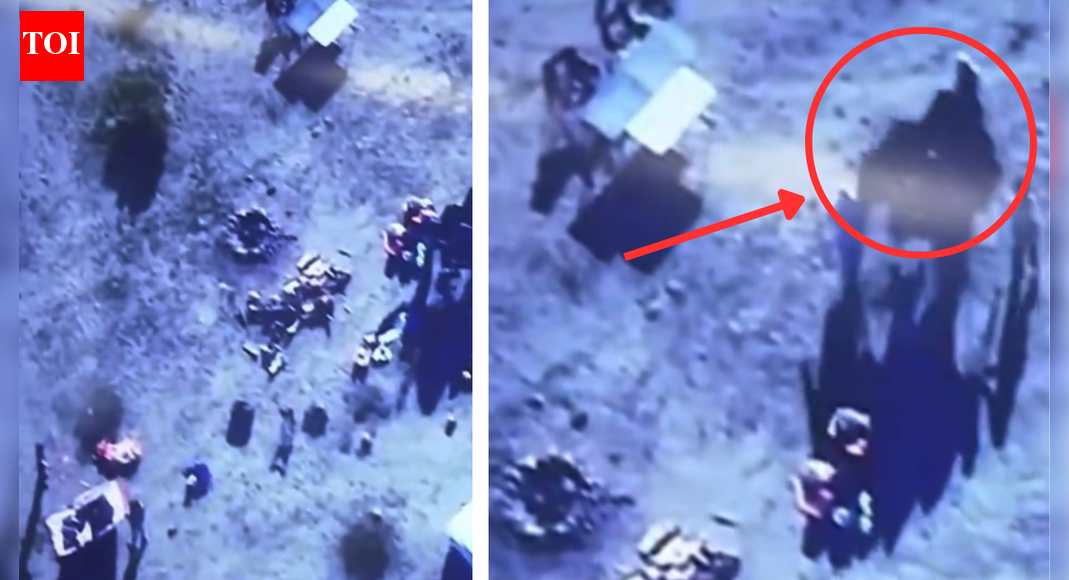
FBI foiled a suspected New Year’s Eve terror plot in California, releasing surveillance footage of the extremists just before their arrest.Four alleged members of a far-left pro-Palestinian anti-government group called the Turtle Island Liberation Front were apprehended last week while travelling east of Los Angeles to test improvised explosive devices (IEDs), officials said. The group is suspected of planning coordinated bomb attacks at at least five locations across the region.US Attorney General Pam Bondi posted on X that authorities prevented “far-left” extremists from executing “a massive and horrific terror plot”.The suspects were identified as: Audrey Illeene Carroll, 30; Zachary Aaron Page, 32; Dante Gaffield, 24; and Tina Lai, 41.The quad face charges, including conspiracy and possession of an unregistered destructive device, according to a complaint filed in the US District Court for the Central District of California.Officials said the group travelled to the desert with “precursor chemicals” on December 12, intending to build bombs. A surveillance plane captured their movements, and the FBI and Los Angeles SWAT team arrested the quartet without incident.The plot reportedly targeted two logistics centres at midnight on New Year’s Eve. The group also allegedly discussed attacking Immigration and Customs Enforcement (ICE) agents and vehicles in January or February. One of the extremists, Carroll, allegedly said: “That would take some of them out and scare the rest of them.”LAPD Chief Jim McDonnell praised the coordinated effort. “The successful disruption of this plot is a powerful testament to the strength of our unified response,” he said, adding that collaboration with allied agencies “prevented a potential tragedy and reaffirmed our shared commitment to safeguarding our communities”.The FBI has said the investigation is ongoing to identify any additional suspects connected to the plot.


Source link

G RAM G to replace NREGA, guarantee 125 days of work | India News


G RAM G to replace NREGA, guarantee 125 days of work

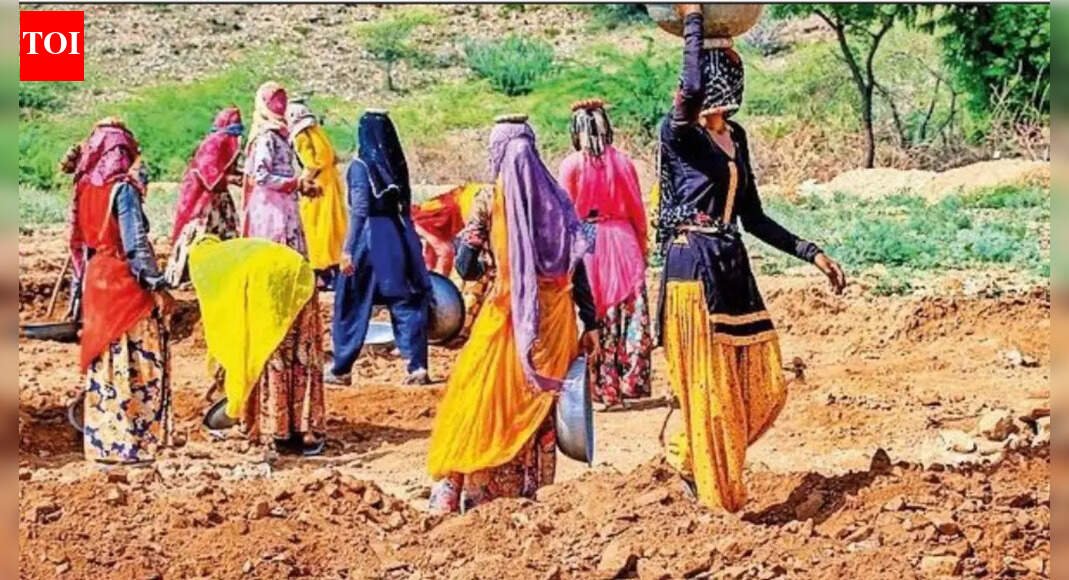
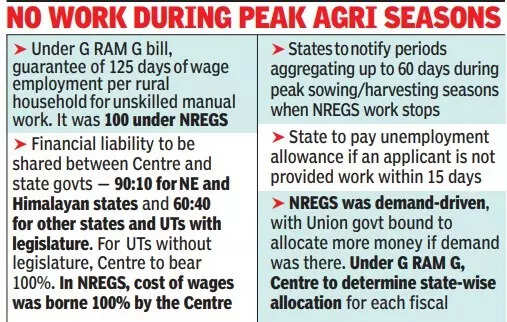
NEW DELHI: Set to consign the Congress-stamped MGNREGA to history, Modi govt will unveil a new law on guaranteed unskilled rural jobs, with a structure that will shift the Centre’s financial burden to states, provide fixed budgets for states instead of the present practice of it being demand-driven, and annually pause the scheme for two months during the agricultural season – in tweaks that will rewrite the concept of job guarantee from what has been known for the last two decades.Titled ‘Viksit Bharat Guarantee for Rozgar and Ajeevika Mission (Gramin) (VB-G RAM G) Bill, 2025’, the bill will repeal MGNREGA, and put in place an implementation paraphernalia that is similar to the job scheme even as it diverges on consequential provisions. Also, it hikes the promised employment for a rural household from 100 days under MGNREGA to 125 days.The bill, set to draw protests from the opposition in Parliament, was not tabled Monday even though it was listed in the agenda.As per the proposed Act, the Centre will bear 60% of the cost, while states will bear the remaining 40%. In case of NE states and hill states of Uttarakhand, Himachal and J&K, the fund-sharing between the Centre and state will be 90:10.

Screenshot 2025-12-16 005355

.

Unlike MGNREGA, demand won’t drive new schemeThis fund-sharing formula is a major departure from MGNREGA, as it constitutes a flat division of costs on the lines of a “centrally sponsored scheme”, without the distinctions of “labour cost” and “material cost” as prevalent under MGNREGA.Under MGNREGA, Centre bears the entire cost of labour budget (wages) and 75% of material cost, besides a big part of administrative expenditure.Moreover, the scheme will no longer be “demand-driven” as under MGNREGA in which budget for states is cleared according to “work plan” and “labour budget” — anticipated work demand — presented to Union rural development ministry by individual states at start of the year. In contrast, in new law, as per Sec 22, Centre will determine annual state-wise “normative allocation” based on parameters to be laid down. The “normative allocation” is defined as allocation of fund being made so far by Centre to state. Any expenditure above the “normative allocation” will be borne by the state.Most importantly, ‘VB-G RAM G’ will not be in operation for two months of a year, which would be notified as “peak agricultural seasons” — 60 days to correspond with sowing & harvesting, and which states will announce in advance. As per Section 6, no work shall be commenced or executed during this period. The govt’s rationale for the 60-day pause is “to facilitate adequate availability of agricultural labour during the said period”. Essentially, the govt has agreed with the claims that MGNREGA is responsible for shortage of agricultural labour during peak seasons.In finer detail of the implementation framework, provisions of proposed bill mirror details of MGNREGA — from fixation of wages to the role of panchayats to setting up of monitoring authorities like “central gramin rozgar guarantee council” and its state counterparts, audit, preparation of village and block development plans. A job-seeker will still be entitled to “unemployment allowance” to be paid by state, if s/he is not provided work within a fortnight of demand. The wages under the new scheme will be similar to the one under MGNREGA.The programme will now be a centrally-sponsored scheme, and every state govt will have to prepare a scheme within six months after the commencement of the Act.


Source link

‘Hold one end like Virat Kohli’: Former India wicketkeeper’s blunt message to Shubman Gill | Cricket News


'Hold one end like Virat Kohli': Former India wicketkeeper’s blunt message to Shubman Gill
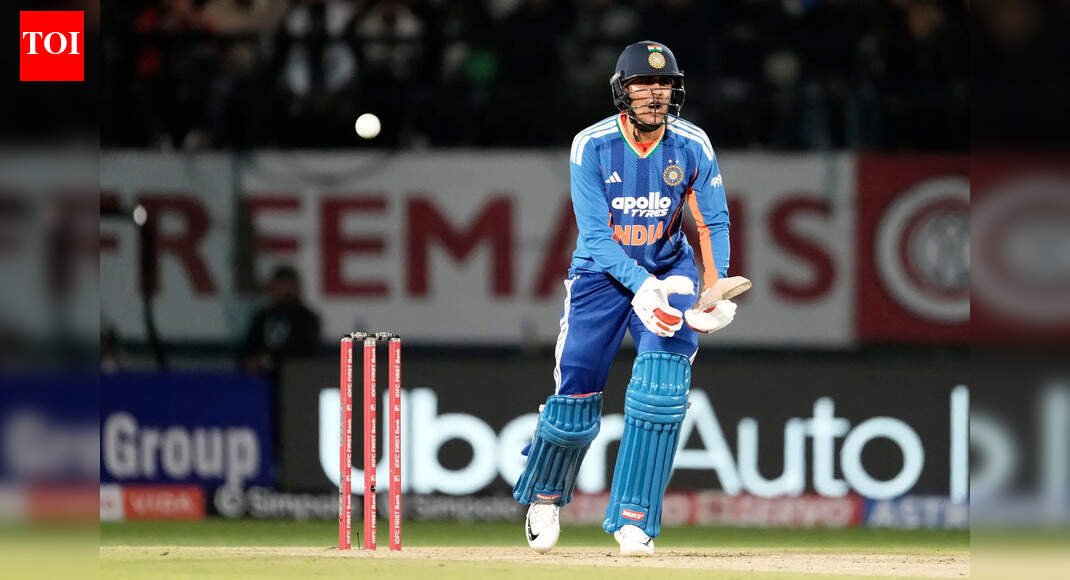
India’s Shubman Gill (AP Photo/Ashwini Bhatia)

Former India wicketkeeper-batter Deep Dasgupta believes Shubman Gill needs to redefine his role in India’s T20I side by becoming the anchor around whom the rest of the batting revolves, much like Virat Kohli did for years in the format. Gill, India’s current T20I vice-captain, returned to the shortest format during the Asia Cup and was named Suryakumar Yadav’s deputy. However, his output has not matched expectations. The Indian Test and ODI captain has scored only 291 runs from 15 T20I innings so far, a modest return for a batter of his calibre.

Ashish Nehra interview: Gujarat Titans head coach backs out of form Shubman Gill

Dasgupta feels Gill’s value lies not in explosive strike rates but in providing stability at one end. Speaking to PTI Videos, he said most of India’s current batters are natural stroke-makers, which makes Gill’s role different and more structural. “For me, Shubman’s role is very different. If you look at the rest of the players, most of them are stroke players. That is the kind of role Virat played so well for so many years, holding one end while everyone else played around him,” Dasgupta said. He added that Gill should be seen as the pivot of the batting unit rather than someone expected to match the strike rates of others. “I see Shubman in that role Virat played. He is the fulcrum around whom the rest of the batting revolves. Not necessarily with a very high strike rate, but by being more consistent than the others,” he explained. India, the defending champions, will begin their T20 World Cup title defence against the USA in Mumbai on February 7. With limited matches left before the tournament, Dasgupta admitted there would be concern around form, particularly with both Gill and captain Suryakumar Yadav struggling for runs. “Ideally, you would want them to start firing again. If you want players to be fearless, that comes at a cost, and that cost is consistency. That is something you have to be mindful of,” he said. He acknowledged the lack of game time before the World Cup but backed the quality of the players to come good. “We would want Surya and everyone to be in form, but they are good enough. Hopefully, it is just a matter of time,” Dasgupta added. On the ongoing discussion around split coaching for India following their Test series whitewash against South Africa, Dasgupta dismissed the idea as a temporary fix. He stressed that India’s red-ball issues require a deeper and more holistic solution. “Those are band-aid solutions. Where the Indian Test team is right now, it needs a more rounded solution. Otherwise, you are just treating the symptoms, and that becomes a knee-jerk reaction,” he said. Dasgupta also weighed in on the future of senior batters Rohit Sharma and Virat Kohli ahead of the 2027 World Cup, saying their ability was never in doubt. The real question, according to him, is about sustainability and workload. “They are absolute giants of the game. It would be foolish to doubt their credentials. The key is sustainability. I am glad they are playing the Vijay Hazare Trophy, and I hope they continue playing competitive cricket, both domestic and overseas, leading up to 2027,” he said. On Chennai Super Kings signing Sanju Samson, Dasgupta advised caution regarding leadership responsibilities. While he expects Samson to be part of the leadership group, he believes the franchise should allow him time to settle into the setup. “I would like to see him eased into leadership rather than being forced into it straight away,” Dasgupta concluded.


Source link

Jordan visit: PM Modi meets King Abdullah II in Amman; leaders discuss Gaza, counter-terrorism | India News


Jordan visit: PM Modi meets King Abdullah II in Amman; leaders discuss Gaza, counter-terrorism

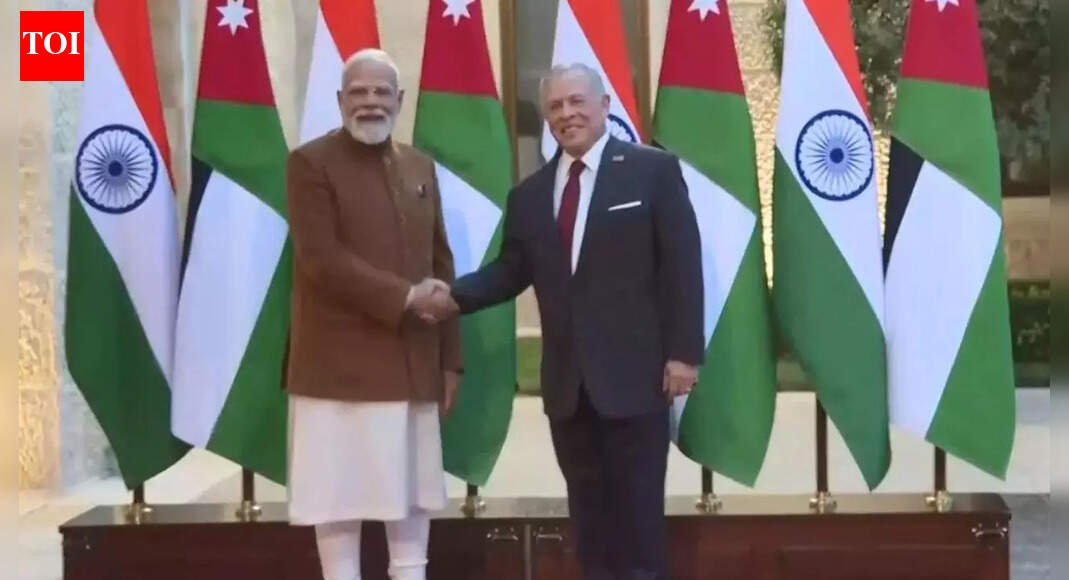
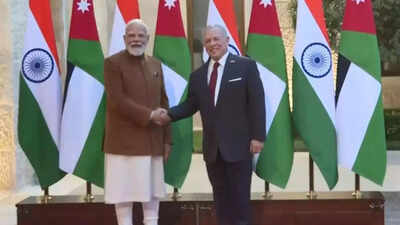
Prime Minister Narendra Modi met Jordan’s King Abdullah II bin Al Hussein at the Husseiniya Palace in Amman on Monday for delegation-level talks, marking his first bilateral visit to Jordan in 37 years. The leaders discussed bilateral relations, regional issues, and counter-terrorism efforts while celebrating 75 years of diplomatic ties between the two nations.The meeting focused on strengthening cooperation across multiple sectors and addressing regional stability, particularly concerning Gaza.Prime Minister Modi recalled their previous interactions on extremism and moderation, including their first meeting at the UN in 2015 and the King’s visit to India in 2018.“During your visit to India in 2018, we participated in a conference on Islamic heritage. I recall that our first meeting also took place on the sidelines of the UN in 2015, at an event focused on countering violent extremism. Even then, you delivered inspirational remarks on this subject. Your efforts to promote moderation are extremely important not only for regional peace but also for global peace. We will continue to move forward concretely in this direction together. We will further strengthen all other dimensions of our mutual cooperation,” PM Modi said.PM Modi also acknowledged Jordan’s stance against terrorism and praised King Abdullah II’s role in promoting regional stability, particularly regarding Gaza.“You have played a very active and positive role on the issue of Gaza from the very beginning. We all hope that peace and stability will prevail in the region. We share a common and clear stance against terrorism. Under your leadership, Jordan has sent a strong and strategic message to all of humanity against terrorism, extremism, and radicalisation,” PM Modi stated.King Abdullah II welcomed the signing of new agreements and emphasised the potential for increased business cooperation.“We warmly welcome the signing of the agreements and MoUs during your visit, as they will further advance our cooperation and open new avenues for collaboration. We also look forward to the Jordan-India Business Forum taking place tomorrow as an opportunity to discuss business-to-business partnerships and the potential for joint investments in vital sectors,” the King said.The Jordanian monarch also highlighted the strong partnership between the two nations.“Our nations enjoy a strong partnership and a shared desire to advance prosperity for our peoples. And over the years, our collaboration has expanded across multiple sectors. Your visit today provides an important opportunity to chart new paths of economic cooperation across industry, ICT, pharmaceuticals, agriculture, energy, and many more promising fields of mutual benefits for our people,” King Abdullah II stated.PM Modi was welcomed at the airport by Jordanian Prime Minister Jafar Hassan, who expressed optimism about the visit on social media.“It is an honour to welcome Prime Minister Modi of the Republic of India to Jordan today, as a valued guest, in a visit that reflects seventy-five years of close and enduring relations,” Hassan posted.Upon arrival at his hotel, PM Modi met with members of the Indian community in Jordan.“Deeply touched by the warm welcome extended by the Indian community in Amman. Their affection, pride in India’s progress and strong cultural bonds reflect the enduring connection between India and its diaspora. Also grateful for the role the diaspora continues to play in strengthening India-Jordan relations,” PM Modi shared on social media.India and Jordan maintain strong economic ties, with India being Jordan’s third-largest trading partner and bilateral trade reaching USD 2.8 billion. Jordan serves as a major supplier of fertilizers to India, particularly phosphates and potash. The country hosts an Indian diaspora of over 17,500 people working in various sectors including textiles, construction, and manufacturing.This visit marks the first stop of Modi’s four-day, three-nation tour.


Source link

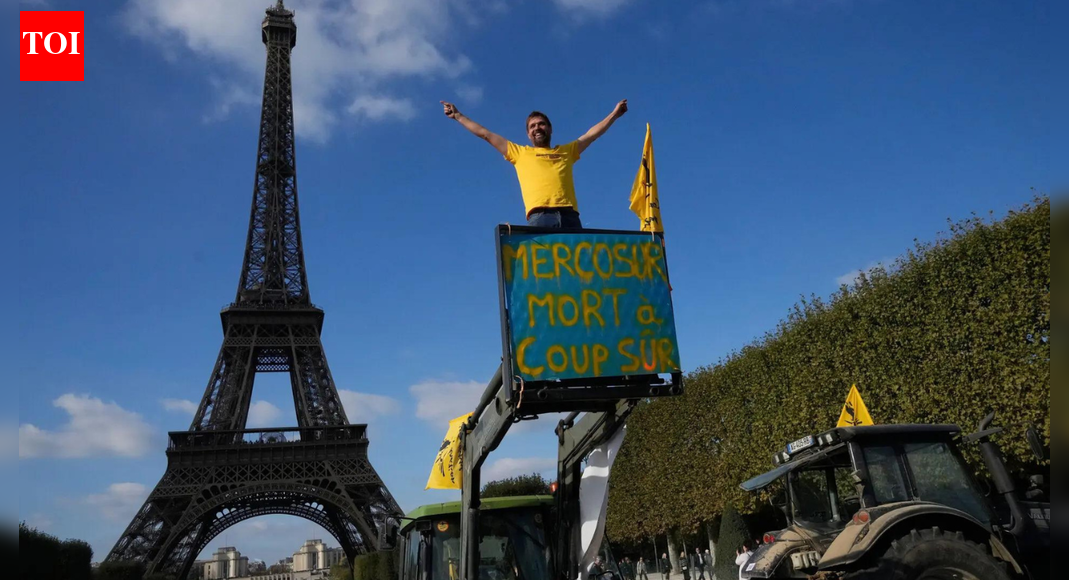
Mercosur hurdle: French objections and farm protests freeze EU trade deal; Brussels faces credibility test


Mercosur hurdle: French objections and farm protests freeze EU trade deal; Brussels faces credibility test

France’s last-minute opposition and mounting farmer protests are threatening to derail the European Union’s long-delayed free-trade agreement with South America’s Mercosur bloc, raising fresh doubts over whether the pact can be signed this year, AP reported.Angry European farmers, fearing cheaper agricultural imports and tougher competition, have taken to the streets in Brussels just as EU negotiators were hoping to close a deal that has taken nearly 25 years to negotiate. The agreement involves the 27-country EU and five Mercosur nations — Brazil, Argentina, Uruguay, Paraguay and Bolivia — and would gradually remove duties on most goods traded between the two blocs over 15 years.The accord, agreed in principle a year ago, still needs approval from all EU member states and the European Parliament. EU officials had planned for European Commission President Ursula von der Leyen and European Council President António Costa to sign the deal in Brazil on December 20, but growing resistance now threatens that timeline.French Prime Minister Sébastien Lecornu said on Sunday that the current deal was “unacceptable” and that the “conditions have not been met” for EU leaders to authorise its signing this week, effectively seeking a delay that could push the decision to 2026 or later. While acknowledging steps taken by the European Commission to protect farmers and tighten food safety checks, Lecornu said France remained unconvinced.Poland, Austria, the Netherlands and France fear Mercosur exporters could undercut EU farmers who operate under stricter labour, environmental and sanitary rules, including pesticide restrictions, analysts told AP. France has been pressing for “mirror clauses” that would require Mercosur producers to meet the same standards — demands that have not been fully accepted.Alicia Gracia-Herrero, a senior fellow at the Brussels-based Bruegel Institute, said the standoff exposed limits to the EU’s political unity and global influence. “If we cannot get this done even with (US President Donald) Trump’s pressure, what can you expect from the EU?” she said, warning that further delays could undermine Brussels’ credibility in talks with partners such as Indonesia and India.The deal comes at a sensitive time for the EU, which has been seeking to diversify trade ties after Trump imposed tariffs of 15% on most EU imports earlier this year, AP reported. Brussels sees the Mercosur pact as a strategic counterweight to aggressive trade tactics by both the US and China.European Commission spokesperson Olof Gill said the bloc is pushing to conclude the agreement by year-end, arguing it would strengthen the EU’s geopolitical standing. “We’re talking about bringing together two of the world’s biggest trading blocs,” he said, citing cooperation on climate, economic security and reform of the global rules-based order.Agriculture remains central to the dispute. The EU exported 235.4 billion euros ($272 billion) worth of agricultural goods in 2024, and critics warn the deal could hurt local dairy and beef producers and cause environmental damage. Supporters counter that it would save businesses about $4.26 billion in duties annually and open markets for products ranging from French wine to German pharmaceuticals and Brazilian minerals.To calm opposition, the European Commission has proposed safeguards, including mechanisms allowing farmers to trigger investigations if Mercosur imports are priced at least 10% below EU products, tighter border inspections for banned pesticides, and reforms to distribute agricultural subsidies more equitably.These measures, however, have failed to ease French concerns or quell farmer anger. Agricultural unions are again planning demonstrations in Brussels as EU leaders meet later this week, underlining the political risks surrounding a deal that was once seen as a cornerstone of the bloc’s trade strategy.


Source link

Gangster held for Virar builder’s murder in 2022 | Mumbai News


Vasai: The MBVV crime branch unit 4 has arrested gangster Subhash Singh Thakur in connection with a Feb 2022 Virar builder murder case. Thakur was taken into , on a production warrant, from the Fattehgarh jail in Uttar Pradesh on December 15, on the Thane MCOCA court order regarding the Feb 2022 murder of Samay Singh Chauhan, a builder, confirmed a senior police official. Samay was murdered in broad day light in Virar after he was shot by two men on the bike and Thakur has been accused of playing a role in this murder. Thakur was in jail when this murder took place. The MBVV crime branch unit 4 officials said that we will ascertain his exact role during the investigation. As of now he will be produced in the Thane court once he is here.Samay Chauhan,32, was shot by two bike borne men on February 26, 2022 and Chauhan had received bullet injuries on his head and abdomen. Chauhan, who also was into property development, was being questioned in connection with a murder of another local property developer. It is around this time that Chauhan was also murdered.


Source link

10kg MD seized at Raj factory | Mumbai News


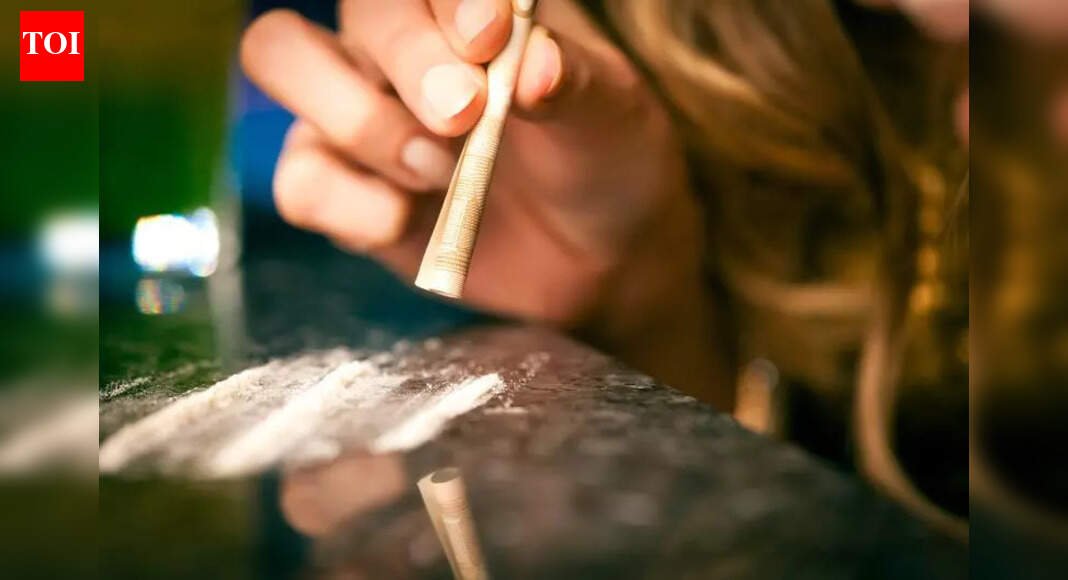
Mira-Bhayander: Mira-Bhayander Vasai-Virar (MBVV) police busted a drugs manufacturing factory operating under the guise of a poultry shed in Rajasthan’s Jhunjhunu on Sunday and arrested its owner. They found 10kg of mephedrone and equipment. The owner, Anil Sihag, is the 11th suspect to be arrested in this inter-state drugs racket that was exposed after a unit was busted in Hyderabad in Sept. MBVV police chief Niket Kaushik said one of the accused is a former Dawood gang member. —Vishal Rajemahadik


Source link

Is ‘The Buzzer’ signalling war? Russia’s ‘Doomsday Radio’ activity sparks global alarm |


UVB-76 transmitted clustered coded signals in December as NATO–Russia tensions intensified

In the second week of December, a Cold War–era Russian shortwave radio station broke from its usual pattern. Over the course of several days, UVB-76, better known as “The Buzzer,” transmitted an unusually high number of coded messages, including clusters of words, strings of numbers, bursts of Morse code and, at one point, faint music layered over its signature buzzing signal on 4625 kHz.The surge stood out not because the station is mysterious, it always has been, but because this level of activity is rare. Monitoring channels logged fifteen transmissions in a single week. The last time UVB-76 behaved this way was in February 2022, shortly before Russia invaded Ukraine. The timing has drawn close scrutiny as tensions between Russia and NATO continue to sharpen.

Russia’s Doomsday Radio Wakes Mins After US-Ukraine Talks | Why Nuclear ‘Fail-safe’ Station Active?

What UVB-76 is, Cold War origins and theories

UVB-76 first drew attention in the 1970s. Its signature sound, a mechanical buzz lasting about 1 to 1.2 seconds and repeating roughly two to three dozen times per minute, has earned it the sobriquet “The Buzzer.” From the beginning, enthusiasts tracking shortwave frequencies noted that, more rarely, the monotone tone was interrupted by alphanumeric code groups, strings of words, or names delivered in a clipped, Russian-accented voice.No official explanation has ever been offered by the Kremlin. Western and independent analysts generally assume UVB-76 is run by the Russian military, given the strength of the transmission, its constancy, and its alignment with other known military communication frequencies. In interviewwith outlet Popular Mechanics, Professor David Stupples, an electronic and radio engineering academic at City University London, has described the pattern as consistent with a military channel that is kept active to assert control over a frequency and reserve it for critical communications during conflict or emergency. He has characterised the broadcast as “almost certainly the Russian government” in origin and speculated that its functions could range from air defence coordination to an emergency broadcast reserve in case of severe national infrastructure loss.Another prominent theory ties the station to Russia’s Perimeter system, sometimes referred to as “Dead Hand,” a Cold War-era nuclear fail-safe that, in concept, could automatically trigger a retaliatory strike if Moscow lost contact with military command. In that framework, UVB-76 is not a standalone doomsday transmitter but part of a broader, redundant command and control architecture designed to survive catastrophic events.Despite these interpretations, the actual meaning of the voice-coded interruptions has never been publicly deciphered. They bear no generally agreed-upon semantic pattern, which has fuelled speculation ranging from simple military testing to more exotic explanations involving sleeper units or psychological signalling.

A surge of unusual signals: April to December 2025

In a year already marked by rising geopolitical friction, several atypical interruptions in the UVB-76 broadcast drew attention from shortwave monitoring communities. These deviations from normal buzzing were notable not only for their frequency but for their timing relative to diplomatic and military developments.On April 15, 2025, observers logged transmissions of four distinct words: Neptune, Thymus, Foxcloak and Nootabu. These were not simple numeric code groups typical of previous occasional messages; they read as discrete word cues, striking listeners as unusual.On May 19, 2025, two alphanumeric code sequences were recorded: “NZhTI 89905 BLEFOPUF 4097 5573” and later “NZhTI 01263 BOLTANKA 4430 9529”. These arrived on the same day that Russian President Vladimir Putin and US President Donald Trump held a bilateral phone call. Analysis by independent monitors noted the coincidence but emphasised that correlation does not imply causation.On September 8, 2025, further transmissions broke the regular buzz with the code “NZHTI”, followed by the word “HOTEL” and a series of numbers, 38, 965, 78, 58, 88, 37. Again, the pattern departed from the rare intrusion listeners had grown accustomed to.Then, on October 14, 2025, a Telegram account known as UVB-76 Ether, which tracks and logs the station’s activity, announced a temporary cessation of the broadcast due to a “power outage.” This was notable because the signal had been remarkably persistent historically, and interruptions were rare and typically brief.Just over two weeks later, on October 29, 2025, another monitored channel, UVB-76 Logi on Telegram, reported a new encrypted message broadcast shortly after a Russian announcement regarding tests of the Poseidon underwater vehicle, a strategic weapon system. That transmission included the word “Brakebrain”. Netizens connected the timing with the military news, although there was no official linkage.The next significant event recorded was on November 14, 2025, when Izvestia, a Russian state media outlet, reportedthat UVB-76 had fallen silent in the wake of reported drone strikes on nearby power stations. According to that report, the station went off the air after the incident, and when the signal returned, it was followed by a series of transmissions that appeared to “strike fear into European nations,” according to local commentary. Among subsequent messages was a transmission on November 17, 2025 at 14:40 Moscow time, which carried the word “LATVIA,” logged as “NJTI 15854 LATVIA 5894 4167,” alongside other strings such as Vulgar, Nantonyuk, Bolognese and Lesoled.Most recently, during the week of December 8 and 10, 2025, the station reportedly broadcast fifteen cryptic messages: three on Monday, December 8, and eight on Wednesday, December 10. These included code words such as PEPPER SHAKER, TRANSFER, PABODOLL, SPINOBAZ, FRIGORIA, OPALNY, SNOPOVY and MYUONOSVOD. On Friday, December 12, 2025, observers reported a prolonged broadcast of faint music and what appeared to be extended bursts of Morse code alongside the usual buzz, a pattern that has no clear precedent in the station’s long history.

Interpretation, fear, and geopolitical context

The fact that UVB-76 has broadcast patterns deviating from its normal state in 2025, at a frequency, number and complexity not seen since early 2022, during Russia’s invasion of Ukraine, has not gone unnoticed. At that time, according to reporting by shortwave monitoring communities, the station transmitted several messages a week, a marked increase from its usual one or two monthly interruptions.Those events in 2022 represented a rare period of multiple messages over short periods, and they coincided notably with intense conflict and strategic signalling across Eastern Europe globally. The recurrence of clustered messages in late 2025, particularly amid heightened tensions involving NATO, Russian military movements and rhetoric, has carefully led analysts and the public to draw parallels cautiously, even as no authoritative interpretation exists widely.The mention of Latvia on November 17 is especially sensitive in this context because Latvia is a member of the North Atlantic Treaty Organization (NATO). Under Article 5 of the NATO treaty, an attack on one member is considered an attack on all, triggering collective defence obligations from the United Kingdom, France, Germany, the United States and others. As commentary in European defence circles has noted, any real indication of aggression toward a NATO state carries the risk of escalating into broader military confrontation.On December 12, 2025, as reports of the extended broadcasts spread, NATO Secretary General Mark Rutte issued a stark warning, underscoring the alliance’s sense of encirclement. “We are Russia’s next target, and we are already in harm’s way,” he said, stressing the urgency of increased defence spending and preparedness. “Russia has brought war back to Europe, and we must be prepared for the scale of war our grandparents and great grandparents endured.” Similar warnings echoed elsewhere, including from Minister Al Carns, who described the “shadow of war” approaching Europe’s doorstep.

What experts actually say, and what they don’t

Despite the breathless language one often finds on social media and in some mainstream headlines, experts on RF (radio frequency) communication and military signalling urge caution.Professor David Stupples, whose research into signal spectrum analysis has explored UVB-76’s characteristics, emphasises that the mere presence of unusual transmissions does not necessarily imply imminent military action or a direct linkage to nuclear command-and-control systems. He has pointed out that maintaining control over a frequency requires ongoing broadcast, otherwise, other actors might occupy it, and that using repeated test signals is a common practice across militaries to preserve channel ownership.Stupples has also underscored the difficulty of attributing semantic meaning to arbitrary word strings. In his assessment, the patterns observed in 2025 are consistent with a powerful transmitter maintained by a state actor for strategic reserve communication, not a public code meant to be easily decoded.What exists in the public record are logs of transmissions, timestamps, and code groups as reported by monitoring communities and Telegram channels dedicated to tracking UVB-76. There is no official Russian confirmation of purpose, structure or interpretation. There is no declassified documentation tying specific messages to defined strategic events. And there is no independent verification that any particular broadcast has operational significance beyond signalling the presence and control of the station itself.

Signal, noise, and uncertainty

The surge of activity from UVB-76 in 2025 is well documented by independent monitoring groups, but its meaning remains opaque. The signals arrive amid sustained tension between Russia and NATO, lending them weight without supplying clarity. Beyond timestamps and transcripts, there is no public evidence linking the broadcasts to specific decisions or actions. What exists is a record of anomaly, precise, unsettling, and unresolved.


Source link