Breaking News
Mumbai: Health monitoring device designed by team led by Mumbai University professor receives UK approval | Mumbai News


Mumbai: An innovative health monitoring device design designed by a seven-member team from Mumbai University has received international recognition after its registration under the UK Registered Design Framework. With this registration, the device’s unique visual and structural features have received legal protection in the UK, preventing unauthorised imitation and strengthening its commercial potential.The team from various disciplines led by Dr Srivaramangai Ramanujam designed the device that aims to enhance patient monitoring, diagnostics, and overall healthcare delivery by offering a compact and user-friendly solution suitable for hospitals, clinics, and home-based care. The health monitoring device is designed for continuous and accurate monitoring of vital health parameters such as heart rate, body temperature, oxygen saturation, and blood pressure. It is expected to assist doctors and healthcare professionals in tracking patients’ conditions, enabling early detection of health changes and timely medical intervention, said a statement issued by the university. The device is also aligned with the growing demand for digital health and telemedicine, allowing secure transmission of patient data for remote monitoring and consultation and would be beneficial for elderly patients, individuals with chronic illnesses, and patients requiring continuous or critical care, added the statement.The team is also exploring possibilities for licensing the design to healthcare technology companies and expanding protection through international patent and design filings.

Source link

IND vs SA: Fog forces abandonment of India vs South Africa 4th T20I in Lucknow | Cricket News


IND vs SA: Fog forces abandonment of India vs South Africa 4th T20I in Lucknow
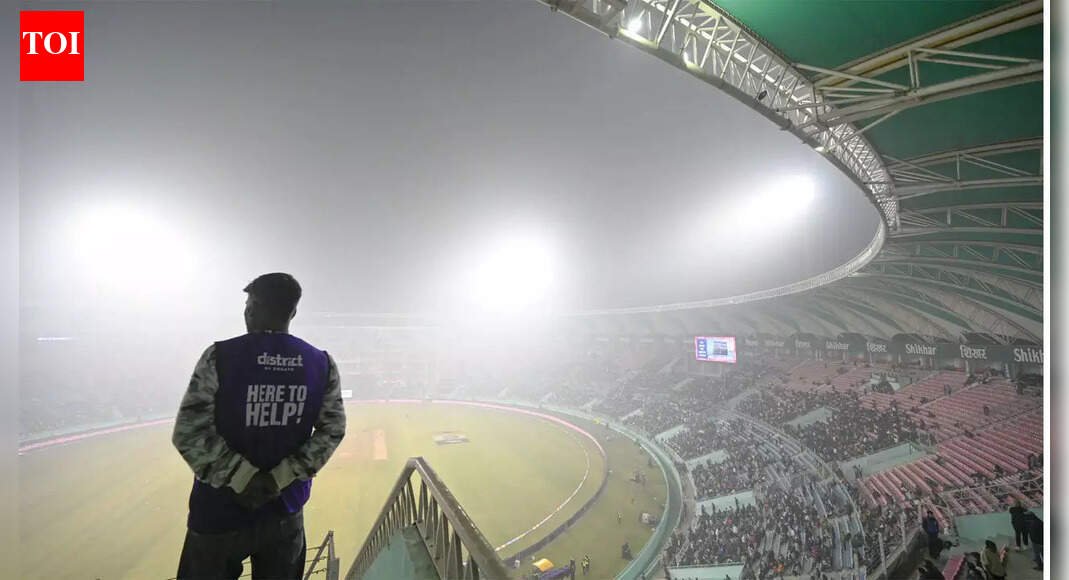
The abandonment means India continue to lead the five-match T20I series 2-1, while South Africa now have only one opportunity left to draw level. (PTI Photo)

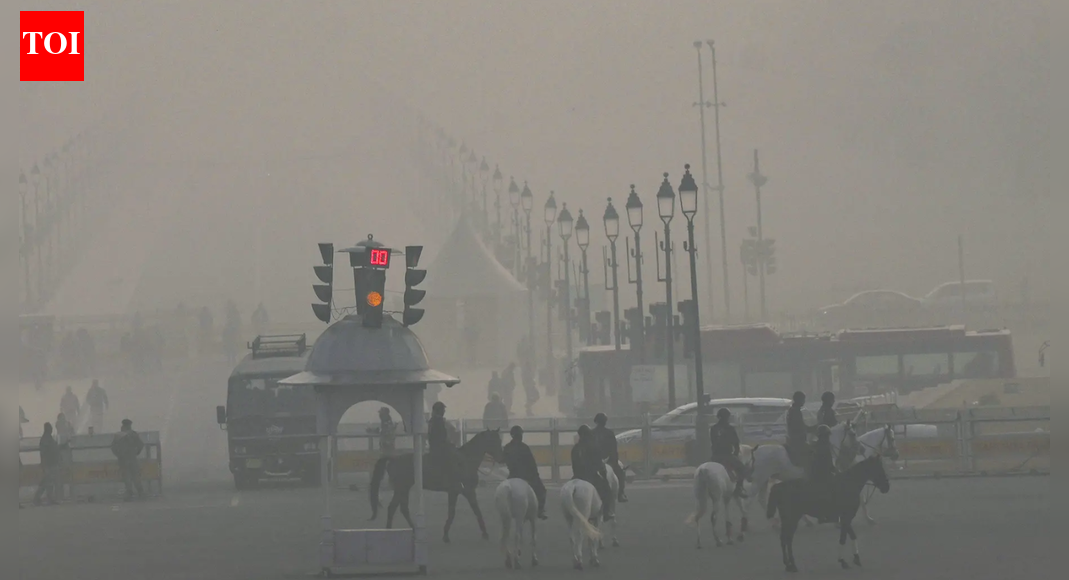
The fourth T20I between India and South Africa in Lucknow was abandoned on Wednesday without a single ball being bowled after extremely poor visibility caused by a thick blanket of smog engulfed the Ekana Stadium. The washout has once again triggered debate over the BCCI’s decision to schedule international matches in north Indian cities during the peak winter months. Although the official reason cited was “excessive fog”, conditions inside the stadium told a different story, with smog severely restricting visibility. Air quality levels in Lucknow remained in the hazardous category throughout the day, with the AQI crossing 400, raising fresh concerns over player safety and welfare.

IPL Auction Analysis: Why franchise broke the bank for uncapped Indians

The match was scheduled to begin at 7 pm, but repeated inspections made it increasingly clear that conditions were unlikely to improve as the night progressed. Players eventually abandoned their warm-up by 7:30 pm and returned to their dressing rooms, while spectators who had turned up despite the cold slowly began leaving the stadium. After a sixth inspection, the game was officially called off at 9:30 pm. Indian all-rounder Hardik Pandya was seen wearing a surgical mask during the warm-up, underlining the severity of the pollution. BCCI vice-president and Uttar Pradesh Cricket Association strongman Rajeev Shukla also walked out for one of the inspections, though his visible disappointment after speaking with officials reflected the inevitability of the outcome. The abandoned fixture has put the spotlight on the venues chosen for the India-South Africa series, which was spread across cities such as New Chandigarh, Dharamsala, Lucknow, Ranchi, Raipur, Visakhapatnam, Cuttack, Ahmedabad, Guwahati and Kolkata during November and December. This is traditionally the time when pollution levels in cities like Lucknow, New Chandigarh and Dharamsala are at their worst. With no reserve day scheduled, both teams will now head to Ahmedabad for the fifth and final T20I on Friday, with India currently leading the series 2–1. While the BCCI follows a rotational policy when allocating venues, the situation has revived questions about planning. The board could have explored swapping venues with the upcoming white-ball series against New Zealand, which begins on January 11 and will be played largely across western and southern India, including Vadodara, Rajkot, Indore, Nagpur, Raipur, Visakhapatnam and Thiruvananthapuram, with Guwahati the only north-eastern stop. Weather-related disruptions have frequently impacted matches at north zone venues during winter. Just last week, the third T20I in Dharamsala was played in temperatures below 10 degrees Celsius. After that game, India spinner Varun Chakravarthy admitted the conditions were difficult to cope with. “I’ve never played at a ground this cold, so I did find it quite challenging,” he had said. On that day, the AQI in Dharamsala was rated ‘poor’, while New Chandigarh experienced ‘severe’ air quality during the second T20I. The repeated issues have led to questions about whether the BCCI’s operations team adequately factored in historical weather and pollution data, or considered alternative options such as afternoon start times that could have at least ensured play for fans in attendance.


Source link

‘Waiting in vain’: Tharoor reacts to IND-SA match cancellation; cites Kerala’s AQI | India News


‘Waiting in vain’: Tharoor reacts to IND-SA match cancellation; cites Kerala's AQI
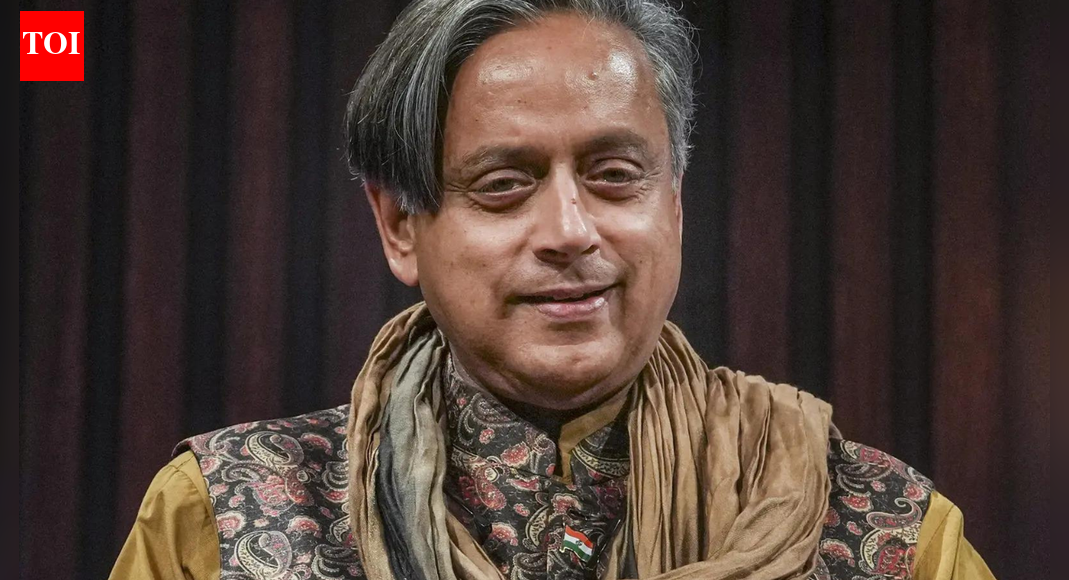
Shashi Tharoor (PTI image)

NEW DELHI: Congress MP Shashi Tharoor on Wednesday questioned the decision to host the fourth India–South Africa T20I in Lucknow amid dense fog and severe air pollution, after the match was eventually called off due to poor visibility.Tharoor suggested the game should have been scheduled in Thiruvananthapuram, citing significantly better air quality conditions there.In a post on X, the Congress leader said cricket fans were “waiting in vain” as hazardous conditions stalled play.

Delhi Pollution: China Shares Playbook On How To Fix Air Quality Amid Politics Over Accountability

“Cricket fans have been waiting in vain for the #INDVSSAODI to start in Lucknow. But thanks to dense smog, pervasive in most north Indian cities, and an AQI of 411, visibility is too poor to permit a game of cricket. They should’ve scheduled the game in Thiruvananthapuram, where AQI is about 68 right now!” he wrote.India was scheduled to play the fourth match of the five-T20I series against South Africa at the Ekana Cricket Stadium. However, the toss was repeatedly delayed as thick fog enveloped the venue, forcing umpires to conduct multiple ground inspections through the evening.Fans expressed their disappointment following the announcement of match cancellation. With visibility failing to improve even after several assessments, match officials eventually called off the game. Both teams remained in their dressing rooms for most of the evening as conditions worsened after sunset. The fifth and final match between the two countries will be played at the Narendra Modi Stadium in Ahmedabad on Friday.The India Meteorological Department had earlier issued an orange alert for very dense fog in several parts of Uttar Pradesh, with visibility at the stadium severely affected. Former cricketers on the broadcast had warned that delaying the start could make it even harder to complete the match, as fog typically intensifies later in winter evenings.The washout came as an added setback for India, with vice-captain Shubman Gill ruled out of the match due to a toe injury sustained during training. Sanju Samson was expected to open the innings in his absence.India continues to lead the five-match series 2–1 against South Africa.


Source link

Access Denied


Access Denied

You don’t have permission to access “http://www.ndtv.com/india-news/theres-a-deal-to-be-had-fareed-zakaria-to-ndtv-on-donald-trump-india-us-trade-9833991” on this server.

Reference #18.4d92c31.1765988213.85f32ea

https://errors.edgesuite.net/18.4d92c31.1765988213.85f32ea


Source link

England fume as Snickometer glitch saves Alex Carey in Adelaide Ashes Test | Cricket News


England fume as Snickometer glitch saves Alex Carey in Adelaide Ashes Test
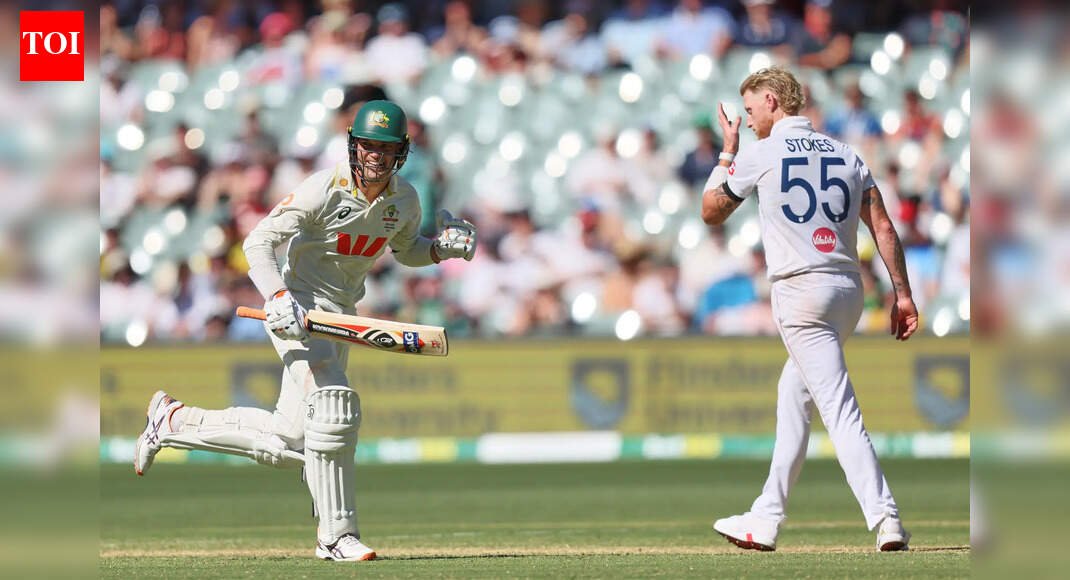
Australia’s Alex Carey, left, celebrates his century (AP Photo/James Elsby)

England were weighing up whether to formally approach the match referee over the use of Snickometer technology in Australia after the company supplying the system accepted responsibility for a possible operational mistake on the opening day of the third Ashes Test at the Adelaide Oval. The controversy centred on Australia wicketkeeper batter Alex Carey, who was batting on 72 when he appeared to edge the first delivery of the 63rd over from Josh Tongue. England’s fielders, led by wicketkeeper Jamie Smith, appealed immediately for a catch behind. On-field umpire Ahsan Raza turned the appeal down, prompting England to go upstairs for a review.

Prashant Veer’s parents react after their son gets a Rs 14.20 crore IPL deal

Replays using Real-Time Snickometer showed a distinct spike, but it appeared several frames before the ball passed the bat. Third umpire Chris Gaffaney explained during the review that the spike occurred “before the bat” and that the ball seemed to have gone “well under” the edge, concluding there was “a clear gap” and no evidence to overturn the decision. Carey went on to make the most of the let-off, adding 34 more runs on his way to a century. After the day’s play, the Australian admitted he believed he had made contact with the ball. “I thought there was a bit of a feather or some sort of noise as it went past the bat,” Carey said. “It looked strange on the replay with the sound coming early. If I’d been given out, I probably would have reviewed it, though not with full confidence. There was a nice sound as it went past.” Carey also made it clear that walking was not part of his approach. “Snicko didn’t line up, did it? That’s cricket sometimes. You need a bit of luck, and maybe it went my way today,” he added. According to ESPNcricinfo, Warren Brennan, founder of BBG Sports, the company responsible for Snickometer in Australian Tests, told The Age that an operator error was the likely cause. Brennan said the most plausible explanation was that the wrong stump microphone had been selected for audio processing and confirmed that BBG Sports accepted full responsibility for the mistake. On the field, Australia closed the opening day strongly at 326 for 8 after choosing to bat first. Carey scored 106, while Usman Khawaja contributed 82. For England, Jofra Archer was the standout bowler with figures of 3 for 23, while Brydon Carse and Will Jacks picked up two wickets each. Josh Tongue claimed one scalp.


Source link

Access Denied


Access Denied

You don’t have permission to access “http://www.ndtv.com/india-news/modi-most-consequential-indian-pm-since-nehru-us-journalist-fareed-zakaria-to-ndtv-9834156” on this server.

Reference #18.2ef63717.1765989411.30ee9a0

https://errors.edgesuite.net/18.2ef63717.1765989411.30ee9a0


Source link

JVLR traffic jam fallout: All pre-registrations for Mood Indigo at IIT Bombay cancelled | Mumbai News


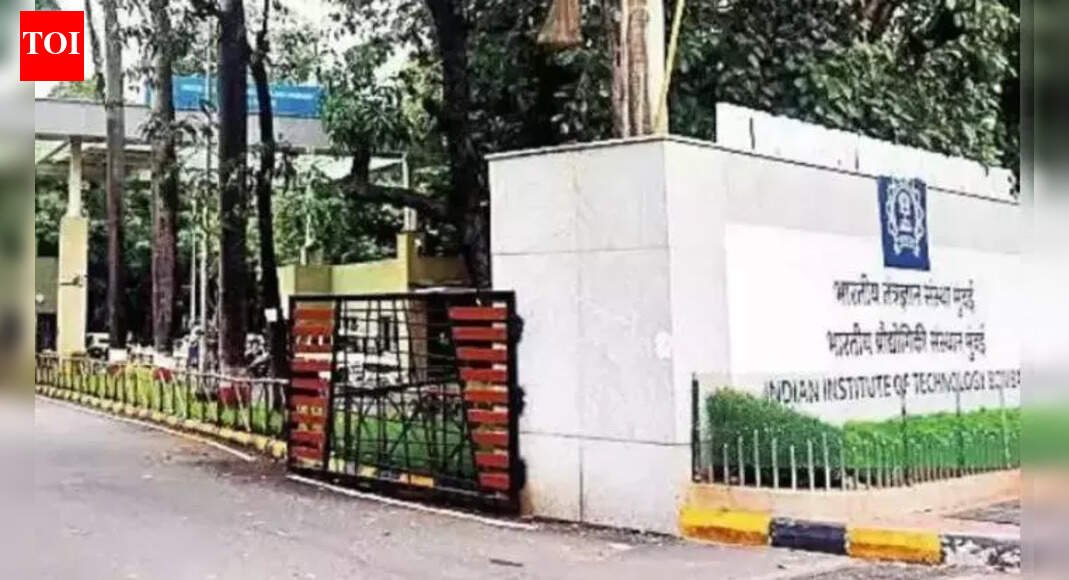
Mumbai: A day after drawing criticism over a massive traffic jam on the Jogeshwari-Vikhroli Link Road (JVLR), IIT Bombay on Wednesday announced the cancellation of entry for all pre-registered visitors too, to its annual cultural festival, Mood Indigo.In a post on X on Wednesday morning, the institute said, “All pre-registrations for Mood Indigo events at IIT Bombay are cancelled. Entry for any outsider, except competition participants and IIT Bombay residents, is stopped for today and tomorrow.”An unexpectedly large turnout on the first day of the three-day festival, including many visitors who had not registered, led to severe traffic congestion outside the campus on Tuesday. The jam lasted several hours, leaving commuters stranded on the road. Campus residents were also unable to enter or exit the institute during this period.An official spokesperson said the crowd situation became unmanageable for both the institute and the traffic police. “Registered and unregistered visitors queued up outside the gate for hours, and some even became unruly. In view of safety and traffic concerns, we decided to block entry to all visitors for the remaining two days, except the participants,” the spokesperson said.


Source link

Goa nightclub blaze: Luthra brother demands mattress in custody citing back pain; advocate says he is medically fit | India News


Goa nightclub blaze: Luthra brother demands mattress in custody citing back pain; advocate says he is medically fit
Luthra brothers (File photo)

NEW DELHI: Advocate Vishnu Joshi, representing a victim’s family in the Goa nightclub fire case, on Wednesday said that one of the Luthra brothers requested a Dunlop mattress during police remand.Joshi explained that the court carefully considered the brothers’ health claims before granting custody. Speaking to reporters, he said, “Today, when the Goa Police presented them in court, one accused, during their arguments, claimed he had spinal issues and other health problems. He requested that they be provided with a Dunlop mattress during their police remand. The state strongly opposed this… Their pre-medical examination showed them to be perfectly fit.He added that the duo had attempted to evade legal proceedings since fleeing India.

Interpol Blue Notice Explained: How CBI Tracks Absconding Luthra Brothers In Goa Nightclub Fire Case

“Since these people (Luthra brothers) absconded and fled the country, they have been employing tactics to somehow escape. First, they filed an anticipatory bail application on vague grounds in the Rohini Court, even though that court had no jurisdiction… But that bail application was rejected. Since then, they have been trying wherever they get a chance to obtain some kind of relaxation,” Joshi said.Joshi explained that the court carefully considered the brothers’ health claims before ordering custody. “The brothers claimed to be suffering from back pain. The court considered all submissions and directed the police to first conduct a pre-medical examination and re-examination. No medical necessity was found, following which the court, exercising its full authority, granted five days of police remand,” he said.The Luthra brothers, owners of the Birch by Romeo Lane nightclub in Arpora, were remanded to five-day police custody by the Mapusa Judicial Magistrate First Class (JMFC) court. They were brought back to Goa from Thailand following their deportation and produced before the court after undergoing multiple medical examinations.After landing at Manohar International Airport, Mopa, under police escort around 10.45 am, the duo was taken to a primary health centre in Siolim and then to the District Hospital in Mapusa. The court directed fresh medical examinations before ordering the five-day custody to allow investigators to question them regarding alleged safety lapses at the club.The blaze broke out on December 6 around 11.45 pm during a crowded event at the nightclub, when electric firecrackers allegedly struck the wooden ceiling. The incident claimed the lives of 25 people, including tourists and staff, while several others were injured.Police said the brothers fled India hours after the incident on December 7, leaving for Thailand while rescue operations were under way. Goa Police launched a nationwide and international manhunt, issued a lookout circular and sought an Interpol Blue Notice.Following their detention by Thai authorities for illegal stay and the suspension of their passports, the brothers were deported to India on emergency travel documents. They landed at Delhi’s Indira Gandhi International Airport on Tuesday and were arrested by Goa Police, who obtained a 48-hour transit remand from a Delhi court to facilitate their return to Goa.They have been booked under several provisions of the Bharatiya Nyaya Sanhita, including culpable homicide not amounting to murder and negligence. Investigators have also arrested several others linked to the nightclub’s operations and are probing allegations that the venue was operating with expired licences and without mandatory safety clearances.


Source link

‘Total failure’: SC slams ‘ad-hoc’ measures for toxic Delhi air; directs to close 9 toll plazas | India News


NEW DELHI: The Supreme Court on Wednesday continued hearing matters related to Delhi’s air pollution crisis, with air quality remaining in the “severe” category in several areas of the national capital region.The court has orally observed that the measures taken by authorities so far have been a “total failure” in effectively curbing the rising levels of air pollution in the Delhi–NCR region. A Bench led by Chief Justice of India Surya Kant remarked that any meaningful reduction in pollution would require broader and long-term planning rather than ad-hoc responses.

Delhi Pollution: China Shares Playbook On How To Fix Air Quality Amid Politics Over Accountability

During the hearing, the court said, “Let us think of pragmatic and practical solution of the menace,” stressing the need for workable measures to address the pollution crisis.During the proceedings, the bench was also informed about another issue related to the MCD toll at Gurgaon, which allegedly causes traffic congestion for hours, leading to long queues of vehicles and adding to air pollution. The court directed the DMC to cooperate on the issue and consider suspension of nine toll plazas for a temporary period. It said a decision should be taken within one week and placed on record.CJI Surya Kant remarked, “we do not want income you generate, but you definately generate a lot of litigation from these tolls …we want to come out on a concrete plan for absolute no toll plaza till next year 31st January.”The court further asked the Delhi government to verify construction workers rendered idle by pollution curbs and ensure direct transfer of funds to their bank accounts, cautioning that the money should not “disappear, travel to another account”. It also asked the government to consider providing alternative work to affected workers.Responding to the court, the Delhi government said that around 7,000 construction workers have so far been verified out of nearly 2.5 lakh workers affected, and that money would be transferred into their bank accounts.With respect to various petitions highlighting the inadequacy of recent measures aimed at protecting children, such as the Delhi government’s directives to shut schools or allow them to function in a hybrid mode, the Court noted that these were merely temporary policy decisions taken to mitigate health risks.The bench refused to interfere with the Delhi government’s decision regarding school closures or hybrid operations. “The short-term measures are only to provide temporary protection to children and elderly persons. These are purely interim policy decisions. At best, they can be viewed as an extension of vacations, as schools are anyway scheduled to remain closed for 10 to 15 days during the winter,” the Court observed.The observations came as the top court reviewed the continuing impact of air pollution despite repeated directions issued over the years. A bench headed by Chief Justice of India Surya Kant, along with Justices Joymalya Bagchi and Vipul M Pancholi, has been monitoring the situation as air quality continues to pose serious health risks.The bench has also flagged lifestyle choices of the affluent as a major reason behind poor implementation of pollution-control measures. The Chief Justice observed that the well-off continue to use large diesel vehicles, generators and other polluting equipment in violation of restrictions, even as vehicular emissions choke the region. The court noted that it is the poor and working classes who are the most exposed to hazardous air and suffer the worst health consequences.The Commission for Air Quality Management (CAQM) told the court last week that the transport sector contributes about 41 per cent of Delhi-NCR’s ambient air pollution load. Dust and construction activities account for 21 per cent, industry 19 per cent, power plants 5 per cent, residential activities 3 per cent and other sources 11 per cent. CAQM said stubble burning is a periodic factor limited to a short window each year, while other sources remain constant.


Source link

US travel ban now covers 20 percent of world countries


The Trump administration is significantly expanding its 2025 US travel ban, adding 20 countries, primarily from Africa, to existing restrictions. This policy, effective January 1, 2026, cites national security and public safety concerns, including vulnerabilities in screening processes. The expansion targets countries with alleged corruption and unreliable documentation, impacting both full and partial entry bans.


Source link