Breaking News
‘Other franchises were sleeping’: R Ashwin shocked as MI snap up Quinton de Kock for 1 crore | Cricket News


'Other franchises were sleeping': R Ashwin shocked as MI snap up Quinton de Kock for 1 crore
Quinton de Kock (Photo by Robert Cianflone/Getty Images)

Mumbai Indians (MI) approached the IPL 2026 mini auction with the smallest available purse, just Rs 2.75 crore, after retaining most of their core squad. Despite the limited funds, they secured South African wicketkeeper-batter Quinton de Kock for only Rs 1 crore, a move praised by former India cricketer Ravichandran Ashwin as a smart and opportunistic acquisition. De Kock, who had previously played for MI between 2019 and 2021, makes a return to the franchise and emerged as their standout buy of the auction. His signing adds firepower to MI’s top order while giving the team flexibility in their batting lineup.

IPL Mini Auction: Manoj Badale, Mahela Jayawardena & Mo Bobat Speak After bidding war

The five-time champions had already bolstered their squad during the trade window, bringing in players such as Sherfane Rutherford, Shardul Thakur, and Mayank Markande. Ashwin highlighted that the franchise’s ability to secure De Kock while other teams hesitated shows strategic planning. “I think the Quinton de Kock buy was a good move. I think the other franchises were sleeping on their haunches, and MI snooped it up. I think MI are not sure about the Rickelton opening combination. I think MI are trying to replicate their IPL 2020 championship squad, only Ishan Kishan is not there,” Ashwin said on his YouTube channel. Despite their limited budget, Ashwin noted that MI’s auction strategy made their squad even stronger. “MI had 2.75 crore, but it was as if they had 27 crore, because they bought so many players. MI already had a winning squad before they went into the IPL auction, and now, after the auction, they look even stronger,” he added. In addition to De Kock, MI also added Danish Malewar, Mohammad Izhar, Atharva Ankolekar, and Mayank Rawat to their lineup, rounding out their squad ahead of the 2026 season.


Source link

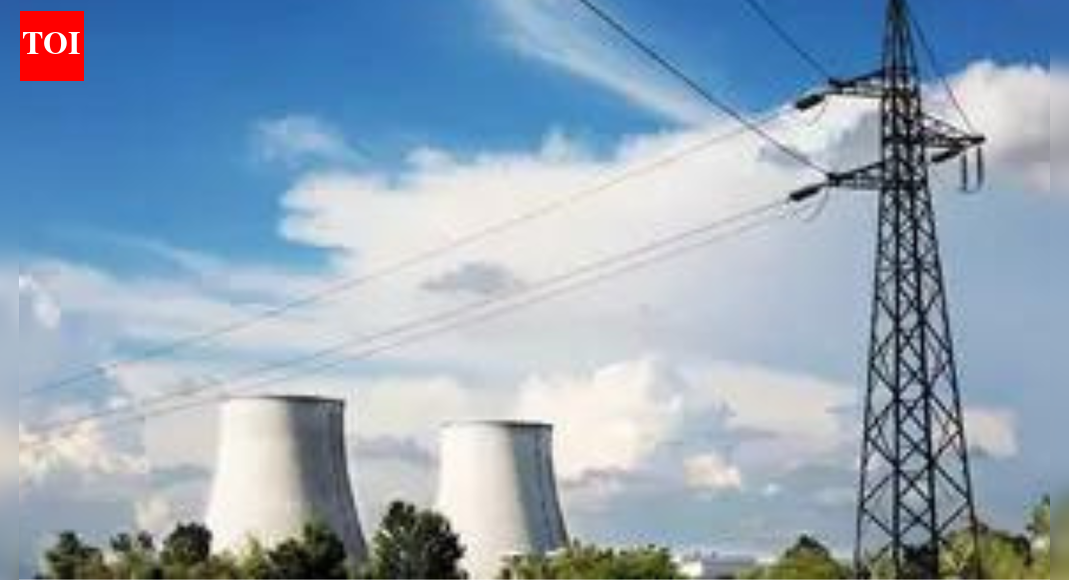
Nuclear Energy Bill 2025: Lok Sabha clears ‘SHANTI’ bill as opposition walks out; paves way for entry of private players | India News


Nuclear Energy Bill 2025: Lok Sabha clears 'SHANTI' bill as opposition walks out; paves way for entry of private players

NEW DELHI: The Lok Sabha on Wednesday gave its nod to the the nuclear energy bill called the “Sustainable Harnessing and Advancement of Nuclear Energy for Transforming India Bill (SHANTI), 2025”. The bill was passed as opposition staged a walkout, during the ongoing Winter Session.The amended bill was tabled in the lower house, with introduction by MoS for department of atomic energy Jitendra Singh in the House on Monday, signifying a policy shift in the atomic sector operations. The bill allows entry of private players into the industry, something that was reserved for government enterprises till now. Singh said that it provides for “a pragmatic civil liability regime for nuclear damage and to confer statutory status to Atomic Energy Regulatory Board.The proposed legislation further aims to facilitate significant growth in nuclear energy and its applications across multiple sectors. This aligns with country’s target to establish 100GW of nuclear power capacity by 2047. The law introduces fresh regulatory provisions encompassing updated safety protocols, a specialised nuclear tribunal for resolving disputes, and modifications to the nuclear liability framework to limit risks and encourage investments.The proposed legislation permits private enterprises and their collaborative ventures to seek authorisation for establishing and running nuclear facilities, as well as transporting nuclear fuel. However, crucial operations including uranium enrichment, spent fuel handling and heavy water manufacturing shall continue to be exclusively managed by the Central government. The Centre will maintain oversight of radioactive materials and radiation-producing apparatus to ensure proper safety standards.


Source link

Pay hike outlook: India Inc eyes 9% salary growth in 2026; bonuses and skills take centre stage


Pay hike outlook: India Inc eyes 9% salary growth in 2026; bonuses and skills take centre stage

Indian employees can expect a moderate but steady rise in pay packets in 2026, as companies recalibrate compensation strategies to balance cost pressures, talent retention and productivity in a rapidly evolving workplace, PTI reported citing a survey.Average salaries in India are projected to rise by 9 per cent in 2026, with organisations placing sharper emphasis on short-term incentives, performance-linked rewards and skills-based pay frameworks, according to Mercer’s Total Remuneration Survey 2026.The survey, which analysed compensation trends across more than 8,000 roles in over 1,500 companies, suggests that Indian employers are moving away from uniform annual increments towards more differentiated, outcome-driven reward structures.“Our survey shows most organisations in India will continue to plan pay increases in line with balancing cost pressures and talent retention,” said Malathi KS, Rewards Consulting Leader India at Mercer.“Alongside this, there is a growing emphasis on skills-based organisation architecture, talent assessments to better align workforce capabilities with evolving business needs and pay programmes to drive desired outcomes,” she added.The report highlights a renewed focus on short-term incentives such as bonuses, reflecting companies’ preference for linking compensation more closely with near-term performance, productivity and business priorities.As firms respond to digital transformation, AI adoption, and the rising scarcity of specialised skills, reward strategies are increasingly being redesigned to support agility, transparency and workforce resilience.“These shifts present Indian organisations with significant opportunities to strengthen workforce engagement and shape a more agile and inclusive workplace,” Malathi KS said.Mercer noted that the implementation of newly approved labour codes is also influencing compensation planning, with tighter social security coverage and preventive healthcare provisions shaping employer cost structures.To manage rising costs, some organisations are revisiting the proportion of employees eligible for increments, while simultaneously investing in skills development and targeted rewards for high performers.“This is a time for leaders to review their priorities and build stronger cultures embedded in a high-performance ethos,” said Mansee Singhal, Mercer’s Career Business Leader, India.“Making empowerment and accountability go hand in hand, and fostering a fit-for-purpose value proposition, will be critical,” she added.Sectors to watchHigh-Tech (product and consulting) and the automotive industry are expected to see the highest salary increases in 2026, at 9.3 per cent and 9.5 per cent, respectively.The IT, ITES and Global Capability Centres (GCCs) sector continues to lead in offering innovative benefits and progressive employee policies, reflecting its focus on well-being, engagement and future-ready talent.Mercer, a business of Marsh McLennan, is a global consulting firm that advises organisations on workforce strategy, rewards, health and retirement outcomes.


Source link

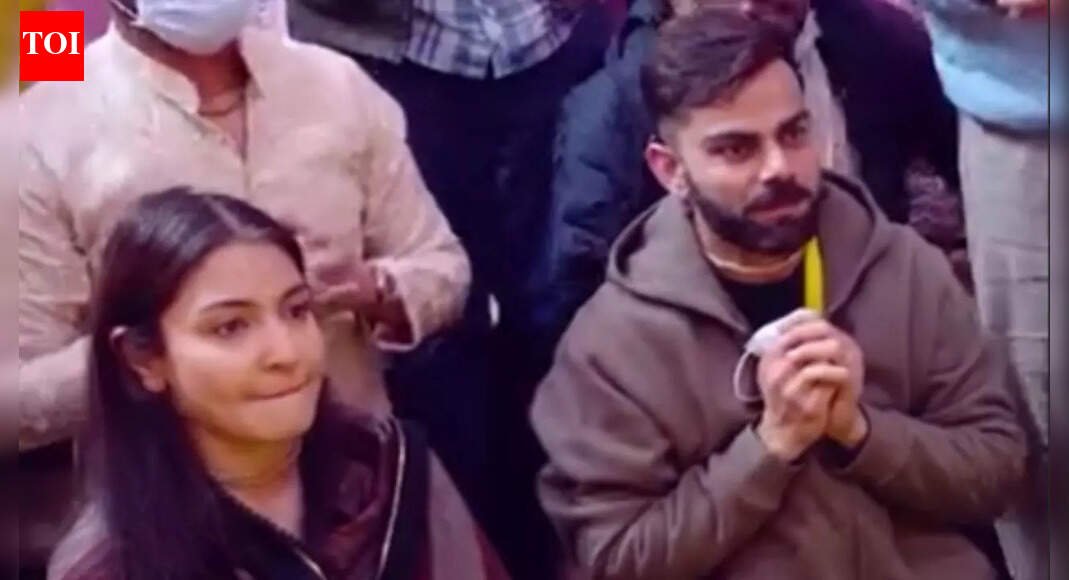
Virat Kohli and Anushka Sharma visit Premanand Ji’s ashram in Vrindavan for spiritual guidance – Watch | Cricket News


Virat Kohli and Anushka Sharma visit Premanand Ji Maharaj’s dham in Vrindavan. (Image: X)

Former Indian cricket star Virat Kohli and his wife Anushka Sharma made their third visit this year to Premanand Ji Maharaj at Shri Hit Radha Keli Kunj Ashram in Vrindavan, where they engaged in a spiritual conversation with the religious leader after returning from the United Kingdom last week.The spiritual interaction was captured in a video shared by Bhajan Marg’s Official Instagram handle, showing the couple seeking guidance from Premanand Ji Maharaj.

Abhishek Sharma’s sister is very proud of her brother, and India win

“Apne karyakshetra ko bhagwan ka seva smajhiye. Gambhir bhav se rahiye. Vinamra rahiye. Aur khub naam jap kijiye,” Premanand Maharaj advised the couple, encouraging them to treat their work as service to god.The couple had previously visited the ashram in January with their children and again in May after Kohli announced his retirement from Test cricket.Kohli, 37, recently participated in India’s three-match ODI series against South Africa, which ended on December 6, before flying back to the UK where he resides with Anushka and their children, Vamika and Akaay.While Kohli has retired from Test cricket, he continues to play in ODIs and the Indian Premier League (IPL).He is scheduled to play in the upcoming Vijay Hazare Trophy, starting December 24, though his participation for Delhi will be limited due to the upcoming three-match ODI series against New Zealand in January.


Source link

‘Behave responsibly’: BJP slams Rahul Gandhi over remarks in Germany, says shows his sentiments for India | India News


‘Behave responsibly’: BJP slams Rahul Gandhi over remarks in Germany, says shows his sentiments for India

NEW DELHI: The Bharatiya Janata Party (BJP) on Wednesday criticised Lok Sabha leader of opposition Rahul Gandhi for his remarks on India’s manufacturing sector during his visit to Germany, accusing him of “insulting India from foreign soil” at a time when Parliament is in session. BJP MP Sambit Patra said the LoP carries a “huge responsibility” and needs to behave in a “responsible manner”, especially while travelling abroad. “LoP has a huge responsibility. The LoP has to behave in a really responsible manner, especially when the LoP is on foreign soil. Parliament is in session here, several Bills are being discussed in the House and Rahul Gandhi is in Germany to address the Indian diaspora.” Patra said.Referring to Rahul Gandhi’s visit to the BMW factory in Munich, Patra alleged that the Congress leader praised German manufacturing while portraying India in a bad light. “Today, we saw Rahul Gandhi visiting BMW factory in Munich and there, he appreciated their manufacturing and said that he is sad that manufacturing is poor in India,” Patra said. The Puri MP rejected Rahul’s claims of Indian manufacturing being in a fragile state and declining, citing data. “Insofar as manufacturing is concerned, IIP (index of industrial production) is on a positive growth trend. In 2025 manufacturing in the country has grown at a record 5.4 per cent. Also right now our GDP is growing at 8.2 per cent, we’re among the fastest growing GDPs in the world, in which around 17 per cent contribution is of manufacturing,” he further added, “Rahul and responsibility can never move together. Whenever he visits abroad, he insults Parliament and India.Earlier in the day Congress on X posted a video of Rahul Gandhi visiting the automobile major BMW’s headquarters in Munich. The post added that he inspected several cars and motorcycles at the plant. “He was pleased to see TVS’s 450cc motorcycle, developed in partnership with BMW—a proud moment to witness Indian engineering on display,” the post read.In the same post, Rahul reiterated his criticism of the Centre’s manufacturing policy. Congress quoted him saying, “Manufacturing is the backbone of strong economies. Sadly, in India, manufacturing is declining. For us to accelerate growth, we need to produce more – build meaningful manufacturing ecosystems, and create high-quality jobs at scale.” In a video shared by the party, Gandhi said, “India needs to start producing. Production is the key for the success of any country. And our manufacturing is declining which actually should be going up.”Rahul Gandhi is currently in Germany as part of an outreach programme and is scheduled to address the Indian diaspora in Berlin on December 17.


Source link

Fans accused Virat Kohli and Anushka Sharma of snubbing physically challenged fan at Mumbai Airport in viral video


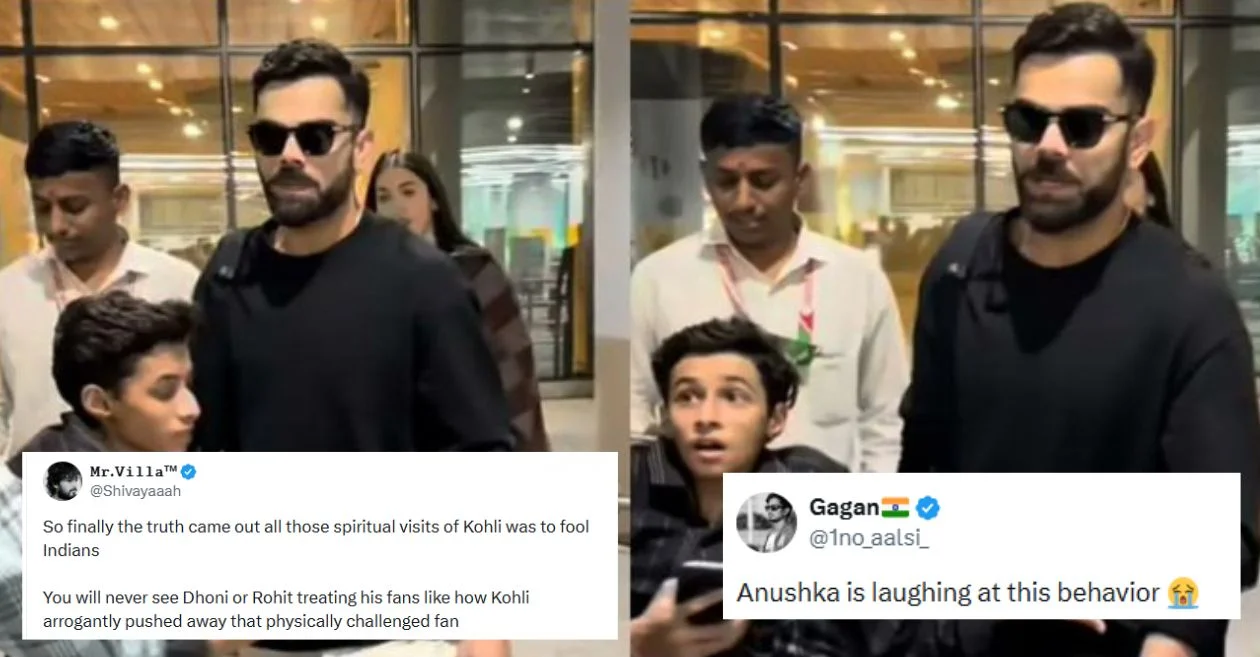
On December 17, 2025, Indian cricket legend Virat Kohli found himself at the epicenter of a social media storm following an encounter at Mumbai airport. Arriving with his wife, Anushka Sharma, the couple was surrounded by tight security as they made their way to a waiting car. In the midst of the chaos, a young fan, later identified as differently-abled, approached the cricketer with a request for a photograph. However, Kohli continued walking without making eye contact or acknowledging the boy’s plea, an act that was captured on video and instantly broadcast across the globe.

Did Virat Kohli and Anushka Sharma disrespect a physically challenged fan? Video from Mumbai Airport sparks controversy

The incident unfolded just as Kohli and Anushka were returning from a deeply spiritual visit to the ashram of Premanand Ji Maharaj in Vrindavan, a trip that had previously earned them widespread praise for their humility. As the couple stepped into the crowded terminal, the atmosphere was thick with paparazzi and fans eager for a glimpse of the superstar. The viral footage shows a young fan, struggling to keep pace with the swift movement of the security detail, extending his phone in hopes of a selfie with his idol.

Despite the fan’s proximity and visible effort, Kohli appeared to maintain a stern focus on reaching his vehicle, guided by his security team who were actively clearing a path through the throng. While such rapid exits are common for celebrities in high-security zones like airports to prevent overcrowding or safety hazards, the optics of bypassing a vulnerable admirer struck a chord with those watching the clip.

Observers noted that the cricketer did not offer even a brief nod or a word of acknowledgment, leading to accusations that his public persona of vinamra (humility) did not match his actions in that moment. The juxtaposition of his recent spiritual journey with this perceived lack of empathy created a narrative that many found difficult to reconcile, turning a routine airport transit into a significant PR crisis.

Also READ: IPL 2026: Who is Prashant Veer? The ‘next Ravindra Jadeja’ for CSK

Within hours of the video’s release, social media platforms were flooded with a polarized mix of outrage and staunch defense, highlighting the immense pressure under which global icons operate. Critics were quick to trend hashtags like “Rude Kohli,” with many users expressing deep disappointment and labeling the behavior as “insensitive” and “disgusting,” particularly given the fan’s physical challenges. Comments such as ‘What is the point of visiting a spiritual guru if you cannot show kindness to a child?” became common refrains, suggesting a level of hypocrisy in his public conduct.

Here’s how fans reacted:

Also WATCH: Kavya Maran’s priceless reactions as SRH outbid LSG to sign Liam Livingstone | IPL 2026 Auction


Source link

‘Matheesha Pathirana is a huge risk’: Former India captain cautions KKR after Rs. 18-crore IPL auction buy | Cricket News


‘Matheesha Pathirana is a huge risk’: Former India captain cautions KKR after Rs. 18-crore IPL auction buy
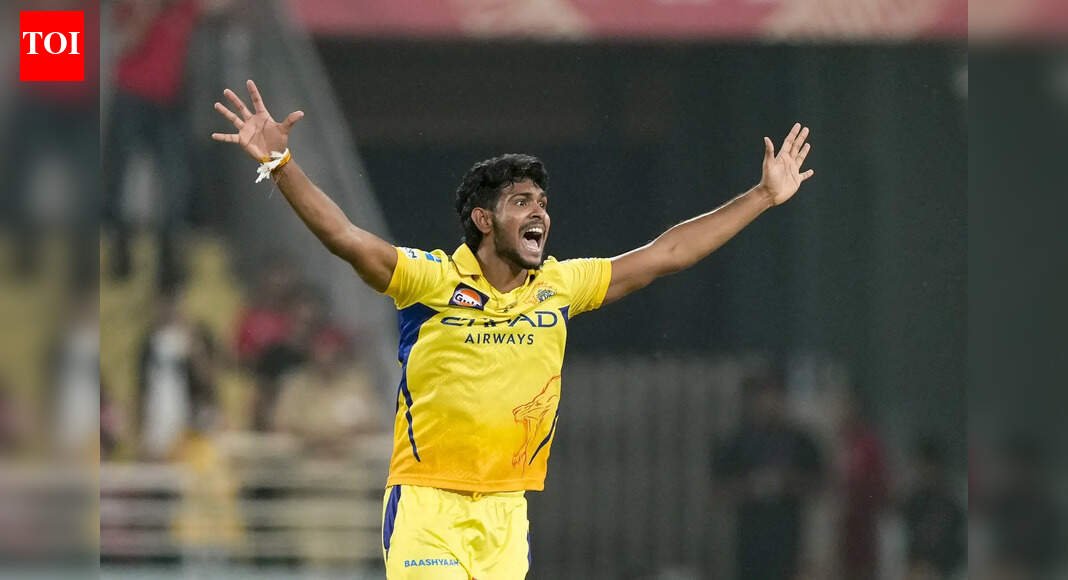
Cricketer Matheesha Pathirana (PTI Photo/Ravi Choudhary)

Former India cricketer Krishnamachari Srikkanth expressed surprise at the massive sum paid to Sri Lankan pacer Matheesha Pathirana during the IPL 2026 auction, where Kolkata Knight Riders secured him for a staggering INR 18 crore. Known for his unusual bowling action, Pathirana attracted intense interest on auction day, with Delhi Capitals and Lucknow Super Giants engaging in an early bidding battle before KKR stepped in and eventually outbid Lucknow to land the pacer at a record price. Pathirana made his IPL debut in 2022 but truly made his mark in 2023, becoming a key weapon for Chennai Super Kings with 19 wickets. He maintained his form the following year, taking 13 wickets in just six matches. However, after being retained by CSK for the 2025 season, Pathirana struggled to replicate that impact, claiming only 13 wickets across 12 games while conceding at an economy rate of 10.14. CSK ultimately released him ahead of the IPL 2026 auction and notably did not participate in the bidding for him.

KKR CEO Venky Mysore Explains Cameron Green Buy – ‘We were getting close to the limit’

Srikkanth commented on the hefty price tag, describing Pathirana as a “hit-and-miss” bowler and praising KKR’s decision to also secure Mustafizur Rahman as a smart backup option. “Pathirana is a huge risk. He’s a hit-and-miss bowler. But KKR made a smart move by buying Mustafizur Rahman also. They’ve got a backup for Pathirana with Mustafizur. It was expected that with Bravo’s presence, Pathirana would go to KKR. But I was surprised at his price and the number of teams that went for him,” Srikkanth said on his YouTube channel. Srikkanth further questioned the aggressive bidding for Pathirana, drawing comparisons with other high-profile players who struggled after a single underwhelming season, such as Jake Fraser-McGurk and Devon Conway. “LSG kept going for him until 18 crores. Is he such a big bowler to go for 18 crores? His performance was very ordinary in the last IPL season. Many players get excluded after one bad season. Someone like Fraser-McGurk didn’t do well one season, and he’s not even in the scene. Same with Devon Conway,” he added.


Source link

Access Denied


Access Denied

You don’t have permission to access “http://www.ndtv.com/india-news/7-6-voters-removed-from-west-bengal-draft-roll-1-6-crore-under-scanner-9832099” on this server.

Reference #18.17fdd417.1765971487.9b365b

https://errors.edgesuite.net/18.17fdd417.1765971487.9b365b


Source link

Trump sanctions fail to dent flow? India’s oil imports from Russia top cross 1 million barrels a day; show resilience


Trump sanctions fail to dent flow? India’s oil imports from Russia top cross 1 million barrels a day; show resilience

India’s imports of Russian oil are expected to cross 1 million barrels per day this December. (AI image)

Donald Trump’s sanctions on Russian oil majors don’t seem to have deterred Indian refiners from procuring crude – though non-sanctioned – from Russia. India’s crude oil imports from Russia are showing resilience in December, days after Trump’s sanctions on Russian firms Lukoil and Rosneft kicked in. The bilateral relationship has remained robust despite Western sanctions pressure.India’s imports of Russian oil are expected to cross 1 million barrels per day this December, according to trade and refining sources quoted in a Reuters report. This is against expectations of a significant reduction, as refiners continue purchasing from non-sanctioned entities that provide deep discounts.

India-Russia Crude Oil Trade Intact

* Data from trade sources quoted in the report indicates that India, the world’s third-largest crude importer, received 1.77 million bpd of Russian oil in November, showing a 3.4% increase from October. * Despite expectations of a significant decrease due to Trump’s sanctions on two major Russian producers, December deliveries are anticipated to surpass 1.2 million bpd, based on initial LSEG trade flow data.

Russia continues to be top oil supplier to India

Russia continues to be top oil supplier to India

* This figure could reach an average of 1.5 million bpd by month-end, according to a trade source quoted in the report. It is important to note that the surge in India’s December imports from Russia is attributed to buyers rushing to complete transactions before Washington’s November 21 deadline for deals with Rosneft and Lukoil. LSEG data confirms recent arrivals of such shipments at Indian ports.* However, in January, trade sources indicate that import levels might maintain December volumes as new entities not affected by sanctions begin supplying Russian oil cargoes.* Indian refiners find January prices attractive, with discounts of approximately $6 per barrel to dated Brent, which is two to three times larger than in August, according to sources.According to refining sources, January volumes are expected to be below 1 million bpd since Reliance Industries has stopped purchases. LSEG data shows Reliance is receiving at least 10 Russian oil cargoes this month.

Share of various regions in India's oil imports

Share of various regions in India’s oil imports

Regarding state refiners, Indian Oil Corp maintains Russian oil purchases at pre-sanctions levels, sources told Reuters. Bharat Petroleum has increased its January acquisitions to at least six cargoes, up from two in December, whilst Hindustan Petroleum is negotiating January loadings, sources were quoted as saying.Private refiner Nayara Energy, with majority Russian ownership including Rosneft, exclusively purchases Russian oil after other suppliers withdrew following EU and British sanctions.Reliance and HPCL Mittal Energy have announced that they will not procure Russian oil. Additionally, Mangalore Refinery and Petrochemicals are not procuring Russian oil for January, the report said.India emerged as Russia’s primary seaborne crude purchaser following Western sanctions imposed on Moscow over the Ukraine invasion. However, these purchases became problematic during trade negotiations with the US, as President Donald Trump raised import tariffs on Indian products to 50%.“Thanks to President Trump’s leadership, Russia has been forced to accept deep discounts and fewer buyers for its oil,” a US official said. “These pressures are limiting the Kremlin’s revenues and increasing the financial strain of sustaining its war.”Russian producers are utilising domestic market swaps to maintain oil flows to India whilst adhering to sanctions. This involves exchanging oil intended for local refineries with export volumes handled by non-sanctioned companies, Reuters said.These swaps are a standard practice in Russia for managing domestic supply constraints whilst maintaining export obligations.“There is a possibility that non-sanctioned entities can increase their crude output and shift supplies to export markets and sanctioned barrels can meet Russia’s local demand,” said Prashant Vashisth, vice president at Moody’s affiliate ICRA.


Source link

AI in education: Helping students learn or doing the thinking for them? | India News


AI in education: Helping students learn or doing the thinking for them?

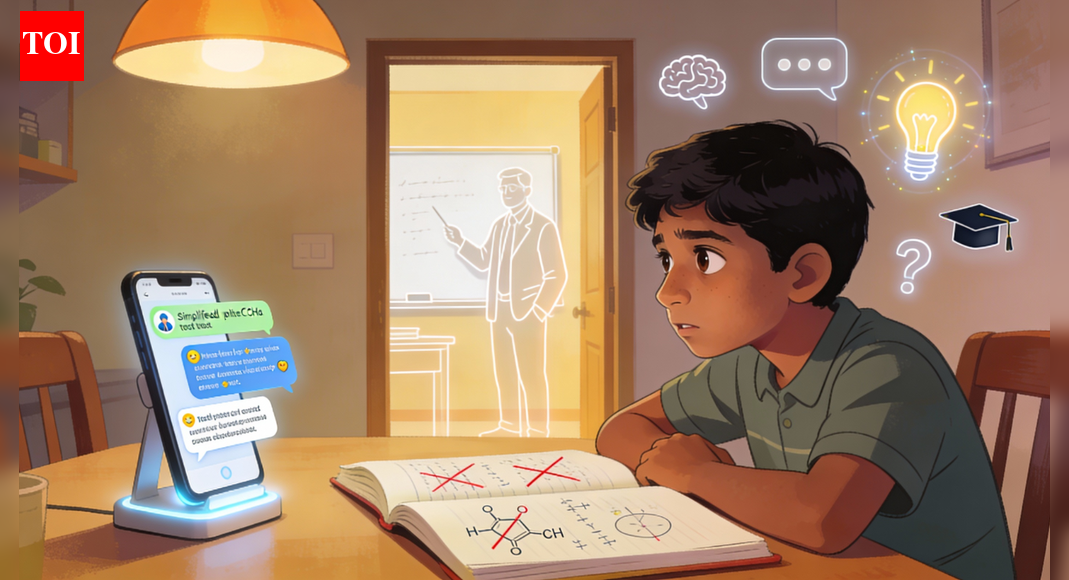
On an evening in Bengaluru, 14-year-old Aarav sits at his dining table, staring at a chemistry problem. His notebook lies open. Half the page is crossed out. His next tuition class is two days away.Instead of waiting, Aarav picks up his phone. “Explain this like I’m new to chemistry,” he types into an AI chatbot.The reply appears within seconds. It explains the steps in simple terms. Aarav asks again, this time for a real-world example. The explanation changes. He asks a third time. The chatbot does not rush or judge. It explains again.The next morning, Aarav goes to school. His teacher does not ask for the answer. She asks him to explain the process.This quiet exchange between a student, a machine, and a teacher captures where education stands today. Artificial intelligence is no longer a future idea debated in policy rooms. It already shapes how students study and how teachers teach.Yet this instant access carries a risk. When explanations are always available, confusion does not linger. Without that pause, understanding may never fully form.The real question is no longer whether AI belongs in education. It is how it is used, where it fits, and who remains in control.

What AI in classrooms looks like

AI in education does not mean robots replacing teachers. In practice, it appears in ordinary and often invisible ways.Most students use generative AI tools such as ChatGPT, Gemini, Grammarly, QuillBot, Canva Magic Design, and Gamma. They use them to simplify textbook language, clear doubts, create summaries, practise answers, and plan essays. For many, AI now acts as a round-the-clock study companion.These tools rely on generative artificial intelligence, or Gen AI. These systems produce original content—text, images, audio, or code—based on user prompts. Powered by large language models (LLMs), they analyse large datasets to generate human-like responses. Unlike earlier education software that retrieved information, Gen AI constructs answers. Its fluency can hide errors, bias, or weak reasoning.Adaptive learning platforms form another layer. Schools and coaching centres use them to track how students respond to questions and adjust lessons in real time. When students struggle, the software revisits basics. When they perform well, it raises the level. The goal is personalisation in classrooms where individual attention remains limited.

.

Teachers also use AI tools such as MagicSchool AI and Eduaide.AI. These help with lesson plans, worksheets, quizzes, and performance analysis. Used well, AI acts as a support system, not a substitute. It helps teachers focus their time where guidance matters most.Together, these tools respond to learners in real time. That marks a shift no earlier education software achieved.

Are students learning, or outsourcing thinking?

Students adopted AI faster than schools expected. Many now turn to AI before textbooks or teachers, especially for homework and exam revision. For some, AI has become the first step, not the last option.A 2024–25 report by the Center for Democracy and Technology found that 86 percent of students and 85 percent of teachers used AI during the school year. Students most often used it for tutoring and for college or career advice.This raises a harder question. Are students learning, or are they handing over the work of thinking?A Class 10 student preparing for board exams describes the change in her study habits.“Yes, AI has changed how I study. I often know the answer but struggle to write it well. AI tools help me phrase answers by giving templates and refining my responses.”Used with care, AI can support learning. It lets students revise at their own pace, return to hard topics without embarrassment, and practise independently. For students without access to personal academic support, AI can reduce gaps.

Is AI replacing critical thinking?

When answers arrive instantly, something subtle disappears. The struggle with confusion fades. That struggle is not a flaw. It is part of learning. Confusion forces students to pause, test ideas, and connect concepts. Without that pause, understanding stays shallow.Learning chess offers a clear example. An app that suggests the best move may help you win. It does not teach strategy. You follow instructions without knowing why they work. Real learning happens when players make mistakes and build intuition over time.Research from higher education signals concern. Studies show that students who rely on large language models for writing and research invest less mental effort. They often show weaker reasoning than peers who use traditional search methods. AI reduces effort, but it can also block deeper thinking.Other studies find that students using AI engage with fewer ideas. Their analysis becomes narrow and sometimes biased. When a clear answer appears quickly, students explore fewer alternatives and challenge fewer assumptions.Searching the internet still demands effort. Students must evaluate sources, interpret information, and decide how to use it. Generative AI often delivers finished responses. When used without reflection, it can replace the work of thinking.Critical thinking—the ability to question, weigh evidence, and form independent judgments—remains human. The risk lies not in using AI, but in letting it replace judgment.

“I’m not here to replace teachers or do the thinking for students. My purpose is to support learning—breaking down complex ideas, personalising practice, and helping students explore at their own pace. The real understanding still comes from human guidance, curiosity, and critical thinking.”

AI on it’s role in classrooms

AI in homeschooling: Help or hollow guidance?

AI has become a common tool in homeschooling. Many parents use it to save time on lesson planning, grading, and practice. AI tools can also explain topics and offer basic tutoring, which makes homeschooling more flexible and easier to manage.Homeschooling allows families to move at their own pace, but it also demands time and effort. AI can ease that burden by helping parents create lesson plans, explain ideas at different levels, and design worksheets or quizzes. If a child struggles with a topic, AI can repeat the explanation without strain. For working parents, this support helps maintain routine.But AI has clear limits.AI has no training in teaching methods. It does not understand how children learn or how skills develop over time. It pulls ideas from online sources but cannot judge their quality or suitability for a specific child.Parents do not need teaching degrees to homeschool. Still, when they face unfamiliar subjects, experienced teachers remain the better guide. Educators design curricula based on classroom experience and tested methods. That human judgment carries more weight than AI-generated material.AI also falls short in assessment. It gives broad feedback that ignores a child’s voice, effort, and progress. It cannot explain why a student struggles or recognise growth. In homeschooling, adults must stay in control. Children still need human guidance and care, that responsibility cannot belong to a machine.

The human cost: connection in the age of convenience

“Earlier, students came to me with doubts,” says a middle-school science teacher at a CBSE school in Pune. “Now they come with answers, and I have to check if they understand them.”Academic concerns are not the only issue. Connection is also at stake.The Center for Democracy and Technology report found that half of students felt less connected to teachers when AI entered the classroom. Many teachers worried about weaker peer interaction. Parents share this concern.In a country like India, where teachers are not merely instructors but are often revered as gurus who shape lives, this shift feels especially profound. The relationship between teacher and student has long carried emotional and moral weight, built on respect, guidance, and personal connection.Classrooms do more than transfer information. They teach collaboration, debate, empathy, and trust. If AI becomes the main link between students and knowledge, the human fabric of education may thin.For this reason, many experts stress one point: AI must remain a tool, not a teacher.

Why banning AI misses the point

Some schools tried to ban AI in response to plagiarism fears. These bans rarely work.Students continue to use AI outside school, often without guidance. Teachers end up enforcing rules that ignore reality.As researchers at the Harvard Graduate School of Education argue, denying AI’s presence does not protect learning. It avoids responsibility. Students already use these tools. What they need is direction.Across research and classrooms, a practical framework has emerged.

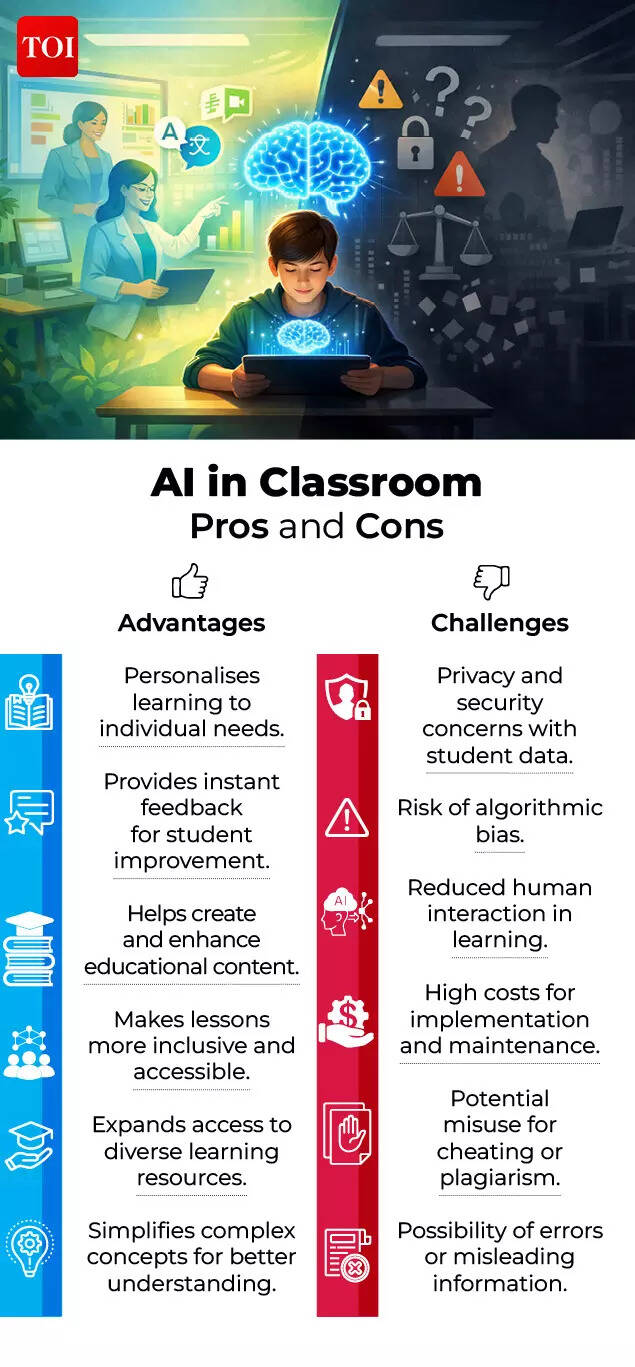
  • AI should support, not replace: AI works best when it reduces routine work and supports different learning needs. Judgment and explanation should remain human.
  • AI literacy must be taught: Students need to learn how to ask good questions, check accuracy, spot bias, and understand limits.
  • Assessment must change: Schools should value reasoning, process, and application over polished answers. Oral exams, in-class work, and reflection matter more.
  • Teachers should use AI with students: Examining AI responses together and questioning them in class shows students how to think critically.

As one educator puts it, the goal is not to stop students from using AI. It is to stop AI from doing the thinking for them.

A hybrid, human-centred future

The classroom of 2030 will not lack teachers. It will not revolve around AI. It will blend both.In this model, AI handles routine tasks and offers personal support. Teachers focus on discussion, creativity, ethics, and social learning. Students learn how to question AI, not just use it.Once students build healthy AI habits in school, higher education must continue that work. Universities can no longer treat AI as new. Curricula must reflect daily use.The workplace faces the same shift. Employers will need to invest in AI literacy to strengthen judgment and productivity. Every field will feel this change. How society responds will shape the next century.Back at his dining table, Aarav does not see AI as risky or radical. For him, it listens when he feels stuck. What matters is what follows—when a teacher asks him to explain, when thinking is required, and when learning becomes human again.



Source link