Breaking News
Self-harm a rising trend among distressed adolescents and young adults in India, finds TISS Mumbai helpline’s data | Mumbai News


Mumbai: Among adolescents and young adults, self-harm is increasingly becoming a language of pain—an expression of betrayal, distress and anxiety when words fall short. It is not always a wish to die, counsellors say, but an urgent attempt to feel heard, to release emotions that have nowhere else to go.Members of the Tata Institute of Social Sciences’ helpline iCALL field action project, speaking to the media, point to an uncomfortable truth: for many young callers, anxiety does not originate in the outside world but within the home. Dysfunctional family environments, they say, remain the most common and enduring trigger.“Self-harm is a rising trend in India,” said Dr Aparna Joshi, assistant professor at the School of Human Ecology and project director of iCALL and Sukoon at TISS. “It is not a way to end life, but a way to end pain — to manage overwhelming emotions. For many, it becomes a form of communication or venting, offering intense, if temporary, relief and a way of coping, although not helpful or constructive. Young individuals need to be supported in finding helpful and constructive ways of coping with their life difficulties”.Self-harm can take many forms—cutting, burning, or repeatedly injuring oneself — and is often viewed as part of a continuum that can, in some cases, edge towards suicidal behaviour. The concerns that surface alongside it are familiar and complex: academic pressure, struggles with identity and gender, strained relationships, trauma, and persistent emotional distress.Data from iCALL’s CHAMPS helpline supported by UNICEF reflect this landscape. The largest share of callers reach out for emotional distress (39.37%), followed by non-suicidal self-injury (9.79%), relationship issues (5.68%), suicidal ideation (3.40%), education and career-related stress (3.05%), and experiences of violence (3.32%). Together, they sketch a portrait of young lives grappling not just with external expectations, but with unresolved pain closer to home.Over the past three years, patterns in distress have traced an uneven map of the country. The CHAMPS helpline received the highest number of calls from Uttar Pradesh, Bihar, West Bengal, Rajasthan and Madhya Pradesh. Yet the data also carries its silences: Of the 27,706 genuine calls logged, nearly 13,000 callers chose not to disclose where they were calling from.A similar geography — and reticence — emerges on Reyou, the suicide prevention chat-line supported by Zoomcares and Mariwala Health Initiative that has assisted more than 10,000 young individuals in distress. Here, most users reached out from Maharashtra, Uttar Pradesh, Delhi, West Bengal and Karnataka, seeking help in typed words rather than spoken ones.

Source link

Overnight unrest in Bangladesh: Anti-India protests erupt; how events unfolded after Sharif Osman Hadi’s death


Overnight unrest in Bangladesh: Anti-India protests erupt; how events unfolded after Sharif Osman Hadi’s death

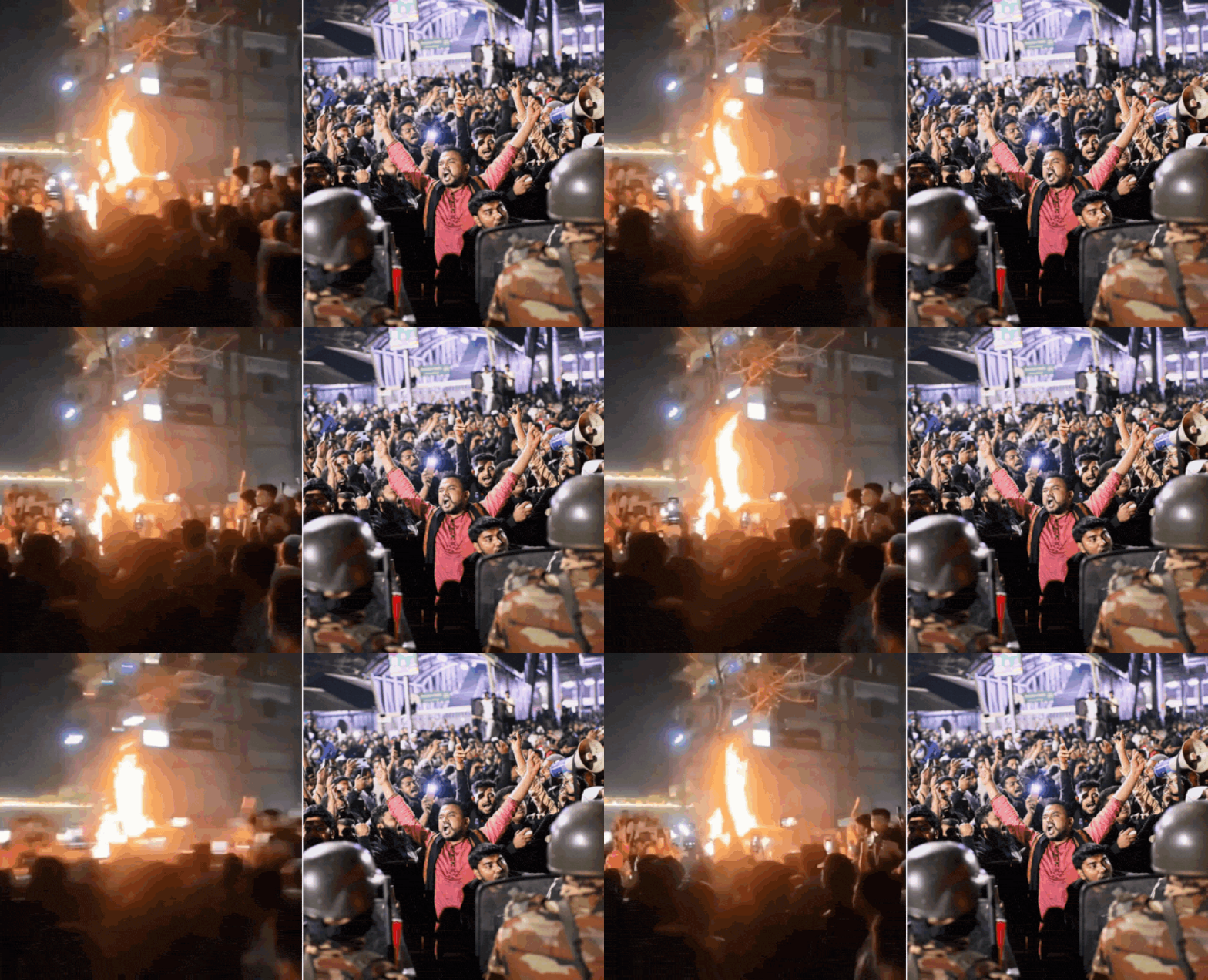
Bangladesh descended into widespread unrest overnight after the death of Sharif Osman Hadi, a prominent youth leader of the country’s 2024 pro-democracy uprising. Thousands of protesters took to the streets of Dhaka late Thursday and early Friday, demanding justice for Hadi, who died in a Singapore hospital after succumbing to gunshot injuries sustained in an assassination attempt last week.Demonstrations spread from Dhaka to other parts of the country, with protesters attempting to march toward Indian diplomatic premises and attacking properties linked to the former ruling Awami League.

Anti-India slogans, protests rock Bangladesh

Protesters in the southwestern city of Rajshahi tried to march toward the office of a regional Indian diplomat, but police stopped the procession. Several videos on social media showed incident of stone pelting near Indian assistant High Commission office.In Dhaka on Wednesday, hundreds of demonstrators attempted to gather outside Indian diplomatic premises, including the residence of India’s deputy high commissioner, prompting police to use tear gas to disperse the crowd.Members of the National Citizen Party (NCP), a major offshoot of Students Against Discrimination (SAD), which led last year’s protests, joined the demonstrations, chanting anti-India slogans and alleging that Hadi’s assailants had fled to India after the killing. Protest leaders called on the interim government to shut the Indian High Commission until the suspects were returned.“The interim government, until India returns assassins of Hadi Bhai, the Indian High Commission to Bangladesh will remain closed. Now or Never. We are in a war!,” PTI quoted Sarjis Alm, a key leader of NCP, sayingMeanwhile, a parliamentary committee on external affairs called the current situation in the neighbouring nation “complex and evolving”.“The committee has been informed that the current situation in Bangladesh is complex and evolving. There is uncertainty regarding the schedule of democratic elections. The political events of August 2024 have created significant instability and uncertainty with incidents of violence, attacks and intimidation of minorities, tribal communities, media groups, intellectuals, journalists, academicians, etc., becoming the norm,” it said.

Media houses vandalised

Several buildings in the capital were set ablaze as the protests escalated, including offices housing the country’s two largest newspapers, Prothom Alo and The Daily Star.Fire officials confirmed at least three incidents of arson, with journalists and staff trapped inside the buildings as firefighters battled the flames, according to media reports.“Several hundred demonstrators reached the Prothom Alo office around 11 pm and later surrounded the building,” PTI quoted a witness saying, who added that the protesters then set the Daily Star office on fire.

Awami League office torched

The violence quickly spread beyond the capital. Protesters torched an Awami League office in Rajshahi and vandalised properties linked to former prime minister Sheikh Hasina, who fled to India after being ousted in last year’s uprising. Demonstrators also blocked a key highway connecting Dhaka with Mymensingh and attacked the residence of a former minister in the southeastern city of Chittagong, according to local media footage.

Sharif Osman Hadi’s death fuel outrage

Hadi, 32, was a senior leader of the student-led platform Inqilab Mancha and a vocal critic of both Hasina. He was shot by masked assailants on December 12 while leaving a mosque in central Dhaka and was later airlifted to Singapore for advanced medical treatment, where he succumbed to his injuries on Thursday. Bangladesh’s interim leader Muhammad Yunus described Hadi’s death as an “irreparable loss for the nation,” announced a day of mourning, and ordered special prayers nationwide. Police have launched a nationwide manhunt for the attackers, releasing photographs of two suspects and offering a reward of five million taka for information leading to their arrest, as authorities warned that the violence risked destabilising the fragile political transition.


Source link

Jaunpur Murder: BTech Graduate Arrested for Gruesome Double Homicide in Jaunpur: Parents Dismembered and Dumped | Varanasi News


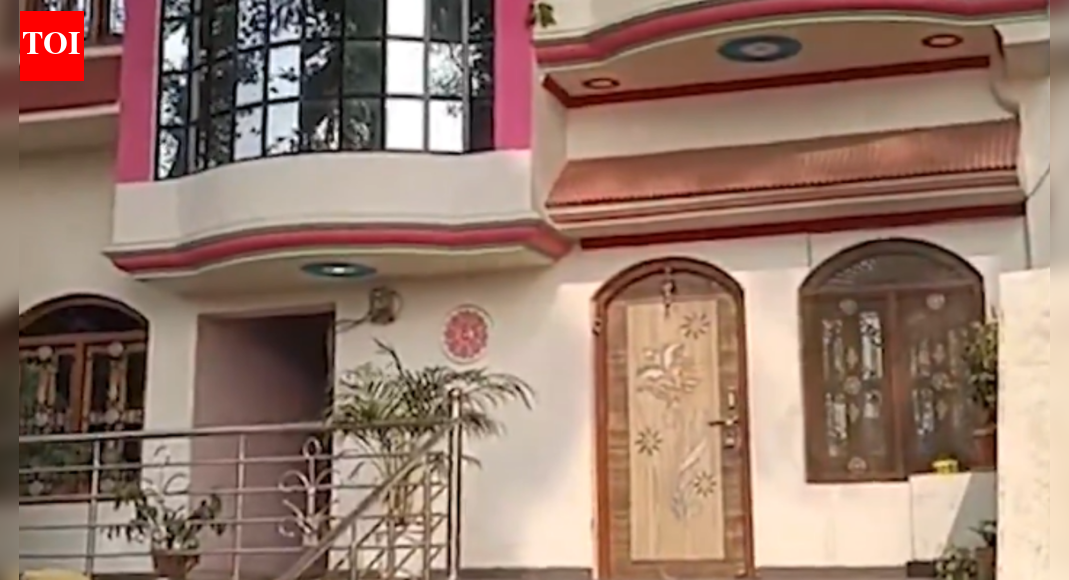
BTech graduate kills parents over money (Visuals of thier home)

JAUNPUR: In a chilling case from the Jafarabad area of Jaunpur, police have arrested a 30-year-old BTech graduate for allegedly murdering his parents, dismembering their bodies, and dumping the remains in the Gomti river.The accused, Ambesh Kumar, a quality engineer by profession, allegedly killed his retired loco pilot father Shyam Bahadur and mother Babita Devi on the evening of December 8 following a dispute over money. According to police, Ambesh struck the couple repeatedly with a silbatta (grinding stone), killing them on the spot.During interrogation, Ambesh allegedly confessed that after the murders, he used a saw to chop the bodies into around 10 pieces. He then packed the body parts in cement bags and dumped them into the Gomti River from Belawa bridge, police said.To cover up the crime, Ambesh returned home and misled his sister, Vandana Devi, into lodging a missing persons complaint for their parents at the Jafarabad police station. A few days later, he left home pretending to search for them and did not return, prompting his sister to file another missing report for him as well.Suspicion grew during the investigation, and Ambesh was arrested from Jaunpur city on Monday evening. Police recovered the murder weapon, including the silbatta and the saw, based on his disclosure.Jaunpur assistant superintendent of police Aayush Shrivastava said that one body—believed to be Shyam Bahadur’s—has been recovered from the river, while an extensive search is underway for Babita Devi’s remains. Around 15 divers have been deployed to scour the river, he added.


Source link

Fans erupt as Ishan Kishan lights up MCA stadium with explosive 45-ball hundred for Jharkhand in SMAT 2025 final vs Haryana


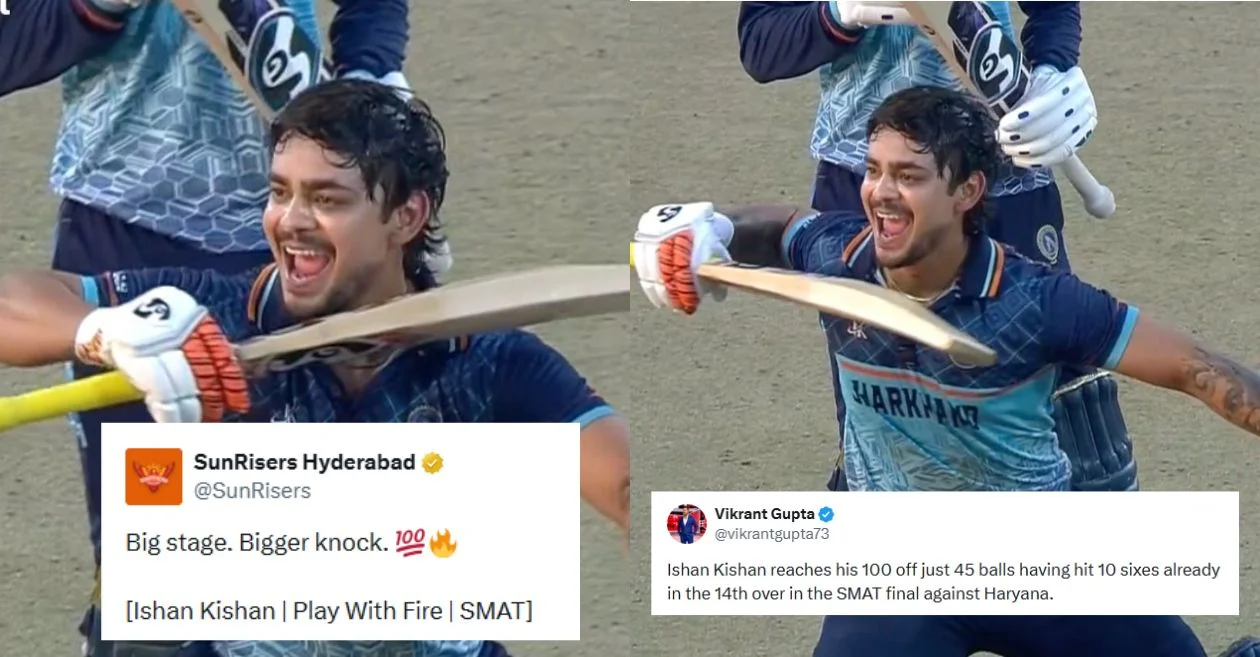
Ishan Kishan has once again proved why he remains one of the most explosive talents in Indian cricket by smashing a sensational 45-ball century in the final of the Syed Mushtaq Ali Trophy (SMAT) 2025. Leading Jharkhand against Haryana at the Maharashtra Cricket Association Stadium in Pune, the southpaw unleashed a masterclass in aggressive T20 batting.

After Jharkhand suffered an early setback with the loss of Virat Singh in the very first over, Kishan took it upon himself to steady the ship and eventually decimate the opposition. His innings was a perfect blend of calculated risks and sheer power, featuring a barrage of boundaries that left the Haryana bowlers searching for answers.

SMAT 2025 final: A record-breaking partnership between Ishan Kishan and Kumar Kushagra stun Haryana

The Jharkhand innings was defined by a historic second-wicket stand between Kishan and the young, talented Kumar Kushagra, who together dismantled the Haryana bowling attack. Coming together at a precarious 4/1 after the dismissal of Virat, the duo put on a spectacular exhibition of power-hitting, adding over 150 runs in a display of total dominance. Their partnership has etched itself into the record books as the highest-ever stand in the history of a Syed Mushtaq Ali Trophy final, surpassing all previous benchmarks for the tournament’s showpiece event.

While Kishan was the aggressor-in-chief, reaching his fifty in just 24 balls, Kushagra played the perfect foil, striking a rapid 76* off 39 deliveries to keep the pressure mounting from both ends. By the 14th over, Jharkhand had raced to 179/1, scoring at an astonishing rate of nearly 13 runs per over against a formidable Haryana side. The chemistry between the two batters was evident as they rotated strike with ease before launching into a series of maximums that targeted every corner of the Pune ground.

Also READ: IPL 2026 Auction: Salary of Kolkata Knight Riders (KKR) players; check out how much Rinku Singh and Cameron Green earn

Ishan Kishan’s 45-ball century for Jharkhand in SMAT 2025 final

Kishan’s path to his 45-ball century was a masterclass in T20 batting construction, specifically in how he targeted the powerplay and manipulated the field thereafter. After a tentative start against Anshul Kamboj’s moving ball, Kishan broke the shackles in the second over by flicking Ishant Bhardwaj for a massive six over deep square leg.

Kishan targeted the final over of the powerplay bowled by Amit Rana, clobbering three sixes in four balls to propel Jharkhand to 69/1 by the end of the first six overs. His hundred was eventually secured with a trademark slap over cover off Kamboj in the 14th over, a shot that epitomized his confidence and hand-eye coordination throughout the afternoon.

Statistically, his knock was highlighted by 6 fours and a staggering 10 sixes, maintaining a strike rate well above 220 for the duration of his stay at the crease. He became only the second batter in the history of the SMAT to record a century in the final, joining Punjab’s Anmolpreet Singh in that elite club. This performance was particularly significant as it pushed him past the 500-run mark for the 2025 season, making him the leading run-scorer in the competition and showcasing his incredible consistency across different venues and conditions.

Here’s how fans reacted: 

Also READ: IPL 2026 Auction: Salary of Punjab Kings (PBKS) players; check out how much Shreyas Iyer and Cooper Connolly earn


Source link

December 18 Throwback: When 16-year-old Sachin Tendulkar began his ODI journey — and cricket found a legend | Cricket News


December 18 Throwback: When 16-year-old Sachin Tendulkar began his ODI journey — and cricket found a legend
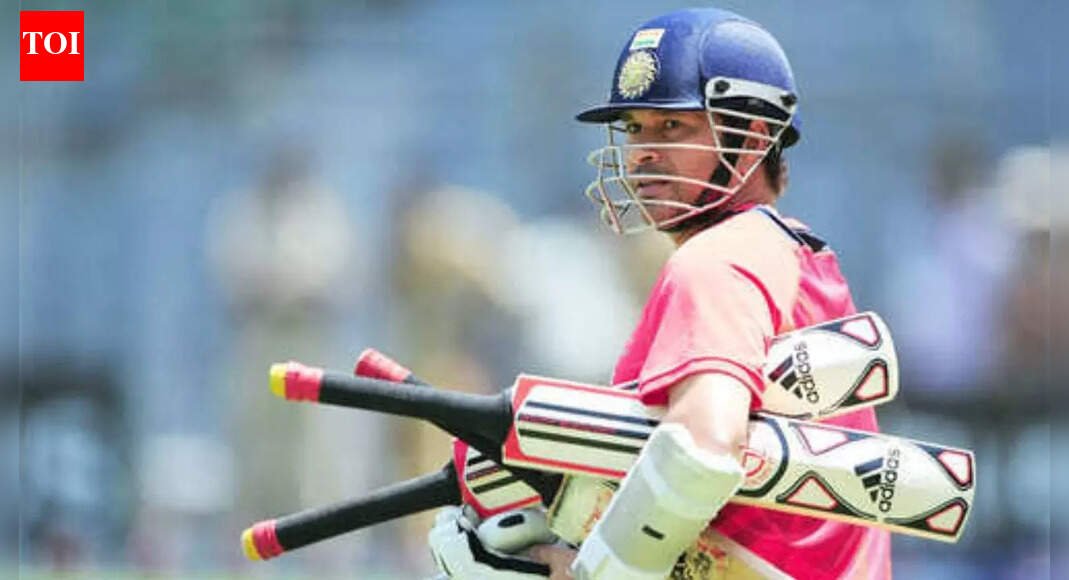
File Pic: Sachin Tendulkar

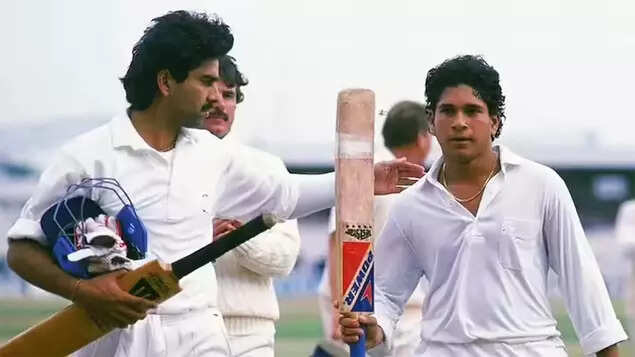
36 years ago on this day – December 18, 1989, India faced arch-rivals Pakistan at Gujranwala in the second ODI of the four-match series. A 16-year-old boy padded up to play his first limited-over match in India colours.That teenage boy was none other than legendary Sachin Tendulkar, who made his international debut a month ago in Karachi in the first Test of India’s tour to Pakistan.It was an anti-climatic start to arguably the most successful ODI career in cricket history. The teenager came to bat when India were struggling at 34/3 after Raman Lamba was run-out in their 88-run chase.

Prashant Veer’s parents react after their son gets a Rs 14.20 crore IPL deal

Coming to bat at No.5, Sachin failed to make an impact as he was dismissed by Waqar Younis, who also made his Test debut in the Karachi Test along with the teenage batter. Sachin faced just two balls and was out for a duck as India lost the low-scoring game by 7 runs.Little did the young boy and the world knew at that time that the teenage prodigy would end up playing 463 ODIs in a career that spanned more than two decades, scoring still the world record 18,426 runs in the format, including 49 centuries and 96 half-centuries. How Sachin Tendulkar’s debut ODI panned out in 1989India’s tour of Pakistan that year comprised four Tests and four ODIs. The two teams entered the second ODI on December 18, after drawing the Test series 0-0, that’s four drawn matches, and the first ODI abandoned without a ball being bowled in Peshawar.At Municipal Stadium, India captain Kris Srikkanth won the toss and decided to bowl first against the hosts. The visitors gave ODI debuts to not just Sachin, but to two more players – Salil Ankola and Vivek Razdan.

Sachin Tendulkar

File Pic: Sachin Tendulkar (Getty Images)

Spinner Maninder Singh gave India a terrific start, removing Ramiz Raza and Saleem Malik in quick succession as the hosts were reduced to 22/2. Two run-outs followed – Wasim Akram and Mansoor Akhtar, and Pakistan kept losing wickets in quick succession and their innings ended at 87/9 in 16 overs – the match was a curtailed one due to rain. Saeed Anwar, coming to bat at No.5, was the sole resistance for the hosts and remained unbeaten on 42 off 32 balls, hitting two sixes and four fours.For India, apart from Maninder (2/17), debutant Salil Ankola took two wickets for 26 in four overs, with Raman Lamba finishing with figures of 1 for 9. There were as many as four run outs in Pakistan’s innings.Needing 88 to win in 16 overs, India started cautiously with the openers adding 26 runs before captain Srikkanth was bowled by Waqar Younis for 17. It opened the floodgate, with Navjot Sidhu and Lamba (10) following soon.It was then, the young Sachin came to bat for India for the first time in the ODIs. But he was undone by the bowling of Younis and was gone for a two-ball duck caught by Akram, and India were left reeling at 36/4. Like Pakistan, India too kept losing wickets at regular intervals with Mohammad Azharuddin top-scoring for the visitors at 21. Only four India batters managed to reach the double figures mark, and were restricted to 80 for 9 in their 16 overs, losing the match by 7 runs. With the win, Pakistan took a 1-0 lead in the series, which they eventually won 2-0 after the third ODI too ended without a result and the hosts winning the final match by 38 runs.

Sachin Tendulkar with Lionel Messi

Sachin Tendulkar with Lionel Messi at Wankhede stadium.

Sachin Tendulkar’s stats in his first international seriesSachin started his international career in Tests, featuring in all four matches in Pakistan. He had a decent start to his Test career, scoring 215 runs in six innings at 35.83 average and hitting two fifties with a best score of 59, which came in his second career inning in Faisalabad after starting with a 15 in Karachi. He signed off the Pakistan Test series with his second half-century – a 57 in Sialkot.But ODI career which started with a duck, was incidentally the only limited-over match he featured in the series, in which one match was abandoned without a ball being bowled and other was deemed no result without India getting a chance to bat. Duck to most runs in ODI cricketDespite failing to open his account on debut, Sachin went on to finish his career with a plethora of records, especially in ODIs. The Little Master signed off his career as the highest run-getters in ODIs (18,426), had the longest career in the format (22 years and 91 days), scored most hundreds (49) at the time his retirement – before Virat Kohli surpassed him recently, most runs in a calendar year (1894), most hundreds in a calendar year (9), most fifty-plus scored (145) and fastest to 15000, 16000, 17000, 18000 runs in the format among others. Fun fact: The ODIs in that series were scheduled as 40-overs-a-side, even though Sachin Tendulkar’s debut match itself was reduced to 16 overs per side due to rain. In those days, the maximum number of overs in ODIs was not standardised — matches were played over 40, 50, 55 or even 60 overs. The 50-overs-a-side format became the norm only in the mid-1990s, with the 1987 World Cup in India and Pakistan being the first major tournament to formally adopt it.


Source link

Ecologists warn of gaps as Mithi engineering push ramps up | Mumbai News


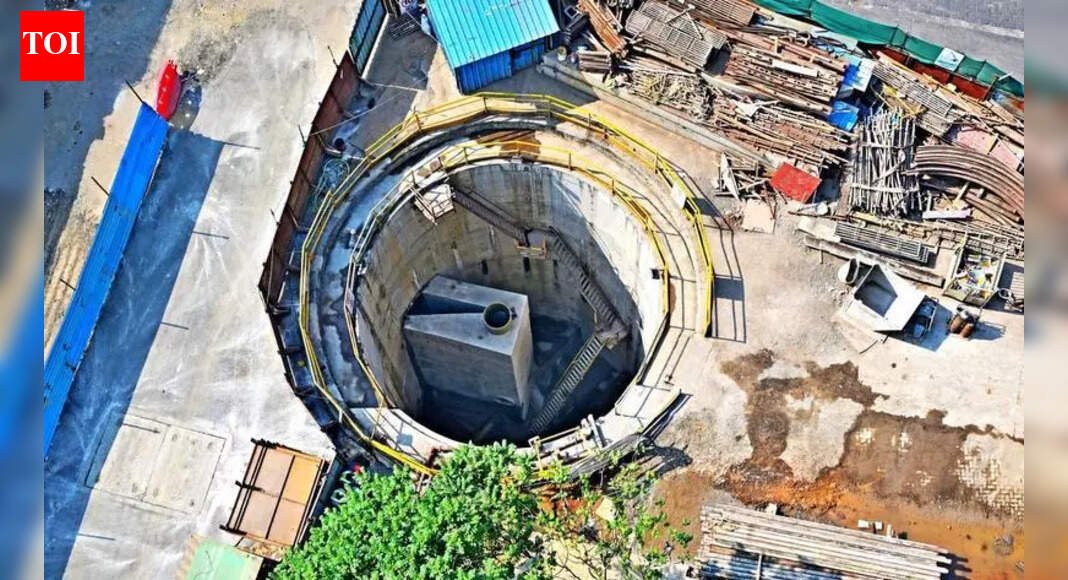
Even as municipal authorities invest thousands of crores to revive the long-polluted Mithi river, the core question continues to be whether these projects finally stop the sewage, flooding and stink that have defined the river for decades. Experts say that while the current works are substantial, smaller localised measures, such as basic screens at outfalls, could also have delivered meaningful improvements.Rakesh Kumar, former director of NEERI and head of the Supreme Court-appointed expert committee on Mithi, welcomed the scale of the sewage-diversion push but warned that “interception, diversion and treatment” projects “are highly complex and rarely silver bullets and take long time to complete”. He said, “Capturing sewage at the source is always more effective than trying to reroute it kilometres away,” echoing IIT-B’s recommendation that treatment and reuse at source could help keep the river perennial. He noted that the 2018 committee report had also suggested multiple nature-based solutions.Kumar said pollution extends far beyond sewage. “A large share of the river’s degradation comes from unmanaged municipal solid waste, plastic, sludge, industrial effluent and debris. Unless these inputs are stopped at the neighbourhood level, engineering solutions alone will not deliver a clean river.” Large tunnelling projects, he said, carry uncertainties: “There’s no guarantee a diversion tunnel of this scale will deliver 100% results. We have seen multiple rejuvenation attempts over the past two decades — channelisation, widening, desilting, flood-mitigation works — yet the core problem persists.”AD Sawant, civil society member of the expert committee and former pro-VC of Mumbai University, said the contrast remains stark between Mumbai’s engineering feats and its inability to clean a 17km river. “We’ve built Coastal Road, an underground metro line, deep tunnels — all projects of enormous complexity. Yet Mithi remains foul. A large portion of Mithi’s pollution is human-driven. If we truly want a cleaner river, the bay must remain a strict no-development zone.Architect PK Das, who too was on the committee as a civil society member, said restoring the river’s ecology is essential. “The river has been reduced to an impervious RCC-lined channel… destroying the symbiotic relationships in nature,” he said. “Instead of attending to ecological restoration, the focus by the authorities has been only on large engineering budgets. But technology alone cannot save the river; unless we revive its ecology, nothing will change. Global best practices now favour breaking concrete embankments and creating eco-sensitive riverfronts.”Rishi Agarwal, co-founder of Mithi Sansad, warned that large-scale sewage interception could leave the river bone-dry for most of the year. “Once the dry-weather flow is trapped, vast stretches of the river will run dry outside the monsoon.” The real challenge, he said, will be reliable operations: “Unless they are run optimally, 24×7, we won’t see real change on the ground.”


Source link

SC upholds man’s will cutting off daughter for marrying ‘outsider’ | India News


SC upholds man's will cutting off daughter for marrying 'outsider'
Says Testator’s Wish Assumes Pre-Eminence

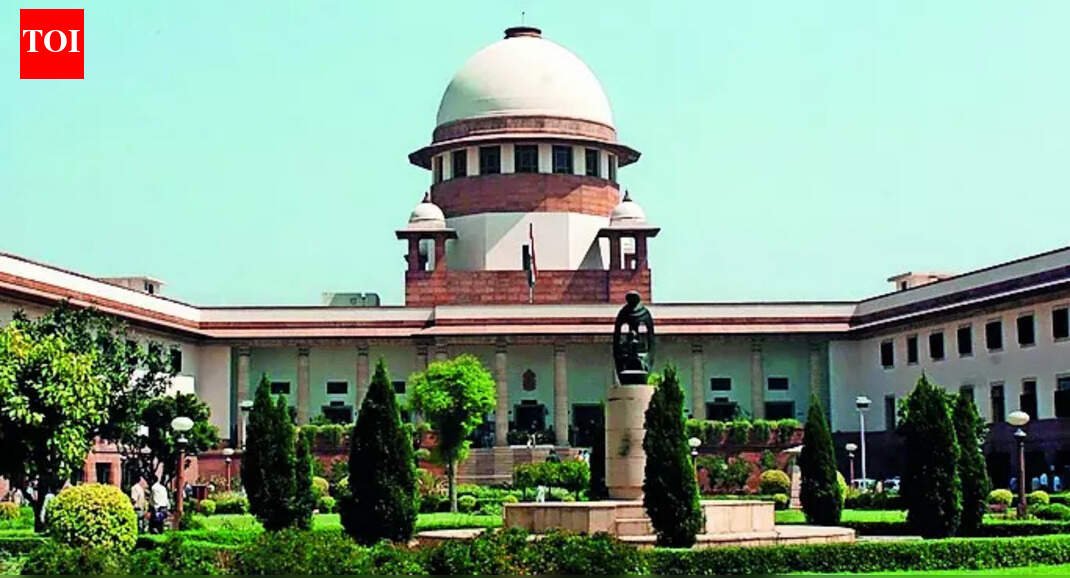
NEW DELHI: The string of landmark judgments on gender equality could not help Shyla Joseph get an equitable 1/9th share of the property of her father N S Sreedharan, who had nine children but in his will disinherited her for marrying outside the community.A Supreme Court bench of Justices Ahsanuddin Amanullah and K Vinod Chandran reversed the concurrent findings of the HC and the trial court which had doubted the will and allowed equitable partition of Sreedharan’s property among the nine children, including Shyla.Writing the judgment, Justice Chandran said, “There can be no interference to the will which stands proved unequivocally. The judgment and decree of the high court and that of the trial court stands set aside. The plaintiff (Shyla) is found to have no claim over the properties of her father, which by a will have been bequeathed to the other siblings of the plaintiff.”Once the SC doubted the claim, senior advocate P B Krishnan, appearing for Shyla, requested the bench that her entitlement at best was just 1/9th share of her father’s assets which is a negligible portion of the properties.The bench said the question of equality does not arise in a case relating to the wish of a man about division and inheritance of his properties. It said, “We are not on equity, and the wish of the testator assumes pre-eminence. The last will and testament of the testator cannot be digressed from or frustrated.” While allowing the appeal of her siblings, the bench ordered dismissal of the suit she had filed for equitable partition of her father’s properties.It said the rule of prudence cannot apply to the contents of a will, which is the wish of the individual who has absolute discretion to divide his properties. If all siblings had been divested of their inheritance through a will, then the rule of prudence could have been applied by the courts, the bench said.Referring to the reason for which Sreedharan had disinherited Shyla, the SC said, “There is a reason stated for such exclusion, the acceptability of which to our minds, is not what the rule of prudence dictates. We cannot put the testator in our shoes… We cannot substitute our opinions in place of that of the testator; his desire prompted by his own justifications.”


Source link

SC satisfied as Kerala govt, governor agree on VCs | India News


SC satisfied as Kerala govt, governor agree on VCs

NEW DELHI: As Kerala govt and the governor told the court that they agreed on names to be appointed as vice-chancellor for the two state universities, SC Thursday expressed satisfaction and hoped that they would continue to keep talking and work together in the larger interest of the state.As the tussle between the two authorities was blocking the process of appointment for two varsities, SC decided to intervene and appointed a committee headed by its retired judge Sudhanshu Dhulia to recommend names for appointment. It passed the order after both CM and governor consented for the panel. The dispute refused to die as both functionaries again did not come to consensus on selecting two out of nine names suggested by the committee and the court thereafter asked the panel to recommend names on the order of preference.As the matter was called Thursday, attorney general R Venkataramani, appearing for governor, told SC that both functionaries have come to a consensus on who are to be appointed. “We are happy to record that the chancellor and govt, in one voice, reported that appointment of VC in two universities have been made from empanelled list. We place our gratitude to the office of Justice Sudhanshu Dhulia. Our endeavour was to ensure that institutions have a permanent head, which alone would ensure that interests of all stakeholders are safeguarded. We place our appreciation to the authorities who are parties in the matter and who, in the true spirit of the Constitution, especially Article 144, have acted in aid of the orders of this Court,” the bench said.After the order was dictated, the AG said it was the Kerala governor who invited CM, and then they were able to reach a consensus. Responding to this, the bench said, “I hope they keep talking like this, over a mug of coffee, for the larger interest of people.”


Source link

Delhi Anti Pollution Rules: No fuel without PUC, old cars barred, WFH: Delhi’s toughest anti-pollution rules kick in | Delhi News


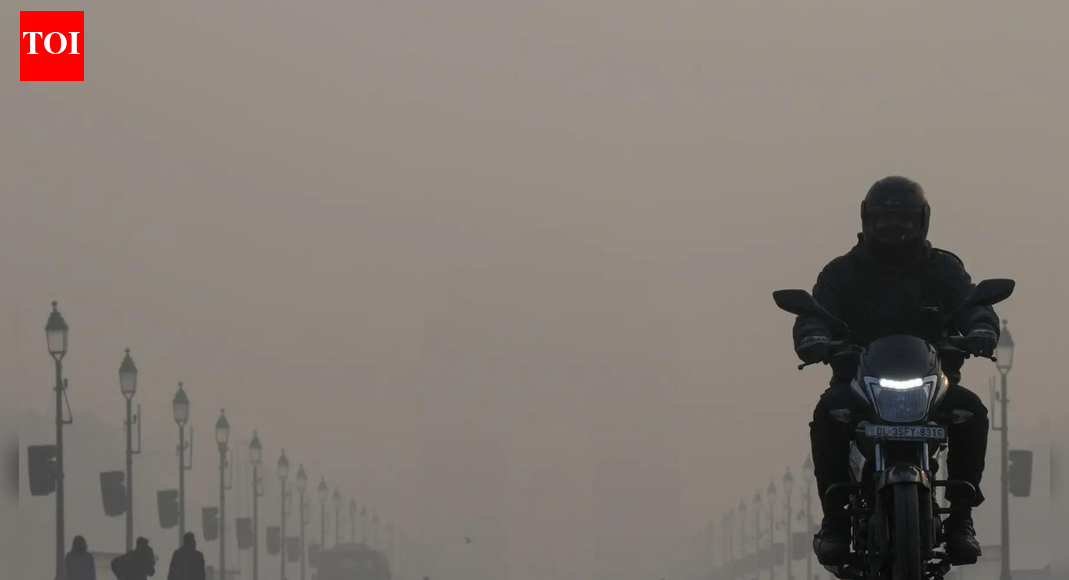
Delhi has implemented stringent anti-pollution measures under GRAP-IV, including a ban on non-BS VI vehicles from outside the city and denial of fuel to vehicles without valid pollution certificates

NEW DELHI: As toxic air continues to blanket the capital, Delhi government on Wednesday rolled out a fresh set of stringent anti-pollution measures under Stage IV of the Graded Response Action Plan (GRAP), including a ban on non-BS VI vehicles registered outside the city, denial of fuel to vehicles without valid pollution certificates, and mandatory work-from-home for half the workforce in offices which will come into action from today.The govt clarified that the restriction on entry of non-BS VI vehicles registered outside Delhi will remain in force only as long as GRAP-IV is in place, modifying an earlier directive that had caused confusion. “If enforced beyond Stage IV, it would have led to massive disruption,” a govt official said.

From Work-From-Home To Vehicle Ban- Delhi Rolls Out Fresh Pollution Curbs

Key points

  • GRAP-IV in force: Most stringent pollution-control stage active across Delhi-NCR
  • No PUC, no fuel: Vehicles without valid PUC certificates won’t get fuel
  • Non-BS VI vehicles barred: Private vehicles registered outside Delhi below BS-VI not allowed to enter the city during GRAP-IV
  • Strict checks: 500+ police personnel, 37 Prakhar vans, 126 checkpoints deployed
  • Construction curbs: Construction activity halted; trucks carrying construction material barred
  • 50% WFH mandate: Govt and private offices to operate with half staff working from home
  • Essential services exempt: Hospitals, utilities, transport, enforcement and disaster services excluded
  • Penalties applicable: Violations punishable under the Environment (Protection) Act
  • Carpooling push: Delhi govt to launch a city-specific carpooling app
  • Worker relief: Rs 10,000 compensation announced for registered construction workers
  • Pollution outlook: Severe air quality likely till Dec 27

Under the tightened norms, vehicles without valid Pollution Under Control (PUC) certificates will not be allowed to refuel at petrol pumps from Thursday. To ensure compliance, a policeman and a transport department official will be stationed at each fuel station. Authorities said the focus would be on awareness initially, with drivers being advised to update their PUC certificates.Delhi Traffic Police have intensified enforcement at city borders and major arterial roads. Over 500 personnel and 37 Prakhar vans have been deployed across 126 checkpoints, including RFID-enabled entry points, to turn back non-compliant vehicles. Officers said e-challan systems will be used to instantly verify a vehicle’s emission norms and registration details.Construction and demolition activities remain suspended under GRAP-IV, and vehicles carrying construction material have been barred from entering the city. To mitigate the impact on daily-wage workers, the govt announced Rs 10,000 compensation for registered and verified construction workers affected by the halt in work.In another major move, Delhi govt has mandated 50% work-from-home in all govt and private offices within the NCT from Thursday, with exemptions for essential services such as hospitals, utilities, transport, enforcement and disaster response. However, the order has left many offices grappling with questions on implementation, compliance and monitoring, especially in the private and unorganised sectors.Environment minister Manjinder Singh Sirsa said the measures are aimed at tackling pollution from four major sources — vehicles, industries, dust and solid waste. He announced that the govt will soon launch a Delhi-only carpooling app, use Google Maps data to identify congestion hotspots, and roll out an integrated traffic management system to improve signal coordination and reduce idling time.Addressing residents and petrol pump owners, Sirsa urged cooperation. “This campaign is not to cause inconvenience but to make Delhi’s air breathable again. Every Delhiite must ensure their vehicle’s PUC is up to date — it’s a collective responsibility,” he said.Officials said air quality is expected to remain in the severe category till at least December 27, based on past trends, and enforcement of GRAP-IV will continue until pollution levels show sustained improvement.


Source link

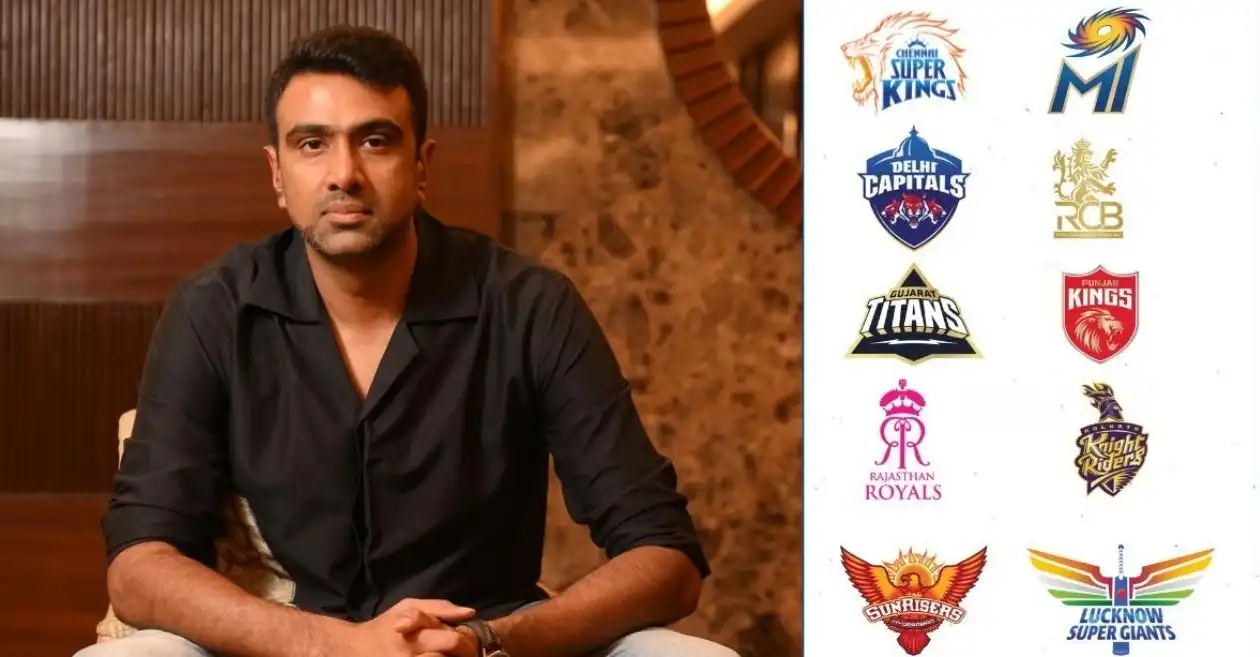
Ravichandran Ashwin predicts IPL 2026 semifinalists after mini auction


With the IPL 2026 mini auction concluding on December 16, discussions around title contenders have gathered pace. Adding weight to the debate, veteran Indian spinner Ravichandran Ashwin has shared his prediction for the four teams most likely to reach the semifinals next season. Drawing from his experience as both a player and keen observer, Ashwin highlighted squad stability, smart auction strategies, and player availability as decisive elements in shaping his top four.

5 time champions lead Ravichandran Ashwin’s picks

Ashwin named Mumbai Indians (MI) as his foremost choice to make the IPL 2026 semifinals. The five-time champions entered the auction with a strong core already in place, having retained the majority of their key players ahead of the bidding. According to Ashwin, this continuity gives MI a clear edge over other franchises still searching for balance.

He also praised MI’s auction approach, pointing out their ability to secure quality players without overspending. The acquisition of Quinton de Kock for a modest INR 1 crore stood out as a particularly shrewd move, adding experience and firepower at the top of the order. Confident in their overall structure, Ashwin remarked in a video shared by the franchise that Mumbai were almost certain to be among the top teams when the season reaches its business end.

“I think MI is gonna get there for certain,” said Ashwin in a video shared by Mumbai Indians on social media.

Defending Champions’s conditional spot

Defending champions Royal Challengers Bengaluru (RCB) were Ashwin’s second pick, though his support came with important conditions. While acknowledging the strength of their retained core and their smart recruitment, including the addition of Venkatesh Iyer, Ashwin stressed that RCB’s fortunes would hinge heavily on player fitness.

He specifically highlighted the importance of Josh Hazlewood’s fitness and the availability of left-arm pacer Yash Dayal. Ashwin suggested that if both bowlers remain fit and available throughout the season, RCB have every chance of making a third straight playoff appearance. However, any disruption on that front could significantly affect their campaign.

Also READ: IPL 2026 Auction: Complete squads of all 10 teams after the bidding event

Shreyas Iyer-led side earn veteran player’s confidence

Ashwin also backed Punjab Kings (PBKS), last season’s runners-up, to feature in the IPL 2026 semifinals. Like MI and RCB, PBKS focused on retaining their core group, ensuring stability within the squad under the leadership of Shreyas Iyer. Ashwin felt this continuity, combined with targeted additions at the auction, made them a well-rounded side.

The inclusions of Ben Dwarshuis and Cooper Connolly added depth and flexibility to the Punjab lineup, strengthening both their bowling resources and all-round options. Ashwin noted that Punjab, alongside Mumbai, appeared to have assembled one of the most balanced squads heading into the new season.

“I believe that RCB will again make it. Punjab Kings, unless ofcourse RCB dont have Hazlewood or probably they dont have the services of Yash Dayal, then I dont know where they will be placed but I do think Punjab and Mumbai have put together good squads,” added Ashwin.

Former champions complete the top four

Completing his list, Ashwin picked Rajasthan Royals (RR), a franchise he previously represented. Admitting that his opinion had evolved over time, Ashwin praised the Royals for putting together what he described as a ‘mighty good side.’ He felt RR’s overall squad composition, blending youth with experience, could make them a strong contender in IPL 2026. According to Ashwin, their planning and execution at the auction reflected a clear vision, positioning them well to challenge for a semifinal spot.

“I have a small different opinion compared to what I had some time ago and I think that’s Rajasthan Royals. They have cooked together a mighty good side,” Ashwin signed off.

Also READ: IPL 2026 Auction: Complete list of sold players with their price


Source link