Breaking News
IPL 2026 Auction: Salary of Delhi Capitals (DC) players; check out how much Axar Patel and Auqib Nabi earn


IPL 2026 auction in Abu Dhabi delivered high-stakes drama as franchises scrambled to build championship squads, with Delhi Capitals emerging as smart operators in a ₹124.65 crore spending spree. DC filled their 25-player roster, including eight overseas stars, leaving just ₹0.35 crore unspent, showcasing strategic retentions and calculated buys amid fierce bidding wars. Retained captain Axar Patel anchored the core at ₹16.50 crore, while uncapped Jammu & Kashmir all-rounder Auqib Nabi became the auction’s breakout sensation, snapped up for 28 times his ₹30 lakh base price.​

Delhi Capitals’ auction masterstrokes: Intelligent buys and Auqib Nabi blockbuster

Delhi Capitals displayed auction savvy by securing value-for-money talents alongside a marquee splash on Nabi, the 29-year-old right-arm pacer whose domestic exploits ignited a bidding frenzy involving Rajasthan Royals, Royal Challengers Bengaluru, and Sunrisers Hyderabad. Nabi, modeled on Dale Steyn with his seam movement and control, earned 29 wickets across five Ranji Trophy games and 15 in Syed Mushtaq Ali Trophy, justifying DC’s ₹8.40 crore investment as their costliest buy. Earlier, DC grabbed South African stalwarts David Miller, Ben Duckett, Lungi Ngidi, and Kyle Jamieson at base prices of ₹2 crore each, adding firepower without overpaying, while Pathum Nissanka joined for ₹4 crore to bolster the top order.​

The franchise’s retentions formed a solid backbone: KL Rahul at ₹14 crore for explosive batting, Kuldeep Yadav‘s spin wizardry at ₹13.25 crore, Mitchell Starc‘s pace at ₹11.75 crore, T Natarajan at ₹10.75 crore, and Tristan Stubbs at ₹10 crore provided balance. Mukesh Kumar‘s ₹8 crore deal reinforced domestic pace, with Nitish Rana (₹4.20 crore) and Abishek Porel (₹4 crore) adding middle-order depth. Uncapped gems like Ashutosh Sharma (₹3.80 crore) and Sameer Rizvi (₹0.95 crore) rounded out intelligent steals, blending youth with experience for playoff contention.​​

Also READ: IPL 2026 Auction: Full list of unsold players along with their base price

Salaries of DC Players in IPL 2026

DC assembled a 25-player squad at the IPL 2026 auction, spending ₹124.65 crore with strategic retentions and buys like Nabi at ₹8.40 crore. Below is the complete list of DC players and their sold prices.​

S.No. Player Sold Price (₹)
1 Axar Patel 16 crores 50 lakh
2 KL Rahul 14 crores
3 Kuldeep Yadav 13 crores 25 lakh
4 Mitchell Starc 11 crores 75 lakh
5 T Natarajan 10 crores 75 lakh
6 Tristan Stubbs 10 crores
7 Auqib Nabi 8 crores 40 lakh
8 Mukesh Kumar 8 crores
9 Nitish Rana 4 crores 20 lakh
10 Abishek Porel 4 crores
11 Pathum Nissanka 4 crores
12 Ashutosh Sharma 3 crores 80 lakh
13 Kyle Jamieson 2 crores
14 Lungi Ngidi 2 crores
15 Ben Duckett 2 crores
16 David Miller 2 crores
17 Sameer Rizvi 95 lakh
18 Dushmantha Chameera 75 lakh
19 Prithvi Shaw 75 lakh
20 Karun Nair 50 lakh
21 Vipraj Nigam 50 lakh
22 Madhav Tiwari 40 lakh
23 Sahil Parakh 30 lakh
24 Tripurana Vijay 30 lakh
25 Ajay Mandal 30 lakh

Also READ: IPL 2026 Auction: Complete list of sold players with their price


Source link

Ahead of T20 World Cup, Ishan Kishan sends strong message to Gautam Gambhir and India selectors with SMAT performance | Cricket News


Ahead of T20 World Cup, Ishan Kishan sends strong message to Gautam Gambhir and India selectors with SMAT performance
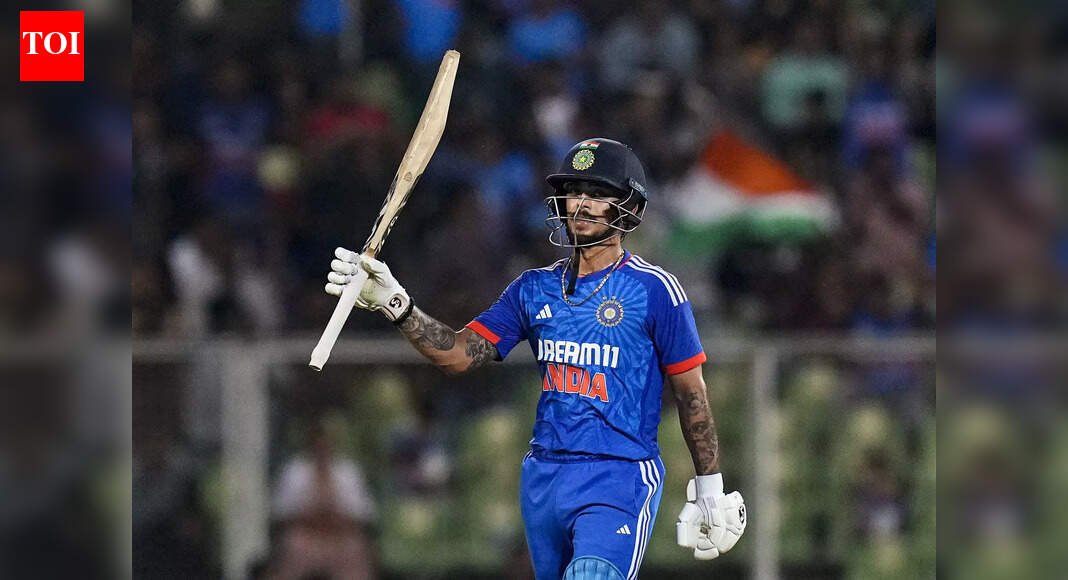
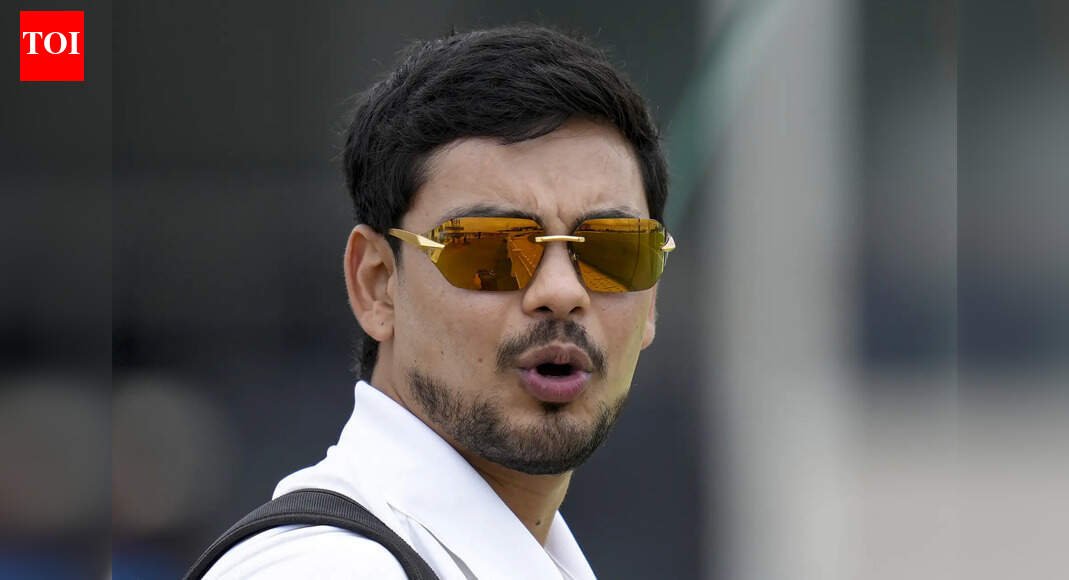
Cricketer Ishan Kishan (PTI Photo/Shailendra Bhojak)

NEW DELHI: Ishan Kishan delivered a captain’s knock of the highest order, smashing a breathtaking 101 off just 49 balls to power Jharkhand to a dominant total against Haryana in the final of the Syed Mushtaq Ali Trophy 2025 on Thursday. The left-hander’s assault, laced with six fours and ten towering sixes, underlined his red-hot form and capped a tournament in which he finished as the highest run-scorer.

IPL Auction Analysis: Why franchise broke the bank for uncapped Indians

Put in to bat after Haryana won the toss, Jharkhand lost Virat Singh early for two, but that early wicket barely slowed Kishan down. From the outset, the Jharkhand captain was in an unforgiving mood, dismantling the Haryana bowling attack with a mix of clean power and inventive strokeplay. Whether it was clearing the ropes straight down the ground or picking gaps with ease, Kishan dictated terms throughout his innings.He found an able ally in Kumar Kushagra, who played the perfect supporting role with an explosive 81 off 38 balls, striking eight fours and five sixes at a strike rate of over 213. The duo stitched together an unbeaten 177-run partnership, completely flattening Haryana’s plans and ensuring Jharkhand raced to a daunting total well ahead of the full quota of overs.Kishan reached his century in just 45 balls, a milestone that was greeted with roars from the stands as he raised his bat, acknowledging what has been a sensational tournament for him. With this knock, Kishan finished the Syed Mushtaq Ali Trophy Elite 2025 as the leading run-getter, amassing 517 runs in 10 innings at an astonishing average of 57.44 and a strike rate close to 200. The century in the final was his second of the season and served as a reminder of his ability to dominate top-level domestic attacks. And perhaps his performances in SMAT have caught the eyes of Team India head coach Gautam Gambhir and other selectors ahead of the upcoming T20 World Cup.


Source link

VB-G Ram G Bill cleared by Parliament: Rajya Sabha passes law hours after Lok Sabha approval; Opposition protests | India News


VB-G Ram G Bill cleared by Parliament: Rajya Sabha passes law hours after Lok Sabha approval; Opposition protests

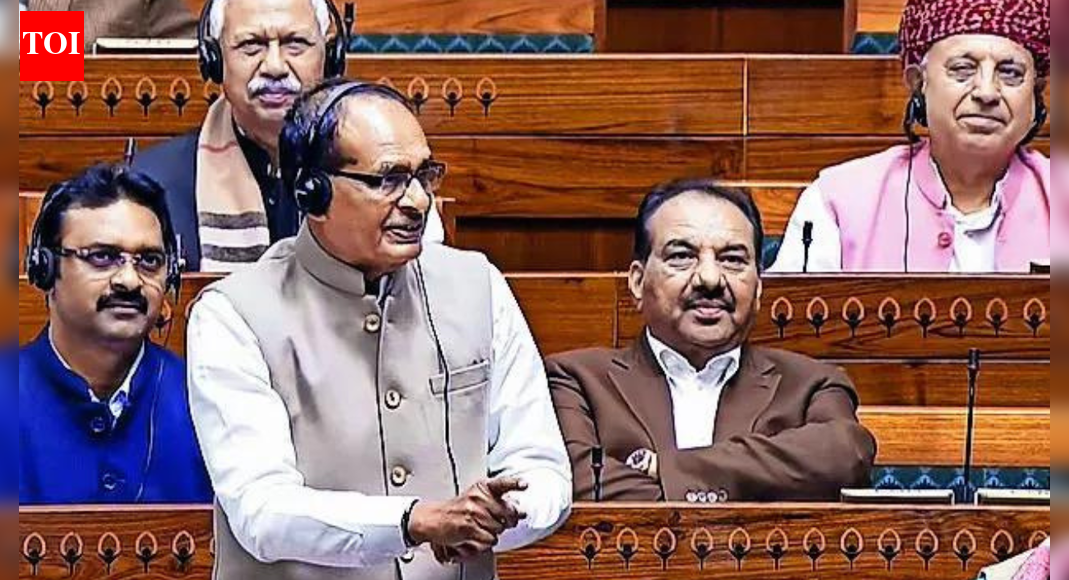
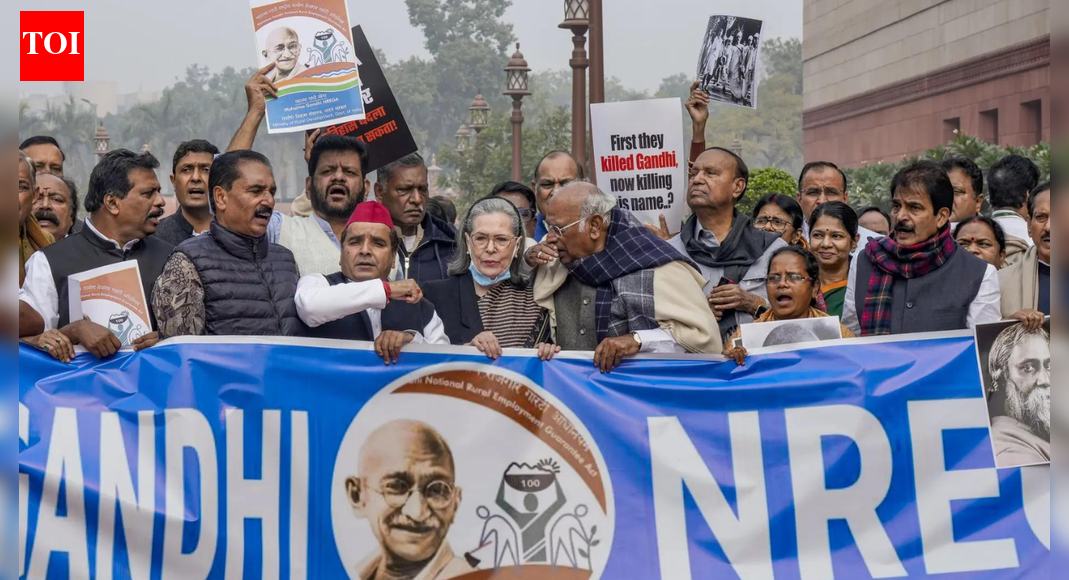
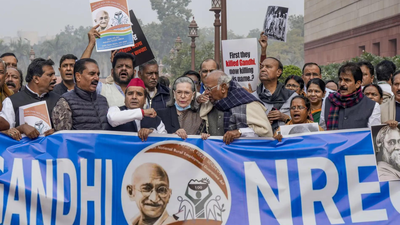
Parliament on Friday cleared the Viksit Bharat – Guarantee for Rozgar and Ajeevika Mission (Gramin) or VB-G Ram G Bill, 2025, with the Rajya Sabha passing the legislation hours after its approval in the Lok Sabha, amid strong opposition protests and repeated demands for scrutiny by a parliamentary committee.Earlier, the lower house passed the Bill on Thursday.Replying to the debate in the Lok Sabha, Rural Development Minister Shivraj Singh Chouhan said the new law substantially improves upon MGNREGA, which he described as having been “riddled with corruption and inefficiency”. He said the revamped scheme seeks to move beyond wage payments to focus on creation of durable rural assets, while also making implementation more transparent.Opposition members, led by Congress MPs, protested against the bill, alleging that the government had removed Mahatma Gandhi’s name from the rural employment guarantee framework.Also Read: MGNREGA to be replaced with VB–G Ram G: What it is and how it’s different — key FAQs answered As demands to refer the bill to a committee were rejected, opposition MPs entered the well of the House, tore copies of the bill and continued demonstrations until its passage.Rejecting the criticism, Chouhan said Mahatma Gandhi’s name was not part of the original 2005 legislation and was added only in 2009. Turning the charge back on the Congress, he said numerous schemes, institutions and awards had been named after members of the Nehru-Gandhi family, citing figures to underline his point.The minister said the government has allocated over Rs 1.5 lakh crore for the scheme, with the Centre’s share exceeding Rs 95,000 crore. Addressing concerns over states bearing 40% of the expenditure, he said both the Centre and states share responsibility for development.Chouhan accused the opposition of turning parliamentary debate into “bheedtantra and goondatantra” and criticised the conduct of Congress leaders during the discussion. Speaker Om Birla said 99 MPs participated in the eight-hour debate before the bill was passed.


Source link

India signs F  TA with Oman, 98% exports to be duty-free


India signs F  TA with Oman, 98% exports to be duty-free

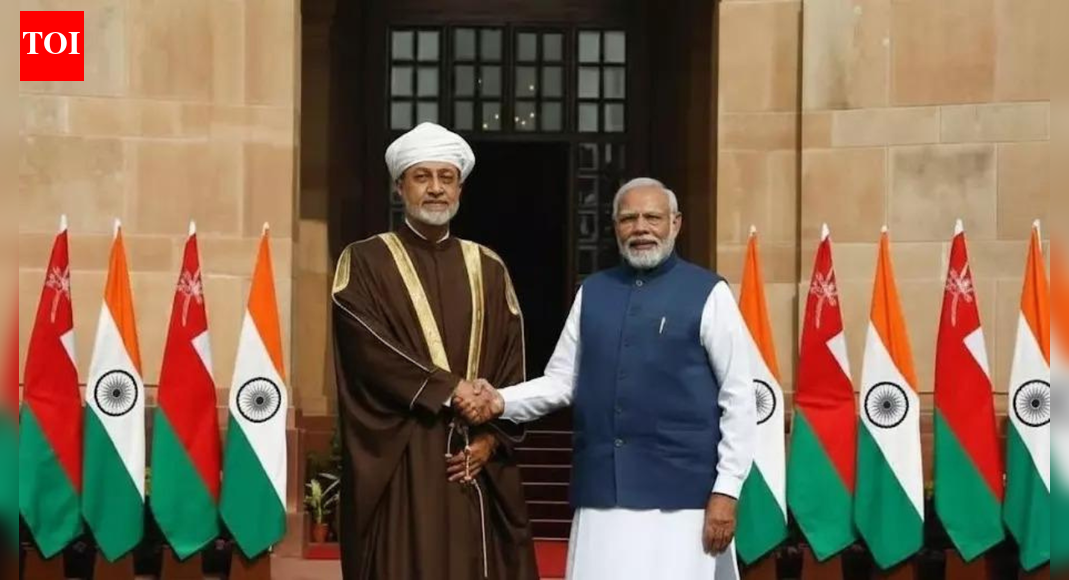
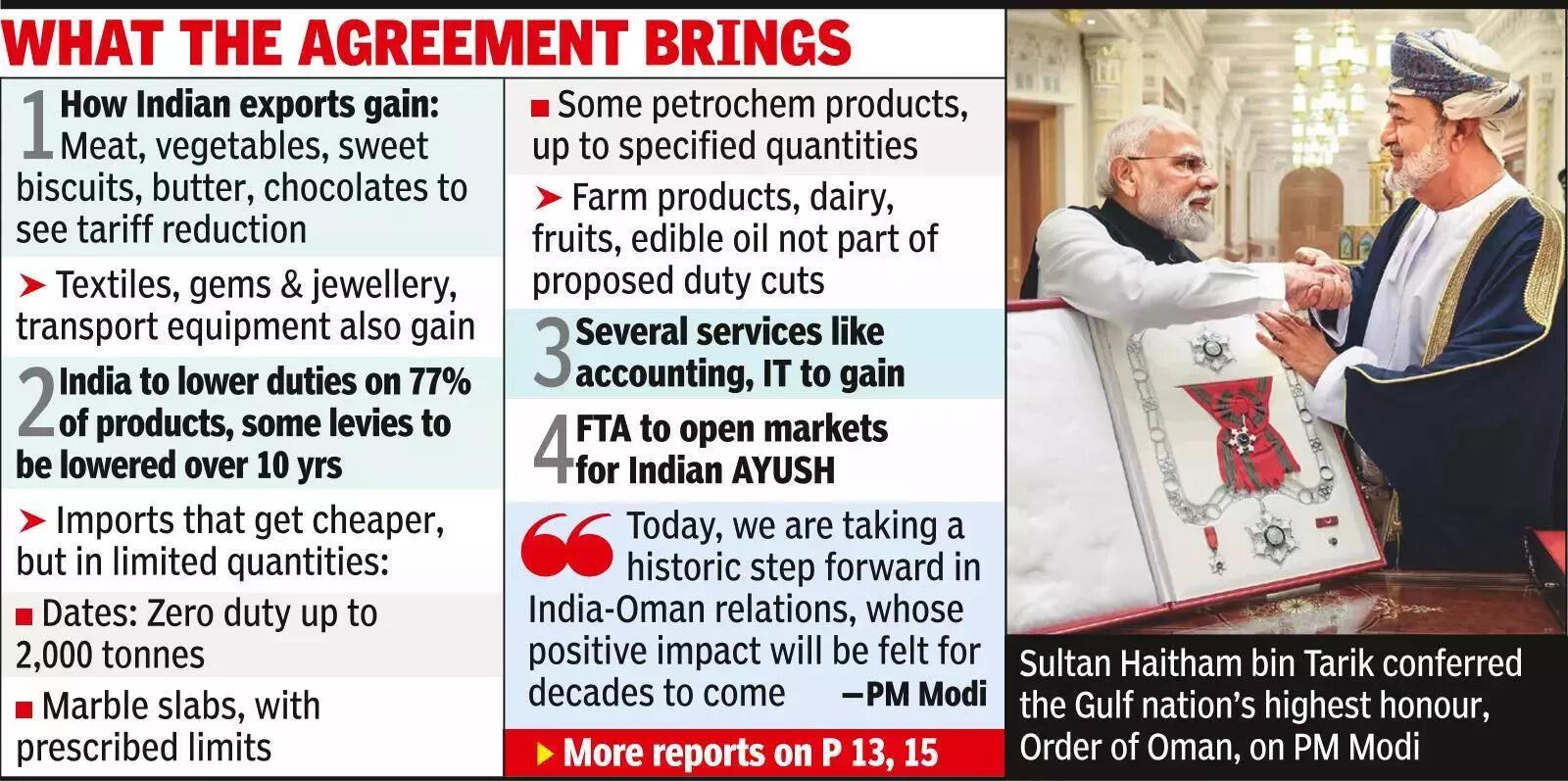
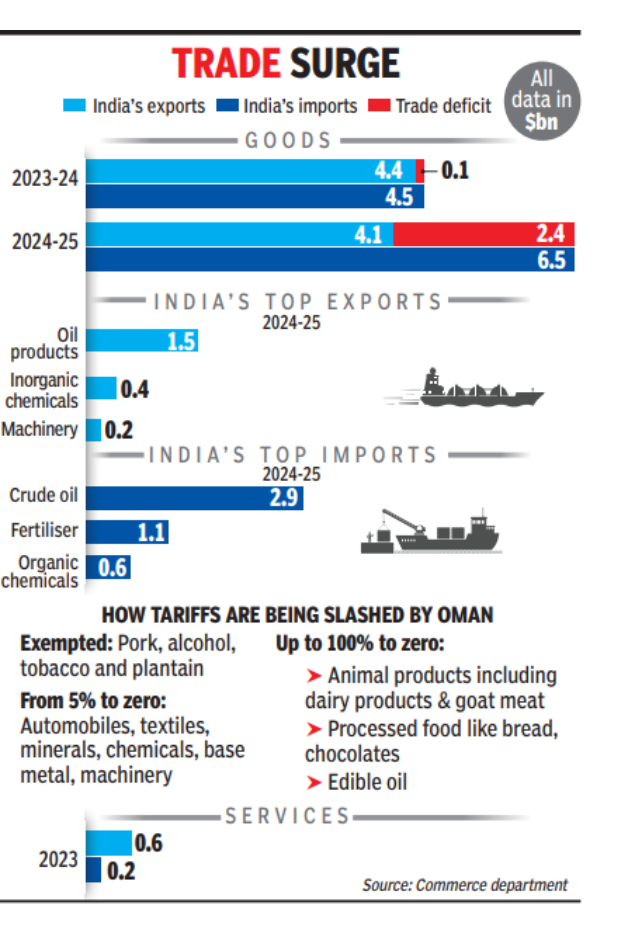
India and Oman signed a trade deal, expanding the country’s strategic and economic relations in the Persian Gulf, and helping exporters at a time when they are facing headwinds in several parts of the world.The Comprehensive Economic Partnership Agreement (CEPA), the second in West Asia after the one with UAE a few years ago, will allow 98% of Indian exports to enter Oman duty free, while India will remove tariffs on 77% of imports from the Gulf nation, excluding sensitive items such as farm and dairy products, gold and oil and gas. Omani dates, marbles and some petrochemical products will see zero duty access, but for limited quantities only. Indian exports to Oman stood at $4.1bn in FY25, while imports were at $6.6bn.While 85% of the products attract 5-6% duty in Oman, there are several food and other products that face up to 100% tariffs, which will be eliminated when the agreement is implemented in the first quarter of 2026. India is hoping to become the largest supplier of electronic goods to Oman, just like UAE.

-

Services providers and professionals are expected to benefit due to changes in visa rules, while CEPA will open the AYUSH market for India, said officials. Further, Oman has agreed to fast-track approvals for Indian pharma products and will accept halal and organic food certification given by authorities here, helping provide easier access. A social security agreement is also on the anvil.CEPA was signed by commerce & industry minister Piyush Goyal and Qais bin Mohammed Al Yousef during PM Modi’s visit to Oman.

Positive impact of India-Oman pact to be felt for decades: PM Modi

Comprehensive Economic Partnership Agreement (CEPA) was signed by commerce & industry minister Piyush Goyal & Omani minister of commerce, industry and investment promotion Qais bin Mohammed Al Yousef during PM Modi’s visit to Oman. “Today, we are taking a historic step forward in India-Oman ties, whose positive impact will be felt for decades to come. CEPA will energise our ties in the 21st century,” PM said.“We see our exports growing by at least $2 billion (from the current $4 billion) in a short period, maybe in a year or two,” an official said.Officials said not only will domestic dairy product producers be able to compete more favourably with competitors from New Zealand and Denmark, but even Indian eggs, for which Oman is the largest market, will strengthen their grip. Similarly, Indian marine products, hit by US tariffs, automobiles, plastics and engineering goods, are likely to gain.While talks kicked off two years ago, they were on hold for a long time as Oman negotiated hard to get concessions on nearly 500-600 tariff lines, it could manage to get benefits for around 18-20 items.

-

Among them are 10 petrochemical products, polypropylene and polyethylene, as govt sought to protect the interests of Indian companies, especially at a time when more projects are planned in the country. While it did agree to import 2,000 tonnes of dates, a small quantity compared with domestic production of 4-5 lakh tonnes, it managed to avoid lowering tariffs for chocolates.Govt also refused to offer the same concessions as UAE when it came to gold and oil and gas. India signed a trade pact with UAE a few years ago, which has helped it boost bilateral trade, and also use the Gulf nation as a hub for shipping goods to Africa. India is negotiating an agreement with Qatar even as it awaits clarity on talks with Saudi Arabia.Oman CEPA is part of a trade diversification strategy, especially after Trump’s punitive 50% tariffs hit Indian exports to US, prompting it to speed up negotiations with a host of partners — from New Zealand to EU and Chile. In recent months, India has implemented an FTA with the four-nation European Free Trade Association and also signed the long-negotiated treaty with the UK, which will be implemented in 2026.


Source link

Your urine can now reveal your biological age: Inside the new “urine aging clock” |


Imagine peeing on a stick that doesn’t just check for pregnancy or sugar spikes, but reveals how old your body truly feels. Scientists just unveiled a game-changing “urine aging clock” that reads tiny RNA clues in your morning flow to predict biological age, no blood draw or doctor’s office required. This non-invasive breakthrough could spot if you’re aging faster than your birthday suggests, flagging risks for diabetes or worse years ahead. In a recent study published in the journal NPJ Aging, it shows where the technology stands now.Picture this: over 6,000 everyday Japanese participants hand over urine during cancer screenings, and researchers mine it for microRNAs—those pint-sized gene regulators floating in protective bubbles called extracellular vesicles. After sequencing and crunching data with smart algorithms, they nailed a clock accurate to within 4.4 to 5.1 years of your real age. Call the difference “biological age acceleration,” and suddenly your sample screams if lifestyle or genes are cranking up the clock.

Ways women can develop healthy bladder control habits

Gender matters here too—models tuned separately for men and women boost precision. Top players? GeromiRs like miR-155-5p and miR-34a-5p, aging’s notorious troublemakers linked to cranky cells that stop dividing and start causing chaos.

Why do biological clock matters

2

When your biological age runs ahead of your real one, it signals higher risks for sickness and early death. Doctors use these tools to sort people by health dangers, track who needs help most, and check if treatments like diet changes or drugs actually turn back the clock.

Diabetes link and hidden harbingers

3

20 key miRNAs changed with age. Some went down, others up, especially in men. They were link to bone changes, immune issues, and cell aging. Dive deeper, and type 2 diabetes jumps out as the villain speeding up your urine age, especially in women 50-69 or men 50-79. These people showed elevated acceleration, hinting the test catches metabolic wear-and-tear early. Other conditions lurked in self-reports but didn’t pop as strongly—maybe because they were old history, not fresh fights.Behind the scenes, these miRNAs tie into bone breakdown, immune glitches, and senescence pathways, the cellular equivalent of hitting “retire” too soon. It’s like your urine spilling the tea on why your knees creak or energy tanks ahead of schedule.

Ditch the needle

4

Blood tests? Invasive hassle. Urine? Grab a cup, the test is done. Scalable, non-expensive, and body-wide intel from head to toe via those sneaky vesicles. Sure, it’s not DNA methylation’s gold standard, but it smokes many blood RNA rivals in big cohorts, dodging hydration hiccups with clever math.Think annual checkups spotting silent aging surges, or trials proving that kale smoothies or fasting actually rewind your clock. For clinics, it’s a risk radar—not a diagnosis, but a wake-up call before disease digs in.

The catch

People under 25 or seniors over 80? Results get fuzzy. Cancer or bladder woes? Proceed with caution. Raw data’s under wraps, craving fresh labs to confirm. But once tuned for specific diseases, this could explode into home kits tracking your anti-aging hacks.In a world chasing longevity elixirs, your urine just became the ultimate weapon. Ready to face what it says about your inner age? Science says start flushing out the truth today.


Source link

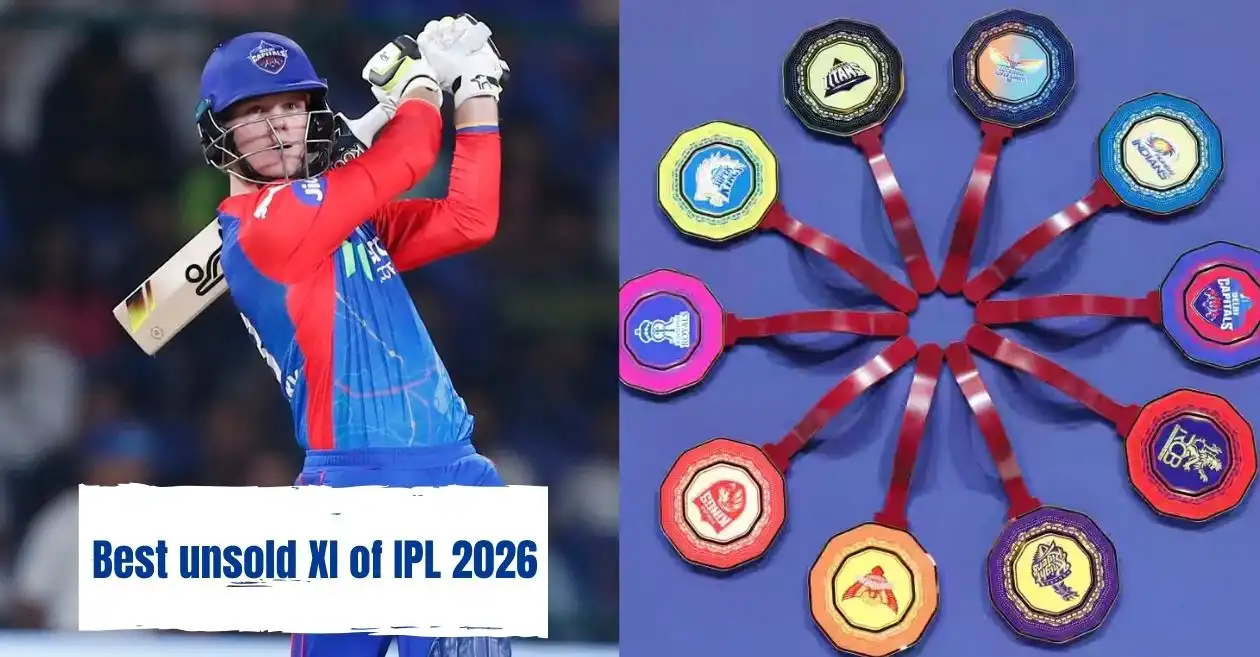
Best playing XI of unsold players from the IPL 2026 mini auction ft. Jake Fraser-McGurk


The IPL 2026 auction in Abu Dhabi was a historic event that rewrote the record books, headlined by Cameron Green’s staggering ₹25.20 crore move to KKR. However, the true shockwaves were felt during the ‘Unsold’ calls.

As franchises pivoted aggressively toward Gen-Z Indian talent—paying up to ₹14.20 crore for uncapped stars like Prashant Veer and Kartik Sharma—several established international icons and seasoned Indian veterans were left stranded.

Star power ignored in IPL 2026 auction

The 2026 auction signaled a generational wealth transfer in cricket. Teams prioritized youth and specific tactical roles over pure star power. While some players like Prithvi Shaw and Sarfaraz Khan were lucky to be picked up in the third ‘Accelerated’ round, others weren’t as fortunate. On that note, let’s have a look at such stars who were not picked in the bidding event and make a perfect XI for the unsold players.

IPL 2026: Best playing XI of unsold players from the mini-auction

1) Jake Fraser-McGurk (Australia)

Role: Explosive opener
Fraser-McGurk was arguably the biggest surprise of the auction. After setting tournaments alight in 2024 with his fearless strokeplay and outrageous strike rates, expectations were sky-high. However, a lean 2025 season, where he managed just 55 runs across six matches, raised concerns among franchises. Despite possessing the ability to win games inside the powerplay, teams hesitated to invest even at his ₹2 crore base price, fearing inconsistency and form volatility at the top.

2) Devon Conway (New Zealand)

Role: Opener
A proven IPL performer and a former CSK mainstay, Conway’s unsold status stunned many. Averaging over 43 in the league and known for his composure under pressure, Conway brings stability few can match. However, at 34, franchises prioritized younger, more explosive keeper-batters who could double up as long-term investments. Conway’s reliability, once his biggest asset, seemingly worked against him in a youth-driven market.

3) Jamie Smith (England)

Role: Aggressive top-order batter / Wicketkeeper
Smith entered the auction as one of England’s most exciting new-generation batters across formats. His aggressive approach, ability to take on pace and spin alike, and wicketkeeping skills made him a strong contender on paper. Surprisingly, even teams short on wicketkeeping options passed him by, possibly viewing him as a player better suited to international conditions than the subcontinental grind of the IPL.

4) Daryl Mitchell (New Zealand)

Role: Middle-order batter / Seam-bowling all-rounder
Mitchell’s omission reflected market dynamics rather than ability. A proven match-winner for New Zealand and an adaptable middle-order presence, Mitchell has delivered consistently on big stages. However, with franchises overloaded with domestic middle-order options and overseas slots already locked in, Mitchell became a victim of poor timing rather than poor form.

5) Deepak Hooda (India)

Role: Batting all-rounder
Despite a solid domestic season and previous international exposure, Hooda went unsold multiple times. His ₹75 lakh base price failed to spark interest as teams leaned heavily toward uncapped players with perceived upside. Hooda’s versatility remains valuable, but franchises appeared to prefer specialists over hybrid players in tightly defined team roles.

6) Mahipal Lomror (India)

Role: Finisher
Lomror’s absence underlined the intense competition among Indian middle-order batters. A consistent domestic performer and former RCB finisher, Lomror offers flexibility and left-handed balance. However, with franchises investing heavily in uncapped finishers and all-rounders, Lomror found himself squeezed out despite having a proven IPL skill set.

7) Gus Atkinson (England)

Role: Pace bowling all-rounder
Atkinson’s raw pace and lower-order hitting could have strengthened any bowling unit. Fresh off impressive international performances, he looked a strong candidate for teams seeking fast-bowling depth. However, overseas pace options were plentiful, and franchises instead chose to reserve slots for specialists with proven IPL track records.

8) Gerald Coetzee (South Africa)

Role: Express fast bowler
Known for his aggression and ability to hit speeds north of 150 kmph, Coetzee’s snub raised eyebrows. His omission was largely tactical, as franchises preferred investing heavily in Indian pacers such as Auqib Nabi Dar. With teams prioritizing domestic fast bowlers to free up overseas slots, Coetzee narrowly missed out despite his match-winning potential.

Also READ: IPL 2026 Auction: Complete list of sold players with their price

9) Maheesh Theekshana (Sri Lanka)

Role: Mystery spinner
Once a crucial cog in CSK’s bowling plans, Theekshana’s recent inconsistency proved costly. While his variations and powerplay control remain valuable, fluctuating form and predictability at the death reduced his appeal. Teams appeared wary of mystery spinners without sustained recent success.

10) Mujeeb Ur Rahman (Afghanistan)

Role: Off-spinner
Mujeeb’s journey has come full circle. Once the youngest IPL debutant and a highly sought-after mystery spinner, he found no buyers this time around. While his variations are still effective, teams leaned toward wrist spinners and domestic slow bowlers, leaving Mujeeb on the sidelines in a rapidly evolving spin market.

11) Spencer Johnson (Australia)

Role: Left-arm pacer
Johnson went unsold as well despite his ability to generate steep bounce and serious pace. However, the auction trend favored domestic left-arm pacers, who offered similar skill sets without consuming overseas slots. Johnson’s case highlighted how even rare attributes can be overlooked when team combinations are already set.

Also READ:  IPL 2026 Auction: Full list of unsold players along with their base price


Source link

Lok Sabha passes ‘G RAM G’ bill amid fierce protests, opposition MPs tear copies | India News


Lok Sabha passes 'G RAM G' bill amid fierce protests, opposition MPs tear copies

NEW DELHI: Rural development minister Shivraj Singh Chouhan said Thursday ‘VB-G Ram G’ bill improves substantially on MGNREGA, which was “riddled” by corruption and inefficiency, as Lok Sabha passed the draft law amid fierce protests from opposition. They demanded that bill be sent to a parliamentary committee for scrutiny and assailed govt for removing Mahatma Gandhi‘s name from rural employment guarantee scheme.As Chouhan began his reply after Congress MP KC Venugopal’s demand for sending Viksit Bharat-Guarantee for Rozgar and Ajeevika Mission-Gramin (VB-G RAM G) Bill to the committee went unheeded, opposition members trooped into the well, tore its copies and continued their protest till the House passed the bill.Gandhi’s name wasn’t part of original 2005 law: Shivraj Singh ChouhanRejecting opposition’s criticism, including removing Mahatma Gandhi’s name, rural development minister Shivraj Singh Chouhan turned to Congress MP Priyanka Gandhi Vadra’s barbed attack on govt for its obsession with changing names and said if anyone suffered from such a proclivity it was Congress, as scores of places, schemes, awards and events were named after members of the Nehru-Gandhi family.There were 25 and 27 schemes in states named after Rajiv Gandhi & Indira Gandhi, while educational institutions named after Rajiv, Indira and Jawaharlal Nehru numbered 55, 21 and 22, respectively, he said, reeling out more data. Unruly protest by Congress MPs and tearing copies of the bill amounts to killing Mahatma Gandhi’s ideals, Chouhan claimed, adding his (Gandhi’s) name was not part of the original 2005 legislation and added in 2009.He said the bill was brought after extensive deliberations as it was felt such massive amounts should not be spent on merely paying wages but used for creating permanent assets as well, while making the programme more transparent. Govt has allocated over Rs 1.5 lakh crore for the scheme and Centre’s share alone be over Rs 95,000 crore, he said. In remarks after the bill’s passage, he denounced opposition for its protest, saying it has turned democracy into “bheedtantra (mobocracy) and goondatantra (hooliganism)”.Rahul Gandhi, he said, has robbed his position of LoP with his conduct, including his current visit abroad when Parliament is discussing key legislations. On the criticism that the bill burdens states with 40% of expenditure, he said both Centre and states are responsible for development. MGNREGA had many shortcomings, some states at times were more interested in drawing funds from Centre and cutting down on their share in expenses of material. One ditch after another was dug up, he said.He told LS, “We have made provisions to improve employment. This vast amount of money will be used to build fully-developed villages,” he said, adding the central sector scheme will be used to ensure water security by creating ponds, irrigation channels and rural infrastructure. Speaker Om Birla said 99 MPs had spoken on the bill during the discussion that lasted eight hours.


Source link

Ishan Kishan explodes in final as Jharkhand script history with maiden SMAT title | Cricket News


Ishan Kishan explodes in final as Jharkhand script history with maiden SMAT title
Ishan Kishan (PTI Photo/R Senthil Kumar)

Out-of-favour India wicketkeeper-batter Ishan Kishan delivered a powerful reminder of his T20 credentials, hammering a stunning century to lead Jharkhand to their first-ever Syed Mushtaq Ali Trophy title with a dominant 69-run win over Haryana on Thursday. Kishan produced a breathtaking display of power-hitting, smashing 101 off just 49 balls, including 10 towering sixes and eight fours. His onslaught propelled Jharkhand to a massive 262 for 3, a total that proved far beyond Haryana’s reach.

IPL Auction Analysis: Why franchise broke the bank for uncapped Indians

After the batters set the tone, Jharkhand’s bowlers ensured there was no late twist. Medium-pacer Anukul Roy struck twice in his very first over, setting the tone for a disciplined bowling effort. Haryana were eventually bowled out for 193, despite a fighting half-century from wicketkeeper-batter Yashvardhan Dalal, who top-scored with 53. Roy also made a telling contribution with the bat, blasting 40 off just 20 deliveries, adding valuable late momentum to Jharkhand’s innings. With this victory, Jharkhand became the 12th state to lift India’s premier domestic T20 title, marking a historic moment for the team. Asked to bat first, captain Kishan anchored the innings with authority, stitching together a match-defining 177-run partnership for the second wicket with Kumar Kushagra. While Kishan dominated the bowling, Kushagra played the perfect supporting role, striking a rapid 81 off 38 balls to keep Haryana under constant pressure. The hundred was Kishan’s second of the tournament. The 27-year-old enjoyed a remarkable campaign, finishing as the leading run-scorer with 517 runs from 10 innings at an explosive strike rate of 197.32. His purple patch has come at a crucial time, with national selectors set to meet soon to finalise India’s T20I squad for the upcoming series against New Zealand and the T20 World Cup. Kishan brought up his century in style, launching a one-handed six over extra cover, before being clean bowled by Sumit Kumar in the 15th over. Kushagra followed him back to the pavilion in the very next over. Late flourishes from Anukul and Robin Minz, who chipped in with 31 off 14 balls, ensured Jharkhand finished strongly. Haryana’s chase never truly gathered momentum. They suffered a nightmare start, losing captain Ankit Kumar and Ashish Siwach for ducks to slump to 2 for 1. Dalal attempted to revive hopes, adding 34 runs with opener Arsh Ranga and later forging a 67-run stand with Nishant Sindhu, who scored 31. However, Anukul decisively swung the match Jharkhand’s way by dismissing both set batters in the same over, effectively ending Haryana’s resistance. Brief scores: Jharkhand 262/3 in 20 overs (Ishan Kishan 101, Kumar Kushagra 89; Sumit Kumar 1/41) beat Haryana 193 all out in 18.3 overs (Yashvardhan Dalal 53, Samant Jakhar 38; Sushant Mishra 3/21) by 69 runs.


Source link

Southall gurdwara property raided by UK police and immigration


Southall gurdwara property raided by UK police and immigration

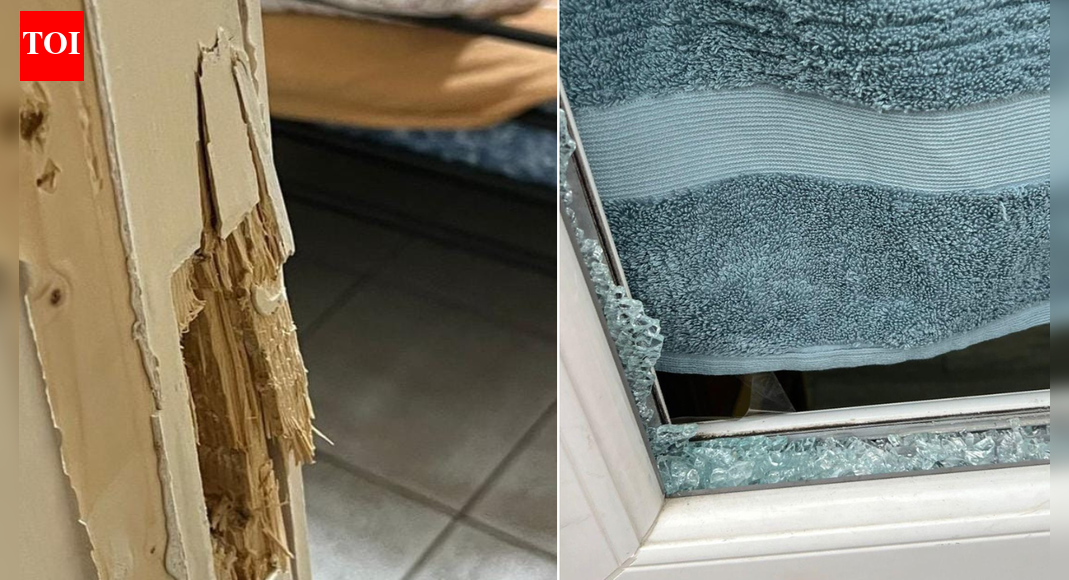
TOI correspondent from London: Police and immigration officers conducted a dawn raid on a property belonging to one of Britain’s largest gurdwaras and arrested one man.The property, 11 Beaconsfield Road, is one of around eight properties belonging to Sri Guru Singh Sabha Southall. The properties are meant to house staff serving the gurdwara and visiting preachers from India.The gurdwara executive committee confirmed the raid took place at 6.30am on Dec 16 and said that a person “not approved by the current committee”, but who was known to an employee of the gurdwara, was “detained and taken into custody by police”.Police have not confirmed what he was arrested for, but a member of the congregation told TOI an Indian-origin Sikh man was arrested for drugs and money laundering and that he is the son of a person who works at the gurdwara.“Police executed a search warrant for criminal activity and because the house was full of preachers, they had concerns about illegal immigrants, so the immigration service was then called. The police bashed down every door and detained everyone and handcuffed them while they were searched and checked,” he said. “There have been immigration raids in the past on gurdwara properties and illegals have been detained,” he said.The executive committee said it was undertaking a review of all its properties and “individuals not involved in Sabha-related activities and those without formal agreements” had been asked to vacate.One of its properties had been given by a former committee free of charge to Aasra Welfare UK, a women’s refuge which helps women and children fleeing domestic abuse, including those without legal status in the UK.Jaskaran Kaur Shergill, director of Aasra, said the committee had now asked her to return the keys but the three women and five children living there had nowhere to go. “They can’t evict people who are at risk,” she said.Gurdwara secretary Surinder Singh Dhatt said the refuge has been served notice as “we don’t know who is living there. We want to know who is living in each place and make sure there are no illegal immigrants”. He added the gurdwara had filed a complaint with the police about the raid. “They should have informed the gurdwara in advance. It has caused a lot of distress to everyone,” he said.


Source link

Amidst Rs 60 crore fraud case against her and husband Raj Kundra, and reports of complaint against Bastian Bengaluru, Shilpa Shetty now opens her new restaurant |


Amidst Rs 60 crore fraud case against her and husband Raj Kundra, and reports of complaint against Bastian Bengaluru, Shilpa Shetty now opens her new restaurant

Shilpa Shetty is moving ahead with the expansion of her restaurant business even as she and her husband, Raj Kundra, face allegations in a Rs 60 crore fraud case. Meanwhile, her restaurant Bastian in Bengaluru has also been in the news as reports suggested that a complaint was filed for allegedly operating past the legal closing time. Amidst all this, on Thursday, the actor announced the launch date of her new South Indian restaurant, Ammakai, which will open at the same Bandra address where her well-known eatery Bastian first began operations.While this new restaurant as taken over the space, the original Bastian has shifted to Juhu and has been relaunched as Bastian Beach Club. Sharing a video on Thursday, Shilpa revealed that this new place will officially open on December 19 (Friday) and mentioned that nearly a year of planning went into bringing the restaurant to life.In the video, she said, “This is going to be worth the wait. It’s an ode to my roots and comfort food that reminds me of home.” Meanwhile, Shilpa Shetty and Raj Kundra are currently facing legal trouble in connection with a Rs 60 crore fraud case. Businessman Deepak Kothari, director of Lotus Capital Financial Services Ltd, had earlier filed a complaint accusing the couple of cheating him in a loan-cum-investment transaction worth the same amount. Acting on his complaint, Mumbai Police’s Economic Offences Wing (EOW) registered an FIR against them on Wednesday.As per a statement released by Deepak’s lawyer, the EOW found material evidence against Shilpa Shetty and Raj Kundra that justified the allegations made in the case.Raj Kundra, however, has firmly rejected the claims. Issuing a statement on X, he said, “We categorically deny the baseless and motivated allegations being circulated. The issues sought to be raised are being given a criminal colour without any lawful basis. A Quashing Petition has already been filed before the Hon’ble High Court and is pending adjudication. Having fully cooperated with the investigation, we are sanguine that justice will prevail and have complete faith in the law enforcement authorities and the Indian judiciary. We respectfully urge the media to exercise restraint as the matter is sub judice.”


Source link