Breaking News
TN exporters hit by US tariff hike: CM Stalin writes to PM Narendra Modi; warns of job losses, economic fallout | Chennai News


TN exporters hit by US tariff hike: CM Stalin writes to PM Narendra Modi; warns of job losses, economic fallout

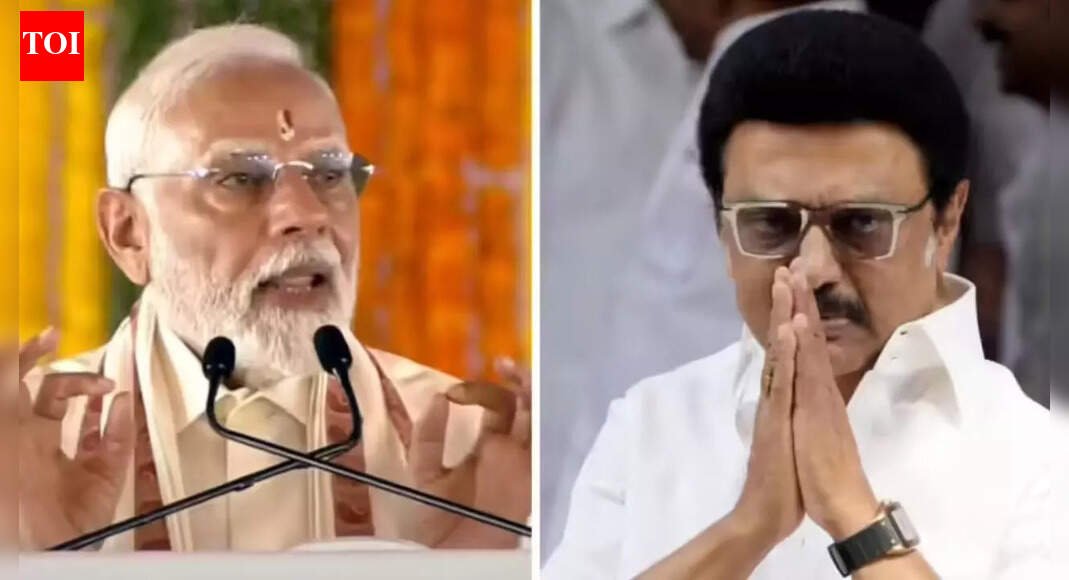
CHENNAI: Chief minister M K Stalin has urged Prime Minister Narendra Modi to solve the crisis faced by TN exporters due to the recent tariff hike imposed by the US. Currently, the US has imposed 50% tariff hike on Indian exports.Stalin wrote to Modi saying that the confirmed orders were cancelled and new orders have stopped.

Chennai Gripped By Panic As Bomb Threats Target MK Stalin, Ajith Kumar, Top Tamil Nadu Personalities

“In Tiruppur exporters have reported a staggering wipe out of Rs 15,000 crores in confirmed orders, coupled with enforced production cuts of up to 30% across units. New orders are also drying up at an alarming rate. This has translated into a combined daily loss of Rs 60 crores in revenues for exporters in Tiruppur, Coimbatore, Erode and Karur Districts, pushing many Small and Medium enterprises to the brink of collapse. A similar dismal scenario is witnessed in our footwear clusters in Vellore, Ranipet and Tirupatthur distircts,” Stalin said.Due to the tariff hike, Stalin said the manufacturers are forced to cut profit margins and offer “deep discounts” to retain their clients, which erodes their competitiveness and viability. “Lakhs of jobs hang in the balance, with the sectors already witnessing layoffs and wage deferrals that threaten the stability of entire communities,” Stalin said.The chief minister said due to the tariff disadvantage international buyers diverting orders to competitors like Vietnam, Bangladesh and Cambodia, which have a current tariff advantage over us. “Once these markets are lost, regaining them would be an uphill battle, as entrenched supply chains rarely revert back. This has ominous long-term implications for the future employment prospects of our youth, especially women,” Stalin said.Stalin insisted Modi to solve the impasse through bilateral agreement at the earliest. “A swift decision would not only revive the fortunes of our exporters but also reinforce India’s position as a reliable global manufacturing hub,” Stalin said.


Source link

‘Greatest challenge since 1971’: House panel flags rising Pakistan, China influence in Bangladesh; what steps can India take? | India News


'Greatest challenge since 1971': House panel flags rising Pakistan, China influence in Bangladesh; what steps can India take?

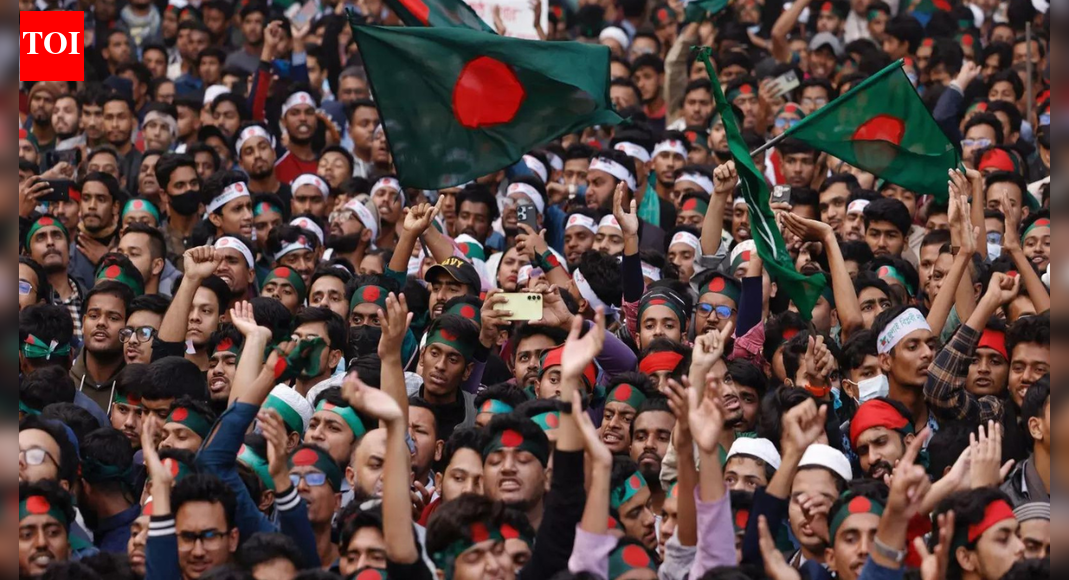
NEW DELHI: A parliamentary standing committee on external affairs has warned that India is facing its most significant strategic challenge since the 1971 war, due to the evolving political and security situation in Bangladesh, pointing to the resurgence of Islamist forces, weakening domestic political structures and growing influence of China and Pakistan in Dhaka.The committee on Thursday tabled its 9th report titled ‘Future of India-Bangladesh Relationship’ in the Lok Sabha. The panel, chaired by Congress MP Shashi Tharoor, said that while the situation does not pose an immediate existential threat to India, it represents a deeper, long-term strategic test with implications for regional stability and India’s neighbourhood policy.

India Flags Pakistan Role In Bangladesh Protests, Backs Awami League Demand For Free & Fair Polls

“India faces its greatest strategic challenge in Bangladesh since the Liberation war of 1971. While the challenge in 1971 was existential, a humanitarian and a birth of a new nation, the latter was of a graver, a generational discontinuity, a shift of political order, and a potential strategic realignment away from India,” the report said quoting an expert. The committee took into account multiple testimonies from government officials and non-governmental experts, the panel also noted that Bangladesh’s ongoing political transition and shifting external alignments could reshape India’s security and foreign policy environment over time.According to the panel, a key source of uncertainty is the declining political dominance of the Sheikh Hasina-led Awami League. While the party secured 224 of 300 seats in the January 2024 elections, the panel flagged an estimated voter turnout of around 40 per cent, which raises concerns over popular participation, political legitimacy, institutional control and public confidence.On the stay of former Bangladesh PM Sheikh Hasina in India the panel said, “The Committee note that the stay of former Prime Minister of Bangladesh, Sheikh Hasina, in the country and India’s approach in this regard is guided by its civilisational ethos and humanitarian tradition of offering refuge to individuals facing circumstances of grave distress or existential threat,” the report said.” The panel recommended that the government should “continue to uphold its principled and humanitarian approach”, consistent with India’s values and international responsibilities, while ensuring that such situations are “managed with due sensitivity”.The committee also pointed towards the emergence of youth-led nationalist sentiment alongside a renewed presence of Islamist groups, warning that the combination could act as a destabilising force with implications for both Bangladesh’s internal security and the wider region.Another major concern flagged by the panel is the expanding footprint of China and Pakistan in Bangladesh. It said these developments could dilute India’s traditional influence in Dhaka and complicate New Delhi’s strategic calculus in its immediate neighbourhood. “…The event was marked by collapse of Awami League dominance, the surge of youth-led nationalism, the re-entry of Islamists and intensifying Chinese and Pakistani influence collectively..if India fails to recalibrate at this moment, it risks losing strategic space in Dhaka not to war, but to irrelevance,” report added.The ministry of external affairs told the committee that India has made concerted efforts to insulate bilateral ties from recent political developments and to continue engagement with Bangladesh’s interim government, while supporting the wishes of the Bangladeshi people.On the question of collaboration between both nations, the route through SAARC and BIMSTEC also came up to which the foreign secretary told the panel, until Pakistan changes its state policy of cross border terrorism there can be no conversation around reviving SAARC.“We have made it very clear to anybody and everybody in SAARC who is coming up to us with proposals for reviving it that we cannot have dialogue and terrorism go on at the same time. Until Pakistan changes its policy of crossborder terrorism as an instrument of State policy, there is no possibility of going forward with SAARC. I did make the point also that BIMSTEC does pretty much everything that SAARC does and then some other things and since the organisation is headquartered in Dhaka, it would be useful if Bangladesh takes it forward. I must say that there was no pushback against it….” the report quoted foreign secretaryThe panel, however, questioned why Indian authorities failed to anticipate the political crisis despite what it described as warning signals and extensive media reporting ahead of the developments. In response, the government said the situation in Bangladesh is being monitored on a priority basis with continuous assessments underway.Concluding its report, the committee stressed that Bangladesh’s evolving political trajectory and external alignments would require sustained attention from India, given the country’s central role in regional stability.In its suggestions the committee said, “The Committee urge the Government to continue advocating a democratic, stable, peaceful, people-centric, forward-looking and inclusive Bangladesh, firmly anchored in the spirit of 1971 and mutual respect. The Committee further recommend that the Government should maintain sustained diplomatic engagement with all political, social, and civil society stakeholders in Bangladesh to foster an environment of trust and dialogue. Such engagement should be complemented by Track II and Track 1.5 diplomacy, involving Parliamentary exchanges, think tanks, academia, media, and cultural organizations, to strengthen people-to-people connections and counter misperceptions.”


Source link

ITR filing AY 2025-26: Received message from I-T department? Big clarification issued – what taxpayers need to know


ITR filing AY 2025-26: Received message from I-T department? Big clarification issued - what taxpayers need to know

The Income tax department (ITD) on Thursday said the recent communications sent to some taxpayers regarding their transactions are advisory in nature and aimed at facilitating voluntary compliance, not initiating enforcement action.In a post on X, the department said the messages were issued only in cases where there is an apparent significant gap between disclosures made in income tax returns (ITRs) and information received by the tax department from reporting entities during the year.“These communications are to facilitate taxpayers and make them aware of the information available with the ITD regarding transactions reported by the reporting entities,” the department said, adding that the outreach is limited to specific cases where discrepancies appear prima facie.The ITD said the objective is to provide taxpayers an opportunity for voluntary correction by reviewing their Annual Information Statement (AIS) and submitting feedback through the Compliance Portal. Where required, taxpayers can revise returns already filed or file a belated return if they have not done so.The department reminded taxpayers that the last date for revising or filing a belated return for assessment year 2025–26 is December 31, 2025.“Taxpayers are requested to respond promptly via the Compliance Portal if discrepancies exist or ignore if your filing is correct,” the IT department said.Tax refunds had been delayed in some cases as the Income Tax Department scrutinised refund claims flagged as high-value or red-flagged, CBDT Chairman Ravi Agrawal had said on November 17. He said the review followed instances of wrongful deductions and incorrect claims, while low-value refunds continued to be issued. Earlier in the last month, the Income Tax Department had planned a targeted “nudge” campaign to improve compliance in reporting foreign assets and income in income tax returns filed for Assessment Year 2025–26, based on information received from foreign jurisdictions under the Automatic Exchange of Information (AEOI) framework.In the first phase, the Central Board of Direct Taxes (CBDT) had identified about 25,000 “high-risk” cases where foreign assets appeared to exist but had not been disclosed in ITRs. These taxpayers were to be contacted through SMS and email advisories, asking them to review their Annual Information Statement (AIS) and revise their returns by December 31, 2025, to avoid penal consequences. The campaign was expected to be expanded from mid-December to cover more cases, according to PTI.The compliance push coincided with scrutiny of high-value and red-flagged refund claims, which had delayed some refunds. CBDT Chairman Ravi Agrawal had said legitimate refunds were expected to be released by December, even as analysis of wrongful claims continued.Accurate disclosure of foreign assets and income is mandatory under the Income-tax Act, 1961, and the Black Money Act, 2015, which prescribes strict penalties for non-compliance.


Source link

Activists in Mumbai detained during protest over Marathi schools | Mumbai News


Mumbai: Several activists were detained by Mumbai police on Thursday during a protest march to the BMC headquarters over issues concerning Marathi-medium schools run by the civic body. Protesters said the march was organised after repeated representations on school closures and redevelopment failed to elicit a response.The protest, organised by the Marathi Abhyas Kendra and led by academic Dr Deepak Pawar, attempted to proceed towards the civic headquarters but was stopped at multiple points citing lack of permission. Brief verbal exchanges followed before protesters were diverted to Azad Maidan, where they staged a sit-in demanding a meeting with senior civic officials.Police detained Pawar, Anand Bhandare, Sadhana Gore, Swapnil Thorat and several others, including former Rajya Sabha MP Bhalchandra Mungekar. All were released later in the day.A memorandum submitted by the protesters was later accepted by the civic commissioner. The memorandum raised concerns over the closure and redevelopment of Marathi-medium schools, the absence of a standard operating procedure for redevelopment, uncertainty over student relocation during repairs, and the possibility of schools being shut or merged due to administrative decisions. The group sought a halt to such actions until consultations are held.“After some leaders were detained and taken to Azad Maidan, the commissioner came to meet us but refused to discuss the issue, citing the model code of conduct,” said Anand Bhandare of the Marathi Abhyas Kendra.In a clarification note issued later, the BMC said protesters had earlier been invited for discussions at the deputy commissioner level. It said that while the memorandum had been accepted, detailed discussions or decisions could not be held at present as the model code of conduct is in force for the 2025 civic elections.


Source link

27,000 births in 3 months in a village of 1,500! Yavatmal panchayat logs massive CRS anomaly; most names from West Bengal, UP | Mumbai News


BJP leader Kirit Somaiya visited the village on Wednesday and demanded a thorough probe

By: Bhaskar.MehareYAVATMAL: A Yavatmal village with a population of 1,500 has clocked 27,397 births in the civil registration system (CRS) in three months from September to November, ringing alarm bells about a massive cyber fraud. The shocker came from Shendursani Gram Panchayat in Arni taluka of Yavatmal district.Even more concerning, the CRS ID (MH18241RE) of Shendursani gram panchayat was found to be mapped in Mumbai, further pointing to cyber criminals. Following the revelation, the district health officer (DHO) filed a formal complaint at Yavatmal city police station on Tuesday.

Mumbai Headlines Today — The Biggest Updates You Need to Know.

BJP leader Kirit Somaiya visited the village on Wednesday and demanded a thorough probe. Talking to media, Somaiya said credentials of the gram panchayat’s computer operator appear to have been misused by someone. He said that 99.99% of the names found in these records belong to people from West Bengal, Uttar Pradesh, and nearby regions. “I have spoken to chief minister Devendra Fadnavis and demanded that all these birth registration entries be cancelled,” said Somaiya.

-

According to govt directives, a verification drive is underway to identify and cancel illegal delayed birth and death registrations. During this exercise, extension officers of the health department in Arni discovered 27,397 birth entries and seven death entries recorded between September and November 2025 in the CRS software — figures that were grossly disproportionate to the village’s actual population.Following the discovery, the DHO informed zilla parishad chief executive officer Mandar Patki, who immediately constituted an inquiry committee headed by deputy chief executive officer of the panchayat department. The committee subsequently conducted an on-site inspection at Shendursani.The inquiry revealed that 27,397 birth records and seven death records did not fall within the gram panchayat’s jurisdiction and were deemed highly suspicious. A technical investigation was then initiated through the deputy director of health services, Pune. Technical analysis using the state login system confirmed that the CRS ID of Shendursani has been mapped to Mumbai.The matter was further referred to the office of additional registrar general of India, New Delhi, and the National Informatics Centre (NIC). Their assessment pointed to a strong likelihood that the entries were created through cyber fraud. This finding was communicated on December 11 to the deputy director of health services, Pune, who subsequently informed the ZP.An offence has been registered under various sections of Bharatiya Nyaya Sanhita and under the Information Technology Act. Police inspector Nandkishor Kale said, “A complaint regarding irregularities in birth registration entries of Shendursani has been received and a probe has been launched.”


Source link

T20 World Cup 2026: Kolkata Ticket Prices for Group Stage, Super 8 and Semifinal


Cricket fans in India can look forward to one of the most accessible match-going experiences at the ICC Men’s T20 World Cup 2026, with ticket prices at Kolkata’s Eden Gardens ranging from as low as ₹100 for select group-stage matches to ₹10,000 for premium hospitality during high-stakes knockout games.

The pricing structure, released by the Cricket Association of Bengal (CAB), aims to balance affordability with demand as the iconic venue prepares to host marquee fixtures.

Eden Gardens is scheduled to stage multiple group games, at least one Super 8 match, and Semifinal 1 (subject to qualification scenarios), making it one of the tournament’s most significant venues.

Group-stage ticket prices at Eden Gardens

Budget-friendly rates for lower-profile fixtures

For early group-stage matches involving teams like Bangladesh, Italy, England and West Indies, CAB has kept ticket prices deliberately low to ensure strong attendance and inclusivity.

For matches such as Bangladesh vs Italy, England vs Italy, and West Indies vs Italy, the pricing slabs are:

  • Premium Hospitality (B Premium): ₹4,000
  • Lower Block B & L: ₹1,000
  • Lower Block C, F, K and Lower Block D, E, G, H, J: ₹200
  • Upper Blocks B1, C1, D1, F1, G1, H1, K1, L1: ₹100

These prices make Eden Gardens one of the most affordable World Cup venues globally, particularly for fans who prefer the atmosphere of upper-tier seating.

Higher pricing for marquee group matches

For higher-profile group encounters such as West Indies vs Bangladesh and England vs Bangladesh, ticket prices are slightly elevated to reflect increased interest, while still offering a wide range of options.

The revised slabs for marquee group games are:

Premium Hospitality (B Premium): ₹5,000

  • Lower Block B & L: ₹1,500
  • Lower Block C, F, K: ₹1,000
  • Lower Block D, E, G, H, J: ₹500
  • Upper Block: ₹300

Even for these premium group fixtures, entry-level tickets remain well within reach for most fans.

Super 8 and semifinal ticket prices at Eden Gardens

As the tournament moves into its decisive phase, ticket prices increase accordingly. Eden Gardens is expected to host a Super 8 match – potentially involving India – and the first semifinal, driving significant demand.

The pricing structure for Super 8 and semifinal matches is:

  • Premium Hospitality (B Premium): ₹10,000
  • Lower Block B & L: ₹3,000
  • Lower Block C, F, K: ₹2,500
  • Lower Block D, E, G, H, J: ₹1,500
  • Upper Blocks B1, C1, D1, F1, G1, H1, K1, L1: ₹900

For night matches under lights at Eden Gardens, an entry price of ₹900 for knockout fixtures is considered highly competitive by international standards.

Also READ: T20 World Cup 2026 full schedule – India vs Pakistan on February 15

Eden Gardens amongst the most accessible World Cup venues

With ₹100 tickets for group games and ₹900 entry for Super 8 and semifinal matches, Kolkata stands out as one of the most fan-friendly destinations of the T20 World Cup 2026. The tiered pricing ensures that students, families, and premium-seating audiences all have viable options.

As anticipation builds for the tournament, Eden Gardens’ pricing model is being praised for preserving cricket’s mass appeal while accommodating high-demand fixtures – setting the stage for packed stands and electric atmospheres throughout the World Cup.

Also READ: Jacques Kallis explains why South Africa have a real shot at winning T20 World Cup 2026


Source link

IPL 2026: R Ashwin leaves out CSK from his top four, fourth pick comes as surprise | Cricket News


IPL 2026: R Ashwin leaves out CSK from his top four, fourth pick comes as surprise
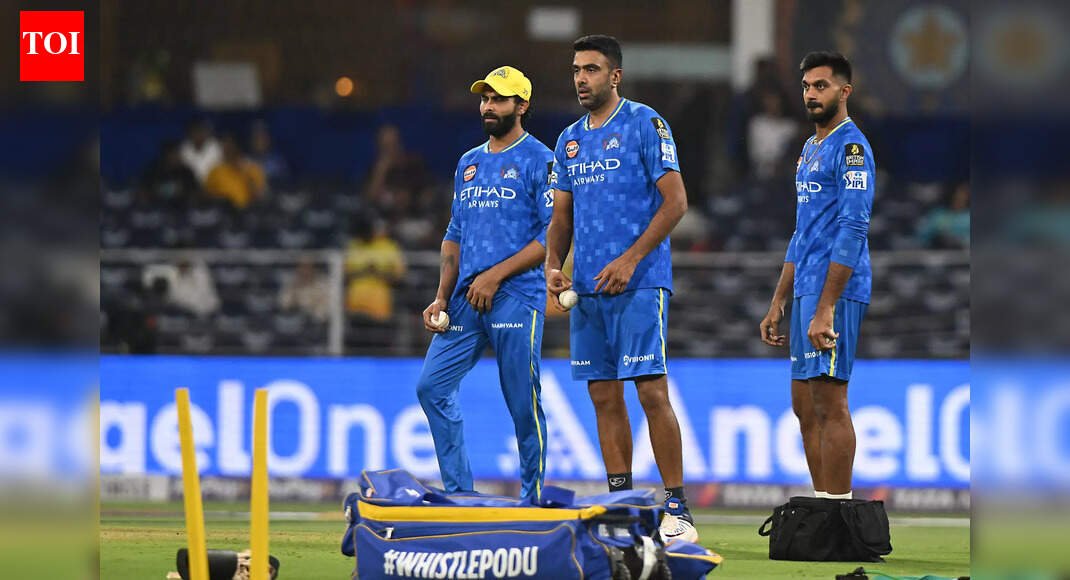
Ravichandran Ashwin (C), Ravindra Jadeja (L) and Vijay Shankar (R) (Photo by Prakash Singh/Getty Images)

Former India off-spinner Ravichandran Ashwin has named his four favourites for the upcoming IPL season, notably leaving out his former franchise Chennai Super Kings. His selections come shortly after the IPL mini-auction held at the Etihad Arena in Abu Dhabi. Ashwin placed five-time champions Mumbai Indians at the top of his list. The Hardik Pandya-led side held on to their core during last month’s retention window and added further depth through trades, bringing in Sherfane Rutherford from Gujarat Titans, Mayank Markande from Kolkata Knight Riders, and Shardul Thakur from Lucknow Super Giants.

Prashant Veer’s parents react after their son gets a Rs 14.20 crore IPL deal

Mumbai Indians were also active at the auction, picking up Quinton de Kock for Rs 1 crore, along with Danish Malewar, Mohammed Izhar, Atharva Ankolekar, and Mayank Rawat, each for Rs 30 lakh. Defending champions Royal Challengers Bengaluru were Ashwin’s second choice. RCB retained their key players before the auction and then added eight new names to their squad. Among their notable buys were Venkatesh Iyer for Rs 4 crore and Jacob Duffy for Rs 2 crore. RCB had claimed their maiden IPL title earlier this year. Ashwin rounded off his top four by backing Punjab Kings and Rajasthan Royals as contenders for the remaining playoff spots. Except for Rajasthan Royals, all the teams he mentioned had reached the playoffs last season. Ashwin shared his picks during an interaction on Mumbai Indians’ official Instagram handle. Rajasthan Royals, meanwhile, secured Ravi Bishnoi for Rs 7.20 crore at the auction. Prior to the auction, they had already strengthened their squad through trades, bringing in Ravindra Jadeja, Sam Curran, and Donovan Ferreira. Ashwin reserved special praise for Mumbai Indians’ acquisition of Quinton de Kock, suggesting the franchise moved decisively while others hesitated. He felt MI were attempting to recreate the balance of their IPL 2020 title-winning side, even without Ishan Kishan. “I think the Quinton de Kock buy was a good move. I think the other franchises were sleeping on their haunches, and MI snooped it up. I think MI are not sure about the Rickelton opening combination. I think MI are trying to replicate their IPL 2020 championship squad, only Ishan Kishan is not there,” Ashwin said on his YouTube channel. Despite having a relatively small purse of Rs 2.75 crore, Ashwin felt Mumbai Indians made the most of their resources and significantly strengthened an already strong unit. “MI had 2.75 crore, but it was as if they had 27 crore, because they bought so many players. MI already had a winning squad before they went into the IPL auction, and now, after the auction, they look even stronger,” he added.


Source link

India’s groundwater crisis: Which states are heading towards ‘Day Zero’ first | India News


India's groundwater crisis: Which states are heading towards 'Day Zero' first

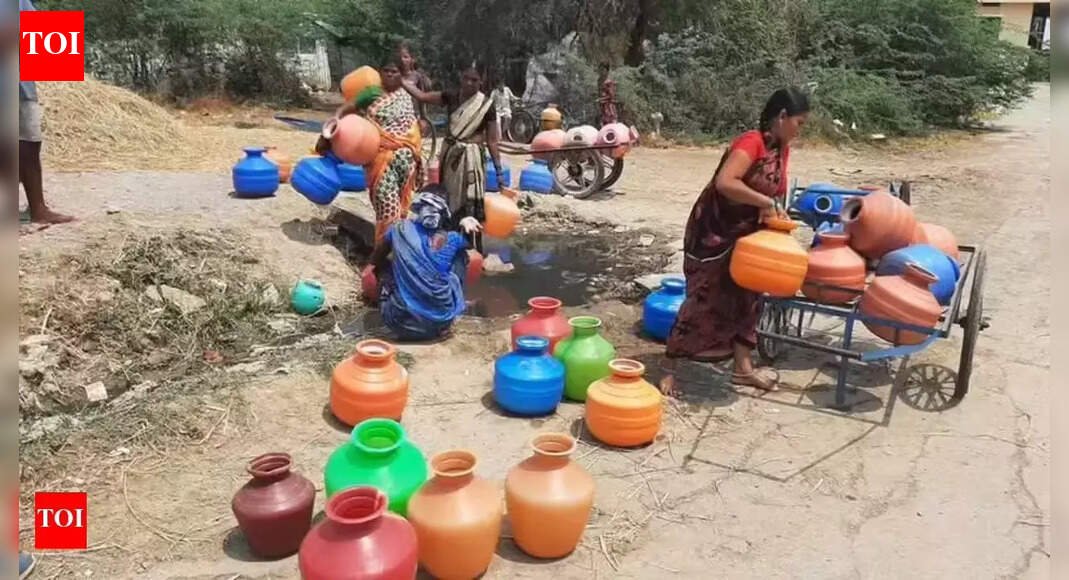
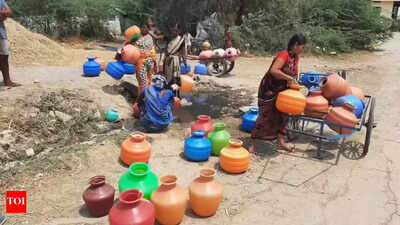
In a narrow lane of India, men and women wait quietly with plastic drums lined in rows. Some squat, some sit, with eyes fixed on the bend ahead. Suddenly, the silence breaks. A water tanker reverses into the alley, its engine drowning out the waiting. Young men rush forward, climbing atop the truck, lowering pipes into the tank. Within moments, quiet order unravels into chaos. Hundreds of kilometres away, in rural India, women walk long distances to empty wells, dried-up tubewells and shrinking water bodies, hoping to find a few litres of water.Just because some cities suffered floods doesn’t mean you have water. For a country that supports nearly 17% of the world’s population with just 4% of its freshwater resources, water scarcity has become a daily reality, and not just a distant threat.With India’s population expected to rise from 1.3 billion to nearly 1.7 billion by 2050, the question is no longer whether India is facing a water crisis.But how soon parts of the country will run out!

What is a water crisis? How severe is it in India?

A water crisis occurs when the availability of safe, usable water falls short of demand. The World Bank defines water scarcity as a situation where annual per capita water availability drops below 1,000 cubic metres.India is steadily moving towards this threshold.Despite supporting 17% of the world’s population, India has access to only 4% of global freshwater resources. According to NITI Aayog’s Composite Water Management Index (CWMI), the country is facing the worst water crisis in its history, with nearly 600 million people experiencing high to extreme water stress.India’s per capita water availability stood at 1,486 cubic metres in 2021, placing it in the water-stressed category (below 1,700 cubic metres). Government estimates suggest this could fall further to 1,341 cubic metres by 2025 and 1,140 cubic metres by 2050, pushing large parts of the country closer to scarcity.

A shrinking global water reserve

Globally, freshwater reserves have declined sharply over the last two decades, with losses estimated at 324 billion cubic metres every year, enough to meet the annual water needs of 280 million people.According to the Union minister of Jal Shakti releases Dynamic Ground Water Resource Assessment Report of the Country for the Year 2025, “Groundwater assessment units across India are categorised as safe, semi critical, critical and over exploited, based on the ratio of annual groundwater extraction and replenishment in the phreatic aquifer. The assigned categories aid in planning, management, and regulation of the country’s groundwater resources.Water consumption worldwide increased by 25% between 2000 and 2019, with nearly a third of that growth occurring in already water-stressed regions, the report stated.Northern India figures prominently among these drying zones, alongside parts of northern China, Central America and the southwestern United States. Rising temperatures, erratic rainfall, worsening droughts and unsustainable land and water use have accelerated the decline.For India, the implications are stark. Agriculture, livelihoods, urban growth and ecological sustainability all hinge on groundwater, the country’s most heavily used and least regulated water source.

Groundwater: India’s invisible lifeline

Groundwater forms the backbone of India’s water security. According to the 2019 NITI Aayog report, the Central Groundwater Board (CGWB) stated that the contribution of groundwater is nearly 62% in irrigation, 85% in rural water supply and 45% in urban water supply.Yet this invisible lifeline is being drawn down faster than it can be replenished. As per the Dynamic Ground Water Resource Assessment 2025, India’s total annual groundwater recharge stands at 448.52 billion cubic metres (bcm).After accounting for natural discharge, the annual extractable resource is estimated at 407.75 bcm. Current extraction has reached 247.22 bcm, pushing the national stage of groundwater extraction to about 60.6%.While the national average may suggest moderate stress, the reality on the ground is far more uneven.Out of the total 6,762 assessment units, around 25% have been categorised as Overexploited, Critical, or Semi-Critical. These are areas where extraction is approaching or exceeding natural recharge, a warning sign that aquifers are under severe stress.

States/cities staring at ‘Day Zero’

The most vulnerable regions are concentrated in three broad zones:

  • Northwest India: Punjab, Haryana, Delhi and western Uttar Pradesh — where groundwater recharge exists but indiscriminate withdrawal, driven largely by agriculture, has led to over-extraction.
  • Western India: Rajasthan and parts of Gujarat — where arid conditions limit natural recharge.
  • Southern peninsular India: including Karnataka, Tamil Nadu, Telangana and Andhra Pradesh, where hard, crystalline aquifers have low storage capacity.

States with the highest proportion of over-exploited and critical units include Punjab, Haryana, Rajasthan, Tamil Nadu and Delhi. In Punjab, groundwater extraction stands at over 156% of annual recharge. Rajasthan follows closely at 147%, while Delhi’s extraction level exceeds 90%, placing it in the critical category.Urban centres are not immune. NITI Aayog has warned that 21 major Indian cities, including Delhi, Bengaluru and Chennai, face the risk of depleting their groundwater reserves. Chennai already experienced ‘day zero’ in June 2019, when all four major reservoirs of the big city reservoirs ran dry. People had to line up for hours to wait for a small allocation of water brought in by trucks from other areas.A BBC report, citing UN projections, ranked Bengaluru second after Brazil’s São Paulo, among 11 global cities at risk of running out of drinking water. As water levels drop and summer temperatures rise, cities are imposing restrictions.In Bengaluru, authorities have banned the use of potable water for non-essential activities such as washing cars and watering gardens. Yet questions remain over whether fines and regulations alone can avert a full-blown crisis.In rural areas, the crisis manifests differently, in longer walks for water, abandoned wells and failed crops.

Why is India running out of water?

Experts point to multiple, interconnected causes:

  • Rising demand: India’s water demand is expected to outstrip supply by 2030
  • Agricultural overuse: Water-intensive crops like paddy in Punjab and Haryana
  • Encroachment of water bodies: Lakes and ponds disappearing, especially in cities like Bengaluru
  • Climate change: Erratic monsoons and declining river flows
  • Pollution: Industrial waste, sewage, and mining contaminating groundwater
  • Weak regulation: Outdated laws like the Easement Act of 1882, which ties groundwater ownership to land
  • Fragmented governance: Separate authorities for surface and groundwater management
  • Public apathy: Water treated as a free, unlimited resource

Groundwater overuse and contamination

India is the largest user of groundwater in the world, accounting for over 25% of global groundwater extraction. The consequences are severe:

  • Nearly 70% of groundwater sources are contaminated
  • India ranks 120th out of 122 countries on the global water quality index

Groundwater extraction in India is assessed using data from the Minor Irrigation Census and sample surveys conducted by State Ground Water Departments. According to the National Compilation on Dynamic Ground Water Resources of India, 2025, the country’s total annual groundwater extraction is estimated at 247.22 billion cubic metres (bcm).The agriculture sector remains the largest consumer, accounting for 87% of total extraction, or 215.10 bcm. Domestic use contributes 11% (27.89 bcm), while industrial use accounts for the remaining 2% (4.23 bcm).Water-intensive cropping patterns, such as paddy cultivation in Punjab and Haryana, and it continues to strain aquifers, even in regions where rainfall is relatively adequate. As India’s population grows and incomes rise, food demand is expected to surge.According to the NITI report, India’s population is expected to increase to 1.66 billion by 2050. At the same time, per capita income is estimated to increase by 5.5% per annum. With increasing population and purchasing power, the annual food requirement in the country will exceed 250 million tons by 2050. The total demand for grains will increase to 375 million tons including grain for feeding livestock by 2050.”“This will increase the demand for food. The surge in demand for these water-intensive crops will, ceteris paribus, multiply our current agricultural consumption of water,” it added.State and UT-wise classification shows:

  • Over-exploited (>100%): Haryana, Punjab and Rajasthan
  • Critical (90–100%): Delhi
  • High stress (70–90%): Tamil Nadu and Puducherry
  • Moderate to low stress (<70%): All remaining states and UTs, including Andhra Pradesh, Uttar Pradesh, Karnataka, Maharashtra, Telangana, West Bengal, Gujarat, Madhya Pradesh, and several northeastern states.

Despite a national average that masks local crises, groundwater stress is highly concentrated. More than 25% of administrative units fall under over-exploited, critical or semi-critical categories in nine states and UTs: Haryana, Karnataka, Madhya Pradesh, Punjab, Rajasthan, Tamil Nadu, Uttar Pradesh, Delhi and Puducherry.These regions face the highest risk of aquifer depletion, underscoring the urgent need for targeted groundwater management, crop diversification and demand-side interventions.Rainfall remains the primary source of groundwater recharge in India, but its distribution varies widely across regions and seasons. Most of the country receives rainfall during the southwest monsoon, while long dry spells dominate the rest of the year.

State-wise groundwater stress: What the data shows

Groundwater levels typically fall before the monsoon and recover partially during and after it. However, CGWB data shows that in 2024, more than 57% of monitored wells recorded a fall in water levels compared to the previous year, with significant declines observed in states such as Punjab, Rajasthan, Delhi, Maharashtra, Telangana and Uttar Pradesh.Geology further complicates the picture. Karnataka: According to the National Compilation on Dynamic Ground Water Resources of India, 2025, Karnataka’s annual groundwater recharge is estimated at 19.27 bcm, while extractable resources stand at 17.41 bcm. While recharge and extractable resources have increased marginally from 2024, extraction has also risen slightly. Overall, the state has seen a modest improvement, with extraction levels dropping from 68.44% in 2024 to 66.49% in 2025.Maharashtra: Central Maharashtra, a drought-prone region receiving only 400–700 mm of rainfall annually, remains heavily dependent on groundwater. The state’s annual groundwater recharge is estimated at 33.89 bcm, with extractable resources of 31.99 bcm. Extraction stands at 16.57 bcm, translating to a stage of extraction of 51.79% — a slight improvement from 2024.Punjab: Punjab remains among the most over-exploited states. Its annual groundwater extraction (26.27 bcm) far exceeds its extractable resource (16.8 bcm), pushing the stage of groundwater extraction to 156.36%.Although extraction has marginally declined from 2024, the state continues to draw far more water than it replenishes, largely due to water-intensive agriculture.Rajasthan: Rajasthan’s groundwater situation is similarly alarming. With an annual extraction of 17.10 bcm against extractable resources of 11.62 bcm, the stage of extraction stands at 147.11%. Despite slight improvements in recharge, over-extraction remains entrenched.Delhi: Delhi’s groundwater extraction stands at 92.10%, placing it in the critical category. While extraction has reduced slightly since 2024, the city remains heavily dependent on groundwater to meet domestic demand.

What is being done by govt?

Jal Shakti Abhiyan (JSA): To address India’s growing water crisis, the government has rolled out a series of initiatives aimed at conservation, recharge, and equitable access to water. One of the key programmes is the Jal Shakti Abhiyan (JSA), launched in 2019 as a nationwide movement to promote water conservation, groundwater recharge and rainwater harvesting. Atal Bhujal Yojana: Another major intervention is the Atal Bhujal Yojana, which emphasises sustainable groundwater management through community participation, improved recharge and regulated extraction.Atal Mission for Rejuvenation: In urban areas, the Atal Mission for Rejuvenation and Urban Transformation (AMRUT) 2.0 supports rainwater harvesting through stormwater drainage systems and promotes groundwater recharge via aquifer management plans.GIS based platform: To improve transparency and monitoring, the Central Ground Water Board (CGWB) has developed a GIS-based public platform called the India Groundwater Resource Estimation System (IN-GRES). The portal visualises groundwater recharge, extraction, rainfall and categorisation at the level of individual assessment units, allowing comparisons with previous years. Yet, even as policies and programmes expand on paper, a parallel and troubling reality persists.

The invisible crisis beneath our feet

India’s water crisis is not just about scarcity, but governance. Groundwater ownership laws dating back to the Easement Act of 1882 allow landowners to extract water beneath their land with few restrictions. Fragmented water management, weak enforcement and limited public awareness have allowed overuse to continue unchecked.While government initiatives, from the Jal Shakti Abhiyan and Atal Bhujal Yojana to large-scale rainwater harvesting and aquifer mapping programmes, aim to reverse the trend, experts warn that without behavioural change, crop diversification and strict regulation, these measures may not be enough.Water budgeting, which treats water like a financial account, balancing availability against demand is also increasingly being seen as a crucial tool to identify stressed regions before they reach breaking point.Behind this lies a darker reality, an informal and often illegal groundwater trade. Tankers extract water from over-exploited aquifers, frequently without regulation or quality checks, accelerating depletion while raising concerns over contamination.For now, the scenes of tankers, queues and dried wells serve as a warning. India may not be out of water yet, but in many places, it is running out of time. This underground trade, operating largely unchecked risks pushing India towards a long-term groundwater collapse tomorrow.

Source link

Securities market code bill: Sebi reform bill seeks bigger board, stronger oversight; key provisions explained


Securities market code bill: Sebi reform bill seeks bigger board, stronger oversight; key provisions explained

The Securities Market Code Bill, introduced in the Lok Sabha on Thursday, proposes a sweeping overhaul of India’s securities law framework, including expanding the Securities and Exchange Board of India (Sebi) board to up to 15 members from the current nine, strengthening governance norms and enhancing investor protection, PTI reported.The Bill seeks to reinforce Sebi’s regulatory mechanism by providing a more transparent and consultative process for issuing subordinate legislation. It also introduces new grounds for the removal of board members, including cases where a member acquires financial or other interests that could prejudice the discharge of official duties.Under the proposed law, Sebi board members will be required to disclose any “direct or indirect” interest, including interests held by family members, related to matters under consideration in board meetings. Members with such interests must refrain from participating in related deliberations.The Bill grants Sebi additional responsibilities, including periodic review of its own performance, assessment of the proportionality and effectiveness of regulations, and a greater focus on capacity building, research and studies. Sebi will also be required to lay down guiding principles for implementing the new Code.One code to replace three lawsThe proposed legislation seeks to consolidate and replace three existing securities laws — the Securities Contracts (Regulation) Act, 1956; the Sebi Act, 1992; and the Depositories Act, 1996. The Bill has been referred to a Standing Committee for further consultation.According to the Statement of Objects and Reasons, the Code aims to create a principle-based legislative framework that reduces compliance burden, improves regulatory governance and supports technology-driven securities markets.Delegation, sandbox and innovationTo enable more effective regulation, Sebi will be empowered to delegate certain registration-related functions to market infrastructure institutions and self-regulatory organisations. The Bill also allows the Sebi board to establish a regulatory sandbox to encourage innovation in financial products, contracts and services.The Code strengthens investor protection, promotes investor education and awareness, and ensures time-bound grievance redressal, including through an ombudsperson mechanism. Investors will also be able to engage more directly with Sebi’s rule-making through public consultations, making the regulatory process more inclusive.While some defaults are proposed to be decriminalised, the Bill provides a range of civil actions such as warnings and directions. Penalty powers have been streamlined, with fines linked to the gains made or losses caused due to violations.The legislation also introduces mechanisms to ensure better coordination between Sebi and other financial regulators, including a structured Memorandum of Understanding (MoU) framework for information sharing and clear division of responsibilities.Commenting on the Bill, partner (financial services) at Nangia Group, Sunil Gidwani said mandatory disclosure of “direct or indirect” interests by Sebi board members is a crucial corporate governance step.“The provision to transfer surplus funds to the Consolidated Fund of India creates a balanced fiscal structure. While the board retains a reserve for operational autonomy, the transfer mechanism ensures public accountability and prevents the idle accumulation of regulatory fees,” he said, PTI quoted him as saying.


Source link

The Canadian Sikh lawyer who refused to swear oath to King Charles – and got the law changed | World News


The Canadian Sikh lawyer who refused to swear oath to King Charles – and got the law changed
Image: The Globe and Mail

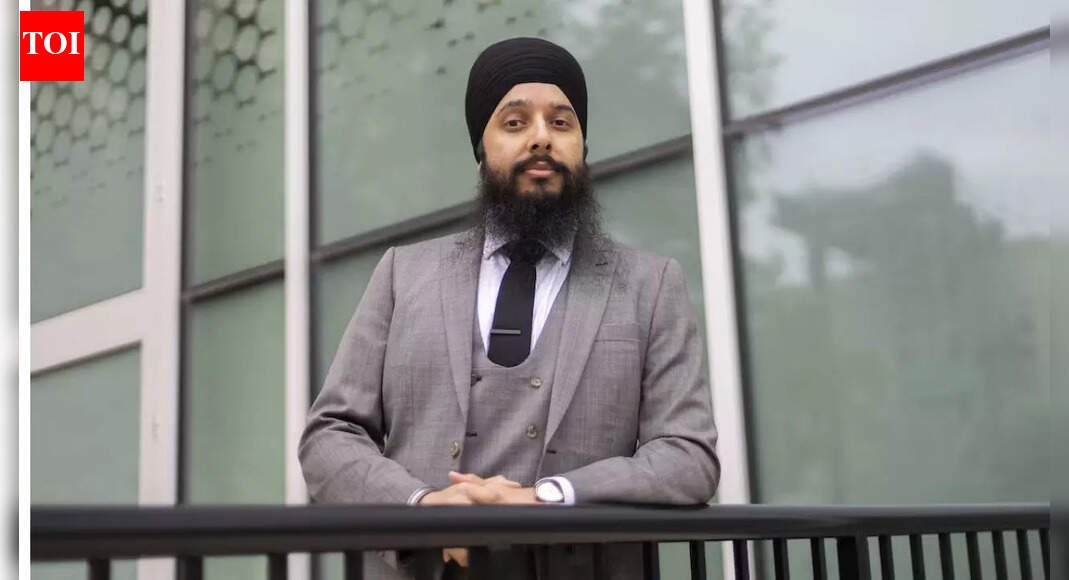
When Prabjot Singh Wirring was preparing to enter the legal profession in Alberta, he encountered a requirement that placed him at the centre of a constitutional and cultural debate. Like all prospective lawyers in the province, he was expected to swear an oath of allegiance to the reigning monarch, now King Charles III. For Wirring, an initiated Sikh, that oath posed a serious conflict with his religious beliefs.Rather than quietly comply or abandon his legal career, Wirring chose to challenge the rule in court. His case, first filed in 2022, ultimately reached the Alberta Court of Appeal. On December 16, 2025, the court ruled in his favour, concluding that the mandatory oath violated freedom of religion under the Canadian Charter of Rights and Freedoms and ordering the province to change the requirement.

Why a Sikh lawyer took Canada’s oath of allegiance to court

At the time, Alberta required all new lawyers to swear an oath of allegiance to the monarch as a condition of being admitted to the bar. While similar oaths exist elsewhere in Canada, most provinces do not make them mandatory or allow alternative affirmations.Wirring argued that the requirement forced him to choose between his religious obligations and his ability to practise law. He maintained that this amounted to an infringement of his Charter right to freedom of religion.A lower court initially dismissed Wirring’s case in 2023, characterising the oath as largely symbolic and not a meaningful infringement on religious freedom. Wirring appealed that decision, taking the matter to Alberta’s highest court.In December 2025, a unanimous three-judge panel of the Alberta Court of Appeal overturned the earlier ruling. The judges found that the oath was not merely symbolic and that it placed a real and substantial burden on Wirring by conditioning his professional future on violating his faith.

What the court decided

The Court of Appeal ruled that the mandatory oath violated section 2(a) of the Charter, which protects freedom of conscience and religion. The court declared the requirement to be of no force or effect and ordered the province to fix the issue within 60 days.Judges suggested several possible remedies, including abolishing the oath altogether, making it optional, or amending its wording to remove compulsory allegiance to the monarch.

Who is Prabjot Singh Wirring

Prabjot Singh Wirring is a Canadian lawyer based in Edmonton, Alberta. He earned his law degree from Dalhousie University and was completing his articling requirements when the oath issue arose. Wirring is an Amritdhari Sikh, meaning he has formally undergone Sikh initiation and follows a strict religious code of conduct.As part of his faith, Wirring believes he can swear allegiance only to Akal Purakh, the timeless divine being in Sikhism. He argued that pledging “true allegiance” to the King would contradict a prior, absolute religious oath, something his faith does not permit.

Broader reactions and debate

The decision triggered strong reactions across Canada. Civil liberties organisations welcomed the ruling as a clear affirmation that religious freedom must not be compromised by professional requirements. Supporters argued that the judgment brought Alberta into line with other provinces and reflected Canada’s pluralistic society.Critics saw the ruling as an erosion of Canada’s constitutional traditions. They argued that as a constitutional monarchy operating under the Westminster system, legal authority ultimately flows from the Crown, making the oath a meaningful civic commitment rather than a symbolic gesture.


Source link