Breaking News
Fans go berserk as Matt Renshaw and Jack Wildermuth guides Brisbane Heat to a record chase against Perth Scorchers in BBL|15 thriller


In a pulsating BBL|15 clash at Brisbane on December 19, 2025, Perth Scorchers posted a mammoth 257/6 against Brisbane Heat, setting the stage for one of the league’s most electrifying night matches. Brisbane Heat scripted history by chasing down the target in 19.5 overs, finishing at 258/2 for their highest successful BBL pursuit ever, igniting 24,277 fans into a frenzy.

Perth Scorchers’ power-packed innings put up a massive target against Brisbane Heat

Asked to bat first, the Scorchers piled up a colossal 257 for 6 in their 20 overs, scoring at a staggering pace throughout the innings. Finn Allen set the tone early, tearing into the Heat attack with a brutal 79 off just 38 balls, laced with towering sixes that silenced the home fans. Alongside him, Cooper Connolly matched the aggression, hammering 77 from 37 deliveries as the pair stitched together a commanding partnership that completely swung momentum Perth’s way.

Although Brisbane Heat managed to claw back some control in the latter stages through timely wickets from Xavier Bartlett and Jack Wildermuth, late cameos from Nick Hobson and Laurie Evans ensured the Scorchers finished with a total that looked almost unbeatable under lights.

Brisbane Heat’s unforgettable record chase in BBL|15 game

What followed was nothing short of extraordinary. Brisbane Heat suffered an immediate blow when Colin Munro departed for a golden duck, but that early setback only set the stage for one of the greatest chases the Big Bash League has ever witnessed.

Wildermuth and Matt Renshaw produced a breathtaking counterattack, dismantling the Scorchers’ bowling with fearless strokeplay. Renshaw brought up his century in just 48 balls before being run out, while Wildermuth powered on relentlessly, remaining unbeaten on a magnificent 110. Their 212-run partnership turned a near-impossible chase into a reality, with Heat racing past landmarks at a jaw-dropping speed.

Despite Max Bryant retiring hurt late in the innings, Brisbane crossed the line with two balls to spare, finishing on 258 for 2 to complete the highest successful run chase in BBL history. The Gabba erupted as 24,000-plus fans celebrated a night that will be remembered as one of the most iconic moments the league has ever produced.

Also WATCH: Finn Allen launches a colossal 105-metre six off Jack Wildermuth in BBL|15

Here’s how fans reacted:

Also READ: BBL 2025-26: Marcus Stoinis’ brilliant performance guides Melbourne Stars to a 8-wicket win against Hobart Hurricanes


Source link

India-Oman CEPA rollout: Trade pact may take effect in three month; Piyush Goyal flags faster execution


India-Oman CEPA rollout: Trade pact may take effect in three month; Piyush Goyal flags faster execution

India and Oman are aiming to operationalise their recently signed Comprehensive Economic Partnership Agreement (CEPA) within the next three months, Commerce and Industry Minister Piyush Goyal said on Friday, signalling a faster rollout than several past trade pacts, PTI reported.The India–Oman free trade agreement was signed on December 18. Under the CEPA, Oman has offered zero-duty access on more than 98 per cent of its tariff lines, covering 99.38 per cent of India’s exports to the Gulf country. At present, these products attract import duties ranging from 5 per cent to as high as 100 per cent.

Business Leaders See Major Growth Potential In India-Oman Ties As PM Modi Visits Muscat

“All major labour-intensive sectors will get nil duty,” Goyal said, listing gems and jewellery, textiles, leather, footwear, sports goods, plastics, furniture, agricultural products, engineering goods, pharmaceuticals, medical devices and automobiles as key beneficiaries.On the Indian side, New Delhi has offered tariff concessions on 77.79 per cent of its total tariff lines, or 12,556 product categories, which together account for 94.81 per cent of India’s imports from Oman by value.“The Oman minister and I have discussed that this agreement, we will try to operationalise within three months,” Goyal told reporters, contrasting the timeline with Oman’s earlier trade deal with the US, which was finalised in 2006 but implemented only in 2009.Highlighting investment opportunities, Goyal said sectors such as steel, energy, education and healthcare held strong potential for Indian companies in Oman, particularly resource-linked industries. He pointed to a large green steel project in the pipeline and growing interest in converting energy into green hydrogen or green ammonia for exports.“There is a lot of interest because they have large land banks,” he said, adding that opportunities also exist in marble processing, battery manufacturing, education and healthcare.Goyal said Omani businesses were keen to partner with Indian firms, citing interest from an Omani dairy company in forming a joint venture with Amul. He added that Oman’s sovereign wealth fund and companies had been invited to explore investments in India.


Source link

T20 World Cup: Weeks after abandoning Pakistan tour, Sri Lanka sacks Charith Asalanka from captaincy | Cricket News


T20 World Cup: Weeks after abandoning Pakistan tour, Sri Lanka sacks Charith Asalanka from captaincy
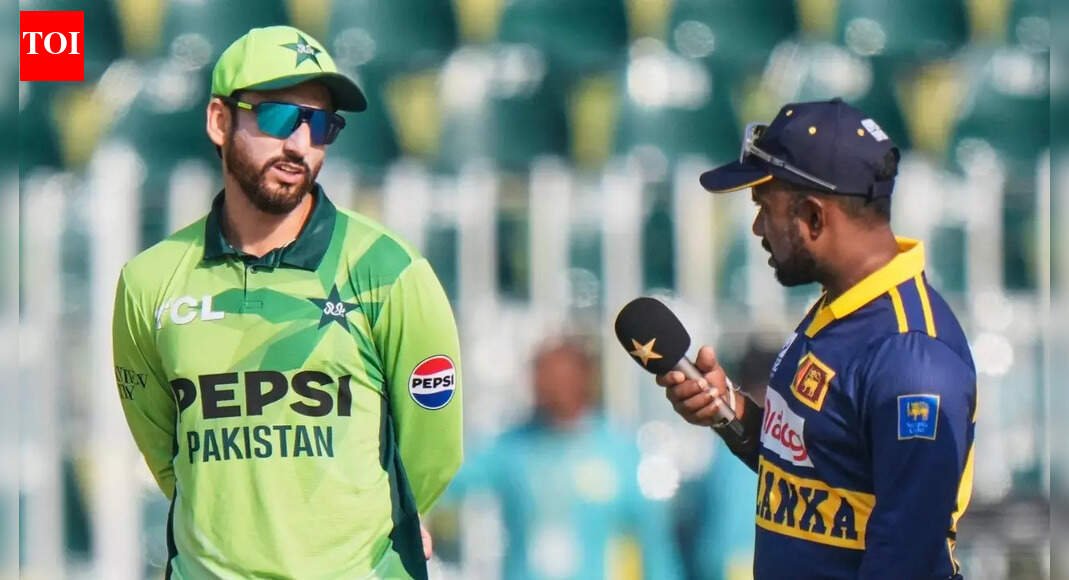
Pakistan’s Salman Ali Agha, left, chats with Sri Lanka’s Charith Asalanka as they wait for coin toss before the start of the second one day international cricket match between Pakistan and Sri Lanka, in Rawalpindi, Pakistan, Friday, Nov. 14, 2025.

NEW DELHI: Sri Lanka on Friday named Dasun Shanaka as captain of its preliminary 25-member squad for the T20 World Cup, removing Charith Asalanka from the leadership role after he returned home from Pakistan midway through the triangular series.Pramodaya Wickramasingha, who has returned as chairman of selectors, said Asalanka’s poor batting form and Shanaka’s experience of playing three previous World Cups led to the decision.“Shanaka’s role will be of an all-rounder. When I stopped being a selector, Shanaka was the captain. Charith (Asalanka) was in our long term plans then,” Wickramasingha said.Asalanka had been under scrutiny since he left the white-ball tour of Pakistan last month citing safety concerns after a suicide bomb explosion in Islamabad that killed nine people. During the bilateral ODI series, Asalanka, who was leading the side, wanted the tour abandoned and allegedly urged some teammates to return home. Sri Lanka Cricket did not agree with the demand and warned of action. The team later stayed on, with the final two matches rescheduled.Asalanka returned home before the triangular T20 series, officially due to ill health, following which Shanaka took over the captaincy. Days later, Asalanka has been removed as captain for the World Cup squad.Wickramasingha said the selectors wanted to reduce Asalanka’s leadership burden ahead of home series against Pakistan and England. Asalanka remains part of the squad as a batter.“We hope he will regain his batting form. In consultation with Sanath Jayasuriya (the head coach) we decided it was not the time to make too many changes. So we decided to go with the same squad,” he said.On Niroshan Dickwella’s return, Wickramasingha said he was considered for multiple roles. “As an opener, a reserve wicket keeper or even a middle order batter.”He added that going forward, the coach would also share responsibility for team performance. “We will have targets for fitness for example. I will hold the trainer responsible if the players were not able to meet the required fitness level,” he said.Sri Lanka have been placed in a group with Australia, Ireland, Zimbabwe and Oman in the tournament, which begins on February 7.Sri Lanka Squad: Dasun Shanaka (Captain), Pathum Nissanka, Kusal Mendis, Kamil Mishara, Kusal Perera, Dhananjaya de Silva, Niroshan Dickwella, Janith Liyanage, Charith Asalanka, Kamindu Mendis, Pavan Rathnayake, Sahan Arachchige, Wanindu Hasaranga, Dunith Wellalage, Milan Rathnayake, Nuwan Thushara, Eshan Malinga, Dushmantha Chameera, Pramod Madushan, Matheesha Pathirana, Dilshan Madushanka, Maheesh Theekshana, Dushan Hemantha, Vijayakanth Viyaskanth and Traveen Mathew.


Source link

3rd Test: Travis Head’s century puts Australia on brink of retaining Ashes | Cricket News


3rd Test: Travis Head's century puts Australia on brink of retaining Ashes
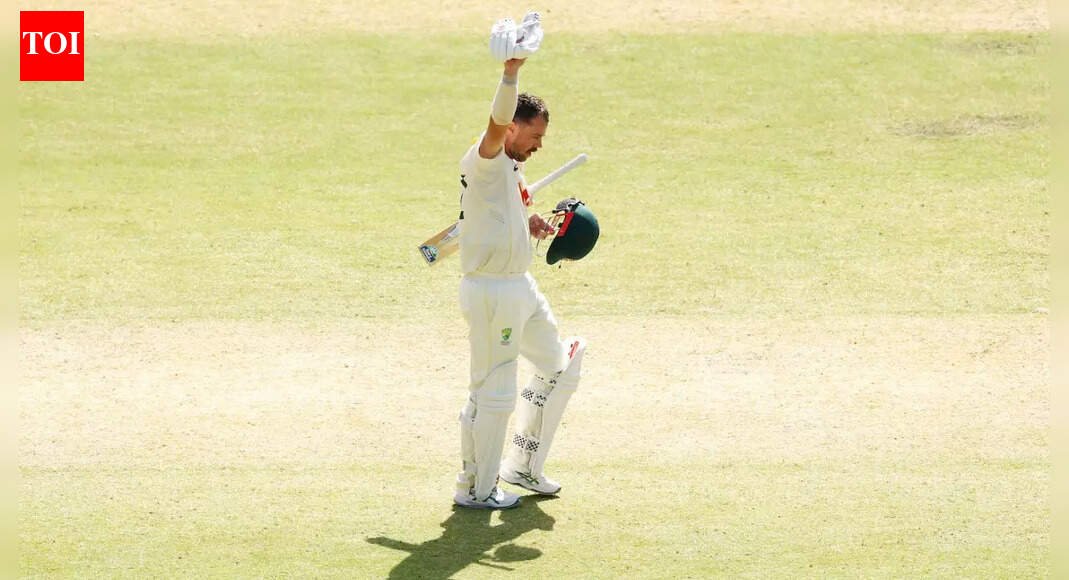
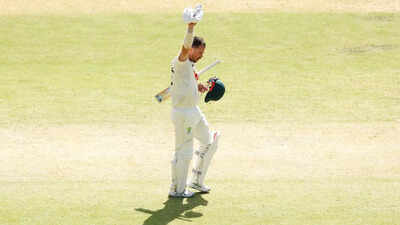
Travis Head has now struck centuries in four consecutive Tests at his home ground, following knocks of 140 against India last year and 119 and 175 against the West Indies. (Getty Images)

NEW DELHI: Danger man Travis Head smashed his fourth century in as many Tests at the Adelaide Oval on Friday as Australia surged to a commanding 356-run lead over England, moving to the brink of retaining the Ashes. The hosts reached 271 for 4 at stumps on day three of the third Test, with Head unbeaten on 142 and first-innings centurion Alex Carey on 52*, effectively putting the five-match series beyond England’s grasp.Go Beyond The Boundary with our YouTube channel. SUBSCRIBE NOW!England must win the match after suffering heavy defeats inside two days in Perth and inside four days in Brisbane, both by eight wickets. However, the task appears monumental, with the highest successful run chase at the venue being 316, achieved by Australia against England back in 1902.

Franchise boom vs Test cricket: Tom Moody’s honest take

Head’s crucial 11th Test hundred came off a composed 146 balls, though he almost fell short after being dropped on 99 by Harry Brook. He has now struck centuries in four consecutive Tests at his home ground, following knocks of 140 against India last year and 119 and 175 against the West Indies.Australia had an early wobble in a tense passage before lunch after England were bowled out for 286, led by Ben Stokes’ gritty 83 in reply to Australia’s first-innings total of 371. Bryson Carse trapped Jake Weatherald lbw for one, with the batter walking without a review despite replays suggesting the ball pitched outside leg stump.That moment briefly lifted England, but Head shut the door after the interval, peppering the boundary with cuts and chops. Marnus Labuschagne departed for 13, edging Josh Tongue to Brook at slip, while Usman Khawaja, fresh from a defiant first-innings 82, fell for 40, caught behind off Will Jacks. Cameron Green followed soon after for seven.After negotiating the nervous 90s, Head reached his century with a four off Joe Root, removing his helmet to kiss the turf before celebrating. Though not as explosive as his 69-ball ton in Perth, it was a vital innings, well supported by Carey.Gutsy Stokes After a poor batting display on Thursday, Stokes and Jofra Archer revived England with a fighting 106-run stand for the ninth wicket. Resuming at 213 for 8, Stokes battled cramps and dehydration to bring up his slowest Test fifty, off 159 balls, before being bowled by Mitchell Starc with the new ball.Archer provided admirable support and was the last man out for 51, his maiden Test half-century, caught by Labuschagne off Scott Boland. Boland finished with 3 for 45, while Pat Cummins claimed 3 for 69 on his return to Test cricket.England’s troubles began earlier when Zak Crawley, Ben Duckett and Ollie Pope fell in a rapid burst, with only Harry Brook’s 45 offering brief resistance as Australia’s attack kept relentless pressure.


Source link

‘No PUC, No Fuel’ rule: Awareness improves; checks across Delhi pumps uneven | India News


'No PUC, No Fuel' rule: Awareness improves; checks across Delhi pumps uneven

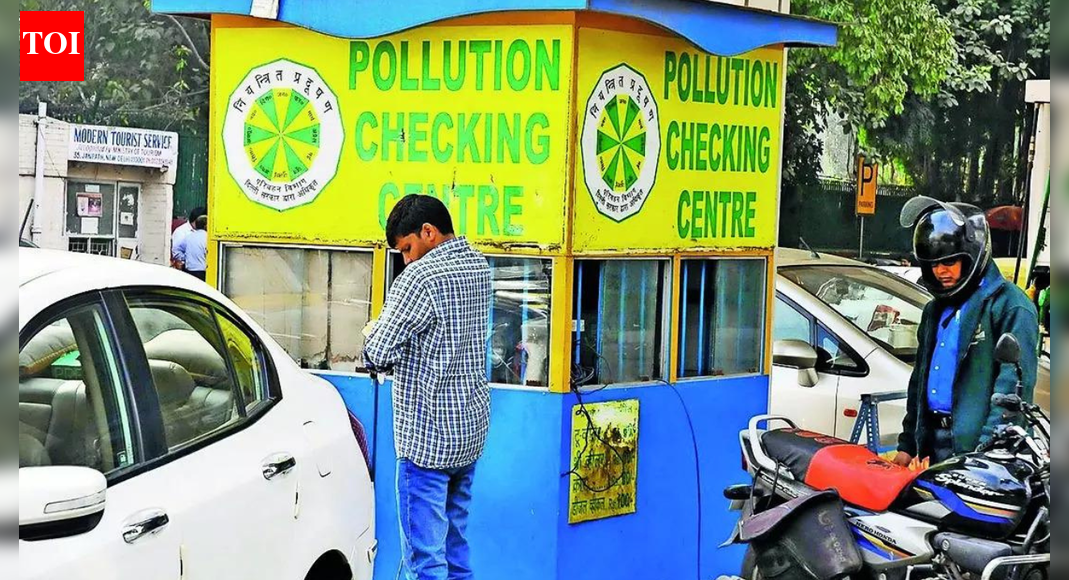
A day after the enforcement of BS-VI compliance and mandatory pollution-under-control certificates at Delhi’s border points and petrol pumps, awareness among commuters appeared to have increased on Friday, with many people voluntarily producing documents before refuelling.Nischal Singhania, president of the Delhi Petrol Dealers’ Association, told PTI that queues at pollution-under-control (PUC) certification centres remained unchanged, while fuel sales had taken a hit in some border areas.“Earlier, there was uncertainty about how long the ‘No PUC, No Fuel’ rule would continue. Now, it is clear that it will remain in force till GRAP-IV is in place. Sales have dipped in border areas. Pump owners in Badarpur reported a decline yesterday, and the trend has continued,” he said.Singhania, however, said compliance levels had improved. “Customers are themselves taking out their PUC certificates while coming to refuel. This is a positive sign,” he added.Despite the overall increase in awareness, checks were not uniformly enforced across the city. At a few petrol pumps, commuters reported that no verification was carried out on Friday.Piyush, a commuter at a petrol pump on Rohtak Road, said he could buy fuel without being asked for his PUC certificate and that there was no visible police or enforcement presence at the site.Another commuter, Bhushan Singh, travelling from Gulabi Bagh to his workplace, said the situation at the pump he visited was “like any other day”.Meanwhile, teams from the traffic police and transport department were deployed at city entry points, toll plazas and petrol pumps to check PUC certificates and BS-VI compliance.Traffic personnel were also stationed at key intersections with smart number plate recognition devices to verify documents and issue challans, even as some motorists requested leniency during the checks.Several motorists approaching the Bijwasan toll plaza on the Dwarka Expressway were seen slowing down abruptly after spotting enforcement barricades and Delhi Traffic Police personnel positioned just ahead of the toll point.As traffic personnel flagged down vehicles for document verification, a noticeable number of cars could be seen taking sudden U-turns, heading back towards the Gurugram side to evade inspection.The scene near the toll plaza reflected heightened enforcement under the ongoing restrictions, with traffic police teams stationed strategically on the carriageway.Vehicles were stopped intermittently, while others slowed down considerably upon seeing personnel in reflective jackets checking registration numbers and pollution-related documents on the spot. Some drivers, after briefly halting and assessing the situation, chose to turn back, causing brief congestion on the expressway.“A deployment near toll plazas is always strategic,” a senior traffic police officer said.He further said drivers automatically reduce their speed when they see enforcement teams close to toll points. It becomes easier for traffic personnel to stop vehicles smoothly and check papers without causing major traffic disruption.He added that the department has already taken steps to ensure motorists are aware of the latest restrictions.“We have pasted information boards at various Delhi-UP and Haryana-Delhi border points clearly explaining the rules and different norms under the recently enforced GRAP-IV. The idea is to ensure compliance through awareness, not just penal action,” the officer said.According to the officer, enforcement has been significantly scaled up across the national capital.“More than 100 teams of the Delhi Traffic Police have been deployed at vulnerable entry and exit points, including expressways, highways and border areas.These teams are tasked with checking vehicle documents, ensuring adherence to pollution norms and preventing the entry of restricted vehicles into Delhi,” he added.


Source link

India’s delayed $5-trillion dream: What IMF’s new timeline means for your wallet


India's delayed $5-trillion dream: What IMF’s new timeline means for your wallet

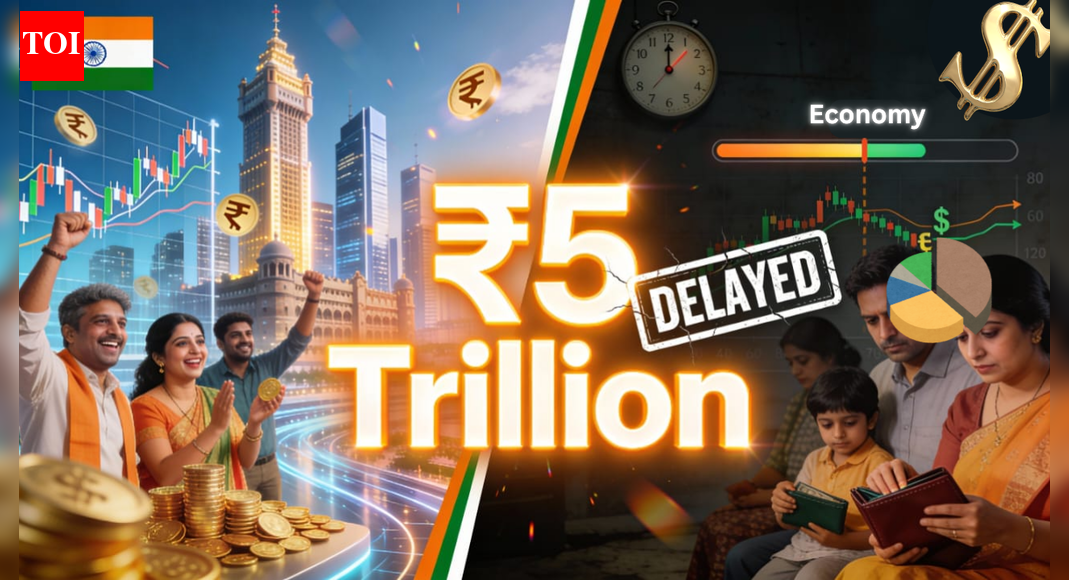
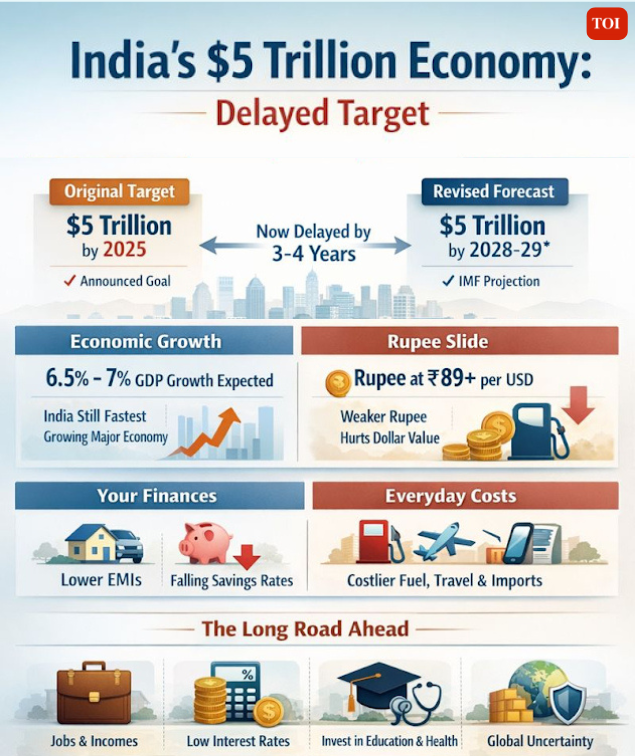
When senior ministers began promising a $5-trillion Indian economy by 2024–25, it was sold as a near-term milestone that would change everyday life — more jobs, better infrastructure, bigger pay packets. In late 2022, home minister Amit Shah even declared that “India will become a 5 trillion dollar economy by 2025.”Three years on, the goalpost has quietly shifted.The IMF’s latest numbers now suggest India is likely to cross the $5-trillion mark only around 2028–29, not mid-decade. A widely cited analysis of the IMF’s October 2025 database, for instance, projects India’s nominal GDP at about $4.125 trillion in 2025-26 and roughly $4.96 trillion in 2027-28 — just shy of the magic figure, implying $5 trillion only in FY29.

India's $5 trillion economy

So the headline target is delayed by roughly three to four years. But what does that actually do to your money life — your salary hikes, EMIs, investments and the price of everyday goods?

The numbers behind the slippage

First, it’s worth stressing what hasn’t changed.The IMF still expects India to be the world’s fastest-growing major economy, with real GDP growth around 6.2–6.6% in 2025–26, even after modest downgrades. The RBI is even more upbeat, pegging FY26 growth at 7.3%, and projecting inflation at just 2% — well below its 4% target. The delay is less about growth collapsing, and more about how we count “$5 trillion”:

  • The target is in US dollars, so it depends heavily on the rupee–dollar exchange rate.
  • It uses nominal GDP, which includes inflation. If inflation is unusually low, nominal GDP (in rupees) grows more slowly than real GDP.
  • A weaker rupee and softer inflation together drag down dollar GDP, even if the real economy is chugging along.

In April 2025, the IMF’s World Economic Outlook projected India’s nominal GDP at around $4.19 trillion in 2025, enough to nudge past Japan and become the world’s fourth-largest economy. That sounds impressive — but it still leaves a gap of roughly $800 billion before the 5-trillion milestone.On top of that, the rupee has slid to record lows near Rs 91 to the dollar, and the IMF has just reclassified India’s exchange-rate regime as a “crawl-like arrangement,” noting that the currency has weakened about 4% this year with higher volatility. A cheaper rupee means that the same rupee GDP translates into fewer dollars, pushing the 5-trillion finish line further out.Put simply: the real economy is doing decently; the dollar math is not.

1. Jobs and salaries: Slower sprint, not a halt

For your paycheque, the good news is that a delay in the $5-trillion headline doesn’t automatically mean fewer jobs or pay cuts.

  • The IMF, RBI and private forecasters like Moody’s all see India growing around 6.5–7% in 2025, still the standout among large economies
  • Domestic demand and investment are holding up, helped by government capex and tax cuts on consumer goods.

In practice, that suggests:

  • White-collar sectors like IT, financial services and digital platforms may not see the manic hiring of the post-Covid boom, but they are unlikely to fall off a cliff either.
  • Manufacturing, construction, infrastructure and logistics, which benefit from public capex and PLI schemes, could keep adding jobs — though unevenly across states.
  • The real squeeze is in informal and low-skill urban work, where global trade headwinds and US tariffs are hurting export-linked sectors, limiting high-quality job creation.

So your salary hike may not suddenly vanish because we hit $5 trillion in 2029 instead of 2026-27. But the longer it takes to scale up the economy, the longer it takes for per-capita incomes to meaningfully rise. IMF-based estimates already show India’s per-capita income doubling from about $1,400 in 2013–14 to around $2,880 in 2025 — progress, but still far from upper-middle-income comfort.

2. EMIs, interest rates and your bank deposits

The delayed 5-trillion timeline is emerging just as India enters a low-inflation, low-rate phase.

  • CPI inflation has plunged to near-zero (about 0.25–0.3%) in October 2025, helped by a collapse in food prices and tax cuts on consumer goods.
  • The RBI had recently slashed the repo rate by a quarter basis point to 5.25%, taking the cumulative cut throughout the year to 1.25%.
  • With the US Federal Reserve cutting rates, there are expectations that the RBI may cut interest rates again in 2026.

For your wallet, that has a clear split:

  • Borrowers win: Home loan and car loan EMIs should ease compared to the tight-money phase after Covid. Even if the next cut is modest, borrowers rolling over floating-rate loans will see relief over the next year or two.
  • Savers lose: Bank FD rates and small-savings yields will trend lower. With inflation near 2–3%, your real return may still be positive, but the days of 7–8% risk-free rates might be behind us for now.

The twist: a weaker rupee and US tariffs put a ceiling on how far the RBI can cut. If the rupee slides too fast, imported inflation (especially fuel) can come back, forcing the central bank to pause.So don’t plan your finances around an endless rate-cut party. Think of this as a window to refinance expensive loans and rebalance your savings, not a permanent new normal.

3. Rupee at 91: Imported dreams get pricier

The rupee’s fall to around Rs 91 per dollar is not just a headline for traders; it shows up across middle-class budgets. Here’s where you’re likely to feel it most:

  • Fuel & transport: Petrol and diesel prices are influenced by global crude and the rupee. Even if global oil is soft, a weaker rupee limits how much pump prices can drop, keeping commuting and logistics costs elevated.
  • Imported gadgets: Smartphones, laptops, high-end TVs and gaming gear are heavily import-dependent. A sustained rupee slide makes each upgrade a little costlier, or shrinks discounts.
  • Foreign education and travel: Fees billed in dollars or euros, plus airfare and local costs, become sharply more expensive in rupees. Families planning overseas degrees will need bigger education-loan top-ups or deeper savings.
  • Online subscriptions: Many streaming, software and cloud services charge in foreign currency; expect a slow creep up in rupee prices.

There are winners too:

  • Exporters and IT services companies often benefit from a weaker rupee, since a large share of their revenue is in dollars.
  • Households receiving remittances from abroad get more rupees per dollar, cushioning domestic budgets.

From a 5-trillion-dollar perspective, though, a weaker rupee is precisely what delays the milestone, because every rupee of GDP converts into fewer dollars.

4. Taxes, welfare and public services

Another, less visible effect of delayed dollar GDP is on government finances.

  • With nominal GDP in dollar terms growing more slowly, India’s tax-to-GDP ratio and debt-to-GDP ratio look less flattering in international comparisons, even if real activity is firm.
  • The Centre has committed to a gradual fiscal consolidation path; IMF directors back this but say it should stay flexible given trade shocks and tariffs.

For citizens, that could mean:

  • Less room for big-bang new subsidies or freebies without offsetting spending cuts or new taxes.
  • Continued focus on capital expenditure (roads, railways, defence, digital infra) over blanket consumption stimulus.
  • Possible pressure to widen the tax base — better compliance on GST and income tax — rather than simply hiking rates.

The risk is that if growth disappoints or tariffs bite harder than expected, future governments may resort to “stealth” revenue raisers: higher sin taxes, user charges, or fewer exemptions. That’s where a slower march to $5 trillion can intersect harshly with everyday budgets.

5. Your investment plan in a “longer runway” economy

For investors, the IMF’s new timeline is less a reason to panic and more a cue to adjust expectations.None of this is personalised financial advice, but the broad message is clear: build plans around realistic 6–7% growth and a gently weakening rupee, not around political timelines for $5 trillion.

Beyond the headline: Real prosperity vs round numbers

Finally, the uncomfortable but important point: crossing $5 trillion changes very little overnight.Even today, at a little over $4 trillion in GDP and per-capita income of under $3,000, India hosts both a booming elite consumer class and millions still stuck in precarious informal work. Whether the macro number hits five twelve quarters earlier or later matters far less than:

  • how quickly good jobs are created,
  • how reliably inflation stays low and stable,
  • how efficiently the state delivers health, education and infrastructure, and
  • how well households are equipped to save and invest.

The IMF’s new timetable is a reality check: you can’t wish away exchange-rate arithmetic and global shocks with slogans. But it’s not a verdict of failure either. India is still on course to be the world’s third-largest economy within a decade; it will just get there via a slightly longer, more volatile road than originally advertised.For your wallet, that means this: plan for a marathon, not a sprint — steady income upskilling, disciplined saving, diversified investments, and realistic expectations. The $5-trillion headline will eventually come. Whether you personally feel prosperous when it does will depend far more on the financial choices you make in the years in between.



Source link

Hate speech now non-bailable offence in Karnataka: Assembly passes Bill; includes 7-year jail term | India News


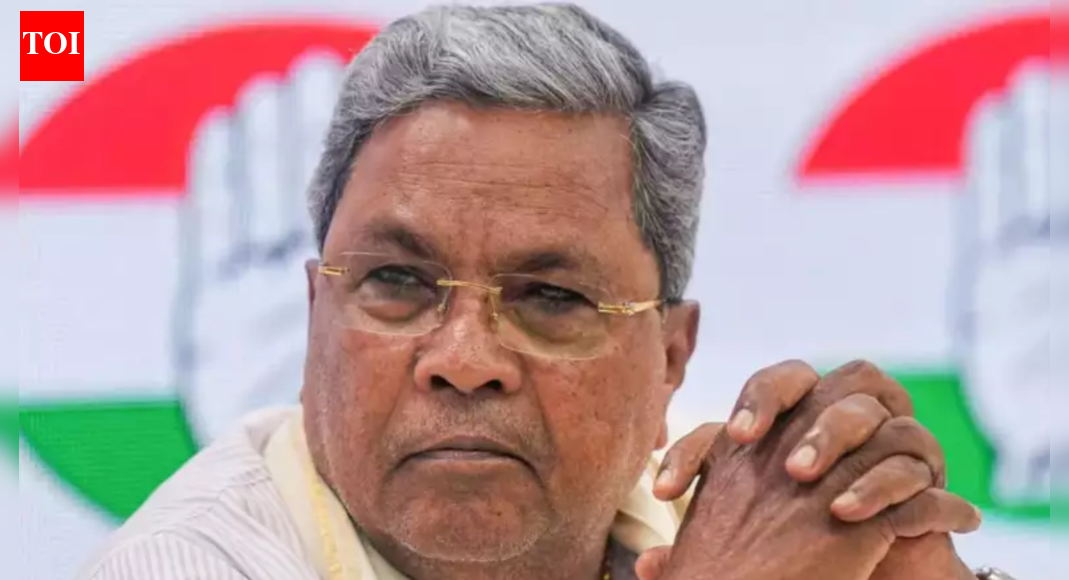
Karnataka CM Siddaramaiah (File photo)

NEW DELHI: The Karnataka assembly on Thursday passed the hate speech bill amid protests by BJP MLAs. The bill, cleared by the cabinet on December 4, was presented in the state assembly by home minister G Parameshwara on December 10.The minister said the provision for 10 years jail term in the event of repeated offence has been reduced to seven years.According to the bill formulated by CM Siddaramaiah-led Congress governe, any expression, which is made, published or circulated in words either spoken or written or by signs or by visible representations or through electronic communication or otherwise, in public view, with an intention to cause injury, disharmony or feelings of enmity or hatred or ill-will against person alive or dead, class or group of persons or community, to meet any prejudicial interest, is hate speech.

‘Roz Gandhi Ko Maarte Ho’: BJP MP Nishikant Dubey’s Fiery Speech Targets Cong, Triggers Chaos in LS

During the discussion, Urban Development minister Byrathi Suresh said coastal Karnataka is “burning” due to hate speech and hate crime, reported news agency PTI.BJP MLAs from the region raised objections to this and then trooped into the well of the house. Other BJP legislators followed them.There is also a provision for compensating victims based on the severity of the offence. Definitions under the Bharatiya Nyaya Sanhita, 2023, and the Information Technology Act will apply to the new legislation.Home minister G Parameshwara introduced the bill in the assembly amid protests from BJP members.“Whoever commits hate crimes shall be punished with imprisonment for a term which shall not be less than one year, but which may be extended to seven years, and with a fine of Rs 50,000. Furthermore, for subsequent or repetitive offenses (two or three times), the punishment will be increased to two years and a fine of one lakh rupees (instead of Rs 50,000),” the state home minister G Parameshwar said.The bill seeks to make hate speech a cognizable, non-bailable offence for which offenders can face trial at the court of the Judicial Magistrate First Class (JMFC).“In case of an organisation or institution, every person who, at the time of the offence, was in charge and was responsible, shall be deemed guilty and shall be liable to be proceeded against and punished accordingly,” the bill states.Exemptions cover publications proven to be in public interest — such as those related to science, literature, art, learning or heritage — as well as acts done in good faith by public servants. Materials kept for bona fide heritage or religious purposes are also excluded from the ambit of the law.Deputy CM DK Shivakumar, backed the bill saying: “Of course, hate speech [prevention] is part of the government’s agenda. We must maintain peace, law and order in the state.”Though senior BJP member Sunil Kumar sought a division of votes, the Speaker went ahead with tabling the bill, which was later taken up for discussion in both Houses.Union minister of heavy industries and JD (S) functionary HD Kumaraswamy on Tuesday claimed that the state government introduced the Bill only to “silence the opposition”.After offering puja to deity Chamundeshwari atop Chamundi Hills in Mysuru on his birthday, the minister told reporters that it is an attempt to suppress the opposition leaders, but they will not be intimidated by such tactics.


Source link

Varun Chakaravarthy details mental blueprint ahead of T20 World Cup 2026


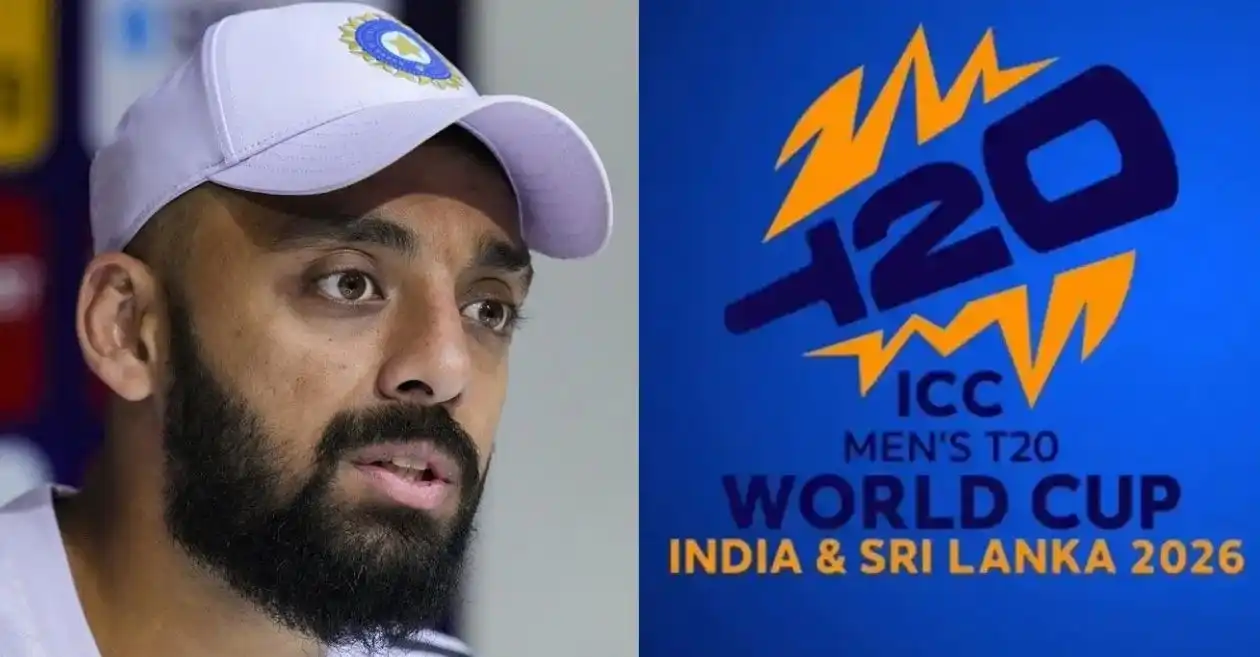
As India build towards the ICC T20 World Cup 2026, Varun Chakaravarthy has offered a rare insight into the mental and tactical framework shaping his preparations for the global event. Speaking ahead of the fifth and final T20I against South Africa, the off-spinner stressed that success at the elite level begins long before match day, with players needing to constantly challenge themselves—even when conditions appear comfortable.

Varun Chakaravarthy shares major takeaways heading into T20 World Cup 2026

With India drawn in Group A alongside Namibia, the Netherlands, Pakistan, and the United States, Varun believes preparation is as much psychological as it is technical. India are set to begin their World Cup campaign against the USA in Mumbai on February 7, and the spinner feels that waiting for big moments to arrive naturally is a mistake.

Varun explained that elite cricketers must manufacture intensity in training and matches where the challenge does not seem obvious. According to him, creating internal pressure sharpens decision-making and ensures readiness when the stakes are highest. Confidence, he noted, comes from knowing one’s role, bowling the right lengths, and entering a contest with a clear understanding of the opposition’s strengths and weaknesses.

One of Varun’s major takeaways heading into the tournament is the importance of opposition analysis. He believes that reading batters, identifying patterns, and adapting to different match situations can give bowlers an edge in T20 cricket, where margins are razor-thin.

Rather than constantly reinventing his bowling, Varun highlighted the value of trusting his existing skill set. He pointed out that overthinking variations can sometimes be counterproductive, especially when rhythm and confidence are intact. For him, clarity of thought remains the foundation of consistent execution.

“It is very important to keep putting pressure on yourself to get ready for the World Cup. You have to challenge yourself even when there is no challenge. If a match feels easy, you have to create that pressure mentally and start challenging yourself. Confidence, bowling the right lengths, and understanding the opposition are key. That is one major factor I want to take into the World Cup. With a better understanding of the opposition, I think I can do well.” said Varun on Star Sports.

Also READ: Jacques Kallis explains why South Africa have a real shot at winning T20 World Cup 2026

The key to recent success for Varun

Reflecting on his strong recent performances, Varun credited his success to keeping things simple. He emphasised that sticking to basic plans and bowling consistent lengths has helped him find control and effectiveness. While not every delivery produces immediate results, he believes patience and discipline eventually force batters into mistakes.

Varun also acknowledged that confidence directly influences skill execution. A dip in belief can affect decision-making and accuracy, whereas backing one’s ability allows a bowler to perform freely. For him, consistency at the highest level is non-negotiable, and regular exposure to international cricket plays a vital role in refining that consistency.

The spinner recalled his early international outings, admitting that initial struggles taught him valuable lessons. Those experiences pushed him back to the practice nets, where he worked on technical corrections and mindset adjustments. Varun feels that playing against top international batters provides clarity about areas of improvement and helps players understand where they truly stand.

“Sometimes it works, and thankfully, in the last three matches, it has worked well. I will try the same in the next match. It is about mindset and skill. When you are not confident, your mindset affects your skill. The key is to stay confident and back your skills. That is when you execute well, without much change. That is the secret to being consistent. At this level, you must be consistent; playing at the highest level is important to know where you stand. In my first match at the international level, I struggled a bit initially, and that is when I understood a few things. I went back to practice and made corrections. So, it is very important to keep playing at the highest level,” added Varun.

Also READ: Rohit Sharma predicts the finalist of T20 World Cup 2026


Source link

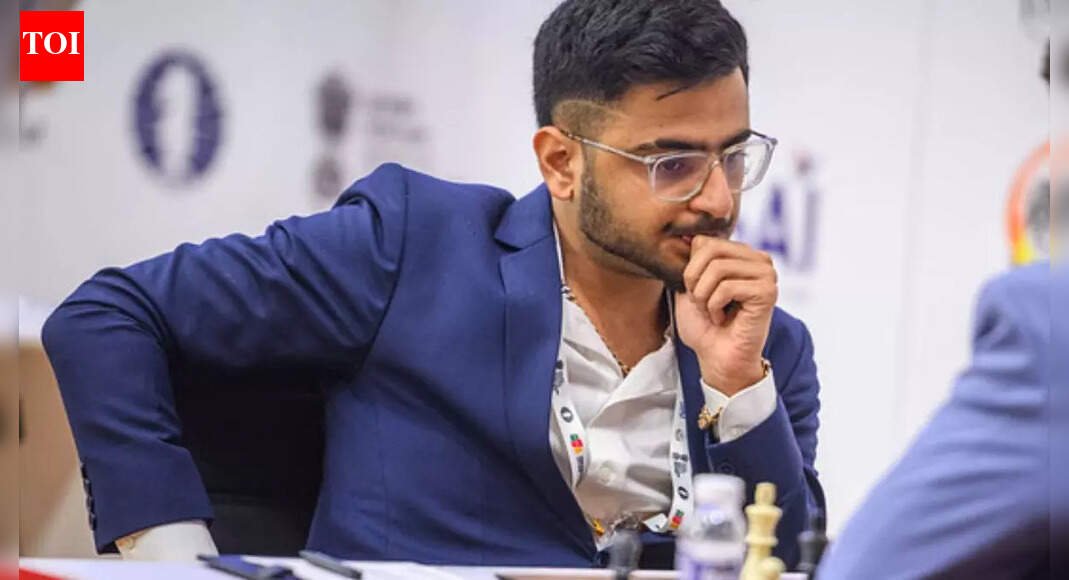
One of the youngest to become GM at 13, India’s Raunak Sadhwani still struggles to have a full-time chess coach | Exclusive | Chess News


One of the youngest to become GM at 13, India's Raunak Sadhwani still struggles to have a full-time chess coach | Exclusive
Indian GM Raunak Sadhwani during FIDE World Cup Goa 2025 (FIDE Photo)

NEW DELHI: The COVID-19 outbreak had not yet caused a hullabaloo across the globe, Lionel Messi was still without a FIFA World Cup title, artificial intelligence (AI) had not entered everyday conversations, and Russia and Ukraine were still “non-hostile” neighbours when Nagpur’s Raunak Sadhwani attained his Grandmaster (GM) title in 2019.At 13 years nine months and 28 days, Raunak earned the highest title in chess, becoming one of the youngest Indians to achieve the feat. In the record book, he joined the likes of current World Chess Champion Gukesh Dommaraju (12 years, 7 months and 17 days), Rameshbabu Praggnanandhaa (12 years, 10 months and 13 days), and Nihal Sarin (14 years, 1 month and 1 day).

Exclusive | Yosha Iglesias, World’s 1st Trans WIM & 2025 French Chess Women’s Champion

As Gukesh and Praggnanandhaa remain the top two names in the current FIDE rating list for juniors, Raunak, currently stationed at number eight, is not too far behind.Well, all he can recall about pursuing the GM title is the pressure during the first norm.“I was never bothered about the GM title. I’ve always felt that I would get there,” Raunak told TimesofIndia.com during an exclusive conversation on the sidelines of the Global Chess League (GCL), currently taking place in Mumbai. “But my first norm was difficult. It took some time, and then it was really easy. I knew I belonged there. So I just kept playing and eventually got it.”However, the journey since then has not been easy. With the pandemic putting daily life to a standstill, and players not able to travel abroad to play in higher-rated tournaments, some players slowed down.While the likes of Gukesh, Praggnanandhaa, and Nihal are three of the most celebrated chess players in the country, Raunak is still figuring his way around.“I definitely have to improve more. I lost rating in the last six months, so I definitely want to get back and win some tournaments and get my ELO back. So I’m working on it,” added the 2638-rated 19-year-old, who achieved a peak rating of 2681 back in January 2025.Nevertheless, the plan to “definitely have to improve” requires a proper framework, guidance, and mentorship, which the teenager is currently struggling to afford due to what many consider the dark side of professional chess: the expense.While the chess ecosystem has evolved in a way where a player is made to bear all his/her expenditures, even hiring a full-time coach is proving to be a challenge due to the lack of adequate private sponsorship.“It’s a big problem in the game. Even I still face this issue myself. I don’t have a full-time coach right now because it’s really expensive. You need a sponsor for that, and I’m waiting for one,” he revealed.“At the moment, I don’t have any. So yeah, it’s a very expensive game. Coaching isn’t easy to afford because the rates are much higher compared to other sports. So yeah, it’s not very easy for people to manage it.”In GCL this season, Raunak is sharing the same team with five-time World Chess Champion Viswanathan Anand, 2025 FIDE World Cup winner Javokhir Sindarov, and German talent Vincent Keymer.“It’s an interesting team with the likes of Viswanathan Anand sir, and everyone else is quite young, so I know them quite well myself. So it will be fun,” he further noted.Raunak sees the GCL as a preparatory step for the upcoming FIDE World Rapid and Blitz Championships, where he will take the field in Doha, Qatar.“It will be very good to stay in the flow. You’re playing rapid here and then immediately you go to Qatar to play rapid again. So it’s definitely a good warm-up to have,” the teenage Grandmaster concluded.


Source link

On This Day: India’s horror show at Adelaide Oval — bowled out for lowest-ever Test total | Cricket News


On This Day: India's horror show at Adelaide Oval — bowled out for lowest-ever Test total
File Pic: India vs Australia at Adelaide Oval in 2020. (Getty Images)

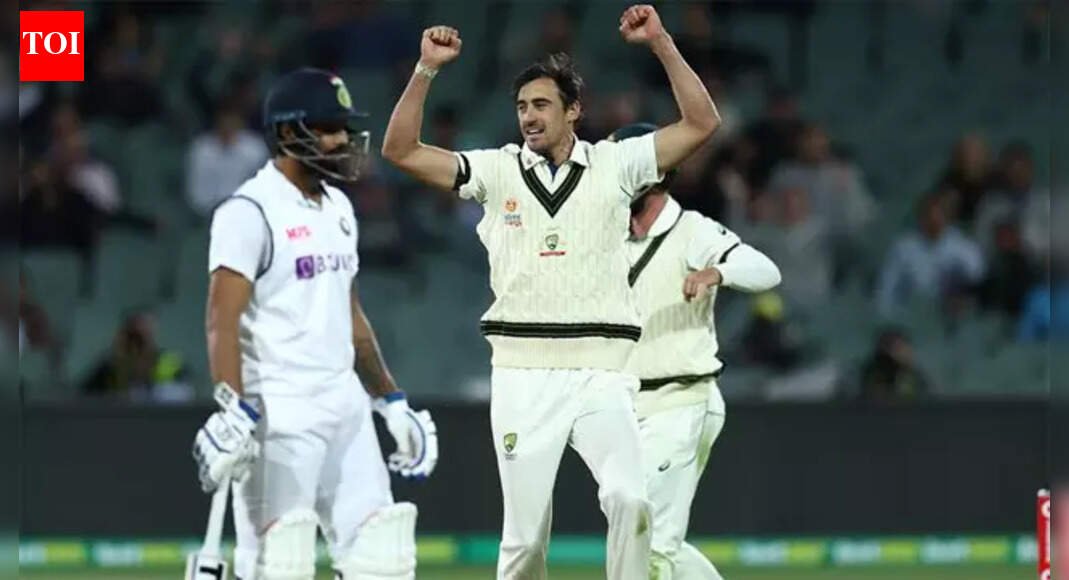
Five years ago on this day – on December 19, 2020, the Indian Test team, under their charismatic captain Virat Kohli, came face to face with their worst nightmare Down Under. On the third day of the opening match of their four-match series in Australia, India batters tumbled like a pack of cards against the spirited bowling of Josh Hazlewood and Pat Cummins at the Adelaide Oval. They were bundled out for their lowest score ever in the history of Test cricket – 36 all out in 21.2 overs.Go Beyond The Boundary with our YouTube channel. SUBSCRIBE NOW!Such was the collapse that no Indian batter managed to touch the double-digit mark and there were three ducks, including that of middle-order mainstays Cheteshwar Pujara and Ajinkya Rahane. Cummins started the mayhem and Hazlewood finished off the Indian defence with precision as they shared nine wickets between them.

Franchise boom vs Test cricket: Tom Moody’s honest take

That day, India broke their previous lowest total of 42 against England at Lord’s, scored way back in 1974. And it still remains their lowest point in Test cricket, before the team came close to match the horror show four years later in Bengaluru against New Zealand, when they were bowled out for 46 in 2024 – their lowest total at home.

The Adelaide Test India would like to forget

It was a sombre Saturday morning, India were in the driver’s seat after taking 53 runs first-innings lead at the Adelaide Oval. At stumps on Day 2, India had lost their opener Prithvi Shaw early in the second innings to Cummins and reached 9/1, a lead of 62 runs with nine wickets in hand, little did the visitors know what was in store the next day.Opener Mayank Agarwal and nightwatchman Jasprit Bumrah were on crease for India on Day 3. On the last delivery of the second over of the day, Cummins opened the floodgate by removing Bumrah – caught and bowled for 2.India were 15/2 at that stage, a lead of 68 with Pujara joining Agarwal in the middle. Three probing maiden overs followed as the pressure mounted on India batters in the middle. Cummins then forced an edge off Pujara’s bat in the 12th over and captain Tim Paine pounced on it – a 8-ball duck for India’s No.3 batter. Next over Hazlewood joined the party, removing Agarwal (9), India’s top scorer in the innings – out caught behind, before making it a double-wicket maiden by dismissing Rahane for a 4-ball duck.

Adelaide Test

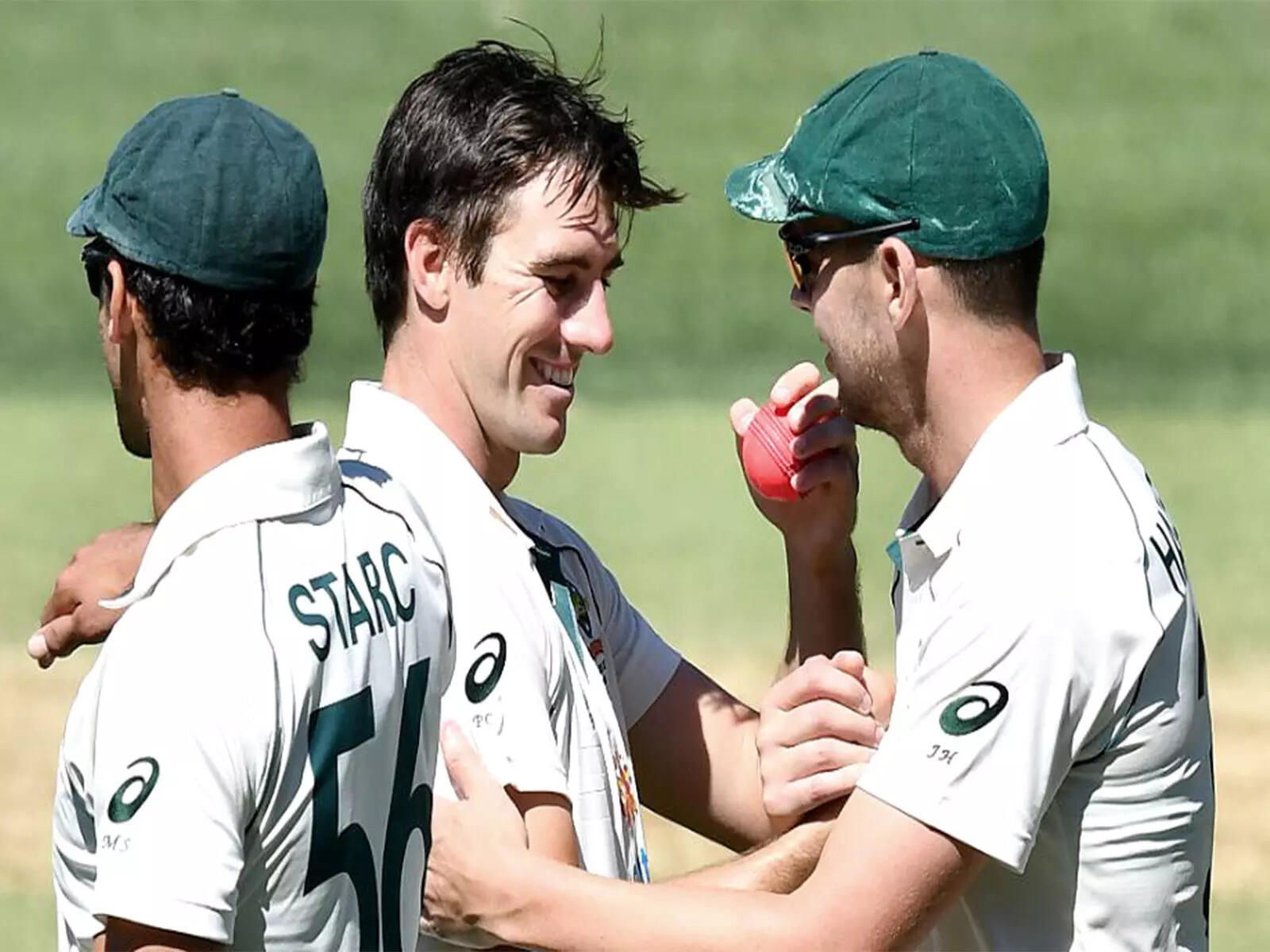
Australia’s pace trio: Mitchell Starc, Pat Cummins and Josh Hazlewood. (ANI Photo)

India were in total disarray by then, 15/1 had turned to 15/5 in no time. All the advantage they generated by bowling out the hosts for 191 on Day 2 after posting 244 had vanished in thin air.It was left to skipper Kohli and wicketkeeper-batter Wriddhiman Saha to steady the India innings against the two marauding pacers in Cummins and Hazlewood. Kohli had a good outing with the bat in the first innings, top-scoring for India with a composed 74 off 180 balls, which included eight fours. So, India had hopes. But, Cummins had other ideas. In what could be considered as a stunning bowling spell, Cummins made Kohli his fourth victim as the pacer returned figures of 4 for 21 in 10.2 overs.Kohli’s wicket was the last hope for India, and after that Hazlewood ran through the lower middle-order and tail to complete his five-wicket haul – a 5 for 8 in five overs which included three maidens too.India were folded for 36 with Mohammed Shami retiring, after being hit by a Cummins bouncer, for the visitors’ final wicket. Despite taking a substantial first-innings lead, India set just a 90-run target for the hosts in the end.Australia then knocked off the target on the same day, with openers Joe Burns (51 not out) and Matthew Wade (33) adding 70 in quick time as India pacers failed to replicate the exploits of Cummins and Hazlewood.The match, which saw 21 wickets in the first two days, witnessed a dramatic collapse on the third day and India started the series with a disappointing 8-wicket defeat in the series.

Brisbane Test

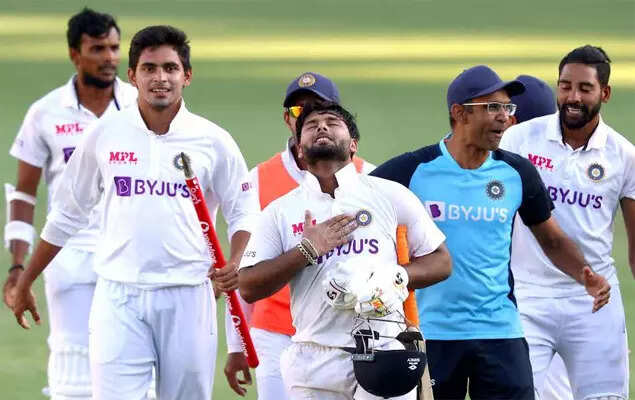
File Pic: Rishabh Pant celebrates after winning the Brisbane Test.

The turnaround as famous as the crumble

After the humiliation in Adelaide, the series moved to Melbourne and India were without their regular captain, Virat Kohli left the series due to personal reasons. Ajinkya Rahane led the side at MCG, and India made an emphatic comeback in it by beating Australia by 8 wickets to level the series 1-1.It was followed by a drawn Test in Sydney, as both teams reached for the finale in Brisbane with the series on the line.And Team India made sure that fans forgot what happened in Adelaide a month back, as they stunned the hosts by 3 wickets to win the series 2-1 – making it a back-to-back Test series win Down Under for the visitors. It was a turnaround to remember for Team India. They moved on from the Adelaide humiliation to script Test history in Australia.


Source link