Breaking News
IND vs SA: Hardik Pandya goes full throttle in 5th T20I; hits 16-ball fifty | Cricket News


IND vs SA: Hardik Pandya goes full throttle in 5th T20I; hits 16-ball fifty

It took Hardik Pandya one ball to announce himself in Ahmedabad. The bat came down in a full arc, the ball went up and over, and somewhere beyond the rope a cameraman found himself part of the moment. Ahmedabad had barely settled when Pandya, walking in mid-innings, turned the fifth T20I on Friday into a reminder of how quickly a game can change when he decides to intervene.Walking in during the 13th over, the all-rounder hit a six off his first ball, which also struck a cameraman standing at long-off.

Why Hardik Pandya was ANIMATED during chat with Gautam Gambhir in Dubai | Asia Cup 2025

Pandya came in after India captain Suryakumar Yadav was dismissed for five off seven balls on the first delivery of the 13th over. Yadav was caught by David Miller off the bowling of Corbin Bosch.Facing his first ball, a length delivery outside off from Bosch, Pandya walked down the pitch and hit a lofted drive for six. The shot went to long-off and struck the cameraman, who was later attended to by the Indian team physio.In the following over, Pandya took on George Linde, hitting three sixes and two fours to collect 27 runs from the over.

Second-fastest T20I fifty for India

Pandya brought up his half-century in just 16 balls, the second-fastest fifty for India in T20 internationals after Yuvraj Singh’s 12-ball effort.He was eventually dismissed at 63 off just 25 balls, hitting 5 sixes and as many fours in his innings. India scored a massive 231 for 5 in the 20 overs. Earlier, South Africa captain Aiden Markram won the toss and chose to bowl in the fifth and final T20I. The visitors made one change, bringing in spin all-rounder George Linde in place of fast bowler Anrich Nortje.India brought back Jasprit Bumrah, who had missed the third T20I in Dharamsala due to personal reasons, replacing Harshit Rana. Washington Sundar came in for Kuldeep Yadav.Sanju Samson was named in the XI in place of vice-captain Shubman Gill, who was ruled out of the final two matches due to a toe injury.


Source link

‘Thank you for lifting Patrick up’: Randi Mahomes’ gratitude filled response after Patrick Mahomes’ knee surgery makes fans feel included and cherished | NFL News


‘Thank you for lifting Patrick up’: Randi Mahomes’ gratitude filled response after Patrick Mahomes’ knee surgery makes fans feel included and cherished
Randi Mahomes thanks fans for their prayers as Patrick Mahomes begins rehab after season-ending knee surgery. (Image via Getty)

Patrick Mahomes is already in rehab after a season-ending left knee injury, and his mom is making it clear she is reading every message that comes in. Randi Mahomes posted public thanks this week after the Kansas City Chiefs quarterback underwent surgery, telling supporters she and her family appreciate the prayers and the words of encouragement.The update lands at the worst possible moment for Kansas City. Mahomes tore his left ACL and LCL in Week 15 against the Los Angeles Chargers, and the loss pushed the Chiefs out of playoff contention for the first time in the Mahomes era.

Patrick Mahomes’ injury, surgery, and the timeline Kansas City is now staring at

Athlon Sports reported Mahomes suffered the injury against the Chargers and later underwent surgery on Monday. The report said the procedure was performed by Dallas Cowboys head physician and orthopedic surgeon Dan Cooper. Kansas City placed Mahomes on injured reserve, and the quarterback has already begun rehab.The medical timeline matters because it shapes everything the Chiefs do next. Chiefs vice president of sports medicine and performance Rick Burkholder said the recovery expectation is nine months, though it could swing by a month or two in either direction, per USA Today. That puts Mahomes’ 2026 season availability at the center of every offseason decision, even if the team stays quiet publicly.Mahomes’ injury also closes the book on a season where he still produced. Athlon Sports noted he recorded 22 passing touchdowns and five rushing scores in 2025 before the knee gave out. Now the conversation shifts from stats to survival: how Kansas City steadies itself without the player it has been built around, and how quickly Mahomes can get back to full strength.The Chiefs missing the playoffs is the loudest headline. Athlon Sports called the Chargers loss the final blow to Kansas City’s postseason hopes. It is also a rare swing in the Mahomes era. Andy Reid’s teams had been a January constant, and Athlon Sports noted Kansas City reached the Super Bowl five times in the last six seasons, winning three. That is the standard Mahomes and the Chiefs are judged by, and it is why this injury lands like a crisis instead of a routine rehab story.

Randi Mahomes thanked supporters as Patrick Mahomes posted ‘why this had to happen’

The emotional side of this hit the public right away. TMZ reported Mahomes posted a message on X after the injury report became public, and he did not try to dress it up.“Don’t know why this had to happen,” Mahomes wrote. “And not going to lie, it’s hurts. But all we can do now is Trust in God and attack every single day over and over again.” He also addressed the fan base directly in the same TMZ report.“Thank you, Chiefs kingdom, for always supporting me and for everyone who has reached out and sent prayers. I will be back stronger than ever.”TMZ noted Randi Mahomes shared his message with a heart and prayer emoji, and her own posts kept the focus on gratitude. Athlon Sports reported she wrote a public message while also sharing about her “Home for the Holidays” event for the Kansas City community.“Thank you all for the prayers and kind messages for Patrick. We truly appreciate every one of them,” she wrote.Athlon Sports also reported she added a second note on her Instagram Stories. “Thank you for lifting Patrick up in prayer. We’re so thankful for this community.”That is the cleanest read on the moment. The family is not selling false optimism. They are acknowledging reality, leaning on faith, and keeping the message tight: Mahomes has surgery behind him, rehab in front of him, and a fan base watching every step.For the Chiefs, the next part is not dramatic. It is practical. Mahomes’ rehab is the story now, and the rest of the roster gets judged by how it responds to life without him. The one piece of good news, per Athlon Sports, is that Mahomes is on track to return to full health when the 2026 NFL season comes around. The rest is patience, and nine months can feel like forever when you are Kansas City.


Source link

Access Denied


Access Denied

You don’t have permission to access “http://www.ndtv.com/india-news/manvendra-shekhawat-wins-climate-impact-of-the-year-at-ndtv-indian-of-the-year-9850185” on this server.

Reference #18.77fdd417.1766160016.24cbae51

https://errors.edgesuite.net/18.77fdd417.1766160016.24cbae51


Source link

US housing market: Home sales tick up in November; annual volumes slip as prices stay elevated


US housing market: Home sales tick up in November; annual volumes slip as prices stay elevated

Sales of existing homes in the US rose modestly in November from the previous month but declined compared with a year earlier, as higher prices continued to weigh on affordability despite relatively stable mortgage rates, according to data released on Friday, AP reported. Existing home sales increased 0.5 per cent from October to a seasonally adjusted annual rate of 4.13 million units, the National Association of Realtors said. However, sales were down 1 per cent from November 2024, marking the first year-on-year decline since May. The figure was marginally below economists’ expectations of 4.14 million units, according to FactSet.The national median home price rose 1.2 per cent from a year earlier to $409,200. This marked the 29th consecutive month of annual price increases, even as overall housing activity remained subdued.The US housing market has been in a prolonged slowdown since 2022, when mortgage rates began rising sharply from pandemic-era lows. Although long-term mortgage rates have hovered near their lowest levels for the year. Affordability pressures remain high due to elevated prices and borrowing costs.Sales volumes have largely stagnated at around a 4-million-unit annual pace since 2023, well below the historical average of about 5.2 million units.


Source link

SHANTI, but not quiet: How India is rewriting rules of nuclear energy | India News


SHANTI, but not quiet: How India is rewriting rules of nuclear energy
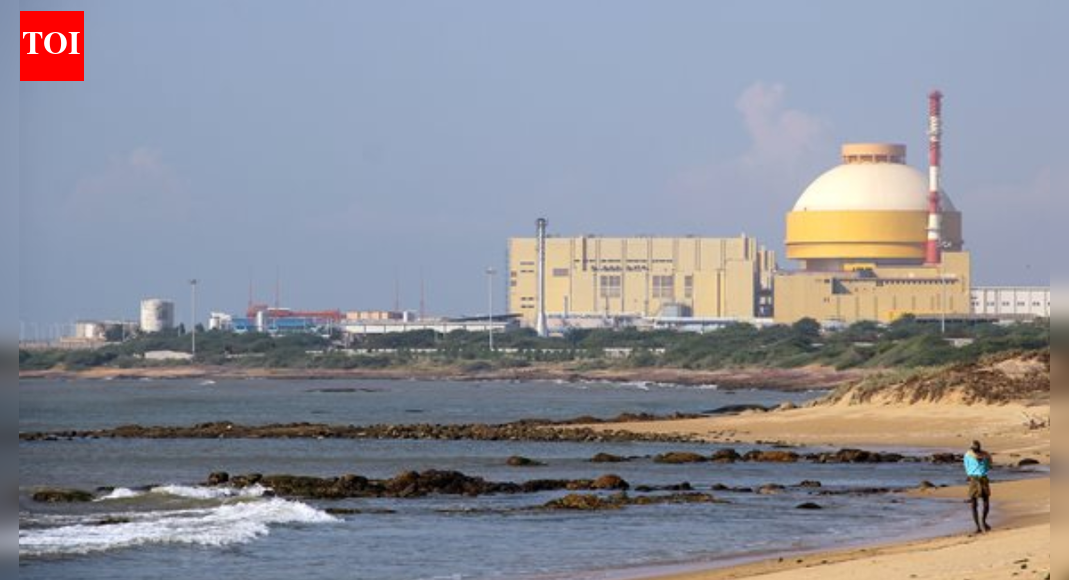
Kudankulam Nuclear Power Plant (KNPP)

TL;DR: Driving the news

Parliament on Thursday passed the Sustainable Harnessing and Advancement of Nuclear Energy for Transforming India (SHANTI) Bill, 2025, a landmark law that opens the country’s tightly controlled civil nuclear sector to private and foreign investment for the first time since Independence.The Rajya Sabha approved the bill by voice vote, defeating opposition demands to refer it to a standing committee. The Lok Sabha passed it a day earlier. Once the President gives assent, the bill becomes law.

“SHANTI Is A Cruel irony”: Tharoor Tears Into Modi Govt Over Nuclear Bill

“It marks a transformational moment for our technology landscape,” said Prime Minister Narendra Modi, linking the bill to India’s clean energy ambitions and global leadership in AI and green manufacturing.PM Modi added in his post on X: “My gratitude to MPs who have supported its passage. From safely powering AI to enabling green manufacturing, it delivers a decisive boost to a clean-energy future for the country and the world. It also opens numerous opportunities for the private sector and our youth. This is the ideal time to invest, innovate and build in India!”

Why it matters

The SHANTI Bill aims to supercharge India’s clean energy transition. It also enables India to scale from 8.9 GW of nuclear capacity to 100 GW by 2047, requiring investments worth Rs 19.3 trillion ($214 billion), as Bloomberg reported.“This (nuclear energy) will be the most reliable, steady 24×7 source of energy, unlike some other renewable sources,” said Jitendra Singh, minister of state for Atomic Energy, defending the bill in Parliament.

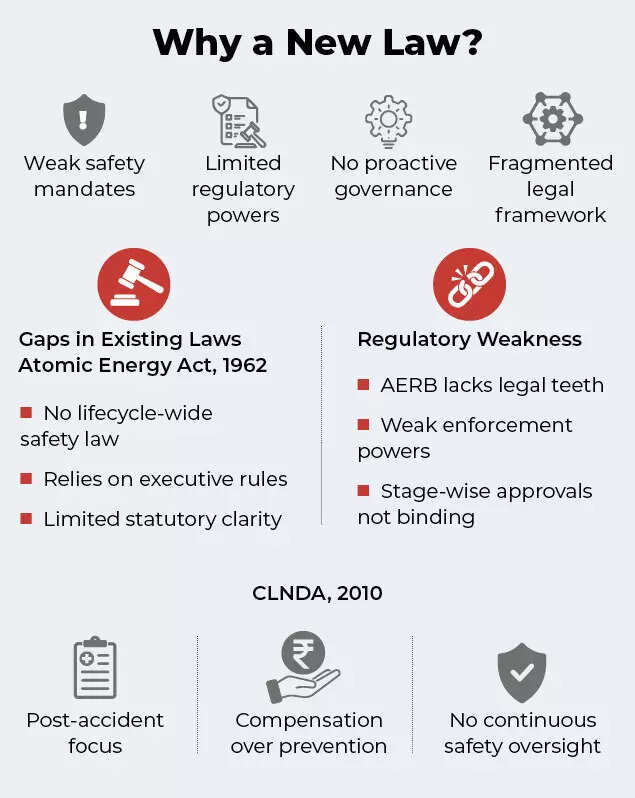
Why a new law?

At a time when power demand is exploding-driven by industrial growth, data centers, and urban expansion-the bill aims to ensure a firm, carbon-free power source, unlike solar or wind, which are intermittent.

Zoom in: What the SHANTI Bill actually does

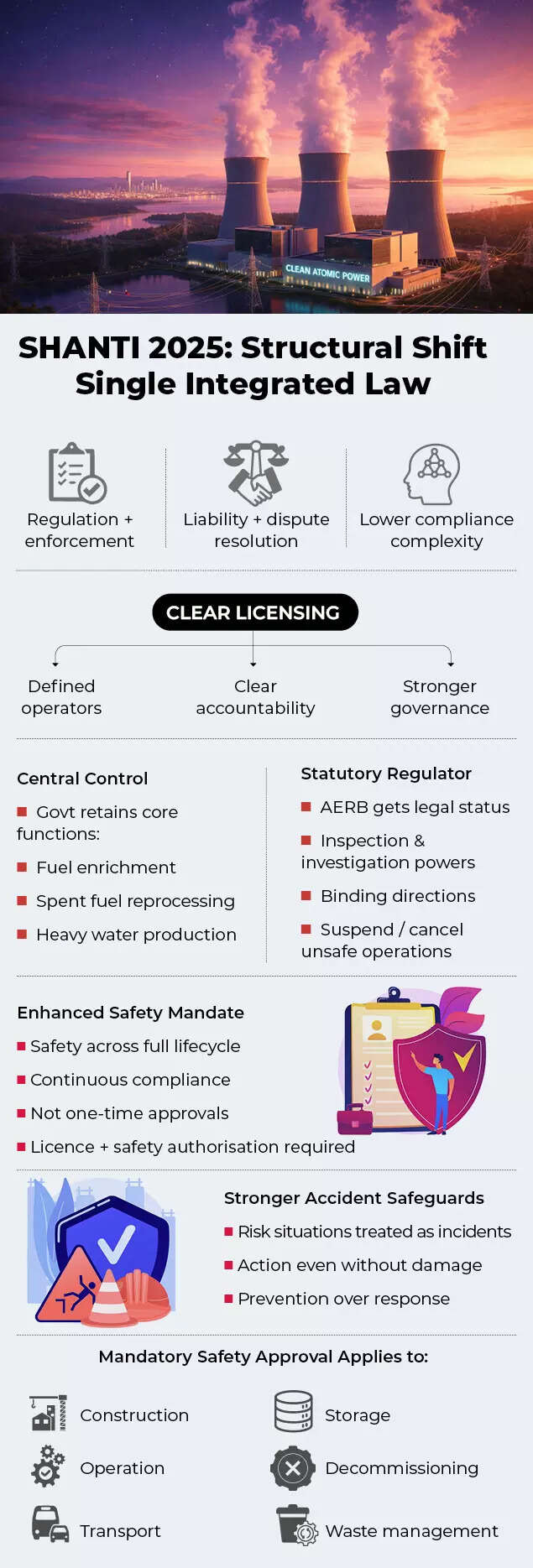
This isn’t just about inviting private capital. The bill overhauls the entire nuclear governance architecture, combining safety, licensing, regulation, liability, and dispute resolution into one statute.

Key changes:

Private sector involvement is now a reality: Indian private firms are now permitted to construct, possess, and manage civil nuclear facilities. Foreign entities can also get involved through partnerships or joint ventures.Out with the old: The Atomic Energy Act of 1962 and the Civil Liability for Nuclear Damage (CLND) Act of 2010 are both being repealed, making way for a single, updated regulatory structure.Liability is being redefined: Operators’ liability is capped (for instance, Rs 3,000 crore for large reactors), and the government can establish a Nuclear Liability Fund to cover any claims that exceed this limit. Suppliers are generally protected from liability, unless their contracts specify otherwise.The Atomic Energy Regulatory Board (AERB) is now a statutory body, gaining legal independence as a safety regulator. This grants it the power to inspect, halt, or even shut down operations.A dual authorization system is being implemented. Nuclear plants will require both an operating license and a safety authorization. Every single action, from building to waste management, will need official approval.“The standard operating procedure explicitly states: ‘safety first, then production,'” Singh noted, emphasizing that India’s safety protocols remain firmly grounded in the Nehru-era approach.Dual authorization model: Plants will now need two clearances-a licence to operate and a safety authorisation. Every activity-from construction to waste storage-requires approval.“The SOP in place clearly mentions: ‘safety first, second production’,” said Singh, asserting that India’s safety standards are still rooted in the Nehru-era framework.

Between the lines

The bill is not just about clean energy-it’s about unlocking stalled mega-projects and repositioning India geopolitically.India’s 2010 liability law scared off global suppliers. Companies like GE, Westinghouse, and EDF shelved projects worth billions because of Section 17(b) of the CLND Act, which allowed victims to sue suppliers in case of a nuclear accident.That’s now gone.SHANTI removes this statutory risk, aligning India with global conventions like the Convention on Supplementary Compensation (CSC) and signalling to Washington, Paris, and Tokyo that India is open for business.

What they’re saying

Meanwhile, opposition MPs raised concerns in the Rajya Sabha, questioning the Centre’s decision to allow private players into the nuclear sector, warning it could affect the country’s sovereignty.“We are seeing profits being privatized, and risks being socialized,” warned Manoj Kumar Jha of the Rashtriya Janata Dal, referring to taxpayer-backed safety nets for private players.“The bill dismantles the liability framework established after the Bhopal gas tragedy,” said IUML’s Haris Beeran, adding, “Posterity will judge us very badly”.“The government comes up with an acronym first and then a policy,” said Congress’ Jairam Ramesh, accusing the BJP of rewriting history and ignoring contributions made before 2014.“It’s a milestone. We are now a first-line nation, not followers,” Jitendra Singh told Rajya Sabha, adding India’s global role in energy and climate has changed significantly.Participating in the debate, Trinamool Congress MP Sagarika Ghose described the Sustainable Harnessing and Advancement of Nuclear Energy for Transforming India (SHANTI) Bill as not just flawed but “fundamentally dangerous.”“This Bill brings neither Shanti nor security… we are not debating whether India should pursue nuclear energy, India has always pursued nuclear energy responsibly for decades…” she said.“But as a country, are we now prepared to abdicate our sovereign responsibility, gamble with public safety and place one of the most sensitive sectors of the nation at the mercy of crony capitalism and government-friendly oligarchs as well as foreign pressure?”“This Bill is not reform, it is recklessness. This Bill is not for the public, it’s for profit,” she added.DMK MP P Wilson said the Bill is a “nuclear bomb which threatens the country’s peace and security”. He also demanded that the Bill be sent to a Select Committee of Parliament.AAP MP Sandeep Pathak questioned BJP-led Centre and pointed out that the saffron party had opposed India-US civil nuclear deal due to foreign involvement.“Do you accept the opposition at that time was political not ideological? If it was ideological, do you accept that you have changed your ideology?” he said.“Is it for money? Or do you think they will bring technology? We are importing a foreign model without importing their regulatory spine,” he added.

The big picture

India is betting on nuclear while the world is rediscovering it as a climate-friendly baseload power source.Global nuclear capacity could potentially exceed 860 GW by 2050, a projection fueled by AI, data centers, and the push for clean technology, as highlighted by Morgan Stanley Research in August.

-

Nations such as China, South Korea, and Japan are actively increasing their nuclear power capabilities. The US and EU are also showing interest in small modular reactors (SMRs), a trend the SHANTI Bill supports.India’s plans are in step with this global shift:

  • 100 GW by 2047
  • Energy independence by 2047
  • Net-zero by 2070

The Department of Atomic Energy reports that India’s nuclear energy budget has seen a significant increase, nearly tripling from Rs 13,879 crore in 2014 to Rs 37,483 crore in 2025.The safety-liability issue remains a point of contention.Critics argue that SHANTI weakens accountability standards.No strict criminal liability for suppliers.Operators face capped compensation.Victims have limited recourse.G Sundarrajan, an anti-nuclear activist, told the AP that the bill “takes away essential safeguards,” making it “nearly impossible” for radiation victims to seek legal redress.“This also provides little recourse for any Indian citizen to claim damages from nuclear companies,” he added.Union minister Singh, however, countered those concerns, stating, “Wide consultations were held… with industry leaders, scientific experts, startups, and ministries.”“We took more than a year, and the bill was framed with safety and global benchmarks in mind.”

Implications: Enter the SMR era

SHANTI’s strategic vision hinges on Small Modular Reactors (SMRs). These compact, factory-assembled reactors, each under 300 MW, are designed to power industrial hubs or remote areas.Consider these possibilities:

  • A steel mill in Odisha generating its own electricity

  • A data center in Hyderabad, complete with its own miniature nuclear facility

  • Green hydrogen plants operating continuously

The legislation’s framework permits private ownership, licensing, and safety approvals for these installations, providing a competitive advantage in clean energy for heavy industries.According to Bloomberg, L&T is already exploring SMR technology.The geopolitical implications are significant.The SHANTI Bill extends beyond energy; it’s also a tool of foreign policy.By adhering to global standards for liability and safety, India is:Reviving the Westinghouse project in Andhra Pradesh, which had previously stalled.Reengaging in agreements with EDF, GE, and Rosatom.Strengthening strategic relationships with the United States, France, and Japan.This also positions India as a climate-conscious global leader, particularly in the lead-up to G20 follow-up meetings and COP summits.

Looking ahead:

How quickly are licenses granted? What are the specific safety requirements? Who will be the first to apply – Tata? Adani?Insurance: Who’s going to take on the nuclear risk? And are the premiums even realistic?Liability Fund: How does the funding work? What’s the process for payouts?AERB’s autonomy: Will it actually enforce the rules, or will it cave to political influence?Local opposition: Places like Kudankulam have seen protests. Could land acquisition and health concerns spark fresh conflicts?(With contributions from various sources)


Source link

‘I was humiliated, slapped for not paying rent’: Tenant strangles landlady in Delhi; arrested | Delhi News


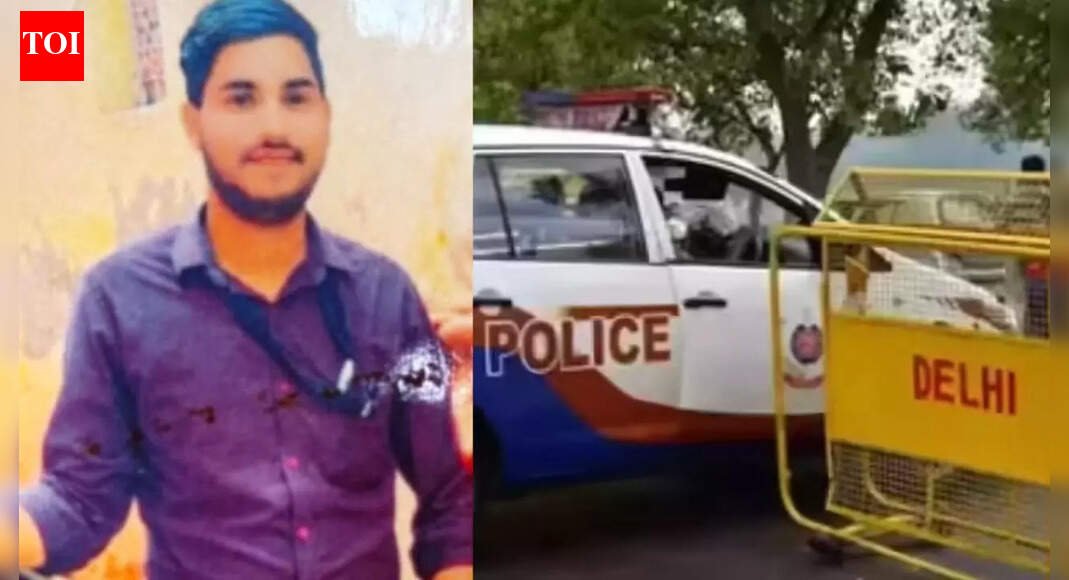
NEW DELHI: Over two months after a 65-year-old woman was robbed and murdered in her house in northwest Delhi’s Rohini, police arrested her tenant on Wednesday. The accused, Himanshu Yadav, claimed that the woman, Naresh Kumari, had allegedly humiliated and slapped him after he defaulted on rent, leading him to plot the crime. On October 7, the woman was found dead in her ground-floor house, where she lived alone. She was lying dead on her bed with scratch marks around her neck, indicating that she had been strangled after a brief struggle. Her son was an MCD inspector.A team formed by deputy commissioner of police (crime) Pankaj Kumar under inspector Ajay Sharma analysed CCTV footage and noticed a person leaving the locality early in the morning. He was later identified as Yadav, a salesman who used to frequently travel outstation for work. Suspicion deepened after the cops couldn’t trace him and found his phone had been switched off.The team then fanned out to several states and pored over footage from more than 1,000 CCTV cameras. Acting on a tip-off that Himanshu would return to Delhi from Uttar Pradesh to visit relatives and was planning to flee to Nepal, police laid a trap and arrested him from Japanese Park in Rohini. Himanshu owned an electronics shop, but it shut down. He invested in share market and gaming applications, incurring heavy losses. Following these financial setbacks, he took up work as a salesman. His landlady, who was demanding he cough up rent dues, reportedly reprimanded him on Oct 5. Driven by anger and need for easy money, he decided to kill her and rob her valuables, police said. Early on Oct 7, Yadav entered the landlady’s room. When she woke up, he allegedly strangled her before she could raise an alarm. He then removed the gold earrings and a ring she was wearing before hastily fleeing without scouring the room, fearing someone might enter.Yadav left Delhi and travelled to Bhiwani in Haryana, where he mortgaged the jewellery for Rs 70,000. Over the next couple of months, he changed his locations frequently, taking care not to stay at one place for more than five days at a stretch, police said. He travelled to Rajasthan, Punjab, Madhya Pradesh, West Bengal, Bihar and Uttar Pradesh to evade arrest, before he was finally picked up in Delhi.


Source link

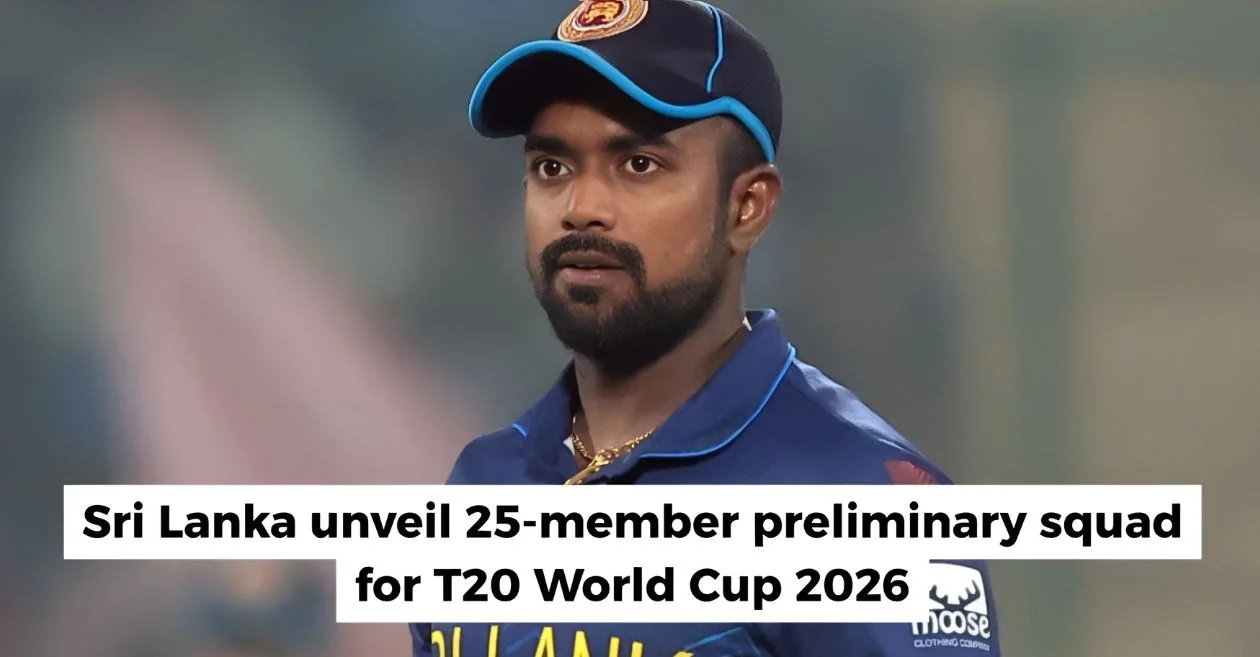
Sri Lanka part ways with Charith Asalanka; names new captain in 25-member T20 World Cup 2026 preliminary squad


In a stunning administrative upheaval just weeks before the ICC Men’s T20 World Cup 2026, Sri Lanka Cricket (SLC) has officially stripped Charith Asalanka of the captaincy.

Sri Lanka sacks Charith Asalanka ahead of T20 World Cup 2026

The announcement, made on December 19, 2025, follows a period of intense internal friction and a visible dip in the team’s on-field performance under Asalanka’s brief tenure. Pramodaya Wickramasingha, returning as the chairman of selectors, confirmed that the decision was driven by a need for experienced leadership as the nation prepares to co-host the global showpiece. The move has sent shockwaves through the cricketing community, particularly given the timing, with the tournament scheduled to begin on February 7, 2026.

The primary catalyst for Charith Asalanka’s removal from the captaincy appears to be a combination of dwindling batting returns and a controversial decision to withdraw from a recent overseas assignment. Wickramasingha was blunt in his assessment, stating that Asalanka’s “poor batting form” made it necessary to relieve him of the leadership burden to allow him to rediscover his touch as a specialist batter.

“Shanaka’s role will be of an all-rounder. When I stopped being a selector Shanaka was the captain. Charith (Asalanka) was in our long term plans then,” Wickramasingha was quoted as saying by Cricbuzz.

Also READ: Not India vs Pakistan! Jay Shah invites Lionel Messi for THIS T20 World Cup 2026 game

Sri Lanka appoints new captain in T20 World Cup preliminary squad

Cricket Sri Lanka named veteran all-rounder Dasun Shanaka as the new leader of the squad. With the 2026 T20 World Cup fast approaching, Shanaka’s reappointment is seen as a strategic move to leverage his experience of playing in three previous World Cups and his established rapport with head coach Sanath Jayasuriya. The chairman of selectors noted that in consultation with Jayasuriya.

“We decided that Dasun Shanaka should be captain until the end of the World Cup, after talking to head coach Sanath Jayasuriya as well. The previous committee had chosen a list of 25 players. We spoke to Jerome Jayaratne, the head of the high performance, as well as Sanath Jayasuriya. We decided to announce that same 25 as a preliminary squad for the World Cup. We are looking at Dasun as an allrounder. We’ll have to talk to Sanath Jayasuriya and work out what is required of him.”

The preliminary 25-man squad sees the return of several notable names, including wicketkeeper-batter Niroshan Dickwella, who is being considered for multiple roles including reserve keeper and opener. The squad is a blend of explosive pace, featuring Matheesha Pathirana and Nuwan Thushara, and a spin battery led by Wanindu Hasaranga and Maheesh Theekshana.

Clubbed with giants like Australia and rising teams like Zimbabwe and Ireland, Sri Lanka’s path through the group stages will demand the tactical maturity that Shanaka is known for, as the co-hosts look to replicate their past glory on home soil.

Sri Lanka preliminary squad for T20 World Cup 2026

Dasun Shanaka (Captain), Pathum Nissanka, Kusal Mendis, Kamil Mishara, Kusal Perera, Dhananjaya de Silva, Niroshan Dickwella, Janith Liyanage, Charith Asalanka, Kamindu Mendis, Pavan Rathnayake, Sahan Arachchige, Wanindu Hasaranga, Dunith Wellalage, Milan Rathnayake, Nuwan Thushara, Eshan Malinga, Dushmantha Chameera, Pramod Madushan, Matheesha Pathirana, Dilshan Madushanka, Maheesh Theekshana, Dushan Hemantha, Vijayakanth Viyaskanth and Traveen Mathew.

Also READ: Jacques Kallis explains why South Africa have a real shot at winning T20 World Cup 2026


Source link

‘Bat him at No. 3’: Former India batter makes strong case for Sanju Samson ahead of T20 World Cup | Cricket News


'Bat him at No. 3’: Former India batter makes strong case for Sanju Samson ahead of T20 World Cup
Ahmedabad: India’s Sanju Samson plays (PTI Photo/Shashank Parade)

NEW DELHI: With just 50 days to go for the ICC Men’s T20 World Cup in India and Sri Lanka, Team India’s numbers no longer scream dominance, even if recent results offer some comfort.As defending champions, India began their post 2024 title run in ruthless fashion, winning 17 of their next 20 T20Is. Eight scores crossed the 200 mark, five of them were 220 plus and three breached 245 mark, underlining a batting unit operating well ahead of the curve. That curve has flattened since the 2025 Asia Cup. India’s overall strike rate has dropped to 141.64, a worrying decline for a side that had redefined intent at the top of the order.

Curious case! Why Ajit Agarkar & Co. continue to ignore Ishan Kishan

Since the Asia Cup, Abhishek Sharma remains the only Indian batter striking above 145. Everyone else has slowed down, and the biggest talking point changed to the new opening combination. The Sanju Samson-Abhishek Sharma partnership set the tone for India’s surge after the 2024 World Cup. Across 16 innings, the pair averaged 33.43 and scored at a blistering strike rate of 193.84. That early momentum allowed India to sustain a strike rate of 154.56 through the middle overs and 169.39 at the death.The dynamic shifted when Shubman Gill returned to the playing XI as part of the management’s long-term leadership plan. Samson, who amassed 417 runs in 12 T20Is at a strike rate of 183.70 with three centuries at the top, was pushed down the order. His Asia Cup returns were mixed, though he still finished as India’s third highest run-getter with 132 runs, behind Abhishek Sharma’s 314 and Tilak Varma’s 213. A solitary outing in Australia at No. 3 ended without impact, after which Samson was dropped from the playing XI.Gill’s own returns since his comeback have been underwhelming. In 15 matches, he has scored 291 runs at an average of 24.25 and a strike rate of 137, without a single fifty. The numbers point to a batter searching for rhythm at a time when India’s top order needs clarity more than caution.Speaking at the JioStar Press Room ahead of the upcoming T20 World Cup, former India batter Robin Uthappa, who was part of the 2007 World Cup winning squad, was clear about the balance he wants to see. “I would not personally like to tinker with the opening combination,” Uthappa said. “What I would like is to see Sanju bat at No. 3, Tilak at No. 4 and Surya at No. 5. Suryakumar Yadav plays his best cricket outside the powerplay. Tilak Verma needs a pivotal role in this team and that is why No. 4 suits him.”Uthappa explained that placing Tilak Verma at No. 4 and Suryakumar Yadav at No. 5 would free up the top order. “This gives the openers and the No. 3 position the authority to go hard,” he said.

India South Africa Cricket

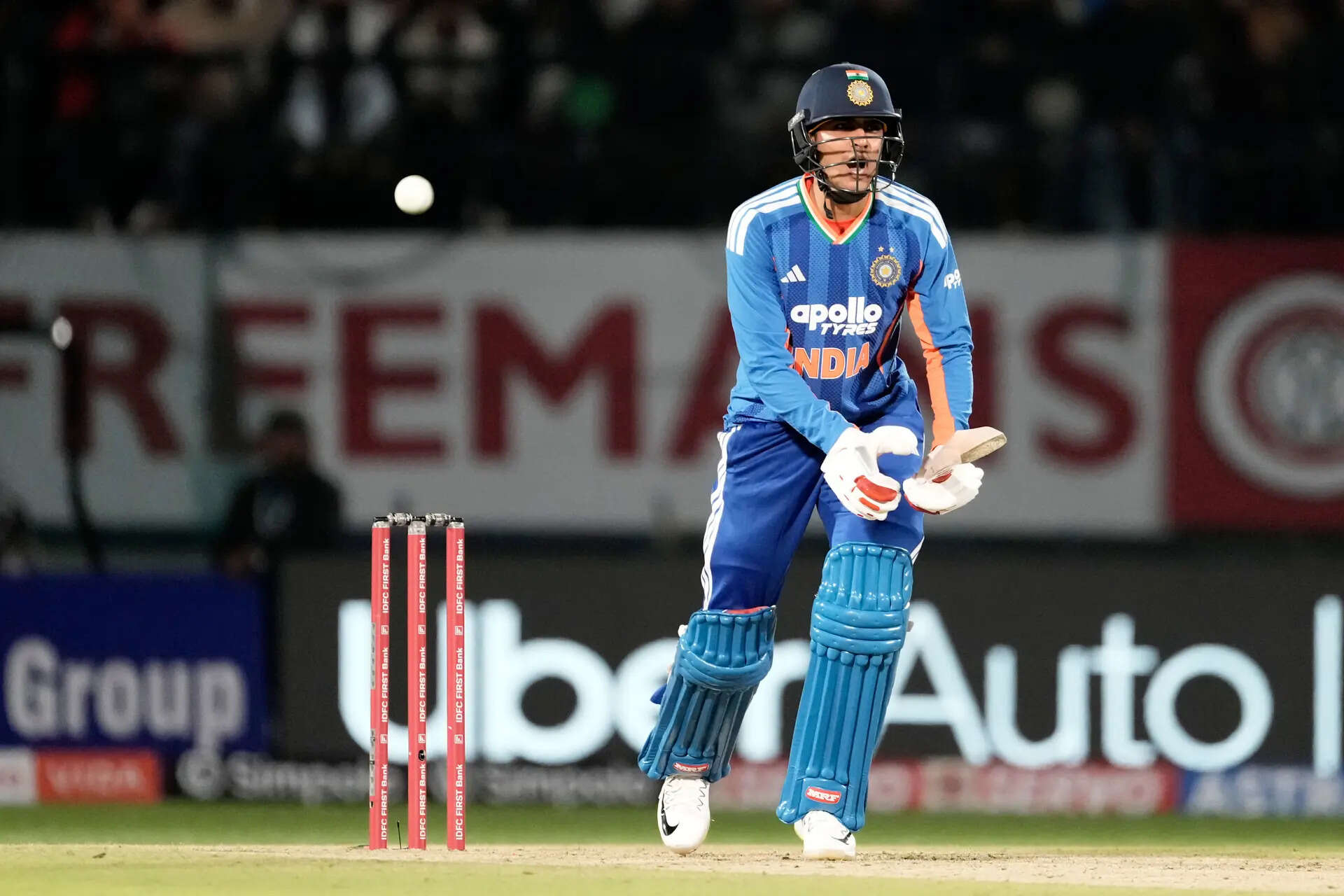
India’s Shubman Gill (AP Photo/Ashwini Bhatia)

He then addressed Gill’s role directly. “You can have someone like Shubman Gill play that sheet anchor role that India desperately need right now, so everyone else can play aggressively around him. India can still use the hyper aggressive batting template that has worked for them, while Gill bats at a 140 to 150 strike rate, which is where he thrives. It is similar to the role Virat Kohli played in the last T20 World Cup.The concerns, however, extend beyond Gill alone. India’s intent has also dipped due to Suryakumar’s prolonged lean patch. In 2025, the captain has scored just 213 runs from 20 matches at an average of 14.20 and a strike rate of 125.29. With both captain and vice-captain struggling for form, pressure has inevitably shifted on to the middle order.At the same interaction, former India all-rounder Irfan Pathan stressed that the phase of experimentation must now come to an end. “There has been a lot of talk about chopping and changing,” Pathan said. “I think the team management was trying to understand who can play different roles, but this is not the time to experiment. When the World Cup starts, it has to be very clear who is batting at what position.”That experimentation has been evident. In the last two T20I series against Australia and South Africa, India tried multiple options at No. 3, including Sanju Samson, Shivam Dube, Suryakumar Yadav, Tilak Varma and even Axar Patel.Pathan also did not hide his concern over Suryakumar’s form. “As a captain, you need to bat well and be in form going into a big tournament like the World Cup,” he said. “The concern is not just that he is not scoring runs, but that his strike rate is also going down. His strike rate is generally around 166, but over the last year it has come down to around 119.”Referring to Abhishek Sharma’s high risk approach at the top, Pathan said that such a style will inevitably lead to occasional early dismissals and that is acceptable. “He does not need to change,” Pathan said. “That is why he has been successful. But then the pressure comes on the middle order. When you have an in-form Suryakumar Yadav, it becomes a completely different game. Hopefully, he finds a way to stay a bit longer at the crease and get those runs before the World Cup.What Team India needs right now is certainty of roles. With the World Cup fast approaching, rediscovering tempo, fixing roles and getting their leaders back among the runs may matter far more than any tactical tweak.


Source link

IND vs SA: Umpire down! Sanju Samson’s rocket shot hits official – Watch | Cricket News


IND vs SA: Umpire down! Sanju Samson's rocket shot hits official – Watch
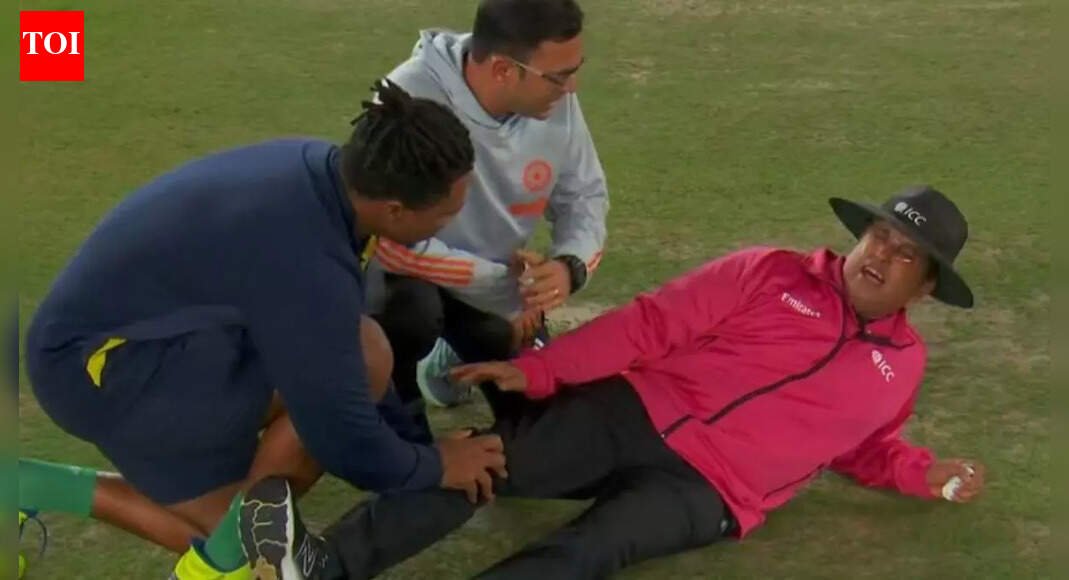
Umpire down in pain (Screengrab)

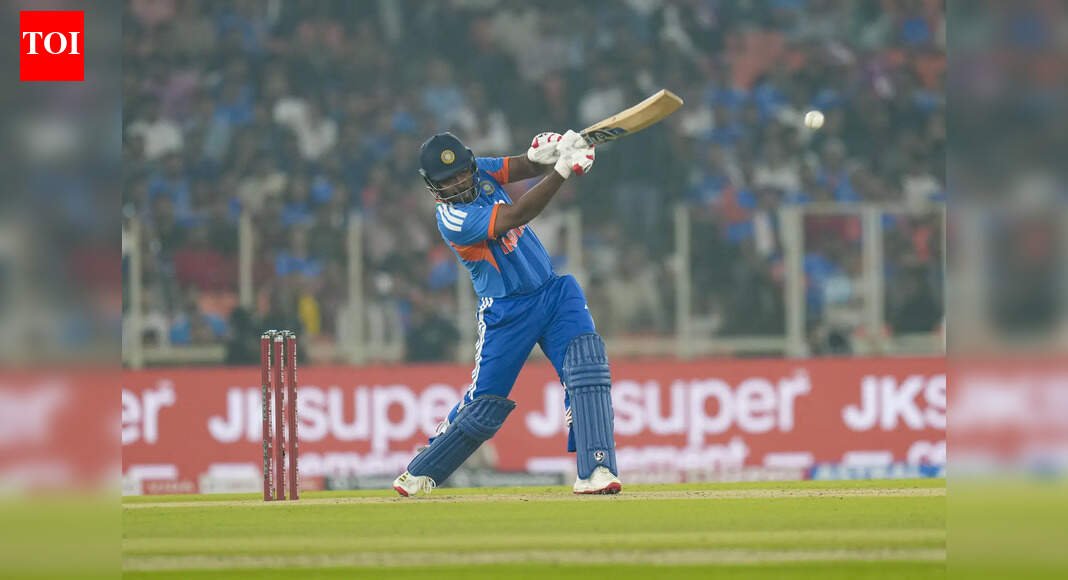
NEW DELHI: An unusual and worrying moment unfolded during the fifth T20I between India and South Africa when on-field umpire Rohan Pandit was struck by a powerful shot from Sanju Samson, forcing a brief pause in play. The incident occurred in the ninth over of India’s innings and left players and spectators concerned.The moment came on ball 8.4, bowled by South Africa’s Donovan Ferreira. Samson, in fine form, stepped back and hit a full delivery straight down the ground with force. Ferreira attempted to take the return catch, but the ball burst through his hands and deflected sharply towards the umpire standing behind the bowler. The ball struck Rohan Pandit on the knee, leaving him in visible pain.

Curious case! Why Ajit Agarkar & Co. continue to ignore Ishan Kishan

Pandit immediately walked away from his position before going down on the field as the ball trickled towards long-on. Medical staff quickly attended to the umpire. Watch:Players from both teams checked on his condition. Play was halted briefly to ensure he was fit to continue. Despite the initial pain and agony on his face, the magic spray worked as he continued.Before the interruption, India were cruising after South Africa chose to bowl first. At the time of the incident, India were 95 for 1 in 8.4 overs, scoring at nearly 11 runs per over. Samson was still on the crease with 36 off 20 balls, striking four boundaries and two sixes. Tilak Varma was also batting fluently on 21 off 11 balls after Abhishek Sharma was dismissed for a quick 34 off 21 deliveries.India had made full use of the Powerplay, racing to 67 runs in the first six overs. South Africa kept rotating their bowlers, but it couldn’t stop the strong start. Corbin Bosch had the only wicket so far.Coming into the match, India were already leading the five-match series 2-1. The hosts looked determined to press their advantage. The incident involving the umpire, however, became the talking point of the evening.


Source link

US markets today: Wall Street ticks up as AI shares stabilise; investors assess global cues


US markets today: Wall Street ticks up as AI shares stabilise; investors assess global cues

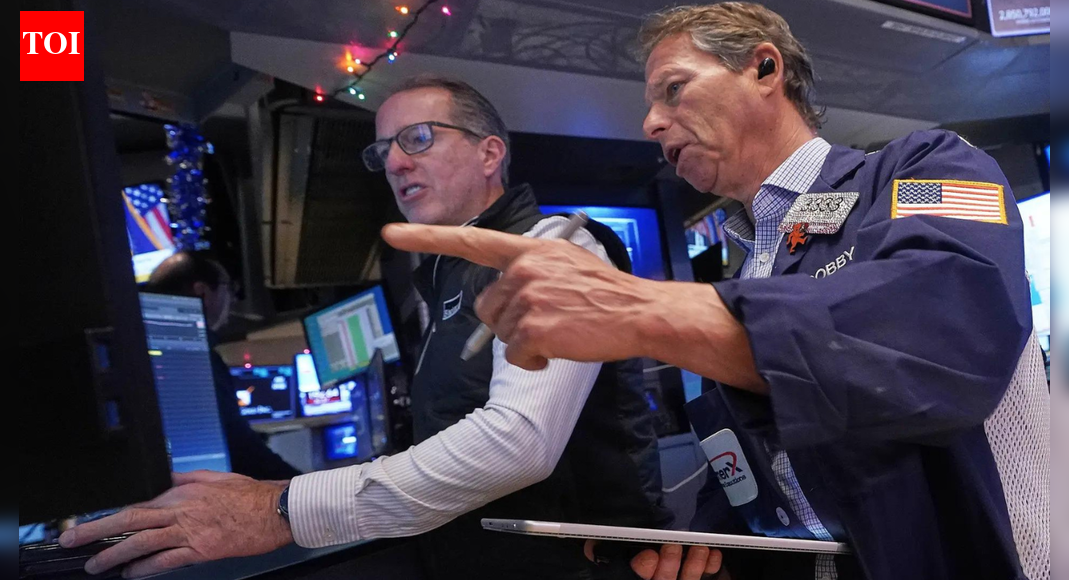
Wall Street opened higher on Friday as gains in artificial intelligence-linked stocks helped lift investor sentiment, even as markets digested a widely expected interest rate hike by the Bank of Japan.In early trade, the S&P 500 rose 0.5%, extending gains from the previous session though the index remained lower for the week. The Dow Jones Industrial Average added 256 points, or 0.5%, while the Nasdaq composite climbed 0.7%, led by advances in technology shares. Nvidia and other AI-related stocks moved higher after recent volatility, AP reported.Winnebago Industries surged 14% after posting quarterly profit and revenue that comfortably exceeded analysts’ expectations. In contrast, Nike shares slid more than 10%, with investors focused on the impact of tariffs despite what was otherwise a strong earnings performance. Deckers Outdoors, the owner of Ugg and Hoka brands, fell over 3% amid similar concerns over trade pressures.Oracle gained 4% after announcing that it, along with Silver Lake and MGX, had signed agreements to form a new US joint venture for TikTok. Each investor will hold a 15% stake, enabling the platform to continue operating in the US.Markets in Asia advanced after the Bank of Japan raised its benchmark interest rate by 0.25 percentage points to 0.75%, its highest level since 1995. The move was widely anticipated. Japan’s Nikkei 225 rose 1%, while the country’s 10-year government bond yield crossed 2% for the first time since 2006.“The Bank of Japan’s decision to raise interest rates at its meeting today was clearly signaled ahead of time and therefore came as no surprise,” Abhijit Surya of Capital Economics said.Asian stocks were further supported by optimism over potential US Federal Reserve rate cuts following softer-than-expected US inflation data. European markets were largely flat in midday trade.In commodities, US crude oil rose to $56.31 a barrel, while Brent crude edged up to $60.12. Bitcoin climbed nearly 4% to just under $88,000.


Source link