Breaking News
BJP won 2-0 in 2025 elections, can opposition bounce back in 2026? | India News


BJP won 2-0 in 2025 elections, can opposition bounce back in 2026?
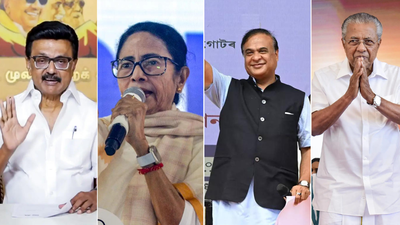
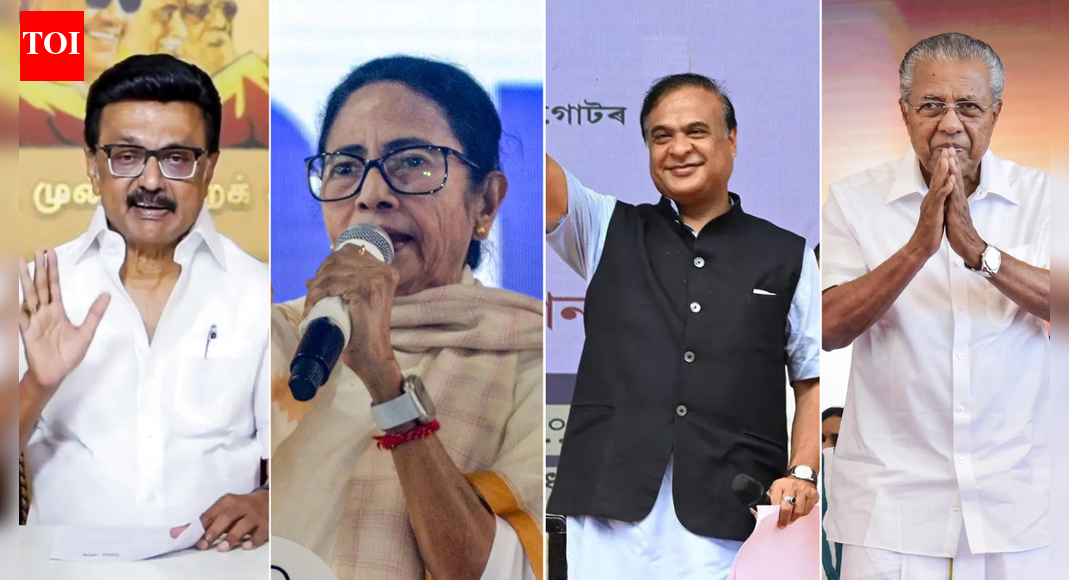
MK Stalin, Mamata Banerjee, Himanta Biswa Sarma and Pinarayi Vijayan (File photos)

NEW DELHI: The ruling NDA led by the BJP had a lot to cheer in 2025 with decisive victories in Delhi and Bihar – the two states where assembly elections were held this year. For the opposition, 2025 was a year of disappointments. While the Arvind Kejriwal-led AAP was defeated in Delhi, the Mahagathbandhan of Congress, Lalu Prasad’s RJD and the Left was decimated in Bihar. But 2026 could be an opportunity for the opposition to bounce back as four states and one Union Territory – West Bengal, Kerala, Tamil Nadu, Assam and Puducherry — will vote to choose their new assemblies. Except Assam, which is ruled by the BJP, the opposition has a dominant presence in the other three states.

‘There Is Only One Modi’: Jaishankar Says Leaders Define Nations, Not Ministers Or Individuals

With polls due between March and May 2026, parties have already begun calibrating strategies and sharpening their pitch to voters.
-

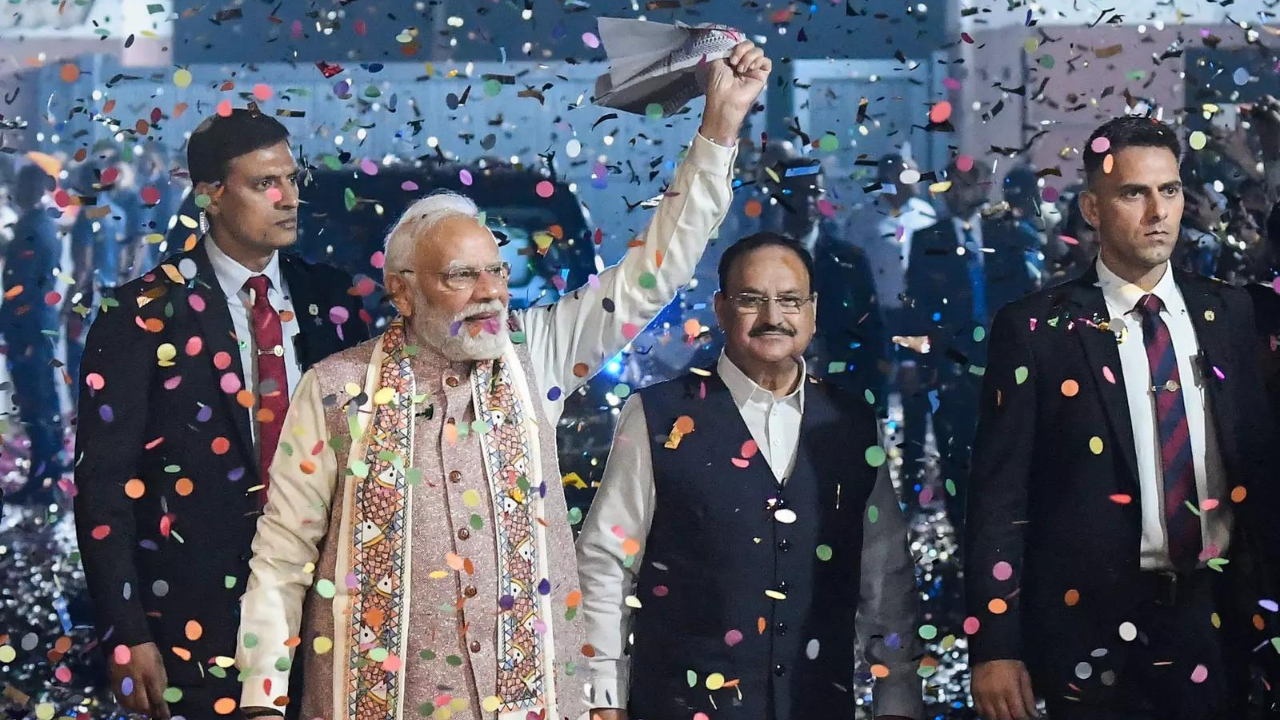
PM Modi after Bihar victory

In West Bengal, Mamata Banerjee’s Trinamool Congress will be defending its fortress as it seeks to hold off a renewed BJP push, while the Congress and Left will make another effort to recover lost political ground.In Kerala, the CPM-led LDF is eyeing an unprecedented third consecutive term — a feat unheard of in the state’s traditional pendulum-like politics.Tamil Nadu is preparing for another round of the Dravidian duel, with the DMK and AIADMK once again anchoring the state’s political battlefield.In Assam, the BJP-led NDA under Himanta Biswa Sarma will fight to hold the state even as the Congress looks to stage a revival.Meanwhile, in Puducherry, N Rangasamy’s AINRC–BJP coalition faces the challenge of holding together a fragile alliance against a DMK seeking to widen its footprint and a weakened Congress attempting a comeback.A key undercurrent across these contests is the Special Intensive Revision (SIR) of electoral rolls, extended to several poll-bound states including West Bengal, Tamil Nadu and Puducherry. The 2026 elections will therefore unfold on updated voter lists — a factor that could change a lot of things.

West Bengal

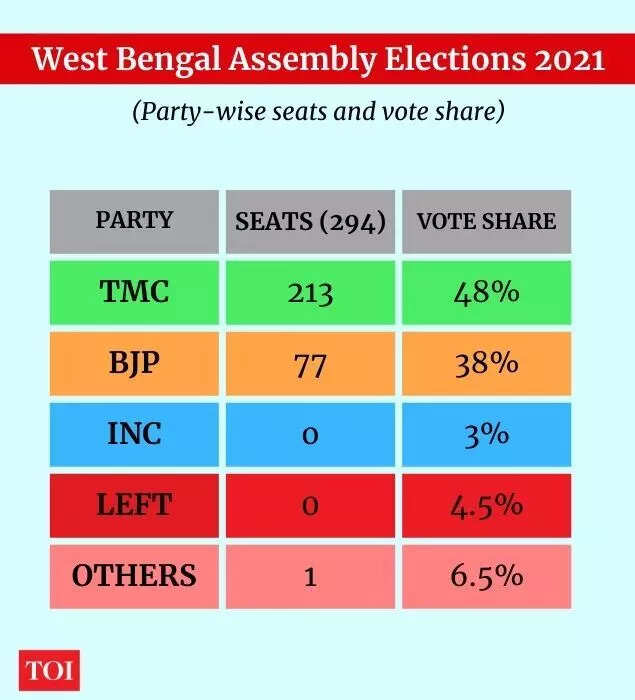
Buoyed by its sweeping win in the recent Bihar assembly elections, the BJP has made its ambitions clear: Bengal is the saffron party’s next battleground.Ahead of the 2026 polls, the BJP is pushing hard to turn momentum into seats. Meanwhile, the TMC, which won 213 of the 294 assembly seats in 2021 with roughly 48% vote share, is back in full campaign mode, defending a fortress it has held for over a decade. With the Congress party struggling to regain its footing, the stage is set for a high-stakes political showdown.
-

What’s at stake?

BJP’s rising influence

From a modest presence in 2016 with just 3 seats, the BJP surged to 77 seats and approximately 38% of the vote share in 2021. The 2026 elections will test whether this was a temporary surge or the beginning of a sustained challenge to the TMC’s dominance in Bengal.

TMC’s incumbency challenge

With 213+ seats and 48% vote share in 2021, Mamata Banerjee enters 2026 as the incumbent with the widest lead. She has already begun mobilisation and outreach, but the real challenge is holding this high ceiling in the face of anti-incumbency and a more aggressive BJP than before.

Congress fights for relevance

From being a dominant force pre-2011 to being almost wiped out in 2021, Congress is now battling for visibility. Adhir Ranjan Chowdhury’s removal and Subhankar Sarkar’s appointment hasn’t yet translated into a loud political message or campaign repositioning leaving Congress still searching for footing.

INDIA bloc?

With the future of the opposition’s INDIA bloc uncertain and Mamata Banerjee repeatedly hinting that TMC will contest Bengal alone, Congress risks being caught between two compulsions: aligning nationally versus confronting TMC locally.“Bengal is ours, we will fight here alone,” the West Bengal chief minister Mamata Banerjee has already declared.

SIR factor

Additionally, the 2026 elections will be conducted under a Special Intensive Revision of electoral rolls. Changes in voter registrations, particularly in minority-heavy or urban constituencies, could significantly impact the margins in key swing seats.

Tamil Nadu

Tamil Nadu is gearing up not only for another showdown between Dravida Munnetra Kazhagam (DMK) and All India Anna Dravida Munnetra Kazhagam (AIADMK), but also for a potentially game-changing third force.The entry of TVK under Vijay has made Tamil Nadu assembly elections in the state all the more interesting.
-

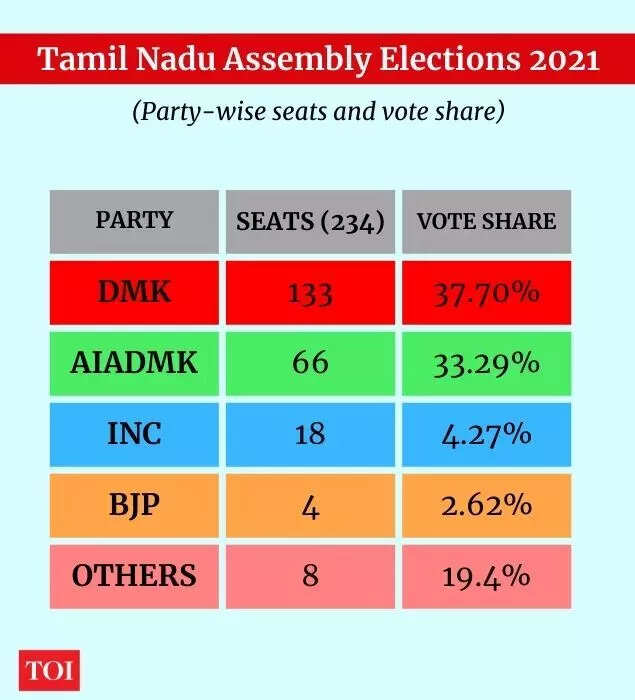
Tamil Nadu assembly elections 2021

What’s at stake?

DMK’s incumbency test

The ruling DMK enters 2026 from a position of strength, having secured 133 seats on its own in the previous assembly election. However, the party faces a tougher political landscape this time, with the AIADMK–BJP alliance regrouped and better aligned than in 2021. Tamil Nadu chief minister Stalin has already announced that the party will contest the state polls as part of the INDIA bloc, calling it an ideological partnership built on shared goals.The real test, however, lies in whether DMK can overcome anti-incumbency pressures, defend its welfare and governance record, and manage voter expectations on issues like jobs, NEET exemption and power tariffs.

AIADMK–BJP alliance

The 2026 Tamil Nadu Assembly election is a high-stakes battle for the All India Anna Dravida Munnetra Kazhagam (AIADMK), which is desperately looking for a comeback after two consecutive electoral defeats. The big question for 2026 is whether the renewed AIADMK–BJP partnership can translate into seats. In 2021, the AIADMK-led front won 75 seats, while the BJP remained a secondary force. However, together they remain the largest challenger bloc to the ruling DMK. Edappadi K. Palaniswami has already set the tone, vowing that the front will “shatter Stalin’s dream of winning 200 seats” and predicting that the alliance could cross 210.A key factor that complicates the opposition arithmetic is the entry of actor Vijay with his party, the Tamilaga Vettri Kazhagam (TVK), whose decision to contest alone threatens to split the anti-DMK vote.

TVK factor

The 2026 Tamil Nadu election is the crucial electoral debut for actor Vijay’s TVK, who has boldly declared the contest as a “TVK versus DMK” fight and positioned himself as the alternative to “Stalin uncle”. Vijay has massive youth following and has a potential surprise factor to disrupt the traditional bipolar contest. However, the tragic Karur stampede that claimed 41 lives during one of his pre-poll roadshows casts a significant negative shadow. The incident has been heavily leveraged by the opposition, forcing Vijay and the TVK to defend their competence and win public trust.

Assam

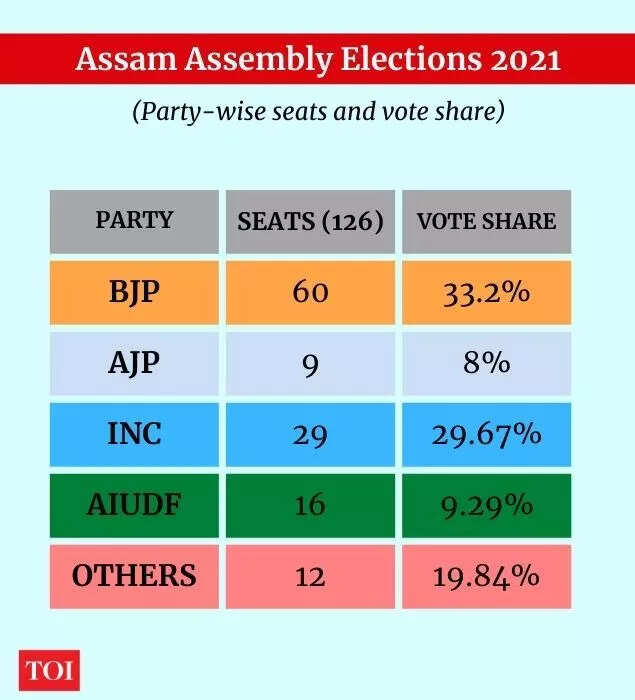
In Assam, the BJP-led NDA under the leadership of chief minister Himanta Biswa Sarma. who has become one of the party’s most prominent regional faces, will fight to hold the state, aiming to secure an unprecedented third consecutive term.
-

What’s at stake?

BJP’s regional dominance

Despite the 75 seats won in 2021, anti-incumbency remains a major underlying challenge. Chief minister Sarma, however, has set an aggressive target, confidently claiming the NDA is capable of winning “104 out of 126 seats”.

Congress’s revival test

The Congress, which won 50 seats in 2021, is desperate for a comeback, led by the newly appointed state chief, Gaurav Gogoi. The party is trying to leverage the “10-year anti-incumbency” against the BJP, with Gogoi stating, “After 10 years of BJP’s corrupt and authoritarian rule, the people of Assam want change.”This election is a personal test for Gogoi, who must prove he can translate his Lok Sabha victory into a wider assembly-level revival for the party.

AIUDF’s dilemma

Badruddin Ajmal’s AIUDF won 16 seats in 2021, performing strongly in Muslim-majority pockets. A breakup with Congress or a solo contest could split the opposition vote — benefiting BJP in triangular fights.

Kerala

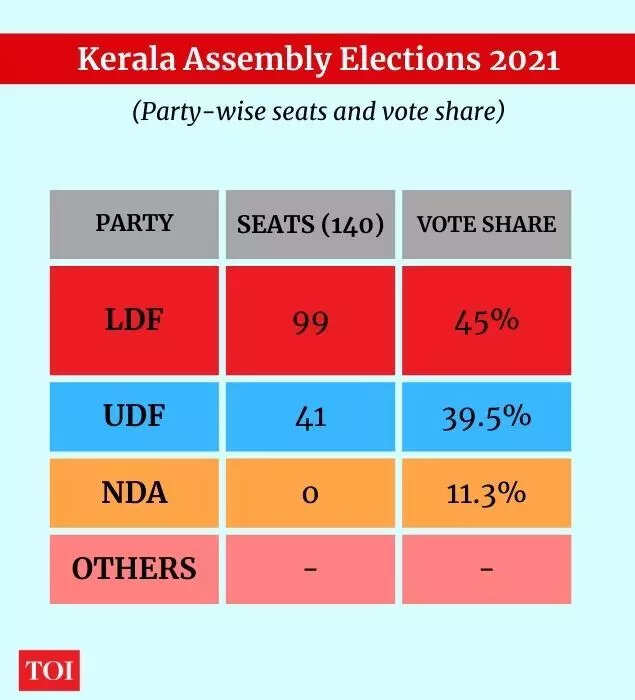
Kerala heads into 2026 with one of the rarest scenarios in its electoral history — a ruling front attempting to win a third consecutive term. The CPI(M)-led LDF broke the state’s alternating pattern in 2021, winning 99 of 140 seats while the Congress-led UDF slipped to 41, and the BJP once again failed to open its account.
-

Kerala assembly elections 2021

What’s at stake?

LDF’s third-term bid

The LDF has never won three consecutive assemblies in Kerala’s democratic history. For the CPI(M), which leads the front, this election is critical as Kerala remains the only major state where the Left is currently in power on its own strength. Chief minister Pinarayi Vijayan, who will again lead the front, is campaigning on the theme of “continuity for progress.” Senior CPI(M) leaders, like KN Balagopal, have publicly stated that “continuity was vital to maintain the momentum” of development and welfare policies. However, the LDF faces a significant anti-incumbency challenge, which the opposition is leveraging to counter the government’s claims of development.

UDF’s existential battle

UDF dropped from 47 seats in 2016 to 41 in 2021, still holding a sizable vote share but struggling to convert it. 2026 is the coalition’s best opportunity to regain ground if anti-incumbency builds. A weak result could push UDF further into inertia, shrinking the Congress footprint in another southern state.

BJP — still on the sidelines?

BJP has contested aggressively for two cycles but holds zero MLA seats in Kerala. If it breaks that barrier in 2026 — even with 1–3 wins — it changes the dynamics of the House. If it fails again, Kerala remains one of the last major states outside BJP’s elected footprint.

Puducherry

In Puducherry, N Rangasamy’s AINRC–BJP coalition faces the challenge of holding together a fragile alliance against a resurgent DMK seeking to widen its footprint and a weakened Congress attempting a comeback.

What’s at stake?

NDA’s fragile coalition

The ruling NDA is led by the All India NR Congress (AINRC) and BJP. In 2021, the AINRC won 10 seats and the BJP won 6 seats. This coalition is under immense pressure due to internal discord and anti-incumbency. The internal rift was brought to the forefront by the resignation of a lone Dalit minister AK Sai J Saravanan Kumar, on the decision of the high command.The move triggered strong reactions and exposed deeper fault lines within the coalition and the local BJP unit.

DMK’s attempt to expand

The DMK entered the 2021 Puducherry polls with limited ground presence but still emerged with 6 seats, overtaking the Congress to become the largest opposition party. For 2026, the main challenge for DMK would be to widen its footprint in the Union territory and convert influence into numbers.

Congress — survival, not dominance

Like in many other states, the Congress is fighting for survival in Puducherry too. Once the ruling party here, it has slipped to the margins since the 2021 election. For Congress, 2026 is not about winning power; it is about preventing irrelevance. A tally of 5–6 seats keeps it alive; anything below that accelerates decline. The grand old party must survive before it can compete.The Election Commission’s SIR of electoral rolls has already raised the pitch in these states, with the BJP strongly backing the exercise while the opposition accusing the poll body of helping the saffron party gain an advantage over its political opponents. 2026 is clearly all set for interesting electoral contests.


Source link

‘Not ready for responsibility’: RSS chief Mohan Bhagwat on live-in relationships and how many children to have — watch | India News


‘Not ready for responsibility’: RSS chief Mohan Bhagwat on live-in relationships and how many children to have — watch
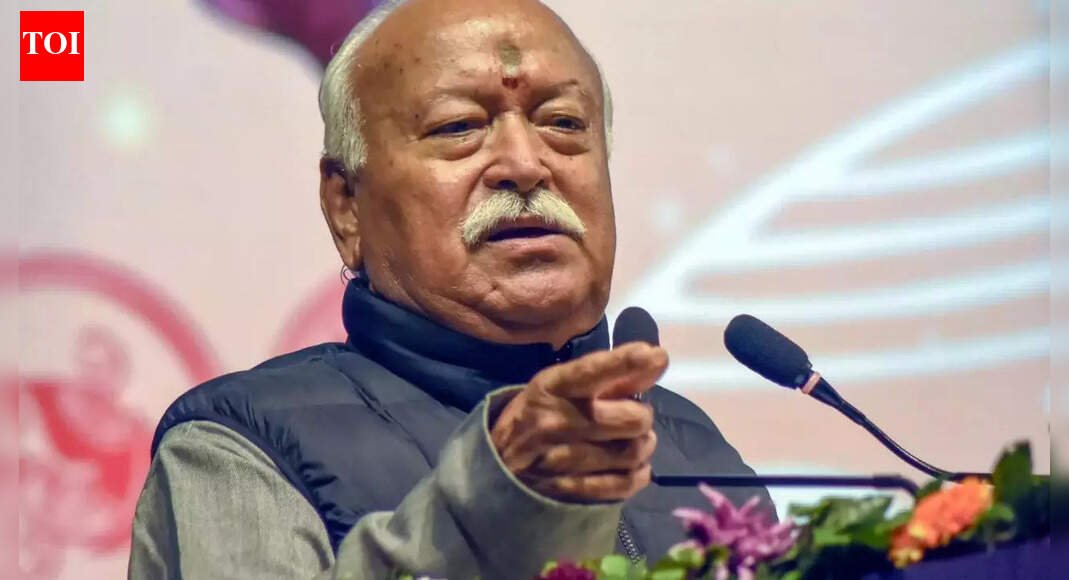
RSS chief Mohan Bhagwat in Kolkata on Sunday (ANI photo)

NEW DELHI: RSS chief Mohan Bhagwat on Sunday shared his views on live-in relationships while addressing a gathering in Kolkata. Speaking during the centenary celebrations of the Rashtriya Swayamsevak Sangh, Bhagwat said live-in relationships reflected an unwillingness to take responsibility. “You’re not ready to take responsibility. This isn’t right,” he told the audience.According to Bhagwat, those who do not wish to marry should choose a life of renunciation. “If you don’t want to get married, that’s fine. We can become sanyasis. But if you won’t even do that, and also won’t take responsibility, then how will things work?” he asked.Three children help ego managementBhagwat also spoke about how many children a couple should have. “The question of how many children a couple should have is a matter for the family, the bride and groom, and society. A formula cannot be given,” he said.However, Bhagwat said he had discussed with doctors, psychologists, and demographers, who said that marrying early between 19 and 25 years of age, and having three children, was beneficial for health.“I’ve gained some knowledge by talking to doctors, etc and they say that if marriage takes place early, between 19-25 years of age, and there are three children, then the health of the parents and children remains good,” Bhagwat said. He added that, according to psychologists, having three children also helps with ego management. “Psychologists say that having three children helps people learn ego management,” Bhagwat said.The RSS chief, however, also acknowledged that he was only sharing information he had received from others. “I am a preacher, unmarried. I don’t know anything about this matter,” Bhagwat said.


Source link

‘Might change name’: Congress taunts BJP over railways fare hike; slams increasing travel prices | India News


'Might change name': Congress taunts BJP over railways fare hike; slams increasing travel prices

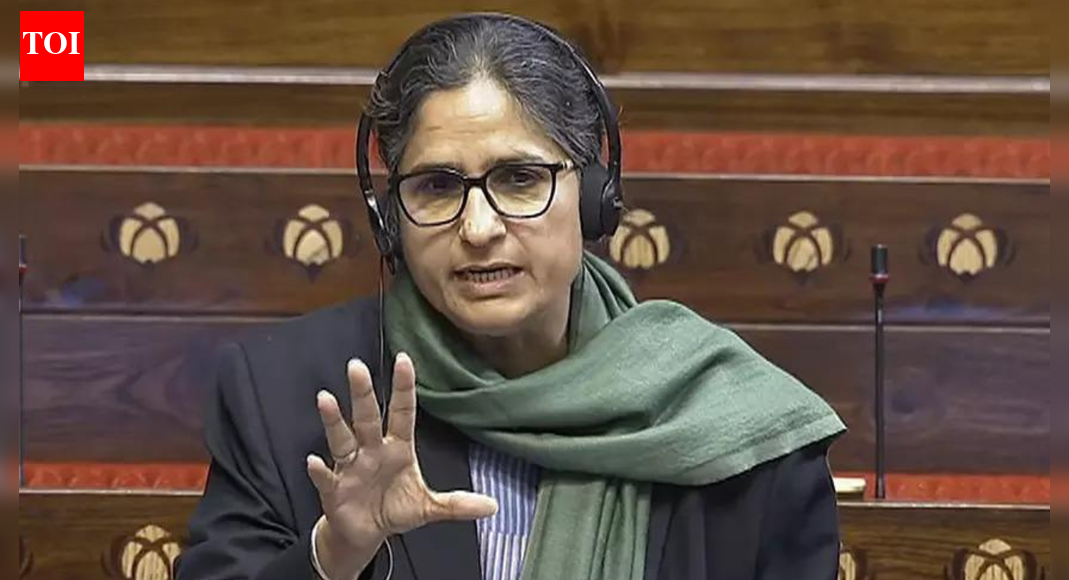
NEW DELHI: Congress MP Ranjeet Ranjan on Sunday criticised the Union government over the increase in railway fares, saying the Centre might just change the name of railways if asked the reason behind the move, claiming it would further burden the middle and lower middle class even before the Union budget is presented. Ranjan said the timing of the fare hike was particularly concerning. “The budget has not yet been announced, and the government has already started pushing people towards higher costs,” she said, alleging that the increase would significantly impact long-distance travellers.Referring to the revision, the Congress MP said, “They have increased Rs 10 per 500 km, so you have pushed people to pay Rs 100-200 more for long distance travel.” She added that train travel remained the primary mode of transport for middle- and lower middle-class families, who would now have to bear higher expenses.She also drew comparisons with rising costs in other modes of transport. “On one hand you’re collecting exorbitant tolls if we travel by road, airfares are increasing from Rs 5000 to Rs 30000 directly, in the festive season fairs skyrocket,” she said.Questioning the government’s messaging on affordability, she added, “On the other hand they were saying the middle class will also travel by plane, now that you have increased even the railways fair that middle class is thinking where should they go?”Accusing the government of placing undue financial pressure on citizens, Ranjan said, “The government is ripping people apart.” She also made a sarcastic remark on policy priorities, saying, “It would not be surprising if they change the name of the railway in the future and say the name has been changed, be happy with it and the increased fare.”The comments come amid broader opposition criticism over rising travel costs and inflationary pressures affecting household budgets.


Source link

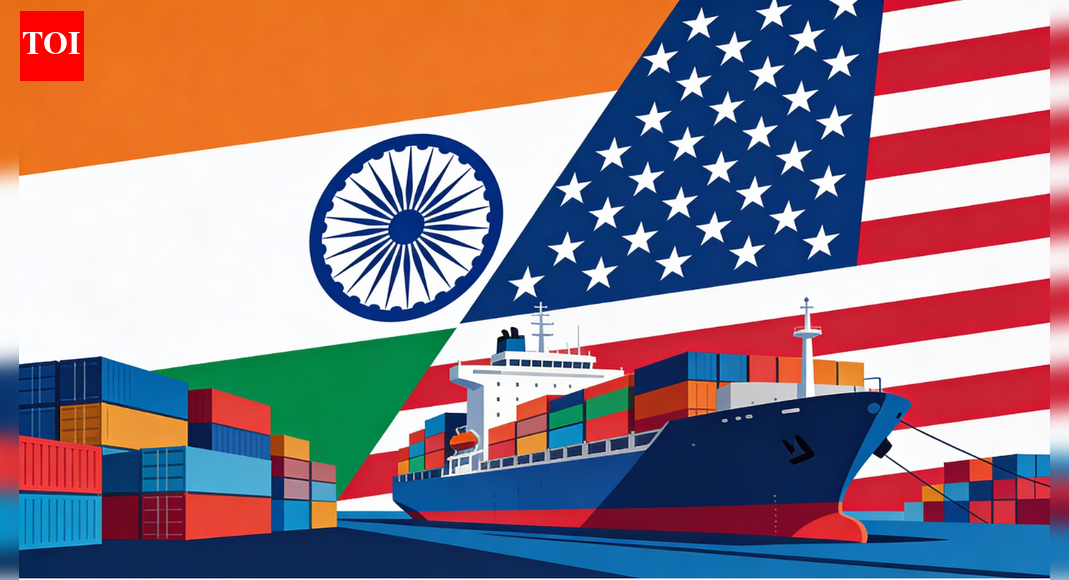
India-US trade: Exports rebound in November; supply-chain shifts and holiday restocking drive recovery, says GTRI


India-US trade: Exports rebound in November; supply-chain shifts and holiday restocking drive recovery, says GTRI

India’s exports to the US bounced back in November after two months of dip. The rebound was largely supported by supply-chain adjustments and pre-holiday season inventory restocking, according to the Global Trade Research Initiative (GTRI). This recovery came despite the US imposing 50 per cent tariffs on Indian goods since August.

November India-US trade snapshot amid higher tariffs

  • Exports to the US rose 22.61 per cent in November to $6.98 billion, reversing declines seen between May and September.
  • Smartphones (largest export item): Exports fell from $2.29 billion in May to $884.6 million in September, before rising to $1.8 billion.
  • Gems and jewellery: Slumped from $500.2 million in May to $202.8 million in September, then rebounded to $406.2 million.
  • Machinery and mechanical appliances: Declined to $516.8 million in September, before nearly returning to peak levels at $614.6 million in November.
  • Pharmaceuticals: Shipments rose to $669.2 million in November, but remained below May levels.
  • Mineral fuels and oils (tariff-exempt): Fell from $291.5 million in May to $251.5 million in September, before climbing to $274.3 million.

GTRI said supply-chain realignments and pre-holiday inventory restocking, especially in electronics and machinery, supported shipments, but stressed that the rebound reflects adaptation to a harsher tariff regime, leaving India’s export momentum to the US fragile in the months ahead.GTRI said the rebound came after a sharp fall in exports earlier in the year, triggered by uncertainty surrounding impending tariff hikes. GTRI Founder Ajay Srivastava said US buyers initially delayed orders and ran down inventories. “Once the higher tariffs became certain, exporters and US buyers began adjusting, absorbing part of the cost, renegotiating prices, and shifting toward less-affected or hard-to-substitute products,” he said.However, the think tank also warned that this recovery might not last. They claimed that it was more about adjusting to tougher tariffs rather than a permanent improvement. The think tank also added that businesses were using short-term strategies to cope with the new trade environment.


Source link

‘Confusion at state level’: Mallikarjun Kharge on Karnataka CM row; defends Cong high command | India News


'Confusion at state level': Mallikarjun Kharge on Karnataka CM row; defends Cong high command
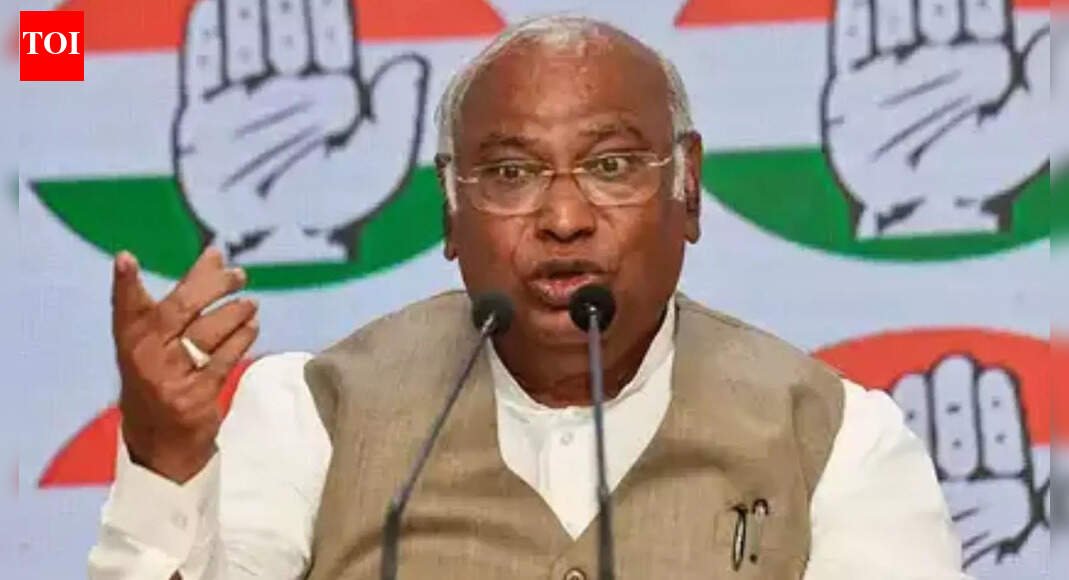
Mallikarjun Kharge (File photo)

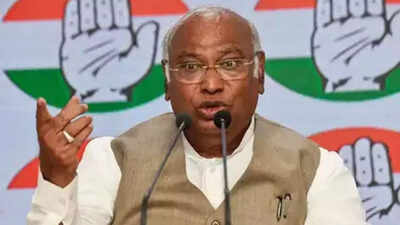
NEW DELHI: Congress president Mallikarjun Kharge on Sunday defended the party’s high command amid the ongoing leadership issue in Karnataka, saying the “confusion” is at the local level.“The high command hasn’t created any confusion. The confusion exists at the local level. Is it right to put the blame on the high command?” he said while speaking to reporters in Kalaburagi in Karnataka, his home state.Kharge called on the Congress’ local leaders to take “ownership” of the internal disputes instead of blaming the high command.The veteran politician also cautioned leaders against claiming credit for the party’s electoral successes.“Everyone has built the party. It’s not the effort of any one individual. Congress has been built by party workers. Congress workers supported us,” he stated, without naming anyone.His remarks come amid the ongoing power tussle in Karnataka between chief minister Siddaramaiah and his deputy, DK Shivakumar, who also heads the Congress’ state unit.It has been widely reported that after the Congress won the May 2023 Karnataka assembly elections—ousting its arch-rival BJP from power—the high command had promised to make Shivakumar chief minister for the second half of the five-year term, while opting for veteran Siddaramaiah initially.Under Siddaramaiah, Karnataka’s Congress government completed the first 2.5 years of its term on November 20.The chief minister on Friday expressed confidence that the party leadership would back him to complete his full five-year term.(With PTI inputs)


Source link

Alia Bhatt wedding saree: Alia Bhatt finally shares the story behind her ‘chai-dipped white’ Sabyasachi wedding saree |


Alia Bhatt’s wedding to Ranbir Kapoor featured a personal, understated ivory organza saree by Sabyasachi, prioritizing comfort and authenticity over grandiosity. The “chai-dipped white” hue and subtle personal touches like “Mrs Hipster” stitched onto the train made the look memorable and relatable, reflecting her belief in dressing for oneself.

When Alia Bhatt married Ranbir Kapoor on April 14, 2022, she didn’t make noise about it. No grand venue. No dramatic bridal entry. Just a quiet wedding at their Mumbai home, Vastu. And a bridal look that felt just as personal.Instead of the usual red lehenga, Alia chose an ivory organza saree by Sabyasachi Mukherjee. Soft, light, and almost understated. At the time, it surprised people. But looking back, it made complete sense.

Alia Bhatt’s Personal November Diary Sets Social Media On Fire

That saree went on to become one of the most talked-about celebrity bridal looks in recent memory. Not because it was loud. But because it felt honest.

43 (54)

Recently, almost three years later, and as a mother, Alia has opened up about what really went into that choice in a candid conversation with Vogue.And it turns out, the decision was simple.

Why a saree felt right, not a lehenga

In a video shared by Vogue on December 18 as part of its Life In Looks series, Alia looked back at her fashion journey. From her early, slightly preppy phase to that now-iconic wedding saree.When Sabyasachi asked her what she wanted to wear during their first Zoom call, she didn’t hesitate. She told him she wanted comfort. And she wanted a saree.Alia has always said she feels most herself in a saree. And on her wedding day, she didn’t want to feel weighed down by layers or expectations. She wanted to move easily, breathe easily, and feel like herself.So that became the starting point. Comfort first. Everything else later.

How ‘chai-dipped white’ was born

Once the silhouette was decided, the next question was colour. Alia told Sabyasachi she was thinking white and gold. Something soft. Nothing harsh.That’s when he suggested “chai-dipped white.”Not stark ivory. Not beige. Something warmer. Something lived-in. According to Alia, he also suggested organza because it’s light, simple, and naturally elegant. You don’t have to force drama with it. It creates its own.

43 (55)

And that was the whole idea. Let the fabric fall. Let the embroidery breathe. Don’t overload it.The final saree was minimal but rich. Subtle embroidery, gentle sheen, and a drape that looked effortless rather than styled within an inch of its life.

“A saree is the most comfortable thing you can wear”

Alia has said this before, and she stands by it. In an earlier interview, she explained that a saree, for her, is the most comfortable garment there is. Which is exactly why she chose one for her wedding.For Alia, bridal dressing was never about ticking boxes. It wasn’t about what a bride should wear. It was about what felt right in that moment.She’s also spoken about how women should feel free to celebrate whichever version of themselves feels strongest. Some days it’s a saree. Some days it’s a pantsuit. Some days it’s a gown. And all of it is valid.That freedom is something she genuinely believes in.

The little details that made it personal

What really set Alia’s wedding saree apart were the quiet, personal touches. Sabyasachi customised the saree with a long train that included her wedding date.There was also a detail that most people didn’t notice right away. A coat-style element with the words “Mrs Hipster” stitched onto it. An inside joke between Alia and Ranbir. Just for them.It wasn’t meant to trend. It wasn’t meant for Instagram. And that’s what made it special.Her jewellery followed the same thought process. All uncut diamonds from Sabyasachi’s collection. A statement necklace, bold earrings, and a maang tikka. Traditional, but not heavy.

Keeping the beauty look easy and real

Alia didn’t try to transform herself into a bride she didn’t recognise. Her makeup stayed soft. Fresh skin, a hint of blush, nude lips, and lightly defined eyes. Mascara, not drama.Her hair was worn loose in gentle waves. No stiff buns. No heavy accessories.Everything about the look felt relaxed. Like she could laugh, move, and actually enjoy her day.Nothing felt forced. Nothing felt performative. And maybe that’s why it still holds up.Alia Bhatt’s wedding saree wasn’t just a fashion moment. It was a reminder that sometimes, the most memorable choices are the quiet ones. When you stop dressing for expectations and start dressing for yourself, it shows.


Source link

IND-W vs SL-W 2025, T20I series: Broadcast, Live Streaming details – When and where to watch in India, USA, Canada and Sri Lanka


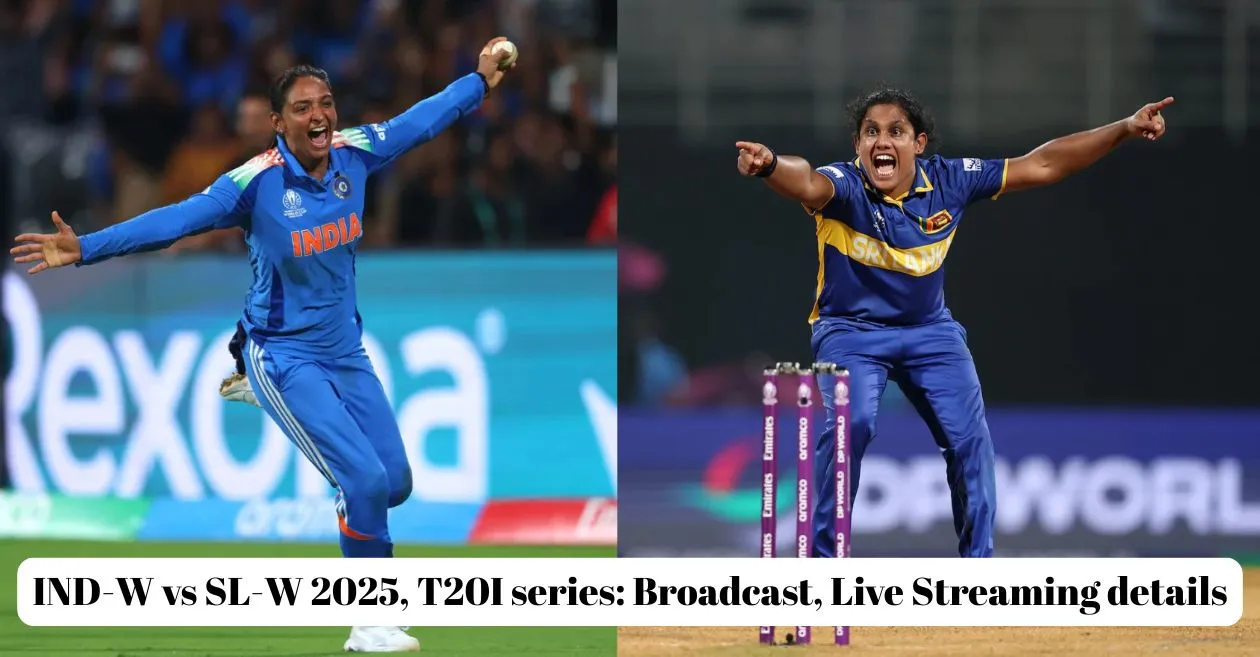
India Women and Sri Lanka Women are set to kick off their T20I series at the ACA-VDCA Cricket Stadium in Visakhapatnam, with both sides eager to begin on a winning note. After a strong year across formats, India Women, led by Harmanpreet Kaur, will look to fine-tune their combinations ahead of a packed 2025 season.

The hosts boast a formidable top order featuring Smriti Mandhana, Shafali Verma, and Jemimah Rodrigues, capable of setting the pace early. With seasoned all-rounders Deepti Sharma and Sneh Rana providing solidity in the middle, India’s balance looks impressive. Behind the stumps, Richa Ghosh adds firepower, while Renuka Singh Thakur will spearhead the bowling attack with her sharp new-ball bursts.

Sri Lanka Women, captained by the experienced Chamari Athapaththu, will rely heavily on her all-round brilliance to challenge the hosts. The visitors have shown steady improvement in recent months, with Harshitha Samarawickrama and Kavisha Dilhari forming the backbone of their batting lineup. Inoka Ranaweera’s spin prowess remains crucial, especially against India’s aggressive batters. With both teams’ combining youth and experience, the series opener promises competitive cricket and plenty of individual talent on display as fans await an exciting contest under the lights in Visakhapatnam.

Sri Lanka Women tour of India 2025, T20I series fixtures

Match Venue Date Time (GMT) Time (IST)
1st T20I ACA-VDCA Cricket Stadium, Visakhapatnam Dec 21, 2025 13:30 GMT 7:00 PM IST
2nd T20I ACA-VDCA Cricket Stadium, Visakhapatnam Dec 23, 2025 13:30 GMT 7:00 PM IST
3rd T20I Greenfield International Stadium, Thiruvananthapuram Dec 26, 2025 13:30 GMT 7:00 PM IST
4th T20I Greenfield International Stadium, Thiruvananthapuram Dec 28, 2025 13:30 GMT 7:00 PM IST
5th T20I Greenfield International Stadium, Thiruvananthapuram Dec 30, 2025 13:30 GMT 7:00 PM IST

Also READ: Shafali Verma reveals Team India’s next big goal after their World Cup triumph

Squads:

India: Harmanpreet Kaur (c), Smriti Mandhana (vc), Deepti Sharma, Sneh Rana, Jemimah Rodrigues, Shafali Verma, Harleen Deol, Amanjot Kaur, Arundhati Reddy, Kranti Gaud, Renuka Singh Thakur, Richa Ghosh (wk), G Kamalini (wk), Sree Charani, Vaishnavi Sharma.

Sri Lanka: Chamari Athapaththu (c), Hasini Perera, Vishmi Gunaratne, Harshitha Samarawickrama, Nilakshika De Silva, Kavisha Dilhari, Imesha Dulani, Kaushini Nuthyangana (wk), Malsha Shehani, Inoka Ranaweera, Shashini Gimhani, Nimesha Madushani, Kawya Kavindi, Rashmika Sewwandi, Malki Madara.

Broadcast and Live streaming details:

Also READ: Smriti Mandhana’s remarks on ‘feeling low’ returns after her wedding setback with Palash Muchhal

This article was first published at WomenCricket.com, a Cricket Times company.


Source link

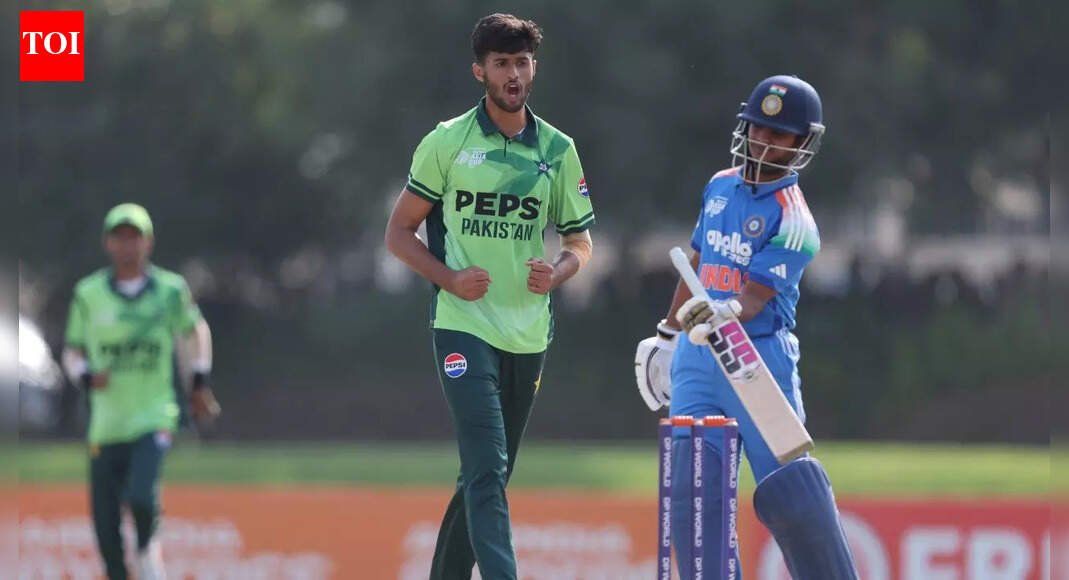
Heated scenes in IND vs PAK final! Ayush Mhatre confronts Pakistan bowler – Watch


Heated scenes in IND vs PAK final! Ayush Mhatre confronts Pakistan bowler – Watch
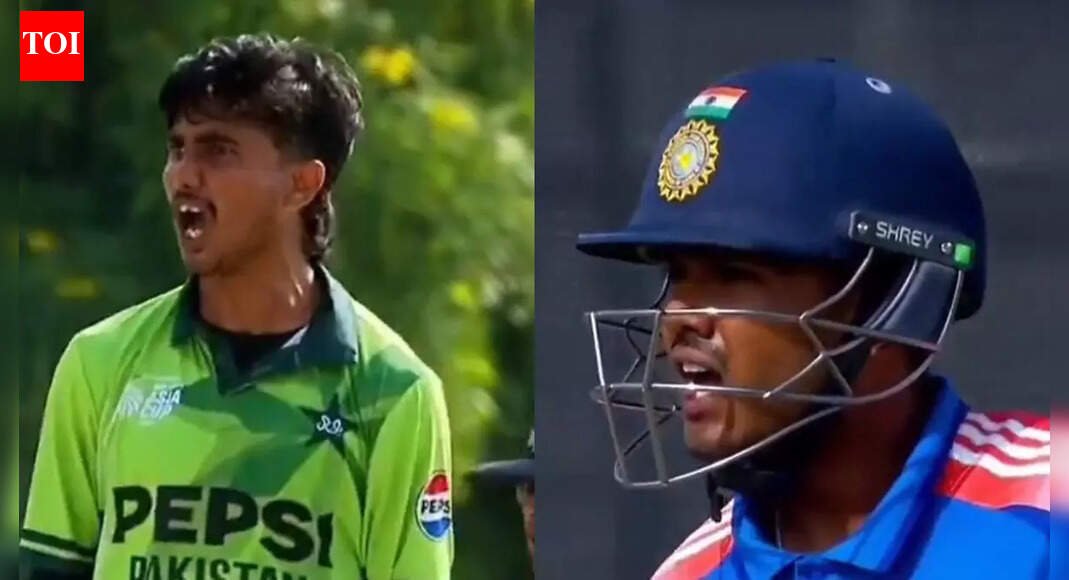
Ayush Mhatre confronts Pakistan bowler (Screengrab)

The U19 Asia Cup 2025 final between India and Pakistan lived up to its fiery reputation on Sunday in Dubai. Things heated up even more after a confrontation involving Indian captain Ayush Mhatre and a Pakistan bowler.The fans witnessed the final in a packed stadium at the ICC Academy Ground.

Sam Curran: ‘People like it, people hate it, if you’re a good team, you don’t need an Impact Player’

Pakistan had earlier put India under huge pressure by scoring a massive 347 for eight in their 50 overs. Chasing such a big total in a final was never going to be easy, and India needed a strong start from their openers.However, the plan fell apart early. In just the third over of the chase, Ayush Mhatre was dismissed. The Indian skipper managed only two runs from seven balls and once again struggled with form. He tried to attack Pakistan pacer Ali Raza but ended up hitting the ball straight to the fielder at mid-off.What followed caught everyone’s attention. As Mhatre started walking back to the pavilion, some Pakistan players celebrated aggressively.This led to a verbal exchange between the two sides. Watch:Umpires and players stepped in quickly to calm things down.For Mhatre, the tournament has been disappointing with the bat. Although he guided India to the final as captain, he could score only 65 runs in five matches.Earlier in the match, Pakistan batter Sameer Minhas delivered a stunning performance. He played a brilliant knock of 172 runs off 119 balls. Thanks to his effort, Pakistan posted a huge total that put India under pressure right away.India entered the final hoping to win their seventh U19 Asia Cup title. But after losing their captain early and failing to build partnerships, the chase slipped further away. At the time of reporting, India appeared set for a heavy defeat against their arch-rivals.


Source link

U19 Asia Cup: India fold for 156; Pakistan win final by 191 runs to lift trophy | Cricket News


U19 Asia Cup: India fold for 156; Pakistan win final by 191 runs to lift trophy

NEW DELHI: It looked as if India did not come at all to the ground while chasing a mammoth target of 348 against Pakistan in the Under-19 Asia Cup final in Dubai on Sunday, as the Boys-in-Blue were dismissed for a mere 156 in just 26.2 overs to hand Pakistan a comfortable victory by 191 runs.With the thumping win, Pakistan have their first outright win in the Men’s U-19 Asia Cup and first since being joint-winners with India in 2013. With a mountain of 348 runs to climb, India needed a strong start by the openers. India made a promising start, collecting 32 runs off the first two overs. But the innings unravelled quickly, as they were reduced to 49-3 in 4.1 overs with both openers Ayush Mhatre, Vaibhav Sooryavanshi, and number 3 Aaron George, back in the hut cheaply.India needed a miracle from there, but today it wasn’t meant to be, as wickets kept falling in regular intervals and there was no partnership stitched. The highest partnership of the Indian innings came for the last wicket, 36 off 18 balls between Deepesh Devendran and Kishan Singh.Pakistan bowlers didn’t give away easy runs and bowled tight lines from the beginning. Fast bowler Ali Raza took 4 wickets, including those of Ayush Mhatre, and Vaibhav Sooryavanshi. While Mohammad Sayyam, Abdul Subhan, Huzaifa Ahsan took 2 wickets each. Earlier, Pakistan opener Sameer Minhas once again gave a glimpse into his precocious talent, striking a brilliant century — his second in the tournament — as Pakistan made a steep 347 for 8 in an engrossing 50-over men’s U19 Asia Cup final here on Sunday. Minhas, one of the standout performers for his side in the event, blazed to 172 off 113 deliveries as he carried the aspirations of his side, which lost the group match to the arch-foes by 90 runs at the same venue. Pakistan, coming into the final on the back of a clinical eight-wicket semifinal win against last edition champions Bangladesh, did not let India, who chose to bowl, settle down. Minhas, whose innings was studded with 17 boundaries and nine sixes, brought up his century off 71 balls with a four in the 29th over off Devendran. This was Minhas’ second hundred in the competition having cracked an unbeaten 177 against Malaysia in the opening group match.Pakistan’s Sameer Minhas won the Player-of-the-Match and also Player-of-the-Series award.


Source link

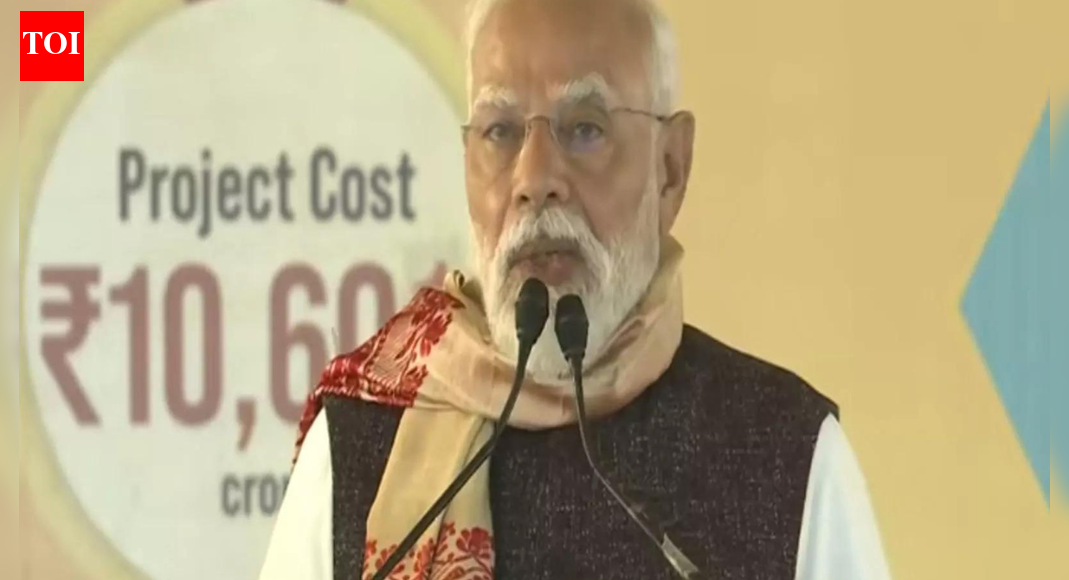
PM unveils Rs 10,601-cr fertiliser plant in Assam, unit to be commissioned by 2030


PM unveils Rs 10,601-cr fertiliser plant in Assam, unit to be commissioned by 2030
PM Modi performs bhoomi pujan for Rs 10,600 cr fertiliser plant in Assam

NAMRUP: Prime Minister Narendra Modi on Sunday laid the foundation stone of a Rs 10,601-crore brownfield ammonia-urea plant in Dibrugarh district of Assam, and asserted that it would usher in a new chapter of industrial progress in the region.The facility – Assam Valley Fertiliser and Chemical Company Ltd (AVFCCL) – will have an annual urea production capacity of 12.7 lakh metric tonnes and the project is scheduled for commissioning in 2030.The PM, on the last day of his two-day Assam visit, laid the foundation stone of the plant here, located within the existing premises of the Brahmaputra Valley Fertiliser Corp Ltd (BVFCL).After unveiling the project, Modi addressed a public rally, where he criticised the Congress for allegedly not modernising technology at fertiliser plants, and not doing enough to protect the interests of the farmer community.Noting that it is a historic day for Assam and the entire northeast, he said the long-awaited dream of Namrup and Dibrugarh has been fulfilled, as a new chapter of industrial progress begins in the region.“Around Rs 11,000 crore will be invested in the fertiliser project, which will produce more than 12 lakh metric tonnes of fertiliser annually. With production taking place locally, supply will be faster and logistic costs will be reduced,” the PM said.Emphasising that the Namrup plant will generate thousands of new opportunities for recruitment and self-employment, he said that associated work such as repair, supply and other related activities will also provide jobs to the youth.“The Namrup fertiliser plant in Assam will become the epitome of the country’s industrial growth. It is sad that the Congress did not make efforts to modernise the plant, and find solutions to problems faced by farmers,” he said.He said that Namrup had long been a centre of fertiliser production, and at one time, the fertiliser produced here strengthened the fields of the northeast and supported farmers’ crops.“Even when fertiliser supply was a challenge in many parts of the country, Namrup remained a source of hope for farmers. However, the technology of the old plants became outdated over time and the Congress government paid no attention,” Modi alleged.As a result, several units of the Namrup facility were “shut down, leaving farmers across the northeast distressed”, and their incomes hurt, he said.“Among various agricultural welfare initiatives, it is essential to ensure a continuous supply of fertiliser to our farmers. This urea factory will fulfill that need,” the Prime Minister said.Modi said India will progress only if farmers prosper, and the BJP government has introduced several schemes to uplift them.“Many fertiliser factories were closed during the Congress rule, but when we came to power, the BJP government established several new plants throughout the country,” he said.The PM also said that the Centre’s palm oil mission will make the northeast self-sufficient in edible oil, and increase farmers’ income in the coming days.Highlighting several farmer-centric measures, he said that urea output in the country has been increased to 306 lakh metric tonnes from 225 lakh metric tonnes in 2014.“India needs 380 lakh metric tonnes annually. We are moving towards eliminating this gap. The fertiliser that we import, we give subsidies on it so that our farmers do not feel the burden,” Modi said.He, however, cautioned farmers against spraying urea uncontrollably to get higher yields, as it affects the soil quality.“We need to protect our mother earth. If we care and protect it, only then will it give us the fruits,” Modi said.“Funds are being directly transferred to bank accounts so that farmers do not have to wander for loans. So far, around Rs 4 lakh crore has been transferred to farmers’ accounts under the PM Kisan Samman Nidhi,” the PM said.Modi said that earlier, farmers had to wait in long queues for urea, with police personnel often deployed at distribution centres, who sometimes resorted to lathicharge to maintain order.“What the Congress government neglected, our government is committed to rebuilding with full dedication,” he asserted.In July this year, AVFCCL was incorporated at Namrup in Dibrugarh. The project was approved by the Union Cabinet in March this year.AVFCCL is a joint venture among the Assam government, Oil India, National Fertilisers Ltd (NFL), Hindustan Urvarak & Rasayan Ltd (HURL) and BVFCL.“The AVFCCL Namrup ammonia-urea project is being established as a modern, energy-efficient, world-class fertiliser complex with an annual urea production capacity of 12.7 lakh metric tonnes, at an estimated investment of Rs 10,601 crore,” the company said in a statement.It said this upcoming facility will play a pivotal role in meeting the fertiliser requirement of Assam, the northeast region, West Bengal, Bihar, Jharkhand and eastern Uttar Pradesh.“Beyond fertiliser security, the project is expected to act as a major catalyst for industrial growth, employment generation and regional economic development, creating hundreds of direct jobs and thousands of indirect employment opportunities,” AVFCCL said.


Source link