Breaking News
Karnataka ‘honour killing’: Pregnant woman ‘beaten to death’ over inter-caste marriage; 3 arrested | Hubballi News


Karnataka ‘honour killing’: Pregnant woman 'beaten to death' over inter-caste marriage; 3 arrested

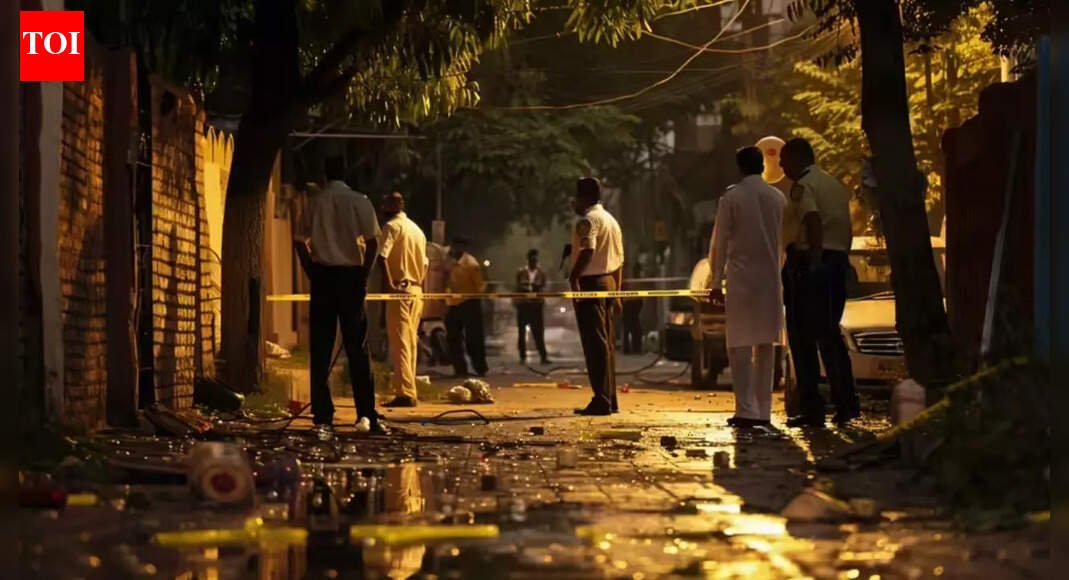
HUBBALLI: A 20-year-old woman, Manya Patil, succumbed to her injuries after being assaulted in an alleged honour killing in Inam Veerapur village, Dharwad, police said on Monday.According to Dharwad SP Gunjan Arya, the assault occurred around 6:30pm over inter-caste marriage. “A lady named Manya, around 20 years of age, succumbed to the injuries. Allegedly, three people have committed the assault. We are still enquiring,” the SP said.The police official added that Manya was struck with a pipe during the attack.

Heartbreak, divorce & deadly crimes | Dark Truth Of Failed Marriages | Ft. Anand Handa

In addition to the victim, three others sustained injuries, including her mother-in-law, father-in-law, and a sister.“The accused who have been arrested are Prakash, Veeran, and Arun,” SP confirmed.According to police, the deceased woman had married a man from a different caste from her village in May, despite opposition from her family, and the couple were living in Haveri, fearing for their lives. They had returned to the village earlier this month.The woman’s family members allegedly tried to attack her husband and father-in-law on Sunday, while they were at their agricultural field, but they escaped. They then barged into the victim’s house and attacked her, another woman and a man there.The six-month pregnant woman was rushed to the hospital with severe injuries, where she breathed her last.The investigation is ongoing, and authorities said they would continue to gather evidence to conclude the case.(With agency inputs)


Source link

SHANTI Act: US calls it ‘step towards stronger energy security partnership’ — why it matters | India News


SHANTI Act: US calls it 'step towards stronger energy security partnership' — why it matters

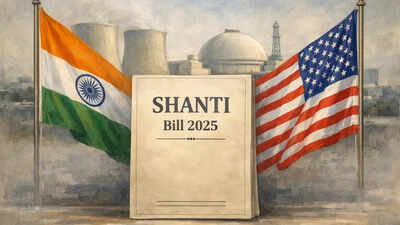
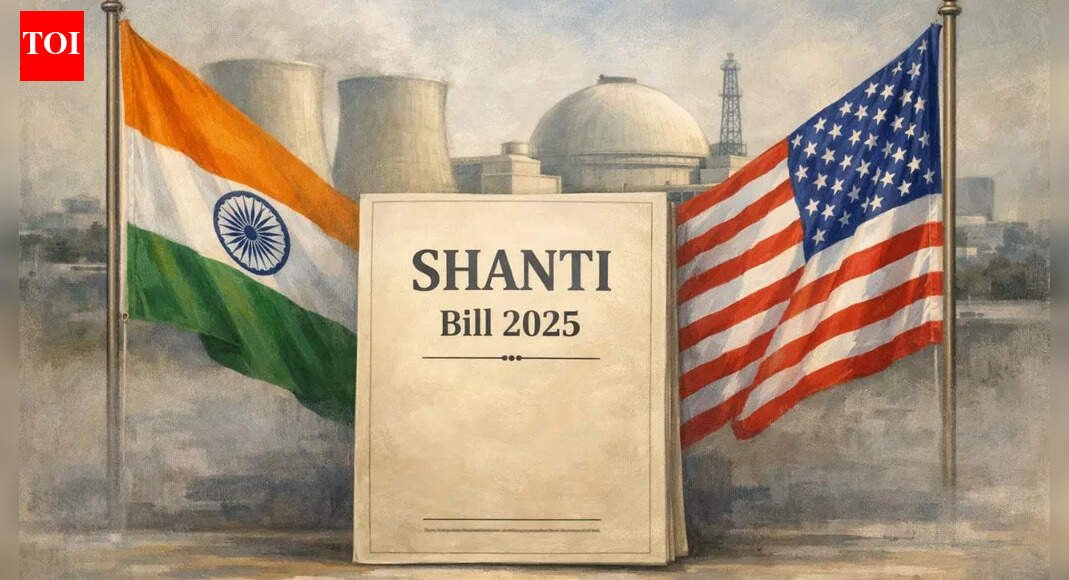
NEW DELHI: United States on Monday welcomed India’s newly passed SHANTI bill, calling it an important step towards stronger energy ties and peaceful civil nuclear cooperation between the two countries.In a post on X, the US embassy in India said it saw the Act as a move that supports energy security and opened the door for closer collaboration.

“SHANTI Is A Cruel irony”: Tharoor Tears Into Modi Govt Over Nuclear Bill

“We welcome India’s new Shanti bill, a step towards a stronger energy security partnership and peaceful civil nuclear cooperation,” the embassy said. It added that Washington was ready to work with India on joint innovation and research and development in the energy sector.The statement came a day after president signed the Sustainable Harnessing and Advancement of Nuclear Energy for Transforming India Bill, or SHANTI Bill, 2025, marking a major change in India’s civil nuclear framework.The bill was passed by voice vote during the winter session of parliament, even as most opposition members staged a walkout.

India–US civil nuclear cooperation

India and the United States announced a civil nuclear cooperation initiative nearly two decades ago, leading to the landmark India–US nuclear deal. The agreement ended India’s long period of nuclear isolation and allowed it to resume civil nuclear cooperation, even as it remained outside the nuclear non-proliferation treaty.The deal marked a major shift in US policy and significantly changed the trajectory of bilateral relations. Despite the agreement, progress was slow for years due to legal and regulatory hurdles. A breakthrough happened this year in March when the US department of energy granted regulatory clearance to an American company to design and build nuclear reactors in India.

What is SHANTI Act

The SHANTI Act overhauls India’s civil nuclear regime, which has largely remained unchanged since the Atomic Energy Act of 1962. A key feature of the Act is the opening up of parts of the civil nuclear sector to private participation for the first time. The Act also gives statutory status to the Atomic Energy Regulatory Board. In addition, it introduces a clear licensing regime and sets up a specialised nuclear tribunal to handle disputes.Another major change under the SHANTI Act relates to civil nuclear liability. The legislation removes the clause that held suppliers of nuclear equipment liable for nuclear damage.


Source link

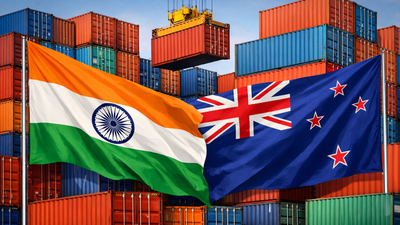
India-New Zealand FTA: Pact allows dairy processing for re-export; Piyush Goyal rules out market opening


India-New Zealand FTA: Pact allows dairy processing for re-export; Piyush Goyal rules out market opening

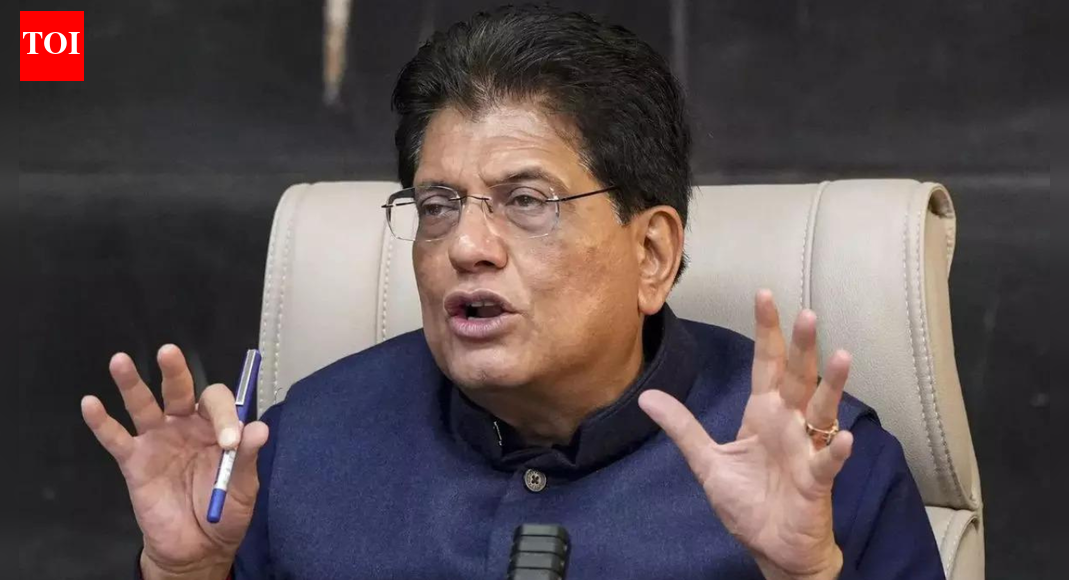
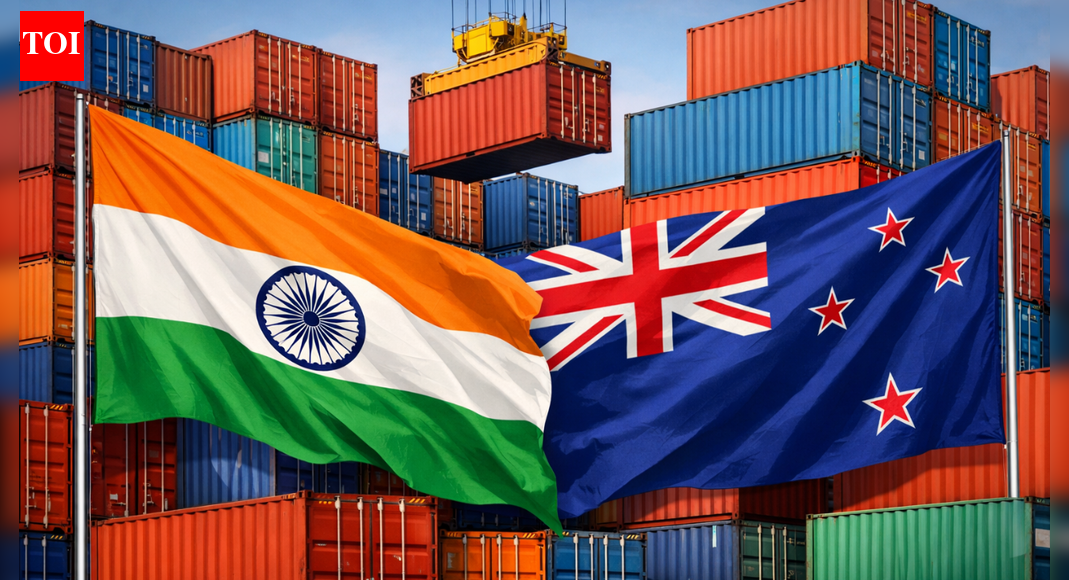
The concluded India–New Zealand free trade agreement includes a tightly ring-fenced investment arrangement that will allow New Zealand firms to process dairy inputs in India exclusively for re-export, while keeping India’s domestic dairy market fully protected, Commerce and Industry Minister Piyush Goyal said on Monday, PTI reported.Under the arrangement, firms from New Zealand can bring dairy raw materials or ingredients into India, process them into value-added products, and export 100 per cent of the output overseas, Goyal told reporters in New Delhi.

New Zealand India FTA Sparks Coalition Rift As PM Christopher Luxon Backs Deal, NZ First Rejects It

“That will be (done) through a fast-track mechanism. So we would like to fast-track investments coming in for the purpose of re-exports,” the minister said.Also read:‘Neither free nor fair’: New Zealand’s foreign minister Winston Peters opposes FTA with India; cites tariffs on dairyAccording to officials, the fast-track route will apply only to manufacturing units producing goods meant solely for export, ensuring there is no spillover into the domestic market and no adverse impact on Indian dairy producers.“We have done an agreement to promote greater investments that they (New Zealand) should bring here raw materials or ingredients to India, process them and make high-quality dairy products in India, and 100 per cent will be re-exported from India,” Goyal said.The minister reiterated that India has not offered, and will not offer, any duty concessions on dairy imports under the pact. The dairy sector remains outside the scope of the FTA, which is scheduled to be implemented next year.Goyal underlined that India has “never” opened the dairy sector in any of its trade agreements and will “never” do so in the future, given the sector’s sensitivity and its importance to millions of small farmers.Addressing questions on a side letter attached to the agreement that provides for consultations on dairy during future reviews, Goyal said the provision was included at New Zealand’s request and carries no binding commitment.He explained that New Zealand had sought assurances that if India were ever to open its dairy sector to another comparable economy — defined by similar per capita GDP, economic size and dairy production levels — it would at least have the opportunity for consultations.“You all know that we have not opened dairy in any FTAs for anybody … India is never going to open up dairy, so that concern really does not matter. It’s (side letter) only a consultation, no commitment,” Goyal said.India has consistently resisted opening the door to bulk dairy imports in all past trade negotiations, treating the sector as a red-line issue due to its political and economic sensitivity.New Zealand, one of the world’s largest dairy exporters, has limited dairy trade with India at present. Its dairy exports to India in FY2025 stood at just $1.07 million, including milk and cream worth $0.40 million, natural honey worth $0.32 million, mozzarella cheese worth $0.18 million, butter worth $0.09 million and skimmed milk worth $0.08 million.


Source link

‘People say MS Dhoni hurt my career’: Ex-India cricketer’s honest take goes viral – Watch | Cricket News


'People say MS Dhoni hurt my career': Ex-India cricketer's honest take goes viral - Watch
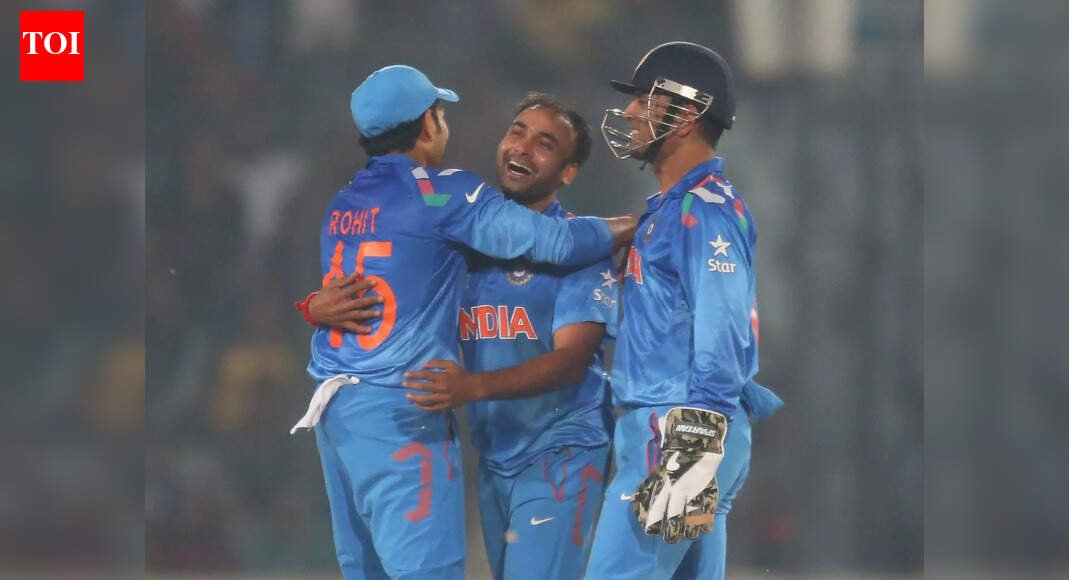
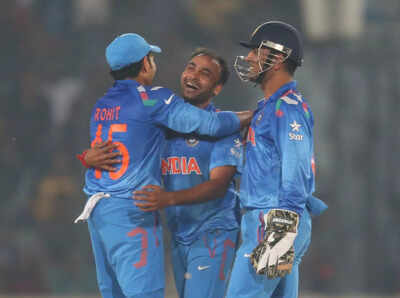
Amit Mishra celebrates with Rohit Sharma and MS Dhoni (Photo by Scott Barbour/Getty Images)

Ex-India cricketer Amit Mishra has chosen reflection over resentment while revisiting the long-standing discussion around his relationship with Mahendra Singh Dhoni. “People say if Dhoni was not there my career would have been better,” Mishra said. “But who knows if he was not there maybe I would not even have been in the team.” For Mishra, the beginning of his India journey itself is tied closely to Dhoni. “I came into the team under him only,” he said. “And I kept making a comeback. He would have agreed as a captain and that is why I kept coming back. So there is a positive way to look at things.” The idea that Dhoni consistently preferred other spin options never left him feeling ignored. “I did have the support,” Mishra said. “Whenever I was in the XI, it was never like Dhoni did not come to me and give me tips or tell me things. He would always tell me things.” One memory, in particular, still stands out from his playing days. “I was playing against New Zealand, which was my last one-day series. Dhoni was the captain,” Mishra recalled. “It was a tight game. We had scored 260–270 runs. I came to bowl and I thought of stopping the flow of runs and not going for wickets.” That approach, however, did not sit well with his captain. “After a couple of overs, Dhoni came to me and told me I am not bowling what I naturally bowl,” Mishra said. “He told me not to think a lot and bowl what I always do.” The advice was brief but decisive. “He told me, this is your bowling. Bowl exactly this. Don’t think a lot,” Mishra said. The impact was immediate. “I did that and then got a wicket,” he said. “It was a game-changing spell. I picked up five wickets, and I think that was also my best spell.” For Mishra, Dhoni’s clarity came from a simple understanding of the game situation. “His thinking was that if I did not pick wickets, we would lose the game,” Mishra said. “This is how he supported me.” That backing helped Mishra make the most of his opportunities whenever they came. Across 22 Tests, he took 76 wickets. In 36 ODIs, he claimed 64 wickets, including a memorable six-wicket haul. In 10 T20Is, he added 16 more wickets, often stepping up despite irregular selection. Looking back now, Mishra sees no reason for regret. “If Dhoni was not there, maybe I would not even have been in the team,” he said. “That’s the positive way to look at things.”


Source link

‘People will forget’: Ex-India captain’s blunt warning to Sanju Samson | Cricket News


'People will forget': Ex-India captain’s blunt warning to Sanju Samson
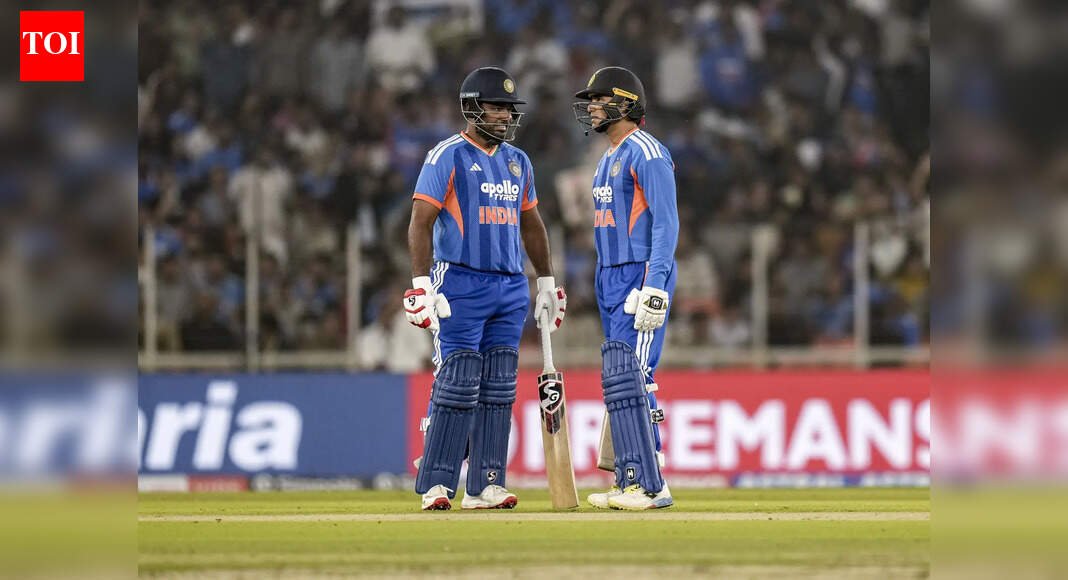
India’s Sanju Samson, left, and Abhishek Sharma (PTI Photo/Shashank Parade)

Sanju Samson’s return to India’s T20 World Cup plans has come with both praise and a warning. After being named India’s first-choice wicketkeeper in the T20 World Cup 2026 squad, Samson found backing from former India selector Krishnamachari Srikkanth, who did not hold back while assessing his comeback knock in Ahmedabad. “He batted really well. What an innings it was. Some of the strokes he played were brilliant,” Srikkanth said. “When he is striking, he is striking deadly.”

Inside story of why Shubman Gill was DROPPED from India T20I World Cup squad

But the former India captain was quick to add a word of caution, pointing to the fine margins that have defined Samson’s international career. “Only thing I will tell Sanju is, don’t get out on 37. Convert that 37 into 73. If you do that, you can’t be removed,” he said. “People forget 30s and 40s.” Samson’s 37 came at a crucial time, after he had missed seven consecutive games since the Australia tour and just a day before India announced their World Cup squad. The timing proved decisive, especially with selectors springing a surprise by leaving out vice-captain Shubman Gill. Srikkanth hinted that decisions may have already been communicated behind the scenes. “Sanju Samson got one chance and he grabbed it in yesterday’s match,” he said. “I think they might have told him yesterday that you don’t play. Maybe that’s why he was declared unfit. They might have told him that he’s not in the team.” Gill, who had replaced Samson as Abhishek Sharma’s opening partner in September 2025, struggled to cement his spot. Across 15 innings, he failed to score a single half-century and managed just 32 runs in three innings during the South Africa series before a toe injury ruled him out of the final two matches and ultimately the World Cup squad. Srikkanth also looked beyond selection debates, turning his attention to India’s batting firepower heading into the tournament. “He was batting like ‘Mission Impossible’. It was just outstanding to watch him bat,” he said, referring to Hardik Pandya. And the warning to opponents was clear. “If you look at the top five, if Suryakumar Yadav hits form, this batting line-up will destroy opponents,” Srikkanth said. “It is an intimidating and devastating batting line-up.”


Source link

Access Denied


Access Denied

You don’t have permission to access “http://www.ndtv.com/india-news/backdated-degrees-broken-labs-inside-madhya-pradeshs-paramedical-mess-9873839” on this server.

Reference #18.2ef63717.1766414901.80ea1f8

https://errors.edgesuite.net/18.2ef63717.1766414901.80ea1f8


Source link

BMC issues revised guidelines to end selective razing, piecemeal road widening in Mumbai | Mumbai News


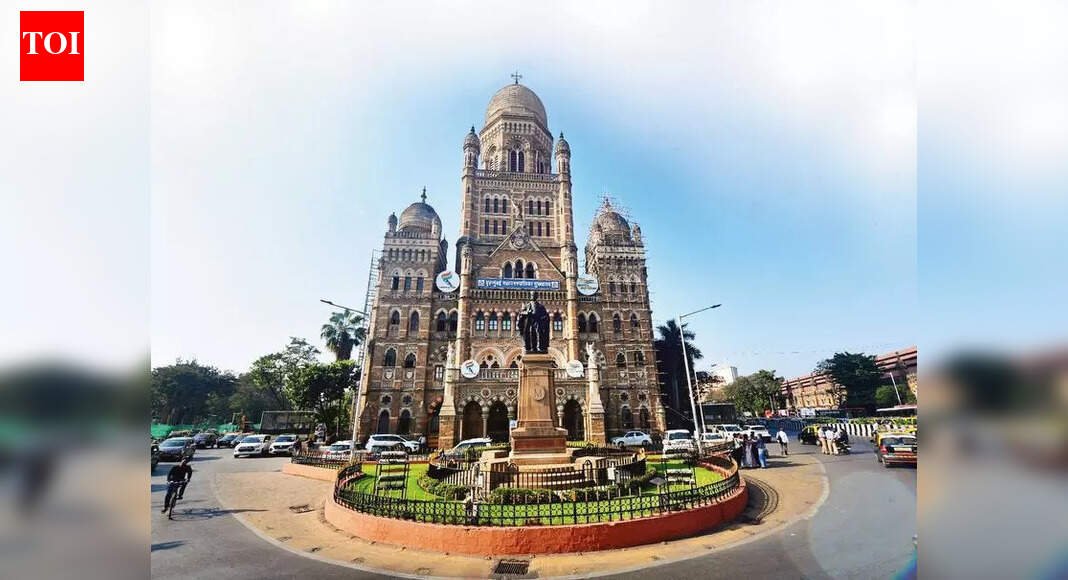
Mumbai: In a bid to plug loopholes and end selective demolitions and incomplete road widening, the BMC has issued revised guidelines for implementing Regulation 33 (12) (B) of the Development Control and Promotion Regulations (DCPR) 2034 in a circular dated Dec 15.The overhaul follows concerns within the civic administration over piecemeal road widening, lack of prioritisation in identifying roads, non-transparent issuance of no objection certificates (NOCs), and weak monitoring and accountability mechanisms in earlier implementations of the policy. According to the revised circular, the new framework aims to standardise and digitise NOC issuance, ensure complete and contiguous road widening, strengthen inter-departmental coordination, and enhance transparency and accountability.The BMC has said the changes are aligned with its technology-driven governance model, while supporting ease of doing business without compromising public interest.Under Regulation 33 (12) (B), the civic body is empowered to remove and rehabilitate tolerated or protected structures that fall within the alignment of existing roads, Development Plan (DP) roads and Road Line (RL) roads. The regulation allows additional Floor Space Index (FSI) of up to 4.0 on plots used to rehabilitate Project-Affected Persons (PAPs) whose structures obstruct road widening. The core objective is to eliminate bottlenecks, complete missing links and improve traffic movement and transport infrastructure across the city.Samajwadi Party MLA Rais Shaikh said the policy was in the right direction. “However it is also imperative that a database be maintained of those who are being rehabilitated by recording their Aadhar card, election identity number. This would ensure that the same person isn’t rehabilitated multiple times,” said Shaikh.A civic activist flagged this as a familiar modus operandi, alleging that individuals once rehabilitated often exploit the benefit by encroaching on yet another site. “Ward-level staff have been given an unusually free hand. The circular clearly states that the eligibility of occupants is to be finalised by the assistant commissioner at the ward level, but there is no effective supervisory layer. Such decisions should have been subject to great amount of scrutiny by a higher authority.He further pointed to serious legal vulnerabilities in the process, pointing that a mandatory tripartite agreement between the developer, the BMC and the occupant is required before issuing the final no-objection certificate. “With this, the civic body is exposing itself to legal risk. In the event of an occupant’s sudden death, establishing rightful legal heirs becomes contentious, leaving the BMC entangled in litigation,” the activist added.The roads department is expected to ensure immediate commencement of road development post-demolition with prior budget and tendering arrangements.Under the approval framework, the Road Priority List is to be cleared at the zonal level by the deputy municipal commissioner (DMC), while any changes in priority require approval from the additional municipal commissioner (AMC) of the city, western or eastern suburbs. At any given time, a maximum of three roads or up to 100 project-affected persons (PAPs) can be taken up. If there is a need to add a fourth road in addition to the three, a specific justification along with the AMC’s approval is mandatory.


Source link

Freedom of the City of London: Indian-origin journalist Shruti Tripathi Chopra honoured; Nehru, Churchill among past recipients


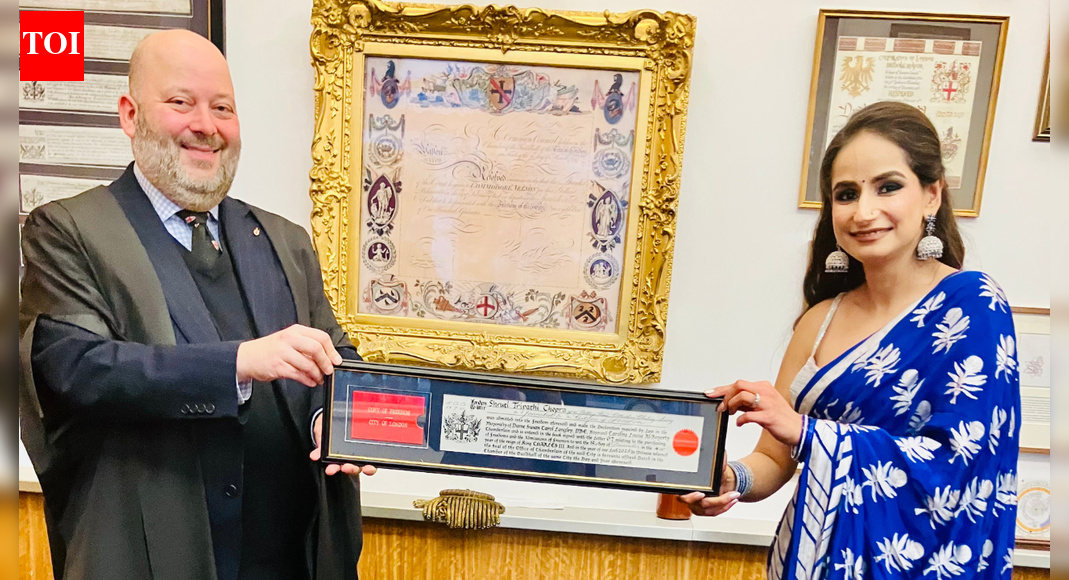
Shruti Tripathi Chopra, an Indian origin journalist based in UK was awarded with the Freedom of the City of London on Saturday in recognition of her contributions to financial journalism and championing diversity, equity and inclusion in the global finance sector.Chopra is Editor-in-Chief of Dow Jones publications ‘Financial News’ and ‘Private Equity News’“Receiving the Freedom of the City of London is an incredibly humbling moment,” said Chopra.“I came to the UK as a student with big hopes, and I never imagined my career would bring me here. This honour reflects years of hard work, resilience, and the support of so many people who believed in me. I feel immensely proud, not just for myself, but for Indians everywhere working hard to do their country proud across the globe,” she said.The Freedom of the City of London, an honour dating back to the 13th century, is awarded to individuals who have made a significant contribution to London’s financial district, known as the City or the Square Mile.Among Indian recipients are Jawaharlal Nehru, Ratan Tata and actor Shabana Azmi, who received the honour last year. Global figures such as Nelson Mandela and Winston Churchill have also been conferred the distinction.This week’s ceremony, officiated by the Clerk of the Court, was held at London’s historic Guildhall. Shruti Chopra attended the event with her parents, who travelled from Delhi, and her four-year-old daughter.According to a statement issued on her behalf, Chopra is the youngest editor to lead *Financial News* and *Private Equity News*, and the first woman and first person of colour to hold the role in the publications’ nearly 30-year history. She has been with Dow Jones since January 2019.A strong advocate for diversity and inclusion, Chopra has led initiatives such as the “100 Most Influential Women in Finance” list and launched the “Pride of Finance” list, which highlights coming-out-at-work stories of senior LGBTQIA+ professionals in finance. The honour recognises her contributions to financial journalism, leadership in business reporting, and efforts to amplify underrepresented voices.Chopra holds a master’s degree in International Journalism from Cardiff University and was recently named Social Value Journalist of the Year at the Aviva Investors Media Awards, as well as Journalist of the Year – Stewardship at the State Street Awards.


Source link

Top 5 contenders for ICC Men’s ODI cricketer of the Year 2025


The ODI cricket in 2025 has been defined by a mix of veteran resurgence and rookie brilliance. From the high-stakes battles of the Champions Trophy to the grind of bilateral series, the 50-over format thrived. Several players have not only dominated the leaderboards but have fundamentally changed the outcomes of their matches.

Consistency across varying conditions, from the spinning tracks of India to the bouncy wickets of Australia, set them apart. Their performances have provided fans with unforgettable moments, including marathon hundreds and devastating five-wicket hauls. As we reach the end of the calendar year, the race for the ICC’s top honors has narrowed down to these elite few. Each nominee brings a unique set of skills that has made them nearly impossible to ignore on the global stage. Their statistics are a testament to their dedication, technique, and the tactical evolution seen throughout this season.

Top 5 contenders for ICC Men’s ODI cricketer of the Year 2025

Here is a comprehensive breakdown of the five premier contenders for the 2025 Men’s ODI Cricketer of the Year.

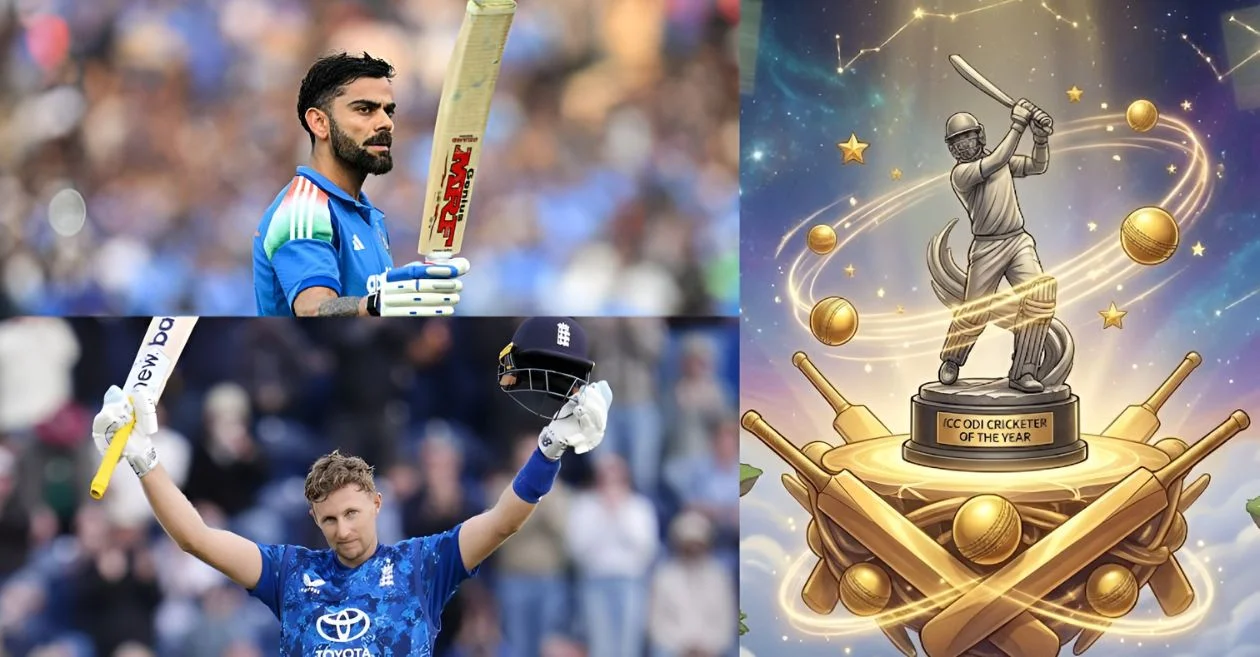
1. Joe Root (England)

Joe Root (Image Source: X)

The leading run-scorer in the world for 2025, Root successfully transitioned his prolific Test form into the white-ball arena. He finished the year as the only player to cross the 800-run mark, largely due to a more aggressive approach in the middle overs.

  • Runs: 808
  • Average / Strike Rate: 65.77 / 95.50
  • Milestones: Recorded 3 centuries and 4 half-centuries in 15 innings.
  • Signature Performance: Smashed a career-best 166 off 139 balls* against the West Indies at Cardiff, the highest individual score by an Englishman in 2025.

2. Matthew Breetzke (South Africa)

Matthew Breetzke
Matthew Breetzke (Image Source: X)

2025’s breakout sensation, Breetzke has enjoyed one of the greatest introductory years in the history of the format. After a legendary debut, he became a fixture at the top of the Proteas’ order, providing both stability and high-impact scoring.

  • Runs: 706
  • Average / Strike Rate: 64.18 / 96.71
  • Milestones: Set a world record by scoring 50+ in each of his first five ODIs.
  • Signature Performance: Scored 150 on his ODI debut against New Zealand in February, breaking Desmond Haynes’ 47-year-old record for the highest score in an ODI debut.

Also READ: RCB’s new recruit Jacob Duffy breaks Sir Richard Hadlee’s all-time record for New Zealand in 3rd Test vs West Indies

3. Virat Kohli (India)

Virat Kohli
Virat Kohli (Image Source: X)

Virat Kohli remains the “King” of the 50-over format. In 2025, he played a pivotal role in India securing the ICC Champions Trophy title. His year was defined by “clutch” performances in high-pressure tournament matches and consistency in away series.

  • Runs: 651
  • Average / Strike Rate: 65.10 / 96.15
  • Milestones: Finished as India’s top scorer for the year, recording 3 centuries and 4 fifties.
  • Signature Performance: Delivered a masterclass century against Pakistan in the Champions Trophy and ended the year with back-to-back hundreds against South Africa.

4. Matt Henry (New Zealand)

Matt Henry
Matt Henry (Image Source: X)

The most lethal bowler of 2025, Henry anchored the Black Caps’ attack during their run to the Champions Trophy final. His ability to extract movement in the Powerplay made him the primary threat to the world’s best opening pairs.

  • Wickets: 31
  • Average: 18.58
  • Milestones: Finished as the top ODI wicket-taker of 2025 across all nations.
  • Signature Performance: A devastating 5/42 against India in the Champions Trophy semi-final, followed by a match-winning 4/43 to sweep the series against West Indies in November.

5. Jayden Seales (West Indies)

Jayden Seales
Jayden Seales (Image Source: X)

Jayden Seales has officially arrived as the new spearhead for the Caribbean side. In a year where the West Indies sought consistency, Seales provided it with express pace and an improved tactical sense in the death overs.

  • Wickets: 27
  • Average / Economy: 18.14 / 5.75
  • Milestones: Recorded one four-wicket haul and one five-wicket haul in just 12 matches.
  • Signature Performance: A career-defining 6/18 against Pakistan in Trinidad, where he dismantled a world-class middle order in a single spell.

2025 ODI Statistical Summary Table

Player Role Primary Stat Impact Metric
Joe Root Batter 808 Runs Highest ODI run-getter of the year
Matt Breetzke Batter 706 Runs World record for 5 consecutive 50s
Virat Kohli Batter 651 Runs Champions Trophy Winner / 3 Hundreds
Matt Henry Bowler 31 Wickets Best Average (15.50) in world cricket
Jayden Seales Bowler 27 Wickets Best figures of 2025 (6/18)

Also READ: Shahid Afridi mocks Gautam Gambhir; backs Virat Kohli and Rohit Sharma for ODI World Cup 2027


Source link

‘Neither free nor fair’: New Zealand’s foreign minister Winston Peters opposes FTA with India; cites tariffs on dairy


'Neither free nor fair': New Zealand's foreign minister Winston Peters opposes FTA with India; cites tariffs on dairy

As India and New Zealand finalised a historic free trade agreement (FTA), not everyone was onboard. New Zealand’s foreign affairs minister Winston Peters voiced his opposition claiming the deal was “neither free nor fair”.“New Zealand First is regrettably opposed to the India Free Trade Agreement announced today. We consider the India-New Zealand Free Trade Agreement to be neither free nor fair. Regrettably, this is a bad deal for New Zealand. It gives too much away, especially on immigration, and does not get enough in return for New Zealanders, including on dairy,” said Peters.

Zero Tariff Access For Indian Exports As Modi Govt Seals Landmark Free Trade Deal With New Zealand

For addressing uncertainity around majority approval from their Parliament, he added, “New Zealand First urged its coalition partner not to rush into concluding a low-quality deal with India, and to use all three years of this Parliamentary cycle in order to get the best possible deal. We also indicated we felt it would be unwise for National to sign up to a deal with India when a Parliamentary majority for that deal was uncertain.Claiming that his party New Zealand First, part of the coalition that formed the government, had rejected the deal already, Peters also said, “National preferred doing a quick, low-quality deal over doing the hard work necessary to get a fair deal that delivers for both New Zealanders and Indians. When Cabinet approval for the India deal was sought last week, New Zealand First exercised the agree to disagree provision of its coalition arrangements – while making clear that it would vote against enabling legislation if and when it is introduced to Parliament.“While New Zealand is completely opening its market to Indian products under this deal, India is not reducing the significant tariff barriers currently facing our major dairy products. This is not a good deal for New Zealand farmers and is impossible to defend to our rural communities. The India FTA would be New Zealand’s first trade deal to exclude our major dairy products – including milk, cheese and butter. In the year to November 2025, New Zealand exports of these products were worth around $24 billion, or 30% of our total goods exports,” he added.However, he did assure that their opposition to the deal did not mean “critique of the Indian government”, while claiming that his party’s stance has been communicated to external affairs minister S Jaishankar. “We are deeply committed to the advancement of the India-New Zealand relationship, which is in our country’s strategic interests. The first visit we took this term as Foreign Minister outside Australia and the Pacific was to India, and we returned there this year. And at our direction, the Ministry of Foreign Affairs and Trade has significantly increased the resources directed to advancing India-NZ relations, both at our Posts in India and at Head Office in Wellington. We have known S Jaishankar, India’s External Affairs Minister, for a long time, and have the utmost respect for him as an international statesman and champion of New Zealand-India relations. We have communicated to Minister Jaishankar New Zealand First’s position on this matter,” said Giving fe details he said, “We have made clear to him that our opposition to the deal is not a critique of the Government of India or its negotiators – but rather the reflection of a difference of opinion between the parties that comprise New Zealand’s Coalition Government. Whether in government or opposition, New Zealand First’s approach to trade deals has been consistent, longstanding and principled.”“New Zealand First’s longstanding approach has been to support those FTAs that deliver a good deal for New Zealanders and to oppose those that do not,” he clarified, while asserting his stance, citing New Zealands past negotiations with South Korea, China India- New Zealand FTA: SnapshotIndia and New Zealand finalised a landmark Free Trade Agreement (FTA) aimed at deepening bilateral economic ties and expanding trade, investment and mobility. Negotiations began during New Zealand Prime Minister Christopher Luxon’s visit to India in March 2025.A key relief is zero-duty access for Indian exports in New Zealand markets. Labour-intensive sectors such as textiles, apparel, leather and footwear, along with manufacturing segments including engineering, automobiles, electronics, pharmaceuticals and chemicals, are expected to benefit. Services sectors such as IT, finance, education, tourism and construction also gain expanded market access.Also read: Zero duty on 100% Indian exports – what the deal means for trade, MSMEs & Indian workers & studentsThe agreement places strong emphasis on services and mobility. New Zealand has opened 118 services sectors and offered wide MFN treatment. It has also signed, for the first time, annexes on student mobility and post-study work visas, allowing Indian students to work 20 hours a week and access post-study visas of up to four years. New ways have been set in the FTA for skilled professionals, with quotas for temporary employment and working holiday visas for Indian youth.New Zealand also committed to investing $20 billion in India over 15 years, targeting manufacturing, infrastructure, services, innovation and job creation.Agriculture cooperation is another pillar, with improved access for Indian products such as fruits, vegetables, coffee, spices and processed foods, alongside collaboration in agri-technology and productivity. At the same time, India has safeguarded sensitive sectors including dairy, sugar, edible oils, precious metals and select industrial products.

Source link