Breaking News
‘I remember every face’: 2016 UP highway gang rape survivors changed houses 5 times in 10 years; justice brings fragile hope | Meerut News


Survivor of 2016 NH gang rape (Representative image)

BULANDSHAHR: Ahead of sentencing in the brutal gang rape of a woman and her daughter at gunpoint on NH-91 in Uttar Pradesh in 2016 which shocked the nation, one of the survivors – then a school girl of 14 and now a woman of 23 studying law with hopes of becoming a judge – told TOI from an undisclosed location on Sunday that what she and her family endured in the time since the incident was “savage and inhuman” but they stuck together and fought on.“We changed addresses and cities multiple times to avoid recognition and harassment. But every time we were identified and vilified,” she said, breaking down repeatedly over the course of the conversation. “I remember every face. They’re not human – they are demons,” she said of the continuous nightmares.

Horror In Coimbatore: Student Gang Raped After Abduction, Three Accused Shot And Arrested By Police

A day after a court in Bulandshahr convicted five of the men involved in the gang rape of her mother and her own self, she said it has given them hope. “But it will take a long time – perhaps an eternity – for us to heal. What they did didn’t just violate our bodies – it also destroyed our lives, peace, our future.” Her voice sometimes choking with emotions, she added: “The trauma never leaves you. Nights are the worst. I still wake up frightened.The family was forced to change houses five times in the past decade. “But how long can we keep hiding our identity from neighbours?” she asked. “Someone comes to know about our past, and it spreads like fire. People start looking at us with contempt. The environment around us turns hostile. Harassers become active. They follow me on the road, pass lewd comments, and even roam around my house. But we did not break. I did not break.Quantum of punishment likely to be announced today Repeated relocation took a toll on the family financially too. “My father once owned three cars and ran them as taxis. Today, he works night shifts driving someone else’s car just to feed us,” she said. She added: “I’m the only child (in the family) and I also wanted to support my parents. My education suffered as we had to change places so many times.” Pursuing a law degree, she said she wants to become a judge some day for the cause of rape survivors like her.Her mother was unable to talk much, taking long pauses and trying to hold back her tears. “We were a normal family then… We had never seen a court or spoken to police. But after that day, our lives changed forever. My daughter – only a child then – saw everything, she lived through everything,” she said.Recalling that day, her father told TOI how helpless he was. “We were supposed to attend my grandmother’s funeral. It was around 1am when, on the highway, I heard a loud bang. We paused thinking something had hit our vehicle. All of a sudden, 7 to 8 men emerged from the bushes and overpowered us at gunpoint.” He added: “My wife, daughter, brother, his wife and his young son were all there. They dragged my wife and daughter into the bushes. My daughter kept pleading before them. I was right there, but couldn’t save them. I could hear their cries for help reverberating into the night… It still haunts me.” That incident cost them everything, he said. “I had to look for places where nobody knew us, where I could paint a past the locals would believe. Finding a job became a huge struggle. Today, I barely earn Rs 12,000-15,000 a month by driving someone else’s car. I work overtime at night… All I think of now is my daughter’s future.”The gruesome crime happened on July 29, 2016, when the family’s vehicle was intercepted near a village, while they were travelling to Shahjahanpur from Noida. The gang of robbers held the entire family hostage at gunpoint with male members – tied and assaulted – begging for mercy, as they dragged the women to a nearby field, where they were repeatedly violated.“Forensic evidence, including semen traces matching the convicts, played a crucial role. The court convicted Zuber alias Parvez, 35, Mohd Sajid, 37, both from Kannauj, and Dharamveer Singh, 36, Sunil Kumar, 35, Naresh Kumar, 46, from Farrukhabad district. Saleem Bawaria, 45, – the gang’s kingpin – died during the trial in 2019. The convicts were unable to secure bail and remained in jail since the incident,” ADGC Varun Kaushik told TOI after Saturday’s conviction.An FIR was registered against them under sections 394, 395, 397 (aggravated forms of robbery and dacoity), 376-D (gangrape), 120-B (criminal conspiracy) of the IPC, and 5/6 of the Pocso Act. The court of additional district and sessions judge-III, Omprakash Verma, concluded the legal process on Saturday and the quantum of punishment is likely to be announced on Monday.


Source link

WATCH: Tom Curran knocks over Jason Sangha’s stumps with an absolute ripper in BBL|15


In the 10th match of Big Bash League 2025-26 at Adelaide Oval on Tuesday, Melbourne Stars captain Marcus Stoinis won the toss and elected to field against Adelaide Strikers, setting up a high-stakes night clash under lights. The Strikers struggled early, losing two quick wickets for just seven runs in the powerplay, but mounted a recovery to post a competitive 155/8 in their 20 overs at a run rate of 7.75. Stars’ bowlers, led by Tom Curran‘s fiery spell, restricted the hosts despite a brisk half-century from skipper Matthew Short.​

Tom Curran produces a peach to remove Jason Sangha

Tom Curran produced an absolute beauty in the 1.4th over, dismantling Jason Sangha‘s stumps and leaving the Strikers reeling at 7/2. The English all-rounder bowled a shorter length delivery that nipped away just enough off the pitch, deceiving Sangha who lunged forward and misjudged the line completely, resulting in the off-stump being uprooted. Sangha departed for a golden duck off two balls (0x4, 0x6, SR: 0), marking Curran’s second strike in the same over after earlier removing Chris Lynn for 4. This double blow showcased Curran’s early fire, finishing with impressive figures of 4-0-35-3, including another key scalp of Short for 56.​

Curran’s magic swung momentum firmly towards Stars, who sit second on the points table after a dominant eight-wicket win over Hobart Hurricanes in their opener. The 30-year-old, known for his BBL pedigree, exploited the conditions perfectly at Adelaide Oval, where pacers often find seam movement. Sangha’s failure added to Strikers’ top-order woes, as they eyed back-to-back wins following a thrilling chase against Sydney Sixers.​

Here’s the video:

Also READ: Matthew Gilkes powers Sydney Thunder to impressive win over Brisbane Heat in BBL|15

Adelaide Strikers recover after early blows to register a fighting total against Melbourne Stars

Adelaide Strikers recovered from their horror start through a gritty 55-run stand for the third wicket between Matthew Short (56 off 42, 4×4) and Liam Scott (25 off 19, 2×4, 1×6), reaching 50 in 6.5 overs. Short anchored the innings, bringing up his fifty off 38 balls, but fell at 110/4 in the 13.4th over, caught off Curran. Alex Ross chipped in with 22 off 21 before edging Peter Siddle behind, while late cameos from Henry Thornton (12* off 6, 1×6) and Hasan Ali (6* off 6, 1×4) pushed the total past 150 in the 19.2nd over.​

Haris Rauf claimed three late wickets (4-0-28-3), including ducks for Harry Nielsen and Jerrssis Wadia (7), while Siddle (4-0-23-1) and Stoinis (2-0-23-1, lbw Scott) kept things tight. The powerplay yielded 32/2, drinks at 83/3 after 10 overs, and a final five-over burst of 38/4 highlighted a collapse from 129/6. Stars now chase 156, with win probability at 70% post-innings break, testing their explosive top order on a pitch offering assistance to seamers.​

This encounter pits two in-form sides, with Stars boasting Stoinis’ recent 62no and Siddle’s three-fer from their opener. Strikers’ total keeps them in the hunt for a third straight win, but Curran’s early burst sets the tone for a tense chase.

Also READ: BBL|15: Chris Jordan, Nikhil Chaudhary run riot as Melbourne Renegades crumble


Source link

Cement consolidation: Ambuja merges ACC and Orient into one platform; what the Adani Group’s scale bet means for investors


Cement consolidation: Ambuja merges ACC and Orient into one platform; what the Adani Group’s scale bet means for investors

Ambuja Cements has moved to consolidate the Adani Group’s cement assets by approving schemes to merge ACC and Orient Cement into itself, creating a single listed platform aimed at sharper operating leverage and cost synergies.The transaction is entirely share-based, with no cash payout. ACC shareholders will receive 328 Ambuja shares of face value Rs 2 each for every 100 ACC shares of face value Rs 10, while Orient Cement shareholders will get 33 Ambuja shares of face value Rs 2 each for every 100 Orient shares of face value Rs 1, according to an ET report.At current prices, the swap values ACC at about Rs 1,772 a share against a market price of around Rs 1,777, making the deal broadly valuation-neutral for ACC investors. Orient Cement is valued at roughly Rs 178 per share versus a CMP of Rs 163, implying a premium of about 9%, according to domestic brokerage Emkay.The schemes have appointed dates of January 1, 2026 for ACC and May 1, 2026 for Orient, and are expected to take effect over the next year, subject to regulatory and shareholder approvals. Following the announcement, Orient Cement shares rose up to 10% to Rs 180, ACC gained about 1.5%, and Ambuja advanced nearly 4%.Ambuja already owns close to 50% of ACC and around 73% of Orient. To acquire the remaining minority stakes, the company will issue roughly 308 million new shares for ACC and about 18–19 million shares for Orient, taking the total new issuance to around 326–327 million shares.This will raise Ambuja’s outstanding equity from about 2.47 billion shares to roughly 2.78–2.80 billion shares, implying dilution of around 12–13% for existing Ambuja shareholders once all ongoing mergers, including Sanghi and Penna, are accounted for. Motilal Oswal estimates promoter holding will decline from 67.65% to about 60.9% post all announced amalgamations, even as public and institutional shareholding increases.For the Adani Group, the merger marks the culmination of a two-year effort to bring Ambuja, ACC, Orient, Sanghi and Penna under a single operating and ownership structure. The company has described the move as a “transformational step” that simplifies the cement business, replaces the Master Supply Agreement model with direct ownership and allows tighter control over manufacturing, logistics and branding.Ambuja expects operational synergies to deliver at least Rs 100 per tonne in cost savings through network optimisation, logistics efficiencies and lower corporate overheads. The merged entity underpins the group’s plan to expand cement capacity from about 107 mtpa to 155 mtpa by FY28, backed by a largely debt-free balance sheet and continued capital expenditure.Brokerage projections factor in rising volumes and improving utilisation over FY26–28. Motilal Oswal estimates EBITDA per tonne could increase from around Rs 1,043 in FY26 to Rs 1,230 by FY28, with margins crossing 21%. Emkay expects consolidated EBITDA to rise to about Rs 118 billion by FY28, with margins above 23%.For Ambuja shareholders, analysts see the deal as earnings-accretive despite dilution, given that ACC trades at a steep discount to Ambuja on EV/EBITDA and EV/tonne metrics. Motilal Oswal’s pro-forma estimates show Ambuja’s EPS rising from about Rs 16.9 to Rs 18.6 for FY25 once ACC is consolidated, and from Rs 10.1 to Rs 10.6 in the first half of FY26, even after accounting for the higher share count.At current valuations of roughly 15–16 times FY27 EV/EBITDA and about $128 per tonne, Ambuja still trades below its five-year average multiples, suggesting scope for rerating if synergies materialise. In the near term, however, the balance sheet may see some pressure, with net cash expected to dip briefly into net debt in FY26–27 before turning positive again by FY28.ACC shareholders now face a valuation-neutral exit but a shift in exposure, as ACC will be delisted into Ambuja. While ACC trades at about 7.1 times FY27 EV/EBITDA and around $71 per tonne, swapping into Ambuja offers exposure to a larger, pan-India platform with higher growth ambitions. State incentives linked to ACC’s operations in Maharashtra, Madhya Pradesh and Uttar Pradesh are expected to continue accruing to Ambuja post-merger.Orient Cement minority shareholders emerge as the clearest beneficiaries, with the swap embedding a near-9% premium and offering an exit from a small-cap regional player into Ambuja’s larger balance sheet and expansion pipeline.Regulatory approvals for multiple amalgamations remain a key risk, alongside execution challenges in integrating plants, systems and people. Until approvals are in place, operations will continue under the existing Master Supply Agreement. Post-merger, Ambuja will be the Adani Group’s sole listed cement vehicle, while brands such as “Adani Ambuja Cements” and “Adani ACC” are expected to continue in their respective markets.(Disclaimer: Recommendations and views on the stock market, other asset classes or personal finance management tips given by experts are their own. These opinions do not represent the views of The Times of India)


Source link

This asteroid might hit moon: Scientists track asteroid 2024 YR4 |


This asteroid might hit moon: Scientists track asteroid 2024 YR4

A piece of space debris is the focus of the closest attention of astronomers worldwide as scientists evaluate a rare, but very dramatic, option. A collision of asteroid 2024 YR4, approximately 60 metres long, with the Moon in December 2032 could result in an impact visible from Earth due to the enormous force. Researchers, however, state that the probability is still very low, but the effects could go beyond a simple crater on the Moon. The hitting of such an extent can throw fragments in Earth’s vicinity that can endanger satellites and the human missions that will be there. The James Webb Space Telescope and other advanced space telescopes are anticipated to be instrumental in giving the final confirmation or negation of this case. Until that time, the asteroid is being closely monitored.

What is asteroid 2024 YR4

Asteroid 2024 YR4 was initially identified in December 2024 as part of regular sky surveys that aim to find objects close to Earth. The first observations indicated a very low probability that the asteroid would hit the Earth, but additional computations eliminated that possibility completely. When researchers determined the asteroid’s trajectory more precisely, the focus was changed from Earth to the Moon.The space rock is about 60 metres long, which is a comparably small building. While the object may look pretty small in space, such a space object can still cause a huge release of energy if it collides with a planet. It is thus large enough to draw the attention of the scientific community, in particular, because of the increasing number of satellites and the planned human missions in space.

When and where the impact could happen

At the American Geophysical Union meeting, Patrick King from Johns Hopkins University Applied Physics Laboratory brought up the idea that a collision might happen on 22 December 2032. The chance of a direct hit on the Moon is reckoned to be about 4 per cent. Even though that number is quite low, it is still high enough to warrant keeping a close watch on it.Researchers’ simulations, as per their presentation, suggest that nearly 86 per cent of the impact locations are on the Moon’s near side. This is the side which is always turned towards the Earth; thus, the chance of the occurrence being seen through telescopes and maybe even by the naked eye under suitable conditions is increased. Astronomers mention that places like Hawaii and some areas of the western United States might have good viewing angles, which will depend on the Moon’s position and the weather in the locality.

How powerful would the collision be

The energy released would be enormous if asteroid 2024 YR4 hit the Moon. Researchers believe that the collision would release energy equivalent to about six million metric tonnes of TNT. In other words, the explosion would be around 400 times more potent than the atomic bomb that was dropped on Hiroshima.Although the explosion would be very large, the Moon would still be intact. Its surface would, however, be marked with a new crater, and the main issue is what would happen after the impact. A fierce collision could result in the scattering of lunar debris and fragments of the asteroid into space, some of which could be headed to the Earth.

Possible risks to satellites and astronauts

One of the main concerns tightly wrapped around the scientists’ minds is the possibility of the fast moving debris cloud formation. Even small pieces can be harmful in space, where things move at very high speeds. A wave of tiny meteorites could, for instance, threaten satellites in Earth orbit; that is, the satellites can be damaged, or their lifespans may be shortened without any visible intervention.Moreover, the welfare of future crewed missions is at stake. As space agencies plan for more trips to the moon and aim at a long term human presence off Earth, getting to grips with and controlling the risk of impacts is becoming more and more consequential. The probability of debris being able to reach the critical orbits is roughly one percent; however, experts strongly emphasise that even the slightest risk should be taken seriously.

The role of the James Webb Space Telescope

The following big milestone in getting to know asteroid 2024 YR4 will be with the James Webb Space Telescope, scheduled to scrutinise it in February 2026. These observations are anticipated to drastically change the size and the shape as well as the exact orbit of the asteroid.Astro, Webbs instruments were used in the earlier observations in March 2025, which helped the scientists to eliminate the possibility of an Earth impact, and they also obtained more accurate measurements of the asteroid. The forthcoming examination could either bolster the lunar impact scenario by adding more certainty or reject it completely. In case of a technical failure during the observation, the scientists may have to carry out their assessments with a higher degree of uncertainty; thus, it will be more difficult to make long term plans.

Why scientists are watching closely

Such an event really shows how the solar system is still a very lively and somewhat unpredictable place. Although new craters on the Moon caused by asteroids have been happening for a long time and are thus not really surprising, it would be very valuable from a scientific point of view to see such an impact happening. Such an event, although very rare, would provide a great deal of insight in the fields of impact physics, crater formation, and the behaviour of ejected materials in space.Currently, asteroid 2024 YR4 is still a “wake up call” as to why we constantly have to watch the skies and work together globally to defend the planet. Whichever way it goes, a dazzling crash on the Moon or a quiet flyby, the insights gained from its tracking will help scientists keep Earth and the expanding human presence in space safe.


Source link

On This Day in Delhi, 1981: How Geoffrey Boycott overtook Garry Sobers to become Test cricket’s top run-scorer | Cricket News


On This Day in Delhi, 1981: How Geoffrey Boycott overtook Garry Sobers to become Test cricket's top run-scorer
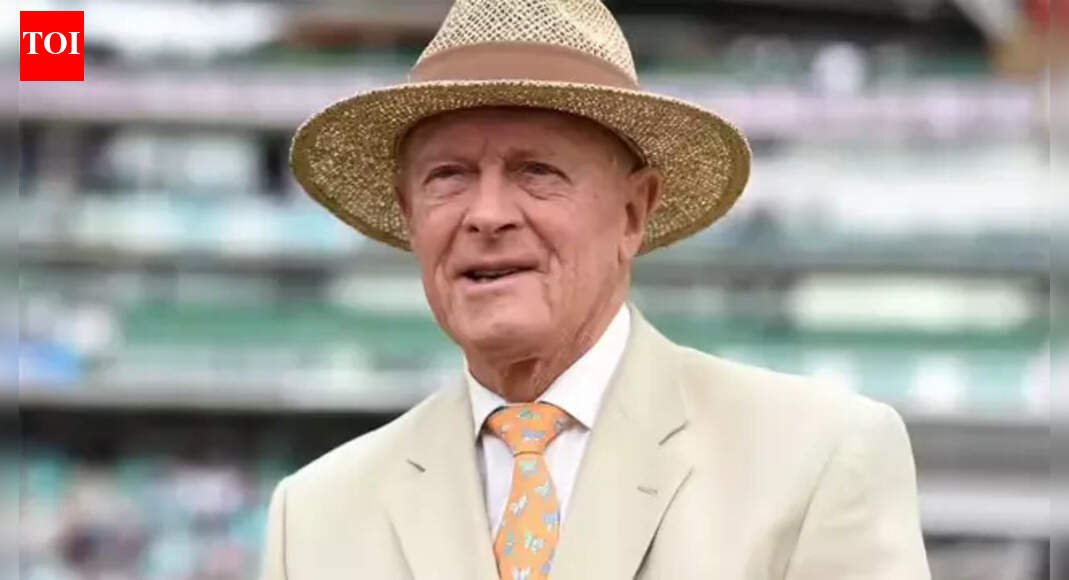
Geoffrey Boycott (Getty Images)

Before India’s batting maestros Sunil Gavaskar and Sachin Tendulkar stamped their dominance on the list of Test cricket’s top run-getters, West Indies’ legendary all-rounder Garry Sobers held the record for a long time, finishing his career with just over 8,000 runs.Go Beyond The Boundary with our YouTube channel. SUBSCRIBE NOW!Gavaskar later became the first batter to breach the 10,000-run mark and retired with 10,122 runs from 125 matches in 1987. Tendulkar then lifted the record even higher when he bid adieu with a staggering 15,921 runs from 200 matches in 2013. Before all that, Sobers had created the benchmark for most runs when he retired in 1974.

Why Rohit Sharma got really emotional at a promotional event

Sobers played for the mighty West Indies from 1954 to 1974, scoring 8,032 runs at a stunning average of 57.78 in just 93 Tests, including 26 hundreds and 30 fifties.Seven years later, on this day in 1981 — December 23 — England great Geoffrey Boycott surpassed the long-standing record in style in Delhi, hitting a hundred at the Feroz Shah Kotla Stadium. The match ended in a draw, despite England declaring their first innings at 476/9.

December 23, 1981 — The day Boycott etched his name in the record books

The England opener was in the final phase of a long career, having debuted against Australia at Nottingham in 1964. The India tour was his last Test series for the then 41-year-old batting legend.Before the fateful day, Boycott needed 82 runs to break Sobers’ towering record. England captain Keith Fletcher won the toss and decided to bat first in Delhi.

Poll

Who do you think is the greatest Test run-scorer of all time?

England started confidently as their openers — Boycott and Graham Gooch — scored steadily and added 132 runs for the opening wicket. Both reached their half-centuries before Dilip Doshi provided the hosts with their first breakthrough, dismissing Gooch for 71 off 176 balls, an innings that included 11 fours.By the end of the opening day, the record belonged to the England batter, with Boycott finishing on 86 not out to take his overall tally to a record 8,037 runs. England went to stumps at 190/1.Boycott completed his hundred — his 22nd and final century — the next day before falling to Doshi for 105. He struck just seven fours in his marathon 285-ball knock and added another century partnership of 116 runs with Chris Tavare, who scored a majestic 149 off 303 balls, including 18 fours.England ended Day 2 at 428/4, before the following day was taken as a rest day due to Christmas.England declared at 476/9 on Day 3, but India replied steadily, with opener and captain Gavaskar contributing 46. At stumps, India were 172/3, with Gundappa Viswanath unbeaten on 67 and Sandeep Patil on 30. India batted through the entire fourth day, adding 204 runs for the loss of four wickets, with Viswanath scoring 107.India were eventually bowled out for 487 on the final day, after which England batted briefly before declaring their second innings on 68 without loss. The two teams then shook hands on a draw, but the match remains best remembered for Boycott’s record-breaking feat on the opening day.

Geoffrey Boycott’s ‘abrupt’ final goodbye

Boycott brought down the curtain on his 18-year Test career in the next match of the tour at the iconic Eden Gardens. It was a subdued end, as he managed just 18 and 6 in the two innings of the Kolkata Test, which also ended in a draw.Hosts India won the six-match series 1-0, following their 138-run victory in the opening Test at the Wankhede Stadium in Mumbai.The Kolkata Test was the fourth match of the series, and interestingly, Boycott returned to England before the tour concluded, abruptly ending his Test career as the leading run-getter in the format’s history.


Source link

Deepti Sharma becomes No. 1 T20I bowler; Laura Wolvaardt dethrones Smriti Mandhana as top ODI batter | Cricket News


Deepti Sharma becomes No. 1 T20I bowler; Laura Wolvaardt dethrones Smriti Mandhana as top ODI batter
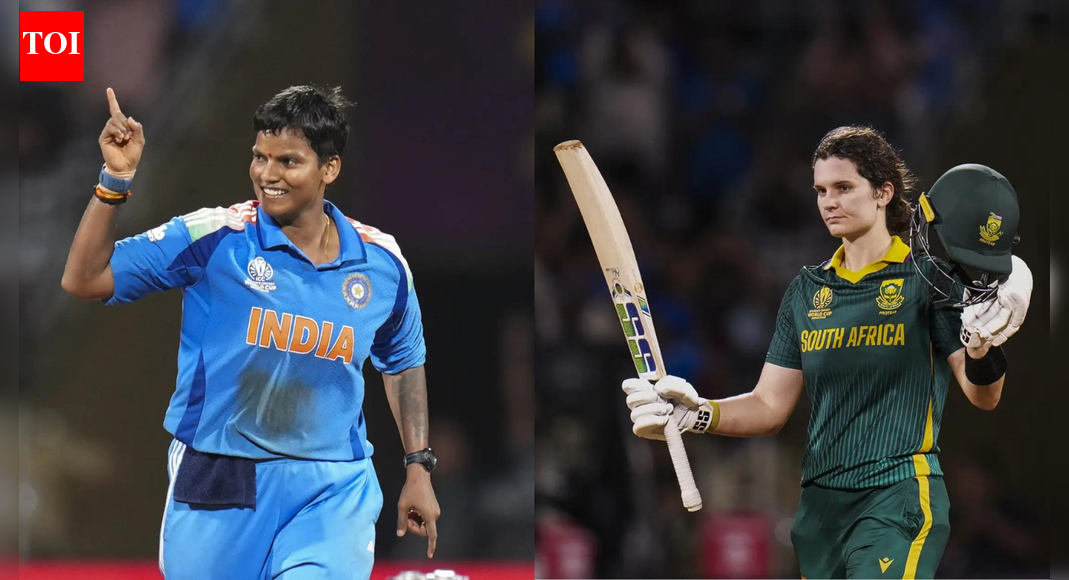
Deepti Sharma and Laura Wolvaardt (PTI)

India all-rounder Deepti Sharma and South Africa captain Laura Wolvaardt have made significant strides in the latest ICC Women’s Player Rankings, both claiming the top spots in their respective categories. Deepti Sharma climbed to No. 1 among T20I bowlers for the first time in her career, following a strong performance in India’s opening T20I against Sri Lanka at home. Wolvaardt, meanwhile, reclaimed the top position among ODI batters, previously held by India’s Smriti Mandhana, after finishing South Africa’s ODI series against Ireland on a high note.

The Inside Story Behind India’s World Cup Win: Shafali & Deepti Reveal WPL’S IMPACT

Australia’s Annabel Sutherland had been the leading T20I bowler since August, but Deepti’s impressive 1-20 from four overs in Vizag proved decisive. Her efforts in India’s eight-wicket win earned her five rating points, giving her a slender one-point advantage over Sutherland at the summit of the T20I bowling charts. Deepti’s teammate Arundhati Reddy also made gains, moving up five places to 36th among T20I bowlers following the Sri Lanka match. On the batting front, Jemimah Rodrigues was the standout climber, rising five spots to reach ninth position in the T20I batter rankings after scoring an unbeaten half-century and earning the Player of the Match award. Rodrigues now joins fellow Indians Mandhana (third) and Shafali Verma (10th) in the top 10. In ODIs, Wolvaardt’s remarkable form saw her leapfrog Mandhana to reclaim the No. 1 spot. The South African captain scored back-to-back centuries in the final two matches of the three-match series against Ireland, helping her side secure a 3-0 sweep and reaching a career-high rating. Mandhana dropped to second place as a result. Other South African players also benefited from strong performances. Sune Luus rose seven places to 34th among ODI batters and climbed 11 spots to 22nd in the ODI all-rounders rankings, thanks to her contributions with both bat and ball. Ireland’s players also made notable progress in the rankings. Arlene Kelly moved up five spots to 27th among ODI bowlers, Gaby Lewis advanced four places to 18th, and Amy Hunter climbed three spots to 28th, highlighting the strides the Irish team is making in both bowling and batting departments. Overall, the latest rankings reflect standout performances across India, South Africa, and Ireland, with Deepti Sharma and Laura Wolvaardt cementing their status as leaders in women’s cricket.


Source link

Watch: Actor Vijay’s car stopped in Chennai as TVK members protest district post allocation | India News


Watch: Actor Vijay's car stopped in Chennai as TVK members protest district post allocation

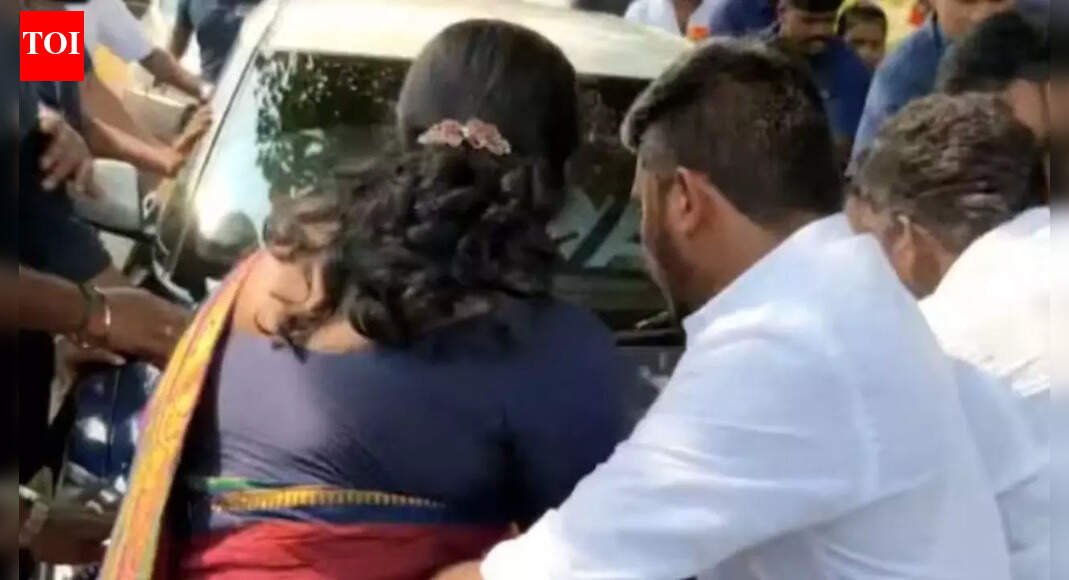
NEW DELHI: Actor-turned-politician Vijay’s car was stopped in Chennai on Tuesday by unhappy TVK members who were protesting the allocation of district-level posts. There has been no report of any injury or damage following the incident.TVK, led by Vijay, has earlier faced challenges, including a deadly stampede at a rally in Karur in September 2025 that left more than 40 people dead.Tamilaga Vettri Kazhagam (TVK), founded by actor-turned-politician Vijay, was officially launched on February 2, 2024.More details are awaited.


Source link

‘Indians kept provoking Pakistan players’: PCB chief Mohsin Naqvi to lodge formal complaint against India U19 boys | Cricket News


'Indians kept provoking Pakistan players': PCB chief Mohsin Naqvi to lodge formal complaint against India U19 boys

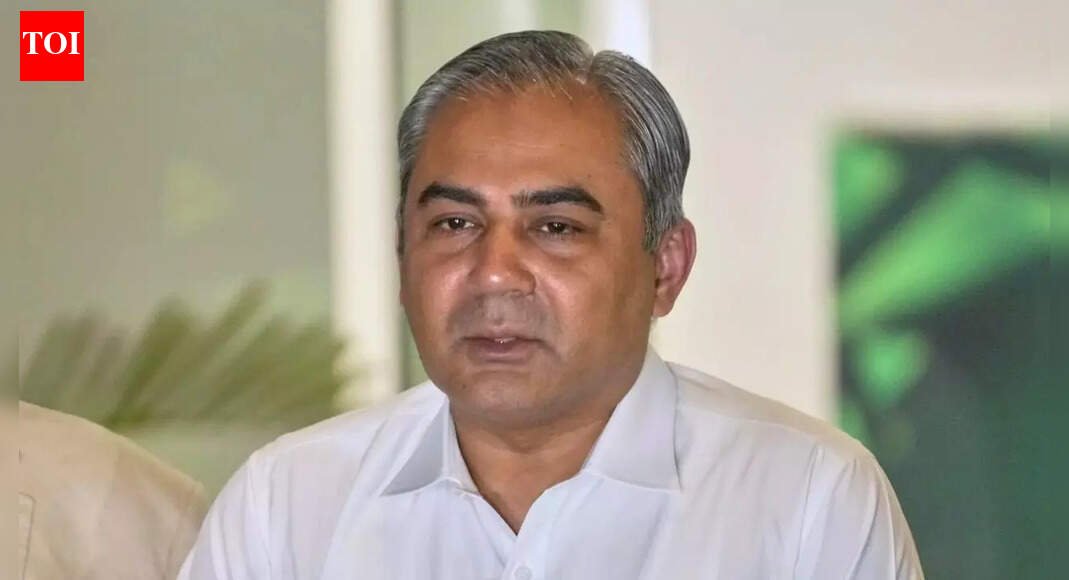
NEW DELHI: Pakistan Cricket Board (PCB) is planning to file a formal complaint with the International Cricket Council (ICC) against Indian Under-19 players following the final of the Under-19 Asia Cup 2025. The confirmation came from Pakistan Cricket Board (PCB) chairman Mohsin Naqvi, who is also the head of the Asian Cricket Council (ACC).

T20 World Cup squad: Are India going Pakistan’s chaotic way?

The final match was played on Sunday and ended in a dominant win for Pakistan. Batting first, Pakistan posted a huge total of 347 runs for the loss of eight wickets. Sameer Minhas played a historic innings and scored a century. While defending the total, Pakistan’s bowlers dismissed India for just 156 runs in 26.2 overs, and they won the match by 191 runs.This victory was special for Pakistan as it was their first Under-19 Asia Cup title in 13 years and only the second time they have won the tournament in history. The team was later honoured at a reception hosted by Pakistan Prime Minister Shehbaz Sharif. Speaking to the media at the reception, Mohsin Naqvi said that Pakistan would take the matter to the ICC. He accused Indian players of crossing the line during the game.“Indian players kept provoking Pakistani players during the Under-19 Asia Cup final,” Naqvi said while speaking to the media. “Pakistan will formally inform the ICC about the incident. Politics and sports should always be kept separate.”During the match, there were several tense moments and heated exchanges between players from both sides. Pakistan’s Under-19 mentor Sarfaraz Ahmed raised concerns about the behaviour of Indian players during the final.Sarfaraz Ahmed also spoke strongly about the issue. He said the actions of Indian players went against the values of cricket.“India’s behaviour during the game was not appropriate, and their conduct was against the spirit of cricket,” Sarfaraz said. “Despite that, we celebrated our victory with sportsmanship. Cricket should always be played in the right spirit; what India did reflects their own actions.”This is not the first time players from India and Pakistan have faced discipline issues. During the senior men’s Asia Cup 2025, players from both teams were reprimanded for breaching the ICC Code of Conduct.


Source link

Access Denied


Access Denied

You don’t have permission to access “http://www.ndtv.com/india-news/india-bangladesh-ties-dipu-chandra-das-osman-hadi-sheikh-hasina-younger-brother-or-frankensteins-monster-delhi-dhaka-50-years-after-1971-9895043” on this server.

Reference #18.77fdd417.1766486017.4b4238ca

https://errors.edgesuite.net/18.77fdd417.1766486017.4b4238ca


Source link

Can AI help detect breast cancer early in India? | India News


Can AI help detect breast cancer early in India?

India has the highest global mortality rate for breast cancer.This isn’t an outlandish claim, but reality backed by multiple studies across the globe. The studies spanned over decades, but India has remained the premier.With several campaigns running across the country, every camp set up for cancer screenings and everything that prompts people to take constant screenings seriously, the medical sciences are making progress towards tackling cancer early.

Breast Cancer: Early signs of the disease one must never ignore

However, the numbers do not paint a positive picture. As per ICMR data cited by the government in a 2025 press release, “the estimated number of incidences of cancer cases was more than 14 lakhs in 2023 in India.”Every year, India records over 1.57 million new cancer cases, and this number is expected to rise. Over 70% of these cases are detected at late stages, as cited by CK Birla Hospital. Dr Monika Pansari, a surgical oncologist with 18 years of experience, states that most cancer cases in her career used to seek help only at a much later stage.“We used to see quite a few of advanced malignancies (cancerous growth), advanced cancers, cancers coming in stage III, stage IV. That used to be huge as far as breast cancer is concerned,” says the doctor.This makes treatment more challenging and lowers the survival rates. However, early detection can improve survival rates by up to 80% for some cancers.

Cancer cases in India

Cancer poses a serious threat to life, but it is not always irreversible. Several types are highly curable and even preventable when detected early.“Of all the cancers that may be easily recognised in their early stages and are avoidable, one of the most prevalent ones in India is breast cancer”, a research on cancer screening and early diagnosis in India said.Omega Hospitals, in its statistical analysis of breast cancer cases in Indian women, says that 1 in 28 Indian women may encounter breast cancer during their lifetime, with urban areas bearing a higher burden compared to rural regions.

Breast cancer detection advancements

It is always better to look out for the symptoms. Through regular examinations and check-ups, the unfortunate instances of cancer developing in the later stages can very easily be avoided. Research shows that feeling a lump during breast self-examination has been the first step to identifying breast cancer. However, some procedures can detect breast cancer as early as 1-3 years before the lump is even felt, like a mammogram.CK Birla Hospital says that through a mammogram, breast lumps can be detected up to 2 years before the presence of any visible symptom. However, it says, many women do not undergo a mammogram until the age of 40.“A mammogram is basically an X-ray of the breast, wherein the breast is compressed against two plates,” explains Dr Monika Pansari.

Mammogram

Reflecting on the experience over the time of technological advancement in cancer detection technology, she says the improved quality of screening results has helped in the appropriate diagnosis of malignancy.“The quality of mammograms has changed, which used to be a film. Earlier, in the older days, what we used to get was just a film mammogram,” the doctor said, “Now, it has become digitalised, wherein obviously we can detect the cancer even if it’s very tiny, which was very difficult in earlier old mammogram machines.”She further goes on to explain other processes used for breast cancer detection, complementary to mammography.“For digital mammograms, there is something called tomosynthesis, wherein we do imaging of the breast, just like a CT scan, multiple slices of images are taken, wherein even if it’s a small, tiny tumour, which is maybe missed in the standard mammogram, can be picked up in tomosynthesis.”This goes on to show the massive progress medical sciences have made in tackling and screening cancer.

Importance of early detection

Dr Monika goes on to list out the importance of having check-ups as a vital part of one’s routine, as early detection increases the chances of getting rid of the cancerous cells with the least procedures to undergo.“Cure rates are as high as 98% in stage I. So later the stage, lower the cure rates,” she says, “If you talk about stage II, cure rates are a bit lower than stage I. Stage III again, cure rates will be a little less than stage II.”She further elaborates how Stage IV breast cancer, while it can be kept under control for years, takes a much longer time and harsher procedures. “For stage IV in breast cancer, we can keep the treatment going and keep the cancer under control for many years if it is a good or favourable type of cancer,” she says, underscoring the possibilities of elongated treatment durations.“A very important advantage of early detection, especially in breast cancer, is that the treatment can be less aggressive,” the surgical oncologist says, “For cancer treatment, we always offer surgery, chemotherapy and radiation.”However, she highlights, early detection could save the need for such procedures. “If we detect the cancer early, if the cancer is some favourable type of cancer, which in medical terms we say hormone receptor positive, there is a small possibility that they may not need chemotherapy.”Ignoring breast cancer until late not only elongates the trauma of the treatment on the body, but it can also lead to losing a crucial part of one’s identity. Dr Pansari, while talking about the benefits of early detection, pointed out how it can also help in “saving the breast.”“For females undergoing mastectomy, that is removal of the breast, is a very emotionally and functionally traumatising experience. Their body image perspective can change entirely should there be an instance,” she explains. “Patients who come to us with advanced malignancy. Obviously, we have to offer them a mastectomy in case it is difficult to preserve the breast.”

Dr Monika Pansari

She further adds, “If the same patient undergoes screening regularly and if we pick up the cancer in early stages, then definitely breast conservation surgery can be offered, and that helps with their long-term mental well-being as well.”

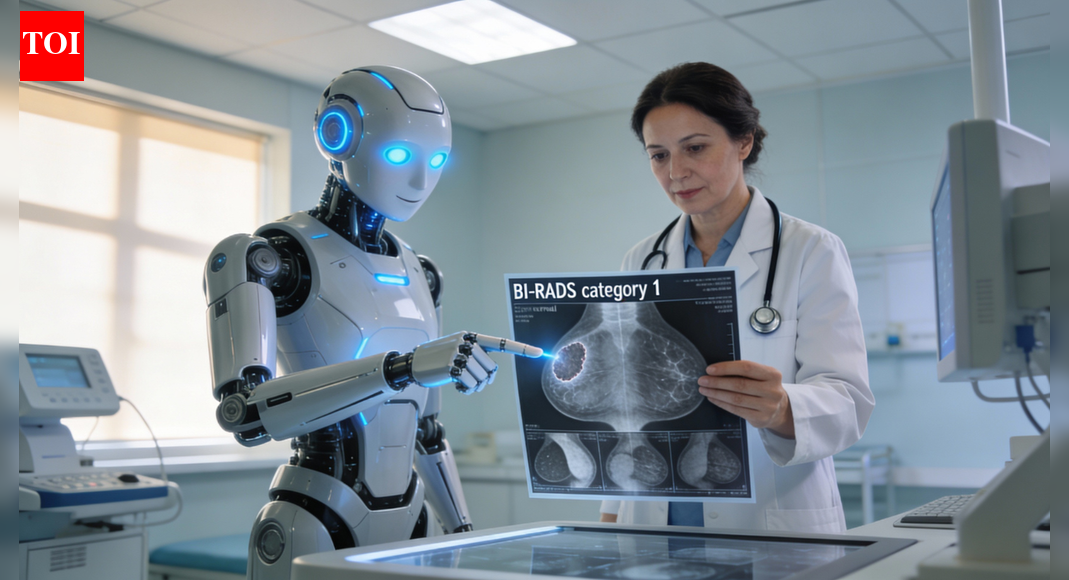
Human-AI partnership for breast cancer detection

With the intervention of artificial intelligence, progress in methods of detecting cancerous cells is being made faster and more efficiently.As Cancer Research Institute puts it, “AI creates immeasurable efficiency when it comes to aggregating, recalling, and contextualising complicated datasets without the element of human error. In other words, with a few short prompts, advanced models can process irrationally large amounts of data, identify patterns, make predictions, and perform analyses that researchers would otherwise need to sleuth manually.Despite the clarity and digitisation, about 20% of breast cancers are missed in the mammogram readings, studies by the US National Cancer Institute say. However, incorporating AI in the systems has improved the efficiency of detection.

AI for breast cancer detection

In Sweden, a study was conducted by The Lancet Oncology, where more than 80,000 women were screened through mammography. Half of the population had their reports read by a pair of radiologists, while for the other half, AI and one radiologist were paired together. As per the findings, the other half with an AI partner detected 20% more cancers than the first group.As per breastcancer.org, a separate study in the US and Germany showed that radiologists, when paired with artificial intelligence, detected cancer 2.6% better as compared to the radiologist working alone.Dr Monika, when asked about the impacts of AI being implemented in the Indian healthcare system for detecting breast cancer, goes on to support the chances of betterment in cancer detection.“It’s basically a software, there is a lot of data, which is there. So, small lesions, which can still be missed in routine digital mammograms, or even in tomosynthesis, when there’s implementation of AI, the very smallest of the lesions can be picked up. So that is how AI is going to help us in early detection,” says the oncologist.

AI for breast cancer detection in India

The intervention of AI is still in the testing phase, as Dr Pansari highlights, “It is still under evaluation. We have not yet started practising it in our day-to-day routine, regular life, but definitely, AI can help us.”The oncologist also expresses her optimism about getting the technology implemented in India soon, as she says, “research is on. Hopefully, we’ll have it all in a few days, a few months. Not days, maybe a few months or years.”“For anything to come into the medical practice,” the doctor says, “there’s a lot of validation, which happens because it is for public use. We cannot use it in our clinical practice until the trial and validation are done.”She further goes on to add, “It has got its own pros and cons. Until the time we complete the research and collect data, we cannot use it for the public. So that validation has to happen. And once it is all done, then we may start using it.”While AI hasn’t made its way into everyday medical practice, NIRAMAI (Non-Invasive Risk Assessment with Machine Intelligence), a startup based in Bengaluru, has developed a machine that uses heat to analyse and screen the presence of cancerous tissues in the breast.With the dawn of AI in cancer detection in India possibly breaking soon, the country stands at a crucial intersection of technology and public health. While traditional screening methods like mammography have significantly improved early diagnosis, their limitations underscore the need for smarter, more accessible solutions.


Source link