Breaking News
Virat Kohli surpasses Sachin Tendulkar on domestic return, saves Delhi with 131 knock in Vijay Hazare Trophy opener | Cricket News


Virat Kohli surpasses Sachin Tendulkar on domestic return, saves Delhi with 131 knock in Vijay Hazare Trophy opener
Virat Kohli and Sachin Tendulkar (PTI Photo)

NEW DELHI: On his return to domestic cricket, India’s batting stalwart Virat Kohli produced another eye-catching performance as Delhi started their Vijay Hazare Trophy campaign with a thrilling four-wicket win over Andhra in Bengaluru on Wednesday. Playing at the BCCI Centre of Excellence, Delhi chased down the target of 299 and won the match, thanks mainly to Kohli’s masterclass with the bat.

Why Suryakumar Yadav the batter could hurt India at T20 World Cup

Delhi won the toss and chose to bowl first. Andhra made good use of the opportunity and posted a strong total of 298 for 8 in their 50 overs. Ricky Bhui was the standout performer for Andhra. He played an excellent knock of 122 runs from 105 balls, hitting 11 fours and seven sixes. His innings gave Andhra the backbone they needed after early wickets. Nitish Reddy (23), Maramreddy Hemanth Reddy (27), and Singupuram Prasad (28) also added quick runs at the end to push the score close to 300.For Delhi, Simarjeet Singh was the pick of the bowlers, having taken five wickets and broken important partnerships. Prince Yadav also bowled well and picked up three wickets.Chasing 299 was never going to be easy, but Delhi got off to a flying start. Young batter Priyansh Arya played an aggressive innings. He amassed 74 runs from just 44 balls. His attacking approach put pressure on the Andhra bowlers early in the chase.After Arya got out, Virat Kohli took full control of the innings. Now retired from T20Is and Test cricket, Kohli showed his experience in the longer format of the game. He paced his innings perfectly and found the gaps with ease. Kohli scored a magnificent 131 runs from 101 balls, courtesy of 14 fours and three sixes.

Vijay Hazare Trophy: Andhra vs Delhi

Delhi’s Virat Kohli plays a shot during the Vijay Hazare Trophy 2025-26 (PTI Photo/Shailendra Bhojak)

In doing so, Kohli also surpassed Sachin Tendulkar to become the fastest player to reach 16,000 List A runs. The 37-year-old reached the milestone in his 330th innings during the ongoing Vijay Hazare Trophy, compared to Tendulkar’s 391 innings.Nitish Rana gave Kohli excellent support from the other end. Rana played a quick and fearless knock of 77 runs from 55 balls. Together, Kohli and Rana stitched a match-winning partnership that pushed Delhi closer to the win.Although Delhi lost a few wickets towards the end, the hard work was already done. The team reached the target in just 37.4 overs. Harsh Tyagi (4) and Navdeep Saini (5) stayed till the end to seal the win.Nevertheless, Wednesday saw Kohli’s brilliance on display as his innings helped Delhi begin their tournament on a high note.


Source link

Gold price today: How much 18K, 22K, 24K gold costs in Delhi, Mumbai, Bengaluru — check today’s city-wise rates


Gold price today: How much 18K, 22K, 24K gold costs in Delhi, Mumbai, Bengaluru — check today’s city-wise rates

Gold prices surged to fresh record levels in both domestic and international markets on Wednesday, driven by expectations of further monetary easing by the US Federal Reserve and heightened geopolitical tensions that boosted safe-haven demand.In domestic futures trade, gold prices climbed to a lifetime high of Rs 1,38,676 per 10 grams on the Multi Commodity Exchange (MCX). Gold futures for February delivery rose by Rs 791, or 0.57%, marking the metal’s third consecutive session of gains. In the global markets, Comex gold futures advanced for the fourth session in a row, rising by $49.4, or 1.10%, to touch a fresh peak of $4,555.1 per ounce. “Gold surged past $4,500 per ounce to a fresh record, driven by expectations of further Federal Reserve easing and rising geopolitical tensions,” Jigar Trivedi, Senior Research Analyst at Reliance Securities told PTI. “Investors are still pricing in two rate cuts in 2026 as inflation cools and employment conditions soften, even as policymakers remain divided. Meanwhile, tensions between the US and Venezuela have been rising, which has lifted safe-haven demand and increased geopolitical risks across commodity markets,” Trivedi added.Here’s how much gold costs in your city today:

Gold rate in Delhi today

Gold prices in Delhi edged higher, with 22K gold at Rs 12,750 per gram, up Rs 35, 24K gold at Rs 13,908 per gram, up Rs 38, and 18K gold at Rs 10,435 per gram, gaining Rs 29.

Gold rate in Mumbai today

Gold prices in Mumbai saw 22K gold priced at Rs 12,735 per gram, up Rs 35, while 24K gold stood at Rs 13,893 per gram, up Rs 38. The 18K gold rate was Rs 10,420 per gram, higher by Rs 29.

Gold rate in Bengaluru today

In Bengaluru, 22K gold was quoted at Rs 12,735 per gram, gaining Rs 35, while 24K gold traded at Rs 13,893 per gram, up Rs 38. 18K gold was priced at Rs 10,420 per gram, up Rs 29.

Gold rate in Hyderabad today

Hyderabad markets recorded 22K gold at Rs 12,735 per gram, higher by Rs 35, with 24K gold at Rs 13,893 per gram, up Rs 38. The 18K gold rate stood at Rs 10,420 per gram, gaining Rs 29.

Gold rate in Chennai today

Gold prices in Chennai moved up, with 22K gold at Rs 12,800 per gram, rising Rs 30, while 24K gold was priced at Rs 13,964 per gram, up Rs 33. 18K gold was quoted at Rs 10,675 per gram, gaining Rs 25.

Gold rate in Ahmedabad today

Ahmedabad saw 22K gold priced at Rs 12,740 per gram, up Rs 35, while 24K gold stood at Rs 13,898 per gram, gaining Rs 38. The 18K gold rate was Rs 10,425 per gram, higher by Rs 29.

Gold rate in Jaipur today

In Jaipur, 22K gold was quoted at Rs 12,750 per gram, up Rs 35, while 24K gold traded at Rs 13,908 per gram, gaining Rs 38. 18K gold stood at Rs 10,435 per gram, up Rs 29.

Gold rate in Kanpur today

Kanpur markets showed 22K gold at Rs 12,750 per gram, rising Rs 35, while 24K gold was priced at Rs 13,908 per gram, up Rs 38. The 18K gold rate stood at Rs 10,435 per gram, gaining Rs 29.

Gold rate in Kolkata today

Gold prices in Kolkata saw 22K gold at Rs 12,735 per gram, up Rs 35, while 24K gold stood at Rs 13,893 per gram, gaining Rs 38. 18K gold was priced at Rs 10,420 per gram, higher by Rs 29.


Source link

Who was Masashi “Jumbo” Ozaki? The legendary Japanese golf star and hall of famer, who died at 78 | International Sports News


Who was Masashi “Jumbo” Ozaki? The legendary Japanese golf star and hall of famer, who died at 78
Masashi Ozaki (via Getty Images)

Masashi “Jumbo” Ozaki, one of the greatest golfers Japan has ever produced, has died after a battle with sigmoid colon cancer at 78 years of age. The Japan Golf Tour Organization (JGTO) confirmed his death on Wednesday, saying Ozaki was diagnosed with the disease about a year ago. A family funeral will be held, with a farewell event planned at a later date.Ozaki was a towering figure in Japanese sport. He won 113 tournaments worldwide and became a national icon through his power, style, and charisma. His influence went far beyond trophies. Many players who followed, including major champions, credit Ozaki, who showed what was possible for Japanese golf on the world stage.

Masashi “Jumbo” Ozaki, a pioneer who shaped Japanese golf history

Masashi Ozaki’s career achievements remain unmatched in Japan. He won 94 tournaments on the Japan Golf Tour over 29 years. His final victory came at the ANA Open when he was 55. He topped the tour’s money list a record 12 times, including five straight years from 1994 through 1998. He won the Japan Open five times and the Japan PGA Championship six times. In 1996, at age 49, he rose to No. 5 in the world rankings.In 1973, Ozaki made history by becoming the first Japanese golfer to finish in the top 10 at the Masters, placing eighth. He played in 49 majors overall. His best major finish came at the 1989 U.S. Open at Oak Hill, where he finished three shots behind Curtis Strange. He played the Masters 19 times, with his final appearance in 2000.“What made him charismatic was the fact that he won four times in which he came back from eight shots behind. He pulled off some incredible shots a number of times”, according to the JGTO website on Ozaki. “Ozaki is often thought to be to Japanese golf what Arnold Palmer is to American golf. His success has spawned an entire generation of Japanese golf professionals, both male and female”, the World Golf of Fame website said about Ozaki. After being inducted into the World Golf Hall of Fame in 2011, Ozaki had stated that he dedicated his life to Japanese golf and he is extremely grateful the voters thought he was worthy of this honor.” His legacy, like his nickname “Jumbo,” remains larger than life! Also Read: Ariel Helwani brands Andrew Tate’s loss a major reality check, questions his “alpha male” image


Source link

5 reasons digestion worsens in the winter and slows your gut down |


5 reasons digestion worsens in the winter and slows your gut down

Winter rarely announces what it is doing to your body. It happens quietly. Meals start sitting heavier. You feel full for longer. Bloating shows up even on normal eating days. Your gut feels slower, less cooperative, almost sleepy. Many people brush this off as overeating or moving less, but digestion worsening in winter is not just a habits problem. It is a seasonal shift rooted in how the human body responds to cold and reduced daylight.Digestion depends on signals. Temperature, light exposure, daily movement, and routine all guide how quickly the gut works. When winter changes all of these at once, the digestive system adjusts by slowing things down. This response once helped humans conserve energy during colder months. Today, it mostly feels uncomfortable.

Digestion Issues? Try These Easy Yoga Poses To Boost Your Gut

A peer-reviewed study published in Cell Host and Microbe observed that gut microbiota composition changes across seasons in response to environmental factors such as temperature and circadian rhythm. These microbial shifts were linked to changes in metabolism, inflammation, and digestive efficiency.When digestion is viewed through this biological lens, winter-related gut issues stop feeling random. They follow a pattern.

How seasonal changes affect digestion in colder months

Winter digestion problems do not come from one dramatic change. They build slowly through small, everyday shifts that add up.

1. Cold temperatures slow digestive muscle movement

Cold weather alters blood flow. The body focuses on protecting vital organs by keeping them warm, which reduces circulation to the digestive tract. With less blood supply, the muscles of the stomach and intestines contract more slowly.As a result, food moves through the gut at a reduced pace. This delay increases feelings of heaviness, bloating, and gas. Meals that felt light in summer can suddenly feel uncomfortable without any clear trigger.

2. Reduced physical activity weakens gut motility

People rarely notice how much less they move in winter. Shorter days and cold air lead to fewer walks, longer sitting hours, and more time indoors. Movement plays a direct role in digestion because the intestines respond to physical motion.When daily activity drops, bowel movements slow down. This is why constipation becomes common in winter, even among people who normally have regular digestion.

3. Winter foods place a heavier load on digestion

Cold weather changes appetite. Meals become warmer, richer, and more filling. Refined carbohydrates, fried foods, creamy dishes, and sweets appear more often on the plate.At the same time, fibre intake often drops. Fewer fruits, salads, and raw vegetables means less bulk in stool and slower bowel movement. The gut ends up working harder while moving more slowly.

4. Lower water intake dries out the digestive process

Thirst signals weaken in cold weather. Many people drink less water without realising it. Indoor heating adds to fluid loss, even though the body does not ask for more water clearly.When hydration drops, stool becomes firmer and harder to pass. This contributes to constipation, bloating, and the sensation that digestion is stuck or incomplete.

5. Disrupted sleep and routines interfere with gut rhythm

Winter affects sleep patterns more than people admit. Later mornings, inconsistent bedtimes, and reduced sunlight exposure disturb the body clock. The gut follows this rhythm closely.Irregular meal timing leads to uneven digestive enzyme release. Stress levels also tend to rise during darker months, which further slows digestion and increases acidity or discomfort.

Supporting your gut through winter

Supporting digestion in winter does not require extreme changes. Small adjustments make a difference. Warm fluids instead of cold drinks. Gentle movement after meals. More cooked vegetables. Regular meal timing.Paying attention to hunger helps too. Eating out of routine rather than appetite can strain digestion further during colder months.Digestion worsens in the winter because the body is adapting, not malfunctioning. When those adaptations are supported rather than ignored, the gut usually finds its rhythm again.Disclaimer: This content is intended purely for informational use and is not a substitute for professional medical, nutritional or scientific advice. Always seek support from certified professionals for personalised recommendations.Also read| 7 strange ways your body reacts in life or death situations


Source link

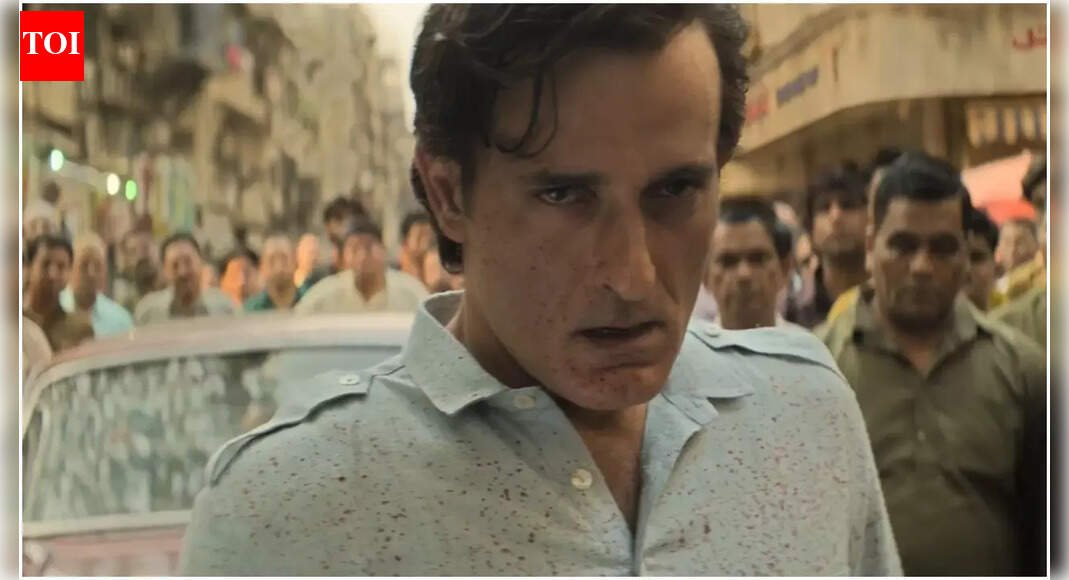
‘Tez se maaro, main gir nahi raha hu’: Akshaye Khanna made this intense demand to co-star Aditya Uppal during ‘Dhurandhar’ in-van hitting scene |


Akshaye Khanna wins praise for his intense role as Rehman Dakait in Dhurandhar. Co-star Aditya Uppal revealed a BTS fun fact from their van scene: Khanna urged him to hit hard for realism, saying, “Tez se maaro, main gir nahi raha hu,” overcoming Uppal’s hesitation. Directed by Aditya Dhar, the film stars Ranveer Singh, Sanjay Dutt, and more.

Akshaye Khanna is courting immense love across social media platforms for his brilliant performance as Rehman Dakait in ‘Dhurandhar’. His co-star Aditya Uppal, who played Omar Haider of the Lyari Task Force led by Sanjay Dutt as SP Chaudhary Aslam recently spilled a fun BTS detall from their intense van scene. He said Khanna straight-up told him to hit him for real, and he was super hesitant about laying hands on such a big senior actor.

Aditya Uppal reveals the BTS detail from ‘Dhurandhar’

During an appearance at podcast with Abhishek Pali Talks, he expressed, “There was a little hesitation at first. He is a senior actor. But once I am Omar Haider, he is Rehman Dakait for me. No matter how much you prepare yourself, you feel the hesitation for a second. Sanjay sir hit him and then asked us to beat him up. We ended up hitting him, that shot has been edited now, but it was quite extended.”

‘Dhurandhar’: The Film That Forced Indian Cinema To Change

Uppal further added, “When I hit him for the first time, obviously I was a little taken aback, I thought of doing it softly. He shouldn’t get hurt for real because it was also a compact space. Van was not even moving, people were just shaking it during the shoot. Aditya sir asked me to go for it. In fact, Akshaye sir told me, ‘Tez se maaro, main gir nahi raha hu (Hit me properly, I am not falling)’. When he said that the second time, then I hit him properly and went all out.

Aditya Uppal on training for gun scenes

Talking about their training to operate guns, Aditya shared, “We got a proper weapon training. Aditya sir is very particular about this that whenever the actor comes on set, they should be trained properly before. If you have a shot or even if you are in that scene, then you should know how to use a gun. And I was playing an officer from Pakistan, so it was even more important how I operate a gun, it had to be different from an untrained criminal. There were three different types of gun, in which the gun I had was a glock gun. I had to train myself on how to unload the magazine and how to run the glock. So, you need to learn the mechanism. He is very particular about not wasting time when you come on the set, the scene should be done with preparation.”

About ‘Dhurandhara’

Directed by Aditya Dhar, ‘Dhurandhar’ also features Ranveer Singh, Sanjay Dutt, Sara Arjun, R Madhavan, Arjun Rampal, and many others.


Source link

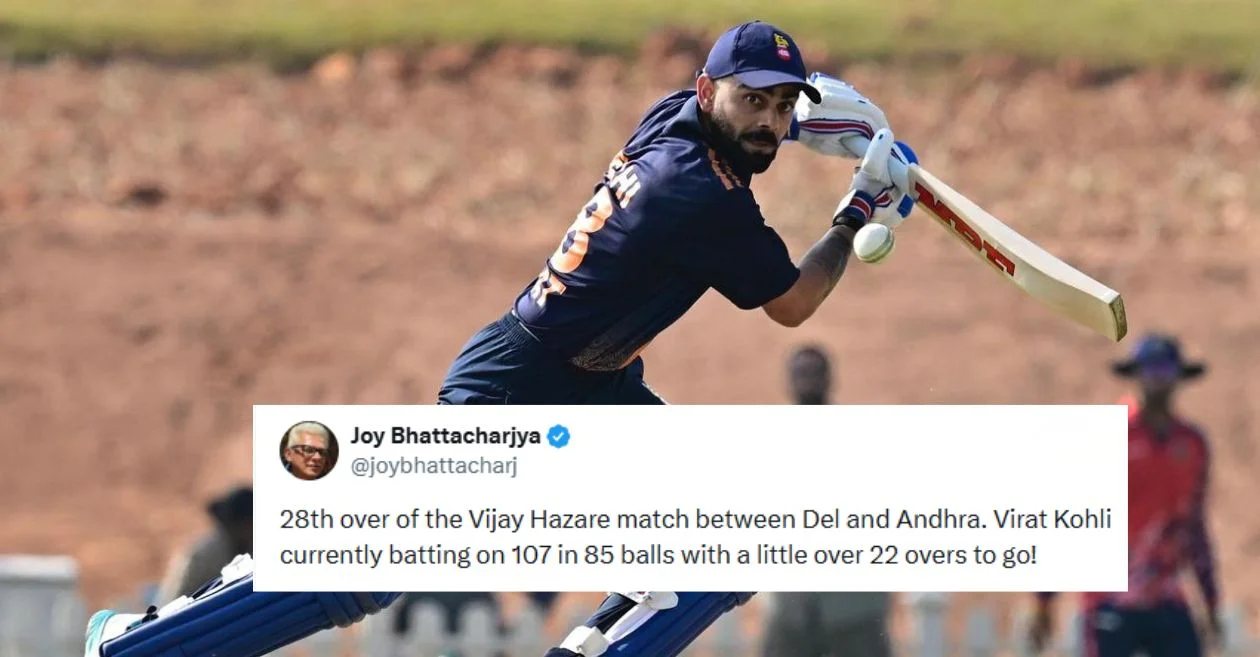
Fans go wild as Virat Kohli smashes 83-ball century for Delhi in his historic Vijay Hazare Trophy return vs Andhra Pradesh


In a historic display of batting mastery on December 24, 2025, Virat Kohli marked his much-anticipated return to domestic cricket by smashing his 58th List A century. Representing Delhi against Andhra Pradesh in the Vijay Hazare Trophy (VHT) 2025-26 in Bengaluru, Kohli proved why he remains the gold standard of the 50-over format.

Virat Kohli smashes stunning century in Vijay Hazare return as Delhi eye victory over Andhra Pradesh

Kohli made a spectacular return to the Vijay Hazare Trophy, playing a masterful knock of 131 runs from 101 balls. His dominant innings, which included 14 boundaries and three sixes, set the stage for Delhi’s chase of 299 runs. Kohli’s presence at the crease was nothing short of a spectacle, with his sharp strokeplay and calculated aggression lighting up the Bengaluru venue.

After losing his opening partner, Priyansh Arya (74),, Kohli anchored the innings alongside Nitish Rana, who played a solid supporting role with 66 off 50 balls. Kohli’s century took the game to a different level, displaying his ability to shift gears effortlessly. The chase was well within Delhi’s grasp, as they surged towards the target at an impressive rate of 8.33 runs per over. Kohli’s performance was a perfect blend of patience and aggression, ensuring Delhi’s position in a commanding position in the ongoing tournament. His confidence on the field is an excellent sign for both his form and Delhi’s campaign in the Vijay Hazare Trophy 2025-26.

Also READ: Ishan Kishan smashes record-breaking century as Vijay Hazare Trophy witnesses historic batting day

Kohli reaches the 16,000-run milestone in List A cricket after Sachin Tendulkar

Making his first appearance in the tournament in 15 years, Kohli entered the match needing just a single run to reach the 16,000-run milestone in List A cricket. He achieved this feat in the very first over of Delhi’s chase, becoming the second Indian after Sachin Tendulkar and the ninth player overall to breach this mark. Notably, Kohli reached 16,000 runs in just 330 innings, which is 61 innings faster than Tendulkar.

Chasing a competitive target of 299 at the BCCI Centre of Excellence, Kohli anchored the innings with trademark precision. He started aggressively to exploit field restrictions before shifting gears to bat deep after the dismissal of opener Arya. Kohli reached his half-century in just 39 balls and accelerated to his hundred in 83 deliveries. His innings was supported by a 113-run partnership with Arya and a further steady century stand with Nitish Rana. This 58th ton moves him within just two centuries of Tendulkar’s all-time record of 60 List A hundreds, with 53 of Kohli’s centuries having been scored in international matches.

Here’s how fans reacted:

Also READ: Fans go berserk as Rohit Sharma smashes an explosive century against Sikkim in Vijay Hazare Trophy 2025-26


Source link

ITR filing: Received ‘nudge’ from Income Tax Department for tax return & refund claims? Here’s what you need to do


ITR filing: Received ‘nudge’ from Income Tax Department for tax return & refund claims? Here’s what you need to do
Identified taxpayers are being sent SMS and email under the government’s NUDGE campaign. (AI image)

ITR filing FY 2024-25 (AY 2025-26): The Income Tax Department is stepping up scrutiny for tax returns and many taxpayers are getting alerts to check their exemption and deduction claims. The last date to file income tax returns for FY 2024-25 was pushed to September 15, 2025 this year since the tax department took time to release forms and update the portal. However, the last date to file an updated or belated return for the current assessment year remains December 31, 2025.Several taxpayers are also facing delays in their returns and refunds being processed. Ahead of the important deadline, the Income Tax Department has issued a clarification on why some taxpayers are getting alerts to review their ITRs.The Income Tax Department has said that in the ongoing financial year 2025–26, over 21 lakh taxpayers have already updated their ITRs for AYs 2021–22 to 2024–25 and paid more than ₹2,500 crore in taxes. Also, over 15 lakh ITRs have been revised for the current assessment year.

Investor Action Checklist

Investor Action Checklist

Why are some taxpayers getting intimations from the tax department, what is the nature of deduction and exemption claims being questioned, and what should taxpayers do? We take a look:

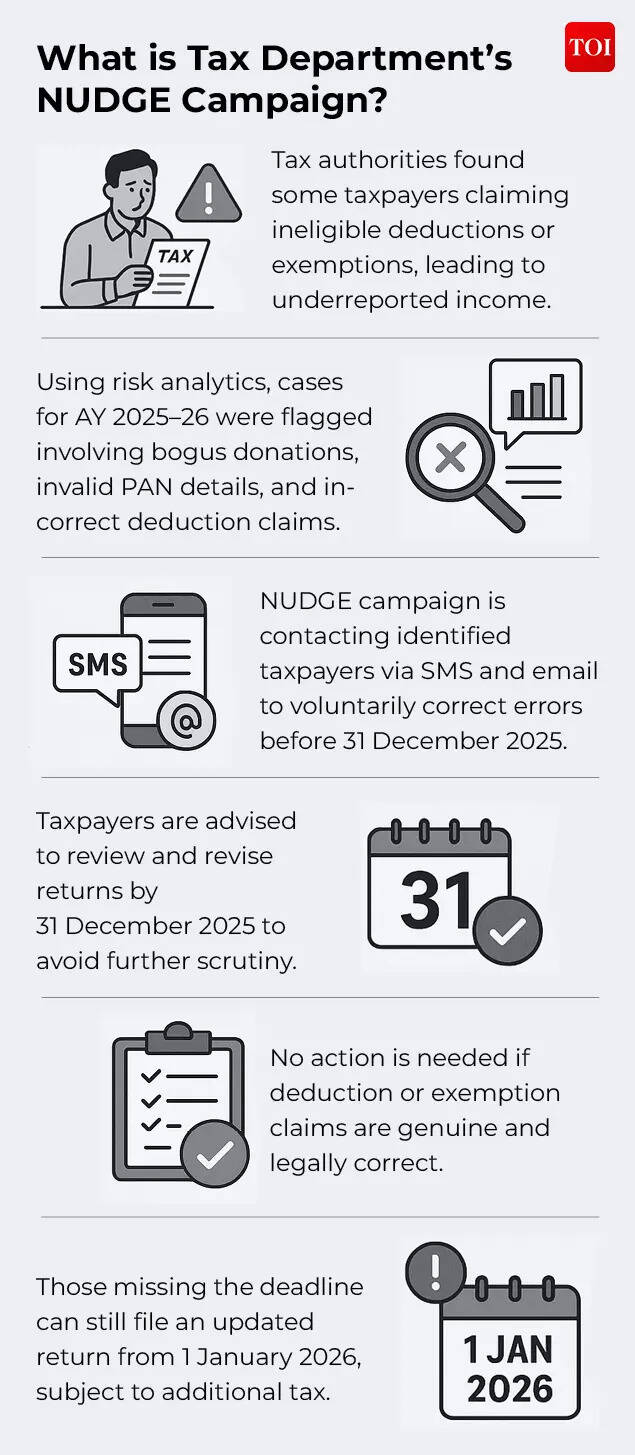
What’s the Income Tax Department’s ‘NUDGE’ campaign?

In a press release, the Income Tax Department has said that some taxpayers have claimed ‘ineligible’ refunds – through the deductions and exemptions route. This has led to their income being underreported.

PAN-Aadhaar Deadline Nears: How To Link Before December 31 Or Risk Inoperative PAN From Next Year

“Under the risk management framework, and through the use of advanced data analytics, cases for Assessment Year (AY) 2025–26 have been identified,” the Income Tax Department said.The tax department on its part is ‘nudging’ taxpayers to update their tax returns in case there is some discrepancy in the deductions and exemptions.

What is NUDGE campaign?

What is NUDGE campaign?

Identified taxpayers are being sent SMS and email under the government’s “Non-intrusive Usage of Data to Guide and Enable (NUDGE)” campaign. The aim is to encourage these taxpayers to correct errors in tax return filing, ahead of the December 31, 2025 deadline. “This initiative reflects a trust-first approach to tax administration, under which taxpayers are provided an opportunity to review their Income-tax Returns (ITRs) and voluntarily correct any ineligible claims, wherever required,” the tax department said.“The campaign leverages data analytics and technology to enable a transparent, non-intrusive, and taxpayer-centric compliance environment, with an emphasis on guidance and voluntary compliance,” the department adds.The tax department has advised the concerned taxpayers to “review their ITRs, verify the correctness of their deduction and exemption claims, and revise their returns, if required, within the prescribed time by 31 December 2025, so as to avoid further enquiries in the matter.”

ITR filing & Refunds: Why are taxpayers getting ‘nudges’?

Amarpal Chadha, Tax Partner at EY India explains that the NUDGE campaign is an initiative of the Income Tax Department aimed at encouraging taxpayers to voluntarily review deduction or exemption claims that have been identified as potentially ineligible through data analytics. The Department is also leveraging global information-exchange frameworks such as the Automatic Exchange of Information (AEOI), Common Reporting Standards (CRS), and the Foreign Account Tax Compliance Act (FATCA) to identify possible discrepancies in foreign asset reporting, Chadha told TOI.

.

Under the tax department’s initiative, taxpayers may receive an email or SMS explaining the reason for the communication and advising them to verify the accuracy of deductions or exemptions claimed, as well as the correctness of foreign asset disclosures. Where a taxpayer believes that corrective action is required, a revised return may be filed on or before December 31, 2025, which is the deadline for filing updated income tax returns for FY 2024-25

What kind of exemptions and deductions are likely under scrutiny?

Tanu Gupta, Partner, Mainstay Tax Advisors LLP has a clear message: In principle, all those exemptions and deductions which are not genuine are likely to come under scrutiny. “Even those deductions and exemptions which are inconsistent with the income tax department’s records/information/data, may also come under scrutiny. The most sought-after deduction/exemption currently includes “Donation to Political Parties”, “House Rent Allowance” to name a few,” she told TOI.According to Amarpal Chadha, any deduction that is claimed for donations to political parties where an incorrect or invalid PAN of the donee has been provided may come under the Income Tax Department’s scrutiny. The tax department has said that there are also cases where the taxpayers have given incorrect or invalid PAN details. Other cases pertain to the extent of deductions and exemptions that are being claimed by the taxpayers.“In addition, any deduction or exemption claimed in the income-tax return over and above what is reflected in Form 16 such as HRA exemption, exemptions under the Double Taxation Avoidance Agreement (DTAA), gratuity exemption etc. are also under tax department’s radar,” he told TOI.

What should taxpayers do if they get a ‘nudge’ from tax authorities?

Tanu Gupta recommends that for all the claims including exemptions and deductions, the taxpayer should always keep in handy the following documents: receipts / invoices of the payments for which exemption / deduction is claimed, bank statement evidencing such payment through proper banking channels, receipts from the recipient to corroborate with such payments.

.

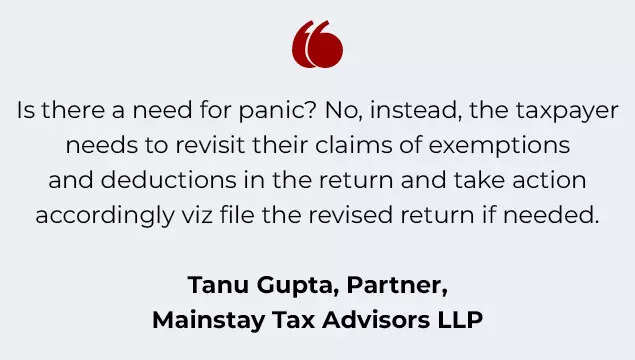
These are broad guidelines for the documents which the taxpayer should anyway keep on files for a good financial housekeeping, she says.Is there a need for panic? No, says Tanu Gupta. “Instead, the taxpayer needs to revisit their claims of exemptions and deductions in the return and take action accordingly viz file the revised return if needed. As the name suggests, the abbreviation and the complete name of it (Non-Intrusive Usage of Data to Guide and Enable), it is to facilitate the taxpayer to file compliant tax returns voluntarily, with correct, justified and genuine claims of deductions/exemptions,” she tells TOI.“There are cases where the taxpayers have received the communication from the department, although they believe that they do not have any inconsistency for the claims made in the return. They only need to see if they have all supporting documents for such payments to submit to the tax authorities when asked for,” explains Tanu Gupta, adding that wherever such exemptions / deductions are not authentic, the taxpayer needs to immediately revise the tax return by reversing such claims in the returns; and pay due income tax along with interest.Amarpal Chadha shares a checklist:

  • Verify Deductions and Exemptions: Check all deductions and exemptions claimed in the income-tax return and ensure adequate documentation exists to substantiate each claim
  • Identify Discrepancies: Compare the return filed with Form 16, bank statements, investment proofs, and other records to spot any discrepancies.

If any claim or reporting needs correction, file a revised return within the prescribed timeline currently on or before December 31, 2025, he says. “However, if the taxpayer believes that the exemptions or deductions claimed are accurate and valid, they may wait for further communication from the Income Tax Department,” he adds.It is important to restate here that taxpayers do not have to worry where their tax claims are genuine.The Income Tax Department has clarified that taxpayers whose claims are genuine and correctly made in accordance with law are not required to take any further action. “It is clarified that taxpayers who do not avail of this opportunity may still file an updated return from 1 January 2026, as permitted under law, subject to payment of additional tax liability,” it has said.


Source link

More competition for IndiGo, Air India: Shankh Air expected to begin operations in 2026; 2 new carriers get NOCs


More competition for IndiGo, Air India: Shankh Air expected to begin operations in 2026; 2 new carriers get NOCs
Shankh airlines (Image/Website)

Uttar Pradesh-based Shankh Air is expected to begin flight operations in the first quarter of 2026. The airlines has already secured a no-objection certificate (NOC) from the Union civil aviation ministry,.Yesterday, two other carriers Al Hind Air and FlyExpress also received their NOCs, paving the way for fresh competition in India’s fast-growing domestic aviation marketShankh Air will be operated by Shankh Aviation, whose aircraft are currently undergoing technical reviews and are being readied for delivery to India, the company said in a statement on Wednesday, according to PTI.

‘Worst Is Behind Us’: IndiGo CEO Says Airline Back on Track After Operational Crisis

The airline plans to launch flight services early next year and aims to scale up its fleet to 20–25 aircraft over the next two to three years.Shankh Aviation’s Chairman and Managing Director Sharvan Kumar Vishwakarma recently met civil aviation minister K Rammohan Naidu to brief him on the airline’s plans.Vishwakarma said the company is working towards a timely launch, while the minister assured full cooperation from the ministry and the Directorate General of Civil Aviation (DGCA) to ensure that required procedures are completed smoothly and within stipulated timelines.The approvals come as the government seeks to widen participation in India’s fast-growing domestic aviation market, which currently has only nine scheduled domestic airlines in operation. The number reduced further in October after regional carrier Fly Big suspended scheduled flights.Al Hind Air is being promoted by the Kerala-based alhind Group, while FlyExpress joins a list of aspiring carriers looking to enter a market where scale and pricing power are concentrated among a few major players.Concerns over an apparent duopoly in the sector have intensified in recent weeks. IndiGo and the Air India Group comprising Air India and Air India Express, together account for over 90 per cent of the domestic market, with IndiGo alone holding more than 65 per cent.Confirming the approvals, Naidu said in a post on X that the ministry had met teams from Shankh Air, Al Hind Air and FlyExpress over the past week. While Shankh Air already held its clearance, he said Al Hind Air and FlyExpress received their NOCs this week.Naidu said encouraging more airline operators has been a consistent policy objective, given that Indian aviation is among the world’s fastest-growing markets. He highlighted the role of government schemes such as UDAN, which aim to improve regional connectivity and have helped smaller carriers like Star Air, IndiaOne Air and Fly91 expand services to underserved routes.According to the latest DGCA data, India’s scheduled carriers currently include IndiGo, Air India, Air India Express, Alliance Air, Akasa Air, SpiceJet, Star Air, Fly91 and IndiaOne Air.


Source link

Rohit Sharma lights up Mumbai’s Vijay Hazare Trophy opener with fastest ever century | Cricket News


Rohit Sharma lights up Mumbai's Vijay Hazare Trophy opener with fastest ever century

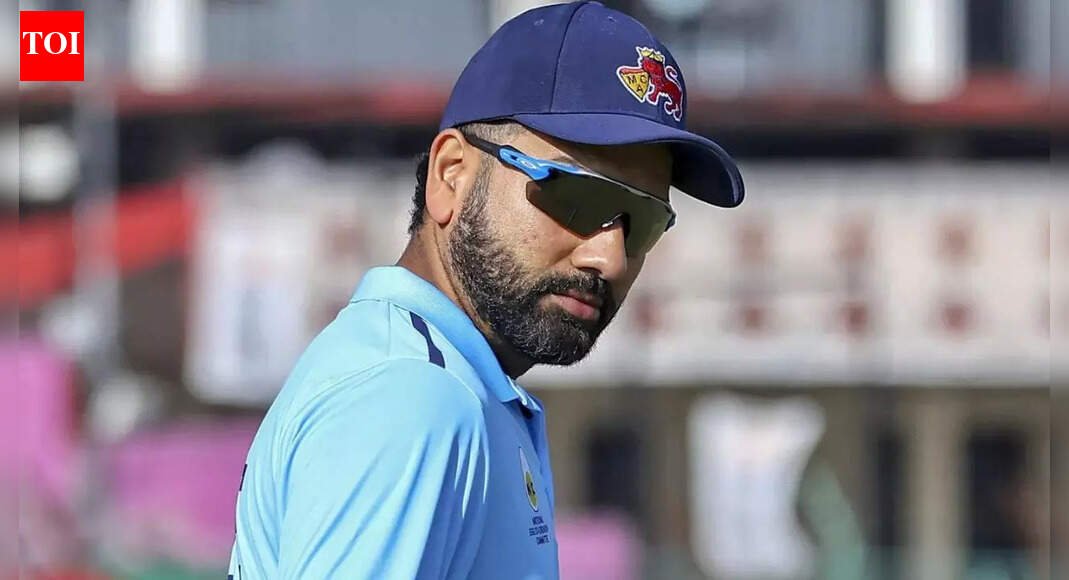
NEW DELHI: Rohit Sharma played a stunning innings of 155 runs as Mumbai began their Vijay Hazare Trophy campaign with a comfortable win over Sikkim at the Sawai Mansingh Stadium in Jaipur, where Mumbai chased down the target with ease and won by eight wickets.Sikkim won the toss and chose to bat first. They put up a fighting total of 236 for 7 in their 50 overs.

Suryakumar Yadav press conference: What he said on his poor form

Ashish Thapa was the top scorer for Sikkim. The wicketkeeper-batter played a steady knock of 79 runs from 87 balls and held the innings together. K Sai Satwik and Kranthi Kumar also contributed with 34 runs each, while Robin Limboo remained not out on 31. Mumbai’s bowlers kept things under control, with Shardul Thakur leading the attack by taking two wickets and conceding very few runs. Musheer Khan and Shams Mulani also chipped in with one wicket each.While Sikkim’s total looked competitive, it was never going to be enough once Rohit Sharma got going.Mumbai’s chase started calmly, with Angkrish Raghuvanshi playing a patient knock of 38 with a strike rate of 65.52. From the other end, Rohit Sharma slowly settled in and then completely took charge of the match. The senior batter was in complete control and punished anything loose.Rohit smashed 155 runs from just 94 balls as his innings included 18 fours and nine sixes. Scoring at a rapid strike rate, he made the chase look effortless. Completing his 100 in 62 balls, Rohit garnered the fastest-ever century of his List A career.The Sikkim bowlers had no answers once Rohit found his rhythm. Musheer remained not out on 27 and played his role well.On the other end, Sarfaraz Khan finished the match with a quick cameo of eight runs. Mumbai reached the target in just 30.3 overs and won the match by eight wickets.With both bat and ball clicking, Mumbai have started their Vijay Hazare Trophy campaign in perfect fashion. Going into the next matches, they will be confident.


Source link

The new logic of rural welfare: Why VB-G RAM G makes sense for a $4 trillion economy | India News


The new logic of rural welfare: Why VB-G RAM G makes sense for a $4 trillion economy

Driving the newsThe MGNREGA – a flagship UPA-era program that guaranteed 100 days of wage employment to rural households – has been replaced by the Viksit Bharat–Guarantee for Rozgar and Ajeevika Mission (Gramin) or VB-G RAM G Act.Union minister Shivraj Singh Chouhan framed it as a bold leap forward: “This is a far better scheme that will completely transform villages.”Critics, led by Congress leader Sonia Gandhi, allege it’s a stealth demolition of rights-based welfare: “The very structure of MGNREGA… has been annihilated.”But beyond the political heat, the quiet engine driving this reform is economic evolution. India’s welfare state – and rural labour market – has changed dramatically since 2005. The logic behind G RAM G isn’t just political; it’s economic.

Why it matters

MGNREGA was designed as a safety valve. Its purpose was simple: if private work dried up, the state would step in and guarantee wages. It was meant to stabilise consumption in bad years and give the rural poor bargaining power in the labour market. On those terms, it succeeded.But it is no longer the India of the mid-2000s.

  • In 2005: Rural safety nets were thin, bank accounts rare, and the idea of digital transfers futuristic.
  • In 2025: Over 80 crore people get free food grain for the next five years. DBT has matured.
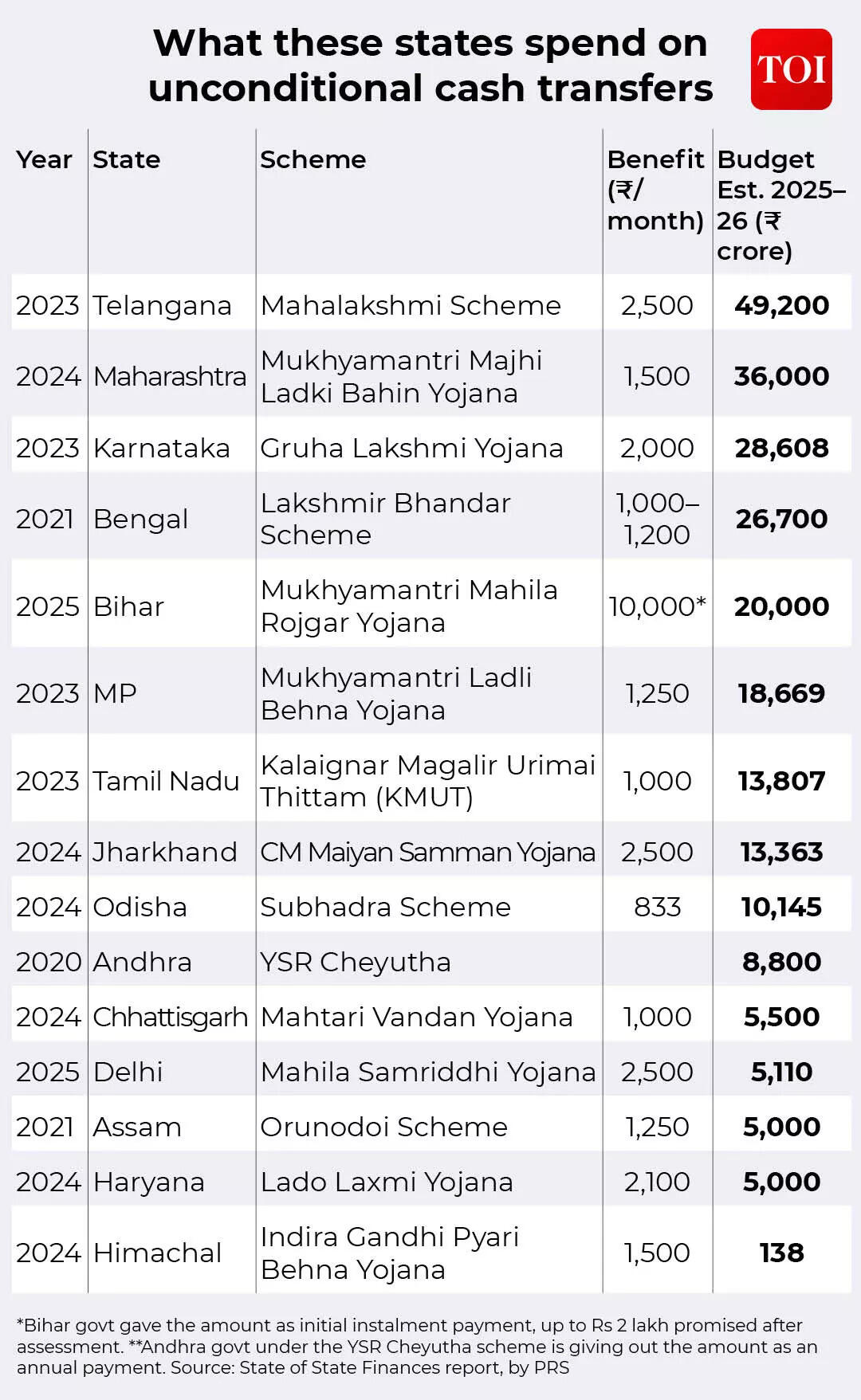
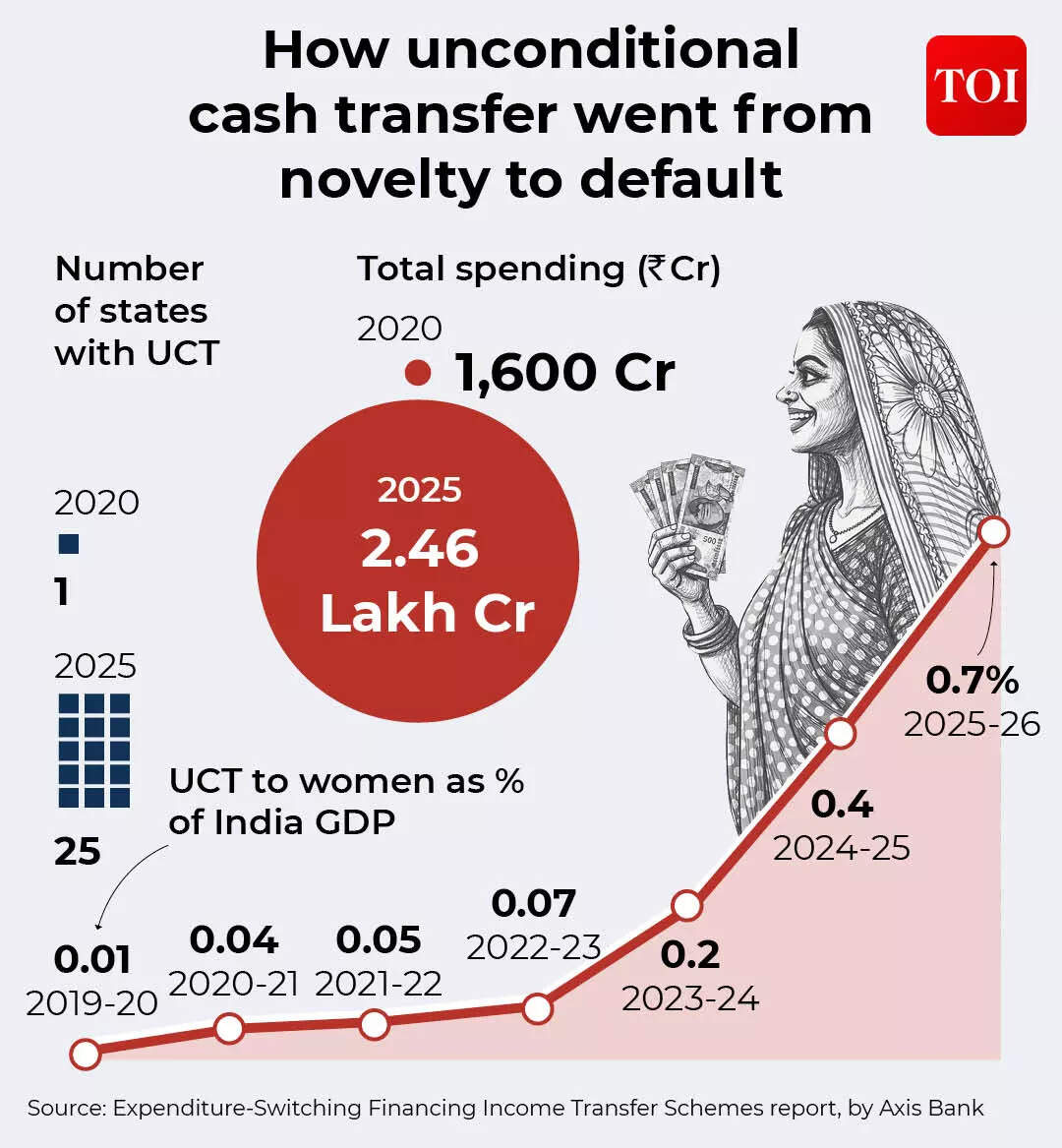
  • States are pumping Rs2.46 lakh crore annually into direct cash transfers to women.

MGNREGA, while historic in its impact, was built for an older economy. G RAM G is designed for a digitally connected, subsidy-rich, rural India where the challenge isn’t only poverty relief – it’s productivity, asset creation, and aligning with farm realities.

The big picture: Not a tweak, but a rethink

At a farmer rally in Rajasthan, Chouhan underlined the new mission:“We have not reduced it but increased it… Labourers will get wages and villages will see comprehensive development. Roads, drains, schools, everything can be built.”That shift – from emergency wage distribution to rural asset generation – reflects a deeper economic change.

What they’re saying

Sonia Gandhi calls G RAM G a “collective moral failure,” warning of job loss and loss of dignity: “The removal of the Mahatma’s name was only the tip of the iceberg.”The BJP’s Amit Malviya hit back: “Her arguments rest on mischaracterisations, selective memory, and outright falsehoods.”The divide is ideological – but also generational, rooted in two welfare philosophies: permanent subsidy vs productivity-driven support.Rahul Gandhi called it an ‘insult to the ideals of Mahatma Gandhi‘ and said the law bulldozes “both MGNREGA and democracy.”

Between the lines: The real economic logic of G RAM G

1. The safety net is now a floor, not a fallbackMGNREGA was built to prevent rural starvation and mass migration during crop failures and lean seasons. That logic worked in 2005.But today:

  • PMGKAY offers free food grain to 80 crore people until 2029.
  • NFSA guarantees subsidised food to two-thirds of India.
  • DBT infrastructure reaches 45 crore beneficiaries.

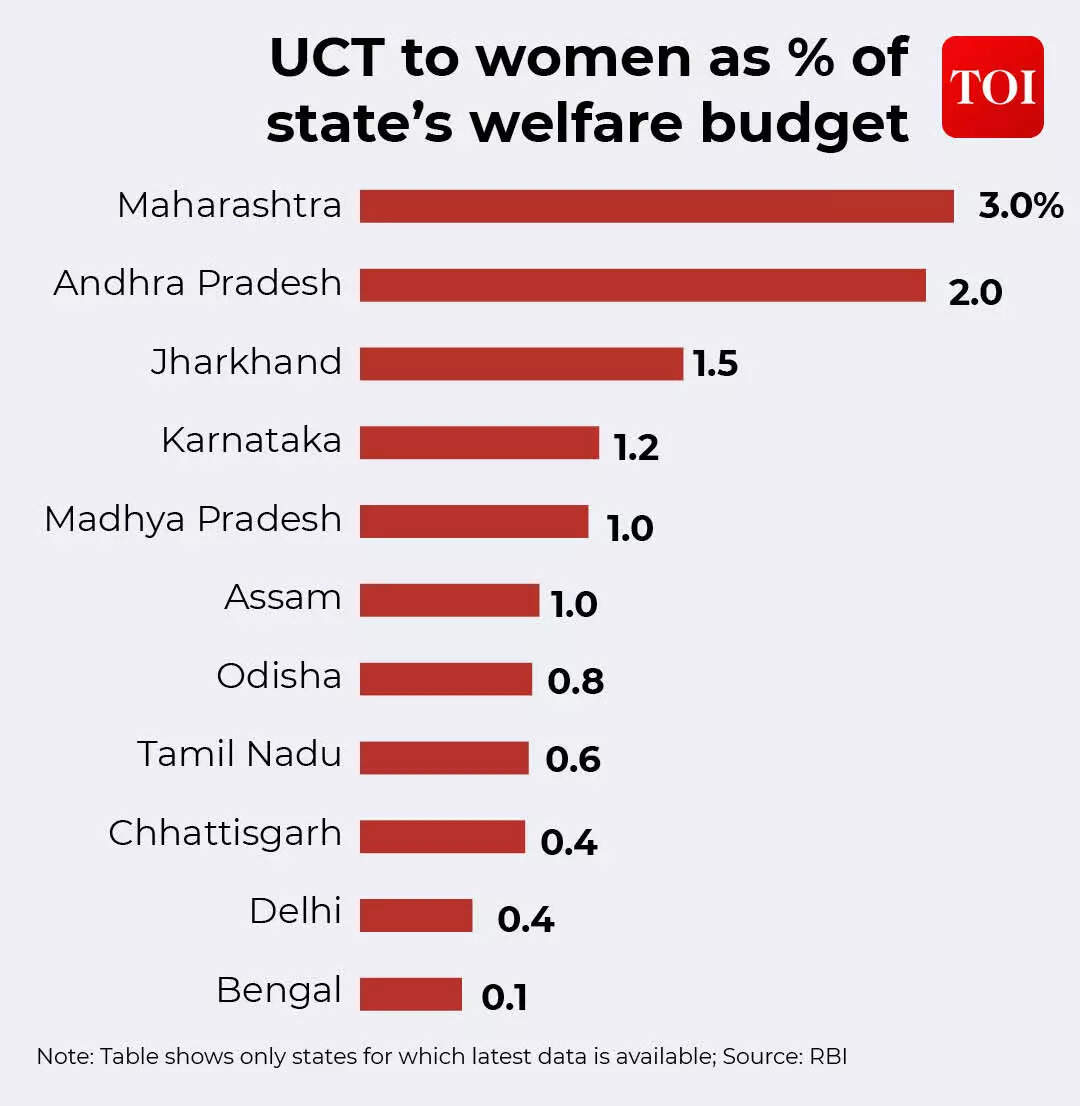
Implication: With calories protected, the role of employment guarantee schemes can shift from consumption smoothing to income generation through durable assets.In Chouhan’s words, “If needed, farm roads can also be constructed… everything can be built.”2. States are already flooding households with cash – so duplication is inefficient.From 1 state in 2020 to 15 states in 2025, unconditional cash transfers (UCTs) to women are now a Rs 2.46 lakh crore juggernaut.

  • Madhya Pradesh: Ladli Behna Scheme – Rs 1,000–Rs1,500/month.
  • Karnataka: Gruh Lakshmi – Rs 2,000/month.
  • Telangana: Mahalakshmi – Rs 2,500 + LPG subsidy + free bus rides.
women cash transfer desk gfx5

.

Why this matters: In villages where households already get regular cash + free food, demand for physical labour schemes changes.Women – the primary MGNREGA participants – are less likely to show up for work at Rs 220/day when cash arrives in their bank.
women cash transfer desk gfx

.

G RAM G acknowledges this by focusing on village development outcomes, not just labour targets.
women cash transfer desk gfx4

.

3. G RAM G fixes a paradox MGNREGA helped create: Labour shortages during harvestOne of the least discussed but most consequential changes is also one of the most controversial: The ability of states to suspend works for up to 60 days during peak sowing and harvesting seasons.Under MGNREGA, this was effectively taboo. Work was meant to be available year-round, on demand. But over time, farmers across states complained that the programme had become a rival employer. During peak agricultural seasons, when labour was needed most, workers often chose guaranteed public works instead. Wages rose. Harvests were delayed. Small farmers paid the price.The new law openly acknowledges this tension. By allowing a notified pause during peak seasons, it treats the employment guarantee not just as welfare, but as a labour-market instrument that must coexist with agriculture rather than crowd it out.States can pause work for 60 days to prevent a labour squeeze during critical farming periods.This reflects labour market realism, not policy retreat. In today’s India.

  • Farm productivity is vital.
  • Labour availability during key agri windows is essential.

G RAM G helps re-sync the rural workforce with agri cycles, rather than cannibalising farm labour.“They (MGNREGA) are trying to scare labourers… but we have increased the days to 125,” said Chouhan.4. India needs to move from “supporting poverty” to “building capacity”India’s economy is set to cross $4 trillion soon, but per capita income remains modest – around $2,800/year.That creates a challenge: How do we support vulnerable households without freezing them in place?“The real nature of the Modi government’s intentions can be understood from its decade-long track record of throttling MGNREGA,” Sonia Gandhi wrote in an article in a national daily.But G RAM G’s supporters argue the opposite: the scheme is not abandoning rights but upgrading them

  • From income support to income generation
  • From person-days to water tanks, roads, climate resilience
  • From centralised bureaucratic design to village-level planning

By raising guaranteed work to 125 days and channeling it into productive, measurable outputs, G RAM G aims to raise village capability – not just survival.

What next: Execution is the litmus test

Even the most elegant economic theory fails if delivery falters. G RAM G’s success hinges on four critical design principles:1. Avoid stealth caps: Centre determines normative funding per state – but must ensure that does not limit the legal guarantee.2. Use the 60-day pause wisely: It should match local agri calendars, not become a loophole to under-provide work.3. Biometrics must include – not exclude: With tech-driven tracking, grievance redress and offline options must remain strong.4. Measure outcomes, not just inputs: Focus must shift from how many people worked to what got built, how it’s used, and what productivity gains it generates.

Zoom out: The economics of co-ownership

The 60:40 Centre-State cost sharing is controversial but crucial. It ends the previous model where states authorised spending and the Centre paid the bill.Now:

  • States must co-own work quality.
  • Panchayats get more voice in planning.
  • Centre retains unemployment allowance provision – if work isn’t provided in 15 days.

Chouhan assured at the rally, “Funds won’t be swindled. Wages will be paid with interest if delayed.”It’s a governance pivot: from passive disbursement to performance-driven delivery.

The bottom line:

VB-G RAM G is not just a renamed MGNREGA. It’s a fundamentally new compact between India’s rural poor, its states, and its economy.In a welfare-rich, DBT-driven, digitally connected India:

  • Safety nets must become springboards.
  • Cash cannot replace infrastructure.
  • Relief must evolve into resilience.

G RAM G, with all its caveats and criticism, tries to answer a simple but vital question: What should rural employment guarantee look like – in a $4T India where the real challenge is not food or cash, but opportunity?



Source link