Breaking News
Stock market cues: What will guide Dalal Street this week? Macro data announcements, FII trading & more


Stock market cues: What will guide Dalal Street this week? Macro data announcements, FII trading & more

Dalal Street is headed into the final stretch of the year as investors brace for a week driven by economic data releases, global developments and the flow of foreign funds. Analysts expect trading to remain largely range-bound, with sentiment hinging on a mix of domestic indicators and overseas cues, while automobile sales numbers are also set to draw attention. With the year nearing its end and only a limited number of trading sessions remaining, equities are likely to trade within a narrow band, though experts see underlying support for the market. “This week marks the transition into calendar year 2026 and is likely to witness heightened volatility due to the December F&O expiry. Key domestic data points to track include industrial production data for November and the final HSBC manufacturing PMI (Purchasing Managers’ Index) reading,” said Ajit Mishra, SVP, research, Religare Broking Ltd. He noted that global factors would play an equally important role, as investors track signals from the United States, particularly the release of the Federal Open Market Committee (FOMC) minutes and information related to the Federal Reserve’s balance sheet. “These developments could influence near-term expectations around growth, liquidity, and global risk sentiment,” Mishra said. Last week, Indian equities ended on a cautious note in a holiday-shortened trading period, marked by thin volumes, marginal profit-taking and continued foreign fund outflows. The BSE benchmark index advanced 112.09 points, or 0.13%, during the week, while the Nifty rose by 75.9 points, or 0.29%. Ponmudi R, CEO – Enrich Money, said the market’s near-term direction will largely be guided by a heavy flow of economic data from both domestic and global fronts. “With only a handful of trading sessions left in 2025, Indian equity markets are expected to remain largely range-bound, albeit with a constructive bias. Investor sentiment this week is likely to be shaped by a busy economic data calendar, both domestically and overseas. On the home front, India’s November industrial production (IIP) data will offer fresh insights into trends across mining, manufacturing, and electricity output,” he said. According to Ponmudi, investors will also keep a close watch on November automobile sales figures to gauge the strength of demand. “Alongside IIP data, these releases will offer key insights into domestic consumption trends, particularly whether the post-GST rationalisation surge in auto demand is being sustained as India moves into 2026,” he added. On the international front, attention is expected to shift to signals from major economies. Apart from the US Federal Reserve meeting minutes, analysts said data such as US initial jobless claims and manufacturing PMI readings from the US and China could influence global market sentiment. Siddhartha Khemka, head of research, wealth management, at Motilal Oswal Financial Services Ltd, said that India’s monthly auto sales, along with these overseas indicators, will be among the key data points investors are likely to track through the week.


Source link

In search of Bharaitya ‘porichoy’: Will the Matua–Namasudras rewrite ‘poriborton’ in Bengal elections? | India News


In search of Bharaitya 'porichoy': Will the Matua–Namasudras rewrite 'poriborton' in Bengal elections?
Will the Matua–Namasudras rewrite ‘poriborton’ in Bengal elections?

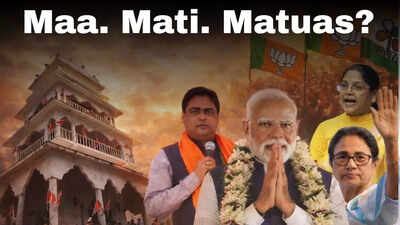
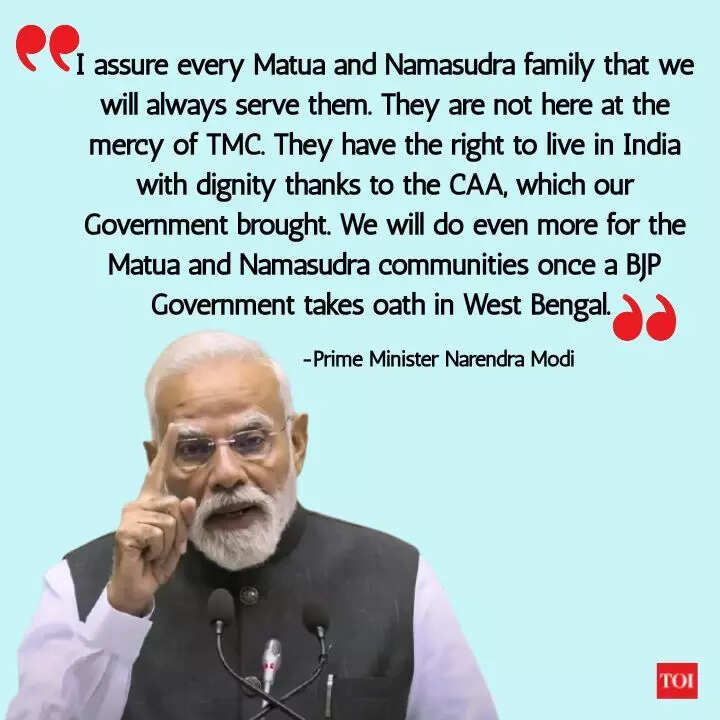
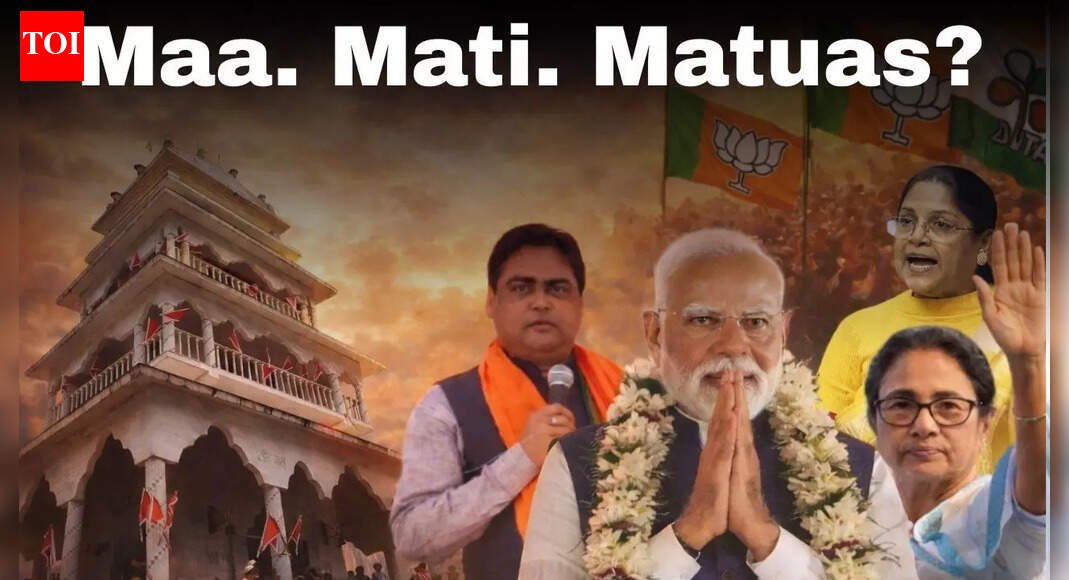
When bad weather forced Prime Minister Narendra Modi to cancel a public meeting in West Bengal’s Ranaghat on December 20, he chose not to let the moment pass quietly. Instead, he sent out a message addressed specifically to the Matua and Namasudra community, acknowledging their decades-long plight and quest to secure a place in the country they now call home.It was a small gesture in form but a telling one in substance.Prime Ministers do not routinely issue targeted messages to caste-based religious communities. That PM Modi did so, even when prevented by the weather, points to a political truth that has been steadily taking shape over the last decade. The Matua–Namasudra community is no longer on the margins of Bengal’s politics. It sits close to the Centre.But can the community deliver what the BJP now seeks in poll-bound Bengal and revive what was once chief minister Mamata Banerjee’s clarion call? Can it set in motion another ‘Poriborton’?
SIR vs Speical Reivision (8)

PM Modi post on X

It was a rare direct appeal, naming the community, invoking the controversial Citizenship Amendment Act (CAA), and framing dignity as a political entitlement rather than a favour. The message raised an obvious question. Why does a missed program with the Matuas merit such emphasis from the Prime Minister of India?The answer lies not in the weather, but in a long and layered history of caste oppression, religious reform, Partition-era displacement, and a steadily growing electoral clout that has turned the Matua–Namasudra community into one of the most closely watched constituents in Bengal’s politics today.“It is not as if the BJP suddenly discovered them. However, with the CAA, the history of the Matuas becomes very interesting. They are, of course, present in certain pockets of Bengal, but they are also scattered in large numbers across the state. With the CAA, the BJP felt that they could vote en masse for the idea of persecuted minorities from Bangladesh getting citizenship, ” Deep Halder, author of “Bengal 2021: An Election Diary”, who extensively covered the last West Bengal assembly polls, told TOI.Halder further said: “The BJP also studied the history of the Matuas, who were a bulwark against Islamisation of the lower castes in East Bengal. During that time, there were a lot of conversions of lower castes into the Islamic fold, and there was also caste discrimination. So they (Matuas), within the Hindu fold, found their own mythology, which gave shelter to many lower-caste Hindus and, in some way, kept them within the Hindu fold. This history also made the community very interesting to the BJP.”
Untitled design (7)

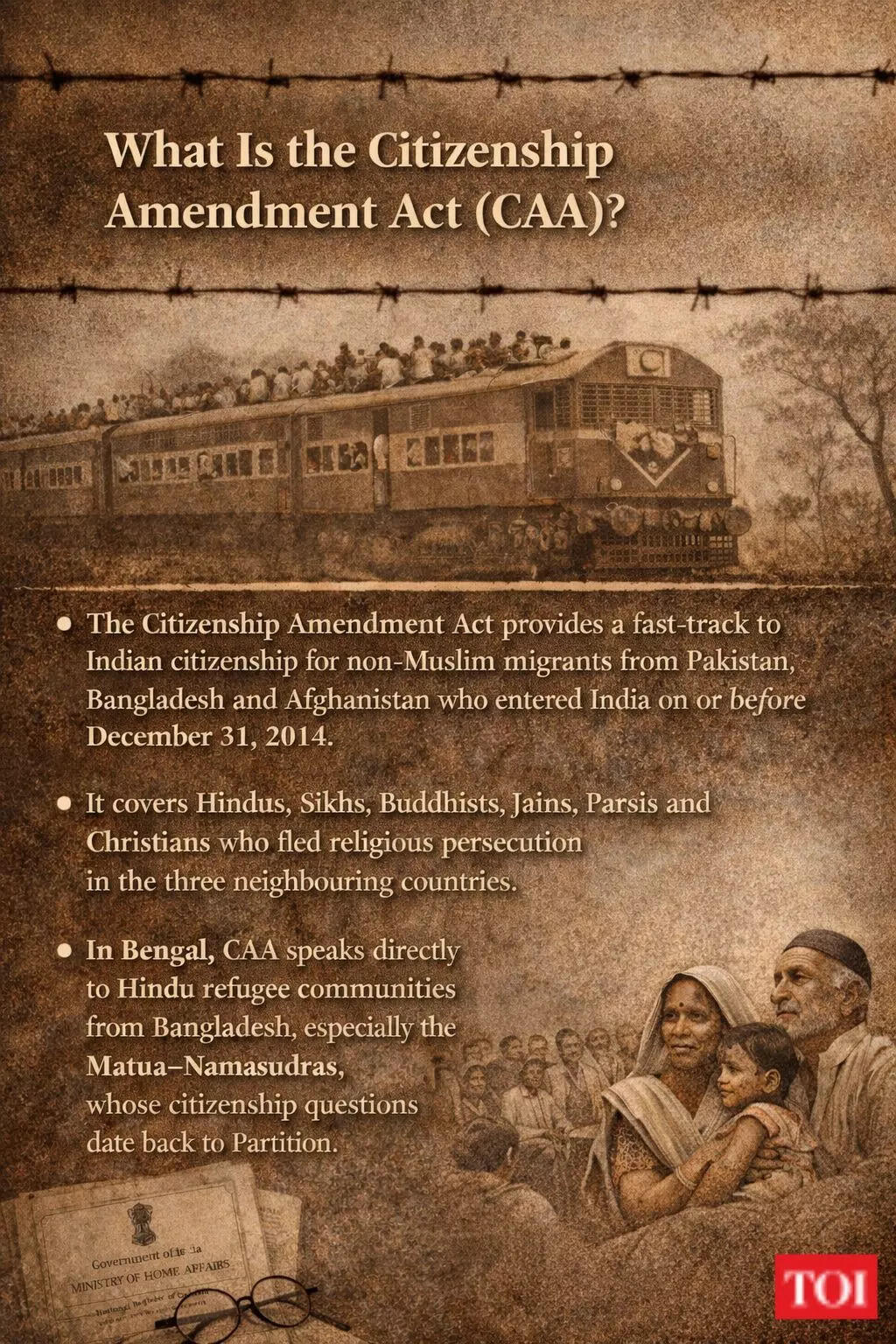
What is CAA

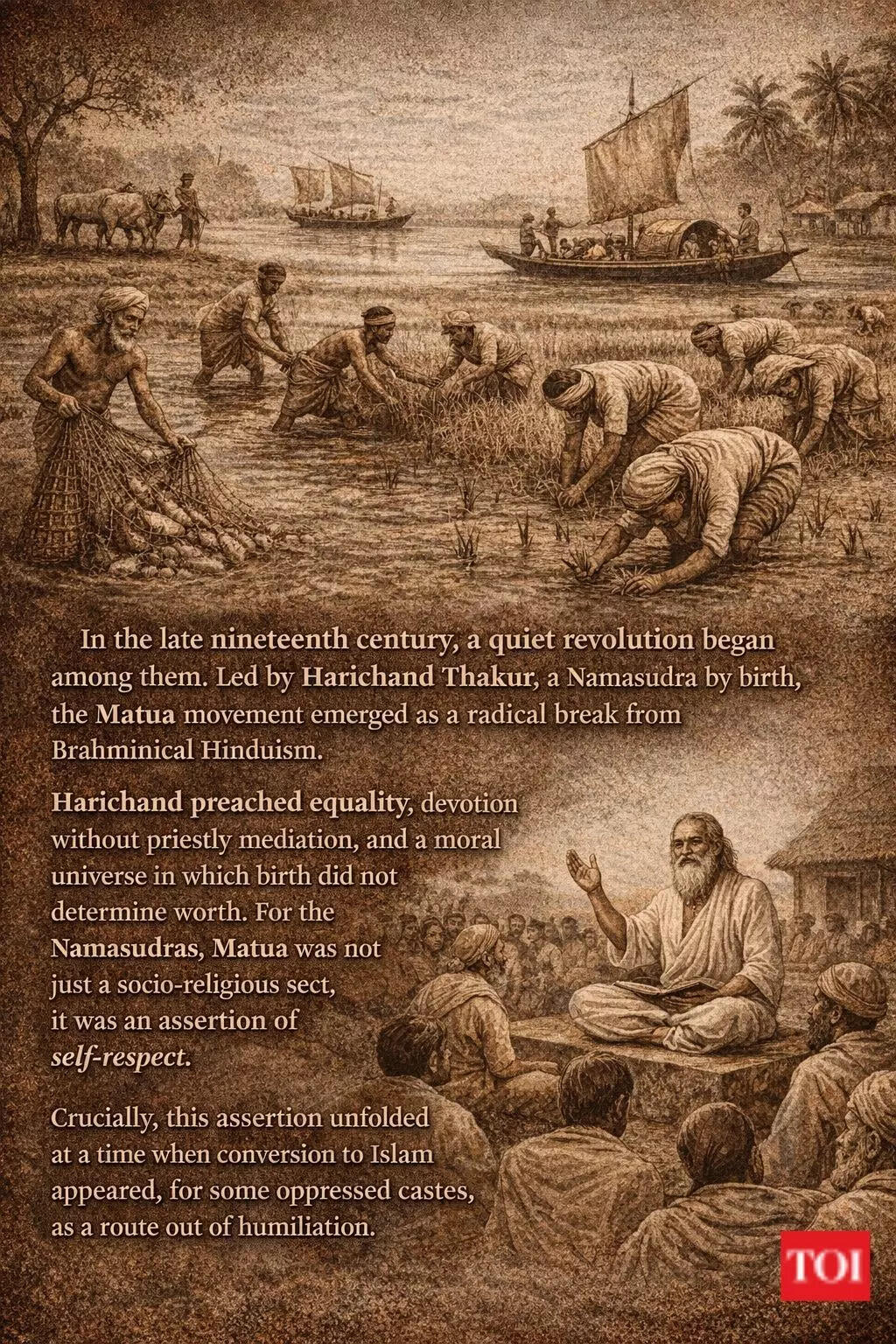
Matua–Namasudras: The question of belonging In the country’s popular discourse, opposition to the Citizenship Amendment Act (CAA) often comes wrapped in the language of constitutional morality, secularism, and “fear of exclusion”. But travel a few kilometres north of Kolkata, into the refugee settlements of North 24 Parganas, and the “popular” framing begins to look very different.For many among the Namasudras in the region, CAA is not an abstract constitutional question. It is a law that finally acknowledges a history they have lived with for generations.Why the Matua-Namasudra community views politics the way it does becomes clearer when one looks beyond electoral arithmetic, beyond BJP versus Trinamool Congress (TMC), and even before the creation of Bangladesh.The Namasudras are not migrants by origin. They are among the indigenous communities of eastern Bengal, once spread across the wetlands and riverbanks of what is now Bangladesh. For centuries, they lived at the bottom of the caste hierarchy, known by the historically stigmatising label “Chandal”. Denied dignity by the caste-driven society, they occupied the margins economically and socially, surviving as peasants, fishermen, and boatmen in Bengal’s agrarian economy.In the late nineteenth century, a quiet revolution began among them. Led by Harichand Thakur, a Namasudra by birth, the Matua movement emerged as a radical break from Brahminical Hinduism. Harichand preached equality, devotion without priestly mediation, and a moral universe in which birth did not determine worth. For the Namasudras, Matua was not just a socio-religious sect, it was an assertion of self-respect.Crucially, this assertion unfolded at a time when conversion to Islam appeared, for some oppressed castes, as a route out of humiliation. However, Harichand Thakur’s teachings offered an alternative. “Thakur was able to offer an independent and alternative space to the Namasudras, away from both Islam and Brahminical Hinduism, but closer to “Dharmic syncreticism”, an admixture of pre-Vedic Kaumadharma, Sahajiya Buddhism and Vaishnavism,” writes Avik Sarkar, an expert on Bengal’s Dalit history, in his article “Subaltern Resistance to Islam and Prospects of Dalit-Muslim Alliance in West Bengal”.
Untitled design (6)

History of Matuas

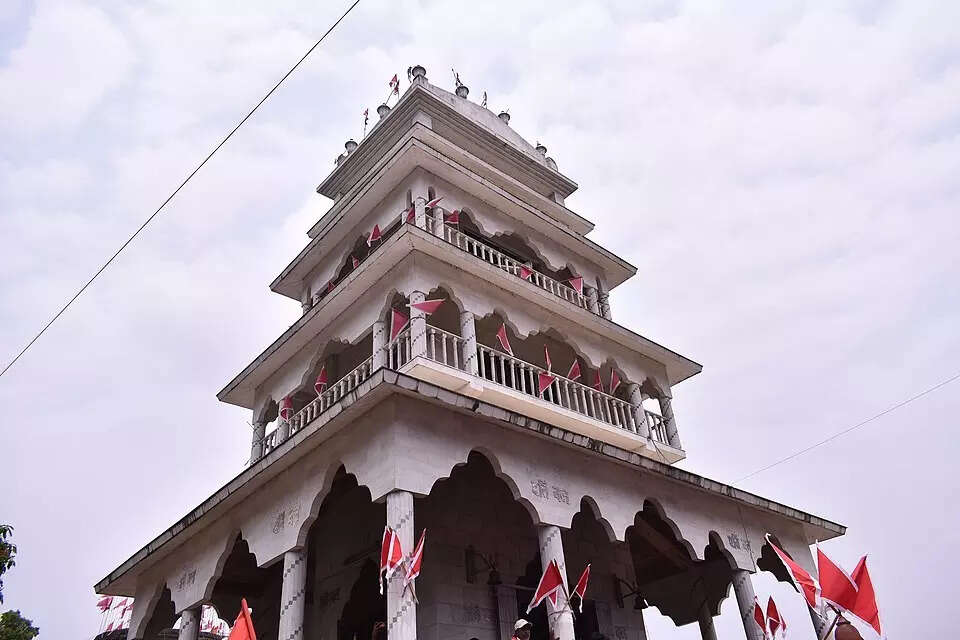
Harichand’s son, Guruchand Thakur, took this further. He institutionalised education among Namasudras, encouraged political awareness and repeatedly spoke of the community as “Bir Jaati” (Brave race).“The Guruchand Charit is replete with vivid descriptions of the two incidents of communal violence between the Namasudra-Matuas and the Muslims in Eastern Bengal. Guruchand Thakur, the second Sanghadhipati of the Matuas, often addressed Namasudras as “Bir Jaati” (brave race) and called for resisting any attempt to denigrate their collective honour”, Sarkar writes.The Matua movement, by the early twentieth century, had become as much a social force as a religious one.Prolonged plight after PartitionFor the Namasudras, 1947 was not a clean rupture but the beginning of prolonged displacement. Many stayed back in East Pakistan, hoping that a Muslim-majority state would offer them the dignity Hindus had denied. What followed was disillusionment! They found themselves squeezed between religious majoritarianism and economic vulnerability. Communal violence, political instability and the slow erosion of security pushed successive waves of Namasudras across the border.Their migration unfolded over decades, not overnight. The riots of 1950, unrest in the 1960s, and finally the Bangladesh Liberation War in 1971 forced large numbers to cross into India. They arrived in West Bengal not as migrants seeking opportunity but as refugees fleeing uncertainty. The settlement was harsh. Refugee colonies lacked infrastructure, employment was scarce, and the stigma of being “Bangal outsiders” persisted in the Ghoti-dominated society of West Bengal.Thakurnagar: The Mecca of MatuasOut of partition-led displacement emerged Thakurnagar in North 24 Parganas, which grew from a refugee settlement into the spiritual and organisational centre of the Matua movement after Partition. In the region, religion, memory, and politics are fused. The Matua identity provided continuity to people whose geography had been torn apart. Over time, this shared history translated into political consciousness. The Namasudra–Matua community in the 21st century is among the largest Scheduled Caste groups in West Bengal.
Thakurnagar

Thakurnagar Matua Mahasangha and Thakur Bari Temple: Credit: Wiki Commons

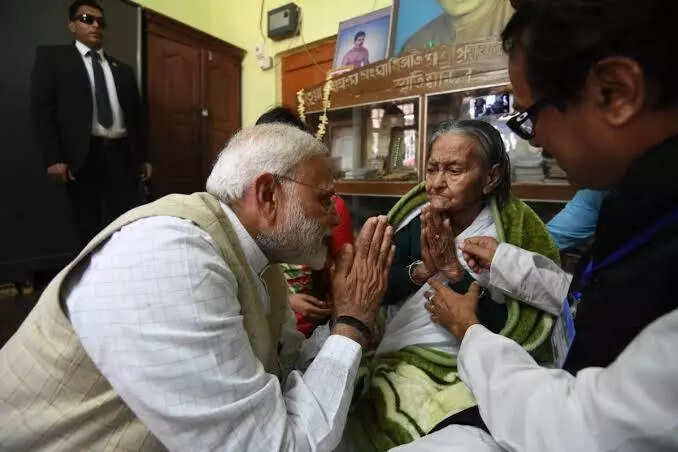
While there is no official caste-wise count, estimates suggest they form roughly 17 to 18 per cent of the state’s population. Politically, their presence stretches across North and South 24 Parganas, Nadia, Howrah, Cooch Behar, North and South Dinajpur and Malda.Electoral analysts routinely point out that Matua voters influence outcomes in as many as 60-65 assembly seats and are spread across at least six parliamentary constituencies. In a state where margins are often tight, that kind of concentration confers bargaining power.For decades, this power rested largely with the Left and later the Trinamool Congress. Welfare programs, refugee rehabilitation, and grassroots networks kept the community electorally aligned, while the BJP remained peripheral in Bengal until the mid-2010s.Boroma: Matua matriarch & her lineageThe Thakur family of Thakurnagar occupies a symbolic space that cuts across party lines. Binapani Devi, known as Boroma, carried Harichand Thakur’s teachings across India and became the Matua matriarch. After her death in 2019, the state accorded her funeral with full state honour, which reflected the recognition of Matua’s influence even among political rivals.Her grandson, Shantanu Thakur, now BJP MP from Bongaon, represents the intersection of faith and politics in contemporary Bengal. Parties court him not merely for endorsement but for access to a constituency shaped by history rather than ideology alone. At the same time, Boroma’s daughter-in-law, Mamata Bala Thakur, a former Rajya Sabha member, has been associated with the Trinamool Congress, illustrating that the family’s political affiliations cut across party lines.
GIZKx-9WkAES6Fw

Prime Minister Narendra Modi met Matua Community’s ‘Boroma’ Binapani Devi Thakur in Thakurnagar in 2019.

On the “make or break election” potential of the community, Deep Halder says, “The family itself is very divided. There is another side of the family, which is with the Trinamool Congress (TMC). Yes, it is an important voting bloc, but make-or-break, I would not say.”To reduce the Namasudra–Matua community to a vote bank is to miss the point. Their political choices are anchored in a memory of caste humiliation, of religious assertion, of displacement and of delayed recognition. Their power lies not just in numbers but in a shared understanding of what the state has owed them and often failed to deliver. As Bengal’s politics grows more polarised, the Matua–Namasudra community remains a reminder that identity here is not manufactured overnight. It is inherited, negotiated, and, increasingly, exercised at the polling booth.2014: The year of shiftThe shift began after 2014. Identity, citizenship, and belonging entered the political mainstream in a way they had not before. In the 2014 Lok Sabha elections, the BJP won just two of Bengal’s 42 seats. Five years later, in 2019, it won 18. The jump was not accidental. Constituencies with large Matua populations, including Bongaon and Ranaghat, swung decisively.The Citizenship Amendment Act played a role in this consolidation. While the law does not name Namasudras or Matuas, it addresses precisely the condition of non-Muslim refugees from Bangladesh who entered India before 2014. For a community whose migration was born of Partition and persecution, the promise of citizenship was not symbolic. It was existential.That promise, and the delay in its implementation, shaped political expectations. In the 2021 assembly elections, the BJP fell short of forming the government, but it still emerged as the principal opposition with 77 seats, a dramatic rise from its three-seat tally in 2016. Many of these contests were fought tooth and nail in Matua-influenced belts. The 2024 Lok Sabha elections saw the BJP’s numbers in Bengal dip to 12 seats, with the Trinamool Congress winning 29. Yet even then, Matua-heavy constituencies remained competitive, asserting that the community was not locked into permanent allegiance. It votes, increasingly, with a sense of leverage.SIR and the dilemma of citizenshipMore than one lakh voters from the Matua heartland, spread across four assembly constituencies in North 24 Parganas’s Bongaon subdivision, are likely to receive notices for hearings following the publication of draft electoral rolls on December 16.A statement by junior Union minister Shantanu Thakur, hinting at one lakh Matua deletions from voter rolls following SIR, has led to fresh unease in the already anxious Matua belt in Bengal.Speaking at a public meeting at Bagdah’s Garapota, Thakur, also the sabhadhipati of the BJP-backed faction of the All India Matua Mahasangha, said: “If excluding 50 lakh infiltrators means that one lakh people from my community are temporarily deprived of voting, which option is more beneficial?”

BJP's Shantanu Thakur

BJP’s Shantanu Thakur on SIR

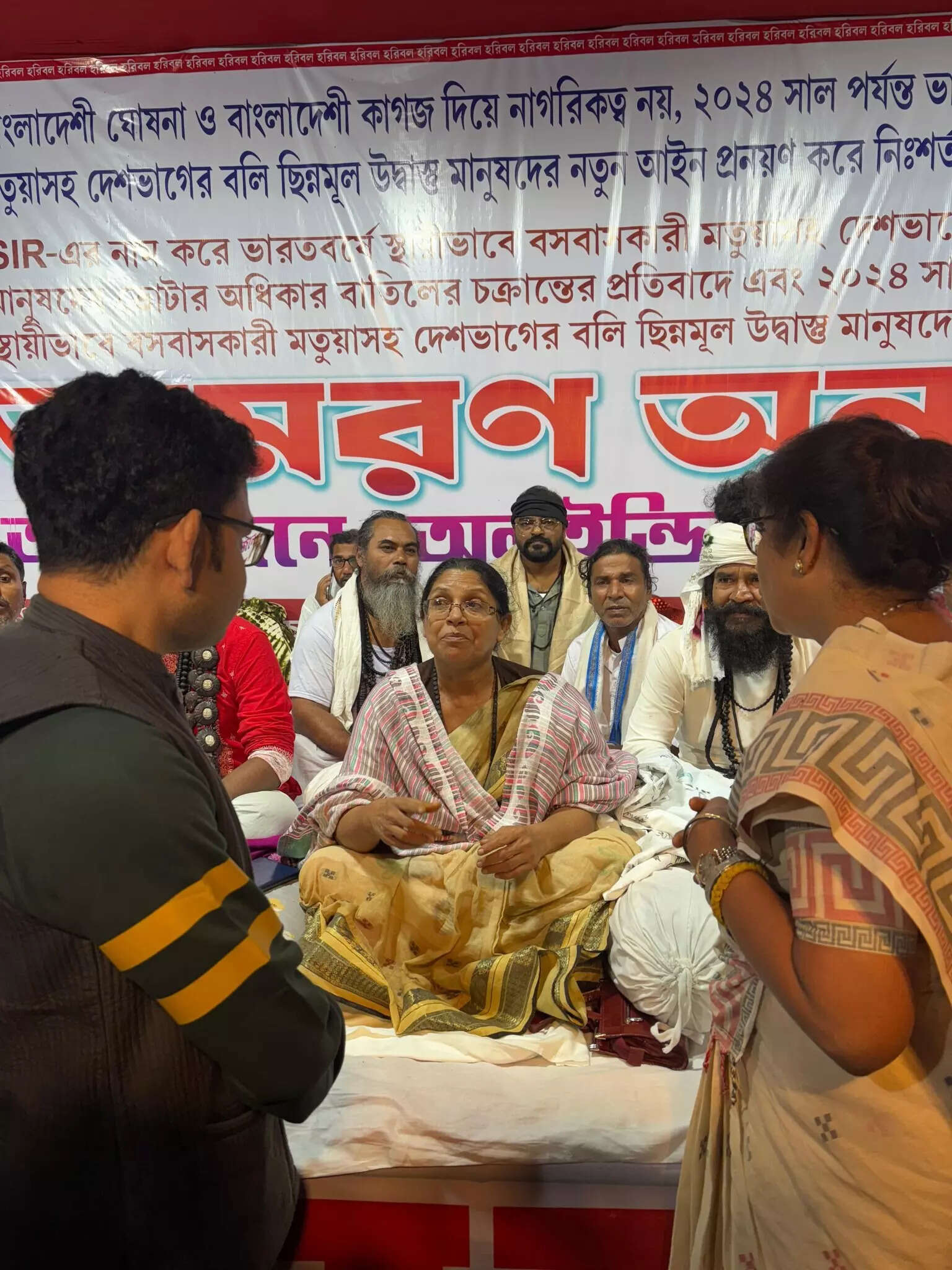
Hitting back, TMC called Thakur’s comment “nothing but a cynical, backstabbing betrayal”.“For years, they (BJP) dangled the mirage of citizenship in front of our Matua brothers and sisters, conning them election after election with honeyed lies, only to stab them in the back the moment the votes were pocketed,” the party said on X. “Now, with the EC reduced to their obedient B-team, BJP has rammed through their Silent Invisible Rigging (SIR) abomination in Bengal, forcing millions of Matuas into a humiliating litmus test of citizenship designed to strip them of their rights and erase their votes,” the party posted.
G5469nSawAATw7H

TMC MP Mamata Bala Thakur-led Matua faction during the hunger strike over SIR

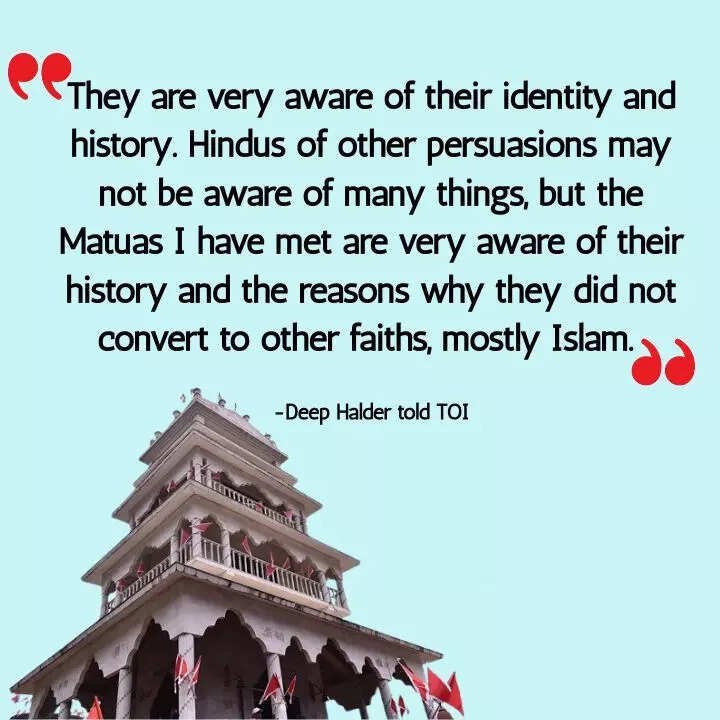
In this context, PM Modi’s assurance that the Matuas “have the right to live in India with dignity thanks to the CAA” could be read as an attempt to reassure the community that the ongoing revision of electoral rolls does not dilute its place or legitimacy in the state.The message appears aimed at separating administrative action from questions of belonging, even as concerns over voter exclusions continue to fuel unease in the Matua heartland.The Bengal battle for 2026On the factors that would probably play on the Matua community’s mind in the 2026 elections, Deep Halder said that “what is happening in Bangladesh explains why they left (East Pakistan) in the first place. Political galvanisation even on this side of the border (West Bengal) would remind them of what is happening on the other side of the border (Bangladesh)”.“The public lynching and burning of a Bengali Hindu man is a very recent memory for the Matuas. There is also a large chunk of Matuas on that side of the border (Bangladesh). I visited their headquarters there, and they are very aware of the developments in Bangladesh today. This would also play on their minds when they vote for either of the political parties.”He said the community may not choose one party solely on the issue of identity, but “identity is a big issue even for Gen Z Matuas”. “They are very aware of their identity and history. Hindus of other persuasions may not be aware of many things, but the Matuas I have met are very aware of their history and the reasons why they did not convert to other faiths, mostly Islam,” Halder told TOI.
Matua

Matuas and GenZ

For the Matua–Namasudra community, politics has never been a matter of slogans alone. It has been shaped by memory, by displacement, by the struggle to hold on to dignity across generations, and by the slow negotiation of belonging in a land they have helped build but have often had to justify their place in.Their choices have been pragmatic as much as emotional, guided as much by lived experience as by ideology. That is why their political loyalties have shifted, fractured and reassembled over time, resisting any attempt to be neatly categorised or permanently claimed. As Bengal moves toward another election cycle, the Matua story offers a reminder that electoral behaviour here is rarely divorced from history. Administrative processes, citizenship debates and developments across the border are not abstract issues for this community; they touch upon inherited anxieties and hard-earned assertions.Whether the Matua–Namasudra vote consolidates, fragments or recalibrates itself in 2026 will depend less on promises made from platforms and more on whether the state can convince them that recognition, security and dignity are not provisional, but settled facts of citizenship.


Source link

Access Denied


Access Denied

You don’t have permission to access “http://www.ndtv.com/science/is-the-universes-endless-expansion-in-doubt-changing-dark-energy-sparks-fresh-cosmic-debate-10041541” on this server.

Reference #18.acf856b8.1766915040.2da2311b

https://errors.edgesuite.net/18.acf856b8.1766915040.2da2311b


Source link

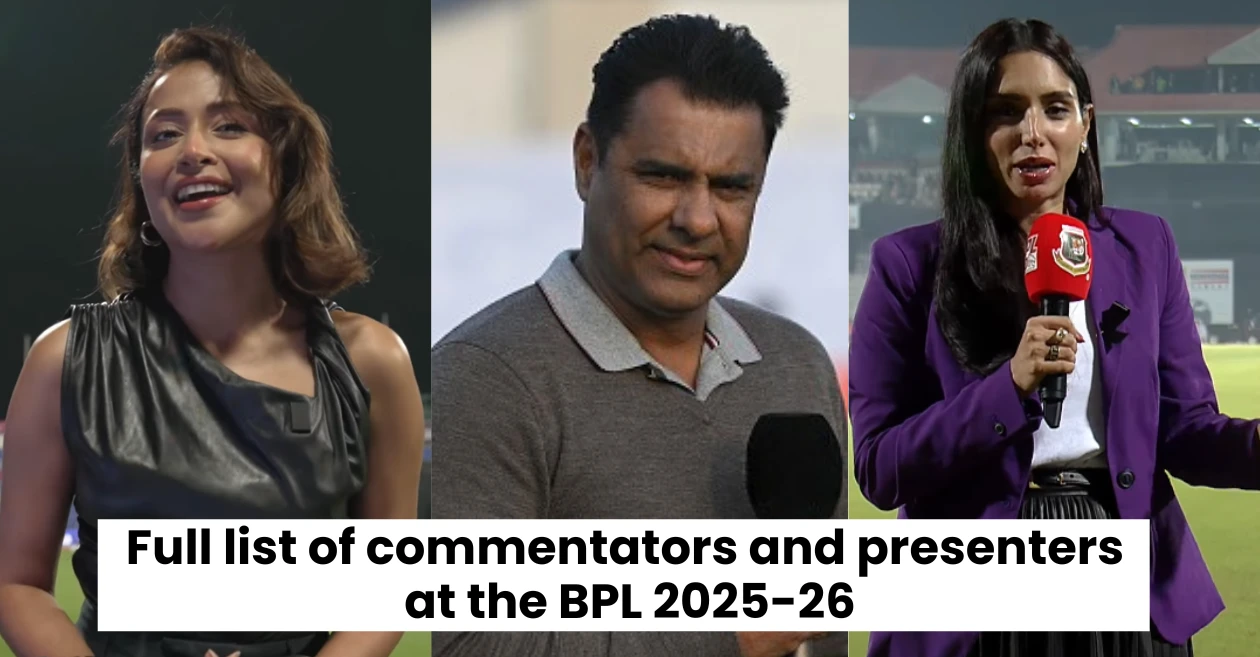
BPL T20 2025-26: Full list of commentators and presenters at the Bangladesh Premier League


The Bangladesh Premier League (BPL) 2025-26 is already underway, marking the 12th season of Bangladesh’s flagship T20 competition. As fans across the country and overseas tune in to the action, the organisers have confirmed the complete list of commentators and presenters leading broadcast coverage for the ongoing season.

With the BPL T20 now an established part of the global calendar, the 12th edition continues the league’s focus on delivering high-quality, informative and entertaining commentary by combining trusted Bangladeshi voices with renowned international experts.

The backbone of BPL commentary once again comes from respected local broadcasters who bring deep insight into Bangladesh cricket. Veteran commentator Athar Ali Khan remains a central figure, offering decades of experience and intimate knowledge of local players, conditions and domestic structures.

Athar Ali Khan (PC: X.com)

Alongside him is Shamim Chowdhury, whose calm, analytical style has made him a familiar presence for BPL viewers. Completing the local panel are Somannoy Ghosh and Mazhar Uddin Omi, both of whom add fresh perspectives and strong on-ground context.

Together, the local team ensures that the stories of emerging Bangladeshi players and domestic rivalries are told with accuracy and depth throughout the tournament.

The international commentary lineup for the BPL T20 2025-26 brings global appeal and tactical insight. New Zealand’s popular broadcaster Danny Morrison returns to inject energy and entertainment into the broadcast, a role he has become known for across T20 leagues worldwide.

West Indies spin specialist Samuel Badree provides sharp analysis of bowling match-ups and modern T20 strategies. Pakistan legends Waqar Younis and Ramiz Raja add star power, experience and high-profile insights from decades at the top level of international cricket.

Waqar Younis, Samuel Badree
Waqar Younis, Samuel Badree (PC: X.com)

Sri Lanka’s Farveez Maharoof and Jamie Cox of Australia round out the international panel, offering balanced viewpoints on batting techniques, field placements and in-game momentum shifts.

Also READ: BPL T20 2025-26 Schedule – Broadcast, Live Streaming details | When and where to watch Bangladesh Premier League in India, Pakistan, USA & other countries

Studio and on-ground coverage led by familiar sports presenters

Presentation duties during the ongoing BPL season are being handled by Zainab Abbas and Ridhima Pathak.

Zainab Abbas
Zainab Abbas (PC: X.com)

Both presenters bring extensive experience across international cricket leagues and are tasked with anchoring pre-match shows, mid-innings segments and post-match discussions.

Ridhima Pathak
Ridhima Pathak (PC: X.com)

Their role extends beyond studio work, helping connect fans to players through interviews, features and behind-the-scenes coverage as the tournament unfolds.

Also READ: SA20 2026 – Full list of commentators and presenters at South Africa’s explosive T20 cricket league


Source link

‘Opportunity aayega, mehnat kar’: Virat Kohli to Vishal Jayswal after falling to left-arm spinner | EXCLUSIVE | Cricket News


'Opportunity aayega, mehnat kar': Virat Kohli to Vishal Jayswal after falling to left-arm spinner | EXCLUSIVE
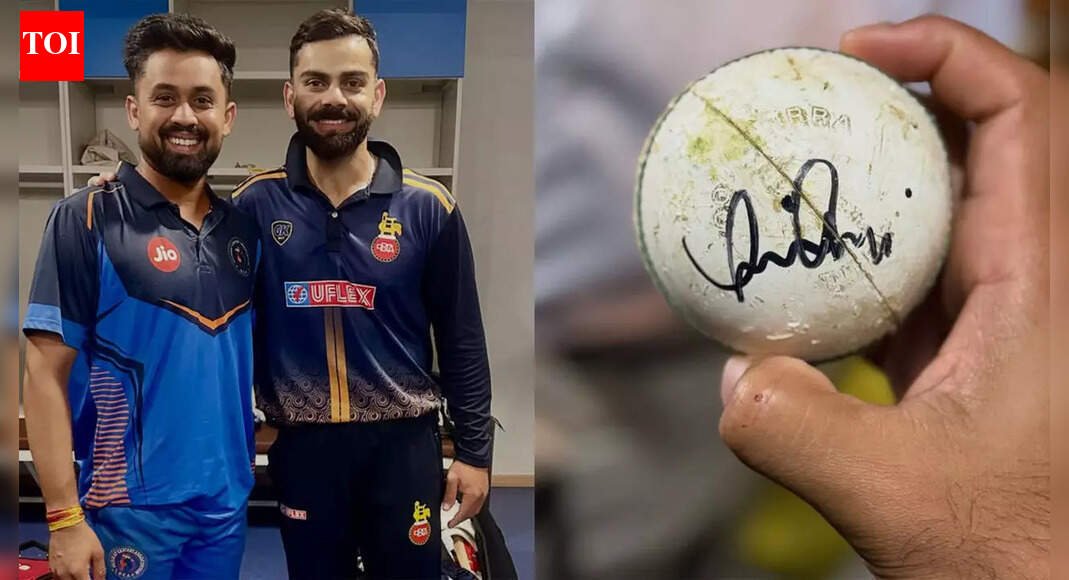
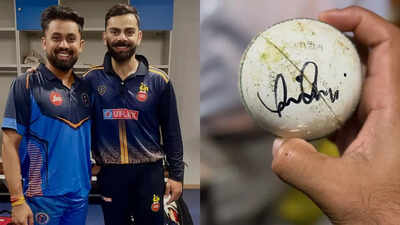
Virat Kohli and Vishal Jayswal (Image credit: Special arrangement)

NEW DELHI: Vishal Jayswal was an unknown name until he claimed the most prized wicket of his cricketing career — Virat Kohli – a dismissal that instantly etched his name into the record books.Jayswal tempted Kohli out of the crease, spinning the ball sharply past the outside edge and the wicketkeeper made no mistake and whipped off the bails to send the well-set Delhi batter back for 77.

Virat Kohli’s childhood coach makes a big statement on 2027 ODI World Cup

While Gujarat narrowly lost the thriller by seven runs, the moment belonged to the young spinner, who was embraced by teammates for his unforgettable breakthrough.As the rest of the Gujarat players headed back to the dressing room, Jayswal lingered. He requested the umpire for the match ball — the one with which he had dismissed Kohli.Ball in hand, he nervously walked towards the Delhi dressing room. Spotting Kohli, he hesitated. Kohli noticed him, smiled, and said: “Aaja, aaja” (Come in).A nervous Jayswal pulled the ball out of his pocket and said: “Bhaiya, ball pe ek autograph chahiye” (Please give me an autograph).Kohli put his kit aside, asked Jayswal to sit down, and made him comfortable before signing the ball.

.

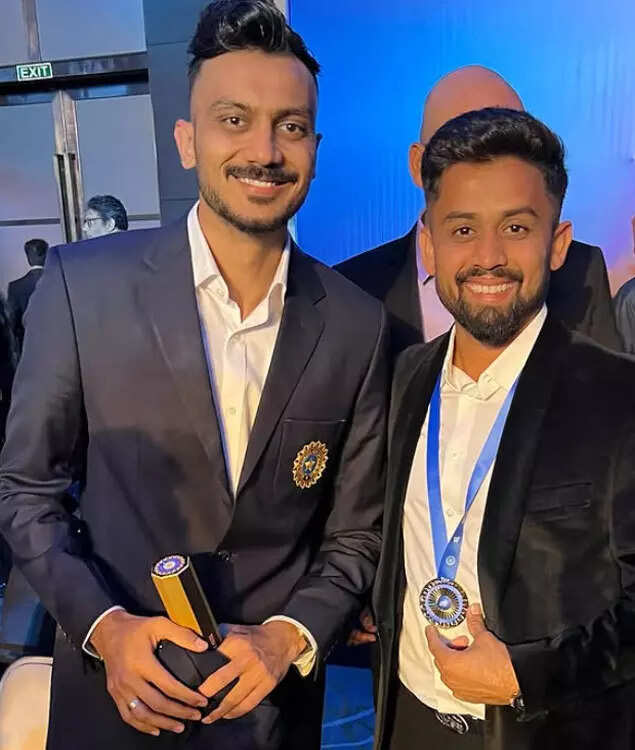
“Achha ball daalta hai. Hard work karta rah. Opportunity aayega, wait kar and mehnat kar [You bowl really well. Keep working hard. Your opportunity will come — be patient and keep putting in the effort],” Kohli told him.Jayswal admitted the pressure of bowling to a modern day great.“I didn’t have any specific plan against him. He’s a legend of the game. Just bowling to him is a huge moment, and there’s immense pressure when he’s at the crease. I spoke to him and he gave me a lot of tips, how to remain calm under pressure, fitness etc,” Jayswal said, during an exclusive chat with TimesofIndia.com.“Of course, I’m really happy to have dismissed him. Having a wicket like that next to your name is very special,” the spin allrounder said.INSPIRED BY AXAR PATELLike Axar Patel, Jayswal hails from Nadiad in Gujarat’s Kheda district and began his cricket journey at the same academy where Team India’s T20I vice-captain took his first steps.

Vishal Jayswal with Axar Patel (Image credit: Special arrangement)

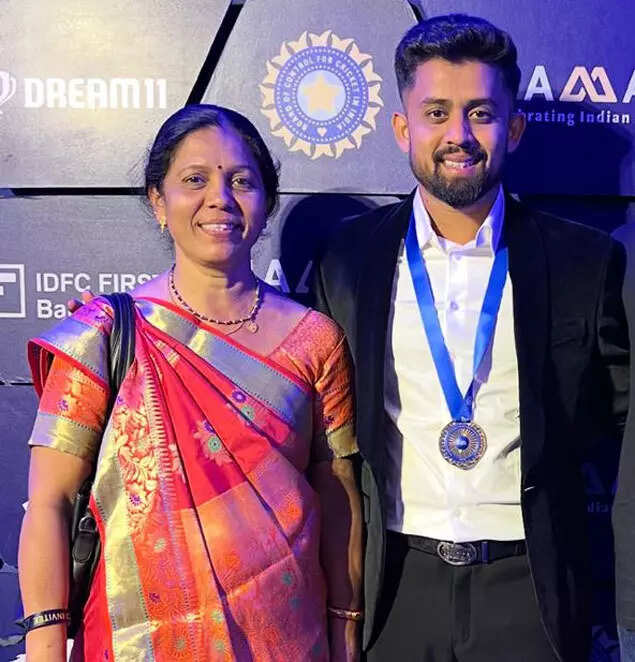
Jayswal lost his father when he was just eight months old.As he grew older, cricket became his passion, and he told his mother of his dream to become a professional cricketer. The road was far from easy, but his mother stood firmly by him.“The journey was extremely tough, but whatever I am today is because of my mother,” said Jayswal, who finished as the highest wicket-taker in the 2022–23 CK Nayudu Trophy.“Taking her to the awards function was one of the proudest moments of my life.”

Vishal Jayswal with his mother (Image credit: Special arrangement)

According to Jayswal, Axar has played a crucial role in shaping his career.“Axar bhai has helped me immensely — from my cricket kit to jerseys and bats. I look up to him as an inspiration and mentor,” he said.“I’ve always wanted to be a spin-bowling all-rounder like him. He teaches me how to be a game-changer — when to attack, how to control the run rate, and how to stay mentally strong.”Recalling Axar’s advice, Jayswal added with a smile: “He always tells me: ‘Batting mein dhyaan sirf ball pe rakho, aur bowling mein batsman ke pair aur wickets pe.’ Those tips have helped me a lot.”


Source link

Is NEET PG student data out for sale? Here is what we know so far


Is NEET PG student data out for sale? Here is what we know so far
Is NEET PG student data out for sale?

For most doctors who appeared for NEET PG 2025, the post-exam phase was supposed to be about one thing — waiting. Waiting for ranks, counselling dates, and clarity about the next step in their careers. Instead, many found themselves dealing with a far more unsettling distraction: Strangers calling them, quoting their exam details, and offering “help” with admissions.What initially sounded like routine spam has now snowballed into a much larger controversy.In the past few weeks, several media reports have mentioned that personal data of NEET PG 2025 candidates might be circulating online, and could be sold as ready-made databases to private admission agents and counsellors. The claims have raised uncomfortable questions about how candidate information is handled and how easily it may be slipping out of official control.

What the allegations are about

Various media reports have found that databases being advertised as “NEET PG 2025 student data” have surfaced on websites and private messaging platforms. These listings claim to offer detailed information of candidates who appeared for the postgraduate medical entrance exam.What has alarmed aspirants is the nature of the data being mentioned. According to reports, the information allegedly includes candidate names, parents’ names, phone numbers, email IDs, city and state details, roll numbers, marks and ranks. In short, it goes well beyond what is publicly available.The reports have also mentioned that sellers are charging anywhere between a few thousand rupees and over ₹10,000 for access to these databases, depending on the volume and depth of information promised.

How did candidates realise something was wrong?

For many aspirants, the first red flag came in the form of phone calls, suggest media reports.Doctors who had recently checked their NEET PG results allegedly began receiving calls from private agents claiming they could arrange seats in medical colleges. What made these calls different was the precision. Callers reportedly knew not just the candidates’ names, but their ranks, scores and sometimes even personal details that had been shared only during the application process.As per media accounts, some candidates went on to search online and found listings offering NEET PG 2025 data for sale. In a few cases cited in these reports, candidates whose details appeared in sample datasets confirmed that the information matched their own records.

How NBEMS responded

The National Board of Examinations in Medical Sciences (NBEMS), which conducts NEET PG exam, has responded to the allegations, according to Medical Dialogues, a media platform primarily known for reporting news related to medical education. The board has stated that it shares candidate data only with authorised bodies such as the Medical Counselling Committee and state counselling authorities, and only for counselling and admission-related purposes.NBEMS has reportedly denied that the data leak occurred at its end. Officials have indicated that if any unauthorised access has taken place, it may have happened after the data was shared with other agencies involved in the counselling process.As reported by Medical Dialogues, NBEMS has submitted a report on the issue to the Union Health Ministry. The issue is still being looked into, and no official decision has been made yet.

Why the issue has struck a nerve

The controversy comes at a moment when digital privacy is under intense scrutiny, especially in exams like NEET PG, where vast amounts of sensitive personal information are collected. The Digital Personal Data Protection Act, 2023 is now in place. So, there is a clear expectation that such information will be kept safe,and shared only through secure channels.If candidate information submitted for NEET PG has indeed been misused, it raises questions that go beyond one exam cycle. Legal experts quoted in many media reports have pointed out that in case of a confirmed breach, scrutiny will be carried out under existing data protection laws.For aspirants, however, the worry is immediate and personal. Unwanted calls, false promises, and the worry of being targeted during counselling have made an already stressful time even harder for them.

Where could the data have leaked from?

So far, there is no official clarity on where the alleged breach occurred. What is evident, as highlighted in various reports, is that NEET PG data does not remain with a single authority.After the results are announced, candidate information is sent to several agencies and platforms for All India Quota and state-level counselling. Each time the data is shared, the risk of it being exposed increases if proper security measures are not in place.The layered nature of the admissions process makes accountability harder to establish — but also harder to ignore.

What are students asking for?

Aspirants quoted across media reports are calling for transparency. Many want authorities to clearly spell out who has access to their data, how long it is retained, and what checks are in place to prevent misuse.There is also growing demand for official warnings against private agents claiming guaranteed seats, particularly when such claims are backed by confidential-looking data.

What happens now

For the moment, the Health Ministry’s review of the report submitted by NBEMS is ongoing. Until official findings are made public, the issue remains driven by candidate accounts and investigative reporting.No matter what the final outcome is, this issue has shown a bigger problem. In exams like NEET PG, trust is very important. Students give their personal information expecting it to be kept safe. When that trust is broken, it doesn’t just affect one exam—it makes people doubt the whole system.


Source link

‘My children unsafe at home’: Unnao rape victim’s plea ahead of SC hearing; seeks justice against Kuldeep Sengar | India News


‘My children unsafe at home’: Unnao rape victim's plea ahead of SC hearing; seeks justice against Kuldeep Sengar
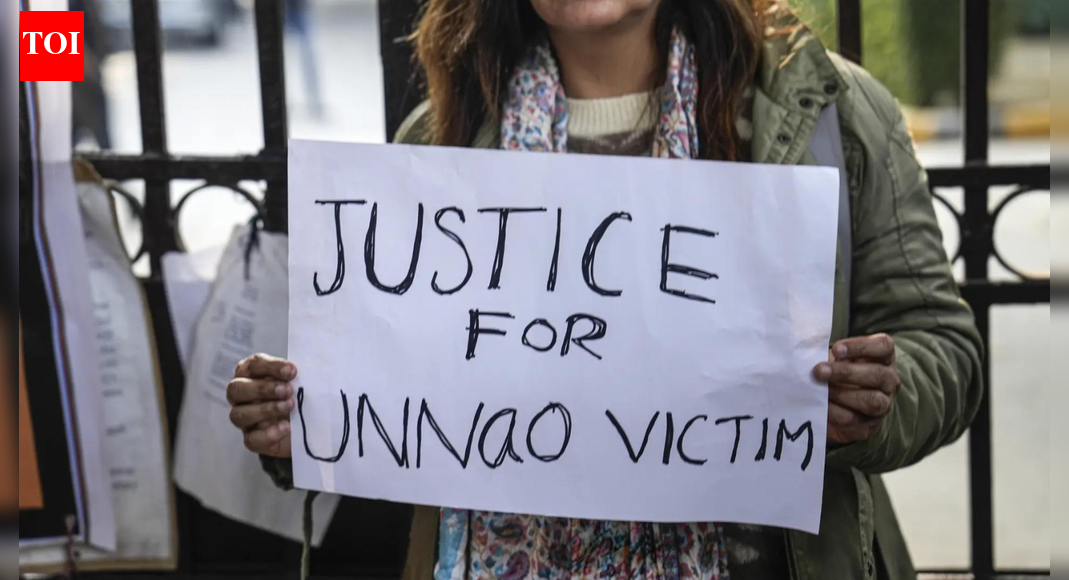
A protester holds a placard during a demonstration against the suspension of the jail term of Kuldeep Sengar

NEW DELHI: The survivor of the 2017 Unnao rape case on Sunday said that she fears for the safety of her children after the Delhi high court suspended the life sentence of expelled BJP leader Kuldeep Singh Sengar. Reacting to the CBI’s petition before the apex court, the survivor told news agency ANI, “I have faith in the Supreme Court that it will give me justice. I am raising the voice of every women… Had CBI done this before, I would have got justice. His (Kuldeep Sengar) bail would have been rejected because he raped me. My father was killed. My family members were killed. The security of my family members and witnesses was removed... My husband was fired from his job. My children are unsafe at home.The Supreme Court is scheduled to hear the CBI’s plea on December 29. As per the cause list, a bench headed by Chief Justice Surya Kant, along with Justices J K Maheshwari and Augustine George Masih, will take up the matter. The court will also hear a separate petition filed by advocates Anjale Patel and Pooja Shilpkar challenging the high court’s order.Also read: CBI cites Advani judgment to seek Sengar bail nixingOn December 23, the Delhi high court suspended Sengar’s life sentence in the rape case, noting that he had already served seven years and five months in prison. The suspension will remain in force while his appeal against conviction is pending. The CBI moved the Supreme Court against the order on December 26.Also read: Unnao rape survivor’s explosive charge; meets CBI officialsSengar was convicted in December 2019 and sentenced to life imprisonment along with a fine of Rs 25 lakh. While the high court granted him bail in the rape case, he will continue to remain in jail as he is serving a separate 10-year sentence in a CBI case related to the custodial death of the survivor’s father. His appeal in that case, along with a plea seeking suspension of sentence, is also pending.The high court imposed several conditions while granting bail, including a personal bond of Rs 15 lakh with three sureties, a direction not to enter a 5-km radius of the survivor’s residence in Delhi, and a strict bar on threatening her or her mother.


Source link

‘India should change its stand’: Hindus form party in Bangladesh, prepare to contest polls; hope to win 40-45 seats | Nagpur News


NAGPUR: Amidst the brutal persecution of Hindus in Bangladesh in run-up to February polls, a party registered in April hopes to fight its maiden elections, seeking Hindu and other minority votes. The Bangladesh Minority Janta Party (BMJP) is preparing to contest 91 of 300 seats of the Jatiya Parishad (national parliament), hoping to win 40 to 45 seats, said the outfit’s president Sukriti Kumar Mandal.Talking to TOI on phone from Dhaka, Mandal, a seasoned politician, said, “We have zeroed in on constituencies where the minority, especially Hindu vote-bank, ranges from 20% to 60%.”

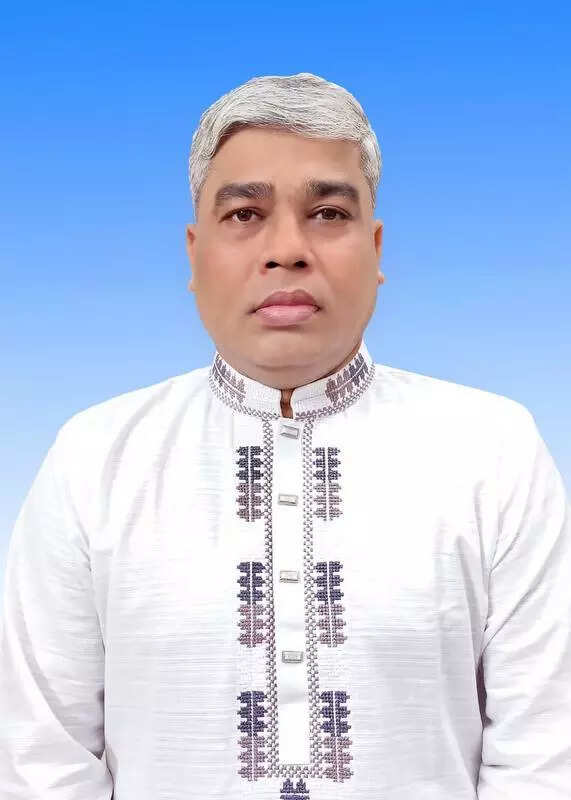
Bangladesh Minority Janta Party president Sukriti Kumar Mandal

Scrambling to file nominations before the Monday deadline, Mandal feels Hindus need to feel safe to come out and vote. A tie-up with any mainstream party — be it Tarique Rahman’s BNP or Jamaat-e-Islami — can help. “With an alliance with these parties, minorities can come out of their houses without fearing retaliation. Awami League is off the radar, and BMJP is the only voice of persecuted Hindus,” he told TOI.

‘Not Genocide But Anger Against Govt’: Cleric On Bangladesh Unrest, Questions Selective Outrage

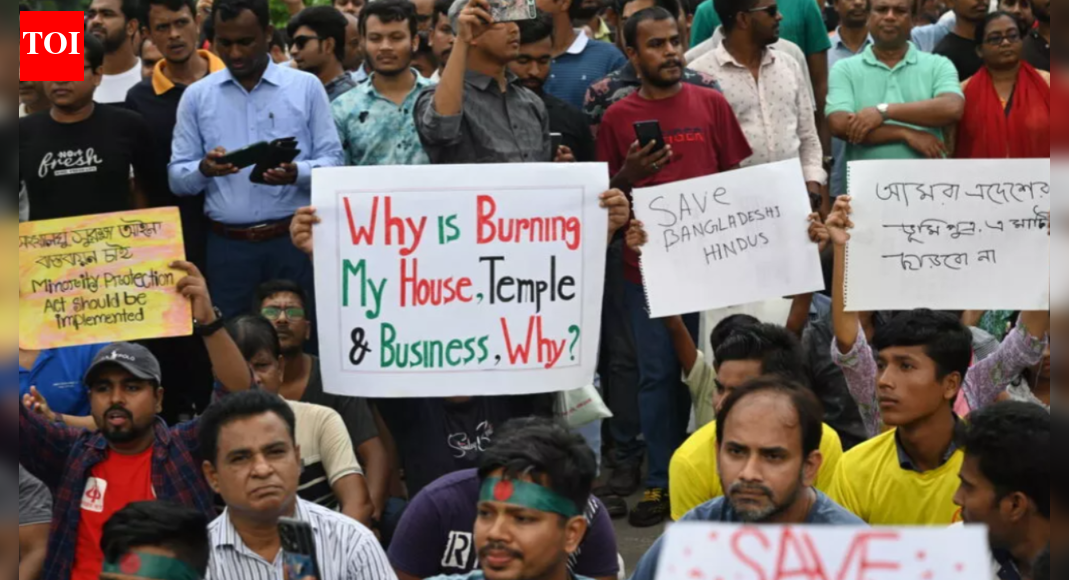
Mandal said the party candidates would be finalised in a day or two. “By Saturday, all nominations would be filed,” he said. He said India should change its stand on Bangladesh and only back the cause of Hindus, instead of supporting Awami League. “If India shifts from its pro-Awami League stand, mainstream Bangladesh parties will sit up and take note. India must know that BMJP is the sole voice of minorities,” he said.A change in stand could also lead to a change in Bangladeshi mindset towards India, he said, adding the Awami League only used India for gaining power.The five-point agenda shared with TOI includes working towards a secular Bangladesh, establishing a federal system by carving out five provinces, and establishing fundamental and constitutional rights of each state. BMJP also proposes changes in textbooks with a secular and scientific approach, apart from ensuring fair rights for minorities.The party’s vision document says communalism has not subsided, though an independent Bangladesh was established with the objective of building a social system free of discrimination. “The Enemy Property Act, created during Pakistan rule, is now being used to target Hindus. Lakhs of acres of Hindu land have been lost, and countless families have been ruined after property grabbing, personal vendetta, forced conversion and arson at places of worship, which are daily incidents,” said Mandal.He also said 2.5 crore Hindus in Bangladesh are there to stay in the country. Remaining in the mainstream can be the solution. “There is a sizable Hindu population in a cross-section of constituencies. Earlier, they were Awami League supporters. To come out and vote for us, either of the mainstream parties must declare a tie-up,” he says.


Source link

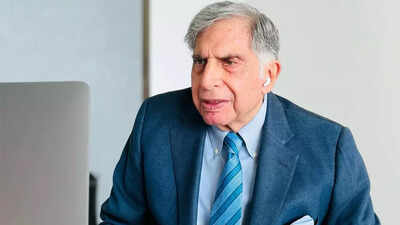
Ratan Tata’s 88 birth anniversary: Politicians, industrialists pay tributes; call him ‘jewel of India’


Ratan Tata's 88 birth anniversary: Politicians, industrialists pay tributes; call him 'jewel of India'

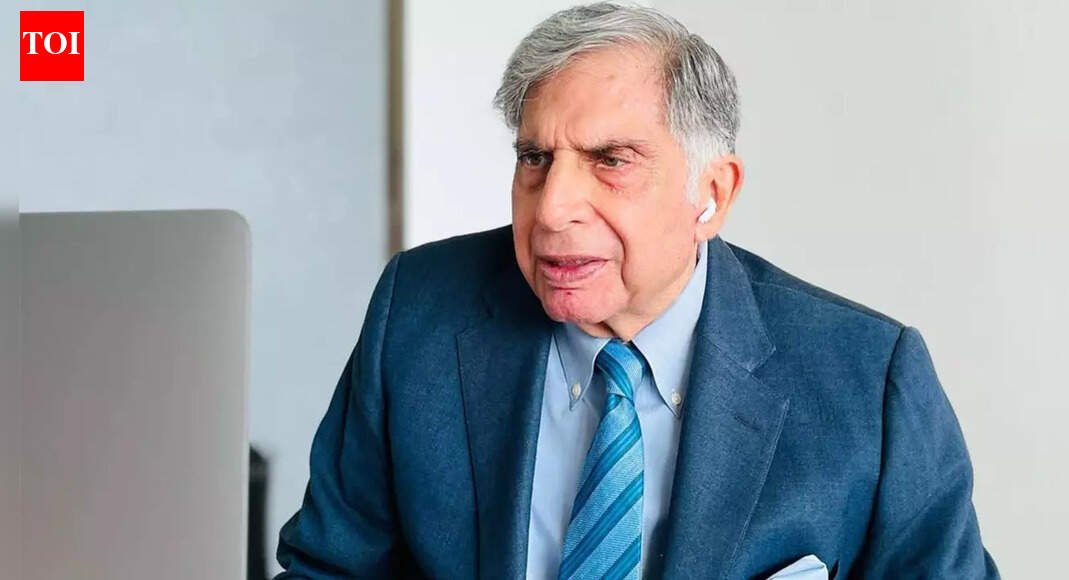
India on Sunday paid tribute to late Ratan Tata on his 88th birth anniversary, as political leaders, industrialists and institutions gathered to remember the businessman.Tata Group chairman N Chandrasekaran paid homage to Ratan Tata at Bombay House, garlanding the statue of the late industrialist and philanthropist, Ratan Tata, the former chairman of the Tata Group.Recalling his contribution, Tata Trusts said, “Under his guidance, philanthropy evolved from charity to a strategic, results-driven approach, addressing healthcare, education, livelihood, women-empowerment, and more—with a focus on long-term transformation and community resilience.”The organisation further added that Tata’s vision went beyond merely addressing socio-economic gaps. “It calls for collaboration between innovation, supportive technology, and a deep understanding of local needs, ensuring that solutions are thoughtful, scalable, and reach those who need them the most,” the post read.Tata Consulting Engineers also took to X, commemorating the late businessman. Union home minister Amit Shah also paid tribute to the late industrialist, writing he “reshaped Indian enterprise with integrity and compassion. From building indigenous industry to selfless philanthropy, he showed that true success lies in service to the nation. His legacy will inspire a self-reliant Bharat,” Shah wrote on X.Maharashtra chief minister Devendra Fadnavis remembered Ratan Tata as a visionary leader who built trust alongside global businesses. “A leader who built not just enterprises, but trust, compassion, and faith Indian excellence, globally. His humility and vision remain a guiding light for every aspiring entrepreneur and citizen,” Fadnavis said.Andhra Pradesh chief minister N Chandrababu Naidu also paid his respects, describing Ratan Tata as a leader whose values would continue to inspire generations. “Fondly remembering Shri Ratan Tata Ji on his birth anniversary. A visionary industrialist and compassionate leader, he devoted his life to business excellence and philanthropy. His integrity, humility, and commitment to society will continue to inspire us all. My humble tributes to him,” Naidu wrote on X.Union minister Dharmendra Pradhan said Ratan Tata’s legacy would remain a source of inspiration. “Homage to the titan of India Inc, Padma Vibhushan Shri Ratan Tata on his birth anniversary. A visionary, he redefined India’s industrial and business landscape with ethical and compassionate leadership,” he said.Union minister Piyush Goyal also remembered the former Tata Group chairman, noting the lasting impact of his leadership. “On his Jayanti, I fondly remember Shri Ratan Tata ji with deep admiration and respect. His leadership seamlessly blended innovation with compassion, redefining the role of Indian enterprise in national development. The institutions he nurtured and the values he championed continue to guide generations,” Goyal wrote.Union minister Jyotiraditya Scindia said that Ratan Tata’s life of integrity, humility and compassion, along with his commitment to philanthropy and nation-building, set a benchmark for ethical leadership.YSRCP supremo and former Andhra Pradesh chief minister YS Jagan Mohan Reddy also remembered him, writing on X, “Paying tributes to the ‘Jewel of India’ Ratan Tata on his birthday. His entrepreneurship took Indian industry to a global level, and his legacy continues to guide us”.Born into the Tata family founded by his great-grandfather Jamsetji Tata, Ratan Naval Tata studied architecture at Cornell University and returned to India in 1962 to join the group.Ratan Tata played a major role in expanding the Tata Group into a global conglomerate with businesses across steel, automobiles, software and telecommunications. He took over as chairman of the Tata Group in 1991, succeeding JRD Tata. During his tenure, he introduced major organisational reforms, including setting retirement ages and encouraging younger leaders to take on senior responsibilities. He led several landmark international acquisitions, like Tetley Tea in 2000 and Land Rover from Ford in 2008. Ratan Tata also played a crucial role in the Tata Group’s acquisition of Air India from the government in January 2022 and launched the Tata Nano, a low-cost car aimed at making personal transport more affordable. After stepping away from active leadership, he became a prominent investor in Indian start-ups, supporting firms such as Paytm, Ola Electric and Urban Company. He received numerous national and international honours, including the Padma Bhushan in 2000 and the Padma Vibhushan in 2008. Other recognitions included the Assam Baibhav in 2021, Honorary Officer of the Order of Australia in 2023, an Honorary Doctor of Science from IIT Bombay in 2008, the Honorary Knight Grand Cross of the Order of the British Empire in 2014 and the Honorary Citizen Award from Singapore in 2008. Ratan Tata passed away on October 9, last year, at the age of 86. At the time of his death, he was chairman of the Ratan Tata Trust and Dorabji Tata Trust, two of India’s largest private-sector-promoted philanthropic organisations.


Source link

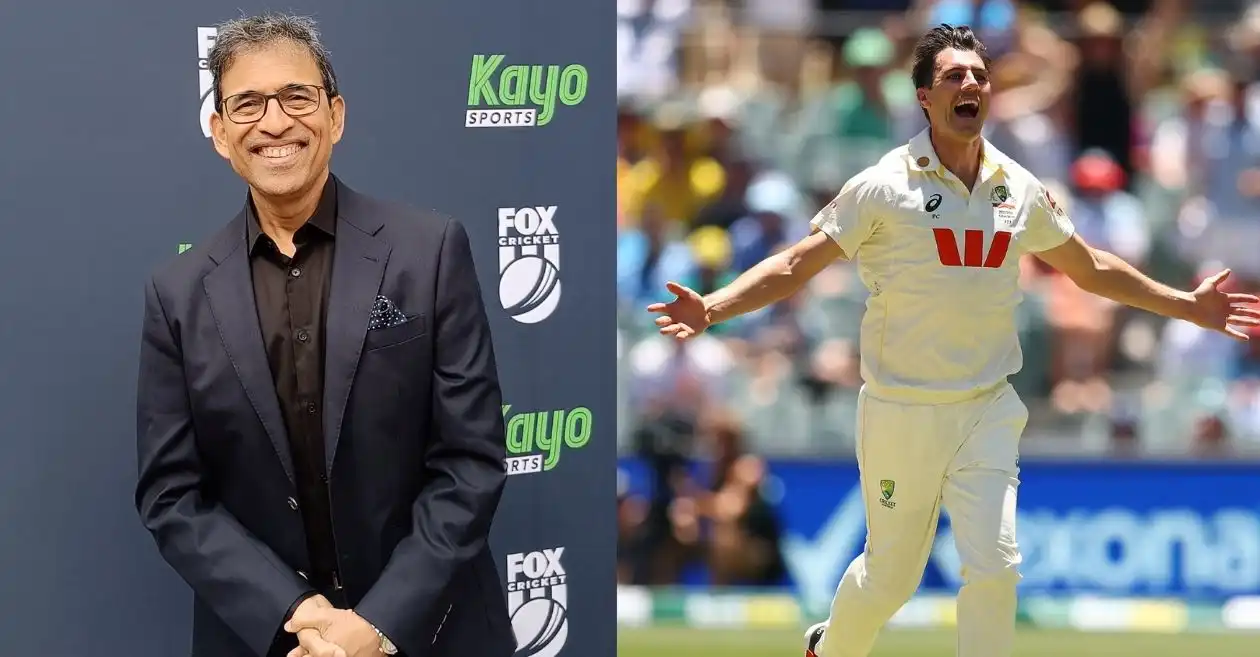
Harsha Bhogle picks Test Team of the Year 2025, Pat Cummins named captain


Renowned commentator Harsha Bhogle has sparked cricket conversations worldwide by revealing his premier Test lineup for 2025. His selection highlights a shift toward high-impact players, featuring a balance of gritty traditionalists and aggressive stroke-makers. Notably, the XI, picked on cricbuzz, includes four Indian stars who anchored their team’s success throughout a busy calendar year.

Harsha Bhogle’s Test Team of the Year 2025

Stylish top order

The opening pair features a blend of technique and flair. KL Rahul secures his spot after a prolific year, amassing 813 runs in 19 innings at an average of 45.2, including three centuries. Partnering him is the unconventional Travis Head, who Bhogle praised for his match-winning cameos in the Ashes, including a vital 120 against the West Indies and consistent aggressive starts.

At number three is India’s Test captain Shubman Gill, who finished 2025 as a leading contender for Player of the Year. Gill’s staggering 983 runs, highlighted by five centuries and a mammoth 269 against England, made him an automatic choice.

Modern-day greats in the middle-order

The middle order is a “who’s who” of batting royalty. Joe Root continues his historic run, becoming the first player to cross 6,000 WTC runs. In 2025, he notched up massive scores, including a 150 against India. Following him is Steve Smith, whose twin centuries against Sri Lanka (131 and 141) early in the year proved he remains a master of the format.

Ravindra Jadeja slots in as the premier batting all-rounder. While his bowling was steady, his batting reached new heights in 2025, averaging 63.7 and striking five consecutive fifties during the tour of England.

Behind the stumps, Alex Carey earned his place with both gloves and bat. Carey enjoyed a career-best year with 743 runs at an average of 53, including a top score of 156. The lone specialist spinner is South Africa’s Simon Harmer, who terrorized lineups in late 2025, taking 21 wickets in just two Tests against India, including two separate six-wicket hauls.

Also READ: Ashes 2025-26: Ben Stokes and Steve Smith slam MCG pitch after 4th Test ends in two days

The pace battery: Fire and leadership

The bowling attack is led by Bhogle’s Test Player of the Year, Mitchell Starc. The left-armer enjoyed a “prime” year at age 35, taking 55 wickets at a remarkable average of 17.3. He is joined by Pat Cummins, who not only led Australia to the WTC Final but maintained an elite bowling average of 16.53 across his appearances. Bhogle also named Cummins as the captain of the team.

Rounding off the XI is Mohammed Siraj. The Indian pacer was rewarded for his tireless work ethic and a standout series against England where he claimed 23 wickets, often outperforming more senior peers through sheer persistence.

Harsha Bhogle’s Test Team of the Year 2025: KL Rahul, Travis Head, Shubman Gill, Steve Smith, Joe Root, Ravindra Jadeja, Alex Carey (wk), Mitchell Starc, Pat Cummins (c), Mohammed Siraj, Simon Harmer

Also READ: From Mitchell Starc to Dale Steyn: Top 5 bowlers with best strike-rates in a calendar year in Tests


Source link