Breaking News
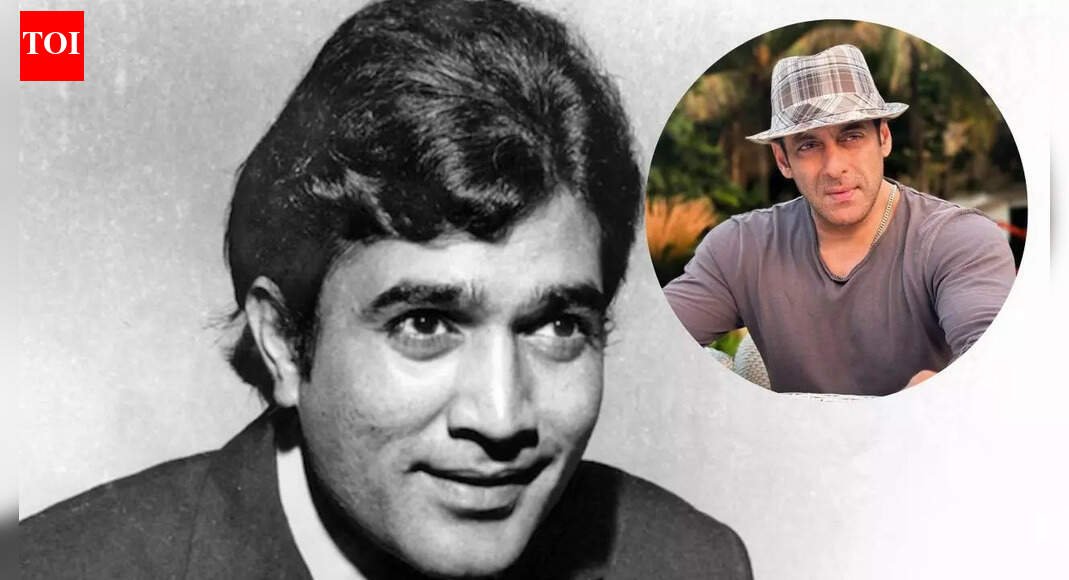
When ‘Battle of Galwan’ star Salman Khan offered to work for free to save Rajesh Khanna’s bungalow ‘Aashirwad’ from tax dues: ‘Tu mera ghar bikwana chahta hai…sadak par lana chahta hai’ | Hindi Movie News


In his financial decline, Rajesh Khanna fiercely refused to sell his iconic bungalow, Aashirwad, even as tax debts mounted. Despite ‘Battle of Galwan’ star Salman Khan offering to settle his dues and act for free in a revival project, a proud “Kaka” viewed the proposal as an insult before his death in 2012.

Rajesh Khanna was known as India’s first true superstar and quite naturally, his life featured a fair share of highs and lows. His iconic sea-facing bungalow, ‘Aashirwad’ on Mumbai’s Carter Road was more than just a home. It was hailed as the “durbar” of a “monarch” who had ruled the Hindi film industry with 15 consecutive hits, as detailed in ‘Dark Star: The Loneliness of Being Rajesh Khanna’ by Gautam Chintamani. Also revealed in the book is the heartbreaking financial decline and Kaka’s the fierce refusal to let go of his pride, even when Salman Khan offered a helping hand.

When Rajesh Khanna ruled like a king

The book also chronicles how in the early 1970s, after purchasing the bungalow from Rajendra Kumar for Rs. 3.5 lakh, Khanna had transformed it into a royal court. Producers would wait for hours outside, hoping for an audience. When “Kaka” finally emerged, he would sit on a chair placed higher than his guests to maintain the distinction between the king and his subjects. Inside, whisky flowed freely, and dissent was never tolerated; those who disagreed were theatrically banished from the “court.

Salman first look from ‘Battle of Galwan’ goes viral as filming starts in Ladakh’s icy terrain

The arrival of Amitabh Bachchan as the “Angry Young Man” in 1973 signalled the end of the romantic superstar era. By the early 2000s, Khanna’s financial situation had turned dire. The Income Tax department reportedly served him a notice for unpaid dues exceeding Rs. 1.5 crore, and rumors began swirling that the superstar might finally have to part with his beloved ‘Aashirwad’.

When Salman Khan stepped in

Seeing the superstar’s struggle, Salman Khan reportedly reached out through screenwriter Rumi Jaffery. Salman’s brother, Sohail Khan, was interested in purchasing the property. To make the deal respectful, Salman offered to settle all of Rajesh Khanna’s outstanding Income Tax dues. Determined to finalize the deal, Salman Khan went as far as offering to star in a film produced by Rajesh Khanna without charging a single rupee.Despite the generous offer, Khanna reacted with “the fury of a wounded lion.” He felt betrayed that anyone would suggest he sell his sanctuary. According to Rumi Jaffery, Khanna shouted, “I consider you a son-in-law and you want to sell my house? You want to bring me to the streets!” Years later, Khanna even reportedly scolded Sohail Khan in person for the proposal.The late superstar often mused that even after his death, ‘Aashirwad’ would continue to stand forever as a monument to his stardom. In an ironic twist of fate, the Rajesh Khanna passed away in the bungalow in 2012. Notably, a few years later, the legendary structure was demolished to make way for a modern high-rise.

Salman Khan on the work front

Salman Khan is gearing up for the release of the war drama, ‘Battle of Galwan’ opposite Chitrangada Singh. The film is scheduled for a release on April 17, 2026. It has been directed by Apoorva Lakhia and bankrolled by Salman Khan Films.


Source link

6,6,6,6,6,6 [WATCH]: Dewald Brevis and Sherfane Rutherford unleash a flurry of sixes on MI Cape Town bowlers in SA20 2025-26


In a thrilling New Year’s Eve clash at Newlands Stadium in Cape Town, Pretoria Capitals crushed MI Cape Town by 85 runs in the 8th match of SA20 2025-26 on Wednesday. Batting first, the Capitals posted a formidable 220/5, powered by explosive finishing from Dewald Brevis and Sherfane Rutherford, before their bowlers dismantled the hosts for just 135 in 14.2 overs. This victory marked the Capitals’ first points of the season, opening their account on the points table with a bonus-point win.​

Six-hitting spree! Dewald Brevis, Sherfane Rutherford demolish MI Cape Town attack

Brevis and Rutherford turned the death overs into a spectacle, smashing 10 sixes in their combined unbeaten stand of 86 runs off 27 balls, propelling Capitals past 200. Earlier, Wihan Lubbe anchored with 60 off 36 (7 fours, 2 sixes), while Shai Hope contributed 45 off 30 (3 fours, 2 sixes), helping reach 100 in 11.5 overs despite early jolts losing three wickets in the Powerplay for 39. The fireworks ignited in the 18th over from Corbin Bosch, where Brevis sliced a short wide ball over third man for six, then shuffled to hammer a low full toss straight for another maximum.​

Chaos peaked in the penultimate over from Dwaine Pretorius. Brevis had already dealt in boundaries, but Rutherford erupted with four straight sixes: a widish cutter smashed over long-off, a slower bouncer over square leg, an attempted yorker muscled over deep cover for 74 meters, and a length ball hammered straight. This sequence of six consecutive sixes across Bosch and Pretorius overs silenced the home crowd, with Pretorius leaking 36 in two overs without a wicket, as Kagiso Rabada and George Linde sat out the crucial phase. Capitals hit 200 in 19.2 overs, sealing a daunting total despite a slow over-rate penalty.​

Here’s the video:

Also READ: Sunrisers Eastern Cape skittle Paarl Royals for SA20’s lowest-ever total in one-sided win

Rutherford’s blistering all-round heroics

Rutherford stole the show, earning Player of the Match for his unbeaten 47 off 15 balls—all sixes, at a staggering 313.33 strike rate—after a quiet start to the tournament. His Caribbean flair dismantled MI Cape Town’s chase; opening with a 63/1 Powerplay, the hosts raced to 50 in 4.6 overs via Ryan Rickelton‘s 33 and Rassie van der Dussen‘s 28, but Rutherford struck back with 4/24 in three overs.​

He dismissed Reeza Hendricks (18), George Linde (2), Pretorius (8), and Rabada (4), collapsing MICT from 100/2 to 135 all out, with Keshav Maharaj grabbing 3/28 including Nicholas Pooran (25, 4×6). Tymal Mills (1/27) and Lizaad Williams (1/19) supported, as MICT lost eight wickets for 35 runs post-strategic timeout at 125/8. Rutherford’s dual impact—finishing the innings and leading the bowling—confirmed Capitals’ dominance, boosting their SA20 campaign amid a competitive table where MI Cape Town slipped after the loss.

Also READ: SA20 2026: Complete squads of all six teams after the players’ auction


Source link

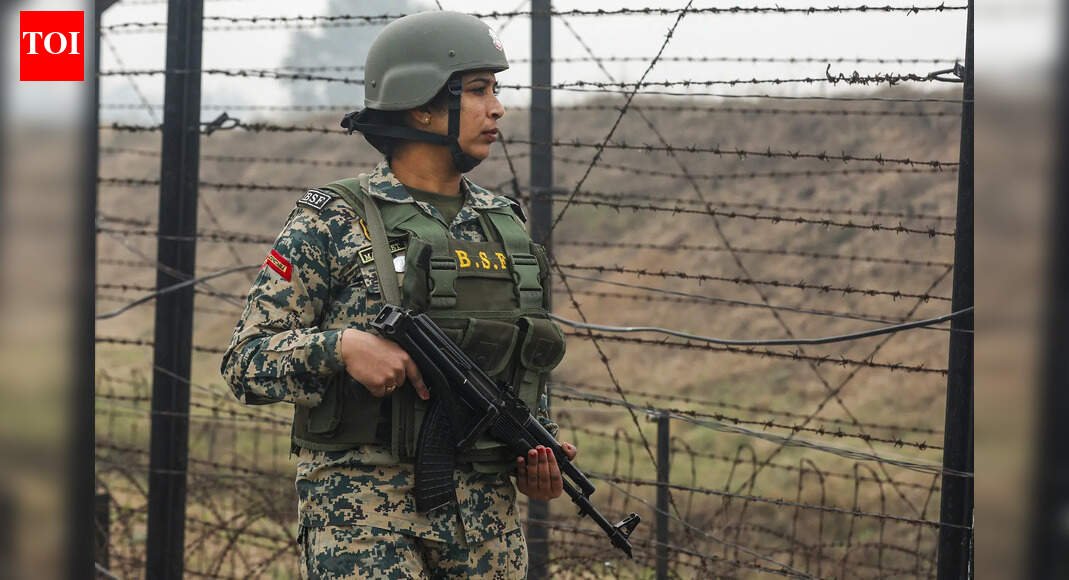
BSF nabs Bangladeshi national near border; hands him over to police | India News


BSF nabs Bangladeshi national near border; hands him over to police

JAMMU: BSF apprehended a 19-year-old Bangladeshi national in forward areas near international border in Jammu district’s Gajansoo during routine border surveillance on Thursday.“After completing initial formalities, BSF handed Shariful Islam Bhuiyan, a resident of Bangladesh’s Comilla district, over to local police for further legal action. Shariful is being interrogated to ascertain the circumstances that led to his presence near the international border,” police said.Two mobile phones, multiple debit and credit cards issued by Bangladeshi banks, a blank cheque, and some medicines were recovered from Shariful’s possession.“Initial investigation revealed that the individual arrived in India on Dec 1, 2025, landing at Delhi’s IGI Airport. He stayed at multiple hotels in Paharganj and Karol Bagh areas of Delhi before travelling by bus to Jammu via Jalandhar early on Dec 31,” an official said.During questioning, Shariful claimed that he had come to India for tourism. He also claimed that he had applied for a Portugal visa and came to India as Portuguese embassy was not available in Bangladesh.“Agencies are verifying his travel documents, bank details, digital devices, and contacts,” the official added.


Source link

J&K govt will discuss Kashmiri shawl sellers’ harassment with states concerned, says NC | India News


J&K govt will discuss Kashmiri shawl sellers’ harassment with states concerned, says NC
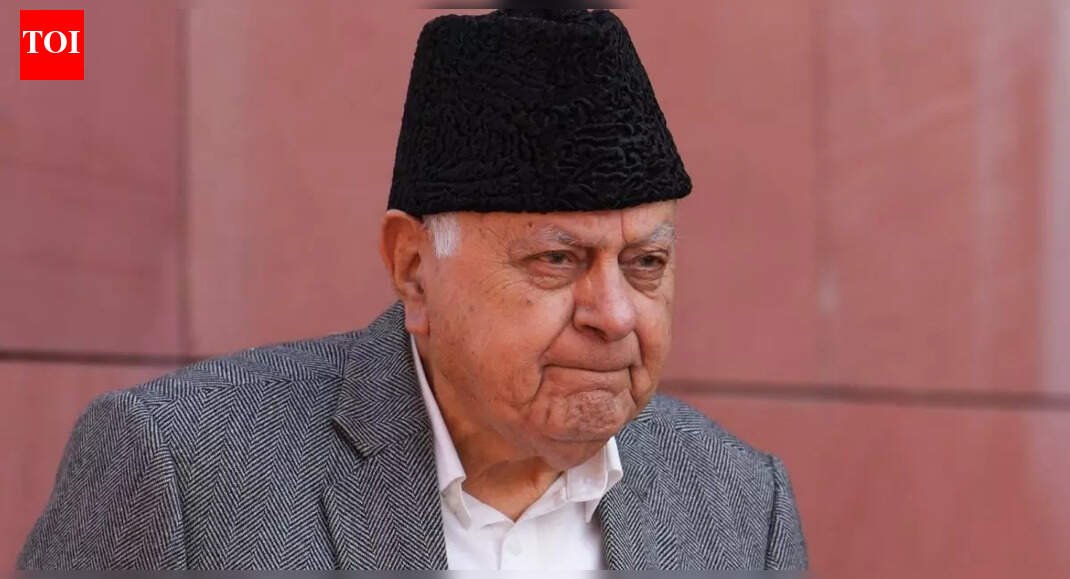
NC chief Farooq Abdullah (File photo)

SRINAGAR: National Conference on Thursday expressed concern over the alleged assaults on Kashmiri shawl sellers in different parts of the country and said the Jammu and Kashmir government would take up the issue with the state governments concerned.NC chief Farooq Abdullah said, “It is unfortunate that some people want to impose a Hitler-like system in this country. Nazism has ended, and I am hopeful that this kind of extremism will also come to an end.”Abdullah praised the Central government for sending external affairs minister S Jaishankar to Bangladesh to represent India at the funeral of former PM Khaleda Zia.NC spokesperson Tanvir Sadiq said the Union home ministry has already taken strong note of the alleged attacks on Kashmiri shawl sellers.Jammu and Kashmir Students Association said it has written to home minister Amit Shah, seeking urgent “intervention over the alarming and continued rise in incidents of intimidation, harassment, and targeted violence against Kashmiri students and traditional shawl vendors” in Himachal Pradesh.


Source link

Ladakh’s new chief secy Ashish Kundra vows peace | India News


Ladakh's new chief secy Ashish Kundra vows peace
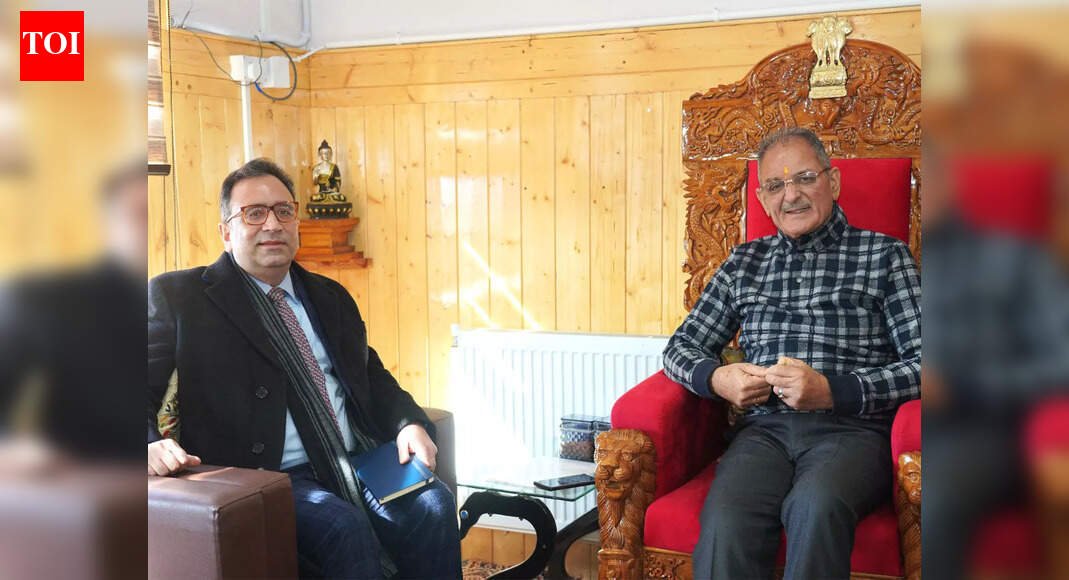
Ladakh chief secretary Ashish Kundra (left) calls on Ladakh LG Kavinder Gupta

NEW DELHI: Ladakh’s new chief secretary Ashish Kundra has listed addressing people’s aspirations as a key priority, stressing the Union territory’s “civilisational history of peace must be treasured and preserved”.The senior IAS officer, who took charge Thursday, comes in at a time of heightened tensions over demands by Leh Apex Body (LAB) and Kargil Democratic Alliance (KDA) for statehood and Sixth Schedule status.Four statehood protesters were killed in alleged police firing on Sept 24. Climate activist and LAB member Sonam Wangchuk was among the over 70 people arrested after the violence.Kundra, who previously served as principal secretary to Delhi LG VK Saxena, also echoed concerns over Ladakh’s fragile ecology, warning against “reckless construction in the name of development”.


Source link

Rats gobble up stored ganja samples in case against 5 ‘traffickers’ | Mumbai News


Mumbai: In a ratty turn of events in a “high-stakes” narcotics trial, the prosecution’s ganja samples in the case against five alleged drug traffickers were literally “devoured by rats” while sitting in storage. By the time the trial reached its conclusion, the envelopes that once supposedly held smaller samples of the nearly 130kg of ganja that were seized were found empty. “It is noted in the course of the trial all the envelopes containing samples were empty. The superintendent of the court has placed on record a report stating that the samples of alleged contraband therein were probably gnawed by rats. All the envelopes were found empty,” Special Judge H M Bhosale noted at the end of the 38-page judgment that highlighted a comedy of errors, procedural shortcuts, and a total lack of credible evidence leading to the acquittal. While the bulk of the seized drugs had already been destroyed before the magistrate, these specific samples were meant for the trial. “However, there are small particles in the envelopes. Therefore, it would be just and proper to send all the envelopes, in which samples were drawn, to the Anti-Narcotic Cell to take steps for its disposal as provided under the provisions in Narcotic Drugs And Psychotropic Substances (Seizure, Storage, Sampling and Disposal) Rules,” the judge concluded.The accused—Rajesh Jaiswal, Durgaprasad Yeddu, Mohammed Hanif Khan, Mohammed Nisar Shaikh, and Nijamuddin Shaikh—had been facing the prospect of years in jail following a 2021 raid by the Anti-Narcotic Cell (ANC) in Worli and the alleged seizure of 130kg of ganja.The prosecution’s case centred on a Jan 31, 2021 operation where the accused were allegedly intercepted in an SUV with heavy bags of contraband. However, the judge found despite the men demanding to be searched in the presence of a gazetted officer— a statutory right under NDPS Act—police ignored them. “This fact clearly establishes that despite specific demand by the accused, they were not produced before the nearest gazetted officer and their personal search was conducted...,” the judge noted. The judge observed the official letters claiming the men had waived this right appeared to be fabricated, stating, “All the letters indicating compliance of section 50 are manipulated documents.”The legal definition of the drug itself became a major hurdle for the state. Under the law, “ganja” specifically refers to the flowering or fruiting tops of the cannabis plant, excluding seeds and leaves when not accompanied by those tops. However, the police and chemical analysers failed to distinguish between these parts when weighing the “commercial quantity”.The judge pointed out the scientific negligence in the report, stating, “It is quite painful to note that the chemical analyser analysed leaves and seeds… and opined that said substance is ganja, when leaves and seeds when not accompanied by the tops are specifically excluded from the definition.”Further, the judge highlighted a massive delay in the inventory process, which took place two and a half years after the arrests. By the time the magistrate certified the evidence, the weight of the seized drugs had mysteriously dropped by more than 2kg. This discrepancy, combined with the fact that the samples drawn before the magistrate were never actually sent for laboratory testing, led the judge to conclude that the “primary evidence was not at all placed before the court”.The judge characterised the entire operation as a series of paper-only compliances. “The documents… are only prepared to show the compliance on paper,” he remarked, adding that the testimony of the senior officers was “not worth to rely upon”.


Source link

Magnus Carlsen extends his kingdom | Chess News


Magnus Carlsen extends his kingdom
Magnus Carlsen (Image credit: X)

If other elite chess players ask scientists to do a case study that proves that Magnus Carlsen is a different breed and hence should not be allowed to play against humans, they can be totally forgiven!By winning the World Rapid and Blitz titles in Doha, Qatar — his fifth such double and 20th overall world title in a jaw-dropping career — the 35-yearold once again proved that his competitors, including what Garry Kasparov termed “Vishy Anand’s children”, are kids in comparison.

GM Raunak Sadhwani Exclusive: Becoming Grandmaster at 13, hidden costs of the game, and more #chess

“If I am not mathematically eliminated, then ruling me out is probably not a good idea,” Carlsen told a press conference streamed on the FIDE webcast, inviting laughs of approval.Calling his 2016 Doha silver in blitz and bronze in rapid “unfinished business” — and admitting that not winning the blitz title then still bugged him — Carlsen said, “It was not a straightforward decision at all to play here. But once I decided to play, I thought I should give my very best. I have probably over-performed a little bit. Winning both (titles together) should not be a norm. But sometimes, the numbers don’t lie.He also talked about his struggles in the blitz meet that forced him to score 4.5 in the last five rounds to qualify for the semis.“I was not doing many things right till the 14th round. My pace was too slow and I could not keep my cool in time trouble, which is a pretty bad combination when you are playing slowly.“But once we got to the knockouts, I thought I should really try and enjoy this. I did not necessarily expect to be there. It was a tough event but I am super happy because, at some point, I defied the odds.”When someone suggested his waning powers in reference to his struggles, Carlsen said, “I don’t think I am getting worse compared to my opponents!”He also boasted about his quality: “When I am on my game, I am usually very good in any format that you put in front of me.”Carlsen displayed his human side to fellow players and critics, his nerves on display as he stretched equal endgames into defeats in critical games of both tournaments — banging the table, spilling pieces and even pushing the cameraman’s equipment.But he was good enough to give his followers another reason to chant his name.When you dominate a fast-evolving cerebral sport in this fashion for 15 years — and uplift it with online initiatives during the Covid pandemic — some behavioural concessions are well-earned.Another eccentric player, Alireza Firouzja, said recently that he respects Carlsen. “Magnus says whatever he believes in and does whatever he believes in,” he had said in Mumbai.Carlsen explained: “I’m playing for the first place when I am playing here. A lot of players, a majority of the top boards, want a good prize and maybe a medal and maybe a win. For them, getting one of the top prizes is the most important thing. But for me, it’s different. That’s certainly a huge psychological advantage that I have and that’s one of the reasons why I sometimes am able to pull away at the end when others are sort of trying to consolidate.World No. 2 Hikaru Nakamura did not approve of Nodirbek Abdusattorov’s approach in the final.On his streaming platform, Nakamura said, “Though at some level, it’s good to treat Carlsen like any other player, in certain situations — especially endgames — you have to be mindful about whom you are playing. It’s better to simplify the position rather than getting into positional battles with Magnus.”The player knows how to cement his position as one of the absolute greats, even as the usual suspects with younger, sharper minds and AI backing come along.


Source link

Insurance costs under lens: RBI flags high-cost distribution driving premium growth, warns of medium-term pressure


Insurance costs under lens: RBI flags high-cost distribution driving premium growth, warns of medium-term pressure

The Reserve Bank of India has flagged emerging structural pressures in the insurance sector, warning that premium growth is increasingly being driven by high-cost, distribution-led strategies rather than improvements in operating efficiency, even as the sector remains stable in the near term, according to its latest Financial Stability Report.“While posing no near-term systemic risks, the surface-level stability masks emerging structural pressures that could weigh on medium-term sustainability and coverage expansion,” the RBI said in the report.“A primary pressure is the persistence of a high expense structure, particularly the acquisition costs. Premium growth has been increasingly driven by high-cost distribution-led strategies rather than operating efficiency,” the central bank noted.In the life insurance segment, the RBI said frontloaded acquisition costs have limited the extent to which scale efficiencies are passed on to policyholders. It added that the expected benefits from digitisation have not yet fully materialised.“From a financial stability perspective, continuously elevated expenses could weaken profitability buffers and amplify cyclical vulnerabilities,” the report said.The RBI said a reorientation towards cost rationalisation, better alignment of intermediary incentives with policy persistency and value, and wider adoption of technology-enabled low-cost distribution models are essential to improve the sector’s long-term resilience.Supported by regulatory initiatives such as the risk-based capital framework, enhanced disclosures and strengthened market conduct standards, a sustained moderation in expense intensity would improve consumer value and help the sector transition from a ‘high-cost, low-inclusion’ model to an ‘affordable-cost, broad inclusion and high quality’ equilibrium, it added.According to the report, total premium income rose to Rs 11.9 lakh crore in 2024-25 from Rs 8.3 lakh crore in 2020-21, reflecting continued expansion of the insurance market.“However, total insurance premium masks a significant growth moderation, as the growth rates for both life and non-life sectors have slowed sharply,” the RBI said.At a sectoral level, the life insurance segment continues to exhibit high concentration risk, while the non-life sector has seen a structural shift, with health insurance emerging as the leading segment. Product concentration across both segments indicates limited diversification, the report noted.Total assets under management of the insurance sector stood at Rs 74.4 lakh crore as on March 31, 2025, with life insurers accounting for 91 per cent of total investments, underscoring the sector’s growing role as a major institutional investor.The RBI also highlighted a divergence in cost efficiency between public and private insurers.“Public life insurers show a strong focus on expense management and potentially lower acquisition costs underlined by a flat commission structure despite growing premiums. In contrast, private life insurers show a steep increase in commission pay-outs, particularly surging from 2022-23 onwards, indicating business acquisition at higher marginal cost,” it said.In the non-life segment, public insurers maintain a stable but high expense base, with commission costs remaining low and flat. Private non-life insurers, however, show a sharper escalation in commission expenses, pointing to a high-cost distribution-led growth strategy that could impact underwriting margins, the RBI said.The report also noted that insurance density rose steadily from $78 in 2020-21 to $97 in 2024-25, indicating higher per-capita spending on insurance. At the same time, a decline in insurance penetration suggests that GDP growth has outpaced the rise in premiums.


Source link

Pension reform: PFRDA allows banks to set up pension funds for NPS; aims to boost competition


Pension reform: PFRDA allows banks to set up pension funds for NPS; aims to boost competition

The Pension Fund Regulatory and Development Authority (PFRDA) on Thursday permitted banks to independently set up pension funds to manage the government’s flagship National Pension System (NPS), a move aimed at enhancing competition and safeguarding subscriber interests, PTI reported.The PFRDA board “has approved, in principle, a framework to permit Scheduled Commercial Banks (SCBs) to independently set up pension funds to manage NPS, with the objective of strengthening the pension ecosystem, enhancing competition and safeguarding subscriber interests,” the regulator said in a statement.Under the proposed framework, PFRDA said it seeks to address regulatory constraints that had so far limited bank participation, while introducing clearly defined eligibility criteria based on net worth, market capitalisation and prudential soundness, in line with RBI norms. This is intended to ensure that only well-capitalised and systemically robust banks are allowed to sponsor pension funds.“The detailed criteria will be notified separately and will apply to both new and existing Pension Funds,” the regulator said. At present, there are 10 pension funds registered with PFRDA.In a parallel reform, the regulator said it has revised the Investment Management Fee (IMF) structure for pension funds with effect from April 1, 2026, to align with evolving realities, subscriber aspirations and international benchmarks, while expanding coverage across corporate, retail and gig-economy segments.The revised slab-based IMF structure introduces differentiated rates for government and non-government sector subscribers and will also apply to schemes under the Multiple Scheme Framework (MSF), with the MSF corpus being counted separately. However, the Annual Regulatory Fee (ARF) of 0.015% payable by pension funds to PFRDA will remain unchanged.The regulator said it expects these policy reforms to provide subscribers and stakeholders access to a more competitive, well-governed and resilient NPS ecosystem, leading to improved long-term retirement outcomes and enhanced old-age income security.Separately, PFRDA announced the appointment of three new trustees to the board of the NPS Trust. These include Dinesh Kumar Khara, former chairman of State Bank of India, Swati Anil Kulkarni, former executive vice president of UTI AMC, and Arvind Gupta, co-founder and head of Digital India Foundation.Khara has also been designated as the chairperson of the NPS Trust Board. The National Pension System currently has over 9 crore subscribers and assets under management of Rs 15.5 lakh crore as of August 31.


Source link

‘Significant role in strengthening governance’: Centre launches e-bill system for fertilizer subsidies; platform to digitise workflow | India News


‘Significant role in strengthening governance’: Centre launches e-bill system for fertilizer subsidies; platform to digitise workflow

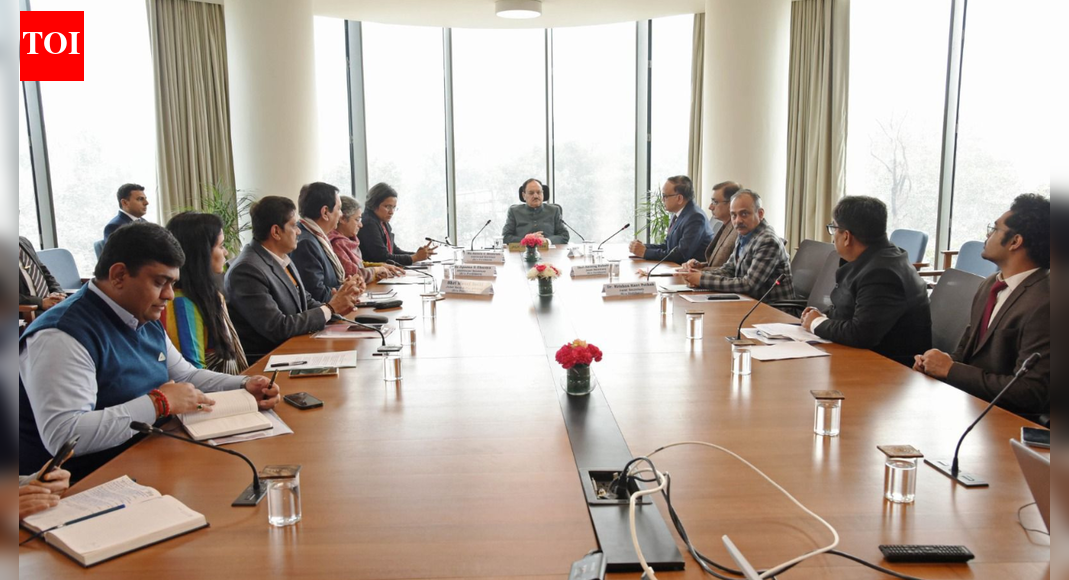
Union fertilizers minister J P Nadda on Thursday inaugurated an integrated e-bill system aimed at digitally processing fertilizer subsidies of about Rs 2 lakh crore. The move replaces manual, paper-based procedures with a fully digital workflow, eliminating the physical movement of bills, an official statement said.“This online system will play a significant role in strengthening transparent, efficient and technology-driven governance,” Nadda said at the launch event, as cited by PTI. The initiative is a key outcome of a technological collaboration between the Department of Fertilizers’ Integrated Financial Management System (iFMS) and the Public Financial Management System (PFMS) of the controller general of accounts under the ministry of finance.The transformation “significantly enhances transparency and accountability by creating a centralised and tamper-proof digital audit trail for all financial transactions, thereby facilitating easier monitoring and audits,” said CGA Santosh Kumar. The e-bill platform allows fertilizer companies to submit subsidy claims online and monitor payment status in real time, removing the need for physical visits and manual follow-ups. It introduces a standardised electronic workflow, including first-in-first-out bill processing, to ensure consistency and adherence to financial rules.The system offers real-time oversight of expenditure and stronger financial controls, with all payments tracked and reported through a central platform.Manoj Sethi, joint secretary in the fertilizers ministry, said the system “enables end-to-end digital bill processing, which will significantly accelerate payment timelines, including timely release of weekly fertilizer subsidy payments”.The system also incorporates robust internal controls that validate payments against predefined criteria, record every action for audit purposes, and help reduce the risk of fraud.The event was attended by additional secretaries Aneeta C Meshram and Aparna Sharma, joint secretaries K K Pathak and Anurag Rohatagi, and director Laboni Das Datta.Senior Technical Director Aseem Gupta of the National Informatics Centre (NIC) outlined the technical features and architecture of the system. The implementation and demonstration were supported by the NIC team, including joint director Ashutosh Tiwari and developer Harekrishna Tiwari, whose efforts in building and rolling out the platform were widely appreciated.


Source link