Breaking News
2,400 runners require medical help at Tata Mumbai Marathon, 26 land in hospital for injuries and dehydration | Mumbai News


Mumbai: Of the 65,000 participants in the Tata Mumbai Marathon (TMM) on Sunday, 2,400 needed medical help, of whom 27 were hospitalised with mild to severe injuries or complaints of dehydration. A few of them remained admitted at multiple hospitals until press time.Unlike in 2024, when two deaths were reported, there were no fatalities this year. Most of those requiring hospitalisation visited Bombay Hospital, the closest private tertiary care facility to the event area. Ten runners presented to the emergency room (ER) there; one was admitted to the ICU, another to a ward, while one more was under observation in the ER.One such runner, a 21-year-old, collapsed near the finish line due to dehydration. A second, a 42-year-old resident of Vikhroli, had a similar incident, his oxygen saturation was between 80-84%, and he had a high heart rate. He is currently receiving supplemental oxygen at 2 litres per minute. A third, a 32-year-old, presented with generalised weakness.“This year we did not have any critically ill patients. Earlier years have had one death and cases of brain hemorrhage and heart attack,” said Dr Gautam Bhansali, Consultant Physician at Bombay HospitalHowever, some sustained more severe injuries. Kandivli resident Savita Shyamsundar (42), a first-time runner in the 6km event, was in a terrible accident that could require an operation. With a smile on her face and spirits still high, she narrated the incident: “It happened when I slowed down a bit while running with my son and husband, and the person behind accidentally pushed me.” She said she fell because of an uneven lid on the road, causing her knees to bend and twist upwards. She was fortunate that an orthopaedic doctor was nearby at the run, he helped her with initial stretches.Four other runners with severe dehydration and high heart rates were rushed to Jaslok Hospital. All were discharged after treatment. A similar case was also handled at P D Hinduja Hospital.Two more runners presented with dehydration and altered sensorium at Sir H N Reliance Hospital, the event’s official medical partner. One of them remains under observation and on vasopressor support, which is administered intravenously for critically low blood pressure.Earlier in the day, a police officer deployed for marathon duty collapsed after suffering a suspected heart attack, officials said. He was administered cardiopulmonary resuscitation (CPR) at the spot. As these efforts failed, he was rushed to a nearby hospital. Police said the officer responded to treatment at the hospital and is now stabilised. He was later discharged.


Source link

In 2023 too, -40 was good enough for NEET PG | India News


In 2023 too, -40 was good enough for NEET PG

There is much outrage in the medical community that the cut off for NEET PG 2025 has been reduced to zero percentile for the reserved category, which is equivalent to a score of minus 40. However, this is not the first time a score of minus 40 was good enough to qualify. The cut off was similarly reduced to zero percentile in 2023 for all categories and then too the equivalent score was minus 40.In 2023, when the medical counselling committee announced the reduction to zero percentile, it did not reveal that this was equivalent to a score of minus 40. TOI had analysed the NEET scores and pointed out that zero percentile meant 14 candidates who scored zero marks, 13 with negative marks and the one getting the lowest mark of -40 out of 800 would also qualify. In 2025, there are 126 candidates who have scored zero or less. Zero percentile means the lowest score or that none of the candidates got less. In 2023 and in 2025, one candidate got the lowest score of -40.Interestingly, in July 2022, in response to a petition filed by three students seeking lower cut off, the government had stated in court that “minimum qualifying percentile for admission is required to be maintained to ensure minimum standard of education and general standards for admission to professional courses”. Taking the government’s argument into consideration, the court dismissed the petition and ruled against lowering the standards of medical education as it “involves in its ambit the matter of life and death”.In 2023, govt officials were quoted in news reports justifying lowering the cut off to zero as a one-time measure to fill vacant PG seats. However, this has become a regular feature with cut offs being lowered to abysmal levels every year. About 2 lakh to 2.3 lakh students appear for NEET PG for over 70,000 seats (about 57,000 MD/MS seats and the rest are DNB and PG diploma seats). However, the seats in private medical colleges remain vacant as the fees for clinical subjects in many of them runs into crores which most candidates cannot afford. Lowering the cut off increases the pool of ‘qualified’ candidates and improves the chance of finding candidates with deep pockets who can afford the fees even if they have rock bottom scores.“To lower NEET PG qualifying marks to abysmal level is driven solely by commercial considerations. This decision ‘reserves’ post-graduate medical seats to the rich and mighty in commercial fiefdoms called private medical colleges. This is shameful and must be condemned as unadulterated corruption,” tweeted former principal health secretary of Andhra Pradesh Dr PV Ramesh.


Source link

Forgetting names, losing focus? Neurologist says your brain needs these 5 exercises


Forgetting names. Walking into a room and blanking on why you’re there. Reading the same line three times because your mind just won’t stay put. It’s easy to laugh these things off or blame them on stress, poor sleep, or being “too busy.” But when these moments start happening often, they may be your brain’s way of waving a red flag.Brain health isn’t something that suddenly becomes important at old age. In fact, changes in the brain can start much earlier than we think. The problem is, small symptoms are easy to ignore. Forgetting names feels harmless. Losing focus seems normal in a distracted world. But these “tiny” issues can pile up. More importantly, they may be early signs of deeper issues that are much easier to manage when caught early.India’s silent Vitamin B12 deficiency crisis: Doctor explains why so many feel unwell without knowing why

7 Daily habits to follow every night for a sharper brain

What’s missing is awareness. We talk endlessly about heart health, weight, and blood sugar, but brain health rarely gets the same spotlight. Memory and focus problems are often brushed off or joked about, instead of taken seriously. We need to normalize conversations around cognitive health at every age, not just later in life.A silent epidemic is spreading through your phone and it’s damaging young bodies fast, says doctor“One of the most common things patients tell me in my clinical practice is that they are losing focus and forgetting things. They commonly blame this on aging, stress, or “too much screen time.” The brain, like any other organ, reacts quite well to structured training, even though lifestyle circumstances do play a part. Here are five easy brain exercises that have been shown to work and can greatly increase focus, memory, and mental clarity when done frequently,” says Dr. Amit Kumar Agarwal, senior consultant, Neurology and Stoke Medicine, Amrita Hospital Faridabad.

Forgetting names, losing focus? Neurologist says your brain needs these 5 exercises

Training in mindful attention

This is one of the best brain exercises that people don’t talk about enough. For ten minutes, sit still and pay attention to your breathing. When your mind starts to wander, gently draw it back. This works out the prefrontal cortex, which is the part of the brain that controls attention and decision-making. Patients say that with time, their ability to focus, their mental clarity, and their emotional control all get better.

Memory chunking exercise

Instead than trying to remember huge lists, divide them up into smaller, more useful sections. For instance, think of a phone number as three parts instead of 10 digits. This exercise increases working memory and makes it easier for the brain to retain and find knowledge. This is very helpful for students and professionals.

Training for two tasks

Do two things at once, like counting backward while walking or listening to a podcast while doing light housework. This tests the brain’s executive function and neuronal coordination, which makes it easier to do more than one thing at once and makes the mind more flexible. It improves communication between different parts of the brain neurologically.

Exercise for remembering things visually

For 30 seconds, look at a complicated picture, room, or newspaper page. Close your eyes and try to remember as many things as you can, including colors, places, words, or faces. This improves visual memory and attention to detail, two skills that frequently get worse early on but get better with repetition.

Finding out about something new

New things are the best way to get your brain going. When you learn a new language, instrument, or even a new way to get to work, your brain has to make new connections. This helps keep memory strong and slows down cognitive decline by making the brain more flexible.“The most important thing is to be consistent, not complicated. You can see big changes in your focus, memory, and mental stamina with just 15 to 20 minutes of brain training every day. In a world where there are always distractions, brain training is no longer an option; it’s necessary preventive treatment,” says Dr Amit.


Source link

How India got its first woman PM this day in 1966 | India News


How India got its first woman PM this day in 1966

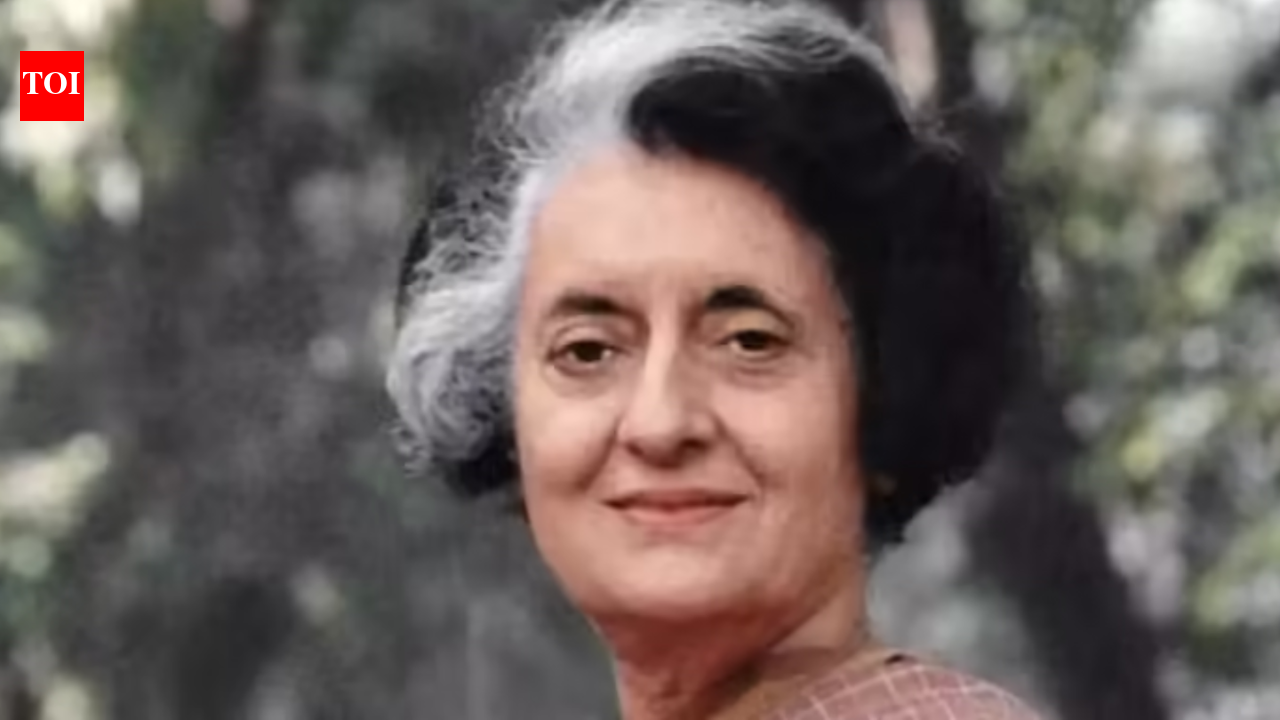
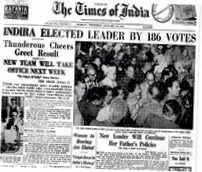
On Jan 19, 1966, the high-domed Central Hall of Parliament — where India’s Constitution had been adopted — witnessed a spectacle unlike any before. For the first time since Independence, the Congress Parliamentary Party (CPP) elected its leader through a full-fledged contest. Out of that tense, four-hour drama emerged Indira Gandhi, 48, as India’s first woman Prime Minister.“She was cheered as she entered the hall, clad in a white sari with a light brown shawl wrapping her shoulders,” TOI reported. When the returning officer announced, “I declare Mrs Gandhi elected,” the hall broke into “thunderous cheers”. It was not merely a personal triumph. The vote marked a turning point for the Congress party — and for the way succession battles would be fought within it.After Lal Bahadur Shastri’s sudden death in Tashkent, in Jan 1966, India was without a Prime Minister once again. Acting PM Gulzarilal Nanda took charge.

.

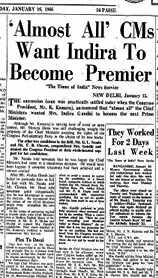
Indira Gandhi did not enter a smooth succession. The only daughter of Jawaharlal Nehru, she had long lived in his shadow — first as his companion, later as a political figure in her own right. She had served as information minister under Shastri and as Congress president in 1960.Powerful regional leaders — chief ministers of 11 of India’s then 16 states — rallied behind her, signalling support just four days before the vote. Another contender, Nanda, withdrew. But Morarji Desai, the formidable former finance minister, refused to step aside.“Why should I form a separate party? I am a true Congressman and I will remain in the Congress,” Desai declared. What many expected to be a smooth transition became one of the most bitterly fought leadership contests in India’s parliamentary history.At the centre of the storm was Congress president K Kamaraj, who tried to avoid a contest. However, Desai insisted on a ballot, alleging “pressure” on MPs to back a particular candidate. Chief ministers, he said, had “no business” imposing their preferences on the CPP. Kamaraj countered that in a federal democracy, the views of the states mattered.On the eve of the vote, Desai told reporters that MPs were “not dumb cattle” and framed the battle as one between the party establishment and ordinary parliamentarians. He said he had proof of pressure — but declined to elaborate, arguing that naming supporters could expose them to victimisation if he lost.

A contest Cong tried to avoid

As the vote neared, Delhi became a political beehive. Chief ministers met MPs from their states, and journalists camped outside the homes of Kamaraj, Desai and Indira Gandhi.On Jan 19, the Central Hall filled with 526 Congress MPs — a record turnout. Desai arrived first, greeting members with folded hands. Minutes later, Indira Gandhi walked in, went up to Desai, said “namaste,” and posed with him as photographers urged them to clasp hands.In the nominations, the lines were clear. Desai was proposed by K Hanumanthaiya. Indira Gandhi’s name was proposed by acting Prime Minister Nanda and seconded by Sanjiva Reddy.Counting dragged on through the afternoon, fuelling tension and rumours of an imminent result. Four times there were false alarms. Then, around 3pm, the returning officer emerged.“I declare Mrs Gandhi elected.”The figures were emphatic: 355 votes for Indira Gandhi, 169 for Morarji Desai — nearly 68% of the valid votes, a two-thirds majority that even her supporters had scarcely dared hope for. What followed was as theatrical as the contest itself. Amid cheers, the two candidates shook hands and posed for press photographers and TV crews. Outside Parliament House, crowds had gathered all day; when the result became known, they cheered as Gandhi went to Rashtrapati Bhavan to meet the President S Radhakrishnan to form a new govt.Desai pledged cooperation, though with a sting: he hoped that “at least in future, an atmosphere of fearlessness” would be created in party and country. Indira Gandhi, at her first press conference, rejected any insinuation of foul play. “The insinuation that unfair play had a part in this election was unjustified,” she said, while agreeing that fearlessness in public life mattered.Reactions poured in across India. C Rajagopalachari said Gandhi might be more broad-minded, and closer to Nehru’s outlook, than Desai. Women’s groups celebrated.Abroad, the response was swift. The Soviet news agency Tass flashed the news within minutes. Lord Mountbatten called her election one that was bound to have a stabilising effect in India.As Kamaraj told MPs that day, “We have elected Mrs Gandhi to take over the burden of the Prime Ministership of the country.”Research: Rajesh Sharma


Source link

CII survey: Business sentiment high on stronger demand


CII survey: Business sentiment high on stronger demand

NEW DELHI: Business sentiment in the economy is high, driven by stronger demand, better profitability expectations and steady investment conditions, according to a CII survey. Domestic demand has increased, with nearly two-thirds of 175 firms surveyed reporting higher demand for July to Sept 2025 and about 72% expecting further improvement in Oct-Dec 2025. More than half of the firms expect a repo rate cut from RBI. GST rate cuts, helped lift consumption and the industry anticipates that the growth will continue.


Source link

WATCH: Vaibhav Suryavanshi plucks a stunning catch during IND vs BAN clash at U19 World Cup 2026


ICC Men’s Under-19 World Cup has always been a stage where future stars announce their arrival, and the Group B clash between India Under-19 and Bangladesh Under-19 at Bulawayo on January 17, 2026, was no exception. In a high-stakes encounter defined by rain interruptions and shifting momentum, it was a moment of pure athletic brilliance from 14-year-old Vaibhav Suryavanshi that stole the headlines and effectively broke the back of the Bangladeshi chase.

India, having posted a competitive total, found themselves under pressure as Bangladesh neared a revised DLS target. However, the game pivoted in the 26th over when Suryavanshi pulled off a boundary-rope miracle that left spectators and commentators in awe.

Vaibhav Suryavanshi’s sensational grab shifts momentum in India’s favour

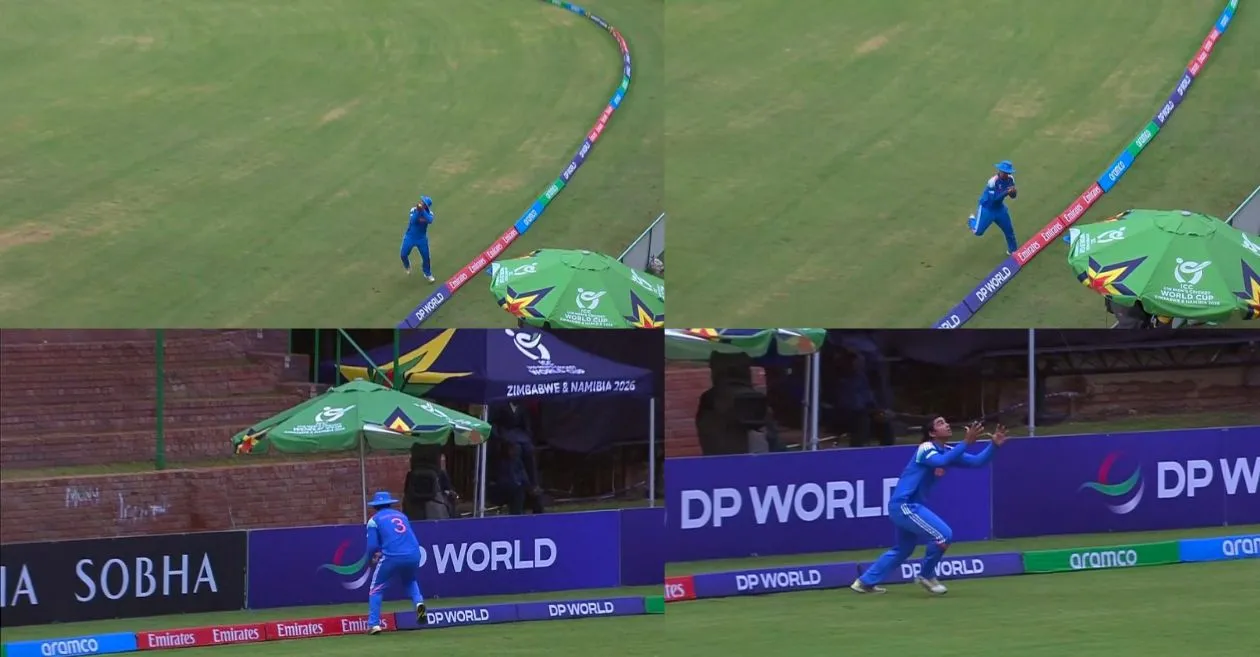
The defining moment of the match arrived at the 25.2 over mark. Bangladesh was fighting to keep the required rate within reach when Samiun Basir lofted a delivery from Vihaan Malhotra toward the long-off boundary. The ball appeared destined to clear the ropes or at least result in a boundary.

Enter Suryavanshi. The youngster, positioned perfectly, sprinted toward the edge of the field, leaping to pluck the ball out of the air. Realizing his momentum was carrying him over the boundary cushions, Suryavanshi displayed veteran-like composure. He popped the ball upward, stepped out of bounds, regained his balance, and hopped back into the field of play to complete the catch cleanly.

The third umpire’s review confirmed that his feet were airborne while touching the ball outside the rope and firmly planted inside when the final catch was made. At just 14 years of age, Suryavanshi’s spatial awareness and calmness under pressure were described by experts as incredible, effectively ending Basir’s stay and leaving Bangladesh reeling at 129/6.

Here’s the video:

Also READ: Vaibhav Suryavanshi creates history at U19 World Cup 2026, surpasses Babar Azam and Virat Kohli

India clinches DLS thriller as Vihaan Malhotra shines against Bangladesh in U19 World Cup

The match was a rollercoaster of momentum, heavily impacted by the weather in Bulawayo. Batting first, India posted 238 all out in 48.4 overs. The innings was anchored by Abhigyan Kundu, who played a patient and vital knock of 80 off 112 balls. He found support in the explosive Suryavanshi, who earlier in the day showcased his batting prowess with a rapid 72 off 67 balls, including 11 boundaries and a six. Bangladesh’s Al Fahad was the pick of the bowlers, dismantling the tail to finish with figures of 5/38. Rain interruptions forced the officials to recalibrate the target multiple times. Ultimately, Bangladesh was set a revised DLS target of 165 runs from 29 overs.

The chase began steadily, with Azizul Hakim scoring a gritty 51. However, the introduction of Malhotra changed the complexion of the game. Malhotra was relentless, finishing with extraordinary figures of 4/14 in 4 overs. Following Suryavanshi’s spectacular catch to dismiss Basir, the Bangladesh lower order collapsed under the mounting run rate and Malhotra’s precision. Bangladesh was eventually bundled out for 146 in 28.3 overs, handing India an 18-run victory (DLS method). Malhotra was deservedly named Player of the Match for his four-wicket haul and two crucial catches, but the image of Suryavanshi’s boundary-line heroics will remain the lasting memory of this Group B showdown.

Also WATCH: Ahmed Hussain pulls off a screamer to dismiss Thomas Rew in U19 World Cup 2026


Source link

Access Denied


Access Denied

You don’t have permission to access “http://www.ndtv.com/world-news/trump-invites-india-to-be-part-of-gazas-board-of-peace-say-sources-10775405” on this server.

Reference #18.4cfdd417.1768752387.22ae63fc

https://errors.edgesuite.net/18.4cfdd417.1768752387.22ae63fc


Source link

Bridge between US, Israel, and Gaza: Who is Nickolay Mladenov, tasked with turning a fragile ceasefire into lasting peace


Bridge between US, Israel, and Gaza: Who is Nickolay Mladenov, tasked with turning a fragile ceasefire into lasting peace
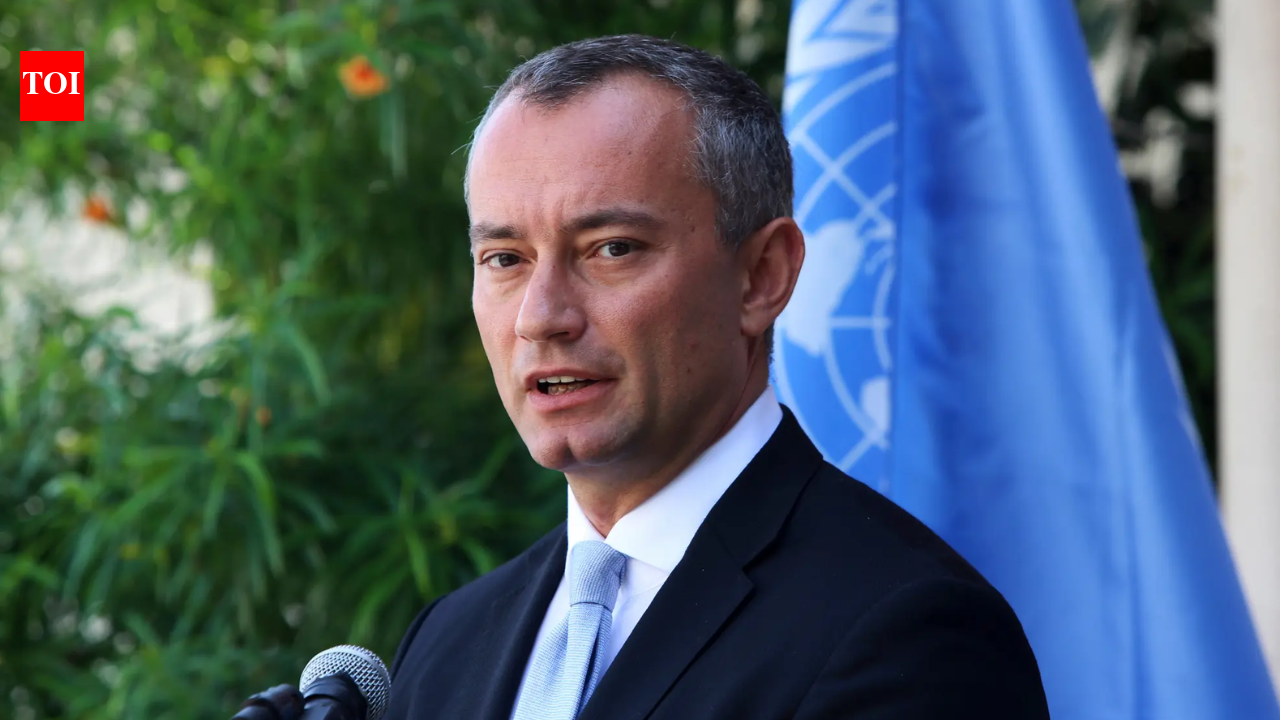
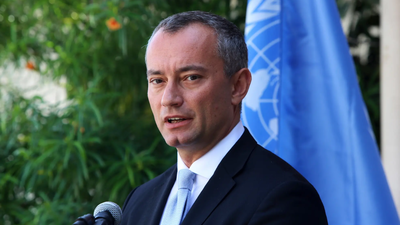
High Representative for Gaza Nickolay Mladenov (AP)

“As we step into 2026, here’s hoping it becomes a year where common sense prevails, where rules are respected, facts carry more weight than slogans, and strength is measured not by reckless escalation, but by thoughtful restraint and wise choices.Nickolay Mladenov posted those words on X at the start of the year. Days later, he was named High Representative for Gaza, stepping into a role that places him at the center of one of the world’s most fragile and contested conflicts.Years earlier, when Rumiana Bachvarova had just begun her posting as Bulgaria’s ambassador to Israel, she paid a visit to her compatriot in Jerusalem. Mladenov took her to the Mount of Olives, overlooking the Old City.“This small place is the cornerstone of all the conflicts here,” he told her. “But see how beautiful it is.”At the time, Mladenov was several years into his role as the United Nations Special Coordinator for the Middle East Peace Process, a position long viewed as symbolic and largely ineffective.Now 53, Mladenov faces perhaps his most difficult assignment. As High Representative for Gaza, he will serve as the main link between US President Donald Trump’s “Board of Peace” and a technocratic committee of Palestinian officials meant to govern the devastated enclave.His task is to turn a US-brokered, 20-point ceasefire plan—still lacking crucial details—into a functioning framework that can rebuild Gaza, disarm Hamas, and govern a population of about two million people.For it to work, it must be acceptable to Israel, the Palestinians, and the United States.Alongside Mladenov on the Board of Peace are major figures, including US Secretary of State Marco Rubio, Special Envoy Steve Witkoff, Jared Kushner, and former UK Prime Minister Tony Blair. While they do not share his direct responsibility toward the technocratic committee, they shape the political environment in which the plan must operate.With little publicity, Mladenov has already met Israeli Prime Minister Benjamin Netanyahu and senior Palestinian officials as he prepares to take up his new role.Mladenov has declined to comment publicly on his appointment. When Witkoff announced the launch of the second phase of the ceasefire, Mladenov reposted the message without adding his own words.For a diplomat known for working quietly behind the scenes, the silence is familiar. Whether that approach can now help turn a fragile ceasefire into lasting peace for Gaza remains the central question.

Turning a marginal job into a working one

Before Mladenov’s tenure, UN envoys had focused on issuing statements—condemning Israeli settlement expansion in the occupied West Bank and repeating support for a two-state solution. Their influence was limited, their warnings largely ignored.Mladenov arrived in Jerusalem in 2015 with a different approach. In an interview with the New York Times as he was leaving the role in late 2020, he said he was initially struck by how irrelevant the position seemed. Instead of relying on public statements, he focused on building trust.He shuttled between Israeli officials, the Palestinian Authority in the West Bank, and Hamas leaders in Gaza, while also delivering his mandated monthly briefings to the UN Security Council in New York.Mladenov rarely made headlines, but behind the scenes he was deeply involved. Alongside Egypt, he played a role in bringing repeated escalations between Israel and Hamas to quick conclusions, helping prevent wider wars.Not everyone approved of his choices. Some diplomats in Jerusalem believed he paid too little attention to the Palestinian Authority, the body created in the 1990s as part of peace efforts and which still governs parts of the West Bank.

A divided Palestinian landscape

A sympathetic reading of Mladenov’s strategy suggests he focused on the most influential actors under his mandate. But it also suited Israeli prime minister Benjamin Netanyahu to have the most senior UN official in the region engage with Hamas while the Palestinian leadership remained divided.That division weakened the Palestinian cause internationally. Although Israel’s tacit approach toward Hamas collapsed after the October 7, 2023 attacks, concerns persist in Ramallah that new governance structures for Gaza could again sideline the Palestinian Authority by creating rival centers of power.Mladenov’s background helps explain why he was chosen for this moment. The Bulgarian politician became his country’s defense minister at just 37, then served as foreign minister for three years. Earlier, he was a member of the European Parliament and later the UN’s Special Representative for Iraq.Those roles built his reputation as a diplomat comfortable operating in fractured political environments.


Source link

Bengal polls: Abhishek Banerjee targets Modi; accuses PM of blocking state’s funds | India News


Bengal polls: Abhishek Banerjee targets Modi; accuses PM of blocking state's funds
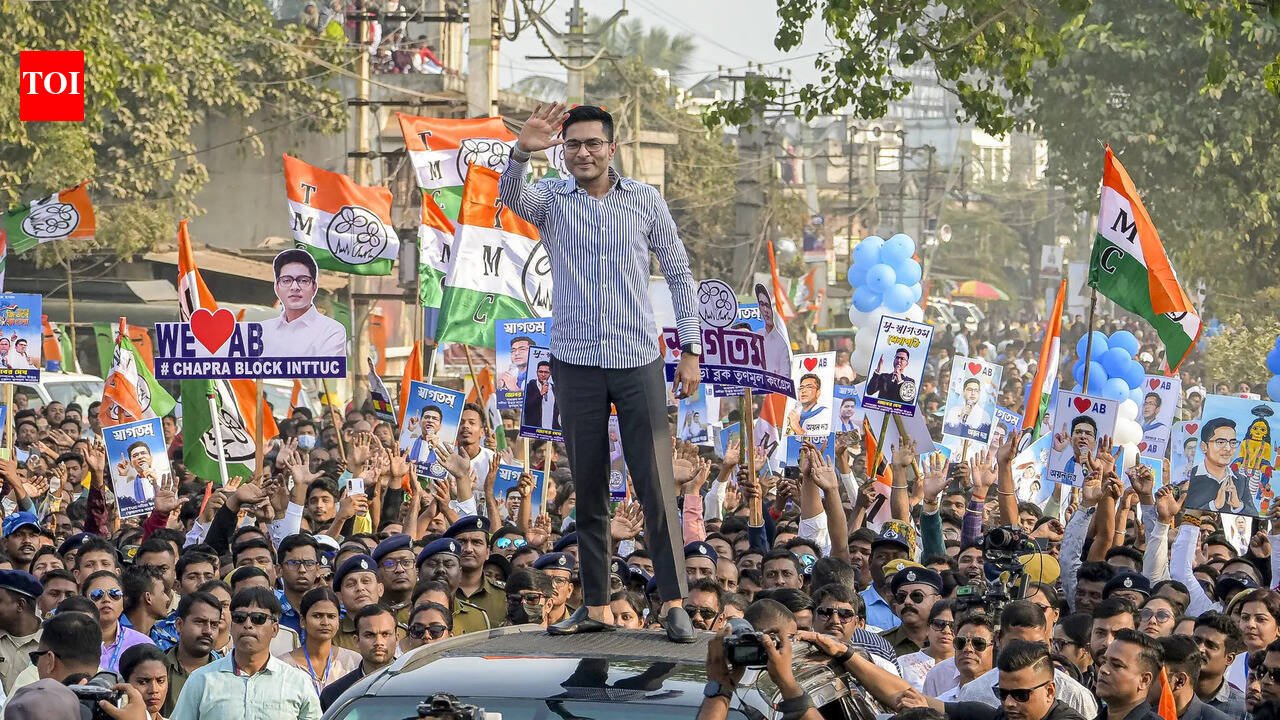
Nadia: TMC National General Secretary Abhishek Banerjee during a road show ahead of the West Bengal assembly elections, in Nadia district, West Bengal. (PTI Photo)

NEW DELHI: Trinamool Congress (TMC) national general secretary Abhishek Banerjee on Sunday accused Prime Minister Narendra Modi of blocking central funds meant for West Bengal. His remarks came on a day when the prime minister addressed a rally in the poll-bound state, urging voters to end the TMC’s 15-year “maha jungle-raj.Also Read | ‘Bengal ready to topple TMC’s maha-jungleraj’: PM Modi rips into Mamata govt at Singur rally“You blocked funds meant for the people of Bengal and harassed them. You inflicted miseries on the people of Bengal over the last five years, and so your party will be reduced to below 50 seats in the assembly polls,” Banerjee said while addressing a rally in West Bengal’s Nadia district.His aunt, West Bengal chief minister Mamata Banerjee—who also heads the TMC—has repeatedly accused the BJP-led Union government of withholding central funds for the state and has made the issue a key poll plank.The Diamond Harbour MP further asserted that the fall of the BJP-led government at the Centre would begin in West Bengal.“In the coming days, the people of Bengal will throw you out of power in Delhi after electing the TMC for the fourth time. ‘Poriborton habe’ (there will be change at the Centre),” he remarked.On the recent Enforcement Directorate raids at the Kolkata office of I-PAC—a leading political consultancy that has been working with the TMC since 2021—Banerjee accused the Centre of “misusing” central agencies against opposition-run states.“They tried to steal our data before the elections, but we have people’s support. They (the BJP) have everything—from the ED and CBI to a section of the media. They put central agencies behind me before the 2021 elections but failed. Now they are resorting to falsehood,” he stated.Referring to the ongoing revision of electoral rolls, Banerjee claimed that despite allegations of large numbers of illegal immigrants, the exercise had identified 54 lakh “unmapped voters” in the state.“Now, unhappy with the findings, they are planning to delete over one crore names from the electoral rolls. We will not allow this to happen,” he alleged.Buoyed by its success in the recent assembly elections in neighbouring Bihar, the BJP is eyeing its first stint in power in West Bengal, where the TMC, under Mamata Banerjee, has been in office since 2011.


Source link

Access Denied


Access Denied

You don’t have permission to access “http://www.ndtv.com/india-news/banegaswasthindia-live-from-davos-dettol-hygiene-loyalty-card-makes-global-debut-at-wef-2026-10774762” on this server.

Reference #18.2ef63717.1768744461.3c2318a

https://errors.edgesuite.net/18.2ef63717.1768744461.3c2318a


Source link