Breaking News
Photo Gallery: WAGS of top Australian cricketers at the Ashes 2025-26


The Ashes 2025-26 series has ignited fierce rivalry between Australia and England across iconic venues like Perth’s Optus Stadium, Brisbane’s Gabba, and Adelaide Oval, captivating millions worldwide. Beyond the boundary, the wives and girlfriends (WAGS) of Australia’s top cricketers have stolen the spotlight, cheering passionately from the stands, sharing stylish moments on social media, and embodying unwavering support amid high-stakes Tests. These women, often spotted in elegant outfits blending comfort with cricket glamour, add a human touch to the intense battle for the urn, turning player milestones into family celebrations.​

Wives and girlfriends of Australia cricketers at the Ashes 2025-26

Pat Cummins’ wife – Becky Cummins

Becky Cummins (Image source: X)

Pat Cummins, Australia’s captain leading the charge in the Ashes, draws strength from his wife Becky Cummins (née Boston), a devoted mother and pillar of stability. Married in a intimate Byron Bay ceremony in 2022 after dating since 2013, Becky has been by his side through triumphs like the 2023 ODI World Cup, often posting family glimpses with their children Albie (born 2021) and Edi (born February 2025). Fans spotted her in the Perth crowd during the first Test, her poised presence a calming force as Cummins navigated leadership pressures.​

Travis Head’s wife – Jessica Davies

Travis Head WAG
Jessica Davies (Image source: X)

Travis Head, the explosive batter who topped Australia’s run charts with 437 in the series so far, celebrates his dynamic life with wife Jessica Davies, a model-turned-entrepreneur and mental health advocate. The couple, childhood friends turned soulmates, wed in a picturesque Adelaide ceremony in April 2023, welcoming daughter Milla Paige in 2022 and a second child—a son—in late 2024. Jessica’s vibrant Instagram captures her at the Gabba for the pink-ball Test, radiating pride in a chic sundress while balancing motherhood and her restaurant ventures in Sydney and Canberra.​

Steve Smith’s wife – Dani Willis

Steve Smith WAG
Dani Willis (Image source: X)

Steve Smith, vice-captain and middle-order maestro, shares his world with wife Dani Willis, a lawyer with a passion for interior design and Pilates. They met during the 2011-12 Big Bash League at a Sydney bar, got engaged atop New York’s Rockefeller Center in 2017, and married at Bandooley Estate in 2018. Dani, often seen courtside or pitchside in tailored outfits, cheered Smith during the MCG Boxing Day Test, her low-key elegance complementing his comeback story post-injury.​

Usman Khawaja’s wife – Rachel Khawaja

Usman Khawaja WAG
Rachel Khawaja (Image source: X)

Usman Khawaja, the seasoned opener, is supported by wife Rachel Khawaja (née McLellan), a marketing graduate, business development manager, and 7Cricket reporter who converted to Islam before their 2018 nikah. With dual Australian-New Zealand citizenship, Rachel met Usman at university in 2015; they now raise two daughters in a serene all-white Sydney home. Her presence at Adelaide Oval, blending professional poise with family devotion, highlights her role in Usman’s resilience during probing spells from England’s bowlers.​

Also READ: Photo Gallery: WAGS of top England cricketers at the Ashes 2025-26

Marnus Labuschagne’s wife – Rebekah Labuschagne

Marnus Labuschagne WAG
Rebekah Labuschagne (Image source: X)

Marnus Labuschagne, Australia’s No.3 mainstay with 174 runs, leans on wife Rebekah Labuschagne (née Gillam), whom he met through their shared Baptist church community in Brisbane’s Redlands. Married since May 2017 at Sirromet Wines, the couple welcomed a daughter in September 2022 and announced their second child in January 2025, just before the Sydney finale. Rebekah’s heartfelt social media posts from the SCG stands capture her quiet strength, fueling Labuschagne’s focus amid fluctuating form.​

Cameron Green’s girlfriend – Emily Redwood

Cameron Green WAG
Emily Redwood (Image source: X)

Cameron Green, the rising all-rounder, recently proposed to long-time girlfriend Emily Redwood in February 2025 at Yallingup beach, Western Australia, after five years together. Emily, his fitness inspiration during injury recoveries, has been pivotal in his growth; their engagement photos went viral, showing sunset hugs and diamond-ring joy. She turned heads at Optus Stadium in casual chic athleisure, her youthful energy mirroring Green’s aggressive cameos.

Josh Hazlewood’s wife – Cherina Murphy Christian

Josh Hazlewood WAG
Cherina Murphy Christian (Image source: X)

Josh Hazlewood, the towering pacer, married high school sweetheart Cherina Murphy Christian in August 2022 in Hunter Valley, with their son Zac born in November 2024. A professional makeup artist from Tamworth’s Oxley High, Cherina motivates Hazlewood’s precision bowling, often attending award nights and IPL matches incognito. During the Brisbane Test, her subtle celebrations from the members’ enclosure underscored their grounded romance.​

Nathan Lyon’s wife – Emma McCarthy

Nathan Lyon Wag
Emma McCarthy (Image source: X)

Nathan Lyon, the veteran off-spinner, found enduring love with wife Emma McCarthy, a real estate agent; they wed in July 2022 after dating since 2017, post his previous marriage. Emma helped him rebound from the 2019 Ashes heartbreak, sharing a $3.8 million Sydney townhouse since 2020. Her elegant figure in the Adelaide crowd during Lyon’s wily spells added glamour, her supportive gaze a constant amid turning pitches.​

Alex Carey’s wife – Eloise Carey

Alex CARREY wag
Eloise Carey (Image source: X)

Alex Carey, wicketkeeper with 291 runs including an emotional Adelaide century dedicated to his late father, shares tears and triumphs with wife Eloise Carey, a therapist and former model from Australia’s Next Top Model Season 5. Married since September 2016 after meeting in the early 2010s, they have two children, Louis and Clementine; Eloise’s sobbing joy in the stands during his ton became an iconic Ashes image.​

Josh Inglis’ wife – Megan Kincart

jOSH Inglis WAG
Megan Kincart (Image source: X)

Josh Inglis, the backup keeper-batter who recently wed long-term partner Megan Kincart in late 2025 after their April 2024 engagement, balances family with flair. Parents to son Oscar (born June 2023), Megan’s glamorous feed showcases match-day outfits from Perth to Melbourne. Her presence at the MCG, cradling their toddler, symbolizes the new generation of WAGS blending parenthood with pitchside passion.

Also READ: R Ashwin, Darren Lehmann and others send best wishes as Damien Martyn fights with meningitis


Source link

EV ecosystem reform: Govt proposes Aadhaar-like ID for batteries; aims to boost traceability, recycling


EV ecosystem reform: Govt proposes Aadhaar-like ID for batteries; aims to boost traceability, recycling

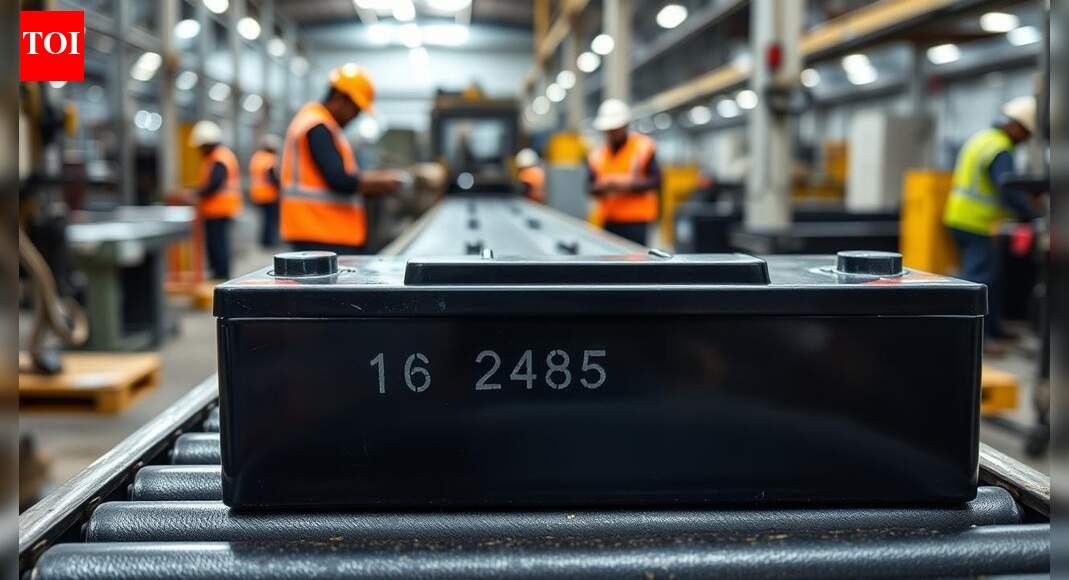
The ministry of road transport and highways has proposed assigning an Aadhaar-like unique identification number to electric vehicle (EV) batteries to ensure end-to-end traceability and improve recycling efficiency, according to draft guidelines issued by the ministry.Under the proposed framework, battery producers or importers will be required to assign a 21-character Battery Pack Aadhaar Number (BPAN) to every battery they introduce in the market, including those used for self-consumption, as per news agency PTI. They will also have to upload relevant Battery Pack Dynamic data on the official BPAN portal.“The battery producer or importer shall have the obligation of assigning a unique Battery Pack Aadhaar Number (BPAN) to each battery that they introduce in the market and the battery they put to self-use,” the draft guidelines said. It added that the BPAN must be placed in a “clearly visible and accessible position” and located in a way that it “cannot be destroyed or deteriorate.”As per the ‘Guidelines for Implementation of Battery Pack Aadhaar System’, the BPAN will capture and store key information throughout the battery’s lifecycle, starting from raw material extraction and manufacturing to usage, recycling or final disposal. Any change in attributes due to recycling or repurposing will require the issuance of a new BPAN by the same or a new producer or importer.The ministry said the system aims to bring greater transparency, accountability and sustainability to the battery ecosystem by enabling accurate tracking of battery performance and environmental impact. BPAN is also expected to play a key role in facilitating second-life usage, regulatory compliance and efficient recycling.Electric vehicle applications currently account for 80–90 per cent of total lithium-ion battery demand in India, far exceeding demand from industrial or non-automotive uses. While the guidelines recommend applying BPAN to industrial batteries above 2 kWh, EV batteries have been proposed as a priority segment during standard formulation, given their scale, safety implications and regulatory relevance.“This approach will ensure that the Battery Pack Aadhaar framework addresses the most impactful segment of the Indian battery ecosystem in its initial phase,” the draft said.The ministry has recommended that the framework be developed through the Automotive Industry Standard route under the Automotive Industry Standards Committee, enabling structured stakeholder consultation, technical validation and alignment with existing automotive regulations, as per PTI.


Source link

Sanju Samson sends strong message to selectors with crucial century ahead of NZ ODIs | Cricket News


Sanju Samson sends strong message to selectors with crucial century ahead of NZ ODIs
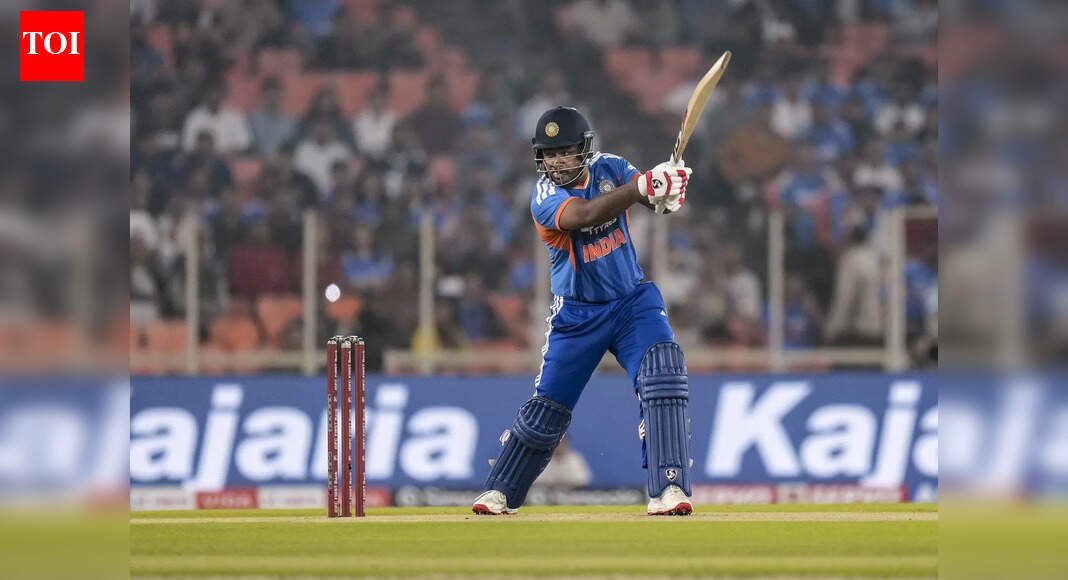
India’s Sanju Samson (PTI Photo/Shashank Parade)

Sanju Samson’s timing could not have been better. With the Indian ODI squad set to be picked on Saturday, the Kerala batter produced a commanding century against Jharkhand, putting himself firmly back into the selection conversation. Chasing a stiff target of 312, Samson led Kerala’s charge with a fluent hundred, anchoring a massive opening stand of 212 runs with captain Rohan Kunnummal. Kunnummal was equally destructive, smashing 124 with eight fours and eleven sixes before falling, but by then the damage had been done. Samson looked assured throughout, pacing his innings with clarity and intent, exactly the kind of knock selectors tend to notice on the eve of squad meetings.

Sarfaraz Khan is knocking the selectors’ door again

The innings carries added significance for Samson, who last played an ODI for India in 2023. Since then, he has remained on the fringes despite scoring a memorable century against South Africa in South Africa. His ODI numbers make a strong case. In 16 matches, Samson has scored 510 runs from 14 innings at an impressive average of 56.67, striking at 99.61. In contrast, it was a quieter outing for Ishan Kishan in the same match. Kishan, who recently forced his way back into India’s T20 World Cup plans through strong domestic form and a standout Syed Mushtaq Ali Trophy, managed just 21 off 21 balls before being dismissed. Across his ODI career, Kishan has played 27 matches, scoring 933 runs at an average of 42.41 with a strike rate of 102, numbers that still keep him firmly in the race. Elsewhere, Rishabh Pant reminded everyone of his white-ball value with a brisk unbeaten 72 off 45 balls for Delhi against Services. Pant’s innings ensured a comfortable chase of 178 and underlined his ability to finish games under pressure. In 31 ODIs, Pant has scored 871 runs at an average of 33.5 and a strike rate of 106, adding another strong performance to his case. With KL Rahul established as India’s first-choice wicketkeeper in ODIs, the battle for the second spot is wide open. Samson’s century, Pant’s fluent knock, Kishan’s overall record and Dhruv Jurel waiting in the wings have given the selectors plenty to think about.


Source link

Two-child norm scrapped: Telangana minister cites low fertility rate; panchayat poll rules reset | India News


Two-child norm scrapped: Telangana minister cites low fertility rate; panchayat poll rules reset

NEW DELHI: The Telangana legislative assembly has passed a bill that scraps the “two-child norm” that barred individuals with more than two children from contesting in the local body elections.Panchayat raj minister Danasari Anasuya Seethakka, citing the state’s declining fertility rate, lower than the replacement rate, argued that the provision had outlived its relevance.She stated that the two-child norm was implemented in 1994 as a population control measure to address concerns such as food security, unemployment, and poverty arising from the population surge of the 1980s and 1990s.She said the government reviewed the population policy nearly three decades after it was enacted, noting that demographic trends had undergone significant changes. The fertility rate in rural Telangana currently stands at 1.7, which is below the replacement rate of 2.1, and if it continues at this level, it could adversely impact the state’s long-term demographic balance.The minister said the government believes maintaining the replacement fertility rate is essential for the future of the coming generations. The decision was taken after considering the views of representatives of Panchayat Raj institutions, she added.Observing that citizens are now opting for smaller families, Seethakka cautioned that a steep decline in population growth could lead to undesirable consequences.She said the government is proposing amendments to the Telangana Panchayat Raj Act, 2018, both to address the declining fertility rate and to facilitate the conduct of local body elections.The bill was later passed by the Telangana assembly, replacing an ordinance that had been promulgated earlier for the same purpose.


Source link

Power check 2026: Top politicians in focus this year | India News


Power check 2026: Top politicians in focus this year

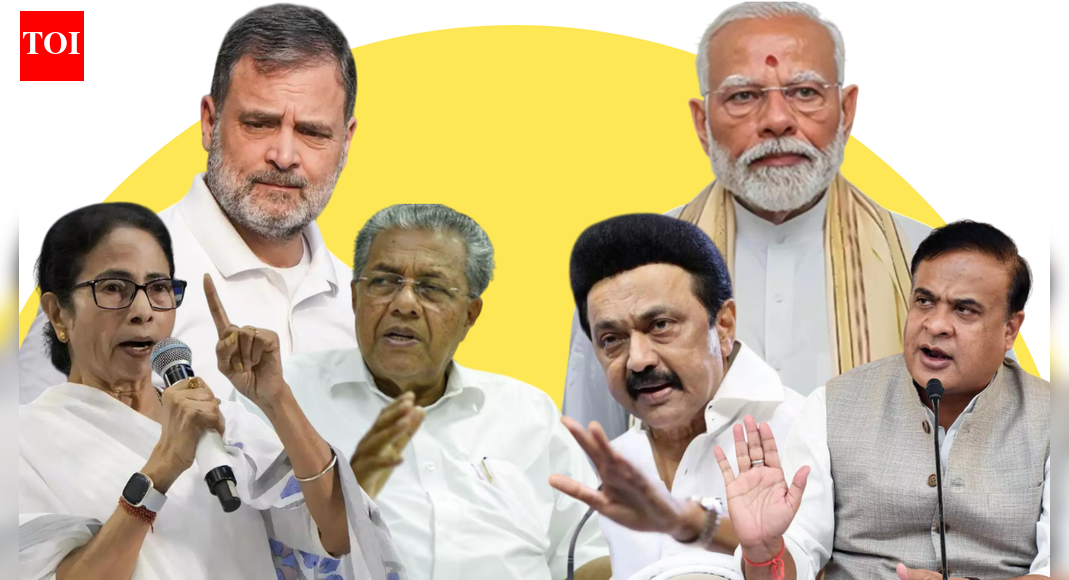
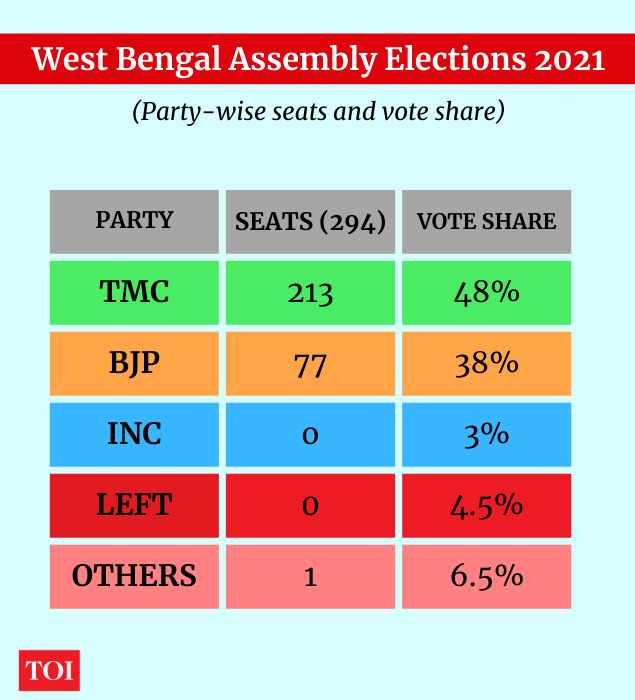
The year 2026 is finally here and we know it will not be a routine stop on the electoral calendar. This year’s calendar is filled with elections, starting with the long-overdue Mumbai-Pune civic polls. Later, with high-stakes assembly elections due in West Bengal, Tamil Nadu, Kerala, Assam and Puducherry, it will place some of the most influential politicians under rare and sustained scrutiny. For many leaders, the results will define not just the fate of their governments and party, but also their relevance heading into the 2029 Lok Sabha elections.Across these five states and a Union Territory, regional parties are strong and national parties are testing the outer limits of their expansion. What unfolds in 2026 will reshape the party’s existence, recalibrate the opposition’s cohesion and test the BJP’s claim of being a truly pan-Indian force. At the centre of it all are a dozen leaders whose careers may pivot decisively over the year.West Bengal: Mamata Banerjee vs Dilip GhoshWest Bengal remains one of the most politically charged battlegrounds of 2026. The pre-campaign has already started with high-voltage remarks amid the Election Commission’s Special Intensive Revision (SIR) exercise. For Mamata Banerjee, this election comes after a decade in uninterrupted power. Having crushed the Left and successfully repelled the BJP’s surge in the 2021 assembly elections, she now faces her toughest test yet. BJP’s momentum stalled in the 2024 Lok Sabha elections after it managed to win only 12 out of 40 seats. In the 2021 assembly election, it won 77 seats while TMC won the election by winning 213 seats.

Source: Election Commission of India

A fourth consecutive term would cement Mamata’s status as Bengal’s long-term chief minister and one of the last regional leaders capable of stopping the BJP’s advance. But the margins matter. A slip below 200 seats from the 213 she won in 2021, or a BJP surge past the 100-seat mark, would signal vulnerability and weaken her leverage in national opposition politics ahead of 2029.Meanwhile, on the last day of 2025, Union home minister Amit Shah outlined an action plan for the party’s West Bengal unit while reviewing its preparedness for the assembly polls due early next year. Addressing the party’s public representatives, both past and present, Shah sought to project a unified front, while indicating former state president Dilip Ghosh as one of the main faces of the saffron camp for the elections.For Ghosh, the stakes are existential. The BJP firebrand and a former TMC heavyweight, he was central to the party’s rise to 77 seats in 2021. If the BJP crosses 120 seats in 2026, Ghosh emerges as Mamata’s undisputed challenger and Bengal’s principal alternative. Failure to capitalise on anti-incumbency, however, would raise uncomfortable questions about his influence and the BJP’s long-term strategy in the state.Tamil Nadu: Stalin vs Palaniswami — and the Vijay factorTamil Nadu’s contest is shaping up as a three-cornered test of endurance, revival and disruption.Chief minister MK Stalin is seeking a second term after the DMK’s comfortable victory in 2021. Retaining a tally above 130–140 seats would keep the DMK firmly dominant and reinforce Tamil Nadu’s role as a firewall against the BJP’s national narrative. But anti-incumbency pressures, over floods, employment, law and order, and urban governance, could open space for a revival of the opposition.

Source: Election Commission of India

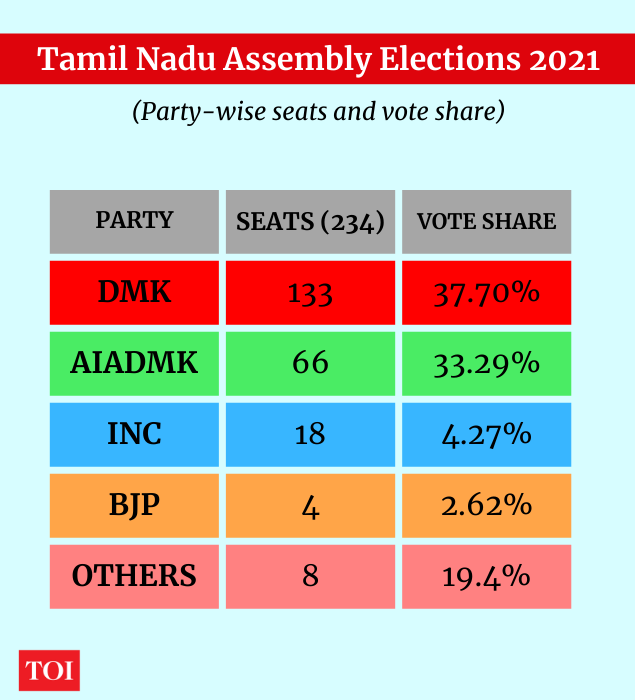
That revival hinges on Edappadi K Palaniswami, the former AIADMK chief minister and leader of the main opposition. A strong showing of 100-plus seats would restore the AIADMK as the DMK’s equal and slow the BJP’s attempt to subsume it. Another weak performance, however, could accelerate AIADMK’s marginalisation and strengthen the BJP’s influence within opposition politics in the state.Hovering over both is Joseph Vijay, the actor-turned-politician whose Tamilaga Vettri Kazhagam is eyeing its electoral debut. Even a victory in 10–20 seats could make him a kingmaker. A failure to break through, however, would mean another failed debut and would reinforce the DMK–AIADMK duopoly.In the 2021 assembly election, DMK won 133 seats, AIADMK got 66 seats and BJP got 4 seats.Kerala: Vijayan vs SatheesanKerala’s 2026 election carries unusually high stakes for both the Left and the Congress.For Pinarayi Vijayan, the CPI(M) stalwart and chief minister, the contest is about legacy. He is aiming for a historic third consecutive term—something rarely achieved in Kerala’s alternating political culture. Retaining a clear majority would keep the LDF dominant in the state and cement Vijayan’s stature as the Left’s most powerful surviving leader. But dipping below the 70-seat mark would likely end his era, especially amid criticism over governance, SFI-linked violence, and fatigue after two terms.

Source: Election Commission of India

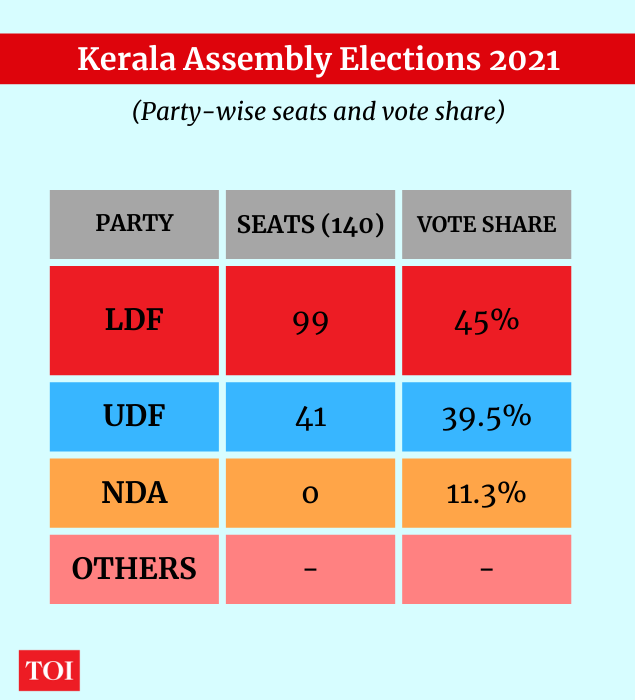
On the other side stands VD Satheesan, the Congress-led UDF’s leader of opposition. A crossing of the 80-seat mark would flip the House and revive Congress’s credibility in the South. Another narrow loss, however, would reinforce the perception that while Congress fights hard in Kerala, BJP’s slow creep, not the UDF, is the more consequential long-term challenger.In the 2021 assembly election, the LDF won 99 seats and the UDF got 41 seats, while the NDA was unable to open its tally. Assam: Himanta Biswa Sarma vs Gaurav GogoiAssam will test the durability of strongman politics versus generational transition.Chief minister Himanta Biswa Sarma is targeting a third straight NDA victory, with ambitious claims of winning over 104 of the state’s 126 seats.

Source: Election Commission of India

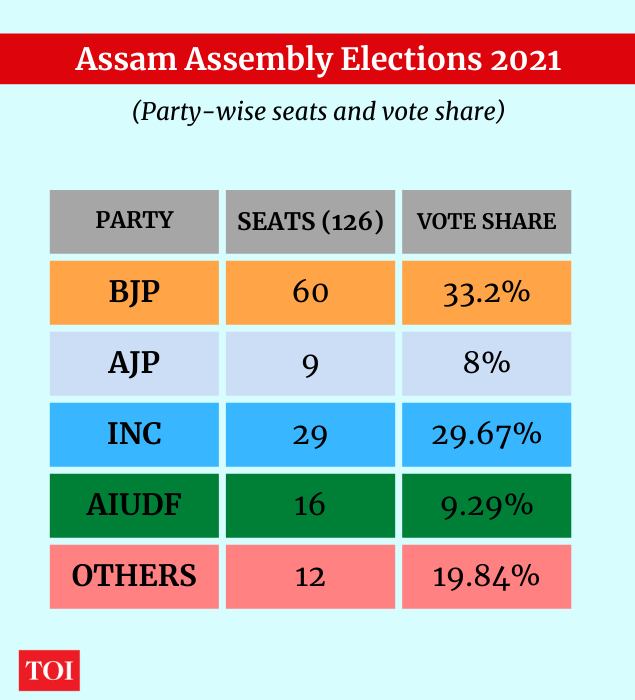
In 2021, Sarma delivered a decisive mandate as the BJP-led alliance won 75 seats in the 126-member assembly.Success would burnish his national ambitions and strengthen his standing as the BJP’s most assertive regional leader. But even a significant drop from the BJP’s 60 seats in 2021 would expose cracks beneath his muscular governance style, particularly amid CAA and NRC.Facing him is Gaurav Gogoi, Congress leader and son of former CM Tarun Gogoi. For Gogoi, 2026 is about emergence. A credible fight, around 40 seats for the INDIA bloc, would position him as Assam’s foremost Congress face and a potential future chief minister. A rout would risk pushing the Congress further into irrelevance in the state.Puducherry: N Rangasamy vs V VaithilingamSmall in size but large in symbolism, Puducherry could deliver one of 2026’s most telling verdicts.Incumbent CM N Rangasamy is leading a fragile AINRC-BJP coalition and currently governing with a narrow majority secured in 2021. Retaining power would validate his long-standing role as a political kingmaker and reinforce the BJP’s power of managing complex coalition politics.For V Vaithilingam, the Congress stalwart, 2026 is a chance at revival. A UDF victory with 15 or more seats would mark a dramatic comeback for a party that once ruled Puducherry. Failure would further cement the BJP’s foothold and underline Congress’s shrinking influence in smaller southern units.The bigger pictureBeyond state leaders, two national figures will shape the outcomes across all five battlegrounds.For PM Narendra Modi, 2026 is less about immediate electoral survival and more about narrative control. With high-stakes assembly elections this year, the Prime Minister’s role will be that of a campaign anchor and message-setter across multiple states, particularly West Bengal, Assam and the southern battlegrounds where the BJP remains an outsider.

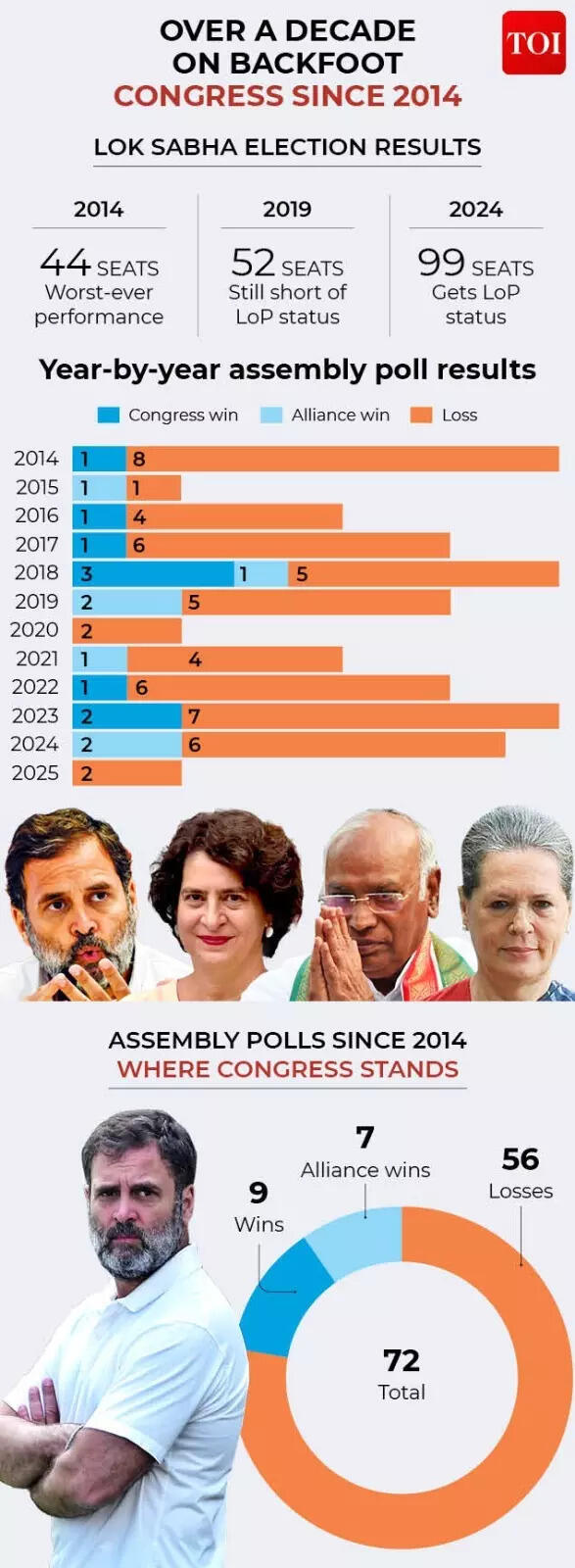
A strong BJP showing in Bengal or incremental gains in Tamil Nadu and Kerala would reinforce PM Modi’s claim of leading a truly pan-Indian party heading into 2029. Conversely, stagnation or reverses in these regions would embolden the opposition’s argument that the BJP’s expansion has peaked outside its core Hindi belt. The margins, not just victories, will matter in shaping how invincible PM Modi appears in the run-up to his third Lok Sabha contest.While not a mass leader, Nitin Nabin will be one of the BJP’s most closely watched backroom strategists in 2026. As a key organisational figure tasked with strengthening party units beyond the Hindi heartland, the outcomes in West Bengal, Assam and the South will directly reflect on his effectiveness.If the BJP improves booth-level performance, vote share and cadre depth in traditionally resistant states, Nabin’s stature within the party will rise sharply. But failure to translate central leadership popularity into durable state-level structures would revive internal questions about the BJP’s organisational limits and succession planning within its second rung of leadership.For Amit Shah, 2026 is the culmination of “Mission 2026”. As Union home minister and the BJP’s chief electoral architect, he is overseeing campaigns across Assam, Puducherry, Bengal, Tamil Nadu and Kerala. Clean sweeps in states the BJP already governs, combined with breakthroughs in the South, would further solidify his authority.For Rahul Gandhi, 2026 is a make-or-break year. After setbacks in Bihar and Delhi, strong UDF performances in Kerala or Puducherry, or credible INDIA bloc gains elsewhere, would validate his approach to coalition politics. Continued erosion would deepen doubts about his leadership at a time when Congress’s room for error is shrinking fast.

Source: Election Commission of India

For Priyanka Gandhi, this year will decide if she is ready to take charge of the party, as demanded by several disgruntled party leaders in the past. As Congress’s most recognisable campaigner after Rahul Gandhi, her effectiveness will be judged by how far she can convert charisma and street connect into electoral dividends, particularly in states where the party is fighting to arrest decline rather than expand. Strong UDF performances in Kerala or a credible revival in smaller battlegrounds would bolster her standing as the party’s chief mobiliser. Meanwhile, in BMC elections, the Pawar senior and junior have united for the Pimpri-Chinchwad Municipal Corporation (PCMC) and the Thackeray cousins have joined hands for the Brihanmumbai Municipal Corporation (BMC) polls. If these reunions frutify, it could change the dynamics of mega Maharashtra alliances (MVA and Mahayuti).In 2026, people will look at Shashi Tharoor with the ‘will he, won’t he’ question. With his constant tug of war with his own party, it will be interesting to see if Congress finally makes him fall in line with the party lines or if he calls it quits. Tharoor’s influence will also be tested by outcomes closer to home in Kerala.A Congress-led UDF victory would strengthen Tharoor’s hand within the party, renewing speculation about a larger leadership role nationally or in the state. A loss, however, would blunt his political momentum. How Tharoor positions himself during the campaign, whether as a team player or a distinct voice, will be closely parsed by both supporters and critics.Stage is all for a year of back-to-back elections that matter. In the end, 2026 will not just choose governments, it will quietly decide who still matters when the long road to 2029 truly begins.


Source link

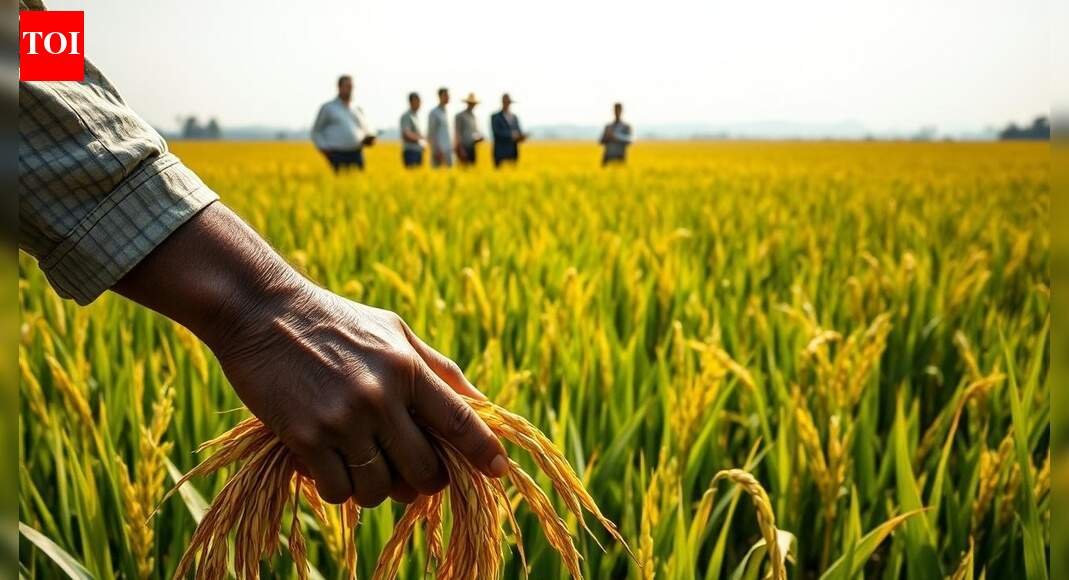
Union Budget 2026: Rice exporters seek support to boost sustainability, global competitiveness; relief sought on costs, logistics


Union Budget 2026: Rice exporters seek support to boost sustainability, global competitiveness; relief sought on costs, logistics

The Indian Rice Exporters’ Federation (IREF) has called on the Union government to announce focused fiscal and policy measures in the Union Budget 2026 to strengthen India’s rice export ecosystem, covering both basmati and non-basmati varieties.In a representation to finance minister Nirmala Sitharaman, the federation underlined the importance of rice exports for the economy, rural livelihoods and global food security, reported news agency ANI. It flagged multiple challenges facing the sector, including ecological stress, rising costs and market volatility, and said targeted budgetary support could improve competitiveness while ensuring sustainability and better returns for farmers.“The rice sector faces ecological stress, notably groundwater depletion in major paddy belts, high fiscal costs of procurement and storage, and market and compliance volatility,” the federation said in its letter. It added that the Union Budget 2026 could help address these issues through “targeted fiscal and enabling measures” that strengthen sustainability and farmer outcomes.IREF outlined a series of priority demands aimed at supporting the entire rice value chain. One key ask is the introduction of tax and investment incentives linked to verified water-saving and low-emission farming practices. These include Alternate Wetting and Drying (AWD), Direct Seeded Rice (DSR), laser land levelling and the use of energy-efficient milling technologies. According to the federation, such measures would reduce environmental stress while improving long-term productivity.The exporters’ body also urged the government to encourage farmers to shift acreage towards premium basmati rice and GI-tagged, organic and speciality non-basmati varieties. This, it said, would help farmers earn higher realisation, promote market-led crop diversification and lower dependence on minimum support price-based procurement systems.To improve export competitiveness, IREF sought interest subvention on export credit to ease working capital pressures faced by exporters. It also called for targeted freight and port facilitation measures to reduce logistics costs, which remain a key concern for rice shipments.The federation further requested the continuation and appropriate calibration of the Remission of Duties and Taxes on Exported Products (RoDTEP) scheme for rice. Ensuring that embedded taxes are adequately refunded, it said, is crucial for maintaining India’s competitiveness in global markets.Another major concern raised was the need to strengthen export finance guarantees and upgrade compliance-related infrastructure. This includes better testing facilities, traceability systems and quality assurance mechanisms to protect India’s standing in premium international markets.“These measures will directly lower exporters’ costs, incentivise sustainability and encourage the scaling up of value-added shipments,” said Dr Prem Garg, national president of IREF, as per news agency ANI. He added that rice should be explicitly covered under budgetary initiatives related to export credit, logistics and trade facilitation.Citing industry data, the federation said India currently accounts for around 40 per cent of global rice trade, a level of dominance unmatched in any other commodity. Having met domestic food security needs, it said India is well-positioned to supply international markets at scale. In FY2024-25, the country exported about 20.1 million tonnes of rice to more than 170 countries, according to figures shared by IREF.


Source link

Mumbai: Wanted accused held for crime after 30 years | Mumbai News


MUMBAI: A wanted accused who was on the run for over three decades was arrested recently by the Oshiwara Police from Uttar Pradesh. Police said the accused, H Yadav, had been booked in a case of attempted murder in Oshiwara in 1994. He left the city and went into hiding after the crime. The court had issued a non-bailable arrest warrant against him.Senior officials said that with the municipal corporation elections around the corner, their teams rechecked old cases and started to look for wanted accused persons. During the probe, they got hold of Yadav’s phone number and tracked down his location to UP.On New Year’s Eve, an Oshiwara police team landed in UP and arrested Yadav. He was brought to Mumbai and produced before a court here.


Source link

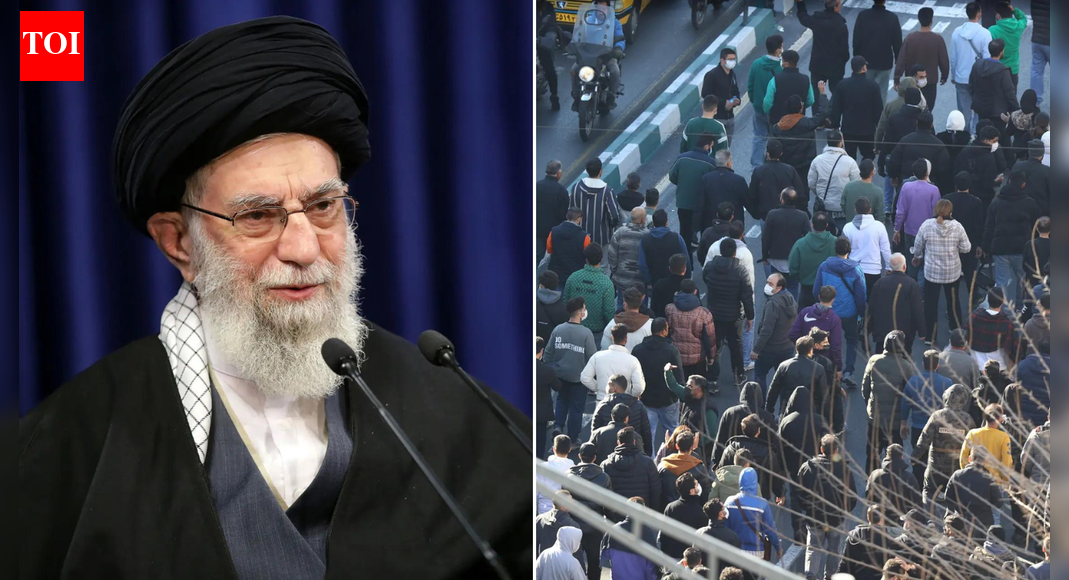
‘Mullahs must leave’: Why Iran is protesting — Is it the end for Khamenei regime?


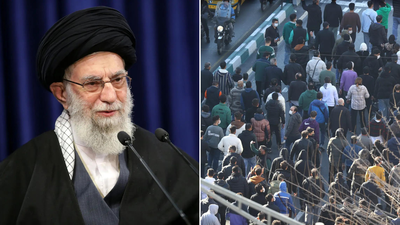
Iran is once again witnessing scenes that its leadership knows all too well: shuttered bazaars, paralysed universities and people on the streets protests against the Khamenei regime. What began as anger over a collapsing currency and soaring prices has, within days, evolved into something far more politically charged. Across Tehran, Isfahan, Lorestan and beyond, protesters are no longer just demanding economic relief they are openly calling for the end of clerical rule.Videos circulating online show crowds chanting “Mullahs must leave Iran” and “Death to the dictatorship”, slogans that leave little room for interpretation. The protests, now stretching into a sixth day, were triggered by a dramatic plunge in the rial, which briefly fell to around 1.4 million to the US dollar.

Trump WARNS Of US Attack On Khamenei Regime Amid Protests | ‘America Will Rescue If Iran Shoots…’

The unrest places fresh pressure on Supreme Leader Ayatollah Ali Khamenei at a moment when Iran faces internal fragility and external threats. While the government insists the protests remain limited, the tone on the streets — and the targets of public anger — suggest a deeper crisis of legitimacy.

From currency shock to street revolt

The immediate spark for the demonstrations was economic. Merchants in Tehran closed their shops after the rial hit a record low, wiping out purchasing power almost overnight. Inflation officially stands above 50 per cent year-on-year, with food prices rising even faster. For families, planning even a few months ahead has become impossible.

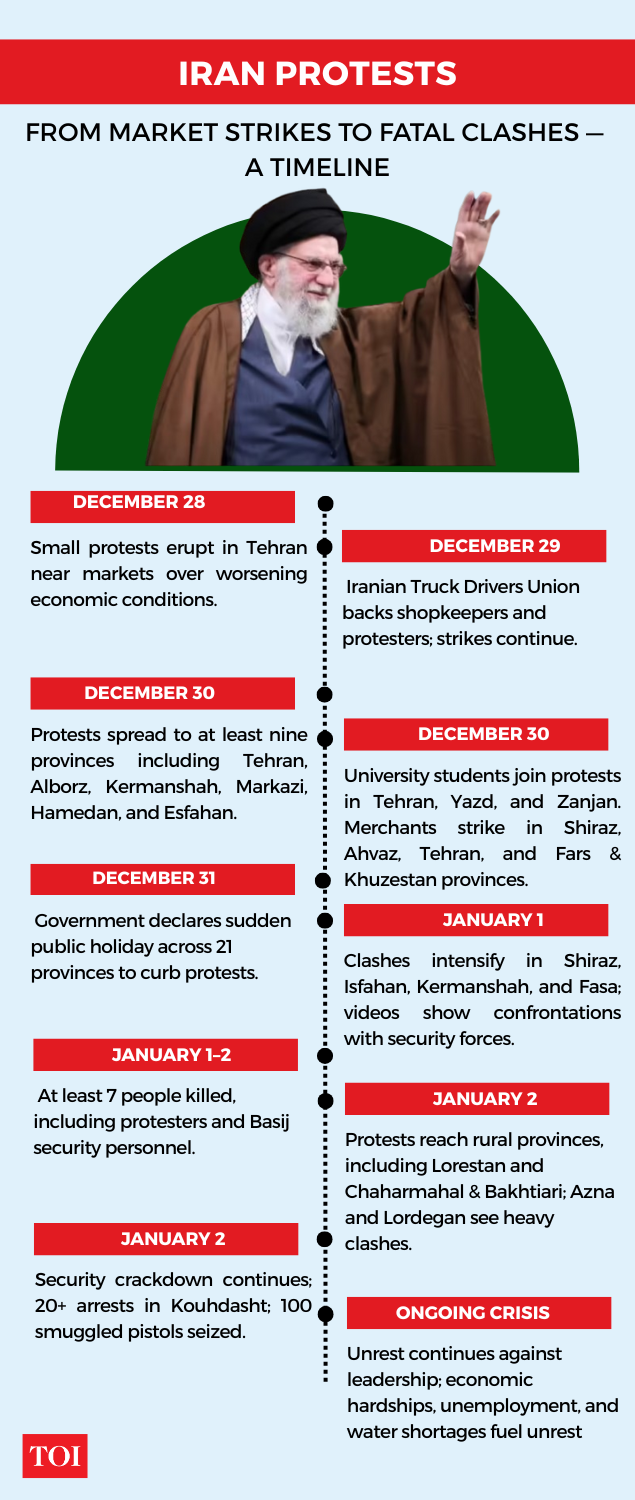
Iran Protests- Timeline

Iran Protests- Timeline

Protests quickly spread beyond shopkeepers. Students occupied university campuses, roads were blocked in several cities and clashes erupted between demonstrators and security forces. At least several people have been killed, according to state-linked media and rights groups, with deaths reported in Lorestan, Lordegan and Kouhdasht. Dozens of police and Basij members were injured, while hundreds of protesters have reportedly been detained.Although authorities initially tolerated limited economic protests, the response hardened as chants turned openly anti-regime. Tear gas, arrests and, in some cases, live ammunition followed. State media continues to describe demonstrators as “rioters”, echoing a familiar script from past uprisings.

An economic fix for a political problem?

President Masoud Pezeshkian has moved quickly to present an economic response, reshuffling senior officials and reappointing Abdolnaser Hemmati to head the Central Bank. The government has revived plans to dismantle Iran’s multi-rate currency system, long blamed for corruption and market distortion, and scrapped a subsidised exchange rate for basic imports.Pezeshkian has struck an unusually candid tone, acknowledging that public anger is directed at the state itself and insisting there is “no need to blame America”. Yet many Iranians see the reforms as too little, too late. Currency policy tweaks do not address decades of mismanagement, sanctions-driven isolation or entrenched power structures beyond the president’s control.Even within the political elite, Hemmati’s return has deepened divisions, angering hardline lawmakers who argue the government is ignoring parliament and public opinion alike. The sense that technical fixes are being applied to a fundamentally political crisis is fuelling scepticism on the streets.

Targeting the apex of power

What distinguishes the current protests from many previous waves is who protesters are blaming. In earlier unrest, slogans often focused on governments or specific policies. This time, chants directly target the Islamic Republic and its supreme leader.Many demonstrators openly argue that Pezeshkian lacks real authority, pointing instead to Khamenei and the unelected institutions that dominate Iran’s system. Calls for regime change, free elections and even the return of exiled crown prince Reza Pahlavi have been heard in several cities — once unthinkable demands voiced with increasing confidence.Analysts say this shift reflects desperation as much as defiance. After years of protests — from fuel price riots to the “Women, Life, Freedom” movement after Mahsa Amini’s death — many Iranians believe the system is incapable of reforming itself.

Khamenei, succession and mounting pressure

The unrest comes as questions swirl around Khamenei himself. Now in his late 80s, the supreme leader has not appeared publicly to address the crisis, fuelling speculation about his health and grip on power. Behind the scenes, succession planning is already under way, with rival factions and the Revolutionary Guards manoeuvring to shape Iran’s future.At the same time, Iran faces severe environmental stress, chronic water shortages and lethal air pollution, compounding public anger. Internationally, pressure is also mounting. Donald Trump has again warned Iran over its nuclear programme, while Israeli officials hint at further military action if Tehran rebuilds damaged facilities.Earlier in July 2025, Khamenei had reportedly identified three senior clerics as potential successors. Notably, Khamenei’s son, Mojtaba, is absent from the list of candidates. Former hardline president Ebrahim Raisi, once a leading contender died in a 2024 helicopter crash.For now, the security apparatus appears strong enough to suppress unrest. Whether or not current wave of protests subsides, the message from Iran’s streets is stark: fear has eroded, patience has run out, and the authority of the clerical system is being challenged more directly than at any point in years.


Source link

US-EU trade: Italian pasta no longer faces 107% tariff; final rates to be announced in March


US-EU trade: Italian pasta no longer faces 107% tariff; final rates to be announced in March

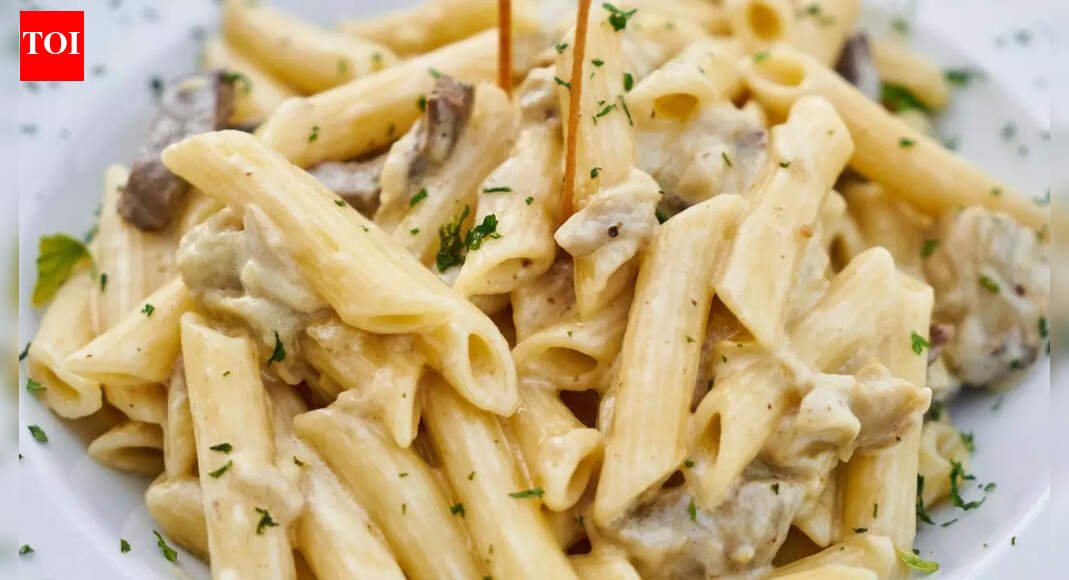
The US commerce department is preparing to ease the steep tariffs planned on Italian pasta imports, reducing the duties proposed earlier this year. Italian pasta had been facing one of the highest tariff burdens among European food products entering the United States. While most European Union goods are already subject to duties of at least 15%, pasta exports from Italy were initially set to attract an additional 92% levy, taking the total tariff rate to 107%. Under the revised proposal, the duties are now expected to fall within a range of 24% to 29%. The commerce department said the final tariff rates would be announced on March 12, following a review process detailed in a post-preliminary report released on Wednesday. The investigation was launched to examine claims that some Italian producers were selling pasta in the US market at unfairly low prices. A commerce department official told CNN that the reduction followed an “evaluation of additional comments received following a preliminary determination.” “Italian pasta makers have addressed many of commerce’s concerns raised in the preliminary determination, and reflects commerce’s commitment to a fair, transparent process,” the official added. The case involves 13 Italian pasta manufacturers and stems from an antidumping complaint filed in July by two US-based companies, 8th Avenue Food & Provisions and Winland Foods. The companies accused several Italian exporters of undercutting prices on pasta shipped to the United States. In preliminary findings issued in September, the commerce department said two firms, La Molisana and Pastificio Lucio Garofalo, sold pasta in the US “at less than normal value.” The report also described both companies as “uncooperative” during the probe, stating that the information they provided was “incomplete and unreliable.” The department noted that these two producers accounted for the largest share of Italian pasta exports to the US market. Neither company responded immediately to CNN’s request for comment. Italy’s ministry of foreign affairs welcomed the latest development, saying the revised tariff outlook reflected improved cooperation. “The redetermination of the tariffs is a sign of the recognition by US authorities of our companies’ willingness to cooperate,” the ministry said.


Source link

8 South African players who featured in T20 World Cup 2024 but won’t play in 2026 edition


On January 2, 2026, Cricket South Africa (CSA) officially announced their 15-member squad for the T20 World Cup 2026, to be co-hosted by India and Sri Lanka. Under the continued leadership of Aiden Markram, the Proteas have opted for a ‘shock-and-awe’ youth transition, retaining only seven players from the 2024 final-run team.

South Africa’s T20 World Cup 2026 squad under Aiden Markram

The squad is headlined by the sensational return of Quinton de Kock, who reversed his international retirement to provide veteran stability at the top. He is joined by ‘Baby AB’ Dewald Brevis and the teenage pace prodigy Kwena Maphaka, signaling a clear shift toward South Africa’s next generation of superstars.

Selection convener Patrick Moroney described the roster as a calculated risk, prioritizing raw power and subcontinental adaptability. The inclusion of Jason Smith and all-rounder George Linde highlights a tactical move to bolster the lower-middle order, while the pace attack remains fearsome with the return of Kagiso Rabada from injury. However, the path to the 2026 trophy comes at the cost of several household names whose absence marks a definitive changing of the guard in South African cricket.

Also READ: South Africa announces a bold squad for T20 World Cup 2026, drops Tristan Stubbs and recalls Kagiso Rabada

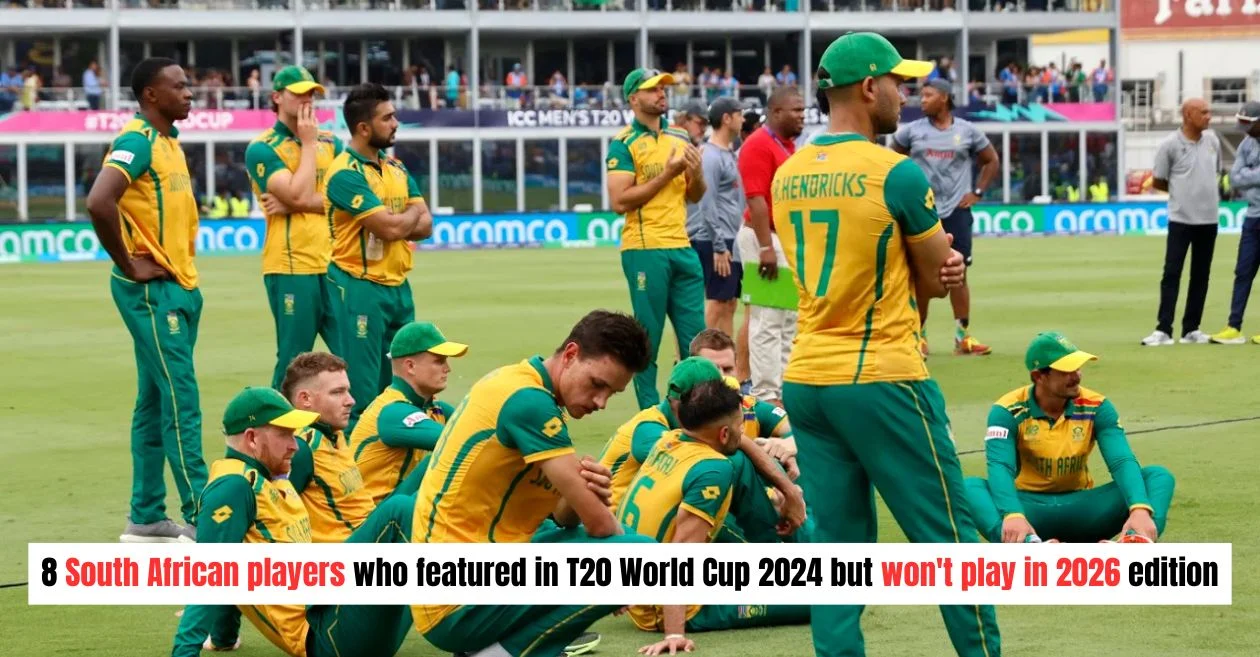
The 2026 squad sees the absence of several key figures from the side that narrowly lost the 2024 final. Here is a breakdown of the players who helped South Africa reach their first-ever final but are missing from this title charge:

1. Heinrich Klaasen (Retired): In a massive blow to the Proteas’ middle order, the world’s most feared T20 finisher announced his retirement from international cricket in June 2025. Klaasen, who nearly won the 2024 final with a blistering fifty, decided to focus exclusively on global franchise leagues, leaving a massive power vacuum at No. 5.

2. Reeza Hendricks (Omitted): Despite being a mainstay at the top of the order for years, the veteran opener was overlooked in favor of more aggressive options like Tony de Zorzi and Dewald Brevis. At 36, the selectors felt Hendricks’ strike-rate-oriented approach no longer fit the intent-first philosophy required for Indian pitches.

3. Tristan Stubbs (Omitted/Tactical Shift): In what is arguably the biggest shock of the announcement, Tristan Stubbs was left out of the 15-member squad. Following a lean patch in the green and gold throughout 2025, the selectors opted for Jason Smith’s recent explosive domestic form, citing a need for clutch finishing under pressure.

4. Ryan Rickelton (Omitted): The explosive wicketkeeper-batter missed out as the selectors backed the returning Quinton de Kock as the sole specialist keeper. Despite his heavy scoring in the SA20, the management felt Rickelton’s inclusion would create an imbalance in a squad already packed with top-order hitters.

5. Tabraiz Shamsi (Omitted/Legal Dispute): The former World No. 1 T20 bowler has been moved past following a high-profile legal battle with CSA over NOCs for foreign leagues. With Shamsi no longer holding a domestic contract and Varun Chakravarthy-style mystery being the trend, South Africa has fully committed to Keshav Maharaj and George Linde.

6. Gerald Coetzee (Omitted): The high-pace Karoo Express’ was a surprise omission. The selectors preferred the left-arm variety of Kwena Maphaka and the death-bowling specialist skills of Corbin Bosch. Coetzee’s recent struggles with consistency in the subcontinental conditions played a significant role in his exclusion.

7. Ottneil Baartman (Omitted): A breakout star of the 2024 campaign, Baartman lost his spot to a rejuvenated Anrich Nortje and the multi-dimensional Lungi Ngidi. The selectors noted that while Baartman remains a quality operator, the 2026 conditions demanded bowlers with either express pace or significant lower-order batting ability.

8. Bjorn Fortuin (Omitted): Fortuin, who provided valuable spin cover in 2024, was squeezed out by the return of George Linde. The management favored Linde’s superior batting pedigree and his ability to act as a genuine all-rounder in the spin-friendly conditions of India and Sri Lanka.

Also READ: Ravichandran Ashwin breaks down why T20 World Cup 2026 may fail to excite fans


Source link