Breaking News
BJP mocks Rahul after Priyanka gets key role in Assam elections: Will Congress move set stage for new power dynamics? | India News


BJP mocks Rahul after Priyanka gets key role in Assam elections: Will Congress move set stage for new power dynamics?

NEW DELHI: The Congress move to appoint Priyanka Gandhi Vadra as chairperson of the candidate screening committee for the upcoming Assam elections has added to the murmurs of leadership debate within the grand old party, with the BJP-led NDA claiming internal conflict between the Gandhi siblings. Soon after Priyanka’s elevation, which was announced on Sunday, the BJP claimed that the Congress was divided between camps of Rahul Gandhi and Priyanka Gandhi. The Congress, as expected, strongly rejected these claims and slammed the BJP for spreading “manufactured propaganda.”BJP spokesperson Shehzad Poonawalla said, “The Rahul vs Priyanka camp has been going on for a very long time in the Congress party. All the pressure was exerted by the Rahul camp. ‘Remove Rahul, bring Priyanka’ is happening in Congress. Now even their allies don’t trust Rahul Gandhi. Their own leaders don’t want him; instead, they want Priyanka Gandhi.”

‘Make Her PM & See…’: Congress MP Endorses Priyanka Gandhi; BJP Takes ‘No Faith In Rahul’ Dig

The Janata Dal (United) also reacted to Priyanka’s appointment, claiming that Rahul Gandhi’s frequent foreign trips had shifted responsibilities to her.“It is expected that legislative assembly elections will be held in five states. The Congress’s internal matters are handled by a screening committee. Who will handle this work when Rahul Gandhi is abroad? The responsibility has fallen on Priyanka Gandhi. However, this is their internal matter,” JD(U) spokesperson Neeraj Kumar said.
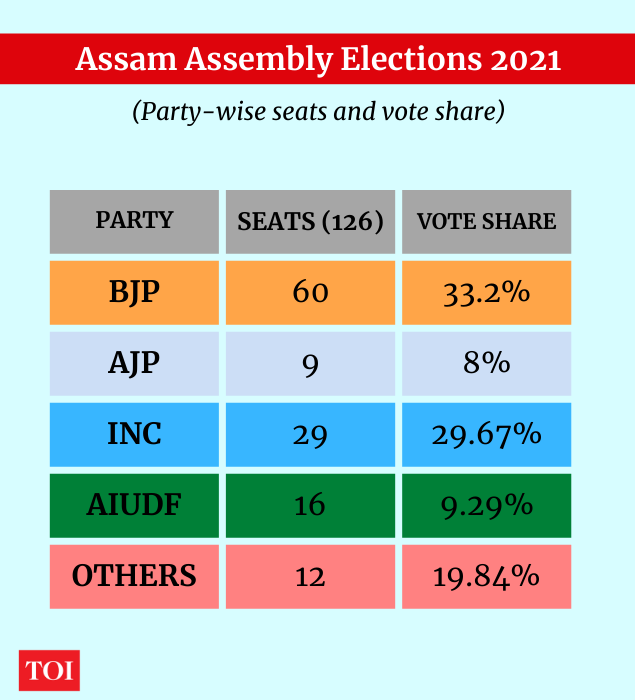
Source: Election Commission of India.

Congress dismisses ‘Rahul vs Priyanka’

The Congress has formally dismissed the NDA’s claims, insisting there is no Rahul vs Priyanka camp within the party.On Sunday, the party defended its decision to appoint AICC general secretary Priyanka Gandhi Vadra as chairperson of the Assam screening committee, strongly criticising the BJP for attempting to “propagate” a false leadership contest narrative.The Congress asserted that this was not the first time Priyanka had been entrusted with such responsibilities, recalling that she had earlier served as an ex-officio member of the screening committee during the Uttar Pradesh assembly elections.Congress MP Tariq Anwar told IANS, “Earlier, she was the general secretary in charge of Uttar Pradesh when assembly elections were held there. So we cannot say this is the first time. This is the second time she has been given charge of a state related to elections. She will use her political experience and capability in Assam. There is a strong possibility of a Congress comeback in Assam.”“Priyanka Gandhi has been serving as general secretary for the past five years. She has been given organisational responsibilities from time to time and has worked across the country. Therefore, the notion propagated by the BJP is incorrect,” he added.Congress leader Udit Raj also defended Priyanka’s appointment, citing her “wide influence and experience”.Speaking to IANS, Raj said, “She is our leader and has been made chairperson of the Assam screening committee. Her influence is quite wide. She will oversee elections and make selections. She already has experience, and that experience will increase further.”

The great Rahul paradox

Rahul Gandhi’s position within the Congress is currently stronger than it has been at any point since his resignation as party president in 2019. After years of refusing formal office while leading high-visibility foot marches such as the Bharat Jodo Yatra (2022–23) and the Bharat Jodo Nyay Yatra in early 2024, the Lok Sabha election results that year altered the equation.The Congress’s improved performance, winning 99 Lok Sabha seats and securing the Leader of the Opposition post, did something the party had struggled to achieve for a decade: it gave Rahul constitutional weight.That momentum, however, was not sustained.
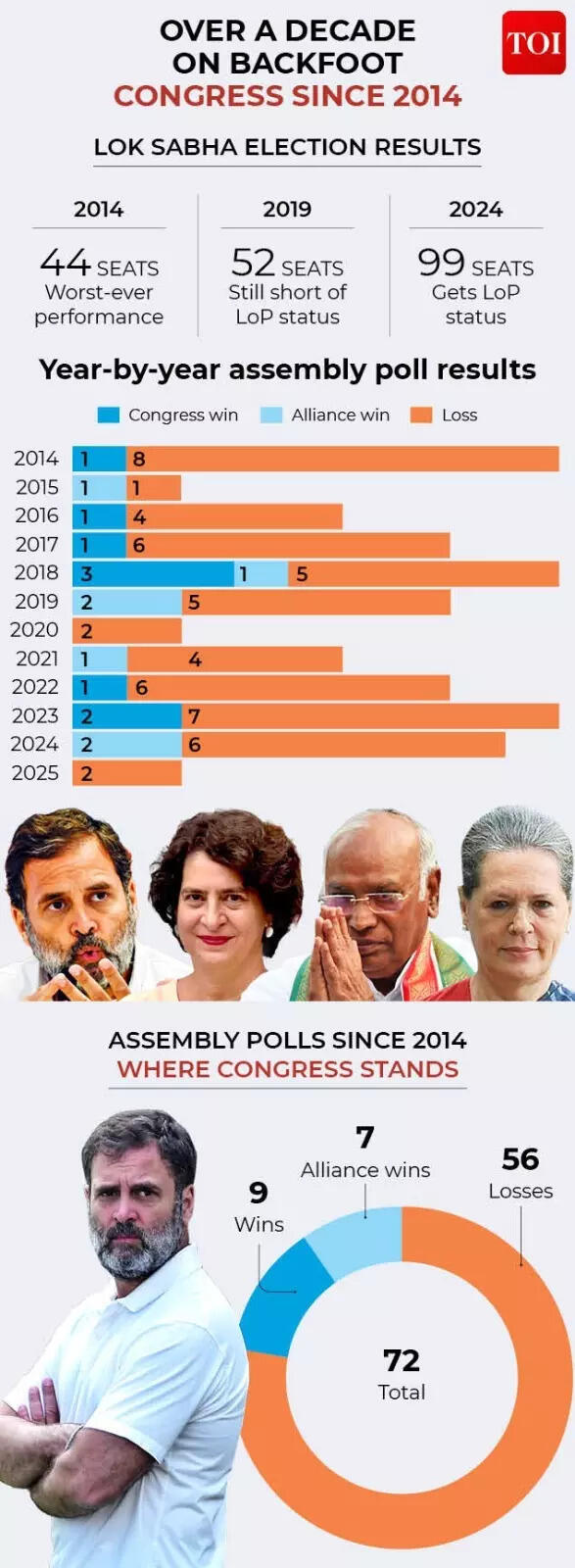
Source: Election Commission of India.

Since the 2024 Lok Sabha elections, the NDA staged a strong comeback, winning assembly elections in Haryana, Maharashtra, Delhi and Bihar.Rahul Gandhi led campaigns raising the ‘vote chori’ charge and spearheaded the Voter Adhikar Yatra in Bihar, hoping to replicate the gains of his earlier mass movements.The narrative failed to resonate electorally, and the Congress emerged as the weakest link in the Bihar opposition, winning only six of the state’s 243 assembly seats.

Priyanka steps forward

At the same time, Priyanka Gandhi Vadra has unmistakably moved out of the occasional-campaigner role. Once deployed sparingly for high-voltage rallies, she is now a constant presence, both in Parliament and on the streets.During the Winter Session of Parliament, the first-time MP from Wayanad assumed a leading role for the party. With a smile, she was seen patiently attacking the Modi government during the Vande Mataram debate.The Wayanad MP also was at the forefront when the opposition parties staged a walkout from Lok Sabha to protest against the VB-G RAM G Bill.She led the march within the Parliament premises while holding a photograph of Mahatma Gandhi.Despite Rahul Gandhi’s absence from Parliament, the Congress drew significant attention for its aggressive protests and Priyanka emerged as a prominent face of the party both inside and outside the House.At the end of the session, she also attended the customary tea meeting hosted by Speaker Om Birla and was seen chatting with Prime Minister Narendra Modi and leaders from across parties.

Whispers within the chambers

Though there has been no formal resolution, several reports have quoted “voices within the Congress” urging a larger organisational role for Priyanka, including suggestions that she could serve as party president or national face.After Rahul’s resignation as Congress chief, former MP Abhijit Mukherjee, son of former President Pranab Mukherjee, openly appealed for Priyanka to take over, saying she should heed the “clarion call of lakhs of Congress workers”.Former Union minister and senior Congress leader Anil Shastri has also said Priyanka Gandhi would be the best person to lead the party.Over time, and following successive assembly election losses, these whispers have grown louder.In December, former Odisha MLA Mohammed Moquim wrote to Sonia Gandhi questioning the current leadership and explicitly seeking a “greater central role” for Priyanka.MP Imran Masood has also pushed for her elevation, arguing, “Make her the Prime Minister and see how she responds, just like Indira Gandhi did,” signalling that she should be the party’s main face and de facto leader.

What next?

Internal conflict or not, the specific role given to Priyanka in Assam elections does give credence to talks of her eventual elevation within the party. It is an important move in a politically sensitive state which the Congress hopes to wrest from the BJP. The Congress would hope that Priyanka’s greater involvement in the state elections will help to counter BJP’s ‘double-engine government’ campaign led by Prime Minister Narendra Modi and chief minister Himanta Biswa Sarma.With the Congress till now projecting Rahul Gandhi as its only face, any greater role for Priyanka cannot be dismissed as a routine organisational decision. The move comes amid wider discussions on leadership, strategy and the future direction of the opposition camp.The final verdict, however, will come from voters, and not from whispers or internal demands. In the 2021 assembly elections, the BJP won 60 seats with 33.6% vote share and the Congress got 29 seats with 30% vote share.What happens in Assam over the next few months, as the state prepares to elect a new government this year, may play a role in shaping the future of the Congress leadership and also the Gandhi siblings.


Source link
Drug firms get exit from court for minor lapses under new rules | India News


Drug firms get exit from court for minor lapses under new rules

NEW DELHI: Drug makers and medical device firms facing minor regulatory violations can now avoid criminal prosecution and lengthy court battles, with the government rolling out a formal mechanism to settle eligible cases outside courts.The framework, laid out in the Drugs and Cosmetics (Compounding of Offences) Rules, 2025, allows certain offences under the Drugs and Cosmetics Act, 1940 to be resolved by paying a prescribed compounding amount, instead of facing prosecution, signalling a shift towards compliance-based regulation while retaining safeguards for public health.The Central Drugs Standard Control Organisation (CDSCO) has issued a detailed guidance document spelling out eligibility, timelines and procedures for compounding of offences, and the role of a designated Compounding Authority empowered to grant immunity from prosecution in approved cases.Under the rules, companies or individuals involved in the manufacture, import, sale or distribution of drugs, cosmetics or medical devices may apply for compounding either before or after prosecution is initiated. Applications will be examined after seeking reports from the relevant licensing and enforcement authorities, and the authority may allow or reject the request after review and, where required, a personal hearing.If compounding is permitted, the applicant must pay the compounding amount within the stipulated period, following which immunity from prosecution may be granted. The protection, however, is conditional and can be withdrawn if the authority later finds that material facts were concealed, false information was provided or conditions were violated.Officials said the mechanism is intended to reduce litigation over technical or procedural lapses, allowing regulators and courts to focus on serious violations that pose risks to public health, such as spurious or unsafe drugs.The guidance makes it clear that compounding is discretionary and not a matter of right, and that repeat or serious offenders may not qualify. The rules follow reforms under the Jan Vishwas framework aimed at decriminalising minor offences while maintaining regulatory oversight.


Source link

Access Denied


Access Denied

You don’t have permission to access “http://www.ndtv.com/health/what-is-adriatic-diet-benefits-and-how-it-differs-from-mediterranean-diet-10326985” on this server.

Reference #18.2ef63717.1767619594.1541a0ca

https://errors.edgesuite.net/18.2ef63717.1767619594.1541a0ca


Source link

Elon Musk’s SpaceX launch starts 2026 by putting Italy’s new eye in orbit |


Elon Musk’s SpaceX launch starts 2026 by putting Italy’s new eye in orbit

The year opened without much noise, but something significant still happened over the California coast. A rocket lifted off in the early evening, carrying a satellite that will spend years watching Earth rather than drawing attention to itself. There were no tourists on board and no record-breaking claims attached to it. Still, the launch mattered. It linked an American launch company with an Italian programme that blends military needs and civilian use. It also marked SpaceX’s return to flight after an unusual pause. For Europe, it added another eye in orbit. For SpaceX, it set the tone for 2026. Not flashy, not experimental, just a job done cleanly and on time after delays that tested patience.

SpaceX opens 2026 with an Italian satellite in orbit

The satellite aboard the Falcon 9 was COSMO SkyMed Second Generation Flight Model 3. It is part of a four-satellite system built for Italy by Thales Alenia Space. The programme is jointly run by the Italian Space Agency and the Ministry of Defence. Its purpose is observation. The satellite uses radar rather than visible light, which allows it to see through clouds and operate at night. That makes it useful for tracking environmental changes, monitoring disasters, and supporting defence planning. Unlike optical satellites, it does not wait for clear skies. This steady reliability is what makes it valuable, even if it never produces images that the public will see.

When and where did the launch take place

The launch happened on January 2, 2026, from Vandenberg Space Force Base in California. Falcon 9 lifted off just after six in the evening local time. The mission had been delayed several times. Initial plans pointed to late December, but technical problems at the launch pad forced a rethink. A fault in the hydraulic system that secures the rocket caused further checks. None of this was dramatic, but it slowed things down. When the rocket finally flew, it did so without trouble. The booster landed safely after deployment, continuing a pattern that has become routine rather than remarkable.

How does this satellite fit into Italy’s wider plans

COSMO SkyMed is not a new idea. Italy has operated earlier versions of the system for years. The second-generation satellites are meant to replace and improve those originals. This one is the third in the upgraded group. Together, they allow faster revisit times and sharper imaging. Civil agencies use the data to track floods, earthquakes, and land changes. Military planners use it for surveillance and situational awareness. That dual role is central to the programme. It reflects how space assets are no longer easily separated into peaceful or strategic categories. They sit somewhere in between, quietly doing both.

What does this say about SpaceX in 2026

This mission also marked SpaceX’s first launch of the year after a sixteen-day gap. That pause was the longest the company has had in several years. Part of it came from adjustments to its Starlink programme and internal checks. Launching an international government payload so early in the year sends a message. SpaceX’s focus extends beyond its own satellite network. It continues to serve foreign clients and national agencies. The Falcon 9 system has become familiar, almost background machinery. That familiarity is its strength. It suggests a company settling into a role as infrastructure rather than spectacle.The satellite will now circle Earth quietly, sending back data most people will never notice. The launch itself will fade from memory. That is often how these things work. The effects last longer than the moment.


Source link
No more 3-4-3 as Manchester United sack head coach Ruben Amorim after Leeds draw; here’s why | Football News


No more 3-4-3 as Manchester United sack head coach Ruben Amorim after Leeds draw; here's why

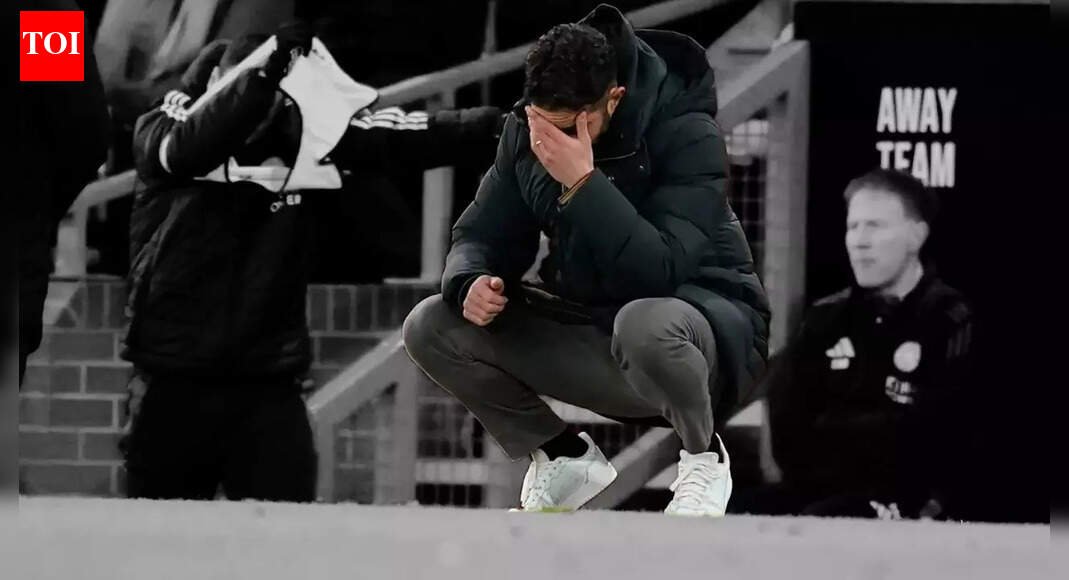
Manchester United on Monday sacked head coach Ruben Amorim, hours after the Portuguese spoke about tensions within the club following Sunday’s 1-1 draw against Leeds United. Amorim had said the club hierarchy needed to “do their job” and that he should be allowed to work without interference.The 1-1 draw at Elland Road was Amorim’s final match of his 14-month spell in charge. The result left Manchester United sixth in the Premier League after 20 matches.“With Manchester United sitting sixth in the Premier League, the club’s leadership has reluctantly made the decision that it is the right time to make a change,” United said in a statement. “This will give the team the best opportunity of the highest possible Premier League finish.”Former midfielder and current Under-18s coach Darren Fletcher is expected to take charge on an interim basis. His first match is likely to be away at Burnley on Wednesday night. The club is expected to make a permanent appointment in the summer.Reports had claimed that United’s head of recruitment, Christopher Vivell, asked Amorim to adapt his tactics after Fulham manager Marco Silva explained how his team planned to counter United’s system during their draw in August. Amorim changed his usual three-man defence for the win over Newcastle but returned to his preferred system in draws against Wolves and Leeds.Amorim was appointed in November 2024 after Erik ten Hag was sacked. The decision to remove him was taken by the club’s leadership, including chief executive Omar Berrada and director of football Jason Wilcox, following a breakdown in relations.Under the terms of his contract, which runs until 2027 with an option for a further year, United will have to pay the full amount, as there is no clause for a reduced exit.After the Leeds match, Amorim said, “It’s going to be like this for 18 months or when the board decide to change. That was my point, I want to finish with that. I’m not going to quit. I will do my job until another guy is coming here to replace me.”Amorim had faced criticism for sticking to a 3-4-3 formation. Before the Leeds game, he spoke about differences over the system and difficulties in signing players suited to it. He again used the 3-4-3 against Leeds.


Source link

Rupee declines for 4 days straight: Currency slips 8 paise against US dollar; settles at 90.28


Rupee declines for 4 days straight: Currency slips 8 paise against US dollar; settles at 90.28

NEW DELHI: Rupee continued to slide against the US dollar on Monday. It ended 8 paise lower at 90.28 (provisional) against the US dollar, pressured by firm American currency and weak equity market sentiment.Renewed geopolitical tensions triggered by the US military action in Venezuela strengthened the dollar across global markets, forex dealers said, overshadowing the supportive impact of lower crude oil prices on the rupee at weaker levels, reported PTI. The domestic currency opened at 90.21 in the interbank market, slid to a session low of 90.50 amid sustained dollar buying, and later recovered partially to close at 90.28 (provisional). The session marked the rupee’s losing streak for a fourth consecutive day, taking its cumulative fall to 53 paise since December 30, 2025, when it had settled at 89.75 against the US dollar.The rupee weakened as escalating geopolitical tensions between the US and Venezuela triggered risk aversion in currency markets, according to Anuj Choudhary, Research Analyst – Commodities Research at Mirae Asset Sharekhan, as quoted by PTI. Although the rupee found some support from softer crude oil prices and foreign fund inflows seen at the end of last week, Choudhary added that easing oil prices could help limit downside pressure at lower levels, while any intervention by the Reserve Bank of India may also lend support. He further said that market participants are likely to track the US ISM manufacturing PMI for further cues, with the USD-INR spot pair expected to move within the 90–90.60 range. Reflecting the risk-off sentiment, the dollar index, measuring the currency against a basket of six major currencies, was up 0.24 per cent at 98.39. Meanwhile, Brent crude futures slipped 0.36 per cent to $60.53 per barrel. Domestic equities also remained under pressure, with the benchmark Sensex falling 322.39 points, or 0.38 per cent, to close at 85,439.62, while the Nifty declined 78.25 points, or 0.30 per cent, to end at 26,250.30. Foreign institutional investors, however, provided some relief, turning net buyers with equity purchases worth Rs 289.80 crore on Friday, according to exchange data. Additionally, Reserve Bank of India data released on Friday showed India’s foreign exchange reserves rose by$3.293 billion to $696.61 billion in the week that ended December 26, following an increase of $4.368 billion in the previous reporting period.


Source link

‘Prepared to face consequences if found guilty’: Accused in Dharamshala college student death case | Shimla News


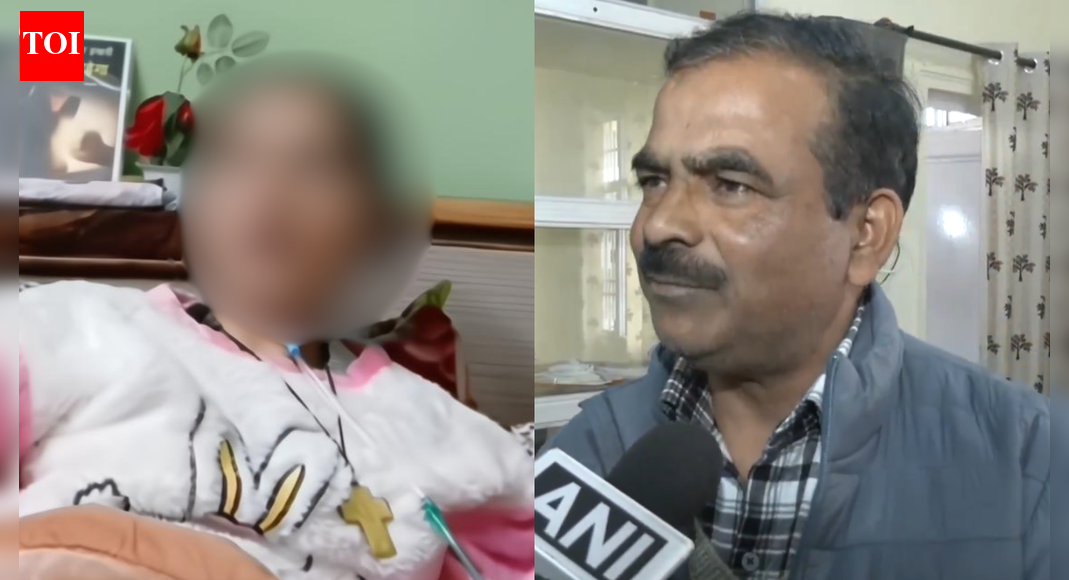
DHARAMSHALA: As protests intensify in Dharamshala over the death of a 19-year-old Dalit college student, accused teacher Ashok Kumar said he was prepared to face consequences if found guilty and would cooperate with the ongoing probe.The 19-year-old student died while undergoing treatment in Ludhiana in December. Her family has alleged that she was subjected to ragging, physical assault and sexual harassment at her college, which they say led to severe mental trauma and a decline in her health, according to news agency ANI.

Himachal College Horror: Student Dies After Alleging Sexual Harassment, Ragging

Responding to the allegations, Kumar said, “These allegations are very serious, and an investigation is currently in progress. If I am found guilty, I should face the consequences. I am prepared for this. With 26.5 years of teaching experience and countless students, I have never faced such accusations before. Perhaps it was my destiny or karma to endure this stain on my reputation. Now that it has happened, I am fully prepared to confront it.Referring to his suspension, he added, “The government suspended me, likely believing I deserved it, and I accept that. Suspension allows for an impartial investigation. The girl should get justice, and I should too.”Kumar further said he had obtained legal relief and would cooperate with authorities. “I obtained anticipatory bail, and now we await the next developments. We will cooperate fully,” he said.The student’s death has triggered protests in Dharamshala, with family members and political groups demanding accountability. Police have registered a case, and investigations are underway. The state government has assured strict action based on the findings of an inquiry committee.Meanwhile, Government College Dharamshala Principal Rakesh Pathania clarified the student’s academic status.The victim was a first-year student in 2024-2025. After that, in the new session, she attended some second-year classes. However, when her results were released, it was revealed that she had failed three subjects, so she was asked to repeat the first year,” Pathania said.He added, “However, she didn’t do this. We cannot call her our student now, since she didn’t take admission. We learned of the incident on December 22, when police visited our college for an investigation. We cooperated fully, unaware of the incident beforehand.”Pathania said all concerned students and staff had cooperated with the probe. “All students, including those named in the FIR, were present that day. The police then recorded their and the teachers’ statements. The three girls, whose names are on record, are currently second-year BA students at our college,” he said.On institutional safeguards, the principal said, “The UGC will send its committee for investigation to verify whether its guidelines and rules are being followed at our level. We are cooperating with them. We already have a ragging committee and a harassment committee. Everything is on record.”He added that higher authorities had been informed. “We have already informed the higher authorities of the action taken and all the facts and figures. Any action taken by the higher authorities will now be final. The police are verifying our records. We are cooperating with the police and providing them with all available records. We are always available.”The Communist Party of India (Marxist) on Friday demanded a fair and impartial inquiry by a senior police officer into the student’s death. A CPI(M) delegation met Director General of Police Ashok Tiwari in Shimla and submitted a memorandum seeking a comprehensive investigation.State Secretary CPI(M) Sanjay Chauhan expressed concern over rising atrocities against women and Dalits. “Though cases have been registered against three students and a professor, the seriousness of the allegations warrants a deeper probe,” he said.Chief minister Sukhvinder Singh Sukhu said preliminary action had already been taken, including the suspension of the professor and the formation of an inquiry committee.“We have taken preliminary action and suspended the professor concerned. A committee has been established and will submit a detailed report after reviewing all relevant facts, including the video recording. Strict action will be taken against whoever is found responsible,” Sukhu said.


Source link

Evening news wrap: Supreme Court rejects Umar Khalid’s bail in Delhi riots case; fire erupts at ONGC well in Andhra Pradesh & more | India News


Evening news wrap: Supreme Court rejects Umar Khalid's bail in Delhi riots case; fire erupts at ONGC well in Andhra Pradesh & more
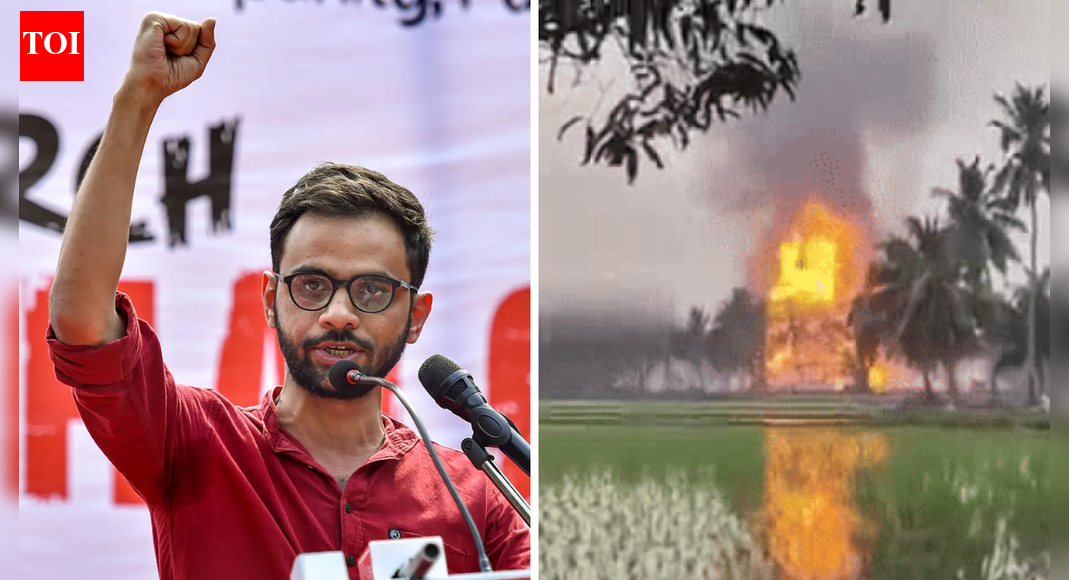
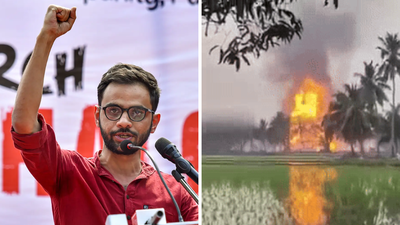
  • 2020 Delhi riots: Supreme Court denied bail to Umar Khalid and Sharjeel Imam in the 2020 Delhi riots case, with Khalid saying jail has now become his life.
  • Fire at ONGC well: A gas pipeline leak at an ONGC well in Andhra Pradesh’s Konaseema district triggered a fire at the site, but no casualties or injuries were reported.
  • Mustafizur row: The Bangladesh government imposed an indefinite ban on the telecast and promotion of the IPL after the controversy surrounding Mustafizur Rahman’s removal from Kolkata Knight Riders.
  • Delhi horror: A gym ownership dispute in East Delhi’s Laxmi Nagar escalated into a violent attack, leaving a man beaten, his wife allegedly molested, and their son assaulted on the street.
  • US strikes Venezuela: Chinese Premier Xi Jinping condemned US actions in Venezuela as “unilateral and bullying acts,” calling on major powers to respect international law and UN principles.

“US Has No Jurisdiction in Venezuela” Ex-UN Envoy Dilip Sinha Slams US Action In Venezuela

Here are the top five stories of the evening:

Supreme Court denies bail to Umar Khalid in Delhi riots case; activist says, ‘ab yahi zindagi hai’

The Supreme Court rejected bail for activist Umar Khalid and Sharjeel Imam, who are accused in the alleged larger conspiracy behind the 2020 northeast Delhi riots. Khalid remarked that jail had now become his life. His partner, Banjyosna Lahiri, quoting Khalid on X, wrote: “I am really happy for the others who got bail. So relieved.” When she mentioned visiting him the next day for a meeting, Khalid replied, “Good, good, aa jana. Ab yahi zindagi hai.” Read full story

Gas leak triggers fire at ONGC well in Andhra Pradesh; no injuries reported

A gas pipeline leak at a well in Andhra Pradesh’s Dr BR Ambedkar Konaseema district sparked a fire on Monday at a site operated by Oil and Natural Gas Corporation’s (ONGC) production contractor, Deep Industries Ltd. According to preliminary reports from a company official, no casualties or injuries have been reported. Senior ONGC officials from Rajahmundry rushed to Mori village following the blaze at the Mori-5 well. Read full story

Bangladesh bans IPL broadcasts indefinitely after Mustafizur Rahman row

The Bangladesh government indefinitely banned the telecast and promotion of the Indian Premier League (IPL) following the controversy over fast bowler Mustafizur Rahman’s removal from the Kolkata Knight Riders squad. An official order confirmed that all IPL-related broadcasts, promotions, and event coverage are suspended with immediate effect. The directive will remain in force until further notice. Read full story

East Delhi gym dispute turns violent, family assaulted in Laxmi Nagar

A man was beaten, his wife allegedly molested, and their son stripped naked and assaulted on the street, after a dispute over a gym operating from a residential property in East Delhi’s Laxmi Nagar turned violent. The complainant, Rajesh Garg, who owns the house and runs a gym in its basement, alleged that the gym’s caretaker, Satish Yadav, cheated him and tried to take over the business, leading to the ongoing conflict, according to his police complaint. Read full story

‘Bullying acts’: Chinese President XI condemns US operation in Venezuela

Chinese Premier Xi Jinping condemned “unilateral and bullying acts” in global affairs, following the arrest of Venezuelan President Nicolas Maduro by US forces. “All countries should respect the development paths chosen by other nations and abide by international law, as well as the purposes and principles of the UN Charter, with major countries leading by example,” Xi said, adding, “In a world beset with changes and chaos, unilateral and bullying acts are severely undermining the international order.Read full story


Source link

WATCH: Sean Abbott rattles Jack Wildermuth’s stumps with a peach of a delivery in BBL|15


Sydney Sixers’ seam attack seized early control of their Big Bash League 2025-26 clash against Brisbane Heat at Coffs Harbour, with Sean Abbott producing a spellbinding dismissal of Jack Wildermuth that lit up the 24th match of BBL|15. ​ The Heat, sent in after the Sixers won the bat flip, limped to 89/8 in 15.4 overs as the hosts’ experienced bowling group repeatedly exposed their brittle top and middle order. ​

Sean Abbott’s spectacular delivery floors Jack Wildermuth in BBL|15

Brisbane Heat’s innings had finally begun to find some momentum through Wildermuth, who counter-attacked superbly with 31 off just 17 deliveries, striking two fours and two sixes at a strike rate of 182.35. Having watched partners fall around him, Wildermuth took it upon himself to go downtown and break the early stranglehold imposed by the Sixers’ new-ball pair.​

Abbott, into his second over, responded with a classic fast-bowler’s reply – a full, bustling delivery that honed in on off stump before jagging back late. Wildermuth, looking to launch down the ground, left a gaping corridor between bat and pad, and the late movement was enough to send the middle stump cartwheeling, leaving the Coffs Harbour crowd roaring as the lights flashed in dramatic fashion. The dismissal, recorded at 3.6 overs with Heat 33/2, broke a dangerous stand and halted the only sustained surge of scoring Brisbane had managed in the powerplay.​

Abbott’s figures at that stage, 2 for 18 off three overs, underlined his impact, as he complemented the headline wicket of Wildermuth by trapping Jimmy Peirson lbw for 10 off 10 later in the innings. His disciplined lengths, subtle seam movement and refusal to over-pitch for cheap boundaries epitomized the Sixers’ bowling blueprint on a surface offering just enough help if bowlers hit the top of off.​

Here’s the video:

Also READ: David Warner’s century in vain as Hobart Hurricanes pull off a record run chase at ENGIE Stadium

Sydney Sixers’ bowlers dismantle Brisbane Heat lineup

The Heat’s scorecard told the story of a lineup repeatedly rebuilt and then broken again, with only Wildermuth and Hugh Weibgen offering any meaningful resistance. After a modest Powerplay 1 that yielded 33 runs for the loss of two wickets in the first four overs, Brisbane crawled to 50/5 by 7.6, then 58/5 at drinks, never once threatening to impose themselves on the contest.​

Ben Dwarshuis set the tone early, removing Nathan McSweeney for 11 and Max Bryant for 3 to finish with an incisive 2 for 19 from 2.4 overs, repeatedly angling the ball across the right-handers and dragging their strokes into the infield. At the other end, Jack Edwards (1 for 27) and Hayden Kerr (1 for 4 off two overs) used the seam-friendly conditions smartly, with Kerr allowing just four runs in his spell to choke the scoring rate in the middle overs.​

Joel Davies’ left-arm angle further tightened the squeeze, as he removed Xavier Bartlett and Matthew Kuhnemann in quick succession to return 2 for 19 from his full quota, triggering a collapse from 72/6 to 74/8. With Lachlan Hearne lbw for 1, Matt Renshaw dismissed for 2, and Oli Patterson unable to accelerate in his unbeaten 6 from 9, the Heat’s projected total hovered around a modest 104, underlining how comprehensively the Sixers’ attack had dictated terms.​ Brisbane Heat got bowled out for a low total of 114/9 setting  up a target of 115 against Sydney Sixers.

Also READ: BBL|15: Josh Brown sizzles as Renegades edge Stars in Melbourne derby thriller at the MCG


Source link

Rs 79,000 crore defence push: How India is rearming to counter China and Pakistan | India News


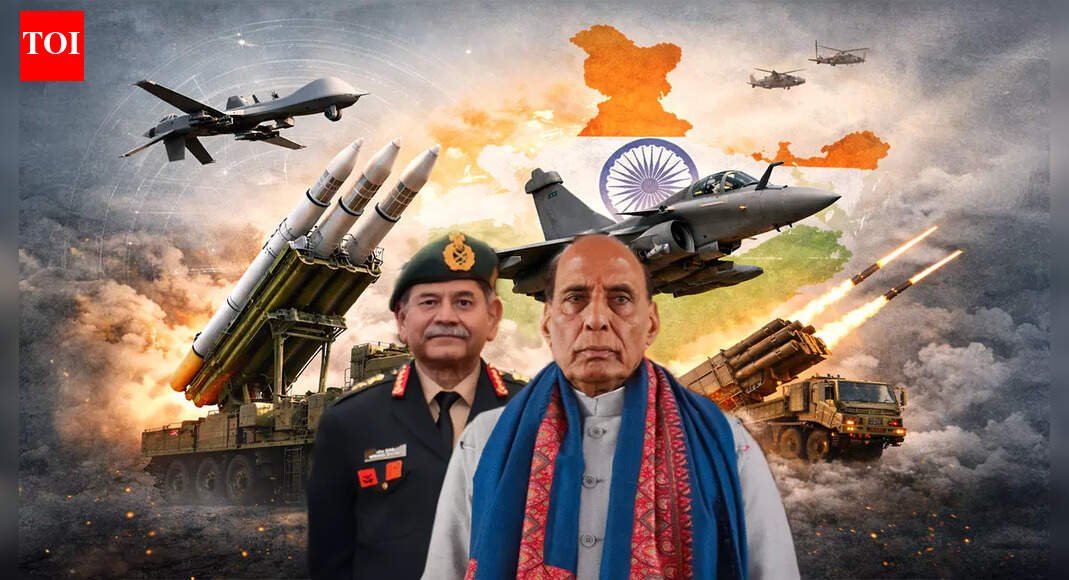
Rs 79,000 crore defence push: How India is rearming to counter China and Pakistan

NEW DELHI: Amid a tightening security environment shaped by a militarily assertive China and a volatile Pakistan, the defence ministry has cleared military modernisation projects worth nearly Rs 79,000 crore, marking one of the most consequential procurement approvals in recent years. The clearances were accorded by the Defence Acquisition Council (DAC) chaired by defence minister Rajnath Singh, which approved a wide range of systems spanning air defence missiles, combat drones, long-range rockets, air-to-air weapons, aerial refuellers and counter-drone technologies.Senior military officials have repeatedly stressed that future conflicts will be defined by speed, precision and the ability to fight across domains. “Timely induction of critical capabilities is essential to maintain operational readiness in a rapidly evolving threat environment,” the Chief of the Air Staff, Air Chief Marshal AP Singh, said recently, underscoring the urgency behind such decisions. While Acceptance of Necessity (AoN) is only the first step in the procurement process, it formally establishes the armed forces’ requirements and allows detailed tenders, trials and negotiations to begin.

Rajnath Singh Links Lord Ram’s Ethics To Operation Sindoor, Says India Fought Terror With Dignity

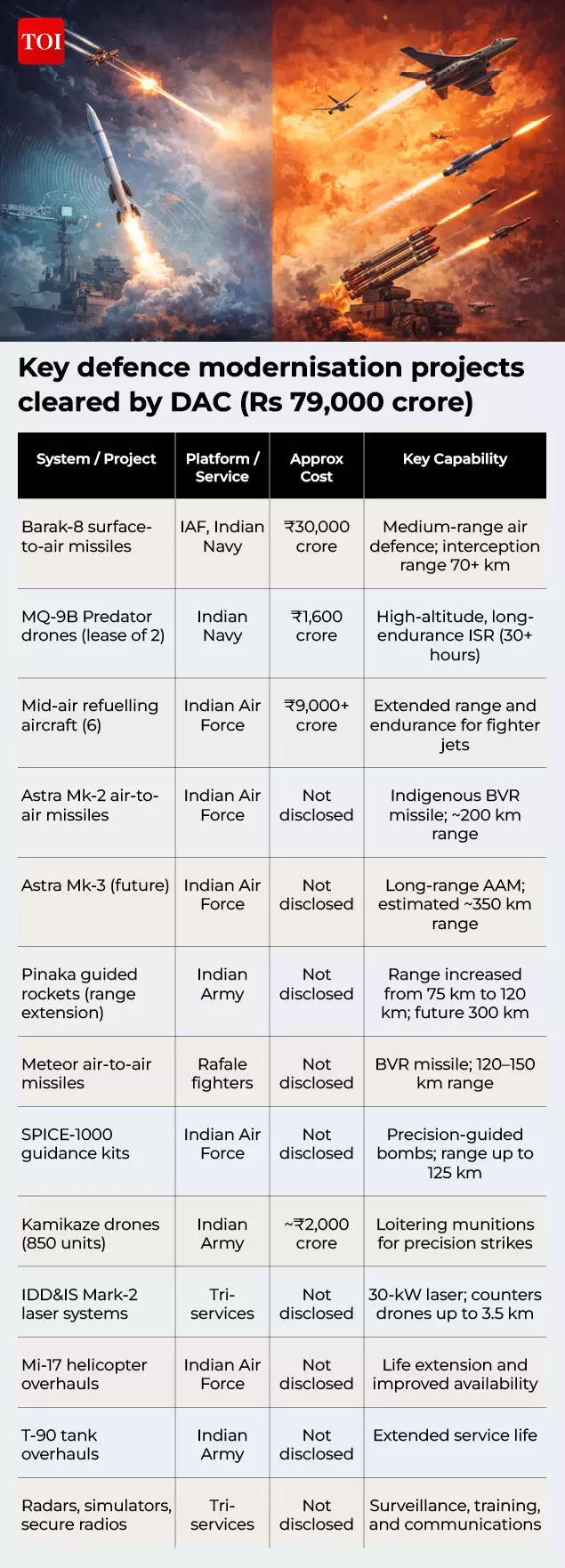
Key defence modernisation projects cleared by DAC

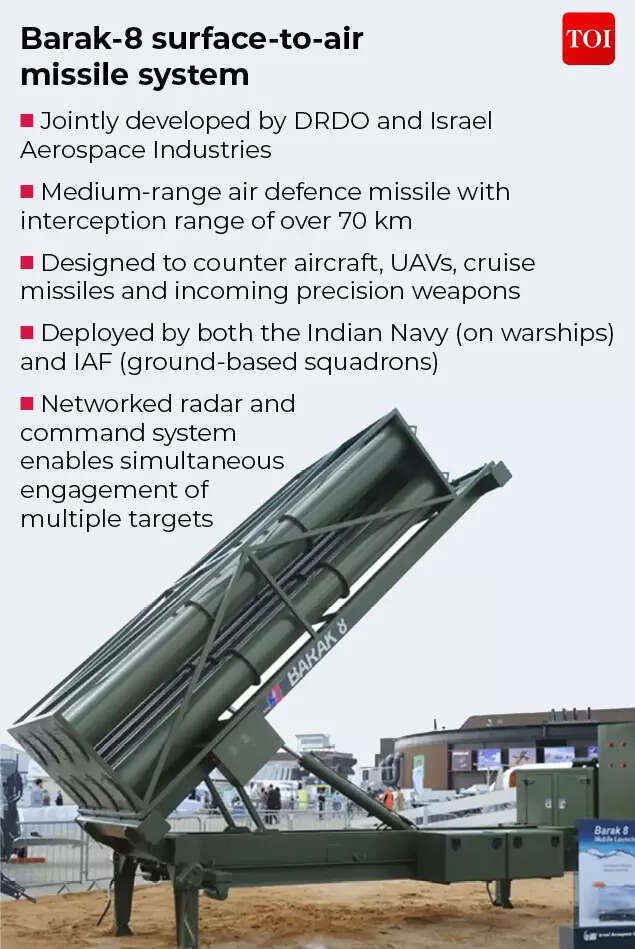
Taken together, the latest approvals offer a revealing snapshot of how India’s armed forces are recalibrating for wars that may unfold under the shadow of drone swarms, long-range missiles, electronic warfare and sustained precision strikes. Many of the systems cleared have been shaped by operational lessons from recent crises, assessed against the growing missile and air power capabilities of China and Pakistan, and aligned with a more pragmatic “Make in India with partners” approach rather than doctrinaire import substitution. What follows is not merely a list of acquisitions, but an emerging blueprint for how India plans to deter, and if necessary fight, high-intensity conflicts across its borders in the coming decade.Barak-8 missiles: Backbone of India’s layered air defenceThe single largest approval under the latest DAC meeting is the Rs 30,000 crore procurement of a large number of Barak-8 medium-range surface-to-air missiles for the Indian Air Force and Navy. Jointly developed by India and Israel, Barak-8 has become the backbone of India’s medium-tier air defence architecture.

Barak-8 surface-to-air missile system

With an interception range of over 70 km, Barak-8 is designed to neutralise a wide spectrum of aerial threats, including fighter aircraft, helicopters, cruise missiles and unmanned aerial vehicles. Its advanced active radar seeker and ability to engage multiple targets simultaneously make it critical in countering saturation attacks.The missile system proved its operational value during the cross-border hostilities in May, when Pakistan launched multiple waves of Turkish-origin drones and Chinese missiles. Barak-8 was part of India’s multi-layered air defence network that successfully intercepted incoming threats, preventing damage to key military installations.For the Navy, Barak-8 is deployed aboard frontline destroyers, frigates and aircraft carriers, providing area air defence against anti-ship missiles and hostile aircraft. For the IAF, ground-based Barak-8 squadrons protect air bases and strategic assets. The new procurement aims to significantly bolster missile stocks, addressing concerns over wartime depletion and sustained engagements.MQ-9B Predator drones: Bridging the surveillance gap till 2030The DAC also approved the Rs 1,600-crore lease of two additional MQ-9B Predator drones for a period of three years. These high-altitude, long-endurance unmanned aerial vehicles will supplement the two Predators currently operated by the Navy.MQ-9Bs are capable of flying for over 30 hours at altitudes exceeding 40,000 feet, providing persistent intelligence, surveillance and reconnaissance across vast areas. They are particularly valuable for maritime domain awareness in the Indian Ocean Region, tracking hostile naval movements and monitoring choke points.

MQ-9B Predator drones (leased)

The leased drones are meant to bridge a critical capability gap until India receives 31 armed MQ-9B remotely piloted aircraft systems under the $3.8 billion deal signed with the US in October last year. Deliveries under that deal are expected only in 2029–30.By opting for a lease rather than outright purchase, the military avoids a capability vacuum during a period of heightened regional tensions, particularly in the Indo-Pacific and along the Line of Actual Control with China.Mid-air refuelling aircraft: Extending IAF’s combat reachAnother major clearance is the long-pending acquisition of six mid-air refuelling aircraft for the Indian Air Force at a cost exceeding Rs 9,000 crore. The lack of adequate aerial refuellers has long constrained the IAF’s ability to sustain long-range air operations.Under the approved plan, Israel Aerospace Industries will convert six second-hand Boeing 767 commercial aircraft into aerial tankers. The conversion involves structural reinforcement, installation of refuelling booms, fuel tanks and mission systems.

Mid-air refuelling aircraft

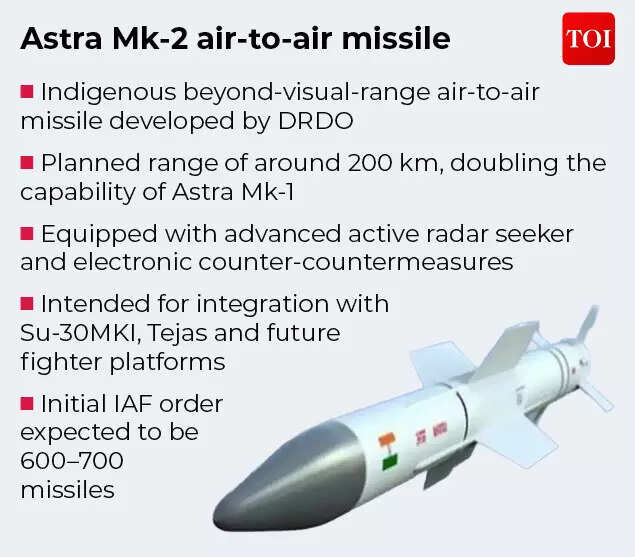
A fresh AoN was required because the tender resulted in a single-vendor situation. Despite that, the urgency of the requirement has pushed the government to move ahead.Mid-air refuellers dramatically extend the operational reach and endurance of fighter jets, transport aircraft and surveillance platforms. They are especially critical for deep-penetration strikes, rapid force mobilisation, and sustained air patrols over contested areas. With China operating a growing fleet of refuellers and Pakistan steadily upgrading its air force, the IAF’s refuelling gap had become increasingly stark.Astra Mk-2 and Mk-3: India’s push for long-range air dominanceTwo crucial indigenous missile projects cleared by the DAC focus on extending India’s air-to-air combat envelope. The first is the Astra Mark-2 air-to-air missile, whose range is being enhanced from the current 100 km to around 200 km.Developed by the Defence Research and Development Organisation (DRDO), Astra is India’s first indigenous beyond-visual-range air-to-air missile. It is already integrated with Su-30MKI fighters and is slated for deployment on Tejas and other platforms.

Astra Mk-2 air-to-air missile

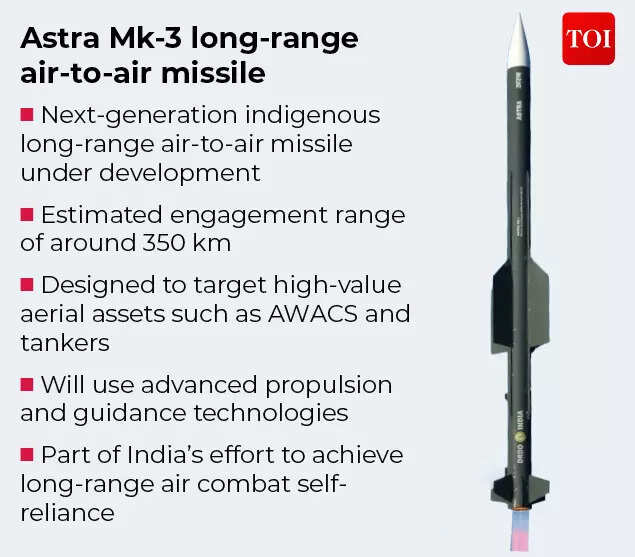
The IAF is expected to place an initial order for 600–700 Astra Mk-2 missiles. In parallel, work is underway on Astra Mark-3, which will have an estimated range of around 350 km, placing it firmly in the long-range interception category.

Astra Mk-3 long-range air-to-air missile

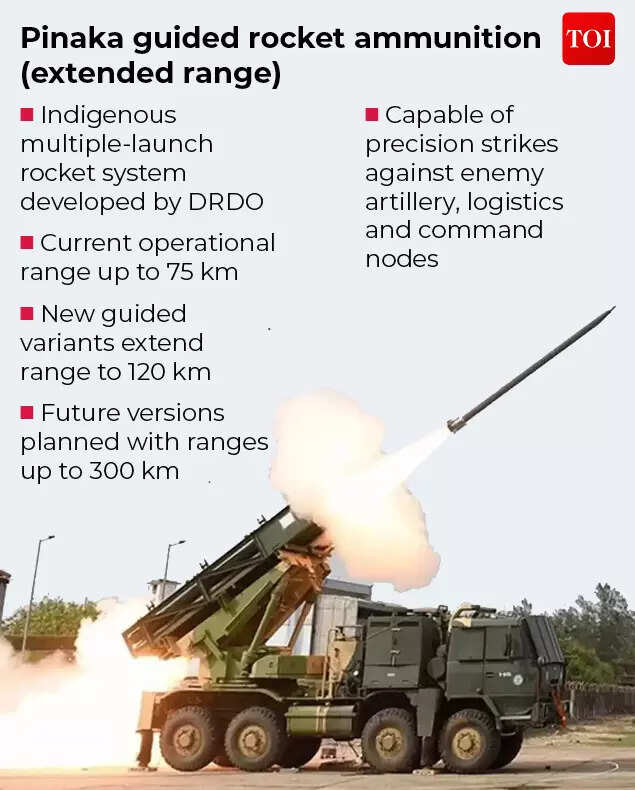
Indigenous long-range air-to-air missiles are increasingly important as aerial combat shifts from close dogfights to stand-off engagements, where detection, tracking and first-shot capability determine outcomes.Pinaka rockets: From 75 km to deep-strike artillery at 300 kmThe DAC’s nod for extending the range of Pinaka guided rocket ammunition marks a major leap in India’s artillery firepower. Pinaka multiple launch rocket systems currently fire rockets up to a range of 75 km, already giving them an edge over older systems.

Pinaka guided rocket ammunition

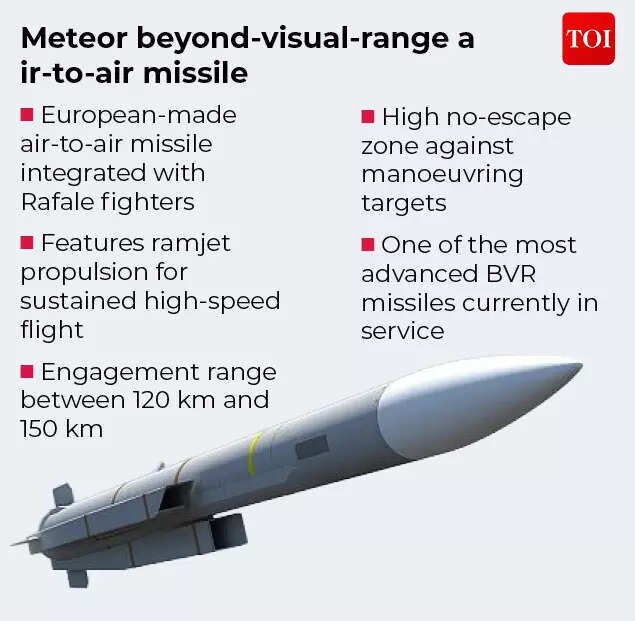
The new guided variants aim to extend that range to 120 km, with future plans to reach up to 300 km. According to officials, the 120-km version was successfully tested on Sunday, demonstrating improved accuracy and lethality.A 300-km Pinaka would fundamentally alter battlefield dynamics, allowing the Army to strike deep into enemy territory without relying on air power. Such capability is particularly relevant along mountainous borders, where terrain and weather often limit air operations.Pinaka’s modular design and compatibility with different warheads make it a versatile system for counter-battery fire, suppression of enemy air defences and destruction of logistics hubs.Meteor missiles and SPICE-1000 kits: Enhancing Rafale’s punchWhile indigenous systems form the core of the modernisation drive, the DAC also approved additional procurements of select foreign munitions to plug immediate gaps. This includes more Meteor beyond-visual-range air-to-air missiles for Rafale fighters.With a range of 120–150 km, Meteor is considered one of the most lethal air-to-air missiles in service today, featuring a ramjet propulsion system that maintains high energy throughout its flight.

Meteor beyond-visual-range a ir-to-air missile

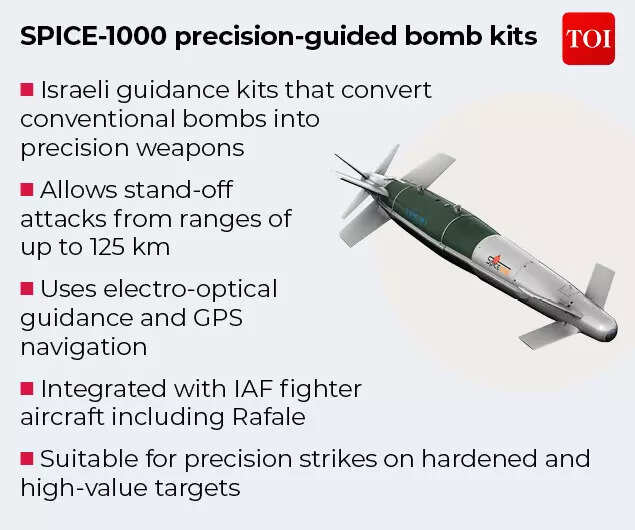
The council also cleared the acquisition of Israeli guidance kits for SPICE-1000 precision-guided bombs. These kits transform conventional bombs into long-range, highly accurate weapons capable of striking targets from up to 125 km away.

SPICE-1000 precision-guided bomb kits

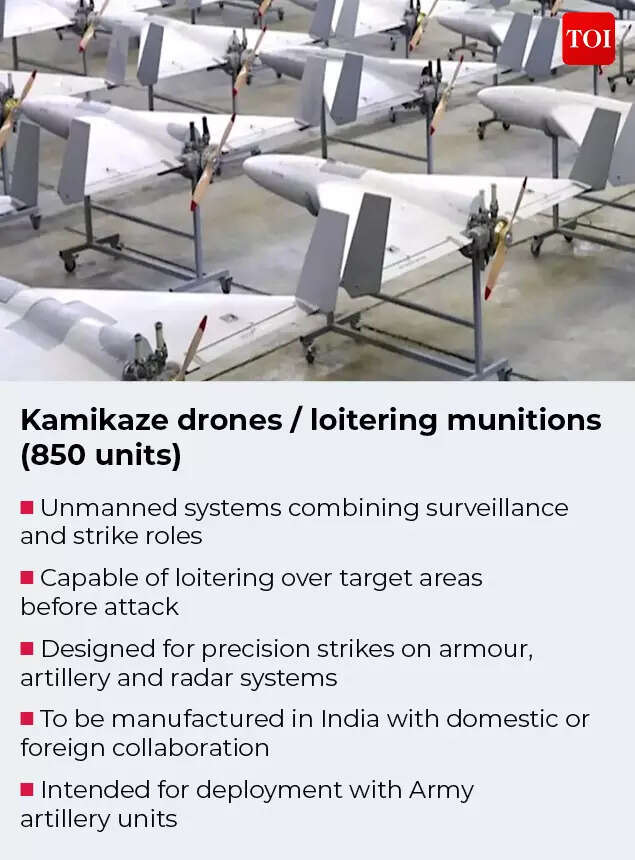
Together, these munitions significantly enhance the Rafale’s stand-off strike and air dominance capabilities, allowing it to engage high-value targets without entering heavily defended airspace.Kamikaze drones for the Army: Precision strikes and battlefield autonomyAmong the most telling approvals is the procurement of 850 kamikaze drones, or loitering munitions, for the Army’s new ‘Shaktibaan’ and ‘Divyastra’ artillery batteries at a cost of around Rs 2,000 crore.

Kamikaze drones/ loitering munitions (850 units)

Loitering munitions combine surveillance and strike capabilities in a single platform. They can hover over a target area, identify enemy assets and then dive onto the target with an explosive payload.The drones approved under this programme will be manufactured in India, either by domestic firms or through foreign collaboration. Their induction reflects lessons drawn from conflicts such as Ukraine, where loitering munitions have been used extensively for precision strikes against armour, artillery and air defence systems.For the Indian Army, these drones provide a flexible, cost-effective tool for real-time battlefield engagement without risking pilots or high-value aircraft.Counter-drone laser systems: Preparing for swarm warfareThe DAC also cleared the indigenous Integrated Drone Detection and Interdiction System Mark-2. Equipped with 30-kilowatt lasers, the system can disable, degrade or destroy small remotely piloted aircraft and swarm drones at ranges of up to 3.5 km.

Integrated Drone Detection and Interdiction System (IDD&IS) Mark-2

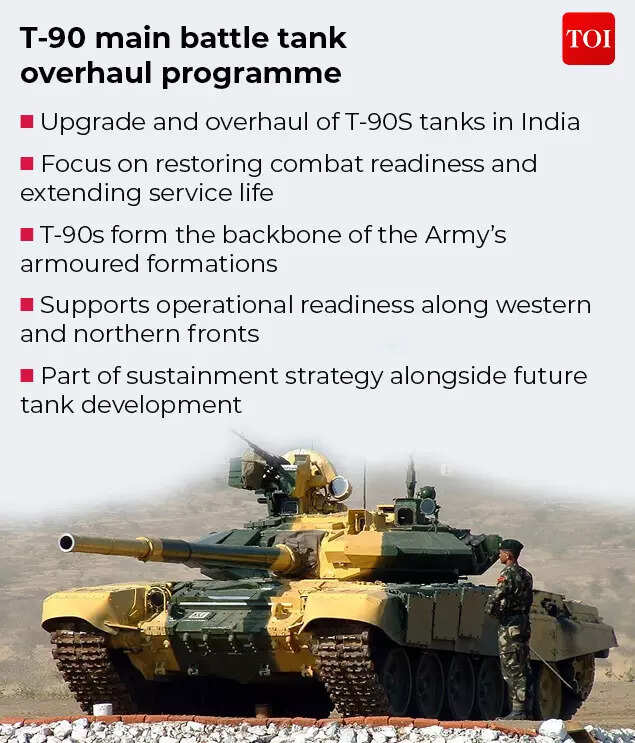
Drone swarms are increasingly viewed as a major threat, capable of overwhelming traditional air defence systems through sheer numbers. Laser-based systems offer a relatively low-cost, rapid-response solution to such threats.The IDD&IS integrates detection, tracking and neutralisation into a single platform, making it suitable for protecting air bases, ammunition depots and critical infrastructure. Its approval signals a recognition that future conflicts will involve contested airspace even at very low altitudes.Upgrades and overhauls: Mi-17 helicopters and T-90 tanksBeyond new acquisitions, the DAC approved overhauls of Mi-17 helicopters in Russia and T-90S main battle tanks in India. These overhauls aim to extend the service life and operational readiness of existing platforms.

Mi-17 helicopter overhaul programme

Mi-17 helicopters form the backbone of the IAF’s medium-lift fleet, supporting transport, casualty evacuation and special operations. T-90 tanks remain central to the Army’s armoured formations, particularly along the western front.

T-90 main battle tank  overhaul programme

Sustaining these platforms is critical even as newer systems are inducted, ensuring there are no capability gaps during the transition phase.Beyond missiles: Radars, simulators and secure communicationsSeveral smaller but vital projects were also cleared. These include low-level lightweight radars for detecting aerial threats, bollard-pull naval tugs for harbour operations, full mission simulators for Tejas fighter jets, and automatic take-off and landing recording systems for the IAF.

Bollard-pull naval tugs

The DAC also approved the acquisition of high-frequency software-defined radios to enable secure long-range communications across services. Such systems are essential for network-centric warfare, allowing forces to share data in real time.While less visible than missiles or drones, these enablers are critical for operational effectiveness, training and safety.

Low-level lightweight radar systems

Taken together, the Rs 79,000 crore modernisation push offers a clear snapshot of how India expects future wars to be fought. The focus is on layered air defence, long-range precision strikes, persistent surveillance, unmanned systems and electronic resilience.Rather than betting on a single platform or technology, the approvals reflect a systems-based approach, integrating missiles, drones, aircraft and sensors into a cohesive combat network. The blend of indigenous development and selective imports suggests a more mature procurement philosophy, driven by operational need rather than ideology.


Source link