Breaking News
What is quiet firing: A new workplace trend or a serious phenomenon?


Image credits: Getty Images

The silence in a workplace can sometimes say more than a formal warning letter ever could. When emails go unanswered, meetings move ahead without you, and your role begins to shrink without explanation, it may not be a coincidence. Increasingly, it is being recognised as something more deliberate, quiet firing.At first glance, the term sounds like another addition to the growing lexicon of workplace buzzwords. But beneath the phrasing lies a practice that is neither new nor harmless. Quiet firing reflects a deeper shift in how organisations manage exits, accountability, and discomfort, often at the cost of employee dignity.

Understanding quiet firing

Quiet firing refers to a managerial practice where an employee is not directly terminated but is gradually pushed out of the organisation. Instead of formal performance conversations or clear decisions, managers withdraw responsibility, opportunity, support, and visibility until the job becomes untenable. The employee, drained and demoralised, eventually resigns.

Workplace Anxiety Linked to Rising Health Issues Among Employees

Unlike layoffs or firings, quiet firing operates in the shadows. There is no clear moment of rupture, no written explanation, and no closure. The ambiguity is the strategy.This approach has gained renewed attention in recent years, particularly as organisations navigate economic uncertainty, remote work, and legal complexity. Direct terminations involve severance, documentation, and risk. Quiet firing avoids all three.

Why is it becoming more visible now

Workplace disengagement has created fertile ground for this phenomenon. According to Gallup’s State of the Global Workplace report (June 2024), a significant share of employees worldwide report feeling unsupported, disconnected, and emotionally detached from their organisations. Quiet firing does not just exploit this disengagement; it actively produces it.As work becomes more distributed and communication more asynchronous, it is easier for managers to disengage without appearing overtly hostile. Silence replaces confrontation. Inaction replaces leadership. This is why quiet firing often goes unnamed until the damage is done.

What quiet firing looks like in practice

Quiet firing is rarely about a single act. It is a pattern built over time. Feedback stops, both positive and corrective. Career conversations vanish. Access to key projects, meetings, or decision-making is quietly withdrawn. Resources dry up. Responsibilities are reassigned without explanation, and pay stagnates. Basically, the company continues to pay the employee, but the latter has no real role or function. The message is not directly stated, but it is absolutely clear: your existence is tolerated, not appreciated. As a leader, this is undoubtedly a failure to handle performance in an open and honest way. Leaders who can’t be bothered to set expectations or confront issues directly resort to using ambiguity as a way of exerting pressure.

Trend or tactic?

Calling quiet firing a “trend” risks understating its seriousness. While the term itself may be new, the behaviour is not. What has changed is its scale and normalisation.In earlier workplace cultures, avoidance was often limited by physical proximity and hierarchical clarity. Today, remote teams, matrix structures, and platform-based communication allow exclusion to happen quietly and systematically.The danger lies in how easily quiet firing can be rationalised, as pragmatism, cost control, or managerial discretion when it is, in effect, a way to transfer organisational discomfort onto individuals.The human costFor employees, quiet firing is psychologically destabilising. The lack of clarity makes it difficult to respond, improve, or even defend oneself. Confidence erodes, self-doubt replaces certainty. Many begin to internalise the silence as personal failure.Unlike formal termination, which at least offers finality, quiet firing prolongs uncertainty. It keeps employees suspended between hope and rejection, often for months.Teams notice too. When colleagues see someone slowly erased without explanation, trust weakens. Silence becomes instructive. Speaking up feels risky.

Why organisations should be concerned

While quiet firing may appear convenient in the short term, it carries long-term consequences. It undermines psychological safety, damages employer reputation, and signals a lack of ethical leadership.More critically, it reveals a deeper organisational problem: an inability to handle difficult conversations. Healthy workplaces do not avoid discomfort; they manage it. Performance issues, role mismatches, and changing priorities require clarity, not quiet withdrawal.

So, what is quiet firing really?

Quiet firing is not just a passing workplace trend. It is a persistent organisational behaviour that has serious implications. It shows underlying issues with accountability, power, and risk. Quiet firing is a symptom of a lack of leadership and the presence of ambiguity, in which no one seems to make decisions. While employee well-being, transparency, and ethical management become more and more topics of discussion, quiet firing is still there, as a contradiction, silent, strategic, and deeply consequential. The question, in fact, should not be whether quiet firing exists. Why so many workplaces still find it easier to be silent than to be honest is the real issue.


Source link

WATCH: Michael Neser takes a breathtaking catch to end Joe Root’s brilliant knock of 160 | Ashes 2025-26, Sydney Test, Day 2


In an incredible moment of skill on Day 2 of Sydney Test against Australia, Michael Neser claimed an unforgettable caught and bowled to dismiss Joe Root for 160, ending a magnificent knock by the England batter. Root’s knock had been an innings of great resilience, lasting 242 balls and featuring 15 boundaries, but the spectacular dismissal by Neser brought an end to his century-long resistance.

Ashes 2025-26: Michael Neser’s brilliant catch at full stretch to dismiss Joe Root

Neser’s catch was the turning point in a tense and hard-fought session. Root had been playing exceptionally well, having already amassed a magnificent 160, and had settled into a rhythm that had the England team looking comfortable. Neser, bowling with intensity, delivered a back-of-a-length ball aimed at the body. Root tried to work the ball to the leg side, but the extra bounce caught him off guard.

The delivery was slightly higher than expected, and as Root attempted to direct it, the leading edge popped up awkwardly. Neser, quickly reacting to the chance, sprinted to his right and flung himself full stretch to complete a diving catch, showing remarkable athleticism. This wicket brought England to 384/9, as Root’s departure handed Australia a significant breakthrough in a highly competitive Test.

Here’s the video:

Also READ: Alastair Cook opens up on possibility of becoming England’s next head coach

Root’s masterful 160 leads England to strong position in Sydney Ashes Test

Root’s brilliant knock of 160 anchored England’s innings on Day 2 of the 5th Ashes Test at the Sydney Cricket Ground, putting the visitors in a commanding position. Root’s innings was a perfect blend of patience and aggression, as he faced 242 balls and struck 15 boundaries. Despite losing wickets around him, Root’s resilience ensured that England could set a daunting target for Australia, with his innings standing out as the highlight of the day.

Root was dismissed by Neser in a spectacular caught-and-bowled effort, a moment of brilliance that left the Sydney crowd in awe. England ended their innings at 384, with significant contributions from Harry Brook (84) and Jamie Smith (46). Australia’s bowlers, particularly Neser with 4 wickets, worked hard but were unable to stop Root’s dominance. With Australia needing 385 to take a lead, the day concluded with the hosts trailing by 348 runs at 36/0, requiring a strong chase on Day 3 to stay in the match.

Also WATCH: Ashes 2025-26: Australia and England players unite to give Guard of Honour to Bondi terror attack victims at SCG


Source link

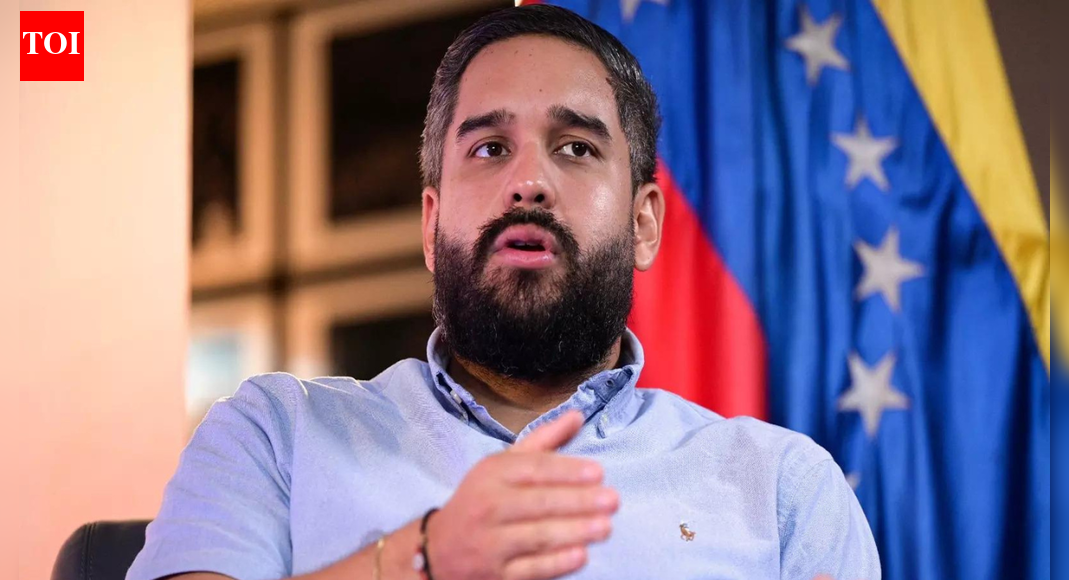
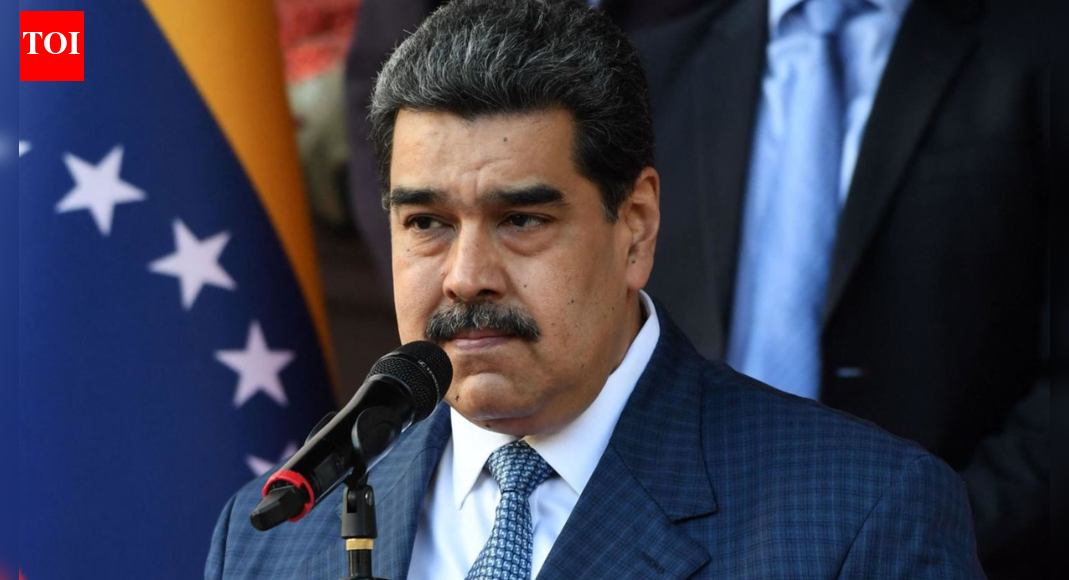
‘History will tell who the traitors were’: Internal conspiracy? Maduro’s son’s message after father’s capture by US


‘History will tell who the traitors were’: Internal conspiracy? Maduro’s son's message after father’s capture by US

“History will tell who the traitors were,” deposed Venezuelan dictator Nicolas Maduro’s son Nicolas Maduro Guerra has said after his father and First Lady Cilia Flores were captured following a US military operation.In a audio message circulated on social media, Guerra warned of possible betrayal within the ruling movement, and history would expose those responsible.“History will tell who the traitors were, history will reveal it. We will see,” Guerra said.“We are fine, we are calm. You will see us in the streets, alongside these people. They want to see us weak; we are going to raise the banners of dignity. Does it hurt us? Of course it hurts us, of course it makes us angry, but they won’t be able to, damn it! I swear to you on my life, on my mother, on Cilia: they won’t be able to,” he said in the audio recording, El-cooperative reported.He also called supporters to take part in public mobilisations on January 4 and 5 to regroup and strengthen unity around the leadership. He also spoke of the need for “political and military coordination” to respond to what he described as “external aggression”.Maduro Guerra is a lawmaker from La Guaira state and member of the ruling United Socialist Party of Venezuela (PSUV).Also known as “The Prince,” Guerra’s role is Venezuela’s drug operations is detailed in newly US indictments.According to US federal prosecutors, Guerra is a key orchestrator of a sprawling narcotics network that allegedly leveraged state assets, military personnel, and political influence to transport cocaine from Venezuela to the United States.This comes as Nicolas Maduro and his wife Cilia Flores remain detained in the United States. They are expected to appear before a federal court in the Southern District of New York on Monday,Maduro is facing charges related to alleged “narco-terrorism and conspiracy to traffic drugs”.Earlier on Saturday The United States launched coordinated attacks on civilian and military installations across several Venezuelan states, with US President Donald Trump claiming that President Nicolas Maduro had been captured in what he described as a “large-scale” American strike.Both were taken from their residence, moved to the USS Iwo Jima warship, and later flown to the United States. They arrived in New York on Saturday afternoon to face criminal proceedings in US courts.


Source link

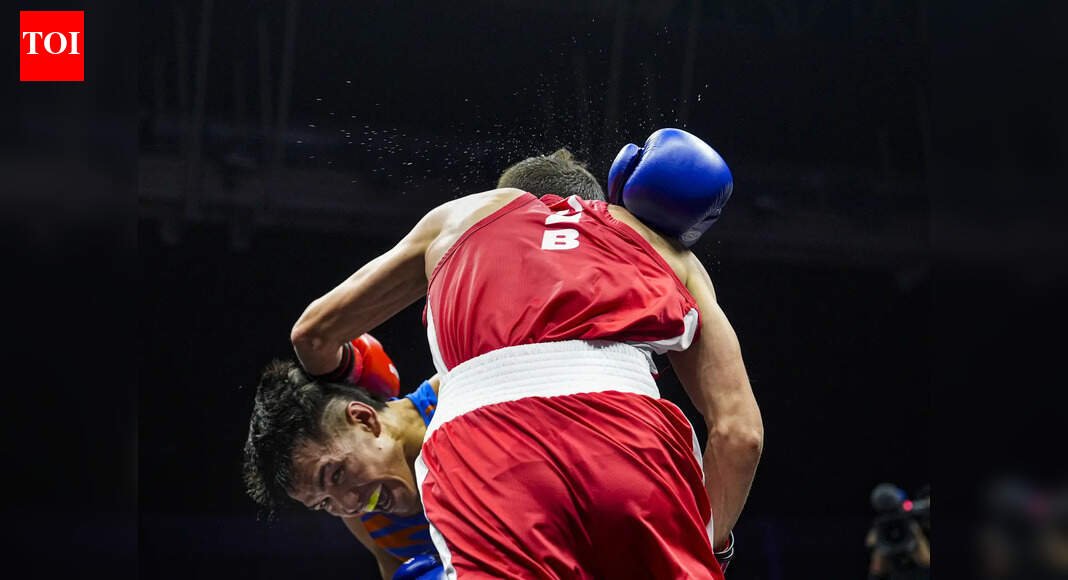
National Boxing Championships: Rings not ready in time as delays, poor planning mar opening day | Boxing News


National Boxing Championships: Rings not ready in time as delays, poor planning mar opening day
Representative image (PTI Photo)

NEW DELHI: The country’s top boxers were left cooling their heels for hours as chaos and confusion marked the opening day of the Elite Men and Women National Boxing Championships in Greater Noida on Sunday, with the start of competition delayed by more than four hours due to what officials described as “logistical” issues.Go Beyond The Boundary with our YouTube channel. SUBSCRIBE NOW!The tournament, slated to be a landmark event with the men’s and women’s national championships being staged together for the first time, was scheduled to get underway at 2 pm at Gautam Buddha University. Instead, prolonged uncertainty and poor preparedness defined the day.

Jay Shah’s 2036 Olympic blueprint for India: ‘8 Medals won’t cut it’

Even basic infrastructure was missing. Three competition rings were meant to be operational on the opening day, but only one was assembled by around 4 pm. That too had to be dismantled and reassembled after a technical fault was detected. As a result, the first of the 80 scheduled bouts — 38 in the women’s section and 42 in the men’s — finally began only at 6.30 pm. Women boxers were left waiting even longer. As of 8 pm, there was still no clarity on when their bouts would begin, with the third ring yet to be assembled and no official communication forthcoming.Sources said that the organisers could not set up the rings and other equipment overnight as the gate of the venue, Gautam Budh University in Greater Noida, was locked.

Poll

Should the Boxing Federation of India increase support for logistical arrangements?

“There were some communication issues, and the organisers did not know that the University gates would be closed for the night. So, they had to wait till the next day to set up everything,” a source said. A source, familiar with the matter, also said that the delay “actually” stemmed from payment-related issues. “Work only began after payment was made to the vendor,” the source added.However, Boxing Federation of India (BFI) secretary general Pramod Kumar told PTI, “The delay was because of certain logistical issues.”The prolonged wait took a visible toll on athletes. Several boxers attempted to pass the time inside the arena — some plugged into headphones, others paced the hall — as the hours ticked by without announcements.The national championships are already delayed as it was to be held in late December last year.Top Indian pugilists, including world champion Jaismine Lamboria, Olympian Nikhat Zareen and several other World Boxing Cup medallists, are in the fray. The competition, which will conclude on Jan 10, will see the men’s and women’s events being held simultaneously at the same venue, with nearly 600 boxers from across the country set to participate in 10 weight categories each in both men and women sections.Other prominent boxers, in action in the women’s section, are reigning world champion Minakshi Hooda, Tokyo Olympics bronze medallist Lovlina Borgohain and Asian Games bronze medallist Preeti Pawar. Among men, World Boxing Cup Finals gold medallists Hitesh Gulia and Sachin Siwach, silver medallist Abhinash Jamwal and World Championships silver medallist Amit Panghal are fighting for top honours.


Source link

BJP, Shiv Sena to crack down on rebels in KDMC | Thane News


KALYAN: As the Kalyan-Dombivli Municipal Corporation (KDMC) elections reach a crucial stage, both the Bharatiya Janata Party (BJP) and the Shiv Sena are preparing to initiate strict disciplinary action against their own leaders and workers for alleged anti-party activities. According to sources, more than 40 office-bearers and grassroots workers from the two parties have been found involved in activities that go against official party candidates.Party insiders said these leaders and workers are accused of working against authorised candidates and indirectly helping rival contestants during the elections. Despite repeated counselling and warnings by the city presidents of both the BJP and the Shiv Sena, reports suggest that such anti-party activities have continued unabated.Internal reports indicate that while some workers are openly campaigning for opposition candidates, others are allegedly weakening the party organisation from within. Taking a serious view of the matter, the city leadership has prepared a list of those involved and forwarded it to senior party leaders for further action.Party leadership believes that indiscipline and factionalism during elections can cause significant damage, especially in closely contested wards.Shiv Sena’s Kalyan West city president Ravi Patil told TOI that more than 40 office-bearers and workers from both Shiv Sena and the BJP were found working against party candidates. He said both parties’ city presidents have informed senior leadership and a decision on action is likely to be taken soon.With the KDMC elections entering a decisive phase, both the BJP and the Shiv Sena are keen to enforce organisational discipline and project a united front before voters.


Source link

‘Misleading advertistment’: Consumer authority fines coaching class Rs 11L; probe finds false success claims | Mumbai News


MUMBAI: The Central Consumer Protection Authority (CCPA) had ordered an inquiry into the claims made by AjayVision Education Pvt. Ltd. on its website www.visionias.in. The institute had advertised its courses by selectively publishing on its website photos and names of certain successful candidates.The Authority observed that Clause 4 of the Guidelines for Prevention of Misleading Advertisements and Endorsements for Misleading Advertisements, 2022, mandated that an advertisement must be truthful and should not mislead consumers with unsubstantiated claims. These claims would have to be objectively verifiable and substantiated before the CCPA if questioned.The CCPA sought details about the details of the enrolment of the students, the courses attended along with the duration, date of joining, and fees receipts issued, and consent for using the student’s name and photo for promotional campaigns. The institute was also called upon to explain why complete details were not posted on the website. The institute responded that limited information was given as the webpage has creative size limitations and would not allow details of every student who scored a rank in the Civil Service Examination. The response was not considered satisfactory as information in respect of certain candidates was deliberately withheld while the claims remained unsubstantiated. So the CCPA ordered a detailed investigation by its Director General. The investigation revealed various anomalies, and some of the students listed as its toppers were not even enrolled with it. The institute stated that in respect of its previous advertisements the CCPA had ruled against it, and the matter was pending in appeal before the National Commission, so the CCPA should not adjudicate upon the fresh advertisements.The CCPA observed that the institute had failed to prove the correctness of its claims, but had brazenly continued with the misleading advertisement and promotional campaign. It ordered the institute to desist from publishing misleading advertisements and imposed a penalty of Rs.11 lakhs for continuing to mislead consumers.


Source link

Russia-Ukraine war: Attacks escalate with fresh strikes in Kyiv; 2 civilians killed


Russia-Ukraine war: Attacks escalate with fresh strikes in Kyiv; 2 civilians killed

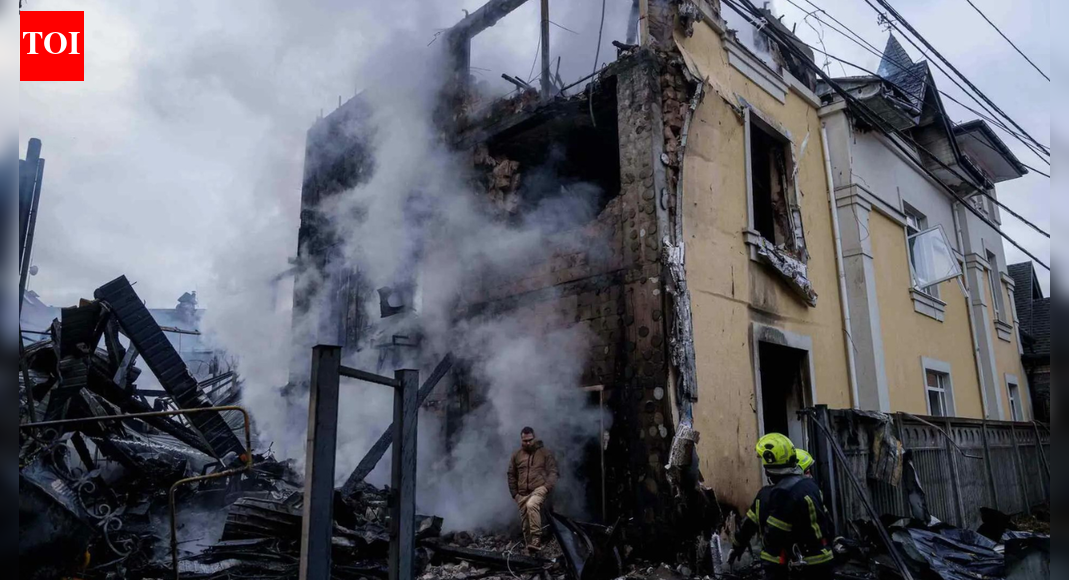
Russia’s overnight strikes on Kyiv province killed two people on Monday after air raid alerts were issued across the country, Ukrainian authorities said. One person was killed in the capital Kyiv, according to Tymur Tkachenko, head of the city’s military administration. Another victim, a man in his 70s, died in the neighbouring city of Fastiv, Kyiv regional governor Mykola Kalashnyk said.

Russia Smashes U.S. Weapons As Putin Fires Back At Trump After Maduro Capture, Ukraine Warning

“One person has been killed so far as a result of the attack. The attack is continuing,” Tkachenko said in a post on the Telegram messaging app, according to Reuters.The latest strikes come as Russia has stepped up attacks on Ukraine. Meanwhile, Kyiv and its allies are seeking to finalise a US-brokered plan aimed at ending Europe’s deadliest conflict since World War II.The violence follows a deadly weekend of cross-border attacks. On Sunday, two people were killed in Ukrainian drone strikes in Russia’s border regions, according to local officials. In the Belgorod region, one person died and two others, including a young child, were wounded when a drone hit a car, regional governor Vyacheslav Gladkov said. Another person was killed in a drone strike on a village in the Kursk region, regional governor Alexander Khinshtein said.In Ukraine, drone strikes overnight into Sunday also wounded three people in the Kharkiv region, the country’s State Emergency Service said.The escalation comes amid intensified diplomatic efforts to end the nearly four-year-old war. National security advisers from Europe and other allied countries visited Kyiv on Saturday to discuss security guarantees and economic support as part of a US-led push for peace.President Volodymyr Zelenskyy said work on peace proposals could now move faster after Ukraine shared key documents with 18 national security advisers, including those related to security guarantees. He said representatives from Ukraine’s General Staff and military sector were due to meet on Monday in Paris, followed by talks among European leaders on Tuesday.Zelenskyy, who is preparing to travel to Paris, said he hoped documents on security guarantees would be finalised during the meetings. He added that the discussions with US representatives were also expected.


Source link

What were Maduro’s bodyguards doing when US captured him? Venezuelan president changed sleeping places, phones to stop tracking


Nicolas Maduro grew paranoid over security for the last few months amid escalation with the US and was rotating his sleeping beds and using several cellphones to avoid his location being tracked. Maduro enlisted more Cuban officers into his intelligence and reduced the number of scheduled events and live broadcasts. He was last seen on an interview that was aired on Venezuelan state TV on New Year’s Day and in that interview he called US a brother country. The US military captured Maduro and his wife, facing the least resistance. CIA sources inside the Venezuelan government reportedly helped the US military track Maduro.

Trump’s Venezuela Invasion Sparks Rare MAGA Rebellion; MTG, Masssie Erupt | ‘Russia, China Will…’

President Donald Trump revealed that Maduro and his wife were picked straight from their bed. It was a highly protected palace and it even had a safety bunker made with steel. But Maduro did not get the time to get inside the bunker, Trump said, adding that the US military had a blowtorch to penetrate the steel, but that was not needed.

Phone-less Cuban agents were protecting Maduro; CIA tracking since August

As the tension with the US escalated, Maduro revamped his security team and was surrounded by Cuban agents with no electronic devices. But all this failed as CIA was on the ground tracking Maduro even moments before he was captured. The CIA had a group of officers on the ground in Venezuela working clandestinely beginning in August, according to a person familiar with the agency’s work. The officers gathered information about Maduro’s “pattern of life” and movements, the NYT report said. US had announced $50 million reward for information leading to Maduro’s capture, and that helped.A senior US official told NYT that the CIA and special operations analysts had Maduro “wired” — meaning precisely located — from early on in the planning of the operation.


Source link

“They do not want him in the ODI team”: Mohammed Shami’s childhood coach slams Ajit Agarkar-led selection panel


The exclusion of Mohammed Shami from India’s squad for the upcoming ODI series against New Zealand has sparked sharp criticism, with the veteran pacer’s childhood coach openly questioning the decision-making of the selectors. The three-match series begins on January 11, but Shami’s name was notably absent from the 15-man squad announced on Saturday.

Shami, 35, had been widely expected to return to the ODI setup after delivering an impressive performance in the ongoing Vijay Hazare Trophy, India’s premier 50-over domestic competition. His omission, therefore, has come as a major surprise to fans and former players.

Mohammed Shami’s childhood coach questions Ajit Agarkar-led selection panel

Reacting strongly to the snub, Shami’s childhood coach Badruddin Siddique expressed frustration at what he sees as a lack of clarity and fairness in the selection process overseen by Ajit Agarkar, who currently heads the national selection committee.

“What more can a player do? How many more wickets should the player take?” the coach told India Today, voicing disbelief at the decision. His remarks reflect a broader concern among Shami’s supporters, who believe the pacer has done everything required at the domestic level to earn a recall.

The coach further suggested that Shami’s exclusion could signal a worrying shift in the selectors’ plans, hinting that the door to India’s ODI side may be closing for the seasoned fast bowler.

Shami’s impressive Vijay Hazare Trophy performance ignored by selectors

Shami’s numbers in the Vijay Hazare Trophy underline why his omission has raised eyebrows. Representing Bengal, he has picked up 11 wickets in just five matches, consistently troubling batters with pace, seam movement, and accuracy. His performances were seen as a clear statement of intent, particularly after injury setbacks earlier in the year.

Despite this, Shami did not find a place in the Shubman Gill-led ODI squad, leading many to question whether domestic performances are still being given due weight in selection decisions.

Shami’s coach did not hide his concern that the snub could effectively mark the end of the pacer’s ODI journey. “This means that they do not want him in the ODI team. He has a lot to give,” he said, emphasizing that Shami’s experience and skill remain valuable assets.

Having been a key figure in India’s white-ball success over the years, Shami’s potential sidelining raises questions about how the team plans to transition from seasoned campaigners to younger talent, especially with major tournaments on the horizon.

Also READ: Shreyas Iyer IN, Ruturaj Gaikwad OUT as BCCI announce India squad for New Zealand ODIs

India’s pace attack to continue without Shami 

The decision to leave out Shami is further magnified by the fact that Jasprit Bumrah has also been rested for the New Zealand ODIs. In their absence, India’s pace attack will be led by Mohammed Siraj, alongside youngsters Prasidh Krishna, Arshdeep Singh and Harshit Rana.

All-rounder Nitish Kumar Reddy has been named as the fifth seam option, highlighting the selectors’ preference for a younger, more flexible pace unit.

Also READ: 7 Indian players who featured in T20 World Cup 2024 but won’t play in 2026 edition


Source link

Rupee continues to fall! Currency drops 4 paise in early trade; reaches 90.24 against US dollar


Rupee continues to fall! Currency drops 4 paise in early trade; reaches 90.24 against US dollar

Rupee opened the week on a weak note, slipping 4 paise to 90.24 against US dollar in early trade on Monday, extending its downward momentum from 2025. The decline was triggered by ongoing geopolitical uncertainty as US intervention in Venezuela boosted demand for the American currency.Last week on Friday, the currency had fallen below the 90-mark, closing 22 paise lower at 90.20 against the dollar. The decline came amid disappointing macroeconomic data and a strengthening US currency in overseas markets. According to traders, this muted sentiment was due to continuous withdrawal of foreign fund and strong dollar demand from importers, which dragged rupee down. However, softer crude oil prices and a sharp rise in domestic equities helped limit the downside, they added. Furthermore, any intervention by the Reserve Bank of India (RBI) could provide support to the rupee at lower levels.In 2025, the currency depreciated almost 5% against the US dollar, marking its weakest annual performance since 2022. Despite a softer dollar and most global currencies registering gains, rupee still lagged behind. According to a recent report by SBI Funds Management, the underperformance was fueled by “muted foreign portfolio investor (FPI) inflows, weak export momentum and heightened hedging demand from importers.” Foreign investors withdrew close to $18 billion from Indian equities, citing earnings downgrades, limited exposure to AI-led global growth, and more attractive opportunities in other emerging markets. Looking ahead, the bank expects the rupee to decline by around 2% in the next financial year, with the exchange rate hovering near 92 against the US dollar.


Source link