Breaking News
India initiates anti-dumping probe into imports of nylon chips from China, Russia


India initiates anti-dumping probe into imports of nylon chips from China, Russia

NEW DELHI: The commerce ministry’s arm, DGTR, has initiated an anti-dumping probe into imports of nylon chips and granules — used in the textiles industry, from China and Russia, following a complaint by a domestic manufacturer. The applicant has alleged that the dumping of Nylon 6 Chips and Granules with relative viscosity (RV) below 3 is impacting the domestic industry. The applicant, Gujarat Polyfilms, has requested the imposition of anti-dumping duties on imports from China and Russia, the Directorate General of Trade Remedies (DGTR) said in a notification. It said that the directorate has prima facie found sufficient evidence of dumping from these countries. “The authority, hereby, initiates an anti-dumping investigation,” it said. If it is established that the dumping has caused material injury to the domestic player, the DGTR would recommend imposing a levy on imports. The finance ministry takes the final decision to impose duties. Countries conduct anti-dumping probes to determine whether a surge in cheap imports has harmed domestic industries. As a countermeasure, they impose these duties under the multilateral regime of the Geneva-based World Trade Organisation (WTO). The duty is aimed at ensuring fair trading practices and creating a level playing field for domestic producers vis-a-vis foreign producers and exporters. India, China and Russia are members of the WTO. India has already imposed anti-dumping duties on several products to tackle cheap imports from various countries, including China.


Source link

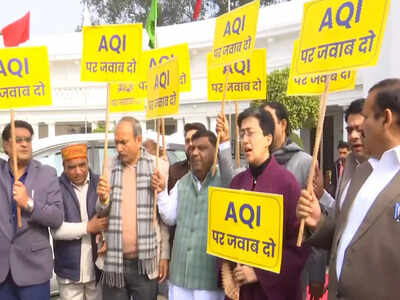
‘BJP running away from issue of pollution’: AAP stages protest in Delhi assembly over rising AQI | India News


'BJP running away from issue of pollution': AAP stages protest in Delhi assembly over rising AQI
AAP leaders protest in Delhi assembly

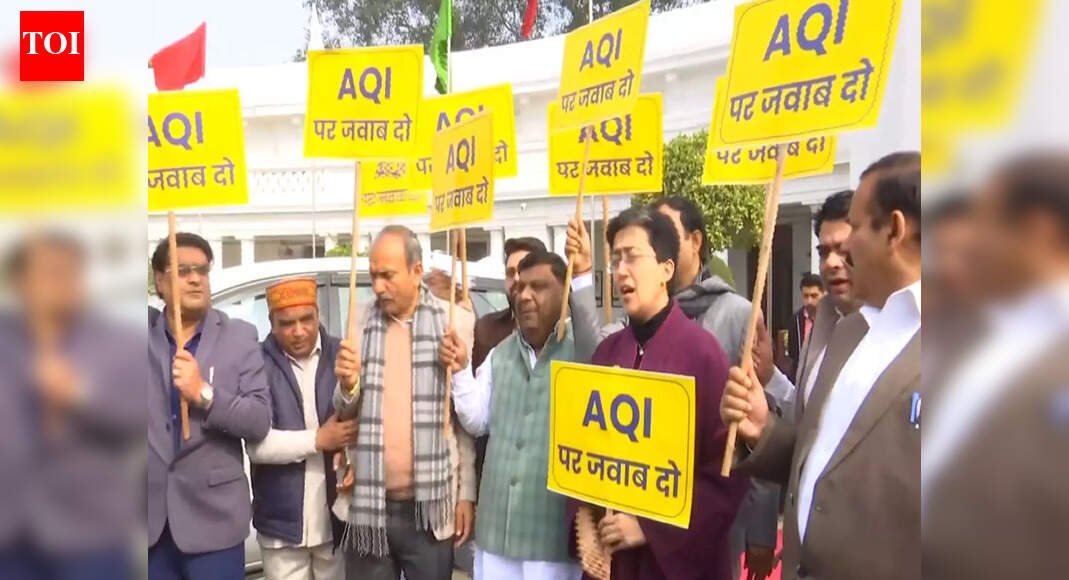
The Aam Aadmi Party (AAP) staged a protest at the Delhi assembly premises on Tuesday, highlighting the rising air pollution and deteriorating AQI levels in the national capital. Leader of the Opposition in the Delhi assembly and AAP leader Atishi alleged that the BJP is “running away” from addressing the critical issue of pollution, accusing the ruling party of avoiding accountability and refusing to engage in meaningful discussions on the matter.

Delhi’s Air Pollution Gets Attention, But Most Indian Cities Are As Bad Or Worse | I Witness

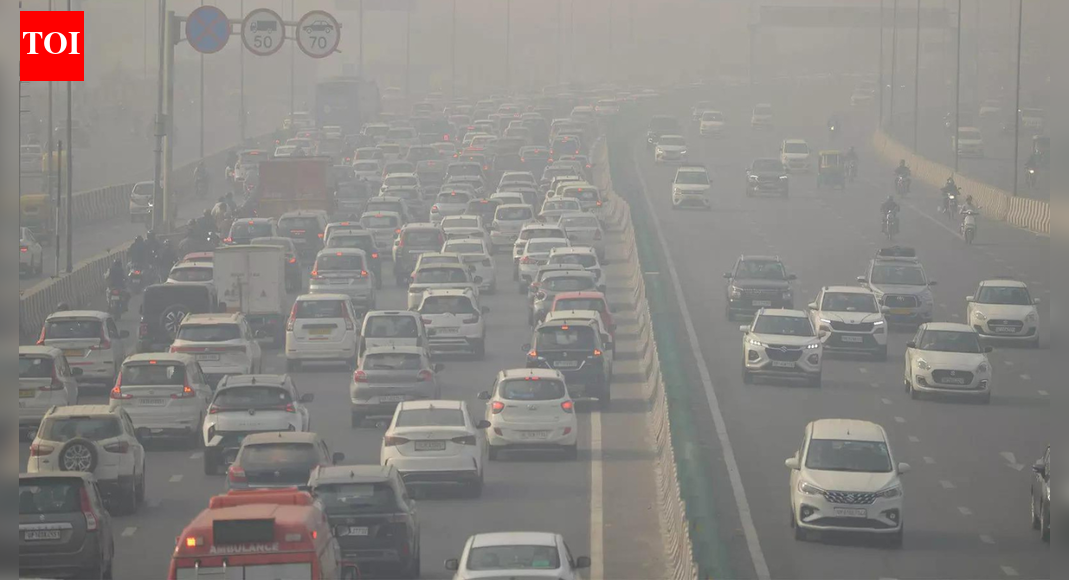
Speaking to reporters, Atishi drew attention to the severe public health impact of Delhi’s worsening air quality. She said young children are now “forced to take steroid inhalers,” major hospitals like AIIMS are filled with patients struggling to breathe, and senior citizens are facing life-threatening consequences due to pollution.She said, “The BJP-led Delhi government is running away from the issue of pollution. Pollution is the biggest problem in Delhi today. Young children can breathe only through steroid inhalers. Senior citizens are dying. The beds of AIIMS and every other big hospital in the city are filled with people who are not able to breathe. When AAP demands a discussion on pollution, the BJP offers excuses to avoid it. For the first time in history, in the assembly, the ruling party is protesting the opposition. The ruling party left the assembly as a sign of protest. Why is this drama happening?… The BJP wants to avoid discussing pollution because they have no answers.”Atishi further accused the Delhi government of “theatrics”, claiming that AQI data is being manipulated through water sprays and that the situation demands immediate legislative attention. “The whole country knows how the AQI monitors are being manipulated. Water is being sprayed to manipulate the readings. People are dying due to the pollution. We demand that this theatrics be stopped and a discussion on the issue of pollution be held immediately…,” she added.AAP MLAs had also staged a protest inside the Delhi Assembly on Monday, pressing for urgent policy measures and accountability on the capital’s air quality. Party leaders demanded stricter action to curb pollution, including controlling emissions from vehicles, industrial discharges, and stubble burning in neighbouring states.Meanwhile, several Indian cities, including Delhi, Mumbai and Guwahati, woke up to a layer of fog on Monday morning. Air quality varied from ‘poor’ to very poor’ category across several parts of the national capital, while several flights were delayed at the IGI Airport.According to the Central Pollution Control Board (CPCB), Delhi recorded AQI at 260 in the ‘Poor’ category by 8 am on Monday.Visuals from Akshardham showed the Air Quality Index (AQI) at 294, falling in the ‘poor’ category, according to the Central Pollution Control Board (CPCM). At ITO, the AQI was recorded at 256, categorised as ‘poor’, while Anand Vohar reported a sharper decline of 320, placing the area in the ‘very poor’ bracket.Chandni Chowk remained among the worst-affected areas, recording an AQI of 337, classified as ‘very poor’. Reduced visibility due to fog and smog disrupted flight operations at Delhi’s Indira Gandhi International Airport, with several flights delayed in the early hours.Notably, in Delhi, the Sub-Committee on the Graded Response Action Plan (GRAP) under the Commission for Air Quality Management (CAQM) in the NCR and adjoining areas lifted Stage-III restrictions on Friday evening, citing significant air quality improvement due to favourable meteorological conditions. (ANI)


Source link

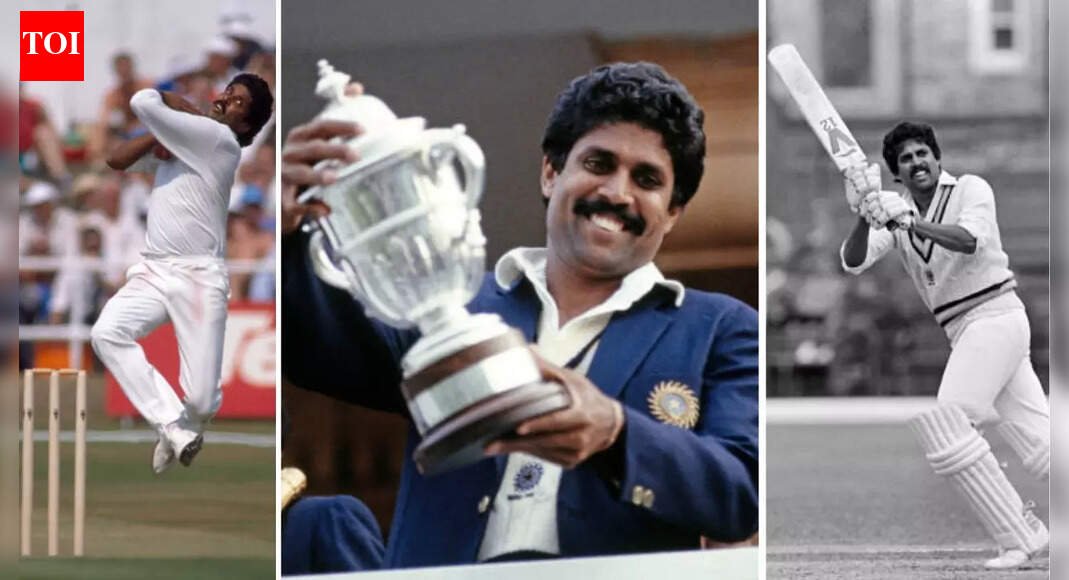
Runs, wickets, and World Cup: Kapil Dev turns 67 – the all-rounder Indian cricket never replaced | Cricket News


Runs, wickets, and World Cup: Kapil Dev turns 67 - the all-rounder Indian cricket never replaced
Kapil Dev. (Photo/Getty Images)

January 6 holds a distinct place in cricket’s calendar. It was on this day that Steve Waugh played his final Test, at his home ground, the Sydney Cricket Ground. It was also the day when three Australian greats — Greg Chappell, Dennis Lillee and Rod Marsh — played their last Test in 1984, bowing out together at the end of the Sydney Test against Pakistan.From an Indian cricket perspective, however, January 6 carries a different weight. It was on this day in 1959 that Kapil Dev was born. More than six decades on, it remains difficult to argue against the idea that Indian cricket’s most complete cricketer arrived that day.On Kapil Dev’s birthday, it is hard not to recall a tweet posted by cricket writer Abhishek Mukherjee in 2020. It was not written in praise-heavy prose or sweeping claims. Instead, it listed what Indian cricket’s greats had achieved — and what each of them had not. World Cups, series wins, hat-tricks, five-wicket hauls, centuries in specific countries, records with bat or ball — every name, every achievement, had a missing piece. Until Kapil Dev. Mukherjee ended his list with a simple conclusion: only one Indian had done all of it. And more.Kapil Dev’s numbers still stand apart in Indian cricket. He remains the only player to score 4,000 runs and take 400 wickets in Test cricket. He finished his Test career with over 5,000 runs, including eight centuries, and 434 wickets — a world record at the time, achieved by overtaking Richard Hadlee. His career stretched across 131 Tests, a mark of durability in an era when fast bowlers rarely lasted that long. If not for being dropped for one Test against England in 1984-85 as a disciplinary measure, his career would have read 132 consecutive Tests.Kapil was not the fastest, nor did he possess the most unplayable delivery among his contemporaries. Playing at the same time as Imran Khan, Ian Botham and Hadlee, comparisons were inevitable. His strike rate — fewer than four wickets per Test — did not scream dominance. What did stand out was accuracy, stamina and movement, particularly his ability to swing the ball away from right-handers. He bowled long spells, returned for more, and did so across conditions without complaint.With the bat, Kapil was uncomplicated and direct. He did not wait for permission to attack. His Test record includes innings that continue to define moments in Indian cricket history. The 129 at Port Elizabeth against South Africa came when the rest of the Indian team managed only 86 runs combined. Against Pakistan in Madras in 1980, he struck a brisk 84 and took 11 wickets to seal the series. During the 1981-82 series against England, Kapil amassed 318 runs and claimed 22 wickets against an attack and batting line-up that included Botham, Graham Gooch, David Gower, Mike Gatting and Bob Willis.In Australia in 1991-92, well into his career, Kapil still took 25 wickets across the series. Against England, he averaged over 40 with the bat. Against Australia, he averaged 25 with the ball. These are not isolated spikes but sustained contributions across opponents and continents.Then there was the Lord’s Test of 1990. Facing England’s off-spinner Eddie Hemmings, Kapil struck four sixes in four balls when India needed 23 runs to avoid the follow-on. It made him the first player in Test cricket to hit four consecutive sixes in an over, a feat only three players have managed till date.In one-day internationals, Kapil again sits alone in Indian cricket history. He remains the only Indian with more than 2,500 runs and 250 wickets in the format, finishing with 3,783 runs and 253 wickets. These numbers came while he also captained India to its first World Cup title.The 1983 World Cup remains central to Kapil Dev’s legacy. India entered the tournament with little expectation, having won only one match — against East Africa — in the previous two editions. They had even lost to Sri Lanka, then not a Test-playing nation. Kapil, 24 at the time, had been made captain only four months earlier, after India lost a Test series to Pakistan and Sunil Gavaskar was removed.Questions surrounded Kapil’s leadership and temperament. It was his bat that first answered them. Against Zimbabwe at Tunbridge Wells, with India reduced to 9 for 4 and then 17 for 5, Kapil produced an unbeaten 175. It came on a pitch offering assistance to bowlers and against a team making its World Cup debut, but the context did not dilute the impact. His 175 came off 138 balls. He reached his hundred only in the 49th over, before scoring 75 runs in the next 11 overs. India recovered, won the match, and stayed alive in the tournament.That innings is now spoken of as a turning point. Not because it was against the strongest opposition, but because it held India together when collapse looked certain.Kapil Dev’s career does not rest on a single trophy or a single innings. It rests on accumulation — of runs, wickets, matches, moments and responsibilities. He captained India to a World Cup, held the world record for Test wickets, and remains unmatched in Indian cricket for all-round output across formats.On January 6, Indian cricket does not just mark a birthday. It marks the arrival of a player whose career still resists neat comparison and whose replacement in Indian cricket still has not been found.


Source link

SIR row: EC tells SC it has power to undertake electoral roll revision; addresses NRC concerns | India News


SIR row: EC tells SC it has power to undertake electoral roll revision; addresses NRC concerns

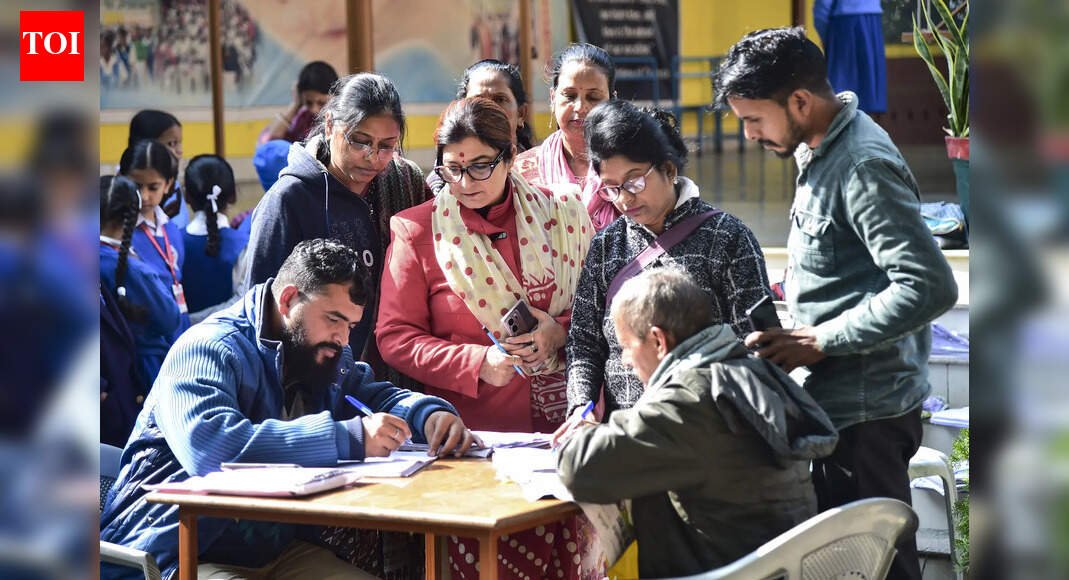
NEW DELHI: The Election Commission on Tuesday told the Supreme Court that it has both the power and constitutional competence to carry out a Special Intensive Revision (SIR) of electoral rolls, arguing that it is duty-bound to ensure that no foreigners are included in voter lists.The submissions were made by senior advocate Rakesh Dwivedi, appearing for the EC, before a bench headed by Chief Justice of India (CJI) Surya Kant and Justice Joymalya Bagchi.Also read: 2.89 cr voters removed from draft electoral roll in UP; 46.23 lakh declared dead after SIRThe bench resumed final hearings in a batch of petitions challenging the EC’s decision to undertake the SIR exercise in several states, including Bihar. The petitions raise constitutional questions on the scope of the poll panel’s powers, citizenship, and the right to vote.Dwivedi argued that the Constitution makes citizenship a foundational requirement for holding public office. Citing provisions such as Article 124(3), which governs the appointment of Supreme Court and high court judges, he said all key constitutional functionaries across the three organs of the State must be Indian citizens.He added that citizenship is also a prerequisite for holding offices such as president, vice president and prime minister.Also read: 4 brothers, 3 of them state & defence docs, get SIR call“All vital appointments … no appointments can be made unless the person is a citizen, so our Constitution is citizen-centric predominantly,” Dwivedi said, according to news agency PTI.Referring to the constitutional scheme, he said, “The (constitutional) article, when it says citizens, that is something which has to be inquired by the competent authority. What should be the nature, summary etc., that is a different question…. There is a constitutional duty to ensure that on the electoral roll, there should not be any foreigners.”Dwivedi told the court that the Election Commission cannot be expected to respond to political rhetoric.“I am not commenting on the political parties, as the Election Commission, our duty is that no foreigner should be there…. It is to be seen that the power is there and the competence is there,” he said.Resuming his arguments, Dwivedi framed what he described as the central constitutional issue: whether Article 324, which grants the EC powers of superintendence, direction and control over elections, is completely displaced by statutory provisions or whether its application must be examined on a case-by-case basis.He submitted that Articles 324, 325 and 326 of the Constitution, read together with Section 16 of the Representation of the People Act, do not bar the EC from exercising its authority in revising electoral rolls.“The field is not totally foreclosed,” he said, asserting that the Commission retains constitutional competence to ensure the purity of voter lists.Also read: ‘EC using BJP-developed app for SIR’: Mamata levels fresh charge; calls exercise ‘illegal’Tracing the evolution of voting rights, Dwivedi took the bench through colonial-era electoral practices, beginning with the introduction of separate communal electorates in 1909 and the limited franchise under the Government of India Acts, when only about 15 per cent of the population had voting rights. He argued that the expansion of the franchise was a central goal of India’s freedom struggle.“Not only Article 326, but the entire Constitution, when it speaks of a democratic republic, reflects an intention to create a citizen-centric polity,” he said.Addressing concerns that the SIR exercise could resemble a parallel citizenship determination similar to the National Register of Citizens (NRC), Dwivedi stressed that the two serve fundamentally different purposes.“The NRC includes all persons, whereas the electoral roll includes only citizens above the age of 18,” he said, adding that persons of unsound mind or otherwise disqualified are also excluded from voter lists.“On the face of it, the electoral roll is not like the NRC,” he said, reiterating that Article 326 permits only citizens to vote and that citizenship must be determined by a competent authority.Even if “10 or thousands” of foreigners are found on the electoral rolls, they must be removed, Dwivedi said, clarifying that the EC is not making political judgments but fulfilling its constitutional obligation.The senior advocate is scheduled to resume his arguments on Thursday, January 8.Earlier, the bench had questioned whether the EC is barred from conducting inquiries in cases of doubtful citizenship and whether such an inquisitorial process falls outside its constitutional mandate.


Source link

Quote of the Day by Anne Frank’s A Diary of a Young Girl: “Everyone has inside of him a piece of good news. The good news is that you don’t know…..


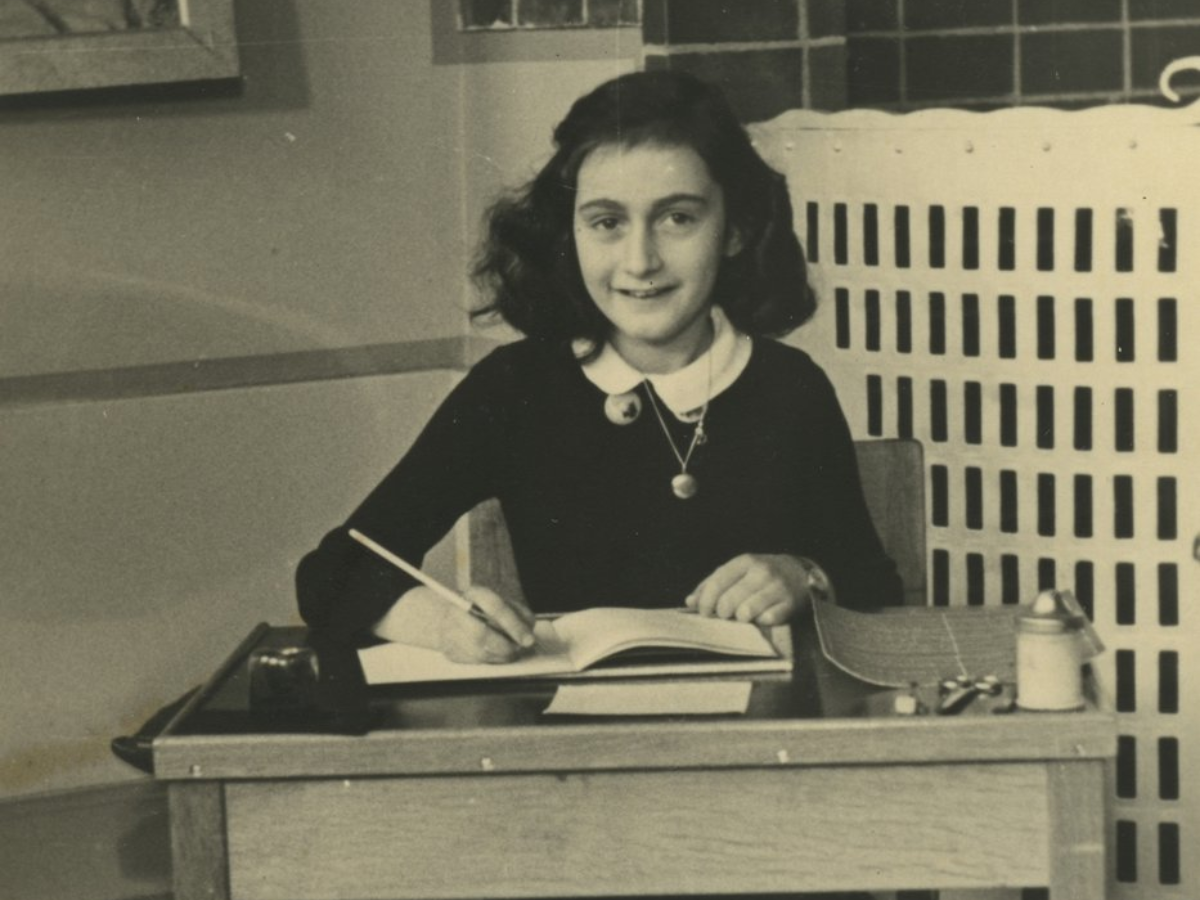
One book which is recommended to almost every child globally is The Diary of a Young Girl by Anne Frank. A slim book, one can read it in a day and get deep insights about the life and times of a girl who lived in the most difficult times. Anne Frank’s diary, published as The Diary of a Young Girl, is one of the most widely read books in the world because it turns the vast horror of the Holocaust into the intimate, honest voice of a single teenager. Her reflections on fear, hope, love, and human nature feel startlingly contemporary, which is why her words still read like wisdom for readers today. Anne Frank was a Jewish girl born in 1929 who went into hiding with her family in Amsterdam in 1942 to escape Nazi persecution. For a little over two years, she lived in a secret annex, chronicling her daily life, fears, quarrels, crushes, and hopes in the diary she received on her thirteenth birthday.Anne had a name for her diary. She called it “Kitty” and treated it like a friend. She confided thoughts that she did not share with anyone else. This intimacy gives her writings a directness and vulnerability that make readers feel as though they are listening to a living voice, not reading a document from the past. How did her book become famous?After the annex was raided in 1944, Anne died in the Bergen-Belsen concentration camp, and her father, Otto Frank, was the only immediate family member to survive. Miep Gies, one of the helpers, had saved Anne’s notebooks and loose pages and later gave them to Otto, who edited and arranged for the diary’s first publication in Dutch in 1947. The diary gradually gained international recognition as it was translated into many languages and adapted for stage and screen, which dramatically expanded its reach. These adaptations helped transform a private diary into a global text, making Anne Frank an international symbol of Holocaust victimhood and moral courage.
Quote of the Day by Anne Frank

Quote of the Day by Anne Frank

Why a young girl’s diary mattered so muchAnne’s diary is not a distant historical treatise but a first‑person account by someone “ordinary” who lived through extraordinary terror, which makes the Holocaust emotionally tangible. She writes about cramped living, constant fear of discovery, and the daily tensions of eight people sharing a small secret space, turning abstract history into lived experience. At the same time, it is a coming‑of‑age story: she wrestles with identity, body changes, conflict with her mother, friendship, budding love, and dreams of becoming a writer. This blend of historical witness and adolescent self-discovery allows readers—especially young ones—to see themselves in her, which is one reason the book is often assigned in schools around the world. A lot of wisdom for todayAnne’s thoughts seem modern because she always looks for the good in people, even when they are being mean. Her diary talks about things that are still important today, like racism and discrimination, how freedom can be taken away, the stress of family life, and how hope can stay strong even when things are hard. She also shows how writing can be a way to fight back and make yourself-she changed parts of her diary on purpose in 1944 after hearing a radio call to keep wartime records, hoping to publish a book after the war. She wrote elsewhere that she wanted “to go on living even after my death.” This wish has come true for her through the millions of readers who see her moral clarity and emotional honesty.One of her deepest quotes is, “Everyone has inside of him a piece of good news. The good news is that you don’t know how great you can be! How much you can love! What you can accomplish! And what your potential is!Coming from a 14-year old, confined to a room with no friends, with an impending sense of fear for life seems unimaginable. Anne lived in the worst of times, but she managed to have that flicker of hope in her heart. Despite all that was going on around her, she was able to keep her mind positively inclined towards the perception of reality. She says that every individual has something inside him that can be a trigger to success. It is like a hidden potential that many of us are not aware of. It is in the form of a ‘good news’, a hope, a positivity, a potential buried deep inside, which can become the seed for success anytime. Those who feel they are incapable of loving have that love deep buried inside, and it is just that they are not consciously aware of it. One can accomplish anything-even if one is not designed for it-if one believes in it.Anne Frank’s diary is a must-read for everyone. The book is a great inspiration that is full of nuggets of wisdom. Children in particular should be asked to read this book, as it is very inspiring and is a wonderful encouragement for young minds that are being shaped.



Source link

Budget 2026: Time to cut the red tape for non-resident taxpayers


Budget 2026: Time to cut the red tape for non-resident taxpayers
At present, non-resident individuals must file an Indian tax return if their total income exceeds Rs. 2.5 lakh. (AI image)

India’s economic footprint extends far beyond its borders. Millions of Indians living abroad continue to hold property, investments, and financial interests back home. Foreign nationals and global investors, too, increasingly engage with Indian businesses. Yet, for all the cross-border activity, India’s tax system still places a disproportionately heavy compliance burden on those who qualify as non-residents under tax law.As Budget 2026 approaches, industry bodies, tax experts, and non-resident taxpayers are urging the government to rationalize the rules. Their central message is simple: when income is minimal, passive, or already subject to tax deducted at source (TDS), compliance should be simple and easy. Return Filing: An archaic requirementAt present, non-resident individuals must file an Indian tax return if their total income exceeds Rs. 2.5 lakh — even when every rupee of that income has already suffered TDS and there is no additional tax liability arising in India. This includes small interest earnings, or dividend income.Tax experts point out that this leads to return filings with no additional tax payable, clogging the system and adding cost and effort for taxpayers who may have no other financial connection to India.Recommendation: Perhaps Budget 2026 provisions could provide some leeway and exemption in filing a tax return, if no tax is required to be paid and the non-resident has no business income in India. Challenges relating to furnishing a Tax Residency Certificate A non-resident taxpayer can claim the benefit of a tax treaty, which often provides a lower tax rate — for instance, on dividend income from shares held in India. Under section 90(2) of the Income-tax Act, the provisions that are more favourable to the taxpayer prevail. Thus, if the treaty prescribes a lower rate than domestic law, the treaty rate applies.However, section 90(4) requires the taxpayer to furnish a Tax Residency Certificate (TRC) in order to access treaty benefits, regardless of the nature or quantum of income. When the amounts involved are very small, the requirement to obtain a TRC can create unnecessary hardship for both the non-resident recipient and the resident payer, as the process involves time and cost. Mahesh Nayak, tax partner at CNK & Associates points to several other challenges. “In addition, non-resident taxpayers must currently file Form 10F electronically on the e-filing portal to claim tax treaty relief. They are also required to provide a TRC from foreign tax authorities covering the entire financial year to establish residency in the other country. In practice, many foreign tax authorities do not issue TRCs certifying future residency. Further, in certain jurisdictions, obtaining a TRC involves incurring a significant cost to the individual taxpayer and hence, asking for multiple TRCs for recurring payments becomes a costly affair, he says.Nayak points out that submission of documents other than TRC to substantiate the tax residency of a particular jurisdiction (country) should be permitted. The objective of a TRC is only to determine that the taxpayer is a resident of a particular country and therefore, if one can substantiate the tax residency through some other document, it should suffice, as held by Tribunals. “For example, in the US, a citizen is considered as a tax resident. Therefore, in such a situation, if one can provide a copy of the passport, clearly demonstrating US citizenship, that should suffice the eligibility of the taxpayer to claim the benefit of the India – US tax treaty. Copies of the passport can also be used to help determine the number of days stay in a particular jurisdiction, which can help determine tax residency in jurisdictions which determine tax residency based on number of days stay in that particular year,” he explains. Recommendations:

  • A threshold limit for seeking the TRC would help ease this burden.
  • Or allow non-resident taxpayers to submit TRCs from previous years (for example, the past one or two years) along with Form 10F.
  • Alternatively allow submission of documents other than TRC to substantiate residency of a particular country.

Challenges relating to online furnishing of Form 10FIf the TRC provided by the tax authorities of the relevant jurisdiction does not contain all the information as required under the Indian tax rules, the non-resident is required to provide the said details in a declaration in Form 10F, which is to be furnished electronically. “There are practical challenges for a non-resident taxpayer, who does not have a PAN in India, to furnish Form 10F as at times, the OTP is not sent to the foreign mobile number of the taxpayer. This creates an unnecessary hassle for a mere filing of a declaration along with the TRC,” states Nayak. Recommendation:

  • Offline furnishing of Form 10F should be permitted, as was allowed earlier.

Practical Pain PointsNon-residents must maintain a bank account in India to pay taxes and to receive tax refunds, even when they reside abroad and hold no other Indian assets. The final step in income-tax return filing — e-verification — is linked to Indian bank accounts, Aadhaar-linked mobile numbers, or certain digital signatures. Non-residents without Indian mobile numbers often struggle to complete filings within the stipulated deadline.Budget 2026 provides the perfect moment to modernize India’s approach — and to acknowledge that, for millions of global Indians and foreign nationals, “ease of compliance” is a reality.


Source link

Air pollution: Car now status symbol, says SC; adds ‘rich people should also sacrifice’ | India News


Air pollution: Car now status symbol, says SC; adds 'rich people should also sacrifice'

NEW DELHI: The Supreme Court on Tuesday backed the use of electric vehicles as Delhi continues to battle air pollution. The apex court said that car ownership has turned into a status symbol and urging greater responsibility from rricher sections of society.Hearing a plea related to air pollution, CJI Surya Kant remarked that personal transport choices were contributing significantly to the crisis.

Delhi’s Air Pollution Gets Attention, But Most Indian Cities Are As Bad Or Worse | I Witness

“Car has become a status symbol… People are saving money to buy cars and have stopped using cycles,” the CJI said, as reported by PTI.The CJI said, “The rich people should also sacrifice. Instead of going for high-end vehicles, they should go for good electric vehicles.”Senior advocate Rakesh Dwivedi, appearing in the matter, argued that curbing the ownership of multiple vehicles could be one way forward, while also pointing out that the automobile industry wielded considerable influence. The court also came down heavily on the Commission for Air Quality Management (CAQM), describing it as “failing in its duty” after it sought a two-month adjournment on the issue of temporarily closing or relocating toll plazas at Delhi borders to ease congestion. The bench criticised the authority for a lack of urgency and seriousness in dealing with the pollution emergency.“Have you been able to identify the causes of pollution? … By holding a meeting on January 2 and telling us that we will come after two months, that is not acceptable to us. The CAQM is failing in its duty,” the bench observed orally, refusing to grant the adjournment sought by Additional Solicitor General Aishwarya Bhati.


Source link

‘Will take up arms’: Colombian president responds to Trump’s threats; US Prez warned of military action against Bogota


Colombian President Gustavo Petro (AP)

Colombian President Gustavo Petro said Monday he was prepared to “take up arms” after US President Donald Trump threatened possible military action against the South American country.Trump warned Petro to “watch his ass” and described him as “a sick man who likes making cocaine and selling it to the United States.” The two leaders have exchanged sharp remarks for months.

Trump Names 5 Nations That US Military Will ‘STORM’ After Venezuela & Maduro’s ‘Kidnap’ | Watch

When asked directly whether the United States would carry out a military operation against Colombia, Trump replied, “It sounds good to me.”Trump’s comments followed a US operation in Venezuela days earlier, in which President Nicolas Maduro and his wife, Cilia Flores, were captured and transported to New York to face federal charges.Responding to the US President’s threats, Petro, Colombia’s first leftist leader and a former member of the M-19 guerrilla group issued a statement on X.“I swore not to touch a weapon again… but for the homeland I will take up arms again,” said Petro.After the operation, Trump had accused Petro, without providing evidence, of involvement in drug trafficking. Washington imposed financial sanctions on Petro and his family and removed Colombia from the list of countries certified as allies in the US war on drugs.In a lengthy message on X, Petro defended Colombia’s anti-narcotics strategy while warning against the dangers of excessive military force. “If you bomb even one of these groups without sufficient intelligence, you will kill many children. If you bomb peasants, thousands will turn into guerrillas in the mountains. And if you detain the president, whom a good part of my people love and respect, you will unleash the popular jaguar,” he wrote.Petro has been a vocal critic of the growing US military presence in the Caribbean. The deployment began with the bombing of alleged drug boats, later expanded to the seizure of Venezuelan oil tankers, and culminated in Saturday’s raid on Caracas that led to Maduro’s detention.He also condemned the US operation in Venezuela, calling it an “assault on the sovereignty” of Latin America that could trigger a humanitarian crisis.The Trump administration maintains close ties with Colombia’s right-wing opposition, which is hoping to secure victories in legislative and presidential elections later this year.


Source link

Not Mohammed Shami! AB de Villiers labels Indian pacer ‘unlucky’ for missing out on T20 World Cup 2026 squad


As the ICC T20 World Cup 2026 approaches, the global cricketing fraternity has been dissecting India‘s bold squad selection. While the return of Ishan Kishan and the shock omission of former vice-captain Shubman Gill grabbed the headlines, it is the exclusion of a veteran pace spearhead that has caught the attention of South African legend AB de Villiers. De Villiers, who shared a dressing room with many Indian stars at RCB, noted that while the squad is formidable, the absence of this ‘unlucky’ veteran highlights a significant shift in India’s tactical philosophy.

AB de Villiers calls it ‘unlucky’ for Indian pacer to miss the 15-member T20 World Cup 2026 squad

Speaking on his YouTube channel on January 5, 2026, De Villiers labeled Mohammed Siraj as one of the unluckiest players to miss out on India’s 15-member World Cup squad. Despite Siraj’s world-class performance in the recent Test series against England and a solid IPL 2025 season for the Gujarat Titans, the selectors opted for youth and batting depth in the form of Harshit Rana. De Villiers admitted that while Rana lacks international experience, his ability to ‘chip in with the bat’ gave him the edge as the third seamer alongside Jasprit Bumrah and Arshdeep Singh.

“We see Siraj in the ODI squad, he is one of the unlucky guys to miss out. But that is once again down to the balance. You have got Bumrah and Arshdeep. Harshit [Rana] can hold the bat as well. So there are your three seamers. I think that is the reason why you went for Harshit because Siraj is only an outright bowler.” De Villiers said.

Also READ: 4 Australian players who featured in T20 World Cup 2024 but won’t play in 2026 edition

De Villiers explains India’s strategy for the T20 World Cup tournament

De Villiers further explained that India’s strategy for the 2026 tournament, hosted in India and Sri Lanka, has shifted away from a reliance on seam bowling. By selecting a spin-heavy unit featuring Kuldeep Yadav, Varun Chakaravarthy and Washington Sundar, the team management views the pacers’ role as secondary. De Villiers concluded that India has all bases covered, noting that even if a spearhead like Bumrah has a quiet night, the depth in the spin department and the presence of all-rounders like Hardik Pandya and Shivam Dube will allow India to maintain momentum.

“They do not want to focus too much on seam bowling. The focus is on the spinners. If they get wickets with the seamers upfront, they almost see it as a bonus in a way. So Siraj is unlucky but at least he is in the ODI plans moving forward for the 2027 World Cup.” De Villiers concluded.

Also READ: 8 South African players who featured in T20 World Cup 2024 but won’t play in 2026 edition


Source link

Shreyas Iyer steps up as stand-in skipper, Shivam Dube holds nerve as Mumbai survive last-over thriller | Cricket News


Shreyas Iyer steps up as stand-in skipper, Shivam Dube holds nerve as Mumbai survive last-over thriller
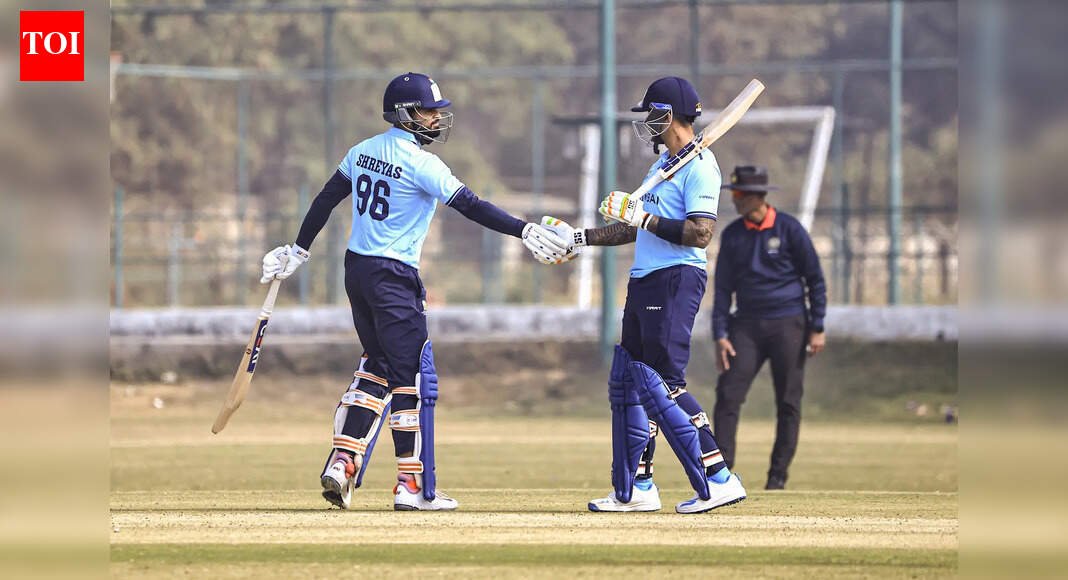
Mumbai’s captain Shreyas Iyer and Suryakumar Yadav (PTI Photo)

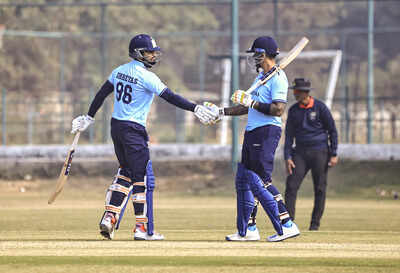
Mumbai pulled off a tense seven-run win over Himachal Pradesh in a rain-curtailed Vijay Hazare Trophy clash at the Jaipuria Vidyalaya Ground in Jaipur, with stand-in captain Shreyas Iyer and all-rounder Shivam Dube playing decisive roles. Leading the side in the absence of injured Shardul Thakur, Iyer produced a commanding 82 from 53 deliveries to rescue Mumbai from a tricky position. After early losses of Yashasvi Jaiswal and Sarfaraz Khan left Mumbai at 55 for 2, Iyer steadied the innings alongside Musheer Khan. The pair added 82 runs off just 54 balls, keeping the momentum alive in the shortened 33-over contest, which was delayed due to dense fog.

Bangladesh seek T20 WC match shift from India after Mustafizur Rahman’s IPL exit

Musheer’s fluent 73 off 51 balls laid a strong platform, following which Iyer combined with Suryakumar Yadav for a brisk 65-run stand off 39 balls. Iyer eventually fell in the 26th over, missing out on a century by 18 runs, having struck 10 fours and three sixes. Mumbai closed on a competitive 299 for 9. Himachal Pradesh began their chase aggressively but lost both openers for ducks, putting immediate pressure on the middle order. Pukhraj Mann counter-attacked with 64 off 41 balls, while wicketkeeper Ankush Bains added 53 from 39. Mayank Dagar’s 64 and Amanpreet Singh’s explosive 42 off 21 balls kept the contest alive, with Amit Kumar chipping in late. With 10 required from the final over, Shivam Dube held his nerve, removing the last two batters to finish with four wickets as Himachal were bowled out for 292 in 32.4 overs. Elsewhere, Hyderabad registered their first win of the season, crushing Bengal by 107 runs on the back of Aman Rao’s double hundred and Mohammed Siraj’s four-wicket haul, despite Shahbaz Ahmed’s fighting century. Punjab cruised past Goa in a chase of 212, with Harnoor Singh unbeaten on 94 and Naman Dhir contributing 68 in a decisive 131-run partnership. Karnataka dominated Rajasthan thanks to hundreds from Mayank Agarwal and Devdutt Padikkal, while Gujarat dismantled Odisha by 233 runs. Kerala impressed with a successful chase led by Vishnu Vinod’s stunning 162, and Delhi sealed a comfortable win over Railways, powered by Priyansh Arya’s rapid 80.


Source link