Breaking News
Jammu and Kashmir: Encounter breaks out between security forces and terrorists in Kathua; operation under way | India News


Jammu and Kashmir: Encounter breaks out between security forces and terrorists in Kathua; operation under way

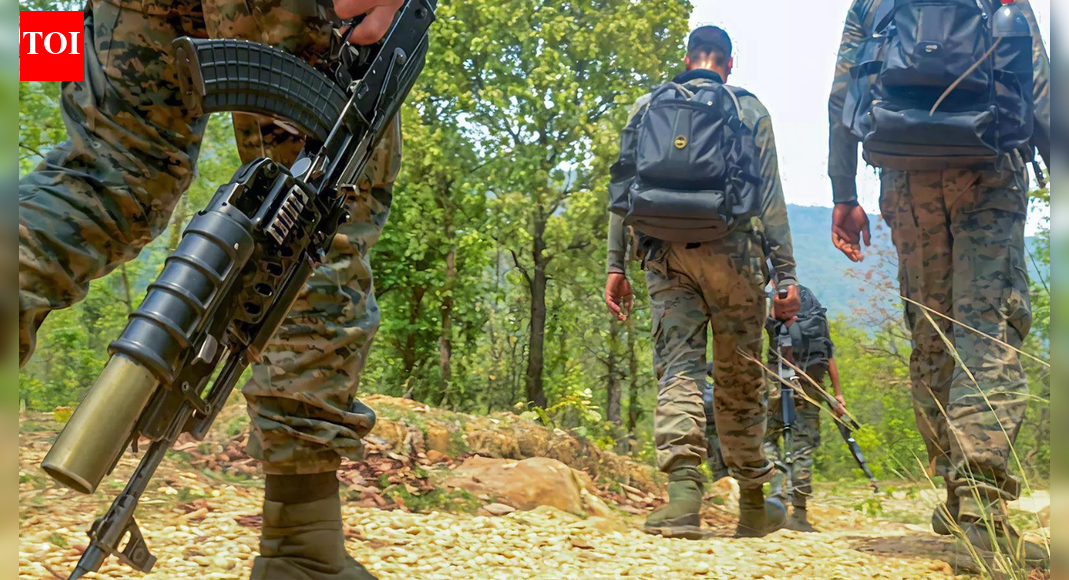
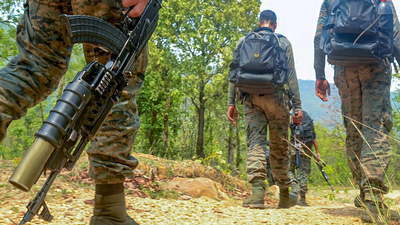
NEW DELHI: An encounter broke out between the security forces and terrorists in Kathua, IGP Jammu informed on Wednesday.“SOG Kathua has engaged terrorists in the forest of Kamadh Nullah, Kathua,” he said in a post on X.A terrorist was spotted by local residents around 4 pm at Kamad Nallah in the jurisdiction of the Billawar police station, PTI reported citing sources. The sources said the individual could be the same terrorist who was seen earlier in the morning in the Dhannu Parole area.The encounter began in the evening in Kahog village of Billawar after security forces launched a search operation based on intelligence inputs indicating the presence of two to three terrorists, PTI reported citing officials. They said additional forces have been deployed to the village to track down and eliminate the terrorists


Source link

ICC forces Bangladesh to play all T20 World Cup matches in India? BCB President breaks silence | Cricket News


ICC forces Bangladesh to play all T20 World Cup matches in India? BCB President breaks silence
Mustafizur Rahman and T20 World Cup trophy (PTI Photo)

NEW DELHI: Bangladesh Cricket Board (BCB) president Aminul Islam Bulbul has strongly denied reports claiming that the ICC has forced Bangladesh to play all their T20 World Cup matches in India. He called such reports false and said the board is standing firm on its concerns about player and staff safety.Bulbul spoke to the media on Wednesday after meeting Sports Advisor Asif Nazrul along with other BCB directors. He made it clear that the board’s main concern is security while travelling to India for the ICC T20 World Cup.

Bangladesh seek T20 WC match shift from India after Mustafizur Rahman’s IPL exit

“We first wrote to the ICC regarding the importance of security and safety. While our scope is limited to looking after the players, there is a large population beyond them, including journalists, sponsors, and cricket lovers,” Bulbul said.He explained that any overseas tour needs government approval, which is why the BCB has asked for guidance from the authorities.“Since a government order is required for any overseas trip, we are seeking the government’s guidance. If safety and security do not improve, we will continue to fight for our rights regarding this World Cup.“This is a valid concern; we have played many World Cups before but never raised such issues until now,” he added.Bulbul also addressed media reports suggesting that the ICC told Bangladesh they must play in India or lose points. He dismissed those claims and said they are misleading.“There is propaganda claiming the ICC informed us that playing in Sri Lanka is impossible, which is false news. We have been in communication with the ICC, and they have asked us to specify our issues. We are currently documenting those issues for them,” he said.When asked about possible consequences if Bangladesh refuses to travel to India, Bulbul pointed to past examples involving other teams.“The BCB has certainly considered that. When the Champions Trophy was held [last year], India did not travel to Pakistan, and similarly, Pakistan did not go to India for the last few World Cups. Therefore, we hope for a proper resolution. If we have to compromise on the World Cup due to security issues in India, we will remain firm on our stance,” he said.Meanwhile, the BCB confirmed on Wednesday that the ICC has responded to their concerns and is open to discussions. The board said the ICC wants to work closely with them to ensure Bangladesh’s full participation. “The Bangladesh Cricket Board has received response from the ICC regarding the Board’s expressed concerns over the safety and security of the Bangladesh National Cricket Team in India for the ICC T20 World Cup, including the request for relocation of the team’s matches,” the BCB said.“In its communication, the ICC has reiterated its commitment to ensuring the full and uninterrupted participation of the Bangladesh team in the tournament.“The ICC has conveyed its willingness to work closely with the BCB to address the concerns raised and has assured that the Board’s inputs will be welcomed and duly considered as part of the detailed security planning for the event,” it added.


Source link

Hyderabad Techie Nikitha Godishala’s Murder in US: Family Alleges Ex-Housemate Arjun Sharma Killed Her Over Loan | Hyderabad News


HYDERABAD: A 27-year-old Hyderabad woman, Nikitha Godishala, working in Columbia in the US state of Maryland, was allegedly killed by a former housemate over a money dispute, after she was found murdered inside his apartment, with the suspect having fled to India. Howard County police said the accused, Arjun Sharma (26), is wanted on first- and second-degree murder charges. Nikitha’s body was found on January 3 at an apartment on the 10100 block of Twin Rivers Road in Columbia during a search of Sharma’s residence, a day after he reported her missing. According to her cousin Saraswati, Nikitha, who lived in nearby Ellicott City, had gone to Sharma’s apartment on December 31 to recover money he had borrowed from her. She had earlier transferred $4,500 to him, of which only $3,500 was returned.

Hyderabad Techie Murdered In US: Father Denies Love Angle, Seeks Justice Across Borders

When Sharma later sought another $1,000, Nikitha refused and demanded the balance from the earlier loan. He allegedly assured her of repayment and asked her to visit him, where she was murdered. Police confirmed on January 4 that Nikitha sustained stab wounds. Speaking to the media in Secunderabad, her father, Anand Godishala, rejected reports describing Sharma as her ex-boyfriend. “He was not her ex. He was one of the four housemates in the flat where she stayed earlier and later moved out. She lent him money, and when she asked for it back, he called her to his apartment and committed the crime,” he said. The Indian Embassy in the US said it is in touch with the family and is providing consular assistance while coordinating with local authorities. Nikitha completed her master’s in health information technology from the University of Maryland, Baltimore County, in 2022–23 and had been working as a data and strategy analyst with Vheda Health since February 2025. Before moving to the US, she worked as a clinical data analyst at a corporate hospital in Hyderabad. In December 2025, Nikitha shared her professional achievements and future aspirations on LinkedIn, writing about receiving an All-In Award at her workplace and her plans to step into 2026 “with momentum”. After her disappearance, members of the Indian community in the US launched an online search campaign, urging residents in and around Columbia to share any information with the Howard County police. The murder has sent shockwaves through Hyderabad and the Indian community in Maryland, with authorities intensifying efforts to trace the suspect.


Source link

From Winter to Budget Session: What Parliament carries into 2026 | India News


From Winter to Budget Session: What Parliament carries into 2026

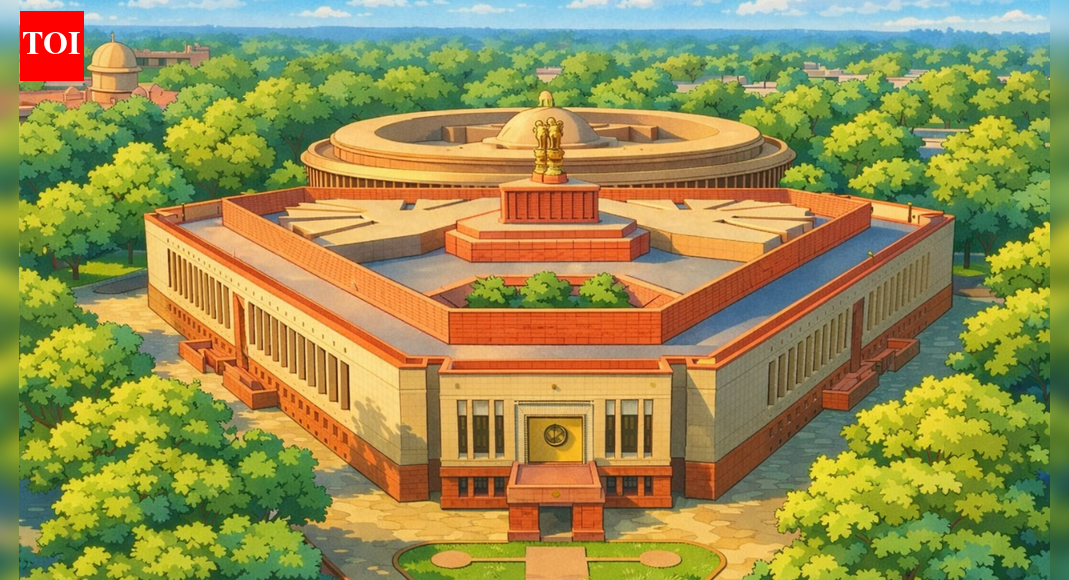
As the dust settles on 2025, Parliament carries forward unfinished business, unresolved disputes,t and reforms still searching for their final shape.The Winter Session restructured key pillars of governance, but several high-stakes bills were deferred, diluted or sent for further scrutiny.The Budget Session of 2026 is expected to move beyond diagnosing problems to implementing solutions — laying out the governing blueprint for the government’s vision of “Viksit Bharat”.With a focus on higher education reforms, electoral synchronisation, capital market restructuring and insolvency resolution, the Budget Session of 2026 sets the stage for high-stakes legislative action.

What carries forward into 2026

While the government pushed through several landmark reforms during the Winter Session, many bills were formally introduced but ran into procedural hurdles.Several were referred to Joint Parliamentary Committees or held back for further refinement, effectively shifting the legislative battleground to the Budget Session of 2026.

Securities Markets Code Bill, 2025

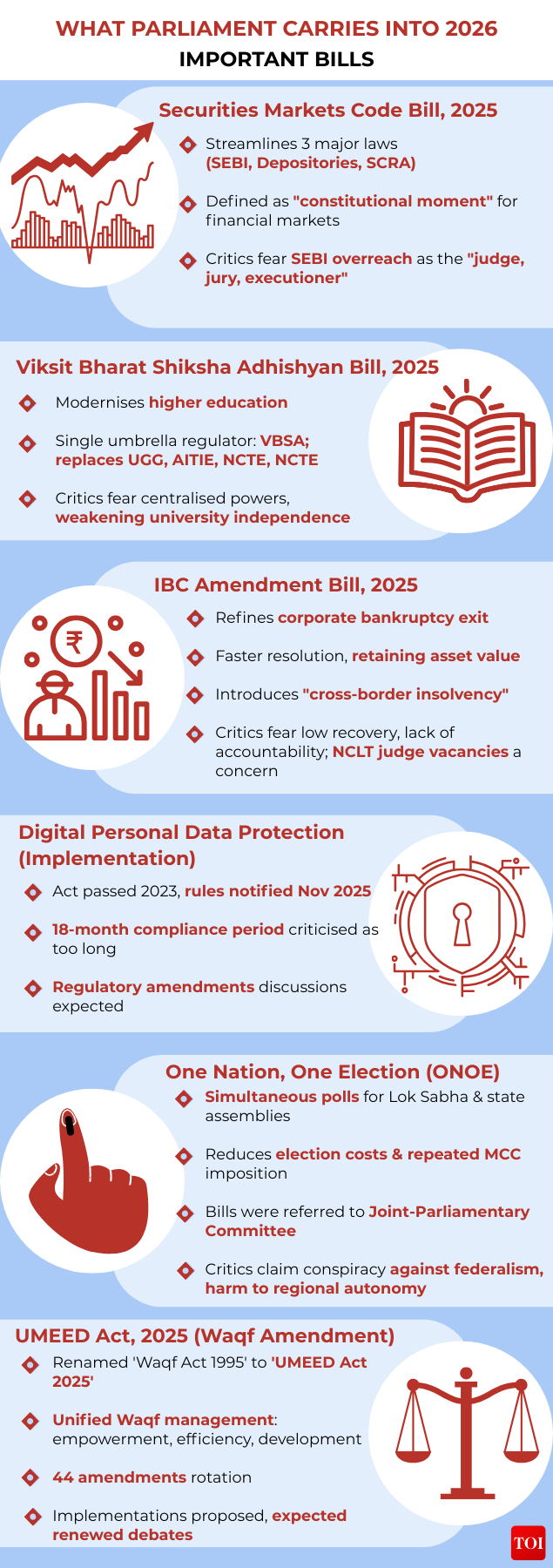
Hailed by the government as a “constitutional moment” for India’s financial markets, the bill seeks to streamline three major laws governing investors and market regulation.For over three decades, investors and companies have navigated three separate laws — the SEBI Act (1992), the Depositories Act (1996) and the Securities Contracts (Regulation) Act (1956).Given its scale and potential impact on trillions of rupees in market wealth, the bill was referred to the Standing Committee on Finance in late 2025 for detailed scrutiny, before it returns to Parliament in 2026.Critics argue that merging these laws risks turning SEBI into “judge, jury and executioner”, with sweeping enforcement powers.The government, however, has argued that unified regulation is essential to reduce overlap, regulatory arbitrage and compliance confusion in a rapidly expanding market.

Insolvency and Bankruptcy Code (IBC) Amendment Bill, 2025

The bill seeks to fine-tune India’s corporate bankruptcy exit framework.The bill aims to make the resolution faster so that companies do not lose the value of their assets during long legal proceedings. It also introduces a “Cross-Border Insolvency” framework to help banks recover money from defaulting companies that have hidden or kept assets in foreign countries.Critics argue that banks take big losses in recovering a very small percentage of the original loans, and that the bill does not hold the big promoters accountable enough.They also highlight the pending judicial cases in the National Company Law Tribunal (NCLT) due to vacant judges’ seats for the proceedings.Opposition has also flagged delays caused by vacancies in the National Company Law Tribunal, arguing that legislative fixes alone cannot address systemic capacity gaps.

One Nation, One Election (ONOE)

The One Nation One Election (ONOE) reform proposes to hold simultaneous elections for the Lok Sabha and State Legislative Assemblies, consolidating the voting process to occur at the same time instead of staggered intervals.The government initiated this plan in late 2024 with the introduction of the Constitution 129th Amendment Bill. While the bill gained majority votes in the Lok Sabha, it was not passed. This is because amending the Constitution requires a special majority where at least two-third of the members present in the House must vote in favour of the bill.The Lok Sabha approved a motion to refer both the two bills that shall pave the way for “one nation one election” to a 39-member Joint Parliamentary Committee. This committee has been granted an extension to submit its report until the first day of the last week of the Budget Session 2026.The primary objective of the bill is to conduct simultaneous elections—initially for the Lok Sabha and State Assemblies, and later potentially for local bodies—to reduce election expenses and prevent the repeated imposition of the Model Code of Conduct.The opposition rejected the bill as a “heinous conspiracy” against federalism, arguing it assaults the Constitution’s basic structure and undermines regional autonomy.

2026 PARLIAMENT EXPECTATIONS

Viksit Bharat Shiksha Adhishthan Bill, 2025

The bill is the main part of the government’s plan to modernise higher education by bringing several regulators under one system.It was introduced in the Lok Sabha on December 15, 2025, and was later sent to a Joint Parliamentary Committee, the report of which is expected to be presented by the last day of the first part of the Budget Session 2026.The bill proposes setting up the Viksit Bharat Shiksha Adhishthan, or VBSA, as a single umbrella regulator, meaning one main authority that will replace UGC, AICTE, and NCTE. The government has described this system as one with fewer controls but strict enforcement, in line with the National Education Policy 2020.The opposition, however, argued that it gives too much power to the Union government and could weaken the independence of universities, especially because the power to give financial grants will shift from the regulators to the ministry.

Digital Personal Data Protection (Implementation)

Although the Digital Personal Data Protection Act was passed in 2023, it came into effect only in late 2025, when the government notified the detailed rules needed to put it into practice.The rules were officially notified on November 14, 2025, after wide public consultation.

Cybercrime Trail in India

With implementation now underway, parliamentary oversight is expected on regulatory amendments, institutional capacity and funding for the Data Protection Board.Also, while the law itself was already in force, civil society groups and opposition voices focused their criticism on the rules, especially the 18-month compliance period, which they felt was too long and delayed real protection.

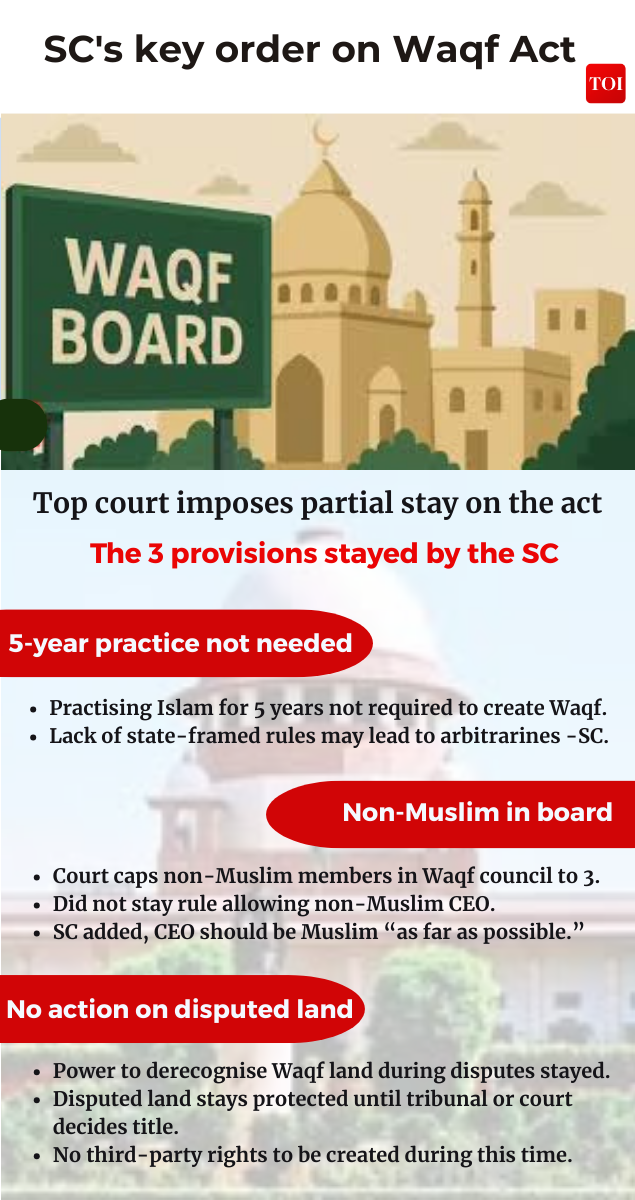
UMEED Act, 2025 – Waqf (Amendment) Act

One of the most socially and politically sensitive legislations in recent sessions, the bill was first introduced in August 2024 and was swiftly referred to a Joint Parliamentary Committee following widespread protests.The committee, chaired by Jagdambika Pal, submitted its final report in late January 2025 after several contentious meetings. The report recommended mandatory registration of all Waqf properties on a centralised online portal and proposed 44 amendments to the original Waqf Act of 1995.

SC on Waqf

The legislation introduces multiple legal changes, including renaming the Waqf Act as the UMEED Act — the Unified Waqf Management, Empowerment, Efficiency and Development Act, 2025.While the bill is not formally listed on the agenda for the Budget Session of 2026, its implementation, set to begin this year, is expected to trigger renewed uproar.At its core, the legislation seeks to overhaul the governance and management of Waqf properties across the country.

Bills that passed: A session of disruption and overhaul

If Parliament were a 75-year-old house, the 2025 session resembled a noisy renovation. The government did not limit itself to cosmetic changes: labour laws were reworked, nuclear policy rewired, welfare delivery redesigned and decades-old statutes discarded. The result was a modernised legal framework — albeit amid sustained protest.With debates over worker rights, accountability and foreign participation dominating proceedings, the session concluded with several laws passed, but left many political and social questions unresolved as Parliament heads into 2026.

VB–G RAM G Bill, 2025: Welfare reset

Replacing MGNREGA, the VB–G RAM G Bill — Viksit Bharat–Guarantee for Rozgar and Ajeevika Mission (Gramin) — was tabled on December 15, 2025, and passed three days later through a voice vote amid opposition demands for a recorded division.

VBGRAMG

The law increases guaranteed workdays from 100 to 125 annually but introduces fixed, state-wise allocations, replacing MGNREGA’s demand-driven funding model. Critics argue this risks weakening the programme’s role as a distress buffer.The removal of Mahatma Gandhi’s name became a major flashpoint, alongside concerns over the use of AI and biometric attendance systems that could exclude workers in low-connectivity areas.

SHANTI Bill, 2025

Passed by voice vote in both Houses, the SHANTI Bill replaces the Atomic Energy Act (1962) and the Civil Liability for Nuclear Damage Act (2010), allowing private and foreign participation in nuclear power generation.The law grants statutory status to the Atomic Energy Regulatory Board and clears the path for small modular reactors. Opposition parties staged a walkout, objecting to diluted supplier liability provisions and warning that public risk would shift to the state in the event of an accident.

Sabka Bima Sabki Raksha Bill

Passed on December 16, 2025, the bill raises FDI limits in insurance from 74% to 100%, aiming to achieve universal insurance coverage by 2047.While the government argues this will deepen penetration and reduce costs, critics warn of foreign dominance, reduced focus on rural markets and potential pressure on domestic players like LIC.

Health & National Security Cess Bill

Unanimously passed, the bill introduces a capacity-based cess on pan masala manufacturing machinery to fund public health and national security needs.By taxing production capacity rather than declared sales, the law aims to curb under-reporting. Manufacturers, however, argue the model is inflexible, especially during machinery downtime, while opposition parties flagged concerns over Centre–state fiscal balance.

Repealing and Amending Bill, 2025

Marketed as a clean-up exercise, the bill repeals 71 obsolete laws, some dating back to the 19th century, including the Indian Tramways Act (1886).While the government said this would simplify compliance, the opposition criticised the bulk repeal approach, arguing that several laws enacted as recently as the last decade were removed without adequate scrutiny.

Labour Codes

Though passed earlier, the four labour codes entered operational phase in November 2025, consolidating 29 laws into four frameworks covering wages, social security, industrial relations and workplace safety.The new 50% basic wage rule strengthens retirement benefits but reduces immediate take-home pay. Trade unions argue the codes tilt the balance in favour of employers, while the government maintains they modernise labour regulation for a changing economy.

Spoken but not concluded

Several issues dominated debate without resolution.

Electoral roll revision (SIR)

The opposition accused the Special Intensive Revision exercise in nine states and three UTs of selectively deleting voters. A 10-hour debate ended in deadlock, with no changes to election procedures.

Manipur crisis

Despite repeated demands, Parliament saw no dedicated discussion on Manipur, where President’s Rule remains in place. Political blame-trading replaced consensus on a peace roadmap.

Air pollution

Acknowledged as a national health emergency, air quality was debated but left without legislative follow-through or a national clean air framework.As Parliament heads into the Budget Session of 2026, the legislative record of the past year offers both momentum and caution. Several reforms have been passed, others deferred, and many now enter the more difficult phase of implementation. Whether the coming session delivers clarity, consensus and course correction — or repeats the disruptions of 2025 — remains to be seen.


Source link

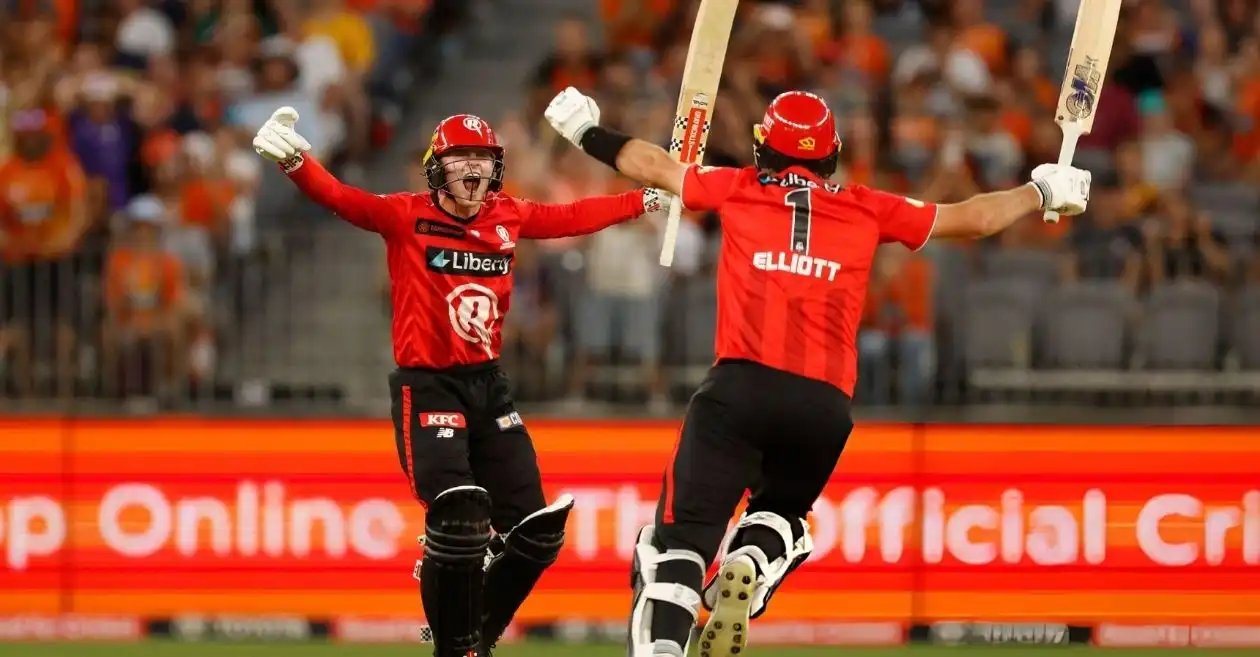
Ollie Peake guides Melbourne Renegades to thrilling win over Perth Scorchers in BBL|15


The Melbourne Renegades produced a disciplined all-round performance to defeat the Perth Scorchers by four wickets in Match 26 of the Big Bash League (BBL) 2025-26 at Perth Stadium. After opting to bowl first, the visitors restricted the Scorchers to a modest total before calmly chasing it down, led by a composed knock from Ollie Peake, who was named Player of the Match.

Perth Scorchers struggle after shaky start

Asked to bat first, Perth Scorchers never truly settled at the crease and were bundled out for 127 in 19.2 overs. Early wickets hurt their momentum, with Finn Allen and Cooper Connolly falling cheaply, putting pressure on the middle order. Mitchell Marsh attempted to stabilize the innings with a cautious 27 off 25 balls, while Aaron Hardie top-scored with a gritty 44 off 40 deliveries, anchoring the innings amid regular wickets.

Ashton Turner and Jhye Richardson provided brief cameos, but the lack of boundaries and sustained partnerships proved costly. Perth lost their final five wickets for minimal runs, underlining the Renegades’ stranglehold in the latter half of the innings.

Melbourne Renegades bowlers set the tone

The Melbourne Renegades’ bowling attack was clinical, led by Gurinder Sandhu, who ripped through the Scorchers’ batting with figures of 4 for 28 in his four overs. Jason Behrendorff was equally impressive with the new ball, conceding just 11 runs in three overs while picking up a key wicket. Hassan Khan chipped in with two scalps, ensuring Perth never gained control of the innings despite Hardie’s resistance.

Also READ: BBL|15: Joel Davies’ all-round brilliance guides Sydney Sixers past Brisbane Heat in a low scoring thriller

Ollie Peake anchors Renegades’ thrilling chase

Chasing 128, the Renegades adopted a cautious approach on a tricky Perth surface. Josh Brown gave them early impetus with a brisk 22 off 14 balls, but wickets at regular intervals kept the contest alive. Mohammad Rizwan and Tim Seifert tried to steady the innings, yet the Scorchers’ bowlers ensured the required rate never became too comfortable.

The turning point came through Ollie Peake, who played a mature and composed knock of 42 off 30 balls. Mixing patience with timely boundaries, Peake guided the Renegades through the middle overs and took the pressure off the lower order. Will Sutherland provided useful support as Melbourne reached the target in 20 overs with four wickets in hand.

For Perth, Joel Paris was outstanding, conceding just seven runs in his two overs, while Turner impressed with a rare over that yielded a wicket for just one run. However, inconsistent spells from the rest of the attack allowed the Renegades to keep chipping away at the target as they sealed a four-wicket victory.

Also READ: BBL|15: Jamie Overton shines in Adelaide Strikers’ thrilling win over Sydney Thunder


Source link

‘Not only dog bites’: SC flags road accidents due to strays; highlights civic lapses, warns states | India News


'Not only dog bites': SC flags road accidents due to strays; highlights civic lapses, warns states

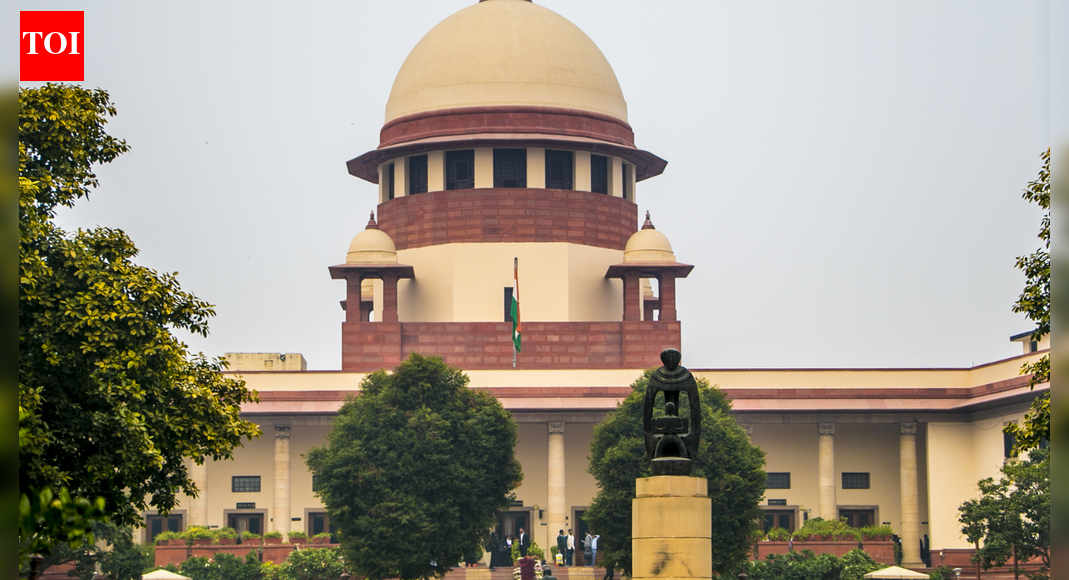
NEW DELHI: Flagging lapses by civic authorities, the Supreme Court on Wednesday observed that fatalities across the country are being caused not just by dog bites, but also by road accidents involving stray animals.A bench of Justices Vikram Nath, Sandeep Mehta and N V Anjaria made the remarks while hearing pleas seeking modification of its earlier directions, filed by animal lovers as well as those demanding stricter enforcement of the court’s orders. The bench noted that several lawyers and animal rights activists had argued they were not heard before the November 7 order was passed.“The roads should be clear of dogs and stray animals. It is not only the dog bites but also the roaming of stray animals on roads that are proving dangerous and causing accidents. No one knows which dog is in what mood in the morning. Civic bodies have to implement the rules, modules and directions strictly,” the bench said, according to news agency PTI.Justice Mehta highlighted the seriousness of the issue, pointing out that two Rajasthan High Court judges had met with accidents in the past 20 days, with one still suffering from spinal injuries. “It’s a serious issue,” he told counsel appearing in the matter.Senior advocate Kapil Sibal, appearing for a petitioner seeking modification of the earlier order, argued that the solution does not lie in rounding up all stray dogs. He said a scientific and globally accepted approach was needed to reduce human-animal conflict.Sibal urged the court to adopt the CSVR model—Capture, Sterilise, Vaccinate and Release—for controlling the stray dog population, submitting that this method would gradually bring down dog bite incidents. “Prevention is always better than cure,” Justice Nath remarked, adding that the court’s earlier directions were limited to removing stray dogs from institutional areas and did not override existing rules.‘Strict enforcement of existing rules’The bench clarified that its focus was on ensuring strict enforcement of existing rules, regulations, modules and standard operating procedures by states and civic bodies. “Some states have not responded to compliance with our orders and implementation of the arguments. We will be very harsh with those states. All the rules, regulations and SOPs need to be followed,” the court warned.When lawyers pointed out ongoing dog attacks, the bench said it was aware that children and adults were being bitten and, in some cases, losing their lives.At the outset, senior advocate Gaurav Agarwal, appointed amicus curiae in the case, informed the court that the National Highways Authority of India had prepared an SOP to comply with the court’s directions. “They have identified 1,400 km of road as a vulnerable stretch. However, after detection, the NHAI says that the state governments have to take care of it,” Agarwal said.The bench suggested fencing highways and expressways to prevent stray animals from entering roadways. Agarwal also told the court that states including Madhya Pradesh, Uttar Pradesh, Karnataka and Punjab were yet to file compliance affidavits, while some submissions received so far were “disappointing”. Justice Nath said the court would deal with those states.‘If one tiger is a man-eater … ‘Continuing his submissions, Sibal said the response to the stray dog issue must reflect a mature and responsible society. “First of all, this is not an adversarial issue and we are here as dog lovers. If one tiger is a man-eater, we don’t kill all tigers,” he argued, stressing the need for sterilisation to systematically reduce dog populations. He claimed the CSVR model had brought down the stray dog population in Lucknow to almost zero.Sibal also cautioned that housing rabid and non-rabid dogs together could spread the disease. Responding in a lighter vein, the bench remarked, “The only thing missing is providing counselling to the dogs as well so that he doesn’t bite when released back.”Similar submissions were made by senior advocates Colin Gonsalves, Anand Grover and C U Singh, along with several animal rights activists who appeared in person. Senior advocate K K Venugopal, appearing for NALSAR, Hyderabad, highlighted data pointing to an acute shortage of shelters for stray dogs.The hearing remained inconclusive and is set to continue on Thursday.The case stems from the apex court’s November 7 directions, issued after noting an “alarming rise” in dog bite incidents within institutional areas such as schools, hospitals and railway stations. The court had ordered the immediate relocation of stray dogs from such premises to designated shelters after sterilisation and vaccination, and directed that the animals should not be released back to the same locations.It also instructed authorities to remove all cattle and other stray animals from state highways, national highways and expressways, warning that repeated dog bite incidents reflected administrative apathy and a systemic failure to secure public spaces from preventable dangers.The Supreme Court is hearing the matter as part of a suo motu case initiated on July 28 last year, following media reports on stray dog attacks leading to rabies, particularly among children, in the national capital.


Source link

Access Denied


Access Denied

You don’t have permission to access “http://www.ndtv.com/india-news/irans-decisive-response-warning-after-trumps-comment-10469698” on this server.

Reference #18.2ef63717.1767788631.18b16334

https://errors.edgesuite.net/18.2ef63717.1767788631.18b16334


Source link

Stock market slide: Nifty down 1%, Sensex sheds over 1,000 points in 3 days- key reasons for the fall


Stock market slide: Nifty down 1%, Sensex sheds over 1,000 points in 3 days- key reasons for the fall

Equity indices extended their decline on Wednesday, with the Sensex and the Nifty ending lower for a third consecutive session as sustained selling in heavyweight stocks, rising geopolitical unease and weak global cues dented investor confidence. The BSE Sensex has shed over 1,144 points in the past three sessions, sliding from a close of 85,762.01 on January 2 to an intraday low of 84,617.49 on Wednesday. The NSE Nifty 50 has declined nearly 1 per cent over the same period, pushing benchmarks firmly into the red for the week.By the close, the Sensex had pared some losses to end 102 points, or 0.12 per cent, lower at 84,961.14, while the Nifty slipped 38 points, or 0.14 per cent, to settle at 26,140.75.

Heavyweight stocks drag indices

Selling pressure in index heavyweights continued to exert disproportionate pressure on the benchmarks. HDFC Bank shares fell 1.7 per cent on Wednesday, while Reliance Industries declined 0.4 per cent. Trent dropped 1.4 per cent, extending weakness after plunging 8.6 per cent in the previous session amid concerns over intensifying competition in the retail segment.The drag from large-cap stocks was also evident earlier in the week, when HDFC Bank and Reliance Industries — the two heaviest constituents on the indices — fell 1.5 per cent and 4.3 per cent, respectively, amplifying benchmark losses.Dr V K Vijayakumar, Chief Investment Strategist at Geojit Investments, said recent market movements lacked clear direction, with a few mega stocks disproportionately influencing overall trends. “For instance, yesterday despite positive institutional buying Nifty drifted down by 71 points, mainly due to sharp declines in two stocks — Reliance and HDFC Bank. The large volumes in these two stocks in the derivative and cash markets indicate activity associated with the settlement day. In other words, the sharp dips in these stocks have nothing to do with their fundamentals; it is more technical in nature,” he said, as quoted ET.

Geopolitical shock adds to risk aversion

Global risk appetite was further shaken by political turmoil in Venezuela and uncertainty surrounding its petroleum reserves. Market sentiment turned cautious after a controversial US military operation on January 3 led to the capture of Venezuelan President Nicolás Maduro and his wife, Cilia Flores, and their transfer to the United States to face criminal charges. Maduro remains in custody in New York.The developments have heightened broader geopolitical and policy-related anxieties. “Going forward, there is scope for high volatility caused by events and news,” Vijayakumar said, adding that “Trump tweets and actions can always influence the market. Another important event that investors should closely watch is a possible Supreme Court verdict on Trump tariffs very soon. If the verdict goes against the reciprocal tariffs, it will create huge volatility in stock markets.

Weak global cues spill over

Indian equities also tracked declines across Asian markets, where shares retreated as investors assessed the fallout from the Venezuela crisis and uncertainty over global energy supplies. Japanese equities weighed on regional sentiment after China announced a ban on exports of dual-use items to Japan that can be used for military purposes, following remarks by Japanese Prime Minister Sanae Takaichi on Taiwan.The cautious tone across global markets spilled over into domestic trading, reinforcing the downward bias in Indian equities despite some support in commodity-linked stocks after an overnight rally in industrial metals.

Technicals point to consolidation, volatility risk

Technical indicators suggest the recent decline reflects a broader corrective or consolidation phase rather than a breakdown in the longer-term trend, though near-term volatility remains elevated.Jaykrishna Gandhi, Head–Business Development–Institutional Equities at Emkay Global, noted that since 1991 the Nifty 50 has seen seven major bullish cycles, typically followed by corrective phases. He said that post-2009, corrections have largely shifted from sharp price declines to time-wise consolidations, reflecting improved structural strength.According to Gandhi, the index has “recently completed a ~1–1.5-year time correction, which historically has been followed by the resumption of a bullish trend,” with upside potential seen “up to 28,500, with positional support band at 25,500–25,300.”On the sectoral front, he highlighted strength in pharmaceuticals, saying “Nifty Pharma has confirmed a breakout from an ‘inverted head and shoulder’ pattern, indicating bullish continuation with upside potential toward 24,000–24,500,” while adding that the bullish bias remains intact “above 23,500.”However, near-term signals point to choppiness. Anand James, Chief Market Strategist at Geojit Investments, said, “A strong close on Friday near the upper bollinger band suggests continuation of upside momentum. Oscillators are accommodative as well.” At the same time, he cautioned that “VIX being near record indicates potential for rise in volatility,” underscoring the risk of sharp swings despite a broadly constructive technical backdrop.(Disclaimer: Recommendations and views on the stock market, other asset classes or personal finance management tips given by experts are their own. These opinions do not represent the views of The Times of India)


Source link

Access Denied


Access Denied

You don’t have permission to access “http://www.ndtv.com/world-news/venezuelas-political-transition-can-keep-global-oil-prices-lower-report-10469543” on this server.

Reference #18.2ff63717.1767788036.15685d03

https://errors.edgesuite.net/18.2ff63717.1767788036.15685d03


Source link

Not Shubman Gill! Australian great picks this India player as next Test superstar | Cricket News


Not Shubman Gill! Australian great picks this India player as next Test superstar
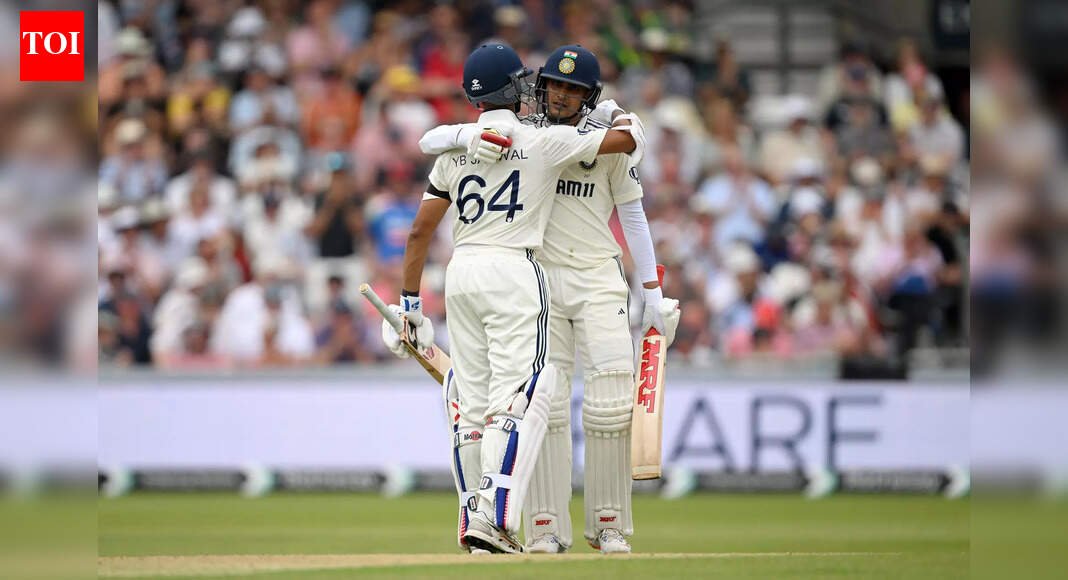
Shubman Gill & Yashasvi Jaiswal (Photo by Clive Mason/Getty Images)

With cricket’s legendary Fab Four – Virat Kohli, Steve Smith, Joe Root, and Kane Williamson – nearing the twilight of their careers, the spotlight is gradually shifting to a promising new generation. While still early in their journeys, players like Shubman Gill, Rachin Ravindra, Harry Brook, and Yashasvi Jaiswal are widely tipped to shape the landscape of world cricket over the next decade and beyond. Some have already started making significant waves: Gill has cemented his status as a leading Test captain for India and starred in a record-breaking series in England last year, Harry Brook has emerged as one of the most exciting young batters globally, Jaiswal has been steadily climbing the ranks, and Ravindra is quickly establishing himself as one of cricket’s most formidable all-rounders.

David Miller hails Paarl Royals’ all-round display after dominant bonus-point win

Amid this emerging talent pool, Australian great Mark Waugh was asked to name the next potential superstar of Test cricket. The former opener initially listed three contenders but was quick to single out his top pick. “I reckon there’s three in the run. Jaiswal, Brook and Ravindra from New Zealand. Well, I’m going with Jaiswal. At 24 years of age, he’s already scored a double hundred and averages just under 50. There’s something special about this kid. So I’ve got him down, Jaiswal, as the next champion batsman of the elite group. Look at him. Brilliant player. So that’s my pick, the young Indian,” Waugh said while speaking to Kayo Sports on the sidelines of the fifth Ashes Test between Australia and England in Sydney. Waugh’s endorsement comes as Jaiswal continues to impress on the field. In less than three years of his Test career, he has amassed 2,511 runs in 28 matches, including centuries in the demanding conditions of England and Australia. He has also shown an ability to convert his hundreds into big scores, recording two double centuries from his seven Test hundreds. However, former England captain Michael Vaughan holds a different view, naming Harry Brook as the next great Test batsman. Despite Brook having slightly more experience, with 3,052 runs from 34 Tests at an average exceeding 50, Vaughan believes the 26-year-old’s best is yet to come. “Harry Brook is the next one that we’re going to be talking about. We’re already talking about him on this trip, the way that he’s played. He hasn’t got the amount of runs I would have expected, but over the course of the next 10 years, I think we are going to see some of the most extraordinary innings from this chap. He’s already played quite a bit in his young career; red-ball cricket, white-ball cricket. He’s an all-format player, and he’s box office,” Vaughan said. Both experts agree that the baton is being passed, and while opinions differ on who will emerge as the next global Test superstar, the future of the game appears to be in promising hands.


Source link