Breaking News
The Mutual Fund Advisor: FD vs Mutual Funds – you are asking the wrong question!


The Mutual Fund Advisor: FD vs Mutual Funds - you are asking the wrong question!
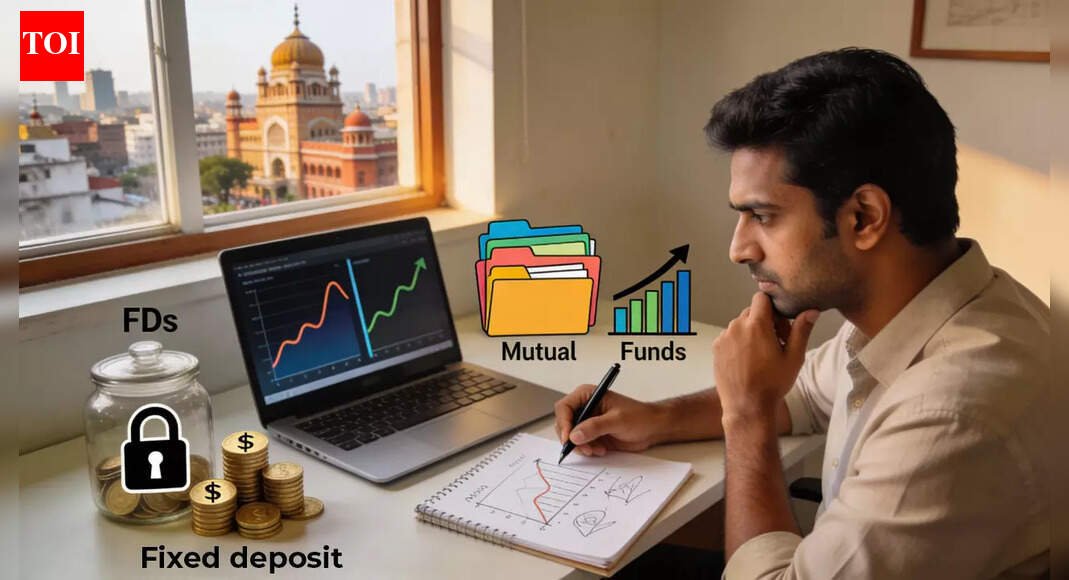
An FD gives you a fixed interest rate, a promise from the bank that you’ll get your money plus that interest back at maturity. (AI image)

Over the long run, mutual funds usually outpace FDs—but only if you use each for the right goal, time frame and temperament.You talk about mutual funds and there’s always someone who will raise their hand and ask, “Simple batao – FD better hai ya mutual fund?” What they want is a one-word verdict: “Mutual funds!”, with guaranteed double-digit returns. Real life is less dramatic. FDs and mutual funds are not enemies. They’re tools. One is a screwdriver, the other is a power drill. If you don’t tell me what you’re trying to build, “Which is better?” is the wrong question.FD comfortAn FD gives you a fixed interest rate, a promise from the bank that you’ll get your money plus that interest back at maturity, and the comforting feeling that your money is “growing nicely”. The problem is that this comfort is partly an illusion. The FD rate—say 7 per cent—looks neat on paper, but three things quietly chew it up: tax, inflation and time.Tax hits first. FD interest is taxed at your full slab. If you’re in a high tax bracket, that attractive 7 per cent may become more like 4.9 per cent after tax. Then comes inflation. If your cost of living is rising at roughly the same rate as your post-tax FD return, you’re not growing; you’re running to stay in the same place. Over 10–15 years, even a small gap between inflation and your FD return turns into a big shortfall.Put ₹10 lakh in an FD at 7 per cent for 10 years. Before tax, it becomes about ₹19.7 lakh. After tax, depending on your slab, it may be closer to ₹16 lakh in your hands. Now think what that amount will actually buy you 10 years later.I’m not saying FDs are bad. They’re excellent for short-term money and essential when capital safety is non-negotiable. But as an engine for long-distance wealth creation, they are underpowered.Equity engineWhen I compare FDs and mutual funds, I mainly mean equity mutual funds, because comparing FDs with pure debt funds is just a debate between two slow scooters. An equity mutual fund gives you ownership in a large basket of companies. There is no guaranteed return in any specific year, but over longer periods, a well-chosen equity fund has a high probability of outperforming an FD.Year to year, it can look ugly. A fund can be up 25 per cent one year and down 15 per cent the next. Stretch your view to 10–15 years, and the jagged line of an equity fund has historically sloped much steeper than the flat-ish FD line.Put the same Rs 10 lakh as a lump sum into a decent diversified equity fund. Over 10 years, using an illustrative 12 per cent average return, it could reasonably grow to around Rs 31 lakh. The gap between this and the FD outcome is what “mutual funds usually beat FDs in the long term” actually means.Two things drive this: first, compounding at a higher average rate—an extra 3–4 percentage points a year makes a huge difference over 15–20 years. Second, tax efficiency—mutual fund gains are taxed differently from FD interest, especially over the long term, and goal-based withdrawals can keep the tax bite modest.At Value Research Fund Advisor (VRFA), when we build goal based plans with mutual funds, asset allocation becomes the key. Think of it as choosing where your money sits on the comfort to growth spectrum. The same goal can look very different depending on whether the money is entirely in debt mutual funds, entirely in equity funds, or in a sensible mix of the two. The long term difference, even with reasonable assumptions, is often large enough to change how people think about “risk”.Discomfort premiumIf equity funds are so powerful, why doesn’t everyone dump FDs and rush into them? Because mutual funds come with discomfort, and humans hate discomfort. With FDs, your balance only goes up—slowly, but up. With equity funds, it goes up, down, sideways and then suddenly up again. The price of a higher long-term return is short-term volatility.Over one to three years, a good equity fund can easily underperform FDs. You may see a 10–30 per cent fall on paper during a bad phase. If your goal is very near—next year’s school fees, a home down payment in two years—you don’t have the time to wait for a recovery. For such goals, the FD “wins” not on return, but on suitability.That’s why, inside VRFA, we never chant “equity mutual funds are always better than FDs or similar options”. For each goal, we ask: how far away is it, can this money afford to bounce around in value, and what is your genuine risk tolerance? Only then do we decide the asset allocation between equity & debt funds. The aim is not to eliminate safety. It is to put safety in the right place, and not expect it to do the job of long term wealth creation.Real returnsMost comparisons stop at something like “FD returns 7 per cent, equity fund returns 12 per cent”. That’s half the story. You really need to think in three layers. First is the nominal return—the number on the brochure. Second is the post-tax return—what’s left after the government takes its share. Third is the real return—what remains after both tax and inflation. That third number decides whether you can truly afford your future.For instance, suppose inflation over the next 10 years averages 6 per cent. Your FD, after tax, effectively earns about 4.9 per cent. Your real return is roughly minus 1 per cent. A well-chosen equity fund that averages 12 per cent over the same period, even after tax, may give you a real return of about 5 per cent. Over time, that difference is the gap between “I’ll be okay” and “I wish I’d done this differently”.At VRFA, we build the portfolio with inflation in mind. Some part of the money has to beat it, or the goal keeps moving away. That is why equity funds are in the mix, if your risk appetite supports it. The question is not “How much will this grow?” It is “Will this be enough when the time comes?” On that test, playing it safe all the way usually does not work for long term goals.Right mixSo, do mutual funds really beat FDs over the long term? If you use equity funds mainly for long-term goals of 10 years or more, combine them with the right amount of debt for stability, and behave sensibly during bad years, then yes—historically they have outpaced FDs by a wide margin more often than not.But if you treat mutual funds as a two-year “FD upgrade”, jump in and out based on market noise, or use 100 per cent equity for a two-year goal, then no, they probably won’t beat an FD for you, and the funds will be blamed for behaviour that wasn’t their fault.Inside VRFA, we don’t aim to create heroic all-equity plans for everyone and say, “Dekho, kitna high return ban sakta hai.” We build portfolios where lower volatility debt funds handle short-term or non-negotiable money, while equity and hybrid mutual funds work together for medium- and long-term goals. In the end, the right question isn’t “Are mutual funds better than FDs?” It is: for this goal, at this time, with my temperament, what mix of safety and growth options gives me the best chance of success? Once you start asking that, the answer stops being a slogan and starts becoming a proper plan.(Sneha Suri is Lead Fund Analyst – Value Research’s Fund Advisor) (Disclaimer: Recommendations and views on the stock market, other asset classes or personal finance management tips given by experts are their own. These opinions do not represent the views of The Times of India)


Source link

No security red flag, no venue shift: ICC rejects Bangladesh’s T20 World Cup request | Cricket News


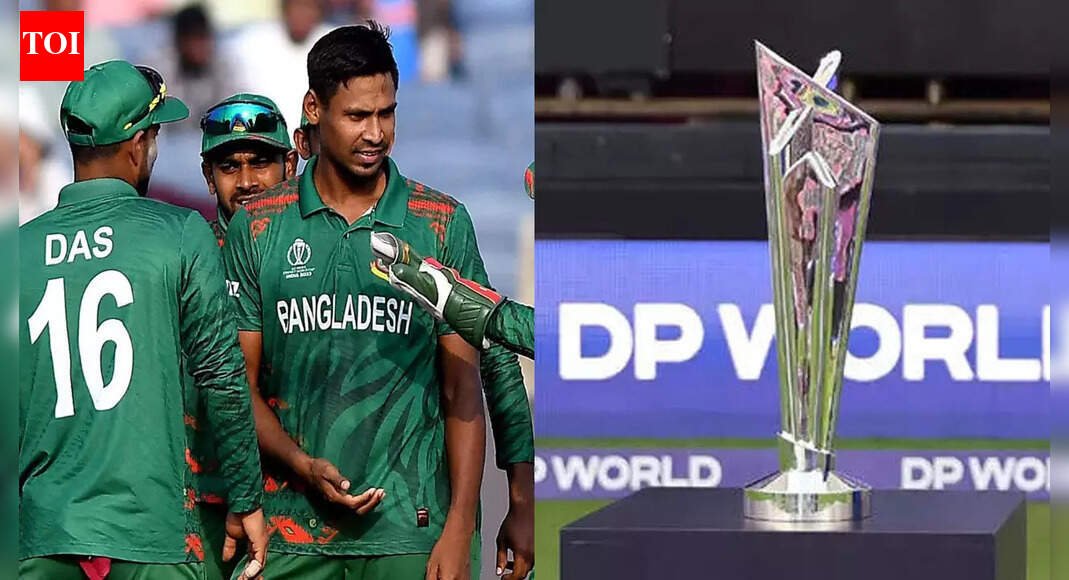
Bangladesh are scheduled to play three matches in Kolkata and one in Mumbai.

NEW DELHI: The International Cricket Council (ICC) has found no actionable security inputs to support Bangladesh’s concerns over player safety in India and has, for now, rejected the Bangladesh Cricket Board’s (BCB) request to relocate its matches from the upcoming ICC Men’s T20 World Cup 2026.Go Beyond The Boundary with our YouTube channel. SUBSCRIBE NOW!According to a Cricbuzz report, the issue was discussed during an online meeting between ICC officials and BCB representatives on Tuesday (January 6). During the call, the ICC informed the BCB that it has no assessment indicating any specific or credible threat to the Bangladesh team while playing in India. As a result, the global body sees no basis to alter the tournament schedule or venues at this stage.

Bangladesh seek T20 WC match shift from India after Mustafizur Rahman’s IPL exit

The meeting followed an emergency BCB gathering on January 4, after which the board formally wrote to the ICC asking that Bangladesh’s matches be moved outside India to “safeguard the safety and well-being of Bangladeshi players, team officials, Board members and other stakeholders.” However, the ICC’s position does not currently align with that request. While no final written decision was issued on Tuesday, sources indicate there are no immediate signs of the ICC revising its stance. A formal response is expected by January 10.Bangladesh are scheduled to play three Group C matches in Kolkata — against West Indies on February 7, Italy on February 9 and England on February 14 — before facing Nepal in Mumbai on February 17.

Poll

Do you agree with the ICC’s decision to not relocate Bangladesh’s matches due to player safety concerns?

Conflicting accounts have emerged regarding the tone of the ICC’s communication. ESPNcricinfo reported that the ICC told the BCB it was rejecting the relocation request and that Bangladesh would need to travel to India to play the tournament or risk forfeiting points. The BCB, however, has denied receiving any such ultimatum. Neither the ICC nor the BCCI has issued an official statement on the outcome of the call.The development comes less than a month before the 20-team tournament begins on February 7 across India and Sri Lanka, with the final scheduled for March 8.The BCB’s letter to the ICC was triggered by the BCCI’s directive to Kolkata Knight Riders to release Bangladesh fast bowler Mustafizur Rahman, who had been bought at the IPL auction for INR 9.2 crore. The decision was confirmed publicly by BCCI secretary Devajit Saikia, though no official reason was provided. It is understood that the IPL Governing Council did not meet on the issue, raising questions over the decision-making process.In response, the BCB banned the broadcast of the IPL in Bangladesh. Meanwhile, Mustafizur is set to feature in the Pakistan Super League, a move confirmed by the Pakistan Cricket Board, adding another layer to an increasingly tense standoff — even as the ICC maintains that, on security grounds, it is status quo for Bangladesh at the World Cup.


Source link

Mumbai: Cop-couple’s son skates his way to national glory | Mumbai News


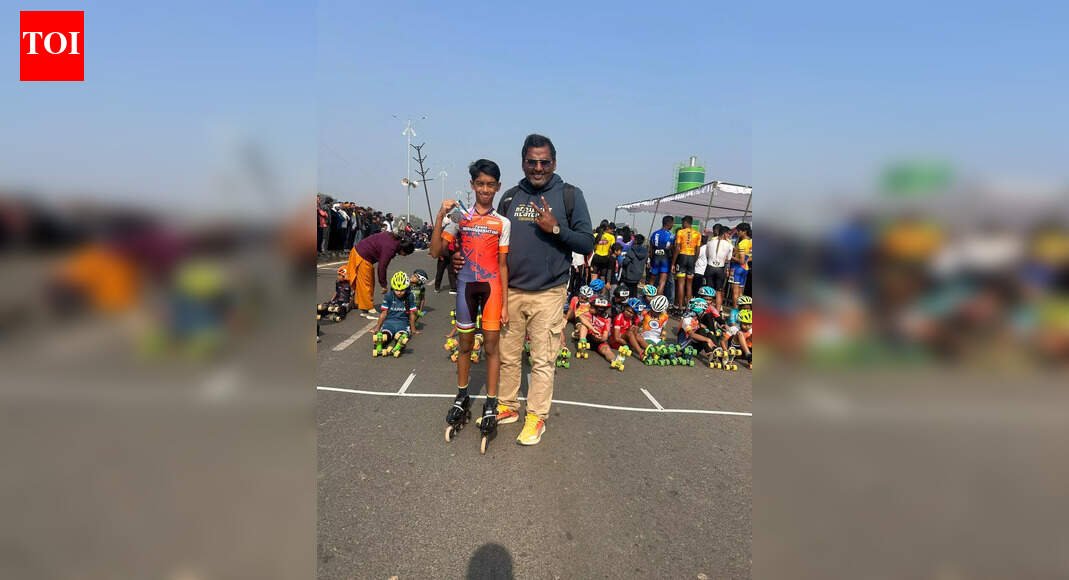
MUMBAI: In a feat that has brought pride to the Brihanmumbai Police force, the 10-year-old son of two serving police personnel has clinched a gold and a bronze medal at the 69th School Games Federation of India (SGFI) National Skating Championship. Om Sainath Shinde won the medals in the under-11 category at the national tournament held recently at ITM Global School, Gwalior, Madhya Pradesh. The championship featured top young skaters from across the country and followed a rigorous, multi-tier selection process. Only the top three skaters from each state qualified for the national meet after successive rounds of selection at the district level, where three skaters were chosen from each district, followed by further shortlisting at the zonal level within cities. The competition proved particularly demanding for the Mumbai-based skater. While accustomed to the city’s humid climate, Om competed in temperatures ranging between 8°C and 10°C in Gwalior. Despite the cold conditions, he maintained technical control and consistency to secure podium finishes. Om’s mother, Bhagyeshri Sainath Shinde, said her son follows a demanding daily routine. “His skating practice starts at 3.30 am. He returns by 6 am, and then attends regular school from 8 am to 3 pm. Even after that, he goes for swimming or other physical training,” she said. Both parents serve with the Brihanmumbai Police and work in shifts—Bhagyeshri on day duty and Om’s father, Sainath Kashinath Shinde, on night duty. She said managing her son’s schedule has been challenging, particularly with additional responsibilities linked to ongoing municipal election duties. “It is difficult to keep up, but we find time to support him,” she said. Bhagyeshri credited her son’s focus and the guidance of his coach, Raj Singh, for his success at the national level. “He is determined to win an Olympic medal for India, and this victory has made him even more focused,” she added.


Source link

‘Those who promised to make panels 1 to 12 BJP-free are now struggling to save their own seat’, says BJP neta Pradeep Ramchandani | Thane News


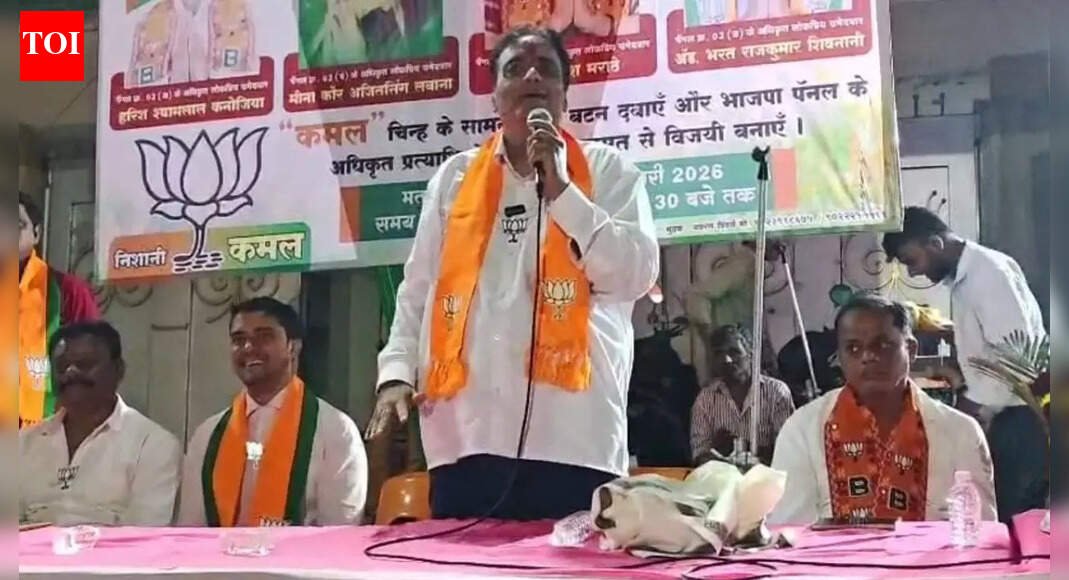
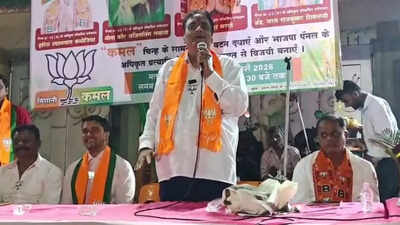
ULHASNAGAR: Amid the ongoing campaign for the Ulhasnagar Municipal Corporation elections, senior BJP leader Pradeep Ramchandani launched a scathing attack on former five-time corporator Jamnu Puraswani during an election rally. Puraswani, who recently quit the BJP, is now contesting the election on the Shiv Sena symbol from Team Omie Kalani (TOK) party.Addressing the gathering, Ramchandani recalled that after leaving the BJP, Jamnu Puraswani had claimed he would make Panels 1 to 12 “BJP-free” in the city. However, Ramchandani said the ground reality has changed completely. According to him, Puraswani is now struggling hard just to save his own seat from Panel No. 2, from where he is contesting, and is visibly under pressure. He asserted that the public mood in this panel is clearly in favour of the BJP and that the blessings of the voters are firmly with the party.

BMC Becomes Mega Battleground As Thackerays Reunite And Alliances Shift Ahead Of Civic Wars 2026

Taking his criticism further, Ramchandani, who is also election -in-charge of party for Ulhasnagar Municipal Corporation said that although Jamnu Puraswani is contesting on the Shiv Sena ticket, Shiv Sena is only a small alliance partner with the BJP. Using a strong administrative analogy, he remarked that when Puraswani was in the BJP, he was like a “Collector,” but after leaving the party, he has been reduced to a “Tehsildar.He questioned why voters would choose a Tehsildar when they have the option to elect a Collector for their ward, adding that even a Tehsildar ultimately has to approach the Collector to get work done.The political battle has become more intense in Panel No. 3, which was once considered a stronghold of the BJP. Puraswani has been elected five times as a corporator from this panel on the BJP ticket. However, about a month ago, he quit the BJP along with four other BJP corporators and joined TOK, a local political outfit that has an alliance with Shiv Sena at the city level.Since the BJP and Shiv Sena are contesting the Ulhasnagar elections separately, Puraswani is now in the fray from this panel on the Shiv Sena symbol along with three other candidates. On the other hand, the BJP has fielded Meena Labana, Advocate Bharat Shivnani, Sandhya Marathe and Harish Kanojia from the same panel, setting the stage for a high-voltage contest.


Source link

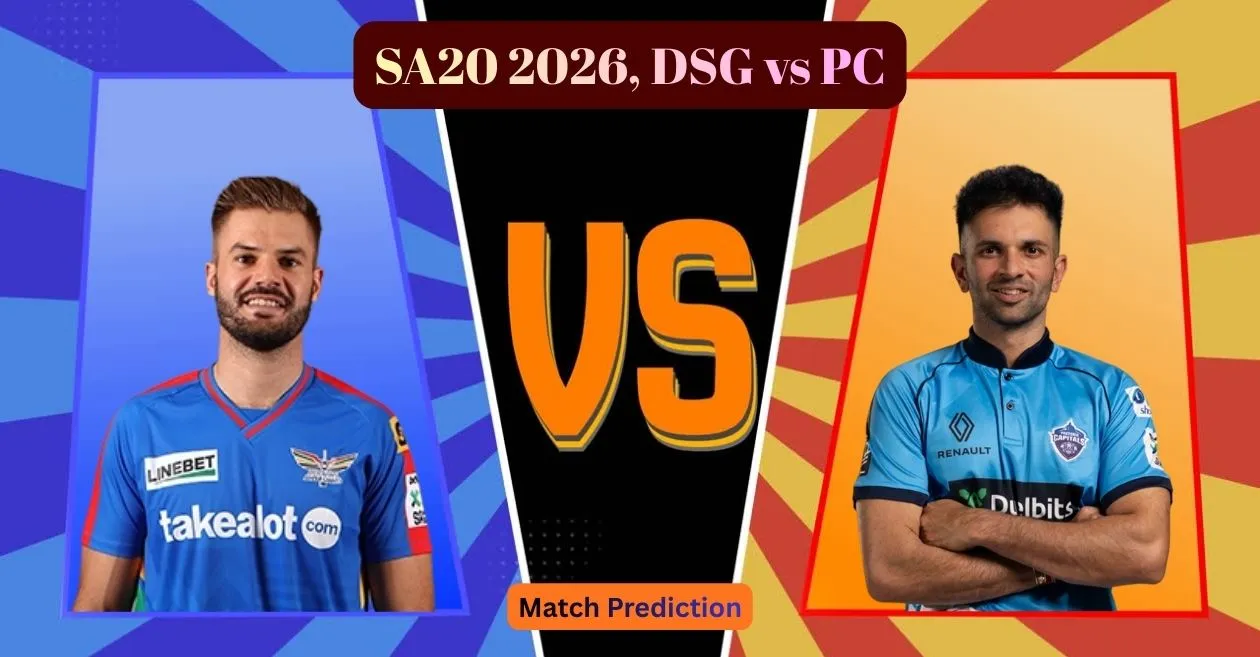
SA20 2026, DSG vs PC Match Prediction: Who will win today’s game between Durban’s Super Giants and Pretoria Capitals?


Durban’s Super Giants and Pretoria Capitals lock horns in a high‑pressure mid‑table SA20 clash at Kingsmead, with both sides desperate for only their second win of the season. With seam‑friendly conditions in Durban and fragile bowling units on both sides, powerplay intent and death‑over discipline are likely to separate two evenly matched batting-heavy line-ups.​

Both teams have won just 1 of their first 5 games, sitting fourth (DSG) and fifth (PC) on the table, making this effectively a shootout to stay in touch with the top three.​ Rain has complicated Durban’s campaign with two washouts, while Pretoria’s season has lurched between one big win and several heavy defeats, including a 10‑wicket loss to Sunrisers Eastern Cape.​ Head-to-head is narrowly in Durban’s favour overall, and they also hold a stronger record at Kingsmead, adding to the sense of home-side expectation under lights.

DSG vs PC, SA20 2026: Match details

  • Date and Time: January 7; 9:00 pm IST / 3:30 pm GMT / 5:30 pm Local
  • Venue: Kingsmead, Durban

DSG vs PC Head-to-Head Record in SA20 

Matches played: 07 | Durban’s Super Giants won: 03 | Pretoria Capitals won: 04 | No result/Tied: 00

Kingsmead Pitch Report

Kingsmead traditionally offers new‑ball movement and rewards disciplined seam bowling, especially in evening starts where the breeze and occasional nip off the surface can trouble top orders.​ T20 numbers at the venue show first‑innings scores in the 160–180 band are highly competitive, with teams batting first winning more often than chasing, especially when early wickets fall.​ With both sides carrying batting depth but inconsistent attacks, a captain winning the toss may lean towards batting first, backing board pressure and the pitch slowing slightly later on.

Squads

Durban’s Super Giants: Devon Conway, Kane Williamson, Jos Buttler, Aiden Markram (c), Heinrich Klaasen (wk), Evan Jones, David Wiese, Eathan Bosch, Simon Harmer, Kwena Maphaka, Noor Ahmad, Sunil Narine, Taijul Islam, Dayyaan Galiem, Daryn Dupavillon, Tony de Zorzi, Marques Ackerman, Gerald Coetzee, David Bedingham, Andile Simelane, Gysbert Wege

Pretoria Capitals: Will Smeed, Connor Esterhuizen (wk), Shai Hope, Dewald Brevis, Roston Chase, Andre Russell, Bryce Parsons, Codi Yusuf, Gideon Peters, Keshav Maharaj (c), Lungi Ngidi, Tymal Mills, Lizaad Williams, Sibonelo Makhanya, Wihan Lubbe, Keith Dudgeon, Junaid Dawood, Sherfane Rutherford, Jordan Cox, Daniel Smith, Meeka eel Prince

Also WATCH: Matthew Breetzke plucks a screamer to dismiss Dewald Brevis in SA20 2026

DSG vs PC, SA20 2026: Today’s Match Prediction

Case 1:

  • Durban’s Super Giants wins the toss and bats first
  • Durban’s Super Giants’ powerplay score: 50-60
  • Durban’s Super Giants’ total score: 170-180

Case 2:

  • Pretoria Capitals wins the toss and bats first
  • Pretoria Capitals’ powerplay score: 40-50
  • Pretoria Capitals’ total score: 160-170

Match result: Team batting first to win the contest.

Also WATCH: Dewald Brevis and Sherfane Rutherford unleash a flurry of sixes on MI Cape Town bowlers in SA20 2025-26


Source link

‘Big conspiracy’: Oppn slams BJP, EC after nearly 3 crore names struck off following SIR in UP; calls for probe | India News


‘Big conspiracy’: Oppn slams BJP, EC after nearly 3 crore names struck off following SIR in UP; calls for probe

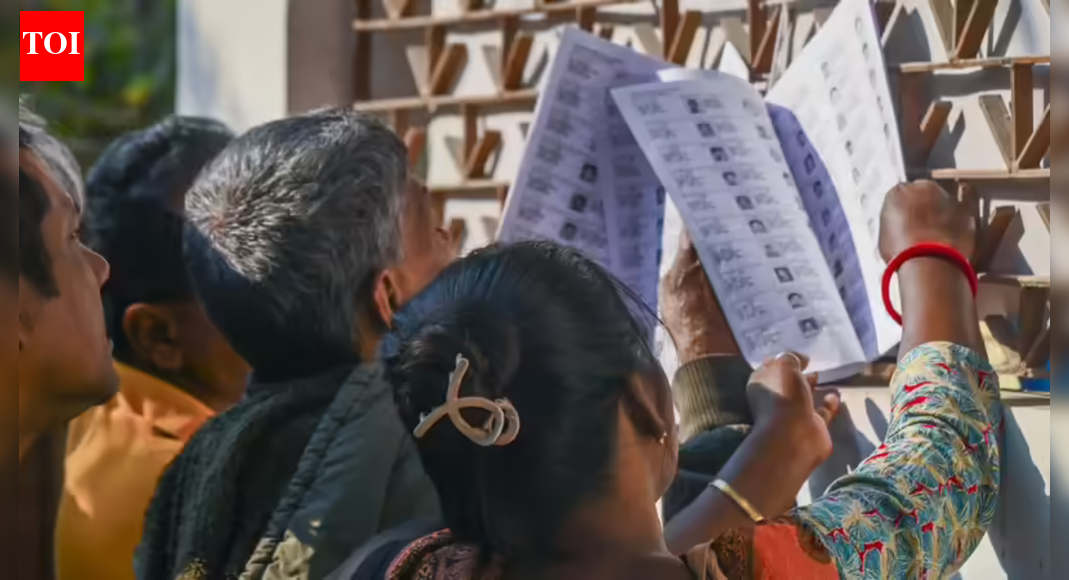
NEW DELHI: The opposition on Wednesday launched a broadside against Election Commission and Bharatiya Janata Party after 2.89 crore electors were deleted from the draft voter list in Uttar Pradesh after special intensive revision.Congress state president Ajay Rai called for an inquiry alleging a “big conspiracy.”“The removal of 2.89 crore voters (from UP SIR draft list) is a matter of inquiry. 1.13 crore forms, which were not returned. This is a big conspiracy, and a probe should be done,” Rai said.

Owaisi Calls SIR a ‘Backdoor NRC’ in Lok Sabha, Warns of Selective Religious Disenfranchisement

Congress MP Pramod Tiwari also attacked BJP and termed the deletion of names from the draft list as “murder of democracy.”“The worry the Congress party had expressed has proved correct. Names of around three crore voters have been removed. This is a murder of democracy,” Tiwari said.“No matter what the BJP does, it is certain that the BJP will be wiped out from UP,” it added.Meanwhile, Samajwadi Party also questioned the role of Election Commission, asserting that it must function impartiallyUttar Pradesh SP chief Shyam Lal Pal alleged irregularities during the recent elections in nine assembly constituencies in the state and said, “Recently, elections were held in nine assembly constituencies in Uttar Pradesh. In those elections, voters were prevented from reaching the polling booths in various ways, sometimes by the police, sometimes by officials, and at several booths, it was even observed that the presiding officers themselves were casting votes at the government’s behest. This is the murder of democracy.”SP leader Fakhrul Hasan Chaand also weighed in on the issue and said that his party would remain vigilant to ensure that PDA (Picchda, Dalit, Alpsankhyak) voters are not excluded from the electoral process.“Samajwadi Party has been doing the work of protecting PDA votes, and we will continue to do so. Samajwadi Party is vigilant on this issue, and we will not let PDA vote be left out,” Chand said.According to the Election Commission, about 2.9 crore electors, making up 18.7% of Uttar Pradesh’s 15.4 crore electorate, have been struck off the state’s draft electoral roll published on Tuesday.UP’s draft electoral roll published following the enumeration phase of SIR-Phase 2 lists over 12.5 crore electors; while deleting 46.2 lakh (2.99%) on account of being deceased; 2.17 crore (14.1%) for having permanently shifted or found untraceable or absent during visits by the booth level officers (BLOs); and 25.5 lakh (1.6%) for being enrolled at multiple places.Addressing the press, UP CEO Navdeep Rinwa said, “The number of enumeration forms we received was approximately 12 crore, 55 lakh. This means that this many people returned the forms signed, indicating that their names should be included in the draft list. There were 46.23 lakh such deceased voters. “There are 2.17 crore voters who have migrated, those who have shifted from their place of residence, who have left the house where they were residing when they registered their name in the voter list, and have permanently moved, or are missing or absent, or could not be found by the BLOs in the field. There were 25.47 lakh voters whose names were registered in more than one place on the voter list. In total, 2.89 crore names were not included in the draft voter list,” Rinwa added.The claims and objections period has been set for January 6, 2026, to February 6, 2026. Any existing or prospective elector may file claims or objections for inclusion of eligible electors or deletion of ineligible names.A total of 403 EROs and 2042 AEROs are in position to scrutinise such cases by February 27, 2026. In addition to that, Additional AEROs have been notified as per the requirement to dispose off the claims and objections, within the prescribed time limit.


Source link

Maharashtra civic polls: Badlapur school sexual assault case whistleblower joins Ajit Pawar-led NCP | Thane News


THANE: A woman whistleblower who exposed the Badlapur school sexual assault case has joined the Ajit Pawar-led Nationalist Congress Party (NCP) ahead of Maharashtra’s civic polls. Sangeeta Chendvankar, formerly head of the women’s wing of Raj Thackeray’s Maharashtra Navnirman Sena (MNS) in Badlapur, was inducted into the NCP at a function in the town on Tuesday.

BMC Becomes Mega Battleground As Thackerays Reunite And Alliances Shift Ahead Of Civic Wars 2026

Elections to various municipal corporations in the state are scheduled for January 15.Chendvankar rose to prominence in August 2024 as the main whistleblower in the Badlapur school case, in which two 4-year-old girls were allegedly sexually assaulted by a contractual sweeper. She played a crucial role in mobilising the parents and ensuring the case reached both the police and the public. Later, Chendvankar contested the 2024 Maharashtra assembly elections from the Murbad constituency in Thane district on an MNS ticket but was defeated.Speaking to reporters after joining the NCP on Tuesday, Chendvankar said, “I wanted to serve the citizens in the best possible manner, which I felt I could not do to my satisfaction recently. I chose the NCP family where I believe I can perform better.” Welcoming her, local NCP functionary Ashish Damle described her as a “Ranaragini” (warrior woman) of Badlapur.“Sangeeta has consistently fought against injustice and taken up critical citizen issues. Her entry is a major asset to our party as we work towards the town’s development as a team,” Damle told PTI.


Source link

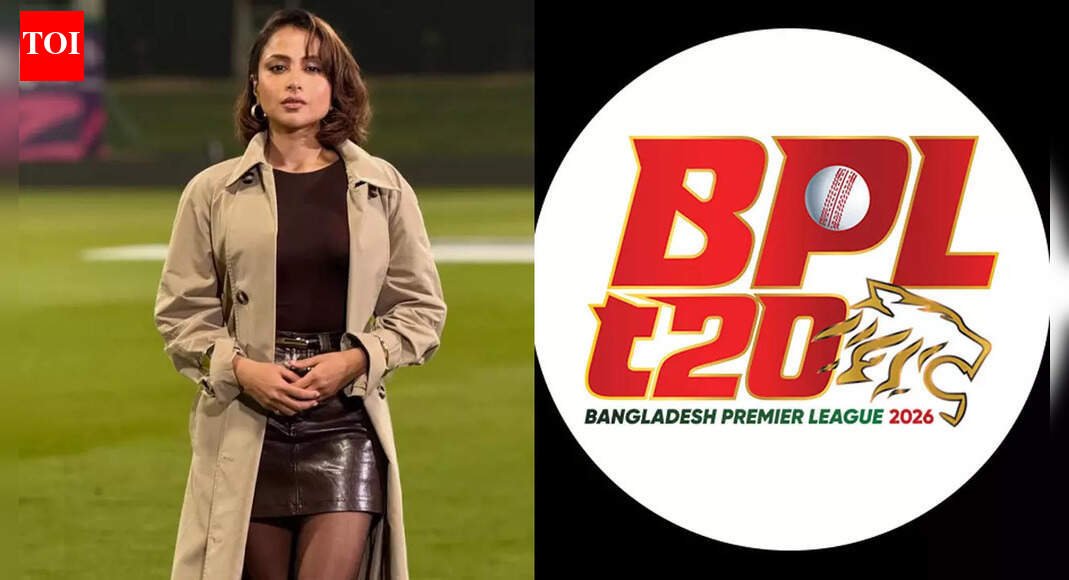
BPL controversy! ‘Cricket deserves truth’: Indian presenter Ridhima Pathak breaks silence on her Bangladesh Premier League exit | Cricket News


BPL controversy! 'Cricket deserves truth': Indian presenter Ridhima Pathak breaks silence on her Bangladesh Premier League exit
Indian presenter Ridhima Pathak (Image credit: Instagram)

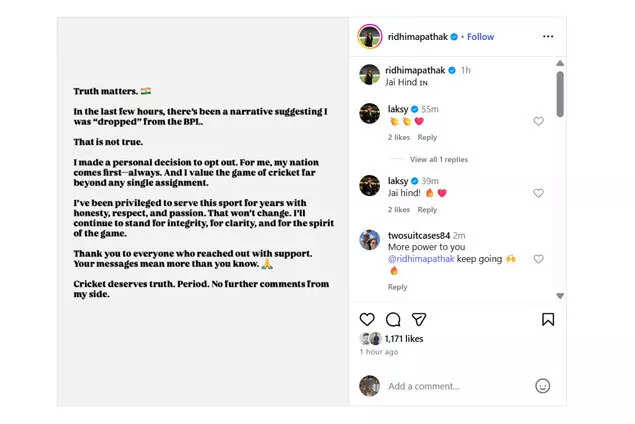
NEW DELHI: Reports emerged that Indian presenter Ridhima Pathak had been removed from the presentation panel of the Bangladesh Premier League (BPL), local media reported on Wednesday, citing sources in the Bangladesh Cricket Board (BCB). She was scheduled to host the Dhaka leg of this year’s BPL but was reportedly dropped from the team before arriving in Bangladesh. The current edition of the tournament has already begun in Sylhet.However, Pathak, a prominent figure in Indian sports broadcasting, refuted these reports, clarifying that she voluntarily withdrew from the T20 league due to the ongoing political climate.

Mohammed Kaif breaks silence on Mustafizur Rahman–KKR debate

In a statement shared on social media, Pathak addressed the rumors directly:“In the last few hours, there’s been a narrative suggesting I was ‘dropped’ from the BPL. That is not true. I made a personal decision to opt out. For me, my nation comes first—always. And I value the game of cricket far beyond any single assignment. I’ve been privileged to serve this sport for years with honesty, respect, and passion. That won’t change. I’ll continue to stand for integrity, for clarity, and for the spirit of the game.“Thank you to everyone who reached out with support. Your messages mean more than you know. Cricket deserves truth. Period. No further comments from my side.”

.

The BPL authorities have also introduced major changes to the presentation and commentary panels this season. Pakistani presenter Zainab Abbas arrived in Bangladesh, along with veteran commentators Waqar Younis, Ramiz Raja, and Darren Gough. Ridhima was originally set to join them but will no longer be attending.The development comes amid heightened tensions between India and Bangladesh. On January 5, the Bangladesh government suspended the broadcast of Indian Premier League (IPL) 2026 matches in the country after the Board of Control for Cricket in India (BCCI) instructed Kolkata Knight Riders (KKR) to release Bangladeshi pacer Mustafizur Rahman from their squad.The IPL is set to begin on March 26, following KKR’s decision to remove Rahman in compliance with the BCCI directive regarding atrocities against minorities in Bangladesh.Bangladesh’s response has included an emergency BCB meeting requesting the ICC to shift T20 World Cup matches out of India due to security concerns, alongside the IPL broadcast ban. The ICC has reportedly informed Bangladesh they must play in India or risk forfeiting matches.


Source link

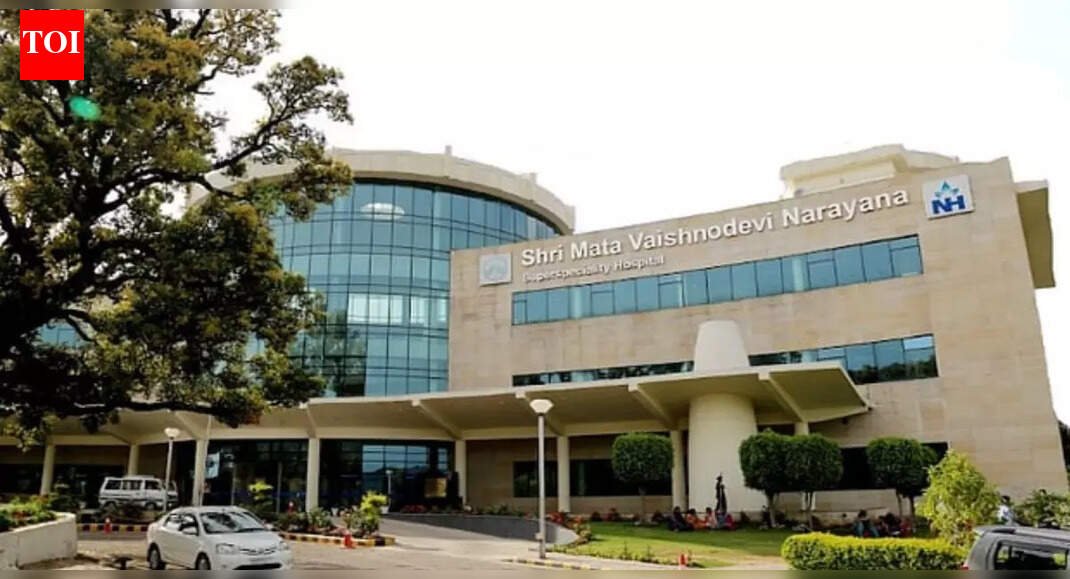
Explained: Why NMC shut down the MBBS course at Vaishno Devi medical college in J&K


Explained: Why NMC shut down the MBBS course at Vaishno Devi medical college in J&K

On January 6, 2026, months after granting conditional approval to start an MBBS course, the National Medical Commission (NMC) withdrew permission for the Shri Mata Vaishno Devi Institute of Medical Excellence (SMVDIME) in Jammu and Kashmir’s Reasi district, following a regulatory process punctuated by inspections, complaints and, eventually, political and public unrest.At its core, the NMC decision rests on regulatory non-compliance. The controversy that followed has layered that decision with questions of governance, merit, religion and student protection.

How the college got approval

SMVDIME applied to establish a new medical college with an intake of 50 MBBS seats for the 2025-26 academic year under public notices issued by the NMC on December 5 and December 19, 2024, according to PTI.After processing the application, the Medical Assessment and Rating Board (MARB), an autonomous board under the NMC, granted a Letter of Permission (LoP) on September 8, 2025. The permission allowed the institute to start the MBBS course, subject to strict conditions.These included maintaining minimum standards of infrastructure, faculty and clinical material, permitting surprise inspections, furnishing accurate information and rectifying deficiencies before renewal, the MARB order said. The regulator also reserved the right to withdraw or cancel permission in case of misrepresentation or non-compliance.

Complaints and surprise inspection

Following the issuance of the LoP, the NMC received multiple complaints alleging serious shortcomings at the college. These included inadequate infrastructure, insufficient clinical material, a shortage of qualified full-time teaching faculty and resident doctors, and low inpatient and outpatient numbers, PTI reports.Acting under Section 28(7) of the NMC Act, 2019, which empowers the regulator to conduct surprise inspections without prior notice, a team of assessors visited the institute on January 2, 2026.The inspection formed the basis of the adverse findings that followed.

What the inspection found

According to the MARB assessment report, the deficiencies were extensive and cut across core requirements.Faculty strength was significantly below prescribed norms, with a 39% shortfall in teaching faculty and a 65% deficiency in tutors, demonstrators and senior residents. Clinical services were also found to be far below standards, with outpatient department attendance of 182 at 1 pm against a required 400, and bed occupancy at 45% against the mandated 80%.Intensive care units had around 50% average occupancy, while the number of deliveries averaged about 25 per month, a figure the MARB termed “grossly deficient”. Several practical laboratories and the research laboratory were not available. Lecture theatres did not meet minimum standards, the library had 744 books against a requirement of 1,500 and only two journals against the mandated 15.The report also noted the absence of an antiretroviral therapy centre and facilities for managing multidrug-resistant tuberculosis. Only two operation theatres were functional against a requirement of five, with no minor operation theatre in the outpatient area and inadequate equipment for para-clinical subjects. Some departments lacked separate male and female wards.

The regulatory basis for withdrawal

Citing Chapter V, Regulation 29 of the Establishment of Medical Institutions, Assessment and Rating Regulations, 2023, which treats non-compliance as an offence liable to penalty, the MARB categorised the deficiencies as statutory non-compliance.After considering the assessment report, the commission concluded that the institute had failed to meet the minimum standard requirements specified in the Undergraduate Medical Education Regulations, 2023. With the approval of the NMC chairperson, the MARB decided to withdraw the LOP with immediate effect, PTI said.In addition, the regulator decided to invoke the performance bank guarantee furnished by the college, underscoring the financial consequences of regulatory failure.

What happens to the students

To ensure that students are not academically displaced, the MARB order directed that all students admitted during counselling for the 2025-26 academic year be accommodated in other medical institutions in Jammu and Kashmir as supernumerary seats.“This means no admitted student will lose an MBBS seat due to the withdrawal decision,” PTI reports. The implementation of the relocation will be handled by the Union Territory’s designated health and counselling authorities, who have been formally informed.

Protests and political response

Parallel to the regulatory action, the college became the focus of protests by the BJP-supported Shri Mata Vaishno Devi Sangharsh Samiti, a conglomeration of right-wing organisations. The agitation was triggered by the composition of the inaugural MBBS batch, which included 42 Muslim students, seven Hindu students and one Sikh, admitted through NEET.The Samiti demanded either the expulsion of non-Hindu candidates or the closure of the college, according to IANS.Jammu and Kashmir Chief Minister Omar Abdullah publicly defended the admissions, stating that they were strictly merit-based. “Those children worked hard to get their seats. No one did them any favour,” he said, according to PTI. He added that if the prevailing atmosphere made the institution unsafe for students, they should be adjusted elsewhere.“We do not want to send them to a place where so much politics is being done. Close that medical college. That medical college is not worth opening,” Abdullah said.He also reiterated that SMVDIME is not a minority institution and receives grants from the Jammu and Kashmir government.

Security and administrative response

Following protest calls, security around the Civil Secretariat was tightened, with hundreds of police personnel deployed to prevent any law and order situation. Officials reiterated that admissions had been conducted strictly on merit and in accordance with prescribed norms.Union Minister of State Dr Jitendra Singh said the Lieutenant Governor, who is also the chairman of the Shri Mata Vaishno Devi Shrine Board, was competent to address the issue and expressed hope that steps were being taken to resolve it, according to IANS.

Why the shutdown happened

Despite the political and public fallout, the formal reason for the shutdown remains regulatory. The NMC’s decision was driven by documented deficiencies in faculty, infrastructure and clinical exposure, identified through a surprise inspection and assessed under existing law.The student relocation order has prevented immediate academic loss. What remains unresolved is the future of the institution itself, and whether it can address the deficiencies and seek fresh approval.For now, the episode stands as a case study in how regulatory enforcement, institutional preparedness and local politics can converge, with students placed at the centre of the fallout.


Source link

Rupee strengthens! Indian currency surges 26 paise against US dollar; at 89.92 in early trading


Rupee strengthens! Indian currency surges 26 paise against US dollar; at 89.92 in early trading

The rupee showed slight improvement against the US dollar on Wednesday, surging 26 paise to reach 89.92 in early trading. This came due to a weaker dollar globally and falling crude oil prices. The currency had already shown positive movement on Tuesday, ending its four-day decline.Starting the day at 90.20, the rupee kept getting stronger at the interbank foreign exchange. This follows Tuesday’s gain of 12 paise, when it closed at 90.18 against the US dollar.Anil Kumar Bhansali from Finrex Treasury Advisors LLP, was quoted by PTI saying, “The rupee opened firmer even as (US President) Donald Trump continues to threaten India with more tariffs. Exporters are expected to continue selling at high of the day on cash/spot basis while importers will buy the dips and more if the fall is close to 90 for the dollar.”The dollar’s strength against other major currencies showed a small decline, with the dollar index dropping 0.05 percent to 98.52. Global oil prices also fell, with Brent crude futures trading 1.05 percent lower at $60.06 per barrel.However, Indian stock markets showed decline. The Sensex fell by 169.64 points to 84,909.30, while the Nifty decreased by 42.35 points to 26,128.90 in early trading. Foreign investors continued their selling streak, removing Rs 107.63 crore worth of stocks on Tuesday.


Source link