Breaking News
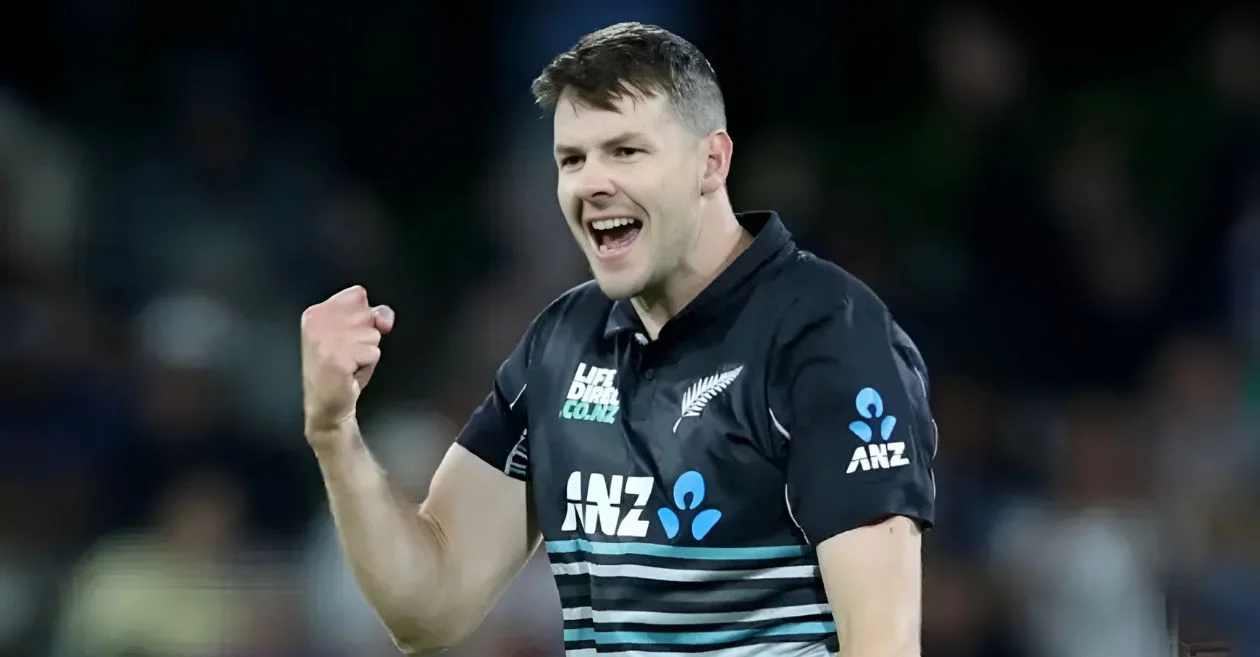
Jacob Duffy gets maiden call-up as New Zealand reveals spin-packed T20 World Cup 2026 squad


The ICC Men’s T20 World Cup 2026 is just a month away, and New Zealand have officially declared their intent with a squad built for the turning tracks of India and Sri Lanka. On January 7, 2026, New Zealand Cricket announced a 15-member unit that balances veteran savvy with the raw, record-breaking momentum of their newest star. The tournament, set to run from February 7 to March 8, will see the Black Caps navigate a challenging Group D that includes South Africa and Afghanistan. With a white-ball series in India scheduled for later this month as a final tune-up, the Kiwis are wasting no time in acclimating to the subcontinent. A

First-ever senior World Cup call-up for Jacob Duffy

The headline of the New Zealand selection is the inclusion of 31-year-old pacer Jacob Duffy, who earned his first-ever senior World Cup call-up following a historic 2025. Duffy transformed into a global bowling powerhouse over the last year, claiming a staggering 81 international wickets across all formats at a clinical average of 17. In a moment that etched his name into folklore, he surpassed Sir Richard Hadlee’s 40-year-old national record of 79 wickets in a calendar year during the December Test series against the West Indies. This prolific form saw him skyrocket to second place in the ICC T20I bowling rankings, making him the highest-ranked bowler in a squad that collectively boasts over 1,000 T20I caps.

His meteoric rise has also translated into a massive payday in the franchise circuit. During the IPL 2026 auction in December, defending champions Royal Challengers Bengaluru (RCB) secured Duffy for ₹2 crore, with Director of Cricket Mo Bobat labeling the signing a ‘bargain’ and essential injury cover. At the World Cup, Duffy will be the lone debutant in an otherwise seasoned pace battery featuring Lockie Ferguson, Matt Henry, and Adam Milne, while Kyle Jamieson travels as the pace reserve.

Also READ: ‘Won’t be selected for T20 World Cup but’: Dale Steyn passionately backs South African player for the white-ball cricket

New Zealand’s spin-heavy strategy under Mitchell Santner and Group D ambitions

Captain Mitchell Santner will lead a side specifically engineered for subcontinental conditions, emphasizing spin depth as the team’s core pillar. Santner, entering his ninth senior ICC tournament, will anchor a slow-bowling contingent that includes specialist Ish Sodhi, both of whom famously debuted at the 2016 World Cup in India. The squad is further bolstered by multi-skilled all-rounders Michael Bracewell, Glenn Phillips, and Rachin Ravindra, ensuring that New Zealand can field up to four or five spin options if required. In the batting department, the explosive Finn Allen and Tim Seifert (fresh off a BBL century for the Melbourne Renegades) provide the necessary firepower at the top.

New Zealand finds themselves in a high-stakes Group D, beginning its campaign on February 8 against a dangerous Afghanistan side in Chennai. The schedule poses a grueling test of adaptability:

  • Feb 8: vs Afghanistan (Chennai)
  • Feb 10: vs UAE (Chennai)
  • Feb 14: vs South Africa (Ahmedabad)
  • Feb 17: vs Canada (Chennai)

Despite current fitness concerns for Santner (adductor) and Ferguson (calf), the medical team expects a full-strength side by the opener. Notably, the team has also planned for short-term paternity leave for Ferguson and Henry, showing a modern, player-first approach to a high-pressure global campaign.

New Zealand ICC Men’s T20 World Cup 15-member squad

Mitchell Santner (c), Finn Allen, Michael Bracewell, Mark Chapman, Devon Conway, Jacob Duffy, Lockie Ferguson, Matt Henry, Daryl Mitchell, Adam Milne, James Neesham, Glenn Phillips, Rachin Ravindra, Tim Seifert (wk), Ish Sodhi

Also READ: Not Mohammed Shami! AB de Villiers labels Indian pacer ‘unlucky’ for missing out on T20 World Cup 2026 squad


Source link

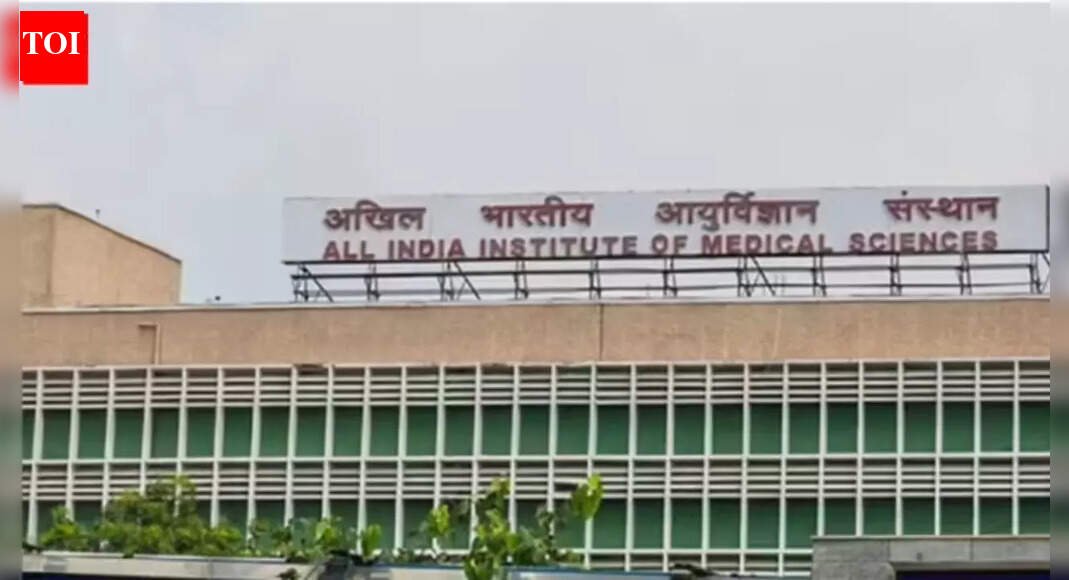
PRAGATI fast-tracks AIIMS push, brings tertiary care closer to heartland | India News


PRAGATI fast-tracks AIIMS push, brings tertiary care closer to heartland

NEW DELHI: Three long-delayed AIIMS projects—in Telangana’s Bibinagar, Assam’s Guwahati and Jammu—have moved decisively from delay to delivery after sustained intervention through the Centre’s PRAGATI platform, underscoring how high-level monitoring is reshaping access to advanced healthcare beyond major metros.Official sources said the projects gathered pace after being taken up on PRAGATI (Pro-Active Governance and Timely Implementation), a digital monitoring platform that brings Union ministries, state governments and local authorities onto a single dashboard, flags bottlenecks in real time and fixes deadlines through direct review by the Prime Minister.In Telangana, AIIMS Bibinagar gained momentum after a PRAGATI review in June 2023 unlocked long-pending issues related to assured water supply and permanent high-tension power. These hurdles were resolved in May 2025 through coordinated Centre–state action, pushing physical progress to nearly 86% and keeping the project on track for completion by June 2026. The institute is expected to emerge as a major hub for tertiary care, medical education and employment in the region.In the Northeast, AIIMS Guwahati—the region’s first AIIMS—was completed in 2023 after PRAGATI interventions helped resolve delays linked to land development, electricity, stormwater management and water supply. The 750-bed hospital now offers 25 specialty and 11 super-specialty services, with nearly 60% of patients receiving free treatment under Ayushman Bharat, significantly reducing out-of-pocket costs for vulnerable households.A similar last-mile push helped AIIMS Jammu overcome hurdles that threatened to delay commissioning despite near-complete construction. Issues such as relocation of a cremation ground and pending utility connections were taken up through PRAGATI in mid-2023, leading to time-bound action by the Union Territory administration. The institute was commissioned in November 2024 and now serves patients across Jammu & Kashmir and neighbouring regions.At the 50th PRAGATI meeting on December 31, Prime Minister Narendra Modi said Viksit Bharat@2047 is a time-bound national resolve and described PRAGATI as a key accelerator that breaks bureaucratic silos and enforces accountability across Centre, state and district administrations.Officials said the three AIIMS projects illustrate how PRAGATI has converted complex, multi-agency healthcare infrastructure from stalled works into operational hospitals. Beyond expanding bed capacity, the institutes are strengthening medical education, research and regional employment, easing pressure on existing centres and bringing quality care closer to people’s homes.


Source link

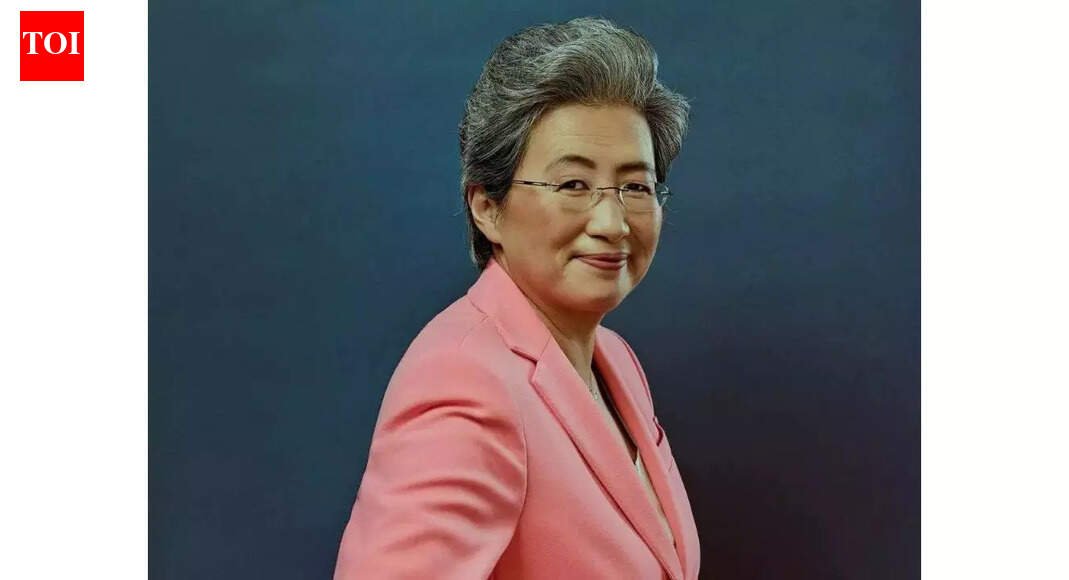
AMD CEO Lisa Su says: AI has not slowed hiring at AMD, just that we are now hiring different people. We’re hiring people who are AI forward


AMD CEO Lisa Su says: AI has not slowed hiring at AMD, just that we are now hiring different people. We’re hiring people who are AI forward

AMD CEO Lisa Su recently spoke about the impact of AI on hiring. Speaking at the ongoing Consumer Electronics Show (CES) 2026 in Las Vegas, US, Advanced Micro Devices (AMD) CEO Lisa Su said that artificial intelligence has now slowed down the hiring process at the chipmaker. She emphasised that AMD is actively expanding its workforce and is prioritising the candidates who are ‘AI forward’. “We’re actually not hiring fewer people,” Su told CNBC’s Jon Fortt. “Frankly, we’re growing very significantly as a company, so we actually are hiring lots of people, but we’re hiring different people. We’re hiring people who are AI forward.”AMD is known for designing graphic processing units (GPUs) that help in training AI workloads, placing the company at the center of the global AI race. While, chipset maker Nvidia is dominating the AI chip market presently with more than 90% share, AMD is also aggressively positioning itself as s challenger and is incorporating AI into how it builds, designs, manufactures and tests chips.n Su stressed that candidates who ‘truly embrace’ AI are the ones being prioritised in hiring. This practice reflects on the company’s shift forward embedding AI across its operations.

‘AI is augmenting our capabilities’

Su also pushed back against the concerns that the adoption of AI could lead to job cuts. Instead she believes that AI helps in increasing productivity. “AI is augmenting our capabilities. It’s not replacing people, it’s actually just augmenting our productivity in terms of the number of products we can bring up at any given time.”As of December 2024, AMD employed roughly 28,000 people worldwide, according to SEC filings. Su said the company continues to grow “very significantly,” underscoring that AI is reshaping the type of talent AMD seeks rather than reducing overall headcount.

What Lisa Su said about the AI revolution

Last year, Su mentioned that she believes in AGI but not that AI will surpass human intelligence, and she isn’t concerned about doomsday scenarios. She sees technology’s value as dependent on the people who create and guide it, and thinks AI isn’t “great” yet. For her, AI becomes great when it can solve complicated problems. She higlighted that current AI agents mostly handle mundane tasks.“I think there are two directions AI goes. One is pure productivity, you know, how do I remove some of, let’s call it, the menial work that people do, so that they can work on more interesting things? That’s one aspect of it, and we’re using that. But the other aspect of it is when AI can solve really hard problems. It can take what would’ve taken us 10 years to figure out and do that in six months. I think about a world where it normally takes us three years to design a chip, and what does that look like if I could do that in six months?” she added.Comparing the AI revolution with the Internet revolution, Su noted: “The internet is not a bad comparison, but I think AI is much more than the internet. Because, if you think about it, the internet was a lot about moving traffic. AI is more about something foundational in terms of productivity. Sometimes people compare it to the Industrial Revolution, and that’s not a bad comparison, actually.”


Source link

134-year-old record shattered: Australia create history in Ashes, achieve rare Test feat | Cricket News


134-year-old record shattered: Australia create history in Ashes, achieve rare Test feat
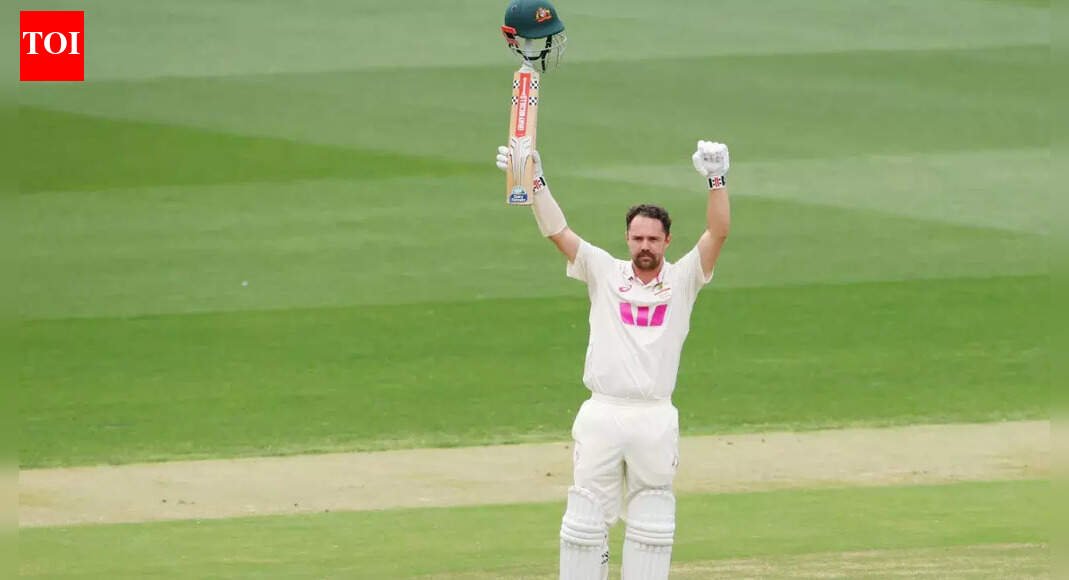
Travis Head scored a blistering 163 in the SCG Test (Getty Images)

NEW DELHI: Australia etched their name into a rare 134-year-old chapter of Test history on Day 3 of the fifth Ashes Test at the Sydney Cricket Ground, producing a batting effort unmatched in the rivalry since the 19th century. Australia, pushing for a 4-1 series victory after the shock defeat at the MCG in the Boxing Day Test, are firmly in control in the fifth and final Test.Smith registered the 37th Test century of his career and remained unbeaten on 129 at stumps, following Travis Head’s blistering 163 earlier in the innings.

Usman Khawaja’s retirement speech: ‘I want the journey for the next Usman Khawaja to be easier’

Australia closed the third day on 529 for 7, holding a commanding first-innings lead of 134 runs after England were dismissed for 384 despite Joe Root’s sublime 160.What made Australia’s innings truly historic was the sheer consistency across the batting order. The hosts stitched together seven partnerships of 50 or more runs, a feat achieved only once before in the 134-year history of Test cricket — by India at The Oval in 2007 under Rahul Dravid, in a match remembered for Anil Kumble’s lone Test century. Australia fell just short of equalling that benchmark, with the lone sub-50 stand being the 27-run partnership between Alex Carey and Smith.

Most 50+ partnerships an innings in Ashes

Team 50+ Partnerships in an Innings Venue Year
Australia 7 SCG 2025
England 6 Adelaide 1892
England 6 Brisbane 1928
Australia 6 Brisbane 2006
Australia 6 Brisbane 2025

In the long history of the Ashes, seven half-century partnerships in a single innings had never been recorded until now. The previous best in the contest dated back to 1892, when England managed six such stands at Adelaide — a record that stood untouched for 134 years. Only four other Ashes innings have featured six 50-plus partnerships, underlining the rarity of Australia’s effort at the SCG.


Source link

Vijay Hazare Trophy: Shubman Gill returns to action, but stay remains brief | Cricket News


Vijay Hazare Trophy: Shubman Gill returns to action, but stay remains brief

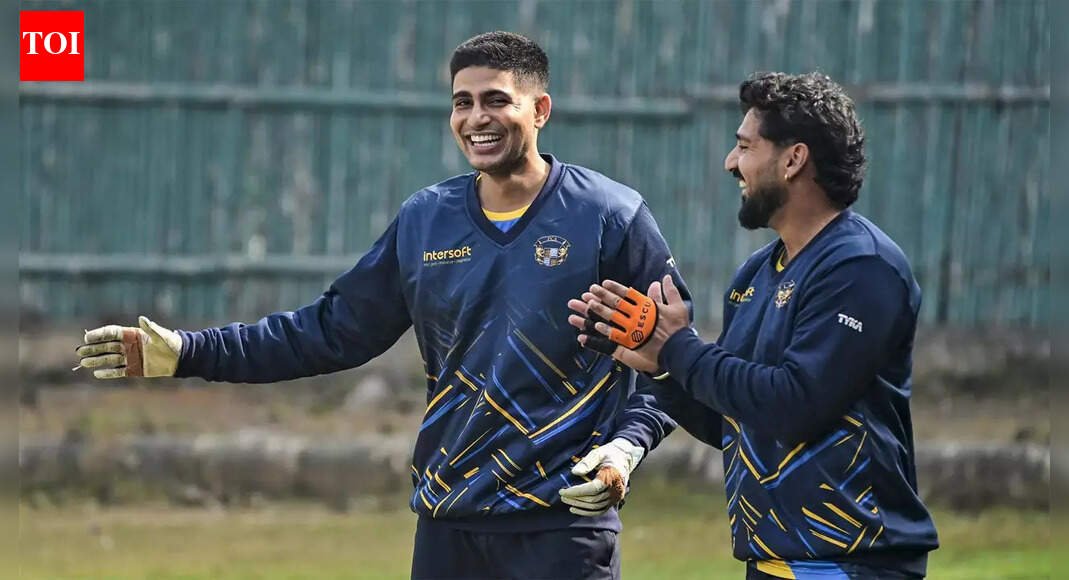
JAIPUR: All eyes were on star attraction Shubman Gill, but his stay at the crease proved brief, lasting just 12 balls. After surviving a couple of early catching chances, the India skipper — here as Punjab opener — fell to seamer Vasuki Koushik, edging a delivery to second slip as he departed for 11.Go Beyond The Boundary with our YouTube channel. SUBSCRIBE NOW!In a Vijay Hazare Trophy match reduced to 40 overs after a fog-induced hour-long delay, Punjab soon slipped to 59/3 after two more quick wickets, including captain Prabhsimran Singh, but the chase was rescued by a resilient fourth-wicket stand of 131 between Harnoor Singh and Naman Dhir, that steadied the innings.

India ODI squad review | Iyer returns, Pant gets the nod, Shami misses out again

The duo guided their side to a comfortable six-wicket victory over Goa in the Group ‘C’ fixture here.Harnoor remained unbeaten on 94 off 90 balls, narrowly missing out on his second List A hundred of the season after his unbeaten 115 as opener against Chhattisgarh. Naman played a supporting knock, contributing 68 off 65 balls.Earlier, Punjab pacers made early inroads as Goa were bowled out for 212.


Source link

Trump tariffs’ Supreme Court test likely Friday: Legality of emergency powers under scrutiny; global markets on edge


Trump tariffs' Supreme Court test likely Friday: Legality of emergency powers under scrutiny; global markets on  edge

The US Supreme Court is likely to announce its final ruling on President Donald Trump’s global tariffs on Friday, with regards to its legality that has put global economies on edge. According to Reuters, the court, which has a 6-3 conservative majority, will also address cases involving voting rights, conversion therapy bans, and future matters concerning transgender athletes and Federal Reserve leadership.

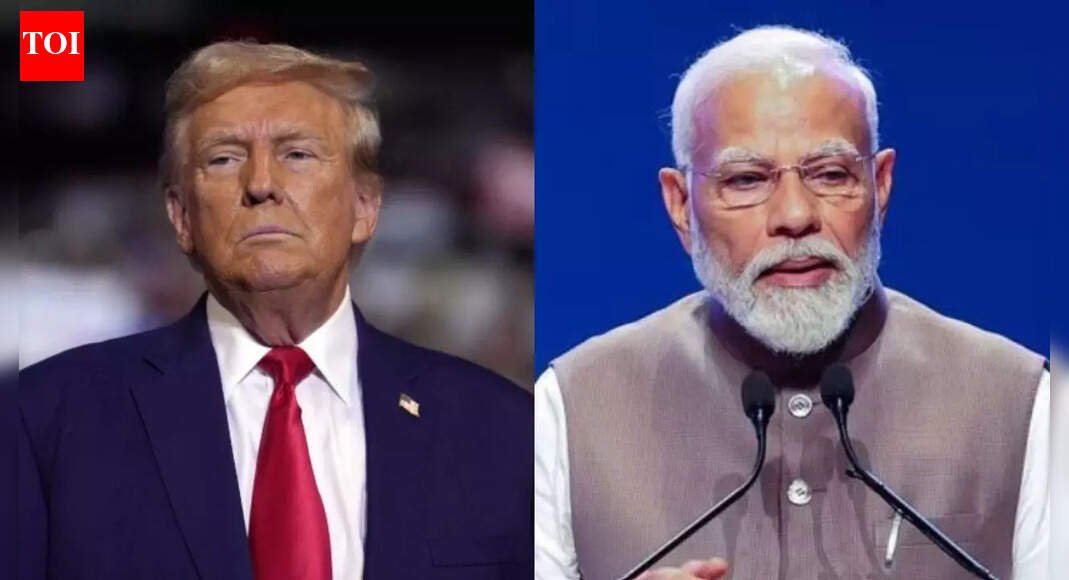
Donald Trump Says PM Modi ‘Not Happy With Me’ Over Higher Russian Oil Tariffs

The last hearing on tariffs was in November, when, both conservative and liberal justices questioned the legality of using a 1977 emergency powers law to impose trade restrictions. Trump has defended his actions strongly on social media, stating “Because of Tariffs, our Country is financially, AND FROM A NATIONAL SECURITY STANDPOINT, FAR STRONGER AND MORE RESPECTED THAN EVER BEFORE.”The US president used the International Emergency Economic Powers Act to tackle what he called trade deficit emergencies. He also applied it to pressure China, Canada, and Mexico to help fight fentanyl trafficking. Trump recently expressed worry about possibly losing the case, calling such an outcome a “terrible blow” to the United States.The court is also weighing other significant matters. In October, they heard arguments about the Voting Rights Act’s Section 2, which protects minority voting power. The conservative majority seemed likely to limit this protection. They also considered a challenge to Colorado’s ban on conversion therapy for LGBT minors, with justices appearing to favor a Christian counselor’s free speech argument.Looking ahead, the court will hear cases about transgender athletes in school sports on January 13. Later this month, they’ll also consider Trump’s unprecedented attempt to remove Federal Reserve Governor Lisa Cook, a case that could affect the central bank’s independence.


Source link

Busted! Luxury handbag thieves caught mid-heist in California; heavily armed cops swoop in — watch


Busted! Luxury handbag thieves caught mid-heist in California; heavily armed cops swoop in — watch

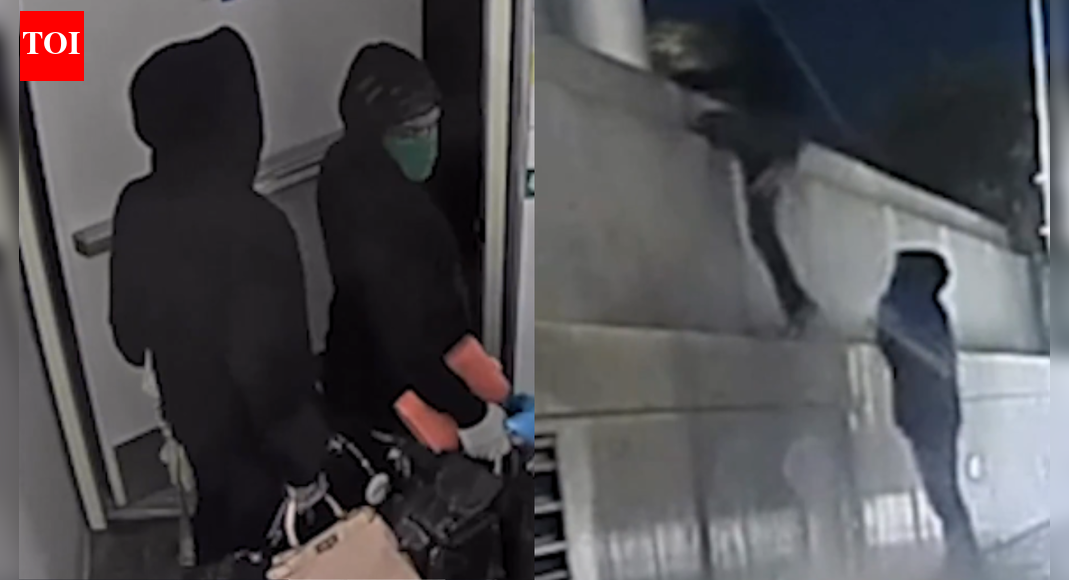
California authorities announced Tuesday that they arrested two individuals after CCTV footage captured their alleged burglary attempt, Fox News reported.They were accused of stealing nearly $100,000 worth of luxury handbags from a retail store. The Irvine Police Department (IPD) released footage showing suspects, dressed in black hoodies and face masks, attempting to flee the store as heavily armed officers intervened.“Early this morning, Irvine Police Department responded to a burglary of a luxury handbag store in the area of Jamboree and Dupont,” the Fox news quoted the agency as saying. “The building security alerted officers that two people were seen on surveillance entering the building.”Surveillance video shows the suspects inside the store moments before police arrived. Authorities said the individuals were seen scaling a tall wall to gain access and then entering a store carrying popular brands such as Celine and Givenchy. Security cameras captured them trying to leave through an emergency exit while carrying multiple bags, before suddenly running up a flight of stairs to an upper floor.The suspects were identified as Richard Bernard Spencer, 40, of Los Angeles, and Marcellus Ronell Shelby, 30, of Hollywood. They were booked into Orange County Jail on charges including burglary, grand theft, conspiracy, vandalism, and resisting arrest.Police officers, heavily armed and supported by K9 units as well as drone assistance from the Costa Mesa Police Department, located the two hiding near office spaces. Body camera footage shows them being handcuffed and escorted to a police cruiser after resisting arrest.About $100,000 worth of handbags were recovered and returned to the store, authorities said.


Source link

Trump ‘sir’ dials wrong number on India’s Apache purchase


Trump 'sir' dials wrong number on India's Apache purchase

The TOI correspondent from Washington: US President Donald Trump pulled another hyperbole out of his MAGA hat on Tuesday, claiming that India had ordered 68 Apache attack helicopters from the United States, the delivery of which was so slow that Prime Minister Narendra Modi deferentially sought a meeting with him to raise concern over the delays. A review of official contracts, delivery records, deployment details and conversations with military and diplomatic sources shows that the claim does not align with facts: India ordered only 28 Apache helicopters in total, and as of December 2025, all of them have been delivered.

Apache AH-64e And Prachand Give India A Two-Front Air Strike Edge From Deserts To High Himalayas

The discrepancy reinforces a pattern critics have frequently noted in Trump’s public remarks where numbers are often inflated and timelines simplified to emphasise US leverage or personal involvement, like for instance in his persistent claim that he forced India and Pakistan into a truce with threat of tariffs. In this case, while delivery delays were real and did frustrate New Delhi, the scale described by Trump was not; neither was his claim that PM Modi asked “Sir, may I see you, please?” to raise the issue.In Trump’s recalls, everyone – even foreign leaders (except Putin and Xi Jinping) – is always calling him “sir.”India’s acquisition of the Boeing AH-64E Apache Guardian helicopters took place in two distinct phases, not one massive order. The first deal was signed in September 2015, during the final months of the Obama administration, when India signed an agreement to buy 22 Apaches for the Indian Air Force (IAF) in a contract worth about $2.2 billion. These helicopters were delivered on schedule, with the final units arriving by 2020 during the first Trump administration. They were inducted into two frontline squadrons and quickly became a central part of India’s attack helicopter capability.The second deal was signed in February 2020 during Trump’s visit to India. This follow-on contract, valued between $600 million and $800 million, covered six Apaches for the Indian Army Aviation Corps. This is the order that experienced repeated delays and became a talking point in US and Indian political discussions, including PM Modi flagging it during his visit to the White House in February 2025, one of many topics that were on the agenda. Combined, both deals amount to 28 helicopters—less than half of the figure cited by Trump.While the Air Force’s Apaches arrived on time, delivered at the end of Trump’s first term, the Army’s six helicopters were significantly delayed. Deliveries were initially scheduled to begin in early 2024. Instead, the first batch reached India only in July 2025—about 15 months late. The final three helicopters arrived in December 2025, completing the order nearly two years behind schedule.Several factors contributed to the delays. Boeing’s Apache production line in Mesa, Arizona, was affected by post-pandemic supply chain disruptions, including shortages of engines, gearboxes, and specialised electronics. In addition, India reportedly had a relatively low priority ranking within the US defence priorities and allocations system (DPAS) in 2024, meaning other customers—including the US. Army—were ahead in the queue for certain components.There were also technical and logistical complications. Boeing briefly paused some Apache deliveries worldwide due to electrical and power-generation concerns that required additional safety testing. In a final twist, the last batch bound for India in November 2025 had to turn back mid-flight after Turkey denied overflight clearance to the Antonov-124 transport aircraft carrying the helicopters, adding several more weeks of delay.Also read: ‘If they don’t help on Russian oil issue…’; Donald Trump’s new tariff warning to India; praises PM ModiThese genuine frustrations likely form the basis of Trump’s comments, but the numerical exaggeration undermines their credibility. Is it possible that Trump may have conflated two separate Indian helicopter purchases from Boeing: the AH-64E Apache attack helicopter and the CH-47F Chinook heavy-lift helicopter? Both deals were signed around the same time, both involved Boeing (for which Trump claimed to be the all-time best salesman), but they still add up to only 43, since India ordered 15 Chinooks, all of which have been delivered between 2019 and 2020. There is no record in India’s ministry of defence or US foreign, military Sales (FMS) notifications of any additional Apache orders beyond the 28 units. While the Army originally projected a requirement for 39 Apaches, no new contracts have been signed.In fact, despite the Apache’s formidable firepower, India’s experience with dodgy US supply chains issues and increasingly mercurial strategic shifts vis-a-vis China and Pakistan is such that it is now peeling away from American, and for that matter, any foreign dependency. Instead, New Delhi is increasingly prioritising indigenous solutions under its “Make in India” policy. In this case, it is leaning on the HAL Prachand Light Combat Helicopter. A lighter chopper optimized for extreme altitudes, Prachand can operate where the heavier Apache struggles, including at heights above 20,000 feet like in Siachen. India plans to induct 156 Prachand helicopters across the Army and Air Force, gradually reducing reliance on foreign attack helicopters.The emerging strategy is clear: Apaches will remain India’s heavy strike platforms in plains and desert sectors, but the future of India’s rotary-wing combat power will be increasingly domestic. Trump’s claim of 68 helicopters may have overstated the scale, but it has inadvertently highlighted why India is determined to avoid dealing with a maverick.


Source link

Trump ‘sir’ dials wrong number on India’s Apache purchase


Trump 'sir' dials wrong number on India's Apache purchase

The TOI correspondent from Washington: US President Donald Trump pulled another hyperbole out of his MAGA hat on Tuesday, claiming that India had ordered 68 Apache attack helicopters from the United States, the delivery of which was so slow that Prime Minister Narendra Modi deferentially sought a meeting with him to raise concern over the delays. A review of official contracts, delivery records, deployment details and conversations with military and diplomatic sources shows that the claim does not align with facts: India ordered only 28 Apache helicopters in total, and as of December 2025, all of them have been delivered.

Apache AH-64e And Prachand Give India A Two-Front Air Strike Edge From Deserts To High Himalayas

The discrepancy reinforces a pattern critics have frequently noted in Trump’s public remarks where numbers are often inflated and timelines simplified to emphasise US leverage or personal involvement, like for instance in his persistent claim that he forced India and Pakistan into a truce with threat of tariffs. In this case, while delivery delays were real and did frustrate New Delhi, the scale described by Trump was not; neither was his claim that PM Modi asked “Sir, may I see you, please?” to raise the issue.In Trump’s recalls, everyone – even foreign leaders (except Putin and Xi Jinping) – is always calling him “sir.”India’s acquisition of the Boeing AH-64E Apache Guardian helicopters took place in two distinct phases, not one massive order. The first deal was signed in September 2015, during the final months of the Obama administration, when India signed an agreement to buy 22 Apaches for the Indian Air Force (IAF) in a contract worth about $2.2 billion. These helicopters were delivered on schedule, with the final units arriving by 2020 during the first Trump administration. They were inducted into two frontline squadrons and quickly became a central part of India’s attack helicopter capability.The second deal was signed in February 2020 during Trump’s visit to India. This follow-on contract, valued between $600 million and $800 million, covered six Apaches for the Indian Army Aviation Corps. This is the order that experienced repeated delays and became a talking point in US and Indian political discussions, including PM Modi flagging it during his visit to the White House in February 2025, one of many topics that were on the agenda. Combined, both deals amount to 28 helicopters—less than half of the figure cited by Trump.While the Air Force’s Apaches arrived on time, delivered at the end of Trump’s first term, the Army’s six helicopters were significantly delayed. Deliveries were initially scheduled to begin in early 2024. Instead, the first batch reached India only in July 2025—about 15 months late. The final three helicopters arrived in December 2025, completing the order nearly two years behind schedule.Several factors contributed to the delays. Boeing’s Apache production line in Mesa, Arizona, was affected by post-pandemic supply chain disruptions, including shortages of engines, gearboxes, and specialised electronics. In addition, India reportedly had a relatively low priority ranking within the US defence priorities and allocations system (DPAS) in 2024, meaning other customers—including the US. Army—were ahead in the queue for certain components.There were also technical and logistical complications. Boeing briefly paused some Apache deliveries worldwide due to electrical and power-generation concerns that required additional safety testing. In a final twist, the last batch bound for India in November 2025 had to turn back mid-flight after Turkey denied overflight clearance to the Antonov-124 transport aircraft carrying the helicopters, adding several more weeks of delay.Also read: ‘If they don’t help on Russian oil issue…’; Donald Trump’s new tariff warning to India; praises PM ModiThese genuine frustrations likely form the basis of Trump’s comments, but the numerical exaggeration undermines their credibility. Is it possible that Trump may have conflated two separate Indian helicopter purchases from Boeing: the AH-64E Apache attack helicopter and the CH-47F Chinook heavy-lift helicopter? Both deals were signed around the same time, both involved Boeing (for which Trump claimed to be the all-time best salesman), but they still add up to only 43, since India ordered 15 Chinooks, all of which have been delivered between 2019 and 2020. There is no record in India’s ministry of defence or US foreign, military Sales (FMS) notifications of any additional Apache orders beyond the 28 units. While the Army originally projected a requirement for 39 Apaches, no new contracts have been signed.In fact, despite the Apache’s formidable firepower, India’s experience with dodgy US supply chains issues and increasingly mercurial strategic shifts vis-a-vis China and Pakistan is such that it is now peeling away from American, and for that matter, any foreign dependency. Instead, New Delhi is increasingly prioritising indigenous solutions under its “Make in India” policy. In this case, it is leaning on the HAL Prachand Light Combat Helicopter. A lighter chopper optimized for extreme altitudes, Prachand can operate where the heavier Apache struggles, including at heights above 20,000 feet like in Siachen. India plans to induct 156 Prachand helicopters across the Army and Air Force, gradually reducing reliance on foreign attack helicopters.The emerging strategy is clear: Apaches will remain India’s heavy strike platforms in plains and desert sectors, but the future of India’s rotary-wing combat power will be increasingly domestic. Trump’s claim of 68 helicopters may have overstated the scale, but it has inadvertently highlighted why India is determined to avoid dealing with a maverick.


Source link

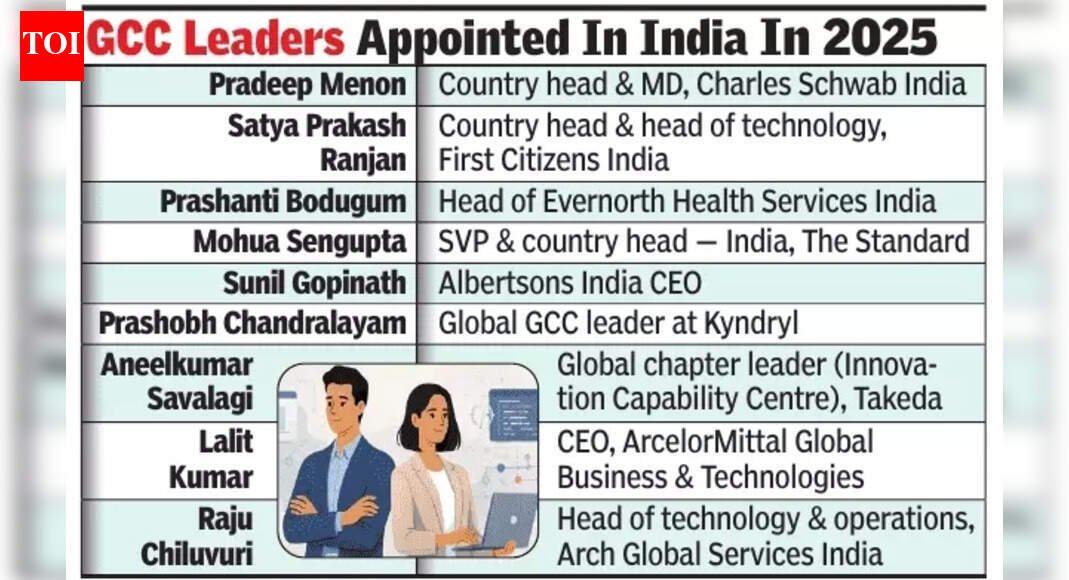
Why engineering-first leaders are taking over India’s GCCs


With technology at the helm, global capability centre (GCC) leaders are rewriting leadership slates, prioritising site leaders with a deep engineering focus. In the India business case, the mandate moved well beyond setting up a sourcing base, liaising with headquarters, or acting as a talent scout, to demonstrating strong engineering leadership and rapid adoption of AI playbooks. As advisory firms increasingly take on the archetypes of erstwhile India leadership roles, GCC heads are being pushed to demonstrate deeper technology ownership to raise the bar within their parent firms and across client ecosystems. Leadership expectations shifted decisively from operational oversight to owning global technology outcomes. Last year marked an inflection point for GCCs, with over 2 dozen leaders appointed during the period. Several executives moved to new firms as part of broader leadership reshuffles and mandate changes, reflecting rising expectations and a growing willingness among global firms to reset leadership quickly.Pradeep Menon moved from his role as CEO and country head of HSBC SDI, where he also served as managing director and head of technology for India, to take over as country head and MD of Charles Schwab India. Satya Prakash Ranjan was appointed country head of technology at First Citizens India, part of US-based First Citizens Bank, a top-20 US financial institution with assets exceeding $200 billion. Prashanti Bodugum joined as head of Evernorth Health Services India, moving from Walmart Global Tech India, where she served as Vice President for e-commerce US omni platforms technology for its India operations.Lalit Ahuja, founder of ANSR, said as GCCs assume larger product, platform, and engineering mandates, leaders are increasingly appointed based on the specific business and engineering outcomes they are expected to deliver—whether in digital transformation, AI, cloud, cybersecurity, or emerging technologies. “Today, site leaders spend nearly 80% of their time operating in global functional roles, with only about 20% focused on traditional site responsibilities such as brand building, culture, and ecosystem engagement. This marks a significant departure from the past, when site leaders were largely administrative heads. Today, GCC leaders are domain experts and strategic partners, deeply embedded in enterprise priorities and accountable for key business-critical mandates.” Ahuja said site leaders spend nearly 80% of their time operating in global functional roles, with only about 20% focused on traditional site responsibilities such as brand building, culture, and ecosystem engagement.Venkat Shastry, founder and CEO of leadership advisory firm QuantumV, said GCCs are no longer judged as cost or delivery centres but are increasingly measured as product, platform and IP engines. “Boards have dramatically shortened their patience cycles. If a GCC leader can’t articulate an AI-led transformation and operating model within 6–12 months, companies are far quicker today to reset leadership than they were even two years ago. India’s GCC ecosystem has matured to the point where leadership replacement feels lower risk. With a deep bench of experienced leaders, companies believe they can ‘upgrade’ leadership fast—and that confidence itself is accelerating movement. Arindam Sen, GCC partner at EY India, said the rise in leadership roles at GCCs reflects natural career progression and capability. “It also reflects a shift from traditional, execution-led leadership archetypes to more globally embedded, advisory-driven ones. This shift requires a new league of leaders—who combine strategic thinking, business insight, and execution excellence, qualities that India’s talent is uniquely demonstrating.Pari Natarajan, CEO of global management consultancy firm Zinnov, said shifts are being accelerated by GenAI. As automation takes over routine execution, enterprises are becoming more deliberate about where engineering judgement, product ownership, and architectural decisions sit. Increasingly, that work is moving into GCCs, raising the leadership bar. “We’ve seen centres once measured on headcount and SLAs now being asked to own global engineering roadmaps or AI platforms with direct business impact. When the mandate changes that fundamentally, leadership change is often a consequence of evolution, not a response to failure.”


Source link