Breaking News
Maharashtra Nodal Cyber Police file chargesheet in Rs 58-crore ‘digital arrest’ con in Mumbai, allege fraudsters opened over 10,000 mule accounts to divert money overseas | Mumbai News


Mumbai: The Maharashtra Nodal Cyber Police on Wednesday filed a 2,500-page chargesheet in a Rs 58-crore ‘digital arrest’ con naming 32 arrested persons and 41 wanted accused. Investigators said the accused not only impersonated senior officers of the Central Bureau of Investigation (CBI) and Enforcement Directorate (ED), but also created a multi-layered web of mule bank accounts to rapidly move money across states and eventually overseas.According to the chargesheet submitted to a magistrate’s court, the investigation uncovered over 10,000 mule accounts, many opened in the names of fictitious companies using forged KYC documents and fake SIM cards. The funds allegedly travelled through 13 layers of accounts, including at least 27 active mule accounts in Maharashtra, Gujarat, and Rajasthan, before being diverted abroad. The masterminds are suspected to be operating from Cambodia and Dubai, with one Vijay Khanna emerging as a key handler believed to be outside India.The fraud began in Aug 2025, when a pharmaceutical businessman and his wife were allegedly terrorised through calls and video interactions by persons posing as CBI and ED officials. The couple was told that their bank accounts had received “suspicious” funds attracting money-laundering provisions and were shown fake video calls and staged clips depicting police stations, CBI and ED offices, and even mock courtrooms with actors posing as judges, officers, and lawyers. Under the guise of investigation, the couple was coerced to transfer their entire savings of more than Rs 58.1 crore, with assurances the money would be returned after clearance.The chargesheet names arrested accused including Abdul Khulli, Arjun Kadwasara, Jetharam Kadwasara, Jafar Sayyed, Sheikh Salam, Mohammad Sheikh, Imran Sheikh, Mukesh Bhatia, Akshay Meena, Mukesh Singhvi, Sunny Lodha, Minhajuddin Sirajuddin, Sunny Jain, Chisti Ahteshamuddin, Ganesh Gawre, Suresh Patel, Mussaran Kunbhar, Charagkumar Chaudhary, Ankitkumar Shah, Yuvraj alias Marco Sikarwar, Vasudev Barot, Jayeshbhai Dapa, Bipin Goswami, Sachin Pekhale, Tushar Patil, Sheikh Pasha, Devendranath Raut, Katunga Kumar, Vikramsingh Parmar, Zaid Mughale, Omkar Hase and Mohammad Arif.Investigators said arrested Gujarat businessman Jayeshbhai Dapa’s firm, Jai Bhavani Mechanical, allegedly received Rs 15.25 crore, which was then routed to multiple accounts for monetary consideration. Accounts in the names of Meghdoot Trading, owned by Sakalkumar Sahu, Jacky Explorer owned by Chirag Sharma, and entities such as SBV Foundation and M-Stak Innovation allegedly received major sums, ranging from Rs 1.85 crore to Rs 2.4 crore.Devendranath Raut, a resident of Dadra and Nagar Haveli, allegedly received Rs 2.1 crore in the name of Sainath Enterprises and stated, during interrogation, that he transferred funds at the behest of a wanted accused identified as Shratik. Investigators have also tracked Rs 3.4 crore allegedly transferred to accounts linked with wanted accused Vijay Gaikwad, Abhijit Jamble, and Ratnadeep.The chargesheet further stated that AVB Foundation, owned by Akshay Meena of Bhilwara, received Rs 30 lakh, while Maybank Indonesia accounts linked to Technomist Softwares and Arkit Solutions and opened by wanted accused Devendra alias Sunny and arrested accused Mukesh Bhatia allegedly received Rs 50 lakh. Accused Katunga Raju Samuel Prasad from Andhra Pradesh allegedly received Rs 2.4 crore through an account in the name of a religious trust.Police said the investigation is continuing to trace overseas handlers and remaining financial trails, while efforts are underway to locate the 41 wanted accused and freeze additional accounts linked to the network.


Source link

Schoolgirl gangraped in Kanpur: YouTuber arrested, sub-inspector absconding; DCP removed for distortion of facts | Kanpur News


KANPUR: A YouTuber has been arrested and a police sub-inspector is on the run after the alleged abduction and gang rape of a 14-year-old girl in Kanpur’s Sachendi area, police said on Wednesday.Police commissioner Raghubir Lal removed deputy commissioner of police (West) Dinesh Chandra Tripathi and suspended Sachendi Station House Officer (SHO) Vikram Singh for alleged lapses and distortion of facts.

Kanpur Headlines Today — The Biggest Updates You Need to Know.

According to police, the victim, a class 7 dropout, was allegedly abducted in a Mahindra Scorpio around 10 pm on Monday. She was taken to a deserted spot near a railway track, where she was sexually assaulted for nearly two hours before being abandoned outside her house in an unconscious state. “Based on the victim’s statement, Sub-Inspector Amit Kumar Maurya and YouTuber Shivbaran Yadav have been named in the FIR. Yadav has been arrested, while four teams have been formed to nab the absconding SI,” Raghubir Lal told reporters. The SUV used in the crime, which belongs to Maurya, has been seized. Investigations revealed that Maurya was present in Sachendi at the time of the incident despite being posted at the Bithoor Police Station. The victim’s family alleged a cover-up by the local police, claiming they were initially turned away when they mentioned a policeman’s involvement. The girl’s brother said the police seized her mobile phone and prevented her from returning home until her court statement was recorded. SHO Vikram Singh was suspended for failing to invoke the Protection of Children from Sexual Offences (POCSO) Act in the initial stages and for allegedly misrepresenting facts in case records. Deenanath Mishra has been given charge of the Sachendi Police Station. The investigation has been handed over to Additional DCP (West) Kapil Dev Singh. The incident has sparked political outrage. Former CPI(M) MP Subhashini Ali met the commissioner to condemn the “widespread impunity” in crimes against women in the state. “The investigation is being conducted with complete transparency, and strict action will be taken against all guilty parties,” Raghubir Lal said.


Source link

Global AI race: DeepSeek gains ground in developing nations; Microsoft flags widening gap


Global AI race: DeepSeek gains ground in developing nations; Microsoft flags widening gap

Chinese AI startup DeepSeek is seeing rapid adoption across several developing countries, helping broaden access to generative artificial intelligence even as the overall gap between advanced and emerging economies continues to widen, according to a new Microsoft report.The report said global adoption of generative AI tools reached 16.3% of the world’s population in the three months to December, up from 15.1% in the preceding quarter, AP reported. However, AI adoption in developed economies — described by Microsoft as the “global north” — is growing at nearly twice the pace of adoption in developing countries.“We are seeing a divide and we are concerned that that divide will continue to widen,” Juan Lavista Ferres, chief data scientist at Microsoft’s AI for Good Lab, said. The analysis is based on anonymised telemetry data tracking global device usage.Countries that invested early in digital infrastructure and artificial intelligence continue to lead adoption levels, including the United Arab Emirates, Singapore, France and Spain. The findings broadly align with earlier surveys, including research by the Pew Research Center, which showed higher enthusiasm for AI in countries such as South Korea.Against this backdrop, the rise of DeepSeek — founded in 2023 — has played a significant role in expanding AI use across parts of the developing world. Microsoft researchers said DeepSeek’s free-to-use and “open source” models have lowered barriers to adoption, particularly in price-sensitive regions.When DeepSeek released its advanced reasoning model R1 in January 2025, claiming it was more cost-effective than comparable offerings from OpenAI, it drew attention across the global technology industry. Research co-authored by DeepSeek founder Liang Wenfeng and published in Nature later that year described the work as a “landmark paper”.Lavista Ferres said DeepSeek performs well on tasks such as mathematics and coding, but noted that it operates differently from US-based models on politically sensitive topics. “For certain type of questions, of course, they follow the same type of access to the internet that China has,” he said, adding that responses on political issues can differ significantly.DeepSeek offers a free chatbot across web and mobile platforms and allows developers to modify and build on its core engine. According to the report, the absence of subscription fees has “lowered the barrier for millions of users, especially in price-sensitive regions”.The report found that DeepSeek’s adoption remained limited in North America and Europe, where several governments have raised security concerns. Countries including the US, Germany and Australia have sought to restrict its use, and Microsoft last year banned its own employees from using the platform.By contrast, DeepSeek’s usage surged in China and in countries such as Russia, Iran, Cuba and Belarus — regions where access to US-based technology platforms is restricted. In many markets, its adoption was linked to being pre-installed or promoted on smartphones from Chinese manufacturers such as Huawei.DeepSeek’s estimated market share was about 89% in China, followed by Belarus at 56% and Cuba at 49%. In Russia, its share was around 43%, while in Iran and Syria it ranged between 23% and 25%. In several African countries, including Ethiopia, Zimbabwe, Uganda and Niger, its market share stood between 11% and 14%.“Open-source AI can function as a geopolitical instrument, extending Chinese influence in areas where Western platforms cannot easily operate,” the report said.


Source link

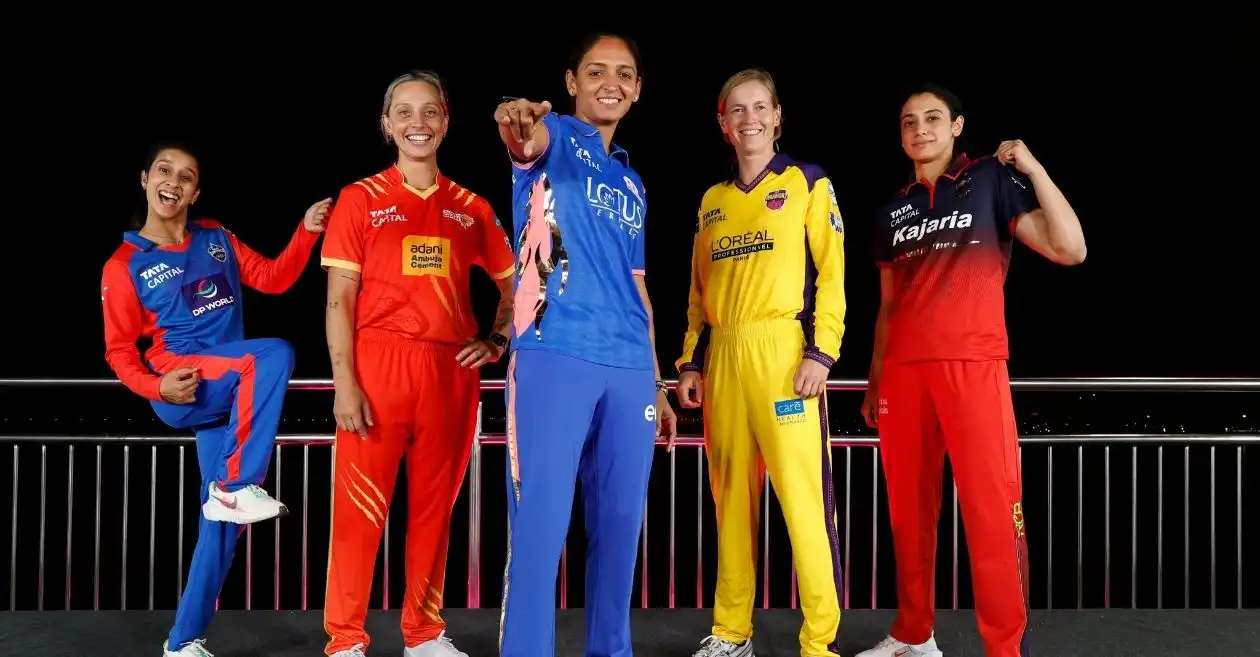
Women’s Premier League (WPL) 2026 Squads: Players list and captains of all five teams


The wait is finally over! The fourth edition of the Women’s Premier League (WPL) is set to light up the stage starting tomorrow, January 9, 2026. After a headline-grabbing Mega Auction in New Delhi last November, the five franchises have finalized their rosters, and the landscape of the league has shifted dramatically.

This season brings massive shake-ups—none bigger than Meg Lanning’s move to UP Warriorz and Jemimah Rodrigues taking over the captaincy reins at Delhi Capitals. With the first ball just hours away, let’s have a look at the WPL 2026 squads and the captains leading the charge.

WPL 2026: Tournament structure

The 2026 edition of WPL follows the established and high-stakes double round-robin format. All five teams—Mumbai Indians, Delhi Capitals, UP Warriorz, Royal Challengers Bengaluru, and Gujarat Giants—will face each other twice in the league stage, totaling 20 matches. The competition this year adopts a two-leg “caravan” model: the first half of the season will be hosted in Navi Mumbai, before the action shifts to Vadodara for the business end of the tournament.

The team finishing at the top of the points table will earn a direct ticket to the Grand Final on February 5. Meanwhile, the teams finishing second and third will battle it out in the high-pressure ‘Eliminator’ match to determine the second finalist, ensuring every net run rate calculation remains crucial until the very last ball of the group stage.

WPL 2026: Complete squads of all five teams

Mumbai Indians

Captain: Harmanpreet Kaur

Nat Sciver-Brunt, Hayley Matthews, Amanjot Kaur, G. Kamalini, Amelia Kerr, Shabnim Ismail, Sanskriti Gupta, Sajana Sajeevan, Rahila Firdous, Nicola Carey, Poonam Khemnar, Triveni Vasistha, Nalla Reddy, Saika Ishaque, Milly Illingworth

Delhi Capitals

Captain: Jemimah Rodrigues

Shafali Verma, Marzianne Kapp, Niki Prasad, Laura Wolvaardt, Chinelle Henry, Shree Charani, Sneh Rana, Lizelle Lee, Deeya Yadav, Taniyaa Bhatia, Mamatha Madiwala, Nandni Sharma, Lucy Hamilton, Minnu Mani, Alana King (replacement for Annabel Sutherland)

Also READ: WPL 2026: UP Warriorz’s best playing XI for Women’s Premier League

Royal Challengers Bengaluru

Captain: Smriti Mandhana

Richa Ghosh, Shreyanka Patil, Georgia Voll, Nadine de Klerk, Radha Yadav, Lauren Bell, Linsey Smith, Prema Rawat, Arundhati Reddy, Pooja Vastrakar, Grace Harris, Gautami Naik, Prathyoosha Kumar, D. Hemalatha, Sayali Satghare (replacement for Ellyse Perry)

Gujarat Giants

Captain: Ashleigh Gardner

Beth Mooney, Sophie Devine, Renuka Singh Thakur, Bharti Fulmali, Titas Sadhu, Kashee Gautam, Kanika Ahuja, Tanuja Kanwer, Georgia Wareham, Anushka Sharma, Happy Kumari, Kim Garth, Yastika Bhatia, Shivani Singh, Danni Wyatt-Hodge, Rajeshwari Gayakwad, Ayushi Soni

UP Warriorz

Captain: Meg Lanning

Shweta Sehrawat, Deepti Sharma, Sophie Ecclestone, Phoebe Litchfield, Kiran Navgire, Harleen Deol, Kranti Goud, Asha Sobhana, Deandra Dottin, Shikha Pandey, Shipra Giri, Simran Shaikh, Chloe Tryon, Suman Meena, G. Trisha, Pratika Rawal, Charli Knott (replacement for Tara Norris)

Also READ: WPL 2026: Gujarat Giants’ best playing XI for the Women’s Premier League

This article was first published at WomenCricket.com, a Cricket Times company.


Source link

AAP announces anti-gangster drive; cites clean panchayat polls | India News


AAP announces anti-gangster drive; cites clean panchayat polls

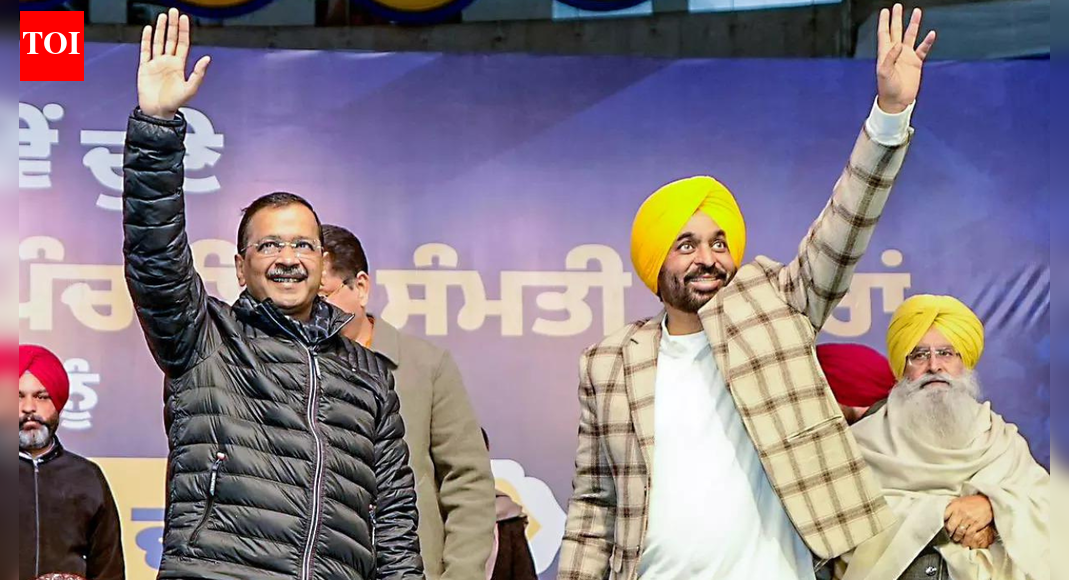
NEW DELHI: The Aam Aadmi Party (AAP) government in Punjab on Thursday announced that it will launch a full-scale offensive against gangsters, modelled on its ongoing ‘Yudh Nashian Virudh’ anti-drug campaign. The announcement was made by AAP national convener Arvind Kejriwal and Punjab chief minister Bhagwant Mann while meeting newly elected zila parishad and block samiti members.Kejriwal said all gangster networks in the state would be “eliminated” after the anti-drug drive. Citing AAP’s victory on over 70% seats in recent panchayat polls as a mandate for clean politics, he said the elections were the cleanest in Punjab’s history. Mann added that “pro-people governance” had forced traditional parties to rewrite their manifestos.Kejriwal contrasted the polls with past elections marked by booth-capturing, coercion and “gundagardi”, noting that this time over 600 seats saw margins under 100 votes, more than 350 of which were won by the opposition, including some by a single vote. He argued AAP did not misuse power or indulge in coercion, calling it a party of “ordinary and decent people” and noting that most newly elected members, like him and Mann, come from non-political families.On the drug crackdown, Kejriwal credited the government’s “political will and courage”. Mann attacked the Congress and Akalis as parties without agendas. Senior AAP leader Manish Sisodia said the mandate showed public trust in the government’s pro-people and development-oriented policies.


Source link

Tilak Varma ruled out of first three T20Is vs New Zealand as BCCI issues injury update | Cricket News


Tilak Varma ruled out of first three T20Is vs New Zealand as BCCI issues injury update
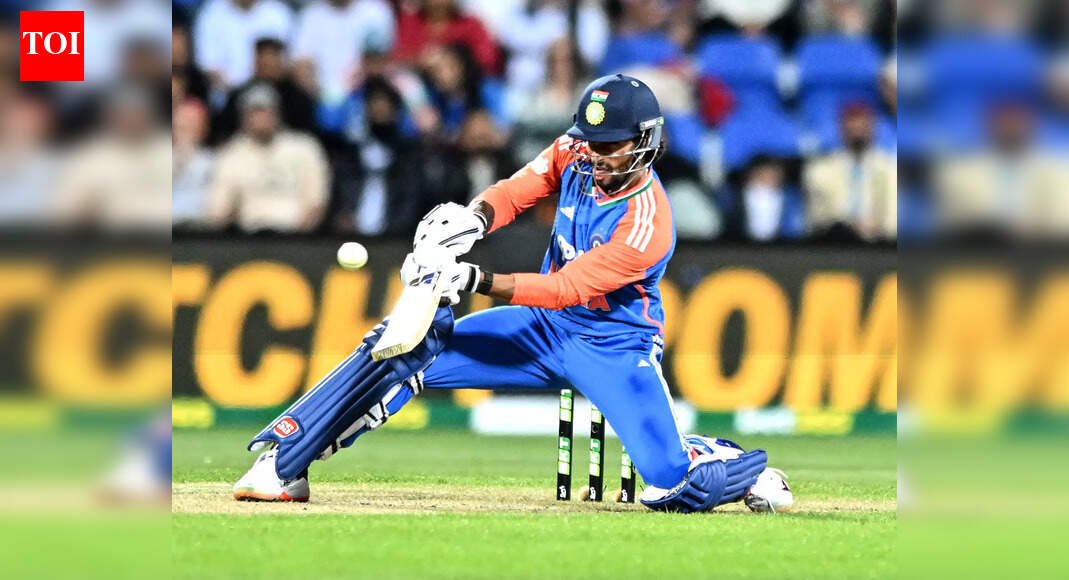
Tilak Varma of India (Getty Images)

India batter Tilak Varma has been ruled out of the first three T20Is against New Zealand following abdominal surgery in Rajkot, the Board of Control for Cricket in India confirmed on Thursday. The 23-year-old underwent emergency surgery at a super-speciality hospital on Wednesday evening after experiencing acute abdominal pain earlier in the day. Medical scans indicated the immediate need for the procedure, prompting doctors to operate without delay.

India vs New Zealand ODIs preview: Captain Shubman Gill, vice-captain Shreyas Iyer in focus

Providing an update on the situation, BCCI secretary Devajit Saikia said Varma is recovering well after the surgery. “He was discharged from the hospital on Thursday morning and is scheduled to fly back to Hyderabad on Friday. He is currently stable and progressing well,” Saikia said in an official statement. The board also outlined the roadmap for Varma’s return to cricketing activity. “Tilak will resume physical training and gradually return to skill-based activities once his symptoms have fully resolved and wound healing is satisfactory. He is ruled out of the first three T20Is against New Zealand. His availability for the remaining two matches will be assessed based on his progress during the return-to-training and skill phases,” the statement added. The recovery timeline has also cast doubt over Varma’s availability for India’s T20 World Cup opener against the United States of America at the Wankhede Stadium on February 7. India are scheduled to play further group matches against Namibia on February 12, Pakistan on February 15, and the Netherlands on February 18. Varma has been a vital presence in India’s T20I setup, scoring 1,183 runs in 37 innings at an impressive average of 49.29 and a strike rate of 144.09, including two centuries and six half-centuries. The absence could force captain Suryakumar Yadav to move up to the No. 3 position in the batting order. India are yet to name a replacement for the first three T20Is against New Zealand, which will be played in Nagpur, Raipur, and Guwahati on January 21, 23, and 25 respectively. The final two matches of the five-game series are scheduled for Visakhapatnam and Thiruvananthapuram on January 28 and 31.


Source link

Big push for road safety: Govt mulls V2V tech in vehicles to cut accidents; spectrum earmarked


Big push for road safety: Govt mulls V2V tech in vehicles to cut accidents; spectrum earmarked

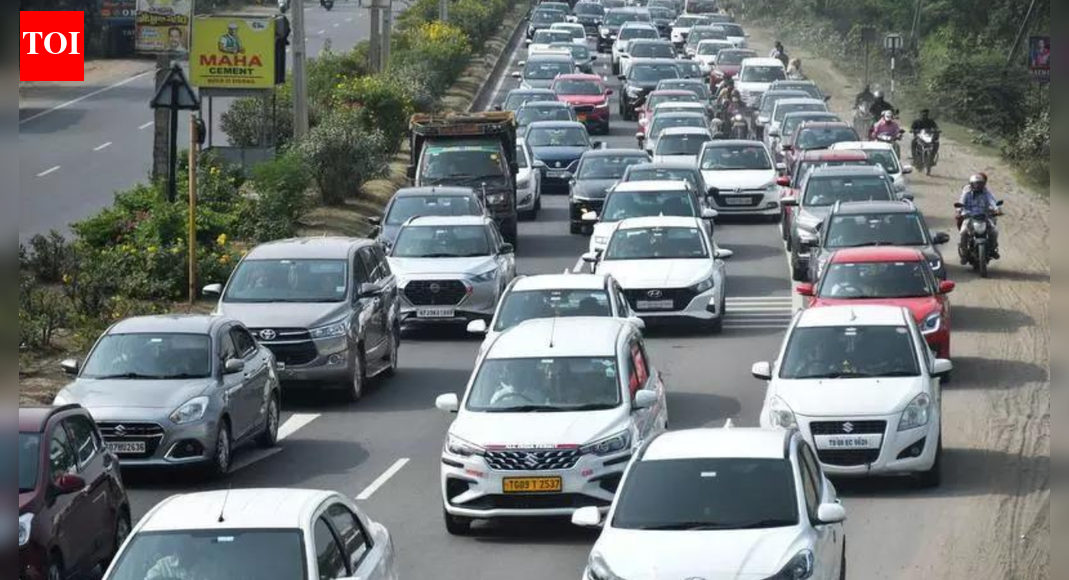
The government is working to introduce vehicle-to-vehicle (V2V) communication technology to help prevent road accidents by enabling real-time information sharing between vehicles, Union road transport and highways minister Nitin Gadkari said on Thursday, PTI reported.Addressing a press conference in New Delhi after chairing the annual meeting of transport ministers from states and Union Territories, Gadkari said a joint task force has been set up with the Department of Telecom (DoT) to take the initiative forward. “The Department of Telecom has agreed in principle for the use of 30 MHz (5.875–5.905 GHz) for V2V purposes,” he said.Under the proposed V2V system, vehicles will be able to communicate wirelessly with each other, alerting drivers about speed, location, acceleration, braking and the presence of vehicles in blind spots in the surrounding area, allowing timely corrective action.Gadkari said the move is part of broader efforts to reduce road fatalities through better road engineering, stricter enforcement of traffic laws and higher penalties for violations. “In our country, there are 5 lakh road accidents annually, causing around 1.8 lakh deaths,” he said, adding that about 66 per cent of those killed are in the 18–34 age group.The minister also said the government will bring amendments to the Motor Vehicles Act in the forthcoming Budget session of Parliament. The proposed 61 amendments aim to improve road safety, promote ease of doing business, enhance citizen services, improve mobility, simplify definitions and language, and align regulations with global standards.According to Gadkari, the meeting of transport ministers discussed a range of issues, including road safety, passenger convenience, ease of doing business and automobile regulations. Topics such as enhanced safety norms for buses, sleeper coaches and passenger vehicles — including bus body codes, Bharat NCAP ratings and the phased introduction of Advanced Driver Assistance Systems (ADAS) — were also taken up.The meeting further deliberated on introducing a points-based system to track traffic violations and enabling digital and automated issuance of permits for goods vehicles up to a specified gross vehicle weight.


Source link

‘The game needs to evolve’: Robin Uthappa questions sense behind ICC tournament every year | Cricket News


'The game needs to evolve': Robin Uthappa questions sense behind ICC tournament every year
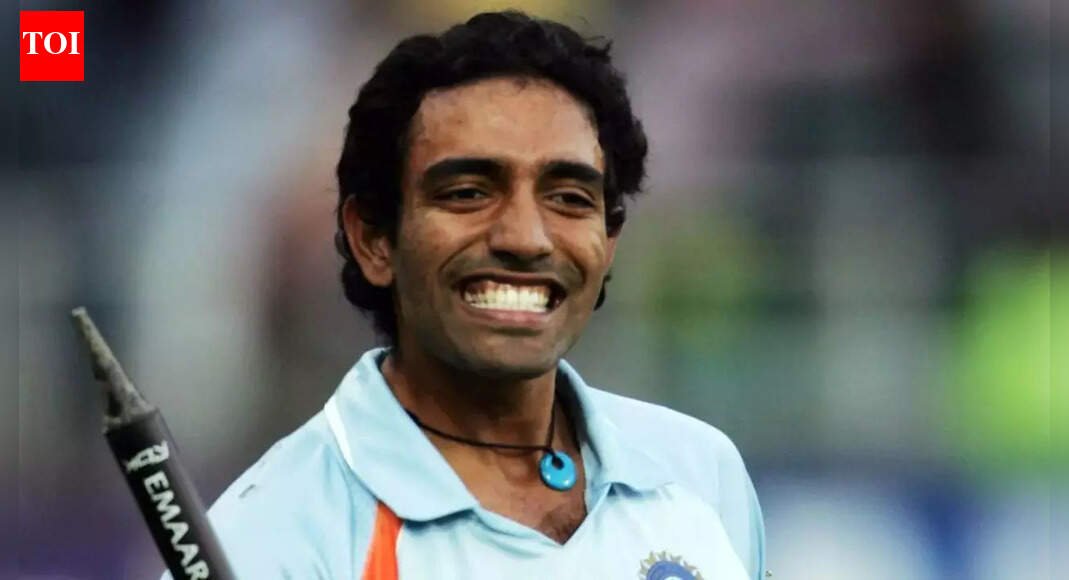
Robin Uthappa (Photo by Duif du Toit/Gallo Images/Getty Images)

TimesofIndia.com in Durban: At a time when off-field matters are taking centre stage a month before the men’s T20 World Cup gets underway, former India cricketer Robin Uthappa has diverted attention back to the game. On the sidelines of his commentary stint at the ongoing SA20, Uthappa questioned the need to host an ICC tournament every year and asserted the novelty of the multi-nation events is wearing off. “I think the game needs to evolve from the administrative perspective. How much value do fans and audiences hold for an ICC tournament every year? The novelty of it is wearing off, to be very honest and with all due respect,” Uthappa said.

Robin Uthappa on SA20’s rise and why ICC shouldn’t host multi-nation tournaments every year

ODI World Cup in 2023, T20 World Cup in 2024, Champions Trophy in 2025 and now back to the T20 World Cup, which gets underway on February 7. There has been a men’s multi-nation event every year, and Uthappa felt there is a need to revisit the scheduling to ensure “novelty” of the tournaments remains intact. “I think the novelty of the ICC Championships must be there. It’s an integral part, not just for the players but also for the fans, also for the viewers. It has to mean something. There has to be a little bit of a gap. We can’t have or shouldn’t have an ICC championship every year. That is the hard truth that I think the administrators have to look at and face and look at evolving the game in a way where it’s actually moving towards,” he added.Uthappa is on commentary duties for the ongoing fourth edition of the SA20, and a visit to Durban for the contest between Durban’s Super Giants and Pretoria Capitals brought back memories of the 2007 T20 World Cup bowl out vs Pakistan. “Durbin brings back a lot of memories. I go back to 2007 all the time. Every time I come here, I look at that dressing room on the other side and I just think of all the wonderful things that, you know, we created here, the wonderful memories we created here. It was. It was a special time,” Uthappa said.The former India batter was one of the players who participated in the bowl out, and comfortably hit the target. India ended up winning the tie-breaker and also the group stage fixture vs arch-rivals Pakistan.“I was on the pitch today just having a look before the pitch report and obviously reminiscing about the time when I actually bowled there. It was certainly a lot of fun. We did a lot of preparation for it, which we don’t really kind of talk about, but I think we were better prepared than the opposition team on that night,” he recalled.


Source link

Fortress America: Trump cuts US ties to world bodies while pitching $1.5 trillion defence budget


Fortress America: Trump cuts US ties to world bodies while pitching $1.5 trillion defence budget

WASHINGTON: In a sweeping overhaul of America’s global footprint, President Donald Trump has authorised the withdrawal of the United States from 66 international organisations, marking one of the most significant retreats from multilateralism in modern history.The move, announced on January 7 via a presidential memorandum, affects 31 United Nations entities and 35 non-UN groups, including key bodies focused on climate, health, and education. This action coincides with Trump’s call for a $1.5 trillion defence budget in fiscal year 2027, a staggering 50% increase over current levels, fueling debates about a shift toward a “Fortress America” doctrine that prioritises domestic strength and protectionism over global engagement.

Trump Pulls U.S. Out of 66 Global Bodies, Slams UN Groups As ‘Woke’ & Anti-American

The withdrawals build on an Executive Order issued shortly after Trump’s inauguration in February 2025, which directed a review of US participation in international bodies deemed contrary to national interests. Prominent targets include the United Nations Framework Convention on Climate Change (UNFCCC), signaling a complete US exit from global climate pacts; the United Nations Educational, Scientific and Cultural Organization (UNESCO), from which the US had briefly rejoined under the previous administration; and potentially the World Health Organization (WHO), echoing Trump’s first-term defunding over alleged biases toward China.Other entities span trade, human rights, and environmental forums, with the State Department citing a total of 66 as “wasteful, ineffective, or harmful.” In some cases, Washington has formally withdrawn; in others, it has suspended funding, reduced diplomatic engagement or signalled an intention to exit when legal timelines allow.Administration officials say these organisations “no longer serve American interests” and often promote policies seen as hostile or inefficient. For instance, climate-related bodies are criticised for imposing undue burdens on US business and industry without reciprocal commitments from “major emitters” like China and India, even though their per capita emission is a fraction of American emissions. UNESCO and similar groups face accusations of waste and mismanagement, with Secretary of State Marco Rubio highlighting redundancy and a lack of tangible benefits for US taxpayers.Trump himself has framed the decisions as part of his “America First” agenda, arguing that funds previously allocated to these entities—estimated at billions annually—should be redirected domestically to address border security, infrastructure, and economic recovery. Supporters, including Republican lawmakers, applaud the move as a correction to decades of overcommitment, freeing resources amid a national debt nearing $40 trillion.Foreign policy experts point to the December 2025 National Security Strategy (NSS), which critiques US allies in Europe and Asia for insufficient burden-sharing while prioritising unilateral actions. The document, released under Trump’s direction, describes an “America First” framework that sceptics label as neo-isolationist, though administration officials insist it avoids outright withdrawal from core alliances like NATO, which is also under siege from Washington over the Greenland issue.This approach is straining U.S ties across the globe: European leaders have decried the US exits as a blow to collective security, while adversaries like Russia and China are relishing the perceived vacuum. Partners like India, Japan, and Australia have been hung out to dry. Analysts argue the policy fosters adversity by undermining multilateralism, with some of them warning that Trump’s strategy risks damaging US power, economy, and security through hostility toward global cooperation.The proposed $1.5 trillion defence budget, unveiled on January 7, underscores this pivot. Trump justified the hike—up from the current $1 trillion as essential for building a “dream military,” with allocations for nuclear modernisation, missile defence, and cyber capabilities. “After long and difficult negotiations with Senators, Congressmen, Secretaries, and other Political Representatives, I have determined that, for the Good of our Country, especially in these very troubled and dangerous times, our Military Budget for the year 2027 should not be $1 trillion, but rather $1.5 trillion. This will allow us to build the “Dream Military” that we have long been entitled to and, more importantly, that will keep us SAFE and SECURE, regardless of foe,” Trump said in a social media post on Wednesday.But even at $ 1 trillion, the U.S already spends more on its military than the next ten countries combined. The $1.5 trillion figure would add an estimated $5.8 trillion to the national debt – already at a record $ 38 trillion – if sustained over a decade. Defence stocks surged in response, reflecting investor confidence in a build-up of the military-industrial complex that President Eisenhower had warned about.Detractors contend the budget epitomises “Fortress America”—a term evoking pre-World War II isolationism—by channelling resources inward at the expense of diplomacy, and perhaps even democracy. Fiscal watchdogs, meanwhile, highlight the irony: While slashing international funding, the proposal inflates military spending – already considered profligate – despite Trump’s campaign promises to curb waste.


Source link

The 25:1 problem: What India loses when students leave and don’t return


Indian students move abroad at scale because foreign systems are designed to absorb them.

There is a familiar story Indians tell themselves about study abroad: the brave student, the bigger dream, the better lab, the first paycheque in dollars. It is a story with uplift built into the plot.The 2025 NITI Aayog report, Internationalisation of Higher Education in India: Prospects, Potential, and Policy Recommendations, forces a colder re-read. Because when you place the numbers side by side, “study abroad” stops looking like aspiration and starts looking like a one-way talent and money pipeline—one that India funds, other countries benefit from, and Indian institutions struggle to counter.

Are schools really preparing students for life abroad?

In 2021–22, India hosted 46,878 inbound international students, while 11.59 lakh Indians went abroad. By 2024, the outbound number rose to 13.36 lakh—a level that makes the imbalance hard to explain away as “global exposure.”The report calls it out plainly: Outbound students outnumber inbound students by nearly 25 times.
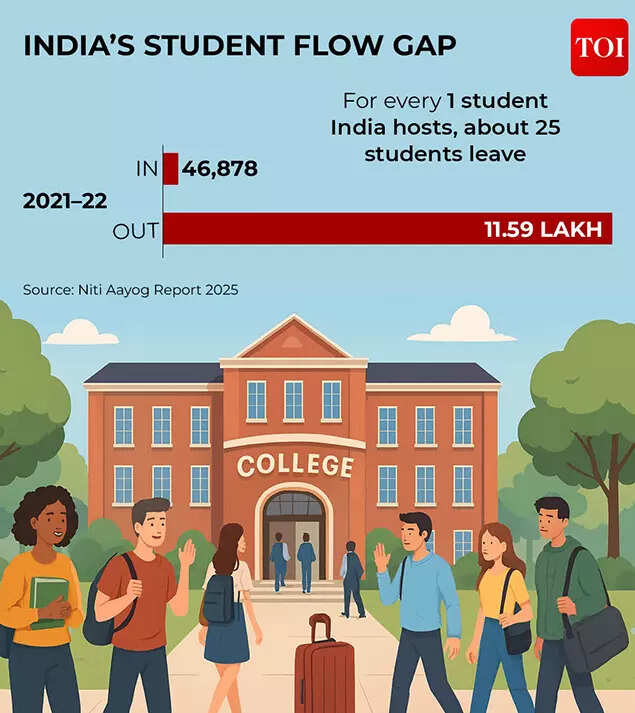
INDIA’S STUDENT FLOW GAP

India’s Student Flow Gap

This is not merely a higher-education issue. It is a development issue: Money leaving, research capacity thinning, demographic dividend leaking into other economies.In a July 2025 interview with The New Indian Express, political economist and author Sanjaya Baru puts a sharper label on what the NITI Aayog numbers are hinting at: This is not only about students leaving, but about a country failing to retain its “brainy people”. “I am more concerned about the migration of the brainy people, or the talented. It’s the brain drain and I’m looking at both the challenge of brain drain and wealth drain,” he told The New Indian Express. “Wealth drain is a problem, but I don’t think we should only worry about wealth, we should also worry about the number of talented people leaving the country in search of better opportunities,” he added.The burden, he argued, is domestic. “The onus is on us to improve conditions here that make it attractive for talented people to remain in India,” Baru observed.
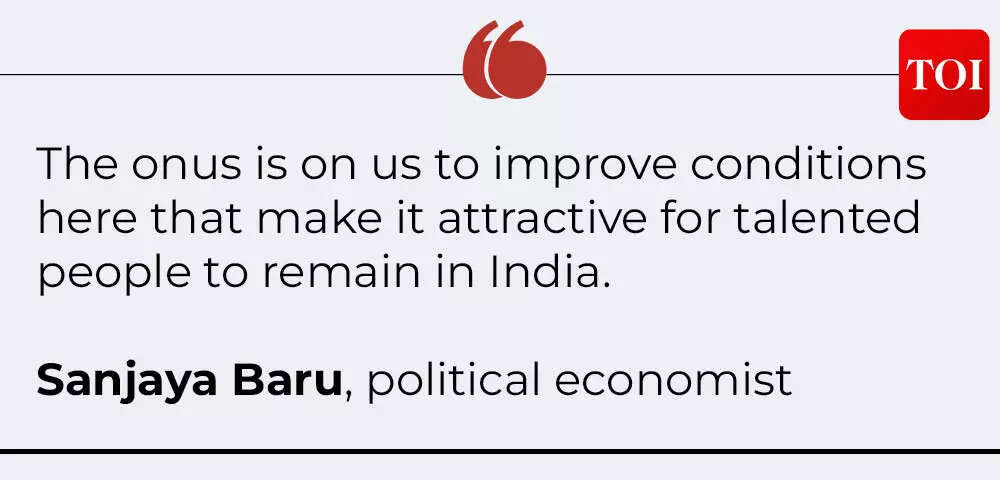
Sanjay Baru on India’s Brain Drain

Sanjay Baru on India’s Brain Drain

But his most stinging line in the interview is not about leaving, but about not returning, the collapse of the old return-to-build instinct. “I don’t see Indians coming back and saying we want to build a new India,” he lamented. In other words, if ‘study abroad’ is the beginning of the story, brain drain is what happens when the ending is written elsewhere.Baru flags a darker political-economy loop in the interview: When the elite’s own children are overseas, the state loses urgency to reverse the flow. That is the argument he expands in his 2025 book, Secession of the Successful: The Flight Out of New India. Here, he treats brain drain of India as part of a wider “exit” phenomenon experienced globally and frames the exodus of talent as a loss of “priceless human capital.” However, the core anxiety is the same: A country can celebrate “global Indians” only up to the point where the talent pipeline becomes structurally one-way. So the question is no longer whether Indians should study abroad. The question is what India is building at home so that leaving remains a choice, not a default setting.

Indian students abroad: When aspiration turns into momentum

If study abroad were a stock, Indian students would have bought early and doubled down.
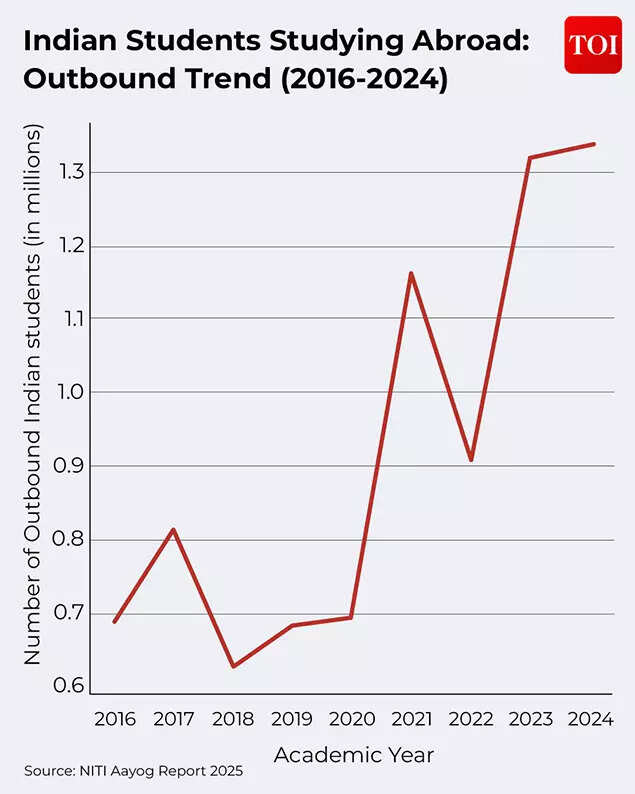
India’s Outbound Trend

India’s Outbound Trend

NITI Aayog’s numbers show outbound mobility is not a smooth climb. It comes in bursts. The baseline sat around 7 lakh before the pandemic, suggesting demand was steady and structural. Then 2021 broke the curve: Reopenings triggered a sharp release of pent-up plans, taking the count to 11.59 lakh. The later dip was a correction, not a reversal. By 2023–24, the flow had settled at around 13 lakh—a higher plateau.What the trend reveals is not volatility, but stickiness. The dips reflect timing and policy friction; the rebounds reflect conviction. Studying abroad has moved from being an exceptional choice to a default pathway for Indian families who can afford it. The momentum is so strong that even marginal policy headwinds slow the flow only briefly.In policy terms, this is important because momentum is harder to reverse than aspiration. When outward mobility shows repeated recovery after every disruption, it signals not just individual ambition but a structural preference—one that domestic higher education systems must now actively compete with, rather than assume will self-correct.

India hosts the world too, but only on the margins

At first glance, India’s inbound story looks reassuring. Over two decades, the number of international students studying in India has risen steadily—from 6,896 in 2000–01 to 46,878 in 2021–22. That is a nearly sevenfold increase. Read in isolation, it suggests progress. Read alongside the rest of the table, it suggests something else.
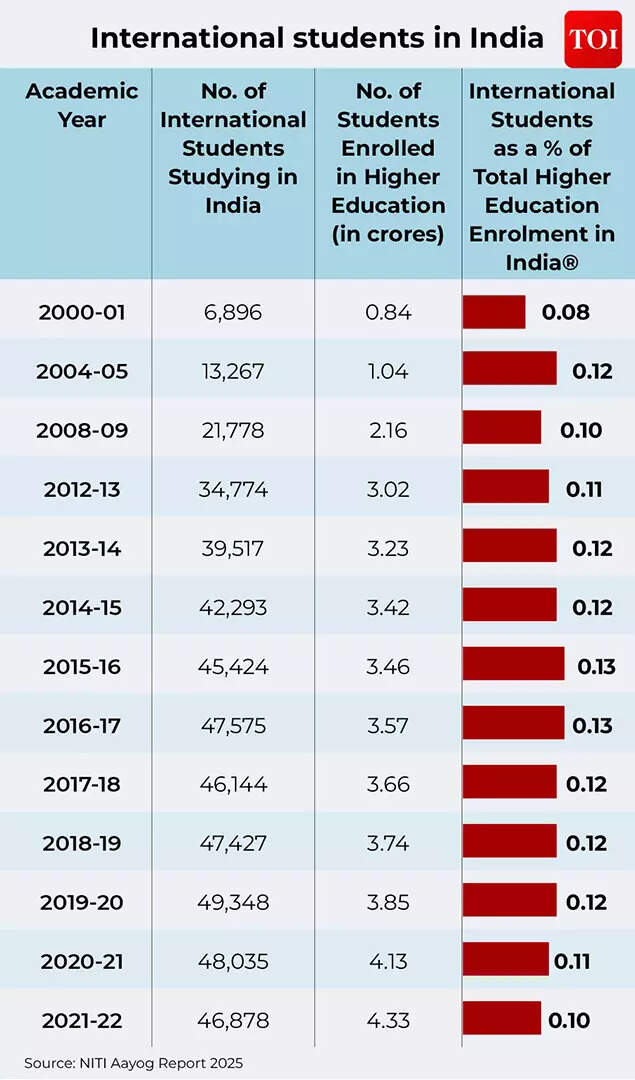
International Students in India

International Students in India

Over two decades, the number of international students studying in India has risen steadily—from 6,896 in 2000–01 to 46,878 in 2021–22. That is a nearly sevenfold increase. Read in isolation, it suggests progress.Read alongside the rest of the table, it suggests something else.The NITI Aayog data shows that even as absolute inbound numbers rose, their share in India’s total higher-education enrolment barely moved. International students made up 0.08% of total enrolment in 2000–01. Two decades later, after multiple policy pushes, the figure stands at 0.10%. In the intervening years, it briefly touched 0.12–0.13%, but never crossed it in a sustained way.In other words, India did not become significantly more international. It simply became bigger.This is the central asymmetry buried in the table. India expanded its higher-education system at scale—from 0.84 crore students in 2000–01 to 4.33 crore in 2021–22—but internationalisation did not scale with it. As domestic enrolment grew, inbound foreign students remained a statistical sliver.Even the pre-pandemic “best” year tells a muted story. In 2019–20, when India hosted 49,348 international students, they still accounted for only 0.12% of total enrolment. The pandemic years nudged the share down further, not because India suddenly lost appeal, but because the base kept growing while the inflow stagnated.The pattern is significant here. Countries that succeed as global education hubs do not just grow their domestic systems, they raise the international share. India has done the former, not the latter.Some of this is acknowledged in policy. Over the past decade, the government has tried to lower friction—through branding platforms, fee waivers, scholarships, visa digitisation and, more recently, allowing foreign campuses to set up in India. These measures help at the margins. They explain why inbound numbers rose in absolute terms.But the table suggests that marginal fixes have produced marginal outcomes.

The arithmetic of imbalance: India’s student exchange never evens out

India’s international student mobility does not merely tilt outward; it settles there. Between 2016 and 2022, inbound student numbers remain remarkably flat, moving within a narrow band of roughly 45,000 to 46,000. Over the same period, outbound numbers operate at an entirely different order of magnitude—never falling below 6.2 lakh, and peaking at 11.58 lakh in 2021. The consequence is a ratio that is not episodically skewed but structurally so.
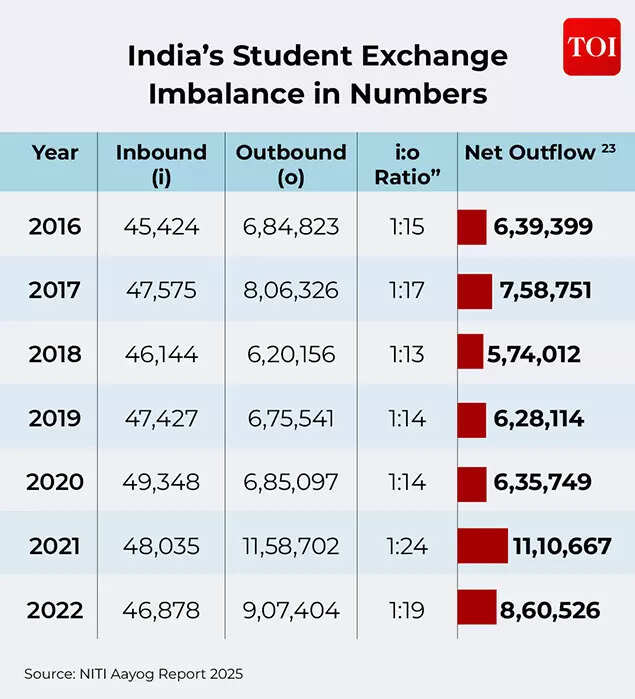
India’s Student Exchange Imbalance in Numbers

India’s Student Exchange Imbalance in Numbers

At the start of the period, India sent out 15 students for every one it hosted. That ratio worsened to 1:17 in 2017, briefly tightened to 1:13–1:14 during 2018–20, and then stretched dramatically to 1:24 when global borders reopened in 2021. The subsequent “improvement” to 1:19 in 2022 still leaves India far from balance. The ratio narrows only when outbound flows slow; it does not narrow because inbound demand rises.Indian students move abroad at scale because foreign systems are designed to absorb them—through capacity, credentials, and clear transitions from campus to work. International students come to India in far smaller numbers because Indian institutions absorb them cautiously, often as an add-on rather than a core constituency.The outcome is a lopsided exchange. India is ambitious in its international rhetoric, yet thinly international in its classrooms.

Two queues, two directions: Who comes to India, and where Indians go

Look closer at who is moving, and the imbalance sharpens. In 2021–22, India’s inbound Top-10 list is mostly the neighbourhood, suggests the NITI Aayog 2025 report. Nepal is the headline: 13,126 students, about 43% of the Top-10 inbound pool (30,316 across these ten countries). Then come Afghanistan, Bangladesh and Bhutan, followed by a small but telling African cluster: Nigeria, Tanzania, Zimbabwe and Sudan. The pattern is quietly revealing. It suggests that India’s pull works best where proximity, cost, cultural familiarity and limited alternatives matter more than rankings or global signalling.
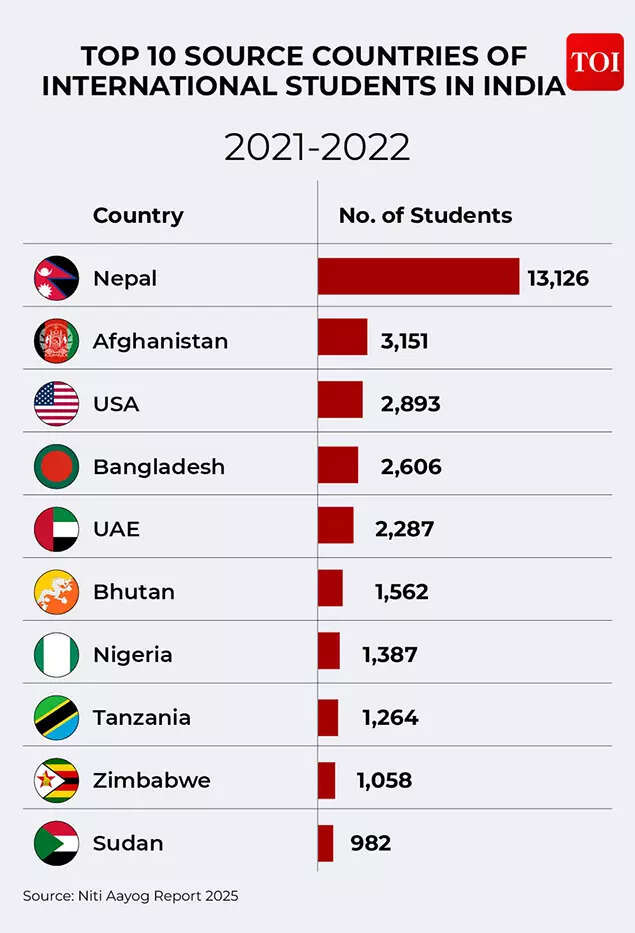
Top 10 Source Countries of International Students in India

Top 10 Source Countries of International Students in India

Now jump to 2024, and look at where Indian students go. This is not the neighbourhood; it is the Anglosphere. Canada (4.27 lakh), the US (3.38 lakh), the UK (1.85 lakh) and Australia (1.22 lakh) together account for nearly 89% of the outbound Top-10 total (12.07 lakh). These are not just destinations. They are systems designed to absorb students at scale with their stronger global signalling, deeper research ecosystems, and clearer bridges from campus to work. The remaining six—Germany, UAE, Russia, Kyrgyzstan, Georgia and the Philippines—are smaller lanes, often shaped by programme-specific pathways and price sensitivity.
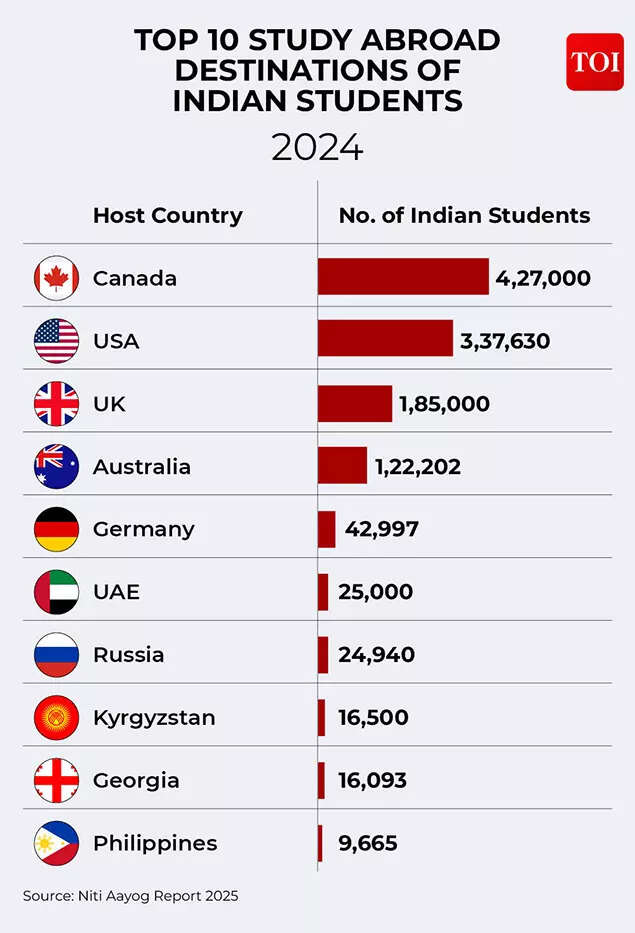
Top 10 Study Abroad Destinations of Indian Students

Top 10 Study Abroad Destinations of Indian Students

The cost of exit: When education turns into capital flight

The price of India’s brain drain is no longer abstract. It is visible in balance sheets. According to Reserve Bank of India (RBI) data, outward remittances under the “studies abroad” component of the Liberalised Remittance Scheme jumped from USD 0.16 billion in 2013–14 to nearly USD 3.4 billion in 2023–24—an increase of over 2,000%. This single category of outflow is now equivalent to around half of India’s Union higher-education budget for the same year. What India spends building campuses at home, families increasingly finance abroad.Independent estimates suggest this is only a partial count. ASSOCHAM estimated in 2020 that Indian students spent over USD 13 billion annually on overseas education. The Indian Student Mobility Report put total spending at USD 47 billion in 2022, projecting a rise to USD 70 billion by 2025—nearly ten times the government’s higher-education budget for that year and close to 2% of GDP. Education, once seen as social investment, now behaves like sustained capital flight.
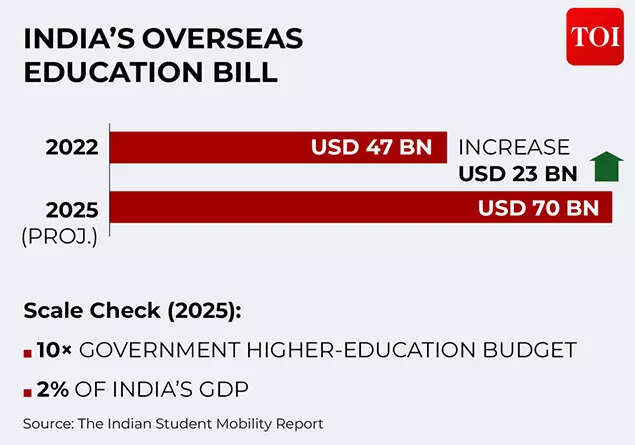
India’s Overseas Education Bill

India’s Overseas Education Bill

The macroeconomic implications are harder to ignore. At scale, overseas education behaves less like a private household decision and more like a recurring forex claim on the economy—quiet, routine, and therefore easy to underestimate until it becomes large enough to show up in national aggregates. The NITI Aayog Report 2025 puts this in stark terms: India’s overall trade deficit (including services and merchandise trade) stood at nearly USD 94 billion in FY 2024–25, and projected expenditure on foreign education by Indian students in 2025 is nearly 75% of that deficit. In other words, what begins as aspiration at the family level accumulates into a macro-level outflow—one that competes, in sheer scale, with the country’s broader external balance pressures.

Demographic dividend, research deficit

India is young, but youth is not the dividend. Capability is. The NITI Aayog Report 2025 notes India’s average age of 28.4 years—a window that should have fed domestic growth with skills, enterprise and ideas. But when educated, high-performing students and early-career professionals settle abroad for better opportunities, the country’s advantage leaks at the top. The headline population remains; the talent density thins.That thinning shows up most brutally in academia. NITI Aayog warns that the outmigration of skilled students and researchers weakens India’s ability to build a strong indigenous R&D ecosystem, slowing innovation and increasing dependence on foreign technologies. This is not just a loss of people; it is a loss of labs, mentors, research teams and the everyday institutional habits that make knowledge systems resilient. The loop becomes self-reinforcing: talent leaves because research environments are thin; research environments remain thin because talent leaves.

Talent trap: Why India can’t pull global students in, or keep its own

India is not short of heritage, culture, or affordability. It is short of the boring, structural assurances international students quietly demand—and notice when missing and the NITI Aayog Report 2025 catches it right. International students expect globally benchmarked campus facilities, housing, safety measures and support services, yet fewer than 15% of Indian higher education institutions (HEIs) meet those expectations. Even routine needs, such as visa support, grievance redressal, and access to banking in India, remain underdeveloped, which signals to students that the system is not designed around them.Visa friction compounds the hesitation. The report flags complex procedures, documentation issues, slow processing, unresponsive embassies and unclear guidance, alongside the absence of a fast-track academic visa category. Then comes the student-experience gap: Fewer than 10% of surveyed Indian HEIs provide comprehensive pre-arrival guidance, cultural orientation or dedicated international-student support. Add curricular inflexibility, scholarship delivery delays, weak global branding, limited presence at international fairs and underused alumni networks, and the conclusion writes itself: India wants international students—but it is not yet organised to host them at scale.
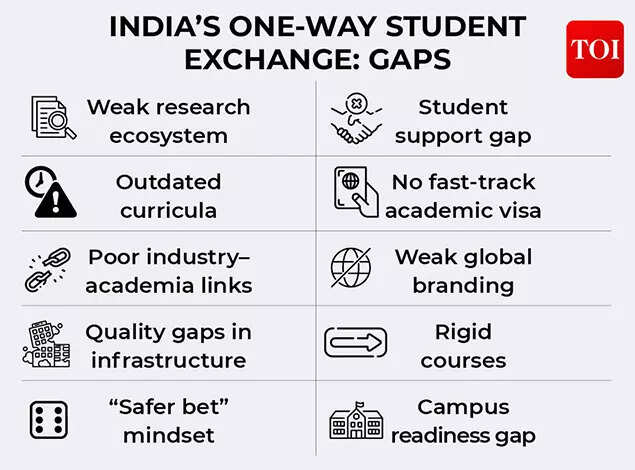
India’s One-Way Student Exchange: Gaps

India’s One-Way Student Exchange: Gaps

The irony is that the same institutional thinness that deters outsiders also nudges insiders outward. The NITI Aayog Report 2025 notes that India’s internationalisation has been dominated by outbound mobility, driven by systemic gaps—inadequate infrastructure for quality education and world-class research, weak industry–academia collaboration, and outdated curricula. Over time, this has reshaped aspiration itself: Families increasingly treat overseas education not as a luxury, but as the safer bet. When domestic campuses cannot reliably offer cutting-edge labs, credible research pathways, and market-linked training, “study abroad” stops being a choice and starts behaving like risk management. India, in effect, loses twice—struggling to pull global talent in, while steadily pushing domestic talent to look elsewhere.

Turning brain drain into exchange

India’s brain drain story is often told as an outbound stampede. That is only half the picture. The more revealing failure is the symmetry: India sends students out at scale, but cannot pull students in at scale. One side shows demand. The other shows weak destination power. Together, they turn ‘internationalisation’ into a one-way pipeline: Talent and money leaving, while global talent remains a trickle.When outbound is the default route for the ambitious, domestic institutions lose the very people who raise the bar: Future researchers, faculty, founders, and the stubborn students who demand better labs and better teaching. When inbound remains small, Indian campuses miss the catalytic effect of international density: Mixed classrooms, global faculty networks, collaborative research cultures, and the reputational flywheel that makes a country a destination rather than a detour.The solution is not to guilt our own students into staying. It is to make staying and coming here feel like a smart bet. That ‘smart bet’ is ultimately shaped by two things: How little friction a student faces at the entry point and how much academic value the campus delivers after arrival. Lowering the frictions that make India difficult to enter and hard to settle into would require steady, system-wide coordination: More predictable visa processing, structured onboarding, and basic student services that work reliably across institutions. In parallel, India’s campuses would need to strengthen what actually retains and attracts talent: Functional labs, credible research pathways, and teaching that tracks global and industry shifts rather than dated syllabi.If India can convert its one-way pipeline into two-way circulation—people leaving, returning, and others arriving—the brain drain story stops being a drain. It becomes an exchange.


Source link