Breaking News
UAE restricts scholarships for students to study in UK amid concerns over Islamist radicalisation | World News

UAE restricts scholarships for students to study in UK amid concerns over Islamist radicalisation
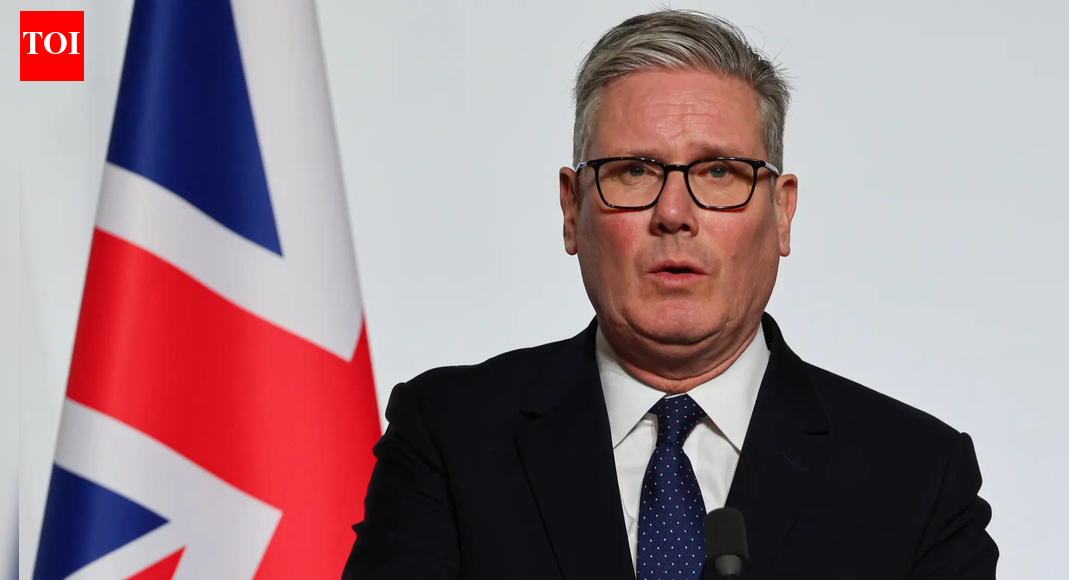
The UAE halted scholarships for UK studies, citing Muslim Brotherhood concerns, sharply reducing Emirati student enrolment/Image: AP

The United Arab Emirates has taken a decisive step to limit government funding for emirati students who want to study at British universities, reflecting rising tensions over the UK’s stance on the Islamist Muslim Brotherhood. The move signals deeper strains in a historically close relationship and raises questions about the future of UK-UAE educational ties.

UAE excludes UK universities from scholarship list

According to The Financial Times report, the UAE’s Ministry of Higher Education published a revised list of international universities eligible for state scholarships in June 2025. While institutions in the United States, Australia, France, and Israel were included, British universities were notably absent.Officials told UK representatives that the exclusion was intentional, not an oversight. Sources familiar with the discussions explained that Abu Dhabi’s primary concern was preventing Emirati students from exposure to what it views as potential Islamist radicalisation on UK campuses. A person with direct knowledge said, “They don’t want their kids to be radicalised on campus.” UK officials responded by emphasising the importance of academic freedom.Officials with knowledge of the policy also told The Times UK that federal funding was being limited for citizens hoping to study in the UK, but that the government was not imposing a blanket ban on enrolments. Wealthier families can still send their children to British universities if they cover the costs themselves, while state funding continues to be available for students studying in other countries.The decision comes after federal funding for Emiratis pursuing UK studies had already declined prior to June. Students who had already enrolled in British universities continue to receive support, but the new rules mean that Emirati students starting courses in the UK will face limited or no government funding.

Sharp decline in emirati students going to UK

The impact has been tangible. In the year ending September 2025, only 213 Emirati students were granted visas to study at UK universities, marking a 27 percent decrease from the previous year and a 55 percent decline from 2022.Beyond scholarship restrictions, the UAE has also stated that qualifications from universities not on the approved list, including most British institutions, will not be recognised domestically. This diminishes the value of UK degrees for Emirati students seeking employment or further study in the UAE.

Radicalisation concerns and the Muslim brotherhood

The UAE’s move is closely tied to its long-standing concerns about Islamist movements, particularly the Muslim Brotherhood. Since the Arab uprisings of 2011, Abu Dhabi has imposed strict controls on domestic Islamist activity and sought to limit political Islam regionally. Under President Sheikh Mohammed bin Zayed al-Nahyan, the UAE has repeatedly questioned the UK’s decision not to proscribe the Brotherhood.Official UK data shows that during the 2023-24 academic year, 70 students at UK universities were referred for possible participation in the government’s Prevent deradicalisation programme for signs of “Islamist radicalisation,” nearly double the previous year, out of a total higher education population of almost three million students. While one UK academic downplayed the scale of Islamist activity on campuses, they noted that events such as the Israel-Gaza conflict have contributed to heightened tensions and protests on campus.The UK government’s 2015 review concluded that the Muslim Brotherhood had not been linked to terrorist activities in or against Britain. Prime Minister Keir Starmer’s administration stated last year that the matter remained under “close review.” Separately, Nigel Farage, leader of the Reform UK party, has pledged to ban the Muslim Brotherhood if he becomes prime minister. The UAE government funded Farage’s visit to the country in 2025.

Broader diplomatic strains

The scholarship restrictions are part of wider strains in UK-UAE relations. Past disagreements have included Abu Dhabi-backed attempts to acquire The Daily Telegraph in November 2023, allegations of UAE support for paramilitary groups in Sudan, which the UAE denies, and a legal dispute in the English Premier League involving Emirati-owned Manchester City football club.Despite these tensions, the UK continues to expand its educational footprint in the UAE. Several British universities, including the University of Manchester and Heriot-Watt University in Edinburgh, operate campuses in Dubai. Nevertheless, the exclusion of UK institutions from government scholarships highlights the challenges faced by Emirati students seeking to study in the UK.

Source link

‘Cousin thought I died’: Jemimah Rodrigues recalls horrific ‘church’ incident | Cricket News


'Cousin thought I died': Jemimah Rodrigues recalls horrific 'church' incident
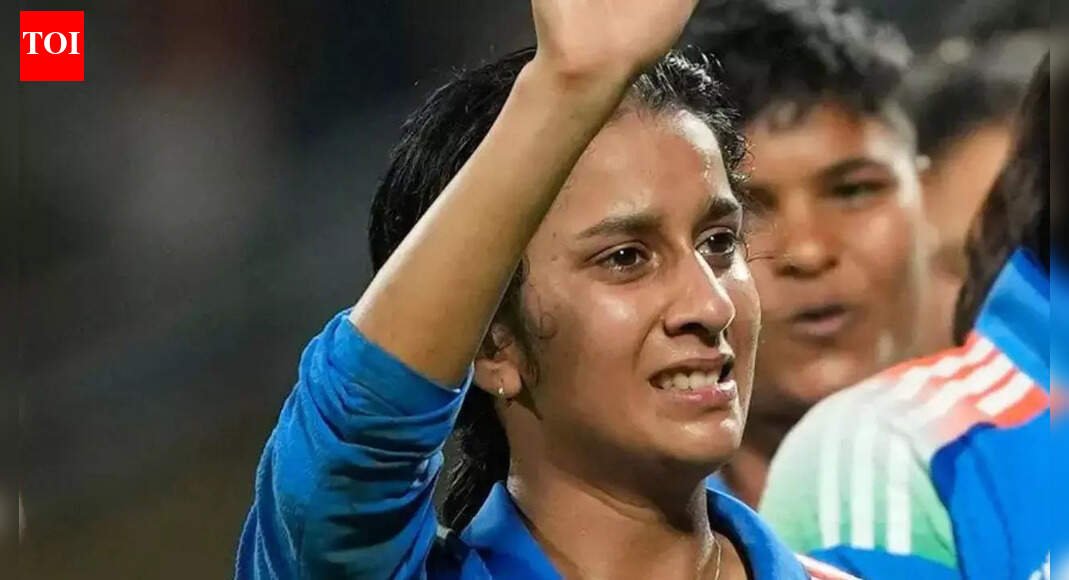
Jemimah Rodrigues (AP Photo)

NEW DELHI: Indian women’s cricket team batter Jemimah Rodrigues recently shared a scary yet funny story from her childhood that left everyone shocked at the time. The incident happened when she was just eight years old, long before she became a World Cup hero for India.Jemimah recalled that she was at a church programme with her cousins. The kids were playing outside an auditorium while the adults were busy inside. Like most children, they were full of energy and mischief.

India vs New Zealand ODIs preview: Captain Shubman Gill, vice-captain Shreyas Iyer in focus

They started playing a game where they threw chappals and crocs at each other for fun.While speaking on Breakfast With Champions, Jemimah explained how things suddenly went wrong.“We were in an auditorium where we had a church program. All the kids were outside. We were playing chappal fight over there. (I was like eight) My cousin threw her crocs and it was like you had to jump the other side to get it,” Jemimah said.Trying to act brave, young Jemimah decided to retrieve the shoe herself. What followed was a moment that scared her cousins badly.“I, like a full hero, said that I would get it. I fell from the first floor. Luckily, someone was sitting down, and I fell on her head. My cousins thought I died,” Jemimah said.Thankfully, she escaped without any injury. The fall looked serious, but luck was on her side. What could have been a tragedy turned into a story the family still remembers.Today, Jemimah’s life looks very different. She has had a dream 2025 in cricket. She played a huge role in India’s ICC Women’s World Cup victory. Her unbeaten 127 runs against Australia in the semi-final was one of the best knocks of the tournament.Recently, Jemimah was also named the new captain of Delhi Capitals for the 2026 Women’s Premier League. Reacting to the honour, she said, “It is an absolute honour to be named captain of the Delhi Capitals, and I am deeply grateful to the owners and the support staff for placing their faith in me to lead this team.”“It has truly been a dream year for me and my family, winning the World Cup and now being entrusted with this wonderful opportunity at a franchise that has held a very special place in my heart since the very first season of the WPL,” she added.


Source link

‘Swings like a wild pendulum’: Mallikarjun Kharge targets Modi government’s foreign policy; flags China outreach, Donald Trump remarks | India News


‘Swings like a wild pendulum’: Mallikarjun Kharge targets Modi government’s foreign policy; flags China outreach, Donald Trump remarks
File photo: Congress president Mallikarjun Kharge (Picture credit: ANI)

NEW DELHI: Congress president Mallikarjun Kharge on Friday launched a sharp attack on the Modi government’s foreign policy, accusing it of inconsistency and compromising India’s strategic interests. Referring to Prime Minister Narendra Modi’s oft-repeated line, “Main desh ko jhukne nahi dunga” (I will not allow the country to bow), Kharge said current developments show “the complete opposite”.In a post on X, Kharge cited two recent issues to underline his criticism. The first relates to reports suggesting the Centre may lift restrictions imposed on Chinese companies from bidding for government contracts. The curbs were put in place five years ago following the deadly Galwan Valley clash between Indian and Chinese troops in 2020.“The ban on Chinese companies, in place for five years, is being lifted,” Kharge said, adding that the sacrifice of Indian soldiers in Galwan had earlier been “insulted” when China was given a “clean chit”. He alleged that allowing Chinese firms back into government tenders amounted to rolling out a “red carpet” for them, questioning the government’s stand on national security.As per news agency Reuters, the Centre is considering rolling back rules that required companies from bordering countries, including China, to undergo special registration and security clearances before participating in public tenders. The proposed move is seen as part of efforts to ease supply bottlenecks and revive stalled infrastructure projects, especially in sectors such as power. Any such change would require approval from the Prime Minister.Kharge’s second criticism focused on US President Donald Trump’s repeated public comments on India’s purchase of Russian oil. He accused Prime Minister Modi of remaining silent despite Trump “commenting daily” on the issue.“Modi ji is averting his gaze. The ‘sir’ business looks more like surrender,” Kharge said, suggesting that India’s position on Russian oil exports was being questioned without a firm response from New Delhi. The “sir” reference was a jibe at recent remarks by Trump in which he recalled India’s long wait for US defence equipment. Trump said India had ordered 68 Apache helicopters but had to wait nearly five years for delivery, prompting PM Modi to approach him. “Prime Minister Modi came to see me, ‘Sir, may I see you please? Yes!’ I have a very good relationship with him. He’s not that happy with me, because they are paying a lot of tariffs now, but they have now reduced it substantially, because of Russia,” Trump said, referring to India’s oil purchases from Russia.Kharge further argued that foreign policy should prioritise national interest above all else.He said the Modi government’s approach has weakened India’s long-standing commitment to non-alignment and strategic autonomy. “The Modi government’s foreign policy swings like a wild pendulum — now this way, now that — and it is the people of India who are paying the price,” he added.The Congress chief’s remarks come at a time when New Delhi and Beijing have been taking cautious steps to stabilise ties after years of strain. India and China have resumed some people-to-people exchanges, including direct flights, even as restrictions on Chinese foreign direct investment remain in place.Kharge maintained that these shifts reflect a lack of coherence in foreign policy, arguing that major decisions with long-term implications should be guided by consistency and national interest rather than short-term pressures.


Source link

Mutual funds trends: Equity funds see 6% dip to Rs 28,054 crore in December; debt outflows hit AUM


Mutual funds trends: Equity funds see 6% dip to Rs 28,054 crore in December; debt outflows hit AUM

Equity mutual fund inflows declined by over 6% to Rs 28,054 crore in December, even as investor interest in equities and gold remained intact amid heavy redemptions from debt schemes, data released by industry body AMFI showed on Friday.The moderation in equity inflows came from Rs 29,911 crore in November, though collections were still higher than Rs 24,690 crore recorded in October, PTI reported. The sharp sell-off in debt funds pulled the mutual fund industry into net outflows of Rs 66,591 crore during the month.Reflecting the impact of large debt withdrawals, the industry’s total assets under management (AUM) dipped to Rs 80.23 lakh crore in December from Rs 80.80 lakh crore in November.Among equity categories, most segments continued to attract net inflows, barring ELSS (equity-linked saving schemes) and dividend yield funds. Flexi-cap funds led the pack with net inflows of Rs 10,019 crore in December, up from Rs 8,135 crore in the previous month, underlining their appeal amid uncertain market conditions.Mid-cap funds followed with inflows of Rs 4,176 crore, while large and mid-cap funds attracted Rs 4,094 crore and small-cap funds Rs 3,824 crore. Large-cap funds saw net inflows of Rs 1,567 crore during the month.In contrast, ELSS funds recorded net outflows of Rs 718 crore, while dividend yield funds saw redemptions of Rs 254 crore, pointing to profit-booking and seasonal tax-related adjustments.Debt mutual funds bore the brunt of redemptions, witnessing massive net outflows of Rs 1.32 lakh crore in December, compared with outflows of Rs 25,692 crore in November.Gold exchange-traded funds (ETFs), meanwhile, saw a sharp rise in investor interest, with net inflows jumping to Rs 11,647 crore in December, from Rs 3,742 crore in November and Rs 7,743 crore in October.Commenting on the trend, Akhil Chaturvedi, Executive Director and Chief Business Officer at Motilal Oswal Asset Management Company, said “Equity gross sales increased by nearly 7% month-on-month to Rs 72,808 crore, while hybrid gross sales grew ~17% to Rs 16,548 crore, indicating sustained participation in market-linked products. Flexi Cap funds were the key contributors, supported by NFO-led inflows, while Multi Asset Allocation funds recorded their peak gross sales in December 2025 at ~Rs 9,000 crore. Despite elevated redemptions, equity funds posted healthy net inflows of ~Rs 29,500 crore in December, reflecting profit-taking rather than risk aversion, with hybrid funds also remaining net positive. Gold & Silver oriented funds also have witnessed over Rs 10000cr of inflows.”


Source link

Shilpa Shetty’s husband Raj Kundra summoned in connection with cryptocurrency fraud and alleged Rs 150 crore money-laundering case |


Businessman Raj Kundra, actor Shilpa Shetty’s husband has been summoned by a special court under the Prevention of Money Laundering Act (PMLA) in Mumbai in connection with the GainBitcoin cryptocurrency fraud and an alleged money-laundering case. This report comes after Rs 60 crore fraud allegations against Raj and Shilpa which he had denied earlier. The summons follows the court taking cognisance of a supplementary chargesheet recently filed by the Enforcement Directorate (ED). Kundra has been directed to appear before the court on January 19, 2026.The court has also issued summons to Dubai-based businessman Rajesh Ram Satija, citing their alleged involvement in the case. According to a report by Bollywood Hungama, the special judge noted in the order, “A prima facie case has been made out to take cognisance and to proceed against accused Nos. 17 and 18 (Kundra and Rajesh Satija) for the offence under Section 3 … of the PMLA and to issue process against them.”

From Glamour to Legal Storm: Shilpa Shetty, Raj Kundra Booked for Cheating in ₹60 Crore Row

The matter relates to the GainBitcoin scheme, a cryptocurrency investment and mining operation that is alleged to have duped thousands of investors across the country. Investigators have maintained that the scheme was orchestrated by Amit Bhardwaj, who has since passed away. The project reportedly lured investors with promises of hefty returns through Bitcoin mining, which never came to fruition.As per the ED’s chargesheet, Raj Kundra is alleged to have received proceeds of crime amounting to 285 Bitcoins from Bhardwaj. At the time the assets were assessed by the agency, their value was estimated to be more than Rs 150 crore. The ED has claimed that these Bitcoins were directly linked to criminal proceeds from the GainBitcoin scam and that Kundra continued to hold them without offering a satisfactory explanation for their legitimate source.The agency has further alleged that Kundra’s involvement went beyond that of a mere facilitator. According to the ED, he acted as a “beneficial owner” in the arrangement. Investigators have also flagged a property transaction involving five flats in Mumbai’s Juhu area, which are reportedly registered in the name of Shilpa Shetty. The ED has alleged that the flats were sold at a price well below market value, suggesting a possible attempt to legitimise proceeds of crime.Meanwhile, earlier, in his statement, Kundra made it clear that both he and Shilpa Shetty completely reject the Rs 60 crore fraud allegations being circulated against them. He said the claims are being unfairly portrayed as criminal in nature without any lawful basis. The statement read, “We categorically deny the baseless and motivated allegations being circulated. The issues sought to be raised are being given a criminal colour without any lawful basis. A Quashing Petition has already been filed before the Hon’ble High Court and is pending adjudication.”


Source link

WPL 2026 [WATCH]: Meg Lanning’s playful sledge at Jemimah Rodrigues cracks up Harmanpreet Kaur and Smriti Mandhana


Women’s Premier League (WPL) 2026 kicks off January 9, marking the fourth edition of India‘s premier women’s T20 extravaganza. With five dynamic franchises ready to clash across vibrant venues, the tournament promises fierce competition, star-studded lineups, and electric fan energy from the opening ball. Captains from Mumbai Indians, Royal Challengers Bengaluru, Gujarat Giants, Delhi Capitals, and UP Warriorz set the tone at a lively pre-tournament meet, blending camaraderie with cheeky exchanges that lit up social media.

Meg Lanning’s cheeky sledge at Jemimah Rodrigues cracks up Harmanpreet Kaur and Smriti Mandhana

During a fun truth-or-dare segment at the WPL 2026 captains’ meet, UP Warriorz skipper Meg Lanning delivered a hilarious sledge aimed at Delhi Capitals captain Jemimah Rodrigues.

Prompted by the host, Lanning quipped, “So now you know how it feels like when fielders don’t listen to you and keep dancing on the field.” The remark harked back to their Delhi Capitals days, where Rodrigues’ infectious on-field energy often clashed with Lanning’s tactical instructions.

Laughter erupted instantly, with Mumbai Indians’ Harmanpreet Kaur and Royal Challengers Bengaluru’s Smriti Mandhana pounding the table in stitches, their reactions amplifying the room’s joy.​

The exchange highlighted the deep bonds forged among these stars despite franchise shifts. Lanning, who captained Delhi Capitals to three straight finals before her mega auction release, now leads UP Warriorz after their bold acquisition. Rodrigues, stepping into DC’s top job post-Lanning, praised her ex-skipper’s legacy of building a winning culture during a recent interview. With all five captains—Rodrigues, Lanning, Kaur, Mandhana, and Gujarat Giants’ skipper Ashleigh Gardener—around the table, the banter underscored WPL’s unique mix of rivalry and respect.​

Here’s the video:

Also WATCH: Ellyse Perry shares emotional tribute to RCB ahead of WPL 2026 clash with Mumbai Indians

Lanning’s redemption quest after 3 title heartbreaks

Lanning enters WPL 2026 fueled by unfinished business, chasing her first title after three gut-wrenching final losses with Delhi Capitals since the league’s 2023 debut. The Australian legend, with five World Cup triumphs under her belt, transformed DC into perennial contenders but watched trophies slip away each time. Now at UP Warriorz, her appointment signals a fresh chapter, blending tactical nous with infectious leadership to end the drought.​

Lanning’s hunger resonates amid the league’s evolution. Post-mega auction, teams retooled squads with Indian talents like Rodrigues and world-class picks, heightening stakes. Her sledge not only cracked up peers but signaled battle-ready vibes as WPL 2026 unfolds. Fans buzz with anticipation for on-field fireworks, where off-pitch laughs fuel on-pitch intensity.

Also READ: Women’s Premier League (WPL) 2026 Squads: Players list and captains of all five teams

This article was first published at WomenCricket.com, a Cricket Times company.


Source link

MPCB shuts 10 RMC plants, recovers Rs 84 lakh in pollution crackdown | Mumbai News


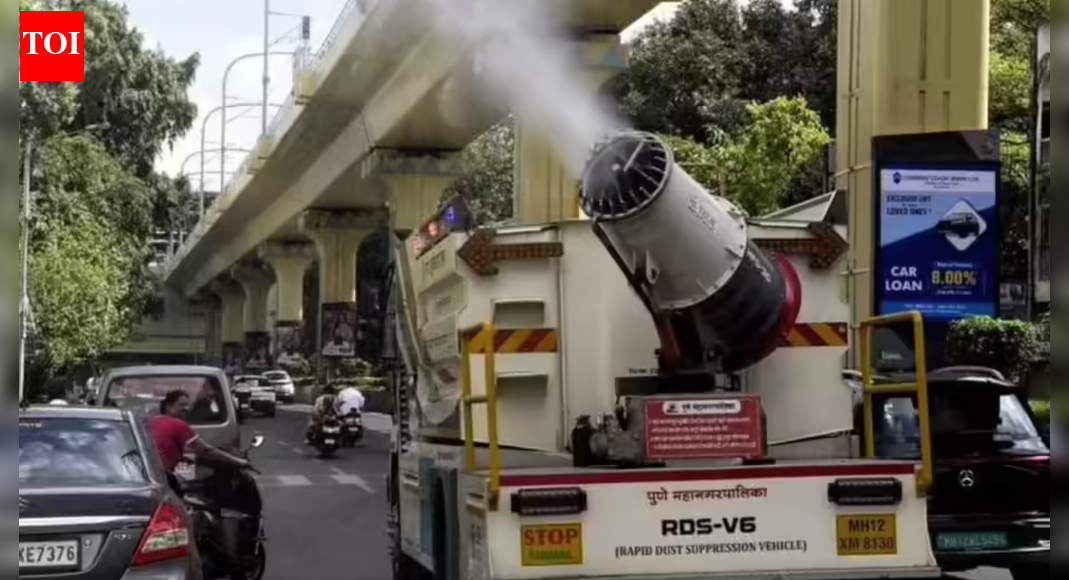
MUMBAI: The Maharashtra Pollution Control Board (MPCB) has shut down 10 ready-mix concrete (RMC) plants and recovered Rs 84 lakh in penalties during inspections carried out over the past two days across the Mumbai Metropolitan Region (MMR), as part of an intensified crackdown on air pollution.According to the MPCB, flying squads inspected 44 RMC plants and found multiple units violating prescribed environmental and dust-control norms. Ten plants located in Dombivli, Kalyan, Ambernath, Bhiwandi, Turbhe, Virar and Worli were ordered to stop operations. Seventeen plants were issued show-cause notices, while four were served interim directions pending further action.The enforcement teams also inspected 29 large construction sites during the drive, issuing proposed directions to five projects where violations related to dust suppression and other air pollution norms were observed.The action has been taken under a 28-point guideline jointly enforced by the MPCB and the Brihanmumbai Municipal Corporation (BMC) to regulate industrial and construction activities contributing to air pollution. The guidelines mandate basic dust-mitigation measures such as the use of tarpaulin sheets to prevent particulate matter from escaping work sites, regular watering of internal roads, washing of vehicle wheels and bodies before they exit premises, and ensuring that trucks transporting construction material are adequately covered to prevent dust dispersion on public roads. Officials said non-compliance with these measures continues to be a recurring issue.The current drive follows a series of inspections launched in December after concerns were raised over deteriorating air quality in the region. Since then, the MPCB has inspected 240 RMC plants across the MMR and recovered penalties amounting to Rs 4.35 crore.


Source link

Iran Protests: Economic Collapse Sparks Uprising – A Turning Point for the Islamic Republic | World News


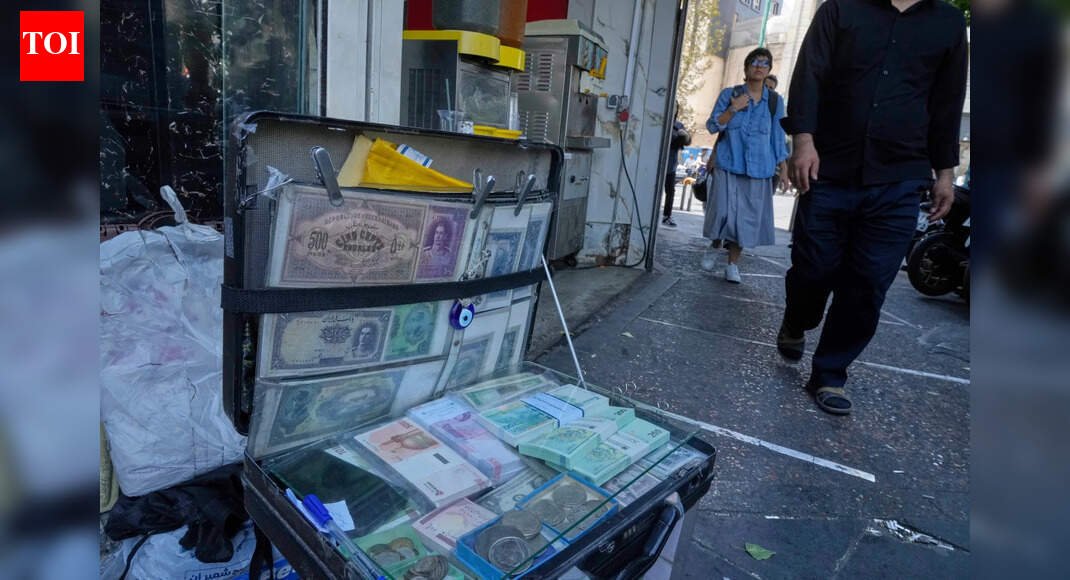
1 USD = 1,400,000 IRR: Iran on edge - why this is the most dangerous uprising yet
Iran’s latest protests, sparked by a devastating economic collapse and a plummeting currency, are unlike previous unrest. This wave sees a broader social coalition, including merchants, demanding regime change. Unlike past uprisings, the trigger is not a single outrage but the daily futility of a broken economy, making this a critical legitimacy crisis for Tehran.

In Iran, protests follow a familiar rhythm. They rise, they spread, they are crushed. What is unsettling about current demonstrations is not their scale alone but the sense that the old pattern may be breaking down.TL;DR: Driving the newsIran’s latest wave of nationwide protests, which began in late December 2025, is not simply another chapter in the Islamic Republic’s long cycle of unrest. What distinguishes this moment is not just scale or slogans, but the trigger: a total breakdown of economic credibility that has turned daily life into an exercise in futility and pushed once-cautious social groups into open revolt.The immediate spark was the collapse of the Iranian rial to roughly 1.4 million per US dollar, a historic low that coincided with inflation climbing past 50%, food prices surging more than 70% year-on-year, and wages losing value almost overnight. Protests began not on university campuses or around social restrictions, but in Tehran’s Grand Bazaar – the symbolic and practical heart of Iran’s economy – before spreading rapidly to all 31 provinces.Why it matters

  • This uprising strikes at the economic foundations of consent, not just the regime’s ideological legitimacy.
  • Iran’s leadership has survived repeated legitimacy shocks – from the 2009 Green Movement to the 2019 fuel protests to the 2022–23 “Woman, Life, Freedom” uprising – by combining repression, selective concessions and fear. But many analysts cited by Foreign Policy, the Economist, and others argue that those tools work best when the economy, however battered, still functions.
  • This time, money itself has stopped making sense.
  • When shopkeepers cannot price goods, importers cannot plan, and wages evaporate before payday, the state loses its ability to arbitrate daily life. As Alex Vatanka of the Middle East Institute told Reuters, “The collapse is not just of the rial, but of trust.” In Iran’s political history, that is a dangerous place for any government to be.

Zoom in: What’s genuinely new about this protest wave1) The trigger is economic collapse, not a single outrageThe 2022 protests followed the death of Mahsa Amini and centered on dignity, bodily autonomy and generational rebellion. Those grievances remain unresolved, but the 2025–26 protests erupted because commerce itself broke down. The Times of Israel described the moment bluntly: Iranians revolted when they realized that “money no longer works.”That distinction matters. Moral outrage can be compartmentalized or delayed. Economic paralysis cannot.2) The social coalition is broader – earlierAccording to Foreign Policy, the current protests have already mobilized bazaar merchants, students, urban professionals, laborers, women and ethnic minorities in their opening phase. In 2022, protests initially clustered in major cities and among youth. This time, smaller towns and economically marginalized areas joined quickly, reflecting how deeply inflation and currency collapse have penetrated Iranian society.3) The center of gravity has shifted toward regime changeWhile “Woman, Life, Freedom” remains symbolically powerful, slogans heard across Tehran, Isfahan, Mashhad and beyond increasingly call for the end of the Islamic Republic itself. Reuters and AP documented chants praising the former monarchy and calling for the return of Crown Prince Reza Pahlavi – rhetoric that once would have guaranteed swift execution.The shift does not signal consensus on what should replace the system. It does signal exhaustion with reform as an option.Between the lines: Why Iran isn’t Syria – and why that may be worseComparisons to Syria surface whenever Middle Eastern protests escalate. But Michael Rubin of the Middle East Forum argues that Iran’s trajectory could be more chaotic, not less.Syria’s civil war eventually hardened along ethnic and sectarian lines, creating de facto safe zones. Assad’s Alawite base retreated to Latakia. Kurds controlled the northeast. Rebel groups carved out enclaves elsewhere. Iran has no such geographic or sectarian escape valves.The Islamic Republic is multi-ethnic, its ruling elite draws from multiple communities, and even Supreme Leader Ali Khamenei himself is Azerbaijani. If the center collapses, there is no obvious periphery to absorb the shock.Rubin also highlights a structural risk: fragmentation within the security forces. The Islamic Revolutionary Guard Corps is not monolithic. Some members joined for economic security; others are ideologues shaped from childhood. If central authority weakens, different units could compete rather than coordinate. As Rubin writes, “It is unlikely that either the Guard Corps or the Iranian Army is unified enough to appoint an influential leader.That dynamic raises the specter not of a clean transition, but of elite infighting and nationwide instability.

I have let them know that if they start killing people, which they tend to do during their riots — they have lots of riots — if they do it, we are going to hit them very hard

Donald Trump during an interview with conservative radio host Hugh Hewitt

What they are sayingIran’s leadership is reaching for familiar language – and finding it less effective.Supreme Leader Ayatollah Ali Khamenei has acknowledged economic grievances, echoing his approach during the 2022 protests when he said Mahsa Amini’s death “deeply broke my heart.” In his latest remarks, he again recognized public suffering before pivoting to claims of Western “soft war.”“What turned the tide of the protests was former Crown Prince Reza Pahlavi’s calls for Iranians to take to the streets at 8pm on Thursday and Friday,” Holly Dagres, a senior fellow at the Washington Institute for Near East Policy, told AP. “Per social media posts, it became clear that Iranians had delivered and were taking the call seriously to protest in order to oust the Islamic Republic.”On the streets, that message is not landing. Protesters are increasingly linking domestic misery to Tehran’s regional ambitions. A 25-year-old woman in Lorestan told Reuters: “I just want to live a peaceful, normal life … Instead, they insist on a nuclear program and supporting armed groups.”From abroad, the rhetoric has grown sharper. US President Donald Trump warned that if Iranian authorities “start killing people,” Washington would respond forcefully, saying the US was “locked and loaded and ready to go.” Iranian officials now cite those statements as evidence of foreign interference – even as everyday Iranians struggle to buy food.Israeli Prime Minister Benjamin Netanyahu commended the demonstrations, describing them as “a decisive moment in which the Iranian people take their futures into their hands”.The big picture: A legitimacy crisis with fewer shock absorbersThis protest wave unfolds as Iran’s external position is weaker than at any point in decades.

The latest protests diverge from the old pattern in two ways. One is that the bankruptcy of the regime (both literal and figurative) is in full view. Iran has endured a year of economic collapse, war and environmental crisis; its leaders have no solutions for these woes. The other difference is the prospect of foreign intervention, by either Israel or America. After the American raid to seize Nicolás Maduro from Venezuela on January 3rd, many Iranians wondered if their country might be next in Donald Trump’s crosshairs.

An article in the Economist

In 2022, Tehran could still point to its regional influence and nuclear leverage as buffers against internal dissent. In 2025–26, those buffers have eroded. Bashar al-Assad is no longer in power in Syria. Israeli and US strikes in 2025 badly damaged Iran’s nuclear infrastructure. Proxies from Gaza to Lebanon have been degraded too.At home, the regime’s time-tested formula – repression paired with tactical concessions – is losing traction. Analysts cited by Reuters say crackdowns still instill fear, but no longer restore confidence. Cosmetic changes, such as reshuffling economic officials or promising dialogue, ring hollow to a population that understands where real power lies.As the Economist observed, what sets this moment apart is that “the bankruptcy of the regime (both literal and figurative) is in full view.” Add the unprecedented talk of possible foreign intervention, and uncertainty multiplies.What’s next

  • In the short term, Tehran is likely to intensify repression.
  • But Iran’s protests are different this time because they are rooted in economic collapse, not a single injustice – and because they arrive when the regime is poorer, weaker abroad, and facing a population that increasingly sees no path forward within the system.
  • History offers little comfort. Illegitimate regimes do not always fall, and when they do, they rarely fall cleanly. North Korea was once assumed to be a “zombie state.” It survived. Syria collapsed into catastrophe.
  • Iran now sits uncomfortably between those outcomes. The protests have shattered what remained of the regime’s moral and economic credibility. Yet the opposition remains fragmented, the security forces armed, and the stakes for insiders existential.
  • As Reuters quoted one analyst, “Change now looks inevitable; regime collapse is possible but not guaranteed.”

(With inputs from agencies)


Source link

Sponsors pull back, futures clouded: Bangladesh cricketers caught in India standoff after Mustafizur Rahman row | Cricket News


Sponsors pull back, futures clouded: Bangladesh cricketers caught in India standoff after Mustafizur Rahman row
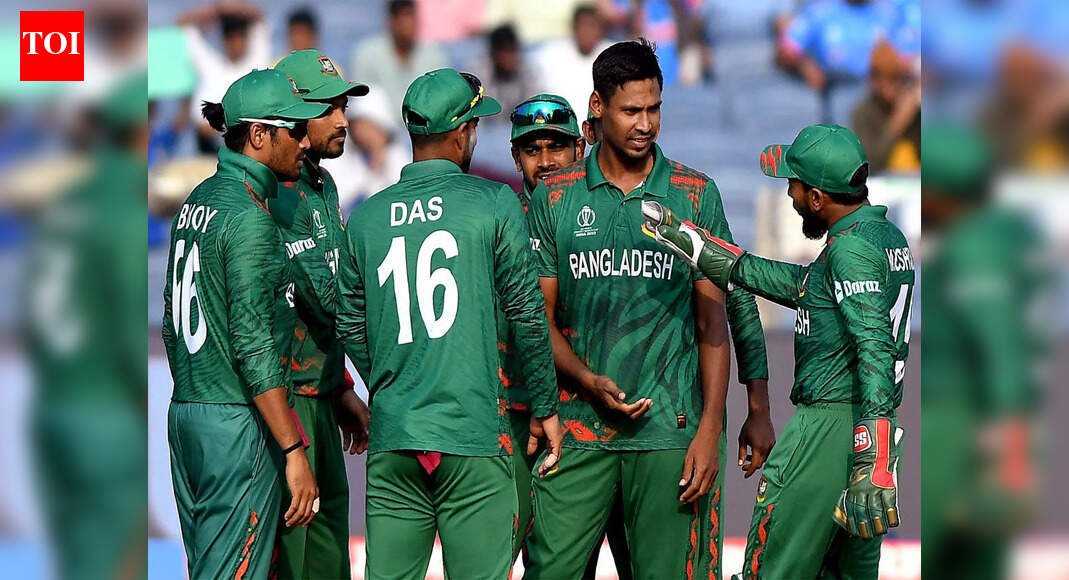
Bangladesh cricketers (ANI Photo)

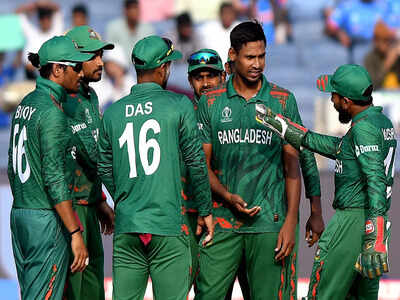
NEW DELHI: A cloud of uncertainty hangs over Bangladesh cricket as the ongoing standoff with India begins to hit players off the field, with several national cricketers at risk of losing Indian sponsorship deals amid the fallout from the Mustafizur Rahman controversy.Go Beyond The Boundary with our YouTube channel. SUBSCRIBE NOW!At the heart of the crisis is Bangladesh’s strained relationship with Indian cricket authorities following the removal of pacer Mustafizur Rahman from Kolkata Knight Riders’ squad ahead of the upcoming Indian Premier League, after a directive from the BCCI. The episode escalated into a diplomatic and cricketing flashpoint, prompting the Bangladesh Cricket Board (BCB) to cite security concerns and seek intervention from the ICC regarding its participation in the ICC T20 World Cup 2026 in India.

Bangladesh seek T20 WC match shift from India after Mustafizur Rahman’s IPL exit

According to reports, the uncertainty has already begun to affect Bangladeshi players commercially. Indian sports equipment major Sanspareils Greenlands (SG) has reportedly decided not to continue sponsorship agreements with several Bangladesh cricketers, including captain Litton Das. While no official communication has been issued yet, players and their representatives have been informally alerted. “I haven’t heard anything of that sort officially,” a Bangladesh cricketer sponsored by SG told Cricbuzz, reflecting the confusion within the camp.A senior BCB official, speaking to Cricbuzz on condition of anonymity, admitted the players are under severe mental strain. “It’s a very difficult time for the cricketers considering they are not sure what is in store for them in the coming days. They are quite tense, and it’s understandable,” the official said, adding that players are regularly reaching out to board officials for clarity on Bangladesh’s World Cup stance.

Poll

Do you think the Bangladesh Cricket Board (BCB) should shift matches from India to Sri Lanka for security reasons?

The uncertainty has also unsettled the foreign coaching staff. One member of the support team told Cricbuzz that he hopes the situation resolves quickly. “We are here for cricket, and what is bigger than a World Cup? I hope the matter gets resolved soon,” he said.According to Telecom Asia, agents of Bangladeshi players have been informed that SG may not renew contracts, raising fears that other Indian manufacturers could follow suit. “Other manufacturers also might opt not to sponsor our cricketers,” a source involved in player sponsorships said.The BCB, meanwhile, has written twice to the ICC following an emergency meeting on January 4, requesting Bangladesh’s matches be shifted from India to Sri Lanka for security reasons. While the ICC’s decision is pending, Bangladesh remain scheduled to play Group C matches in Kolkata and Mumbai starting February 7.


Source link

Bharat Coking Coal Limited IPO day 1: BCCL offer subscribed fully within minutes! Check price band, GMP, valuation & more


Bharat Coking Coal Limited IPO day 1: BCCL offer subscribed fully within minutes! Check price band, GMP, valuation & more

Bharat Coking Coal Ltd’s initial public offering (IPO) saw strong demand from investors from the moment bidding opened on Friday, with the issue getting fully subscribed within minutes. According to NSE data till 11:15 am, bids were received for 84,15,46,800 shares, far exceeding the 34,69,46,500 shares on offer, resulting in an overall subscription of 2.43 times. Interest was strongest in the non-institutional investors’ segment, which was subscribed 3.79 times. Retail individual investors followed closely with 3.35 times subscription, while the qualified institutional buyers’ portion saw 1% subscription.Ahead of its public issue, Bharat Coking Coal Ltd (BCCL) has raised more than Rs 273 crore from anchor investors, the company said on Thursday. The IPO, which has a grey market premium of 43.5%, is a Rs 1,071-crore issue and will remain open for subscription until January 13. The price band for the issue has been set at Rs 21 to Rs 23 per share. At the upper end of the band, the company’s valuation works out to more than Rs 10,700 crore. As per the red herring prospectus, the issue is entirely an offer for sale of 46.57 crore equity shares by parent company Coal India, with no fresh equity being issued. The proposed listing of BCCL is part of the government’s wider divestment drive in the coal sector, aimed at unlocking value in Coal India’s subsidiaries and bringing in greater transparency through market participation. In its prospectus, the company said the IPO would help it realise the advantages associated with being a listed entity. Incorporated in 1972, Bharat Coking Coal Ltd is engaged in the mining and supply of coking coal, with its operations primarily located in the Jharia coalfields of Jharkhand and the Raniganj coalfields of West Bengal. The offering comes amid a strong rush for India’s primary markets. In 2025, companies raised nearly Rs 1.76 lakh crore through IPOs, marking a record year. This surpassed the Rs 1.6 lakh crore raised by 90 companies in 2024 and the Rs 49,436 crore mobilised by 57 firms in 2023, supported by strong domestic liquidity, steady investor sentiment and a favourable macroeconomic environment.


Source link