Breaking News
Will Reliance buy Venezuelan oil? ‘Await clarity on non-US buyers’ – here’s what the company said


Will Reliance buy Venezuelan oil? ‘Await clarity on non-US buyers’ - here’s what the company said

Reliance Industries Ltd has said it may return to buying Venezuelan crude oil, provided sales are permitted to companies outside the United States. The conglomerate, which operates world’s largest refining complex, said that it is waiting for regulatory clarity before taking a decision. “We await clarity on access for Venezuelan oil by non-US buyers and will consider buying the oil in a compliant manner,” a Reliance Industries spokesperson told Reuters. Industry sources cited by the firm further added that state-run refiners Indian Oil Corp and Hindustan Petroleum Corp are also prepared to consider Venezuelan oil if non-US companies are allowed to purchase it. Reliance had stopped buying Venezuelan crude last year in March, after US President Donald Trump announced a 25% tariff on countries purchasing oil from Venezuela. Its last cargo of Venezuelan oil was received in May last year.After the capture of Venezuela President Maduro by US forces on January 3, Caracas and Washington agreed to allow the export of up to $2 billion worth of Venezuelan crude, estimated at 30 to 50 million barrels, to the US. The company’s refining operations in Gujarat, with a combined capacity of around 1.4 million barrels per day, are designed to process heavier and cheaper crude grades, including Venezuela’s Merey oil. “If Venezuelan barrels re-enter global markets, they are likely to come at a discount, improving feedstock optionality and economics for compatible refiners, even if volumes remain limited,” Sumit Ritola, lead research analyst, refining and modelling at Kpler was quoted as saying by Reuters. According to LSEG trade flow data, several Indian refiners, including HPCL-Mittal Energy, Nayara Energy, Indian Oil Corp and Mangalore Refinery and Petrochemicals, have imported Venezuelan oil in the past. Ritola said Venezuelan crude could serve as a “politically acceptable diversification option” for India as it reassesses its energy sourcing. Meanwhile, India has faced growing pressure from Western nations to reduce purchases of Russian oil following Moscow’s invasion of Ukraine, amid concerns that oil revenues could be supporting Russia’s war effort. Last year, the United States doubled tariffs on Indian goods to 50%, alleging that New Delhi’s continued purchase of Russian oil fuels Moscow’s ‘war machine’ in Ukraine.Earlier on Wednesday, Trump cleared legislation intended to “punish” countries that continue doing business with Russia. While some state-owned refiners and Nayara Energy are expected to keep importing Russian crude, Reliance has said it will not take any Russian oil in January, a step that could drive India’s intake of Russian crude for the month to its lowest level in years. “We’ve already seen that Reliance has reduced its intake of Russian crude, which indicates refiners are willing and able to adapt when compliance or trade risks rise,” Ritola said.
Source link

Mumbai court rejects bail plea of IPS officer’s hubby | Mumbai News


MUMBAI: The sessions court rejected the temporary bail plea of Purushottam Chavan, the husband of an IPS officer, accused of cheating several citizens of more than Rs 24 crore by promising flats under the govt quota. Chavan sought release on medical grounds for a period of 3 months.The complainant, Kedar Degwekar, opposed the plea through his counsel, Mohan Tekavde, saying the request was an attempt to secure liberty through piecemeal relief after his earlier regular bail plea was already dismissed.


Source link

AIFF gives Odisha Friday deadline to confirm ISL participation | Goa News


Odisha wrote to AIFF on Thursday listing several conditions for participation in this edition of ISL

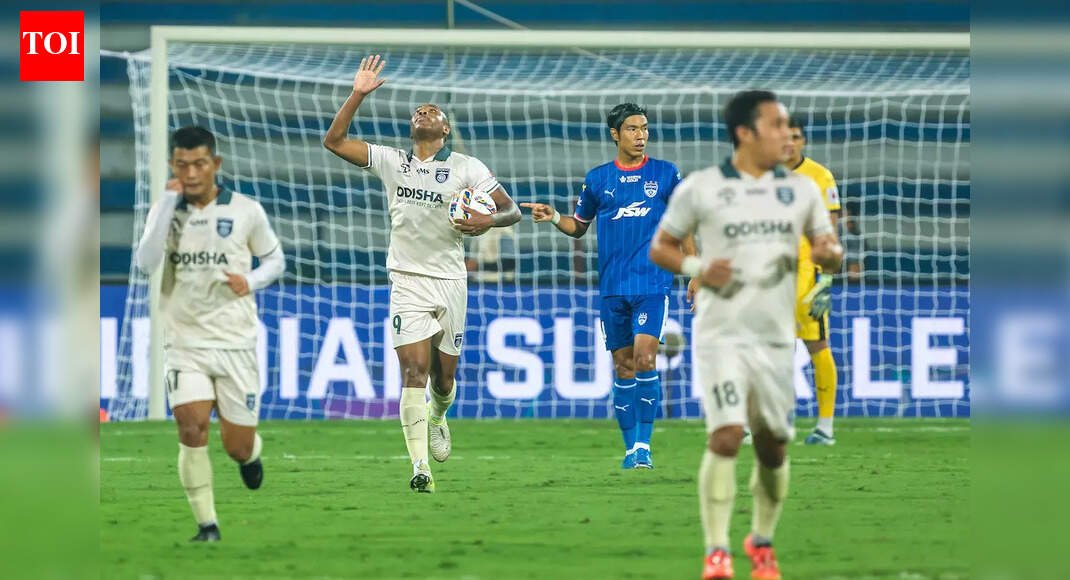
The All India Football Federation (AIFF) has given Odisha FC time till 5pm on Friday to confirm their participation in the Indian Super League (AIFF).Odisha wrote to AIFF on Thursday listing several conditions for participation in this edition of ISL. According to sources, the club sought waiver of the Rs 1 crore participation fee, stadium support at no cost to the club, central financial assistance and no relegation from the top tier of Indian football.The AIFF, however, told the former Super Cup champions that “the proposal communicated to all participating clubs is uniform and not amenable to negotiation”“Odisha is the only club who wrote to us directly and we have responded,” a senior official told TOI. “We are very clear in our stand and have made it known to Odisha.”Other clubs, the official said, wrote to the sports ministry, marking copies of their letters to AIFF.AIFF president Kalyan Chaubey is expected to meet sports minister Mansukh Mandaviya on Friday.Earlier this week, Mandaviya had announced that the next edition of the much-delayed ISL will kick off on Feb 14 with all 14 teams taking part. Six clubs – FC Goa, Chennaiyin FC, Mumbai City, Bengaluru FC, Kerala Blasters FC and Odisha — have sought support from the sports ministry before providing a final confirmation.


Source link

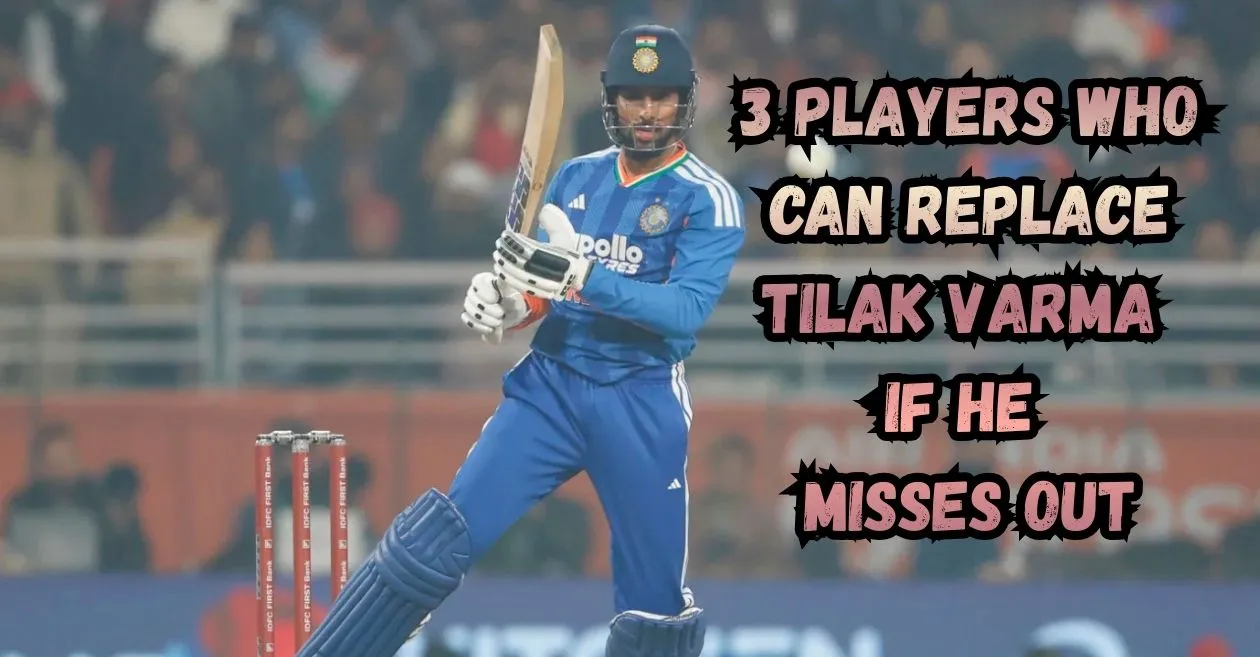
3 players who can replace Tilak Varma in India’s T20 World Cup 2026 squad if he misses out


India face a potential crisis in its middle-order lineup for the T20 World Cup 2026 after Tilak Varma‘s recent surgery raised doubts about his participation. The young batter’s injury has sparked intense discussions among fans and experts on suitable replacements. With the tournament approaching fast, selectors must weigh options carefully to maintain balance.

Tilak Varma’s injury setback ahead of the T20 World Cup 2026

Varma underwent emergency surgery for testicular torsion on January 7, 2026, while playing for Hyderabad in the Vijay Hazare Trophy in Rajkot. He experienced sudden acute pain in his abdominal region, leading to immediate hospitalization at Gokul Hospital, where scans confirmed the condition requiring urgent intervention. Doctors estimate a recovery period of three to four weeks, potentially ruling him out of the upcoming five-match T20I series against New Zealand starting January 21 and casting uncertainty over his T20 World Cup readiness.​

BCCI sources indicate Varma could return for the series finale on January 31, but fitness concerns linger given the high-stakes nature of the global event. His heroics in the Asia Cup 2025 final had cemented his role as a dynamic left-handed middle-order enforcer, blending power-hitting with composure under pressure. Speculation is rife that even if he recovers physically, match sharpness might be compromised, prompting calls for backups who can slot in seamlessly.​

3 players who can replace Tilak Varma if he misses out

1. Shreyas Iyer

Shreyas Iyer (Image source: X)

Shreyas Iyer emerges as a prime candidate to fill Varma’s shoes, offering stability and tactical acumen in the middle order. The experienced right-hander boasts a T20I strike rate above 140, with recent domestic form showcasing his ability to anchor innings on tricky pitches. His leadership credentials, including captaining India in white-ball formats, make him ideal for high-pressure World Cup scenarios.

Also READ: Brother Vikas hits back at Virat Kohli’s critics ahead of IND vs NZ ODI series

2. Shubman Gill

Shubman Gill replacement
Shubman Gill (Image source: X)

Shubman Gill stands out for his elegant strokeplay and consistency at the top or number three. As the current ODI captain, Gill’s T20I average nears 35, complemented by a flair for accelerating in the powerplay or middle overs. His technical prowess against spin suits subcontinental conditions expected in the 2026 tournament across India and Sri Lanka.

3. Ruturaj Gaikwad

Ruturaj Gaikwad replacement
Ruturaj Gaikwad (Image source: X)

Ruturaj Gaikwad rounds out the trio with his IPL-honed finishing skills, holding a T20I strike rate over 145. Chennai Super Kings opener has evolved into a versatile middle-order option, excelling in chases with smart placements and six-hitting ability. Recent performances in domestic T20s underline his readiness to step up internationally.

These players bring unique strengths ensuring India’s campaign remains robust. Selectors face a strategic puzzle, but depth in talent offers reassurance amid Varma’s absence. The T20 World Cup 2026 promises fireworks, regardless of who wears the blue jersey.

Also READ: Fans go berserk as Ruturaj Gaikwad smashes a record breaking century against Goa in Vijay Hazare Trophy 2025-26


Source link

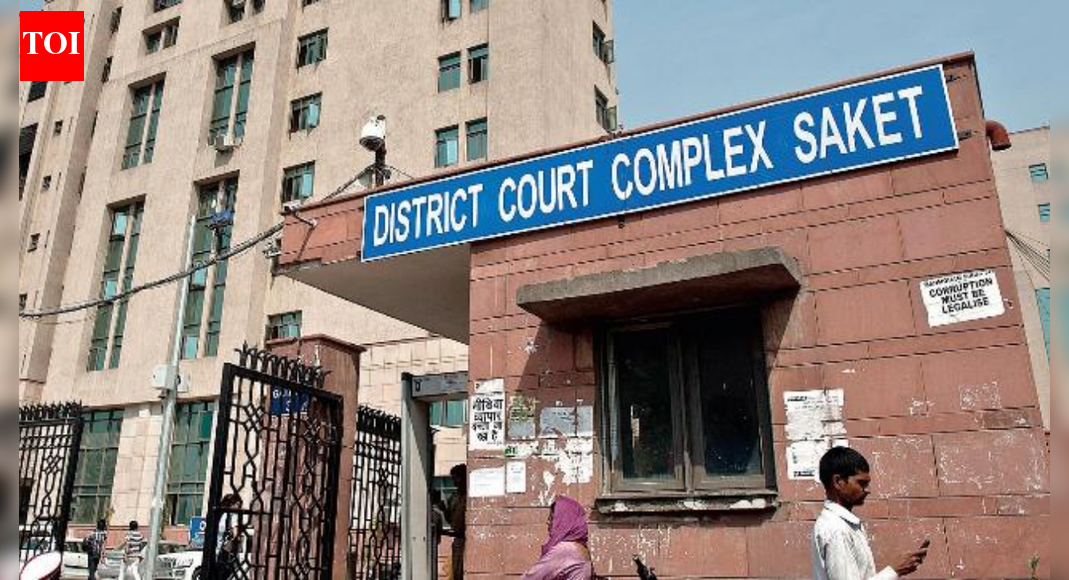
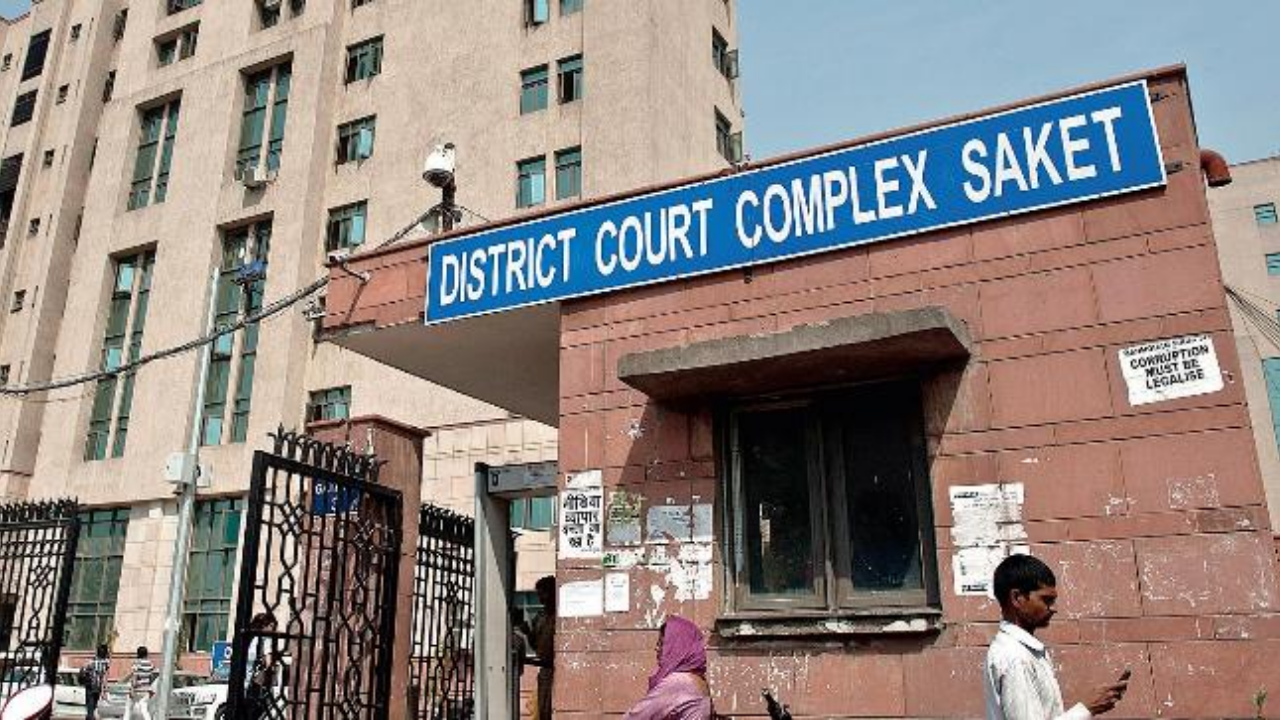
Delhi: Staff member jumps off building at Saket court complex; suicide note recovered | Delhi News


The TOI City Desk is an indefatigable team of journalists dedicated to bringing you the pulse of cities from across the nation, all day and all night. Our mission is to curate, report, and deliver city news that matters to readers of The Times of India. With a keen focus on urban life, governance, culture, and local issues, we provide a comprehensive view of the ever-evolving cityscapes. Our team works tirelessly to keep readers informed about the latest developments, ensuring that they are connected to the heartbeat of cities across India, right when it happens. The TOI City Desk is a trusted source for staying in touch with the local stories that shape your world.


Source link

Stock market today: Which stocks are the top gainers & losers on Nifty50, BSE Sensex on January 9? Check list


Stock market today: Which stocks are the top gainers & losers on Nifty50, BSE Sensex on January 9? Check list

Stock market traded in red on Friday, as NSE benchmark Nifty50 remained below 26,000 levels and BSE Sensex tanked over 400 points. Nifty50 trimmed 130 points or 0.50% to reach 25,746. BSE benchmark Sensex also dipped 433 points to 83,747 at 12:11 pm. Benchmark indices opened lower amid concerns over the US threat of imposing 500% tariffs on countries importing Russian crude and continued heavy foreign portfolio investor (FPI) outflows. Investors are now turning their attention to the upcoming earnings season for cues on the market’s next direction. Market experts told PTI that after several sessions of decline, indices could attempt to stabilise at current levels. Ajay Bagga, Banking and Market Expert, told ANI, “After four days of losses, Indian markets may look at consolidating and holding ground. Foreign portfolio investors have offloaded about $900 million worth of Indian shares in January so far, after record outflows of $19 billion in 2025. Nifty and Sensex have lost 1.7% and 1.8%, respectively, in the last four sessions, after US threats of further sanctions on Russian oil purchases and a proposal to raise tariffs to 500% on countries doing trade with Russia. Indian markets are in an oversold zone and could see some recovery.”

Nifty50 top gainers

  • Eternal – +1.79%
  • HCL Tech – +1.29%
  • Asian Paints – +1.17%
  • BEL – +1.16%
  • ONGC – +1.09%
  • JSW Steel – +1.03%
  • Tech Mahindra – +0.63%
  • SBI – +0.63%
  • Dr Reddys – +0.34%
  • Infosys – +0.33%

Nifty50 top losers

  • ICICI Bank – (−) 2.17%
  • Adani Enterprises – (−) 1.85%
  • Adani Ports SEZ – (−) 1.80%
  • Max Healthcare – (−) 1.53%
  • UltraTech Cement – (−) 1.17%
  • NTPC – (−) 1.09%
  • Nestle India – (−) 1.08%
  • Maruti Suzuki – (−) 1.08%
  • Apollo Hospital – (−) 1.01%
  • Axis Bank – (−) 1.00%)

Top BSE Sensex gainers

  • Eternal – +1.80%
  • HCL Tech – +1.30%
  • Asian Paints – +1.11%
  • SBI – +0.64%
  • Tech Mahindra – +0.63%
  • IndusInd Bank – +0.41%
  • Power Grid – +0.33%
  • Infosys – +0.33%
  • TCS – +0.26%
  • Tata Steel – +0.12%

Top BSE Sensex losers

  • ICICI Bank – (−) 2.19%
  • Adani Ports SEZ – (−) 1.79%
  • UltraTech Cement – (−) 1.18%
  • Nestle India – (−) 1.11%
  • Maruti Suzuki – (−) 1.07%
  • NTPC – (−) 1.06%
  • Axis Bank – (−) 1.00%
  • ITC – (−) 0.93%
  • Sun Pharma – (−) 0.90%
  • InterGlobe – (−) 0.87%

Meanwhile on the global front, market sentiment later in the day is likely to be shaped by two key developments: the US jobs report and the US Supreme Court’s ruling on the legality of the Trump-era tariffs. The employment data is expected to show that around 70,000 jobs were added in December. Meanwhile, the Supreme Court’s verdict is being closely watched by investors. Markets will track whether the court invalidates the Trump tariffs, whether it orders a refund of duties already collected, a move that could have a $150 billion impact on US government finances, and how the Trump administration may attempt to reimpose tariffs through alternative legislative routes.(Disclaimer: Recommendations and views on the stock market, other asset classes or personal finance management tips given by experts are their own. These opinions do not represent the views of The Times of India)


Source link

MI vs RCB Live Streaming: When and Where to Watch WPL 2026 Opener Online and on TV | Cricket News


MI vs RCB Live Streaming: When and Where to Watch WPL 2026 Opener Online and on TV
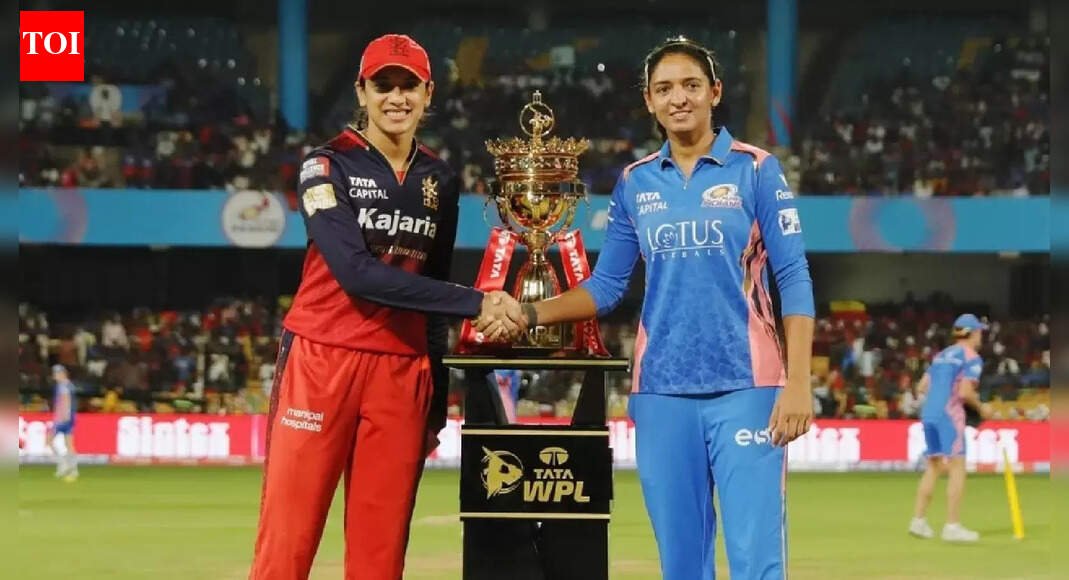
RCB’s Smriti Mandhana and MI’s Harmanpreet Kaur

Still riding high on the afterglow of their maiden ODI World Cup triumph, India’s women cricketers return to the spotlight as the fourth edition of the Women’s Premier League (WPL) gets underway on Friday. The tournament opener promises fireworks, with defending champions Mumbai Indians (MI) locking horns with Royal Challengers Bengaluru (RCB) at the DY Patil Stadium, widely regarded as the home of Indian women’s cricket.Go Beyond The Boundary with our YouTube channel. SUBSCRIBE NOW!The high-profile clash also marks the beginning of the teams’ preparations for the T20 World Cup later this year. MI, led by Harmanpreet Kaur, enter the season as clear favourites, boasting arguably the most balanced squad in the league. With world-class all-rounders like Nat Sciver-Brunt, Hayley Matthews and Amelia Kerr, Mumbai combine power, depth and experience across departments. Their strong Indian core, including Amanjot Kaur and Saika Ishaque, further adds to their title credentials.

WPL Auction 2026: Full Breakdown of Every Major Number

RCB, the 2024 champions, will look to counter MI’s dominance under the leadership of Smriti Mandhana. While the absence of Ellyse Perry is a significant blow, Mandhana’s form at the top and the presence of explosive names like Richa Ghosh, Grace Harris and Georgia Voll ensure RCB remain a serious threat. With both teams stacked with match-winners, the opener sets the tone for a fiercely competitive WPL season to be staged across Navi Mumbai and Vadodara.CLICK FOR FULL WPL COVERAGE Match Details

  • Match: Mumbai Indians vs Royal Challengers Bengaluru, Match 1
  • Date: January 9, 2026
  • Venue: Dr DY Patil Sports Academy, Navi Mumbai
  • Time: 7:30 PM IST

MI vs RCB Live Streaming & Telecast Details

  • The Women’s Premier League 2026 will be broadcast live on the Star Sports Network.
  • Live streaming of all matches will be available on the Jio Hotstar app and website.

Squads

  • Mumbai Indians: Harmanpreet Kaur (C), Nat Sciver-Brunt, Amelia Kerr, Hayley Matthews, Amanjot Kaur, Sajeevan Sajana, Shabnim Ismail, Gunalan Kulkarni, Nicola Carey, Sanskriti Gupta, Rahil Firdous, Poonam Khemnar, Triveni Vasistha, Nalla Reddy, Saika Ishaque, Milly Illingworth.
  • Royal Challengers Bengaluru: Smriti Mandhana (C), Richa Ghosh, Ellyse Perry, Lauren Bell, Pooja Vastrakar, Arundhati Reddy, Radha Yadav, Nadine de Klerk, Shreyanka Patil, Georgia Voll, Linsey Smith, Prema Rawat, Gautami Naik, Prathyoosha Kumar, Dayalan Hemalatha.


Source link

Thorium key to expanding India’s energy independent nuclear programme, says Anil Kakodkar | Mumbai News


MUMBAI: Former chairman of the Atomic Energy Commission Anil Kakodkar, and its current member, emphasised the use and importance of thorium for expanding India’s nuclear programme.Kakodkar delivered the Dr M R Srinivasan Memorial Lecture, jointly organised by the Thakur College of Engineering And Technology and the National Centre For Science Communicators, to mark the 95th birth anniversary of Dr Srinivasan. Dr Srinivasan, a pioneer of India’s nuclear energy programme, passed away on May 20, 2025. Kakodkar emphasised that if India had to become energy independent thorium was the answer. According to him, India had the largest amount of thorium globally, the world figure being six million tonnes and that of India being one million tonnes. He said the importance of thorium assumed further importance because the world figure of uranium was six to eight million tonnes, while that of India was 0.4 million tonnes. It was because of the limited amount of uranium availability that India signed the Indo-US civil nuclear agreement. “After this agreement was signed, India got global access to uranium,” he said. Kakodkar said thorium in pressurised heavy water reactors would be safer, cheaper and fuel efficient. The transistion to thorium would enable faster growth. ” Thorium will allow continuity of nuclear energy programme,” he told the large audience. Among the benefits of the use of thorium were the lower reprocessing burden, greater proliferation resistance, greater accident tolerent and more safety.


Source link

Between the staircase and the see-saw: Did PM Modi’s reluctance to call Trump cost India a trade deal?


Between the staircase and the see-saw: Did PM Modi’s reluctance to call Trump cost India a trade deal?

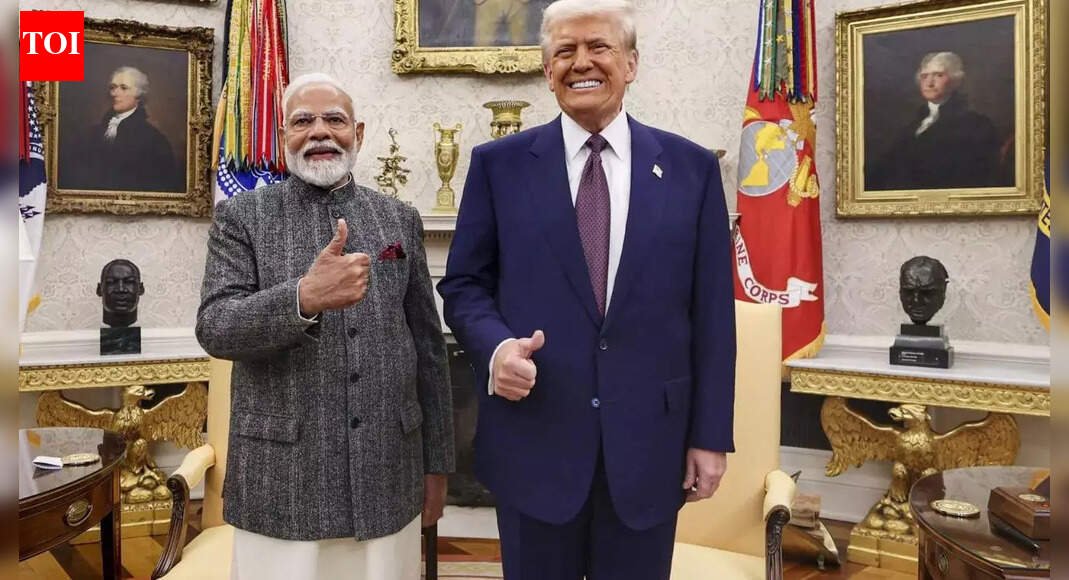
The TOI correspondent from Washington: US commerce secretary Howard Lutnick has offered a blunt and unusually personal account of why a long-anticipated US–India trade agreement failed to materialise, placing the blame squarely on timing, political hesitation in New Delhi, and what he described as President Donald Trump’s deliberately competitive approach to deal-making. Among the reasons the deal did not happen: Prime Minister Modi’s reluctance to call the US President. Speaking to the All-In podcast hosted by Sri Lankan-origin venture capitalist Chamath Palihapitiya, Lutnick said India “did not grab the opportunity the United States presented” and waited too long to conclude negotiations, only to later seek terms comparable to those secured by the United Kingdom. By then, he said, the moment had passed.

Trump Clears Russia Sanctions Bill, 500% Tariff Threat Looms As India Reworks Oil Import Strategy

At the heart of Lutnick’s explanation is what he called Trump’s “staircase” model of trade negotiations — a strategy designed to reward speed and decisiveness while penalising hesitation. Under this approach, the first country to conclude a deal receives the most favorable terms, setting a baseline that subsequent agreements must exceed. Each new deal, Lutnick said, moves “up and to the right,” making later bargains progressively more expensive or restrictive.“The first stair gets the best,” Lutnick explained. “After that, everyone says, ‘I want the UK deal.’ And the answer is no — they were first.”The United Kingdom, he said, moved quickly under a tight deadline. Lutnick recalled telling British officials they had “two Fridays” to finalise the agreement before the opportunity disappeared. Prime Minister Keir Starmer, he said, personally called Trump as the deadline approached, and the deal was concluded and publicly announced within days.India, by contrast, was given what Lutnick described as three Fridays — a “shot clock” to complete negotiations. During that window, Trump publicly signaled that India could be next, a message Lutnick said was meant to encourage urgency. But New Delhi hesitated, in part because of internal political considerations and discomfort with the optics of Prime Minister Narendra Modi personally calling Trump to seal the agreement.“I said, you’ve got to have Modi call the president,” Lutnick recounted. “They were uncomfortable doing so. Modi didn’t call.”As the deadline passed, the administration moved on. Over the following weeks, Washington announced a series of trade deals across Asia, including agreements with Indonesia, the Philippines and Vietnam. Those deals, Lutnick said, were negotiated at higher tariff and market-access levels than what India had been offered, precisely because the staircase had already moved upward.When Indian officials later returned to the table, Lutnick said, they were seeking terms that no longer existed — effectively asking for a deal “in between the UK and Vietnam,” which would have between 15 per cent and 20 per cent tariff. That, he said, was impossible.“They said, ‘But you agreed,’” Lutnick recalled. “And I said, then — not now.”Lutnick framed India’s predicament through an extended metaphor drawn from his early career as a trader, likening it to being stuck on the wrong side of a seesaw — a position where every move seems to make matters worse. In his telling, India repeatedly missed the moment when action would have paid off, while other countries stepped in and secured agreements.Despite the sharp tone, Lutnick suggested the breakdown was not the result of hostility but of misaligned timing and domestic political constraints. He acknowledged that trade negotiations are “deeply complex,” often requiring parliamentary approval and consensus-building that can slow decision-making. Still, he emphasised that the Trump administration had little patience for delay.“There are a lot of countries,” Lutnick said, “and each has its own deep internal politics. But the train doesn’t wait.”The episode underscores a broader shift in US trade policy under Trump, one that prioritises leverage, speed and visible wins over protracted negotiations. Lutnick portrayed the president as the ultimate “closer,” with himself as the “table setter” who structures deals but leaves final decisions to Trump. While Lutnick expressed confidence that the US and India would “work it out” eventually, his remarks make clear that any future agreement would come on less favorable terms than those once on offer. Trump too has not expressed any overt hostility towards India or Modi, insisting that the Prime Minister is a “great guy” and a “good friend.” But for India, the missed deal has become a cautionary tale about the cost of hesitation in a White House that sees trade not as a slow diplomatic process or a strategic subset, but as a competitive race with clear winners and losers.


Source link

Access Denied


Access Denied

You don’t have permission to access “http://www.ndtv.com/world-news/3-indians-among-crew-on-board-russian-oil-tanker-seized-by-us-10548646” on this server.

Reference #18.2ef63717.1767941118.1ad105f1

https://errors.edgesuite.net/18.2ef63717.1767941118.1ad105f1


Source link