Breaking News
IND vs NZ [WATCH]: Prasidh Krishna cleans up Mitchell Hay with a jaffa in the first ODI


India fast bowler Prasidh Krishna delivered a breathtaking moment of skill and precision during the first ODI against New Zealand at the BCA Stadium, Kotambi, Vadodara. With a delivery that will be replayed countless times, Prasidh completely outfoxed Mitchell Hay, cleaning him up with a viciously jagging ball that left the batter rooted to the crease and gave India a crucial breakthrough at a vital stage of the innings.

India look for breakthroughs in the middle overs

After opting to bowl first, India’s bowlers were tested on a surface that offered good value for shots. New Zealand’s batters showed intent and discipline, ensuring the scoreboard kept ticking even as wickets fell at regular intervals. As the innings moved into the latter half, India were desperate for timely strikes to prevent the visitors from posting a formidable total.

Captain Shubman Gill turned to Krishna in the 38th over, hoping his pace and bounce could unsettle the set batters. What followed was a delivery that underlined why Prasidh is such a potent weapon in limited-overs cricket.

Prasidh Krishna stuns Mitchell Hay with a beauty

On the third ball of the 38th over, Prasidh ran in and delivered an absolute peach. Bowling to the right-handed Hay, the Indian pacer produced a sharp delivery that appeared to nip back in dramatically. There were immediate murmurs of reverse swing as the ball jagged back late, completely deceiving the batter.

Hay was caught deep in his crease, offering little foot movement as the ball sneaked past the inside edge. Before he could react, the delivery crashed into the top of the middle stump, sending the bails flying. The batter stood still for a moment, clearly stunned by the quality of the ball that had beaten him comprehensively. It was a classic fast-bowler’s dismissal—pace, movement, and precision coming together in perfect harmony.

Also READ: IND vs NZ: Here’s why Rishabh Pant is not playing the first ODI

Here’s the video:


New Zealand post a competitive total courtesy of Devon Conway’s blazing knock

New Zealand went on to post a competitive 300/8 in their allotted 50 overs, recovering well after losing momentum in the middle phase. The innings was anchored by solid contributions from the top and middle order, with Henry Nicholls scoring a fluent 62 and Devon Conway adding a composed 56 at the top, as the duo laid a strong foundation with a century opening stand. After both openers were dismissed in quick succession, New Zealand relied heavily on Daryl Mitchell, who played a crucial knock of 84 to steady the innings and guide the visitors through the middle and death overs. Despite India striking at regular intervals late in the innings, Mitchell’s counter-attacking approach ensured New Zealand reach 300-run mark, giving their bowlers a challenging total to defend in the first ODI.

Also WATCH: IND vs NZ – Harshit Rana deceives Henry Nicholls with a stunning slower ball in 1st ODI
Source link

Budget 2026: Biogas body IBA seeks Rs 10,000 cr subsidy fund; pitches higher support for CBG, organic manure


Budget 2026: Biogas body IBA seeks Rs 10,000 cr subsidy fund; pitches higher support for CBG, organic manure

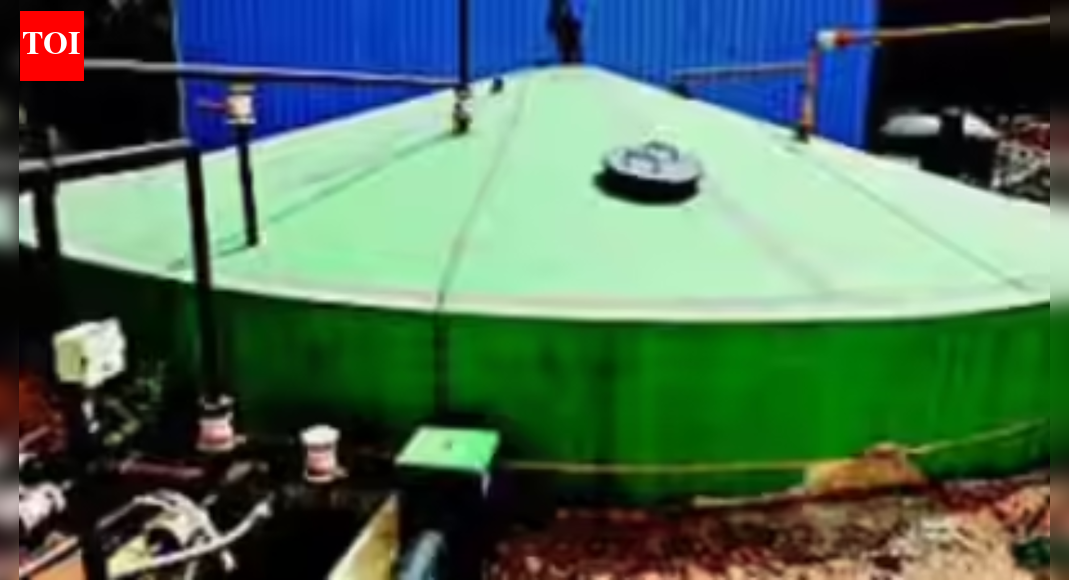
The Indian Biogas Association (IBA) has proposed the creation of a Rs 10,000 crore fund to provide capital subsidy to the biogas industry in the Union Budget 2026, calling for higher fiscal support to accelerate investment, improve project viability and scale up green energy adoption, PTI reported.In its Budget recommendations, the industry body urged the government to raise the capital subsidy for compressed biogas (CBG) plants by 50 per cent to Rs 6 crore per 4.8 tonnes per day (TPD) of capacity, and increase the upper cap to Rs 25 crore per project, from the current Rs 10 crore limit. At present, the scheme offers Rs 4 crore per 4.8 TPD of capacity.IBA said it will share these recommendations with the Ministry of New & Renewable Energy and the Ministry of Finance, adding that it has raised the demands at multiple forums ahead of the Budget.The association said the capex cost of CBG plants has risen by over 50 per cent since the launch of the Central Financial Assistance (CFA) scheme in 2014, necessitating a revision in subsidy norms. It proposed that the enhanced subsidy structure be supported by a minimum corpus of Rs 10,000 crore, enabling projects of up to 20 TPD capacity.For Budget 2026, IBA said the biogas and CBG sector should be positioned as a fast-maturing pillar of green growth, which now requires deeper fiscal support, faster implementation and easier access to finance to unlock private investment and rural income opportunities.The association also called for scaling up project incentives by raising CFA levels, and proposed a mandated blending of fermented organic manure (FOM) in fertiliser use — at least 5 per cent by 2028, rising to 10 per cent by 2030.Pointing to the government’s annual Rs 2 lakh crore chemical fertiliser subsidy, IBA said this contributes little to soil organic content. Redirecting even 10 per cent (Rs 20,000–25,000 crore) of this subsidy towards FOM-linked or carbon-based incentives could improve soil health, reduce import dependence and promote climate-smart agriculture, it said.The association noted that the current Rs 1,450 crore allocation over three years for Market Development Assistance (MDA) for organic manure from CBG plants is “abysmally low” and only a starting point, especially when compared with chemical fertiliser subsidies.In line with the compressed biogas blending obligation (CBO) under the Ministry of Petroleum and Natural Gas, IBA suggested that the Ministry of Chemicals and Fertilizers consider introducing a FOM–Chemical Fertilizer Blending Obligation (FCFBO) under an Organic–Chemical Fertilizer Blending Programme.The industry body also pushed for carbon monetisation through a Green Certificate mechanism, urging the government to allow biogas and CBG producers to sell carbon credits in domestic and international markets. It said this would help meet climate targets while opening new revenue streams for producers.Carbon credits in voluntary markets are valued at USD 5–50 per tonne of CO₂, and even at the lowest price, the carbon premium for CBG’s greenhouse gas mitigation could be Rs 10–12 per kg of methane produced, IBA said. With around 1,000 CBG plants expected by 2030, the market value of CBG-based green certificates could be about Rs 4,000 crore, it estimated.IBA also suggested introducing ‘cap and trade’ practices for carbon-intensive entities, and subsidising part of the proposed carbon pricing mechanism to help kick-start the system.


Source link

‘Long live Iran’: France No. 1 chess grandmaster Alireza Firouzja shares powerful message amid unrest | Chess News


'Long live Iran': France No. 1 chess grandmaster Alireza Firouzja shares powerful message amid unrest
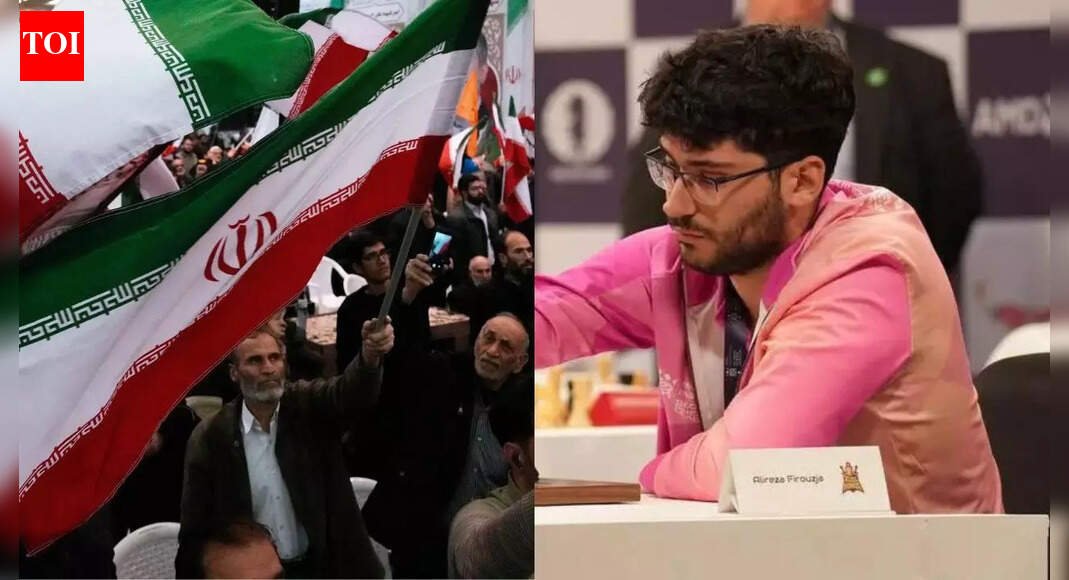
Alireza Firouzja opens up on Iran unrest (Photo by AP and GCL)

NEW DELHI: French No. 1 chess grandmaster Alireza Firouzja gained global attention after a social media post. The post on X (formerly Twitter) read, “Long live Iran.”The message spread quickly online. Many fans linked it to unrest in Iran. Firouzja also shared the monarchial-era Iranian flag with the caption: “Live free or die”. Many see this flag as a sign of resistance. Many also see it as a symbol of hope.

Russia-Ukraine War: How Global Conflict Impacts Chess Player | #Chess

Firouzja also shared the monarchial-era Iranian flag, which many see as a symbol of resistance and hope for change.The timing of the post matters. Iran is facing widespread anti-government protests. People across the country are demanding change. Rights groups say the situation is serious as they describe it as a humanitarian crisis. Authorities have reportedly shut down internet services. Phone services have also been restricted. This has cut millions off from the outside world. Dozens of people have reportedly died since the protests began. Global concern continues to grow. Many saw Firouzja’s message as support for ordinary Iranians. Firouzja is now a French citizen. However, his roots remain connected to Iran, where he was born on June 18, 2003. He is seen as one of the top chess talents of his generation. He became a grandmaster at age 14. He later broke Magnus Carlsen’s record by becoming the youngest player to cross a FIDE rating of 2800.Firouzja’s journey has not been without challenges. In 2019, he left the Iranian Chess Federation due to Iran’s policy of refusing to compete against Israeli players. For a period, he played under the FIDE flag before becoming a French citizen in 2021 and officially representing France. Despite the change in nationality, his recent post shows that his emotional bond with Iran remains strong.


Source link

No Rahul-Stalin in Tamil Nadu? DMK rejects Congress‘s ‘sharing power’ proposal; CM firm on stand | India News


No Rahul-Stalin in Tamil Nadu? DMK rejects Congress‘s 'sharing power’ proposal; CM firm on stand

NEW DELHI: Senior DMK leader and rural development minister I Periyasamy on Sunday ruled out any scope for a coalition government in Tamil Nadu, asserting that chief minister M K Stalin is firm against sharing power with allies, including the Congress.Responding to questions on the Tamil Nadu Congress’s renewed demand for a share in power, Periyasamy said while it was the party’s right to make such a demand, the DMK had never favoured a coalition arrangement.“There had never been a coalition government,” he said, adding that the state had always been governed by the DMK on its own. “There is no doubt about this stand of the party, there will be no coalition government and the chief minister is firm on this stand,” he told reporters.The Congress has recently revived its pitch for power-sharing ahead of the assembly elections due by March–April. Congress MP Manickam Tagore said it was time to debate “share in power,” while CLP leader and Kanyakumari legislator S Rajeshkumar also spoke in favour of a coalition government. Congress’s in-charge for Tamil Nadu Girish Chodankar had asked if any political party “will say that they don’t want the power; then we should name ourselves as NGO.”Periyasamy’s remarks assert DMK’s long-held position on governance in the state. Since 1967, both the DMK and the AIADMK have formed governments on their own despite contesting elections as part of alliances. The only exception dates back to the first assembly (1952–57) in the then Madras state, when the Congress, lacking an absolute majority, accommodated non-Congress leaders in its Cabinet.In 2006, the DMK ran a full five-year government despite falling short of a majority, relying on outside support from allies, including the Congress, but without sharing ministerial power. Congress leaders had made similar demands during that term as well, without success.


Source link

Zoho founder Sridhar Vembu says: AI reduces need for junior engineers, but then …


Zoho founder Sridhar Vembu says: AI reduces need for junior engineers, but then …

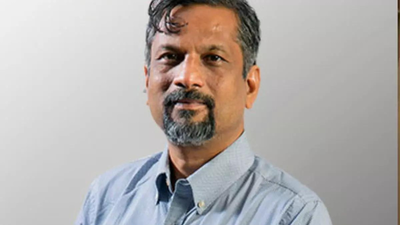
Zoho founder Sridhar Vembu has shared concerns about how artificial intelligence (AI) may change the structure of software teams. Sharing a post on microblogging platform X (formerly Twitter), Vembu said that AI is making senior software architects more productive, but at the same time it is also reducing the need for junior engineers. This shift, he warns, could impact how future architects are trained. In the post, Sridhar Vembu further writes that senior architects today need to understand both technical requirements and the full technology stack to guide AI tools effectively and refine their output. “AI makes senior architects more productive and reduces the need for junior engineers,” he writes in the post, adding “The architect needs to understand the requirements as well as the technology stack well, to be able to guide the AI and fine tune its output”.“But if we don’t have junior engineers, we don’t get to train the next generation of architects – after all how does someone become a software architect without being a junior engineer first? I am still thinking through how this gets resolved,” he further says.Vembu’s comments reflect a broader debate in the technology sector, where AI tools such as coding assistants and autonomous agents are increasingly taking over tasks that were traditionally assigned to junior engineers. Experts have raised concerns about AI’s potential to reshape how technical careers begin.

Sridhar Vembu’s post triggers discussion

Vembu’s post has triggered discussion among engineers and social media users. Replying to his post, one user writes: “We still have some programmers who understand assembly languages. I think there will always be some engineers who would want to dig deeper. I think demand will play its role.” “Change the career ladder, not the headcount. Keep juniors, but redefine their role: AI-augmented engineers, not manual coders. Move juniors earlier into design, reviews, system thinking, and trade-off discussions while AI handles boilerplate,” suggested another. “With AI, all the unsolved problems of the intermittent steps become viable business problems. Hence new markets open to entrepreneurs for those middle step problems. Thats how we will see waves of new age entrepreneurs with many solopreneurs,” a third user commented.


Source link

‘Even LoP is not safe’: BJP on Suvendu Adhikari convoy ‘attack’; MHA seeks report from his office | India News


'Even LoP is not safe': BJP on Suvendu Adhikari convoy 'attack'; MHA seeks report from his office
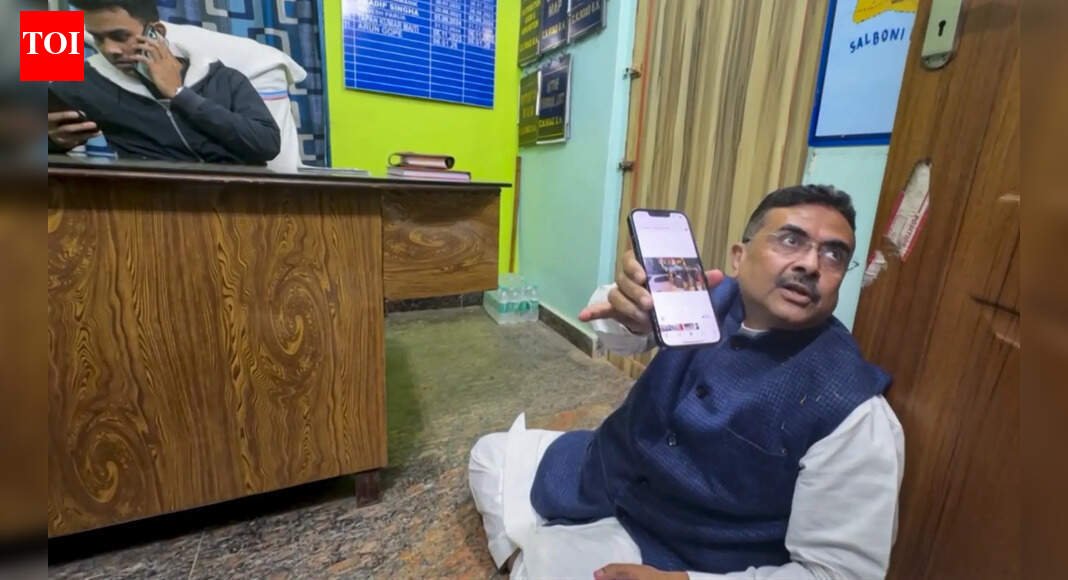
BJP’s Suvendu Adhikari sitting on a ‘dharna’ in a police station after the alleged attack (PTI)

NEW DELHI: The BJP on Sunday criticised the West Bengal Police following an alleged attack on the convoy of party leader and leader of opposition in the state assembly, Suvendu Adhikari.Also Read: Bengal LoP Suvendu Adhikari accuses TMC workers of attacking his convoy; sits on dharna at police station“Efforts were made to file a police report. This attack happened in the presence of the police, but no FIR was registered. If even the leader of the opposition is attacked, you can understand (how the situation is),” senior BJP leader Ravi Shankar Prasad said at a press conference in Delhi.Prasad, a former Union minister, recalled how a BJP delegation led by him nearly failed to enter West Bengal’s Sandeshkhali, where local strongman Shahjahan Sheikh — linked to the ruling Trinamool Congress (TMC) — had been accused of sexual assault by multiple women.“If my security personnel and the central forces had not been there, we would have been unable to enter the village,” he added.Adhikari, a former TMC leader who joined the BJP in December 2020 ahead of the West Bengal assembly polls in April–May 2021, alleged that his convoy was attacked by Trinamool Congress workers. The incident took place in Paschim Medinipur on Saturday night.“Tonight, around 8:20 pm, while I was returning from Purulia at Chandrakona Road in Paschim Medinipur district, I was viciously attacked by TMC goons. The police personnel were mute spectators. The TMC’s desperation is showing, resorting to thuggery because they can’t face the heat of the people’s rising anger,” he posted on X.Meanwhile, a state BJP leader said the Ministry of Home Affairs (MHA) has sought a report on the incident from Adhikari’s office.“The MHA has sought a report regarding the attack. The LoP’s office is preparing a detailed report, which will soon be sent to them,” the leader told news agency PTI.The next West Bengal assembly elections are expected in April–May.


Source link

Tamil Nadu may soon get a hot air balloon safari park | Coimbatore News


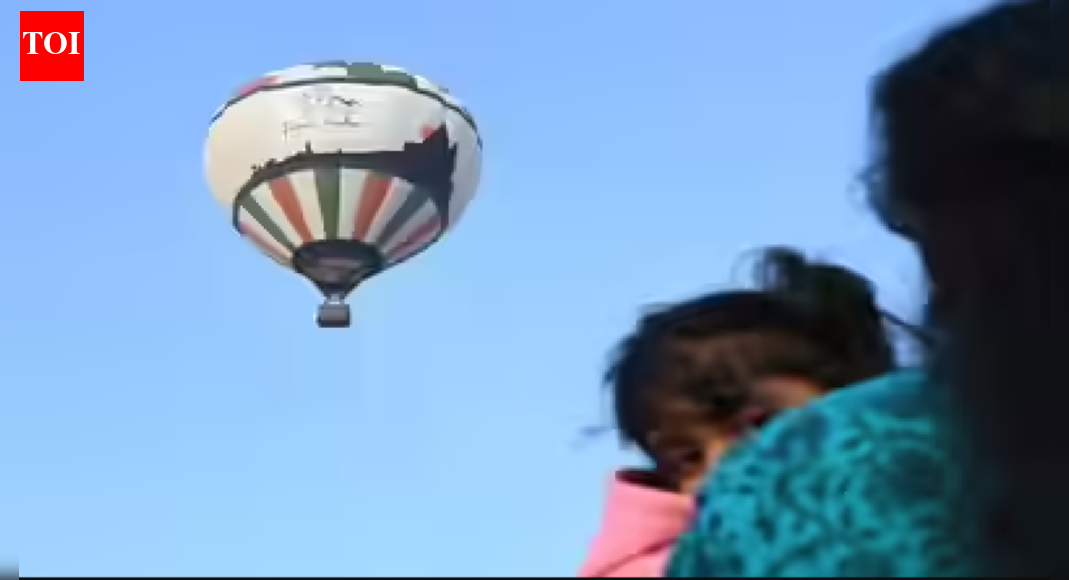
COIMBATORE: Tamil Nadu may soon be home to south India’s first hot air balloon adventure park. The Tamil Nadu Balloon Adventures (TNIBF) has launched the trial phase of the balloon safari in Pollachi. It will be conducted in Madurai and Tiruvannamalai, as well. A permanent hot air balloon flight operations hub and aviation park will be established in one of these three places based on the outcome of the trial phase.The trial is being held on the campus of the Pollachi Institute of Engineering and Technology, Poosaripatti. It started on Jan 4 and will conclude on Jan 26. Following this, the trial will be held in Madurai from Jan 30 to Feb 22. It will be held in Tiruvannamalai from Feb 26 to March 29.Benedict Savio, founder of Tamil Nadu International Balloon Festival, said, “The trial phase will evaluate operational feasibility, safety standards, visitor response and long-term scalability. The balloon safari initiative aims at introducing hot air ballooning as a safe, sustainable, and experiential adventure tourism product, aligned with the vision of Tamil Nadu Tourism to diversify tourism offerings and enhance high-value visitor experiences. Once the study is completed, a permanent balloon safari will be set up, converting this into an active tourism destination at least for six to seven months from September to March. However, ballooning is completely weather-dependent.”He said three trail destinations have been carefully chosen for their scenic beauty, cultural significance and strong tourism appeal, offering visitors a unique aerial experience of Tamil Nadu’s diverse landscapes and heritage.Benedict added, “Once this turns into a permanent set-up, it will be the only kind in south India. There is one in Jaipur. Once established, it will be a major leap in tourism in Tamil Nadu. The trial is being supported by the TN tourism department.”The TNIBF is scheduled to conduct its annual balloon festival at Jallikattu Grounds in Coimbatore from Jan 15 to 18. The festival will showcase hot air balloons from various countries, featuring a spectacular display of diverse hot air balloons and mini hot air balloons in unique shapes, vibrant colours, and stunning designs. Carnival timings are between 4 pm and 9.30 pm, and the hot air balloon show is from 5.30pm onwards.


Source link

‘What is the problem?’: Tej Pratap renews Bharat Ratna push for Lalu; will invite CM Nitish for ‘choora-dahi bhoj’ | India News


‘What is the problem?’: Tej Pratap renews Bharat Ratna push for Lalu; will invite CM Nitish for ‘choora-dahi bhoj’

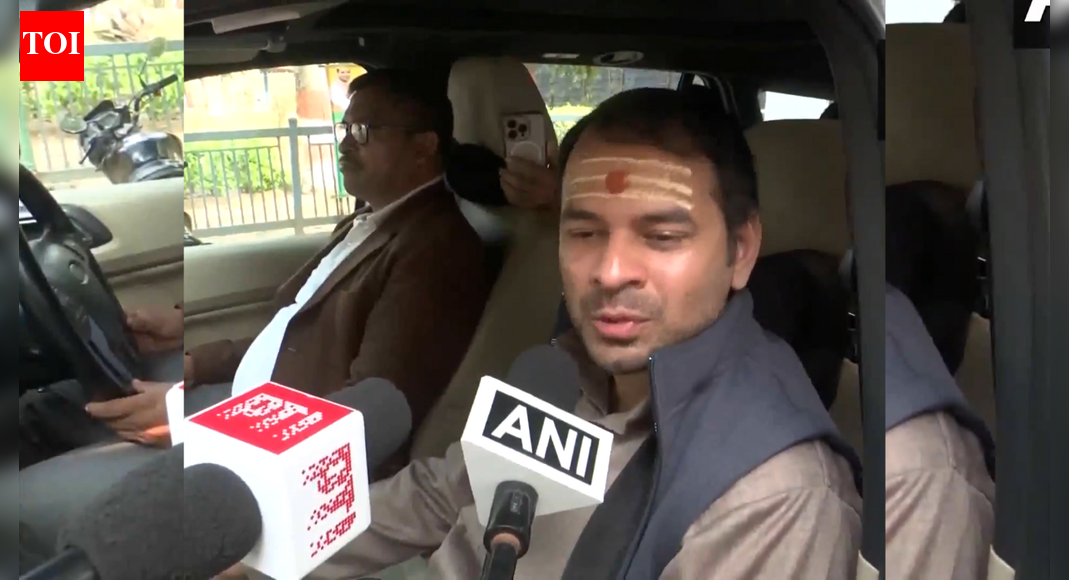
NEW DELHI: Janshakti Janta Dal chief Tej Pratap Yadav on Sunday reiterated his demand for conferring the Bharat Ratna on former Bihar chief minister Lalu Prasad Yadav, saying he would formally write to the Government of India to press the demand.“He should indeed be given Bharat Ratna. What is the problem? I will also write a letter to the Govt of India, on behalf of JJD, for the Bharat Ratna,” Tej Pratap Yadav said while speaking to reporters.His remarks came a day after he backed a social media post by his sister Rohini Acharya, saying her comments were accurate. “What she has tweeted is correct. I support her tweet…Everyone knows who she is talking about. I need not say it aloud,” he said, without elaborating further.Responding to questions on whether Bihar chief minister Nitish Kumar would be invited to his traditional ‘choora-dahi bhoj’, Tej Pratap Yadav said he planned to invite everyone. “I will go everywhere. Why are you restless? I will invite you as well. I am inviting everyone,” he said.He also commented on the Somnath Swabhiman Parv, welcoming the reconstruction of the temple. “It is good that the temple has been reconstructed. I am also going to construct a Shiv temple very soon,” he said.The renewed demand for Bharat Ratna for Lalu Prasad Yadav comes amid recent political chatter around the country’s highest civilian honour, following awards conferred in 2024 on former prime ministers P V Narasimha Rao and Chaudhary Charan Singh, agriculture scientist M S Swaminathan, and former Bihar chief minister Karpoori Thakur.


Source link

IND vs NZ [WATCH]: Harshit Rana deceives Henry Nicholls with a stunning slower ball in 1st ODI


India’s young fast-bowling sensation Harshit Rana produced a moment of sheer brilliance during the first ODI against New Zealand at the BCA Stadium, Kotambi, Vadodara, as he dismantled a threatening opening partnership with a perfectly disguised slower ball. Rana’s spell not only removed the well-set Henry Nicholls but also sent back Devon Conway in quick succession, swinging momentum firmly in India’s favour after a dominant start by the visitors.

India’s decision to bowl backfires early

After winning the toss, India opted to field first on what looked like a good batting surface. However, the decision initially appeared questionable as New Zealand’s openers made full use of the conditions. Conway and Nicholls batted with composure and authority, rotating strike efficiently while punishing loose deliveries. Their understanding in the middle was evident as they stitched together a commanding 117-run opening stand, putting early pressure on the Indian bowlers and silencing the home crowd in Vadodara.

Harshit Rana removes Henry Nicholls with a beauty

Just when the partnership looked set to inflict serious damage, Rana produced a moment of tactical excellence in the 22nd over. After bowling a couple of short-of-length deliveries that were dispatched for boundaries, Rana cleverly set up Nicholls with a slower off-cutter. On the fourth ball of the over, Rana delivered a 113 kmph slower ball outside off stump. Nicholls, expecting pace, reached out to squeeze the ball through the off side.

Instead, he only managed a faint outside edge, and the ball ballooned towards the wicketkeeper. KL Rahul reacted sharply, diving to his left to complete a superb catch and break the dangerous stand. The dismissal immediately lifted India’s energy on the field and marked a crucial turning point in the innings.

Also READ: IND vs NZ: Here’s why Rishabh Pant is not playing the first ODI

Rana strikes again to remove Conway

Rana was not done yet. Riding high on confidence, the young pacer returned in his very next over and delivered another decisive blow. On the final ball of the 24th over, he bowled a fullish delivery at 142.2 kmph that landed on the seam and jagged back in. Conway, who had raced to a well-made 56, attempted a drive with hard hands away from his body. The ball took a thick inside edge and crashed into the leg stump, leaving the New Zealand opener stunned.

Here’s the video:

Also READ: Shubman Gill speaks out on T20 World Cup 2026 exclusion as India gears up for New Zealand ODIs


Source link

Budget 2026: CII pitches demand-led, faster privatisation of PSEs; seeks three-year pipeline


Budget 2026: CII pitches demand-led, faster privatisation of PSEs; seeks three-year pipeline

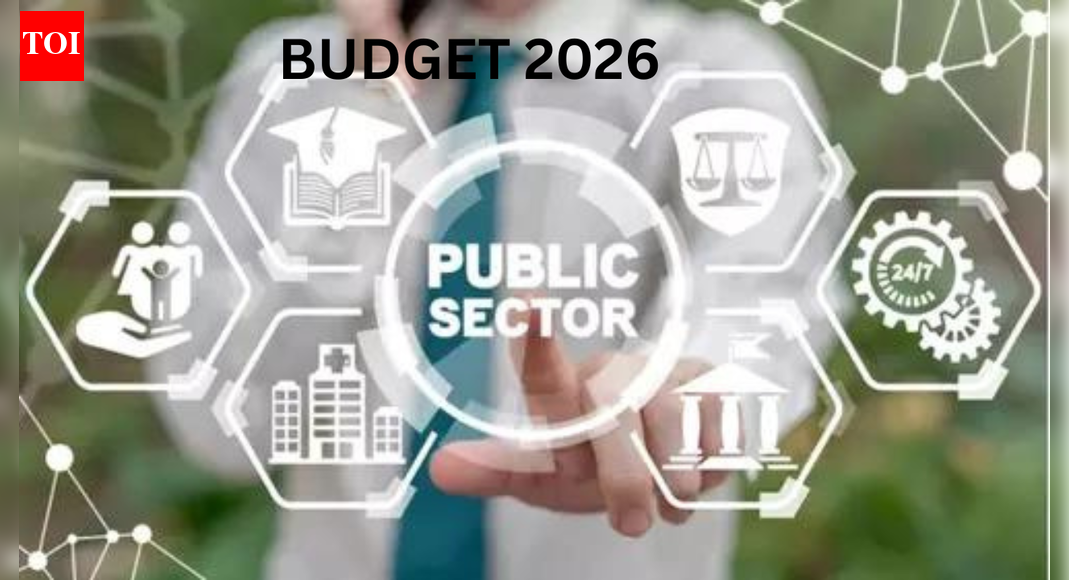
Industry body Confederation of Indian Industry (CII) has called for a faster, demand-driven privatisation strategy for public sector enterprises (PSEs) in the Union Budget 2026-27, urging the government to adopt a predictable roadmap to unlock value from disinvestment and mobilise resources for capital expenditure amid global economic uncertainties.In its Budget proposals, CII suggested an accelerated four-pronged approach to privatisation, focusing on sectors where private participation can improve efficiency, technology adoption and global competitiveness, while allowing the government to sustain capex and meet developmental priorities.The industry lobby recommended that the Centre announce a rolling three-year privatisation pipeline, clearly outlining which enterprises are likely to be taken up during the period. It noted that full privatisation of all non-strategic PSEs is complex and time-consuming, and greater visibility would help attract deeper investor participation and improve valuation and price discovery.“Government could reduce its stake in listed PSEs in a phased manner to 51 per cent initially, allowing it to remain the single largest shareholder while releasing significant value into the market. Over time, this stake could be brought down further to between 33 and 26 per cent,” CII said.According to its analysis, reducing the government’s stake to 51 per cent in 78 listed PSEs could unlock close to Rs 10 lakh crore. In the first two years of the roadmap, disinvestment could target 55 PSEs where government holding is 75 per cent or less, mobilising around Rs 4.6 lakh crore. In the subsequent stage, 23 PSEs with higher government stakes could be disinvested, potentially raising Rs 5.4 lakh crore.“A calibrated reduction of the government’s stake in listed PSEs to 51 per cent and even lower is a pragmatic step that balances strategic control with value creation. Unlocking nearly Rs 10 lakh crore of productive capital would provide vital resources to accelerate physical and social infrastructure development and support fiscal consolidation,” said CII Director General Chandrajit Banerjee.CII said strategic privatisation, supported by strong governance, regulation and enabling infrastructure, can free up public resources for health, education and green infrastructure, while competitive markets drive efficiency.“India’s growth story is increasingly being powered by private enterprise and innovation. A forward-looking privatisation policy, aligned with the vision of Viksit Bharat, will enable the government to focus on its core functions while empowering the private sector to accelerate industrial transformation and job creation,” it said.The industry body also urged faster implementation of the government’s strategic disinvestment policy, which envisages an exit from all PSEs in non-strategic sectors and minimal presence in strategic ones.Recommending a shift to a demand-based approach, CII said the current practice of identifying enterprises first and then inviting bids often leads to stalled processes if valuation expectations are not met. Instead, it suggested gauging investor interest across a wider pool of enterprises first, and prioritising those with stronger demand.Such an approach, it said, would ensure smoother execution and better price discovery, while structured feedback from investors could help address procedural and regulatory bottlenecks.CII also proposed setting up a dedicated institutional framework to make privatisation more predictable and professionally managed, comprising a ministerial board for strategic guidance, an advisory board of industry and legal experts, and a professional management team to handle execution, due diligence, market engagement and regulatory coordination.


Source link