Breaking News
‘Top attack capability against moving target’: DRDO flight-tests man-portable anti-tank guided missile — watch | India News


‘Top attack capability against moving target’: DRDO flight-tests man-portable anti-tank guided missile — watch

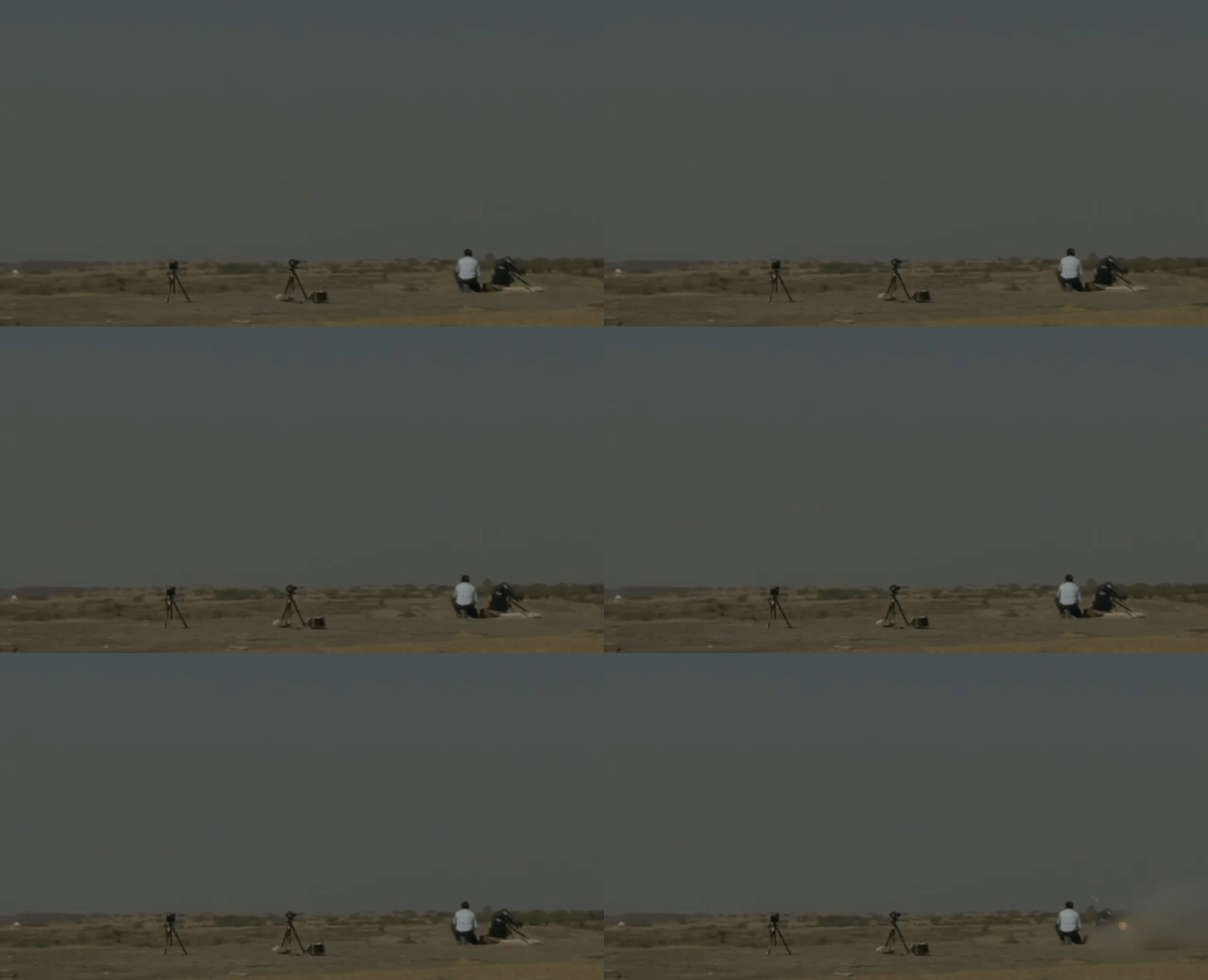
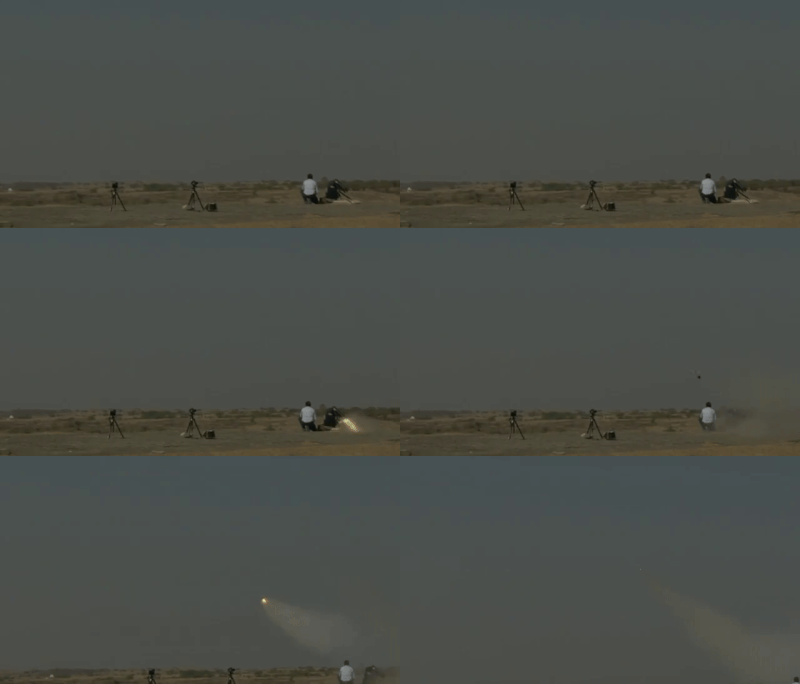
NEW DELHI: Defence Research and Development Organisation (DRDO) on Monday successfully flight tested third generation Fire & Forget Man Portable Anti-Tank Guided Missile (MPATGM), which has a top attack capability against a moving target.A video released from a desert test range shows a successful missile firing during a weapons trial conducted in the KK Ranges at Ahilya Nagar in Maharashtra.The footage opened with a side-rear camera view of a two-member crew positioned behind a tripod-mounted launcher, which was already elevated and locked onto the target.Moments later, the missile was fired with a bright orange-white plume and a sharp muzzle flash as the rocket motor ignited. It exited the launcher rapidly and climbed steeply, indicating a top-attack flight profile rather than a direct, flat trajectory. In the mid-flight phase, tracking footage showed the missile arcing high across the desert sky, leaving behind a thin smoke trail.In the terminal phase, captured by a separate impact camera, the missile descended almost vertically onto a designated target, believed to be an armoured vehicle or tank mock-up placed on the range. The impact triggered a bright explosion, followed by a fireball, thick black smoke, and flying debris, demonstrating a precise strike on the target’s upper surface and a successful warhead detonation.MPATGM, a shoulder-launched, portable missile system, is specifically designed to counter enemy tanks and armoured vehicles. Weighing approximately 14.5 kg, with an additional 14.25 kg for the command launch unit (CLU), the missile is a lightweight, cylindrical weapon featuring two sets of four radial fins. Its high-explosive anti-tank (HEAT) shaped charge warhead, combined with an operational range of 200 to 4,000 metres, makes it a formidable asset on the battlefield. The indigenously developed MPATGM consists of state-of-the-art indigenous technologies like Imaging Infrared (IIR) Homing Seeker, all electric Control Actuation System, Fire Control System, Tandem Warhead, propulsion system and high performance sighting system, which are developed by DRDO’s sister laboratories.


Source link

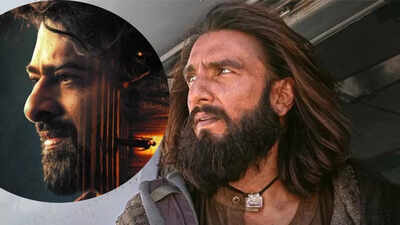
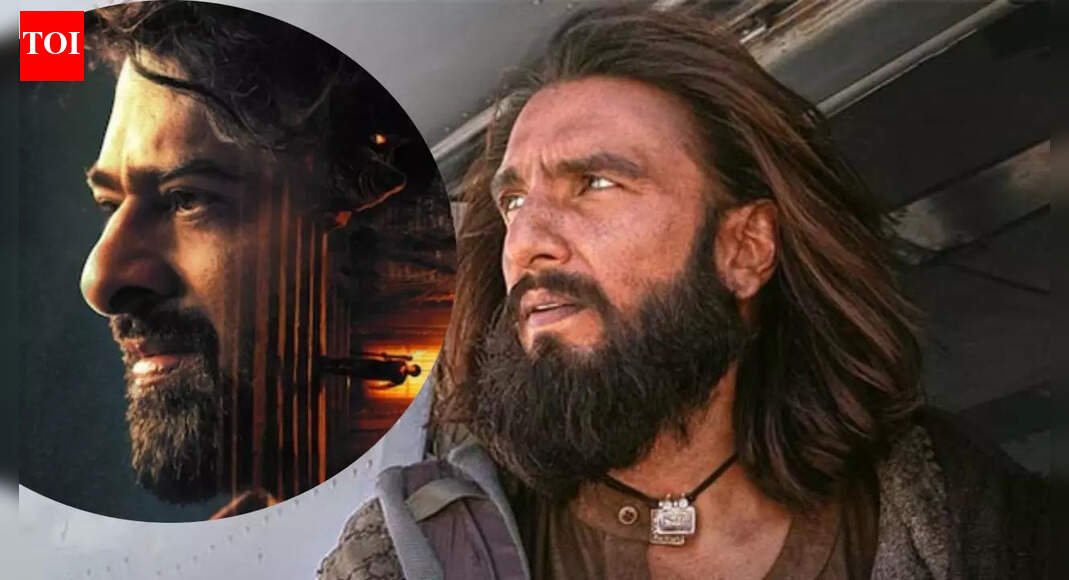
Dhurandhar Full Movie Collection: ‘Dhurandhar’ box office day 39 Vs ‘The Raja Saab’ day 4 (LIVE): The Ranveer Singh film crosses Rs 800 crore, the Prabhas starrer will see further drop on Monday |


'Dhurandhar' box office day 39 Vs 'The Raja Saab' day 4 (LIVE): The Ranveer Singh film crosses Rs 800 crore, the Prabhas starrer will see further drop on Monday

‘Dhurandhar’ has carried its remarkable momentum into the sixth weekend, despite facing competition from Prabhas starrer ‘The Raja Saab’. The Aditya Dhar directorial has done better than the Prabhas starrer in the Hindi belt. The film made Rs 51.25 crore in week five and entered its six week. On Friday, it did get affected by the release of ‘The Raja Saab’ and made only Rs 3.5 crore.Dhurandhar Movie Review However, the reviews for the Prabhas starrer were not very good and the film saw a drop of 50 percent as compared to Friday. ‘The Raja Saab’ had collected Rs 53 crore on day 1, while on day 2, Saturday, it made Rs 26 crore. On Sunday, day 3, it made Rs 19.1 crore. On Monday, till afternoon, it has made Rs. 1.37 crore. The usual decline in numbers on Monday is expected. The total collection of ‘The Raja Saab‘ now in India, according to Sacnilk is Rs. 109.37 crore.

Dhurandhar’s Success Forces Bollywood To Rewrite Rules

Meanwhile, ‘Dhurandhar‘ made Rs 5.75 crore and Rs 6.15 on its sixth Saturday and Sunday respectively, which is still great. On 6th Monday, it has made Rs. 0.45 crore till afternoon. The total collection of the film is now Rs. 806.1 crore according to Sacnilk. As per trade website Box Office India, ‘Dhurandhar’ will finish roughly Rs 40 crore nett ahead of ‘Pushpa 2’. While the film still trails ‘Pushpa 2’ in circuits such as Mumbai, CPCI Rajasthan, West Bengal, Bihar, Assam, and Odisha, the biggest surprise lies in Mysore/Karnataka, where ‘Dhurandhar’ is set to surpass the business of ‘Pushpa 2’.This achievement is particularly striking because ‘Dhurandhar’ released only in Hindi in Mysore/Karnataka, whereas ‘Pushpa 2’ had a much wider presence with multiple language versions, including the local Kannada release.


Source link

Can the Total Chess World Championship Tour shrug off the ‘copycat’ tag of Freestyle Chess? | Chess News


Can the Total Chess World Championship Tour shrug off the 'copycat' tag of Freestyle Chess?
Total Chess World Championship Tour

NEW DELHI: Last week was anything but ordinary in the chaotic realm of elite chess, not because of a single blockbuster match, table slamming, or another jaw-dropping off-the-board spat, but due to the sudden proliferation of “World Championships”. Within days of each other, two major announcements landed on the global chessboard. Go Beyond The Boundary with our YouTube channel. SUBSCRIBE NOW!On one side was the Total Chess World Championship Tour, a collaboration between Norway Chess and FIDE, which unveiled the list of 16 players eligible to receive invitations for its 2026 pilot event scheduled for 3–15 October later this year. Almost simultaneously, FIDE, in partnership with Freestyle Chess, launched the FIDE Freestyle Chess World Championship, which splashed water on the burning, long-standing tussle.

GM Raunak Sadhwani Exclusive: Becoming Grandmaster at 13, hidden costs of the game, and more #chess

The optics are impossible to ignore. Two “world championship” labels with similar promises of global reach and big prize money.For now, the Total Chess World Championship Tour remains officially a work in progress. The 2026 edition has been clearly designated as a pilot, meant to test the concept, format and regulations. The first full-fledged Tour season, culminating in the crowning of an official Total Chess World Champion, is slated for 2027. But even at the announcement stage, comparisons with Freestyle Chess were unavoidable, especially given that Freestyle Chess ran its own Grand Slam last year using a tour-style format.

Poll

Do you think the proliferation of World Championships in chess is beneficial for the sport?

Jan Henric Buettner, co-founder and CEO of Freestyle Chess, is candid about how deceptively simple such ideas appear from the outside.“When I heard about it, I thought, okay, it’s interesting,” Buettner told TimesofIndia.com from South Africa during an exclusive interaction. “But in the end, it’s much more difficult than it looks from the outset to start a tour. I can really say that from my own experience.”Buettner believes that while the Total Chess Tour announcement made waves, execution is where the real test lies. “Especially when you want to put out prize money in that range, and you want to be on four continents and so on,” he said. “In their public communication, it feels a little bit like a copy and paste of what we have done, from prize funding, going around the world, and so on.”That perception has also spilled onto social media, where players and fans have reacted with a mix of curiosity and confusion.

Total Chess World Championship Tour Explained: Norway Chess Answers Fans’ Queries | Exclusive

Buettner referenced Indian grandmaster Vidit Gujrathi’s light-hearted video poking fun at the growing maze of formats and World Championship titles. “It’s so complex,” Buettner said. “There’s a lot of confusion about how it is and so on.”Still, he stops short of dismissing the Total Chess Tour as mere imitation. “In the end, we wish them good luck,” he told this website. “Maybe it even opened FIDE up to say, ‘Okay, we can create more world championship titles.’”Significantly, Buettner also pointed out that, as of now, much about the Total Chess Tour remains undefined. “They’re talking about a pilot tournament, and then maybe they’re going to get a tour together with sponsors and so on. They just announced the players who have qualified, but we still don’t know the location, what exactly they’re doing.”Home advantage, he feels, could make an early difference. But major challenges lie outside those four walls.“Maybe they do it in Norway for the first time, and then it’s their home turf,” Buettner said. “But it’s a totally different thing to organise tournaments on other continents. I can surely tell that from experience: being in the US, in Africa, in Paris. Doing it at home or somewhere else is not the same.”Those words carry weight. TimesofIndia.com can confirm that Freestyle Chess was keen to host a Grand Slam leg in India last year, but the plan fell through due to a lack of interest from Indian sponsors.Yet Buettner is surprisingly open-minded about the future coexistence of formats. “After this new development, it might even be a good thing,” he said. “They can do their tour, and maybe the winner of their tour also has a qualification for the World Championship in Freestyle Chess. Why not? I’m open to anything.”Away from formats and formats wars, Buettner himself has been at the centre of speculation for the last few months. In June last year, TimesofIndia.com reported that he would step down as CEO of Freestyle Chess on July 1, transitioning to an Executive Chairman role while COO Thomas Harsch took over daily operations. That handover, however, did not materialise.“I’m not the person who leaves something that’s not in the right place,” Buettner clarified. “When we planned the transition, we were not anywhere near complete. So my plan now is to do this World Championship and then hand it over to somebody else, so we can present new leadership for season two.”Whether the Total Chess World Championship Tour can escape the copy-cat label, or whether the chess world will ultimately embrace parallel pathways, will only be decided once the clocks are started and the tours actually roll out.


Source link

It’s a first! Budget 2026 to be presented on a Sunday; Lok Sabha speaker Om Birla confirms date


It’s a first! Budget 2026 to be presented on a Sunday; Lok Sabha speaker Om Birla confirms date

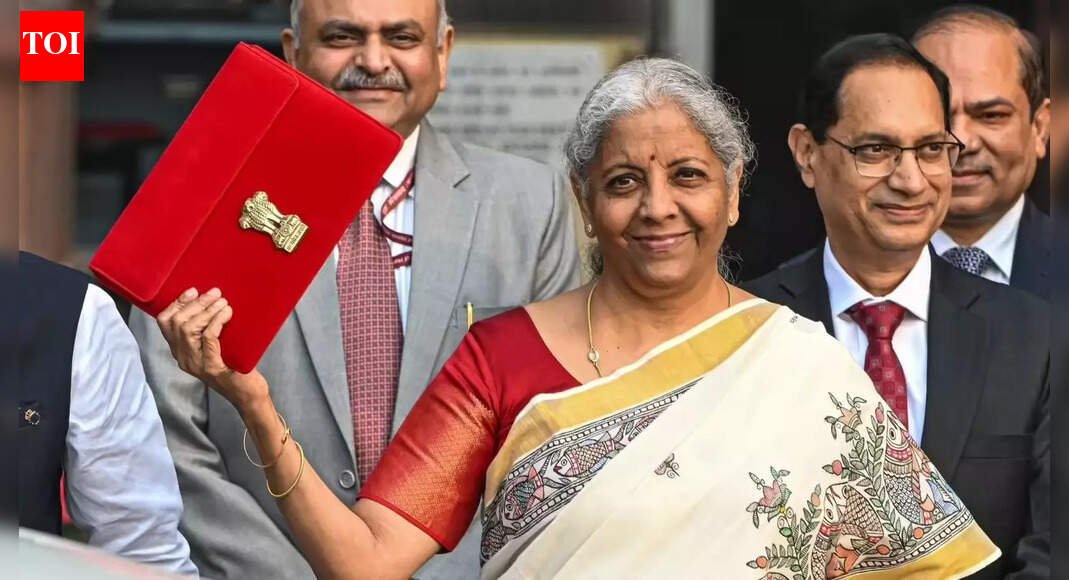
Budget 2026: For the first time, the Union Budget will be presented on a Sunday! Lok Sabha Speaker Om Birla on Monday confirmed the date for Budget 2026, saying that the Union Budget will be announced on Sunday, February 1.The upcoming Union Budget will be presented by Finance Minister Nirmala Sitharaman, marking the eighth time she will table the budget in Parliament.The announcement comes after the Union Parliamentary affairs minister Kiren Rijiju declared the schedule for Parliament’s Budget Session, last week. The session will be held in two phases between January 28 and April 2. Sharing the decision on social media, Rijiju said, “On the recommendation of the Govt of India, Hon’ble President of India, Smt. Droupadi Murmu ji has approved the summoning of both the Houses of Parliament for the Budget Session 2026. The Session will commence on 28 January 2026 and continue till 2 April 2026.” He added that the first phase of the session will conclude on February 13, while the second phase will begin on March 9. The Union Budget is likely to be tabled on February 1, which falls on a Sunday this year.The Budget Session is the first parliamentary session held each calendar year. It begins with the President’s address to a joint sitting of the Lok Sabha and the Rajya Sabha, after which legislative and financial business is taken up. The Budget Session is followed by the Monsoon Session in July–August and the Winter Session in November–December.


Source link

Accenture techie murdered in Bengaluru: Student plotted killing after she resisted his advances; flat set ablaze to mask crime | Bengaluru News


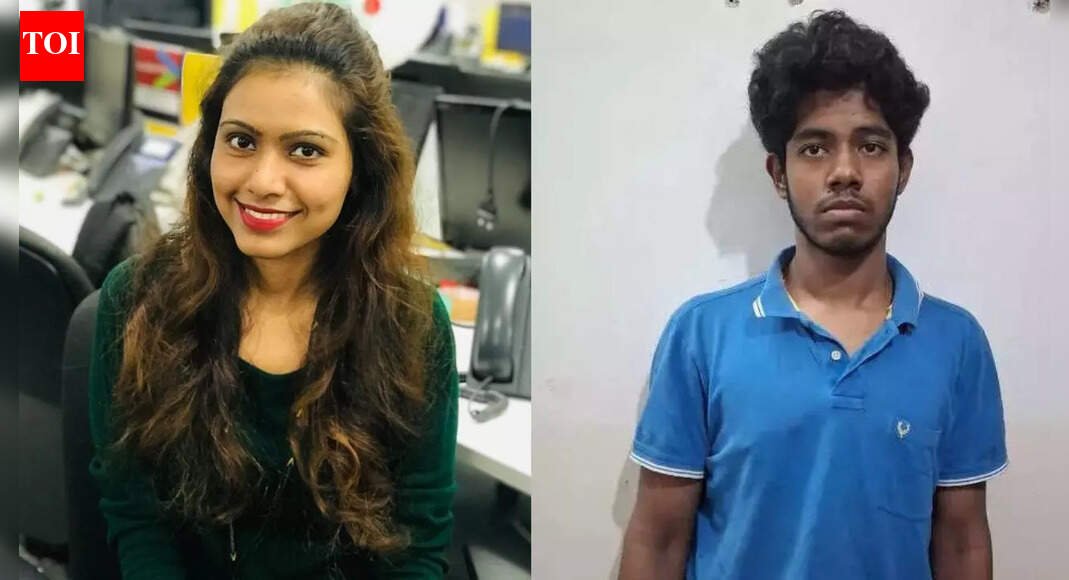
BENGALURU: What was first believed to be a tragic death in a house fire has now been uncovered as a brutal murder.A second-year pre-university student has been arrested for the killing of a 34-year-old software engineer in east Bengaluru earlier this month. Police said the accused allegedly smothered the woman after she resisted his advances and then set fire to her flat in a calculated attempt to erase evidence.The victim, Sharmila Kushalappa, a native of Mangaluru, worked with Accenture and lived alone in a rented flat in Subramanya Layout, Ramamurthynagar. On the night of Jan 3, she was found unconscious inside her locked two-bedroom apartment after a fire broke out. She was later declared dead, with initial suspicion pointing to smoke inhalation — a theory that investigators would soon prove wrong. The accused, Karnal Kurai K, a IInd-year PU student at a private college and from Arasunagar in Virajpet town of Kodagu district, lived with his mother in the same building, next door to Sharmila’s flat on the second floor. He has been arrested and remanded to three days of police custody.According to police, the case took a decisive turn after forensic and postmortem findings contradicted the initial assumption that Sharmila had died due to smoke inhalation. Ramamurthynagar police had received a complaint from Sharmila’s friend, K Rohit, who suspected foul play after learning of her death.On the night of the incident, at 10.30pm, the building owner alerted the fire department after noticing smoke coming from Sharmila’s flat. Fire personnel broke open the locked door and doused the flames. Sharmila was found lying motionless near the kitchen and was rushed to hospital, where doctors declared her brought dead.Investigators said injuries on her hands and visible signs of a struggle at the scene raised doubts. During autopsy, doctors found that the injuries were inflicted prior to the fire and were inconsistent with accidental burns. Medical opinion indicated that Sharmila had been smothered just before she lost consciousness.Based on this, police narrowed their probe and detained Karnal for questioning. He reportedly confessed to the crime. A police officer said Karnal entered Sharmila’s flat through a sliding window at 9pm. When confronted, he expressed his desire towards her, which she resisted, shouting at him to leave. Enraged by the rejection, he allegedly held her mouth and nose shut, causing her to lose consciousness.Police said bloodstains from her mouth and nose were found on her clothes. To destroy this evidence, the accused allegedly removed the clothes and set them on fire before escaping through the same window. The fire later spread to other parts of the flat.


Source link

IND vs NZ: Virat Kohli reveals where does he keeps his Player of the Match awards


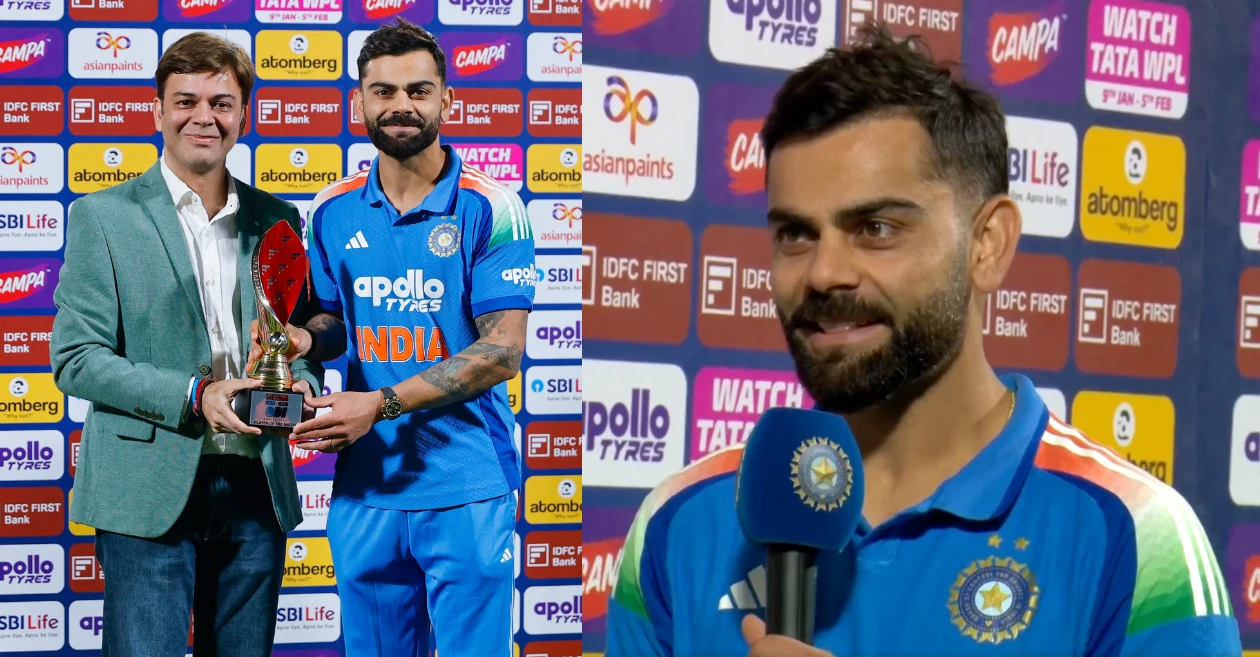
Indian batting stalwart Virat Kohli once again proved his unmatched composure under pressure as he guided India to a thrilling four-wicket win over New Zealand in the first ODI at Kotambi Stadium, Vadodara, on Sunday. Kohli’s masterful 93 off 91 balls earned him the Player of the Match award and handed India a 1-0 lead in the three-match series.

Chasing a competitive target of 301, India leaned heavily on Kohli’s experience as wickets fell at regular intervals. Calm, calculated, and authoritative, the former captain paced the innings perfectly, reminding fans why he remains the backbone of India’s ODI batting lineup.

Virat Kohli anchors India’s chase with classic ODI masterclass

India’s pursuit of New Zealand’s 300 for 8 began on an uncertain note, but Kohli steadied the innings with trademark assurance. Mixing caution with controlled aggression, he struck eight fours and one six, expertly handling the Black Caps’ varied bowling attack.

Crucial partnerships defined the chase. Kohli added stability alongside Shubman Gill, who contributed a brisk 56, before adding 77-run partnership with Shreyas Iyer, who scored 49 off 47 balls.

New Zealand’s bowlers tested Kohli with movement and clever changes of pace, but the veteran batter’s shot selection and awareness neutralized the pressure, reaffirming his reputation as one of the finest chasers in the modern game.

Player of the Match award brings out Kohli’s humble side

While Kohli’s batting stole the show, it was his post-match comments that won hearts. Asked about his ever-growing collection of Player of the Match trophies – now numbering around 71 across formats – Kohli admitted he doesn’t keep track of them.

“I honestly don’t know how many I have,” he said with a smile, adding that officials could simply send the latest award to his mother in Gurgaon. The remark offered a rare glimpse into Kohli’s grounded nature and close family ties, even as his career continues to scale historic heights.

Also READ: Fans go berserk as Virat Kohli and Harshit Rana power India to thrilling ODI win over New Zealand in Vadodara

Where Virat Kohli’s awards really go?

Kohli’s light-hearted confession shed light on an interesting detail of his career: there is no personal trophy room at his residence. Instead, most of his individual honours reportedly find their way to his family home in Gurgaon, where they are carefully preserved.

“I send it to my mum in Gurgaon, she likes to keep them. If I look back at my whole journey then it is nothing short of a dream come true for me,” stated Kohli.

The India great now boasts over 71 international Player of the Match awards, including 45 in ODIs, 16 in T20Is, and 10 in Tests – second only to Sachin Tendulkar. Memorable performances include multiple match-winning efforts against Pakistan in ICC events and iconic chases such as his unbeaten 82 in the 2022 T20 World Cup.


Source link

‘Away from boardrooms’: AAP MP Raghav Chadha steps into a gig worker’s life; shares teaser | India News


‘Away from boardrooms’: AAP MP Raghav Chadha steps into a gig worker’s life; shares teaser
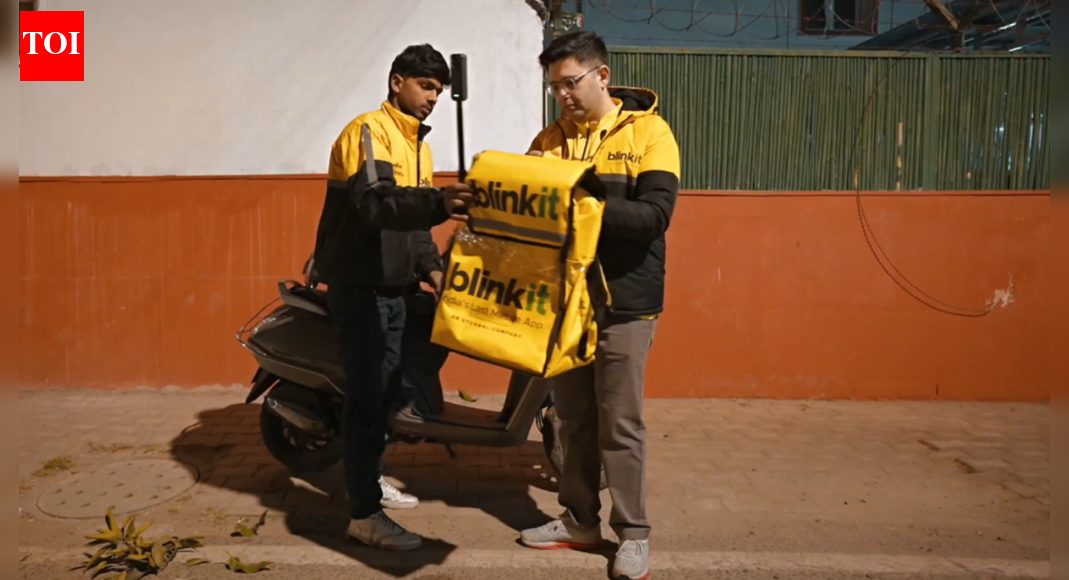
Screengrab from video shared on X

NEW DELHI: AAP MP Raghav Chadha on Monday shared a teaser video showing him dressed as a Blinkit delivery partner. The clip offered a brief glimpse into the daily life of a gig worker.The short clip, posted on X, shows the Rajya Sabha MP wearing the company’s delivery uniform and spending a day as a delivery executive, concluding with the caption, “Stay Tuned.”In his post, Chadha wrote, “Away from boardrooms, at the grassroots. I lived their day. Stay tuned!” The teaser quickly drew attention on social media, with many users reacting to the AAP MP’s attempt to experience the life of a gig worker first-hand.While several users praised the move, others raised questions. One user tagged the company and wrote, “Did Raghav sign up as a rider or just decided to tag along with a delivery partner. If he did not sign up then it’s a violation of your terms.” Another user welcomed the gesture, saying, “This is what representative leadership looks like. Not just talking about workers’ dignity, but experiencing their realities firsthand. Empathy on the ground creates better policy at the top. Well done.”The teaser comes amid Chadha’s vocal advocacy for gig workers’ rights. Just days earlier, the Aam Aadmi Party MP defended delivery partners who went on strike, accusing platform companies of politicising demands for fair pay and dignity. He had said that gig workers were being treated like “hostages with helmets” rather than employees with basic rights.

Why gig workers went on strike

Gig workers across food and grocery delivery platforms launched a nationwide strike on New Year’s Eve to protest falling earnings, unsafe work pressure and the absence of social security benefits.Workers said frequent changes in payout structures and algorithm-driven incentives have sharply reduced per-order income, making it difficult to cover basic expenses despite long working hours.A key demand was the removal of 10-minute delivery models, which workers argue force them to ride recklessly, increasing the risk of accidents, injuries and mental stress. Many also complained about penalties, arbitrary ID blocking and lack of transparent grievance redressal.While platforms offered higher incentives and festive bonuses on New Year’s Eve, unions said these were short-term measures with unrealistic targets that failed to address long-standing issues. Gig worker groups demanded fair pay, safer working conditions, social security coverage and recognition as workers under labour laws.In a post on X during the strike, Chadha wrote, “Workers asking for fair pay are not criminals. And if your system needs police to keep running on its biggest day, that is not proof the system works. That is an admission it doesn’t.” He added that he supports businesses and startups, but not exploitative practices, saying, “I am pro-industry, not pro-exploitation.”He argued that workers logging in during strikes should not be seen as acceptance of unfair conditions, but as a matter of survival. “When one day’s income decides rent, electricity, or a child’s school fee, logging in on a strike day is not approval, it is survival,” he wrote.The MP had earlier raised these issues in the Rajya Sabha and has since met delivery workers to hear their experiences directly. Last month, he hosted a Blinkit delivery partner at his residence after the worker’s video on low daily earnings went viral, further fuelling debate around the gig economy.


Source link

Access Denied


Access Denied

You don’t have permission to access “http://www.ndtv.com/telangana-news/nakka-indrayya-telangana-man-80-who-built-his-own-grave-dies-laid-to-rest-10716046” on this server.

Reference #18.14d92c31.1768209777.225c55d9

https://errors.edgesuite.net/18.14d92c31.1768209777.225c55d9


Source link

‘Jana Nayagan’ Censor Certification Controversy: Makers Take Legal Action in Supreme Court |


‘Jana Nayagan’ censor row: Makers approach Supreme Court after Madras HC stays certification on Vijay starrer - Report
Thalapathy Vijay’s final film, ‘Jana Nayagan,’ faces release delays due to a censorship dispute. Makers have approached the Supreme Court after the Madras High Court overturned a previous order allowing certification. This legal battle, involving senior lawyers, aims for a swift resolution to ensure the film hits theaters soon, a highly anticipated event for fans.

The initial release plans of the Thalapathy Vijay starrer ‘Jana Nayagan’ got disrupted due to a delay in the film’s censorship. The process of granting a film its censor certificate has turned into a legal dispute between the makers of the film and the Central Board of Film Certification (CBFC). Latest reports the makers have filed a plea in the Supreme Court challenging the Madras High Court‘s decision.

Makers move Supreme Court

According to a post shared by ANI on their X (formerly Twitter) handle, the makers of the film have approached the apex court after the Madras High Court put a stay on the film’s censor certificate. Earlier, a single judge of the High Court had allowed the film to be certified and asked the censor board to give it a U/A 16+ rating. However, this order was later cancelled by a Division Bench of the High Court after the Censor Board appealed against it. Now, the makers have challenged this Division Bench order in the Supreme Court, seeking permission for the film’s certification.

Thalapathy Vijay’s Jana Nayagan Gets Morning Relief, Evening Setback — Next Hearing Jan 21

Reports suggest a strong legal push by the team

Earlier, trade analyst Ramesh Bala had shared that the team hired seven senior Supreme Court lawyers to fight the case. The makers want to resolve the issue quickly, making the film hit theatres soon. The latest update from the agency above suggests the legal battle will soon be in its crucial stage.

About ‘Jana Nayagan’

‘Jana Nayagan’ holds a special place in fans and makers’ hearts as it is announced to be Thalapathy Vijay’s final cinematic outing after he will be focusing on his full-fledged career in politics. Fans have been eagerly waiting for the release of the film.The film features Pooja Hegde, Bobby Deol, Mamitha Baiju, Gautham Vasudev Menon, Prakash Raj, Priyamani, Narain and others.Disclaimer: This report is based on current judicial filings and reports from legal correspondents. As the matter is sub judice before the Supreme Court of India, all information regarding hearing dates and film certification is subject to change based on the court’s official orders. This article is for informational purposes only and does not constitute legal advice or a guarantee of the film’s release date.


Source link

When Mumbai’s working life goes to the polls | Mumbai News


In the BMC elections, the ballot paper reads less like a list of politicians and more like a census of the city’s labourA ballot paper that looks like a city directory From paanwalas and bartanwalas to retired BMC employees and on-demand domestic workers, almost everyone seems to have found a way into the municipal electoral fray this year.Among the candidates are a transgender beggar whose profession as bhiksha has declared assets of Rs 50,000; a mathadi worker (head loader) with assets of Rs 26 lakh; a bus driver, a postman, and a vada pav seller who is also a crorepati. There are beauty parlour workers and chai stall vendors, half a dozen private drivers, a few autorickshaw drivers, tailors, a milkman, an ASHA worker, tiffin service providers, several teacher and a daily wage worker— all listed, neatly and uniformly, on affidavit forms.In this election, the Brihanmumbai Municipal Corporation has become a kind of open register of the city’s working life.The great cacophony called “business”The single largest category, however, is simply “business”.Around 650 candidates describe themselves as running a business — anything from a cable and internet café to a travel firm, a scrap-dealing unit, a masala shop, or a small logistics operation. Another 400 candidates are housewives. A little more than 100 are advocates.The result is a ballot paper that reads less like a political contest and more like a cross-section of Mumbai’s informal and semi-formal economy — a city where work is fragmented, unstable, and often self-defined.Occupational labels here are not merely descriptions; they are claims to legitimacy, survival and aspiration.The Driver from Kandivli who wants his area seenSanjay Sakpal is one of them.He has declared his profession as “driver” and is contesting as an independent from Ward 26 — the Lakshminagar–Bhimnagar–Gautamnagar belt near Kandivli. A resident of the area and a grassroots activist for over 26 years, Sakpal says the neighbourhood has been allowed to slip into a kind of administrative invisibility.“The condition here is terrible. It doesn’t feel like this is even part of Mumbai,” he said, pointing to chronic water shortages, the absence of schools and what he describes as rising crime.For Sakpal, the election is not a ladder upward, but a way to force attention sideways — towards areas that exist physically within the city but politically outside its priorities.“Bhiksha” as a Political IdentityGhulam Ali Aksari, who identifies as of the other gender and represents the Bahujan Samaj Party from Jogeshwari East, has declared his profession as bhiksha — begging.“The last time my application was rejected,” he said. “But I always wanted to stand for elections and improve the city’s living conditions for the poor.”Standing this time, he says he is popular in the area and confident of winning.His presence on the ballot challenges conventional ideas about who gets to represent the city — not only socially but administratively — and exposes how formal politics often excludes the most informal lives.Politics as accumulation, not ambitionIn Ward 27, Katarmal Lakhan — a driver by profession — is contesting on a BSP ticket. His entry into politics, he says, is less ambition than accumulation: years of neglect, frustration and personal loss.Twenty-six years ago, Lakhan’s house was demolished after the land was declared forest land, triggering a long series of court cases and legal battles that shaped his political journey.“There has been no development of any kind in our area,” he said. “I have been trying continuously to improve conditions here.”If elected, his priorities are basic and specific: toilets for women, and street lighting.“There are no lights, so the area remains dark. That is how bad elements and drug peddling enter,” he said.Elections are expensive, he acknowledges, but his campaign is sustained by small contributions from local karyakartas and neighbours.When occupations become metaphorsElsewhere, the range becomes even more literal.There is a cook who describes herself as a roti-maker.Balkrishna Kamble from Ward 200 runs a tea stall, has declared assets of Rs 1.6 lakh, and hopes to win — perhaps inspired by a national leader who once sold tea himself.One domestic worker has declared zero assets and a monthly income of Rs 5,000. A poll observer wondered aloud how she was funding her campaign, or whether she was prepared to lose her deposit if the votes fell short.There is no minimum education qualification required to enter the race.Sangeeta Shitole from Ward 199 lists her occupation as tailoring, her education as SSC, and her income and assets at around Rs 25 lakh.These are not career politicians. They are political participants.What affidavits reveal about who is contesting When the professions listed in the election affidavits are grouped together, a clear socio-economic profile of the candidate pool begins to emerge. The largest share — roughly 35 per cent — comes from the broad category of business, trade and entrepreneurship. This includes candidates who describe themselves as traders, proprietors, contractors, manufacturers, shop owners, distributors, consultants, rental business operators, and small industrialists. It is a deliberately expansive label that captures everything from informal retail and small contracting to organised manufacturing and professional consulting, reflecting how many livelihoods in the city straddle the line between enterprise and survival.The second-largest group, accounting for about a quarter of all candidates, consists of housewives or homemakers. Their occupations are variously recorded as housewife, गृहिणी, housework, homemaker or domestic work. While this category does not map onto income-generating employment in a formal sense, its size is striking — suggesting a significant political entry of women whose primary labour remains unpaid, home-based and largely invisible in economic statistics, but who are increasingly visible in civic participation.Around 20 percent of the candidates describe themselves as being in service or employment. This includes those who list their occupation as service, job, private job, government job, employee, nokari, semi-government service or PSU employment. This group represents the formal and semi-formal working middle — salaried workers whose relationship with the state and the market is mediated through institutions, payrolls and bureaucracies rather than through self-run enterprise.A smaller segment, roughly five per cent, consists of the self-employed who are not running businesses in the conventional sense. These are freelancers, solo consultants, independent professionals, artists, fitness trainers and others whose work is individual, skill-based and typically project-driven rather than organisational. Their presence reflects the growing, if still marginal, visibility of gig and independent work in the city’s economic structure.Another seven per cent come from recognised professional fields such as law, medicine and architecture — including advocates, lawyers, doctors, dentists, chartered accountants, architects and medical practitioners. This group brings credentialed expertise into the electoral space and represents the more formally institutionalised professions that have traditionally had a stronger presence in politics and civic life.Finally, about six per cent of candidates are from the education sector — teachers, lecturers, professors, tuition teachers, educators and coaches. Though numerically smaller, this group carries symbolic weight, representing knowledge, instruction and the social infrastructure of learning within the city.A city that rarely gets to see itselfTaken together, the affidavits read less like political CVs and more like a social map — stitched from small trades, unstable incomes, informal labour and personal histories that rarely enter official narratives.They record not just what people do, but how they survive.They show a city run not only by planners and politicians, but by cooks, drivers, tailors, vendors, and domestic workers who make urban life function but are rarely invited into its governance.More than an electionThe BMC election, in that sense, is not just about who governs the city.It is a rare moment when the city — in all its economic unevenness and social texture — puts itself up for representation.The ballot paper becomes a mirror.And what it reflects is not ideology or party structure, but Mumbai itself: layered, precarious, industrious, unequal, restless, and still hopeful enough to believe that participation might lead to change.

Source link