Breaking News
Karur stampede case: CBI heat on Vijay continues; TVK chief summoned for second round of questioning | India News


Karur stampede case: CBI heat on Vijay continues; TVK chief summoned for second round of questioning

NEW DELHI: The CBI on Tuesday summoned Tamilaga Vettri Kazhagam (TVK) chief and Tamil superstar Vijay to appear on January 19 for a second round of questioning in connection with the Karur stampede case. Vijay, who was questioned for over six hours at the CBI headquarters in Delhi on Monday, had initially been asked to return the next day but requested a later date, citing the Pongal festival. The federal probe agency also questioned Tamil Nadu’s former ADG (law and order) S Davidson Devasirvatham on Tuesday. So far, it has questioned several TVK office bearers, Vijay’s driver, and some police officers in the case.The CBI took over the investigation from a Tamil Nadu Police SIT following a Supreme Court order and has been gathering evidence related to the September 27, 2025, stampede in Karur, where 41 lives were lost and more than 60 people were injured. The Supreme Court also set up a three-member supervisory committee, headed by its former judge, Ajay Rastogi, to monitor the probe. A bench comprising Justices JK Maheshwari and NV Anjaria noted that the stampede has “left an imprint in the minds of citizens throughout the country.” The bench added that the matter has “wide ramifications” for citizens’ lives and that enforcing the fundamental rights of the families who lost their kin is of “utmost importance.”The top court also criticised senior police officers for making public comments about the case “without having regard for the gravity of the incident,” warning that such statements could create “doubts” about the impartiality and fairness of the investigation. After years of hinting at a political plunge, Vijay finally launched the TVK in February 2024. The party’s maiden electoral outing will be the Tamil Nadu assembly elections, expected in April.(With PTI inputs)


Source link

Footage didn’t show Maharashtra Assembly Speaker threaten Oppn nominees: SEC | Mumbai News


Mumbai: State election commissioner Dinesh Waghmare said on Tuesday the video footage received by them of state assembly Speaker Rahul Narwekar did not establish anything. Opposition candidates accused Narwekar of threatening them to withdraw their nominations while the process was on in Colaba.“The footage we received so far did not establish anything. We asked for additional footage, and we asked the election observer for a report,” said Waghmare. Polls for 29 municipal corporations including Mumbai are due on Jan 15.The SEC already held the conduct of the Colaba returning officer Krishna Jadhav, who did not allow the AAP candidate to file her nomination, was prima facie correct. Jadhav rejected the nomination because, although the candidate was in his office premises, she was not in his cabin as required by the rules. “Prima facie, the RO does not seem to have made a mistake. Those aggrieved by his order will have to file a writ in the high court or an election petition,” said Waghmare.He also said during the model code of conduct for the municipal corporation elections, a sum of Rs 7 crore was seized. Also, 2.3 lakh litres of alcohol and narcotics worth Rs 54.8 crores were seized, and 95 weapons were seized. As many as 341 complaints of violations of the model code of conduct were filed.


Source link

Drink up, America: Why Trump wants Americans to drink whole milk | World News


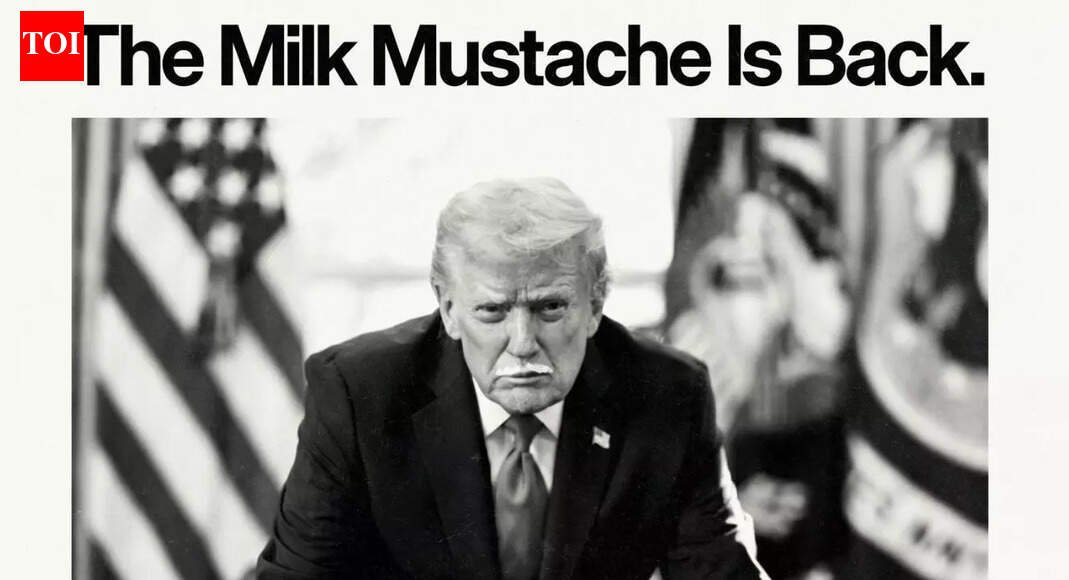
A black-and-white image of Donald Trump wearing a milk moustache recently circulated online, deliberately echoing the iconic 1990s “Got Milk?” campaign. The image, shared through official channels and amplified by Trump allies, was more than a nostalgic visual. It signalled a clear shift in US food policy thinking, with whole milk once again being promoted as a legitimate and even preferable option in American diets.The timing mattered. The post followed a major change in federal rules governing school nutrition, bringing whole milk back into classrooms and reigniting long-running debates about fat, health and government control over food choices.

Trump Ignites WW3 Over Greenland? Denmark PM Warns Of ‘Decisive Moment’ As NATO ‘Readies’ Troops

The law behind the milk moustache moment

The renewed push for whole milk is tied to the Whole Milk for Healthy Kids Act, signed into law in late 2025. The legislation rolls back earlier federal restrictions that had limited schools to serving only low-fat or skim milk under the National School Lunch Program.Those earlier rules were introduced to curb saturated fat intake, but school administrators and lawmakers argued they produced unintended consequences. Participation in school milk programmes declined, cartons went untouched, and children consumed fewer nutrients such as calcium, vitamin D and protein. Supporters of the new law say the policy prioritises real-world behaviour over theoretical guidelines: children are more likely to drink milk they enjoy.

Trump, symbolism and food politics

Trump’s embrace of whole milk fits a familiar pattern in his political style, but it is also rooted in a specific nutritional argument. Food, like energy or agriculture, becomes a cultural signal. Whole milk is framed as “real”, traditional and minimally altered, in contrast to low-fat or skim milk, which supporters argue removes naturally occurring fats only to compensate later with additives or flavourings.By invoking the “Got Milk?” era, Trump taps into a period when dietary guidance was simpler and less polarised. The milk moustache imagery mirrors a broader messaging strategy seen throughout his campaigns: reclaiming everyday products and reframing them as symbols of resistance to elite-driven consensus. In this framing, whole milk is not indulgent but complete, delivering fat, protein and fat-soluble vitamins in their original form.

The nutritional case for whole milk

Advocates of whole milk point to several practical advantages. Whole milk is more satiating than low-fat alternatives, meaning it can help children feel fuller for longer and potentially reduce snacking between meals. A growing body of observational research has found no consistent link between whole-milk consumption and higher rates of childhood obesity, challenging assumptions that shaped earlier low-fat mandates.Whole milk can also be particularly beneficial for younger children, adolescents with high energy demands and physically active students, providing a dense source of calories and nutrients without relying on processed substitutes. Supporters stress that the argument is not that whole milk is superior for everyone, but that it should remain an available option rather than a prohibited one.

Critics and ongoing concerns

Public health experts remain divided. Critics warn that promoting whole milk without broader dietary context could increase saturated fat intake if consumed excessively. They argue that nutrition policy should focus on overall diet quality rather than singling out specific foods.The renewed attention has also reignited debate around raw milk, with some online supporters calling for wider access to unpasteurised dairy products. Health agencies continue to strongly oppose raw milk consumption due to the risk of bacterial infections, drawing a clear line between whole milk and raw milk advocacy.

More than just milk

The milk moustache image may appear light-hearted, but it reflects a deeper shift in how nutrition policy is being framed. Under Trump’s influence, food guidance is increasingly tied to ideas of personal choice, cultural identity and scepticism toward shifting expert advice.Whether whole milk’s return to school lunches leads to measurable improvements in children’s health remains an open question. What is already clear is that something as ordinary as milk has once again become political.In Trump’s America, even a lunchroom staple can serve as a statement about regulation, expertise and who gets to decide what is healthy.


Source link

WPL 2026: Here’s why Nat Sciver-Brunt and Anushka Sharma are not playing today’s MI-W vs GG-W match


The sixth match of the Women’s Premier League (WPL) 2026 officially got underway tonight, January 13, 2026, at the DY Patil Stadium in Navi Mumbai with a high-stakes encounter between two heavyweights. Mumbai Indians (MI) captain Harmanpreet Kaur won the toss and elected to field first, identifying the heavy dew as a critical factor that would favor the chasing side.

The encounter is marked by a massive shift in team dynamics, with both sides missing iconic veterans and blooding new talent. The Gujarat Giants (GG) have entered the fray with a bold, aggressive-heavy lineup featuring breakout domestic stars, looking to end their winless streak against the defending champions. Meanwhile, Mumbai are looking to maintain their dominance despite being forced into late changes to their core combination.

WPL 2026, MI-W vs GG-W: Reason behind the star all-rounder Nat Sciver-Brunt’s absence

In a significant blow to the defending champions just moments before the toss, Mumbai revealed that their star England all-rounder Nat Sciver-Brunt would miss the clash. Captain Harmanpreet confirmed that Sciver-Brunt, who has been the ‘engine’ of MI’s success over the past three seasons and was coming off a match-winning 70 in the previous game, was ruled out after suffering a minor niggle during the warm-ups.

Her absence forced a tactical reshuffle, leading to the return of West Indian superstar Hayley Matthews, who steps back into the XI after recovering from the illness that kept her out of the season opener. Beyond her cricketing contributions, Sciver-Brunt’s presence in the middle order is a major miss for Mumbai, as she has been instrumental in stabilizing their innings in high-pressure games. The team management expressed hope for her quick recovery, but for tonight, the onus shifted to the remaining veteran core of Hayley Matthews and Amelia Kerr to fill the massive void left by the England superstar.

“And now Hayley’s back, she’s fit, so hopefully we’ll click in that area as well. Unfortunately, Nat (Sciver-Brunt) is not well today, so in place of her, Hayley’s back.” Harmanpreet said at toss.

Also WATCH: Nandini Sharma takes a sensational hat-trick in WPL 2026

WPL 2026, MI vs GG: Reason behind the star all-rounder Anushka Sharma’s absence

In a significant blow to the Gujarat just moments before the toss, the franchise revealed that their breakout teenage sensation Anushka Sharma would miss the crucial encounter. Captain Ashleigh Gardner confirmed that Sharma, who set the tournament alight with a sparkling 44 on debut against UP Warriorz, was ruled out after suffering a minor injury during the team’s final training session.

“One team change today. Anushka is unfortunately out with an injury, and Ayushi makes her debut today.” Gardner said.

Her absence forced a tactical reshuffle, leading to a WPL debut for domestic recruit Ayushi Soni, who steps in to provide stability in the middle order. Beyond her recent run-scoring, Sharma’s fearless approach at No. 3 had become a vital component of Gujarat’s aggressive new identity this season. The team management expressed hope for her quick recovery, but for tonight, the onus shifted to the experienced core of Sophie Devine and Gardner to anchor the innings and fill the void left by the young Indian star.

Also READ: 5 contenders to replace Alyssa Healy as Australia captain after her retirement from international cricket

This article was first published at WomenCricket.com, a Cricket Times company.


Source link

PSLV-C62: KID re-entry capsule from Spain could have key data


PSLV-C62: KID re-entry capsule from Spain could have key data

BENGALURU: Orbital Paradigm, the firm whose re-entry capsule Kestrel Initial Technology Demonstrator or KID was among the payloads on the failed PSLV-C62 mission, Tuesday said it has begun analysing data the capsule sent after separating from the launch vehicle.“Our KID capsule, against all odds, separated from PSLV-C62, switched on, and transmitted data over 3+ minutes. We’re reconstructing [the] trajectory. We survived peak heat and peak g-load (~28g recorded)…Full report will come,” the firm said.Isro, would have also begun analysing data it had obtained up to the time the third stage (PS3) of the launch vehicle suffered a glitch. Aside from KID and India’s own strategic satellite Anvesha or EOS-N1 by DRDO, the mission carried a satellite (Munal) for Nepal through the ministry of external affairs (MEA), a technology demonstrator (AyulSat) from startup OrbitAID aimed at cracking on-orbit refuelling, along with 12 other payloads.On Monday, the 44.4-metre-tall PSLV, flying its fifth mission in the DL (dual strap-on) configuration, lifted off from SDSC’s first launch pad at 10.18am, about 1.30 minutes after scheduled time. About 8.40 minutes later, after the third-stage shutoff and fourth-stage (PS4) ignition was announced — command was initiated but there was no confirmation if PS4 ignited — the atmosphere in mission control turned tense. Narayanan eventually announced that the mission had failed. The failure came only nine months after a glitch in PSLV-C61’s PS3 prevented EOS-09, another strategic satellite, from reaching orbit on May 18, 2025, marking a second consecutive failure of PSLV. Not only has PSLV never failed back-to-back in the past, it has also not seen the same rocket stage falter more than once — until now.“…Close to the end of the third stage [PS3] we saw little more disturbance in the vehicle roll rates and subsequently there was a deviation in the flight path. We are analysing the data and we shall come back at the earliest,” Isro chairman V Narayanan said on Monday.


Source link

Access Denied


Access Denied

You don’t have permission to access “http://www.ndtv.com/education/neet-pg-2025-counseling-cut-off-lowered-to-0-percentile-40-marks-for-sc-st-obc-cand-10743643” on this server.

Reference #18.14092017.1768317144.63424275

https://errors.edgesuite.net/18.14092017.1768317144.63424275


Source link

US sanctions Iran: Additional 25% tariffs to have minimal impact on India, say government sources – here’s why


US sanctions Iran: Additional 25% tariffs to have minimal impact on India, say government sources - here’s why
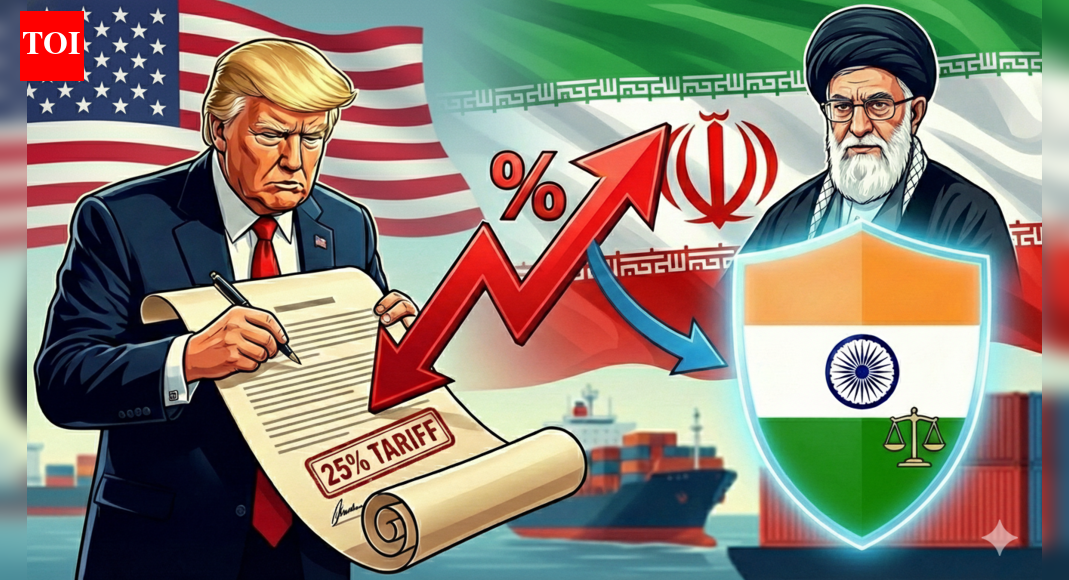
AI image (Picture credit: Google Gemini)

India is unlikely to face any major impact from the 25 per cent tariff announced by the US President Donald Trump on countries doing business with Iran, as per government sources cited by news agency ANI, who pointed to India’s limited trade exposure with Tehran.Newly announced US tariffs are ‘likely to have minimal impact on India’ as Iran does not feature among the nation’s top 50 trading partners, the government sources said. India’s total trade with Iran stood at around $1.6 billion last year, accounting for just 0.15 per cent of India’s overall trade. This figure is expected to decline further in the current financial year due to broader external economic factors. Of Iran’s total imports of about $68 billion in 2024, the UAE, China, Turkiye and the European Union together accounted for the bulk, while India’s share was only $1.2 billion, or 2.3 per cent.Exporters have also downplayed concerns. Ajay Sahai, director general of the Federation of Indian Export Organisations (FIEO), said Indian companies and banks remain fully compliant with US Office of Foreign Assets Control norms and engage only in permitted humanitarian trade, mainly food items and pharmaceuticals, reported news agency PTI.“There is, therefore, no basis to anticipate any adverse impact on India,” Sahai said.He noted that India’s trade with Iran largely falls outside the scope of sanctions due to its humanitarian nature. In 2024-25, India’s total trade with Iran was $1.68 billion, including $1.24 billion in exports, primarily from the farm and pharmaceutical sectors, as per PTI.Industry representatives, however, flagged other challenges. Sahai said the sharp depreciation of the Iranian currency is a bigger concern for exporters, as it weakens consumer purchasing power and raises risks of cancelled contracts. Rice exporters also said their current exposure to Iran is limited and increasingly routed through the UAE to manage risks, reported ANI.Overall, exporters remain cautious but believe the proposed US tariff will have little direct effect on India, given the small trade volumes and the humanitarian nature of most shipments.


Source link

Budget 2026: Will old income tax regime be discontinued leaving new regime as the only option?


Budget 2026: Will old income tax regime be discontinued leaving new regime as the only option?
Fundamentally, the government wants to move towards an income tax return regime with minimal deductions and exemptions. (AI image)

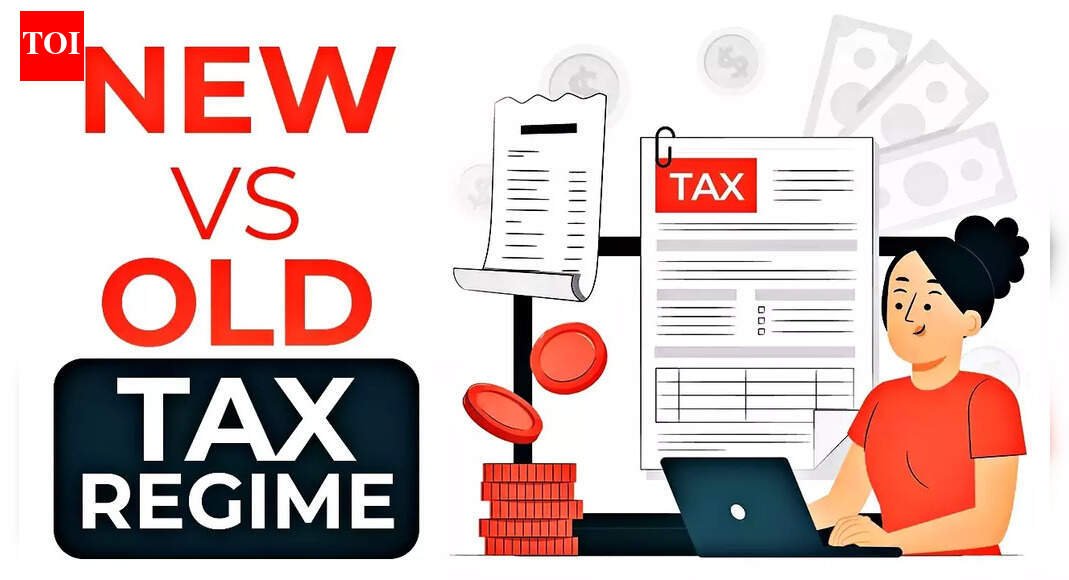
Finance Minister Nirmala Sitharaman will present the Union Budget 2026 on February 1, 2026 and like every year common man and taxpayers, especially salaried are watching out for possible changes on the income tax front. One big factor when it comes to income tax is the regime under which you choose to file your income tax return.Ever since the new income tax regime was introduced a few years ago, one question that has played in the minds of taxpayers is: will the old income tax regime cease to be an option soon?In a pre-Budget 2026 survey, most tax experts who spoke to Times of India Online said that the government may look to eventually do away with the old income tax regime, though the transition is likely to happen in a phased manner.

New vs Old Regime: The Fundamental Differences

The new and old income tax regimes differ on one basic fundamental: the former has lower tax rates at higher levels of income compared to the old tax regime and fewer deductions and exemptions.For example; the basic exemption limit under the new tax regime is higher. With the Section 87A rebate, the level of tax free income for salaried taxpayers goes to Rs 12.75 lakh (including standard deduction)! Simply put; an individual earning Rs 1 lakh a month needs to pay ZERO tax!
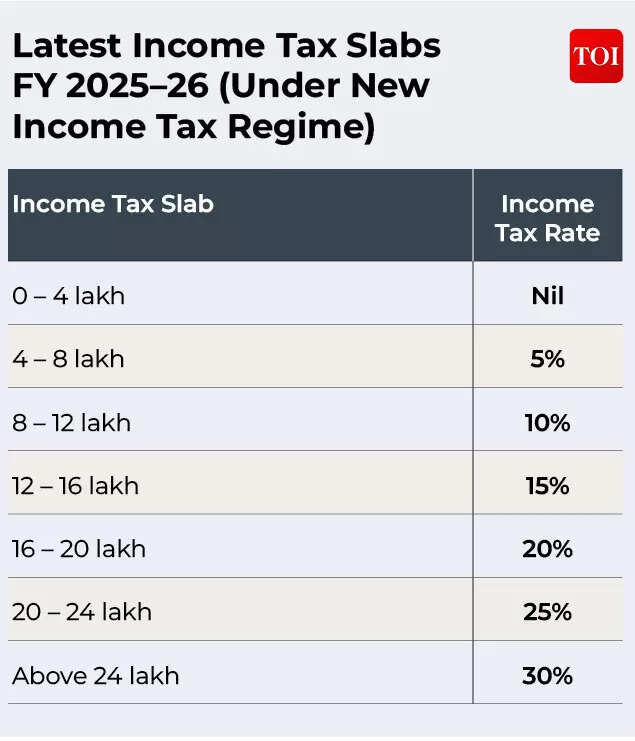
New Regime Tax Slabs

New Regime Tax Slabs

On the other hand, the option to avail deductions and exemptions under the old income tax regime work in its favour, though over the last few years the government has increasingly made the new income tax regime more lucrative.Some of the common income tax exemptions and deductions available under the old income tax regime are: Section 80C benefits (up to Rs 1.5 lakh for popular investments such as Provident Fund, PPF), Section 80D for medical insurance, NPS contributions, House Rent Allowance (HRA), Leave Travel Allowance (LTA), Section 80 TTA (interest on bank deposits etc.), home loan benefits.
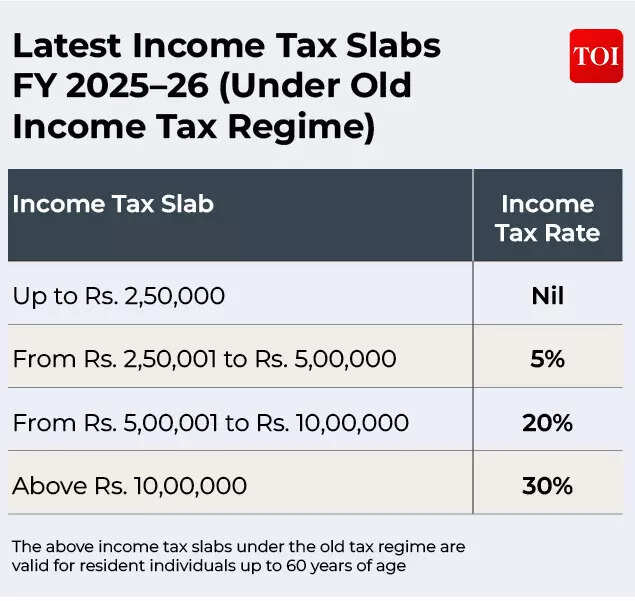
Old Tax Regime Slabs

Old Tax Regime Slabs

Why Was The New Income Tax Regime Introduced?

To get a better understanding of the future of the old income tax regime, let’s understand why the new income tax regime was introduced. Fundamentally, the government wants to move towards an income tax return regime with minimal deductions and exemptions to simplify the filing process and reduce the need for maintaining records and paperwork.In her Budget 2020 speech FM Nirmala Sitharaman had introduced the new income tax regime saying, “Currently the Income Tax Act is riddled with various exemptions and deductions which make compliance by the taxpayer and administration of the Income Tax Act by the tax authorities a burdensome process. It is almost impossible for a taxpayer to comply with the Income-tax law without taking help from professionals. In order to provide significant relief to the individual taxpayers and to simplify the Income-tax law, I propose to bring a new and simplified personal income tax regime wherein income tax rates will be significantly reduced for the individual taxpayers who forgo certain deductions and exemptions.As Parizad Sirwalla, Partner and Head, Global Mobility Services, Tax at KPMG in India explains: When the new tax regime was introduced for the first time from FY 2020-21 it was then indicated by the government that there was a long-term intent to phase out the plethora of exemptions/deductions. Over the years, the government has in fact made the new tax regime – which disallows many widely claimed exemptions/ deductions under the old tax regime – increasingly more lucrative for individual taxpayers over the years.

New Tax Regime & Its Growing Popularity

Surabhi Marwah, Tax Partner at EY India points out: recent data shows that for Assessment Year 2024‑25, around 72% of filers opted for the new tax regime, indicating broad acceptance of the simplified framework.“Given this trajectory, any move to retire the old regime, if considered, would likely be phased, allowing a cooling‑off period to support a smooth transition for taxpayers,” she tells TOI.The past two Budgets have reinforced the trends of trying to make the new income tax regime more popular, through more favourable new personal tax regime changes, including higher basic exemption and rebate limits in 2025, and increased standard deduction and NPS employer-contribution benefits in 2024. What’s interesting to note is that if 72% of taxpayers had opted for the new income tax regime by FY2025, the number will likely go up for FY 2025-26 after FM Nirmala Sitharaman tweaked tax slabs under the new income tax regime in last year’s Union Budget, and also made income up to Rs 12 lakh tax free.

Will The Old Tax Regime Be Phased Out?

Some experts are of the view that exemptions and deductions are important especially when it comes to encouraging savings and providing home loan related tax benefits. However, a gradual phasing out of the old tax regime, with stagnation is seen.Preeti Sharma, Partner – Tax and Regulatory Services at BDO India told TOI, “The government has clearly shown its preference for the new income tax regime and has made it the default tax regime. However, an immediate abolition of the old tax regime is unlikely.”
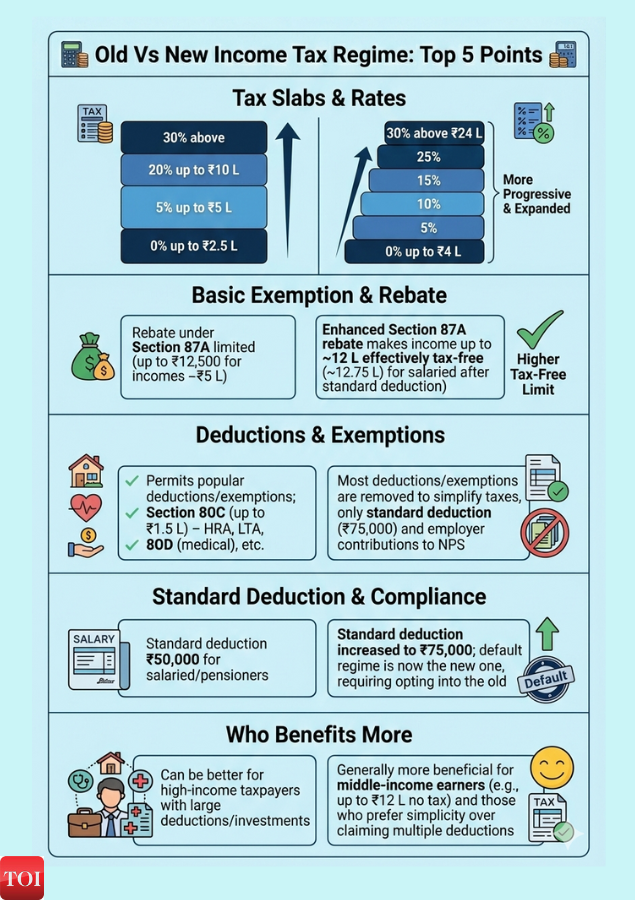
New Vs Old Income Tax Regime

New Vs Old Income Tax Regime

Why is the old income tax regime still relevant for many? The old tax regime continues to be beneficial for a certain group of taxpayers, particularly those who claim deductions such as House Rent Allowance (HRA), home-loan interest and benefits under Sections 80C and 80D, and especially for salaried taxpayers who claim deductions under Chapter VI-A. “As a result, the government is expected to follow a gradual approach, continuing with both tax regimes while nudging taxpayers towards the new tax regime,” she said.As Parizad Sirwalla of KPMG points out: many of the deductions (allowed under old regime) are basis long term commitment (e.g., renting a house/ buying a house, PPF, Life Insurance premium etc.) and hence complete deletion of old tax regime may have an impact on these long-term savings/ investment/ expenditure by the common man.“Additionally, prior to the New Income Tax Act being published there was expectation that the new Act may be a signal to do away with the old regime – however the final Act that has been passed continues the old tax regime as optional,” she says.Chander Talreja, Partner at Vialto Partners says that the government has given flexibility to the taxpayers to choose the best regime applicable for their case depending upon their personal situation and individual circumstances. “Few may find the old regime beneficial as a lot of deductions and exemptions help them to save tax and also ensure that they don’t hit the income ceiling where the surcharge becomes applicable,” he tells TOI.“Moreover, the government would also factor that there is a huge market for housing loans, various investments etc. which qualify for section 80C benefit and not allowing tax benefits for these may hamper their market demand. Hence, the flexibility to opt between the regimes would continue for some time,” he adds.On the other hand, Tanu Gupta, Partner at Mainstay Tax Advisors LLP finds merit in ending the old income tax regime to avoid confusion.She notes that while the government may not completely eliminate the old tax regime from the law, it is already moving toward making the new regime so attractive that the old regime could automatically become redundant. “Although the old regime still finds a place in the newly enacted Income Tax Act 2025, the changes introduced in last year’s budget—such as tweaking the slabs, raising the Section 87A rebate to Rs 12 lakh, and capping the surcharge at 25% for incomes above Rs 5 crore, while leaving the old regime unchanged—represent a significant step toward making the new tax regime beneficial for most taxpayers,” she told TOI.“For FY 2023–24, 72% of taxpayers opted for the new regime, and this percentage is expected to be significantly higher for FY 2025–26,” she adds.Tanu Gupta is of the view that two income tax regimes cause confusion, beating the purpose of simplification of tax filing. “Evaluating options by comparing the old and new regimes, and for business income taxpayers being allowed to switch only once in a lifetime, only adds to the confusion, contrary to the tax policy objective of simplification,” she says.“There have even been instances where tax officers, while processing returns under Section 143, inadvertently applied the old regime despite the taxpayer choosing the new regime, causing inconvenience and additional administrative burden. Therefore, there is merit in putting a final end to the old tax regime rather than letting it fade naturally by becoming redundant,” she explains.Radhika Viswanathan, Executive Director, Deloitte India sees a gradual stagnation of the old income tax regime. This is evident from the fact that one has to not only explicitly opt for the old income tax regime, it has not seen periodic updates to its slab rates and standard deduction.“The introduction of the Income Tax Act 2025 aims for simplicity. Keeping two parallel systems forever contradicts the goal of simplification. Hence, we may expect the old regime to remain for another 2-3 years to allow long-term investors (with 15-year PPF accounts or longer period home loans) to transition smoothly. However, it is increasingly becoming a legacy option unattractive for most taxpayers,” she tells TOI.Akhil Chandna, Partner and Global People Solutions Leader, Grant Thornton Bharat anticipates a gradual phase-out of the old regime over time. “Recent budget announcements have consistently enhanced the attractiveness of the new regime—through higher rebate limits and inclusion of standard deductions—while leaving the old regime unchanged. Consequently, the old tax regime is expected to become redundant in the coming years,” he says.


Source link

Gujarat Giants 0/0 in 0.5 Overs | MI vs GG, WPL Live Score: Mumbai Indians win toss, opt to field first against Gujarat Giants


MI vs GG, WPL Live Score: Gujarat Giants face their biggest test of the season as they take on defending champions Mumbai Indians in the Women’s Premier League on Tuesday. Giants arrive with momentum after winning their first two matches, both after crossing the 200-run mark. Mumbai Indians, meanwhile, will look to build on their win over Delhi Capitals after an opening loss to Royal Challengers Bengaluru. The contest brings together two in-form batting units and contrasting bowling strengths. Gujarat have shown a sharp shift in approach this season, while Mumbai continue to rely on discipline and control with the ball.

Mumbai Indians will rely heavily on their senior players as they aim to stop Gujarat’s winning run. Nat Sciver-Brunt has been among their key performers, while captain Harmanpreet Kaur returned to form with a 42-ball 74 against Delhi Capitals. Harmanpreet said the long batting line-up has given her freedom to play her shots without worrying about batting deep. Mumbai’s bowling has been their strength so far, conceding just 7.74 runs per over across two matches. They nearly defended 154 against RCB and then restricted Delhi Capitals to 46 for 5 while defending another total.

Stay with TOI for live updates, key moments, and turning points from this WPL clash.


Source link

‘Google has hired tons of people without college degrees,’ says Sergey Brin: Here’s why


'Google has hired tons of people without college degrees,' says Sergey Brin: Here’s why

For decades, Stanford University has occupied a near-mythical place in the technology economy. From LinkedIn’s Reid Hoffman and Google’s Sergey Brin, its alumni list helped reinforce a simple idea: elite education functioned as a reliable gateway to elite opportunity. A four-year degree, particularly from institutions embedded in Silicon Valley’s orbit, was treated as both signal and filter.That assumption is now being tested. As AI changes entry-level work and companies rethink how they identify talent, the degree is slowly losing its role as a default gatekeeper. The shift is not being driven by universities, but by employers who no longer see formal credentials as the most efficient proxy for skill.

Brin on education choices in an AI age

Speaking to Stanford engineering students last month, Brin reflected on his own academic choices without dismissing them. He said he studied computer science because of interest rather than strategy. “I chose computer science because I had a passion for it,” Brin said, Fortune reports. “It was kind of a no-brainer for me. I guess you could say I was also lucky because I was also in such a transformative field.”At the same time, Brin cautioned students against making educational decisions based purely on fears about automation. AI he suggested, does not neatly spare some disciplines while dismantling others. “I wouldn’t go off and switch to comparative literature because you think AI is good at coding,” he said. “AI is probably even better at comparative literature, just to be perfectly honest anyway,” he added, Fortune reports.

How Google’s hiring practices have shifted

Where Brin’s words become more significant is in how Google now hires. The company, once known for privileging academic pedigree, has steadily reduced its reliance on college degrees as a requirement for many roles.“In as much as we’ve hired a lot of academic stars, we’ve hired tons of people who don’t have bachelor’s degrees,” Brin said, according to Fortune. “They just figure things out on their own in some weird corner.”That observation is backed by hiring data. Data from the Burning Glass Institute shows that between 2017 and 2022, the share of Google job postings requiring a college degree fell from 93% to 77%. Companies such as Microsoft, Apple and Cisco have also reduced degree requirements, signalling a move towards skills-based hiring rather than credential-based screening.This recalibration is forcing a larger question into view. If degrees no longer function as reliable signals of ability, what exactly are they meant to represent in the labour market.

Business leaders question the value of elite credentials

Leaders outside the tech sector have voiced similar doubts. JPMorgan Chase CEO Jamie Dimon said in 2024 that elite education does not necessarily translate into workplace effectiveness. “I don’t think necessarily because you go to an Ivy League school or have great grades it means you’re going to be a great worker or great person,” Dimon said, according to Fortune. He added that skills often remain invisible on resumes. “If you look at skills of people, it is amazing how skilled people are in something, but it didn’t show up in their resume.”Palantir CEO Alex Karp, despite holding three degrees including a law degree from Stanford, has been even more direct. Speaking during an earnings call last year, Karp dismissed the long-term relevance of educational pedigree once someone enters the workplace. “If you did not go to school, or you went to a school that’s not that great, or you went to Harvard or Princeton or Yale, once you come to Palantir, you’re a Palantirian,” he said, according to Fortune. “No one cares about the other stuff.”According to Great Place to Work CEO Michael Bush, this thinking is spreading beyond a narrow set of firms. “Almost everyone is realizing that they’re missing out on great talent by having a degree requirement,” Bush told Fortune. “That snowball is just growing.”

What this means for universities

For Brin, the implications extend beyond hiring practices. As credentials lose their power as screening tools, universities themselves may need to reassess their role. “I just would rethink what it means to have a university,” he said, according to Fortune.Degree requirements have become optional, alternative hiring routes have expanded, and skills learned outside formal institutions now gain legitimacy. Universities will continue to matter, but maybe less as gatekeepers and more as one pathway among many.Students may not feel the impact immediately. Over time, however, the distance between education as credential and education as capability is likely to widen. And as companies like Google continue to hire beyond the degree, the long-standing contract between universities and the labour market is being rewritten.


Source link