Breaking News
Disguised as civilian plane: Pentagon anti-drug strike raises questions — did Trump administration commit a war crime?


Disguised as civilian plane: Pentagon anti-drug strike raises questions — did Trump administration commit a war crime?

It looked like just another harmless plane in the Caribbean sky — white paint, clean lines, no visible weapons until and unless it attacked. The Pentagon used a secret aircraft painted to resemble a civilian plane in its first attack on a boat that the Trump administration said was smuggling drugs, killing 11 people last September, according to officials briefed on the matter. The aircraft also carried its munitions inside the fuselage, rather than visibly under its wings, the officials said.

Pete Hegseth Flexes B-2 Bomber As Trump’s Countdown To ‘Attack Iran’ Begins | Watch

The nonmilitary appearance was significant, according to legal specialists, because the administration argued its lethal boat attacks were lawful, not murders, because President Donald Trump “determined” the United States was in an armed conflict with drug cartels, New York Times reported.Did Trump administration committed war crime?The laws of armed conflict prohibited combatants from feigning civilian status to fool adversaries into dropping their guard, then attacking and killing them, a war crime called “perfidy.”Retired Maj Gen Steven J Lepper, a former deputy judge advocate general for the United States Air Force, said that if the aircraft was painted in a way that disguised its military nature and got close enough for the people on the boat to see it, tricking them into failing to realise they should take evasive action or surrender to survive, that was a war crime under armed-conflict standards.“Shielding your identity is an element of perfidy,” he said. “If the aircraft flying above is not identifiable as a combatant aircraft, it should not be engaged in combatant activity.”The aircraft swooped in low enough for the people aboard the boat to see it, according to officials who saw or were briefed on surveillance video from the attack. The boat turned back towards Venezuela, apparently after seeing the plane, before the first strike.Two survivors of the initial attack later appeared to wave at the aircraft after clambering aboard an overturned piece of the hull, before the military killed them in a follow-up strike that also sank the wreckage. It was not clear whether the initial survivors knew that the explosion on their vessel was caused by a missile attack.The military later switched to using recognisably military aircraft for boat strikes, including MQ-9 Reaper drones, although it was not clear whether those aircraft got low enough to be seen. In a boat attack in October, two survivors of an initial strike swam away from the wreckage and avoided being killed by a follow-up strike on the remnants of their vessel. The military rescued them and returned them to their home countries, Colombia and Ecuador.US military manuals about the law of war discussed perfidy at length, saying it included when a combatant feigned civilian status so the adversary “neglects to take precautions which are otherwise necessary.” A US Navy handbook said lawful combatants at sea used offensive force “within the bounds of military honor, particularly without resort to perfidy,” and stressed that commanders had a “duty” to “distinguish their own forces from the civilian population.”The Pentagon said in a statement that its arsenal underwent legal review for compliance with the laws of armed conflict.“The U.S. military utilizes a wide array of standard and nonstandard aircraft depending on mission requirements,” Kingsley Wilson, the Pentagon press secretary, said in response to questions from The New York Times. “Prior to the fielding and employment of each aircraft, they go through a rigorous procurement process to ensure compliance with domestic law, department policies and regulations, and applicable international standards, including the law of armed conflict.It was not clear what the aircraft was. While multiple officials confirmed that it was not painted in a classic military style, they declined to specify exactly what it looked like.Amateur plane-spotting enthusiasts posted pictures on Reddit in early September of what appeared to be one of the military’s modified 737s, painted white with a blue stripe and with no military markings, at the St. Croix airport in the US Virgin Islands.The administration argued that the strikes were lawful and the people on the boats were “combatants” because Trump decided the situation was a so-called noninternational armed conflict, meaning a war against a nonstate actor, between the United States and a secret list of 24 criminal gangs and drug cartels he deemed terrorists.


Source link

Avoid 9am starts, play Vijay Hazare Trophy knockouts in D/N format: Mumbai captain Siddhesh Lad | Cricket News


Avoid 9am starts, play Vijay Hazare Trophy knockouts in D/N format: Mumbai captain Siddhesh Lad

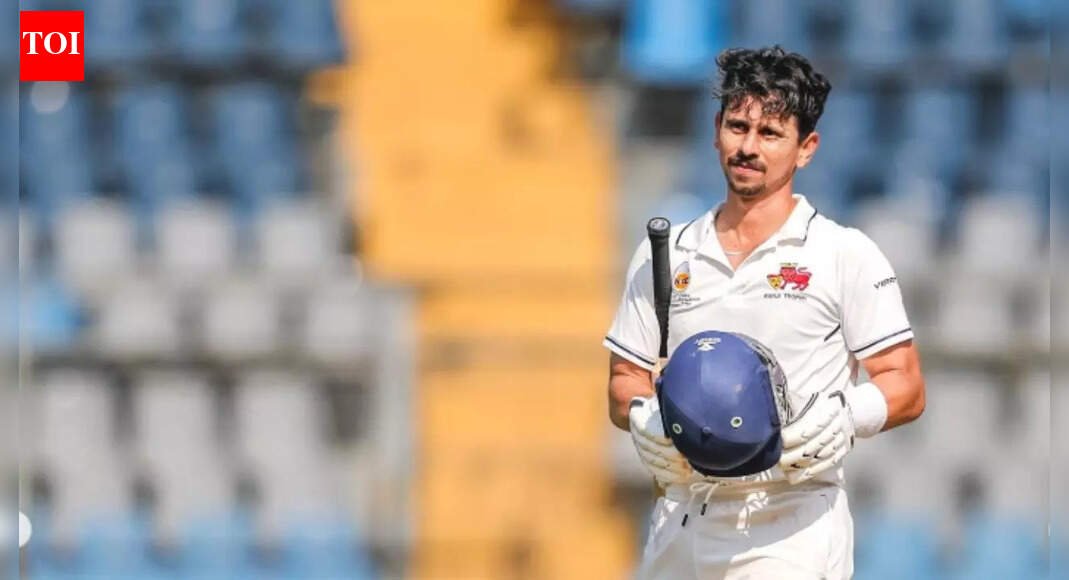
MUMBAI: Mumbai stand-in captain Siddhesh Lad has called on the BCCI to do away with 9am starts for knockout matches in the Vijay Hazare Trophy, saying the scheduling gives a clear advantage to teams bowling first and makes the toss a decisive factor. Lad’s remarks came after Mumbai lost to Karnataka by 55 runs (via the VJD method) in the quarterfinals in Bengaluru on Monday. He suggested that all knockout matches be played in a day-night format to ensure equal conditions for both teams.Asked to bat first by Karnataka, who won the toss at the BCCI’s Centre of Excellence, Mumbai slided to 60 for four in the 18th over, before fighting back through a half-century by Shams Mulani (86 off 91 balls) and support acts by Lad (38 off 58 balls) and Sairaj Patil (33 off 25 balls) to finish at 254 for eight in 50 overs. Karnataka coasted to 187 for one in 33 overs, with Devdutt Padikkal (81 not out off 95 balls) and Karun Nair (74 not out off 80 balls) going strong, before rain and bad light stopped play.“It doesn’t make sense to start the quarterfinal matches of VHT at 9 am. The ball was seaming around for around 40-45 overs of our innings, and our young batsmen were being beaten. Any cricketer will tell you how it’s such a big disadvantage to the team batting first. In those conditions, you can’t put up a good score while batting first. If you lose early wickets, it’s very difficult to stage a recovery. Still, we made a decent score. To add to our woes, the pitch at CoE had a generous grass cover. Combine that with a 9am start, and it’s trouble for the team batting first,” Lad fumed, while talking to TOI on Tuesday.“I request the BCCI to stage the VHT quarterfinals in the Day/Night format from the next season, so that any team batting first doesn’t face a disadvantage. I can understand that you can’t play day/night matches during the league stage, because there are many teams involved. However, you can play under lights in the KOs because only eight teams are there,” Lad stressed.Lad’s suggestion has found an echo in former India batsman and ex-Punjab captain Mandeep Singh. “As we saw in the first two quarterfinals of VHT, it’s about winning the toss, and winning the match. In our List A cricket, matches start at 9am. There is moisture in the wicket. For a substantial part of the first innings, the conditions are tough for batting, which gives an undue advantage to the fielding side. I remember that during the 2022-23 season, we were playing our Vijay Hazare Trophy matches at the Narendra Modi Stadium in Ahmedabad,” Mandeep said in a video on Instagram.“Due to the big stands there, there would hardly be any sunlight inside the stadium. There were four matches at that ground, and on all occasions, the team batting second won the match. Saurashtra were the worthy champions that time, but the toss was a very big factor that time. I hope that the same is not the case this time and the team batting first too wins a match,” Mandeep said.“In Jaipur (where Mumbai played their league matches), you can still bat well in the morning because the wicket is dry. However, in Bengaluru, especially on a red soil pitch at CoE with a big tinge of green, it’s tough to score runs and keep the wickets in the morning time,” Lad felt.“I’m not making up excuses for our defeat. But this (early start in VHT) has been happening for a long time now. It’s not about us losing or winning a match. This needs to change in the future,” asserted the 33-year-old.“We had our issues. We were without (in-form) Sarfaraz Khan and Tushar Deshpande, which meant that our pace attack was inexperienced, and we dropped a couple of catches that Padikkal offered at the start of his innings. However, he too was tentative at the wicket, as the ball was moving a bit at the start of the second innings too. Imagine how much the ball was seaming around in the first innings,” Lad lamented.


Source link

Gig worker safety row: Blinkit drops ‘10-minute’ delivery claim after labour ministry flags concerns; Zepto, Swiggy may follow


Gig worker safety row: Blinkit drops ‘10-minute’ delivery claim after labour ministry flags concerns; Zepto, Swiggy may follow

Eternal-owned quick commerce platform Blinkit has removed its long-promoted “10-minute delivery” claim from all platforms, amid growing concerns over the safety and welfare of delivery workers.According to news agency PTI, the company has revised its tagline from “10,000+ products delivered in 10 minutes” to “30,000+ products delivered at your doorstep”, signalling a shift away from time-bound delivery branding.The move comes after discussions between quick commerce firms and the Union ministry of labour, which raised concerns about the pressure such tight delivery timelines could place on gig workers.The labour ministry engaged with platforms to push for safer working conditions, better security and improved welfare measures for delivery partners. Aas per PTI, other players such as Swiggy and Zepto may also follow Blinkit’s lead in dropping similar delivery-time commitments.The issue had gained prominence after gig workers staged a nationwide strike on New Year’s Eve in 2025, protesting the 10-minute delivery model. The strike highlighted concerns related to riders’ health, road safety and income, and was backed by worker unions seeking the removal of ultra-fast delivery promises.While Blinkit has removed the claim across its branding, the “10-minute delivery” promise was still visible on app stores for platforms such as Zepto, Instamart and BigBasket.Eternal Group CEO Deepinder Goyal, however, has maintained that the 10-minute promise does not push riders into unsafe behaviour. Earlier, in a post on X, he said delivery partners are not shown customer-facing time commitments on their apps. “There is no ‘10-minute timer’ or countdown in the delivery app,” Goyal said, adding that faster deliveries are achieved mainly because stores are located closer to customers, not because riders are expected to speed.The government intervention followed meetings led by Union minister Mansukh Mandaviya, after which companies agreed to remove delivery-time assurances from advertisements and social media, with the stated aim of improving gig worker safety and working conditions.


Source link

India-EU FTA soon? Why the trade deal is important and which sectors will it benefit? Explained


India-EU FTA soon? Why the trade deal is important and which sectors will it benefit? Explained
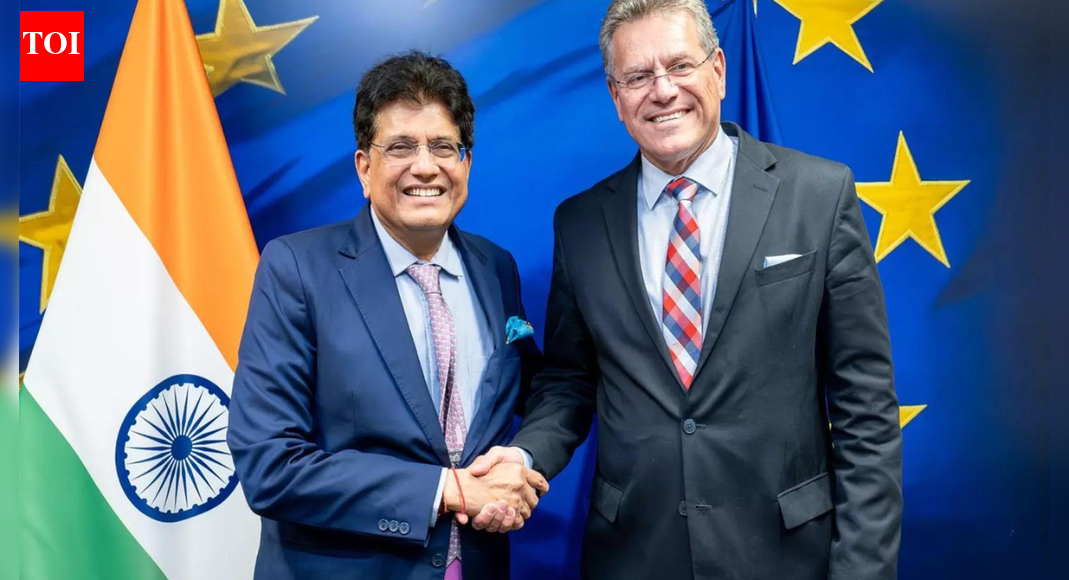
Piyush Goyal holds talks with EU Commissioner Maros Sefcovic on India-EU FTA negotiations (ANI image)

India and the European Union are in the final stages of negotiating a long-pending free trade agreement (FTA). The deal could significantly boost India’s exports to the 27-nation bloc and deepen economic ties amid global trade disruptions.If signed, the India-EU FTA will become India’s 19th trade agreement and one of its most consequential, given the EU’s position as India’s largest trading partner for goods. The agreement is expected to help Indian exporters diversify markets at a time when high US tariffs and geopolitical tensions are reshaping global supply chains.

German Chancellor Merz Hails India-Germany Ties, Pushes For ‘Economically Meaningful’ India-EU FTA

Why India-EU FTA matters?

The push for the agreement has gained urgency as steep US tariffs, reaching as high as 50%, have disrupted global trade flows. For India, the FTA offers a strategic opportunity to reduce dependence on China, expand exports to Europe and cushion the impact of protectionist policies elsewhere.Tariffs or import duties are either reduced or eliminated under FTAs, allowing easier market access and regulatory alignment. The India-EU deal is expected to benefit sectors such as technology, pharmaceuticals, automobiles, textiles, steel, petroleum products and electrical machinery, according to PTI. Labour-intensive sectors like garments, leather and pharmaceuticals could see improved competitiveness in the EU market, while Indian services exports, particularly telecommunications, transport, and business services, are also expected to grow.According to think tank GTRI, the EU stands to gain from higher exports of aircraft and parts, electrical machinery, diamonds and chemicals to India. European services such as intellectual property, IT, telecommunications and business services may also see expanded access.

Trade ties at a glance

India’s bilateral trade in goods with the EU stood at USD 136.53 billion in 2024–25, comprising USD 75.85 billion in exports and USD 60.68 billion in imports, making the EU India’s largest goods trading partner.The EU accounts for around 17% of India’s total exports, while India represents about 9% of the bloc’s overseas shipments. In 2023–24, India exported USD 76 billion in goods and USD 30 billion in services to the EU, while EU exports to India included USD 61.5 billion in goods and USD 23 billion in services.Spain, Germany, Belgium, Poland and the Netherlands are among the top EU destinations for Indian exports.With a GDP of about USD 19.5 trillion and a population exceeding 450 million, the EU remains a major global trade player. India, meanwhile, exported USD 437 billion in goods and USD 387.5 billion in services in 2024–25, while importing goods worth USD 720 billion and services worth USD 195 billion.

Key exports, imports and tariff challenges

India’s major exports to the EU include petroleum products, electronics (including smartphones), textiles, machinery, organic chemicals, iron and steel, gems and jewellery, pharmaceuticals and auto parts.However, Indian textile exports currently face tariffs of 12–16% in the EU, making them less competitive than products from countries like Bangladesh and Vietnam, which enjoy preferential access under EU trade agreements.India’s main imports from the EU include machinery, aircraft and parts, electronics, medical devices, scientific instruments, rough diamonds, chemicals, plastics, cars and auto components. In services, India exports business, IT, telecom and transport services, while importing intellectual property and IT-related services.

Alcohol trade and investment flows

Alcohol is another significant component of bilateral trade. In 2023–24, India exported wines worth USD 1.5 million and spirits worth USD 64.9 million to the EU, while importing wines worth USD 412.4 million and spirits worth USD 22.3 million.On the investment front, cumulative FDI inflows from the EU into India between April 2000 and September 2024 stood at USD 117.4 billion, accounting for 16.6% of India’s total FDI equity inflows. Around 6,000 EU companies operate in India.India’s outward FDI to the EU was valued at about USD 40.04 billion between April 2000 and March 2024. The Netherlands, Germany, France, Spain and Belgium are among the largest EU investors in India.

A long road to the final stage

India-EU FTA talks began in 2007, with multiple negotiation rounds held until 2013. However, differences over tariffs on automobiles, wine and spirits, data security for Indian IT firms, intellectual property rights, labour standards and public procurement led to a deadlock.While efforts to revive talks between 2016 and 2020 made limited progress, momentum returned after 2020. In June 2022, India and the EU formally re-launched negotiations covering a Free Trade Agreement, an Investment Protection Agreement and an Agreement on Geographical Indications.


Source link

Tambaram railway stn to get major upgrade | Chennai News


Chennai: A 890-crore makeover of Tambaram railway station to transform it into a modern transit hub is taking shape with the railway land development authority (RLDA) recently holding a stakeholder meeting on key projects to be developed under the public-private partnership mode.Sources said the tenders will be floated soon, with completion scheduled in three years. The passenger handling capacity of Tambaram railway station, which is now 13,500 during peak hours, will increase to 28,750 after the makeover. The number of tracks will increase to 16 from 12 and three more platforms will be built.

Chennai Headlines Today — The Biggest Updates You Need to Know.

Railways is already constructing a platform that passengers can access directly from the entrance to east without using foot overbridges and escalators. “The redevelopment of Tambaram is part of a broader modernization scheme, similar to Egmore. When completed, the station’s handling capacity will be bigger than Egmore, as the latter has space restrictions, while space is available in Tambaram. In future, more express trains are planned from Tambaram itself, for which the redevelopment is crucial,” said an official. Additional foot overbridges, a concourse at the first level, and new facades for both the east and west sides of the station are also part of the plan.Dayanand Krishnan, a city-based transport activist, said Tambaram handles at least 3.4crore passengers a year, and it requires more passenger amenities. “The proposed plan by RLDA focuses heavily on employees’ quarters and cargo handling capacity. But the station needs better accessibility, parking lots, and a concourse for passengers to wait. RLDA proposed an air concourse at Rani Kamlapati Railway Station (RKMP) in Bhopal, but not for Tambaram,” he pointed out.P Viswanathan, convenor of the coordination committee of Chitlapakkam residents’ welfare associations, said the vast expanse of land available at Tambaram railway station should be put to better use in the redevelopment. However, railway officials maintained that RLDA’s proposed plan is not final and that it will undergo changes with inputs from all stakeholders, including state agencies. Officials said Avadi and Coimbatore could also get similar makeovers, though there were no firm plans as yet.


Source link

‘The 50’ Reality show with ex-wife? Yuzvendra Chahal finally addresses Dhanashree Verma rumours


Indian leg-spinner Yuzvendra Chahal has officially broken his silence on January 13, regarding the viral rumors linking him to a high-profile reality television debut. For weeks, entertainment portals have been abuzz with claims that the cricketer would be appearing on the upcoming Indian adaptation of a famous French show alongside several high-profile social media influencers.

Yuzvendra Chahal responds to rumours of sharing screen with ex-wife Dhanashree Verma in reality show

The speculation reached a fever pitch following multiple reports that he might share the screen with with his ex-wife Dhanashree Verma, leading to intense debate among fans about his future in professional cricket. However, Chahal has now issued a firm clarification through his representatives to protect his professional image and focus. As the cricketer gears up for the domestic season, he has urged the media to refrain from circulating unverified stories that blend his personal life with speculative career moves.

Putting all speculation to rest, Chahal shared an official statement issued by the sports management platform Legacy on his Instagram story to clarify his stance. The statement categorically denied reports that he had been cast in the reality show ‘The 50’, which is set to air on Colors TV and stream on JioHotstar.

The official note stressed that there is “no truth” to these claims and confirmed that the cricketer has neither been approached nor has he entered into any discussions regarding the project. The statement read:

“There is no truth to the reports currently circulating about Yuzvendra Chahal’s participation in any reality show. These claims are speculative and incorrect. Yuzvendra is not associated with the show mentioned in recent reports, and there are no discussions or commitments of this nature. We request media platforms and social media users to refrain from spreading unverified information,” Chahal said in a statement.

This firm rebuttal aims to shut down assumptions that the leg-spinner is looking to explore the entertainment industry while still active in the national circuit.

Yuzvendra Chahal (Image Source: Instagram)

Also READ: From Yuzvendra Chahal to Smriti Mandhana: Cricketers who announced divorce or breakup in 2025

The reality show chaos: Farah Khan to host Indian ‘Les Cinquante’

The rumors gained traction due to the controversial format of ‘The 50’, an Indian adaptation of the hit French series Les Cinquante, which is slated to be hosted by filmmaker Farah Khan. The show’s premise involves 50 contestants living together in a lavish, palace-like setting with no fixed rules, designed specifically to trigger shifting alliances and unpredictable gameplay.

Speculation intensified when various media houses reports suggested that Chahal and his former wife, Dhanashree, who officially ended their marriage in February 2025, could potentially be housemates. While Chahal has called himself  happily single and stated that that chapter is over, the media frenzy regarding a potential on-screen reunion necessitated this legal clarification. With the cricketer now confirmed to be out of the lineup, the show is expected to rely on its roster of social media influencers and former Bigg Boss contestants to provide the promised high drama.

Also READ: Yuzvendra Chahal reveals which IPL franchise Ravi Bishnoi will represent in 2026 edition


Source link

Budget 2026: FACSI urges tax & credit relief for MSEs; here’s why


Budget 2026: FACSI urges tax & credit relief for MSEs; here's why
Union budget 2026 (ANI image)

The Federation of Associations of Cottage and Small Industries (FACSI) has requested the central government to provide tax, credit and regulatory relief measures for micro and small enterprises (MSEs) in the 2026-27 Union Budget, aiming to sustain growth and strengthen their role in India’s industrial ecosystem.In a pre-budget letter to finance minister Nirmala Sitharaman, FACSI president H K Guha said the recommendations were framed after consultations with various associations of entrepreneurs and MSE groups across the country, according to PTI.Among the key demands, the industry body called for the constitution of an exclusive council for small and micro enterprises under the Ministry of MSME, a higher exemption threshold under the GST regime and a single, simplified GST return for small units.FACSI also proposed statutory collateral-free lending of up to Rs 1 crore for MSEs at an interest cap of 6-7 per cent, interest subvention during financial stress and automatic renewal of working capital limits for compliant units.Highlighting liquidity concerns, the federation demanded GST refunds within 15 days with statutory interest for delays and complete decriminalisation of procedural lapses under GST, labour and local laws.For export-oriented units, FACSI suggested the creation of an Export Risk Equalisation Fund to support small exporters affected by sudden tariff hikes, alongside higher lending targets by SIDBI and public sector banks.The letter also sought a reduction in fees for MSEs submitting tenders through the GeM portal and stronger functioning of State Facilitation Councils to address delayed payments. FACSI observed that some measures would require amendments to the MSMED Act, 2006.Guha emphasised the need for closer coordination with state governments to extend subsidies on renewable energy installations, electricity charges and local levies and to provide special facilities for units in industrial estates managed by state development corporations.“These measures will be a significant enabler for the growth of MSEs in India,” Guha said.


Source link

Major crackdown: Five J&K govt employees sacked over ‘terror links’; one was in ‘regular contact’ with top LeT commander | India News


Major crackdown: Five J&K govt employees sacked over 'terror links'; one was in 'regular contact' with top LeT commander

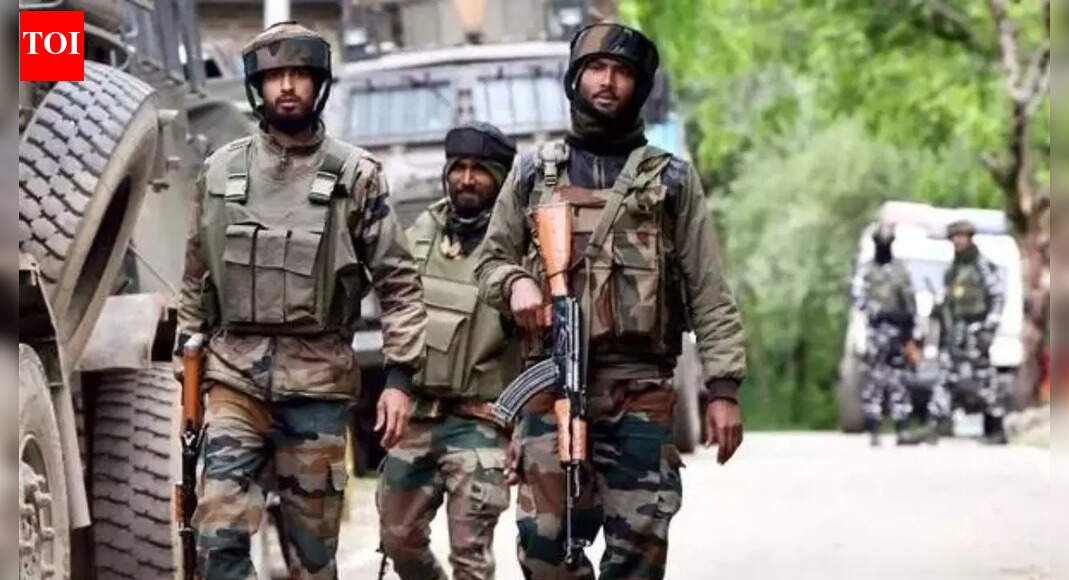
NEW DELHI: Jammu and Kashmir lieutenant governor Manoj Sinha on Tuesday terminated five more government employees for suspected links with terrorist organisations.Since 2020, the Union territory administration under Sinha has dismissed 85 government employees after they were found to be working for terror groups.Officials said the aim is to target the “roots of the terror ecosystem” and its “penetration” within the government institutions.The dismissals were carried out under Article 311(2)(c) of the Constitution; the provision allows for the removal of a civil servant without a formal inquiry if the president or the governor/lieutenant governor is satisfied that in the interest of the security of the state, holding such an inquiry would not be practical.Those terminated include Mohammad Ishfaq, a teacher; Tariq Ahmad Shah, a laboratory technician; Bashir Ahmad Mir, an assistant lineman; Farooq Ahmad Bhat, a field worker in the forest department; and Mohammad Yousuf, a driver in the health department.According to the dossier against them, Mohammad Ishfaq was working for the Pakistan-based terror outfit Lashkar-e-Toiba (LeT). He was in regular contact with LeT commander Mohammad Amin alias Abu Khubaib, who is designated as a “terrorist” operating from the neighbouring country.Ishfaq was given an “active operational role” by the LeT and he was tasked to execute the killing of a police officer in Doda in early 2022.His activities were put under surveillance, and sustained monitoring revealed that he helped in the terror activities by certain Over Ground Workers (OGWs) of the terror group. He was arrested in April 2022 before he could execute the plan.Tariq Ahmad Rah came under the influence of the Hizb-ul-Mujahideen right from a very young age. Rah’s terror link emerged during the State Investigation Agency (SIA) probe into the escape of Hizbul terrorist Amin Baba to Pakistan in 2005.Bashir Ahmad Mir was regularised in 1996 in the Public Health Engineering department. Mir became an active OGW of LeT in the Gurez area of Bandipora.Farooq Ahmad Bhat was actively working with Hizb-ul-Mujahideen.Mohammad Yousuf was in regular contact with terrorists, particularly Bashir Ahmad Bhat, a Pakistan-based Hizb terrorist.(With PTI inputs)


Source link

J&K: Security forces launch search operations in Kathua; gunshots heard | India News


J&K: Security forces launch search operations in Kathua; gunshots heard

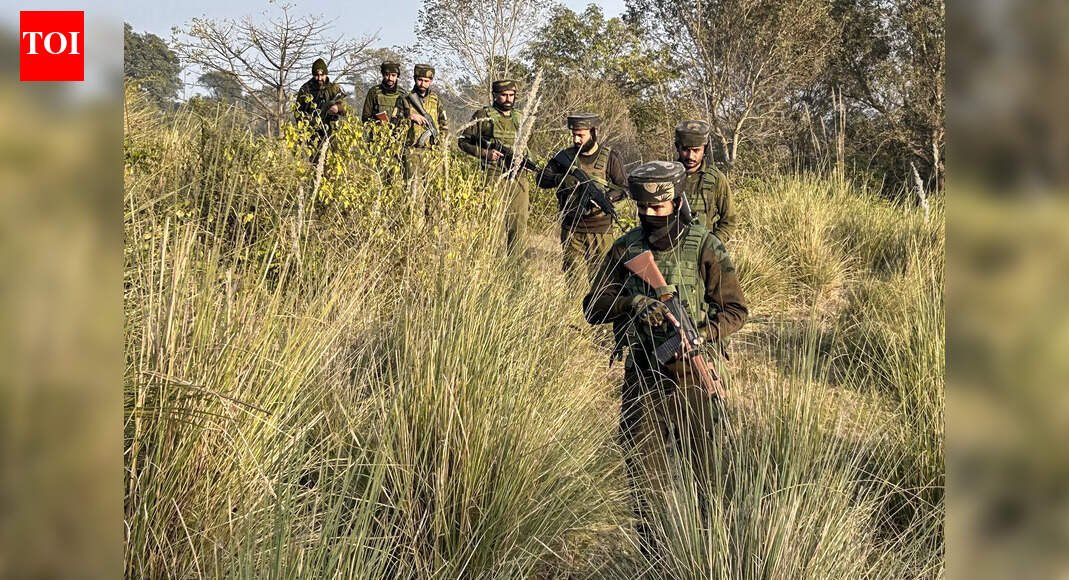
NEW DELHI: Several gunshots were heard on Tuesday after security forces launched a search operation following information about suspected terrorist movement in a remote village of Jammu and Kashmir’s Kathua district, officials said.The intermittent firing was reported from the Najote forest area of Billawar, around 10 km from the Kamadh nallah in the Kahog forest belt, where security forces had exchanged fire with terrorists on January 7, the officials said.According to officials, the suspected terrorists fired a few shots after noticing the movement of security forces, who retaliated while advancing deeper into the forest to neutralise them.They said the cordon-and-search operation has been strengthened, and efforts are underway to track down the ultras.An encounter had broken out between terrorists and security forces in the Kahog area on January 7, but the militants managed to escape by taking advantage of darkness, difficult terrain and dense forest cover.Security forces have intensified anti-terrorist operations across the Jammu region ahead of the upcoming Republic Day celebrations.(With inputs from PTI)


Source link

Mustafizur Rahman row: ‘Position remains unchanged’ on India travel for T20 World Cup, Bangladesh tells ICC; reiterates ‘security concerns’ | Cricket News


Mustafizur Rahman row: 'Position remains unchanged' on India travel for T20 World Cup, Bangladesh tells ICC; reiterates 'security concerns'

NEW DELHI: The Bangladesh Cricket Board (BCB) on Tuesday “reaffirmed its position” to not travel to India for the upcoming T20 World Cup 2026 during a meeting with the International Cricket Council (ICC). A video conference between the Bangladesh Cricket Board (BCB) and the International Cricket Council (ICC) was held this afternoon, the BCB said in a media release.

Bangladesh seek T20 WC match shift from India after Mustafizur Rahman’s IPL exit

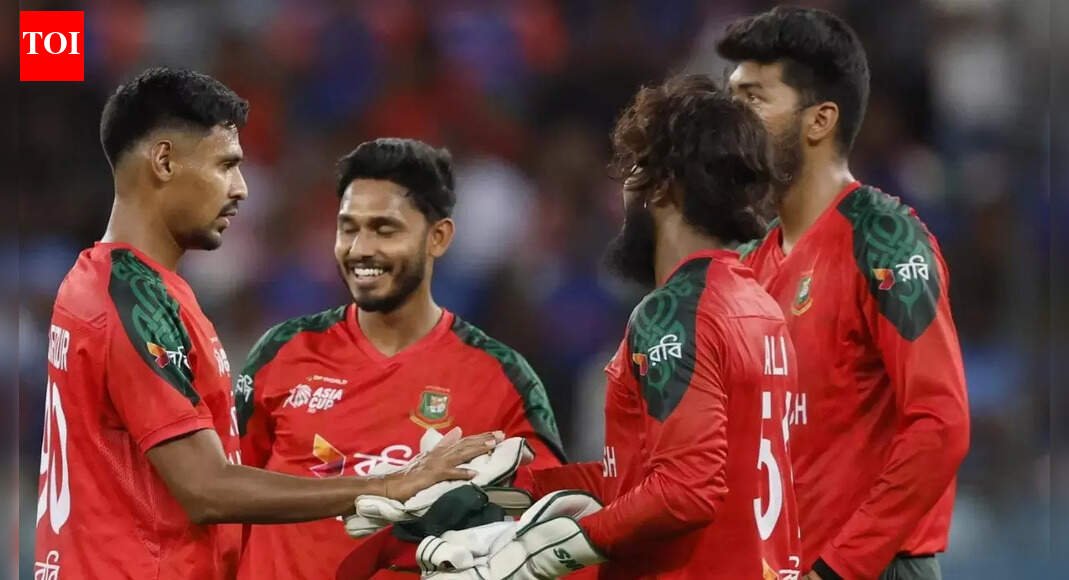
During the meeting, the BCB “reaffirmed its position regarding the decision not to travel to India, citing security concerns”, the release said. The BCB also repeated its request to the ICC to consider moving Bangladesh’s matches outside India.However, as reported earlier by TOI, the ICC has rejected claims that security concerns could prevent the Bangladesh team from travelling to India for the tournament.The ICC said the tournament schedule has already been announced and asked the BCB to reconsider its stand. The BCB’s position, however, “remains unchanged”, the Bangladesh board said. Both sides agreed to continue discussions to look for possible solutions, according to the BCB release.“The BCB remains committed to safeguarding the well-being of its players, officials and staff while engaging constructively with the ICC to address the matter,” the statement said.The T20 World Cup is scheduled to begin on February 7. As per the existing schedule, Bangladesh are set to start their campaign on the same day against West Indies at Eden Gardens in Kolkata. They will then play Italy on February 9 at the same venue, followed by a match against England, the 2022 T20 World Cup champions, also in Kolkata. Bangladesh will finish their group-stage matches against Nepal on February 17.The BCB’s concerns followed the release of Mustafizur Rahman from the IPL franchise Kolkata Knight Riders (KKR) amid attacks on Hindus in Bangladesh.According to the current schedule, Bangladesh are to play their first three group matches in Kolkata and their final group match in Mumbai.After Mustafizur was released from the KKR squad, the Bangladesh government banned the broadcast of the IPL in the country.Former Bangladesh captain Tamim Iqbal and current Test captain Najmul Hossain Shanto have warned against taking a rigid position on the issue. Tamim said decisions taken now could have an impact 10 years later. Shanto has spoken about the mental pressure on players at the possibility of missing a World Cup. Nazrul, however, has maintained that Bangladesh will not move away from its demand.


Source link