Breaking News
Trump’s 10% tariffs: Macron hits back at ‘unacceptable’ threats; Swedish PM warns, EU ‘will not be blackmailed’

Trump’s 10% tariffs: Macron hits back at ‘unacceptable’ threats; Swedish PM warns, EU ‘will not be blackmailed’

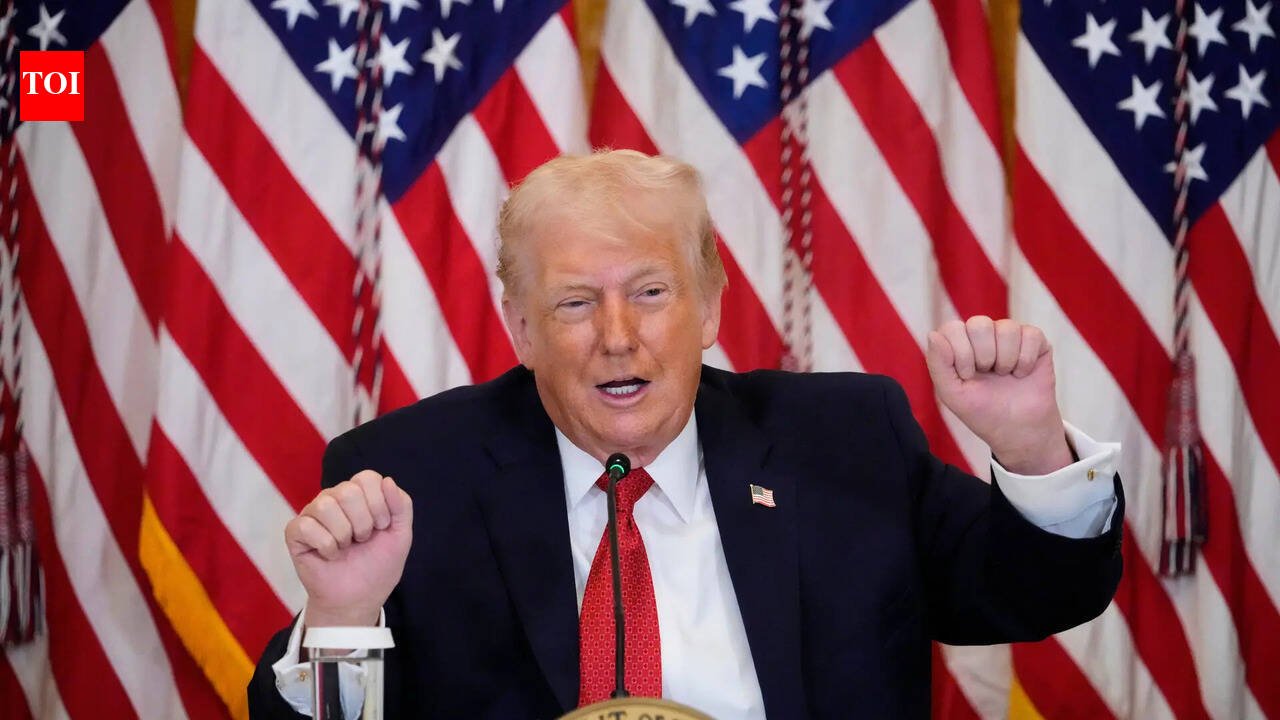
European leaders have pushed back against US President Donald Trump’s latest tariff threat, warning that using trade penalties in connection with Greenland is “wrong” and could damage transatlantic ties.Trump, on Saturday, announced a 10% tariff on all goods entering the United States from Denmark, Norway, Sweden, France, Germany, the United Kingdom, the Netherlands and Finland, effective February 1.After the threat, leaders across Europe have emphasised that Greenland’s future cannot be controlled through economic pressure and insisted that security cooperation in the Arctic must not be turned into a trade dispute. British PM Keir Starmer took to X, saying that the status of Greenland was not open to outside interference and criticised the use of tariffs against Nato partners. “Our position on Greenland is very clear – it is part of the Kingdom of Denmark and its future is a matter for the Greenlanders and the Danes. We have also made clear that Arctic Security matters for the whole of Nato and allies should all do more together to address the threat from Russia across different parts of the Arctic.” He further added, “applying tariffs on allies for pursuing the collective security of Nato allies is completely wrong. We will of course be pursuing this directly with the US administration.” French President Emmanuel Macron said that France’s foreign policy is based on defending sovereignty and independence and warned that Europe would not yield to threats. “France is committed to the sovereignty and independence of nations, in Europe and elsewhere … Tariff threats are unacceptable and have no place in this context. Europeans will respond in a united and coordinated manner should they be confirmed. We will ensure that European sovereignty is upheld. It is in this spirit that I will engage with our European partners.” Sweden’s PM Ulf Kristersson also criticised the tariffs, saying that Stockholm would not accept getting “blackmailed” and called for a joint European response. “We will not let ourselves be blackmailed. Only Denmark and Greenland decide on issues concerning Denmark and Greenland.”He further added, “I will always stand up for my country, and for our allied neighbors. This is an EU issue that affects many more countries than those now being singled out. Sweden is now having intensive discussions with other EU countries, Norway, and the United Kingdom for a coordinated response.” European Council President Antonio Costa said that Europe and the wider international community must defend territorial integrity and sovereignty, warning that tariffs could spark a dangerous escalation. “Territorial integrity and sovereignty are fundamental principles of international law. They are essential for Europe and for the international community as a whole. We have consistently underlined our shared transatlantic interest in peace and security in the Arctic, including through Nato. The pre-coordinated Danish exercise, conducted with allies, responds to the need to strengthen Arctic security and poses no threat to anyone.”Costa further highlighted the bloc’s support for Denmark and Greenland. “The EU stands in full solidarity with Denmark and the people of Greenland. Dialogue remains essential, and we are committed to building on the process begun already last week between the Kingdom of Denmark and the US. Tariffs would undermine transatlantic relations and risk a dangerous downward spiral. Europe will remain united, coordinated, and committed to upholding its sovereignty. Denmark’s foreign minister Lars Lokke Rasmussen said Trump’s remarks were unexpected and insisted that the increased military presence in Greenland was aimed at stability, not confrontation. “The purpose of the increased military presence in Greenland, to which the president refers, is precisely to enhance security in the Arctic,” he said, adding that Denmark was coordinating closely with Brussels and other partners. “We are in close contact with the European Commission and our other partners on the matter,” Rasmussen added, following recent White House talks involving US and Greenlandic officials. In Germany, European Parliament member Manfred Weber warned that Trump’s stance could block progress on the EU–US trade deal agreed last year. “The EPP is in favour of the EU–US trade deal, but given Donald Trump’s threats regarding Greenland, approval is not possible at this stage,” Weber said. “The 0% tariffs on US products must be put on hold.”The EU and the US agreed to a preliminary trade deal in July under which most European exports would face a 15% US tax, but talks are still ongoing and the deal’s future is now uncertain amid rising political tensions.

Source link

Aakash Chopra picks Australia’s playing XI for the T20 World Cup 2026


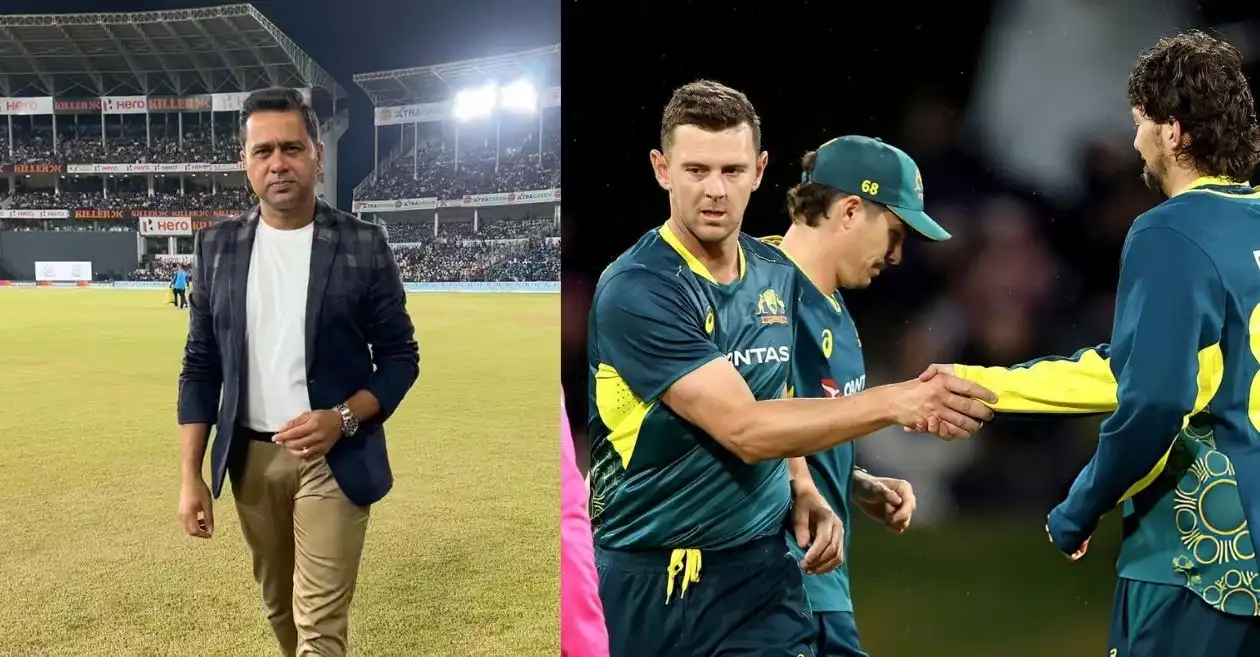
With the ICC Men’s T20 World Cup 2026 set to be played in India and Sri Lanka, discussions around ideal combinations have already begun. Australia, known for their aggressive brand of cricket and depth across departments, are expected to field a powerful and flexible XI suited to subcontinental conditions. Former India cricketer and analyst Aakash Chopra has weighed in with his preferred Australia playing XI, outlining a team built around power, all-round depth, and tactical balance.

Chopra’s selection reflects modern T20 thinking — long batting depth, multiple bowling options, and adaptability based on pitch conditions. His XI blends established stars with players who can influence games in short bursts, a crucial factor in World Cup cricket.

Aakash Chopra reveals his Australia playing XI for T20 World Cup 2026

Explosive top order

At the top of the order, Chopra backed Mitchell Marsh and Travis Head as openers. Marsh’s ability to muscle bowlers from ball one and Head’s fearless strokeplay make them a destructive pairing, capable of setting the tone inside the powerplay. Their experience in high-pressure tournaments further strengthens Australia’s starts.

Behind them, Josh Inglis slotted in at number three. Chopra valued Inglis for his versatility — he can anchor if early wickets fall or accelerate when the platform is set. His wicketkeeping skills also add balance to the XI without compromising batting depth.

Solid middle order ft. Cameron Green

The middle order revolves around all-round strength. Cameron Green and Marcus Stoinis provide power, seam-bowling options, and flexibility depending on match situations. Chopra sees Green as a key player in Asian conditions due to his bounce, reach, and ability to clear the ropes even on slower pitches.

Following them is the ever-dangerous Glenn Maxwell, a player Chopra considers indispensable in T20 cricket. Maxwell’s unorthodox batting, combined with his off-spin, offers Australia a match-winner who can single-handedly change games in the middle overs.

Finishing duties are handed to Tim David, whose role is clear — maximise runs at the death. Chopra’s XI ensures that Australia bat deep, with genuine firepower extending well beyond the top six.

Also READ: Josh Hazlewood breaks silence on injury rehab ahead of T20 World Cup 2026

Bowling balance and tactical flexibility

In the bowling department, Chopra opted for leadership and experience through Pat Cummins, who also captains the side in crunch moments. Cummins’ calm presence and ability to bowl at any stage of the innings make him a vital cog.

He pairs Cummins with Josh Hazlewood, whose accuracy and hard lengths can be extremely effective even on flatter surfaces. For additional variety, Chopra leaves room for either Nathan Ellis or Matthew Kuhnemann, depending on conditions. This choice highlights tactical adaptability — extra pace on quicker tracks or an additional spinner on turning wickets.

Spin responsibilities primarily rest with Adam Zampa, Australia’s premier T20 spinner. Chopra values Zampa’s wicket-taking ability in the middle overs, especially on Indian and Sri Lankan pitches where quality spin often decides matches.

While fitness and execution will ultimately determine Australia’s fate, Chopra’s chosen XI underlines why they remain one of the most dangerous teams heading into the tournament.

Aakash Chopra’s Australia XI for T20 World Cup 2026:

Mitchell Marsh, Travis Head, Josh Inglis, Cameron Green, Marcus Stoinis, Glenn Maxwell, Tim David, Pat Cummins, Nathan Ellis/Matthew Kuhnemann, Josh Hazlewood, Adam Zampa.

Also READ: Aakash Chopra picks replacement of Tilak Varma for the T20I series against New Zealand


Source link

IND vs NZ 3rd ODI: Proud home record at stake as India face New Zealand in series decider | Cricket News


IND vs NZ 3rd ODI: Proud home record at stake as India face New Zealand in series decider

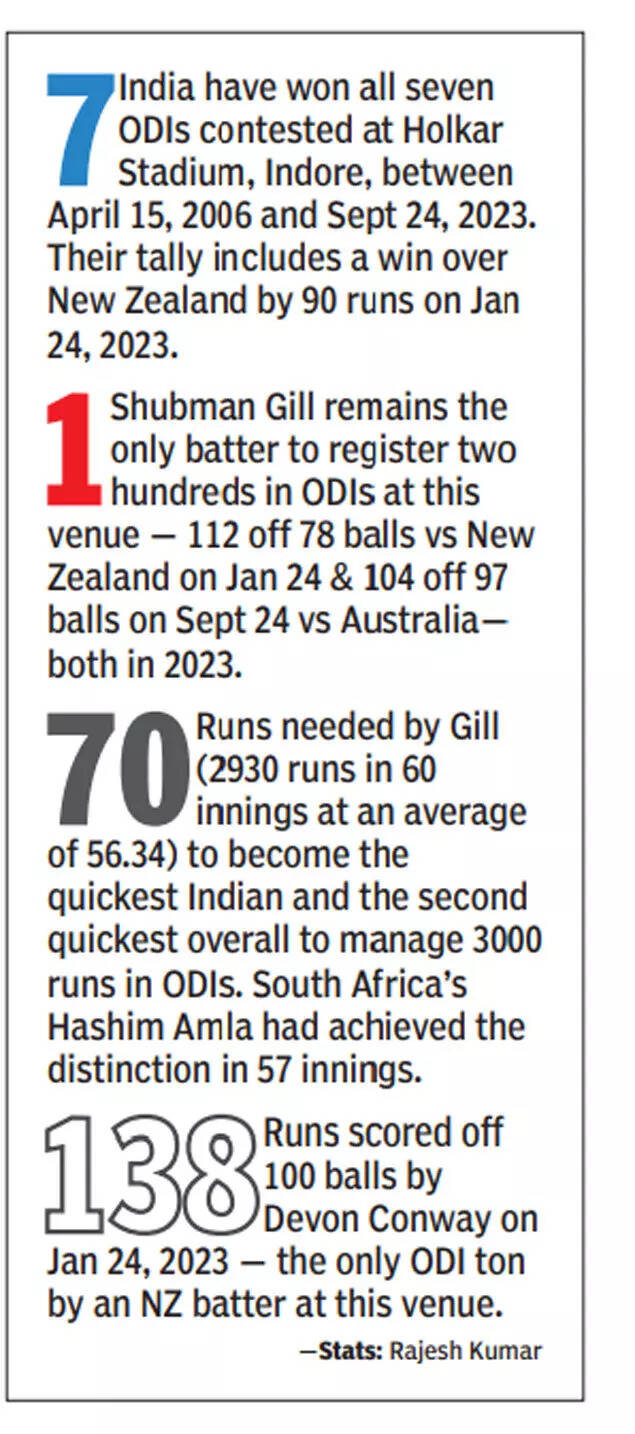
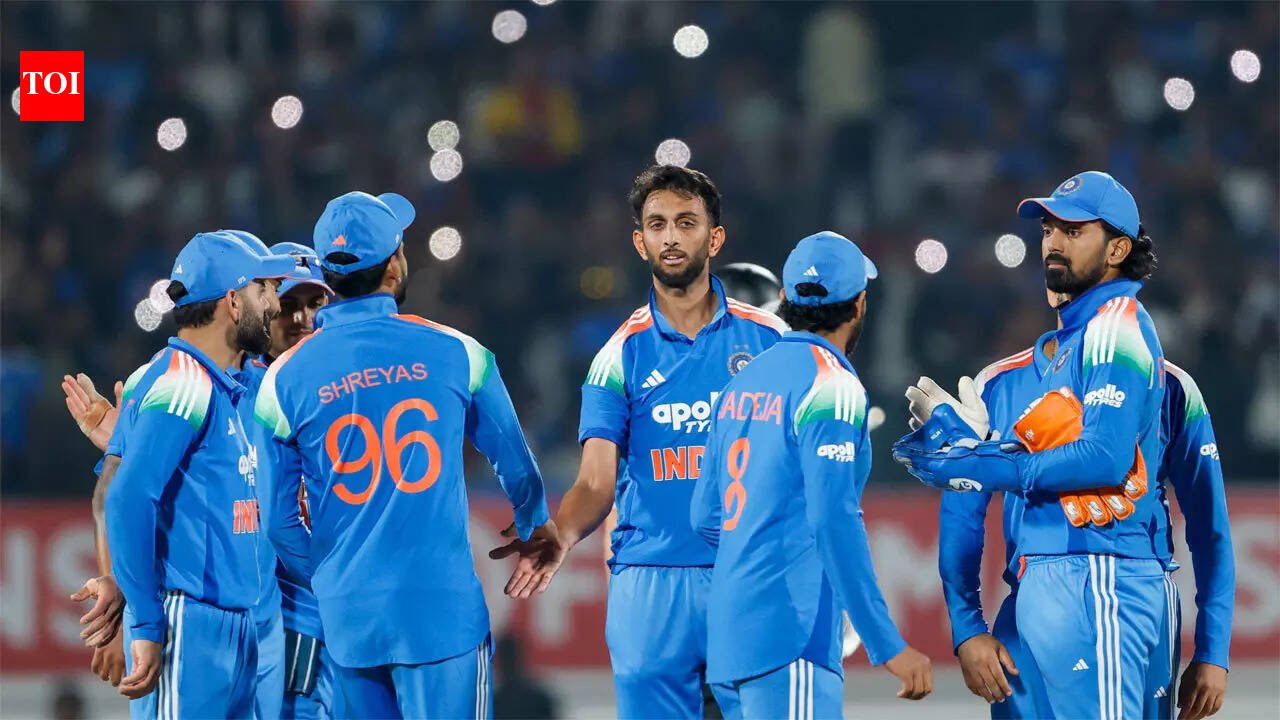
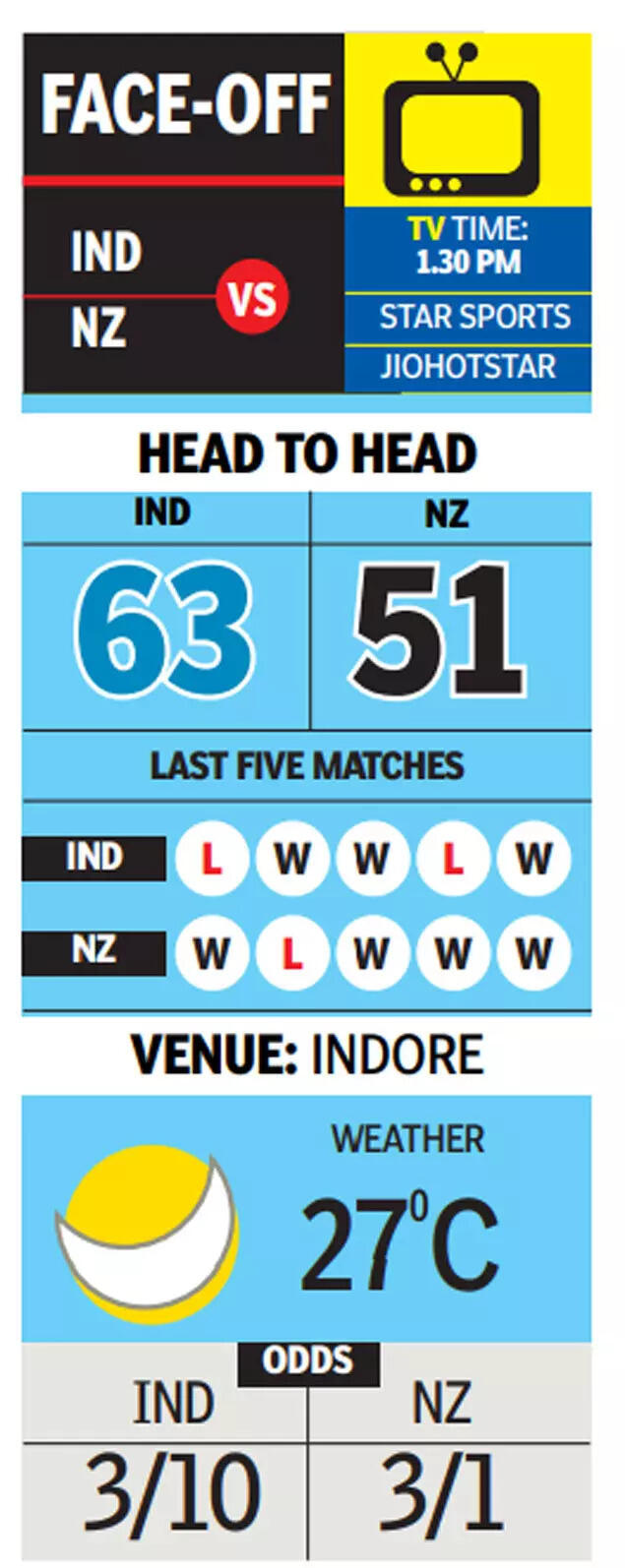
INDORE: With their dominance in Tests on home soil now a thing of the past, India will hope for the ageless duo of Virat Kohli and Rohit Sharma to fire in unison and complement the highly consistent KL Rahul as they strive to protect their proud ODI record at home against the resolute Kiwis in the series-deciding third ODI here on Sunday.While Kohli and KL Rahul’s sensational form is highly encouraging, the hosts would be worried by the poor returns of left-arm wrist spinner Kuldeep Yadav, who appeared to be too slow in the air as he ended up conceding 1-82 in 10 overs.

Mohammed Siraj press conference: gearing up for series decider vs New Zealand

Going by India’s intense threehour training session on Saturday, ace left-arm seamer Arshdeep Singh could be back in the XI, probably at the expense of Prasidh Krishna. It will be interesting to see if India hand a debut to batting allrounder Ayush Badoni, a useful off-spinner, for the injured Washington Sundar, and leave out Nitish Kumar Reddy from the final XI.Reddy ended up bowling only two overs in the second ODI and was criticised for not making use of his chances by India’s assistant coach Ryan ten Doeschate.

.

India last lost a bilateral ODI series at home in March 2023, when Australia reversed a 0-1 deficit to win 2-1.After winning their first Test series in India 3-0 in Nov 2024, New Zealand, who have travelled to these shores for bilateral ODIs since 1988, will be itching to do the same in ODIs.Considering that it’s an inexperienced Black Caps squad — eight players are touring India for the first time and they fielded two debutants in the first two matches — it’ll be a massive achievement.

.

Pacer Kristian Clarke, who took 3-56 in Rajkot, played his first ODI in Vadodara, while left-arm spinner Jaydon Lennox made a decent debut in Rajkot, taking 1/42 in 10 overs.With his massive appetite for scoring runs against India in India in ODIs, Daryl Mitchell has proven to be a major thorn in the flesh for the Men in Blue.Mitchell’s last four ODI scores versus India in India read: 130 (127), 134 (119), 84 (71), 131* (117).


Source link

Rising NOTA votes in BMC & NMMC polls signal voter dissatisfaction; in several wards, NOTA exceeded winning margins | Mumbai News


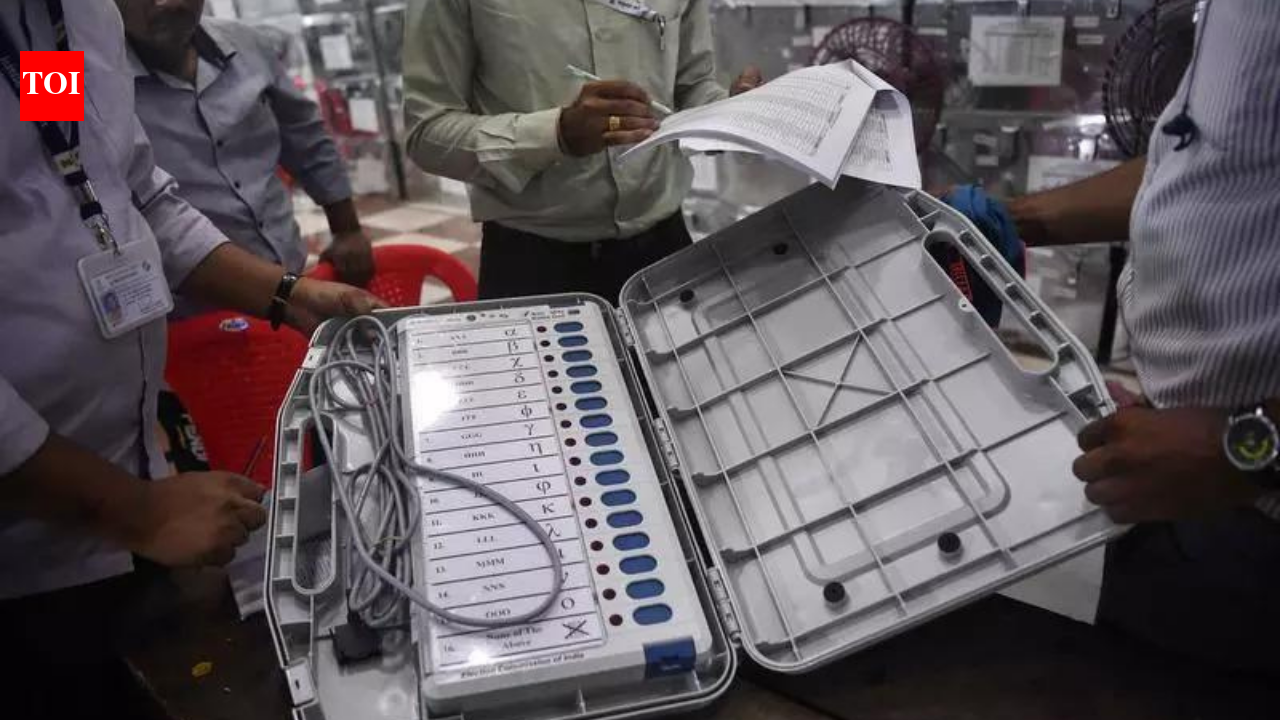
MUMBAI: A growing number of voters chose NOTA in the recently concluded civic elections across the Mumbai Metropolitan Region, underlining voter dissatisfaction even as established parties retained control. In the 2026 BMC elections, over one lakh voters opted for NOTA out of 54.64 lakh votes polled, accounting for nearly 1.8% of the turnout. In at least eight wards, NOTA votes exceeded the winning margins, indicating that results could have changed had those votes gone to rival candidates.In Mulund’s Ward 106, BJP’s Prabhakar Shinde lost by 164 votes to MNS candidate Satyawan Dalvi, while 610 NOTA votes were recorded. In Ward 191, Shiv Sena (UBT)’s Vishakha Raut won by 197 votes, even as 772 voters chose NOTA. In Kalina, Tulip Miranda won by just seven votes, with 269 NOTA votes polled. In at least three other wards that saw direct contests, over 1,000 NOTA votes were recorded, though margins there were larger. A similar surge was seen in the NMMC elections, where 73,559 NOTA votes were cast, compared to 5,391 in 2015. The highest NOTA count, 2,398, was in Nerul, while the lowest, 189, was recorded in Belapur.


Source link

Access Denied


Access Denied

You don’t have permission to access “http://www.ndtv.com/education/haryana-introduces-6-year-age-rule-for-class-1-admissions-10772471” on this server.

Reference #18.2ef63717.1768703247.324eb19

https://errors.edgesuite.net/18.2ef63717.1768703247.324eb19


Source link

Safeguard democracy, ensure probe agencies don’t defame citizens, Mamata appeals to CJI | India News


Safeguard democracy, ensure probe agencies don't defame citizens, Mamata appeals to CJI

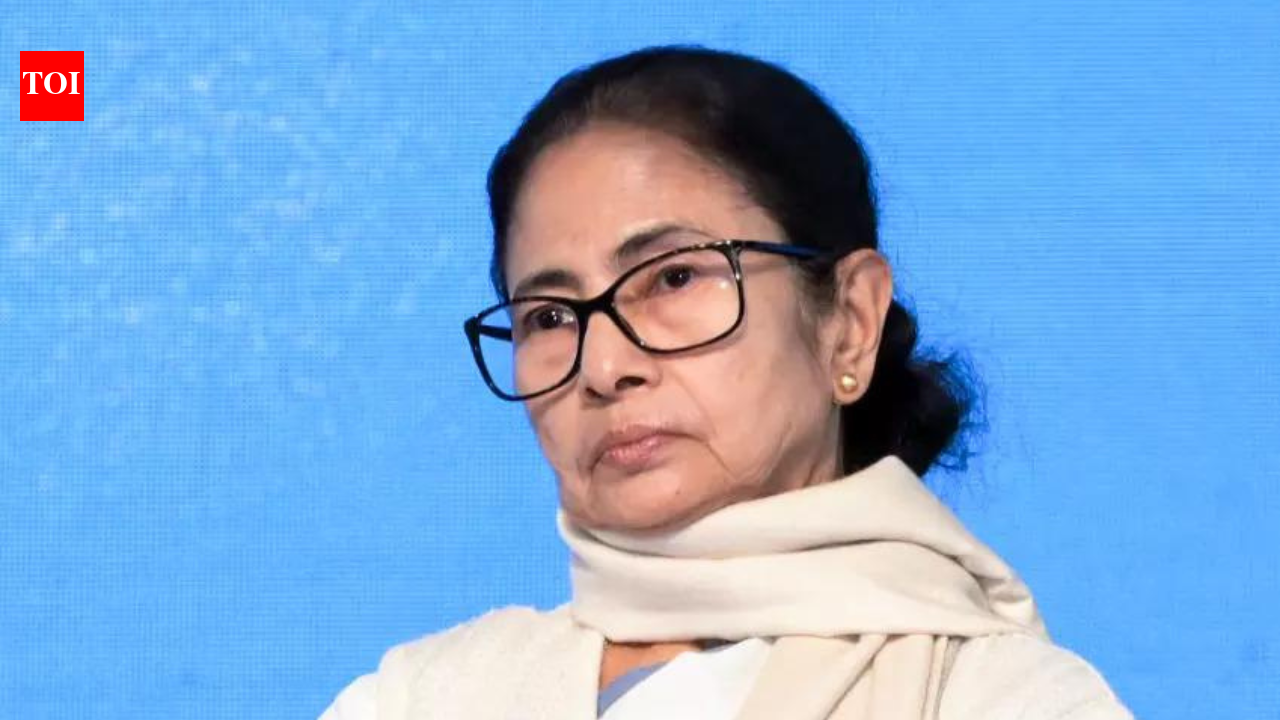
JALPAIGURI/KOLKATA: West Bengal chief minister Mamata Banerjee Saturday made a fervent appeal to Chief Justice of India (CJI) Surya Kant to safeguard democracy and ensure that investigative agencies do not defame citizens.“Our safety, security, history, geography, and boundaries must all be protected. The media should not conduct trials before cases are finalised… We are under your custody. You are the guardians of the Constitution,” Mamata told the CJI during the inauguration of Jalpaiguri circuit bench of Calcutta high court.

‘Protecting Rohingyas And Bangladeshis’: BJP MP Sambit Patra Slams Bengal CM Mamata Banerjee

CJI Kant appreciated the vision of Calcutta high court and the state govt in setting up a circuit bench in Jalpaiguri in 2019, noting that before its establishment, people from the region had to travel nearly 600 km to Kolkata in pursuit of justice. “Today, it has its own home. This building is designed as a sophisticated synthesis of tradition and 21st-century digital agility. It stands as a testament to judicial decentralisation,” he said.Union law minister Arjun Ram Meghwal, who also attended the function, said Jalpaiguri circuit bench would be equipped with the latest technology, adding that “justice should not just happen but should also be seen to happen.” He stressed the Centre’s e-courts project, for which Rs 7,210 crore has been allocated in Phase III.


Source link

‘Can’t wait for the lift’: ’10-min’ branding gone, but delivery gig is still survival of the quickest | Delhi News


'Can't wait for the lift': '10-min' branding gone, but delivery gig is still survival of the quickest

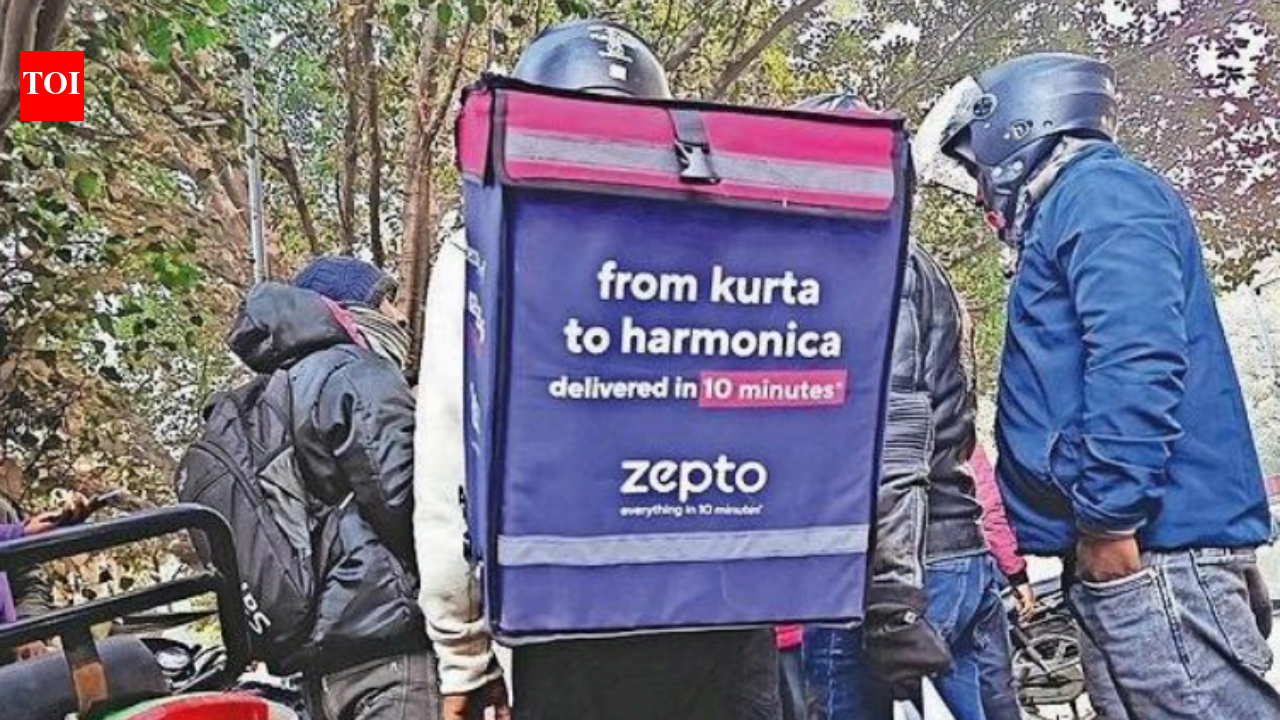
The day after labour ministry’s nudge to delivery platforms to drop the 10-minute branding, a breathless Sumit Singh appeared on the landing of my floor with my order. While I waited by the lift, seeing Singh emerge from the stairwell of my Noida apartment gave me a mild shock. “You climbed 17 floors?” I asked.“Ji, ma’am,” he replied, adjusting the voluminous bag strapped to his shoulders and wiping sweat from his forehead as I stood wrapped in three layers on one of NCR’s coldest days. “I can’t wait for the lift. Every minute I save gives me a chance to earn more.” Though the app I was using, Zepto, wasn’t promising 10-minute delivery, just as told, nothing had changed for Sumit. Not the daily 10-12-hour race against the clock, not the business model geared towards survival of the quickest, not the expectation of the customer sitting with fruits and expecting milk for cereal, and certainly not the class system hardcoded into NCR apartment culture of allowing delivery boys only into service lifts (meant for garbage).Sumit had waited five minutes – for him, “the outer limit of time wastage” – for the service lift to arrive at the ground floor and decided to sprint up when it didn’t. When I told him about the 10-minute promise being removed, he laughed. “That is only an announcement. Reality remains the same. The faster I finish an order, the faster I get the next one. That’s how this works. My income depends on how many deliveries I complete in a day. If one order gets delayed, it has a ripple effect,” he said.Over the last few weeks, more so since govt brought in the new labour code and gig workers’ unions called a strike during Christmas and New Year, the superfast commerce model has come under the scanner for exploitative practices. Though the strikes weren’t disruptive, they brought main concerns of the gig economy – harsh working conditions, stiff targets and lack of job or income security – into public discourse. Govt’s intervention on the 10-minute branding was a nod to those concerns.But it’s the medley of the invisibles – the stopwatch that a ping for an order starts, performance metrics and work allocation algorithms, and the incentive structure – that choreographs the delivery gig. Changing the branding doesn’t change this, or Sumit’s deliverables, or the next steep climb.Discontinuation of 10-minute deliveries was among the main demands of the gig workers’ unions that called the strike to prioritise safety of riders. That will, however, mean taking ‘quick’ out of commerce, which is a foundational challenge to the business model. Why is saving time so important?For every kilometre travelled, Sumit says he earns around Rs 14 per order. Longer-distance orders fetch slightly more, but they also take more time and burn more fuel or battery charge. To earn between Rs 25,000 and Rs 30,000 a month after deducting fuel costs and traffic challans – the minimum that delivery riders say they need to earn to survive in Delhi-NCR – they must, according to Sumit, complete 30-35 deliveries a day. “That means working 10-12 hours daily without any weekly off. On a good day, I earn up to Rs 850,” he explains.Income varies from one platform to another. Gaurav Kumar, who delivers for Swiggy Instamart, says, “Today, I earned Rs 366 after working 8 hours and 33 minutes. I completed 14 deliveries. Scrapping of the 10-minute rule has not changed anything for me. What I want is a steady income.”Customer behaviour adds another layer of stress. Dhruv Rajput, who works with Blinkit in Gurgaon, says people have become used to lightning quick deliveries and get irritated by delays. “People still want their orders fast, whether or not it’s a 10-minute promise. Sometimes, in cash on delivery cases, there are customers who refuse to pay if we get late. They don’t want to hear about traffic congestion. There is no option then but to take the blame and apologise,” he says.What’s worse than an unhappy customer?If there’s something riders fear more than an irritable customer, it’s being blocked out of the app. All riders TOI spoke to said reasons for blocking IDs are arbitrary, ranging from rejections to customer complaints. “Even if there is an emergency to attend to, if a rider rejects orders a few times on the app, it can lead to deductions, or worse, blocking,” says Deepak Kumar, a Zepto rider in Delhi. “Rejecting an order can lead to a deduction of Rs 5-10 or more, depending on distance and order quantity. Accounts can get blocked too. Then you can’t work at all.”Riders also run a huge risk of traffic fines. To save time, they often drive on the wrong side, take turns they aren’t supposed to, hoping they won’t get caught. Sumit, who delivers in Noida, says Dec 2025 was a particularly unlucky month. “I paid Rs 6,000 in traffic fines.”A critical part of the job that does not get any attention, say delivery riders, is the weight of orders they carry. Raju, a Blinkit rider in Delhi, says: “I’m often climbing stairs and carrying around with me a bag weighing 25-30kg. This takes a toll on the body like back and knee pain. Govt should bring in clear weight limits.” TOI wrote to Blinkit, Zepto and Instamart for a comment, but did not receive a response.What are our rights? Educate usRiders said they were aware of the new labour code govt has brought, but details are vague to them. They urged govt to organise awareness camps for them, so they can be educated about what their rights are. A rider said awareness about rights is not something the industry takes seriously. The rider’s app showed he has a total health coverage of Rs 1 lakh, OPD coverage of Rs 10,000 and accidental coverage of Rs 10 lakh. Although the status of ‘Health and Accident Insurance’ was ‘Active’ on the app, the rider said he had no idea how to claim it and no one from the company had explained it to him. “There is an option to ‘Raise a Claim’ but it asks for several details when you press it. Riders need help with that. One of my friends recently met with an accident while on a delivery and broke his leg. He wasn’t able to claim insurance because he is not very conversant with the technicalities. If govt wants actual change, it should provide training to gig workers on our rights, insurance, finances and safety measures,” said the rider.


Source link