Breaking News
India Inc cuts volume hiring: Companies go selective on STEM freshers – here’s why


India Inc cuts volume hiring: Companies go selective on STEM freshers - here's why

India Inc is dialing back hiring of fresh graduates, especially those from science, technology, engineering and mathematics (STEM) backgrounds, as companies turn more selective and focuses on industry-ready talent.Around 200,000–220,000 STEM freshers were hired in FY25, but this number is expected to fall to a little over 150,000 in the current fiscal, according to a study by staffing and recruitment firm TeamLease, ET reported.The trend highlights a shift in hiring strategy, with companies preferring smaller, skilled teams over large workforces.

Firms look for job-ready talent

Industry experts and startup founders told ET that even fresh graduates are now expected to work with cloud platforms, data pipelines, automation and AI tools, raising the bar for entry-level hiring.“We see only 70-74% firms planning fresher hiring this fiscal as companies are more selective in their intake,” said Neeti Sharma, CEO, TeamLease Digital.Many companies, particularly startups, are moving towards leaner teams while continuing to hire selectively in areas such as AI and data analytics.

Startups go lean, focus on AI

Edtech and study-abroad firm Leverage Edu has reduced its headcount to about 900 employees, down from a peak of over 1,400 in the last two to three years.“The focus remains on bringing in people who are mission-aligned, high on integrity, and obsessed with doing right – DNA / culture is everything,” said Akshay Chaturvedi, founder, Leverage Edu, ET reported.He added that the company is focused on strengthening AI talent while hiring senior business development leaders across markets.

Hiring numbers show sharp decline

According to the TeamLease study, STEM fresher hiring fell to 230,000 in FY23 from 400,000 a year earlier, and dropped further to 150,000 in FY24.Sharma said hiring improved by 15–18% last fiscal year, supported by a recovery in hiring sentiment and growing demand for AI and cloud-related skills.Salaries at the entry level also reflect the shift towards skilled hiring. Within STEM roles, software engineering and data profiles saw the highest salary growth, rising to Rs 5 lakh annually in 2025, from Rs 3.5 lakh in 2020, the study said.The average annual salary for STEM freshers increased to around Rs 4 lakh in 2025, up from Rs 3 lakh in 2024.“This change is primarily due to a reset in entry-level tech hiring, moving away from volume coding roles to AI-adjacent, data-first profiles,” Sharma said.The preference for skills over numbers is evident across sectors.


Source link

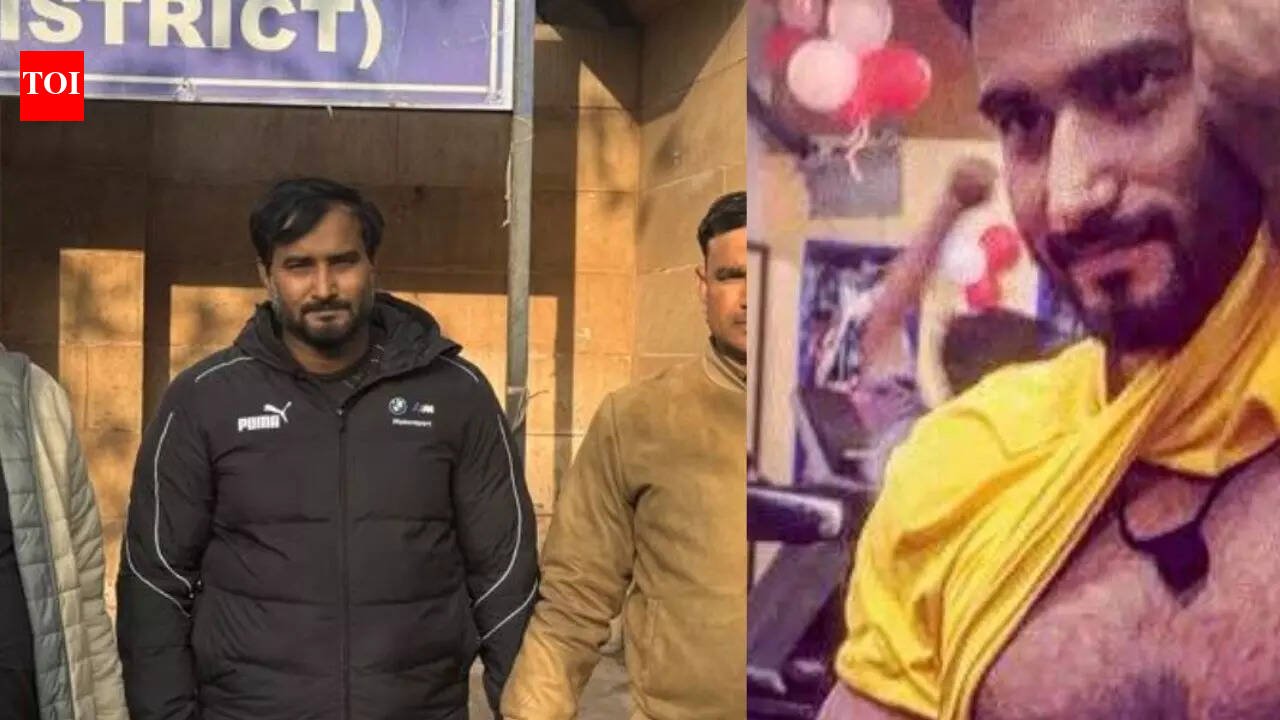
‘Was trying to flee to Dubai’: Mastermind of Mirzapur’s gym-based religious conversion racket arrested at Delhi airport | Lucknow News


The alleged mastermind of a gym-based religious conversion and blackmail racket in Mirzapur, Imran Khan (38), was arrested by the immigration department at Indira Gandhi International Airport in New Delhi.

LUCKNOW: The alleged mastermind of a gym-based religious conversion and blackmail racket in Mirzapur, Imran Khan (38), was arrested by the immigration department at Indira Gandhi International Airport in New Delhi while attempting to flee to Dubai. The accused, who carried a reward of Rs 25,000 for his arrest, was intercepted following a lookout notice issued earlier by the police. Acting on the information, a Mirzapur police team reached the national capital on Saturday and produced the accused before the Patiala House Court. After obtaining transit remand, Imran is being brought back to Mirzapur for further interrogation. With his arrest, the total number of accused held in the case rose to seven. Police also sealed five gyms allegedly linked to the racket. Those arrested earlier include a GRP head constable, Irshad Khan (40), Mohammad Sheikh Ali Alam (31), Faizal Khan (34), Zaheer (32), Shadab (36), and Farid Ahmed (28). Superintendent of Police/DIG, Mirzapur, Somen Barma said the accused, Imran Khan, was the key operator of the entire network and had floated multiple gym franchises under a common brand. “While he remained in the background, the day-to-day operations were allegedly handled by his brothers and associates, who targeted young women visiting the gyms. Imran had three cases of cheating and breach of trust chargesheeted in Varanasi, Ghazipur, and Mirzapur districts; hence, he got gyms opened in the names of his brothers,” Barma said. The officer said one more accused, identified as Lucky, is absconding, and a reward of Rs 25,000 has been announced for information leading to his arrest. A lookout circular has also been issued in his name. The case came to light on Jan20 following complaints by two women, prompting a police probe. Four accused were arrested on Jan21, while another was apprehended after an encounter the following day. A GRP head constable allegedly linked to the gang was also arrested the same evening. Police claim to have recovered more than 30 photographs, videos, and chat records from the accused, allegedly showing how women were befriended, blackmailed using morphed and AI-generated obscene content, and pressured into religious conversion.


Source link

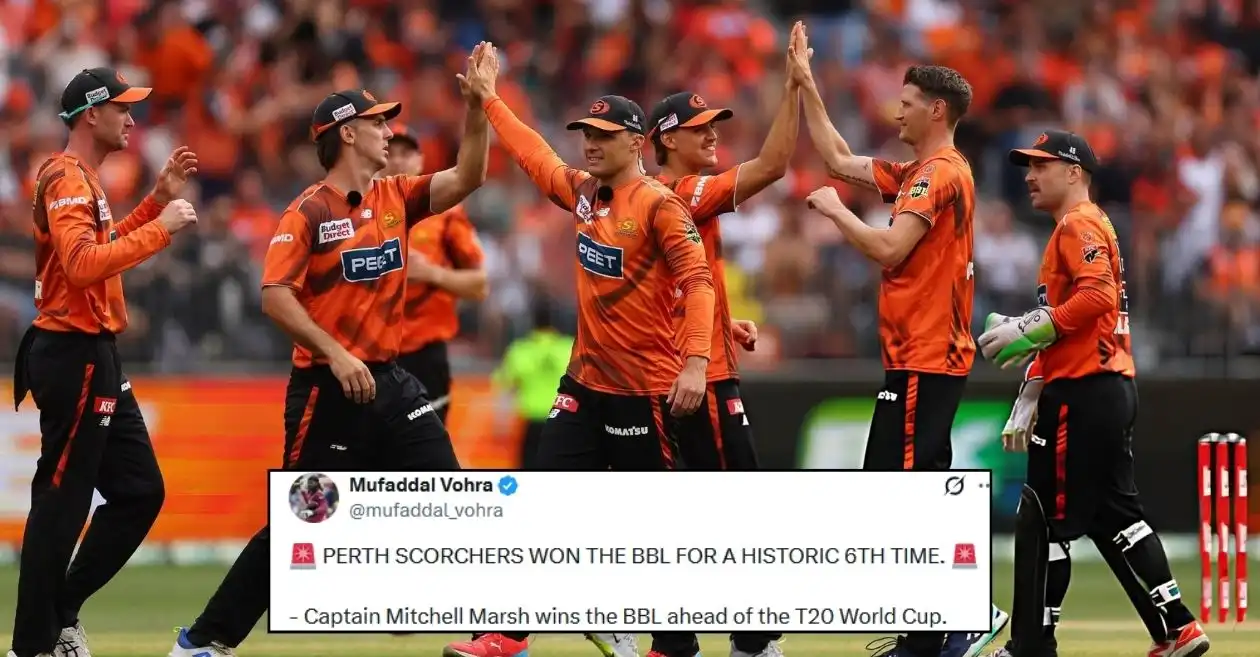
Fans go wild as Perth Scorchers bulldoze Sydney Sixers in BBL|15 final to bag 6th title


Perth Scorchers capped off a remarkable Big Bash League 2025-26 campaign by defeating Sydney Sixers by six wickets in the final at Perth Stadium, clinching their record sixth BBL title in front of a packed home crowd.

After winning the toss and opting to bowl, the Scorchers’ decision paid rich dividends as their bowlers delivered a disciplined and relentless performance to restrict the Sixers to a below-par total.

Perth Scorchers bowlers choke Sydney Sixers after brisk start

Sydney Sixers showed early intent with Steve Smith providing brief momentum at the top, striking 24 off just 13 balls. However, regular wickets prevented the visitors from building any meaningful partnerships. Daniel Hughes departed cheaply, while Josh Philippe and Moises Henriques struggled to accelerate despite spending time at the crease.

The middle overs proved decisive as Perth’s bowlers tightened the screws. David Payne was outstanding, picking up three wickets for just 18 runs, while Jhye Richardson matched him with three crucial scalps despite conceding some boundaries. Youngster Mahli Beardman impressed on the big stage with two wickets, ensuring the Sixers never truly recovered.

Despite small contributions from Joel Davies (19 off 14) and Lachlan Shaw (14 off 12), the Sixers were bowled out for 132 in exactly 20 overs — a total that always looked light on a good batting surface.

Calm chase led by Mitchell Marsh and Finn Allen

Chasing 133 for the title, Perth Scorchers approached the target with composure rather than urgency. Finn Allen provided early impetus, smashing 36 off 22 balls to keep the required rate in check. At the other end, Mitchell Marsh anchored the innings with a mature knock of 44 off 43 deliveries, blending caution with timely aggression.

Although Aaron Hardie fell early, Josh Inglis ensured there were no late hiccups. His fluent 29 off 26 balls kept Perth firmly in control, even as the Sixers attempted to claw back with wickets through Sean Abbott and Mitchell Starc. The chase was completed in 17.3 overs, sealing a comfortable six-wicket win and sparking celebrations across Perth Stadium.

Also WATCH: Jack Edwards plucks a stunner to remove Finn Allen in BBL|15 Final

Here’s how fans reacted:

Also WATCH: Beau Webster launches a colossal 105 meter six as Brisbane Heat sneak past Hobart Hurricanes in BBL|15


Source link

Veteran journalist and author Mark Tully passes away at 90 | India News


Veteran journalist and author Mark Tully passes away at 90

NEW DELHI: Veteran journalist and acclaimed author Mark Tully passed away at the age of 90 on Sunday at Max Hospital in Saket. The news was confirmed by his close friend and fellow journalist Satish Jacob. “Mark passed away at Max Hospital Saket this afternoon,” Jacob said. “He (Tully) was admitted to Max Hospital, Saket, on January 21, and died today. He (Tully) was admitted under the head of the nephrology department,” a hospital source told PTI.In an official statement issued, the hospital confirmed that Tully passed away at 2.35 pm. “The cause of death was multi-organ failure following a stroke. Our thoughts and heartfelt condolences are with his family, loved ones, and all those affected by his passing,” the hospital said.

Life of Mark Tully

Born on October 24, 1935, in Kolkata, Tully spent his early years in India before being sent to England for further education. Returning to India in 1964 as the BBC’s correspondent, he eventually became the New Delhi bureau chief, a position he held for 22 years. A chronicler of India for over five decades, he covered landmark events in post-Independence Indian history, including the Bangladesh war of 1971, the Emergency of 1975-77, Operation Blue Star, the assassinations of Indira and Rajiv Gandhi and the Babri Masjid demolition in 1992.Tully was also an acclaimed author, penning 10 books, including No Full Stops in India, India in Slow Motion and The Heart of India. He presented BBC Radio 4’s programme Something Understood and participated in documentaries on India, the British Raj and the Indian Railways. He was knighted in 2002 and received the Padma Bhushan in 2005.Reflecting on Tully’s career, Satish Jacob said, “Mark was an extraordinary journalist who chronicled India’s history with empathy and insight.” His son Sam Tully, on the journalist’s 90th birthday, had written, “I think my father’s achievements are particularly significant for UK-India ties because of his abiding ties and affection for both countries. While he lives in India, he has powerful connections to the UK as well. ‘Dill hai Hindustani, magar thora Angrezi bhi!’ The heart is Indian but a bit English too!”Tully’s career spanned more than five decades, marked by his fearless reporting and commitment to journalistic integrity. Even after leaving the BBC in 1994, he continued as a freelance journalist in Delhi and remained a keen observer of India’s social and political pulse. Colleagues and readers remembered him as “the voice of truth,” whose reporting earned trust across generations.


Source link

‘Whoever Gandhi family supports will win’: Ex-leader Shakeel Ahmad makes big claim on Congress presidential elections 2022 | India News


'Whoever Gandhi family supports will win': Ex-leader Shakeel Ahmad makes big claim on Congress presidential elections 2022
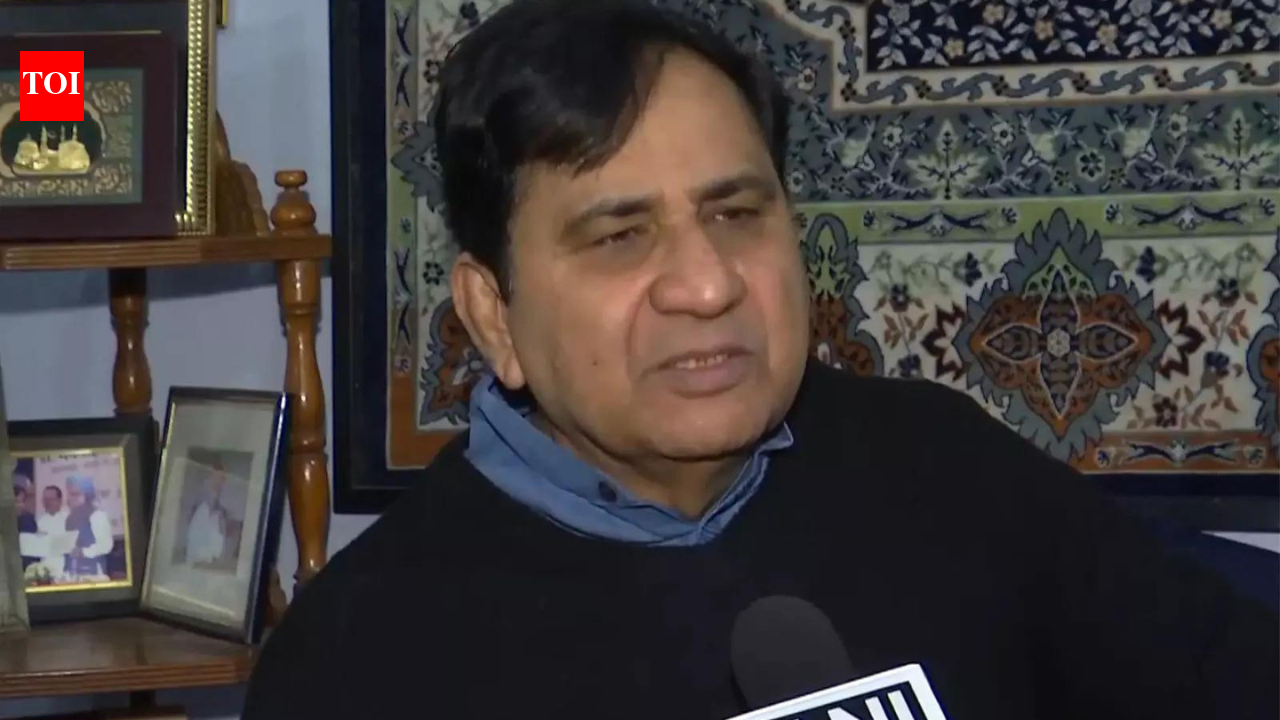
Shakeel Ahmad (ANI image)

NEW DELHI: Former Congress leader and ex-Union minister Shakeel Ahmad on Sunday said that the outcome of 2022 Congress presidential election was effectively decided by the backing of Rahul Gandhi and Sonia Gandhi.Ahmad claimed that when Shashi Tharoor contested for the party president’s post, he wanted to vote for him, but it became clear that Mallikarjun Kharge would win once the Gandhi family openly supported his candidature.Speaking to PTI, Ahmad said the visible support of the Gandhi family made it clear who would eventually win the party’s top post. “When Shashi Tharoor contested for party president, I wanted to vote for him. But when I saw that Sonia Gandhi, Rahul Gandhi and others were backing Mallikarjun Kharge, it was clear that whoever the family supports will win,” he said.Ahmad’s remarks relate to the Congress presidential election held in October 2022, in which Mallikarjun Kharge emerged as the winner and defeated Shashi Tharoor by a wide margin. Kharge secured 7,897 votes against Tharoor’s 1,072, with around 9,500 party delegates participating in the internal poll.Ahmad also criticised the internal power dynamics within the party, claiming that while Mallikarjun Kharge held the president’s post on paper, real authority rested with Rahul Gandhi. “Kharge ji is the president on paper, but practically, Rahul Gandhi is the president. Rahul Gandhi is not becoming the president from the front because Congress loses more, wins less, unfortunately. There was a time when we used to live in victory. So there are losses. So, to avoid infamy due to defeat, he stepped aside from the president’s role,” ex-party leader told PTI.The former Congress leader also renewed his sharp attack on Leader of Opposition Rahul Gandhi, describing him as an “insecure” political figure and accusing him of undermining internal democracy within the party.“Rahul Gandhi is an insecure political leader, I have not seen such insecurity in my life. He dislikes both kinds of leaders: those who have grassroots influence and those who are charismatic and attract people,” Ahmad said.The former Congress leader also commented on the influence of Rahul Gandhi’s sister, Priyanka Gandhi Vadra, in the party and her standing with the public. “I don’t have much contact with Priyanka Gandhi ji. There is no doubt that Priyanka Gandhi ji’s connection with the public is far ahead of Rahul Gandhi ji. She speaks very articulately. Wherever she gives a speech, she connects with people there. This is her quality,” Ahmad said.“Whenever we talked to Sonia ji, she took the name of Rahul. But it’s their family decision. As long as all three of them are together, there is no disagreement in Congress; whoever they put forward will remain,” he added. Ahmad, who resigned from the Congress in November last year, alleged that decision-making in the party was concentrated around Rahul Gandhi and that senior leaders were being sidelined. He has previously accused Rahul of being uncomfortable working with leaders who have independent influence or long political experience and of promoting younger leaders who align closely with him.The controversy has drawn a sharp response from the BJP, which seized on Ahmad’s remarks to target the Congress leadership. BJP national spokesperson Shehzad Poonawalla said Ahmad’s statements had “exposed” Rahul Gandhi’s leadership style.“Shakeel Ahmed, who was also a minister, made many revelations. He explained how Rahul Gandhi is an insecure leader. How Rahul Gandhi wants a strong Congress but doesn’t want strong Congressmen, and how the Congress party, while proclaiming to the whole world that it is democratic and adheres to the constitution, neither follows the constitution nor practices democracy within the party,” Poonawalla said.He further claimed that Ahmad’s comments reflected a broader sentiment within the Congress. “One thing is clear: Rahul Gandhi plays the biggest role in destroying the Congress, and this is not just Shakeel Ahmed’s opinion but the sentiment echoed by every Congress leader,” the BJP spokesperson added.


Source link

T20 World Cup row explodes: BCB says ‘we wanted to play’ but Bangladesh government said no to India travel | Cricket News


T20 World Cup row explodes: BCB says 'we wanted to play' but Bangladesh government said no to India travel
Bangladesh cricket team players (File photo)

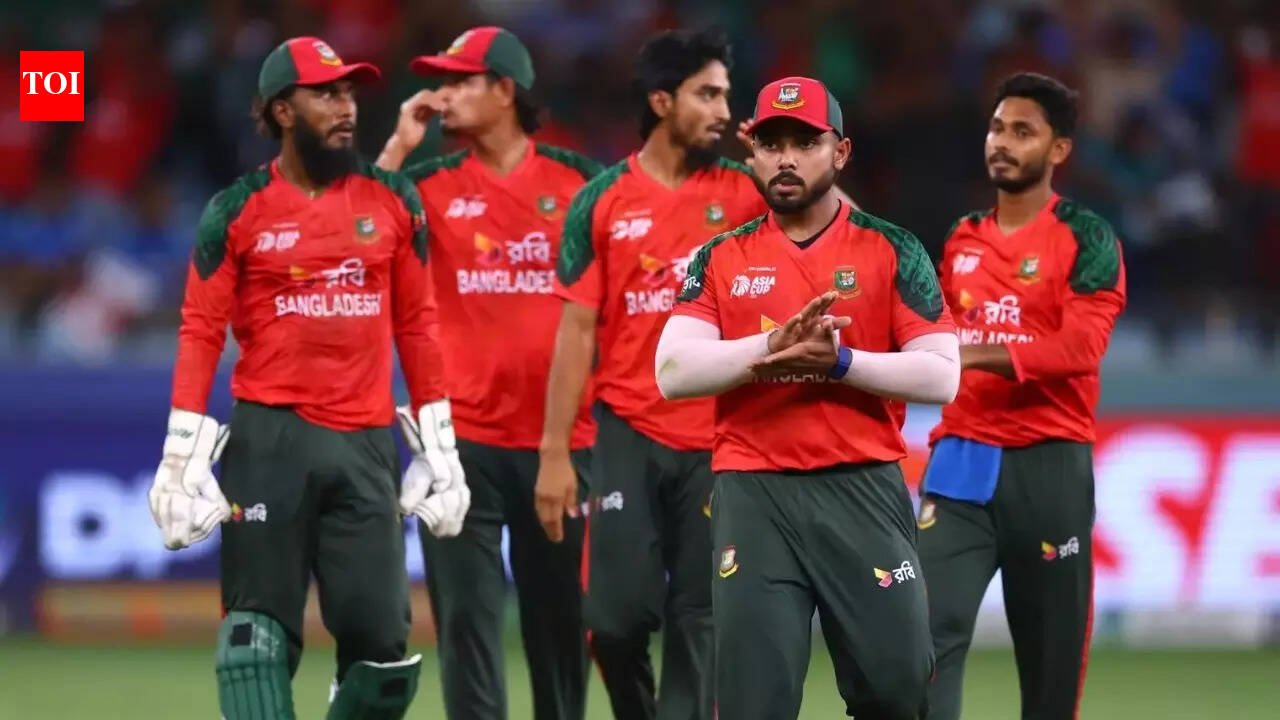
The Bangladesh Cricket Board (BCB) on Sunday said it was willing to play the ICC Men’s T20 World Cup 2026 in India but was bound by the decision of the Bangladesh government, which did not grant clearance for the tour.BCB director Abdur Razzak said government approval is mandatory for all overseas tours and not limited to the World Cup. Speaking to RTV, he said the board had consistently expressed its readiness to participate but had no option other than to follow official instructions.

Bangladesh cricket in turmoil: What it means for the T20 World Cup?

“We have always said that we want to play, but this is the government’s decision. So we have to follow whatever the government tells us. And the decision that has been given by the government is not just for this time; whenever we have any tour, we have to get clearance from the government beforehand,” the BCB director said, as cited by the news agency ANI.BCB Media Committee chairman Amzad Hussain later confirmed that Bangladesh has been removed from the tournament and that the board has accepted the ICC’s decision without taking the matter further.He said the BCB had asked the ICC to move Bangladesh’s matches to Sri Lanka and held several rounds of discussions before the final decision.“We requested the ICC to relocate our matches to Sri Lanka. We had several meetings with them. Their representatives arrived, and high-ranking government officials were also present. Following that, a Zoom meeting was held, and the ICC board informed us of their decision not to relocate our matches and that we would have to play in India, per the existing fixtures. However, the government held a cabinet meeting the day after the ICC board meeting. A decision was made there, clearly stating that if there are no changes to the fixtures, our team cannot participate in the tournament in India. This decision was conveyed by the government,” he said.Amzad Hussain said the ICC later sought a response within 24 hours, after which Bangladesh reiterated its position.“After that, the ICC asked us to respond within 24 hours, and we politely informed them again that it is not possible for us to play according to these fixtures. Subsequently, we have accepted the ICC board’s decision. Since the ICC has stated that we cannot play or that they cannot relocate our matches to Sri Lanka, we are not playing in India. Our stance remains the same. We are not pursuing any further arbitration or other avenues in this matter,” Amzad Hussain added further.Scotland has officially replaced Bangladesh in the ICC Men’s T20 World Cup 2026. The ICC announced the decision on Saturday, January 24, 2026. The tournament will begin on February 7, 2026, and will be co-hosted by India and Sri Lanka.The withdrawal followed the Bangladesh government’s refusal to clear the national team’s travel to India. Amzad Hussain said the government cited security concerns for players, officials and media personnel.“Since we had already spoken with our government, and the government stated that playing the World Cup matches in India is not safe for us–for our players, journalists, or anyone accompanying our players, the entire contingent–we requested that the matches be relocated to Sri Lanka. However, the ICC did not respond to this request. We tried several times, even after multiple meetings, but they did not respond. There is nothing more we can do because this is a government decision. Due to security concerns, they believe that playing in India is not safe for us, and that is why this decision has been taken by the government,” the BCB Media Committee Chairman said.Tensions had increased earlier after the BCCI reportedly asked IPL franchise Kolkata Knight Riders to release Bangladesh pacer Mustafizur Rahman for the 2026 season, citing unspecified “developments all around”. The BCB viewed the move as a sign that safety assurances could not be guaranteed.The ICC said it held discussions with the BCB for more than three weeks, including meetings held in person and via video conference. It reviewed the concerns raised, commissioned independent security assessments, and shared security and operational plans covering central and state arrangements.According to the ICC, the assessments found no credible or verifiable security threat to the Bangladesh team, its officials or supporters in India. The ICC said changing the schedule was not appropriate and could affect the integrity of the tournament and future events.After its Wednesday meeting, the ICC Business Corporation Board asked the BCB to confirm participation within 24 hours. As no confirmation was received, the ICC followed its governance and qualification process to name a replacement.Scotland is the highest-ranked T20I team that had not originally qualified for the tournament. They are currently ranked 14th, ahead of Namibia, the United Arab Emirates, Nepal, the United States, Canada, Oman and Italy.


Source link

Your American dreams might have to wait! Indians face increased US visa refusals over social media checks


Your American dreams might have to wait! Indians face increased US visa refusals over social media checks

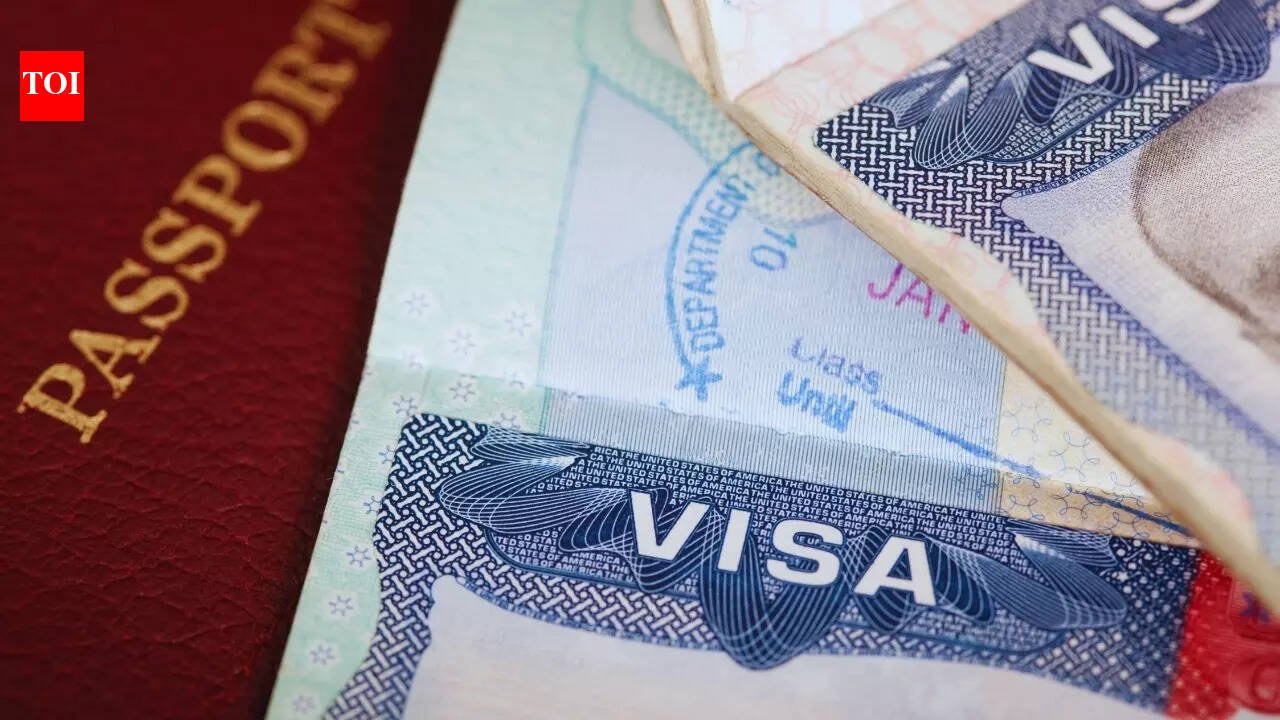
Want to go to the US but facing delays for your visa? Your are not alone! Many Indians who applied for US visas are struggling with delays, as tighter scrutiny over social media activity and past arrests slows processing in the country’s largest revenue generating market. Over the past year, more applicants have been issued 221(g) notices, temporary visa refusals that allow consular officers to verify backgrounds before making a decision. The trend comes after US President Donald Trump assumed office in January 2025, tightening visa norms. Indians, who accounted for over 70% of H-1B visas in FY24 according to US Citizenship and Immigration Services, are among the most affected by these measures. Section 221(g) of the US Immigration and Nationality Act allows visas to be temporarily refused or put on hold. While such notifications are not new, experts say even cases that previously would not have triggered 221(g) are now being delayed. Joel Yanovich, Attorney at Murthy Law Firm, told ET, “We probably are seeing a higher rate of 221(g) notices. While it’s difficult to quantify, the anecdotal evidence suggests that more people are running into further delays, even after getting in for an appointment.” Some denials appear unprecedented under the current administration. Gnanamookan Senthurjothi, founder of the Visa Code, said, “Since May 2025, we have seen applicants with prior arrest records, which are over a decade old, getting 221(g). This is despite multiple stampings they have done before.” He added that even individuals with valid documents are seeing visas revoked, leaving hundreds of Indians stuck in the country. Xiao Wang, founder of Boundless Immigration, told ET that many applicants are being notified that their visas have been “prudentially revoked” without explanation. He also reported a rise in biometric requests for H-1B applications, which was uncommon previously. “All applications are now taking longer for officers to evaluate, slowing down the entire process. Now that they have to do detailed social media vetting and put every case under additional scrutiny and judgment, each case is taking more time, resulting in longer delays for all applications,” Wang explained. Appointments that were rescheduled have also been pushed back. “We saw mass cancellations of appointments in early December, when many had already departed the US. These appointments were rescheduled initially for March and April but then some were being pushed out as far as November,” he added. Applicants receiving 221(g) notices are now being asked to provide further documents, including toxicology reports and police records. While this represents a step forward in processing, Senthurjothi said hundreds of Indians remain affected.


Source link

How work-from-home reshaped office reality since Covid — And where it stands now | India News


How work-from-home reshaped office reality since Covid — And where it stands now

Work from home, a concept that barely featured in corporate vocabulary before 2020, quickly became the backbone of the global economy when the Covid pandemic brought daily life to a standstill. Offices shut overnight, cities fell silent, but work could not stop. Across industries, companies improvised at speed, building digital systems and remote processes that allowed business to continue without physical workplace gatherings.What began as a crisis response stretched far longer than many expected. For nearly four to five years, remote, then hybrid work defined professional life for millions. Companies discovered they could save on office space, electricity and travel-related expenses. Employees found they could reclaim commuting hours and redesign their workdays. But as organisations now push for a return to offices, some partially and others more aggressively, the big question is resurfacing: if work from home kept businesses running through the worst disruption in decades, why is it now being rolled back?The answer lies in a complex mix of productivity gains, cultural shifts and unintended consequences, as told by multiple corporate workers to TOI.

The productivity surprise

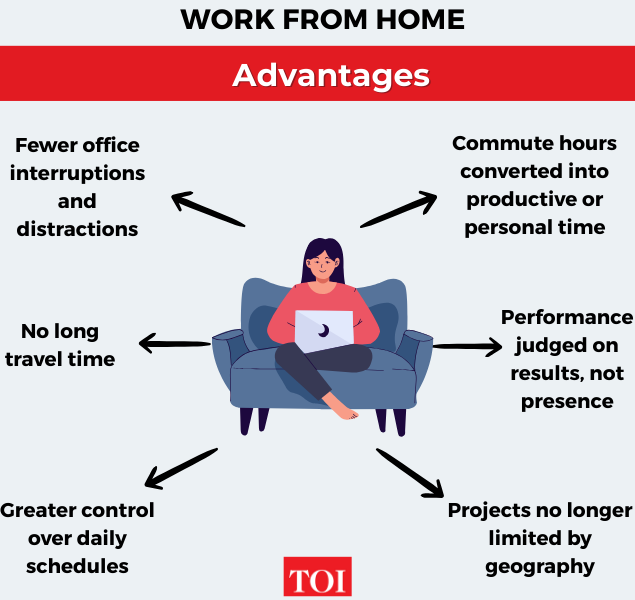
For many employees, the early phase of remote work delivered an unexpected boost.“Without daily commuting and office distractions, I could start work with more energy and focus deeply on tasks,” said Abhishek Gupta, who works at a multinational company. Like many others, he found that removing travel time and office interruptions helped him complete tasks “faster and with better quality than in a traditional office setup”.Across sectors, from technology and finance to consulting and public relations, professionals describe the pandemic years as a period of intense but often highly productive work. Flexible schedules enabled many to craft their schedules based upon meaningful output instead of physical presence.Rachit Jasrotia, a senior project manager with a tech firm, believes the change made the teams more disciplined in the way they worked. Clear documentation, structured digital workflows and asynchronous collaboration became the standard. “Many of the practices introduced during that period — flexible schedules, async collaboration, and an emphasis on clear documentation — have continued and are now part of how we operate by default,” he said.

Opportunity without borders

Remote work did more than change how people worked, it changed who got access to work.Kriti, who joined the workforce in the field of finance after the pandemic, says she witnessed how Covid-era remote practices opened up more global collaboration. “Earlier we had limited work since they preferred work to be done by those who were in the US office,” she says. “But due to Covid, a lot of work started being done remotely, which gave Indian teams more opportunities to participate.”Her experience reflects a broader shift many multinational firms saw during the pandemic: location became less of a constraint. Work that was once tied to specific offices began flowing more freely, expanding exposure and responsibility for teams outside traditional headquarters.

Advantages of work from home

The rise of outcome culture

One of the most significant long-term shifts has been in how productivity is measured. Before the pandemic, time spent in the office often carried implicit weight. Remote work weakened that equation.“Productivity today is judged far more by outcomes — timely delivery, quality of insights, governance rigor, and the impact created,” said Gitanjali, a mid-level employee at a tech-firm. “This is a notable shift from earlier years where visibility or presence carried more weight. My work is data driven hence measured by accuracy, timeliness, and the strategic value delivered, not where I’m sitting. Covid played a key role in normalising this outcome‑focused approach,” she said reflecting on her time as a corporate employee before, during and after the pandemic.Other professionals across industries also said that performance conversations are now more closely tied to impact, quality and timeliness than just hours logged. The pandemic proved that high-quality work could happen without physical proximity, and many organisations adapted their evaluation frameworks accordingly.Even those who entered the workforce after the crisis found these norms already embedded. Meghna, who works in public relations, says flexible work structures and virtual collaboration were presented as standard practice when she began her career. “There is a clear focus on deliverables rather than rigid working hours,” she says. “There’s an understanding that people can be productive without being physically present at all times.

Flexibility — With a cost

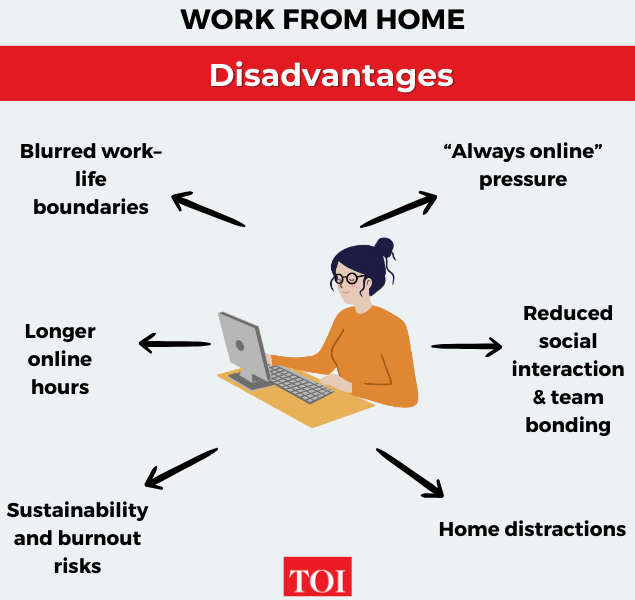
If remote work brought freedom, it also brought fatigue and mixed feelings on always “being available”Gitanjali talked about how she felt the pressure sometimes to “always be reachable” but found ways to manage. “While I don’t feel explicit pressure to be “always online,” the nature of managing a large and diverse portfolio sometimes creates an implicit expectation to stay reachable across time zones. Stakeholders often operate with tight timelines, so responsiveness is important. I manage this by setting clear expectations, planning communication windows, and keeping governance structures strong so that not everything needs immediate escalation.Rachit Jasrotia added that while flexibility improved autonomy and focus, sustainability became a conscious effort. “ Hybrid work gives tremendous flexibility, but without intentional boundaries, work can easily spill into personal time. It requires conscious effort to disconnect, especially when tools and communication channels are always within reach.”Still, few professionals advocate a complete return to pre-pandemic routines. Instead, most are looking for balance – structured flexibility rather than either total remote work or rigid office mandates. Like Kriti who believes work from home has its challenges at times but overall it has made work more “sustainable” following pandemic-era policies at least partly.

Visibility creeps back

While many employees say performance is now judged more by outcomes, a quieter shift is underway as offices reopen and hybrid schedules take hold: the importance of being seen is returning, in some workplaces.Flipkart, a major e-commerce firm, announced the end of its work from home policy early last year.Amazon also mandated 5-days of work from the office. Wipro followed suit and tightened work from home rules, has mandated at least six hours in office for three days a week. Similarly, many other firms have tightened or shut-down altogether their work from home policy.Durgesh Kumar Jha, a public relations consultant, spoke on this, “In my experience, productivity at the workplace is increasingly judged by visibility rather than outcomes,” says “Work which is not seen, discussed, or repeatedly reinforced often goes unnoticed.”Meanwhile, in hybrid environments, digital presence has become the new form of visibility. Being active on internal chat platforms, speaking frequently in meetings and responding quickly to messages can shape perceptions of engagement — sometimes as strongly as tangible output.This, employees say, has revived a softer form of presenteeism. It is no longer about sitting late at a desk in the office, but about being continuously visible online.“There is pressure to respond quickly while working from home. I have experienced longer online hours and frequent messages,” said Abhishek, being at mid-management level. However, he remained in favour of the hybrid mode at his workplace adding, “However, once expectations are clarified, this becomes manageable.”That pressure to be seen often translates into pressure to be available.“There is a constant pressure to be available, irrespective of where you work from,” said Durgesh, adding “Availability is often confused with commitment.”Others describe it as less explicit but still persistent. Meghna noted that in client-facing roles, responsiveness is part of the job. “News cycles, client requirements, or urgent developments can sometimes demand quick responses beyond regular hours,” she said. “It’s more role-driven than policy-driven pressure.”Hybrid work has blurred time zones and boundaries, making delayed responses more noticeable. Some professionals say this has made work feel more continuous, even when organisations formally promote flexibility.

Disadvantages of work from home

The boundary problem

One theme cuts across roles and industries: blurred boundaries.“Yes, the lines can blur, especially when working from home,” Meghna said. “It’s important to disconnect and protect personal time to avoid burnout,” she added, while referring to conscious efforts to separate the ‘two’ lives.Several professionals say they now rely on deliberate routines which includes- defined work hours, no-meeting windows and stricter notification controls – to prevent work from spilling into personal life.

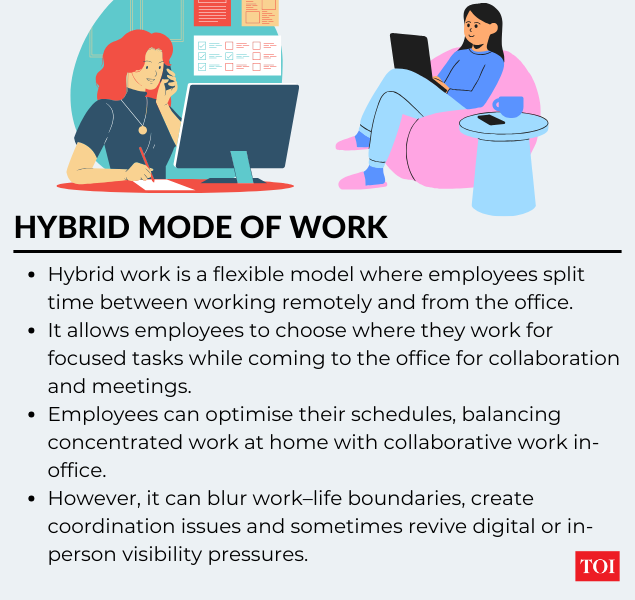
The hybrid mode

As more companies call employees back to the office, the work-from-home boom may be receding, but it is not disappearing. Instead, a hybrid compromise is emerging. Offices are increasingly seen as spaces for collaboration and relationship-building, while focused individual work often continues remotely.The future of work, professionals argue, will depend less on location and more on clarity.“Work-from culture has created an opportunity to build more inclusive, flexible, and high-impact teams. The key is balancing autonomy with clarity—clear priorities, shared expectations, and trust-based collaboration,” said Rachit. While Abhishek says, “Based on real experience, WFH works. It saves time, reduces stress, and improves focus. With trust, accountability, and clear boundaries, WFH is not just convenient—it is a better way of working for modern corporates.”

Hybrid work mode

The culture per-se that began as a necessity has now become a negotiation. Companies are rethinking space and culture. Employees are rethinking boundaries and balance. The next phase of work will probably not be as simple as choosing between home and office, but about defining how both can coexist without sacrificing productivity or well-being.




Source link

Narsee Monjee College teacher murdered in Mumbai local; 1 arrested | Mumbai News


(C) Alok Kumar Singh, Accused Omkar Shinde (L)

MUMBAI: The Government Railway Police (GRP) on Sunday arrested a man in connection with the murder of a college teacher inside a local train at Malad station on Saturday evening.The accused has been identified as Omkar Shinde. Police said further inquiries are being conducted.The victim, Alok Kumar Singh (33), a junior college faculty member at Narsee Monjee College of Commerce and Economics was allegedly murdered following an argument over alighting from a local train compartment at Malad railway station.Police said Singh was stabbed in the stomach with a sharp object.Also read: Narsee Monjee College teacher murder: How an argument over alighting from local train led to man’s killingSingh boarded a Borivali-bound local train from Vile Parle station. Just before 6 pm, as the train was approaching Malad station an argument broke out between him and a co-passenger over getting off the train.“Everything happened suddenly. The accused stabbed him in the stomach with a sharp object, got off the train, and fled,” a police official said.Singh was rushed to Babasaheb Ambedkar Hospital in Kandivali, where doctors declared him dead. Police later informed his family and college authorities.Singh lived in Malad East with his wife. Police said Singh sustained a single deep injury to the abdomen.‘He was a simple person, never got angry’One of the teachers at the college said Singh used to teach mathematics and statistics in the junior college section since 2024. “He was a kind soul, calm and polite and never used to get involved in arguments or fights. In fact, he used to help in resolving fights. This is absolutely shocking for us,” said the teacher, adding that Singh had left college for home between 5.15 pm and 5.30 pm.”A relative said, “He was a simple person and we had never seen him get angry over anything. He got married only a couple of years ago and lived in Malad East with his wife. His father worked for BJP leader Rajnath Singh jn Delhi. His uncle was also a teacher. We are aghast at what has happened and want police to track down the culprit at the earliest.”


Source link

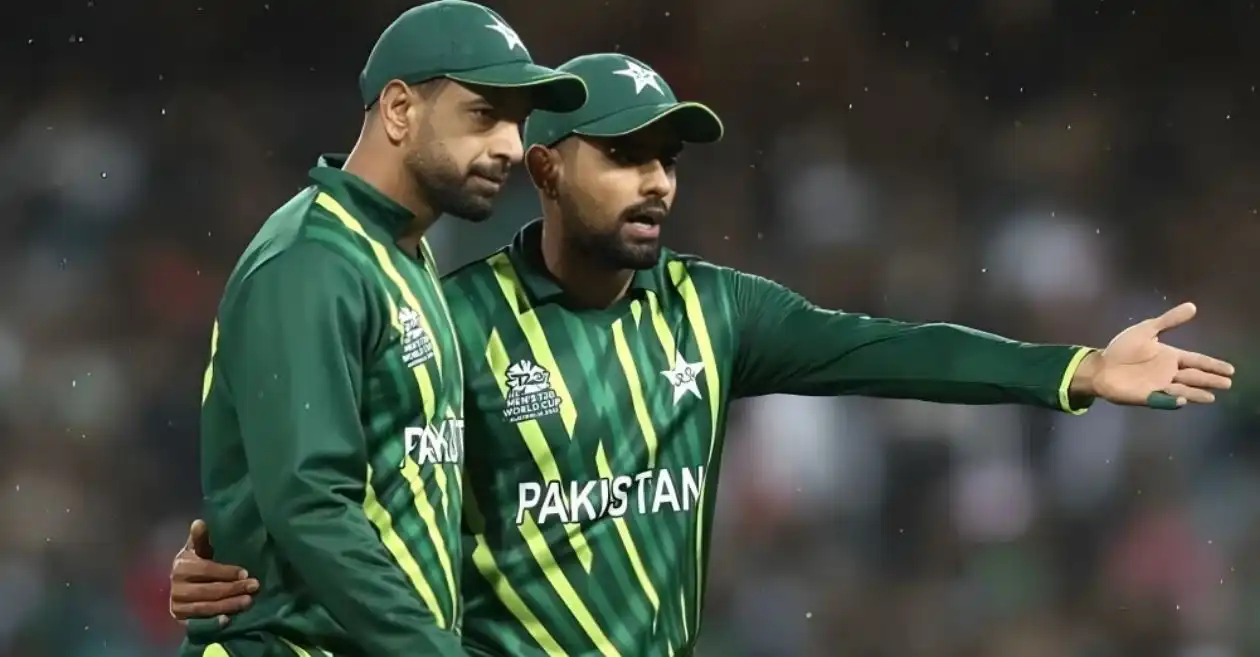
Babar Azam returns, Haris Rauf dropped as Pakistan unveil squad for T20 World Cup 2026


Pakistan have revealed their 15-member squad for the ICC Men’s T20 World Cup 2026, set to be jointly hosted by India and Sri Lanka, and the selection has already sparked intense debate. The return of Babar Azam brings stability and experience to the batting order, while the omission of express pacer Haris Rauf stands out as the biggest talking point. Led by Salman Ali Agha, Pakistan are aiming to relive their 2009 glory when the tournament gets underway on February 7.

Babar Azam returns to Pakistan’s T20I setup

Babar’s inclusion is a timely boost for Pakistan as they prepare for the demands of subcontinental conditions. Recently becoming the highest run-scorer in men’s T20 internationals, Babar brings not just runs but also calm leadership and big-match temperament. His presence allows Pakistan to anchor innings while younger and more aggressive batters play with freedom around him.

Alongside Babar, the batting unit features a blend of power and finesse in Fakhar Zaman, Saim Ayub, Sahibzada Farhan and Usman Khan. The selectors have clearly prioritized flexibility, ensuring the lineup can adapt to both high-scoring venues and slower, spin-friendly surfaces expected in India and Sri Lanka.

Haris Rauf left out, pace attack reshaped

The absence of Rauf signals a shift in Pakistan’s fast-bowling strategy. Instead of outright pace, the team management has placed its faith in control, swing and experience. The pace responsibilities will largely rest on Shaheen Shah Afridi and Naseem Shah, a duo well-versed in exploiting early movement and delivering at the death.

Supporting them are Mohammad Salman Mirza and Usman Tariq, offering variety and depth. The decision suggests Pakistan are backing consistency and fitness over raw speed, especially for a long tournament where managing workloads will be crucial.

Also READ: Babar Azam and Shaheen Afridi back as Pakistan announces T20I squad for home series against Australia

All-round depth offers tactical freedom

One of the strongest aspects of Pakistan’s squad is its all-round depth. Faheem Ashraf, Shadab Khan and Mohammad Nawaz give the team multiple combinations, allowing them to tweak the XI based on opposition and conditions. Shadab’s leg-spin and aggressive batting remain vital in the middle overs, while Nawaz’s left-arm spin adds balance against right-heavy lineups. This abundance of all-rounders provides captain Salman Ali Agha with tactical flexibility, particularly in pressure games where matchups can decide outcomes.

Pakistan find themselves in Group A alongside defending champions India, Netherlands, USA and Namibia. It is a competitive pool where no game can be taken lightly. The former champions will begin their campaign against the Netherlands on February 7 in Colombo, a fixture that could set the tone for the rest of their journey.

Pakistan Squad for T20 World Cup 2026: Salman Ali Agha (captain), Abrar Ahmed, Babar Azam, Faheem Ashraf, Fakhar Zaman, Khawaja Mohammad Nafay (wk), Mohammad Nawaz, Mohammad Salman Mirza, Naseem Shah, Sahibzada Farhan (wk), Saim Ayub, Shaheen Shah Afridi, Shadab Khan, Usman Khan, Usman Tariq.

Also READ: Bangladesh officially pull out of T20 World Cup 2026; ICC announces replacement


Source link