Breaking News
New Zealand players check Abhishek Sharma’s bat after Guwahati assault – IND vs NZ, 3rd T20I


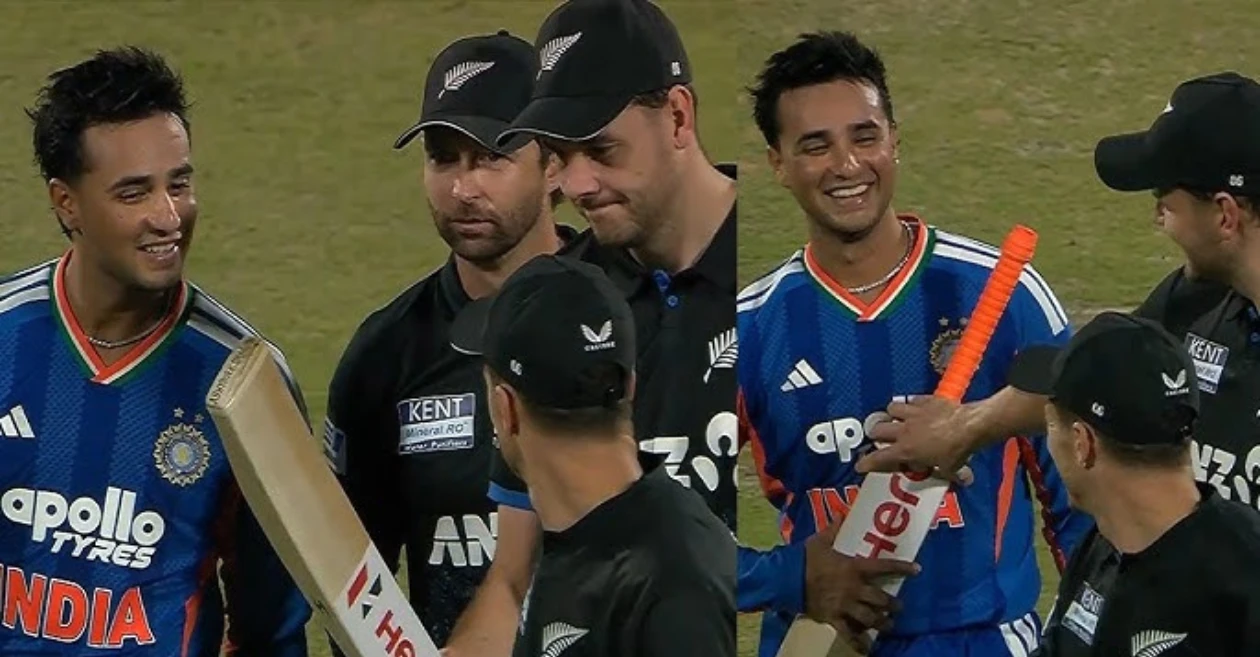
A rare and intriguing moment unfolded during the third T20I between India and New Zealand on Sunday in Guwahati, when several New Zealand players were seen checking Abhishek Sharma’s bat on the field. The incident followed Abhishek’s blistering assault that powered India to a dominant chase and left the visitors visibly stunned.

The unusual scene added to an already memorable evening at the Barsapara Cricket Stadium, where India wrapped up the chase of 155 in just 10 overs, producing one of their most aggressive batting displays in T20I history.

New Zealand players playfully checks Abhishek Sharma’s bat after the match

Following Abhishek’s extraordinary hitting, Devon Conway and Jacob Duffy were seen briefly checking the Indian batter’s bat on the field.

Such playful banters are common during a cricket match and highlighted just how destructive Abhishek’s strokeplay had been in recent times. His clean ball-striking and effortless power prompted curiosity among the players of the touring party.

Here’s the video:

Abhishek’s innings was remarkable not only for its impact but also for how close it came to rewriting history. The left-hander reached his half-century in just 14 balls, missing Yuvraj Singh’s record for the fastest T20I fifty by only two deliveries.

Despite falling narrowly short of the milestone, Abhishek’s knock was instrumental in dismantling New Zealand’s bowling attack during the powerplay. His fearless intent ensured India seized control of the contest within the first few overs, effectively sealing the result long before the finish.

A powerplay to remember

India’s approach at the top was relentless. The hosts raced to 94 for 2 in the powerplay, registering their second-highest powerplay score in T20 Internationals. The only higher effort remains the 95 they posted against England previously, underlining the scale of India’s dominance in Guwahati.

With the required run rate crushed early, New Zealand were left searching for answers as boundaries flowed freely. The aggressive start ensured the chase never drifted, allowing India to complete the target in double-quick time.

Also READ: Fans react after Abhishek Sharma and Jasprit Bumrah power India to unassailable 3-0 series lead with eight wicket win over New Zealand in third T20I

Abhishek reflects on his role as a batter 

Speaking after the match, Abhishek emphasized that his aggressive style stems from team clarity and trust. He explained that executing the team’s plans consistently is the primary objective, even though it is not always easy.

“That’s what my team wants from me, and I just want to execute all the time,” Abhishek said during the post-match press conference. He also highlighted the mental aspect of T20 batting and the importance of a supportive dressing room atmosphere.

On the topic of Yuvraj Singh’s record, Abhishek acknowledged its difficulty, calling it an exceptional benchmark while adding that modern T20 cricket continues to push boundaries. He suggested that with the way batters are performing in the series, more exciting moments lie ahead.

“That’s more than impossible for anyone, but still, you never know. Any batsman could do it because I think all the batters have been batting really well in this series as well and going forward, it’s going to be fun,” added Abhishek.

Also READ: From Abhishek Sharma to Yuvraj Singh: Top 5 fastest T20I fifties against full member teams

Source link

Afghanistan Under-19 28/1 in 8.0 Overs


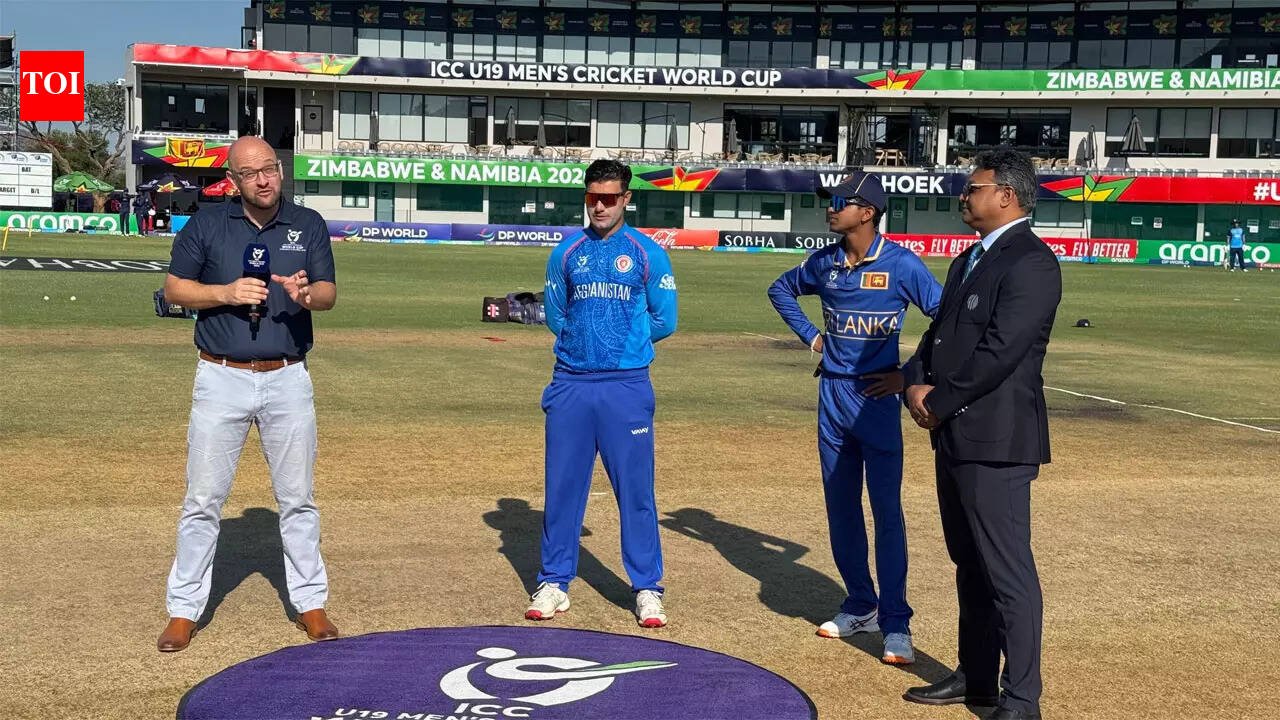
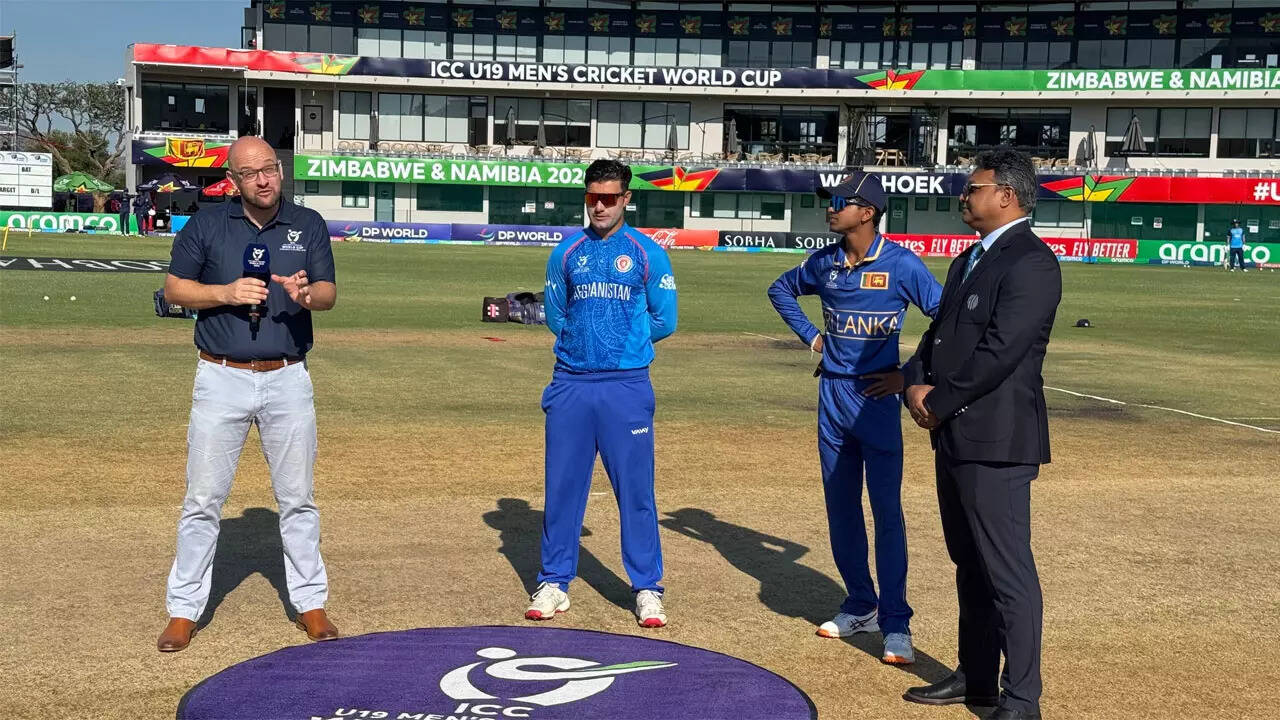
Afghanistan vs Sri Lanka Live Score, U19 World Cup 2026: TOSS: Sri Lanka U19 have won the toss and have opted to field

Teams:

Sri Lanka U19 (Playing XI): Dimantha Mahavithana, Viran Chamuditha, Senuja Wekunagoda, Vimath Dinsara(c), Kavija Gamage, Chamika Heenatigala, Dulnith Sigera, Chamarindu Nethsara(w), Sethmika Seneviratne, Rasith Nimsara, Kugathas Mathulan

Afghanistan U19 (Playing XI): Khalid Ahmadzai, Osman Sadat, Faisal Shinozada, Uzairullah Niazai, Mahboob Khan(w/c), Azizullah Miakhil, Khatir Stanikzai, Nooristani Omarzai, Roohullah Arab, Wahidullah Zadran, Abdul Aziz

Pitch report

Alan Wilkins and Jon Kent: It’s always hot here, always blue skies, but one thing’s different today – the humidity is at 54 percent, so it’s one of those days. Before I get too hot under the collar, the dimensions: 70 metres straight, 65 metres on this side and about 63 on the other, pretty decent all round. It’s an intriguing wicket – it’s played really well so far, and the strips on either side have produced big scores too. Up close, it looks extremely hard and in great condition, maybe a touch dry, but this square has consistently offered good pace and bounce and has been impressive for all formats. I feel spin could have a bigger role to play today given the quality on both sides, but with the brand-new ball early on, there should still be rewards for the quicks and it sets up as a really good contest.

Mahboob Khan, Afghanistan captain: Happy to bat first. We had good preparation and every match is important from here to make it to the semi finals. We have made 2 changes to our team.

Vimath Dinsara, Sri Lanka captain: We will bowl first because I feel the pitch is good for pacers and we have a good pace attack. Very important game for us and we want to get 2 points from this game. 2 changes for us.


Source link

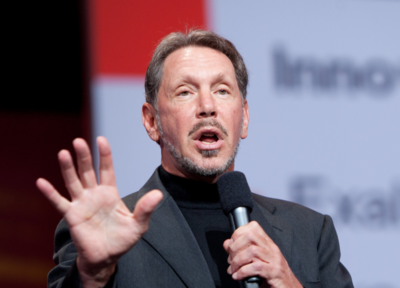
Oracle cofounder Larry Ellison on the biggest problem that all AI models including ChatGPT, Gemini, Grok, Llama have


Oracle cofounder Larry Ellison on the biggest problem that all AI models including ChatGPT, Gemini, Grok, Llama have
Oracle’s Larry Ellison believes the AI race is becoming a commodity due to shared internet data. He argues the future lies in leveraging private enterprise data, a move Oracle is heavily investing in with massive infrastructure plans. While competitors are also building enterprise AI, Oracle’s existing database dominance could be key to its success in this next AI wave.

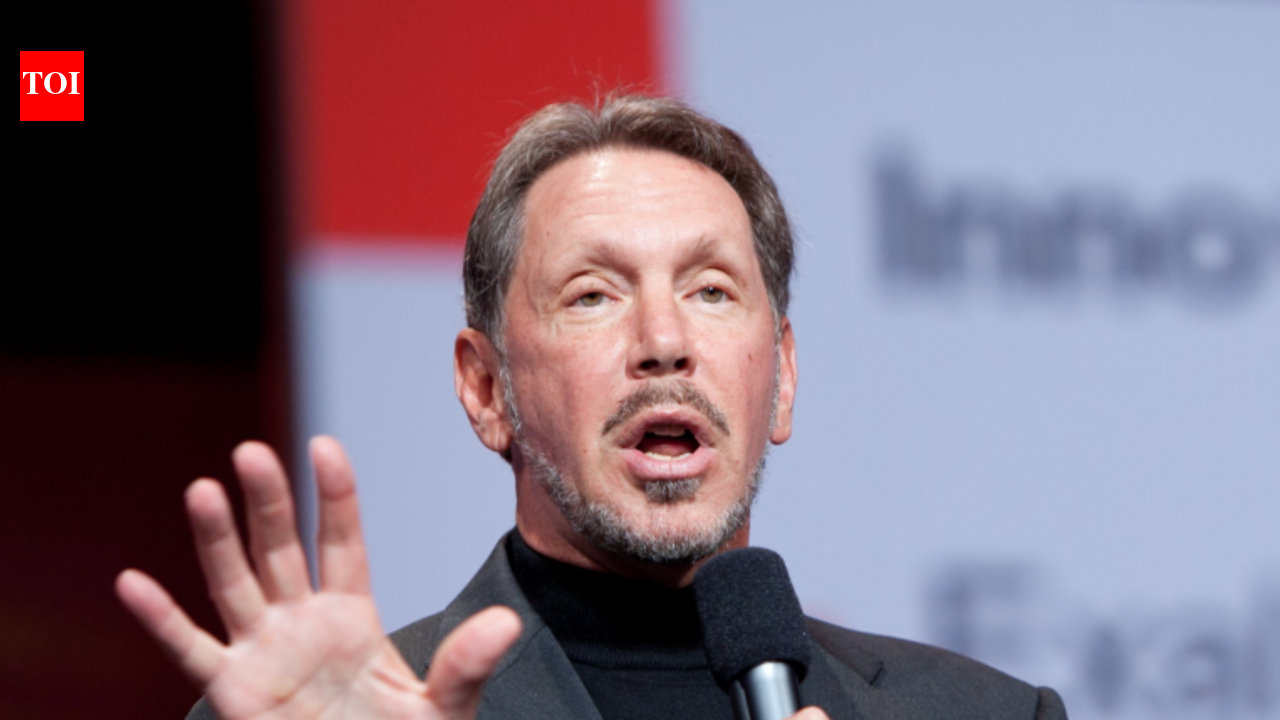
Oracle cofounder and CTO Larry Ellison has put his finger on what he sees as the fatal flaw in today’s AI race: every major model, from ChatGPT to Gemini to Meta’s Llama, is trained on essentially the same publicly available internet data. During Oracle’s fiscal Q2 2026 earnings call in December, Ellison argued this shared foundation is rapidly turning cutting-edge AI into a commodity product with razor-thin differentiation.“All the large language models—OpenAI, Anthropic, Meta, Google, xAI—they’re all trained on the same data. It’s all public data from the internet,” Ellison said. “So they’re all basically the same. And that’s why they’re becoming commoditized so quickly.”

The real money is in private data, not public models

Ellison’s solution? The next gold rush won’t be building better foundational models—it’ll be enabling AI to work with proprietary enterprise data while keeping it secure. He estimates this second wave of AI will prove “even larger and more valuable” than the current boom in GPUs and data centers.Oracle is betting heavily on this vision, projecting roughly $50 billion in capital expenditures for the full year, up from $35 billion estimated just three months earlier. The company argues it has a natural advantage since most high-value private data already lives in Oracle databases. Its AI Data Platform uses techniques like Retrieval-Augmented Generation to let models query private information in real time without security compromises.

Oracle’s massive AI infrastructure bet faces stiff competition

The company announced partnerships at Oracle AI World in October, including a 50,000-GPU supercluster with AMD MI450 chips launching in Q3 2026 and the OCI Zettascale10 supercomputer connecting hundreds of thousands of NVIDIA GPUs. By late 2025, Oracle’s cloud backlog had topped $500 billion, driven mostly by AI demand.Still, Ellison’s thesis faces headwinds. Synthetic data generation could reduce reliance on exclusive proprietary datasets, while rivals like Amazon Web Services, Microsoft Azure, and Google Cloud are racing to build similar enterprise AI capabilities. The question is whether Oracle’s existing grip on enterprise databases will prove decisive—or if the AI landscape will shift before the company’s massive infrastructure bets pay off.


Source link

Access Denied


Access Denied

You don’t have permission to access “http://www.ndtv.com/world-news/did-team-trump-lie-about-minneapolis-shooting-new-video-shed-light-on-killing-of-alex-pretti-10886541” on this server.

Reference #18.adf5d217.1769417052.3adf489c

https://errors.edgesuite.net/18.adf5d217.1769417052.3adf489c


Source link

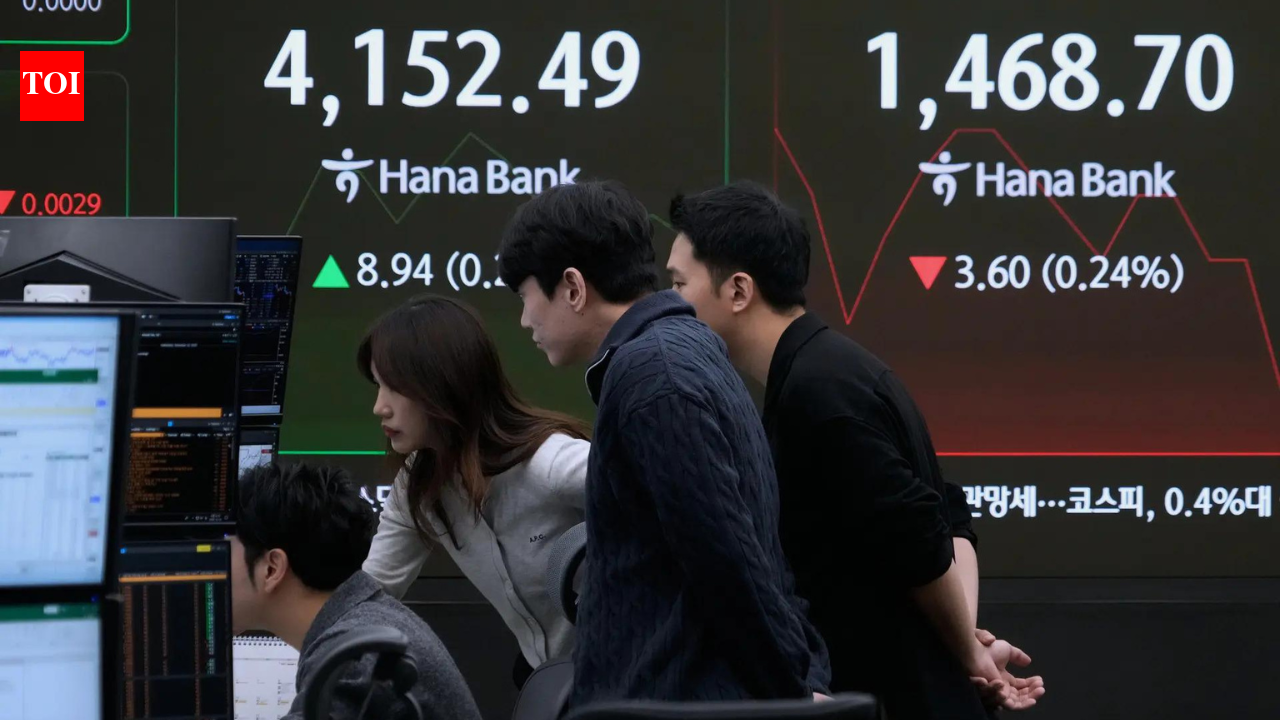
Asian stocks today: Markets slip as yen surge drags Japan equities; tariff worries weigh on sentiment


Asian stocks today: Markets slip as yen surge drags Japan equities; tariff worries weigh on sentiment
File photo (Pic credit: AP)

Asian stock markets mostly declined on Monday, led by sharp losses in Japan after the yen strengthened against the US dollar, hurting exporter stocks. Japan’s benchmark Nikkei 225 fell 1.8% to 52,870.15, weighed down by heavy selling in major exporters such as Toyota Motor Corp., whose shares dropped 4%.Markets across the region remained cautious amid currency volatility, uncertainty over US trade policies and ahead of a key US Federal Reserve policy decision later this week.

Yen rebound hits Japanese exporters

The sell-off in Japan came after the yen staged a strong rebound against the dollar in recent days. A weaker yen typically supports Japanese exporters by boosting the value of overseas earnings, but the recent currency move reversed that advantage.The dollar slipped to 154.27 yen from 155.01 yen, after trading near 158 yen last week, reported AP. The move followed comments from Japanese and US officials signalling close coordination on currency movements, fuelling expectations of possible intervention to support the yen.“Intervention chatter did the trick. Since Friday, the yen has staged a sharp rebound on expectations that Japanese authorities — possibly with US coordination — would step in,” Ipek Ozkardeskaya, senior analyst at Swissquote, was quoted as saying by news agency AP.

Mixed performance across Asian markets

Elsewhere in Asia, South Korea’s Kospi slipped 0.7% to 4,955.79. Hong Kong’s Hang Seng edged down less than 0.1% to 26,735.54, while China’s Shanghai Composite rose 0.1% to 4,141.31.Markets were closed in Australia, New Zealand, India and Indonesia due to holidays.

US futures dip amid tariff uncertainty

US stock futures edged lower, reflecting ongoing uncertainty around Washington’s tariff policies. Futures for both the S&P 500 and the Dow Jones Industrial Average were down 0.3%.Investor nerves were rattled by fresh trade tensions after US President Donald Trump threatened a 100% tariff on Canadian goods if Ottawa pursued a free trade agreement with China. Canadian Prime Minister Mark Carney pushed back, saying Canada had no plans for such a deal.

Wall Street ends week mixed

On Friday, US markets ended mixed. The S&P 500 inched up less than 0.1% to 6,915.61 but posted a second straight weekly loss. The Dow Jones Industrial Average fell 0.6% to 49,098.71, while the Nasdaq Composite gained 0.3% to 23,501.24.Most stocks declined, with Intel plunging 17% and weighing heavily on the broader market, as per AP.Investors are now looking to the US Federal Reserve’s policy meeting on Wednesday, where rates are widely expected to remain unchanged.

Commodities jump as investors seek safety

In commodities, oil prices edged higher. US benchmark crude rose 43 cents to $61.50 a barrel, while Brent crude gained 48 cents to $65.55 a barrel.Precious metals surged as investors sought safer assets. Gold climbed 2% to above $5,100 an ounce, while silver jumped 7% to $108.39 per ounce, extending gains seen in recent months.


Source link

BrahMos to S-400: Weapon systems from Operation Sindoor take centre stage at Republic Day parade | India News


BrahMos to S-400: Weapon systems from Operation Sindoor take centre stage at Republic Day parade

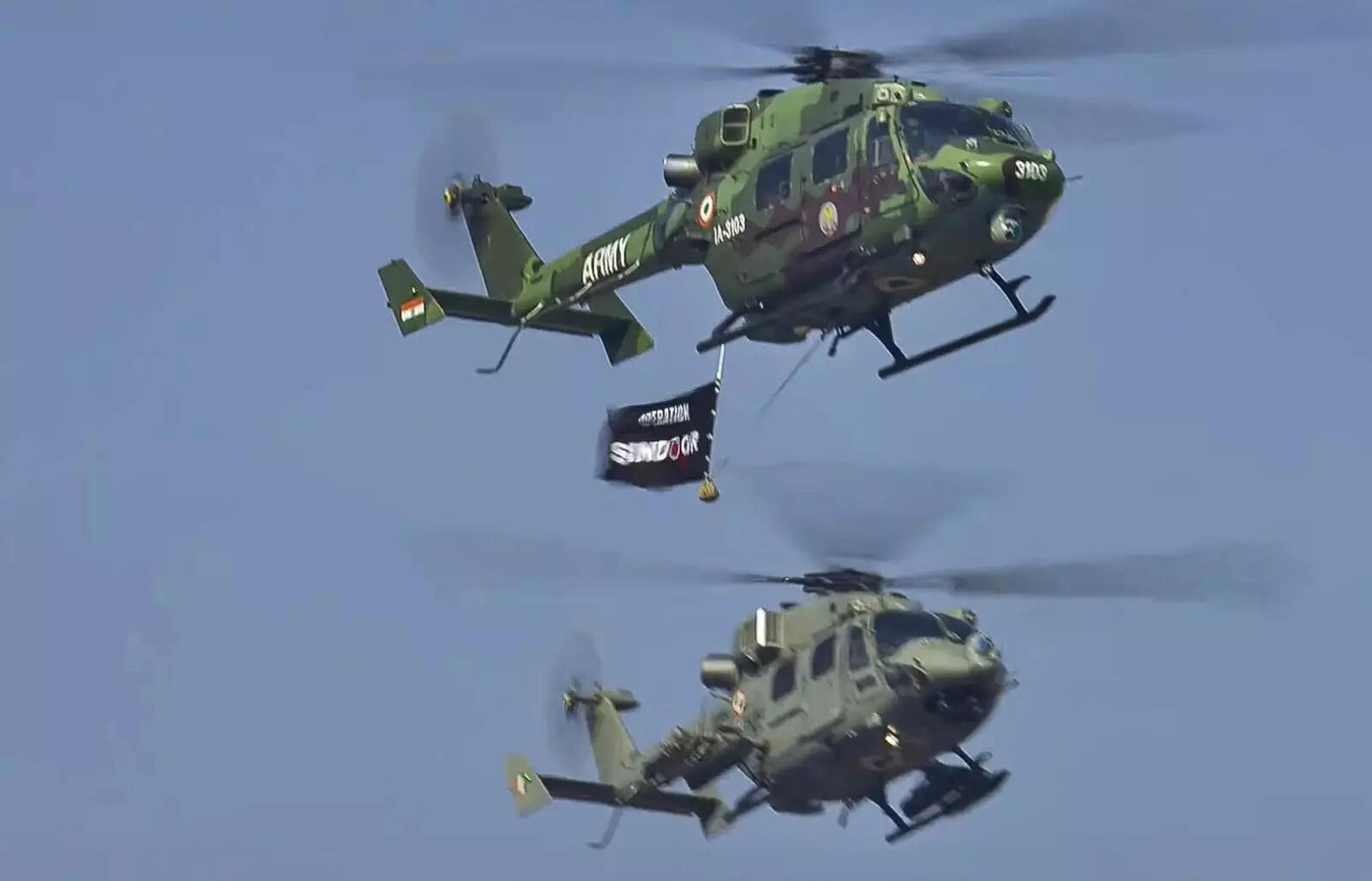
NEW DELHI: After India’s major counterterror action under Operation Sindoor in 2025, this year’s Republic Day parade put the spotlight firmly on the country’s military strength. Along Kartavya Path — formerly Rajpath — weapons platforms and defence systems rolled past in a grand display of the armed forces’ combat readiness and technological prowess.The spectacle extended to the skies over the Raisina Hills, where the Air Force formations flew past in the presence of chief guests from Europe, foreign delegations and thousands of spectators. The aerial display, featuring the Operation Sindoor flag unfurled midair, served as a powerful visual statement, highlighting the message of deterrence and preparedness that defined the parade.

-

(PTI photo)

The ‘Battle Array’ formation, unveiled for the first time on Kartavya Path, signalled a shift from traditional ceremonial displays to a combat-ready battlefield setup, reflecting the Army’s move toward modern, multi-domain warfare.

Operation Sindoor: Swiss Military Report Details How IAF Neutralised Pakistan And Won The Skies

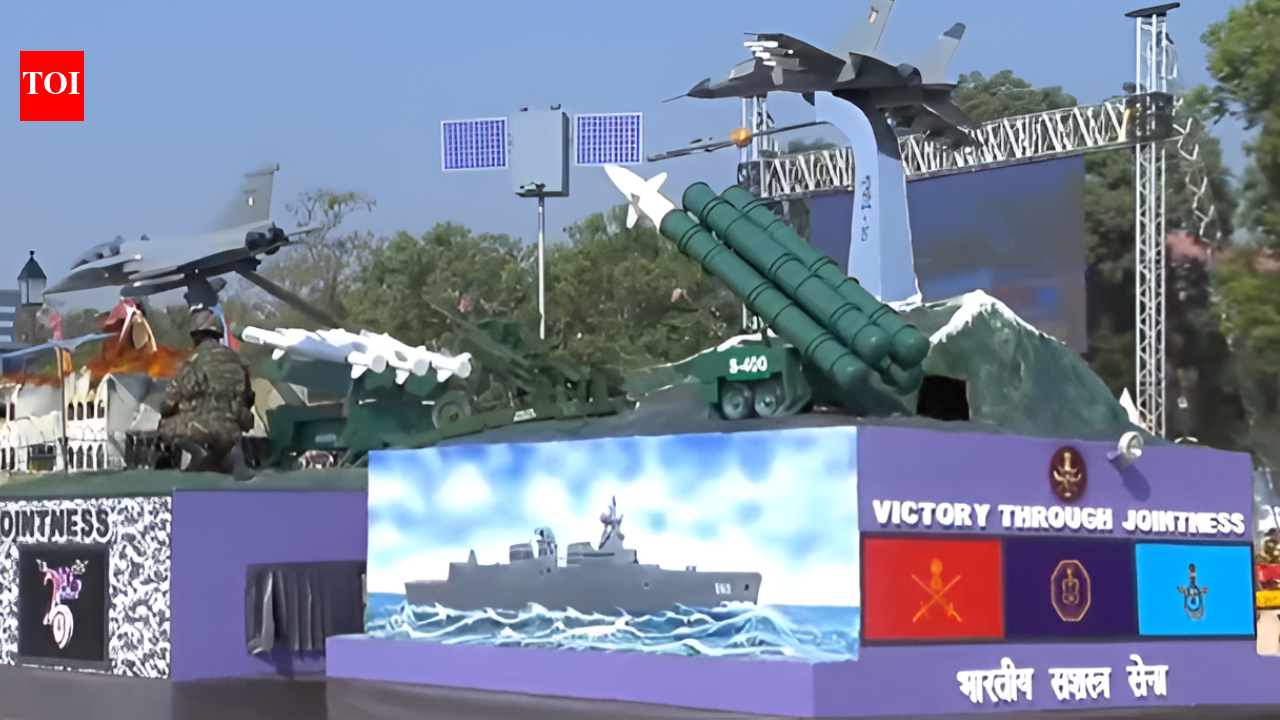
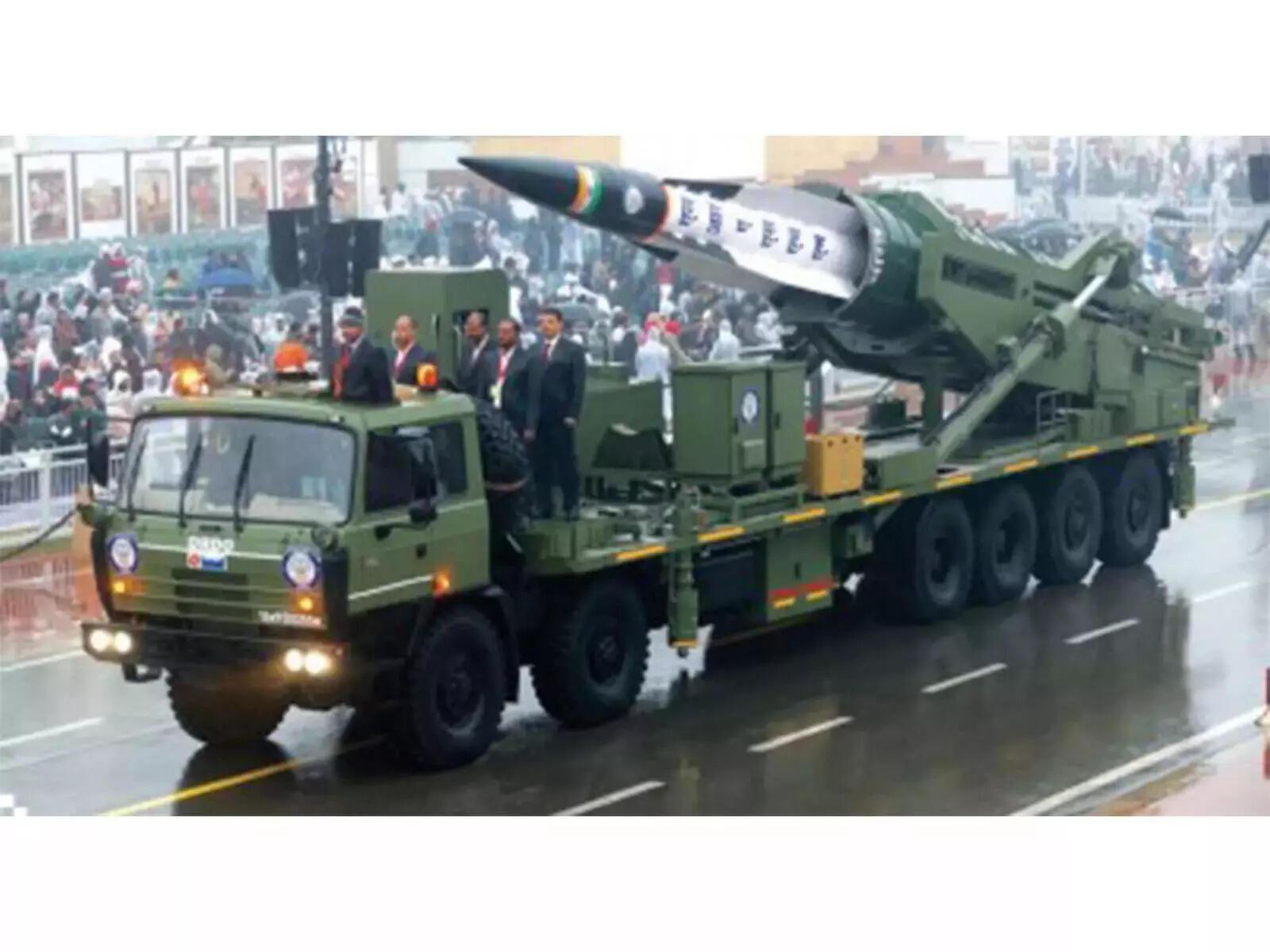
A glass-cased Integrated Operational Centre (IOC) depicting Operation Sindoor rolled down Kartavya Path during the 77th Republic Day parade on Monday. The display highlighted how the operation was carried out and showcased the close coordination between India’s armed forces.In a clear message to Pakistan, the tri-services tableaux showcased the striking power of the BrahMos missile alongside the robust S-400 air defence system, a key element of India’s overall defence strategy, the “Sudarshan Chakra,” which was proven effective during high military tensions with the nuclear-armed neighbour in May.Operation Sindoor led to the neutralisation of over 100 terrorists and enemy soldiers. Several key enemy assets were destroyed, and the operation brought the adversary to a standstill within 88 hours.The military action was launched after the April 2025 terrorist attack in Pahalgam, in which 26 people were killed. In response, Indian forces carried out strikes on terrorist bases in Pakistan, targeting key infrastructure and eliminating multiple terrorists.

-

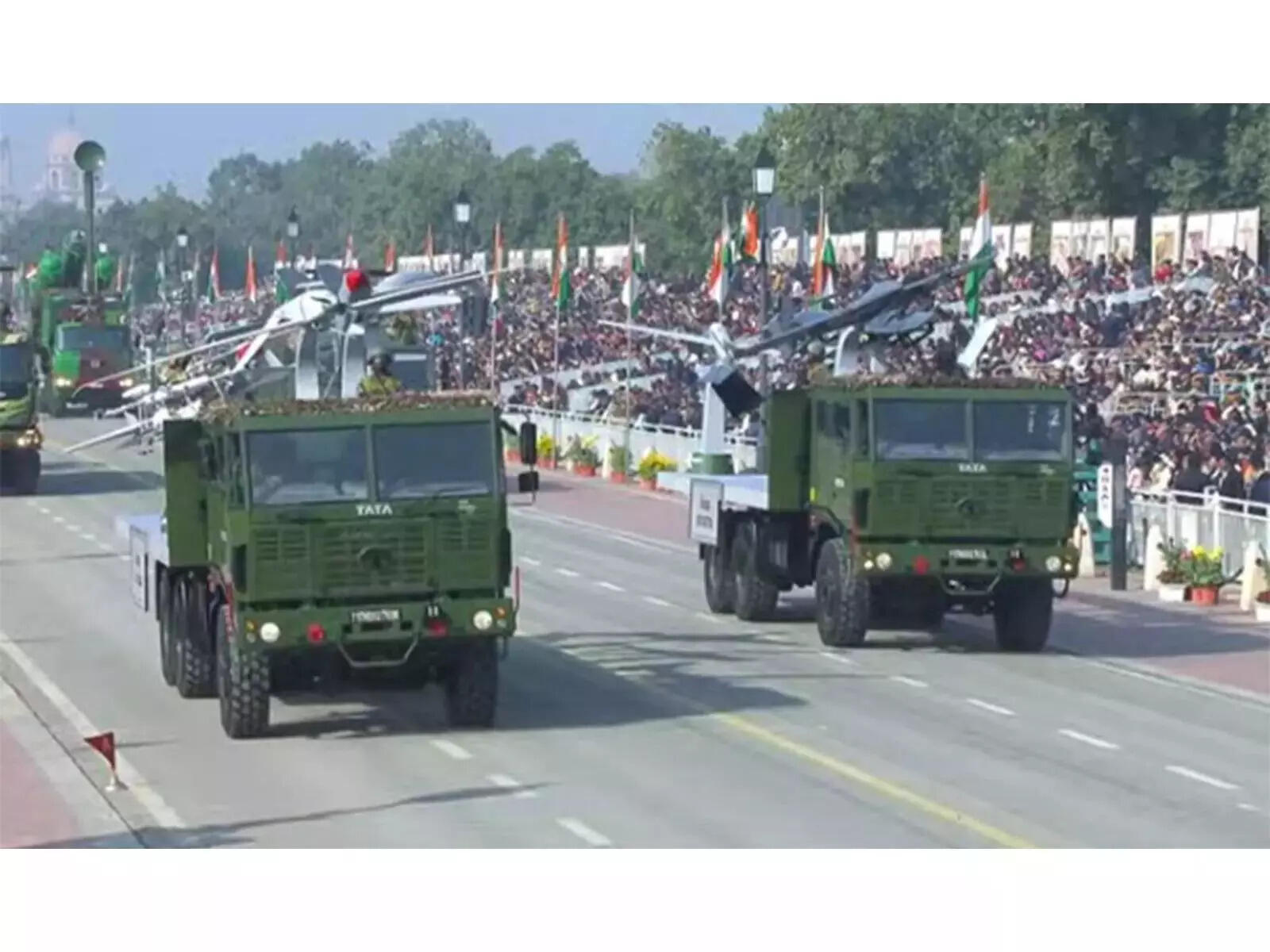
The IOC display showed that the operation was guided by national and military leadership, with strong coordination between the Army, Navy and Air Force. Support from the civilian population and seamless inter-service cooperation were shown as major reasons for the operation’s success.The theme of “Virasat, Vividhta aur Vikas” was highlighted during the display. While the BrahMos missile delivered decisive strikes on enemy targets, air defence systems such as Akash and S-400 provided protection to civilian areas under the concept of the “Sudarshan Chakra”.As part of the Combat Support Elements segment, Divyastra and Shaktibaan systems were showcased. Mounted on High Mobility Vehicles (HMV 6×6), these platforms reflect the Indian Army’s push towards indigenisation and modernisation.

Divyastra and Shaktibaan systems

India’s new-generation unmanned warfare capability was also on display through Shaktibaan and Divyastra. These systems are designed around surveillance and targeting and represent a major step towards technology-driven and precision warfare.Shaktibaan and Divyastra are equipped with swarm drones, tethered drone systems and the indigenously developed hybrid UAV ZOLT, which is used for directing artillery fire.Their targeting capabilities are supported by loitering munitions such as Harop, Mini Harpy, Peacekeeper, ATS (Extended Range), ATS (Medium Range) and Sky Striker.According to the defence ministry, these systems allow the armed forces to deploy swarm drones, long-range strike drones and loitering munitions for effective battlefield operations.


Source link

Mark Tully dies at 90: Born in Kolkata to British parents; how BBC journalist made India his home | India News


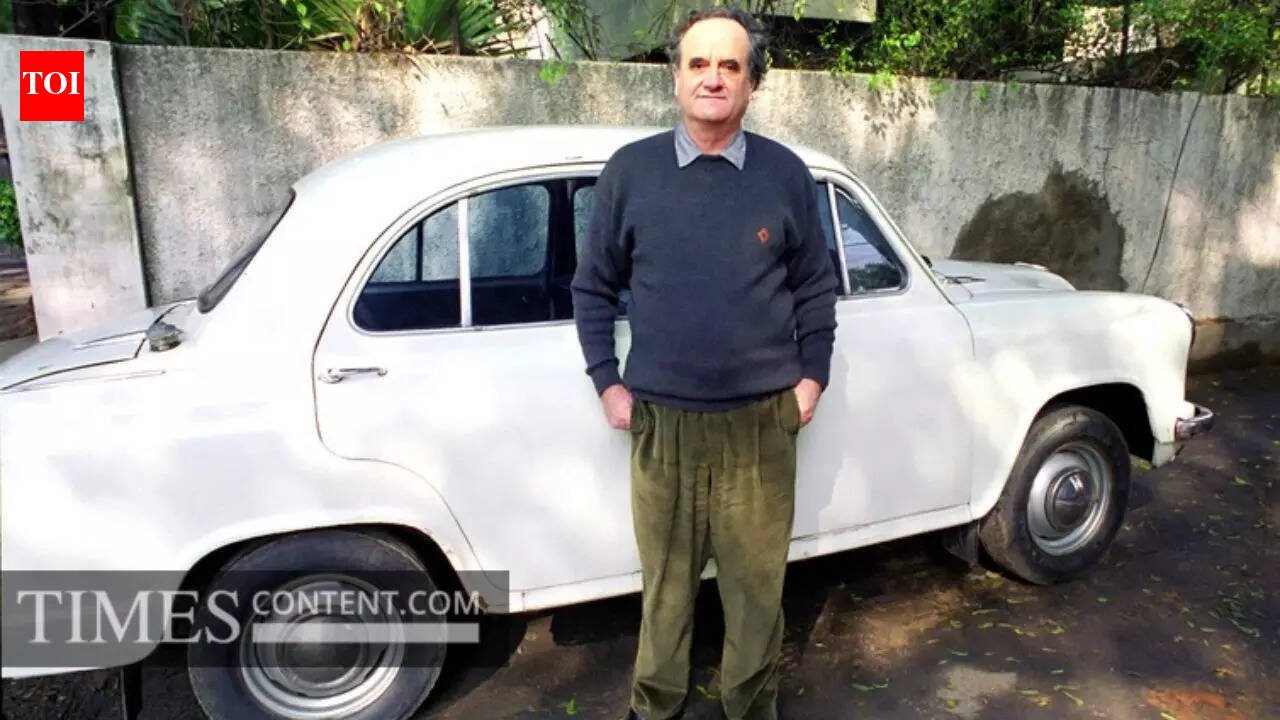
NEW DELHI: Mark Tully, one of the most well-known journalists to report from India, died at a private hospital in Delhi on Sunday. He was 90. He had been unwell for some time and was admitted to Max Hospital in Saket last week.Born in 1935 in Tollygunge, Kolkata, to British parents, Tully spent his early childhood in India. In the late 1930s, he was not allowed to socialise with local people. Ironically, India later became the centre of his life’s work.He studied at a boarding school in Darjeeling before being sent to England for further education. In a 2001 interview with the BBC after being selected for knighthood, Tully described England as “a very miserable place… dark and drab, without the bright skies of India”.The BBC reintroduced Tully to India in 1964 when it appointed him its New Delhi correspondent. This marked the beginning of his long association with the broadcaster, which lasted nearly three decades.In 1969, Tully was sent back to London after the Indian government barred the BBC following the broadcast of Phantom India, a French documentary critical of the country. He returned to Delhi in 1971 and became the BBC’s South Asia bureau chief the next year.During his career, Tully covered several defining moments in the region, including the 1971 Bangladesh war, the Emergency, the execution of former Pakistan president Zulfikar Ali Bhutto, Operation Blue Star, the assassination of Indira Gandhi, the anti-Sikh riots of 1984, the killing of Rajiv Gandhi in 1991, and the demolition of the Babri Masjid in 1992.His first book, Amritsar: Mrs Gandhi’s Last Battle (1985), co-written with Satish Jacob, focused on Operation Blue Star and the Punjab crisis. In No Full Stops in India (1988), he wrote, “The stories I tell in this book will, I hope, serve to illustrate the way in which Western thinking has distorted and still distorts Indian life.”Tully went on to write 10 books, both fiction and non-fiction, including India in Slow Motion (2002), India’s Unending Journey (2008), and India: The Road Ahead.He was awarded the Padma Shri in 1992, knighted in 2002, and received the Padma Bhushan in 2005.Tully resigned from the BBC in 1994 after publicly criticising the organisation’s internal culture. However, he remained based in Delhi and continued writing as a freelance journalist.On his 90th birthday in October, his son Sam Tully wrote on LinkedIn: “I think my father’s achievements are particularly significant for UK-India ties because of his abiding ties and affection for both countries… ‘Dil hai Hindustani, magar thoda Angrezi bhi!’”


Source link

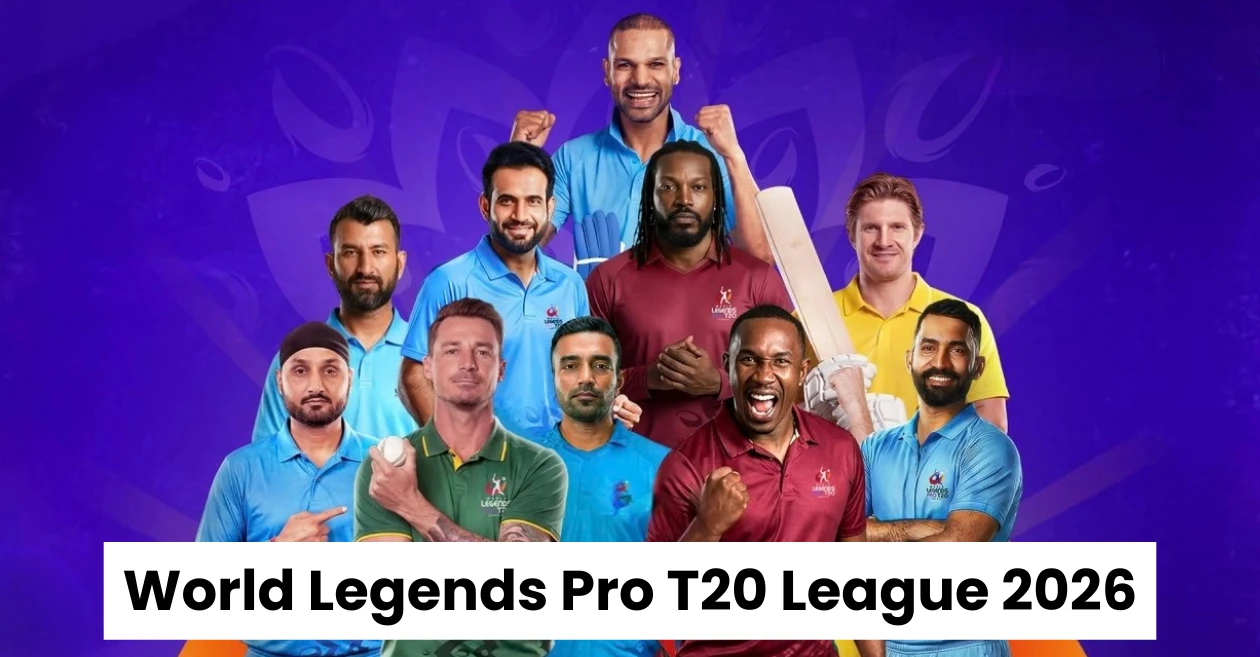
World Legends Pro T20 League 2026: Date, Match Time, Broadcast and Live Streaming details


The cricketing calendar is set to welcome a new and exciting addition as the inaugural season of the World Legends Pro T20 League gets underway from January 26 to February 4, 2026. The tournament will be hosted at the 1919 Sportz Cricket Stadium in Goa and promises a celebration of cricketing nostalgia blended with competitive T20 action.

Designed to showcase legendary names from across the cricketing world, the league aims to offer fans a unique opportunity to watch former greats return to the field in a high-energy format.

World Legends Pro T20 League: Format and teams

The opening edition of the World Legends Pro T20 League will feature a total of 18 matches. The competition structure includes a round-robin league stage, followed by two semi-finals and a grand finale to determine the first-ever champions.

Over the course of ten days, teams will battle for crucial points during the league phase, ensuring intense competition before the knockout rounds.

Six teams will take part in the inaugural season of the World Legends Pro T20 League, each representing a distinct region and identity. The franchises competing in the tournament are Rajasthan Kings, Delhi Warriors, Pune Panthers, Dubai Royals, Gurugram Thunders and Maharashtra Tycoons.

Also READ: Who is the best batter of this decade? Ravichandran Ashwin unveils his finest choice

World Legends Pro T20 League 2026: Schedule

  • Jan 26, Delhi Warriors vs Dubai Royals – 7:30 PM IST
  • Jan 27, Pune Panthers vs Gurugram Thunders – 2:30 PM IST
  • Jan 27, Rajasthan Lions vs Maharashtra Tycoons – 7:30 PM IST
  • Jan 28, Dubai Royals vs Gurugram Thunders – 2:30 PM IST
  • Jan 28, Delhi Warriors vs Pune Panthers – 7:30 PM IST
  • Jan 29, Rajasthan Lions vs Dubai Royal – 2:30 PM IST
  • Jan 29, Gurugram Thunders vs Maharashtra Tycoons – 7:30 PM IST
  • Jan 30, Maharashtra Tycoons vs Delhi Warriors – 2:30 PM IST
  • Jan 30, Pune Panthers vs Rajasthan Lions – 7:30 PM IST
  • Jan 31, Gurugram Thunders vs Rajasthan Lions – 2:30 PM IST
  • Jan 31, Dubai Royals vs Pune Panthers – 7:30 PM IST
  • Feb 1, Pune Panthers vs Maharashtra Tycoons – 2:30 PM IST
  • Feb 1, Delhi Warriors vs Gurugram Thunders – 2:30 PM IST
  • Feb 2, Rajasthan Lions vs Delhi Warriors – 2:30 PM IST
  • Feb 2, Maharashtra Tycoons vs Dubai Royals – 7:30 PM IST
  • Feb 3, Semifinal 1 – 2:30 PM IST
  • Feb 3, Semifinal 2 – 7:30 PM IST
  • Feb 4, Final – 7:30 PM IST

Broadcast and Live Streaming details

  • India: Doordarshan Sports (TV); Sony LIV, Waves OTT (Streaming)
  • Global: FanCode, World Legends Pro T20 League official YouTube channel

Also READ: Who is Shefali Bagga? The viral TV personality spotted with Yuzvendra Chahar


Source link

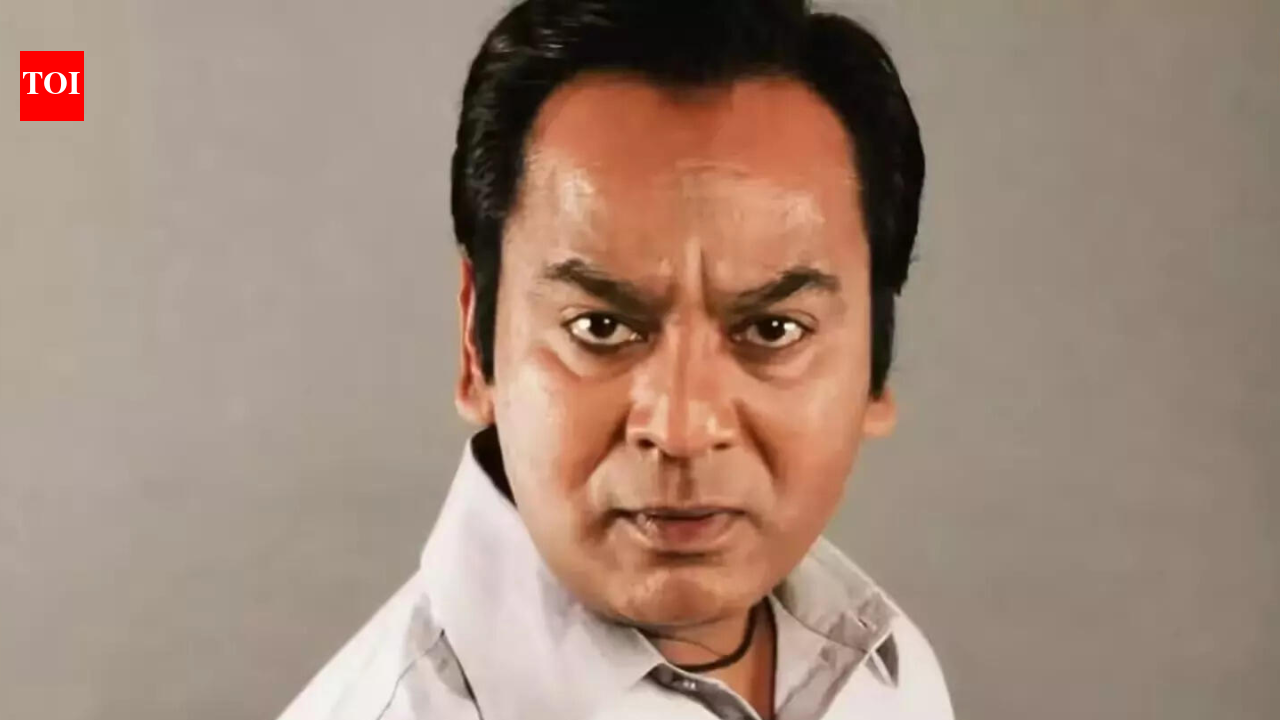
‘Dhurandhar’ actor Nadeem Khan held for raping domestic help on promise of marriage in Mumbai | Mumbai News


MUMBAI: An actor has been arrested in Mumbai for allegedly raping his domestic help for 10 years on the promise of marriage, police said on Monday.Based on a complaint by a 41-year-old woman, Nadeem Khan, recently seen in the blockbuster film ‘Dhurandhar’, was arrested on January 22 and is currently in police custody, an official said according to news agency PTI.According to the complaint, the woman had worked as a domestic help for different actors and had come in contact with Khan years ago, and they became close.The woman alleged that Khan promised to marry her, and on that assurance, raped her on multiple occasions at her residence in Malwani and at his house in Versova in the western suburbs, over a period of 10 years, the official said.However, he later refused to marry her, and she approached the Versova police with a complaint.As the alleged assault took place for the first time at the complainant’s house in the jurisdiction of Malvani police, and the victim resides in that area, the Versova police have transferred the case on a zero FIR, the official said.Khan was last seen in the Ranveer Singh-starrer, Dhurandhar.


Source link

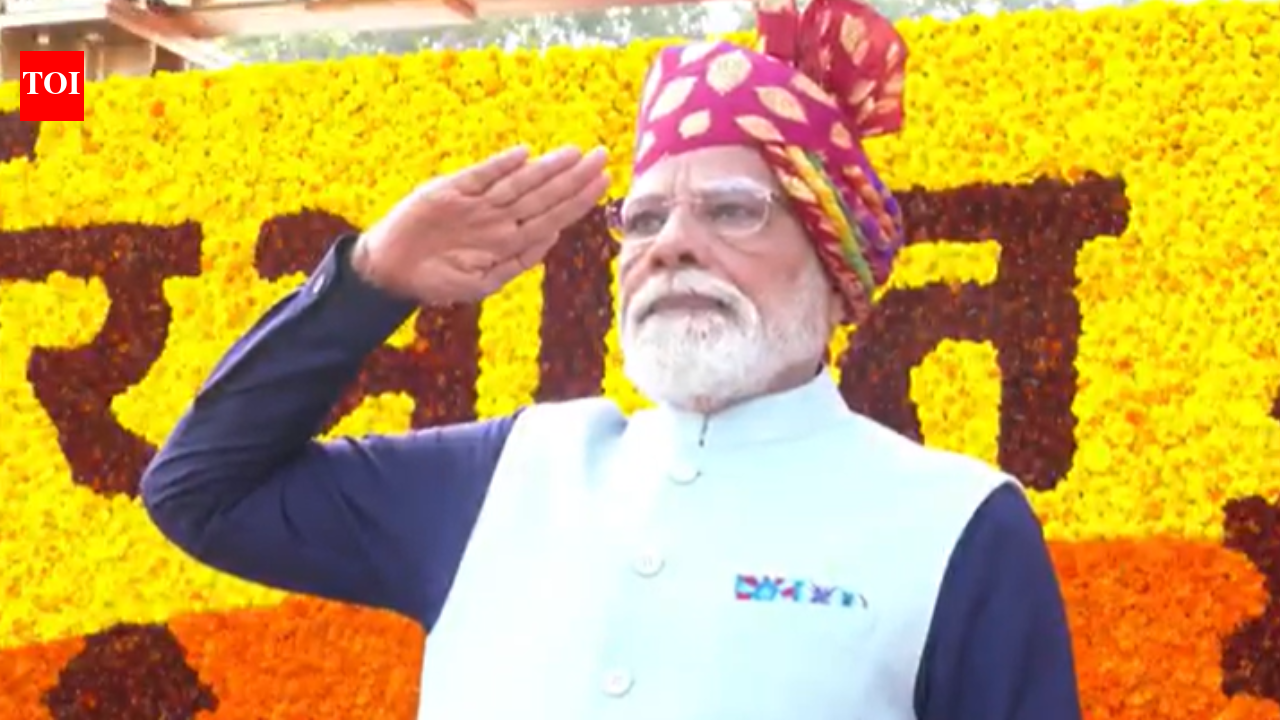
Republic Day 2026: PM Modi dons red-yellow Bandhej safa, a nod to Rajasthan tradition | India News


Republic Day 2026: PM Modi dons red-yellow Bandhej safa, a nod to Rajasthan tradition

NEW DELHI: Prime Minister Narendra Modi’s turban, or saafa, once again became a quiet yet striking focus point during the grand Republic Day celebrations on Monday. This year, the Prime Minister chose a red Rajasthani-style pagdi, highlighted with golden-yellow streaks, adding a note of cultural elegance to the solemn national ritual.Over the years, the tradition of donning distinctive headgear on Republic Day and Independence Day has evolved into a signature expression of PM Modi’s public persona. More than a fashion choice, the saafa functions as a visual narrative — symbolically carrying India’s cultural richness and diversity and regional heritage into the ceremonial heart of the Republic Day parade.On Monday morning, Prime Minister Narendra Modi arrived at the National War Memorial in New Delhi in his trademark style, dressed in a striking traditional ensemble.The PM donned Rajasthani-style safa, also known as a pagdi, rendered in rich hues of deep red, mustard yellow and green. The turban was tied high, featuring a distinctive fan-shaped crest that added to its ceremonial elegance.The colours echoed the festive atmosphere along Kartavya Path, where crowds gathered to watch the parade and state tableaux showcased the vast cultural sweep of India’s states and Union Territories.He paired the safa with a light sky-blue Nehru jacket worn over a dark navy kurta, striking a balance between formality and cultural expression. The look was completed with white churidar-style trousers and traditional black formal shoes, reinforcing the blend of tradition and statesmanship that has become a hallmark of his Republic Day appearances.

PM Modi’s Republic Day style, year after year

Last year, during the 2025 Republic Day celebrations, PM Modi had opted for a vibrant multi-coloured turban, paired with a brown full-sleeve bandhgala, a multi-coloured pocket square and churidar pants, reinforcing the evolving yet consistent language of his ceremonial attire.Over the years, Prime Minister Narendra Modi’s Republic Day attire has evolved into a visual chronicle of India’s cultural diversity.For the 75th Republic Day in 2024, he wore a multi-coloured turban dominated by a vibrant yellow hue, paired with a white kurta and a brown Nehru jacket. Featuring traditional Rajasthani Bandhini prints, the ensemble reflected regional craftsmanship and national pride.During the 74th Republic Day celebrations, the Prime Minister again opted for a multi-coloured Rajasthani turban, widely seen as a symbol of India’s unity in diversity.In 2022, marking the 73rd Republic Day, PM Modi chose a traditional cap from Uttarakhand, adorned with a Brahmakamal-inspired brooch — a nod to the state flower and the hill state’s cultural heritage.For the 72nd Republic Day in 2021, he wore a distinctive Jamnagar turban gifted by the royal family of Jamnagar in Gujarat, paired with a grey jacket, kurta and pyjama, underscoring ties to local tradition.At the 71st Republic Day celebrations, the Prime Minister sported a bright saffron-coloured printed turban featuring intricate yellow patterns.Earlier, on the 70th Republic Day, he appeared in a yellow turban with a red tail, highlighted with green accents and subtle golden lines, completing the look with a sleeveless bandhgala jacket over a white kurta.India marked its 77th Republic Day this year with an added global dimension, hosting European Commission chief Ursula von der Leyen and European Council president Antonio Luís Santos da Costa as chief guests — a setting in which tradition, diplomacy and symbolism converged along Kartavya Path.


Source link