
Breaking News
SA vs WI, 1st T20I: Boland Park Pitch Report, T20 Stats and Records


South Africa and West Indies are set to renew their rivalry as they clash in the first T20I of the three-match series at Boland Park, Paarl. The Proteas will be eager to start the series on a strong note, especially with several of their players arriving in good form and looking sharp. While South Africa did endure a disappointing outing in their last five-match T20I series against India in December 2025, which they lost 3-1, the team will be confident of putting up a better show on home soil.

Despite that setback, the hosts are expected to bounce back, backed by familiar conditions and a squad keen to make a statement ahead of the T20 World Cup. This series presents a valuable opportunity for them to rebuild momentum and fine-tune combinations.

West Indies, meanwhile, come into the contest after a narrow series defeat against Afghanistan, where they went down 2-1 in a three-match T20I battle. That result has put added pressure on the Caribbean side to respond positively in South Africa, with the global tournament fast approaching. They will be keen to rediscover their rhythm and regain confidence.

Adding to the intrigue, Shai Hope will lead the West Indies in this series, carrying the responsibility of guiding a talented but inconsistent side. With both teams having plenty to prove, fans can expect a competitive and high-intensity opening match.

Boland Park Pitch Report

Boland Park offers a refreshing contrast to the fast, bouncy surfaces that South Africa is usually known for. Unlike the typical pace-friendly tracks in the country, this ground has traditionally been on the slower side, making free-flowing run-scoring a tougher task for batters. The pitch here tends to take the pace off the ball, forcing players to rely more on placement and patience rather than pure power.

One of the standout features of Boland Park is how well it brings spinners into the game, especially as the match progresses. In the second innings, finger-spinners in particular have enjoyed notable success, using the surface to extract grip and subtle turn. The large mid-wicket boundaries also play a crucial role, encouraging batters to take risks against spin and often leading to mistimed shots under pressure.

Scoreboard pressure further amplifies these challenges. As chasing teams try to keep up with the required rate, spinners are able to tighten the screws by bowling into the longer parts of the ground, making boundary-hitting difficult. This combination of a slow pitch, smart use of angles, and big boundaries makes Boland Park a venue where tactical awareness is just as important as raw skill.

Overall, it is a ground that rewards clever bowling and disciplined batting, often producing gripping and closely fought contests.

Also READ: SA vs WI 2026, T20I Series – Schedule, Broadcast and Live Streaming details | Where to watch in India, USA, South Africa and other countries

Boland Park T20I Stats and Records

  • Total Matches: 11
  • Matches won batting first: 7
  • Matches won bowling first: 4
  • Average 1st innings score: 137
  • Average 2nd innings score: 105
  • Highest total recorded: 201/5 (20 Overs) By South Africa Women vs Ireland Women
  • Lowest total recorded: 60/10 (15.5 Overs) By Sri Lanka Women vs New Zealand Women
  • Highest score chased: 147/6 (19.5 Overs) By England vs South Africa
  • Lowest score defended: 97/10 (19.2 Overs) By West Indies Women vs South Africa Women

Also READ: West Indies announce squad for T20 World Cup 2026, no place for Evin Lewis



Source link

NASA shares new details about dark matter: The hidden framework of the universe |


NASA shares new details about dark matter: The hidden framework of the universe

The idea of dark matter has existed for decades, mostly as a necessary explanation rather than something clearly seen. New observations from the James Webb Space Telescope are adding texture to that idea, without resolving it completely. Scientists working with Webb data have produced a detailed map showing where dark matter appears to sit in relation to galaxies and stars. The map focuses on a small but deeply studied patch of sky, already familiar from earlier surveys. What changes here is not the theory but the clarity. The patterns look sharper, more crowded, and harder to dismiss. Researchers say the new view strengthens the case that dark matter has quietly influenced how the universe took shape, long before planets or life were possible. It remains invisible, but its presence feels more fixed.

NASA plans even larger dark matter surveys after Webb breakthrough

The map was created using long observations of a region known as COSMOS, in the constellation Sextans. Webb spent hundreds of hours collecting light from distant galaxies, many of them faint and distorted. Those distortions matter. They occur because mass bends space itself, slightly shifting the path of light as it travels.By measuring those shifts, scientists can estimate where large amounts of unseen mass must lie. What emerges is a web-like pattern. Dense knots sit where galaxy clusters gather. Thinner strands stretch between them. The shapes echo what astronomers have long suspected, though rarely seen with this level of definition.

Dark matter aligns closely with ordinary matter

One striking feature of the map is how closely dark matter appears to track normal matter. Where galaxies cluster, dark matter clusters too. Where galaxies thin out, so does the unseen mass.Researchers say this alignment is unlikely to be accidental. Gravity is the link. Over billions of years, dark matter seems to have drawn gas and dust towards it, creating the conditions needed for galaxies to form. The map does not show dark matter directly, but the overlap is persistent enough to feel deliberate. This relationship has been hinted at before. Webb makes it harder to ignore.

Older surveys laid the groundwork

The COSMOS region has been studied since the mid-2000s, including with the Hubble Space Telescope. Those earlier maps were useful but limited. They contained fewer galaxies and less precise distance measurements.Webb changes that balance. It detects far more objects, including galaxies hidden behind dust. Its infrared instruments allow scientists to estimate distances with greater confidence, which matters when building a three-dimensional picture of mass. The result is not a new idea but a clearer one. Some features seen by Hubble now look more complex. Others appear newly resolved rather than entirely new.

Why early structure still matters today

The map also feeds into a broader question about how the universe evolved. In the early universe, matter was spread thinly. Scientists think dark matter began clumping first, slowly creating gravitational wells. Ordinary matter followed later, falling into those regions.That sequence matters. Early galaxy formation allowed stars to form sooner, producing heavier elements over time. Without that process, planets like Earth would not have the materials they rely on. The influence is indirect and distant but not abstract. It reaches forward into the conditions that made complex worlds possible.

Future telescopes will widen the picture

Webb will not be the final word. NASA’s upcoming Roman Space Telescope is expected to map dark matter over much larger areas of sky, though with less fine detail. Together, the two approaches may offer a balance between scale and resolution.Even then, some limits will remain. Dark matter does not emit light, and its nature is still unknown. The maps show where it seems to be, not what it is. For now, the picture is sharper, not complete. The scaffolding of the universe looks more defined, but it still sits quietly behind everything else, shaping the view without stepping into it.


Source link

Zero tariffs on gems, jewellery, plastic: How will FTA with EU benefit India? ‘Mother of all trade deals’ explained


Zero tariffs on gems, jewellery, plastic: How will FTA with EU benefit India? ‘Mother of all trade deals’ explained

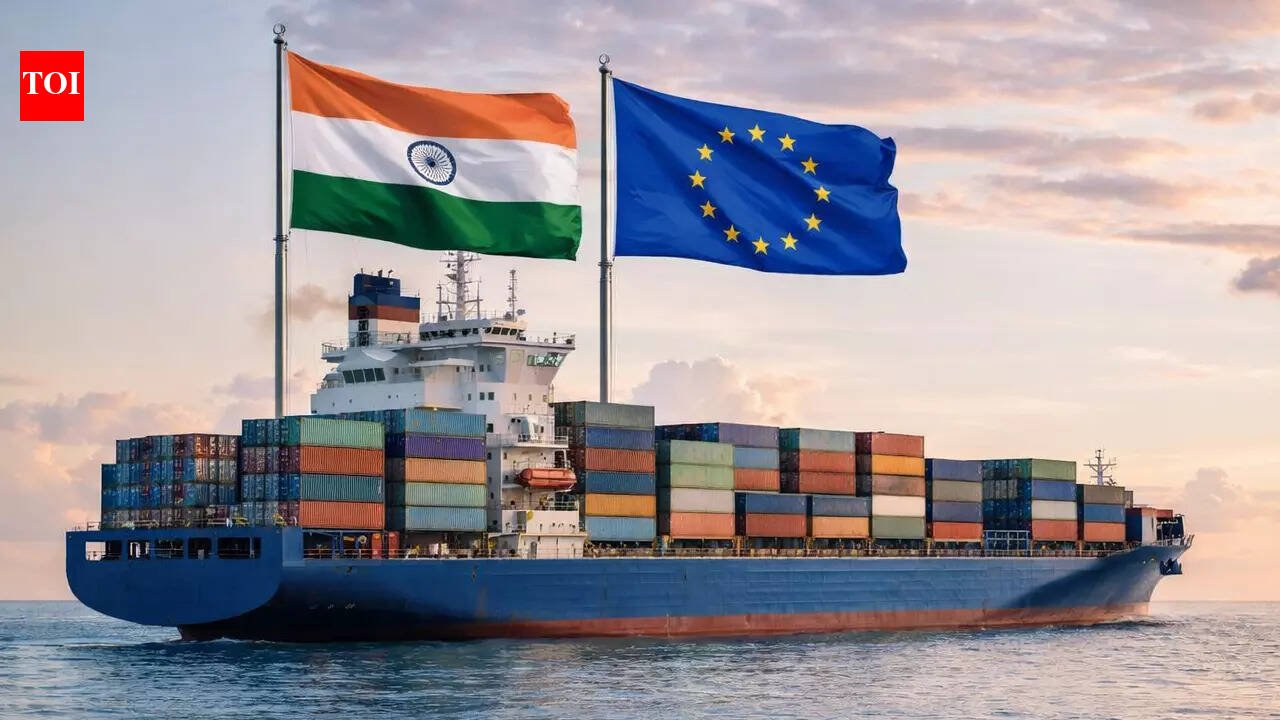
India-EU FTA discussions concluded: India and the European Union have successfully concluded discussions for the India-EU Free Trade Agreement (FTA). The move is a significant step forward for India’s exports at a time when it is looking to diversify away from the US in the wake of President Donald Trump’s 50% tariffs.At the signing and exchange of the political declaration of the conclusion of negotiations of the India-EU Free Trade Agreement, PM Narendra Modi said, “Yesterday was a historic moment when the European Union leaders took part in India’s Republic Day celebrations for the first time. Today is another such moment, when two major democratic powers are adding a decisive chapter in their relationship….”

Explained: Why India-EU ‘Mother Of All Deals’ Matters As Trade Talks Enter Final High Stakes Phase

The European Union ranks among India’s largest trading partners. The bilateral trade between the two in goods and services has risen steadily in recent years. In 2024–25, merchandise trade between the two sides stood at Rs 11.5 lakh crore or $136.54 billion, with Indian exports of Rs 6.4 lakh crore or $75.85 billion and imports worth Rs 5.1 lakh crore or $60.68 billion. Services trade between India and the EU reached Rs 7.2 lakh crore or $83.10 billion during the same period. Together, India and the EU are the fourth- and second-largest economies globally, accounting for about 25% of global GDP and nearly one-third of world trade, positioning the agreement as a platform for unlocking significant trade and investment opportunities between two large and complementary economies.

India-EU FTA: How Does The Trade Deal Benefit India?

  • The FTA delivers extensive market access for Indian exports – with over 99% of exports by trade value getting entry into the EU market.
  • The India–EU trade agreement aims at deep tariff liberalisation on both sides, with the European Union opening 96.8% of its tariff lines and India 92.1%.
  • Labour-intensive industries are set to be among the major beneficiaries, with sectors such as textiles, apparel, leather, footwear, marine products, gems and jewellery, handicrafts, engineering goods and automobiles seeing tariffs of up to 10% eliminated on nearly $33 billion of exports upon the agreement’s entry into force.
  • The resulting gains are expected to support workers, artisans, women, youth and MSMEs, while embedding Indian firms more firmly within global value chains and reinforcing India’s role as a dependable supplier in international trade.
  • Under the deal, India’s tariffs on EU goods will be reduced to zero for 93% of bilateral trade value over a 10-year period, while the EU will phase out tariffs on Indian goods over seven years, excluding sensitive sectors such as automobiles, steel and agriculture.

India will gain flexibility on the EU’s carbon tax regime if similar treatment is extended to other countries, while the EU has committed to uncapped mobility for Indian students. India is also seeking a higher steel export quota as an FTA partner.


Source link

New Zealand Under-19 11/1 in 2.1 Overs


Pakistan vs New Zealand Live Score, U19 World Cup 2026: Farhan Yousaf, leading the Pakistan U19 team, won the toss and elected to field first in their ICC Under-19 World Cup Super Six match against New Zealand at Harare Sports Club.

Teams:

New Zealand U19 (Playing XI): Marco Alpe(w), Hugo Bogue, Tom Jones(c), Snehith Reddy, Jacob Cotter, Brandon Matzopoulos, Jaskaran Sandhu, Callum Samson, Mason Clarke, Hunter Shore, Luke Harrison

Pakistan U19 (Playing XI): Sameer Minhas, Hamza Zahoor(w), Usman Khan, Ahmed Hussain, Farhan Yousaf(c), Huzaifa Ahsan, Mohammad Shayan, Abdul Subhan, Momin Qamar, Mohammad Sayyam, Ali Raza


Source link

Maharashtra’s Mira–Bhayander flyover sparks debate over lane narrowing; MMRDA says design is planned | Mumbai News


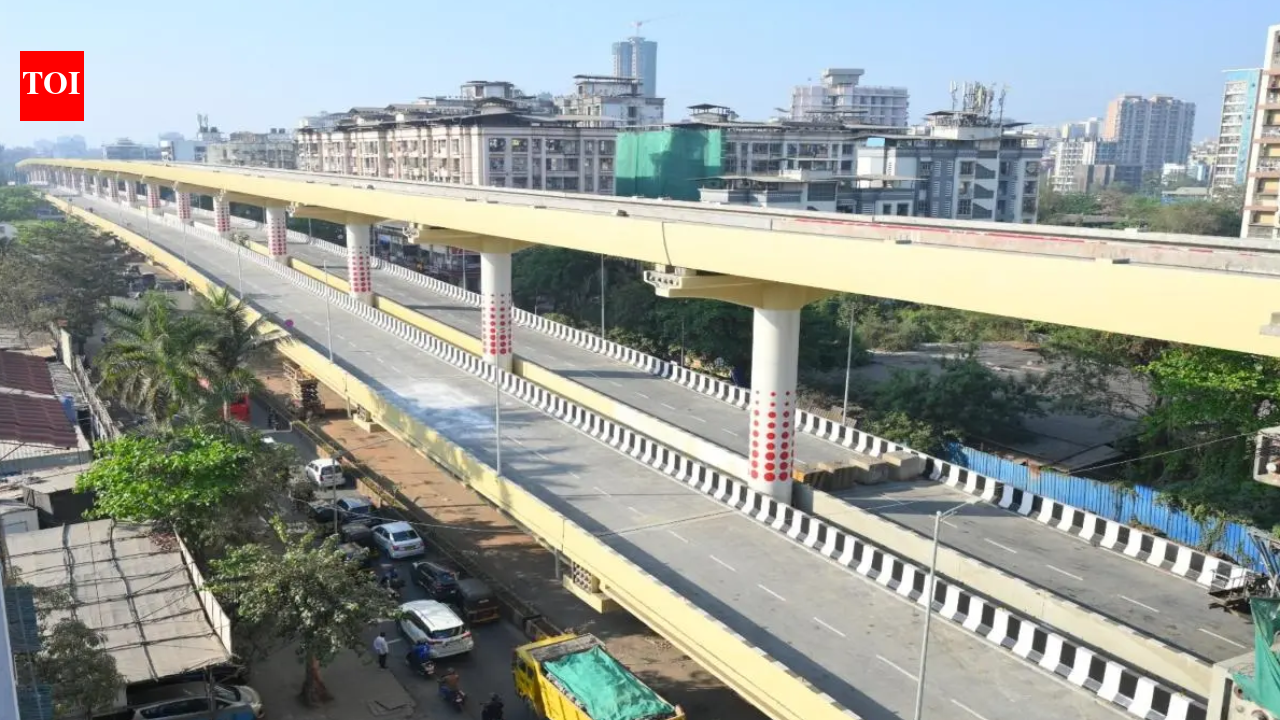
MUMBAI: A newly constructed flyover in the Mira–Bhayander region has drawn sharp public attention after a social media post highlighted what appeared to be an abrupt narrowing from four lanes to two, with the Mumbai Metropolitan Region Development Authority (MMRDA) denying any design flaw and issuing a clarification on the project.The issue surfaced after a post by the Gems of Mira Bhayander X (formerly Twitter) account went viral, questioning whether the double-decker flyover — part of the Metro Line 9 project — could end up worsening congestion rather than easing it. The post claimed that the four-lane flyover “suddenly narrows” into two lanes, triggering wider debate on infrastructure design and approval processes in the fast-growing suburban belt.In its clarification, MMRDA said the lane transition is a planned engineering decision shaped by available right of way and long-term network expansion. Officials said the flyover has been designed with two lanes for Bhayander East, while provision has been kept for an additional two lanes towards Bhayander West as part of a future extension across the Western Railway line.Since the Bhayander East arm comes first along the alignment, the current four-lane configuration transitions into two lanes, with the remaining outer lanes planned to be added in a later phase, the authority said.Up to Golden Nest Circle — a major junction where five arterial roads converge — a 2+2 lane flyover integrated with the Metro corridor has been provided, along with slip roads on both sides to aid traffic dispersal. Beyond the junction, towards Bhayander East, the available road width reduces as per the Development Plan, necessitating a 1+1 lane flyover along the median with dedicated up and down ramps for uninterrupted movement towards Railway Phatak Road.MMRDA added that provision has been kept for future widening of the flyover, subject to approvals and coordination with the Mira-Bhayander Municipal Corporation. The structure, it said, has been designed primarily for traffic dispersal and congestion reduction, and includes safety features such as signage, rumble strips and crash barriers, with traffic police inputs being incorporated before commissioning.However, public scepticism has persisted online even after the clarification. Dakshay Desai wrote on X, “This flyover will be shut immediately after inauguration if opened. As this will be an accidental zone. They will have to make a lot of changes. This is the worst design — who approved it?” Another user, ekbote-R, compared it with earlier projects, posting, “Vikhroli east–west bridge had three lanes, Lower Parel bridge without footpath. Now this. I have actually started doubting these engineers’ degrees.”


Source link

India carries Asia’s heaviest lung disease burden, Lancet study finds | India News


India carries Asia’s heaviest lung disease burden, Lancet study finds

NEW DELHI: India accounts for more than 43% of Asia’s chronic respiratory disease–related disability, the highest share in the region, according to a new analysis published in The Lancet Respiratory Medicine on Wednesday. The study identifies air pollution as a major factor behind India’s persistently high lung disease burden.The study, based on estimates from the Global Burden of Disease 2023, found that Asia as a whole contributed nearly 67% of global disability-adjusted life years (DALYs) due to chronic respiratory diseases in 2023. India alone accounted for 43.3% of Asia’s DALYs, while China contributed 27.8%, together making up over 70% of the regional burden, largely driven by population size and sustained exposure to risk factors.In 2023, India’s age-standardised DALY rate from chronic respiratory diseases remained above 2,040 per 100,000 population, among the highest in Asia, reflecting a substantial burden of disability and premature mortality linked to respiratory conditions, despite a gradual decline since 1990.Explaining what this translates to on the ground, Dr G.C. Khilnani, pulmonologist and Chairman, PSRI Institute of Pulmonary, Critical Care and Sleep Medicine, said respiratory illnesses such as pneumonia, asthma and COPD are now among the most common conditions seen in clinical practice, with children and the elderly particularly vulnerable. He said delayed diagnosis worsens outcomes, while air pollution has emerged as a major driver—accounting for nearly half of COPD cases and a growing share of lung cancers, including among non-smokers.South Asia, driven largely by India, recorded the highest age-standardised prevalence of chronic obstructive pulmonary disease (COPD) in Asia at 3,044 cases per 100,000 population. While prevalence across Asian regions was broadly similar, the analysis found that disability and deaths were significantly higher in lower-income regions, pointing to poorer outcomes rather than higher disease occurrence.Dr Ujjwal Parakh, Senior Consultant in Chest Medicine at Sir Ganga Ram Hospital, said chronic respiratory diseases—particularly COPD—are steadily increasing in India and are often diagnosed late due to low awareness and limited access to spirometry. With air pollution damaging lungs much like tobacco smoke, he said controlling pollution and improving early detection are critical.The study identified ambient particulate matter pollution and household air pollution from solid fuels as major contributors to India’s respiratory disease burden. Household air pollution in South Asia was associated with an age-standardised DALY rate of 658 per 100,000 population, among the highest globally.Researchers cautioned that although age-standardised DALY rates for most chronic respiratory diseases have declined across Asia over the past three decades, uneven progress, persistent pollution exposure and gaps in access to care threaten to slow or reverse gains. Without sustained improvements in air quality, cleaner household energy use and equitable respiratory care, the study warned, India’s lung disease burden is likely to remain high.


Source link

Silver price jumps almost 6%, gold breaks beyond $5,100: What is driving precious metals? | India Business News


Silver jumps almost 6%, gold breaks beyond $5,100: What is driving precious metals?

Gold and silver futures jumped to a new lifetime high on Tuesday, buoyed by safe haven demand amid ongoing geopolitical tensions. On the Multi-Commodity Exchange (MCX) gold for February 5 delivery soared Rs 2,522 or 1.62%, to trade at Rs 1,58,559 per 10 grams, climbing Rs 2,522 or 1.62%, after briefly touching a record Rs 1,59,820 in early trading. The rally came on the back of global gains, following gold’s break above the $5,100-per-ounce mark in international markets. Silver futures for March 5 delivery jumped Rs 19,831, or 5.93%, to Rs 3,54,530 per kg, after hitting a fresh peak of Rs 3,54,780. The domestic price increase mirrored international trends, where spot silver rose over 6% to $117.69 an ounce.The yellow metal continued its upward momentum globallyly, extending gains from the previous session. As of 0121 GMT, spot gold was at $5,068.05 per ounce, up 1.1% from Monday’s all-time high of $5,110.50, while US gold futures for February delivery gained 0.4% to $5,063.00 per ounce. Spot silver climbed 6.3% to $110.39 per ounce, after touching a record $117.69, posting a 55% gain so far in 2026. Geopolitical developments have contributed to market volatility. Earlier on Tuesday, US President Donald Trump announced plans for a 25% tariff on South Korean automobiles, lumber, and pharmaceuticals, citing a stalled trade deal. This followed tensions with Canada after Prime Minister Mark Carney’s visit to China, which reportedly cooled ties between Ottawa and Washington. Currency movements also influenced precious metals. The US Dollar Index fell to 96.92, a four-month low, down 0.12 points, amid a rebound in the Japanese yen, making gold cheaper for foreign buyers. Manoj Kumar Jain of Prithvifinmart Commodity Research told ET that the prices of precious metals have been supported by robust safe haven demand. He further added that gains were driven by global uncertainty, positive US consumer confidence data, and ongoing dollar weakness. Commenting on price swings, Jain noted, “We are experiencing very high price volatility in both precious metals. Silver prices could hold support near $98 per troy ounce, and gold may remain firm above $4,840 per troy ounce on a closing basis this week.”


Source link

Who is Tom Homan? Donald Trump’s point man sent to Minneapolis as protests erupt over ICE raids


Trump Deploys BORDER Czar Tom Homan To Minnesota Amid Protests, Investigations, And Chaos

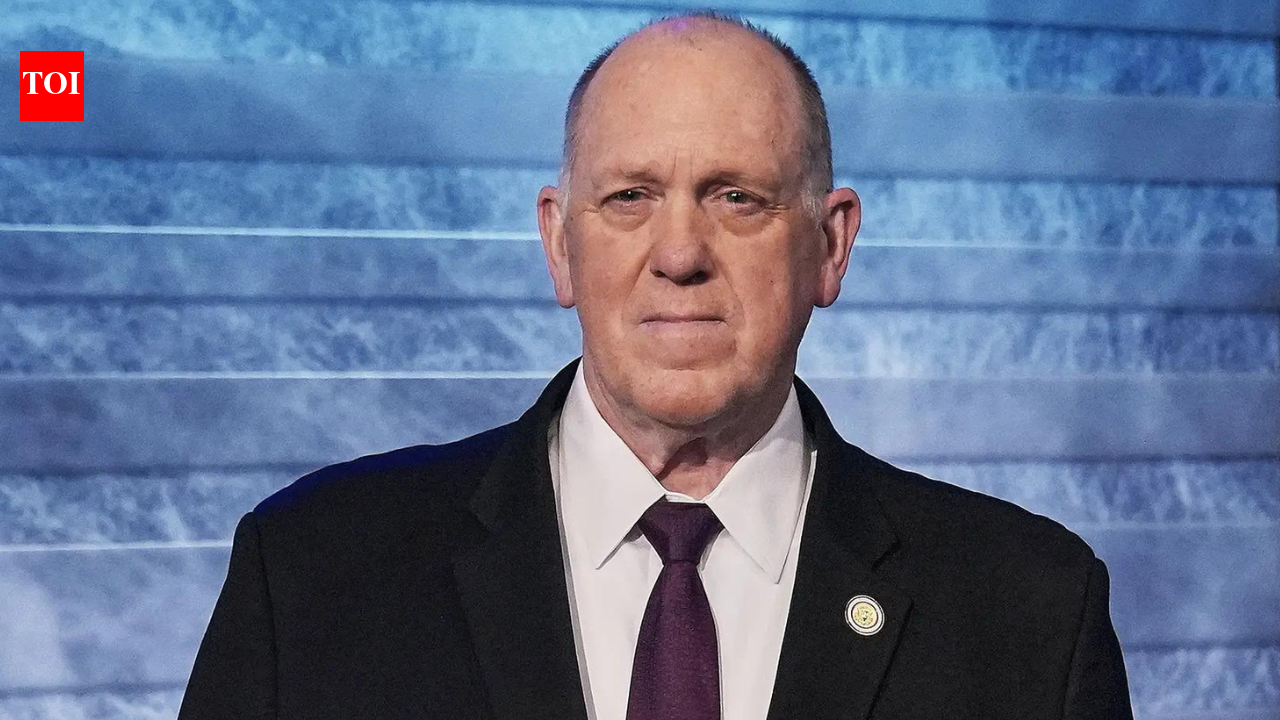
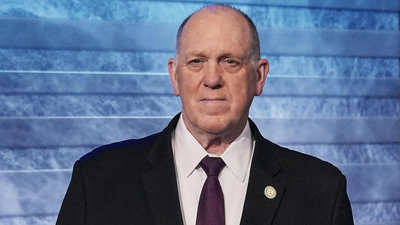
File photo: Tom Homan (Picture credit: AP)

US President Donald Trump has announced that his border czar, Tom Homan, will be sent to Minneapolis, a city that has emerged as the epicentre of protests against the administration’s immigration enforcement tactics following two fatal shootings involving federal agents this month. Trump on Monday said Homan would report directly to him, describing him as “tough but fair”.

Trump Deploys BORDER Czar Tom Homan To Minnesota Amid Protests, Investigations, And Chaos

The announcement came days after the fatal shooting of Alex Jeffrey Pretti by federal agents, the second such incident in Minneapolis in January Earlier, Minneapolis resident Renee Good was also shot dead by an ICE agent. In both cases, official explanations by homeland security secretary Kristi Noem were questioned after eyewitness videos appeared to contradict claims that the victims posed an immediate threat.Protests have intensified across the city, with growing calls from both Democrats and Republicans for an independent investigation into ICE operations.

Who is Tom Homan

  • Tom Homan, 64, is a veteran immigration enforcement official with nearly four decades of experience.
  • He began his career as a US Border Patrol agent in 1984 and later joined Immigration and Customs Enforcement (ICE) when the agency was created in 2003 under the Department of Homeland Security.
  • Homan rose to prominence as head of ICE’s Enforcement and Removal Operations during the Obama administration, overseeing deportations at a time when removals peaked at 432,000 in 2013.
  • He received a Presidential Rank Award in 2015 for his work. Although known for his hardline views, he was seen as a relatively low-profile but influential figure until he became acting ICE director during the early months of Trump’s first term.
  • Strongly aligned with Trump’s immigration agenda, Homan has defended aggressive enforcement, including policies that led to family separations.
  • “If you’re in the country illegally, you should be concerned,” he told the news agency The Associated Press in a 2018 interview, arguing that enforcement should apply to anyone without legal status.
  • After retiring in 2018, Homan remained a vocal critic of then-US President Joe Biden’s immigration policies and returned to government as Trump’s “border czar”, pledging in 2024 to run “the biggest deportation operation this country’s ever seen”.
  • While he has said enforcement would prioritise public safety threats and be carried out in a “humane manner”, recent ICE actions in Minnesota have intensified scrutiny of his role as he prepares to take charge on the ground in Minneapolis.


Source link

T20 World Cup row: Pakistan PM Shahbaz Sharif asks PCB to keep ‘all options open’; India match boycott considered | Cricket News


NEW DELHI: Pakistan on Monday said it will delay a decision on its participation in the upcoming ICC Men’s T20 World Cup, keeping the matter open until at least Friday, amid discussions on a possible boycott of the match against co-hosts India in support of Bangladesh, who have been removed from the tournament.The Pakistan Cricket Board (PCB) said a final decision will be taken either on Friday or next Monday after the board chairman Mohsin Naqvi met Prime Minister Shehbaz Sharif in Islamabad.

BCCI sends a stern message to Mohsin Naqvi over Asia Cup trophy row

Naqvi, who is also the country’s interior minister, later confirmed on social media that the issue was discussed in detail during the meeting with the Prime Minister.“I had a productive meeting with the Prime Minister and briefed him on the ICC matter. He directed that we resolve it while keeping all options on the table,” Naqvi tweeted.“It was agreed that the final decision will be taken either on Friday or next Monday,” he added.Prime Minister Sharif asked the PCB chief to extend all possible support to Bangladesh, PTI reported, quoting sources. Bangladesh were recently ousted from the tournament that begins on February 7.PTI report said the Pakistan Prime Minister was informed about different options, including Pakistan withdrawing from the T20 World Cup altogether or taking part in the event but boycotting the high-profile match against India scheduled for February 15 in Colombo, if such steps could help Bangladesh cricket in any way.Earlier, the PCB had said that the federal government would take the final call on Pakistan’s participation, citing the evolving situation after Bangladesh’s exit from the competition.Bangladesh were replaced by Scotland in the 20-team tournament after their request to shift matches to Sri Lanka, citing security concerns in India, was rejected by the ICC. The ICC said there was no verifiable threat.Pakistan are set to begin their T20 World Cup campaign against the Netherlands on February 7 in Colombo. They are also scheduled to play the USA on February 10, India on February 15 and Namibia on February 18.The PCB announced its 15-member squad on Sunday. The squad includes Babar Azam but does not feature Haris Rauf. Salman Ali Agha has been named captain.


Source link

WPL 2026: Historic hundred by Nat Sciver-Brunt guides Mumbai Indians to victory against RCB


Mumbai Indians (MI) registered 15-run victory over Royal Challengers Bengaluru (RCB) in the 16th match of the Women’s Premier League (WPL) 2026 at the BCA Stadium, Kotambi, Vadodara, on Monday. A sensational unbeaten century from Nat Sciver-Brunt laid the foundation for MI’s win, as they successfully defended a formidable total of 199 for 4.

Nat Sciver-Brunt’s masterclass anchors Mumbai Indians’ innings

Batting first after RCB opted to bowl, MI got off to a steady start through Hayley Matthews, who struck a fluent 56 off 39 balls. Matthews provided early momentum before falling to Lauren Bell, but by then MI were well placed.

The innings belonged to Nat Sciver-Brunt, who produced a breathtaking unbeaten 100 off 57 deliveries, featuring 16 fours and a six. Her composure under pressure and ability to find boundaries at will ensured Mumbai kept accelerating through the middle and death overs.

https://twitter.com/wplt20/status/2015814208643055841/video/1

Captain Harmanpreet Kaur chipped in with a brisk 20, adding impetus during a crucial phase.

Despite disciplined spells from Lauren Bell and Nadine de Klerk, Mumbai’s depth shone through as they closed on 199 for 4, a challenging target on the Vadodara surface.

Also READ: Here’s why BCCI excludes Lucknow’s Ekana Stadium from hosting WPL and other Women’s cricket events

Richa Ghosh shines but RCB fails to reach the finish line

In reply, Royal Challengers Bengaluru began positively with Grace Harris striking a quick 15. However, early wickets stalled momentum, including the dismissals of captain Smriti Mandhana, Georgia Voll and Gautami Naik, leaving RCB struggling to build partnerships.

Middle-order resistance came from Richa Ghosh, who played a counter-attacking knock of 90 off just 50 balls, laced with 10 fours and 6 sixes. She found support from Nadine de Klerk and Arundhati Reddy, briefly reviving hopes of an unlikely chase.

Despite Ghosh’s late surge, MI bowlers held their nerve in the final overs. Shabnim Ismail set the tone early, while Matthews and Amelia Kerr chipped in with crucial wickets.

RCB eventually finished on 184 for 9, falling 15 runs short despite valiant effort from the lower middle-order.

Also READ: India Women name squad for the one-off Test against Australia; Pratika Rawal and Vaishnavi Sharma get maiden call-up

This article was first published at WomenCricket.com, a Cricket Times company.


Source link