Breaking News
Economic Survey 2026: Will India-US trade deal be sealed this year? What the document says


Economic Survey 2026: Will India-US trade deal be sealed this year? What the document says

India’s ongoing trade talks with the United States may finally reach the finish line this year, the Economic Survey 2026 has suggested. The Economic Survey, presented in Parliament by finance minister Nirmala Sitharaman on Thursday, said the development would help in bringing down uncertainty on the external front.“At the same time, ongoing trade negotiations with the United States are expected to conclude during the year, which could help reduce uncertainty on the external front,” the Survey said.

‘India Emerges Stronger In EU FTA’: US Trade Chief Jamieson Greer Admits Deal Tilts Toward Delhi

Commenting on the global trade front the Economic Survey said India must improve its competitive manufacturing capacity to fully benefit from trade agreements, including the free trade agreements it has signed.It further noted that current global conditions pose external uncertainties for the country, rather than creating immediate macroeconomic stress. The Survey also cautioned that slower growth in major trading partners, tariff-driven disruptions to global trade and volatility in capital flows could at times weigh on exports and hit investor sentiment.India and the US have been negotiating a bilateral trade agreement since March last year, with six rounds of talks completed so far. The progress has, however, been slow after Trump administration imposed steep tariffs of 50% on Indian goods from August last year. The 50% tariffs include:

  • 25% reciprocal duty imposed in April 2025.
  • Additional 25% penalty, was due to India’s purchase of Russian crude, which US claimed fuels Moscow’s “war” machine in Ukraine.

Meanwhile, the long-anticipated trade agreement between the two nations could be sealed “any day now,” with sources in the ministry of external affairs indicating that talks are ongoing and have made substantial headway. The comments, made to ANI, come amid heightened trade tensions, with US President Donald Trump having imposed a 50% tariff on India, one of the highest rates globally.The update came after India announced the conclusion of negotiations with the European Union on a free trade agreement, described as the “mother of all deals”. With the India-EU FTA now wrapped up, New Delhi has shifted its attention to pushing its trade pact with Washington across the finish line.


Source link

Spanish scientist finds cure for pancreatic cancer in major medical breakthrough |


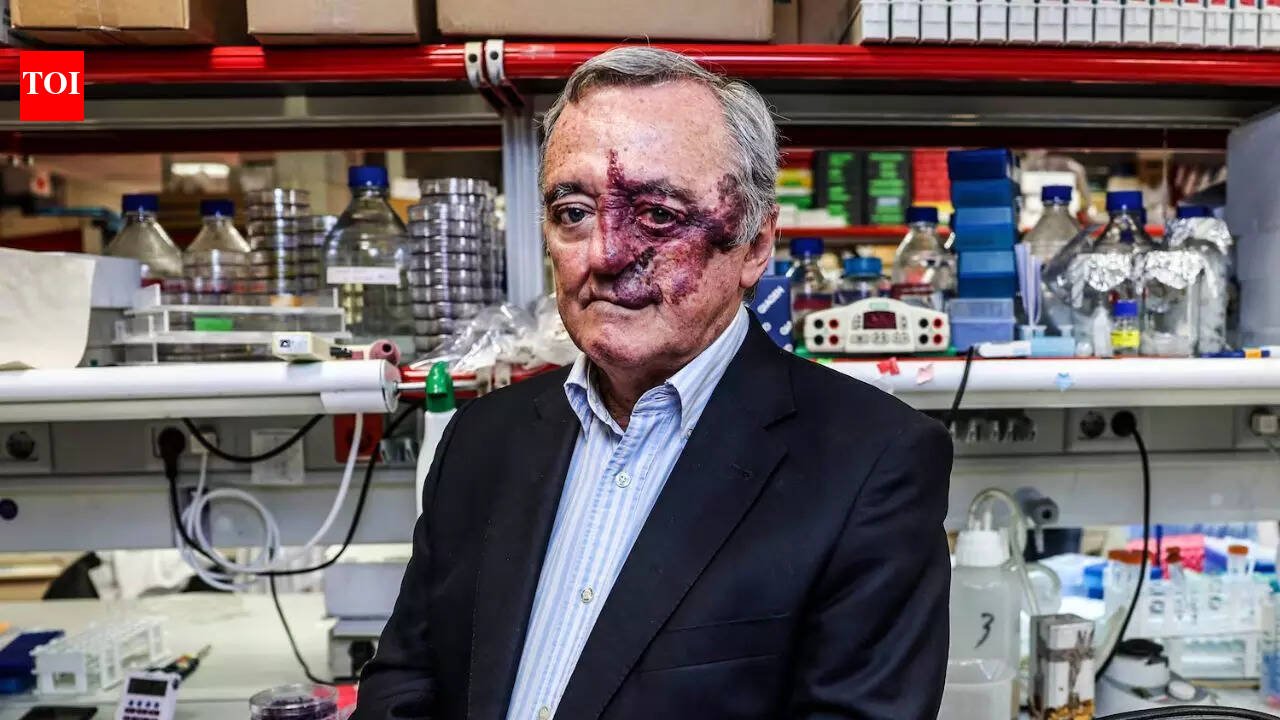
A Spanish research team says it has developed a treatment that completely eliminated the most aggressive form of pancreatic cancer in laboratory mice, raising fresh hopes against one of the deadliest cancers. The study, led by Mariano Barbacid at Spain’s Spanish National Cancer Research Centre, found that a newly designed triple-drug therapy wiped out pancreatic tumours with no relapse seen after treatment. After six years of work, researchers reported that the animals showed minimal side effects and no tumour recurrence, results that mark one of the most promising advances yet in pancreatic cancer research.

Pancreatic cancer and the therapy behind the breakthrough

Pancreatic cancer, particularly pancreatic ductal adenocarcinoma, is among the deadliest malignancies due to its resistance to treatment, dense tumour microenvironment, and late diagnosis. Standard therapies often fail because tumours rapidly adapt, bypassing single-target drugs.The CNIO therapy takes a different approach. Instead of attacking one pathway, it combines three drugs to shut down multiple tumour survival mechanisms simultaneously. According to the researchers, this strategy prevents cancer cells from rewiring themselves, a common cause of treatment failure.Barbacid has previously argued that pancreatic cancer cannot be defeated with a single-drug strategy. This tumour, he has said in earlier research discussions, is extraordinarily adaptable, and only coordinated inhibition of multiple pathways can produce lasting responses.

What the study found in laboratory models

In controlled laboratory experiments, mice with advanced pancreatic tumours experienced complete tumour elimination after receiving the triple-drug therapy. Even more notable was what happened afterwards. During extended follow-up, researchers observed no tumour regrowth, suggesting that the therapy may suppress the biological mechanisms that typically drive relapse.The findings were published inProceedings of the National Academy of Sciences (PNAS), where reviewers highlighted both the durability of the response and the unusually low toxicity seen in treated animals, a critical factor for any therapy aimed at human use.Independent cancer researchers not involved in the study have noted that durable responses without relapse are exceptionally rare in pancreatic cancer models, making the results particularly significant within the field.

Spanish scientist finds cure for pancreatic cancer in major medical breakthrough

Who is Mariano Barbacid?

Barbacid is one of Europe’s most influential cancer researchers. In the early 1980s, he helped identify the first human oncogene, a discovery that fundamentally reshaped modern cancer biology and established the genetic basis of cancer.Over the past four decades, his work has repeatedly focused on KRAS-driven tumours, long considered among the hardest cancers to treat. Because KRAS mutations are present in roughly 90 per cent of pancreatic cancers, Barbacid’s sustained focus on this pathway gives the current breakthrough added weight within the scientific community.

Funding, institutions, and credibility

The research was conducted at CNIO, one of Europe’s leading cancer research institutions, with support from Fundación CRIS Contra el Cáncer, which funds high-risk, high-impact cancer research projects.The study followed established experimental protocols and underwent independent peer review before publication. There is no evidence the findings were rushed or bypassed scientific safeguards, a point emphasised by CNIO officials amid online speculation.

Public reaction and online controversy

News of the breakthrough spread rapidly across social media, generating both excitement and scepticism. Many users hailed the findings as a cure, while others questioned whether pharmaceutical or regulatory barriers could delay progress.Such reactions reflect a broader tension in cancer research communication, namely the gap between legitimate scientific caution and public desperation for definitive cures, particularly for diseases with historically grim outcomes.

Pancreatic cancer From signs to treatment process, expert explains how to manage the condition

What happens next

The next phase involves further validation studies and safety testing, followed, if funding and regulatory approvals allow, by early-stage human trials. While a confirmed cure for pancreatic cancer in people remains years away, experts agree that this research provides one of the strongest indications yet that the disease may finally be vulnerable to targeted combination therapies rather than incremental treatment gains.


Source link

IND vs NZ: Suryakumar Yadav explains decision to bat second and go with just 6 specialist batters during 4th T20I


In a tactical experiment aimed at preparing for the T20 World Cup 2026, India‘s dominant run-streak came to a halt in the 4th T20I against New Zealand in Visakhapatnam on January 28, 2026. After securing three consecutive wins to take the series, the hosts suffered a 50-run defeat after being bowled out for 165 while chasing a massive target of 216.

Suryakumar Yadav reveals why India chose to bat second and go with 6 specialist batters

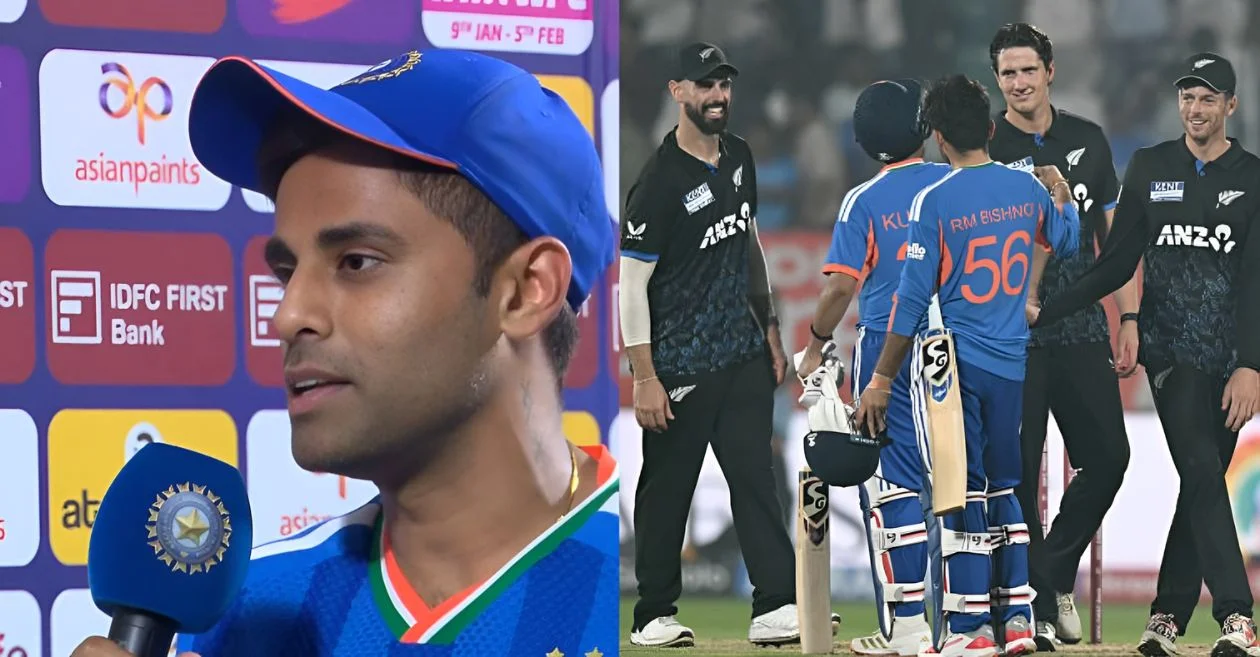
Following the match, captain Suryakumar Yadav revealed that the decision to bowl first and field a shorter batting lineup was a calculated ‘challenge’ for the squad. Yadav explained that the team intentionally played with only six specialist batters and five front-line bowlers to simulate high-pressure World Cup scenarios.

“I feel we purposely played six batters today. We wanted to have five perfect bowlers and wanted to challenge ourselves. Like for example, if we’re chasing 200 or 180, and we wanted to see if we were two down or three down, how does it look. But then it’s fine at the end of the day. And we wanted to play all the players who are part of the World Cup squad. Otherwise, we would have played other ones. (On opting to bat second) We’ve been batting really well when we’ve batted first. So I wanted the guys to take that responsibility if we’re chasing 180 or 200, and two wickets or three wickets are down and see how we bat. So it’s a good challenge. Hopefully if we get an opportunity again in the next game, we might chase again” Suryakumar Yadav said after the game.

Despite the loss, India retains a 3-1 lead in the series as they head into the final match in Thiruvananthapuram. This remains their final dress rehearsal before the World Cup begins on February 7.

Also READ: Fans react after Shivam Dube’s brave knock falls short as New Zealand ends losing streak with 50-run win over India in 4th T20I

New Zealand’s dominance against India in the 4th T20I

The Black Caps set a formidable total of 215/7, fueled by a blistering 100-run opening stand between Tim Seifert (62 off 36) and Devon Conway (44 off 23). Despite India clawing back through Jasprit Bumrah and Kuldeep Yadav, a late flourish from Daryl Mitchell (39 off 18)*, including 19 runs off Bumrah’s 19th over, pushed the Kiwis past the 200-mark.

In response, India’s chase faltered early. Abhishek Sharma fell for a golden duck, while the captain himself managed only 8 runs. Shivam Dube was the lone bright spot, smashing a career-best 65 off 23 balls (including seven sixes), reaching his fifty in just 15 deliveries. However, his unfortunate run-out at the non-striker’s end effectively ended India’s hopes, as the tail folded quickly under pressure from Mitchell Santner (3/26).

Also READ: Suresh Raina, Irfan Pathan and other experts predict Team India’s leading run-scorer at T20 World Cup 2026


Source link

Secularism lost a strong voice: Muslim leaders mourn Ajit Pawar’s death | Mumbai News


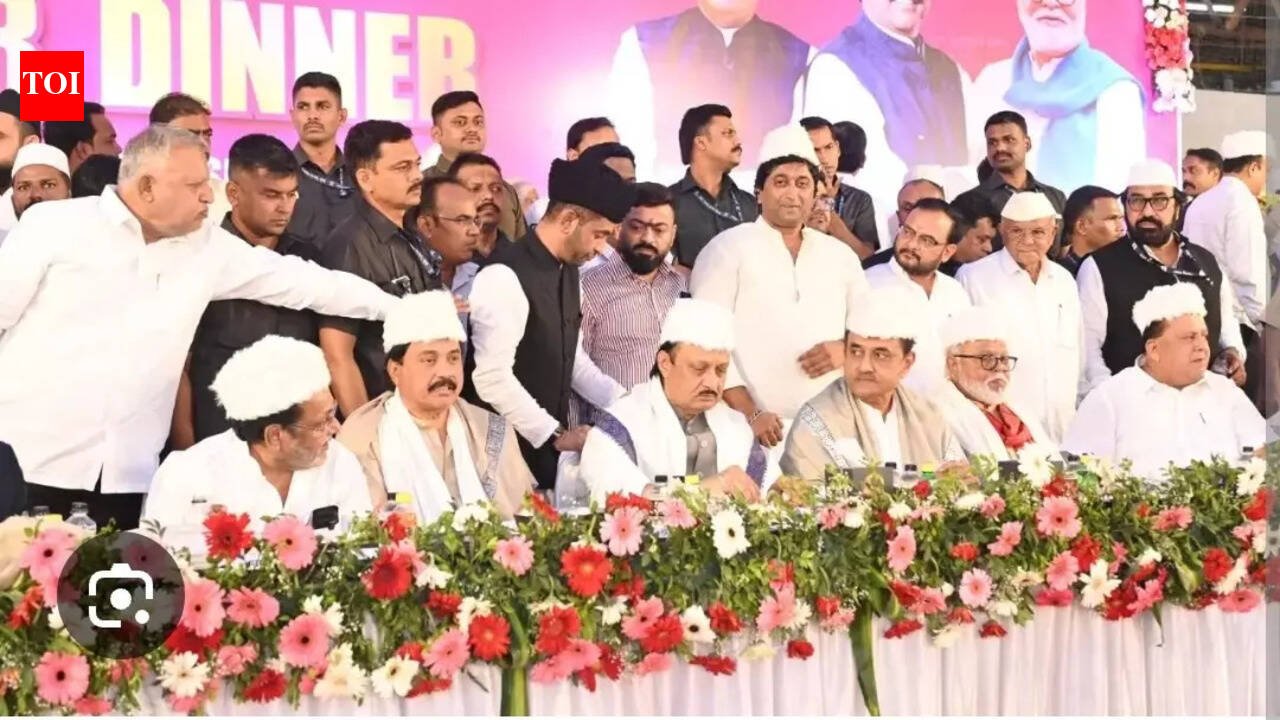
MUMBAI: A section of Muslim leaders said secularism lost s strong secular voice in the death of deputy CM Ajit Pawar.Many recalled Pawar’s public assurance to the community at the iftar party he hosted the Islam Gymkhana last year. “At this iftar dinner, he boldly said that he was brother of Muslims and he would not accept anyone intimidating the community,” said Nawab Malik, former minister and a senior leader NCP (Ajit Pawar).Pawar had made this statement amid the tense atmosphere created due to calls to demolish Aurangzeb’s mazar at Khuldabad near Sambhajinagar (Aurangabad) and in the aftermath of the Nagpur riots.Congress MLA Amin Patel who knew Pawar for decades said that his commitment to secularism and public service was exemplary.”I knew him very closely and never found him discriminating against anyone. He would work for everyone irrespective of caste and creed. This is a huge loss of Maharashtra,” said Patel.National chairman (minorities department) Syed Jalaluddin said that Pawar never compromised his secular credentials. “His alliance with BJP-led Mahayuti was strategic, not ideological. He remained secular and often demonstrated it with statements and action,” he said.


Source link

UGC equity rules hit the streets: Student protests across states intensify as Supreme Court steps in


UGC equity rules hit the streets: Student protests across states intensify as Supreme Court steps in

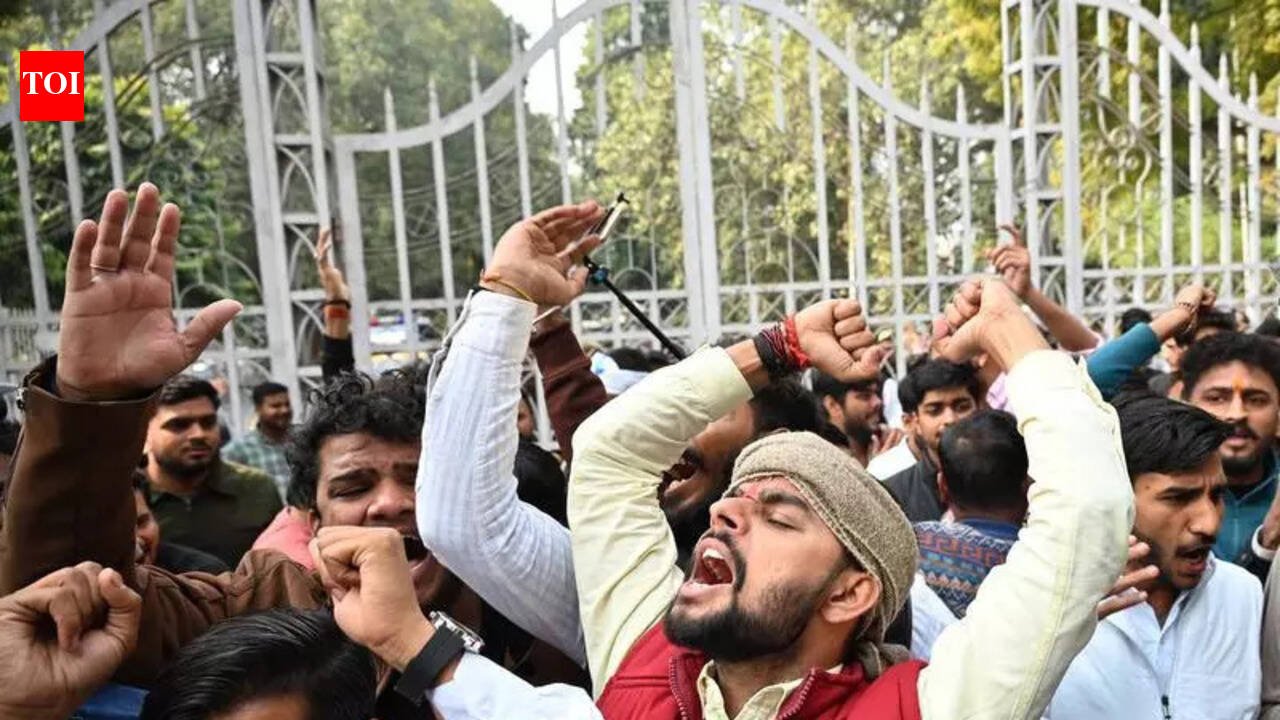
In Indian educational institutes, policy rarely stays on paper for long. It steps off the page, enters the classroom, and—when it collides with identity—moves swiftly to the street. This week, a regulatory amendment meant to institutionalise equity in higher education has done exactly that, drawing students into protest, states into argument, and the judiciary into review.Opposition to the University Grants Commission (Promotion of Equity in Higher Education Institutions) Regulations, 2026, notified on January 13, played out simultaneously across campuses and courtrooms on Wednesday. Students at Delhi University’s North Campus staged a protest demanding a rollback of the rules, while in Patna, student groups announced a nationwide strike call. At the same time, the Supreme Court prepared to hear petitions challenging the regulations as Tamil Nadu CM M. K. Stalin described them as a “welcome step”.

Delhi University protest turns tense

At Delhi University’s North Campus, students—mostly identifying themselves as belonging to the general category—gathered near the Vice-Chancellor’s office to protest what they described as an exclusionary framework. According to ANI, the protest turned tense when students breached the first police barricade and attempted to move closer to the administrative block, following which police closed the main university gate to prevent escalation.The protesters alleged that the new UGC guidelines violated the principle of “educational equality” by excluding general category students from representation in grievance redressal mechanisms.Holding placards reading “Equity for all, not for few,” “Education with justice builds a strong nation,” “Kaala kanoon vaapas lo,” and “Rajneeti Murdabaad,” the students warned that their agitation would intensify if the regulations were not withdrawn.Satvik Sharma, one of the protesters, said the students were seeking a complete rollback of the regulations. “There is no clear procedure. The definition of discrimination is vague, and the UGC should clearly list what constitutes discrimination. If there is no rollback, we will go to Parliament and the courts. This black law will not be accepted,” Sharma told ANI.Another protester, Akhilesh Tiwari, alleged that the regulations were tilted in favour of specific categories. In an interaction with ANI he said, “Ambiguities and loopholes in the regulations could lead to misuse and said the movement would be taken to Parliament if necessary.” Tiwari explained that students were not opposing safeguards against discrimination, but were demanding amendments based on the principles of natural justice, alleging that the general category had been excluded from the framework.The protesters also questioned the need for a new framework, pointing to an existing grievance redressal system notified through a 2013 gazette, and raised concerns over what they described as a lack of procedural clarity in the new rules.

Patna sees street protest, strike call

In Bihar, opposition to the proposed UGC framework took a more confrontational turn. Patna witnessed tense scenes as hundreds of students staged a protest at Dinkar Golambar, a major traffic intersection, disrupting movement for some time.The protest, organised under the banners of the All Bihar Students Union (ABSU) and Savarna Ekta Manch, saw sloganeering against the central government and burning of materials on the road, reports IANS.Student leader Vishal Kumar alleged that the proposed UGC Bill was against the interests of upper-caste students. “If you stay united, you will be safe; if you divide, you will be destroyed,” Kumar said, addressing the protesters, reports IANS. He added, “Unity, integrity and equality are talked about across the country, but in the vicious cycle of politics, upper-caste people are becoming helpless. The Prime Minister has been elected three times — were upper-caste votes not taken? Then why has such a bill been brought?”Another student leader, Suryadev Kumar, described the framework as divisive. “This law is meant to divide students into two groups. On one hand, caste-based politics is being promoted, and on the other, the upper castes are being targeted. Upper castes will not tolerate this,” Kumar told IANS.Saroj Kumar, another student protester, questioned the intent behind the regulations. IANS quoted him saying, “The UGC Bill should be withdrawn. If false allegations are being made, there should be a proper investigation mechanism. The government should have created an institution to ensure justice.” Rakesh Kumar linked the proposed regulations to earlier legal frameworks, alleging misuse. “Thousands of people are in jail under false charges. Now another Bill is being brought to target the upper castes. If an allegation is made in a university, what is its basis? The burden of proof should not fall unfairly on the accused,” he told IANS.The protesters announced that if the Bill was not withdrawn, a nationwide strike would be held on February 1, according to IANS.

UP students join protests

As the agitation widened beyond Delhi and Bihar, students across Uttar Pradesh staged protests for a second consecutive day against the UGC Regulations, 2026, reports TNN. Raising slogans such as “UGC Roll Back,” “Bantenge Toh Katenge,” and “Ek Hain Toh Safe Hain,” the demonstrators accused the UGC of promoting discriminatory policies in the name of equality, finds the TNN report. The report has quoted Chhatra Panchayat president Shivam Pandey saying, “This black law is unacceptable. The Prime Minister spoke of unity, but these regulations will only poison the atmosphere inside university campuses. Students eat together, study together, and do not even know each other’s surnames. This law is politically motivated and aims to divide students.”

Supreme Court to hear petitions

As protests unfolded on the ground, the legal challenge to the UGC regulations moved forward. The Supreme Court is scheduled to hear on Thursday a batch of petitions challenging the regulations.According to IANS, a bench led by Chief Justice of India Surya Kant and Justice Joymalya Bagchi will take up the matter. Earlier, IANS quoted him as saying, “We know what’s happening. Make sure defects are cured. We will list it.”The petitioners have argued that the regulations institutionalise discrimination by denying grievance redressal mechanisms to individuals belonging to non-SC, ST and OBC categories. One petition contends that the definition of caste-based discrimination under the regulations accords legal recognition of victimhood exclusively to certain categories, irrespective of the nature or gravity of discrimination faced by others.The plea seeks directions to ensure that Equal Opportunity Centres, equity helplines, inquiry mechanisms and Ombudsperson proceedings are made available in a “non-discriminatory and caste-neutral manner,” alleging violations of Articles 14, 15(1) and 21 of the Constitution, reports IANS.

Tamil Nadu CM backs regulations

Amid the backlash, Tamil Nadu Chief Minister M K Stalin defended the regulations, calling them overdue but necessary. In an interaction with PTI, Stalin said the UGC regulations were a welcome step in reforming a higher education system “scarred by deep rooted discrimination and institutional apathy.”PTI quoted him as saying, “Since the BJP came to power at the Centre there has been a visible rise in student suicides within Indian HEIs particularly among SC and ST students.” He added, “This has been accompanied by repeated attacks and harassment targeting students from south India, Kashmir, and minority communities.”Stalin said equity safeguards were “not a matter of choice but an unavoidable necessity,” and argued that the inclusion of OBCs within the framework deserved support. Drawing parallels with resistance during the implementation of Mandal Commission recommendations, he said the current backlash reflected a regressive mindset.However, the Chief Minister also flagged concerns about implementation. Referring to cases such as the suicide of Rohith Vemula, Stalin said it was difficult to see how equity committees chaired by institutional heads could function independently. He said the regulations must be strengthened, revised to address structural gaps, and enforced with “real accountability,” reports PTI.

From campus unrest to constitutional test

As the controversy travels from university campuses to the Supreme Court, and from street protests to political platforms, the Union government has sought to steady the narrative. Union Education Minister Dharmendra Pradhan has said the UGC’s equity regulations will not be misused and has assured that there will be no discrimination in their implementation—positioning the framework as a safeguard rather than a sanction. That reassurance, however, has not slowed the pushback. Leaders from opposition parties and state governments have read the same regulations through sharply different lenses: Some have called them unconstitutional and divisive, while others have defended them as an overdue response to institutional discrimination, warning against any dilution under political pressure. What began as a regulatory correction has thus become a broader contest over how equity is defined, administered and contested in public institutions. With student groups mobilised, state leaders split, and petitions now before the Supreme Court, the UGC’s attempt to turn anti-discrimination norms into enforceable governance stands at a moment of reckoning—its intent defended, its design disputed, and its future likely to be shaped as much by judicial scrutiny as by political consensus.(With inputs from agencies)


Source link

Google AI CEO Demis Hassabis on Gemini model that made OpenAI CEO Sam Altman send Code Red to staff; says: You never quite know when…


Google AI CEO Demis Hassabis on Gemini model that made OpenAI CEO Sam Altman send Code Red to staff; says: You never quite know when…
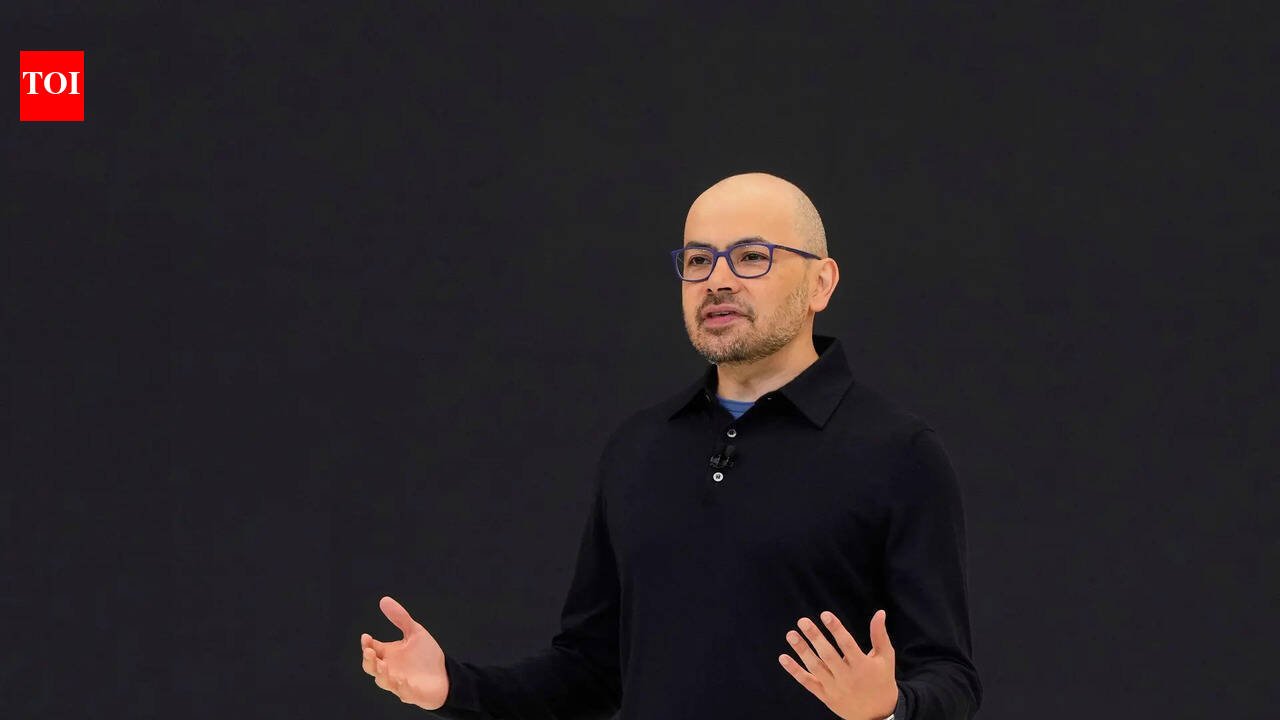
Google DeepMind CEO Demis Hassabis revealed Gemini 3’s launch caused OpenAI to declare a ‘Code Red,’ with ChatGPT losing millions of users. Hassabis credits Google’s pre-training team for its competitive edge. Despite significant growth in generative AI market share, he emphasizes the race for AGI is far from over, with focus now on Gemini 4.

Google DeepMind CEO Demis Hassabis has opened up about the Gemini 3 launch that rattled OpenAI so badly that Sam Altman declared a company-wide “Code Red” in December. In a recent interview with Alex Heath, Hassabis admitted that even he wasn’t entirely sure how the new model would perform against the competition.“You never quite know when you’re baking a new model, right? You obviously have your theories and your tests,” Hassabis told Heath. But he noted Google was already on a strong trajectory, pointing to Gemini 2.5 topping leaderboards back in May.

OpenAI lost 6% of its users in a week after Gemini 3 dropped

The fallout from Gemini 3’s November release was swift. OpenAI shed roughly 12 million daily visitors within a week of Google’s launch. ChatGPT’s traffic dropped from 203 million to 191 million average daily visits, according to SimilarWeb data.

OpenAI’s Master Plan for India

Altman’s internal memo instructed staff to pause work on advertising, AI health agents, and a personal assistant called Pulse. The focus shifted entirely to improving ChatGPT’s speed, reliability, and personalization.Hassabis, meanwhile, struck a measured tone. “It’s a ferocious, intense competition,” he acknowledged to Heath. “Everyone’s trying to leapfrog each other. So one can’t rest on our laurels.”

Google’s pre-training team is its secret weapon, says Demis Hassabis

When asked about what gives Google its edge, Hassabis didn’t hesitate. “When it comes to pre-training, I think we have the best team in the world by far,” he said. He credited Google DeepMind’s depth in fundamental research for the company’s ability to keep shipping competitive models.The Gemini app’s monthly active users jumped from 350 million in March to 650 million by October. Google’s Nano Banana image generator, launched in August, was so popular it nearly overwhelmed the company’s tensor processing units.

Google Deepmind CEO eyes AGI but warns the race isn’t over

Despite Gemini 3’s success, Hassabis isn’t declaring victory. He told Heath that Google’s generative AI market share has grown from 5% to 20% in a year, but “there’s still a lot of hard work in front of us.”He also took a subtle dig at competitors raising massive funding rounds. “Seed rounds for companies that have nothing yet in the research or product… that’s very fragile,” he observed.For now, Hassabis says his team is laser-focused on Gemini 4. “This year, we hope to accelerate even further,” he said. The AI race, it seems, is far from settled.


Source link

Rupee returns to red! Currency falls to 92 per US Dollar


Rupee returns to red! Currency falls to 92 per US Dollar

Rupee continued its fall on Thursday, sliding to 92 mark against the US dollar. The currency has been in constant pressue due to persistent demand for the greenback and a cautious global market.According to currency dealers, the domestic unit was dragged down after the dollar index rebounded from multi-year lows, following the US Federal Reserve’s decision to keep interest rates unchanged at the conclusion of its first policy meeting of 2026. Heightened geopolitical tensions have also pushed investors towards safe-haven assets, weighing on emerging market currencies. In early interbank trade, the rupee opened marginally weaker at 91.95 and soon touched 92.00 against the dollar, slipping 1 paisa from its previous close. This comes after the currency ended Wednesday’s session sharply lower, falling 31 paise to 91.99, its weakest closing level on record. The rupee had earlier hit its lowest-ever intraday level of 92.00 on January 23. According to Amit Pabari, MD at CR Forex Advisors, continued capital outflows have kept dollar demand elevated in the market. He also pointed to rising crude oil prices as an added pressure on the currency. Oil prices have climbed over 4% this week, extending gains for a third straight session to levels last seen in late September. At the same time, the dollar index, which tracks the US currency against six major peers, was trading 0.29% lower at 96.16. Brent crude futures were up 1.32% at $69.30 per barrel. Pabari said the 92.00 level remains a crucial near-term zone for the USD/INR pair in the non-deliverable forward market. A sustained break above this level could push the pair towards 92.20–92.50, although intervention by the Reserve Bank of India and a softer global dollar could limit further depreciation and help the rupee move back towards the 91.00–91.20 range. Domestic equities also opened lower, reflecting cautious sentiment. The BSE Sensex slipped almost 560 points, while the NSE Nifty was trading below 25,200. Data showed foreign institutional investors remained net buyers, purchasing equities worth Rs 480.26 crore on Wednesday. On the macroeconomic front, the country’s industrial output posted its strongest growth in over two years, rising 7.8% in December 2025, supported by robust performance in the manufacturing, mining and power sectors. In comparison, the Index of Industrial Production had grown 3.7% in December 2024.


Source link

Washington Sundar fitness test likely on Feb 4 as selectors delay T20 World Cup contingency plans | Cricket News


Washington Sundar fitness test likely on Feb 4 as selectors delay T20 World Cup contingency plans
Washington Sundar (Getty Images)

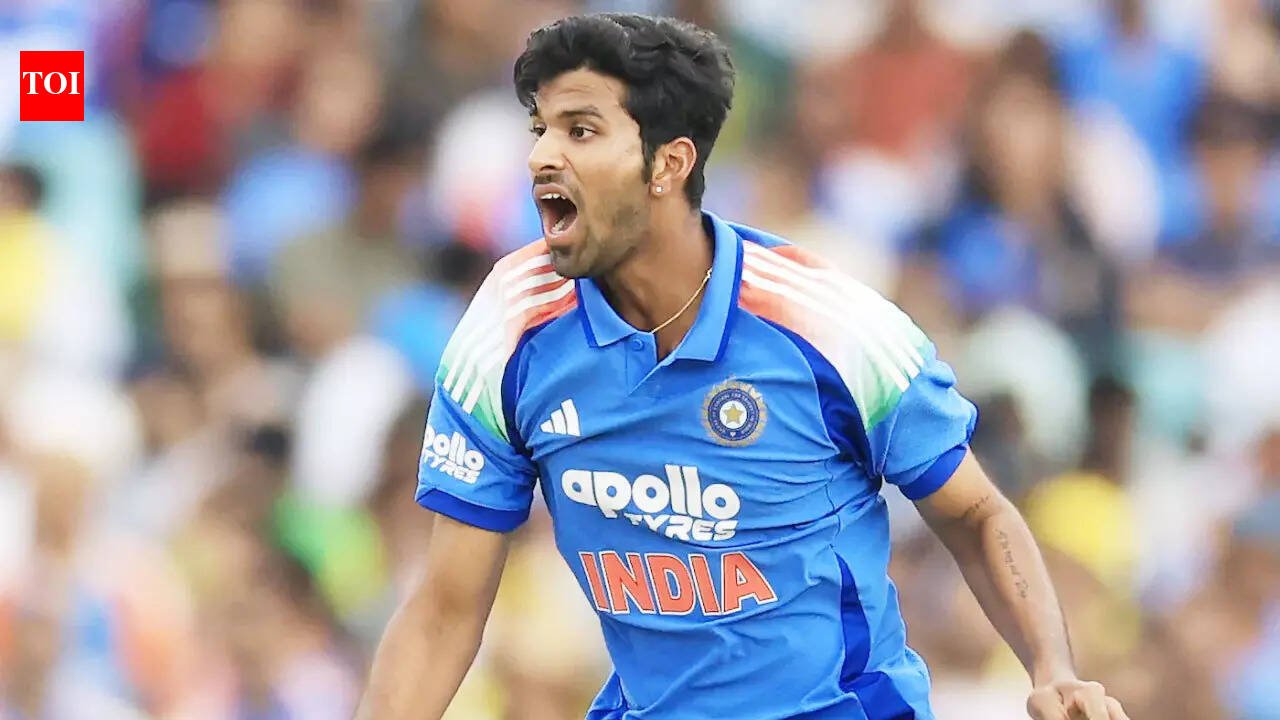
NEW DELHI: Washington Sundar is scheduled to undergo a fitness test at the BCCI’s Centre of Excellence (CoE) in Bengaluru on Feb 4, three days ahead of the start of India’s T20 World Cup campaign on Feb 7. The spin-bowling allrounder’s availability for the tournament is currently in doubt as his recovery from a side strain is taking a lot longer than what was expected. Wasington sustained the in the first ODI against New Zealand on Jan 11.Go Beyond The Boundary with our YouTube channel. SUBSCRIBE NOW!TOI understands that the team management and the selectors are willing to wait for an official medical update on Washington before initiating backup plans. Teams are allowed to make changes till Jan 30 but injury replacements can be made even during the tournament if approved by the tournament’s technical committee. The Indian team is slated to assemble in Mumbai for its first training session Feb 3 before playing a warm-up match against South Africa on Feb 4.

Inside details of Washington Sundar’s recovery at BCCI CoE | Why India are patient | T20 World Cup

Washington’s fitness test could provide an idea about the rate of his recovery. While the Indian cricket board (BCCI) never specified the nature of the injury, sources said that he has suffered a muscle tear near the ribs at the back.On Wednesday, Tilak Varma and Riyan Parag played a simulation match at the CoE while Washington didn’t perfor m any intense drills. “Washington’s injury needs to heal naturally before he gets back to the return-to-play process,” a BCCI source said. Tilak is expected to join the team before the warm-up game.The team wears a settled look even without vice-captain Axar Patel taking the field in the ongoing T20I series against New Zealand. While Parag is seen as a like-for-like replacement for Washington, the team management has struck a good balance even without a spin-bowling allrounder. “If Washington can be fit for the later stages of the WC, the team may wait for him,” the source said.


Source link

Access Denied


Access Denied

You don’t have permission to access “http://www.ndtv.com/world-news/how-the-son-of-irans-supreme-leader-built-a-global-property-empire-10904830” on this server.

Reference #18.f5493417.1769671336.170b791f

https://errors.edgesuite.net/18.f5493417.1769671336.170b791f


Source link

Ajit Pawar passes away in plane crash: Maharashtra observes state mourning; schools closed on Wednesday, no holiday on Thursday and Friday


Maharashtra schools shut after Ajit Pawar death in Baramati aircraft crash

Schools across Maharashtra remained closed on Wednesday as the state government declared a three-day period of mourning following the tragic death of Deputy Chief Minister Ajit Pawar in a plane crash. The closure affected educational institutions throughout the state.The Maharashtra government announced an immediate public holiday after Pawar’s chartered aircraft crashed while attempting to land at Baramati Airport on Wednesday morning. All schools were ordered to remain shut on Wednesday as a mark of respect to the deceased leader.However, the state school education directorate issued the circular declaring Wednesday a holiday only around 3 pm. By that time, most schools had already completed their morning sessions and were in the middle of afternoon classes. Rajesh Pandya of the Teachers Democratic Front criticised the abrupt announcement, saying, “Notifying the closure of schools suddenly shouldn’t be done because then how is the school supposed to arrange for the children to be sent back. A more effective thing would have been to declare a holiday tomorrow in light of the funeral.”

“Deeply Saddened by His Passing”: PM Modi, HM Shah Mourn Ajit Pawar’s Untimely Death

There is no holiday for schools on Thursday and Friday, and educational institutions are expected to function as usual on both days.Chief Minister Devendra Fadnavis announced a three-day state mourning period, during which the national flag is flying at half-mast on all government buildings across Maharashtra. He also cancelled all his programmes and, along with fellow Deputy Chief Minister Eknath Shinde, travelled to Baramati immediately after the incident, describing Pawar’s death as an “unprecedented loss” for the state.The 66-year-old Pawar died along with four others when his Learjet 45 crashed around 8:45 am while travelling from Mumbai to Baramati. The victims included pilot Sumit Kapoor, co-pilot Shambhavi Pathak, flight attendant Pinky Mali, and Pawar’s personal security officer HC Vidhit Jadhav.According to the Directorate General of Civil Aviation (DGCA), the VSR Aviation-operated aircraft crashed during a second approach to runway 11 at Baramati Airport. The plane veered off the runway, burst into flames, and was destroyed on impact. The DGCA has launched a detailed investigation into the cause of the crash.Pawar, nephew of veteran politician Sharad Pawar, was one of Maharashtra’s most influential leaders. He served as the state’s longest-serving deputy chief minister and held key portfolios including water resources, finance, and energy. His death has sent shockwaves across the political spectrum, with leaders from across party lines expressing grief.President Droupadi Murmu and Prime Minister Narendra Modi have conveyed their condolences to Pawar’s family.


Source link