Breaking News
India’s job seekers are active, anxious and unsure how to stand out in an AI-shaped market | Mumbai News


MUMBAI: At a moment when artificial intelligence is reshaping how work is done and how people are hired, a striking contradiction is emerging in India’s job market: professionals are more active than ever in looking for work, yet more uncertain than ever about how to succeed.New research from LinkedIn shows that 84% of professionals in India feel unprepared to find a new job in 2026, even as 72% say they are actively seeking one. The anxiety is not driven by a lack of ambition, but by the feeling of navigating an opaque and fast-changing hiring landscape — one increasingly shaped by algorithms, automation and shifting skill demands.While 87% of professionals say they are comfortable using AI at work, many feel unsure about how it is being used in recruitment. Seventy-seven percent say there are too many stages in the hiring process, and 66% find it increasingly impersonal. With recruiter response times slowing and feedback often absent, nearly half of job seekers say they simply do not know how to make their application stand out.Competition is a major part of the story. LinkedIn data shows that applicants per open role in India have more than doubled since early 2022. As a result, 76% of job seekers say finding a new role has become tougher over the last year. Recruiters, too, are under strain: nearly 74% say it has become harder to find qualified talent, suggesting a widening gap between what companies need and what candidates believe they offer.That mismatch is pushing people to rethink their career trajectories. Around a third of Gen X job seekers are considering new functions or roles, while a similar proportion of Gen Z is looking beyond their current industry. At the same time, LinkedIn data shows “founder” emerging as a rapidly growing identity, reflecting a parallel shift towards entrepreneurship as an alternative to traditional employment.Yet if AI is part of what is unsettling the job market, it is also becoming a tool for navigating it. Ninety-four percent of Indian job seekers say they plan to use AI in their job search, and 66% say it boosts their interview confidence. AI, in this sense, is evolving from a productivity tool into a psychological one — helping people regain a sense of control in an uncertain process.“AI is now a foundational part of how careers are built and how talent is evaluated across India’s job market. What professionals need most is a clear understanding of how their skills translate into opportunity and how hiring decisions are actually made. When used with purpose, AI tools can bridge that gap by helping people identify the roles they’re right for, prepare with intent, and focus their learning where it matters most. That’s where LinkedIn helps job seekers and hirers meet the moment,” said Nirajita Banerjee, LinkedIn Career Expert and Senior Managing Editor, LinkedIn India News.LinkedIn’s “Jobs on the Rise” list offers one such lens into where demand is moving. Prompt Engineer now tops the list, followed by AI Engineer and Software Engineer, reflecting sustained appetite for AI and digital skills. But the rankings also reveal growth across sales, brand strategy, cybersecurity and advisory roles — alongside less obvious areas such as veterinary services, solar consulting and behavioural therapy.To support job seekers, LinkedIn is rolling out AI-powered job search globally, allowing members to search in natural language and discover roles they may not have considered. Job match tools further help candidates understand where they are most likely to fit, shifting the emphasis from volume of applications to relevance.What emerges from the data is not just a picture of a competitive market, but of a transitional one — where the rules are being rewritten faster than most people can learn them. The unease professionals feel is not simply about jobs disappearing, but about not knowing how to be visible, legible and valued in a system increasingly mediated by machines. In that sense, the real skill deficit of 2026 may not be technical alone, but interpretive: learning how to read the new signals of work, and how to respond to them with clarity and confidence.



Source link

How female-led films like ‘Lokah’, ‘Mahanati’ and ‘The Girlfriend’ in South Indian cinema have broken the glass ceiling in recent years |


South Indian cinema is witnessing a powerful shift, moving beyond male-dominated narratives to celebrate female protagonists. Films like ‘Rudhramadevi’, ‘Mahanati’, and the record-breaking ‘Lokah: Chapter 1- Chandra’ showcase women as heroes and architects of their own destinies. This evolution highlights diverse storytelling and the commercial viability of women-led projects, reflecting broader cultural changes.

For decades, South Indian cinema spanning Telugu, Tamil, Malayalam, and Kannada language film industries has been anchored in male-centric narratives. The cultural expectation was clear: mass entertainers typically revolved around heroes, larger-than-life action sequences, melodrama, and the box office pull of male stars. Women, while often integral, existed most frequently in ornamental, romantic, or supporting roles. That is changing and in 2025, it has changed strikingly. A quiet revolution is underway, one that reimagines screen narratives, recalibrates audience expectations, and elevates female protagonists from accessories to architects of their own stories.From peripheral to central: A shifting narrative landscapeThe transformation has not happened overnight. It was built on milestones films that insisted on centralising women’s interior worlds, ambitions, fears, strengths, and contradictions. These films didn’t just feature women; they were led by them.

From Kirik Party to Pushpa & Animal, Rashmika Marks 9 Years With Heartfelt Note

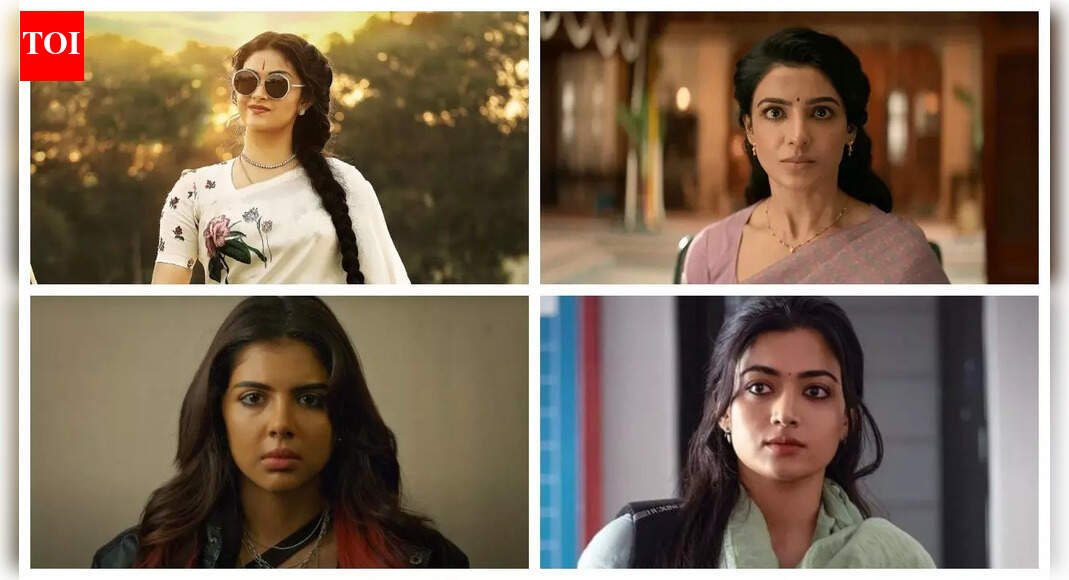
One of the earliest notable examples in recent memory is ‘Rudhramadevi’ (2015), starring Anushka Shetty, it was based on the life of Rudhramadevi – one of the most prominent rulers of Kakatiya dynasty in the Deccan and of the few ruling queens in Indian history. In an industry often reluctant to make women-led action films, this period biopic stood for telling a story of a powerful woman ruler. Before this one, Shetty had also done ‘Arundhati’, a horror-fantasy which she led from the front. Biopics and emotional authenticity: ‘Mahanati’ and beyondIn 2018, ‘Mahanati’, the biographical drama of legendary South Indian actress Savitri, brought a new texture to female storytelling. With Keerthy Suresh’s luminous performance as the titular icon, ‘Mahanati’ showcased how women’s stories, rooted in the emotional and cultural texture of cinema history itself, could be both critically acclaimed and commercially viable. It went on to be the highest grossing female led film from South India till Kalyani Priyadarshan’s ‘Lokah: Chapter 1- Chandra’ released this year. Also in the same year released Bhaagamathie once again led by Anushka Shetty- the film blended horror and thriller with a potent female lead who refuses to be reduced to fear alone. Its success further cemented the notion that women could command audiences in high-concept genre films.But it was in 2025 that South Indian cinema truly felt the shift in female-driven storytelling in a big way. ‘Lokah Chapter 1: Chandra’ headlined by Kalyani Priyadarshan- a Malayalam superhero film centred on a mysterious woman summoned to fight corruption and injustice did something few would have predicted a year earlier: it became the highest-grossing female-led film in South Indian history and 2nd highest female led film of Indian Cinema.. Not only did it break the ₹100 crore mark in the country , it also went on to become the highest grossing Malayalam film of all time. The film also demonstrated that female superheroes could attract mass audiences without falling back on male co-stars to sell tickets. ‘Lokah’ is one of the examples on how a perfect production planning can help in improving a movie’s quality.It wasn’t just box office numbers that made Lokah significant, it was the confidence with which the story granted agency to its female central figure, positioning her not as a companion or quest object but as the epicentre of her own mythology.Adding to the mix was Rahul Ravindran helmed and Rashmika Mandanna starrer ‘The Girlfriend’ which examined toxic relationships through a brave and unflinching lens.

Social realism & Female interior worlds

Parallel to blockbuster superhero narratives, another important wave has been female-led social realism. The Malayalam sensation ‘The Great Indian Kitchen’ (2021) saw the release of its Hindi remake with Sanya Malhotra. It went on to become one of the most viewed films of Zee5 for the year. These films don’t rely on spectacle. Instead, their power comes from emotional accuracy and the quiet brutality of domestic expectations. The year also saw Anupama Parmeswaran step up the heat with hard hitting stories surrounding women and their place in society. Her first film ‘Parada’ told story of a village bound by the belief that women must remain veiled to ward off a curse and other film ‘JSK: Janaki V vs State of Kerala’ told the story of a rape victim. The film exposed the deep moral and ethical dilemmas of the Indian judicial system. The year also saw the release of Anushka Shetty’s ‘Ghaati’, the film told the story of a woman seeking revenge and striving to lift her community out of an endless exploitation. 2026 has also begun with a bang for women led films and this time it is newly married Samantha Ruth Prabhu with her film ‘Maa Inti Bangaaram’. The film is co-written and created by her husband Raj Nidimoru. Talking about Samantha said, “Maa Inti Bangaaram tells the story of a woman whose strength comes as much from her vulnerability as from her courage. Playing this character and nurturing this film as a producer has been an incredibly fulfilling journey for me. The world of this film is rooted and emotional with a narrative style dedicated to being family first and slice of life whilst maintaining its quirky, edgy energy. I’m truly excited for audiences to experience this story and connect with its spirit when it reaches them.”It isn’t like all the female led films released this year or in the past have worked at the box office -some connected and some didn’t. And this is the case also with the male led films. This surge in female-led films isn’t simply about representation. It’s about diversification of narrative forms, deeper engagement with varied audience experiences, and importantly commercial recognition that stories centred on women can sell tickets, ignite conversations, and win awards. The shift also reflects broader cultural currents that women on screen are no longer just the love interest, the caretaker, the victim, or the ornament, they are heroes, architects of their fates, flawed and powerful on their own terms.Some may celebrate these films as the moment the glass ceiling shattered; in reality, this is only the opening act of a far longer story


Source link

‘Parasakthi’: Sivakarthikeyan BREAKS silence on censor struggle; advises filmmakers to send films early for censor | Tamil Movie News


'Parasakthi': Sivakarthikeyan BREAKS silence on censor struggle; advises filmmakers to send films early for censor
Sivakarthikeyan has broken his silence on the censor struggles faced by his film ‘Parasakthi’, advising filmmakers to submit their movies for certification at least two months in advance. Despite 25 cuts, the actor believes the film’s core emotion and message about language and identity remain intact, aiming to resonate with audiences.

‘Jana Nayagan,’ helmed by H. Vinoth and starring Vijay, and ‘Parasakthi,’ directed by Sudha Kongara and featuring Sivakarthikeyan, have run into trouble with the censors at the same time and are creating ripples in the entertainment world.

Sivakarthikeyan speaks out on unexpected censor cuts

Amid this situation, Sivakarthikeyan’s comments on the censor issues surrounding both films have drawn significant attention. Stating at the promotions of ‘Parasakthi’ promotions, he could not comment on ‘Jana Nayagan’ as the matter is sub judice, the actor opened up about the experience of taking ‘Parasakthi’ to the censor board. He disclosed how there were cuts in the film at places where he least expected them, adding that one cannot predict how the censoring would proceed. “It all depends on individual views of the jury who are going to watch the film,” he said. In order to prevent such hassle at the last minute, he emphasized the need for films to be submitted for certification at least two months in advance, which has to be regularly practiced by producers and film crews.

‘Parasakthi’ faces heightened scrutiny

Directed by Sudha Kongara, ‘Parasakthi’ is set in the backdrop of anti-Hindi imposition riots in the ’60s in Tamil Nadu. Featuring actors Sivakarthikeyan, Ravi Mohan, Atharvaa, and Sreeleela, ‘Parasakthi’ had already created a sensation with its trailer that alluded to the prevailing dialogues around language discrimination. The dialogues had created a huge stir on social media and finally, when the film released, it was worth the wait. Owing to the subject of the film, it must have been surrounded by strict certification hurdles leading to deferments and tom-boying its release in the international circuit.

Film’s core emotion remains intact

‘Parasakthi’ has a U/A 16+ certification with 25 cuts forwarded by the censor board. Responding to these cuts, Sivakarthikeyan said, “We have ensured that the cuts do not affect the plot. The core emotion of this film exists within everyone. When it comes to language and identity, I don’t need to overstate it through dialogues. And if that emotion is conveyed to the audience, it’s a success,” he said. He further expressed, ‘Parasakthi’ is a student protest film that is not supporting any specific student groups or political parties.” Although the censor board has made numerous cuts, the team believes that the film will resonate with the audience.


Source link

US 500% tariff threat: Garment exporters will ‘have to take risk’; traders brace for next shock


US 500% tariff threat: Garment exporters will ‘have to take risk’; traders brace for next shock

As Indian garment makers switch on machines for the next US fall-winter cycle, the industry is bracing for another potential shock, with the threat of a 500% tariff clouding export prospects and factory utilisation.Exporters say buyer sentiment has shifted sharply in recent weeks. “Buyers who were earlier considering shifting some orders to India no longer want to come. They have started writing to us, asking what happens if this 500% tariff is imposed, who will take the guarantee,” Vijay Agarwal, chairman of the Cotton Textiles Export Promotion Council told ET. The concerns are enteering the spotlight even before the industry has recovered from the 50% tariffs imposed by the US last August.

Trump Clears Russia Sanctions Bill, 500% Tariff Threat Looms As India Reworks Oil Import Strategy

Those duties pushed exporters into survival mode, marked by heavy discounting, diversion of unused capacity to domestic brands and the rerouting of overseas orders through neighbouring countries. The uncertainty deepened on Wednesday after US senator Lindsey Graham said President Donald Trump had cleared a Bill proposing 500% tariffs on countries that continue trading with Russia.The US remains India’s largest market for apparel and textiles, accounting for 28–30% of exports. In 2024-25, India shipped apparel and textiles worth $37 billion. Since the introduction of the 50% tariffs, the sector has struggled to stabilise. Figures from the Confederation of Indian Textile Industry show that between April and November 2025, apparel exports inched up by just 2.28%, while textile exports fell 2.27%.Despite the risks, manufacturers say halting production is not an option. “The situation remains highly uncertain as far as US tariffs are concerned. But we still have to manufacture the goods. We will have to take the risk,” Agarwal said.Some companies have already absorbed losses to keep export lines running. “We offered deep discounts to keep exports going, hoping the issue would be resolved soon,” said Rajat Jaipuria, managing director of Kolkata-based Rajalaxmi Cotton Mills, which employs around 8,000 workers. The firm has now moved ahead with fall season production, but Jaipuria warned of severe fallout if the proposed duties are enforced. “We have now started production for fall season orders. However, a 500% tariff would effectively amount to an embargo,” he said. “We are unsure how factories can continue operating if exports to the US stop.”For the upcoming season, US buyers have already begun scouting alternatives beyond India. Executives say stress signals are emerging in Tiruppur, the hub that contributes nearly 90% of India’s knitwear exports — underscoring the strain building across the supply chain.


Source link

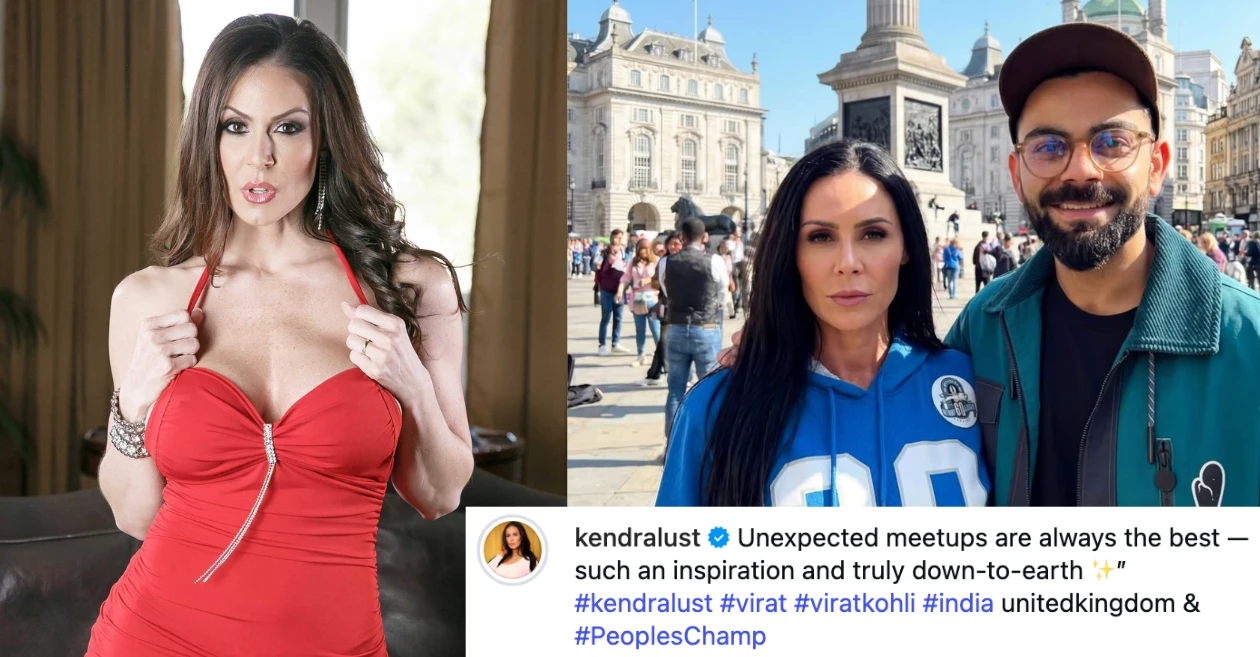
Adult film star Kendra Lust shares photo with Virat Kohli; fans react to the viral buzz


A viral Instagram post by adult film star Kendra Lust featuring Indian cricket icon Virat Kohli set social media abuzz this week, sparking shock, humour, and intense debate among fans before an unexpected twist revealed the truth. The image, shared on Thursday, showed the two appearing together in what seemed like a candid moment, instantly grabbing attention across platforms.

Kendra Lust’s Instagram post praising Virat Kohli hits the internet

In the post, Lust praised Kohli’s personality, calling him “an inspiration and truly down-to-earth,” and added hashtags linking India and the United Kingdom along with “People’s Champ.” The warm caption, combined with the seemingly casual photograph, led many users to assume the meeting was real. Within hours, the post amassed more than 350,000 likes and thousands of comments, propelling it into Instagram’s viral orbit.

When Kendra Lust met Virat Kohli (PC: Instagram)

Fans unfamiliar with Lust’s online humour took the image at face value, while others immediately began questioning the authenticity of the photograph. The buzz intensified because Kohli is known for maintaining a relatively private personal life despite his global fame.

Fans react to Lust and Kohli’s meeting with shock, memes and skepticism

The reactions in the comments section reflected a mix of disbelief and comedy. Some fans joked about Kohli’s marriage to Bollywood actress Anushka Sharma, with remarks like “Anushka Bhabi ka kya hoga?” Others flooded the post with memes and sarcastic takes like “Ek Taraf Hai Gharwali Ek Taraf Baharwali”, while a more skeptical group asked for proof of when and where the meeting supposedly took place.

As screenshots of the post spread to X (formerly Twitter), Reddit and Facebook, debates erupted over whether the image was digitally altered. The confusion itself became part of the viral appeal, with users sharing the photo simply to join the trending conversation.

Twist behind the viral photo

The speculation ended when it became clear that the viral image was completely AI-generated. Lust has a history of sharing humorous, fabricated images with famous personalities, using artificial intelligence as a creative tool. In the past, she has posted similar faux meetups with Bollywood megastars Shah Rukh Khan and Salman Khan, often leaving followers amused once the truth emerges.

The Kohli post followed the same pattern, playing on the realism of modern AI imagery and the internet’s tendency to react before verifying facts.

Also READ: Virat Kohli to team up with Mr Beast? The American YouTuber with 458 million subscribers makes a public request in a viral video

Kohli busy preparing for New Zealand ODIs

Adding to the improbability of the meetup, Kohli has been in India focusing on cricket commitments. The former India captain has been representing Delhi in the Vijay Hazare Trophy and is preparing for the upcoming India-New Zealand ODI series, scheduled to begin on January 11. There has been no official travel or public appearance linking him to the United Kingdom during this period.

Also READ: Brother Vikas hits back at Virat Kohli’s critics ahead of IND vs NZ ODI series


Source link

IND vs NZ 1st ODI: All eyes on Shubman Gill after T20 snub | Cricket News


IND vs NZ 1st ODI: All eyes on Shubman Gill after T20 snub

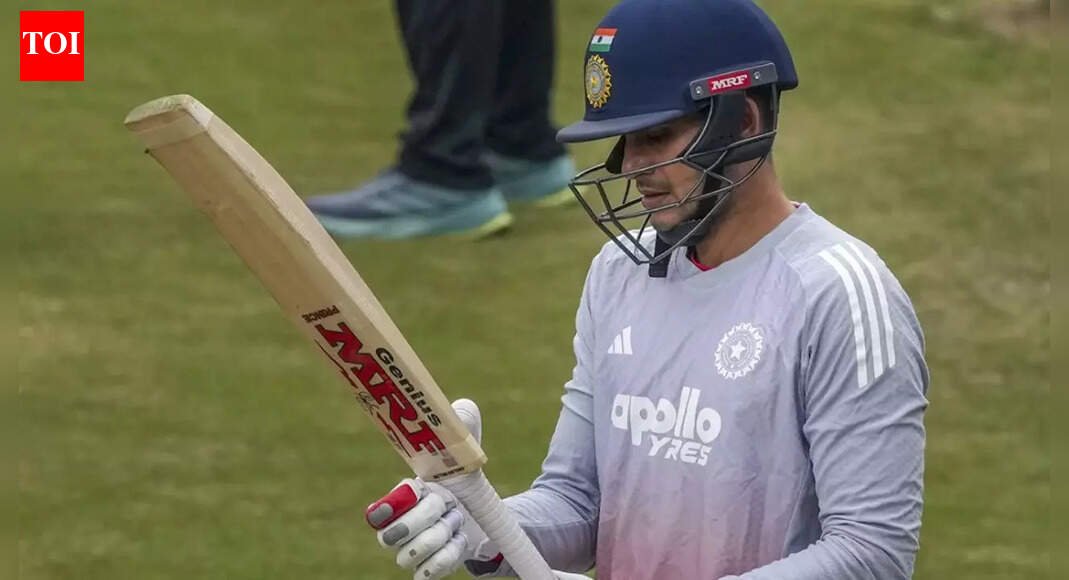
VADODARA: Clad in a sleeveless T-shirt despite the severe cold, Virat Kohli arrived at the Kotambi Stadium a couple of hours earlier than Team India. Kohli hit the nets immediately and hit some gorgeous drives as preparation for the first ODI against New Zealand here on Sunday.A couple of nets away, India’s ODI captain Shubman Gill was going through the paces, hitting the ball hard and appearing totally focused. All looked well with his game. With the likes of Kohli and Rohit Sharma still around in the ODI setup, Gill’s current situation is a reminder of the time a young Mohammad Azharuddin captained a starstudded Indian team.

India ODI squad review | Iyer returns, Pant gets the nod, Shami misses out again

The 26-year-old Gill is still very new to India’s Test and ODI captaincy and will look to pick up the pieces after being dropped from India’s T20I team despite being appointed as the side’s vice-captain just a few months ago. After training for a week in Mohali, Gill turned out for a solitary match for Punjab in the Vijay Hazare Trophy in Jaipur, where he was dismissed for 11 against Goa.For the past two days here, though, Gill has made every effort to rediscover the kind of touch that saw him amassing 754 runs in five Tests in England last year. Those who know him closely swear by Gill’s work ethic and his zeal to bounce back after the T20I setback.“He’s mentally very strong. Such things happen in the life of a sportsperson. He’s not the type who will get affected. He knows he has to respond to such things with his bat,” said Arvinder Singh, the CEO of Gill’s IPL team Gujarat Titans.Ro-Ko set to ‘flag off’ Baroda ODIThe Baroda Cricket Association is making grand plans to mark the first-ever men’s ODI at the Kotambi Stadium with an event in which the star duo of Kohli and Rohit Sharma will ‘flag off ’ the match. The first ODI will mark the return of international cricket to Vadodara after almost 15 years. The last international in Vadodara, on Dec 4, 2010, was also played between India and New Zealand, with current head coach Gautam Gambhir hitting a century.


Source link

‘Cry of a wounded conscience’: Hindu man killed in Pakistan; sparks widespread protests in Sindh


'Cry of a wounded conscience': Hindu man killed in Pakistan; sparks widespread protests in Sindh

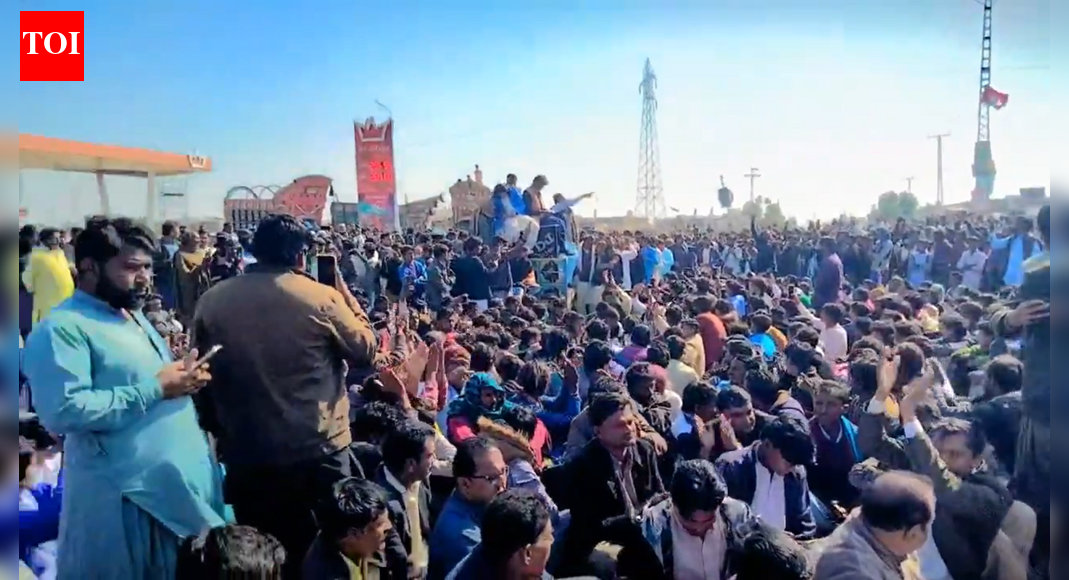
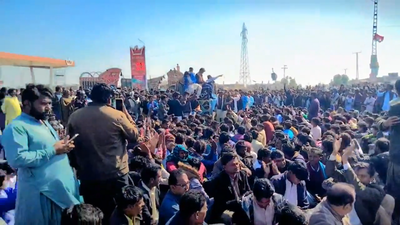
Widespread protests erupted in Pakistan’s Sindh province after a young Hindu farmer was killed by a landlord in Badin. According to a report by Pakistan’s news outlet the Nation, Kailash Kolhi was shot dead by an influential landlord, Sarfaraz Nizamani, over the construction of a hut on his land.Following Kolhi’s death, demonstrators staged sit-ins on the Badin–Hyderabad National Highway and the Badin–Thar Coal Road. Hundreds of vehicles remained stranded for hours as protesters demanded justice for the killing of Kolhi and vowed not to disperse until those responsible are arrested.

Jaishankar Sends ‘Bad Neighbour’ Pakistan On Anti-India Rant Again, Calls Operation Sindoor Reckless

According to a statement shared by activist Shiva Kachhi, the protest has been ongoing without pause.“The protest for the arrest of the killers of the martyred Kailash Kolhi is making history. Shiva Kachhi, Chairman of Pakistan Darawar Ittehad, is leading the historic protest sit-in. This was not just a protest—it was the cry of a wounded conscience. From 10:00 am yesterday until late into the night, the sit-in continued without pause, proving that the demand for justice cannot be silenced,” Kachhi said in a social media post on X.“Men, women, elderly people, and innocent children stayed on the streets with one voice and one demand: justice for Kailash Kolhi. Arrest the killers. Despite exhaustion, hunger, and the cold of the night, the determination of the protesters remained unshaken. Kailash Kolhi’s only ‘crime’ was that he was poor, marginalised, and courageous enough to exist in a system that protects the powerful and crushes the weak. The tears of his children, the grief of his mother, and the silent agony of his widow are today questioning the entire system: Is the blood of the poor so cheap?” he added.Earlier, the victim’s family and community members staged a protest by placing the body at Piru Lashari Stop, where the SSP Badin assured them that the accused would be arrested within 24 hours. The incident occurred four days ago in Raho Kolhi village in the Piru Lashari city area. Despite assurances from district police officials, the main accused has yet to be arrested.The ongoing protest has drawn participation from leaders and workers of several political, nationalist, religious, and social organisations, including Jamiat Ulema-e-Islam (JUI), Pakistan Tehreek-e-Insaf (PTI), Jiye Sindh Mahaz, Qaumi Awami Tehreek, Jeay Sindh Qaumi Mahaz (Bashir Qureshi group), and Awami Tehreek, The Nation reported.


Source link

This volcano’s lava isn’t red! It’s electric blue: Here’s the science behind it |


This volcano’s lava isn’t red! It’s electric blue: Here’s the science behind it
Source: National Geographic

Few natural wonders are as breathtakingly surreal as the electric blue flames dancing across Indonesia’s Kawah Ijen volcano. Unlike the familiar red-orange glow of molten lava, this volcano gives off an electric blue illumination at night that attracts photographers, travellers, and scientists worldwide. This phenomenon is not a result of lava itself but a product of burning sulfuric gases at very high temperatures, resulting in a neon-blue blaze visible against the dark landscape of the crater. More than just the visual, this rare display underlines a complex geological process and the hazardous conditions that the local miners have to put up with to extract sulfur, making Kawah Ijen a human story besides being a natural wonder.

Why Kawah Ijen’s lava appears bright blue

Typically, when people think of volcanic lava, they picture liquid lava with a reddish hue because of its higher temperatures. However, in Kawah Ijen crater, nothing could be farther from the truth because the blue illumination has nothing to do with volcanic lava. Sulfur vapours emit from fissures in the crater with a temperature of more than 600 °C (1,112 °F). Upon encountering oxygen, the Sulfur vapors immediately ignite and burn with a blue flame. The higher temperature of Sulfur vapors is responsible for the “blue lava” phenomenon because it appears as if there is blue lava when, in fact, lava is of its regular colour.As per ZME Science, the blue flames are accompanied by a phenomenon known as the Cerulean eruption, a process in which molten sulfur flows down the slopes of the volcanoes. Upon burning, the sulfur turns to liquid and flows down the volcanoes like a river, giving it a neon-like effect. In turn, the process has been referred to by its name due to its rare nature, as it occurs in a handful of locations around the globe, one of which is Ethiopia’s Danakil Depression. Taking a photo of the phenomenon, as explained by photographers, feels more like a piece from a sci-fi movie than nature.

Hidden dangers behind Kawah Ijen’s blue flames

Although the blue flames are a sight to admire, they also illustrate the level of danger that the Kawah Ijen miners encounter regularly.

  • These miners dig for sulfur in a poisonous environment, with minimal protection against the choking smoke emanating from the ground.
  • They usually protect themselves with damp cloth masks, which provide little protection for their faces against the burning gas.
  • Afterwards, once the sulfur has solidified, the miners haul heavy wicker baskets full of sulfur, scaling steep mountain sides, a very arduous and risky endeavour.
  • This sulfur, which has come to be nicknamed ‘Devil’s Gold’ for its valuable qualities, is essential for industrial applications, with the chemical serving as a basis for fertilisers and other chemicals.

Why scientists study the blue flames

There is much more to Kawah Ijen than meets the eye of a photographer or tourist. The blue flames of Kawah Ijen also serve as important scientific study material. It is rare to see such a set of conditions coming together. The presence of magma, water, and escaping sulfuric gases gives scientists important material to study. Such a study helps scientists understand gas emanations, chemical reactions, and the danger to humans and the environment. Kawah Ijen is one such instance where natural beauty, science, and human survival meet on the edge of risk.


Source link

‘If you want to go in…’: Oil chiefs express caution as Trump pushes oil plan — what happened at the meeting


‘If you want to go in…’: Oil chiefs express caution as Trump pushes oil plan — what happened at the meeting

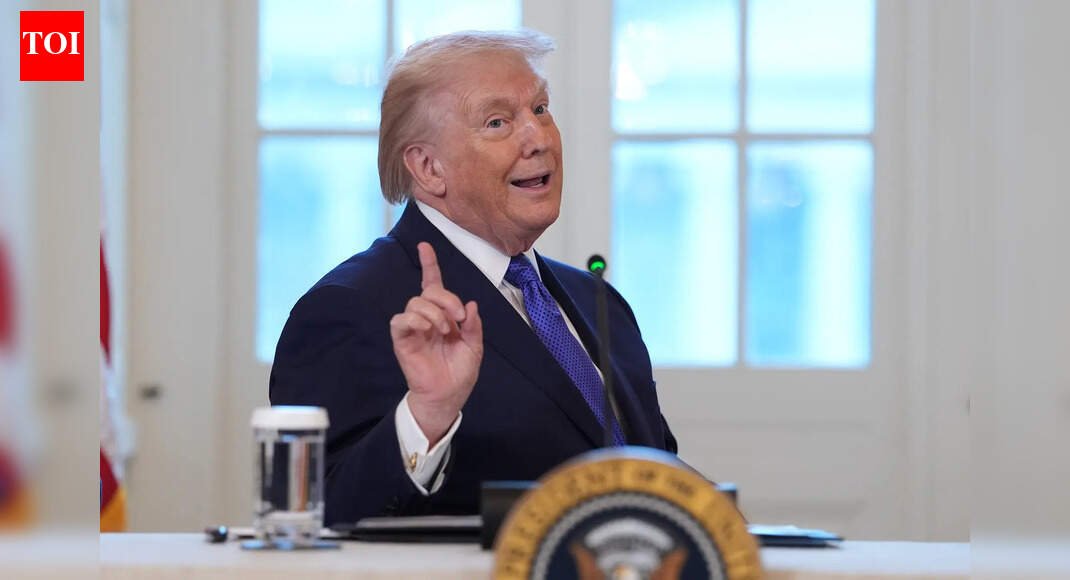
US President Donald Trump held talks with senior oil executives on Friday (local time), pushing them to consider investments in Venezuela’s oil sector following the capture of President Nicolas Maduro. While Trump presented the country as newly secure and open for business, industry leaders responded cautiously, with one major executive saying Venezuela remains “uninvestable” without deep reforms.Speaking at the White House, Trump said his administration would take charge of deciding which companies are allowed to operate in Venezuela, sidelining Caracas from the process. He argued that foreign firms had previously operated without adequate protections under Maduro and claimed the situation had now fundamentally changed.

Another Trump STRIKE! Fifth Oil Tanker With Venezuelan Oil ‘CAPTURED’; Russia Watches Closely

“We’re going to be making the decision as to which oil companies are going to go in… (we’re) going to cut a deal with the companies,” Trump said. “But now you have total security. It’s a whole different Venezuela.”Trump added that oil companies would “deal with us directly,” signalling that Washington would manage access to Venezuela’s oil resources and exclude the country itself from negotiations.However, ExxonMobil chief executive Darren Woods raised serious doubts about returning to the country, citing the company’s history of asset seizures.“We’ve had our assets seized there twice and so, you can imagine, to re-enter a third time would require some pretty significant changes,” Woods said. “If we look at the legal and commercial constructs and frameworks in place today in Venezuela — today, it’s uninvestable.”The meeting came days after US forces seized Maduro, an action Trump has openly linked to Venezuela’s oil wealth. He said discussions with executives would centre on rapidly restoring the country’s deteriorated oil infrastructure and increasing output by millions of barrels per day.Those attending included Vice President JD Vance, Secretary of State Marco Rubio and Energy Secretary Chris Wright, along with executives from Chevron, ExxonMobil, ConocoPhillips, Halliburton, Valero, Marathon, Shell, Trafigura, Vitol Americas and Repsol.A ConocoPhillips spokesman said chief executive Ryan Lance valued the talks around “preparing Venezuela to be investment ready.”After the meeting, Trump said participants had “sort of formed a deal,” though he did not provide details. He claimed companies were ready to invest “at least 100 Billion Dollars” in the country.Analysts told AFP that the plan to revive Venezuela’s oil industry faces major obstacles. They said the size of the country’s reserves does not guarantee quick or profitable production, pointing to ageing infrastructure, political risks, costly heavy crude extraction and growing investor caution as the world moves away from fossil fuels.“There’s lots of talk about the size of the reserves — 300 billion barrels of proved reserves — but what’s often missing from the conversation is how realistic it is for those to be economically extracted,” said Rich Collett-White, an energy analyst at Carbon Tracker.Energy Secretary Chris Wright, who has previously said the US would control Venezuela’s oil industry “indefinitely,” acknowledged after the talks that rebuilding the sector would “take time.”Meanwhile, Venezuela’s interim President Delcy Rodriguez said her government remained in control of the country, while the state oil company said it was holding negotiations with Washington.Chevron is currently the only US firm licensed to operate in Venezuela. ExxonMobil and ConocoPhillips exited the country in 2007 after rejecting demands from then-president Hugo Chavez to give the state majority control.Trump also said in a social media post that he had cancelled a second round of strikes on Venezuela, citing what he described as “cooperation” from the country.Venezuela has been under US sanctions since 2019 and holds around one-fifth of the world’s oil reserves. Despite this, it accounted for only about one percent of global crude production in 2024, according to OPEC, after years of underinvestment, sanctions and embargoes.Trump sees Venezuela’s oil wealth as a potential boost to his efforts to further bring down fuel prices in the United States.


Source link

‘This election has no effect on our alliance…the legacy of Balasaheb Thackeray is with Shinde’: Maharashtra CM Devendra Fadnavis | Mumbai News


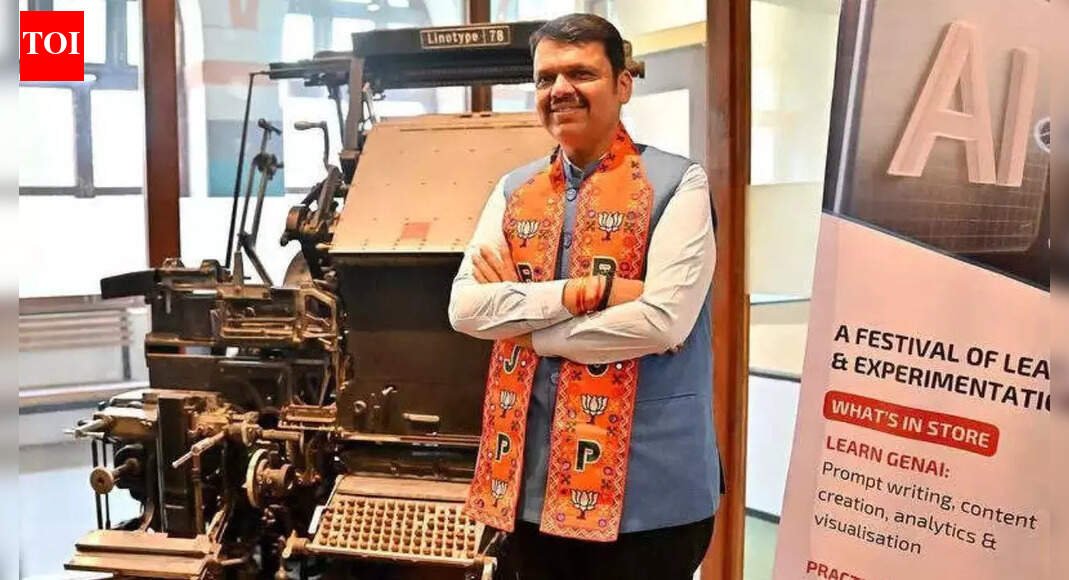
In an exclusive pre-poll interaction with the Times group on Friday, chief minister Devendra Fadnavis spoke on a range of subjects. Excerpts:Q: The Thackeray cousins questioned your right to speak about Mumbai saying you were not born here.A: Who understands Mumbai? One of the great names that comes up is the late Balasaheb Thackeray, but he was not born in Mumbai. His father Prabhodankar Thackeray too was not born in Mumbai. The understanding of Mumbai which Balasaheb Thackeray had, no one has. Those born in Mumbai administered the BMC for several years, what did they do? Mumbai may not be my janmabhoomi but it’s been my karmabhoomi since 1999.Q: BJP is strong in Mumbai, so why the need for an alliance?A: Though we are strong, taking the Shiv Sena along is our moral responsibility because today when we see the legacy of Balasaheb Thackeray, it is clearly with (Eknath) Shinde. In such circumstances it is not proper to fight against each other. Secondly, they have created a vote bank, we also have a big vote bank. It is a win-win situation for both. So when we sit for seat sharing talks, it’s a give-and-take. We compromised in KalyanDombivli; in Jalgaon we had won 57 seats earlier, but we settled for 47 seats.Q: How about honouring the legacy by giving them (Shiv Sena) the mayor’s post for 2.5 years?A: Why 2.5 years? We can give it to them for any number of years. We can give them the mayor’s post for five years also. The mayor will be of the Mahayuti.Q: Will your alliance with Shiv Sena and NCP continue till the end of the assembly term?A: Yes absolutely. This election has no effect on our alliance. We sat together and decided that in several municipal corporations we will contest separately because the entire political space is with us. Why should we concede political space to somebody else? That’s our understanding. We are together till 2029 and hopefully thereafter also.Q: Your relations with NCP, are there times when you regret it?A: We carefully thought it over before forming an alliance with the NCP. In one city when we come face to face, I have decided not to speak against our alliance partners. He does speak but Ajit Pawar is a practical person. He knows where to go forward, where to step back, stay flexible… we live in political realism. In 2019 all came together and distanced us….we were the single largest party and they still made us sit in the opposition. If we simply sit with our principles then in our lifetime we will never come to power to implement our principles. Therefore, we made some compromises.Q: Women party workers have got upset over seat distribution and this is reflected on social media.A: After every election a new generation (of political workers) is created. This happened in 2017 and then in 2022 but there were no elections in between. So now there are two generations of party workers and the number of seats is constant. For every seat there are four contenders and whosoever is given a seat, others feel betrayed. Earlier it would not come out in the media. But that is not a bad thing. Women have become assertive. There is 50% reservation for women, but 55% seats have been given to women.Q: What about the Ambernath tie-up with Congress?A: It was 100% wrong. Sometimes what happens is local leaders have their enemies and artificially you cannot bring them together. In Ambernath, our party president who was elected, Sena candidates fought against his family members and the enmity is very strong. I had made it clear: wherever required, go with Shinde Sena or NCP, but here they decided not to go with Sena. Some of those elected on Congress tickets are BJP rebels and came back (to BJP). Congress pre-empted them by removing them from the party. Even the alliance with AIMIM was wrong. In Akot, our nagar president was elected. We needed 2-3 people for a majority. We did an alliance with the NCP which had an alliance with the AIMIM. Technically they (AIMIM) became our alliance partners. The people at the lower level do not realise the repercussions. As soon as I learnt of it, I told them to break it and we even served suspension notices.Q: Unopposed victories in local body polls this time are being attributed to muscle and money power.A: If muscle and money power were being used, it would have happened in Mumbai also. Maximum unopposed elections happened in Kalyan-Dombivli because…Congress has been wiped out there, so also NCP. Even an Islamic party independent candidate got elected unopposed there. We are such big parties and we had no candidate against him.Q: What is your roadmap for Mumbai?A: The DCPR-2034 takes care of every aspect. All DP roads will be concretised. We have a new design for footpaths. Mumbai is landlocked and there is no option but to go vertical but there is a limit to it. All global cities have used this strategy. For BMC a platform for clearing building proposals using artificial intelligence is on the way. Unlike Auto DCR where 4-5 human interventions are required and there is human subjectivity, on this platform it won’t happen. The proposal will be scrutinised by AI, flag provisions that are not as per DCPR, and even provide a 3D model of the project. Using technology we shall try to make it transparent.Q: Despite Govt’s focus on big infrastructure projects, there’s aperception that quality of life has not improved much in Mumbai in terms of air quality, pedestrian space, and traffic. Would it have been better to focus on smaller, intelligent solutions in different neighbourhoods?A: Ease of living comes from ease of commuting, which means you need clean means of transportation and so we have planned over 400 kms of metro. Improved suburban railway services, improved frequency of trains, passenger amenities are being provided with 50% funding by the state. For second class passengers, the train fare will remain the same. We have also introduced electric buses, new roads which will decongest Western Express Highway. The Worli-Sewri connector will be ready by Dec 2026. To clean up sewage flowing into the sea, treatment plants have got approvals.Q: In doing redevelopment in Dharavi, why resettle residents on a dumping yard (in Deonar) which has a toxic environment and will take decades to clear even after scientific closure. Previously, slum rehab schemes in Mahul have had to be abandoned because of such pollution.A: Whatever happened in Mahul was a scam. All those who are eligible will be rehabilitated in Dharavi. Those ineligible, if we simply remove them, then that is no solution because they will settle elsewhere. So we decided to provide them 12 years of rental housing in different places, thus abiding by the court order. One of the places is the dumpyard…in Nagpur there is a Symbiosis and next to it is the NM campus. Both have come up on Nagpur’s dumping yard. We did bio-mining, capping and reclaimed the land. There is no smell, no gases.Q: What about slums on Central govt land?A: We are in talks with the Centre for redevelopment of slums on central govt. For airport land we have almost convinced the Centre that if slums are redeveloped in-situ then we shall free up 50-100 acres. Our efforts are on for railways as well. They will never be able to remove all the slums on railway land. But as long as railways has enough and a little more for its projects, it should do.Q: We elect political representatives to a local body, but we can never pick a bureaucracy. Can you reform the bureaucracy at the lower levels in BMC?A: It is a challenge. They know we (politicians) are around only for 5 years…we are working on inter-corporation staff transfers – from Thane to Pune, etc – but there is no other corporation in the state of the size and scale of the BMC.


Source link