Breaking News
MPCB shuts 10 RMC plants, recovers Rs 84 lakh in pollution crackdown | Mumbai News


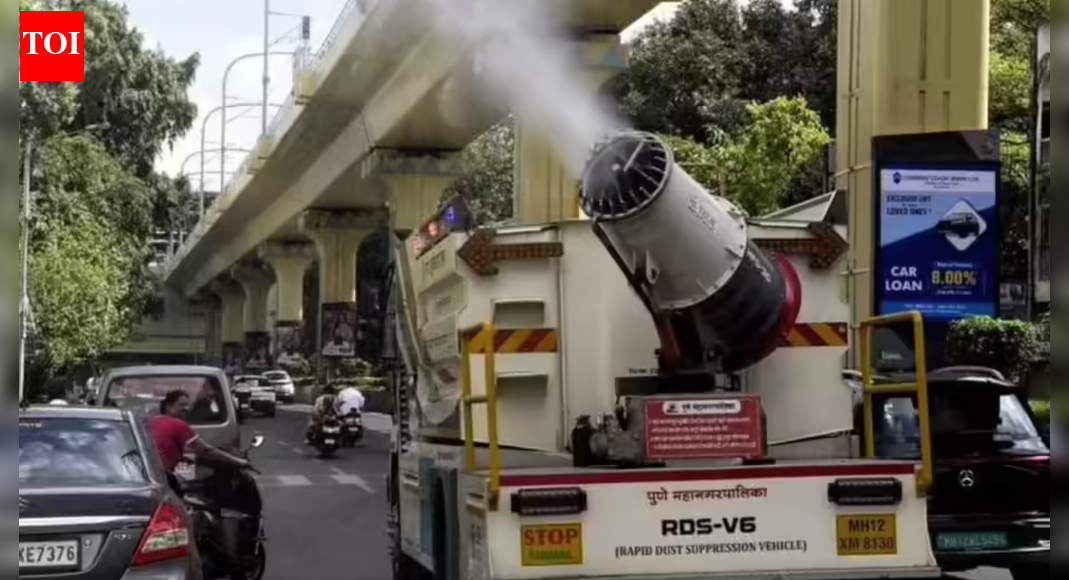
MUMBAI: The Maharashtra Pollution Control Board (MPCB) has shut down 10 ready-mix concrete (RMC) plants and recovered Rs 84 lakh in penalties during inspections carried out over the past two days across the Mumbai Metropolitan Region (MMR), as part of an intensified crackdown on air pollution.According to the MPCB, flying squads inspected 44 RMC plants and found multiple units violating prescribed environmental and dust-control norms. Ten plants located in Dombivli, Kalyan, Ambernath, Bhiwandi, Turbhe, Virar and Worli were ordered to stop operations. Seventeen plants were issued show-cause notices, while four were served interim directions pending further action.The enforcement teams also inspected 29 large construction sites during the drive, issuing proposed directions to five projects where violations related to dust suppression and other air pollution norms were observed.The action has been taken under a 28-point guideline jointly enforced by the MPCB and the Brihanmumbai Municipal Corporation (BMC) to regulate industrial and construction activities contributing to air pollution. The guidelines mandate basic dust-mitigation measures such as the use of tarpaulin sheets to prevent particulate matter from escaping work sites, regular watering of internal roads, washing of vehicle wheels and bodies before they exit premises, and ensuring that trucks transporting construction material are adequately covered to prevent dust dispersion on public roads. Officials said non-compliance with these measures continues to be a recurring issue.The current drive follows a series of inspections launched in December after concerns were raised over deteriorating air quality in the region. Since then, the MPCB has inspected 240 RMC plants across the MMR and recovered penalties amounting to Rs 4.35 crore.
Source link

Iran Protests: Economic Collapse Sparks Uprising – A Turning Point for the Islamic Republic | World News


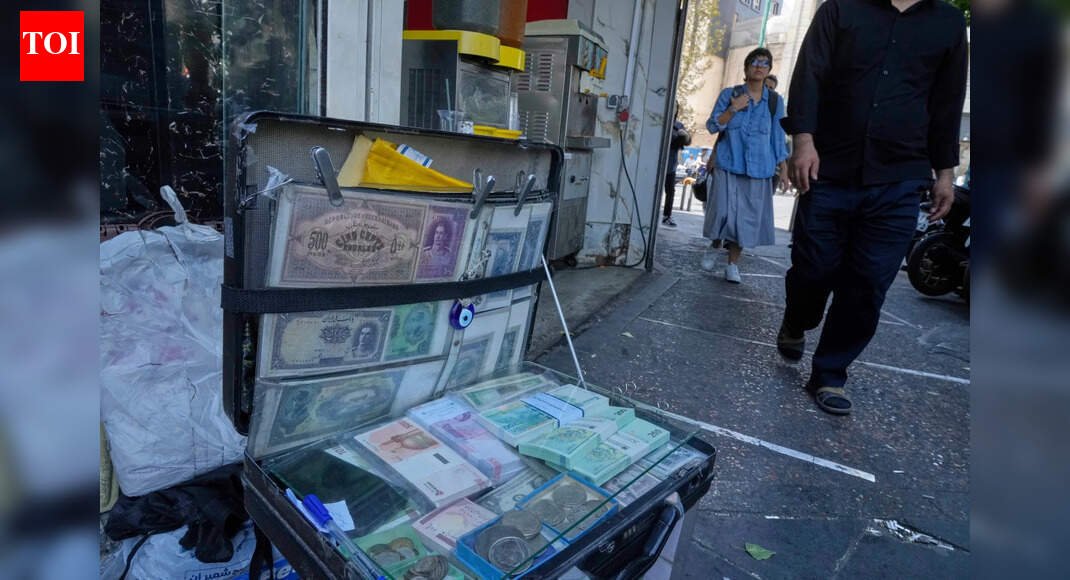
1 USD = 1,400,000 IRR: Iran on edge - why this is the most dangerous uprising yet
Iran’s latest protests, sparked by a devastating economic collapse and a plummeting currency, are unlike previous unrest. This wave sees a broader social coalition, including merchants, demanding regime change. Unlike past uprisings, the trigger is not a single outrage but the daily futility of a broken economy, making this a critical legitimacy crisis for Tehran.

In Iran, protests follow a familiar rhythm. They rise, they spread, they are crushed. What is unsettling about current demonstrations is not their scale alone but the sense that the old pattern may be breaking down.TL;DR: Driving the newsIran’s latest wave of nationwide protests, which began in late December 2025, is not simply another chapter in the Islamic Republic’s long cycle of unrest. What distinguishes this moment is not just scale or slogans, but the trigger: a total breakdown of economic credibility that has turned daily life into an exercise in futility and pushed once-cautious social groups into open revolt.The immediate spark was the collapse of the Iranian rial to roughly 1.4 million per US dollar, a historic low that coincided with inflation climbing past 50%, food prices surging more than 70% year-on-year, and wages losing value almost overnight. Protests began not on university campuses or around social restrictions, but in Tehran’s Grand Bazaar – the symbolic and practical heart of Iran’s economy – before spreading rapidly to all 31 provinces.Why it matters

  • This uprising strikes at the economic foundations of consent, not just the regime’s ideological legitimacy.
  • Iran’s leadership has survived repeated legitimacy shocks – from the 2009 Green Movement to the 2019 fuel protests to the 2022–23 “Woman, Life, Freedom” uprising – by combining repression, selective concessions and fear. But many analysts cited by Foreign Policy, the Economist, and others argue that those tools work best when the economy, however battered, still functions.
  • This time, money itself has stopped making sense.
  • When shopkeepers cannot price goods, importers cannot plan, and wages evaporate before payday, the state loses its ability to arbitrate daily life. As Alex Vatanka of the Middle East Institute told Reuters, “The collapse is not just of the rial, but of trust.” In Iran’s political history, that is a dangerous place for any government to be.

Zoom in: What’s genuinely new about this protest wave1) The trigger is economic collapse, not a single outrageThe 2022 protests followed the death of Mahsa Amini and centered on dignity, bodily autonomy and generational rebellion. Those grievances remain unresolved, but the 2025–26 protests erupted because commerce itself broke down. The Times of Israel described the moment bluntly: Iranians revolted when they realized that “money no longer works.”That distinction matters. Moral outrage can be compartmentalized or delayed. Economic paralysis cannot.2) The social coalition is broader – earlierAccording to Foreign Policy, the current protests have already mobilized bazaar merchants, students, urban professionals, laborers, women and ethnic minorities in their opening phase. In 2022, protests initially clustered in major cities and among youth. This time, smaller towns and economically marginalized areas joined quickly, reflecting how deeply inflation and currency collapse have penetrated Iranian society.3) The center of gravity has shifted toward regime changeWhile “Woman, Life, Freedom” remains symbolically powerful, slogans heard across Tehran, Isfahan, Mashhad and beyond increasingly call for the end of the Islamic Republic itself. Reuters and AP documented chants praising the former monarchy and calling for the return of Crown Prince Reza Pahlavi – rhetoric that once would have guaranteed swift execution.The shift does not signal consensus on what should replace the system. It does signal exhaustion with reform as an option.Between the lines: Why Iran isn’t Syria – and why that may be worseComparisons to Syria surface whenever Middle Eastern protests escalate. But Michael Rubin of the Middle East Forum argues that Iran’s trajectory could be more chaotic, not less.Syria’s civil war eventually hardened along ethnic and sectarian lines, creating de facto safe zones. Assad’s Alawite base retreated to Latakia. Kurds controlled the northeast. Rebel groups carved out enclaves elsewhere. Iran has no such geographic or sectarian escape valves.The Islamic Republic is multi-ethnic, its ruling elite draws from multiple communities, and even Supreme Leader Ali Khamenei himself is Azerbaijani. If the center collapses, there is no obvious periphery to absorb the shock.Rubin also highlights a structural risk: fragmentation within the security forces. The Islamic Revolutionary Guard Corps is not monolithic. Some members joined for economic security; others are ideologues shaped from childhood. If central authority weakens, different units could compete rather than coordinate. As Rubin writes, “It is unlikely that either the Guard Corps or the Iranian Army is unified enough to appoint an influential leader.That dynamic raises the specter not of a clean transition, but of elite infighting and nationwide instability.

I have let them know that if they start killing people, which they tend to do during their riots — they have lots of riots — if they do it, we are going to hit them very hard

Donald Trump during an interview with conservative radio host Hugh Hewitt

What they are sayingIran’s leadership is reaching for familiar language – and finding it less effective.Supreme Leader Ayatollah Ali Khamenei has acknowledged economic grievances, echoing his approach during the 2022 protests when he said Mahsa Amini’s death “deeply broke my heart.” In his latest remarks, he again recognized public suffering before pivoting to claims of Western “soft war.”“What turned the tide of the protests was former Crown Prince Reza Pahlavi’s calls for Iranians to take to the streets at 8pm on Thursday and Friday,” Holly Dagres, a senior fellow at the Washington Institute for Near East Policy, told AP. “Per social media posts, it became clear that Iranians had delivered and were taking the call seriously to protest in order to oust the Islamic Republic.”On the streets, that message is not landing. Protesters are increasingly linking domestic misery to Tehran’s regional ambitions. A 25-year-old woman in Lorestan told Reuters: “I just want to live a peaceful, normal life … Instead, they insist on a nuclear program and supporting armed groups.”From abroad, the rhetoric has grown sharper. US President Donald Trump warned that if Iranian authorities “start killing people,” Washington would respond forcefully, saying the US was “locked and loaded and ready to go.” Iranian officials now cite those statements as evidence of foreign interference – even as everyday Iranians struggle to buy food.Israeli Prime Minister Benjamin Netanyahu commended the demonstrations, describing them as “a decisive moment in which the Iranian people take their futures into their hands”.The big picture: A legitimacy crisis with fewer shock absorbersThis protest wave unfolds as Iran’s external position is weaker than at any point in decades.

The latest protests diverge from the old pattern in two ways. One is that the bankruptcy of the regime (both literal and figurative) is in full view. Iran has endured a year of economic collapse, war and environmental crisis; its leaders have no solutions for these woes. The other difference is the prospect of foreign intervention, by either Israel or America. After the American raid to seize Nicolás Maduro from Venezuela on January 3rd, many Iranians wondered if their country might be next in Donald Trump’s crosshairs.

An article in the Economist

In 2022, Tehran could still point to its regional influence and nuclear leverage as buffers against internal dissent. In 2025–26, those buffers have eroded. Bashar al-Assad is no longer in power in Syria. Israeli and US strikes in 2025 badly damaged Iran’s nuclear infrastructure. Proxies from Gaza to Lebanon have been degraded too.At home, the regime’s time-tested formula – repression paired with tactical concessions – is losing traction. Analysts cited by Reuters say crackdowns still instill fear, but no longer restore confidence. Cosmetic changes, such as reshuffling economic officials or promising dialogue, ring hollow to a population that understands where real power lies.As the Economist observed, what sets this moment apart is that “the bankruptcy of the regime (both literal and figurative) is in full view.” Add the unprecedented talk of possible foreign intervention, and uncertainty multiplies.What’s next

  • In the short term, Tehran is likely to intensify repression.
  • But Iran’s protests are different this time because they are rooted in economic collapse, not a single injustice – and because they arrive when the regime is poorer, weaker abroad, and facing a population that increasingly sees no path forward within the system.
  • History offers little comfort. Illegitimate regimes do not always fall, and when they do, they rarely fall cleanly. North Korea was once assumed to be a “zombie state.” It survived. Syria collapsed into catastrophe.
  • Iran now sits uncomfortably between those outcomes. The protests have shattered what remained of the regime’s moral and economic credibility. Yet the opposition remains fragmented, the security forces armed, and the stakes for insiders existential.
  • As Reuters quoted one analyst, “Change now looks inevitable; regime collapse is possible but not guaranteed.”

(With inputs from agencies)


Source link

Sponsors pull back, futures clouded: Bangladesh cricketers caught in India standoff after Mustafizur Rahman row | Cricket News


Sponsors pull back, futures clouded: Bangladesh cricketers caught in India standoff after Mustafizur Rahman row
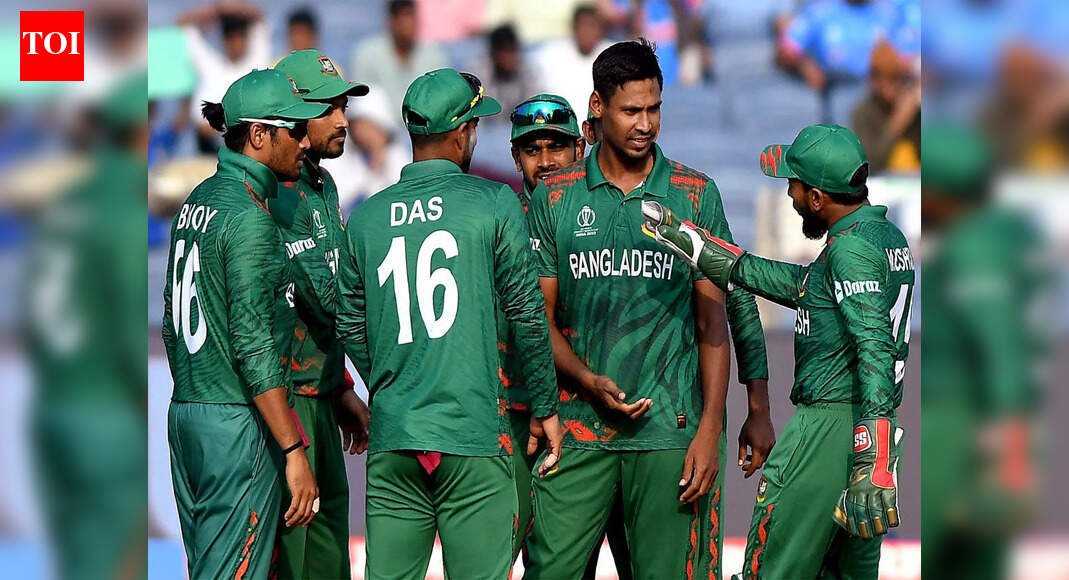
Bangladesh cricketers (ANI Photo)

NEW DELHI: A cloud of uncertainty hangs over Bangladesh cricket as the ongoing standoff with India begins to hit players off the field, with several national cricketers at risk of losing Indian sponsorship deals amid the fallout from the Mustafizur Rahman controversy.Go Beyond The Boundary with our YouTube channel. SUBSCRIBE NOW!At the heart of the crisis is Bangladesh’s strained relationship with Indian cricket authorities following the removal of pacer Mustafizur Rahman from Kolkata Knight Riders’ squad ahead of the upcoming Indian Premier League, after a directive from the BCCI. The episode escalated into a diplomatic and cricketing flashpoint, prompting the Bangladesh Cricket Board (BCB) to cite security concerns and seek intervention from the ICC regarding its participation in the ICC T20 World Cup 2026 in India.

Bangladesh seek T20 WC match shift from India after Mustafizur Rahman’s IPL exit

According to reports, the uncertainty has already begun to affect Bangladeshi players commercially. Indian sports equipment major Sanspareils Greenlands (SG) has reportedly decided not to continue sponsorship agreements with several Bangladesh cricketers, including captain Litton Das. While no official communication has been issued yet, players and their representatives have been informally alerted. “I haven’t heard anything of that sort officially,” a Bangladesh cricketer sponsored by SG told Cricbuzz, reflecting the confusion within the camp.A senior BCB official, speaking to Cricbuzz on condition of anonymity, admitted the players are under severe mental strain. “It’s a very difficult time for the cricketers considering they are not sure what is in store for them in the coming days. They are quite tense, and it’s understandable,” the official said, adding that players are regularly reaching out to board officials for clarity on Bangladesh’s World Cup stance.

Poll

Do you think the Bangladesh Cricket Board (BCB) should shift matches from India to Sri Lanka for security reasons?

The uncertainty has also unsettled the foreign coaching staff. One member of the support team told Cricbuzz that he hopes the situation resolves quickly. “We are here for cricket, and what is bigger than a World Cup? I hope the matter gets resolved soon,” he said.According to Telecom Asia, agents of Bangladeshi players have been informed that SG may not renew contracts, raising fears that other Indian manufacturers could follow suit. “Other manufacturers also might opt not to sponsor our cricketers,” a source involved in player sponsorships said.The BCB, meanwhile, has written twice to the ICC following an emergency meeting on January 4, requesting Bangladesh’s matches be shifted from India to Sri Lanka for security reasons. While the ICC’s decision is pending, Bangladesh remain scheduled to play Group C matches in Kolkata and Mumbai starting February 7.


Source link

Bharat Coking Coal Limited IPO day 1: BCCL offer subscribed fully within minutes! Check price band, GMP, valuation & more


Bharat Coking Coal Limited IPO day 1: BCCL offer subscribed fully within minutes! Check price band, GMP, valuation & more

Bharat Coking Coal Ltd’s initial public offering (IPO) saw strong demand from investors from the moment bidding opened on Friday, with the issue getting fully subscribed within minutes. According to NSE data till 11:15 am, bids were received for 84,15,46,800 shares, far exceeding the 34,69,46,500 shares on offer, resulting in an overall subscription of 2.43 times. Interest was strongest in the non-institutional investors’ segment, which was subscribed 3.79 times. Retail individual investors followed closely with 3.35 times subscription, while the qualified institutional buyers’ portion saw 1% subscription.Ahead of its public issue, Bharat Coking Coal Ltd (BCCL) has raised more than Rs 273 crore from anchor investors, the company said on Thursday. The IPO, which has a grey market premium of 43.5%, is a Rs 1,071-crore issue and will remain open for subscription until January 13. The price band for the issue has been set at Rs 21 to Rs 23 per share. At the upper end of the band, the company’s valuation works out to more than Rs 10,700 crore. As per the red herring prospectus, the issue is entirely an offer for sale of 46.57 crore equity shares by parent company Coal India, with no fresh equity being issued. The proposed listing of BCCL is part of the government’s wider divestment drive in the coal sector, aimed at unlocking value in Coal India’s subsidiaries and bringing in greater transparency through market participation. In its prospectus, the company said the IPO would help it realise the advantages associated with being a listed entity. Incorporated in 1972, Bharat Coking Coal Ltd is engaged in the mining and supply of coking coal, with its operations primarily located in the Jharia coalfields of Jharkhand and the Raniganj coalfields of West Bengal. The offering comes amid a strong rush for India’s primary markets. In 2025, companies raised nearly Rs 1.76 lakh crore through IPOs, marking a record year. This surpassed the Rs 1.6 lakh crore raised by 90 companies in 2024 and the Rs 49,436 crore mobilised by 57 firms in 2023, supported by strong domestic liquidity, steady investor sentiment and a favourable macroeconomic environment.


Source link

Stock market crash today: Why has Sensex plunged over 2,000 points, Nifty down over 2% in 5 days? Top 5 reasons explained


Stock market crash today: Why has Sensex plunged over 2,000 points, Nifty down over 2% in 5 days? Top 5 reasons explained
The steady exit of overseas funds has intensified the weakness in benchmark indices. (AI image)

Stock market crash: Equity benchmark indices, Nifty50 and BSE Sensex, have plunged by over 2% in the last few trading sessions, with both indices seeing the fifth consecutive day of crash on Friday. Concerns over global trade tensions and political developments in Washington have disrupted investor sentiment, adding to caution.Over the past five trading sessions, the BSE Sensex has shed over 2,100 points, falling from its January 2 close of 85,762.01 to an intraday trough of 83,506.79 on Friday. During the same period, the NSE Nifty 50 has declined to levels below 25,700.

Why is the stock market crashing?

1. FIIs sell-off: Ongoing foreign investor outflows have added to the pressure on equities during the prolonged slide. Foreign institutional investors sold shares worth Rs 3,367.12 crore on Thursday, January 8, marking the fourth straight session of net selling following a brief respite on January 2.The steady exit of overseas funds has intensified the weakness in benchmark indices, deepening losses amid an uncertain global backdrop and reinforcing a risk-averse stance among investors already navigating unfavourable external conditions.2. Trump trade & tariff uncertainty: Equity markets have remained under strain after US President Donald Trump indicated that tariffs on Indian exports could be increased over New Delhi’s continued purchases of Russian crude. A new bill proposing 500% tariffs on countries buying Russian oil has been given a nod by Trump.A proposed bilateral trade agreement between the two countries remains unresolved despite six rounds of discussions held since March. Speaking on the All-In Podcast, US Commerce Secretary Howard Lutnick suggested the talks lost momentum after Prime Minister Narendra Modi did not place a call to Trump. The Trump administration has already imposed tariffs of up to 50% on Indian goods, including a 25% levy linked to India’s imports of Russian oil, among the steepest applied to any trading partner. India has termed these measures “unfair, unjustified and unreasonable”.The uncertainty has intensified ahead of a pending ruling by the US Supreme Court on the legality of Trump’s tariff actions. If the court finds the levies unlawful, Washington could be required to return close to $150 billion to importers, a decision that would have far-reaching implications for global trade.“After the sharp correction yesterday triggered by the possibility of about 500% tariff on India under the provisions of the Russia Sanctioning Act approved by President Trump, the market will be focused on the verdict expected today from the US Supreme Court on the legality of Trump tariffs,” said Dr. VK Vijayakumar, Chief Investment Strategist at Geojit Investments.“There is a high probability of the verdict going against Trump. But the details are significant: that is, whether it would be a partial striking down of the tariffs or completely declaring the tariffs illegal. The market reaction would depend on the details. If the Supreme Court declares Trump tariffs illegal, there would be a rally in India since India has been the worst affected by the 50% tariffs,” Vijayakumar added.He noted that the recent sharp selloff has dragged down even stocks unlikely to be directly affected by any punitive US measures. According to him, sectors such as financials, consumer discretionary and industrials, which have corrected due to broader market weakness, now offer opportunities for long-term investors to accumulate.3. Muted global signals: Soft cues from overseas markets have reinforced the cautious mood in Indian equities. Stocks across Asia slipped as investors awaited a key US employment report and prepared for a US Supreme Court decision on the validity of President Donald Trump’s broad tariff measures, a ruling that could once again unsettle global markets.4. Rising crude prices weigh on sentiment: Firming oil prices have added another layer of pressure on Indian markets, given the country’s significant reliance on imported crude. Prices moved higher amid lingering geopolitical risks, with investors closely monitoring developments in Venezuela following the capture of President Nicolás Maduro by US forces in a high-profile military operation in Caracas over the weekend.5. Technical signals point to continued weakness: Chart indicators have strengthened the bearish undertone, with key benchmarks breaking below important support levels during the recent decline.“Technically, the market breached the 20-day SMA (Simple Moving Average) support zone, and post-breakdown, selling pressure intensified,” said Shrikant Chouhan, Head Equity Research at Kotak Securities according to an ET report.“On daily charts, it has formed a long bearish candle, indicating further weakness from the current levels,” Chouhan said. He added that “We are of the view that as long as the market is trading below 26,000/84500, weak sentiment is likely to continue on the downside, and the market could slip till 25,750-25,700/84000-83700. On the flip side, if it moves above 26,000/84500, the pullback could continue till 26,075-26,100/84800-85000.Geojit Investments also flagged caution, citing stretched technical readings. “Short term oscillators being oversold, and being in the vicinity of 30 December’s low, it will not be surprising if a turn high is attempted, as long as 25878 is not penetrated by much margin,” the brokerage said.“Alternatively, slippage past 25776 would have to be taken as a sign that Nifty is coming off a sideways trading range that has been on since November 2025, prompting us to consider possibilities of sharper fall, with 200 day SMA positioned deep at 25039 now.”(Disclaimer: Recommendations and views on the stock market, other asset classes or personal finance management tips given by experts are their own. These opinions do not represent the views of The Times of India)


Source link

Vicky Kaushal’s heartfelt take on fatherhood: ‘So many pictures of my baby!’ |


In November last year, Vicky Kaushal and Katrina Kaif delighted fans with joyful news of becoming parents. The celebrity duo became parents to their first child, a lovely baby boy. On January 7, as their son became two months old, they unveiled his name to followers, Vihaan Kaushal. The couple posted, “Our Ray of Light Vihaan Kaushal विहान कौशल Prayers are answered. Life is beautiful. Our world is changed in a instant. Gratitude beyond words .” Now, a video of Vicky discussing fatherhood is going viral across social media.

Vicky Kaushal embracing fatherhood

In a recent interview, Kaushal got candid about embracing fatherhood and the ways life shifted after he and Katrina welcomed their son Vihaan. During his chat with Just Too Filmy, Vicky revealed, “Dekhiye abhi toh ek mahina hi hua hai. I am also figuring out what it means to become a father. But I can tell you that it’s the most magical feeling. It’s a feeling sometimes I feel I can’t describe in words, what you truly feel. Of course, there are those beautiful adjectives that you can attach to this feeling of becoming a father. But what you truly feel is a mix of so many things.”

Ai Images Of Katrina Kaif & Vicky Kaushal With Their Newborn Son Goes Viral!

Vicky Kaushal on priceless moments with son

Vicky continued, “Overall, it’s just, it’s just like you know, you just feel like this time all of a sudden has become so priceless. Your centre changes. I feel like my centre has changed and there’s always something calling me back. So, that is there. For the first time I’m very scared ki mera phone naa kho jaaye. I’ve never bothered about my phone, but now I have so many pictures, so many videos of my baby that I’m like ‘Mera phone kahan hai, phone naa kho jaaye.‘ So you’re just craving for that time, you know, with your child. And it’s just very very precious, and it truly has been the biggest blessing of my life. God has been kind.”


Source link

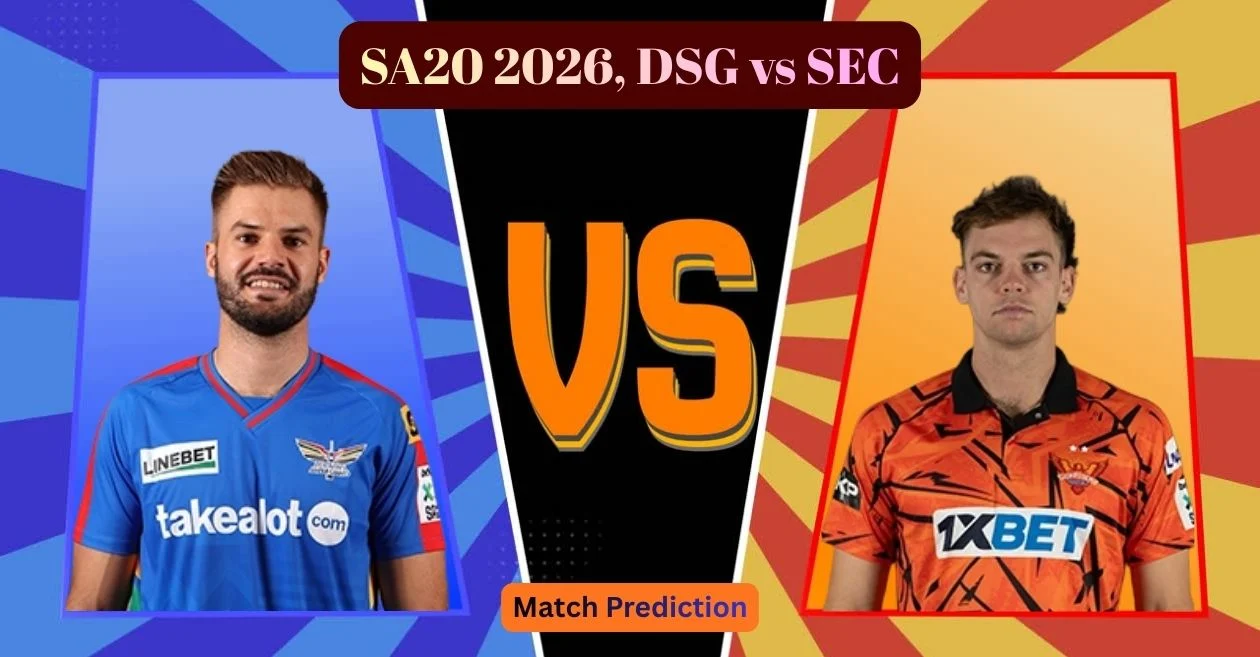
SA20 2026, DSG vs SEC Match Prediction: Who will win today’s game between Durban’s Super Giants and Sunrisers Eastern Cape?


Durban’s Super Giants face table-topping Sunrisers Eastern Cape in the 18th match of SA20 2025-26 at Kingsmead, Durban. DSG, struggling in fifth place, seek a turnaround against the dominant SEC, who lead with a superior net run rate. This clash pits batting fireworks against bowling depth on a venue favouring batters early.

Sunrisers Eastern Cape top the SA20 2025-26 points table with 17 points from five games, including three wins and a net run rate of +2.953. Durban Super Giants sit fifth with eight points from six outings, hampered by three straight losses and a net run rate of -0.967. A win is crucial for DSG to revive playoff hopes, while SEC aim to extend their dominance.​

Sunrisers Eastern Cape hold a commanding edge, winning all five prior encounters against Durban Super Giants. Other records show SEC victorious in six of eight SA20 meetings, with one DSG win and one no-result. This history favours the visitors significantly.

DSG vs SEC, SA20 2026: Match details

  • Date and Time: January 9; 9:00 pm IST / 3:30 pm GMT / 5:30 pm Local
  • Venue: Kingsmead, Durban

DSG vs SEC Head-to-Head Record in SA20 

Matches played: 07 | Durban’s Super Giants won: 06| Sunrisers Eastern Cape won: 01 | No result/Tied: 00

Kingsmead Pitch Report

Kingsmead in Durban presents a batting paradise early on, offering true pace, bounce, and carry that suit aggressive T20 strokeplay, with an average first innings score hovering around 170-180 in SA20 matches. The pitch tends to slow down under lights, bringing spinners into play—they’ve snared over 54% of wickets here, making turn and grip key weapons for sides like DSG. Teams batting first have won six of the last ten games, as chasing proves tricky amid variable bounce later. Expect short boundaries to fuel high scores, but dew could aid batters in the second innings.

Squads

Durban’s Super Giants: Devon Conway, Kane Williamson, Jos Buttler, Aiden Markram (c), Heinrich Klaasen (wk), Evan Jones, David Wiese, Eathan Bosch, Simon Harmer, Kwena Maphaka, Noor Ahmad, Sunil Narine, Taijul Islam, Dayyaan Galiem, Daryn Dupavillon, Tony de Zorzi, Marques Ackerman, Gerald Coetzee, David Bedingham, Andile Simelane, Gysbert Wege

Sunrisers Eastern Cape: Jonny Bairstow, Quinton de Kock (wk), Tristan Stubbs (c), Lewis Gregory, Matthew Breetzke, Marco Jansen, Patrick Kruger, Senuran Muthusamy, Adam Milne, Anrich Nortje, Chris Wood, Allah Ghazanfar, JP King, Christopher King, Jordan Hermann, Mitchell Van Buuren, Tharindu Rathnayake, James Coles, Beyers Swanepoel, Lutho Sipamla

Also WATCH: Matthew Breetzke plucks a screamer to dismiss Dewald Brevis in SA20 2026

DSG vs SEC, SA20 2026: Today’s Match Prediction

Case 1:

  • Durban’s Super Giants wins the toss and bats first
  • Durban’s Super Giants’ powerplay score: 50-60
  • Durban’s Super Giants’ total score: 170-180

Case 2:

  • Sunrisers Eastern Cape wins the toss and bats first
  • Sunrisers Eastern Cape’s powerplay score: 40-50
  • Sunrisers Eastern Cape’s total score: 160-170

Match result: Team batting first to win the contest.

Also WATCH: Dewald Brevis and Sherfane Rutherford unleash a flurry of sixes on MI Cape Town bowlers in SA20 2025-26


Source link

Maharashtra civic polls: Old guard returns as 29 veterans secure re-nomination in Kalwa Mumbra Naupada | Thane News


THANE: In a high-stakes move ahead of the January 15 civic polls, Thane’s political landscape has been firmly claimed by the “old guard”. A detailed analysis of candidate lists released by the Eknath Shinde-led Shiv Sena, the BJP and the NCP shows a strong continuity strategy, with as many as 29 veteran candidates securing re-nomination across 11 key wards in Kalwa, Mumbra, Diva and Naupada–Kopri.By fielding mostly familiar faces in politically sensitive areas such as Naupada, Kalwa–Mumbra and Diva, major parties have clearly prioritised electability over experimentation. Both the ruling Mahayuti alliance and opposition parties have adopted a safety-first approach, banking on tried-and-tested corporators to protect party strongholds in a volatile electoral environment.Experience has emerged as the key currency in the upcoming Thane Municipal Corporation (TMC) elections. With micro-ward calculations expected to play a decisive role, parties such as the Shiv Sena have leaned heavily on incumbents who enjoy deep-rooted local influence. The decision to re-nominate 29 sitting corporators is seen as a calculated tactical move aimed at minimising electoral risk.Political observers pointed out that sitting corporators enjoy a clear hyper-local advantage that first-time candidates cannot replicate in a single campaign cycle. As the primary link between residents and the civic administration, these veterans have handled everyday ward-level issues such as water supply, sanitation, roads and drainage. By opting for continuity, parties have effectively leveraged what insiders describe as “incumbency stability”.The city’s traditional power centre of Naupada–Kopri saw the highest concentration of returning veterans. In Ward 21, the BJP re-fielded its entire panel — Sanjay Waghule, Madhavi Rajesh, Mrunal Pendse and Sunesh Joshi. Nearby, Wards 20 and 22 featured a mix of Shiv Sena and BJP veterans, including Malati Patil, Namrata Pamnani and Bharat Chavan in Kopri, and Sudhir Kokate in Jambhli Naka. The cluster was completed by Ward 19, where Shiv Sena stalwarts Minal Sankhe, Namrata Bhosale and Vikas Repale were re-nominated.Kalwa once again emerged as a zone of high-profile political contest and strategic recalibration. In Ward 23A, Milind Patil and Aparna Salvi are leading the Shiv Sena’s campaign alongside veteran Independent Pramila Keni and her son Mandar Keni, who has been nominated on a Sena ticket.In contrast, the NCP (SP) opted to field new candidates. Abhijeet Pawar is contesting from Ward 9 on an NCP (SP) ticket, alongside Ganesh Kamble and Anita Gauri. Ward 24 saw the return of veteran corporators Aarti Gaikwad and Priyanka Patil, both re-fielded by their respective parties.In the Diva suburbs, the Shiv Sena is banking on its local strongholds by re-nominating Shailesh Patil (Ward 27A) and Deepak Jadhav (Ward 28A), along with Darshana Mhatre and Babaji Patil.As Thane heads towards polling day, the message from party headquarters is clear: in a closely fought civic contest, experience, familiarity and local recall are being trusted to hold the line.


Source link

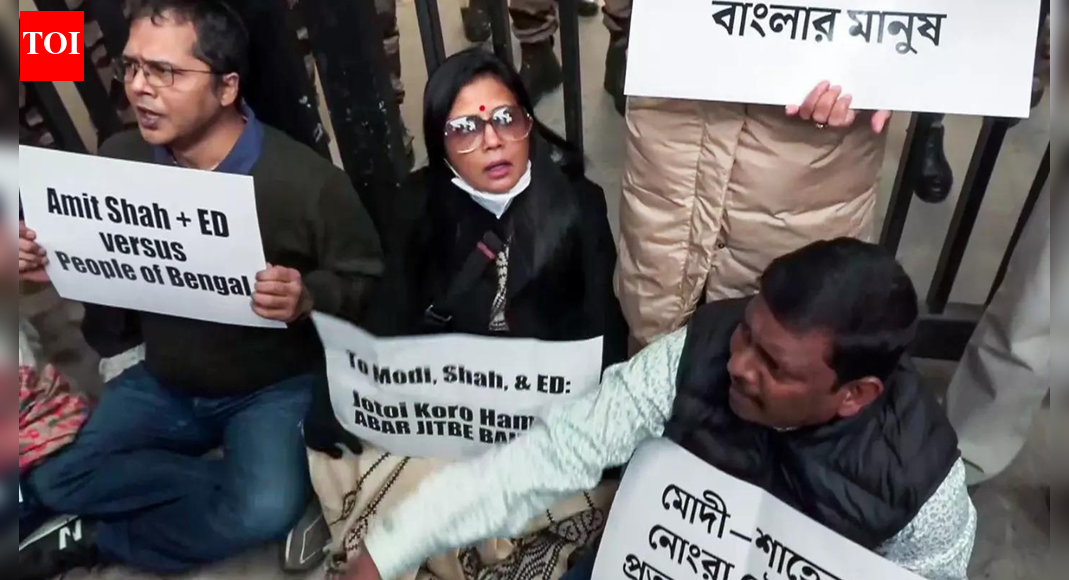
ED raids at I-PAC: After getting detained, Mahua Moitra says ‘Bengal will teach them a lesson’; accuses Centre of targeting TMC | India News


ED raids at I-PAC: After getting detained, Mahua Moitra says 'Bengal will teach them a lesson'; accuses Centre of targeting TMC
Mahua Moitra along with other TMC leaders protested outside Amit Shah’s residence (ANI image)

NEW DELHI: Trinamool Congress MP Mahua Moitra on Friday accused the Centre of misusing central agencies after she was detained by Delhi police while protesting outside union home minister Amit Shah’s office against the Enforcement Directorate (ED) raids on political consultancy firm I-PAC in Kolkata.Reacting after her detention, Moitra alleged that the ED was being used to target political opponents and steal sensitive electoral information.

BJP Targets Mamata Banerjee Over ED Raid At I-PAC, Alleges Evidence Tampering

“You have seen how the government is using the ED as their agency to steal information, election strategy of their political opponents. ED was sent to the office of our political consultant for dacoity of information. They are talking about some 7–8 years old coal scam; you didn’t get time to gather information in all these years. Mamata Banerjee showed how to fight against them. People of Bengal will teach them a lesson,” she said.Earlier, as she and other TMC MPs including Derek O’ Brien were taken away by police, Moitra posted on X, claiming force was used during the detention. “Amit Shah’s cops dragging us in police vans to police station. Bring it on BJP Bengalis — you’ll be eaten by the Bengal Tigress, Mamata Banerjee,” she wrote.Speaking to reporters, Moitra also objected to the detention of protesters, stating, “Even here, we are protesting peacefully, yet you can see how we are being picked up — every time, you see it for yourself, how they drag us away.”TMC MP Kirti Azad in a post on X wrote, “Detained at Parliament Street Police Station. No FIR has been registered so far. We have not been told the reason for the same. No senior officer is available. If this is what is happening to elected members of Parliament, we can understand what must be the plight of a common man.” Meanwhile, BJP MP Ravi Shankar Prasad defended the ED raids, drawing parallels with the fodder scam investigation involving RJD chief Lalu Prasad Yadav.Addressing a press conference Prasad said, “This raid is similar to the one during the fodder scam case against Lalu Prasad. He was later arrested, but he never stormed the CBI office as Mamata Banerjee did. What link does Mamata have with that firm?”The protest followed ED searches at multiple locations linked to I-PAC in Kolkata on Thursday, including the residence of its chief, Pratik Jain. I-PAC provides political consultancy services to the TMC and manages parts of the party’s IT and media operations.Meanwhile, the TMC on Friday moved the Calcutta High Court seeking restraint on the “misuse and dissemination” of documents and data seized during the ED searches. The party has termed the raids politically motivated and aimed at intimidating it ahead of the West Bengal Assembly elections. CM Banerjee further alleged that party documents, hard disks and sensitive data were being seized under the guise of an investigation.Questioning the role of the ED and Amit Shah, Banerjee said, “Is it the duty of the ED, Amit Shah to collect the party’s hard disk, candidate list?… The nasty, naughty Home Minister who cannot protect the country and is taking away all my party documents. What will be the result if I raid the BJP party office?”She also linked the agency action to the ongoing Special Intensive Revision (SIR) exercise in West Bengal, alleging that voter names were being deleted ahead of the polls.“On one side, they are deleting the names of all the voters by carrying out the SIR in West Bengal…Because of the elections, they are collecting all the information about my party,” she said. Banerjee further dared the BJP to fight the TMC politically if it wanted to win Bengal.


Source link

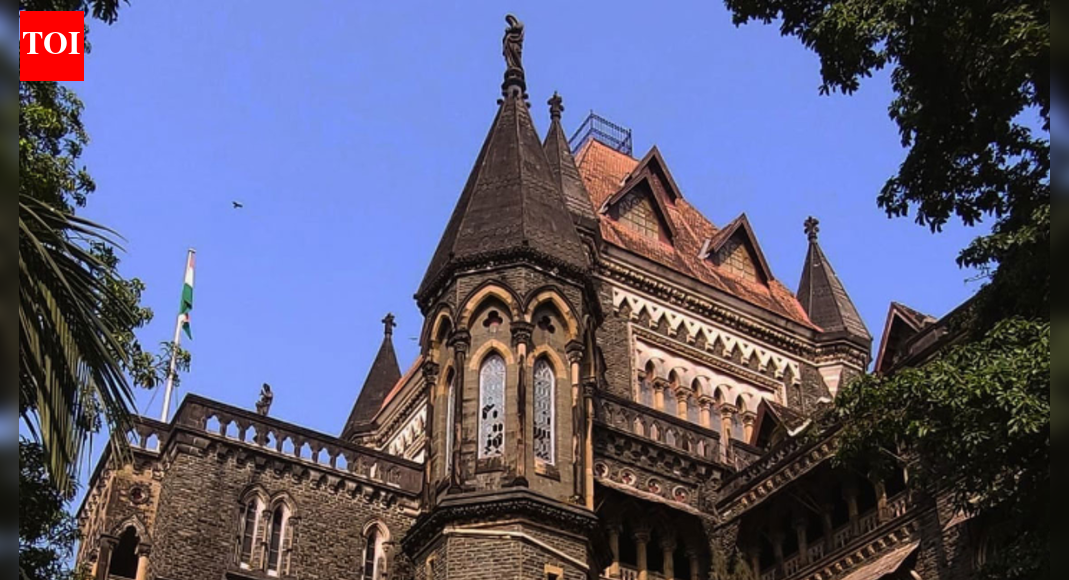
Bombay high court holds returning officers rejection of BJP candidate’s nomination invalid and orders inclusion in NMMC poll list | Mumbai News


MUMBAI: In a first such order in the ongoing civic body polls in the State, Bombay High Court on Friday held as invalid an electoral Returning Officer’s order that rejected the nomination of BJP candidate Nikesh Bhojane and directed that his name be added to the accepted candidates’ list for ward 17A in Navi Mumbai. The relief to Bhojane came swiftly as the HC observed that the RO wrongly invoked a provision meant for the disqualification of sitting councillors against Bhojane.Chief Justice Shree Chandrashekhar and Justice Gautam Ankhad hence held as valid the otherwise valid nomination of Bhojane, 47, a lawyer, and directed the State Election Commission (SEC) and the electoral officer of Navi Mumbai Municipal Corporation (NMMC) to include him as a candidate for the forthcoming elections.Kishor Patkar, a Shiv Sena (Eknath Shinde) candidate for Ward 17A, filed the complaint against Bhojane’s nomination.Bhojane petitioned the court to challenge as illegal and arbitrary the rejection of his nomination form by a Returning Officer on December 31, 2025.The SEC, represented by advocate Irfan Shaikh, submitted an affidavit saying it would not be possible to add Bhojane’s name since the last date for withdrawal of candidature was until 3 pm on January 2, 2026, and the list of contesting candidates was scheduled to be published on January 3, 2026. “At present, the preparation of Electronic Voting Machines (EVMs) by affixing the ballot papers for the respective seats is in progress; therefore, it is not possible to accept the nomination of the Petitioner and permit the Petitioner to contest the General Election to the seat of Councillor from Ward no 17A of Navi Mumbai Municipal Corporation,” a deputy election commissioner said in the affidavit, adding it would not carry out the EVM preparation for Ward 17A.However, senior counsel Anil Sakhare for Shiv Sena candidate Patkar and counsel Tejesh Dande for the NMMC electoral officer noted that a stay of polls to 1 ward would mean the entire electorate would have to come again on another day scheduled later.Sakhare, who cited the top court order to complete civic body polls across Maharashtra by January 31, submitted that Bhojane’s petition be dismissed. However, senior counsel Navroz Seervai argued that the rejection order was not just illegal and invalid; it was a slur on democratic principles, especially when a disqualification clause meant for existing councillors was used to prevent a candidate who never was a councillor.The HC agreed with Seervai’s submissions and the contentions made in Bhojane’s petition, filed through advocate Nivit Srivastava.HC granted urgent interim relief to Bhojane on Thursday and posted the matter to January 9 for final disposal. Chief Justice Chandrashekhar and Justice Ankhad, in their order on Thursday, said, “We are of the prima facie opinion that there is no absolute bar (under the Constitution) to entertain a writ petition in matters like the present one, which prima facie demonstrate illegal and arbitrary exercise of powers by the Election Returning Officer.The rejection order cited a civic notice Bhojane received on February 24, 2025, to “stop alleged unauthorised commercial use” of his house in Navi Mumbai, rendering him “disqualified” under the Maharashtra Municipal Corporation Act. The notice under the Maharashtra Regional and Town Planning Act did not specify the alleged unauthorised use, the petition said.Section 10(1D) governs disqualification for being a councillor if involved in any illegal construction or obstructing authorities. The section was also wholly inapplicable, was Bhojane’s case.The petition also had said the rejection of his nomination was on “flimsy grounds” and “is anathema to democracy”. It said, “A popular candidate who is likely to win an election is prevented from even contesting” on grounds bereft of any merit. “The election is being decided not by ballots but by illegal action under the guise of law,” the petition contended.


Source link